15 Best Things to Do in St. George, Utah (2026 Guide)

St. George delivers far more than a basecamp for Zion National Park.
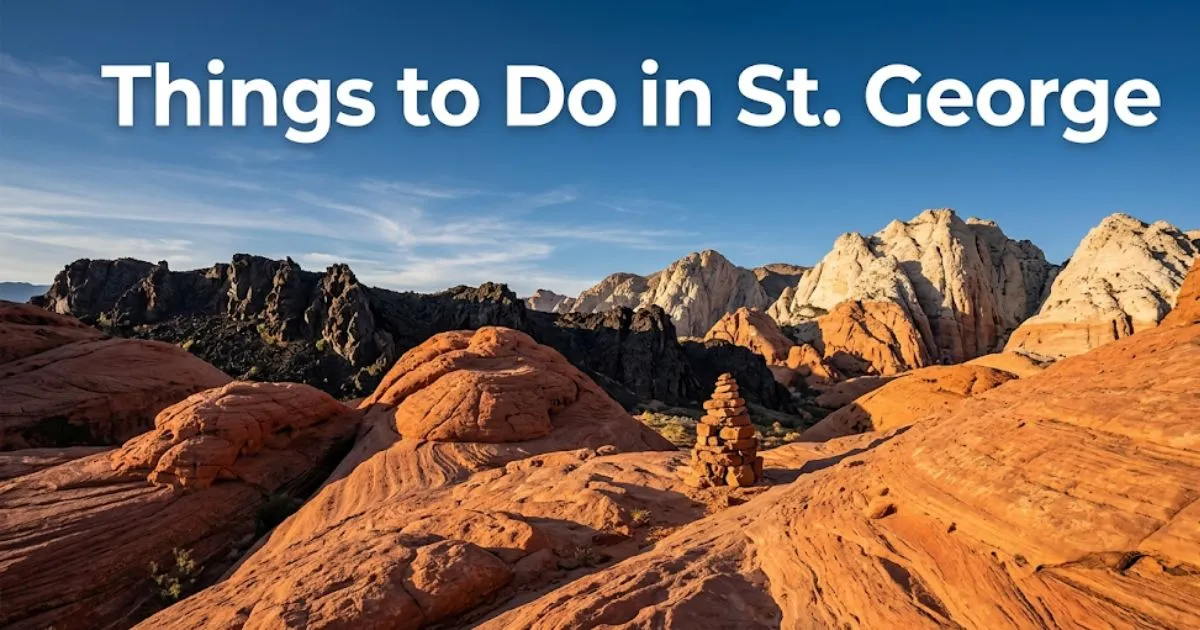
The city is surrounded by its own collection of state parks, slickrock trails, and red rock desert.
The area holds the highest concentration of accessible slot canyons in Utah.
It also has a growing arts scene that surprises most first-time visitors.
This guide focuses on what the city offers beyond the obvious day trips.
You will find hikes for every skill level, family-friendly museums, and the local dining districts worth your time.
Things to Do in St. George
St. George is a desert playground built into a landscape of red cliffs and black lava rock.
The city’s appeal lies in a combination of outdoor access, mild winters, and family-friendly attractions.
The Greater Zion Convention & Tourism Office reports outdoor recreation as the primary driver for tourism.
Visitors come for the trails and stay for the surprisingly good post-hike food scene.
| Activity Type | Best For | Cost Range | Local Alternative |
|---|---|---|---|
| Hiking & Canyoneering | Solo travelers, Couples | Free to $15 entry | Red Cliffs instead of crowded Zion trails |
| Water Sports | Families, Groups | $15 to $25 vehicle fee | Quail Creek instead of Sand Hollow on weekends |
| Arts & History | Seniors, Families | Free to $30 per ticket | Kayenta’s galleries instead of the overcrowded amphitheater tours |
Insider Tip:
- Most visitors cluster at Snow Canyon’s main viewpoints before 10:00 AM.
- Arrive at noon for quieter trails and empty parking lots.
- The light is better for photography in the late afternoon anyway.
St. George Utah Things to Do
The core of a St. George visit involves exploring the interface where the city meets the desert.
Pioneer Park sits on a cliff band directly above downtown and offers this experience immediately.
The park’s red sandstone domes provide panoramic views of the city and distant Arizona mountains.
Tiny slot canyons cut through the rock, giving kids and casual hikers a taste of canyoneering without the long drive.
Access is free and the parking lot is located at the end of Red Hills Parkway.
The terrain is uneven sandstone with steep drop-offs, so watch young children closely.
Families with kids under 10 will find this is the single best quick-hit activity in town.
Solo travelers can scramble up the rock domes for a perfect sunrise photography spot in under 15 minutes.
Couples often overlook Pioneer Park in favor of bigger-name destinations.
That is a mistake. The sunset views here rival any in southern Utah.
Local photographers know the slot canyon at Pioneer Park shoots best in mid-morning light.
Avoid the main viewpoint at sunset if you dislike crowds, it gets packed with tour buses.
Key Takeaway: Pioneer Park is the best free introduction to St. George’s red rock landscape and works for every traveler profile.
Best Things to Do in St. George Utah
Ranking the best St. George experiences requires separating the famous from the genuinely rewarding.
The most memorable activities combine physical immersion in the landscape with a sense of discovery.
A three-day itinerary reveals the city’s range without feeling rushed.
This framework balances high-adrenaline mornings with relaxed afternoons by the water or in the arts district.
Day 1: Red Rock Immersion
- Start at Snow Canyon State Park by 7:30 AM to beat the heat and hike the Petrified Dunes.
- Stop for brunch at Farmstead Bakery for their sourdough cinnamon rolls.
- Spend the afternoon exploring Kayenta Art Village’s galleries and the labyrinth at Xetava Gardens.
Day 2: Water and History
- Launch a kayak or paddleboard at Sand Hollow State Park before the afternoon winds arrive.
- Eat lunch at Viva Chicken, a local Peruvian rotisserie chain that dominates the post-adventure food scene.
- Walk through the St. George Dinosaur Discovery Site to see fossilized tracks preserved in place.
Day 3: Canyon and Culture
- Drive 45 minutes to the Kolob Canyons section of Zion for a five-mile scenic drive with zero crowds.
- Pack a picnic lunch and hike the Timber Creek Overlook Trail for views into the Kolob finger canyons.
- Return to town for an evening performance at the Tuacahn Amphitheatre.
This itinerary works best for active couples and families with older kids.
Senior travelers should swap the Petrified Dunes hike for the fully paved Whiptail Trail in Snow Canyon.
Budget travelers can skip Tuacahn and replace it with a free concert at Vernon Worthen Park during summer months.
The venue’s schedule is typically posted on the City of St. George’s website by May.
Key Takeaway: A perfect St. George trip mixes one state park, one water activity, and one cultural stop per day with a mandatory early-morning start.
St. George Things to Do
The Red Cliffs Desert Reserve protects 62,000 acres of protected habitat for the Mojave desert tortoise.
It also contains some of the most scenic and less-crowded hiking trails in the region.
The reserve wraps around the northern edge of the city.
Trails here feel wilder and quieter than Snow Canyon’s main corridor.
The Owen’s Loop Trail is a 3-mile path that contours above the city with continuous cliff-edge views.
It is an ideal sunset hike for solo travelers and couples who want solitude without a long drive.
Start from the trailhead off Red Hills Parkway.
Bring a headlamp if you plan to finish near dusk; the rocky terrain can be tricky in fading light.
Families with young children should try the shorter Turtle Wall Trail instead.
The trail is named for a large rock that looks like a turtle, and it works well for little legs.
Bikers will find the reserve’s network of singletrack is deeply underrated.
The Barrel Roll and Zen Trail loops deliver technical slickrock riding that locals prize.
Summer hiking here is dangerous after 10:00 AM.
The dark rocks absorb heat and turn the trails into a convection oven by midday.
Key Takeaway: Red Cliffs Desert Reserve offers the same red rock scenery as the national parks but with the quiet solitude that makes the desert feel personal.
Things to Do in St. George Ut
Urban St. George rewards travelers who know which specific corners to find.
The Ancestor Square district and the area around Main Street house the city’s best local businesses.
This walkable cluster of restored pioneer-era buildings houses art galleries, boutiques, and restaurants.
It is the only part of St. George where a car-free stroll feels natural.
Painted Pony is the anchor restaurant here and serves the most consistently excellent Southwestern fine dining in the city.
Reservations are strongly recommended, especially during the St. George Art Festival held every Easter weekend.
Solo travelers will find the bar area at Painted Pony perfectly suited for a solo dinner.
Budget travelers can walk one block over to Morty’s Cafe for a burger that locals argue is the city’s best.
Families should visit Judd’s General Store on Main Street for old-fashioned sodas and candy.
The historic building and vintage feel connect kids to the town’s pioneer past without a museum entry fee.
Couples looking for a coffee stop should find Affogato on Tabernacle Street.
It is a hidden-away coffee bar that serves exceptional espresso in a quiet courtyard setting.
According to the City of St. George’s Historic Preservation Office, the Ancestor Square structures date to the 1860s.
The buildings were saved from demolition in the 1980s and now represent the city’s most successful historic preservation project.
Things to Do Near St. George Utah
The area within a 30-minute drive of downtown holds water-based recreation that contrasts sharply with the desert trails.
Sand Hollow State Park is the centerpiece, combining red rock cliffs with a warm-water reservoir.
Sand Hollow is best known for its boat-access-only coves tucked between sandstone fins.
The water color shifts to a vivid blue-green against the red rocks, creating a scene that photographs like Lake Powell without the crowds.
Rent a boat, jet ski, or paddleboard at the marina.
Arrive by 8:00 AM on summer weekends. The parking lot fills completely by 9:30 AM.
Families with children should head to the designated swim beach on the reservoir’s south shore.
It has soft sand, shallow entry, and is far from the boat wakes.
Solo travelers and groups will prefer Quail Creek State Park, just 15 minutes from downtown.
The water is cooler and clearer here, and the boat traffic is far lighter.
Seniors and accessibility travelers should note that both parks have paved paths to the water.
However, Sand Hollow’s beach area is more level and easier to navigate with a wheelchair.
A Utah State Parks day-use pass costs approximately $15 to $20 per vehicle in 2026.
An annual pass is around $100 and pays for itself in five visits.
Key Takeaway: Choose Sand Hollow for dramatic scenery and water sports with a group, or pick Quail Creek for cooler, quieter swimming and paddling.
Things to Do Around St. George Utah
The high-desert landscape circling the city holds some of the best mountain biking terrain in the American West.
The Bearclaw Poppy Trail is a short, fast, flowy ride that local bikers use as their weekday quick-hit loop.
This 3.5-mile singletrack is sculpted into slickrock and hardpack, with banked turns and small drops.
It is suitable for solid intermediate riders but features two optional technical sections that experts can session.
The trailhead is in the Green Valley neighborhood, just five minutes from the freeway.
Park in the designated dirt lot, not on the residential street.
Riders seeking a bigger all-day epic should head to Gooseberry Mesa, a 45-minute drive east.
This mesa-top trail system sits on the edge of a cliff overlooking Zion, and the views are the reward for the challenging approach.
Families with beginner riders will find the paved St. George City Trail System surprisingly excellent.
It connects the city from Washington to Ivins and passes several parks with water fountains and restrooms.
Solo bikers will find the social scene at The Hive, a local climbing gym and bike shop, excellent for meeting riding partners.
The shop posts weekly group ride schedules on their community board.
Extreme heat from June through August makes biking unsafe after 10:00 AM.
Local riders shift to dawn patrols starting at 5:30 AM during these months.
Insider Tip:
- The Bureau of Land Management maintains a free trail map for the Bearclaw Poppy area.
- Download the map before you go.
- Cell service is spotty in the washes.
Things to Do in Saint George Utah
The cultural core of the greater St. George area actually sits 20 minutes west in the unincorporated community of Ivins.
The Kayenta Art Village is a master-planned community built into a red rock bowl, dedicated entirely to art and landscape.
This is where the city’s creative class lives and works.
The village consists of a cluster of galleries, a theater, a coffee shop, and high-desert homes designed to blend into the terrain.
Start at the Center for the Arts at Kayenta, which displays rotating exhibits of contemporary Southwestern artists.
The sculpture garden behind the center is free to wander and frames large-scale works against the red cliff backdrop.
Couples and solo travelers will find this is the most memorable non-hiking activity in St. George.
The labyrinth at Xetava Gardens Cafe offers a meditative walk with views of the Red Mountain.
Families should time their visit for the Kayenta Art Festival in October.
The festival includes hands-on art activities for children that go well beyond the standard coloring-book table.
The village is also the best dinner destination in the area.
Xetava Gardens Cafe serves upscale Southwestern fare on a patio with one of the best views in the county.
Budget travelers can enjoy the art walks and galleries for free and skip the pricey dinner.
Bring a picnic and watch the sunset from the village overlook instead.
According to the Kayenta Arts Foundation, the village was founded on the principle that art should emerge from the landscape.
The architecture and programming reflect this consistently.
Key Takeaway: Kayenta is the best half-day trip for travelers who want the arts-meets-desert experience that Santa Fe is famous for, without leaving southern Utah.
Best Things to Do in St. George
The Tuacahn Amphitheatre is a 2,000-seat outdoor venue carved into a box canyon of red rock.
It is the most spectacular place to see a Broadway musical or concert anywhere in the Intermountain West.
The amphitheater produces a full summer-through-fall season of professional shows.
The 2026 season runs from late May to late October and features Broadway musicals, concerts, and a fall country music series.
The experience of watching a live performance while the canyon walls glow in the fading light is genuinely unique.
Even jaded travelers will be impressed by the setting.
Tickets range from approximately $30 for rear seating to $110 for prime center seats.
Book at least four weeks in advance for popular shows like Joseph and the Amazing Technicolor Dreamcoat.
This is the ideal evening activity for couples and families with older children.
The show length and late start time make it unsuitable for kids under eight.
Solo travelers can find single-seat availability in the side sections on weeknights.
The amphitheater also runs a Saturday morning farmers market from May through October that is free to enter.
A common mistake is booking the hottest summer weeks.
The canyon traps heat and evening temperatures can still hover near 100°F in July.
Local visitors choose late September or early October shows.
The air is cooler and the canyon walls catch the last light of the season.
Insider Tip:
- Bring a cushion.
- The plastic seats are hard after two hours.
- Rent one on-site for a small fee if you forget.
Things to Do in Saint George
A short drive into the surrounding desert reveals layers of human history etched into the rock.
Little Black Mountain Petroglyph Site is a 6,000-year-old rock art panel located on the Arizona Strip, about a 30-minute drive from downtown.
This BLM-managed site contains hundreds of distinct petroglyphs spread across a low cliff face.
The density and time depth of the carvings are what make this site exceptional.
The access road is a well-graded dirt track suitable for most passenger cars when dry.
Do not attempt the drive after rain; the clay-based road turns to impassable mud.
Families will find this is the perfect archaeology outing for kids.
The panel is easy to reach and the carvings of bighorn sheep, spirals, and human figures are immediately recognizable.
Solo travelers and couples interested in photography should arrive in the late afternoon.
The low-angle light makes the shallowly carved glyphs pop against the desert varnish.
This site has zero facilities.
Bring water and understand there is no cell service. Let someone know your plans before you go.
The Bureau of Land Management asks visitors to stay behind the viewing fence.
Oils from hands degrade the rock art. Photograph freely but do not touch.
The best local alternative to this site is the Land Hill Petroglyph Trail inside the Santa Clara River Reserve.
It is closer to town and offers a short hike past several panels without the Arizona border crossing.
Key Takeaway: Little Black Mountain is a quieter, richer rock art experience than the more famous panels near Sedona, with a fraction of the visitor traffic.
Things to Do in St. George
The dining scene in St. George has outgrown its chain-restaurant reputation.
A cluster of independent restaurants now anchors the city’s culinary identity, driven by local chefs and Mormon-pioneer agricultural traditions.
Wood.Ash.Rye is the current standard-bearer for upscale dining in the Ancestor Square district.
Chef Shon Foster’s menu is built around live-fire cooking and seasonal ingredients sourced from Utah producers.
Reservations are essential, especially on Thursday through Saturday nights.
Expect to spend $50 to $80 per person for a three-course meal with drinks.
This is the best date-night restaurant in town for couples.
Solo travelers can eat at the small bar and watch the open kitchen, a better experience than a table for one.
Families and budget travelers should head to Red Fort Cuisine of India on St. George Boulevard.
This unassuming strip-mall restaurant serves the most authentic and deeply spiced Indian food in southern Utah.
Locals know that Cappeletti’s on Main Street is the spot for an affordable, no-fuss Italian dinner.
The pasta is handmade and the family has run the restaurant for over 30 years.
The local alternative to a generic fast-casual lunch is Harmon’s Grocery in Santa Clara.
This high-end grocery store has an excellent prepared-food deli, a burger counter, and a rooftop patio with views of Snow Canyon.
Insider Tip:
- St. George has a robust food truck scene concentrated near Utah Tech University.
- Check the social media page for The Food Truck League of Southern Utah for daily locations.
- It is the best way to eat cheaply and well.
Things to Do Around St. George Ut
Gunlock State Park is a small reservoir located 30 minutes northwest of the city in the town of Gunlock.
During high-water years, it produces a phenomenon of waterfalls cascading over red rock ledges that draw photographers from across the country.
The falls are dependent on snowpack and spring runoff.
The Utah Division of State Parks typically announces whether the falls are running by late March.
When they flow, the scene is surreal: ribbons of water spilling over curved sandstone into turquoise pools.
It is one of the most photogenic scenes in Utah in a year when the water cooperates.
The hike to the main falls area is a short half-mile from the parking lot.
The rocks near the falls are treacherously slippery when wet. Wear shoes with excellent grip.
Families should exercise extreme caution here.
The pools below the falls are shallow and tempting, but the rocks are dangerously slick.
Senior travelers can view the upper cascades from a flat, accessible area near the parking lot.
The main falls viewing area requires scrambling over uneven rock.
The falls are a short-lived seasonal attraction when they appear.
A dry winter means no waterfalls, so verify conditions on the state park’s official website before making the drive.
Couples seeking a romantic water feature should also consider Toquerville Falls, a set of desert waterfalls about 40 minutes from town.
The road to Toquerville Falls requires a high-clearance vehicle. Do not attempt it in a standard sedan.
Key Takeaway: Gunlock Falls is a conditional wonder that demands you check water conditions before committing the drive, but it is an all-time memory when it delivers.
Snow Canyon State Park Things to Do
Snow Canyon State Park is the single essential outdoor experience in the St. George area.
This 7,400-acre park packs more scenic variety per square mile than parks ten times its size.
The park’s landscape alternates between lava tubes, white Navajo sandstone, dark basalt cliffs, and twisting slot canyons.
Start with the Petrified Dunes Trail, an unmarked route across a vast expanse of solid, wind-carved sandstone waves.
The trail is not a defined path.
You navigate by following cairns and your own route-finding across the open rock, which makes it an adventure.
Families with kids love the Jenny’s Canyon Trail, a short walk to a narrow slot canyon.
It is accessible enough for young children but still delivers a true slot canyon experience.
Climbers should head to the Island in the Sky wall.
This area has bolted sport routes on bullet-hard sandstone, and the approach is a short five-minute walk.
Solo travelers and photographers need to walk the Whiptail Trail at dawn.
This paved, three-mile path cuts through the canyon floor and delivers perfect early-morning light on the red cliffs.
Summer visitors must finish their hikes by 10:00 AM.
The canyon absorbs and radiates heat. Temperatures above 105°F are common in July and August.
The entrance fee is approximately $10 to $15 per vehicle.
The park gates close at sunset. Plan your exit time or your car will be locked inside the park.
Insider Tip:
- The hidden gem of Snow Canyon is the lava tube system near the park’s south entrance.
- Bring a powerful headlamp and gloves.
- The tubes are cool and dark, a perfect midday escape from the heat.
St. George Dinosaur Discovery Site
The St. George Dinosaur Discovery Site at Johnson Farm is a world-class fossil museum built directly on a 200-million-year-old lakeshore.
It preserves thousands of dinosaur tracks exactly where they were found in 2000 by a local optometrist leveling his land.
The museum is built as a protective structure over the original trackway.
You literally walk on elevated platforms above the stone where early Jurassic dinosaurs once walked.
This is not a reconstructed replica experience.
The tracks, swim traces, and ripple marks are real and preserved in situ, which is rare globally.
The site is the best indoor activity in St. George for families with children of any age.
Interactive exhibits allow kids to make their own fossil rubbings and touch genuine dinosaur bones.
Adults and solo travelers will find the scientific rigor of the exhibits genuinely impressive.
The museum’s working paleontology lab is visible behind glass, and volunteers are often available to explain current projects.
Admission is approximately $8 for adults and $5 for children.
Allow 60 to 90 minutes for a thorough visit.
Seniors and accessibility travelers will find the museum fully wheelchair accessible with smooth, level walkways.
It is climate-controlled, making it a perfect summer midday escape when outdoor activities are unsafe.
The museum is notably underrated by visitors focused only on hiking.
According to the museum’s scientific advisory board, the site preserves the oldest known dinosaur swim tracks on Earth.
Budget travelers can visit during the museum’s occasional free community days, typically announced on their social media channels.
The standard admission price offers strong value given the quality of the institution.
Key Takeaway: This fossil site is a legitimate scientific treasure that rivals dinosaur exhibits in major cities, hidden inside a St. George suburban neighborhood.
St. George Children’s Museum
The St. George Children’s Museum occupies a historic building on Main Street and packs 12 interactive exhibit rooms into two floors.
It is the single best activity in the city for families traveling with children under 12.
The museum operates on a hands-on, touch-everything philosophy.
Kids can deliver mail in a miniature town, broadcast news at a mock TV station, and explore a child-sized science lab.
Admission is approximately $5 per person.
The low cost and downtown location make it an easy, budget-friendly morning activity.
The museum is designed with parents in mind.
Exhibit rooms flow into each other, sightlines are clear, and the entire experience is manageable in two to three hours.
Solo travelers and couples without children will not find this a relevant stop.
The experience is purpose-built for young families.
Seniors traveling with grandchildren will appreciate the seating available in every room.
The museum is small enough that grandparents can let kids explore while remaining comfortably seated nearby.
The building is a beautifully restored historic structure with an elevator for accessibility.
Parking is available at the free public lot one block south on Main Street.
Visit on a weekday morning for the quietest experience.
Saturday afternoons can become crowded and loud, especially during the winter months when outdoor play is limited.
Pair a museum visit with lunch at George’s Corner Restaurant on the ground floor of the building.
It offers a full menu and the convenience of not having to reload kids into the car.
According to the museum’s website, they rotate temporary exhibits seasonally.
Check the calendar before your visit for themed art activities or visiting science demonstrations.
Safety and Practical Warnings for St. George
Extreme summer heat is the most dangerous and underestimated risk for St. George visitors.
Temperatures routinely exceed 105°F from mid-June through August, and hiking after 10:00 AM can quickly lead to heat exhaustion or heat stroke.
Key safety and practical facts every visitor should know:
- Carry one gallon of water per person for any hike over two miles. The dry air wicks sweat away instantly and you will not realize how fast you are dehydrating.
- Check the flash flood forecast before entering any canyon slot. Monsoon storms from July through September can send a wall of water down a canyon miles away from the rain source. The National Weather Service provides daily flash flood potential ratings.
- Do not rely on cell service in the backcountry. Most trailheads outside Snow Canyon have zero signal. Download offline maps and tell someone your planned route and return time.
- Trail surfaces are slick sandstone, gravel, and uneven lava rock. Wear shoes with aggressive tread. Casual sneakers lead to slips and twisted ankles.
- Watch for scorpions and rattlesnakes. They are active at dawn and dusk in the warmer months. Shake out shoes left outside and use a flashlight on trails after dark.
In any emergency, dial 911.
The St. George Regional Hospital at 1380 E Medical Center Drive is the region’s primary trauma center and is well-equipped to handle heat-related illness and orthopedic injuries.
Frequently Asked Questions About Things to Do in St. George
What is the number one thing to do in St. George?
Hike the Petrified Dunes Trail in Snow Canyon State Park at sunrise.
The trail crosses an open expanse of wind-carved Navajo sandstone with no marked path.
It is the single most visually stunning and uniquely local hiking experience in the area.
Is St. George Utah worth visiting?
Yes, St. George is worth visiting for active travelers who want a warm-weather base for hiking, biking, and water sports.
The city offers a higher concentration of accessible outdoor recreation than almost any town its size.
Travelers seeking urban nightlife, luxury shopping, or a walkable downtown should look elsewhere.
What is there to do in St. George for free?
The best free activities are hiking in Pioneer Park, exploring the Kayenta Art Village sculpture garden, and walking the paved city trail system.
The St. George Art Festival in April and concerts in Vernon Worthen Park during summer are also free.
Little Black Mountain Petroglyph Site is a free archaeological site managed by the Bureau of Land Management.
How hot does St. George get in the summer?
St. George summer high temperatures typically range from 100°F to 110°F from late June through mid-August.
All outdoor exertion should be completed by 11:00 AM at the latest.
Plan indoor activities like the Dinosaur Discovery Site for the midday hours.
Is St. George a good base for Zion National Park?
St. George is a practical base for Zion National Park’s Kolob Canyons section, which is a 25-minute drive.
The main Zion Canyon entrance is a 45 to 60-minute drive each way from St. George.
A closer and less crowded alternative for a full Zion experience is to stay in Springdale or use St. George for the Kolob side of the park.
What should I pack for a trip to St. George?
Pack a high-capacity water reservoir or bottles carrying at least one gallon per person, sun protection including a wide-brimmed hat, and hiking shoes with aggressive tread.
Also pack a headlamp for lava tubes and slot canyons.
A light jacket is needed for desert evenings even in summer, as temperatures can drop 30 degrees after sunset.
St. George works best when you treat it as its own destination, not a compromise.
The city and its immediate public lands deliver a complete southern Utah experience.
Start your planning by booking state park campgrounds or hotels now.
Then check the Utah Division of State Parks website for current fire restrictions and water conditions before you pack.
Conditions change fast in the desert, from flash flood risk to seasonal waterfall flows.
Verify hours and entry logistics directly with parks and venues just before your departure date.
You will leave St. George with a genuine understanding of Utah’s red rock country.
That is what makes the destination stick with you long after the trip is over.