Things To Do in Palm Springs, CA: The 2026 Travel Guide

Palm Springs delivers one of the most distinct travel experiences in California. The things to do in Palm Springs range from sunrise hikes through ancient palm oases to poolside afternoons beneath midcentury architecture that belongs in a design museum.
Visit Palm Springs, the city’s official destination organization, reports the Coachella Valley draws more than 14 million visitors annually. The city itself punches well above its size for arts, architecture, and outdoor access.
This guide covers the 27 best activities, the honest seasonal reality, a usable 2-day itinerary, and specific guidance for every type of traveler. Verify all hours, prices, and access before you go.
Things to Do in Palm Springs: What Makes This City Different
Palm Springs is genuinely unlike any other California city its size. Downtown is walkable, architecturally coherent, and deeply intentional in a way that feels nothing like a resort town assembled for tourism.
The city sits in the Coachella Valley at the base of the San Jacinto Mountains. That geography creates both the extreme desert climate and the dramatic scenery that defines every visit.
Mid-century modern architecture is not a theme applied to this city. It is the actual built environment. Albert Frey, Richard Neutra, and Donald Wexler designed structures here that are still standing and in active use.
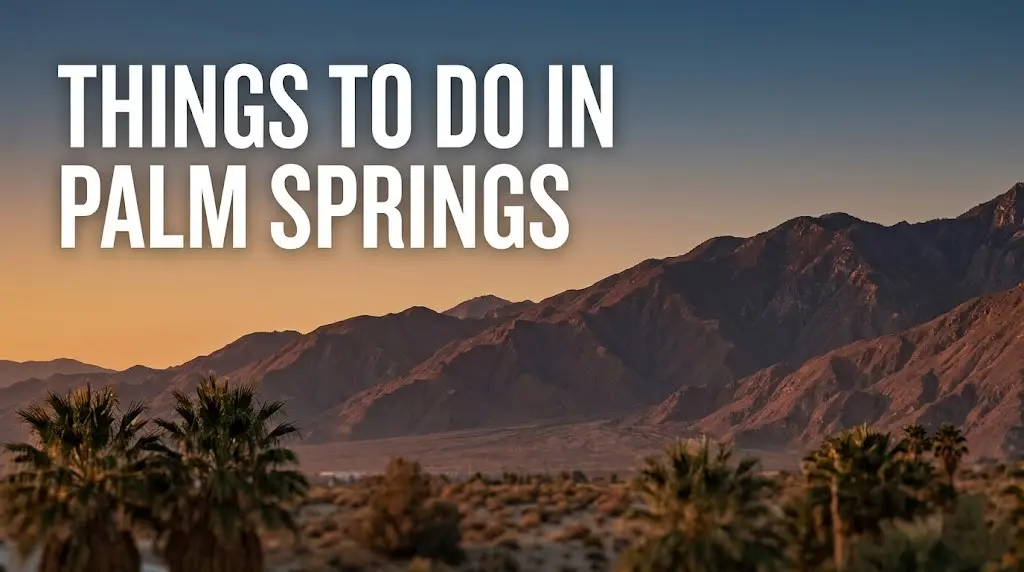
The desert light hits differently at this latitude. Morning hours have a particular clarity that makes outdoor activities feel almost cinematic before the heat arrives.
LGBTQ+ travelers have made Palm Springs one of the most established queer resort communities in the United States. The city openly celebrates that identity. It is not a niche corner of the experience here.
Insider Tip:
- Most first-timers spend their whole trip on Palm Canyon Drive. The real city reveals itself in the Uptown Design District, six blocks north, where foot traffic is lighter and the architecture is denser.
- Arrive on a Wednesday or Thursday to beat the Friday through Sunday crowd surge, which peaks during January through April.
- For solo travelers, the walkable downtown and strong social culture at hotel pools makes Palm Springs easier to navigate alone than most desert resort destinations.
Best Outdoor Activities in Palm Springs
The best outdoor activities in Palm Springs are concentrated in the canyons, the mountains, and the desert terrain immediately surrounding the city core.
Indian Canyons (managed by the Agua Caliente Band of Cahuilla Indians) contains four distinct canyon systems, including Palm Canyon, the largest natural fan palm oasis in the world. The main Palm Canyon trail covers approximately 15 miles of accessible terrain.
Admission to Indian Canyons runs in the range of $12 to $15 per adult as of recent seasons. Check directly with the Agua Caliente tribal office before visiting, as hours and pricing change seasonally.
Families with children will find the lower Palm Canyon trail stroller-accessible for the first mile. Beyond that, terrain becomes rocky and requires sturdy footwear.
Indian Canyons is at its best from January through May. Arrive before 8am on weekends in February and March to beat the tour bus crowd.
Seniors and accessibility travelers will find the first portion of Palm Canyon’s main trail paved and flat. The upper sections require significant scrambling and are not mobility-aid accessible.
| Outdoor Activity | Best For | Approx. Cost | Time Needed | Insider Note |
|---|---|---|---|---|
| Indian Canyons (Palm Canyon trail) | Couples, hikers | $12-$15/adult | 2-4 hours | Arrive before 8am on weekends |
| Tahquitz Canyon | Solo travelers, moderate hikers | $15/adult | 2-3 hours | Ranger-led tours add real context |
| Palm Springs Aerial Tramway | All profiles | $30-$35/adult | Half day | Book online; sells out Jan-Apr weekends |
| Murray Canyon hike (within Indian Canyons) | Experienced hikers | Included in Indian Canyons fee | 3-4 hours | Less crowded than Palm Canyon |
| San Jacinto Peak summit hike | Serious hikers only | Tramway fare + State Park day use | Full day | Altitude over 10,800 feet; bring layers |
Palm Springs Aerial Tramway
The Palm Springs Aerial Tramway is the single most dramatic experience the city offers, and it earns that status honestly. The rotating tram car climbs 8,516 feet in approximately 10 minutes, rising from desert floor to the upper reaches of the San Jacinto Mountains.
At the top, Mountain Station sits at 8,516 feet elevation. Temperatures average 30 to 40 degrees cooler than the valley floor. In summer, this is the only way to experience genuinely cool air without leaving the region.
Tramway tickets run approximately $30 to $35 per adult as of recent years. Book online in advance. The attraction routinely sells out on weekends from January through mid-April.
Budget travelers should note that the tram itself is the primary expense. Hiking from Mountain Station into Mount San Jacinto State Park costs minimal additional fees but adds significant physical demand.
The tram runs daily except during periodic maintenance closures. Seasonal hours vary. Verify current operating days and hours directly with the Aerial Tramway before visiting.
Couples find the sunset tram ride particularly worthwhile. The light over the Coachella Valley from Mountain Station at dusk is one of the genuinely remarkable views in Southern California.
Insider Tip:
- First-timers ride the tram for the view and come back down. Experienced visitors buy the dining package or plan a half-day hike from Mountain Station into Long Valley.
- The Round Valley Loop trail from Mountain Station (5 miles, relatively flat at altitude) gives you genuine wilderness with far less effort than the summit push.
- Pack a layer regardless of valley temperature. The mountain top frequently runs below 50F even in summer.
Key Takeaway: Book the Aerial Tramway at least a week in advance for any weekend visit from January through April. It sells out faster than most visitors expect.
Indian Canyons and Tahquitz Canyon Hiking
Indian Canyons and Tahquitz Canyon are the two must-hike destinations within Palm Springs city limits. They are managed differently and offer distinct experiences.
Indian Canyons covers Palm Canyon, Andreas Canyon, Murray Canyon, and Maynard Mine Canyon. Each has its own trail character. Andreas Canyon’s 1-mile loop is the most accessible and most crowded.
Tahquitz Canyon sits separately, approximately 2 miles from the Indian Canyons entrance. Entry requires a separate admission fee (around $15 per adult, verify before visiting). The trail covers roughly 2 miles and ends at a 60-foot waterfall.
Tahquitz Canyon offers ranger-led tours that add genuine cultural and geological context about the Agua Caliente Cahuilla people. These tours are worth booking if you have the time.
Solo travelers will find Tahquitz Canyon’s ranger-led format adds a social and safety dimension that unstructured solo hikes lack. Cell service is limited inside the canyon.
Indian Canyons closes seasonally, typically from July through mid-September, due to heat and fire risk. Tahquitz Canyon may also close or restrict access during extreme heat. Verify current access before any summer visit.
Seniors and accessibility travelers: The Tahquitz Canyon trail involves uneven terrain, boulder scrambles, and some steep sections. It is not suitable for mobility aids. The lower portion of Palm Canyon in Indian Canyons is more accessible.
Local alternative: Murray Canyon (within Indian Canyons) sees a fraction of the Palm Canyon traffic and offers creek crossings and bighorn sheep sightings in season. It is the canyon experienced repeat visitors choose on a second trip.
Palm Springs Mid-Century Modern Architecture
Palm Springs holds one of the most concentrated collections of mid-century modern residential and commercial architecture in the United States. This is not a marketing claim. It is documented by the Palm Springs Preservation Foundation and recognized by architectural historians internationally.
Albert Frey, the Swiss architect who made Palm Springs his home, designed landmarks including the Palm Springs City Hall and Tramway Gas Station (now a visitors center). His personal house, Frey House II, sits embedded in a boulder outcropping above downtown and remains one of the most photographed private residences in California.
Donald Wexler’s steel houses on San Lorenzo Road are among the rarest mid-century experiments in residential construction. Seven steel-framed houses built for the steel industry in 1961 are still standing and in private ownership.
Self-guided architecture tours work well from a printed map available at the visitors center. The Modernism Week festival, held annually in February, adds docent-led tours of otherwise private properties.
Couples and design enthusiasts will find the self-guided tour of the Movie Colony neighborhood and adjacent neighborhoods a full half-day walk. This area contains some of the highest concentration of Neutra, Frey, and A. Quincy Jones-designed homes.
Budget travelers can access the full exterior architecture tour at zero cost. Interior tours during Modernism Week carry separate ticket prices. The main visitors center (the former Tramway Gas Station, designed by Frey) is free to enter.
Insider Tip:
- Skip the celebrity homes trolley tour. It is primarily a drive-by of gated properties. Walk the Movie Colony East neighborhood instead at your own pace on a Tuesday or Wednesday morning.
- The Kaufmann Desert House on West Vista Chino Road (designed by Richard Neutra, 1946) is visible from the street and is arguably the single most significant piece of residential architecture the city holds.
- Architecture enthusiasts should plan a February visit to coincide with Modernism Week for access to otherwise private interiors. Tickets for the most popular tours sell out months in advance.
Palm Springs Art Museum and Culture
The Palm Springs Art Museum is one of the most substantive regional art museums in California. It holds a permanent collection exceeding 20,000 objects, with particular strength in Western American art, photography, modern sculpture, and Mesoamerican antiquities.
The museum occupies a William F. Cody-designed building on Museum Drive, directly walkable from Palm Canyon Drive’s main retail district. The Architecture and Design Center, a satellite facility in the Uptown Design District, focuses specifically on desert modernism.
Admission to the main museum runs approximately $15 to $20 per adult as of recent years. The museum offers free Thursday afternoon hours (the specific time window varies; verify before visiting).
Budget travelers who time a visit to the free Thursday window get full access to the permanent collection without cost. It is one of the best free cultural experiences in the entire Coachella Valley.
Families with children will find the museum engaging for kids above age 10. Younger children may disengage quickly in the fine art galleries. The sculpture garden is the most accessible section for families with young children.
The museum’s seasonal programming is strongest from January through May. According to Visit Palm Springs, the museum hosts over 100 public programs annually. Verify current exhibition schedules directly with the museum.
Local alternative: The Architecture and Design Center (a Palm Springs Art Museum satellite on North Palm Canyon Drive) is smaller, less crowded, and more focused on the design identity that actually defines Palm Springs. It is less visited than the main museum but more directly connected to what makes this city architecturally significant.
Key Takeaway: Visit the Palm Springs Art Museum on a free Thursday afternoon, then walk directly to the Uptown Design District. The two experiences together give you the cultural core of Palm Springs in a single 4-hour window.
Palm Springs Air Museum
The Palm Springs Air Museum on Gene Autry Trail is one of the finest aviation museums in the western United States. Its hangars hold a large collection of flying-condition World War II aircraft, including the B-17 Flying Fortress, B-25 Mitchell, and numerous fighter aircraft.
What separates it from a static display museum is that many aircraft are still flown at airshows and on scheduled flight experiences. The opportunity to book a ride in a B-17 or T-6 Texan is genuine and available to visitors for an additional fee (pricing varies; verify directly with the museum).
General admission runs approximately $20 to $25 per adult as of recent seasons. Veterans receive discounted admission. The museum is open daily, though hours vary seasonally.
Families with children will find this one of the most genuinely engaging museum experiences in the region for kids. The scale of the aircraft makes the exhibits immediately compelling for children who might disengage in fine art settings.
Seniors who have a personal connection to WWII-era aviation will find the docent staff are frequently veterans and aviation history specialists. The museum is fully wheelchair accessible.
The museum’s Airshow series (typically held in the fall and spring) draws large crowds. Book tickets in advance for airshow dates. Standard non-airshow visits rarely require advance purchase.
Insider Tip:
- The best visit strategy is a Tuesday or Wednesday morning when weekday crowds are lightest and docent access is highest.
- The flight experience bookings (actual rides in vintage aircraft) are genuinely popular and fill quickly. If you want to fly, book weeks ahead.
- This is the activity most commonly skipped by first-time visitors and most enthusiastically recommended by returning ones.
Moorten Botanical Garden and Sunnylands
Moorten Botanical Garden on South Palm Canyon Drive is one of the oldest cactus gardens in the United States. Founded in 1938 by Chester “Cactus Slim” Moorten, it holds over 3,000 species of desert plants in a setting that feels entirely separate from the resort world two blocks away.
The garden is still family-operated. Admission is minimal, around $5 to $8 per adult. The Cactarium inside the property is a glass greenhouse holding rare succulents that almost no other public garden displays.
Sunnylands Center and Gardens in Rancho Mirage (approximately 15 minutes from downtown Palm Springs) is a different kind of experience entirely. The former Annenberg Estate hosted every US president from Eisenhower to Obama and has served as a summit site for world leaders.
The visitor center and 9-acre garden are free to enter. Advance reservations are required for house tours, which are limited and fill weeks out. The garden itself is open without a reservation and is one of the genuinely beautiful designed landscapes in the desert Southwest.
Couples find Sunnylands’ garden a meditative, unhurried experience that contrasts well with the social energy of Palm Canyon Drive. It is also one of the most accessible flat-terrain experiences in the region for seniors.
Sunnylands typically closes its gardens in summer (late June through mid-September) due to heat. Verify current access before visiting. The visitor center may maintain limited hours during closure periods.
Local alternative: Moorten Botanical Garden is consistently overlooked in favor of the Living Desert Zoo and Gardens in Palm Desert. The Living Desert is excellent, but Moorten’s intimate family-operated scale and historical depth make it one of the most distinctive stops in the city.
Key Takeaway: Reserve Sunnylands house tours weeks in advance. The garden alone is worth the 15-minute drive from downtown, but the interior tour reveals a piece of American diplomatic history unavailable anywhere else in the region.
Palm Canyon Drive and Uptown Design District
Palm Canyon Drive is Palm Springs’ main commercial spine. The stretch from Amado Road south to Baristo Road holds the highest concentration of restaurants, boutiques, and galleries in the city. It is also the most crowded section of downtown on weekends from January through April.
The Uptown Design District, running roughly from Alejo Road north along North Palm Canyon Drive to Vista Chino, is the local-preferred alternative. Design-focused shops, independent galleries, mid-century furniture dealers, and quieter restaurants line this section.
The two areas share the same street but feel like different cities. Uptown is where Palm Springs residents actually shop and eat on weekday mornings.
Villagefest, the city’s Thursday night street fair on Palm Canyon Drive, runs weekly and typically features local vendors, live music, and food stalls. It is one of the most genuinely community-rooted events in the city. Verify current schedule with Visit Palm Springs, as dates can shift for holidays.
Couples exploring the Uptown Design District on a weekday morning will find it the most pleasant version of Palm Springs retail culture. Weekend afternoons on the south end of Palm Canyon Drive can feel crowded and slow.
Budget travelers can spend a full half-day window shopping mid-century furniture dealers and gallery-browsing in the Uptown Design District at no cost. The area’s concentration of vintage shops (particularly near the 800 block of North Palm Canyon) is genuinely worth time even without purchasing.
Insider Tip:
- The Uptown Design District’s strongest independent retail and gallery concentration falls between Alejo Road and Tamarisk Road on North Palm Canyon. This is where the real curation happens.
- Avoid Palm Canyon Drive entirely on Sunday afternoons from February through April. Foot traffic peaks and parking becomes genuinely difficult south of Amado Road.
- First-time visitors who spend an evening at Villagefest (Thursday, typically 6pm to 10pm) get a better sense of the city’s actual community than a full afternoon on the tourist-heavy south end of the same street.
Palm Springs Restaurants and Dining
Palm Springs dining in 2026 runs from genuine New American farm-to-table kitchens to Jewish deli institutions and mid-century supper club atmospheres. The best meals are not necessarily the most photographed ones.
Cheeky’s on North Palm Canyon Drive is the restaurant that set Palm Springs’ breakfast culture standard. Weekend waits are genuine and long. Plan for a Tuesday or Wednesday morning if you want a table without a 45-minute wait.
Sherman’s Deli and Bakery on North Indian Canyon Drive is a Palm Springs institution dating to 1963. The pastrami and matzo ball soup are what repeat visitors plan around. It is a full-service deli in the old tradition. Prices are mid-range.
Las Casuelas Terraza on South Palm Canyon Drive has operated since 1958. The margaritas and outdoor patio are what the regulars come for. The food is consistent rather than revelatory. It is included here because it is genuinely embedded in Palm Springs’ dining history.
Couples seeking a dinner atmosphere with genuine design integrity should look at restaurants operating inside mid-century hotel properties. The dining room context at places like Norma’s at Parker Palm Springs on Merv Griffin Boulevard carries architectural character that standalone restaurants lack.
Budget travelers will find breakfast and lunch options along North Palm Canyon Drive in the $15 to $25 per person range. Dinner at full-service restaurants runs $40 to $70 per person before drinks. The Thursday Villagefest food stalls offer the lowest-cost dinner option in the downtown core.
Local alternative: The south end of Palm Canyon Drive has the highest concentration of tourist-oriented dining. The Uptown Design District’s restaurant cluster is where Palm Springs residents actually eat dinner. Prices are comparable, waits are shorter, and the service-to-quality ratio is typically higher.
Palm Springs Nightlife and LGBTQ Scene
Palm Springs holds one of the most established LGBTQ+ resort communities in the United States, and Arenas Road in South Palm Springs is its social center. The bar and restaurant strip runs along East Arenas Road between Calle Encilia and South Belardo Road.
Hunters Palm Springs on Arenas Road is the most consistently busy bar on the strip. Toucans Tiki Lounge a block away has a different energy: tiki-themed, outdoor-heavy, and known for its weekend drag shows. Neither requires advance reservations on most weeknights.
LGBTQ+ travelers will find Palm Springs one of the most genuinely welcoming resort environments in California. The Arenas Road district is not a tokenized corner of the city. It is an established, economically significant part of Palm Springs’ identity.
Couples (of any orientation) seeking a nightlife atmosphere that does not feel aggressively loud will find wine bars and cocktail lounges scattered through the Uptown Design District. The after-dinner energy there is lower-key than Arenas Road.
Solo travelers will find Arenas Road easy to navigate without a group. The social structure of the strip is friendly to solo visitors in a way that more heteronormative bar scenes often are not.
For non-alcoholic evening options, the Palm Springs Art Museum’s monthly Thursday evening programming and occasional film screenings offer a different nightlife register entirely.
Insider Tip:
- The biggest LGBTQ+ events in Palm Springs include the Dinah Shore Weekend (typically in April), White Party Palm Springs (typically in April), and Palm Springs Pride (November). Book accommodation six to nine months ahead for these events. Standard weekend pricing doubles or more.
- Locals do not use the term “gay bars” exclusively for Arenas Road. The entire city has a culturally integrated LGBTQ+ presence that extends well beyond that district.
- For travelers who find loud bar environments overstimulating, the pool scenes at LGBTQ-focused hotels like The Saguaro on East Palm Canyon Drive operate through the afternoon and evening with a social atmosphere that does not require a bar.
Key Takeaway: Book accommodation at least 6 months ahead if your visit overlaps with White Party, Dinah Shore Weekend, or Palm Springs Pride. Pricing spikes dramatically and availability disappears entirely.
Palm Springs Day Trips and Coachella Valley
The Coachella Valley gives Palm Springs one of the most diverse day-trip menus of any California resort city. Joshua Tree National Park is the headline option, and it earns that status.
Joshua Tree National Park (National Park Service) sits approximately 45 minutes from downtown Palm Springs via Highway 62. The park’s west entrance at the town of Joshua Tree and south entrance off Cottonwood Spring Road both provide distinct access points and different terrain.
The National Park Service reports that Joshua Tree now requires advance timed-entry reservations on high-traffic days (typically Friday through Sunday from March through May). Check nps.gov for current reservation requirements before visiting. This is the single most common logistical mistake visitors to the region make.
Pioneertown, approximately 75 minutes from Palm Springs, is a 1940s-era Western film set that is still inhabited and functioning. Pappy and Harriet’s Pioneertown Palace is the reason most travelers make the drive: a genuine honky-tonk that books national-touring acts in a setting that has no equivalent in Southern California.
The Living Desert Zoo and Gardens in Palm Desert (25 minutes from downtown) is one of the best zoo-and-botanical-garden combinations in the Southwest. It covers North American desert species and African savanna exhibits. For families, it is more engaging than any purely botanical attraction in the region.
Budget travelers should note that Joshua Tree’s National Park entrance fee applies to all visitors. An America the Beautiful annual pass (covering all national parks) pays for itself in a single multi-park trip to the region.
Families with children will find the Living Desert the strongest family day-trip option from Palm Springs. Joshua Tree’s terrain is not stroller-accessible and requires sturdy footwear. Children under 8 may find the park’s landscape less engaging without guided context.
| Day Trip Destination | Distance from PS | Approx. Drive | Best For | Key Logistics Note |
|---|---|---|---|---|
| Joshua Tree National Park | 45 min | Highway 62 north | Hikers, photographers, geology enthusiasts | Check NPS timed-entry requirements before weekends |
| Pioneertown and Pappy & Harriet’s | 75 min | Highway 62 west | Music fans, couples, road-trippers | Pappy’s books national acts; check schedule before going |
| Living Desert Zoo and Gardens | 25 min | Palm Desert via Hwy 111 | Families, seniors | Easily combined with El Paseo shopping |
| El Paseo, Palm Desert | 20 min | Highway 111 east | Shoppers, couples | Palm Desert’s version of Rodeo Drive; free parking |
| Salton Sea State Recreation Area | 50 min | Highway 86 south | Photography, birding, unusual landscapes | Significant odor in warm months; prepare accordingly |
Free and Budget-Friendly Things to Do in Palm Springs
Palm Springs has a genuine reputation as an expensive resort destination. That reputation is partly earned. It is also possible to spend a full day in the city without paying for a single ticketed attraction.
Free experiences worth your time:
- Village Green Heritage Center on South Palm Canyon Drive: a collection of historic buildings including the McCallum Adobe (one of Palm Springs’ oldest structures) and Cornelia White House, set in a free-access park
- Self-guided mid-century modern architecture walk through Movie Colony and Movie Colony East neighborhoods: bring a printed map from the visitors center
- Villagefest Thursday night street fair: free to attend, no entry requirement
- Sunnylands Center and Gardens (garden only, no house tour): free to enter; advance time-slot reservation required
- Cabot’s Pueblo Museum in Desert Hot Springs (approximately 15 minutes north): admission is low-cost ($12 to $18 range); the pueblo itself was built by one man over 24 years and is one of the most eccentric and genuine folk architecture sites in Southern California
- Interior browsing of mid-century hotel lobbies (Ace Hotel, The Saguaro): both have walk-through-friendly lobbies
- Mesquite Avenue neighborhood walk: a residential street running parallel to Palm Canyon that concentrates multiple preserved 1950s and 1960s residential properties
Budget travelers will find breakfast the most cost-efficient meal of the day in Palm Springs. Lunch specials at mid-range restaurants along North Palm Canyon Drive frequently run in the $15 to $20 range. Dinner is where costs accelerate.
Seniors will find the flat, walkable downtown core easy to navigate without additional transportation costs. The architecture walk, Village Green, and Villagefest are all terrain-friendly and cost-free.
Palm Springs Family Activities and Kids
Palm Springs is better suited to adult travelers than families with young children. That is an honest assessment, not a dismissal. The city’s identity is adult-oriented resort culture. But specific options exist for families who bring kids.
Knott’s Soak City Palm Springs on Gene Autry Trail is the most straightforwardly child-appropriate activity in the city. It is a full water park with slides, wave pool, and children’s area. Admission runs in the $40 to $60 range per person; check the current pricing and seasonal operating calendar directly with the park.
The Living Desert Zoo and Gardens in Palm Desert is the strongest family day-trip option from Palm Springs (covered in the day trips section). For families staying in the city, the Palm Springs Air Museum is the best local option for children above age 6.
Families with children under 5 will find the city genuinely limited for their youngest. The resort pool culture works if your accommodation has a family-appropriate pool. Palm Canyon Drive’s retail and dining environment is adult-paced.
The Palm Springs Children’s Discovery Museum is worth verifying before visiting. Its programming and operating status have changed in recent years. Confirm current hours and availability directly before planning a visit around it.
Seniors traveling with grandchildren will find the Air Museum and Living Desert the most accessible multi-generational activities. Both are wheelchair-accessible, manageable in terms of walking distance, and genuinely engaging for children.
Insider Tip:
- Summer family visits to Palm Springs should plan all outdoor activity before 9am. By 10am in June through August, outdoor temperatures can exceed 105F. Children are more vulnerable to heat exhaustion than adults.
- The Palm Springs Aerial Tramway is one of the few experiences genuinely thrilling for both children and adults. Children under 3 typically ride free (verify current policy). The temperature drop at Mountain Station is an added benefit during warm-month visits.
- Families who time a visit to avoid the February through April peak season will find hotel rates drop significantly and pool areas are far less crowded.
Key Takeaway: Families with children under 10 should prioritize the Palm Springs Aerial Tramway and Palm Springs Air Museum in the city, and the Living Desert Zoo and Gardens in Palm Desert as their strongest day trip.
Best Time to Visit Palm Springs and Seasonal Guide
The best time to visit Palm Springs is January through March. Temperatures range from the high 60s to low 80s Fahrenheit, outdoor activities are fully accessible, and the city’s cultural calendar is at its richest.
February is the single strongest month for a first visit: Modernism Week (a 10-day architecture festival with docent-led tours, film screenings, and design talks) fills the city with architecture enthusiasts and makes otherwise private properties accessible. Book accommodation and Modernism Week tour tickets months ahead.
January brings the Palm Springs International Film Festival, one of the largest film festivals in North America. It is genuinely worth building a January visit around if you care about cinema.
April is shoulder season. Temperatures begin climbing toward the 90s and 100s. The Coachella and Stagecoach festivals (held at the Empire Polo Club in Indio, 25 minutes east) make April accommodation in the entire valley extremely scarce and expensive. If you are not attending those festivals, avoid April weekends entirely.
June through September is the reality most travel content soft-pedals: daily highs routinely hit 108 to 115F. Outdoor activities are dangerous from 10am to 6pm. The city does not shut down, but the experience is fundamentally different. Hotels offer deeply discounted summer rates. Pools and air-conditioned museums become the entire itinerary.
October and November are the most underrated months. Temperatures return to the 85 to 95F range. Crowds are lighter than peak season. Hotel rates are well below January through April. The fall shoulder season is the choice of experienced repeat visitors.
| Month | Avg High (F) | Crowd Level | Hotel Rate Level | Key Events |
|---|---|---|---|---|
| January | 68-72 | High | High | Palm Springs Int’l Film Festival |
| February | 72-78 | Very High | Very High | Modernism Week |
| March | 80-88 | High | High | Spring break surge |
| April | 90-98 | Very High (festival weeks) | Extreme | Coachella, Stagecoach festivals |
| May | 98-105 | Moderate | Moderate | Transitioning to heat |
| June-August | 108-115 | Low | Low | Extreme heat; indoor itinerary only |
| September | 105-110 | Low | Low | Heat remains; pools viable |
| October | 90-98 | Moderate | Moderate | Best shoulder season value |
| November | 75-85 | Moderate | Moderate | Palm Springs Pride |
| December | 68-74 | Moderate-High | Moderate | Holiday season activity |
Getting Around Palm Springs: Logistics, Parking, and Planning
Getting around Palm Springs requires a car for anything beyond the walkable downtown core. The city has a compact walkable center, but Indian Canyons, the Aerial Tramway, the Air Museum, and all day-trip destinations require driving.
Driving and Parking:
Palm Canyon Drive parking on weekends from January through April is genuinely difficult between 11am and 4pm. The city has two main public parking structures: one on Amado Road and one near the Mercado. Arriving before 10am or after 5pm solves the parking problem on most days.
On Villagefest Thursdays, Palm Canyon Drive closes to traffic from Amado Road to Baristo Road. Park in the structures on Amado Road before the closure (typically starting around 5pm) or park on side streets east of Indian Canyon Drive.
Palm Springs International Airport (PSP) handles direct flights from Los Angeles (approximately 45 minutes), San Francisco, Seattle, Phoenix, Dallas, and Chicago. Most major US cities have seasonal direct service. The airport is compact and easy to navigate.
Driving from Los Angeles: The route is approximately 107 miles via I-10 east. In normal traffic, plan 2 to 2.5 hours. On Friday afternoon from January through April, the drive from Los Angeles can stretch to 3.5 to 4 hours due to Cajon Pass and I-10 corridor congestion. Leave before noon on Fridays.
Rideshare: Uber and Lyft operate throughout Palm Springs. For in-city travel, rideshare is a viable car-free option. For Indian Canyons, the Aerial Tramway, and the Air Museum, rideshare access is reliable.
Golf carts can be rented from several downtown operators. They are fun but limited: not permitted on all roads and not practical for canyon or mountain access.
Seniors and accessibility travelers: The downtown core is flat and largely wheelchair-accessible. Indian Canyons and Tahquitz Canyon trails are not fully accessible beyond entry-level terrain. The Aerial Tramway is fully ADA accessible to Mountain Station level.
Suggested 2-Day Weekend Itinerary:
Day 1: Desert Canyons and Architecture
- Arrive at Indian Canyons by 7:30am. Hike Palm Canyon trail (lower section, 2 to 3 miles) before heat builds.
- Drive to Tahquitz Canyon for the ranger-led tour (check current tour times before visiting).
- Lunch along North Palm Canyon Drive in the Uptown Design District. Cheeky’s if the line is manageable on a weekday.
- Self-guided mid-century architecture walk through the Movie Colony East neighborhood (2 hours, free).
- Palm Springs Art Museum from 3pm to 5pm.
- Dinner on the Uptown Design District restaurant strip.
Day 2: Mountain, Air, and a Day Trip
- Palm Springs Aerial Tramway: take the first morning tram (arrive at Valley Station by 7:45am). Hike the Round Valley Loop from Mountain Station.
- Return to valley by noon. Lunch near the Air Museum.
- Palm Springs Air Museum from 1pm to 3:30pm.
- Drive to Pioneertown (75 minutes). Pappy and Harriet’s for dinner if they have live music scheduled. Check their booking calendar before making this drive.
- Return to Palm Springs via Highway 62.
Safety and Practical Warnings for Palm Springs
Desert heat is the primary safety risk for every visitor, regardless of season. Even in October, afternoon temperatures can exceed 95F with intense UV radiation that causes sunburn and heat illness faster than most visitors anticipate.
Key safety and practical facts every visitor should know:
- Desert hydration: Carry at least 2 liters of water per person for any hike longer than 1 mile. Desert air is dry, and dehydration symptoms often appear before thirst does.
- UV exposure: The desert UV index routinely reaches the “very high” and “extreme” range from April through October. Apply high-SPF sunscreen before any outdoor activity, including walking between restaurants on Palm Canyon Drive.
- Trail timing: Do not begin any canyon hike after 9am from May through September. Temperatures in canyon floors can exceed air temperature readings by 10 to 15 degrees.
- Flash flood risk: Tahquitz Canyon and Indian Canyons are susceptible to flash flooding after rain events, including rain occurring miles away in the mountains. If skies show storm activity, follow ranger guidance immediately.
- Cell service: Upper mountain trails from the Aerial Tramway station and remote sections of Indian Canyons have limited or no cell service. Download offline maps before hiking.
- Altitude adjustment: Mountain Station at 8,516 feet can cause altitude-related symptoms (headache, shortness of breath) in travelers coming from sea level. Ascend slowly and stay hydrated.
- Wildlife: Rattlesnakes are active in canyon areas from April through October, particularly in the morning hours when trails are warmest for reptiles. Stay on marked trails.
In a medical emergency, the nearest full-service hospital to downtown Palm Springs is Desert Regional Medical Center on North Indian Canyon Drive, approximately 1.5 miles from Palm Canyon Drive.
Frequently Asked Questions About Things to Do in Palm Springs
What are the best things to do in Palm Springs for a first-time visitor?
The best starting activities for first-time visitors are the Palm Springs Aerial Tramway, a hike through Indian Canyons, and a self-guided mid-century modern architecture walk through the Movie Colony neighborhood.
Add the Palm Springs Art Museum for a cultural anchor and finish with an evening on North Palm Canyon Drive or at Villagefest on a Thursday.
These five experiences cover the city’s defining identities: desert landscape, mountain access, architectural heritage, and arts culture.
Is Palm Springs worth visiting in the summer?
Palm Springs in summer is a genuine and dramatically different experience, not a recommended first visit.
Daily high temperatures from June through September routinely exceed 108F. Outdoor activities are dangerous from 10am to 6pm, and the itinerary shifts entirely to air-conditioned museums, pool culture, and evening dining.
The significant upside is that hotel rates drop substantially, sometimes by 50% or more compared to peak season, making summer the only window where Palm Springs becomes accessible to budget travelers.
How many days do you need in Palm Springs?
Two full days covers Palm Springs’ core experiences for most travelers. Three days allows for a day trip to Joshua Tree National Park or Pioneertown without rushing the city itself.
A single day visit is possible if you focus on the downtown core and one canyon hike, but you will miss the Aerial Tramway and most of the Coachella Valley’s surrounding attractions.
Four or more days suits travelers who want to layer in multiple day trips, the full architecture circuit, and a longer mountain hiking experience from the Tramway.
What is Palm Springs known for?
Palm Springs is known for mid-century modern architecture, desert canyon hiking, spa and resort culture, a significant LGBTQ+ community, and proximity to Joshua Tree National Park.
It was a retreat destination for Hollywood’s Rat Pack era (Frank Sinatra, Dean Martin, Marilyn Monroe all had homes here) and has retained a distinctive design identity rooted in that postwar California optimism.
The city is also the entry point to the Coachella Valley, which hosts the Coachella and Stagecoach music festivals each spring.
Do you need a car to get around Palm Springs?
A car is necessary for most of what makes Palm Springs worth visiting.
The walkable downtown core on Palm Canyon Drive and the Uptown Design District are manageable without a car. But the Aerial Tramway, Indian Canyons, Tahquitz Canyon, the Air Museum, and every day-trip destination require driving or rideshare.
Rideshare (Uber and Lyft) operates reliably throughout the city and serves most major attractions. It is a practical car-free option for in-city travel but adds up quickly for multiple daily trips.
What is the best neighborhood to stay in for things to do in Palm Springs?
The best neighborhood for most visitors is central Palm Springs, specifically within walking distance of North Palm Canyon Drive and the Uptown Design District.
This location puts you within a 10- to 15-minute walk of the Palm Springs Art Museum, Villagefest, and the city’s best breakfast and lunch options. It also minimizes the need for a car for in-city activities.
Staying in the Movie Colony neighborhood (northeast of downtown) adds a quieter residential character and direct proximity to the architecture walking routes, with a short drive or rideshare to Palm Canyon Drive.
Plan Your Palm Springs Trip with Confidence
Start with the Aerial Tramway reservation. Book it online before you plan anything else for a January through April weekend. It is the activity most likely to be sold out and the one most commonly regretted when missed.
Verify Indian Canyons’ seasonal access before any spring or fall visit. Check the Agua Caliente tribal office website directly for current hours and closure dates. Hotel rates and event calendars are also subject to change, so cross-reference all logistics with Visit Palm Springs before you leave home.
Travel conditions, pricing, hours, and entry requirements in Palm Springs change seasonally and year to year. This guide reflects the best available information for 2026 planning, but the final step before any trip is direct verification with each venue.
Palm Springs rewards travelers who show up early, plan outdoor time before 10am, and look one block north of wherever the tourist crowd is standing. Do those three things and you will see a genuinely different city.