Granada Spain 2026: Authentic Things to Do Beyond the Alhambra

Granada rewards travelers who book ahead and walk uphill.
The city’s real character lives in its tapas bars and medieval streets, not just inside the Alhambra walls.
Granada receives over 2.5 million visitors annually according to the Patronato Provincial de Turismo de Granada.
Most of them cluster at the same five spots while missing the neighborhoods where locals actually spend their evenings.
This guide covers Granada by neighborhood, names specific tapas bars and viewpoints, and tells you honestly which experiences earn their reputation and which ones you should skip.
What Is Granada Spain Best Known For
Granada is best known for the Alhambra, the last and greatest Moorish palace complex in Europe.
The city also claims the Albaicín neighborhood, a UNESCO-listed medieval quarter of winding whitewashed streets and hillside viewpoints.
Granada’s third defining feature is its free tapas culture, the last major Spanish city where every drink order still comes with a complimentary plate of food.
The city sits at the foot of the Sierra Nevada mountains, offering skiing within 40 minutes of Moorish palaces.
This geographic contrast between snow-capped peaks and Andalusian heat shapes Granada’s identity more than most visitors realize.
Granada was the final stronghold of Islamic rule in Spain, falling to the Catholic Monarchs in 1492.
That history created an architectural and cultural layering that defines every neighborhood in the city today.
| What Defines Granada | Why It Matters | Best For |
|---|---|---|
| The Alhambra | Europe’s finest Islamic palace complex | Architecture enthusiasts, history-focused travelers |
| Free tapas culture | Every drink order includes a free plate of food | Budget travelers, food-focused visitors |
| Albaicín neighborhood | UNESCO-listed medieval Islamic street plan | Walkers, photographers, romantic travelers |
| Sierra Nevada backdrop | Ski resort 35km from the city center | Active travelers, winter sports enthusiasts |
| Flamenco in caves | Sacromonte’s unique cave-dwelling performance tradition | Cultural travelers, nightlife seekers |
The city’s Moorish legacy is its primary draw.
Granada was the Nasrid dynasty’s capital for over 250 years.
That period produced the Alhambra, but it also shaped the Albaicín’s street pattern, the city’s water systems, and its culinary traditions.
Understanding this context makes every neighborhood walk richer than a checklist of photo stops.
Key Takeaway: Granada is the Alhambra plus free tapas plus steep hills plus Moorish history. Book the palace first and plan everything else around it.
Is Granada Worth Visiting
Granada is genuinely worth visiting for travelers who enjoy walking, eating well for little money, and exploring layered history on foot.
It is not ideal for those seeking flat, accessible streets or a beach-focused Andalusian experience.
The city delivers an experience that Seville, Córdoba, and Málaga cannot replicate.
Granada’s combination of a world-top-five palace complex, a preserved medieval Islamic neighborhood, free tapas, and Sierra Nevada proximity has no parallel in Spain.
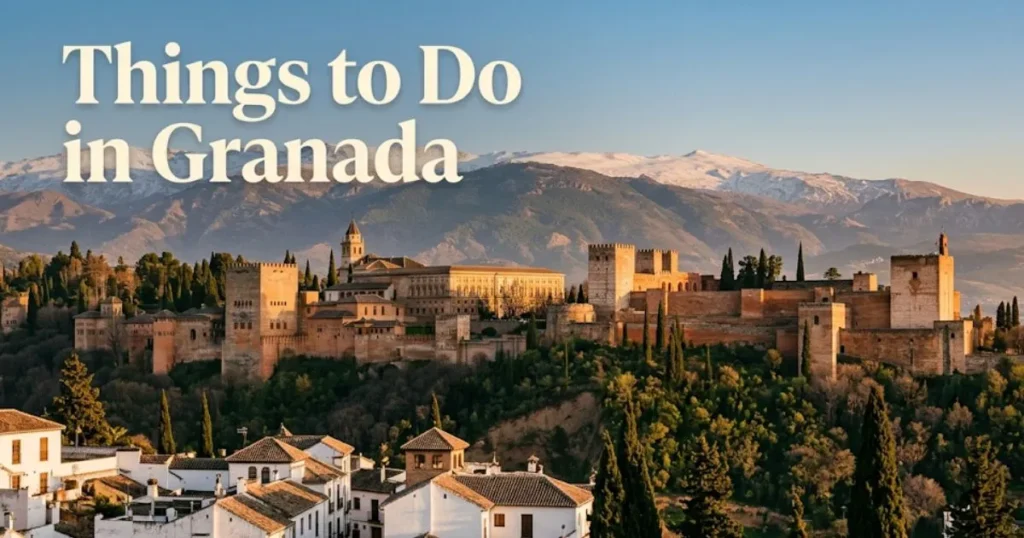
The Alhambra alone justifies the trip for architecture and history enthusiasts.
Granada also offers arguably Spain’s best value for budget travelers.
A night of drinks and tapas can cost under €15 per person at the right bars.
Crowds are the genuine drawback.
July and August bring overwhelming tourist density to the Albaicín and the Alhambra.
Alhambra tickets can sell out 8 weeks in advance during peak months.
Travelers who arrive without pre-booked Nasrid Palaces entry often leave disappointed.
Couples and solo travelers get the most from Granada.
The romantic hilltop viewpoints, intimate tapas bars, and walkable medieval streets create exactly the atmosphere these travelers seek.
Families with young children face stroller-hostile terrain.
Seniors and travelers with mobility limitations should research accessible routes carefully.
The city’s steep cobblestone streets and many stairs are fundamental to its character.
They also make it genuinely challenging for anyone with physical limitations.
According to the Ayuntamiento de Granada, the Albaicín has over 200 streets with gradients exceeding 10%.
That is not a minor inconvenience. It is a core planning consideration.
Key Takeaway: Granada is worth it for architecture lovers, budget eaters, and walkers who book ahead. Avoid if you need flat terrain or beach access.
Best Time to Visit Granada Spain
The best time to visit Granada is April through June and September through October.
Temperatures stay between 18°C and 28°C (64°F to 82°F) and the Alhambra gardens are at their most photogenic.
July and August are the worst months for Granada visits.
Daytime temperatures regularly exceed 38°C (100°F) and the Albaicín’s steep streets become punishing under direct sun.
Tourist density peaks during these months, with Alhambra tickets selling out furthest in advance.
Spring delivers the Festival Internacional de Música y Danza in June and July.
This prestigious event brings orchestral performances to the Alhambra’s open-air courtyards.
Book tickets months ahead if this interests you.
The Semana Santa processions during Holy Week fill Granada’s streets with elaborate religious parades.
This is a culturally significant and visually dramatic experience.
It also makes accommodation scarce and expensive. Book 4 to 6 months ahead for Easter week.
Winter visits from November through February offer a different Granada entirely.
Hotel rates drop significantly and the tapas bars fill with locals rather than tourists.
The Sierra Nevada ski season runs December through April, adding winter sports to Granada’s appeal.
Rain is more frequent in November and March.
Snow in the city center is rare but the mountains create cold evening temperatures even in spring and fall.
Pack layers regardless of season.
| Season | Months | Temperature Range | Crowd Level | Best For |
|---|---|---|---|---|
| Spring | April to June | 18°C to 28°C | Moderate, rising | Alhambra gardens, walking, festivals |
| Summer | July to August | 30°C to 40°C+ | Peak, intense | Morning activities only, evening tapas |
| Fall | September to October | 18°C to 28°C | Moderate | Walking, photography, comfortable sightseeing |
| Winter | November to February | 5°C to 15°C | Low (except holidays) | Budget travel, skiing, local atmosphere |
The Patronato Provincial de Turismo de Granada notes that October has become increasingly popular in recent years.
Formerly a shoulder month, it now sees near-peak crowds during the first two weeks.
September remains the sweet spot for balancing good weather with manageable visitor numbers.
Key Takeaway: Aim for late April, May, late September, or October. Avoid July and August. Book Alhambra tickets the moment you have travel dates.
How Many Days in Granada
Three full days is the ideal amount of time for Granada.
Two days covers the essential sights if you plan efficiently and book the Alhambra in advance.
One day is not enough to do Granada justice.
The Alhambra alone requires 3 to 4 hours. Adding neighborhood walks, viewpoints, and tapas crawls demands at least two full days.
Travelers attempting Granada as a day trip from Seville or Málaga miss the city’s evening character entirely.
Granada’s tapas culture and sunset viewpoints are its best experiences.
Both happen after day-trippers have left.
A three-day visit allows for the Alhambra on one morning, the Albaicín and Sacromonte on another day, and the Realejo, Cathedral area, and a hammam session on the third.
This pace matches the city’s rhythm.
Granada rewards slow afternoons in plaza cafés and unhurried tapas bar crawls.
Four or five days opens up day trips to the Alpujarras villages, Sierra Nevada hiking, or the Costa Tropical.
These are genuinely worthwhile additions if your schedule allows.
| Duration | What You Can Cover | Best For |
|---|---|---|
| 1 day (not recommended) | Alhambra only, rushed lunch, no neighborhood depth | Emergency itinerary only |
| 2 days | Alhambra, Albaicín walk, Sacromonte, 2 tapas crawls | Efficient travelers on tight schedules |
| 3 days (ideal) | Above plus Realejo, Cathedral, hammam, multiple tapas zones | Most travelers, balanced pace |
| 4 to 5 days | Above plus day trips to Alpujarras or Sierra Nevada | Slower travelers, hikers, return visitors |
Solo travelers often find 3 days sufficient.
Couples and photography-focused visitors frequently wish they had 4 or 5.
Families with children benefit from a slower 4-day pace that avoids mid-afternoon sightseeing in summer heat.
Key Takeaway: Plan 3 full days minimum. The Alhambra takes half a day. The evening tapas culture demands another.
Alhambra and Nasrid Palaces Granada
The Alhambra is Europe’s finest Islamic palace complex and the single most important attraction in Granada.
Its Nasrid Palaces feature intricate stucco work, carved wooden ceilings, and the iconic Court of the Lions that no photograph fully captures.
Book your Nasrid Palaces timed-entry ticket 4 to 8 weeks in advance for peak season visits.
The Patronato de la Alhambra releases tickets in rolling blocks. Same-day entry is almost never available from April through October.
Your timed entry window on the ticket is for the Nasrid Palaces specifically.
You must arrive at that 30-minute slot exactly. Late arrival means forfeited entry with no refund.
The rest of the Alhambra complex, including the Alcazaba fortress and Generalife gardens, can be visited without a timed restriction on the same ticket.
Allow 3 to 4 hours for the full complex.
The Generalife gardens are at their best in May and October when the plantings are most vibrant.
Summer visits work best with the earliest morning entry slot, ideally 8:30 a.m.
Afternoon Alhambra visits in July and August are punishingly hot with limited shade in the Alcazaba and Generalife areas.
The Charles V Palace within the complex houses two museums and provides air-conditioned relief on hot days.
It is a Renaissance structure that contrasts sharply with the Islamic architecture surrounding it.
Travelers with limited mobility should contact the Alhambra in advance about accessible routes.
The complex has made improvements in recent years but the Nasrid Palaces include unavoidable stairs and uneven surfaces.
Solo travelers find the Alhambra easy to navigate independently.
Couples appreciate the Generalife gardens and the views from the Alcazaba tower as romantic highlights.
Families with young children should prepare for limited shade, significant walking distances, and minimal child-specific programming.
| Alhambra Section | Time Needed | Highlight | Mobility Note |
|---|---|---|---|
| Nasrid Palaces | 1 hour | Court of the Lions, Hall of the Ambassadors | Stairs, uneven floors |
| Alcazaba fortress | 30 to 45 minutes | Tower views over Granada | Steep stairs, no elevator |
| Generalife gardens | 1 hour | Water features, flower gardens | Some steep paths, partial accessibility |
| Charles V Palace | 30 minutes | Circular courtyard, museums | Accessible, elevator available |
If Alhambra tickets are sold out, the Carmen de los Mártires gardens offer a peaceful green space with views.
The Albaicín viewpoint circuit provides the exterior Alhambra views that many visitors actually prefer to the interior experience.
The Bañuelo, an 11th-century Arab bathhouse on Carrera del Darro, delivers genuine Moorish architecture without the booking stress.
Key Takeaway: Book Nasrid Palaces tickets the moment you confirm travel dates. The 8:30 a.m. summer slot is worth waking up for.
Albaicín Walking Route Granada
The Albaicín is Granada’s UNESCO-listed medieval Islamic quarter and the best neighborhood for aimless walking in the entire city.
Start at Plaza Nueva and follow Carrera del Darro along the river.
This narrow cobblestone street passes the Bañuelo bathhouse and offers the city’s most photogenic Alhambra views from below.
Continue to Paseo de los Tristes, the wide promenade where locals gather on weekend evenings.
The name means “Promenade of the Sad Ones” because funeral processions once passed here en route to the cemetery above.
Turn uphill at Cuesta del Chapiz and enter the Albaicín’s dense whitewashed alley network.
These streets follow the original medieval Islamic layout and deliberately confuse outsiders.
Getting lost here is the point.
Follow signs toward Mirador de San Nicolás for the classic postcard view of the Alhambra with the Sierra Nevada behind it.
This viewpoint is packed at sunset with guitar players and souvenir sellers.
The view is genuinely spectacular. The crowd is genuinely intense.
The local alternative is Mirador de San Cristóbal, a 10-minute walk north.
It offers a wider panorama with fewer people and a view that includes the Albaicín itself in the foreground.
The full Albaicín walking circuit takes 2 to 3 hours at a relaxed pace.
This neighborhood is physically demanding.
Cobblestones, staircases, and sustained uphill gradients define every route.
Solo travelers and fit couples thrive here.
Seniors and travelers with knee or mobility issues should consider the Albaicín minibus routes C31 and C32 that navigate the narrow streets.
Families with strollers will find this neighborhood genuinely difficult.
The Albaicín reveals itself best in early morning or late afternoon light.
Midday summer walking is exhausting and the white walls create intense reflected glare.
Winter afternoon walks work beautifully with golden light hitting the Alhambra from across the valley.
Key Takeaway: Walk Carrera del Darro to Paseo de los Tristes, then climb to Mirador de San Cristóbal instead of San Nicolás for the same view with half the crowd.
Sacromonte Neighborhood Guide
Sacromonte is Granada’s cave-dwelling district, historically home to the city’s Gitano (Roma) community and the birthplace of zambra flamenco.
The neighborhood climbs the hill opposite the Alhambra above the Albaicín.
Whitewashed caves are carved directly into the hillside, many still functioning as homes and flamenco venues.
Sacromonte feels more raw and less polished than the Albaicín.
The streets are unpaved in sections and the elevation gain is significant.
It rewards travelers seeking something more culturally specific than the Alhambra-Albaicín tourist circuit.
Visit Museo Cuevas del Sacromonte for an ethnographic introduction to cave-dwelling life.
The museum occupies restored caves and covers local history, flamenco traditions, and the neighborhood’s agricultural past.
The Abadía del Sacromonte at the top of the hill offers guided tours of its abbey and catacombs.
The views from this elevation extend across the entire city and the Sierra Nevada.
These are arguably better panoramas than anything from the Albaicín viewpoints.
Sacromonte comes alive at night when the cave flamenco venues open.
Cueva de la Rocío and Venta el Gallo are the most established names.
Flamenco here differs from the Seville style.
Zambra is rougher, more percussive, and performed in intimate cave settings with 30 to 50 seats rather than large theaters.
Daytime Sacromonte is quiet and residential.
Visit in the morning for photography and the museum. Return in the evening for performances.
Solo travelers find Sacromonte fascinating and safe but should use taxis downhill after dark.
The unlit paths are steep and isolated late at night.
Couples will find the cave flamenco shows among the most romantic experiences in Granada.
Families with children should verify show start times.
Many cave performances begin at 9 p.m. or later and run 60 to 90 minutes.
This exceeds most young children’s attention spans.
Key Takeaway: Visit Sacromonte in the morning for views and the cave museum. Return at night for zambra flamenco in a cave venue. Taxi downhill after dark.
Granada Cathedral and Royal Chapel
Granada Cathedral is Spain’s first Renaissance church and a monument to the Catholic Monarchs’ victory over Islamic Granada.
Its massive white-and-gold interior contrasts sharply with the Alhambra’s intricate Islamic ornamentation.
The cathedral is enormous.
Its dimensions were designed to overwhelm and convey the power of the newly established Christian order in 16th-century Granada.
Admission runs approximately €5 to €7 for adults with audio guide included.
Entry is typically available without advance booking except during Semana Santa.
The Royal Chapel next door holds the tombs of Queen Isabella I of Castile and King Ferdinand II of Aragon, the Catholic Monarchs who completed the Reconquista in 1492.
Their marble tombs are the main draw.
The crypt below holds their lead coffins, a detail many visitors miss.
The Royal Chapel requires a separate ticket from the cathedral.
Combined tickets are available and save a few euros.
Allow 90 minutes for both sites.
They sit next to each other on Gran Vía de Colón, Granada’s main commercial thoroughfare.
The contrast between the cathedral’s interior and the Alhambra’s Islamic aesthetic is intentional.
Visiting both on the same day creates a powerful architectural narrative.
The cathedral is best in mid-afternoon when light streams through its tall windows.
Summer crowds are lighter than at the Alhambra and the interior remains cool regardless of outdoor temperatures.
This makes it an excellent afternoon option during hot months.
Solo travelers and couples interested in Spanish history find these sites absorbing.
Families with young children may struggle with the subdued, museum-like atmosphere.
The Royal Chapel has strict no-photography rules and silence expectations.
| Site | Admission Range | Time Needed | Best For |
|---|---|---|---|
| Granada Cathedral | €5 to €7 | 45 to 60 minutes | Architecture, art, afternoon heat relief |
| Royal Chapel | €5 to €7 | 30 to 45 minutes | Spanish history, royal tombs |
| Combined ticket | €9 to €12 | 90 minutes total | Efficient visitors covering both |
Key Takeaway: Visit the cathedral and Royal Chapel in one combined afternoon visit. They offer air-conditioned relief and a direct architectural counterpoint to the Alhambra.
Best Tapas Bars Granada Locals
Granada’s free tapas culture is the city’s greatest culinary asset.
Every drink order at a traditional Granada tapas bar comes with a complimentary plate of food.
This is not a promotion. It is the city’s standard practice.
The quality varies enormously.
Tourist-zone bars around Plaza Nueva and Calle Elvira often serve minimal tapas like a few olives or a small square of tortilla.
Locals head to specific streets and bars where the free tapas are substantial and the quality rivals paid dishes.
Calle Navas is Granada’s traditional tapas street.
It has declined in recent years as tourist volume increased. The tapas are still free but the quality is inconsistent.
Calle Elvira offers better options.
Los Diamantes on Calle Navas serves exceptional fried fish tapas with every round of drinks.
It is packed, loud, and standing-room-only by 9 p.m.
This is the Granada tapas experience at its most authentic.
Bar Castañeda near Plaza Nueva serves traditional Granada-style tapas with a historic wood-paneled interior.
The vermouth here is a local institution.
Bodegas Castañeda next door is the standing-area counterpart serving wine from barrels and classic tapas.
El Tabernáculo on Calle Elvira offers generous tapas and a student-heavy atmosphere near the university.
Prices run €2.50 to €3.50 per drink including the free tapa plate.
A full evening of drinks and food can cost €12 to €18 per person.
This is genuinely one of Europe’s best dining values.
The tapas selection system varies by bar.
Some let you choose from a list with each drink order.
Others serve a progressive sequence of tapas, with each round bringing a more substantial plate.
Let the bartender guide you rather than demanding specific dishes.
Solo travelers thrive in Granada tapas bars.
The standing culture and bar counter format make solo dining feel natural.
Couples can create a progressive tapas crawl moving from bar to bar.
Families with children find the standing-room format challenging.
Most tapas bars lack high chairs and the evening crowd density can overwhelm young children.
Key Takeaway: Skip Plaza Nueva tapas bars. Go to Los Diamantes on Calle Navas and the bars along Calle Elvira. Expect to stand. Budget €15 per person for a full evening.
Mirador San Nicolás Granada
Mirador de San Nicolás is Granada’s most famous viewpoint, offering the classic Alhambra-to-Sierra Nevada panorama.
It is genuinely spectacular and genuinely overcrowded at sunset.
The viewpoint sits in the upper Albaicín at the edge of Plaza de San Nicolás.
The church of San Nicolás provides the backdrop.
The Alhambra spreads across the hill directly opposite with the Sierra Nevada forming the horizon.
Sunset here is a Granada ritual.
Guitar players perform, souvenir sellers work the crowd, and hundreds of people jostle for the best photo position.
The atmosphere is festive but intensely tourist-oriented.
The view deserves its reputation. The crowd experience does not.
Arrive at sunrise instead for the same view with perhaps 10 other people.
The morning light hits the Alhambra’s eastern-facing walls and the photo conditions are arguably better.
The local alternative is Mirador de San Cristóbal, a 10-minute walk northwest.
It sits higher than San Nicolás with a wider panorama that includes the Albaicín below and the Alhambra at a slight distance.
It has benches, shade, and often fewer than 20 people even at prime sunset hours.
Mirador de la Lona near the Alhambra entrance offers the reverse view across the valley to the Albaicín and Sacromonte.
It provides a different perspective that complements the San Nicolás view.
Mirador de la Churra in the Realejo district offers Alhambra views from the southern side with the Generalife gardens prominent in the foreground.
This is a residential area with almost no tourist presence.
Couples seeking a romantic sunset should consider San Cristóbal over San Nicolás.
The crowd crush at San Nicolás undermines any romantic atmosphere.
Solo travelers comfortable navigating hilly streets can create a sunset viewpoint circuit hitting 2 to 3 miradores.
Budget travelers can pack wine and snacks.
The viewpoints are free public spaces and Granada has no open-container restrictions in these areas.
Key Takeaway: Skip San Nicolás at sunset. Go at sunrise or walk 10 minutes to Mirador de San Cristóbal for the same Alhambra view without the crush.
Flamenco Shows Granada Authentic
Granada’s flamenco tradition is distinct from the better-known Seville style.
The local form is zambra, born in Sacromonte’s cave communities and characterized by rougher vocals, more percussive footwork, and intensely intimate settings.
Authentic zambra happens in Sacromonte cave venues with 30 to 80 seats.
Cueva de la Rocío is the most historically significant, operated by the same family since the 1950s.
Venta el Gallo offers a larger cave setting with professional productions.
These are tourist-oriented but the performers are skilled professionals, many from Sacromonte families.
The tourist flamenco experience clusters around Calle Elvira and Plaza Nueva.
These tablaos offer walk-in availability but the quality is inconsistent and the settings feel generic.
The cave venues deliver something those street-level tablaos cannot.
The rough-hewn walls create raw acoustics and the intimacy of a small crowd amplifies the emotional intensity.
Expect to pay €25 to €35 per person for a cave flamenco show including one drink.
Shows typically start between 9 p.m. and 10 p.m. and run 60 to 75 minutes.
Book at least one day ahead during peak seasons.
Walk-up availability exists but venue quality varies dramatically.
The Jardines de Zoraya in the Albaicín offers a higher-production flamenco dinner experience.
The food is above-average for a tablao and the garden setting is lovely on warm evenings.
This suits couples seeking a polished date-night experience.
The Peña La Platería is Granada’s oldest flamenco peña, or private club.
It holds member-only performances that occasionally open to invited guests.
This is the most authentic flamenco experience in Granada and the hardest to access.
Solo travelers fit comfortably into cave venues.
The intimate seating format and shared emotional experience of live flamenco suit solo attendance.
Families with young children should verify show start times.
Most performances begin too late for children under 10.
| Venue | Location | Style | Price Range | Best For |
|---|---|---|---|---|
| Cueva de la Rocío | Sacromonte | Traditional cave zambra | €25 to €30 | Authentic cave experience |
| Venta el Gallo | Sacromonte | Professional cave production | €28 to €35 | Polished show, larger venue |
| Jardines de Zoraya | Albaicín | Dinner and flamenco | €35 to €50 | Couples, date night |
| Le Chien Andalou | Albaicín | Intimate tablao | €20 to €28 | Budget, shorter shows |
| Peña La Platería | Albaicín | Private peña | Members only | Genuine local flamenco |
Key Takeaway: Book Cueva de la Rocío or Venta el Gallo in Sacromonte for genuine cave zambra. Avoid the walk-in tablaos on Calle Elvira.
Realejo Granada District
The Realejo is Granada’s former Jewish quarter and the neighborhood where locals actually live and socialize outside the tourist zones.
It sits between the Alhambra hill and the city center, sloping gently south toward the Genil River.
Campo del Príncipe is the Realejo’s social heart.
This plaza fills with families, students, and neighborhood regulars on evenings and weekends.
Restaurants here serve Granada residents, not tourist menus.
The Carmen de los Mártires gardens occupy a hillside estate at the Realejo’s upper edge.
These free-entry gardens offer a peaceful alternative to the Generalife with peacocks wandering among fountains and cypress-lined paths.
The Alhambra views from here are partial but the atmosphere is serene.
The Realejo’s street art is distinctive.
Large-scale murals cover building facades along Calle Molinos and its side streets.
These are commissioned works, not random graffiti.
They have transformed the neighborhood’s visual character in recent years.
Tapas bars in the Realejo serve generous free tapas without the tourist-zone compromises.
Bar Provincias on Calle Provincias offers traditional Granada bar atmosphere with strong tapas.
La Sitarilla on Calle San Matías serves excellent meat and seafood tapas with each round.
Dining in the Realejo costs the same as elsewhere in Granada for drinks.
The tapas quality is notably higher than in the Plaza Nueva zone.
This neighborhood suits travelers who have covered the Alhambra and Albaicín and want to see where Granada residents actually spend their time.
Solo travelers and couples seeking a less-touristed dinner environment will appreciate the Realejo.
Families fit well here.
The Campo del Príncipe has a playground and the plaza atmosphere is child-friendly in early evening.
Key Takeaway: Visit the Realejo for dinner tapas at Bar Provincias or La Sitarilla, then walk the street art along Calle Molinos. This is where Granada locals actually eat.
Arab Baths Hammam Granada
Granada’s Arab baths offer a direct connection to the city’s Moorish past and a physical reset after days of hill walking.
The Hammam Al Ándalus near Plaza Nueva is the most established option.
It occupies a restored historic building with a series of thermal pools at varying temperatures.
The warm pool, hot pool, and cold plunge follow the traditional hammam progression.
The interior features arched brick ceilings, candlelit alcoves, and tile work that evokes the Alhambra’s aesthetic.
This is not an authentically medieval bathhouse.
It is a contemporary spa designed in the Moorish revival style.
The experience is polished, professional, and genuinely relaxing.
Sessions typically run 90 minutes with pool access starting around €35 to €45.
Add-on massages increase the price to €60 to €80.
Advance booking is essential in all seasons.
Same-day availability is rare even during winter low season.
The hammam maintains a quiet atmosphere.
Conversation is permitted only in whispers in the relaxation areas.
This makes it ideal for solo travelers seeking decompression and couples wanting a shared sensory experience.
It is not suitable for children.
The minimum age is typically 6 or 8 depending on the session type.
The quiet requirement and hot water temperatures do not suit young children.
The hammam provides a practical hot-weather activity.
The cool pool offers genuine relief during summer afternoons when outdoor sightseeing becomes exhausting.
Winter evening sessions feel especially atmospheric.
The contrast between cold Granada streets and warm candlelit pools heightens the experience.
Baños de Elvira are Granada’s only surviving medieval Arab baths open for viewing, not bathing.
They sit near Calle Elvira and offer free entry to see the 11th-century architecture.
This is a historical visit, not a spa experience.
Key Takeaway: Book Hammam Al Ándalus 2 to 3 days ahead for an afternoon or evening session. It is the best recovery activity after Alhambra and Albaicín hill walking.
Granada Itinerary 2 Days
A 2-day Granada itinerary requires discipline and pre-booked Alhambra tickets.
This schedule groups attractions by neighborhood to minimize walking between sites.
Day 1 covers the Alhambra complex in the morning followed by the Cathedral area and a Realejo evening.
Start at the Alhambra for the earliest available Nasrid Palaces entry slot.
Spend 3 to 4 hours covering the palaces, Alcazaba, and Generalife gardens.
Exit through the Puerta de la Justicia and walk downhill toward Plaza Nueva.
Lunch at Bar Castañeda or Bodegas Castañeda near Plaza Nueva.
These serve traditional tapas in a historic setting and recover energy after the Alhambra walk.
Afternoon: Granada Cathedral and Royal Chapel.
These are air-conditioned and manageable even when tired from the morning.
Walk through the Alcaicería, the former silk market now filled with souvenir shops.
Evening: Head to the Realejo district.
Dinner tapas at Bar Provincias or La Sitarilla.
Finish with a walk through Campo del Príncipe.
Day 2 covers the Albaicín and Sacromonte.
Morning: Walk Carrera del Darro from Plaza Nueva to Paseo de los Tristes.
Continue uphill into the Albaicín.
Visit Mirador de San Cristóbal rather than San Nicolás for a less-crowded viewpoint experience.
Wind back down through the Albaicín’s white alley network.
Lunch at Los Diamantes on Calle Navas for fried fish tapas.
Afternoon: Museo Cuevas del Sacromonte for cave-dwelling history.
Explore the upper Sacromonte and visit Abadía del Sacromonte if time allows.
Evening: Pre-booked flamenco show at Cueva de la Rocío or Venta el Gallo.
Dinner before or after at tapas bars along Calle Elvira.
| Day | Morning | Afternoon | Evening |
|---|---|---|---|
| 1 | Alhambra (earliest entry) | Cathedral, Royal Chapel, Alcaicería | Realejo tapas, Campo del Príncipe |
| 2 | Carrera del Darro, Albaicín, Mirador San Cristóbal | Sacromonte cave museum | Cave flamenco, Calle Elvira tapas |
This itinerary assumes pre-booked Alhambra tickets.
Without them, substitute a morning visit to Carmen de los Mártires and the Bañuelo for Day 1.
Solo travelers can complete this itinerary comfortably.
Couples should add a hammam session to Day 2 afternoon if energy allows.
Families with children may find the pace demanding.
Consider splitting the Alhambra into a morning visit and returning after a long lunch break rather than powering through the full 3 to 4 hours.
Key Takeaway: Two days works if Alhambra tickets are pre-booked and you group attractions by neighborhood. Day 1 is Alhambra and central sights. Day 2 is Albaicín and Sacromonte.
Day Trips From Granada Without Car
Granada offers several excellent day trips reachable by public bus without renting a car.
The Alpujarras villages south of the Sierra Nevada are the most distinctive option.
White villages like Pampaneira, Bubión, and Capileira cling to a dramatic gorge on the mountains’ southern slopes.
ALSA buses depart from Granada’s bus station to the Alpujarras.
The journey takes approximately 2 hours to reach the main villages.
The mountain scenery, hiking trails, and artisan shops selling local textiles and pottery reward a full day.
Sierra Nevada National Park offers hiking in summer and skiing in winter.
The ski resort at Pradollano sits just 35 kilometers from Granada.
Buses run from the city to the slopes in ski season, December through April.
Summer hiking trails range from easy walks to demanding peak ascents.
Costa Tropical beaches are approximately 70 kilometers south of Granada.
Almuñécar and Salobreña offer Mediterranean beaches with dramatically lower tourist density than the Costa del Sol.
Buses run regularly and the journey takes about 90 minutes.
This is Granada’s practical beach option in July and August when city temperatures become punishing.
The Sierra de Huétor Natural Park sits immediately north of Granada.
It offers hiking trails, picnic areas, and woodland that provides shade relief in summer.
Local buses reach the park’s edge in about 30 minutes.
Montefrío is a hilltop village in olive-growing country about an hour northwest of Granada.
It was named by National Geographic as having one of the world’s best views from its church-topped rock.
Buses serve the route but schedules are limited.
Verify return times carefully.
| Day Trip | Travel Time | Transport | Best For |
|---|---|---|---|
| Alpujarras villages | 2 hours | ALSA bus | Hikers, photographers, artisan shopping |
| Sierra Nevada hiking | 45 minutes | Bus or taxi | Summer hikers, winter skiers |
| Costa Tropical beaches | 90 minutes | Bus | Summer beach relief |
| Montefrío | 60 minutes | Limited bus | Photographers, quiet village atmosphere |
| Sierra de Huétor | 30 minutes | Local bus | Easy hiking, summer shade |
Solo travelers can manage all these day trips independently.
Families with children will find the Costa Tropical and Alpujarras manageable.
Senior travelers should consider the Alpujarras villages where the bus drops you directly in the village centers with minimal walking required.
Key Takeaway: The Alpujarras villages are the best day trip from Granada. ALSA buses run daily. Pampaneira, Bubión, and Capileira reward a full day.
Granada Budget Travel Tips
Granada is one of Spain’s best cities for budget travel.
The free tapas culture fundamentally changes the economics of dining.
A budget traveler can eat and drink well for €20 to €30 per day including tapas bar meals.
Accommodation costs run €25 to €40 per night for hostels and €50 to €80 for budget hotels.
These prices are 30% to 50% lower than comparable Barcelona or Madrid accommodations.
Book 2 to 3 months ahead for the best rates, especially April through June and September through October.
The Granada Card tourist pass bundles Alhambra entry, cathedral admission, public transit, and discounts on other attractions.
Calculate whether your planned itinerary justifies the cost before purchasing.
It makes sense for visitors covering multiple paid attractions over 3 days.
Free activities in Granada include:
- All Albaicín and Sacromonte walking routes
- All public viewpoints including San Nicolás and San Cristóbal
- Carmen de los Mártires gardens
- Baños de Elvira medieval bath viewing
- Plaza Bib-Rambla and Plaza Nueva for people-watching
- The Alcaicería market browsing
The Parque de las Ciencias offers budget-friendly family entertainment.
It is Granada’s interactive science museum with a butterfly house, planetarium, and observation tower.
Admission runs approximately €8 to €10 with family discounts available.
Winter visits offer the lowest accommodation and flight prices.
November through February sees hotel rates drop 30% to 40% below peak season levels.
The tapas bars fill with locals and the Alhambra is easier to book.
Solo budget travelers benefit most from Granada’s tapas culture.
The bar counter dining format and free food with drinks system makes solo dining affordable and socially comfortable.
Families save by eating lunch as the main meal.
Many restaurants offer a weekday lunch menu at €10 to €15 for three courses including a drink.
This is the “menú del día” and it represents Granada’s best dining value.
Key Takeaway: Granada’s free tapas culture makes it one of Europe’s best budget cities. Eat at tapas bars, not tourist restaurants. Visit in winter for the lowest prices.
Safety and Practical Warnings for Granada
Granada is a safe city by any reasonable standard but specific practical risks exist that visitors should anticipate.
Pickpocketing is the primary safety concern.
Crowded areas around the Alhambra entrance, Plaza Nueva, and the Mirador de San Nicolás at sunset attract opportunistic thieves.
Keep phones and wallets in front pockets or zipped bags in these zones.
Summer heat is genuinely dangerous.
Daytime temperatures regularly exceed 38°C (100°F) in July and August.
Carry water, wear sun protection, and avoid uphill Albaicín walking between noon and 4 p.m. during summer.
The Albaicín and Sacromonte streets are physically demanding.
Cobblestones, sustained gradients, and many stairs challenge anyone with mobility limitations.
Wear sturdy shoes. Avoid new or fashion footwear.
Cell service is reliable throughout the city center but can drop in some Sacromonte cave areas.
Download offline maps before heading uphill.
Limited vehicle access in the Albaicín means taxis cannot always reach you.
The C31 and C32 minibuses serve the upper Albaicín.
Memorize their routes if staying or dining in the upper neighborhood.
Alhambra ticket scams exist.
Purchase only from the official Patronato de la Alhambra website or authorized vendors.
Third-party resale tickets carry significant risk of fraud.
Granada is safe for solo female travelers, including at night in central areas.
Standard precautions apply: avoid unlit Sacromonte paths after dark, use taxis for late returns, and watch drinks in crowded bars.
Emergency services in Spain operate through 112 for all emergencies including medical, police, and fire response.
Key Takeaway: Watch for pickpockets at crowded viewpoints and the Alhambra entrance. Avoid midday summer walking in the Albaicín. Book Alhambra tickets only through official channels.
Frequently Asked Questions About Granada Spain
Do I really need to book Alhambra tickets in advance?
Yes, booking 4 to 8 weeks ahead is essential for peak season visits from April through October.
Same-day Alhambra tickets are almost never available during these months.
The Nasrid Palaces timed entry is strictly enforced.
What is the best area to stay in Granada for first-time visitors?
The Realejo district offers the best balance of walkability, tapas quality, and overnight quiet for first-time visitors.
The Centro area near Plaza Nueva is more convenient but noisier at night.
The Albaicín offers atmosphere but its steep streets complicate luggage transport.
Is Granada safe for solo female travelers?
Granada is safe for solo female travelers in central areas at standard evening hours.
Use taxis for late returns from Sacromonte and the upper Albaicín.
Standard bar awareness practices apply in crowded tapas zones.
How does the free tapas system actually work in Granada?
Every drink order at a traditional Granada bar comes with a free small plate of food.
Some bars let you choose from a list with each round.
Others serve a progressive sequence, with better tapas arriving on subsequent orders.
The system operates city-wide but quality is higher outside the Plaza Nueva tourist zone.
Can you visit Granada as a day trip from Málaga or Seville?
Granada deserves at least 2 full days and a day trip misses the evening tapas culture and sunset viewpoints.
The Alhambra requires 3 to 4 hours alone.
Day-tripping is possible logistically but an inadequate way to experience the city.
What is there to do in Granada if Alhambra tickets are sold out?
The Albaicín viewpoint circuit, Sacromonte cave museum, Carmen de los Mártires gardens, and the Bañuelo Arab baths provide genuine Moorish experiences without Alhambra tickets.
The cathedral, Royal Chapel, and hammam sessions fill a full day.
Book the hammam 2 to 3 days ahead as an alternative anchor experience.
Granada delivers more than the Alhambra to travelers who explore its neighborhoods with a local map and an appetite for steep walking.
The free tapas culture, the Albaicín’s medieval streets, and Sacromonte’s cave flamenco tradition create an experience that feels genuinely distinct from anywhere else in Spain.
Book Alhambra tickets first, pack sturdy shoes, and plan your days by neighborhood to minimize backtracking.
Verify Alhambra booking windows, tapas bar opening hours, and flamenco show schedules directly with venues before departure.
These details shift with season and ownership.
The travelers who love Granada most are the ones who accept its hills, eat standing at tapas bars, and book ahead for the palace that anchors the city’s skyline.