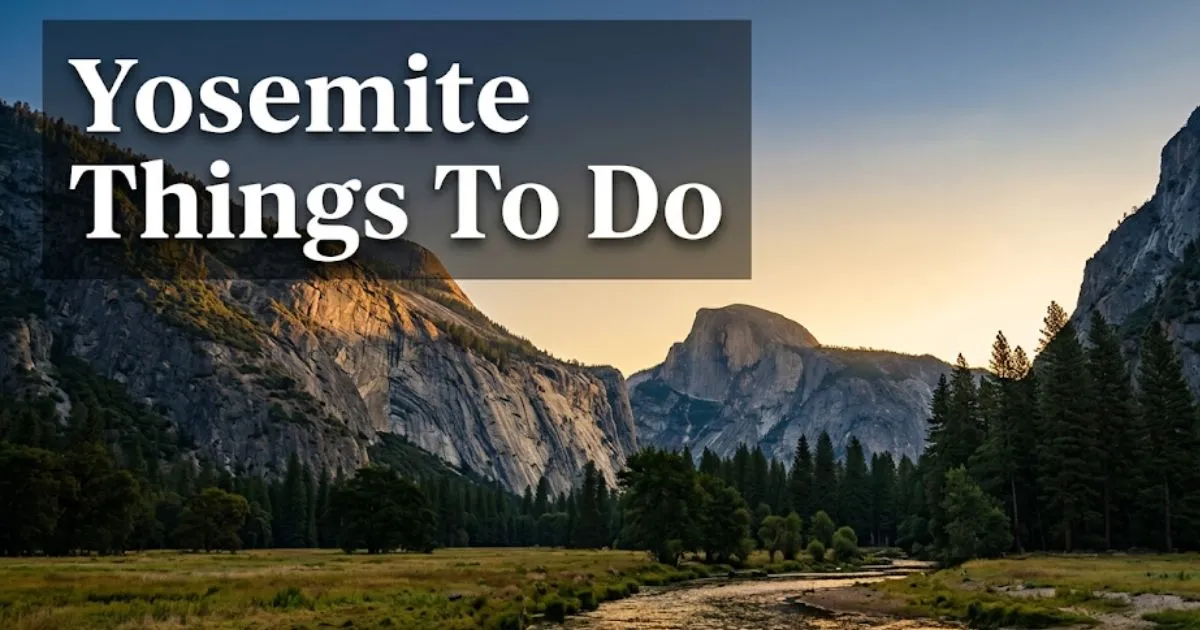
Yosemite Things To Do: The Complete 2026 Travel Guide

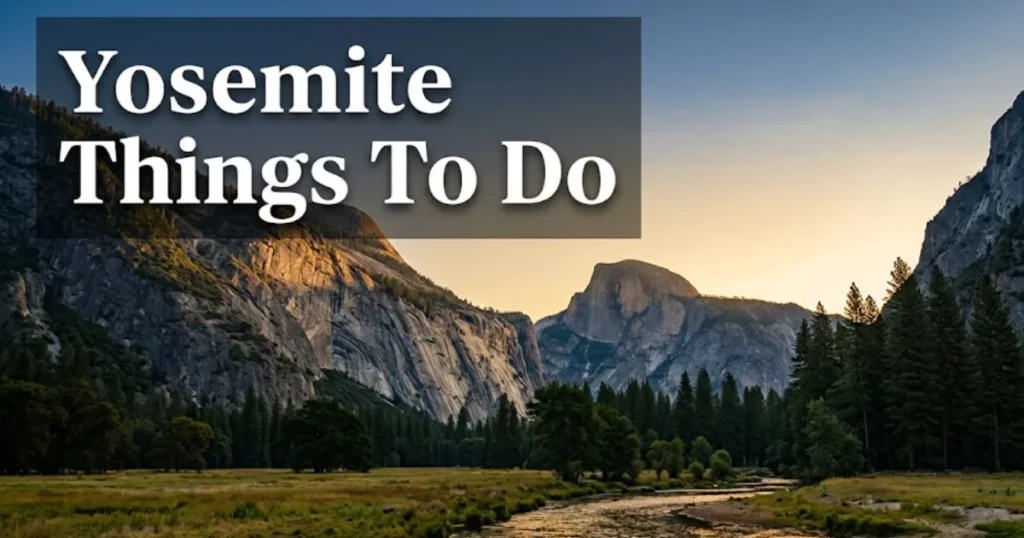
Yosemite things to do range from valley floor strolls with no physical demands to multi-day granite climbs requiring permits and months of planning.
Yosemite National Park draws more than 4 million visitors annually, according to the National Park Service, making advance planning the difference between an unforgettable Sierra Nevada experience and a frustrating afternoon in a traffic jam.
This guide covers the best hikes, viewpoints, family activities, and logistical realities for 2026. It includes honest crowd assessments, timed-entry permit guidance, seasonal timing, and specific local alternatives to the most congested spots.
Yosemite Things To Do: What You Need to Know Before You Arrive
Yosemite things to do span seven distinct zones of the park, and most visitors make the critical mistake of treating the park as only Yosemite Valley.
Yosemite National Park covers approximately 1,169 square miles. The valley floor represents a small fraction of that total area.
The park entrance fee runs approximately $35 per vehicle as of recent years. An America the Beautiful Annual Pass covers entry and pays for itself after two national park visits.
Cell service is limited to almost nothing inside the park. Download offline maps, the NPS Yosemite app, and your reservation confirmation before you leave any town with reliable signal.
Parking in Yosemite Valley fills completely by 9 a.m. on peak summer days. Arriving before 8 a.m. or using the free Yosemite Valley Shuttle System is not optional strategy. It is the practical reality of visiting in summer.
The Yosemite Valley Visitor Center at Yosemite Village is the best first stop for orientation, ranger guidance, and updated trail conditions. It opens daily with seasonal hours. Verify current hours at nps.gov/yose before visiting.
Insider Tip:
- Download the NPS Yosemite app offline before you lose signal on Highway 120 or Highway 140
- Shuttle Stop 5 at Yosemite Village is the most useful single hub for valley floor access
- Solo travelers: the valley’s free shuttle system is safe, well-marked, and ideal for navigating alone without parking stress
For seniors and accessibility travelers: The Valley Loop Trail along the flat Merced River corridor is paved and accessible by the shuttle system, offering legitimate valley-floor engagement without steep terrain.
Best Things To Do in Yosemite National Park
The best things to do in Yosemite National Park span hiking, wildlife watching, photography at named viewpoints, ranger-led programs, and high-country exploration on Tioga Road.
No single activity defines the park. The experience you build depends entirely on your physical fitness, traveler profile, and how much advance planning you did.
| Activity | Best For | Physical Demand | Advance Booking | Cost Range |
|---|---|---|---|---|
| Half Dome cables route | Experienced hikers | Very High | Required (lottery) | Permit fee, park entry |
| Mist Trail to Vernal Fall | Moderate hikers | Moderate | Not required | Park entry only |
| Valley Loop Trail bike | Families, couples | Low | No | Bike rental fee |
| Glacier Point Road drive | All profiles | Low (drive-up) | Verify road status | Park entry only |
| Tuolumne Meadows hiking | Fit adults, experienced | Moderate to High | Wilderness permit for overnight | Park entry only |
| Mariposa Grove walk | Families, seniors | Low to Moderate | Shuttle from Wawona | Park entry only |
| Ansel Adams Gallery | Non-hikers, photographers | None | No | Free to enter |
| Badger Pass snowshoeing | Winter visitors | Low to Moderate | Seasonal | Rental fees apply |
The National Park Service identifies the Yosemite Valley Shuttle System as the primary transportation tool within the valley, with stops covering every major attraction from Bridalveil Fall to Mirror Lake.
For budget travelers: Every major valley floor viewpoint, the Bridalveil Fall base walk, and the Cook’s Meadow loop are accessible with no cost beyond the park entrance fee.
The most overrated activity in Yosemite is parking at Tunnel View midday in July. The view itself is genuine and worth experiencing. The gridlock, the crowds on the pullout, and the 45-minute wait for parking are not.
Local alternative: Reach Tunnel View before 7:30 a.m. or after 7 p.m. in summer. The light is better. The parking lot is accessible. The valley appears below you without the crowd density that makes midday here feel like a theme park queue.
Things To Do in Yosemite Valley: The Valley Floor Playbook
The best things to do in Yosemite Valley for a single day start at Tunnel View at sunrise, move to Bridalveil Fall, continue through Cook’s Meadow, and end at Sentinel Bridge for the El Capitan reflection at sunset.
That sequence covers the valley’s three most reliable photography moments without requiring a single trail permit or advance reservation.
Sentinel Bridge over the Merced River offers one of the most reproduced compositions in American landscape photography: Half Dome reflected in still water at sunrise. This is a 5-minute walk from Shuttle Stop 9.
The Valley Loop Trail covers approximately 13 miles if walked in full, but most visitors do 2 to 4-mile segments by shuttle-hopping between stops. No special fitness required for the paved western sections near the Valley Floor meadows.
Cook’s Meadow is the most underused flat space in Yosemite Valley. It sits between Yosemite Village and Yosemite Falls, offering open meadow wildlife watching, particularly at dusk when deer and sometimes black bears emerge from the tree line.
1-Day Yosemite Valley Itinerary:
- Arrive before 7:30 a.m. and park at the day-use lot near Yosemite Valley Visitor Center
- Walk or shuttle to Tunnel View for the valley panorama in morning light
- Drive or shuttle west to Bridalveil Fall trailhead for the 0.5-mile round trip base walk
- Return east via shuttle to Yosemite Village for orientation at the Visitor Center
- Walk through Cook’s Meadow toward Yosemite Falls Lower Trailhead
- Board the shuttle east to Mirror Lake trailhead for a flat 5-mile loop around the lake
- Return to Sentinel Bridge by 7 p.m. for the Half Dome reflection in evening light
For families with young children: This itinerary works with ages 4 and up. The shuttle is stroller-accessible. Cook’s Meadow requires no climbing and holds children’s attention for wildlife spotting.
Key Takeaway: Arriving before 8 a.m. and using the free Yosemite Valley Shuttle System are the two moves that determine whether your valley day succeeds.
Top 5 Things To Do in Yosemite National Park
The top 5 things to do in Yosemite National Park, ranked by the combination of scenery payoff and reasonable accessibility, are: the Mist Trail to Vernal Fall, the Glacier Point Road drive, Mariposa Grove, the Valley Floor sunset at Sentinel Bridge, and a Tuolumne Meadows morning walk along the Tuolumne River.
Each of these earns its reputation. Not all of them deserve equal prioritization for every traveler type.
1. Mist Trail to Vernal Fall (top for moderate hikers)
The Mist Trail from Happy Isles trailhead to Vernal Fall footbridge covers approximately 1.6 miles round trip at moderate effort. Extending to Nevada Fall adds 4 miles and significant elevation. In late May and June, the trail runs through literal mist from the fall. Wet rocks and slippery granite steps make waterproof footwear and hiking poles essential.
2. Glacier Point Road drive (top for all profiles)
Glacier Point sits at approximately 7,214 feet and overlooks the entire Yosemite Valley, Half Dome, and the Clark Range. The drive takes approximately 45 minutes from Yosemite Valley on Glacier Point Road. No hiking required for the main overlook. The road typically closes in winter, usually from November through May, depending on snowpack. Verify road status at Caltrans or nps.gov/yose before visiting.
3. Mariposa Grove (top for families and non-hikers)
Mariposa Grove contains over 500 mature giant sequoias, including the California Tunnel Tree and the Grizzly Giant, estimated at approximately 2,700 years old. A free shuttle runs from the Mariposa Grove Welcome Plaza. The main grove loop covers approximately 2 miles on a relatively flat path.
4. Sentinel Bridge at sunset (top for couples and photographers)
No permit, no booking, no cost beyond park entry. Arrive 30 minutes before sunset for the Half Dome reflection sequence.
5. Tuolumne Meadows morning walk (top for experienced explorers)
A flat 1.5-mile walk along the Tuolumne River through Tuolumne Meadows at 8,600 feet elevation. Fewer crowds than the valley floor on most summer days.
For seniors: Glacier Point Road and Mariposa Grove’s main loop are the two highest-payoff, lowest-physical-demand experiences in the park.
Best Things To Do in Yosemite: Iconic Experiences Worth the Hype
The best things to do in Yosemite that genuinely earn their iconic reputation are the Half Dome cables route, a dawn walk through Cook’s Meadow, and an evening ranger program at Yosemite Valley Visitor Center.
Half Dome is the park’s single most famous physical challenge. The full route from Happy Isles covers approximately 17 miles round trip with roughly 4,800 feet of elevation gain. The Half Dome cables permit is required for the cables section and is distributed through a lottery system at Recreation.gov. Applications typically open months in advance. For 2026, verify lottery dates and availability at Recreation.gov well before your intended visit date.
The cables section itself involves ascending 400 feet of sheer granite using fixed cables and wooden footholds. Heights, wet granite, and afternoon thunderstorms in summer make this genuinely dangerous for unprepared visitors.
The Yosemite Conservancy funds ranger-led interpretive programs throughout the park. Evening programs at Yosemite Valley Lodge and at campground amphitheaters run most nights in summer. These are free with park admission and consistently excellent for all ages.
The honest assessment: El Capitan is best experienced from the meadow below it, specifically from the El Cap meadow pullout on Northside Drive, looking up at active climbing routes. The vertical scale of 3,000 feet of granite is incomprehensible until you spot a climber on the wall and realize the person who looks like a dot is a six-foot adult.
For couples: Book the pre-reserved sunset dinner at the Ahwahnee Hotel dining room. The room itself is a 1927 National Historic Landmark with timber-and-stone architecture that earns the reservation cost as much as the food does.
Insider Tip:
- Bring binoculars to El Cap meadow to spot climbers on the Dawn Wall and Nose routes
- Ranger programs at campground amphitheaters are free and run later in summer evenings, well-suited for families already camped in the valley
- The Yosemite Museum next to the Visitor Center is free, small, and genuinely informative about Ahwahnee peoples’ history in the valley
Fun Things To Do in Yosemite: Non-Hiking Activities and Family Favorites
The best fun things to do in Yosemite for visitors who prefer not to hike include valley floor biking, Merced River swimming and rafting, the Ansel Adams Gallery, and the Junior Ranger Program for children.
Yosemite Valley’s flat floor lends itself to biking more than most visitors realize. Bike rentals are available seasonally at Yosemite Valley Lodge and Half Dome Village (formerly Curry Village). Approximately 12 miles of paved bike paths cover the valley floor. The route past Cook’s Meadow and along the Merced River is flat enough for children as young as 6 with training wheels removed.
The Merced River through Yosemite Valley offers summer swimming at several sandy beach access points, particularly near Sentinel Beach and Swinging Bridge. Water temperatures run cold even in August. Current speed varies significantly. Check conditions with a ranger before children enter the water.
Raft rentals on a 3-mile section of the Merced River have been offered seasonally through park concessionaires. Verify current availability and seasonal dates at nps.gov/yose before your visit, as this program has had operational changes in recent years.
The Ansel Adams Gallery at Yosemite Village is free to walk through and displays prints by Adams alongside contemporary photographers working in the Sierra Nevada tradition. The gallery staff are knowledgeable and genuinely informative. Print purchases are not required.
For families: The Junior Ranger Program is managed by the National Park Service. Children complete an activity booklet, attend a ranger program, and receive a Junior Ranger badge at any Visitor Center. It costs nothing and structures a child’s engagement with the park around genuine learning.
For budget travelers: The valley floor biking, Cook’s Meadow wildlife walk, Bridalveil Fall base trail, Lower Yosemite Fall trail, and the Ansel Adams Gallery all require nothing beyond the park entrance fee.
Key Takeaway: The Merced River swimming beaches near Sentinel Beach and Swinging Bridge are the most underused family amenity in Yosemite Valley.
Unique Things To Do in Yosemite Beyond the Valley
The most unique things to do in Yosemite that most first-timers never discover are Hetch Hetchy Reservoir, the Panorama Trail from Glacier Point, and a sunrise drive along Tioga Road before the valley crowds form.
Hetch Hetchy sits in the park’s northwest corner and requires a separate drive from Yosemite Valley, approximately 40 miles via Big Oak Flat Road. The reservoir, created by O’Shaughnessy Dam in 1923, is surrounded by granite walls that rival Yosemite Valley in scale. On most summer days, you will share the trailhead with a fraction of the valley’s crowd.
The Panorama Trail runs 8.5 miles one-way from Glacier Point down to the valley floor via Illilouette Fall, Nevada Fall, and the top of Vernal Fall. It requires either a shuttle to Glacier Point or a car shuttle between the valley and the road. Most valley visitors never do it. The views of the Clark Range and the High Sierra are unmatched by any valley floor trail.
According to Yosemite Conservancy, the Lembert Dome hike in Tuolumne Meadows is one of the most rewarding short granite climbs in the park. The 2.8-mile round trip gains approximately 850 feet to a dome summit with 360-degree views of the high country.
Cathedral Lakes in Tuolumne Meadows involves a 7-mile round trip to two alpine lakes sitting below Cathedral Peak. This is among the most aesthetically complete days in the Sierra Nevada without requiring a wilderness overnight.
For solo travelers: Hetch Hetchy’s relative obscurity means you will frequently encounter other experienced hikers rather than tourist crowds. The social environment there skews toward repeat visitors and park regulars.
For couples: A sunrise drive along Tioga Road before 7 a.m., stopping at Olmsted Point for the view down to Yosemite Valley and Half Dome from above, is one of the genuinely romantic experiences the park offers without requiring a reservation.
Best Easy Hikes in Yosemite for Every Fitness Level
The best easy hikes in Yosemite are the Lower Yosemite Fall Trail (1-mile loop), the Bridalveil Fall Trail (0.5-mile round trip), the Mirror Lake Loop (5 miles, flat), and the Cook’s Meadow Loop (1 mile, paved).
Each of these delivers genuine scenery without significant elevation gain. None requires a permit.
Lower Yosemite Fall Trail runs approximately 1 mile in a loop from Shuttle Stop 6. In spring and early summer, the base of Yosemite Falls sits at over 2,400 feet of combined upper and lower falls, making it one of the tallest waterfalls in North America. By late August, the upper falls frequently slows to a trickle or stops entirely. Visit before late July for full-flow experience.
Bridalveil Fall Trail is a 0.5-mile round trip from a dedicated parking area on Southside Drive. The path ends at the base of the 617-foot fall. In spring, the mist from the fall is strong enough to soak visitors within 50 feet of the base. Wind sometimes blows the fall sideways. Either phenomenon is worth the 15-minute walk.
Mirror Lake Loop is a 5-mile flat loop around a seasonal lake and meadow at the valley’s east end. In late summer, the lake partially dries and becomes Mirror Meadow. The loop is accessible by shuttle (Stop 17) and by bike.
For seniors and accessibility travelers: Cook’s Meadow Loop is paved, flat, and fully accessible by wheelchair or mobility aid. It runs directly beneath the Yosemite Falls view corridor.
For families: Bridalveil Fall Trail is the best 30-minute activity with children in the park. It has a clear destination, dramatic visual payoff, and no meaningful physical challenge.
Insider Tip:
- Start Mirror Lake Loop counterclockwise for the better Half Dome reflection angle in morning light
- The eastern side of the loop passes through quiet forest with good bird and deer activity, often missed by visitors who turn back at the lake
- Bridalveil Fall parking lot fills quickly; use the main valley lot and take the shuttle instead
Yosemite Waterfalls: Best Season and Which to Prioritize
The best season for Yosemite waterfalls is late April through early June, when snowmelt from the Sierra Nevada peaks drives maximum water volume through every named fall in the park.
Yosemite Valley’s waterfall calendar runs earlier than most visitors expect.
Yosemite Falls (upper and lower combined) and Vernal Fall hit peak flow between late April and late May in most years. By mid-July, the upper section of Yosemite Falls typically reduces significantly. Nevada Fall holds volume longer due to its position below high-country snowfields.
Bridalveil Fall flows year-round because its source drainage holds moisture longer than the main valley falls. Even in September, Bridalveil delivers a genuine 617-foot cascade, making it the most reliably accessible waterfall regardless of season.
Visiting waterfalls in July and August still delivers views, particularly of Vernal Fall from the Mist Trail footbridge. But the dramatic full-volume experience is a spring phenomenon. Visitors arriving in August expecting Yosemite Falls to match its photos from May will be disappointed.
Ribbon Fall, at 1,612 feet the tallest single-drop waterfall in the park, is visible from the Valley Floor near the El Cap meadow area in spring. It is completely dry by July most years. Few visitors know it exists at all.
| Waterfall | Best Months | Trail Access | Physical Demand | Notes |
|---|---|---|---|---|
| Yosemite Falls (lower) | April to June | 1-mile loop, flat | Low | Dries significantly by August |
| Bridalveil Fall | Year-round | 0.5 mi, easy | Very Low | Best spring mist experience |
| Vernal Fall | April to July | Mist Trail, 3.6 mi RT | Moderate | Slippery granite steps, wet in spring |
| Nevada Fall | May to August | Mist Trail, 7.6 mi RT | Strenuous | Above Vernal Fall, longer route |
| Ribbon Fall | March to May | Valley floor view only | None | Tallest single-drop in park, dries early |
For budget travelers: Every waterfall on this list is accessible with no cost beyond park entry. No guided tours required.
Key Takeaway: Visit Yosemite Falls before July if your goal is the full-volume cascade; Bridalveil Fall is the one waterfall worth prioritizing in any season.
Tuolumne Meadows and Tioga Road Activities
The best activities in Tuolumne Meadows and along Tioga Road include hiking Lembert Dome, swimming at Tenaya Lake, and driving the Tioga Road corridor between May and October when it is open.
This section of the park sits at 8,600 feet in elevation, approximately 55 miles from Yosemite Valley via Tioga Road. It is among the least crowded major zones in the park relative to its scenic quality.
Tioga Road (California State Route 120) crosses the Sierra Nevada at Tioga Pass (9,945 feet) and is typically closed from October or November through late May, depending on snowpack. Caltrans and nps.gov/yose provide current road status. Never assume it is open without checking.
Tenaya Lake along Tioga Road offers one of the most accessible granite-and-alpine-water experiences in the park. The lake sits directly off the road with a picnic area and sandy shoreline. Swimming is permitted. Water temperature is cold even in August. The backdrop of Polly Dome and Tenaya Peak is genuinely dramatic.
2-Day Tuolumne Meadows Itinerary:
- Day 1 morning: Drive Tioga Road from the valley, stopping at Olmsted Point for the elevated Half Dome perspective
- Day 1 midday: Reach Tuolumne Meadows and walk the flat 1.5-mile river loop near the campground bridge
- Day 1 afternoon: Drive to Tenaya Lake for swimming or picnicking
- Day 1 evening: Camp at Tuolumne Meadows Campground (advance reservation required at Recreation.gov)
- Day 2 morning: Hike Lembert Dome (2.8 miles round trip, 850-foot gain) for high-country 360-degree views
- Day 2 midday: Day hike toward Lower Cathedral Lake (7 miles round trip total, trail begins near Tuolumne Meadows Visitor Center)
- Day 2 afternoon: Drive the full Tioga Road east to Tioga Pass for the view before returning west
For experienced hikers and solo travelers: Tuolumne Meadows is the most rewarding single zone in the park for those who want granite, alpine lakes, and dramatically reduced crowd density compared to the valley.
For seniors and accessibility travelers: The flat Tuolumne Meadows river walk near the campground bridge is manageable at elevation for reasonably fit visitors. Allow extra time for altitude adjustment before any physical exertion above 8,000 feet.
Yosemite for Families With Children
Yosemite for families with children works best when the itinerary centers on the Valley Loop Trail, the Junior Ranger Program, Bridalveil Fall, Mirror Lake, and Merced River beach access at Sentinel Beach.
Children under 8 have limited stamina for significant elevation gain. Build an itinerary around flat valley floor activities and treat any trail over 2 miles as optional depending on the child’s actual energy level that morning.
The Junior Ranger Program is the single most effective engagement tool the park offers for children aged 5 to 12. Booklets are available at any Visitor Center. Completing the activities requires attending a ranger program, picking up trash, and answering questions about park ecology. The badge ceremony at the Visitor Center is genuinely memorable for most children.
The Yosemite Valley Shuttle operates like an open-air bus system and holds children’s attention simply as a vehicle. Use it deliberately to add transitions to the itinerary. Shuttle Stop 6 for Lower Yosemite Fall, Stop 9 for Sentinel Bridge, and Stop 17 for Mirror Lake are the most family-useful stops.
Valley floor biking is the best physical activity for children aged 6 to 10. Bike rentals are available seasonally at Half Dome Village and Yosemite Valley Lodge. The path from Yosemite Village toward Cook’s Meadow is flat and safe. Families regularly complete a 4 to 5-mile loop without stress.
For budget travelers with families: The Junior Ranger Program, all shuttle rides, and the Yosemite Museum are all included in park entry. A family of four can build a full day of genuine engagement for the park entrance fee alone.
One honest note: Mariposa Grove sounds ideal for families and mostly is. But the sequoia grove shuttle from Wawona adds significant time to the logistics. Budget at least half a day for Mariposa Grove, not an hour. Children under 7 are often more impressed by the shuttle ride than the trees, which is useful information for managing expectations.
Yosemite for Couples and Romantic Travelers
Yosemite for couples is most rewarding at Sentinel Bridge at sunset, the Ahwahnee Hotel dining room, a private morning at Tenaya Lake, and a Tioga Road sunrise drive before the park’s crowds form.
The valley in peak summer is not intimate. It is an outdoor stadium with 20,000 daily visitors. Couples who visit outside of July and August or who structure their valley time around early-morning and evening hours get a fundamentally different experience.
The Ahwahnee Hotel (a National Historic Landmark built in 1927) is Yosemite’s most architecturally dramatic accommodation. Dinner reservations in the Great Dining Room can be made in advance. Expect premium pricing. The stone-and-timber room with 34-foot ceilings and stained glass windows earns the cost as a one-night or one-dinner experience for couples celebrating something specific.
A dawn drive along Glacier Point Road when the valley is still in shadow and the road is nearly empty is one of the most genuinely romantic drives in American national park territory. The pull-outs at Washburn Point and Glacier Point offer sequentially improving views as the sun crosses the Clark Range.
Olmsted Point on Tioga Road, reached before 7 a.m., offers a perspective on Half Dome and the Tenaya Canyon that no valley viewpoint replicates. This is where landscape photographers set up before dawn. Couples who time this correctly will have granite slabs, a 360-degree Sierra Nevada panorama, and approximately zero other visitors.
For couples seeking a local alternative to the crowded Tunnel View: The Pohono Trail runs along the south rim of Yosemite Valley and includes Inspiration Point, Stanford Point, and Artist Point, each offering valley views with dramatically fewer people than Tunnel View’s parking lot. The full trail is 13 miles one-way, but the first 1.3 miles to Inspiration Point from Tunnel View parking is manageable for most fit couples.
Key Takeaway: Couples who structure even one morning around a 6 a.m. Glacier Point Road drive get a dramatically quieter Yosemite than anything the midday valley floor offers.
Yosemite Timed Entry Reservation 2026: How the System Works
For 2026, visitors to Yosemite Valley during peak season are required to hold a timed-entry reservation in addition to the park entrance fee.
The exact dates, hours, and scope of the timed-entry system change seasonally and annually. Verify the current 2026 timed-entry requirements directly at nps.gov/yose before booking any lodging or travel.
As of recent years, reservations have been managed through Recreation.gov. They sell out within minutes of release, often in batches months in advance. Visitors who wait until the week before their trip and hope for availability will frequently find none.
How to book Yosemite timed-entry reservations:
- Create a free account at Recreation.gov before reservation windows open
- Check nps.gov/yose for the specific release dates for 2026 reservations
- Set a calendar alert for the release day and log in several minutes early
- Select your desired entry date and time window immediately upon release
- Complete payment for the reservation fee (separate from the park entrance fee)
- Download or screenshot your confirmation before entering a cell-dead zone
Visitors staying overnight at in-park lodging or campgrounds do not need a separate timed-entry reservation for their lodging dates. Verify this exemption applies for 2026 at nps.gov/yose, as policies have changed.
For early arrivals before the timed-entry window: Certain entrances and activities outside Yosemite Valley, including the Hetch Hetchy area and the Big Oak Flat entrance used for Tioga Road, have operated under different requirements. Verify exemptions for your specific travel zone.
For budget travelers: The reservation system itself carries a small booking fee. The timed-entry reservation does not replace the entrance fee. Budget both.
Best Time To Visit Yosemite
The best time to visit Yosemite National Park is late April through early June for waterfalls and moderate temperatures, or September through mid-October for fall colors, open Tioga Road, and significantly reduced crowds.
Both windows offer complete park access without the peak-summer overcrowding that defines July and August.
Late April to early June: Waterfalls are at maximum volume. Yosemite Falls, Bridalveil Fall, and Vernal Fall run full and dramatic. Temperatures in the valley are comfortable, typically 55 to 75 degrees Fahrenheit during the day. Tioga Road may still be closed in early May depending on snowpack. Verify road status before planning Tuolumne Meadows activities.
September and October: The valley quiets noticeably after Labor Day. Tioga Road is typically open through mid-October before the first significant Sierra snowfall. The high country is at its most accessible. Oak and black cottonwood trees along the Merced River and in valley meadows turn gold from mid-October through early November.
July and August: This is the most popular and simultaneously the most logistically challenging period. Heat in the valley routinely exceeds 90 degrees Fahrenheit by midday. Most major waterfalls are reduced or dry. Parking lots fill before 9 a.m. Crowds at Tunnel View, Yosemite Falls, and Glacier Point are at their densest.
Winter (November through March): Valley crowds drop dramatically. The Ahwahnee and Yosemite Valley Lodge remain open. Badger Pass offers skiing and snowshoeing with rentals available seasonally. Glacier Point Road closes. Tioga Road closes. The valley floor in snow is visually extraordinary. Verify all facility and road status before a winter visit.
| Season | Waterfalls | Crowds | Tioga Road | Best For |
|---|---|---|---|---|
| Late April to June | Peak volume | Moderate | Possibly closed early May | Waterfall seekers, photographers |
| July to August | Reduced | Maximum | Open | Summer break families |
| September to October | Low | Light | Open through mid-October | Hikers, couples, high country |
| November to March | Bridalveil only | Minimal | Closed | Winter solitude, snowshoeing |
For families with school schedules: If July or August is unavoidable, shift your valley activities to before 9 a.m. and after 5 p.m. The midday hours are the park’s lowest-quality experience window.
Yosemite Things To Do in Winter
The best Yosemite things to do in winter include snowshoeing at Badger Pass, walking the snow-covered Valley Loop Trail, photographing Horsetail Fall in February, and experiencing the Ahwahnee Holiday Celebrations.
Winter is Yosemite’s most underrated season for visitors who plan appropriately.
Badger Pass is California’s oldest ski resort (operating since 1935) and sits at approximately 7,300 feet elevation in the park. It offers beginner-to-intermediate skiing and snowboarding, plus snowshoe rentals and guided snowshoe tours. It operates seasonally, typically December through March, depending on snowfall. Verify current operating dates at nps.gov/yose before planning.
Horsetail Fall on the northeast face of El Capitan becomes one of the most photographed phenomena in American national parks during February. When sunset light hits the fall at the correct angle on clear evenings, the water glows orange and appears to flow as fire. This phenomenon, sometimes called the “firefall,” attracts photographers from across the country. The viewing window is narrow: typically the last two weeks of February, and only on evenings with clear skies and water flowing sufficiently. It is not guaranteed.
The Ahwahnee Hotel hosts annual winter celebrations, including events in December. Verify current event schedules directly with the hotel, as programming changes annually.
Valley floor walks in winter snow: The Cook’s Meadow loop, Sentinel Bridge area, and the Lower Yosemite Fall trail base are all walkable in winter with proper footwear. Microspikes or traction devices are recommended after snowfall. The valley in fresh snow with El Capitan white above is a genuinely extraordinary visual.
For seniors and accessibility travelers: Winter brings the advantage of nearly empty shuttle buses, accessible valley viewpoints without crowds, and the ability to experience iconic spots at a human scale. Bring traction aids for footwear. Valley paths can be icy.
Key Takeaway: The Horsetail Fall firefall in late February is one of the most specific, genuinely extraordinary things to witness in any national park, but it requires a clear evening, flowing water, and precise timing.
Safety and Practical Warnings for Yosemite Visitors
The primary safety risk for most Yosemite visitors is underestimating trail conditions and overestimating their fitness relative to elevation and terrain.
Key safety and practical facts every Yosemite visitor should know:
- Cell service is unreliable to nonexistent throughout most of the park. Download offline maps before you lose signal on Highway 120 or 140. Share your itinerary with someone outside the park before you enter.
- Black bears are present throughout the park. All food must be stored in bear-proof containers or park-provided food storage lockers. Leaving food in a car is a violation that results in fines and frequently in bear damage to your vehicle. This is not an exaggeration: bears in Yosemite have learned to open car doors.
- The Mist Trail near Vernal and Nevada Falls involves wet, steep granite steps. Flip-flops and street shoes cause injuries annually. Wear closed-toe shoes with grip. Hiking poles significantly reduce fall risk on the descent.
- Altitude affects visitors arriving from sea level more than most expect. Tuolumne Meadows sits at 8,600 feet. Yosemite Valley at approximately 4,000 feet is unlikely to cause altitude sickness, but the high country can. Allow adjustment time before strenuous activity above 8,000 feet.
- Afternoon thunderstorms above treeline are common in July and August. Begin high-country hikes and granite dome ascents early. Be below treeline before 2 p.m. in summer.
- The Merced River has claimed lives. Swift current, cold water, and slippery rocks are consistent hazards. Do not enter the river above posted swimming areas. The area above Vernal Fall is extremely dangerous and off-limits for a reason.
- Parking violations and timed-entry violations carry real fines. Do not park in restricted areas or enter without the required reservation during enforced periods.
In a genuine park emergency, call 911. In areas without cell service, contact the nearest Ranger Station or reach any staff member. The NPS Yosemite emergency dispatch is reachable at the valley’s Visitor Center and at all staffed entrance stations.
Frequently Asked Questions About Yosemite Things To Do
What are the best things to do in Yosemite for first-time visitors?
First-time visitors to Yosemite should prioritize Tunnel View at sunrise, the Bridalveil Fall base walk, the Lower Yosemite Fall trail, and a late-afternoon stop at Sentinel Bridge for the Half Dome reflection.
These four stops cover the park’s most iconic visual experiences with low physical demands and no advance permits required.
Add a Glacier Point Road drive if you have a second day, and the park’s scale and grandeur become fully legible without requiring significant hiking fitness.
Do I need a reservation to visit Yosemite in 2026?
During peak season, Yosemite Valley requires a timed-entry reservation in addition to the standard entrance fee.
Reservations are managed through Recreation.gov and sell out quickly, often within minutes of release.
Verify the exact 2026 dates, times, and scope of the timed-entry system at nps.gov/yose before booking any travel, as the program details change year to year.
What is the best time of year to visit Yosemite National Park?
The best time to visit Yosemite National Park is late April through early June for peak waterfall volume and moderate temperatures.
September through mid-October is the second-best window, offering open Tioga Road access, fall foliage, and dramatically reduced crowds compared to summer peak.
Avoid mid-July through mid-August if crowd density and parking difficulty are concerns.
Can you visit Yosemite without hiking?
Yosemite Valley offers multiple full-day experiences that require no hiking at all.
The free shuttle system reaches Tunnel View, Cook’s Meadow, Yosemite Village, the Ansel Adams Gallery, Sentinel Bridge, and the base of Bridalveil Fall without any trail walking.
The Mariposa Grove main loop, the Valley Loop Trail paved sections, and a Glacier Point Road drive add further non-strenuous experiences across a two-day visit.
How do I get a Half Dome permit for 2026?
Half Dome cables permits are issued through a lottery system managed at Recreation.gov.
A preseason lottery typically opens in the winter months for the full summer cables season. A daily lottery also runs for permits released closer to the date.
Verify the exact 2026 lottery dates and application process at Recreation.gov well before your intended visit, as demand significantly exceeds availability.
What should I do if I only have one day in Yosemite?
With one day in Yosemite, arrive before 7:30 a.m., walk Tunnel View, take the shuttle to Bridalveil Fall, walk Cook’s Meadow, and end at Sentinel Bridge at sunset.
If energy allows, add the Lower Yosemite Fall loop (1 mile, flat) between Cook’s Meadow and the sunset stop.
Skip Glacier Point Road and Tuolumne Meadows for a first one-day visit. Save those for a return trip when you can give each zone the time it deserves.
Plan Your 2026 Yosemite Visit Strategically
The single most useful move for any Yosemite trip in 2026 is booking your timed-entry reservation at Recreation.gov the moment the release window opens. Every other planning decision builds from that confirmed slot.
Verify Tioga Road and Glacier Point Road status at Caltrans and nps.gov/yose before finalizing your itinerary. Both roads close seasonally, and building a day around a closed road is the most common logistical error for visitors unfamiliar with Sierra Nevada winter conditions.
Travel conditions, entrance fees, permit systems, operating hours, and facility availability change regularly. Confirm all key logistics directly with the National Park Service at nps.gov/yose before departure. The visitor who does this planning before leaving home has a fundamentally better Yosemite experience than one who figures it out at the entrance gate.