27 Best Things To Do in Zurich, Switzerland in 2026

Zurich delivers one of Europe’s most complete city experiences: medieval streets, world-class art, and a mountain lake within walking distance of each other.
Most visitors see only the Altstadt and Bahnhofstrasse, missing the neighborhoods where Zurich’s actual character lives.
This guide covers every dimension of the city across all traveler types, from the Fraumünster’s Chagall windows to Zurich West’s industrial-turned-creative district.
Things To Do in Zurich: What Makes This City Different
Things to do in Zurich range from medieval church towers to open-air river swimming, all within a city center you can walk across in under 30 minutes.
Zurich is not a city that announces itself loudly. It rewards attention paid to specific neighborhoods, specific institutions, and the deliberate decision to walk past the tourist corridor into the streets where locals actually spend their weekends.
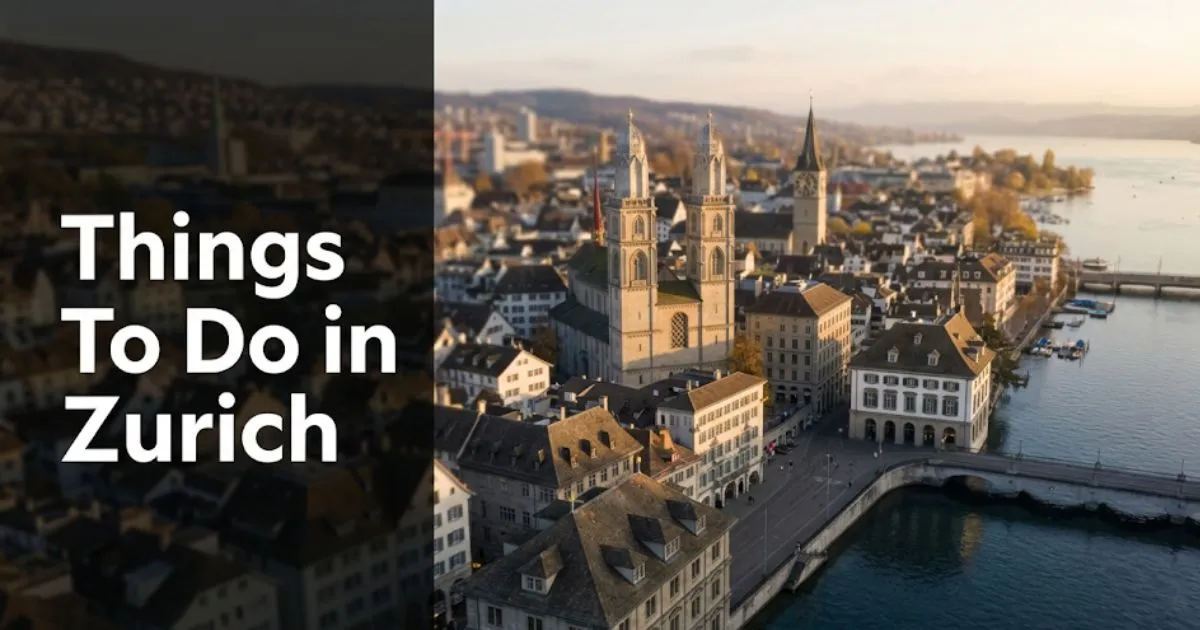
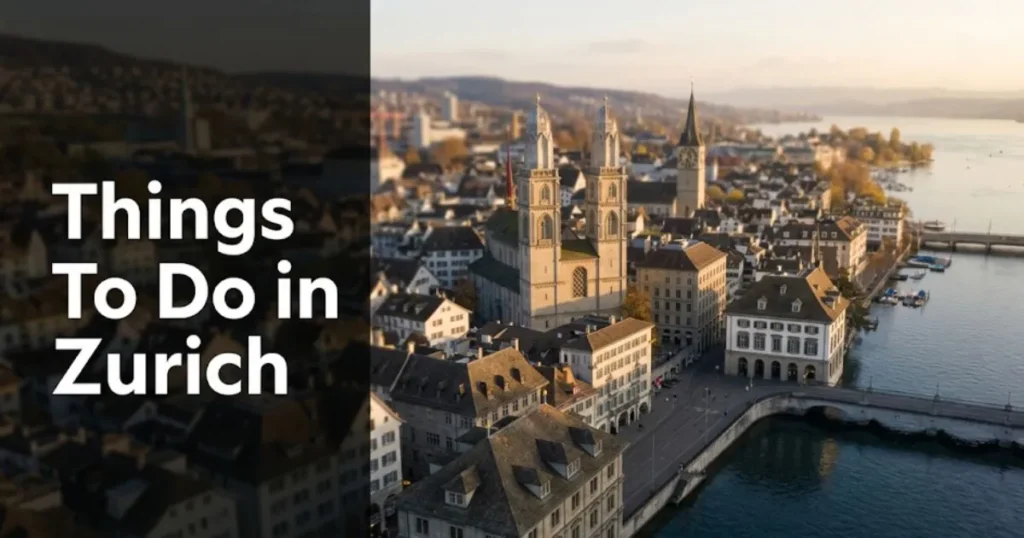
The city sits at the northern tip of Lake Zurich (Zürichsee), where the Limmat River flows north through a medieval core flanked by two hill-top churches.
Zürich Tourism identifies the city as one of Europe’s most livable, consistently ranking in the top three cities globally for quality of life. That liveability translates directly into the quality of the visitor experience.
| Activity Type | Best For | Cost Range (CHF) | Time Needed |
|---|---|---|---|
| Altstadt walking tour | All profiles | Free to 25 | 2 to 3 hours |
| Kunsthaus Zürich | Cultural travelers, couples | 23 to 26 per adult | 2 to 4 hours |
| Lake Zurich promenade | Families, couples, seniors | Free | 1 to 2 hours |
| Uetliberg hike | Solo travelers, active pairs | Free (tram ticket) | 3 to 5 hours |
| Zurich West exploration | Solo travelers, couples | Free to explore | Half day |
| Flussbad Oberer Letten | Solo travelers, locals | Low cost | 2 to 4 hours |
Verify all admission costs and operating hours directly before visiting. Swiss pricing changes annually, and the Zurich Card frequently changes what it covers.
Best Things To Do in Zurich Switzerland: The Non-Negotiables
The best things to do in Zurich, Switzerland include the Fraumünster Church’s Marc Chagall stained glass windows, the Swiss National Museum, and a walking circuit through the Niederdorf quarter on a weekday morning before crowds arrive.
The Fraumünster, on the west bank of the Limmat, houses five Chagall windows installed in 1970. They are among the most significant works of 20th-century religious art in Europe and take approximately 20 minutes of quiet attention to do justice.
Admission to the Fraumünster runs approximately CHF 5 per adult as of recent years. Verify current pricing directly with the church before visiting.
The Swiss National Museum (Schweizerisches Nationalmuseum) sits beside the Hauptbahnhof and covers Swiss history from prehistory to the present. It is significantly undervisited relative to its quality, which is a direct benefit to anyone who goes.
Insider Tip:
- The Fraumünster is busiest between 10 a.m. and noon. Arrive before 9 a.m. or after 3 p.m. for quieter viewing.
- The Swiss National Museum’s medieval treasury is among the strongest collections of its type in Central Europe. Most visitors spend 90 minutes total and miss it entirely.
- Solo travelers and seniors find the museum’s flat, well-labeled interior accessible and deeply rewarding.
The Grossmünster Cathedral, across the Limmat from the Fraumünster, is Zurich’s most photographed landmark. The tower climb offers good views but draws significant crowds between 10 a.m. and 4 p.m. daily.
The local alternative to the Grossmünster viewpoint: St. Peter’s Church, the oldest in Zurich, with Europe’s largest clock face and a congregation still in active use. It is quieter, more atmospheric, and far less visited.
Zurich Old Town Things To Do
Zurich’s Old Town (Altstadt) is the densest concentration of medieval architecture in Switzerland, split across two riverbanks by the Limmat.
The west bank (Lindenhügel side) holds the Fraumünster, the Stadthaus, and a network of shopping streets. The east bank holds the Niederdorf quarter, Grossmünster, and the café-and-bar streets that make up Zurich’s most walkable social scene.
Niederdorf is best entered from the Grossmünster side and walked north. The streets narrow progressively. By the time you reach Spiegelgasse, where Cabaret Voltaire was founded in 1916, you’re in the original birthplace of the Dada art movement.
Cabaret Voltaire on Spiegelgasse operates as a cultural venue and small museum dedicated to Dada. Entry runs approximately CHF 10 as of recent years. It is one of Zurich’s most genuinely significant cultural sites and one of its least crowded.
Families with children find the Niederdorf street circuit manageable, though the cobblestones are not stroller-friendly in the narrower sections. Bring a carrier for toddlers.
The Bürkliplatz Saturday flea market, at the southern end of the lake promenade, is one of Zurich’s best weekend experiences. It runs seasonally, typically May through October on Saturday mornings.
Insider Tip:
- The best coffee in the Altstadt is at the independent cafés on Niederdorfstrasse, not at the hotel lobbies or chain cafés near Bahnhofstrasse.
- Walk Spiegelgasse on a weekday evening. The lack of tourist foot traffic at that hour is one of the genuinely surprising pleasures of the city.
Key Takeaway: Skip the Grossmünster tower queue and go to St. Peter’s Church instead. Fewer visitors, older history, zero wait.
Zurich Lake and Outdoor Activities
Lake Zurich (Zürichsee) and the Uetliberg Mountain together give Zurich an outdoor recreation profile that most visitors underuse because they stay focused on the Altstadt.
The lake promenade runs from Bürkliplatz southeast through Zurichhorn park and beyond. The full walk to Zurichhorn takes approximately 40 minutes one way. It is flat, paved, and fully accessible to wheelchairs and strollers.
In warmer months, lake boat tours operate from the Bürkliplatz pier. Short cruises run approximately 30 to 60 minutes. Zürich Tourism’s official boat services offer longer lake circuits. Verify current schedules and pricing before booking.
Uetliberg Mountain rises to 871 meters directly above the city. The S10 train from Zurich Hauptbahnhof reaches the summit in approximately 25 minutes. A marked ridge trail, the Planetenweg (Planet Path), runs from the summit and takes 2 to 3 hours one way.
The Uetliberg hike suits solo travelers and active couples best. Seniors with limited mobility find the summit accessible by train, with a paved viewing platform at the top that requires no hiking.
Flussbad Oberer Letten, a public outdoor swimming area in the Limmat River near the Letten district, is where Zurich locals actually swim in summer. Entry is low cost. It operates seasonally, typically May through September. Confirm current dates directly.
The tourist alternative is the more manicured lake Seebäder swimming areas. Letten is louder, younger, more local, and significantly more interesting.
Outdoor activity by profile:
| Activity | Best Profile | Physical Demand | Season |
|---|---|---|---|
| Lake promenade walk | All profiles | Low | Year-round |
| Uetliberg S10 + summit | Seniors, families | Low (train only) | Year-round |
| Uetliberg Planetenweg hike | Solo, active couples | Moderate | Apr to Oct |
| Flussbad Oberer Letten | Solo, local experience | Low | May to Sep |
| Lake boat tour | Couples, families, seniors | None | Apr to Oct |
| Bürkliplatz flea market | All profiles | None | May to Oct |
Zurich West and Local Neighborhoods
Zurich West (Zürich-West) is the single neighborhood most first-time visitors miss and the one that best explains what the city actually is in 2026.
A former industrial district, it transformed from the 1990s onward into a creative and dining hub. The Im Viadukt arches under the railway viaduct on Viaduktstrasse house independent shops, a food market, and restaurants in a covered arcade that has no equivalent elsewhere in Switzerland.
The Langstrasse runs parallel to the viaduct and serves as Zurich’s main street for independent dining, bars, and nightlife. It is also the heart of Zurich’s red-light district, which means it carries a more urban energy than the Altstadt. It is safe but benefits from standard city awareness after 11 p.m.
Solo travelers find Langstrasse the most socially interesting part of Zurich for evening meals and bar stops. It is the area locals recommend when asked where to eat without a reservation.
Families with children do well in Zurich West during daytime. The Im Viadukt market and the surrounding streets are easily walkable and food options are excellent. After 9 p.m. the neighborhood’s character shifts.
The Seefeld neighborhood, east of the lake and south of the Zurichhorn, is Zurich’s equivalent of a lakeside residential village absorbed into the city. Its café-lined streets running parallel to the lake represent the quietest and most local-feeling daytime experience in Zurich.
Neighborhood comparison:
| Neighborhood | Character | Best For | Crowd Level |
|---|---|---|---|
| Altstadt / Niederdorf | Medieval, tourist-concentrated | First visits, culture | High |
| Zurich West | Industrial-creative, local dining | Solo travelers, foodies | Moderate |
| Langstrasse | Urban, diverse, nightlife | Solo travelers, couples | Moderate to high |
| Seefeld | Lakeside residential, café culture | Couples, seniors | Low |
| Enge | Upscale residential, lake access | Couples, luxury travel | Low |
Zurich Museums and Cultural Sites
The Kunsthaus Zürich is the largest art museum in Switzerland and one of the most significant in German-speaking Europe. Its collection spans medieval to contemporary work, with particular strength in Expressionism and Swiss modernism.
Admission runs approximately CHF 23 to 26 per adult as of recent years. The Zurich Card covers entry. Verify current pricing and the Zurich Card’s current museum coverage before visiting.
The Kunsthaus expanded significantly with a new Chipperfield-designed extension in 2021. The original building and the extension are connected underground. Allow a minimum of 3 hours for a meaningful visit.
Museum Rietberg, in the Rieter Park in Enge, holds one of Europe’s finest collections of Asian, African, and pre-Columbian art. It is consistently undercrowded relative to the Kunsthaus and offers a quieter, more contemplative museum experience.
Cultural travelers and couples find Museum Rietberg a more rewarding afternoon alternative to the Kunsthaus if the latter is crowded. The park setting alone merits the tram ride.
The Museum für Gestaltung (Museum of Design), in Zurich West, covers Swiss design, graphic arts, and visual culture. It runs rotating exhibitions and has a permanent collection of Swiss graphic design history that is genuinely distinctive.
Cultural institutions by traveler profile:
- Kunsthaus Zürich: cultural travelers, art-focused couples, solo travelers
- Swiss National Museum: families, history-focused travelers, first-time visitors
- Museum Rietberg: couples, repeat visitors, seniors (flat accessible paths in the park)
- Cabaret Voltaire: solo travelers, arts-focused visitors, design and literature enthusiasts
- Museum für Gestaltung: design professionals, creative industries travelers
According to Zürich Tourism, the Zurich Card includes free entry to more than 40 museums. This makes it the single most cost-effective tool for cultural travelers visiting multiple institutions in one or two days.
Key Takeaway: Buy the Zurich Card before entering your first museum. The math works in your favor from the second museum onward.
Zurich Food and Dining Experiences
Zurich’s food identity runs from traditional Swiss-German cuisine (fondue, raclette, Zürcher Geschnetzeltes) through a serious contemporary restaurant scene that punches well above its city size.
Zürcher Geschnetzeltes, sliced veal in cream sauce served with rösti, is the city’s signature dish. Finding it at a traditional restaurant in the Altstadt or Niederdorf costs approximately CHF 35 to 55 per portion at a sit-down restaurant. Street and market versions run lower.
The Im Viadukt food market in Zurich West is the most honest daily market experience in the city. It runs Tuesday through Saturday with seasonal produce, cheese, bread, and prepared food stalls. It is where local chefs and residents shop.
The Bahnhofstrasse area has high-end chocolate shops, notably Sprüngli at Paradeplatz, which has been operating since 1836. Their Luxemburgerli macarons are the specific local specialty. They are not cheap, but they are the genuine article.
Budget travelers find the best value in Zurich at the Migros and Coop supermarket chains, which both operate restaurant sections with hot meals at significantly lower cost than sit-down restaurants. This is not a consolation option; Zurich locals eat at the Migros restaurant regularly.
The Langstrasse corridor has Zurich’s strongest concentration of independent restaurants at moderate prices relative to the Altstadt. Turkish, Lebanese, and pan-Asian options sit alongside updated Swiss brasseries.
Insider Tip:
- Sprüngli’s ground-floor café on Paradeplatz is always crowded. The upper-floor dining room operates on a slightly shorter wait.
- The Tuesday Im Viadukt market gets local suppliers that don’t appear on weekends. It is the better food research session.
- Couples and solo travelers: book Langstrasse restaurants by 6 p.m. walk-in for weekday evenings; weekends require reservations at most mid-range spots.
Free Things To Do in Zurich
Zurich is an expensive city, but a significant portion of its best experiences cost nothing.
The Lake Zurich promenade from Bürkliplatz through Zurichhorn park is free, fully accessible, and among the most scenically satisfying walks in any European city. It takes roughly 40 to 60 minutes at an unhurried pace.
The exterior and ground-level interiors of both the Grossmünster and Fraumünster are accessible at no charge. The Fraumünster’s Chagall windows charge a small fee. The Grossmünster tower charges for the climb. Walking the exterior and sitting inside the ground level costs nothing.
Free experiences in Zurich:
- Walking the full Niederdorf quarter and Spiegelgasse circuit
- Visiting the Bürkliplatz Saturday flea market (May through October, verify dates)
- The Lake Zurich promenade, Zurichhorn park, and lakeside lawns
- Wandering Im Viadukt arches in Zurich West (market entry is free; purchases are not)
- Riding trams through the city (requires transit ticket, but the Zurich Card covers this)
- Walking the Lindenhügel hill path above the Altstadt
- Exterior architecture of the Swiss National Museum (castle-like neo-Gothic exterior)
- The Limmat riverbanks on both sides through the Altstadt
Budget travelers note: the Zurich Card makes financial sense only if you plan to use transit extensively and visit at least three paid museums. Do the math before purchasing. If your primary activity is outdoor walking and free sites, skip the card and buy individual transit tickets.
Seniors and accessibility note: Every free outdoor experience listed above is flat and paved except the Lindenhügel hill path, which has some gradients. The tram network is wheelchair-accessible across the central network. Confirm accessibility specifics with ZVV directly.
Things To Do in Zurich at Night
Zurich’s nightlife is concentrated, not sprawling. The Langstrasse corridor is the center of it.
Bars, clubs, and late restaurants run from Helvetiaplatz north through Langstrasse into the surrounding streets of District 4 and District 5. The scene peaks after midnight on Friday and Saturday nights.
The city’s electronic music culture is genuine and internationally recognized. The Zurich Street Parade, held annually in August, is one of Europe’s largest techno events, drawing hundreds of thousands to the city center and the lake promenade. Hotel prices spike significantly during Street Parade weekend. Book months in advance if visiting then.
For couples, evening options in the Altstadt include drinks at rooftop bars above the Niederdorf quarter and late fondue dinners at traditional restaurants. The mood is intimate and the crowds thin after 9 p.m. on weekdays.
Solo travelers do best starting with dinner on Langstrasse before 8 p.m. and moving to bars around 10 p.m. The neighborhood’s energy builds slowly but is genuinely welcoming to solo visitors.
Families and seniors note: Zurich’s evening restaurant culture is family-tolerant through about 8 p.m. After that, the dining scene skews adult. The Altstadt restaurants are quieter and more appropriate for early evening family dinners than Langstrasse.
Insider Tip:
- Rooftop bars at hotels along the Niederdorf do not require hotel guest status. Check each venue’s current policy before arriving.
- The Langstrasse scene feels different on Thursday nights than weekends. Thursdays are locally oriented and less tourist-heavy.
- Solo travelers: Langstrasse bar culture is social and not intimidating for lone visitors. The neighborhood’s international mix works in favor of people who arrive alone.
Key Takeaway: For a genuine Zurich evening, start dinner on Langstrasse at 7 p.m. and walk the Altstadt after 9 p.m. when the tourist foot traffic clears.
Romantic Things To Do in Zurich
Zurich offers couples a genuinely romantic environment that earns the description specifically: candlelit cheese fondue in a 16th-century cellar, a sunset boat cruise on the lake, and morning espresso at a Seefeld café with the Alps visible on clear days.
The Zurichhorn park on the east lakeshore is the best setting for a picnic in Zurich. The park has open lawn space, mature trees, and unobstructed lake views. On clear days from this vantage, the Alpine panorama above the lake’s south end is one of the most genuinely impressive views in any European city park.
A late-afternoon boat cruise from Bürkliplatz pier positions couples to watch the sunset over the lake and the old city behind it. Zürich Tourism operates official lake cruise services. Short departures and full lake circuits are available. Verify current schedules before visiting.
Evening fondue in the Altstadt: traditional Zurich fondue restaurants are clustered in Niederdorf and the west-bank Altstadt streets. Reservations are recommended for any weekend evening.
The Seefeld neighborhood’s lakeside café circuit makes an excellent morning option for couples. Coffee, pastries, and a slow lakeside walk before the tourist crowds arrive on the main promenade is one of the quieter pleasures the city offers.
What does not deliver romantically: the Bahnhofstrasse area. It is luxury retail, not atmosphere. Walking it once is worth the context. Treating it as a romantic destination is a tourist misread of what the street actually is.
| Romantic Experience | Best Time | Approximate Cost (CHF) | Insider Note |
|---|---|---|---|
| Sunset boat cruise | 5 p.m. to 7 p.m., Apr to Oct | 8 to 40 per person | Book same-day at Bürkliplatz pier |
| Fondue dinner, Niederdorf | Friday or Saturday evening | 50 to 90 per couple | Reserve by Thursday for weekends |
| Zurichhorn park picnic | Late afternoon, May to Sep | Minimal (market provisions) | Im Viadukt for provisions |
| Seefeld morning café walk | 8 a.m. to 10 a.m. | 15 to 30 for two | Quietest before 10 a.m. |
| Uetliberg sunset hike | 1 hour before sunset | S10 train ticket | Check sunset times; trail is marked |
Things To Do in Zurich With Kids
Zurich with children works best when structured around a few high-quality, genuinely kid-engaging experiences rather than attempting to cover the adult cultural itinerary with children in tow.
Zurich Zoo (Zoo Zürich) in Zürichberg is among Europe’s better-designed zoological parks. It covers approximately 27 hectares and includes a recreated Masoala rainforest pavilion. The zoo suits children broadly from ages 3 to 14. Admission runs approximately CHF 26 to 29 per adult and CHF 13 to 17 per child as of recent years. Verify current pricing before visiting.
The Swiss National Museum has rotating interactive exhibitions for children and its medieval weapons and armor collections genuinely hold children’s attention in a way the art-focused Kunsthaus does not. This is an honest distinction most family travel content ignores.
The Lake Zurich boat rides from Bürkliplatz are a reliable family hit. Short 30-minute circuits work better than full-lake tours for young children with limited patience for sitting.
Stroller logistics: the lakeside promenade is fully stroller-accessible. The Niederdorf cobblestones are difficult for strollers in the narrower lanes. Carry options are better in the Altstadt with infants and toddlers.
Family-specific notes:
- Zurich Zoo requires approximately 3 to 4 hours for a full circuit. Allow more time if children want to revisit favorite areas.
- The Swiss National Museum has a café with child-friendly food options. The Kunsthaus does not cater specifically to children.
- The Uetliberg summit by S10 train is excellent for kids. The summit area has open space, a tower to climb, and clear sight lines that engage children naturally.
- Avoid the Altstadt’s narrow east-bank lanes with strollers. Use the west-bank promenade streets instead.
Things To Do in Zurich in Summer
Summer in Zurich, specifically July through August, is the city’s most tourist-saturated period and also its most outdoor-friendly.
Temperatures in July and August typically range from approximately 18°C to 27°C (64°F to 80°F). Lake swimming, outdoor markets, and rooftop dining are all in full operation. So are the crowds and the peak hotel pricing.
Flussbad Oberer Letten, the outdoor river swimming area, is the defining summer experience for locals. Visitors who find it instead of the manicured Seebäder public pools get a genuinely different, more authentically Zurich experience.
The Zurich Street Parade (typically held in August) transforms the lakeshore and city center into one of Europe’s largest outdoor music events. It is genuinely extraordinary if techno music culture interests you. It makes the city extremely difficult to navigate for travelers who are not attending. Plan around it or plan for it.
Summer is not the right time for budget travelers. Hotel rates peak in July and August. Breakfast spots and popular restaurants work on longer waits. The lake promenade, normally a serene walk, becomes a dense social scene.
The honest summer assessment: Zurich in summer is beautiful, outdoor-oriented, and expensive. April through June delivers most of the same outdoor pleasures at significantly lower prices and crowd levels.
Summer seasonal summary:
| Month | Crowd Level | Average Temp | Key Event | Hotel Pricing |
|---|---|---|---|---|
| June | Moderate | 18 to 23°C | Various festivals | Moderate to high |
| July | High | 20 to 27°C | Peak outdoor season | Peak |
| August | Very high | 20 to 27°C | Street Parade | Peak (Street Parade week: extreme) |
| Early September | Moderate | 16 to 22°C | Zurich Film Festival | Moderate |
Key Takeaway: If you visit Zurich in August, check the Street Parade dates immediately. Book hotels months in advance or the city becomes effectively inaccessible at a reasonable price.
Things To Do in Zurich in Winter
Winter in Zurich (December through February) offers a completely different city: quieter, colder, and dominated by the Zurich Christmas market (Wienachtsdorf) season through late December.
The Wienachtsdorf at the Hauptbahnhof is one of Europe’s best-established indoor Christmas markets, running typically from late November through December 24 inside the main train station’s grand hall. It is architecturally spectacular and genuinely well-curated. It also draws enormous crowds on weekends, and hotel prices in this period rival summer peaks.
January and February offer Zurich’s lowest hotel rates and least crowded museum visits. The outdoor lake scene is dormant. The indoor cultural scene, including the Kunsthaus, Museum Rietberg, and Swiss National Museum, is at its most accessible and unhurried.
Winter is not a poor time to visit Zurich for travelers who prioritize museums, gastronomy, and city walking over outdoor recreation. The city’s tram network and covered arcade spaces (Im Viadukt, the Hauptbahnhof concourse) work well in cold and wet conditions.
Couples who want a romantic winter city experience find Zurich rewarding in January and February: far fewer tourists, excellent fondue weather, and a city that looks genuinely beautiful under grey winter light reflecting off the lake.
Seniors and accessibility travelers find winter Zurich excellent: the flat terrain, covered transit, and excellent indoor venues require no weather-dependent mobility compromise.
Winter seasonal summary:
| Month | Crowd Level | Key Draw | Hotel Rate | Outdoor Access |
|---|---|---|---|---|
| Late November to Dec 24 | Very high | Wienachtsdorf market | Peak | Limited |
| Late December to January | Low | Museums, city walks | Low to moderate | Cold, limited |
| February | Low | Pre-spring quiet period | Low | Cold |
| Early March | Low to moderate | Sechseläuten preparation | Moderate | Improving |
Things To Do Near Zurich: Best Day Trips
Zurich’s position within the Swiss rail network makes it one of Europe’s best day trip hubs. Three specific destinations merit the journey without requiring a car.
Lucerne is approximately 45 to 50 minutes from Zurich by Swiss Federal Railways (SBB) direct train. The Chapel Bridge (Kapellbrücke), the old town, and the Swiss Museum of Transport make it a complete day. It is the most popular day trip from Zurich and crowds on weekends reflect that. Go on a Tuesday or Wednesday.
Rhine Falls (Rheinfall) near Schaffhausen is approximately 40 to 50 minutes by train. The falls are the largest waterfall in Europe by volume. The viewpoint platforms are close to the water. This is one of the few genuinely thrilling natural spectacles within easy reach of a major Swiss city.
Rapperswil, the rose city at the southeast end of Lake Zurich, is approximately 40 minutes by S-Bahn. It is small, walkable, and visually beautiful. Less visited than Lucerne, it suits couples and repeat Zurich visitors who want a half-day at a lakeside town without the full tourism infrastructure.
Day trips by traveler profile:
- Solo travelers: Lucerne for its social density and transport options; Rhine Falls for a solo nature experience
- Couples: Rapperswil for intimacy and lake scenery; Lucerne for culture
- Families: Rhine Falls is spectacular for children; allow 3 hours minimum at the falls area
- Seniors: Rapperswil’s flat, compact town center is extremely accessible; Lucerne’s Old Town is walkable with some inclines
The Swiss Travel Pass covers intercity SBB trains on all three routes. If you plan more than two day trips, verify whether the pass covers your specific routes before purchasing.
Things To Do in Zurich for a Day: Suggested Itinerary
One day in Zurich covers the essential Old Town circuit, a lake walk, and a Zurich West evening without feeling rushed if you start before 9 a.m.
One-Day Zurich Itinerary:
- 8:00 a.m.: Fraumünster Church and west-bank Altstadt. Arrive before the tourist flow begins. Spend 20 to 30 minutes with the Chagall windows. Walk north along the Limmat riverbank.
- 9:30 a.m.: Niederdorf and Spiegelgasse circuit. Cross the Limmat at the Rathaus bridge and walk into Niederdorf. Stop at Cabaret Voltaire. Walk Spiegelgasse and the surrounding lanes.
- 11:00 a.m.: Swiss National Museum. A 90-minute focused visit covers the core collection and the medieval treasury. The museum sits directly beside the Hauptbahnhof, making it logistically easy to combine with transit.
- 12:30 p.m.: Lunch at Im Viadukt market. Take the tram from Hauptbahnhof to Zurich West. The Im Viadukt market has prepared food options for a casual lunch.
- 2:00 p.m.: Zurich West walkabout. Walk Langstrasse, the viaduct arches, and the surrounding streets. This area takes approximately 90 minutes at a relaxed pace.
- 4:00 p.m.: Lake Zurich promenade. Take the tram to Bürkliplatz and walk southeast along the lake toward Zurichhorn. The late afternoon light on the lake is the best of the day.
- 6:30 p.m.: Dinner in Niederdorf or Langstrasse. Return to either neighborhood for dinner. Book a fondue restaurant in Niederdorf in advance, or walk Langstrasse for unreserved options.
- Evening: Optional: late drinks at a Niederdorf bar or Langstrasse venue, depending on traveler profile.
This itinerary covers the three distinct faces of Zurich: historic, cultural, and contemporary local. It is walkable and tram-connected throughout.
Key Takeaway: Start at the Fraumünster before 9 a.m. Everything after that falls into place without the crowd-avoidance stress.
Zurich Practical Travel Tips and Getting Around
Getting around Zurich is straightforward. The ZVV tram network covers virtually every major attraction in the city center, runs on a reliable schedule, and operates late into the night on weekends.
The Zurich Card (24-hour or 72-hour) covers unlimited ZVV transit within the city zone plus free entry to more than 40 museums. For visitors doing two or more museum visits and multiple tram rides daily, it represents clear value. Budget travelers doing primarily outdoor and free activities may find individual transit tickets more cost-effective.
From Zurich Airport (ZRH), the airport has its own train station. Direct trains reach Zurich Hauptbahnhof in approximately 10 to 13 minutes. Tickets run approximately CHF 6 to 7 per adult as of recent years. Taxis are available but cost significantly more. Pre-booking a taxi versus taking the train is rarely justified for solo or couple travelers.
The city is extremely walkable in its core. Walking from the Hauptbahnhof to Bürkliplatz takes approximately 15 minutes. Walking from Bürkliplatz to the Kunsthaus takes approximately 10 minutes. Zurich West is 20 minutes on foot from the Hauptbahnhof or 10 minutes by tram.
Practical logistics checklist:
- Validate your transit ticket before boarding or use the ZVV app
- The Zurich Card is available at ZRH airport, the Hauptbahnhof, and Zürich Tourism offices
- Trams and buses use the same ticket system; no separate metro system exists in the city center
- Most restaurants and attractions accept major credit cards; cash is not required but is widely accepted
- The Swiss franc (CHF) is the currency; euro is not accepted at most businesses despite proximity to Germany and Austria
- Tipping culture: rounding up or leaving a 5 to 10 percent tip is customary; it is not obligatory at the level expected in the US
Seniors and accessibility note: ZVV trams throughout the central network are step-free accessible. Confirm accessibility for specific lines using the ZVV accessibility guide available on their official website. The Swiss Federal Railways (SBB) also offers a mobility assistance service for travelers who need support at train stations; contact SBB in advance of travel.
Safety reality: Zurich is one of Europe’s safest cities. Standard urban awareness applies in the Langstrasse area and at the Hauptbahnhof. The city has no significant no-go zones for tourists. Emergency services are excellent.
Safety and Practical Warnings for Zurich
Zurich is among the safest cities in Europe, but several practical realities affect visitors regardless of personal safety.
Key safety and practical facts every visitor should know:
- Currency awareness: Switzerland uses the Swiss franc (CHF), not the euro. ATMs at ZRH Airport charge dynamic conversion fees. Withdraw CHF from in-city ATMs or use a no-foreign-transaction-fee card.
- Cost reality: A coffee at a café runs approximately CHF 4 to 6. Budget miscalculations in Zurich are significant. Plan higher than you think necessary.
- Cobblestone navigation: The Niederdorf and Altstadt east-bank streets have historic cobblestones that are uneven and wet in rain. Non-slip footwear is genuinely important, not optional.
- Tram doors: Zurich trams close quickly. Do not attempt to board after the warning signal sounds.
- Pharmacy access: Swiss pharmacies (Apotheke) are well-stocked and staffed with English-speaking professionals. For minor medical needs, a pharmacy visit is faster than emergency services.
- Lake swimming: Lake Zurich water temperatures in early summer can be cold. Children and weaker swimmers should use designated Seebad areas with lifeguard supervision rather than open promenade entry points.
- Weather preparedness: Zurich’s weather changes rapidly in spring and autumn. A packable rain layer is practical year-round, not just in winter.
For genuine emergencies: the European emergency number 112 connects to Swiss emergency services. The Swiss equivalent is 144 for ambulance and 117 for police.
Frequently Asked Questions About Things To Do in Zurich
What are the best things to do in Zurich for first-time visitors?
First-time visitors to Zurich should prioritize the Fraumünster Church’s Chagall windows, a Niederdorf walking circuit, the Swiss National Museum, and a walk along the Lake Zurich promenade.
These four experiences cover the city’s medieval history, cultural significance, and natural setting without requiring reservations or significant planning.
Add Zurich West’s Im Viadukt market for an afternoon shift to local contemporary culture before dinner on Langstrasse.
How many days do you need in Zurich to see everything?
Two full days covers Zurich’s essential attractions without rushing.
One day is enough for the Altstadt, Fraumünster, Swiss National Museum, and lake promenade. A second day adds Zurich West, the Kunsthaus or Museum Rietberg, Uetliberg, and a day trip to Rhine Falls or Rapperswil.
Three days allow a more relaxed pace and a full day trip to Lucerne.
Is Zurich expensive for tourists?
Zurich is one of Europe’s most expensive cities. Budget approximately CHF 150 to 200 per person per day for mid-range travel including one museum, transit, lunch, and dinner.
Hotel costs represent the largest variable, typically CHF 180 to 350 per night for mid-range options in central locations.
Significant savings are available through the Zurich Card for museum-heavy visitors, free outdoor activities, and eating at Im Viadukt market or Migros restaurant instead of sit-down restaurants for every meal.
What is the best time of year to visit Zurich?
The best time to visit Zurich is April through early June or September through early October.
These windows offer mild temperatures, manageable crowd levels, and hotel pricing below the summer and Christmas market peaks.
Summer is beautiful but expensive and crowded. The Christmas market period is spectacular but carries peak pricing and heavy tourist concentration in the Altstadt.
What is the best neighborhood to stay in Zurich?
The Altstadt (Old Town) is the most central and convenient base for first-time visitors, with the Hauptbahnhof, major museums, and the lake all within walking distance.
Zurich West suits travelers prioritizing the contemporary local scene, with good transit access and more moderately priced accommodation relative to the Altstadt center.
Seefeld is the best choice for couples and seniors who want a lakeside residential feel with direct access to the promenade and quieter café culture.
Are there good day trips from Zurich?
Zurich is one of Europe’s best day trip bases. Lucerne is 45 to 50 minutes by SBB train, Rhine Falls at Schaffhausen is 40 to 50 minutes, and Rapperswil is 40 minutes by S-Bahn.
All three routes are covered by the Swiss Travel Pass. Verify current pass coverage and schedules on the SBB official website before your trip.
Families should prioritize Rhine Falls for its immediate visual impact on children. Couples should consider Rapperswil for a quieter, more intimate lakeside experience.
Zurich rewards travelers who know where to look beyond the postcard version of the city. Start your planning by securing the Zurich Card if cultural sites are on your list, and check SBB schedules for any day trip you want to add.
Verify all hours, admission prices, and seasonal availability directly with venues and through Zürich Tourism’s official site before departure. Prices, operating dates, and event schedules change year to year.
The traveler who spends one morning in the Altstadt, one afternoon in Zurich West, and one evening on the Langstrasse corridor will understand Zurich more completely than any tour organized around the city’s most photographed landmarks alone.