San Juan Things to Do: Best Activities & 2026 Guide

San Juan things to do span five centuries of history, five miles of Atlantic coastline, and one of the Caribbean’s most genuinely alive food and nightlife cultures. No other US-accessible destination packs this combination into a four-day trip without a passport.
Puerto Rico’s capital hosts roughly 3.3 million visitors annually, according to the Puerto Rico Tourism Company. Old San Juan alone covers seven blocks of cobblestone streets lined with 16th-century Spanish colonial architecture that has survived longer than the United States itself.
This guide covers every major experience category: the forts, beaches, neighborhoods, restaurants, day trips, bio bay tours, and the practical logistics that most San Juan travel content skips entirely. You will leave knowing exactly which activities to prioritize for your specific travel profile and when to visit each one.
San Juan Things to Do: What Makes This City Worth Your Time
San Juan is the most historically dense city in US jurisdiction. Walls built in 1539 still ring the old city’s perimeter along the Atlantic Ocean.
That history does not exist in a museum vacuum. It sits alongside a food scene anchored by James Beard Award-recognized chefs, a nightlife culture centered on La Placita and the Santurce district, and beaches within a 20-minute drive that range from resort-serviced to near-empty.
San Juan is also one of the most accessible Caribbean destinations for US travelers specifically. No passport is required. US dollars are the currency. Uber and Lyft operate reliably from Luis Muñoz Marín International Airport (SJU), which is served by major US carriers with direct flights from most East Coast hubs.
The honest qualifier: San Juan’s tourist infrastructure is concentrated in specific zones. Step outside those zones without research, and the city’s quality drops unevenly.
Insider Tip:
- Old San Juan becomes genuinely congested between 10 a.m. and 3 p.m. on days when multiple cruise ships dock at the San Juan cruise port. Check the Port of San Juan’s published ship schedule before planning fort visits.
- The city’s best local experiences (La Placita, Calle Loíza, Jose Enrique) sit outside the tourist-dense old city and are accessible by rideshare in under 15 minutes.
- Solo travelers will find San Juan unusually navigable; the pedestrian-friendly old city and the social atmosphere at bars like La Factoria on Calle San Sebastián make it easy to connect and explore independently.
Top Things to Do in San Juan Puerto Rico: The Essential Framework
The top things to do in San Juan Puerto Rico fall into four distinct categories: historic sites, beach and outdoor experiences, food and nightlife, and day trips to the surrounding island.
Understanding which category matches your travel style prevents the common mistake of spending two days in the old city when your actual interest is in beaches and hiking. The categories are not interchangeable. A traveler who spends their entire San Juan visit in Old San Juan has missed Santurce, Condado, El Yunque, and Piñones entirely.
| Activity | Best For | Cost Range | Time Needed | Insider Note |
|---|---|---|---|---|
| Castillo San Felipe del Morro | History, couples, photography | $10-$15/adult | 2 to 3 hours | Arrive by 8 a.m. to beat cruise crowds |
| Condado Beach | Couples, solo travelers | Free beach access | Half to full day | Ocean Park Beach is less crowded |
| El Yunque day trip | Families, outdoor travelers | $2 parking + trail fees | Full day | Book La Mina Falls trail in advance |
| Laguna Grande bio bay tour | Couples, solo, older kids | $45-$75 per person | Evening (4-5 hours) | New moon dates give best visibility |
| La Placita de Santurce | Solo travelers, couples, nightlife | Free entry; drinks $5-$12 | Evening, 3+ hours | Thursday nights are peak local scene |
| Jose Enrique restaurant | Food travelers, couples | $50-$90 per person | 1.5 to 2 hours | No reservations; arrive at opening |
Profile note for families: The forts and Old San Juan walking experiences work well for children aged 8 and older. Younger children can find the heat and cobblestone terrain genuinely exhausting within 90 minutes. Plan morning visits and build in Piñones beach time in the afternoon as a reset.
Best Things to Do in Old San Juan
The best things to do in Old San Juan include walking the Paseo de la Princesa along the city walls, visiting the forts, and exploring the concentrated grid of Calle del Cristo, Calle Fortaleza, and Calle San Sebastián.
Old San Juan covers roughly 7 blocks by 14 blocks. It is entirely walkable. The painted facades in shades of terracotta, cobalt, and gold give the district a visual identity no other US city replicates.
Paseo de la Princesa runs along the water’s edge at the base of the old city’s southern wall. The Raíces fountain, a large sculpture depicting Puerto Rican cultural heritage, anchors the western end near the old city gate.
La Fortaleza, the governor’s official residence, is the oldest executive mansion still in use in the western hemisphere. Free guided tours of its exterior and gardens run on weekdays; verify the current schedule with the Puerto Rico State Department before visiting.
Calle del Cristo is the old city’s most photographed street. It runs steeply downhill from the Plaza de Armas toward the water. The Cristo Chapel at its southern end is small but genuinely worth two minutes. The shops on Calle del Cristo lean heavily toward tourist retail; the more interesting local shops are on Calle Fortaleza.
Local alternative: The San Juan Cathedral on Calle del Cristo, the burial site of Juan Ponce de León, receives far fewer visitors than El Morro but is one of the oldest churches in the Americas. Fifteen minutes inside delivers more historical context than an hour of street browsing.
Profile note for seniors and accessibility travelers: Old San Juan’s cobblestone streets are a genuine mobility challenge. The stones are uneven and sloped in places. Comfortable walking shoes with firm soles are non-negotiable. Some sections near the forts are on flat, paved paths that are more accessible, but the core grid of the old city requires careful footing.
Castillo San Felipe del Morro and Castillo San Cristóbal
Castillo San Felipe del Morro (El Morro) and Castillo San Cristóbal together form the San Juan National Historic Site, administered by the National Park Service, and they are the single most important historical experience in Puerto Rico.
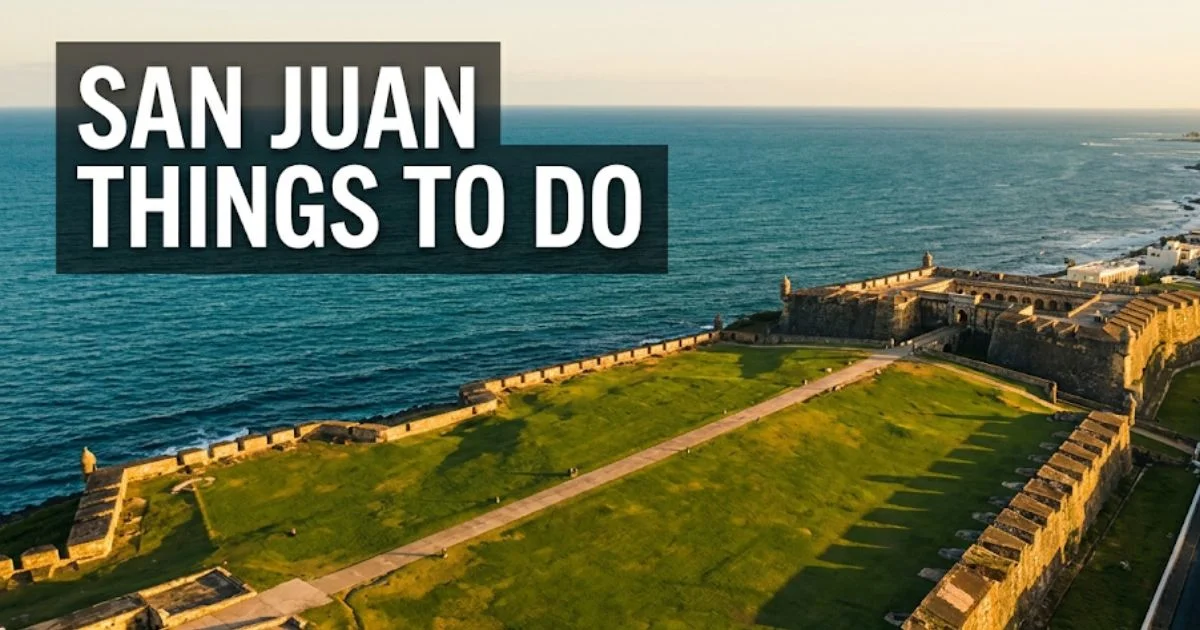
El Morro sits at the northwestern tip of Old San Juan, rising six levels from the waterline to a height of 140 feet above the Atlantic. Construction began in 1539. The views from the upper ramparts extend in every direction across open ocean. This is not a reconstructed tourist attraction; these walls protected San Juan for over 300 years.
San Cristóbal, on the eastern approach to the old city, is the larger of the two forts by area and arguably the more complex architecturally. Its system of tunnels, moats, and redoubts covers 27 acres.
To visit both forts efficiently:
- Purchase entry tickets online through the National Park Service before your visit, especially during December through April peak season.
- Arrive at El Morro at or shortly after 9 a.m. opening time to access the ramparts before cruise ship tours arrive mid-morning.
- Spend 90 minutes at El Morro; focus on the lighthouse, the upper battery, and the grassy esplanade where locals fly kites on weekends.
- Walk 10 minutes along Calle Norzagaray to San Cristóbal; the combined ticket covers both forts.
- Allow 60 to 90 minutes at San Cristóbal, including the dungeon and the Santa Teresa redoubt with its Atlantic panorama.
Admission runs approximately $10 to $15 per adult as of recent years; under-15 free with an adult. Verify current pricing directly with the National Park Service before your visit.
Profile note for budget travelers: The NPS combined ticket for both forts is one of San Juan’s genuine value experiences. Two full historic sites for the price of a mid-range cocktail is not common in the Caribbean.
Insider Tip:
- The grassy esplanade at El Morro (the field between the fort and the old city) is free to access and a legitimate local gathering spot on weekend afternoons. Bring a blanket.
- Do not go to El Morro after 10 a.m. on a cruise ship day. The difference between 8:30 a.m. and 11 a.m. is the difference between a quiet, atmospheric experience and a queue.
Key Takeaway: Buy your El Morro and San Cristóbal tickets online and arrive within 30 minutes of opening; it is the single highest-impact planning move in San Juan.
Best Neighborhoods in San Juan Puerto Rico
San Juan’s five main visitor neighborhoods each have a distinct identity. The right one depends entirely on your travel profile and what you want within walking distance of your hotel.
| Neighborhood | Best For | Vibe | Cost Tier | Transit Access |
|---|---|---|---|---|
| Old San Juan | History, culture, walking | Colonial, pedestrian, atmospheric | Mid to high | Walkable; rideshare to everywhere else |
| Condado | Couples, beach access, dining | Upscale, resort-adjacent | High | Walkable beach strip; easy rideshare |
| Santurce | Nightlife, arts, local food | Urban, creative, energetic | Low to mid | Rideshare from most areas |
| Miramar | Business, budget hotels | Quiet, residential | Low to mid | Rideshare-dependent |
| Isla Verde | Beach resorts, families | Resort-heavy, strip-mall adjacent | Mid to high | Rideshare; 10 min from SJU |
Old San Juan is the obvious base for first-time visitors prioritizing history and atmosphere. Hotel prices are higher, especially during high season (December to April), but the walkability and density of experiences justify it for most travelers.
Condado is the best base for couples and beach travelers who want upscale hotel services, direct beach access, and a walkable dining strip along Ashford Avenue. Condado feels more like Miami’s South Beach than a Caribbean colonial city.
Santurce is where the actual creative and nightlife energy of San Juan lives. It is not a base for most visitors but is essential as an evening destination for any traveler staying in San Juan for more than two nights.
Profile note for solo travelers: Santurce and Old San Juan are both genuinely safe and social. The bar scene on Calle San Sebastián in Old San Juan runs until late on weekends and draws a mix of locals and visitors. La Placita draws a heavier local crowd, especially Thursday nights.
San Juan Beaches
San Juan’s best urban beach is Ocean Park Beach, a residential neighborhood stretch of Atlantic coastline between Condado and Isla Verde that attracts more locals than tourists on weekday mornings.
Condado Beach is the most centrally located and the most serviced. Hotel beach chair rentals, food vendors, and consistent lifeguard presence make it reliable. The water quality is good. Rip current flags are posted daily by lifeguards and should be taken seriously.
Isla Verde Beach is the broadest stretch, backed by resort hotels. The water is calmer than Condado in most conditions. It is the easiest beach option for families staying in the Isla Verde hotel zone.
Piñones, 20 minutes east of Old San Juan, is where San Juan’s beach culture shifts from resort to genuinely local. The road running through Piñones passes a string of open-air kiosks serving alcapurrias, bacalaítos, and cold Medalla beer directly alongside the water. The beach here is less manicured and more atmospheric.
Luquillo Beach, 30 miles east of San Juan, is a crescent-shaped public beach with calm water, shade trees, and a famous row of seafood kiosks called the kioskos de Luquillo. It requires a rental car or organized tour.
Profile note for families with young children: Luquillo’s calm, reef-sheltered water makes it the best beach option for families with toddlers and young swimmers. Condado and Isla Verde have waves that can surprise small children.
Insider Tip:
- Ocean Park Beach has no hotel infrastructure crowding its shoreline. It is San Juan’s most pleasant swimming beach for experienced travelers who know it exists.
- The best time to visit any San Juan beach is before 10 a.m. or after 4 p.m. Midday sun intensity at 18 degrees latitude is significant. Sunscreen with SPF 50 or higher is not optional.
San Juan Food Scene and Best Restaurants
San Juan’s food scene runs from $3 piraguas (shaved ice) sold from rolling carts in Old San Juan to James Beard Award-recognized tasting menus at Marmalade on Calle Fortaleza.
The genuine anchor of San Juan’s culinary identity is Jose Enrique, a cash-only, reservation-free restaurant in Santurce on Calle Duffaut. Chef Jose Enrique was a James Beard Award finalist multiple times. The menu changes daily based on what is fresh. The mofongo is the standard by which all other versions should be judged.
La Alcapurria Quema at Ocean Park is one of the most-cited by locals for alcapurrias, the fried fritters of plantain or yucca stuffed with crab or beef that define Puerto Rican street food.
Marmalade on Calle Fortaleza in Old San Juan operates with a rotating tasting menu emphasizing local ingredients. Reservations are strongly recommended, especially during December through April. Expect to spend $80 to $120 per person with wine.
For local atmosphere at lower cost, El Jibarito on Calle Sol in Old San Juan has served traditional Puerto Rican staples including mofongo, pernil (roasted pork), and tostones to a loyal local following for decades.
Profile note for budget travelers: A full, satisfying meal at El Jibarito costs $15 to $25 per person. Jose Enrique runs $35 to $60 per person depending on menu selections. Neither experience is expensive by US mainland standards. Both outperform the hotel restaurant options at nearly any price point.
Key Takeaway: Jose Enrique in Santurce has no reservations and no fixed menu; arrive at opening time (typically around 11:30 a.m. for lunch) and order whatever the server recommends that day.
La Placita and Santurce Arts District
La Placita de Santurce is a covered market square on the corner of Calle Dos Hermanos and Calle Capitol that transforms from a daytime food market into the most energetic open-air bar scene in Puerto Rico every Thursday, Friday, and Saturday night.
By 8 p.m. on Thursday, the streets surrounding La Placita fill with hundreds of people drinking cold Medalla from plastic cups, listening to live salsa, and eating from the surrounding kiosks. This is not a curated tourist experience. It is where San Juan’s local professional class goes after work.
The broader Santurce arts district stretches along Calle Loíza and into the streets surrounding the Museo de Arte de Puerto Rico, the island’s primary fine arts institution on Avenida de Diego.
The Museo de Arte de Puerto Rico holds a permanent collection spanning five centuries of Puerto Rican artistic production. Admission runs approximately $6 to $15 per adult as of recent years; verify current pricing before visiting.
Calle Loíza itself is the closest San Juan has to a neighborhood that feels genuinely residential and creative simultaneously. Independent coffee shops, local clothing designers, and small restaurants have been opening here steadily. It is 15 minutes by rideshare from Old San Juan.
Profile note for couples: La Placita on a Thursday night is one of San Juan’s most genuinely romantic experiences, in a spontaneous, kinetic way. The combination of live music, cold drinks, warm air, and a crowd that is clearly having a real good time creates an atmosphere that planned romantic dinners rarely match.
Insider Tip:
- La Placita is at its best between 8 p.m. and midnight. Arriving at 6 p.m. misses the energy entirely.
- The Instituto de Cultura Puertorriqueña in Old San Juan, on Calle del Cristo near the old arsenal, hosts rotating exhibitions on Puerto Rican cultural history. Admission is low or free depending on the current programming; it draws almost no tourist traffic.
Outdoor Activities and Day Trips from San Juan
San Juan’s position on Puerto Rico’s northeastern coast puts El Yunque National Forest, the Laguna Grande bio bay in Fajardo, Piñones, and the ferry terminals to Culebra and Vieques all within two hours.
The primary outdoor activities within San Juan itself include beach swimming, kayaking in the San Juan harbor area, and cycling along the Atlantic coast road toward Ocean Park. Several outfitters in Condado offer kayak rentals by the hour.
For day trips, a rental car is necessary for El Yunque and Piñones. The ferry to Culebra departs from the Fajardo terminal on Puerto Rico’s eastern coast, about 90 minutes from San Juan by car. Advance ferry reservations are strongly recommended during peak season.
Profile note for outdoor-focused travelers: The day trip combination that delivers the highest contrast in a single day is El Yunque rainforest in the morning followed by a Luquillo Beach afternoon. It requires an early start (7 a.m. departure from San Juan), but the El Yunque trails are most pleasant before the midday heat intensifies.
Insider Tip:
- The Caño Tiburones wetlands on the drive toward Bayamón provide bird-watching opportunities that almost no tourist-facing content mentions. Puerto Rico is a significant migratory bird stopover zone.
- Culebra’s Flamenco Beach is consistently ranked among the best beaches in the Caribbean. It requires two transportation steps from San Juan (car or rideshare to Fajardo, then ferry), but the water clarity and undeveloped shoreline make the logistics worthwhile for beach travelers who find San Juan’s urban beaches underwhelming.
Key Takeaway: Book the Fajardo ferry to Culebra at least two weeks in advance during peak season; the ferry sells out, and the taxi-boat alternatives cost significantly more.
El Yunque Rainforest Day Trip from San Juan
El Yunque National Forest is the only tropical rainforest in the United States National Forest System. It covers 28,000 acres in the Luquillo Mountains, approximately 25 miles southeast of San Juan.
The La Mina Trail is the most popular hiking route, leading to the La Mina waterfall and natural swimming pool. The trail is moderate in difficulty, approximately 1.5 miles round trip, and takes 45 to 90 minutes depending on pace.
Timed-entry permits are required for the La Mina Trail area. The US Forest Service implemented a reservation system to manage trail congestion. Book permits through the official recreation.gov portal before your visit; slots for popular dates, especially December through April, fill weeks in advance.
The Yokahú Tower provides a panoramic view over the canopy and the northeastern coast of Puerto Rico from a short, accessible walk from the parking area. It is one of the most accessible experiences in the forest and suitable for most mobility levels.
El Portal Rainforest Center serves as the main visitor entry point with exhibits, restrooms, and ranger programs. Entry to the center carries a separate fee from the trail permit; verify current pricing directly with the US Forest Service or the El Yunque official visitor page.
Profile note for families: El Yunque is excellent for children aged 6 and older who can manage the La Mina Trail. The forest sounds, waterfall swimming, and wildlife (coquí frogs are heard everywhere) engage children genuinely. Very young children find the hiking demanding and the trail crowded during peak hours.
Departure logistics:
- Leave San Juan by 7 to 7:30 a.m. to arrive at El Yunque before the trail crowds.
- Stop at the El Portal Visitor Center first for maps and ranger condition updates.
- Complete La Mina Trail before noon when the afternoon rain showers typical of tropical forests begin.
- Finish the day at Luquillo Beach, 10 minutes west of El Yunque’s main entrance, for swimming and a kioskos lunch.
Bioluminescent Bay Tour from San Juan
The best bioluminescent bay experience accessible from San Juan is Laguna Grande in Fajardo, approximately 45 miles east of the city. Bioluminescence is produced by microscopic organisms called dinoflagellates; when disturbed by movement, they emit a blue-green light visible in the water.
Two tour formats operate at Laguna Grande: electric boat tours and kayak tours. Kayak tours place you directly in the water, producing bioluminescence with every paddle stroke. Electric boat tours are more comfortable but deliver a more passive experience.
Moon phase is the single most important factor in bio bay tour quality. New moon nights produce the darkest skies and the most visible bioluminescence. Full moon nights significantly reduce the visual contrast and diminish the experience. When booking, check the lunar calendar and select dates within five days of the new moon if possible.
Organized tours from San Juan to Laguna Grande typically run $45 to $75 per person and include transportation. Verify current pricing and availability directly with tour operators before booking.
Profile note for couples: A bio bay kayak tour on a new moon night is one of the genuinely memorable experiences the Caribbean offers. The combination of complete darkness, the light produced by every paddle stroke, and the remoteness of the lagoon makes it unlike almost any other travel experience accessible from a major US city.
Honest note: The Mosquito Bay on Vieques Island is biologically brighter than Laguna Grande, according to long-standing reports from naturalists. Getting to Vieques requires a ferry from Fajardo and significantly more logistical effort. For visitors with limited time, Laguna Grande is the practical choice.
Profile note for families with older children: Most tour operators accept children aged 7 or 8 and older for kayak tours. Verify age minimums before booking. The experience is remarkable for children who can manage a kayak with basic instruction.
Things to Do in San Juan for Couples
San Juan is one of the most naturally romantic destinations accessible to US travelers without an international flight. The combination of Old San Juan’s atmospheric streets, Atlantic sunsets from El Morro’s ramparts, exceptional food, and warm evenings creates consistent conditions for a genuine romantic trip.
The highest-value romantic experiences in San Juan are specifically:
- Sunset from the El Morro ramparts (arrive 45 minutes before sunset for the full light shift over the Atlantic)
- Dinner at Marmalade on Calle Fortaleza (tasting menu format, candlelit interior, reservation required)
- Thursday night at La Placita de Santurce for spontaneous salsa, street drinks, and the energy of a genuinely local night out
- A late evening at La Factoria on Calle San Sebastián, a multi-room craft cocktail bar where each room has its own distinct atmosphere
- A morning walk on the Paseo de la Princesa before the tourist traffic begins, ending at the Raíces fountain
La Factoria deserves specific attention. It is consistently ranked among the best bars in the Caribbean. Bartenders make hand-crafted cocktails using local rum and fresh ingredients. It opens in the evening and gets progressively more interesting after 9 p.m.
Profile note for couples on a romantic timeline: The best sequence for a romantic long weekend is: Day 1 evening arrival and Old San Juan exploration; Day 2 morning El Morro, afternoon beach at Ocean Park, evening dinner at Marmalade; Day 3 La Placita Thursday night or Laguna Grande bio bay tour.
Honest note: Condado hotels marketed heavily as “romantic” often deliver a resort experience more than an intimate one. The genuinely atmospheric accommodation for couples is in boutique hotels within Old San Juan itself, where you fall asleep to the sounds of the city’s historic streets.
Key Takeaway: For couples, the 45-minute slot before sunset on El Morro’s upper ramparts, facing the Atlantic, is consistently the highest-rated experience in San Juan and costs $10 to $15 per person.
Things to Do in San Juan with Kids
San Juan with kids works best when the itinerary balances the structured historic experiences at the forts with beach time, outdoor space, and local food that children will actually engage with.
The experiences that genuinely work for families:
- Castillo San Felipe del Morro: The grassy esplanade is a legitimate playground. Children can fly kites (kite sellers are present on weekends), run on the open field, and explore the fort’s tunnels with genuine excitement.
- El Yunque: The La Mina Falls swimming hole engages children aged 6 and up completely. The coquí frogs and tropical bird sounds are immediately captivating.
- Luquillo Beach: The calm, shallow water and the kioskos food area make it the most family-functional beach near San Juan.
- Condado Lagoon Nature Park: A small urban nature reserve at the Condado Lagoon where kayak rentals and bird watching provide low-cost outdoor activity for families.
What sounds good for kids but often underdelivers: The historic walking tours of Old San Juan lose children under 10 within 30 minutes regardless of the guide’s quality. The cobblestone terrain is genuinely hard on small legs, strollers, and parental patience simultaneously.
Stroller reality: Old San Juan’s cobblestone streets are not stroller-friendly. A quality carrier backpack for infants and toddlers is the practical solution. Plan Old San Juan visits for early morning before heat builds.
Profile note for families on a budget: El Morro’s esplanade is free to access. A kite from a local vendor costs a few dollars. Luquillo Beach public access is free. These three elements alone deliver a full day of genuine engagement for children at minimal cost.
Free and Budget-Friendly Things to Do in San Juan
San Juan is significantly more affordable than most mainland US resort destinations. A well-planned trip with a mix of free and low-cost activities can deliver a rich experience at modest daily spend.
Free activities:
- Walking the Paseo de la Princesa and the old city walls
- Swimming at any public beach (Condado, Ocean Park, Isla Verde, Luquillo)
- Visiting the San Juan Cathedral and paying respects at Juan Ponce de León’s tomb
- Watching the sunset from the El Morro esplanade (esplanade access is free; fort interior requires admission)
- Exploring the Santurce street art corridor along Calle Loíza and the surrounding streets
Low-cost experiences (under $20 per person):
- El Morro and San Cristóbal combined NPS entry (approximately $10 to $15 per adult)
- Piraguas from street vendors throughout Old San Juan ($3 to $5)
- Lunch at El Jibarito on Calle Sol ($15 to $25 per person)
- Medalla beers at La Placita on a Thursday evening ($3 to $5 each)
- Alcapurrias from the Piñones kiosks ($2 to $5 each)
Profile note for budget travelers: Accommodation is where San Juan’s budget pressure is most acute, particularly December through April. Isla Verde consistently offers lower hotel rates than Old San Juan or Condado for comparable quality. A 15-minute rideshare from Isla Verde reaches Old San Juan easily.
According to the Puerto Rico Tourism Company, the island has added significant mid-range accommodation capacity in recent years, including guesthouses and small boutique properties that offer alternatives to the large resort chains at more accessible price points.
Getting Around San Juan Puerto Rico
Getting around San Juan without a car is practical for the core tourist areas. Getting around efficiently for day trips requires a rental car.
From the airport: Uber and Lyft operate reliably from Luis Muñoz Marín International Airport (SJU) to Old San Juan, Condado, and Isla Verde. The rideshare to Old San Juan takes approximately 20 to 30 minutes depending on traffic. Metered taxis are also available at fixed airport rates; confirm the rate before departing.
Within Old San Juan: The district is entirely walkable. The free Old San Juan Trolley (La Coconut Trolley) circulates through the historic district on a loop and is useful for navigating the hill between the lower port area and the upper plaza. Verify current trolley operation before your visit, as schedules have changed periodically.
Between neighborhoods: Uber and Lyft provide reliable rideshare service across San Juan. Fares between Old San Juan, Condado, Santurce, and Isla Verde typically run $8 to $18 depending on time of day. Surge pricing applies on weekend nights.
The Tren Urbano metro rail system connects Bayamón, Santurce, and Hato Rey but does not reach Old San Juan or the beach neighborhoods directly. It is most useful for Santurce (Sagrado Corazón station).
Rental car reality: A rental car is necessary for El Yunque, Piñones, Luquillo, and Fajardo. Old San Juan parking is genuinely difficult during peak hours and near-impossible on cruise ship days. If renting a car primarily for day trips, leave the car at your hotel and take rideshare into Old San Juan.
Profile note for seniors and accessibility travelers: Uber and Lyft’s accessibility vehicle options are available in San Juan. Request in advance if specific vehicle accessibility is required. Old San Juan’s cobblestones are the primary terrain challenge; the port area near the cruise terminal and the Paseo de la Princesa have smoother surfaces.
Key Takeaway: Rent a car only for the days you plan El Yunque, Luquillo, Piñones, or Fajardo; use rideshare for everything else and avoid the Old San Juan parking nightmare entirely.
Best Time to Visit San Juan Puerto Rico
The best time to visit San Juan Puerto Rico is mid-December through April, the dry season, when rainfall is minimal, temperatures are moderate, and the trade winds keep coastal areas comfortable.
Month-by-month guidance:
| Month | Weather | Crowds | Notes |
|---|---|---|---|
| December to April | Dry, 78-85°F | High | Peak season; best weather, highest hotel rates |
| May to June | Transitional, wetter | Moderate | Good value; lower crowds; occasional showers |
| July | Hot and humid | Moderate | Heat intensifies; bio bay tours still excellent |
| August to October | Hurricane season peak | Low | Real weather risk; lowest hotel rates; travel insurance essential |
| November | Transitional | Low to moderate | Good value month; weather improving |
The honest crowd reality: December through April is peak season because the weather is genuinely excellent. It is also when cruise ship traffic is highest, hotel rates are highest, and El Morro has its longest queues. If your priority is weather, book this window. If your priority is value and smaller crowds, May through early June and November are legitimate alternatives.
**The *Festival de la Calle San Sebastián* (SanSe)**, typically held in January in Old San Juan, is one of Puerto Rico’s largest cultural festivals. It draws hundreds of thousands of attendees over four days. Hotels book out months in advance. It is an exceptional cultural experience if you plan for it; it is a logistical problem if you arrive unaware.
Hurricane season runs June through November. The statistical peak of risk is late August through October. Travel insurance with hurricane coverage is strongly recommended for any visit between July and November. The US National Weather Service San Juan provides real-time storm tracking.
Profile note for budget travelers: May, June, and November deliver the best balance of good-to-excellent weather and meaningfully lower hotel rates. Ocean water temperatures remain warm year-round. Beach conditions in May and June are good.
Safety and Practical Warnings for San Juan
San Juan is one of the safer Caribbean capitals for tourists. Old San Juan, Condado, Isla Verde, and Ocean Park have strong tourist infrastructure and consistent safety records.
Key safety and practical facts every visitor should know:
- Old San Juan is very safe for pedestrian tourists during daylight and evening hours on the main streets; exercise standard urban awareness on quieter side streets after midnight
- Rip current risk at Condado and Isla Verde beaches is genuine; lifeguard-posted colored flags indicate water conditions daily; red flags mean no swimming, and they are not suggestions
- Hurricane season (June through November) requires travel insurance with weather cancellation coverage; late August through October carries the highest statistical storm risk
- Sun intensity at 18 degrees latitude is severe; SPF 50 or higher sunscreen applied frequently is necessary for all outdoor activities; the midday sun between 11 a.m. and 3 p.m. causes rapid burning even on overcast days
- Cobblestone terrain throughout Old San Juan creates a fall risk for seniors and a genuine accessibility barrier for wheelchair users and stroller parents; plan routes using the smoother Paseo de la Princesa and the port-level streets
- Rental car break-ins occur in poorly lit parking areas; never leave valuables visible in a parked car; use hotel parking or well-lit commercial facilities
- Parts of Santurce outside the main entertainment corridor and Calle Loíza have higher crime rates; take rideshare rather than walking in unfamiliar areas after dark
The US Coast Guard Sector San Juan manages maritime emergency response for the surrounding waters. The Puerto Rico Emergency Management Bureau (PREMA) handles weather and natural disaster coordination.
Frequently Asked Questions About San Juan Things to Do
What are the best things to do in San Juan Puerto Rico for first-time visitors?
First-time visitors should prioritize Castillo San Felipe del Morro, a walking tour of Old San Juan’s historic streets, and an evening at La Placita de Santurce.
Add a beach day at Ocean Park or Condado, a meal at Jose Enrique, and a bio bay kayak tour at Laguna Grande in Fajardo for a complete four-day San Juan experience.
Arrive at El Morro by 9 a.m. on your first full day to see the fort before the midday cruise ship crowds arrive.
Do I need a passport to visit San Juan Puerto Rico?
No passport is required for US citizens traveling to Puerto Rico. Puerto Rico is a US territory, making it domestic travel.
A government-issued photo ID such as a driver’s license is sufficient for US citizens flying from the continental United States.
Non-US citizens follow standard US entry requirements and should verify their visa status before travel.
What is the best time of year to visit San Juan Puerto Rico?
The best time to visit San Juan is mid-December through April, during Puerto Rico’s dry season, when rainfall is minimal and trade winds keep temperatures comfortable.
May, June, and November offer a strong secondary window with lower hotel rates and reduced crowds.
August through October is hurricane season peak; travel during this period requires flexible booking and comprehensive travel insurance.
How do I get around San Juan without a car?
Old San Juan, Condado, Santurce, and Isla Verde are all accessible by rideshare using Uber or Lyft, which operate reliably throughout the metro area.
The Old San Juan Trolley (La Coconut Trolley) provides free circulation through the historic district; verify current schedule before your visit.
A rental car is necessary only for day trips to El Yunque, Piñones, Luquillo Beach, and Fajardo; use rideshare for all other urban movement.
Is San Juan Puerto Rico safe for tourists?
San Juan is one of the safer Caribbean capitals for tourists in the main visitor neighborhoods of Old San Juan, Condado, Isla Verde, and Ocean Park.
Exercise standard urban awareness, particularly after midnight on quieter streets and in areas of Santurce outside the main entertainment and arts corridor.
The primary practical safety concerns are ocean rip currents at Atlantic-facing beaches (follow posted lifeguard flags) and sun exposure (use SPF 50 or higher sunscreen from the moment you step outside).
How far is El Yunque from San Juan and is it worth a day trip?
El Yunque National Forest is approximately 25 miles southeast of San Juan, a drive of 45 to 60 minutes depending on traffic.
It is worth a full day trip for visitors interested in hiking, waterfall swimming, and tropical wildlife; the La Mina Trail and waterfall are the primary draw.
Book timed-entry trail permits through recreation.gov well in advance during peak season (December through April), as they fill weeks ahead.
Plan Your San Juan Trip with Confidence
San Juan rewards visitors who move past the obvious and spend time in Santurce, eat at Jose Enrique, and time their El Morro visit to early morning. Those who follow the cruise-ship crowds from fort to fort to souvenir shop will leave with photographs but not with the actual city.
The single most important booking step is the El Morro and San Cristóbal combined NPS ticket purchased online before arrival. The second is a Laguna Grande bio bay tour booked for a new moon night. Everything else, from beaches to bars, can be navigated spontaneously with good rideshare access and a general neighborhood framework.
All travel details in this guide, including National Park Service entry fees, tour prices, restaurant hours, ferry schedules, and El Yunque permit availability, change periodically. Verify current pricing, hours, and booking requirements directly with venues and official sources before your departure. Your trip to Puerto Rico’s capital deserves accurate intelligence, not outdated advice.