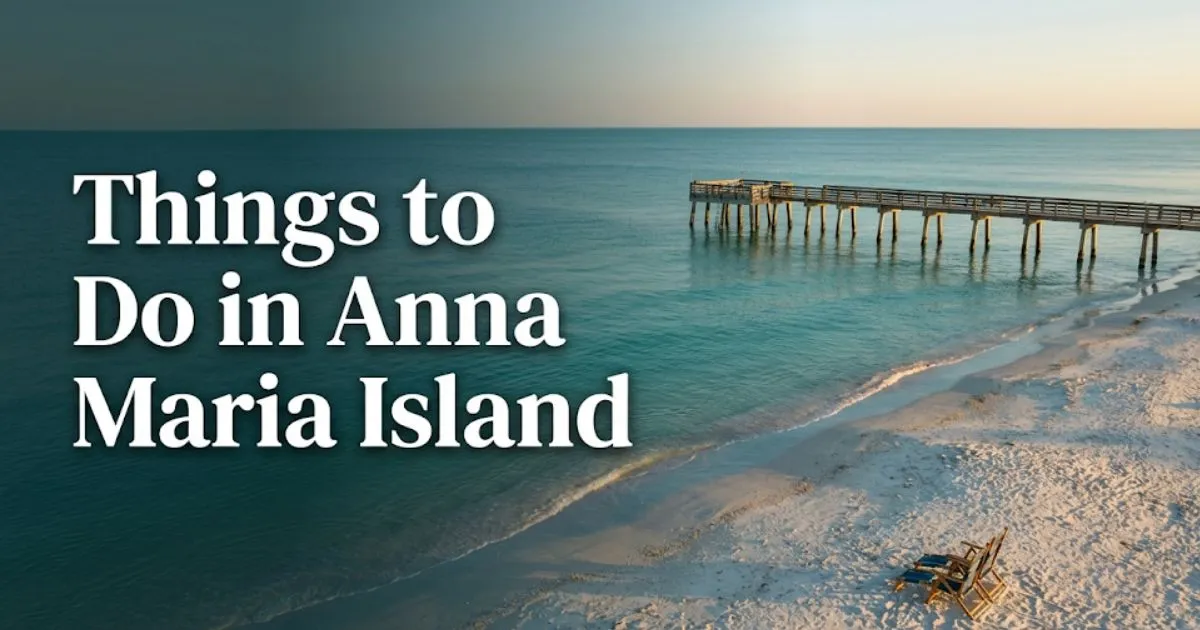
Best Things To Do in Anna Maria Island FL 2026 Guide

The best things to do in Anna Maria Island reward travelers who come prepared with specific local knowledge rather than a generic beach vacation mindset. This 7-mile Gulf Coast barrier island in Manatee County offers white sand beaches, kayak trails through mangrove systems, world-class fishing piers, and a genuine Old Florida character that most of Florida’s Gulf Coast lost decades ago.
Anna Maria Island has no traffic lights, no chain hotels, and no high-rise buildings. That restraint is not an accident; it reflects a deliberate community identity that keeps the island accessible and uncrowded by Gulf Coast standards.
This guide covers every major activity category on and around the island. It includes specific named beaches, local restaurants, outdoor access points, practical logistics, traveler-profile-specific guidance, and an honest seasonal assessment that most travel content ignores.
Things to Do in Anna Maria Island: What You Actually Need to Know First
Anna Maria Island divides into three distinct municipalities, each with its own character, beach access points, and dining concentration.
The northernmost section is the City of Anna Maria, anchored by Pine Avenue and the City Pier. The middle section is Holmes Beach, the largest of the three and home to most of the island’s commercial activity along Gulf Drive. The southernmost section is Bradenton Beach, centered on Bridge Street and its waterfront dining cluster.
Understanding these three zones prevents the most common planning mistake: treating the island as a single homogeneous location and ending up driving back and forth on Gulf Drive all day.
The single road running the length of the island is Gulf Drive, which becomes Gulf of Mexico Drive in the southern section. In peak season, it backs up significantly at the Manatee Avenue bridge entrance.
Most visitors get this wrong: They arrive on a Saturday in February without a parking plan and spend 45 minutes circling before they see the beach. Use the Island Trolley instead. It is free, runs the full length of the island, and eliminates parking stress entirely.
Here is the essential framework for your visit:
- Orient by zone: decide whether your priorities are City of Anna Maria (fishing, Old Florida quiet), Holmes Beach (central access, dining, water sports), or Bradenton Beach (Bridge Street, sunset views, lively waterfront).
- Check beach conditions before leaving your accommodation (Florida Fish and Wildlife Conservation Commission provides real-time red tide and water quality updates).
- Load the Island Trolley route on your phone before you need it.
- Make restaurant reservations where possible (Sandbar Restaurant, Beach House Waterfront Restaurant) at least a week out in peak season.
- Arrive at Coquina Beach or Bean Point before 9 am in peak season for reliable parking.
Families benefit most from using Holmes Beach as their base. Couples find the City of Anna Maria end quieter and more atmospheric. Solo travelers and budget travelers get the most efficiency from the free trolley and free beach access.
Best Things to Do in Anna Maria Island
The best things to do in Anna Maria Island cluster into five categories: beach access, water-based activities, nature exploration, waterfront dining, and Pine Avenue culture.
No single attraction dominates the island. The experience is cumulative and unhurried, which is precisely the point.
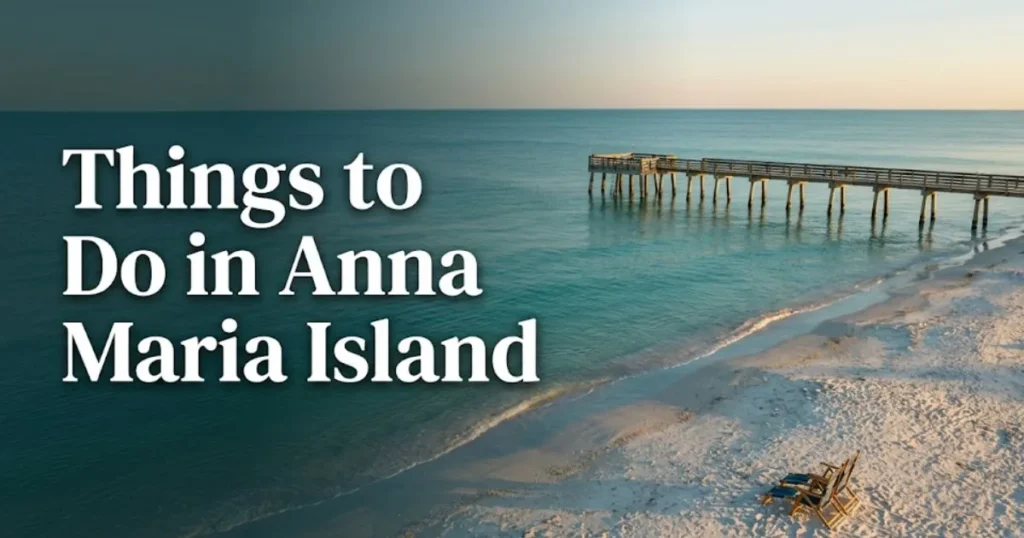
Suggested 1-Day Itinerary Framework:
- Start at Bean Point (City of Anna Maria end) at dawn for shelling and near-empty beach access. Allow 60 to 90 minutes.
- Walk or trolley south to Pine Avenue for breakfast at the Gulf Drive Cafe or Roser Memorial Community Church Thrift Shop area coffee spots. Allow 45 minutes.
- Mid-morning: kayak launch from Sun Bay Outdoors in Holmes Beach or paddleboard rental. Allow 2 to 3 hours.
- Lunch on Bridge Street in Bradenton Beach, specifically the Waterfront Restaurant or Ginny’s and Jane E’s café on Pine Avenue.
- Afternoon: Coquina Beach for swimming and family time (calm Gulf water, restroom access, lifeguards in season). Allow 2 to 3 hours.
- Sunset: Rod and Reel Pier (City of Anna Maria) or the City Pier for elevated Gulf views without crowds. Allow 60 minutes.
- Dinner: Beach House Waterfront Restaurant or the Sandbar Restaurant with early reservations.
| Activity | Best For | Approx. Cost | Time Needed |
|---|---|---|---|
| Bean Point sunrise shelling | Seniors, couples | Free | 60-90 min |
| Kayaking Robinson Preserve | Solo, couples | $35-$65 rental | 2-3 hours |
| Coquina Beach swimming | Families | Free | 2-4 hours |
| Rod and Reel Pier | Budget, seniors, anglers | Small access fee | 1-2 hours |
| Pine Avenue browsing | All profiles | Free to browse | 1-2 hours |
| Dolphin boat tour | Families, couples | $35-$65 per person | 90 min |
| Sandbar Restaurant dinner | Couples, groups | $30-$55 per person | 90 min |
Anna Maria Island Beaches: Which One is Right for You
Anna Maria Island’s beaches run the full 7-mile western Gulf-facing shore, but the three primary access points serve dramatically different traveler needs.
Coquina Beach sits at the island’s southern end and is the most family-equipped. It has lifeguards (seasonal hours; verify before visiting), restrooms, a concession stand, picnic shelters, and reliable Gulf-side parking. The water is characteristically calm on most days due to the Gulf’s shallow nearshore profile.
Bean Point, at the northern tip of the island, is the opposite of Coquina in nearly every practical sense. There is no parking at Bean Point itself. Visitors walk or trolley from Pine Avenue. No facilities exist. The reward is a near-pristine stretch of sand at the convergence of Tampa Bay and the Gulf of Mexico, reliably quieter than anywhere else on the island.
Holmes Beach public access points at Manatee Public Beach (on Gulf Drive at 44th Street) offer the most central option. Parking meters operate here; expect to pay for a few hours during peak periods. Restrooms and shower facilities are available.
| Beach | Best For | Parking | Crowd Level | Key Feature |
|---|---|---|---|---|
| Coquina Beach | Families, first-timers | Large lot (fee) | High in season | Lifeguards, restrooms, concession |
| Bean Point | Couples, seniors, shellers | Walk-in only | Low year-round | Pristine, dual waterfront views |
| Manatee Public Beach (Holmes) | Central access, all profiles | Paid meters | Moderate-high | Most central location |
| Bradenton Beach accesses | Couples, walkers | Limited street | Moderate | Bridge Street proximity |
| Cortez Beach area (south) | Quiet, local preference | Limited | Low | Near Cortez fishing village |
Seniors and mobility travelers: Coquina Beach has the most accessible path to the waterline. Bean Point requires a longer walk on soft sand, which is difficult with mobility aids.
Budget travelers: All Gulf-side beaches are free to access. Parking fees are the primary cost. The Island Trolley eliminates this expense entirely.
The local alternative to Coquina Beach: Experienced Anna Maria visitors who want a less crowded swimming experience head to the north Holmes Beach access points on 30th through 40th Street, where smaller lots and less visibility keep crowds thinner even on busy weekends.
Fun Things to Do in Anna Maria Island Beyond the Beach
Fun things to do in Anna Maria Island beyond beach time include dolphin watching tours, cycling the island’s length, browsing the Pine Avenue independent shops, and attending sunset at the Rod and Reel Pier.
The island’s “fun” identity is specifically low-key. There are no theme parks, no waterparks, no boardwalk arcades. If that is what you need, this island is not your destination.
What the island does deliver beyond the beach:
- Cycling Gulf Drive from Bradenton Beach to Bean Point (approximately 7 miles one-way) on a rented beach cruiser; rentals available through multiple Holmes Beach shops
- Dolphin watching from shore at Bean Point (dawn and dusk are most reliable for sightings, no boat required)
- Bridge Street in Bradenton Beach for waterfront cafés, small galleries, and the historic Anna Maria Island City Pier area
- Rod and Reel Pier for fishing without a charter boat, sunset watching, and the adjacent Rod and Reel Pier Restaurant for grouper sandwiches and cold beer in a genuinely weathered Old Florida setting
- Pine Avenue independent shopping for island-made art, beach gear, and the kind of boutique retail that has disappeared from most Florida beach towns
- Morning kayak on Sarasota Bay (eastern, mangrove side) for calm water conditions without Gulf wave exposure
Couples find the Rod and Reel Pier at sunset to be one of the island’s most atmospheric experiences, without the scene or crowds of a formal sunset cruise.
Families with children get the most out of dolphin watching from Bean Point (free, requires patience) or a dedicated dolphin tour boat (typically $35 to $60 per person, verify current pricing before booking).
Insider Tip:
- The Rod and Reel Pier charges a small access fee for fishing; non-fishing visitors can often walk out without charge, but policies change seasonally; confirm before assuming free access.
- The island’s bike path runs along Gulf Drive but gaps exist; know the route before committing to cycling with young children.
- Dolphin sightings from shore are genuinely common at Bean Point but not guaranteed; build in 45 minutes minimum.
Key Takeaway: Use the Island Trolley instead of driving. Park once and ride the full island. It is the single biggest quality-of-life improvement available on Anna Maria Island.
Anna Maria Island Outdoor Activities
Robinson Preserve is Anna Maria Island’s most rewarding outdoor destination, offering 682 acres of tidal marsh, mangroves, and upland habitat managed by Manatee County.
Robinson Preserve sits on the eastern (bay) side of the island in Holmes Beach. Trail access is free. The preserve offers kayak launches, paddleboard access, bird observation towers, and a network of gravel and boardwalk trails that range from flat and accessible to longer loop options.
Key outdoor access points and what to expect:
- Robinson Preserve main entrance on 99th Street NW in Holmes Beach: parking available (free, limited on peak weekends)
- Kayak and paddleboard launch inside the preserve: one of the island’s most sheltered water access points; ideal for beginners and early morning paddlers
- Bird observation tower: accessible trail to an elevated platform with views across the tidal flats; best at low tide when wading birds concentrate
- Preserve loop trails: flat, shell-gravel surface; manageable for most fitness levels; approximately 2 to 3 miles for the full loop
According to Manatee County Parks and Natural Resources, Robinson Preserve’s trail system is open daily from dawn to dusk. Hours are subject to seasonal variation; verify before visiting.
Seniors and mobility travelers: The main trail surface is firm shell-gravel, significantly more accessible than soft beach sand. The observation tower has steps, not a ramp; factor this into planning.
Families: Robinson Preserve is genuinely excellent for children, particularly the bird observation point and the kayak launch. Plan 2 to 3 hours minimum to get real value from the preserve.
The preserve’s local alternative status is itself the point: while most visitors go directly to the Gulf beaches, Robinson Preserve delivers the most biodiverse and least crowded outdoor experience on the island.
Anna Maria Island Kayaking and Water Sports
Kayaking and paddleboarding on Anna Maria Island work best on the bay side, specifically through the mangrove channels north of Robinson Preserve and along Sarasota Bay’s shoreline.
Gulf-side conditions are manageable on calm days but require more paddling experience. Bay-side water is calm year-round for beginners.
Sun Bay Outdoors on the Holmes Beach waterfront rents kayaks, paddleboards, and bikes. Rates typically run in the $35 to $65 range for half-day rentals; verify current pricing directly. Reservations are advisable in peak season.
Water sports available on Anna Maria Island in 2026:
- Single and tandem kayak rentals (bay and Gulf access)
- Stand-up paddleboard rentals (bay-side recommended for beginners)
- Guided kayak tours through mangrove tunnels north of the island (typically 90 minutes to 3 hours; guide-led tours add safety and wildlife spotting expertise)
- Pontoon boat rentals for groups wanting to explore Sarasota Bay without a charter commitment
- Parasailing (operated from Bradenton Beach waterfront; seasonal availability; verify current operators before visiting)
- Jet ski rentals (limited on the island; primarily available through Bradenton Beach marina operators)
Solo travelers find guided kayak tours particularly valuable because they deliver wildlife commentary and navigation without requiring prior area knowledge.
Couples looking for a memorable experience should book a sunrise paddleboard session on the bay side. Conditions are glassier at dawn. Dolphin sightings in the bay channels are common before 8 am.
Safety note: Gulf-side paddling in summer involves afternoon thunderstorm risk. Be off the water by 1 pm during June through September. Lightning on open water is a serious risk; do not dismiss afternoon storm warnings.
Anna Maria Island Fishing: Piers, Charters, and Local Spots
Anna Maria Island fishing centers on three distinct options: pier fishing at the Rod and Reel Pier, inshore charter fishing on Sarasota Bay and Tampa Bay, and offshore charter trips targeting grouper and snapper in Gulf waters.
The Rod and Reel Pier at the City of Anna Maria end is the most accessible option for non-anglers. It charges a small daily fishing fee (verify current rate before visiting). The adjacent restaurant makes it one of the few fishing piers in Florida where the experience is genuinely enjoyable even if you catch nothing.
City Pier (also in the City of Anna Maria) offers additional public fishing access. It is shorter than Rod and Reel and less atmospheric, but free.
Inshore species to target: snook, redfish, sea trout, flounder, and tarpon (seasonal). Offshore species: grouper, amberjack, snapper, and cobia.
According to the Florida Fish and Wildlife Conservation Commission, a valid Florida fishing license is required for saltwater fishing from shore or a boat for most visitors. Pier fishing from licensed piers operates under the pier’s group license in most cases; confirm with the specific pier before fishing without an individual license.
| Fishing Option | Cost Range | Species | Best Season | Best For |
|---|---|---|---|---|
| Rod and Reel Pier | Small daily fee | Snook, trout, tarpon | Spring-Fall | Budget anglers, families |
| Inshore half-day charter | $400-$700 per boat | Redfish, snook, sea trout | Year-round | Groups of 2-4 |
| Offshore full-day charter | $700-$1,200 per boat | Grouper, snapper | Late spring-early fall | Serious anglers |
| City Pier | Free (no license req.) | Trout, sheepshead | Year-round | Solo, budget travelers |
Families with children get the best introduction to fishing at Rod and Reel Pier. The short walk out, the restaurant proximity, and the almost-guaranteed sheepshead and pinfish action keeps children engaged.
Budget travelers: Pier fishing with rented gear (available at the pier’s bait shop) delivers a full fishing experience for significantly less than a charter.
Key Takeaway: The Rod and Reel Pier at dawn is the most underrated and crowd-free experience on the entire island. Go before the day-trippers arrive.
Pine Avenue: Anna Maria Island’s Most Rewarding Street
Pine Avenue in the City of Anna Maria is the island’s most authentic commercial street, lined with independent boutiques, an art gallery cluster, a historic community church, and the kind of Old Florida architecture that most barrier island towns demolished decades ago.
Pine Avenue runs from Gulf Drive east toward the bay, ending near the City Pier area. Its walkable scale means the full street takes about 20 minutes to cover at a relaxed browsing pace.
What you will actually find on Pine Avenue:
- Ginny’s and Jane E’s: a café and cottage-style gift shop in a historic building; local favorite for breakfast and coffee; expect a wait on weekend mornings
- Island Style: independent clothing and beach goods boutique with island-made items
- Anna Maria Island Historical Society at the Cedar Cove building: small, free exhibit on the island’s history worth 30 minutes for context
- Pine Avenue Gallery cluster: rotating art from local island artists; not tourist-grade reproduction prints but actual locally-made work
- Roser Memorial Community Church (1914): one of the oldest structures on the island; not a tourist attraction but worth noting as a landmark on the walk
Couples find Pine Avenue the most naturally romantic part of the island, particularly on weekday mornings before the day-trippers arrive.
Budget travelers: Pine Avenue is entirely free to explore. The café stop is the only spending commitment.
The local alternative to tourist-heavy souvenir shopping: experienced visitors skip the Holmes Beach Gulf Drive souvenir strip entirely and spend that time on Pine Avenue instead. The quality differential is significant.
Anna Maria Island Restaurants: Where Locals and Repeat Visitors Actually Eat
The best restaurants on Anna Maria Island reward early planning. The island’s top tables are few, reservations are hard to secure in peak season, and the most photographed restaurant is not always the best meal.
The Sandbar Restaurant on Gulf Drive in Holmes Beach is the island’s most well-known dining option and genuinely earns its reputation for Gulf views and fresh seafood. Expect significant waits without a reservation. Dinner entrees typically run in the $25 to $45 per person range before drinks; verify current pricing.
Beach House Waterfront Restaurant (Bradenton Beach waterfront) delivers comparable Gulf-view dining with a slightly more relaxed atmosphere and more accessible Bay-side approach. Also reservation-recommended in season.
Gulf Drive Cafe in Holmes Beach is the island’s best-value breakfast option. It opens early, it is outdoor-seating-first, and it is where locals eat on mornings when they do not want a wait. Pricing is significantly lower than the waterfront dinner spots.
Skinny’s Place in Holmes Beach is the honest local alternative to the tourist waterfront restaurants. It is a dive bar with strong grouper sandwiches, cold draft beer, and no ambience beyond ceiling fans and a friendly crowd of regulars.
Insider Tip:
- Make Sandbar and Beach House reservations at least 7 to 10 days out during January through April. Walk-in waits can exceed 90 minutes.
- For breakfast, arrive at Gulf Drive Cafe before 8 am to avoid a wait.
- Skinny’s Place does not take reservations and does not need them; it stays uncrowded precisely because it does not look impressive from outside.
Families: Gulf Drive Cafe handles children well. The outdoor seating and relaxed pace suit young travelers better than the formal waterfront dinner spots.
Budget travelers: Breakfast at Gulf Drive Cafe and lunch at Skinny’s Place covers two meals for well under $40 per person total.
Anna Maria Island With Kids and Families
Anna Maria Island is one of Florida’s most genuinely family-friendly beach destinations, specifically because of its calm Gulf water, shallow nearshore depth, and low commercial chaos.
Coquina Beach is the primary family beach. The Gulf of Mexico’s natural shallow shelf makes the water calm enough for young children on most days. Lifeguards are present during peak season (hours vary seasonally; verify before visiting). Facilities include restrooms, outdoor showers, picnic shelters, and a concession stand.
Age-specific guidance:
- Ages 3 to 6: Coquina Beach Gulf-side in the morning (calmer wave energy before afternoon sea breezes). Bring shade. The sun intensity is serious year-round.
- Ages 7 to 12: Rod and Reel Pier fishing introduction, dolphin boat tour, and Robinson Preserve kayak launch.
- Teens: Stand-up paddleboard rental on the bay side, beach cycling the island’s length, Bridge Street exploring.
Robinson Preserve is a genuine family win that most tourist guides underplay. The flat trail, bird observation tower, and kayak launch hold children’s attention far longer than a second beach afternoon.
Stroller access: Coquina Beach has a paved path to restroom facilities. Robinson Preserve’s main trail is stroller-manageable on the shell-gravel surface. Bean Point is not stroller-accessible due to soft sand approach.
The honest limit for families: The island has no dedicated children’s attraction infrastructure. No aquarium, no playground beyond a small Holmes Beach park, no waterpark. Families who need structured entertainment alongside beach time will feel the limitations after day two.
Key Takeaway: Book vacation rental accommodations at least three to four months in advance for peak season family trips. Weekly minimums are standard and availability disappears fast.
Anna Maria Island for Couples
Anna Maria Island suits couples specifically because of what it lacks: no party-bar strip, no DJ pool decks, no carnival-atmosphere boardwalk.
The island’s most romantic experiences concentrate in two areas: the City of Anna Maria northern end (Pine Avenue, Bean Point, Rod and Reel Pier) and the Bridge Street waterfront in Bradenton Beach (sunset dining, waterfront strolling, small galleries).
Specifically romantic experiences for couples:
- Dawn at Bean Point: arrive before sunrise. The convergence of Tampa Bay and the Gulf of Mexico, with near-zero crowd presence before 7 am, is genuinely one of the Gulf Coast’s most atmospheric morning experiences.
- Sunset kayak on the bay side: book a guided sunset kayak specifically through operators who route through the northern mangrove channels. The golden-hour light on the mangrove walls is exceptional.
- Dinner at the Sandbar Restaurant with a Gulf-side table at sunset. Requires advance reservations; request waterfront seating specifically when booking.
- Bridge Street evening walk: low-key, walkable, lined with small restaurants and the kind of harbor-view atmosphere that does not require spending money to enjoy.
- Cycling Pine Avenue to City Pier on a weekday morning when tourist traffic is thin.
The honest note for couples: Anna Maria Island has no spa infrastructure, no luxury hotel, and no formal romantic package amenities. Couples who need resort-scale romance (couples massage, champagne turndown, hotel pool scene) will not find it here. The island’s romance is environmental: the light, the water color, the pace.
Anna Maria Island Trolley and Getting Around
The Island Trolley is a free, open-air transit service running the full length of Anna Maria Island, connecting City of Anna Maria, Holmes Beach, and Bradenton Beach on a looping route.
It is operated by Manatee County Area Transit and runs at no charge to passengers. Route frequency and seasonal hours vary; the trolley typically runs more frequently during peak season (winter and spring) and reduces service in fall. Verify the current 2026 schedule directly with Manatee County Area Transit before your visit.
Getting around Anna Maria Island practically:
- Driving and parking: Gulf Drive has extremely limited public parking. Coquina Beach has the largest lot. Holmes Beach metered parking fills by 9 am on peak weekends. Plan accordingly.
- Trolley: Best option for day visitors and anyone staying in a vacation rental within walking distance of a stop. Eliminates parking stress entirely.
- Cycling: The island’s 7-mile length is manageable by bike. Beach cruiser rentals are available through multiple Holmes Beach shops. The Gulf Drive path has gaps; plan the route before committing.
- Walking: The distance between municipalities is too far for practical walking. Trolley or bike between zones.
- Rideshare: Available but limited on the island. Surge pricing applies during peak periods. Useful for evening restaurant trips when cycling feels impractical.
Seniors and mobility travelers: The trolley has accessible boarding at most stops, but confirm specific accessibility features with Manatee County Area Transit before relying on it. Some stops have no shade or seating while waiting.
The most common mistake: Visitors drive everywhere, then spend 30 to 45 minutes finding parking at every stop. Using the trolley as the primary transport method, with the car parked once at a vacation rental or large lot, resolves this completely.
Anna Maria Island Shelling and Wildlife Watching
Anna Maria Island’s best shelling happens at Bean Point and along the Bradenton Beach shoreline south of Coquina Beach, particularly after storms and during low tide.
Common finds: lightning whelks, olive shells, sand dollars (whole specimens are rare; find them in the early morning), moon snails, and shark’s teeth. The shell quality and variety does not match Sanibel Island’s legendary haul, but Bean Point at dawn offers a genuinely rewarding low-tide search.
Wildlife watching specifics:
- Bottlenose dolphins: Common in the bay channels and visible from Bean Point, the Rod and Reel Pier, and kayak trips on the bay side. Most active in morning hours.
- Manatees: Present in Sarasota Bay and the bay-side channels, particularly in cooler months. Robinson Preserve kayak routes offer among the best manatee encounter chances on the island.
- Roseate spoonbills: Present at Robinson Preserve tidal flats during low tide, particularly in late summer and fall. One of Florida’s most visually striking wading birds.
- Ospreys and bald eagles: Year-round, particularly in the Robinson Preserve area. Nesting platforms visible along the preserve trail.
- American oystercatchers and other shorebirds: Coquina Beach and Bean Point shorelines.
According to the Florida Fish and Wildlife Conservation Commission, disturbing nesting shorebirds or feeding wildlife is a violation of Florida law. Stay at least 100 feet from nesting areas (marked by posted signs on the beach in nesting season).
Seniors: Dawn shelling at Bean Point requires walking approximately 10 minutes from the nearest trolley stop on soft sand. Plan footwear accordingly.
Key Takeaway: Shelling and wildlife watching require early morning timing. After 9 am in peak season, Bean Point is crowded enough that wildlife has retreated. Dawn visits deliver a fundamentally different and better experience.
Things to Do Near Anna Maria Island: Best Day Trips
The best day trips from Anna Maria Island reach Egmont Key, Fort De Soto Park, St. Armands Circle in Sarasota, and the Historic Cortez Fishing Village just off the island’s southern end.
Each serves a distinct purpose and traveler profile.
Egmont Key State Park is the most rewarding day trip for nature-focused travelers. This uninhabited island at the mouth of Tampa Bay is accessible only by ferry (seasonal; departs from Fort De Soto Park and historically from Anna Maria Island area operators; confirm 2026 ferry availability and pricing before planning). It offers Gulf-side beaches, Civil War-era fort ruins, sea turtles, and zero crowds by mainland standards.
Fort De Soto Park (approximately 20 to 25 miles north, in Pinellas County) is consistently ranked among the top Gulf Coast beaches in the United States by Travel + Leisure and other national publications. It offers snorkeling, camping, kayak rentals, and a historic Spanish-American War fort. Day trip from Anna Maria Island takes approximately 40 to 50 minutes by car.
Historic Cortez Fishing Village sits immediately south of the Anna Maria Island bridge, making it the easiest half-day side trip. It is one of Florida’s last remaining working fishing villages, with a small maritime museum and fresh seafood at dockside markets.
St. Armands Circle (Sarasota, approximately 25 to 30 miles south) offers upscale shopping and dining on a landscaped circular street. Plan 2 to 4 hours; it is a strong option for a rainy afternoon.
| Day Trip | Distance | Best For | Cost Level | Advance Booking |
|---|---|---|---|---|
| Egmont Key | Ferry required | Nature, history | Low-Moderate | Ferry reservation recommended |
| Fort De Soto Park | 25 miles north | Beaches, snorkeling | Low | No reservation needed |
| Historic Cortez | 2 miles south | Seafood, culture | Low | No |
| St. Armands Circle | 25 miles south | Shopping, dining | Moderate-High | Dinner reservations advisable |
| Sarasota Ringling Museum | 30 miles south | Art, culture | Moderate | Timed entry; book in advance |
Anna Maria Island Seasonal Guide: When to Go and When to Reconsider
The best time to visit Anna Maria Island is late September through mid-November, when Gulf water is still warm from summer, crowds have thinned, accommodation prices drop, and temperatures settle into the mid-70s to low 80s Fahrenheit.
The second-best window is late April through mid-May: post-snowbird departure, pre-summer heat and storm season, with comfortable weather and manageable crowds.
Seasonal breakdown:
January through March (Peak Snowbird Season): The weather is consistently pleasant (highs in the low 70s, low humidity). Crowds are at their annual maximum. Parking is frustrating. Restaurant waits are long. Vacation rental prices peak. This is when the island is most popular and least relaxing for first-timers without advance planning.
April through May: Snowbird departure empties the island noticeably by mid-April. Warm, comfortable weather persists. Water temperatures are rising. Good availability for last-minute accommodation. One of the best windows for repeat visitors.
June through August: Peak heat (highs in the low 90s with high humidity). Afternoon thunderstorms are nearly daily from approximately 2 to 5 pm. Red tide events are more common. Gulf water is warm. Family travel peaks. Prices are moderate. Go early morning, shelter midday, return to the beach late afternoon.
September through November: The island’s genuine sweet spot for experienced visitors. Hurricane season (technically through November) requires attention: monitor the National Hurricane Center and have a contingency plan. Outside active storm tracks, October is close to ideal.
December: Pleasant temperatures (highs in the mid-60s to low 70s). Pre-snowbird crowd levels. Holiday character on Pine Avenue is low-key but genuine.
Red tide advisory: Florida Gulf Coast red tide (Karenia brevis algae blooms) can affect any Gulf beach at any time of year, but blooms are most common in late summer and fall. Check current conditions with the Florida Fish and Wildlife Conservation Commission before Gulf beach visits.
Safety and Practical Warnings for Anna Maria Island
Anna Maria Island’s primary safety risks involve water, weather, and sun exposure rather than urban safety concerns.
Key safety and practical facts every visitor should know:
- Rip currents: Present on Gulf-facing beaches during storm systems and periods of high offshore wind. Check the beach safety flag system before entering the water. Red flag means stay out. Yellow flag means swim with caution.
- Afternoon lightning: June through September, thunderstorms typically develop between 1 and 5 pm. Exit the water and beach when you hear thunder. Lightning strikes are a genuine Gulf Coast risk, not a minor weather inconvenience.
- Red tide: Causes respiratory irritation and kills fish. Check current red tide conditions at the Florida Fish and Wildlife Conservation Commission website before visiting Gulf beaches. If you smell it, the bloom is close enough to affect you.
- Sun exposure: UV intensity in Southwest Florida is extreme year-round. SPF 50 minimum. Reapply after water time. Children are particularly vulnerable.
- Jellyfish and Portuguese man-o-war: Most common after storms. Man-o-war tentacles cause serious pain. Do not touch beached specimens; they retain venom after death.
- No hospital on the island: Nearest emergency care is in Bradenton (approximately 8 to 10 miles via the Manatee Avenue bridge). For serious medical emergencies, this response time matters. Know the nearest urgent care location before you need it.
- Gulf Drive traffic: The single-road island design means accident or bridge closure creates complete access lock-up. Check local Manatee County traffic conditions if you need to depart for a medical or timing-critical reason.
Bold: In any water safety emergency on Anna Maria Island, call 911. The US Coast Guard 7th District covers Gulf Coast rescue operations; the Anna Maria Island Fire Rescue station is located in Holmes Beach.
Frequently Asked Questions About Things to Do in Anna Maria Island
What is the best time to visit Anna Maria Island?
The best time to visit Anna Maria Island is late September through mid-November.
Gulf water is still warm from summer, crowds are significantly thinner than peak snowbird season, and temperatures are comfortable in the mid-70s to low 80s Fahrenheit.
January through March is the most popular but also the most crowded period; plan 6 to 8 weeks ahead for accommodation and make restaurant reservations well in advance if visiting then.
Is Anna Maria Island good for families with kids?
Anna Maria Island is one of Florida’s best family beach destinations for children under 12.
The Gulf of Mexico’s calm, shallow water, the Coquina Beach facilities, and Robinson Preserve’s wildlife-rich trails offer genuinely child-appropriate experiences without commercial tourist chaos.
Families needing structured entertainment beyond beach and nature activities may find the island’s low-infrastructure character limiting after two to three days.
How do you get around Anna Maria Island without a car?
The Island Trolley is a free transit service operated by Manatee County Area Transit that runs the full 7-mile length of the island.
It connects City of Anna Maria, Holmes Beach, and Bradenton Beach, and eliminates the need to drive or park at each activity stop.
Bike rentals from Holmes Beach shops are the best complement to the trolley for travelers who want more flexibility between stops; verify current trolley hours with Manatee County Area Transit before your visit.
What are the best free things to do on Anna Maria Island?
The best free things to do on Anna Maria Island include dawn shelling at Bean Point, wildlife watching at Robinson Preserve, fishing from the City Pier, cycling Gulf Drive, and walking Pine Avenue.
All Gulf-side beaches have free shoreline access; parking fees are the only cost barrier.
The Island Trolley is also free, making it entirely possible to spend a full day on the island at near-zero cost beyond food.
Is Anna Maria Island worth visiting compared to Siesta Key or Clearwater?
Anna Maria Island suits travelers who specifically want an uncrowded, low-commercialized Gulf Coast experience without resort infrastructure.
Siesta Key offers comparable beach quality with more dining and nightlife; Clearwater Beach has significantly more amenities, hotel options, and family entertainment infrastructure.
Anna Maria Island is the right choice for visitors who actively prefer fewer crowds, no chain hotels, no high-rises, and a slower pace; it is the wrong choice for anyone expecting Clearwater-level amenities.
How far is Anna Maria Island from Tampa?
Anna Maria Island is approximately 45 miles southwest of Tampa.
Driving time is typically 45 to 75 minutes depending on traffic, with the Manatee Avenue (SR 64) bridge approach being the primary congestion point during peak hours.
Tampa International Airport (TPA) is the closest major airport at approximately 45 miles; Sarasota Bradenton International Airport (SRQ) is closer at approximately 25 miles and may offer a simpler arrival option for travelers coming specifically to Anna Maria Island.
Planning Your Trip to Anna Maria Island
Start with accommodation first. Anna Maria Island’s vacation rental market for peak season (January through March and major holidays) requires booking 3 to 6 months in advance. Weekly minimums are standard at most properties during high-demand periods. This single step shapes everything else about your trip logistics.
Once accommodation is confirmed, make restaurant reservations for the Sandbar Restaurant and Beach House Waterfront Restaurant immediately. Then check Manatee County Area Transit for the current Island Trolley schedule so you can plan which days you drive and which days you ride. Verify beach conditions, red tide status, and any active Manatee County beach advisories through the Florida Fish and Wildlife Conservation Commission before each beach day.
All operating hours, trolley schedules, charter fishing availability, kayak rental pricing, and restaurant reservation policies change seasonally and annually. Confirm key logistics directly with venues and the Anna Maria Island Chamber of Commerce before departure. The island rewards the visitor who arrives with a plan. It frustrates the visitor who assumes a small Gulf Coast town will sort itself out on arrival.