Best Things To Do in West Virginia: 2026 Travel Guide

West Virginia rewards travelers who come prepared for genuine outdoor adventure. The best things to do in west virginia range from Class V white-water rapids to free wilderness hikes to one of the most historically layered small towns in the country.
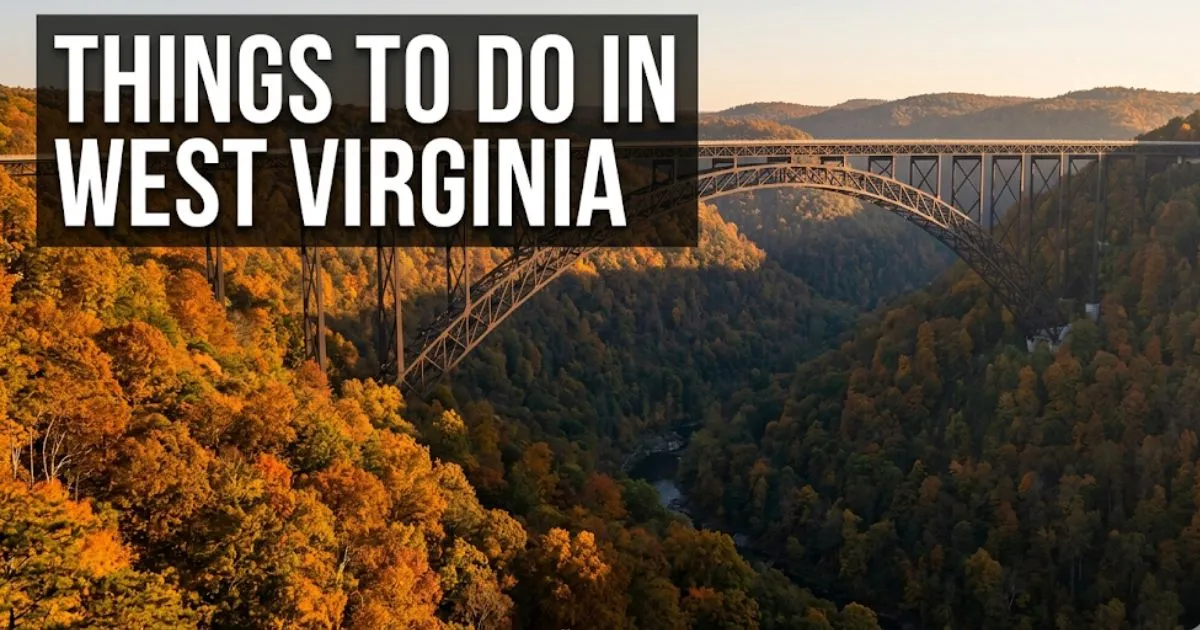
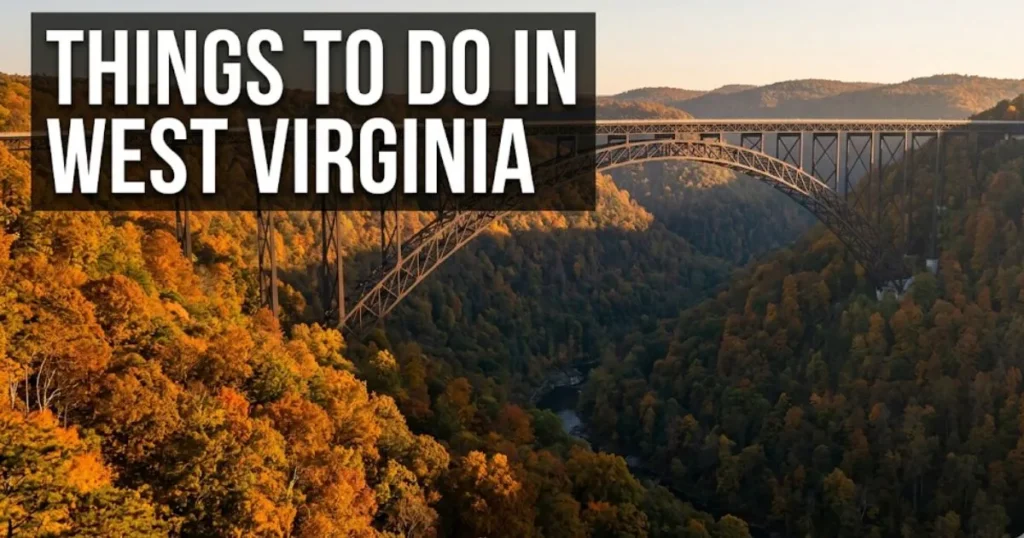
New River Gorge National Park became America’s 63rd national park in 2020. That designation transformed what was already a spectacular outdoor destination into one of the fastest-growing adventure travel regions in the eastern US.
This guide covers every major experience worth your time, organized by activity type, traveler profile, and season. You will also get an honest assessment of what underdelivers, specific named outfitters and trailheads, and a two-day weekend itinerary you can actually use.
Things To Do in West Virginia: What Makes This State Different
West Virginia offers something no other eastern state matches: genuine wilderness within a six-hour drive of 100 million Americans.
The state has no major coastal cities and no famous theme parks. What it has is the Appalachian Mountains in their most dramatic eastern form.
Over 78% of West Virginia is forested. That statistic, cited by the West Virginia Division of Natural Resources, translates directly into hiking, wildlife encounters, and landscape quality.
The state is not for everyone. Travelers who need urban infrastructure, reliable cell service, and walkable downtown districts should look at Asheville or Pittsburgh instead.
West Virginia suits active travelers, history seekers, and anyone who considers spectacular mountain scenery a destination in itself. That specific audience consistently reports West Virginia as one of the most underestimated states in the country.
Insider Tip:
- Cell service is unreliable in gorge zones and deep forest areas, including parts of New River Gorge and all of Dolly Sods. Download offline maps before you leave.
- Fuel up before entering the gorge. Gas stations in Fayetteville and Oak Hill are the last reliable options before long stretches of rural road.
- Seniors and travelers with limited mobility will find paved overlook access at Grandview Overlook and the Canyon Rim Visitor Center genuinely accessible and spectacular without requiring any trail hiking.
Best Things To Do in West Virginia: The Essential List
The single best overview of West Virginia activities spans six distinct experience categories. No single area covers everything.
| Activity | Best Location | Traveler Profile | Cost Range | Physical Level |
|---|---|---|---|---|
| White-water rafting | New River Gorge / Gauley River | Adventure seekers, couples | $60 to $200 per person | Moderate to high |
| Hiking and backpacking | Dolly Sods, Spruce Knob, New River | Solo, couples, experienced families | Free to $10 day-use | Low to strenuous |
| Historic site touring | Harpers Ferry, Lewisburg, Moundsville | Families, seniors, couples | Free to $20 per person | Low |
| Scenic drives | Midland Trail, WV-32, US-219 | All profiles, seniors, families | Free (fuel cost) | None |
| Rock climbing | Seneca Rocks, New River Gorge crags | Experienced climbers, solo | $0 to $120 with guide | High |
| Skiing and snowboarding | Snowshoe Mountain Resort | Families, couples | $50 to $120 lift ticket | Moderate |
| Cave exploration | Lost World Caverns, Organ Cave | Families, curious adults | $15 to $25 per person | Low to moderate |
| Fall foliage touring | Canaan Valley, Blackwater Falls | All profiles | Free to minimal | Low |
According to the West Virginia Tourism Office, outdoor recreation generates over $1.4 billion annually in economic activity for the state, reflecting the genuine scale of its adventure tourism infrastructure.
Budget travelers get exceptional value in West Virginia. State parks charge minimal or no entry fees. The most spectacular trails, overlooks, and wilderness areas are free to access.
Families with young children should anchor to experiences like cave tours, scenic railroad rides at Cass Scenic Railroad, and paved overlook stops. Class IV and V rapids are not appropriate for children under 12 without specific outfitter guidance.
Outdoor Things To Do in West Virginia
West Virginia’s outdoor activity range is the broadest of any landlocked eastern state. It spans beginner-level nature walks through technically demanding multi-day wilderness routes.
Dolly Sods Wilderness in the Monongahela National Forest offers a landscape that feels more like the Canadian tundra than Appalachia. Wind-swept heath barrens, rocky plains, and sweeping valley views cover this 17,000-acre protected area.
The Greenbrier River Trail runs 78 miles through former railroad corridor along the Greenbrier River. It is flat, paved in sections, and ideal for cyclists, families, and travelers who want scenery without elevation gain.
Solo travelers find West Virginia’s trail systems generally well-marked and well-documented through the NPS and National Forest Service websites. Cell service loss is the primary safety concern. Always file a hiking plan with someone before entering Dolly Sods or Spruce Knob.
Seniors have genuine outdoor options beyond overlook parking. The Grandview Rim Trail near Grandview Overlook is mostly flat and paved, with views directly into the New River gorge. The Canyon Rim Visitor Center boardwalk trail is fully accessible and delivers impressive gorge views in under a mile round-trip.
Summer outdoor activities run hot and humid from late July through August. The ideal outdoor season is May through June and again September through October.
Insider Tip:
- For Dolly Sods, enter via Forest Road 75 from the east side. The west-side approach on WV-32 looks shorter on a map but involves rougher roads.
- Spruce Knob, the state’s highest point at 4,863 feet, is accessible by car to within a short walk of the summit. The observation tower at the top requires no hiking.
- Mountain bikes are welcome on the Greenbrier River Trail year-round and can be rented from outfitters in Marlinton.
Hiking in West Virginia
The best hiking in West Virginia centers on three core zones: New River Gorge, the Monongahela National Forest highlands, and Harpers Ferry’s Bolivar Heights.
Long Point Trail in New River Gorge is the single most valuable free hike in the state. The 1.6-mile trail ends at a sandstone promontory with a direct, unobstructed view of the New River Gorge Bridge from the gorge level. It is free, no reservation required, and more rewarding per step than the Bridge Walk for anyone who does not need the bridge-walk experience specifically.
The Blackwater Canyon Trail runs along the former Western Maryland Railway corridor in Tucker County. It follows the Blackwater River through dense hemlock forest to a series of canyon views. Allow three to four hours for the full out-and-back.
Families with young children should target the Grandview Overlook loop near Beckley. Under three miles total, mostly flat, with dramatic gorge views at multiple points. Children who would struggle with Long Point’s terrain handle Grandview easily.
Experienced hikers looking for overnight routes should research the Allegheny Trail, a 330-mile long-distance path crossing the state north to south. Day sections near Spruce Knob deliver the best ridge-walking scenery.
The National Park Service reports that New River Gorge received over 1.8 million visitors in 2023. Canyon Rim and Grandview parking areas reach capacity by 9 a.m. on summer weekends. Arrive before 8 a.m. or plan a weekday visit.
Verify all trail conditions, seasonal closures, and permit requirements with the NPS New River Gorge website before your 2026 visit.
Insider Tip:
- The Endless Wall Trail in New River Gorge is locally preferred over Long Point for a longer gorge-rim experience. Four miles round-trip with constant cliff-edge views.
- Blackwater Falls State Park charges a small parking fee that covers the falls boardwalk access. The Gentle Trail from the lodge reaches the falls with minimal elevation change and is accessible for most mobility levels.
Key Takeaway: Download offline NPS trail maps before entering any gorge zone. Cell service disappears completely on most New River Gorge trails below the canyon rim.
White Water Rafting West Virginia
White-water rafting in West Virginia is the best of its kind in the eastern United States. Two rivers define the experience: the New River for beginners to intermediate paddlers and the Gauley River for advanced and expert-level rafters.
New River Lower Gorge runs Class III to V depending on section and water level. Most outfitters run full-day trips on the Lower New from put-ins near Cunard Landing. ACE Adventure Resort and Adventures on the Gorge are the two largest and most established outfitters, both operating from properties near Fayetteville.
The Gauley River runs Class IV to V and is seasonally available only during Gauley Season, which typically runs six weekends in September and October when the Army Corps of Engineers releases water from Summersville Dam. Book Gauley Season trips at minimum four to six weeks in advance. They sell out.
Couples find the Lower New’s guided full-day trips genuinely memorable without requiring expert swimming or prior experience. Most outfitters require participants to be at least eight to ten years old and able to swim.
Solo travelers can join shared group trips run by all major outfitters without needing a private group booking. This is a genuinely social activity.
Budget travelers should know that weekday trips typically run $15 to $30 less per person than weekend rates. Always verify current pricing directly with outfitters. Gear rental is almost always included.
The Gauley River is not appropriate for first-time rafters regardless of physical fitness. It is appropriate for experienced rafters who want the most technically demanding commercially guided river experience in the eastern US.
Insider Tip:
- Book New River Lower Gorge trips for Thursday or Friday to get lower rates and smaller group sizes.
- Summersville Lake, adjacent to the Gauley put-in, offers clear-water kayaking and cliff jumping in summer that most river-focused visitors entirely miss.
Things To Do in West Virginia for Families
West Virginia is a legitimately strong family destination when activities are chosen realistically based on children’s ages and physical readiness.
Cass Scenic Railroad State Park in Pocahontas County runs restored Shay steam locomotives on a mountain railway originally built to haul lumber. The trains climb to Bald Knob, the state’s second-highest peak, on a two-hour round-trip excursion. Children of all ages ride this without difficulty.
Lost World Caverns near Lewisburg offers guided cave tours through massive stalactite formations. Tours run approximately 45 minutes and cover level, well-lit paths appropriate for ages five and up. It is cool year-round, making it a reliable summer heat escape.
Families with children under eight should avoid all Class III to V rafting, strenuous ridge hikes, and long scenic drives without planned stops. The Pipestem Resort State Park near Hinton includes a nature center, aerial tram, and short trail network built specifically for family use.
Older children aged ten and up thrive on beginner-level New River rafting, zip-lining at ACE Adventure Resort’s zipline park, and the cave systems throughout the Greenbrier Valley.
West Virginia State Parks offer cabin rentals at multiple locations. Blackwater Falls, Canaan Valley, and Pipestem all have on-site lodging, dining, and programming. Booking six to eight weeks ahead for summer weekends is standard practice. Verify availability for 2026 directly with the West Virginia State Parks reservation system.
Insider Tip:
- The Cass Scenic Railroad requires advance ticket purchase during summer and fall foliage season. Walk-up availability is rare on weekends between July and October.
- Organ Cave near Lewisburg is one of the longest cave systems in the eastern US and offers more dramatic geology than Lost World Caverns. The tour involves more uneven terrain and suits ages eight and up more comfortably.
Things To Do in West Virginia for Couples
West Virginia offers a distinctly different romantic travel experience from beach resorts or urban weekend getaways. It suits couples who want physical engagement with a landscape.
Lewisburg in Greenbrier County is the best couples base in the state that most first-time visitors skip entirely. This small city of under 4,000 people has a walkable historic district on Washington Street, independent restaurants, wine bars, the Carnegie Hall arts venue (the only Carnegie Hall outside New York City that still presents performances), and easy access to the Greenbrier River Trail.
For a more immersive experience, Adventures on the Gorge offers multi-day packages combining lodging, guided rafting, and zip-lining built around the New River Gorge. Couples without strong outdoor backgrounds can still manage the Upper New River floats, which run Class I to II and are scenically rewarding without being physically demanding.
Evening experiences are limited across most of West Virginia outside Lewisburg and Charleston. Couples who need a lively dining and cocktail scene should stay in Lewisburg on Washington Street, where options like Provisions restaurant and several wine-forward establishments provide genuine evening programming.
The Greenbrier Resort in White Sulphur Springs is the state’s most famous luxury property. It is genuinely impressive architecturally and historically. At current pricing tiers, it serves couples with significant travel budgets rather than mid-range travelers.
Insider Tip:
- For couples who want an off-the-tourist-track dinner, the Lewisburg Farmers Market on Tuesdays from May through October operates as an outdoor social hub where local restaurants and vendors gather.
- The Midland Trail National Scenic Byway between Charleston and White Sulphur Springs is a two-hour drive couples can self-narrate using the official trail audio guide available through the West Virginia Tourism Office.
Key Takeaway: Lewisburg is the most underrated base for couples in West Virginia. It combines walkability, dining quality, arts programming, and trail access in a way no other WV small city matches.
Free Things To Do in West Virginia
West Virginia’s best free experiences rival paid attractions at any comparable outdoor destination in the eastern US.
The Grandview Overlook in New River Gorge National Park requires no entry fee and no reservation. The view directly into the gorge from 1,400 feet above the New River is one of the most dramatic viewpoints in the Appalachian region.
Dolly Sods Wilderness in Monongahela National Forest charges no day-use fee. The same applies to Spruce Knob and virtually all NPS-managed land in the state. A personal vehicle remains necessary to reach most of these areas.
Free named experiences worth the visit:
- Long Point Trail, New River Gorge: 1.6-mile round-trip, free, gorge bridge views
- Grandview Overlook, Beckley: Paved parking, multiple rim viewpoints, free
- Canaan Valley overlooks on WV-32: Pull-off views into the highest valley in the eastern US, free
- Harpers Ferry Lower Town Historic District: Walking the historic streets costs nothing. NPS entry fees apply only if you park in the fee-area lots.
- Moundsville earthwork mounds, Marshall County: Free to walk the exterior of the Grave Creek Mound, the largest conical burial mound in the US
- Blackwater River gorge overlooks on CR-29/7: Free pull-off views without entering the state park
Budget travelers should note that Blackwater Falls State Park charges a small parking fee but no per-person entry fee. The falls themselves are visible from the boardwalk reached immediately from the main lot.
The West Virginia State Museum in Charleston is free to enter. Its natural history and cultural collections cover the state’s full history from Native American presence through the coal era.
Insider Tip:
- The New River Gorge Bridge is free to drive across on US-19. Most visitors pay for the Bridge Walk experience without realizing the view from Long Point Trail is comparably impressive at no cost.
New River Gorge National Park Activities
New River Gorge National Park is West Virginia’s premier travel destination and one of the most activity-dense national park units in the eastern United States.
The park protects 70,000 acres in southern West Virginia around the New River gorge canyon. Its elevation difference between the canyon rim and river creates dramatically varied ecosystems and activity options across a compact geographic area.
To plan a complete visit to New River Gorge:
- Start at the Canyon Rim Visitor Center on US-19 near Fayetteville. Get a current trail conditions report from rangers before heading out.
- Walk the Canyon Rim Boardwalk for an immediate overhead view of the New River Gorge Bridge. This is the accessible, no-effort scenic experience. Allow 30 to 45 minutes.
- Drive south on WV-16 to the Grandview area. The Grandview Overlook delivers the best canyon depth views in the park.
- Access Long Point Trail from the trailhead on Long Point Road off WV-16. The 1.6-mile round-trip ends at direct bridge-level views.
- If booking a Bridge Walk: Reserve through the National Park Service authorized concessionaire. Cost runs approximately $25 to $35 per adult as of recent years. Verify 2026 pricing before booking.
- For rafting, book through ACE Adventure Resort or Adventures on the Gorge at least two weeks ahead for weekends between June and October.
- Exit via US-19 north toward Fayetteville for dinner. The town has several solid restaurants within a short drive of the park.
Families should know that children aged six and under can walk the Canyon Rim Boardwalk and the Grandview Rim Trail without difficulty. Long Point Trail involves some uneven rocky terrain appropriate for ages seven and up.
According to the National Park Service, the park’s busiest period runs July through October. Parking fills at all major trailheads by mid-morning on summer and fall weekends.
Harpers Ferry Things To Do
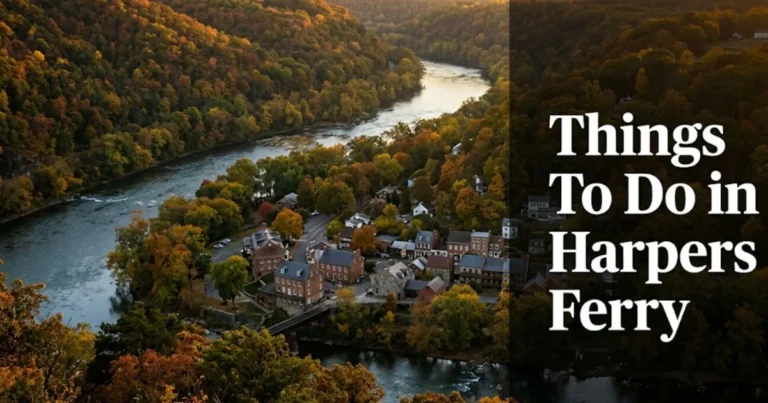
Harpers Ferry National Historical Park delivers the most historically dense experience in West Virginia for travelers interested in American history, Civil War sites, and industrial heritage.
The historic lower town sits at the confluence of the Shenandoah and Potomac rivers in Jefferson County. John Brown’s 1859 raid on the federal armory, the town’s role as a Civil War contested point, and its position as the site of America’s first successful railroad make it one of the most layered historical sites in the mid-Atlantic region.
Key experiences in Harpers Ferry:
- John Brown’s Fort: The original fire engine house where Brown made his last stand. Free to enter. Located in the lower town historic district.
- Maryland Heights Trail: Crosses the Potomac into Maryland via footbridge and climbs to stone fort ruins with panoramic views of the confluence. Four miles round-trip. Moderate effort.
- Jefferson’s Rock: A 15-minute walk from the lower town. Thomas Jefferson stood here in 1783 and described the confluence view as worth a voyage across the Atlantic. Still accurate.
- Storer College Historic District: Upper town site of one of the first Black colleges in the US. Important to the full story of Harpers Ferry.
- Harpers Ferry Adventure Center: Offers zip-lining and tubing on the Shenandoah River adjacent to the historic park.
Seniors find the lower town historic district mostly flat and accessible. The Maryland Heights Trail and Jefferson’s Rock involve significant elevation gain and are not appropriate for travelers with limited mobility.
The NPS Harpers Ferry Visitor Center is located on Cavalier Heights Road. Park here and take the free shuttle into the lower town to avoid parking difficulties in the historic district.
Key Takeaway: Harpers Ferry’s lower town historic district is genuinely accessible on foot from the shuttle drop-off. The Maryland Heights Trail across the Potomac adds the panoramic context that makes the geography of the site make sense.
Things To Do in Charleston WV
Charleston, West Virginia’s capital city, serves best as a trip gateway rather than a primary destination. That is an honest assessment, not a criticism.
The Clay Center for the Arts and Sciences on Civic Center Drive is Charleston’s most complete cultural institution. It houses the Avampato Discovery Museum with science programming for children, the Juliet Art Museum with regional and national collections, and a 1,800-seat performance hall. Budget $15 to $25 per adult for museum entry, with children’s pricing lower. Verify current admission before visiting.
The West Virginia State Museum at the Culture Center on Greenbrier Street is free to enter and covers the state’s complete natural and cultural history. Allow two hours for a full visit.
Capitol Market on Smith Street near the state capitol operates as a year-round market covering fresh produce, local meats, specialty foods, and prepared meals. Saturday mornings draw the largest vendor selection. It is free to browse and represents the most genuinely local food experience in the city.
Couples and solo travelers in Charleston for an evening will find the Elk City neighborhood on Virginia Street West the best dining district. It has concentrated independent restaurants and bars within walkable distance.
Charleston is two hours from New River Gorge, three hours from Blackwater Falls, and 2.5 hours from Harpers Ferry. It functions best as an overnight launch point for a statewide road trip, not as a destination in isolation.
Budget travelers note that Charleston has the widest range of budget lodging in the state, including multiple national chain hotels near I-64 and I-77. Price-per-night is significantly lower than resort areas like Snowshoe or Adventures on the Gorge properties.
Waterfalls in West Virginia
West Virginia has more named waterfalls than any other mid-Atlantic state. The concentration in Tucker County and Pocahontas County is particularly high.
Blackwater Falls in Blackwater Falls State Park near Davis is the state’s most famous waterfall. The main falls drop 57 feet over amber-stained sandstone, with the dark water color caused by tannic acid from fallen hemlock and red spruce needles. The falls are visible from a short boardwalk from the main parking lot. Allow 30 minutes.
Elakala Falls in the same park involves a short trail into the gorge below the main falls. Four tiers of cascades, far less crowded than the main falls overlook, and more dramatically photographed by experienced visitors who know to walk past the main boardwalk stop.
Notable West Virginia waterfalls beyond Blackwater:
- Blackwater Canyon overlook falls, Tucker County: Visible from CR-29/7 pull-offs, no trail required
- Seneca Creek Falls, Spruce Knob-Seneca Rocks area: Accessible via the Seneca Creek Trail, 6-mile round-trip
- Twin Falls, Twin Falls Resort State Park near Mullens: Two separate falls accessible on a short loop trail
- Cathedral Falls, Kanawha Falls area: A 60-foot plunge fall visible from a roadside pull-off on US-60
Waterfalls are at peak flow in March through May, fueled by snowmelt and spring rain. By late August, many smaller falls reduce to a trickle.
Photographers should target Blackwater Falls in early morning October light for peak color reflection in the dark water. The combination of amber falls and surrounding hardwood color at peak foliage is one of West Virginia’s most distinctive visual experiences.
Families with young children find the Blackwater Falls boardwalk ideal. No uneven terrain, immediate payoff, and a picnic area adjacent to the parking lot.
Scenic Drives West Virginia
West Virginia’s road network includes some of the most consistently scenic driving in the eastern US, without the traffic congestion that affects comparable routes in Virginia or North Carolina.
The Midland Trail National Scenic Byway follows the original National Road alignment between Charleston and White Sulphur Springs on US-60. It passes through the New River Gorge region, the historic town of Gauley Bridge, and the Greenbrier Valley over approximately 180 miles. Allow a full day for the complete drive with stops.
WV-32 through Canaan Valley and into Davis is the single most scenic mountain road in the northern part of the state. It passes through Canaan Valley Resort State Park, crests at over 3,000 feet, and delivers continuous forested ridge views. The 30-mile stretch between Harman and Davis takes about 45 minutes in ideal conditions.
US-219 south from Elkins through Marlinton to Lewisburg covers 120 miles of alternating valley farmland and forested ridge. It passes the Cass Scenic Railroad turnoff, the Greenbrier River, and several trailheads for Monongahela National Forest.
Seniors and travelers with mobility limitations find scenic drives the most accessible form of West Virginia touring. Every major scenic route has designated pull-offs with clear views. None require leaving the vehicle.
Solo travelers doing a statewide road trip should plan the Midland Trail plus WV-32 plus US-219 as a connected three-day loop. The total driving time without stops runs approximately eight hours. Add two days minimum for actual experiences.
Cell service drops on long stretches of all three routes. Download offline maps before departure.
Key Takeaway: The Midland Trail plus WV-32 plus US-219 forms a complete statewide scenic loop. Three driving days covers the geography. Five days covers it properly with stops.
Things To Do in West Virginia in Fall
Fall is the single best season to visit West Virginia. This is not promotional framing. It is a practical travel conclusion supported by temperature data, foliage timing, and event concentration.
Peak fall foliage in West Virginia runs mid-October through early November at lower elevations. Higher elevations like Canaan Valley and Dolly Sods peak earlier, from late September through mid-October.
Gauley Season on the Gauley River operates specifically during fall. The Army Corps of Engineers releases water from Summersville Dam on specific weekends in September and October, creating world-class Class IV and V conditions. Dates and release schedules vary by year. The Gauley River National Recreation Area NPS website publishes official release schedules, and outfitters post booking calendars. Verify 2026 schedules before booking.
Bridge Day at New River Gorge is the state’s largest annual festival. It typically falls on the third Saturday of October. The New River Gorge Bridge opens to pedestrians and base jumpers for one day only. Crowd levels are extreme. Parking requires shuttle services from remote lots. If the Bridge Walk experience year-round is your priority, do it on a non-Bridge-Day date.
Fall foliage drives on WV-32 and the Midland Trail are most rewarding in the third week of October at mid-elevation. Canaan Valley peaks in the last week of September at high elevation.
Couples find fall the most romantically compelling West Virginia season. Cool temperatures, color, and the region’s slower-paced atmosphere create a genuinely different experience from summer’s adventure-crowd energy.
Budget travelers should note that fall lodging prices spike around Bridge Day and Gauley Season weekends. Midweek fall visits deliver the same foliage experience at significantly lower accommodation rates.
Things To Do in West Virginia This Weekend
A West Virginia weekend works best when you commit to one geographic anchor rather than trying to cover the state.
For a New River Gorge weekend from DC or Northern Virginia (3.5 hours):
- Depart Friday afternoon, arrive Fayetteville by evening. Dinner at a local Fayetteville restaurant before checking into a gorge-area property.
- Saturday morning: Canyon Rim Boardwalk and Long Point Trail before 9 a.m. to beat parking crowds.
- Saturday afternoon: Guided rafting trip on New River Lower Gorge through ACE or Adventures on the Gorge. Book ahead.
- Sunday: Drive to Grandview, do the Grandview Rim Trail, then stop at Beckley’s Exhibition Coal Mine for a 30-minute underground mine tour before heading home.
For a Harpers Ferry and Eastern Panhandle weekend from Baltimore or Philadelphia (90 minutes to 2 hours):
- Arrive Saturday morning. Start at the NPS Visitor Center. Shuttle into the historic lower town.
- Saturday afternoon: Maryland Heights Trail crossing the Potomac footbridge and hiking to the stone fort overlook.
- Sunday: Drive 30 minutes to Cacapon Resort State Park for a short hike on Cacapon Mountain. Return home via US-522 north.
Families should anchor a weekend to Blackwater Falls State Park, which has on-site cabins, the falls boardwalk, Elakala Falls, and the Pendleton Lake swimming area. Cass Scenic Railroad is 45 minutes south and completes the weekend perfectly.
Solo travelers doing a first West Virginia weekend should choose New River Gorge as the anchor. The density of experiences per square mile is highest there, and the social environment at outfitter lodges makes it easy to meet other travelers.
One Day in West Virginia Itinerary
One day in West Virginia requires choosing a single zone. Attempting to combine New River Gorge and Harpers Ferry in one day is a 3.5-hour drive each way. That is not a day trip. It is a driving day with incidental scenery.
The best one-day itinerary for first-time visitors to West Virginia:
Base: Fayetteville and New River Gorge National Park
- 7:30 a.m. Arrive Canyon Rim Visitor Center on US-19. Parking is available this early. Collect trail map from the information kiosk.
- 8:00 a.m. Walk the Canyon Rim Boardwalk. Views of the New River Gorge Bridge from above. Takes 30 to 45 minutes.
- 9:00 a.m. Drive to Long Point Trailhead on Long Point Road. Hike 1.6 miles round-trip to the sandstone promontory. Allow 1.5 hours.
- 11:00 a.m. Return to Fayetteville. Lunch at a restaurant on Court Street or Kessler Avenue in town.
- 1:00 p.m. Drive to Grandview area on WV-9. Walk the Grandview Rim Trail, approximately 2 miles, with direct canyon overlooks throughout.
- 3:30 p.m. Optional: Stop at the Exhibition Coal Mine in Beckley (20 minutes south) for a narrated underground mine tour. Runs approximately 35 minutes.
- 5:00 p.m. Return through Fayetteville. Fuel up on US-19 before departing.
Seniors and travelers with mobility limitations can do this itinerary with modifications: replace Long Point Trail with the Canyon Rim Boardwalk extended walk, and skip the Grandview Rim Trail in favor of the Grandview Overlook pull-off views, which require no trail walking.
The Exhibition Coal Mine provides important historical context. West Virginia’s modern landscape cannot be fully understood without acknowledging the coal industry that shaped it. This is not a tourist gimmick. It is a genuinely illuminating 35-minute experience.
Safety and Practical Warnings for West Virginia Travel
West Virginia’s adventure landscape carries real risks that visitor centers and outfitter websites do not always front-load clearly.
Key safety and practical facts every visitor should know:
- Cell service is unreliable throughout gorge zones and wilderness areas. Download offline maps through Google Maps or onX before leaving any trailhead parking area.
- Mountain roads ice rapidly in winter and early spring. WV-32, US-219, and county roads throughout the highlands require AWD or snow chains from November through March. Check the West Virginia Department of Transportation road conditions line before mountain driving.
- Black bears are present throughout the Monongahela National Forest. Store food in vehicles or bear canisters. Do not approach or feed wildlife. Encounters are rare but require proper response: make noise, do not run.
- The Gauley River is genuinely dangerous for inexperienced paddlers. Class V rapids are not appropriate for anyone without prior guided or personal Class IV experience. Outfitters enforce this. Take it seriously.
- Sun and heat exposure on exposed ridgeline hikes is significant in July and August. Seneca Rocks, Spruce Knob, and Long Point Trail have no shade for extended stretches. Carry minimum one liter of water per person per hour on warm days.
- New River Gorge parking areas fill completely by 9 a.m. on summer and fall weekends. The NPS New River Gorge website posts real-time parking status during peak season.
- Flooding occurs in low-lying river areas during heavy spring rain. The lower towns near the Cheat and Gauley rivers are particularly susceptible. Monitor NOAA weather alerts if camping near any river corridor.
For medical emergencies in the gorge area, Charleston Area Medical Center in Charleston and Raleigh General Hospital in Beckley are the primary trauma facilities serving the New River Gorge region.
Frequently Asked Questions About Things To Do in West Virginia
What is West Virginia best known for as a travel destination?
West Virginia is best known for white-water rafting on the New River and Gauley rivers, hiking and rock climbing in New River Gorge National Park, and fall foliage driving through the Appalachian highlands.
The state also draws visitors for Harpers Ferry’s Civil War and industrial history and for skiing at Snowshoe Mountain Resort.
Outdoor adventure is the consistent core of the West Virginia travel identity, distinguishing it from every neighboring state.
When is the best time to visit West Virginia?
The best time to visit West Virginia is mid-September through early November for fall foliage, cooler temperatures, and Gauley Season rafting.
Late May through June is the second-best window, with waterfalls at peak flow and wildflowers across the highlands.
July and August bring high humidity, crowded rafting operations, and parking gridlock at New River Gorge’s most popular trailheads.
How do you get around West Virginia without a car?
Getting around West Virginia without a personal vehicle is genuinely difficult for most destinations beyond Charleston.
The Amtrak Cardinal line connects Washington DC to Charleston three days per week, with a stop at Harpers Ferry. No public transit connects Charleston to New River Gorge, Blackwater Falls, or any wilderness area.
Travelers without a vehicle should book guided tours from major East Coast cities or rent a car at Charleston Yeager Airport (CRW) upon arrival.
Is New River Gorge National Park worth visiting?
New River Gorge National Park is worth visiting for any traveler interested in dramatic Appalachian canyon scenery, white-water rafting, hiking, or rock climbing.
The park’s Canyon Rim Boardwalk and Grandview Overlook are accessible with minimal physical effort. Long Point Trail and the Endless Wall Trail reward more active visitors with gorge-level perspectives.
Travelers who want a fully passive visitor experience may find the park less engaging than more developed national parks. This is not a criticism. It reflects what the park genuinely offers.
What are the best free things to do in West Virginia?
The best free things to do in West Virginia include hiking Long Point Trail in New River Gorge, visiting Grandview Overlook, driving WV-32 through Canaan Valley, walking the Harpers Ferry historic lower town, and exploring Dolly Sods Wilderness.
The West Virginia State Museum in Charleston is also free and provides essential context for understanding the state’s cultural and natural history.
Most of West Virginia’s most spectacular experiences carry no admission fee beyond fuel costs to reach them.
How many days do you need to see West Virginia properly?
Seeing West Virginia’s three primary zones properly requires a minimum of four to five days with a personal vehicle.
A New River Gorge anchor takes one full day. Harpers Ferry takes one full day. The Blackwater Falls and Canaan Valley area takes one to two days. Lewisburg and the Greenbrier Valley takes one day.
A seven-day itinerary covering all zones without rushing is the most comfortable framework for a first visit.
Plan Your West Virginia Trip for 2026
West Virginia is one of the most rewarding outdoor travel destinations in the eastern US. Book New River Gorge rafting at least two weeks ahead for summer weekends, and four to six weeks ahead for Gauley Season. Reserve Cass Scenic Railroad tickets and state park cabins well before your departure date.
Before you travel, verify all prices, hours, trail conditions, and road statuses directly with the National Park Service New River Gorge website and the West Virginia Tourism Office at visitwv.com. Conditions, schedules, and access change. What holds in one year may differ in 2026.
The travelers who leave West Virginia most satisfied share one trait: they came prepared for what it actually is. Bring a downloaded offline map, reserve the experiences that require advance booking, and give yourself at least four days. This state earns genuine respect from everyone who arrives ready for it.