27 Best Things to Do in Grand Teton National Park 2026

Grand Teton National Park delivers some of the most concentrated wilderness experiences in the American West, and knowing which things to do in Grand Teton makes the difference between a transformative trip and a frustrating parking-lot experience.
The park covers roughly 310,000 acres in northwestern Wyoming. The Teton Range rises over 7,000 feet above the valley floor with almost no geological preamble, a verticality that makes even a drive along Teton Park Road feel like a genuine encounter with something enormous.
This guide covers the best hikes, wildlife experiences, scenic drives, seasonal activities, and honest logistics. It includes specific advice for families, couples, solo travelers, and seniors, organized so you can build an actual itinerary before you arrive.
Things to Do in Grand Teton National Park: A Destination Overview
Grand Teton National Park offers outdoor experiences ranging from flat, paved lakeside strolls to strenuous alpine climbs requiring permits and technical gear.
The park sits in the Jackson Hole Valley in northwestern Wyoming, sharing a boundary with Yellowstone National Park to the north. Jackson Hole Airport (JAC) is the only commercial airport in the United States located inside a national park boundary.
The Teton Range is geologically young by mountain standards. That youth accounts for the sharp, unweathered profile of peaks like the Grand Teton (13,775 feet) and the Middle Teton (12,804 feet), which define every view across the valley.
Most visitor facilities cluster around three main areas: Colter Bay Village in the north, Jackson Lake Lodge near the park center, and the Moose Visitor Center at the southern end near the park’s main entrance.
According to the National Park Service, Grand Teton receives approximately three to four million visitors annually. Peak season runs June through August, with July being both the most crowded and the most logistically challenging month to visit.
The park genuinely suits outdoor enthusiasts at all fitness levels. It has accessible lakeside walks alongside serious backcountry routes. It does not suit travelers who prefer resort-style amenities, dense dining scenes, or urban activity variety.
Insider Tip:
- The Craig Thomas Discovery and Visitor Center in Moose is worth 30 minutes on arrival. Rangers provide same-day trail conditions and wildlife sighting reports.
- Most visitors head straight to Jenny Lake. Starting at the visitor center first saves unnecessary backtracking.
- Families with young children benefit most from asking rangers specifically about age-appropriate paved or flat trail options.
Best Things to Do in Grand Teton National Park
The best things to do in Grand Teton National Park span hiking, wildlife watching, scenic driving, water activities, and photography, with the mix varying significantly by season and traveler type.
| Activity | Best For | Cost Range | Time Needed | Insider Note |
|---|---|---|---|---|
| Hiking Cascade Canyon | Fit adults, couples | Free with entry | 4 to 6 hours | Take morning shuttle to beat crowds |
| Taggart Lake Loop | Families, seniors | Free with entry | 1.5 to 2.5 hours | Best fall foliage trail in the park |
| Oxbow Bend wildlife viewing | All profiles | Free with entry | 1 to 2 hours | Dawn is essential for best wildlife |
| Snake River Float Trip | Couples, families 10+ | $70 to $110 per adult | 2 to 3 hours | Book 4 to 6 weeks ahead in summer |
| Jenny Lake Shuttle | All profiles | Approx. $20 round trip | 30 min each way | Arrive before 8 a.m. for parking |
| Mormon Row Historic District | Photographers, couples | Free | 30 to 60 minutes | Sunrise here is among the best in any US park |
| Signal Mountain Summit Drive | Seniors, families | Free with entry | 45 minutes round trip | Best unobstructed valley panorama |
| Colter Bay Boat Rental | Families, couples | Approx. $20 to $50/hr | 1 to 3 hours | Calmer water than Snake River |
| Grand Teton Snowshoeing | Winter visitors | Free or nominal rental | 1 to 4 hours | Taggart Lake trail stays accessible |
| Ranger-led Programs | All profiles | Free with entry | 1 to 2 hours | Schedule posted at visitor centers |
Most visitors overprioritize the most well-known stops and underutilize the park’s northern reaches. Colter Bay and the Willow Flats Overlook near Jackson Lake Lodge see far fewer visitors and deliver wildlife encounters that rival anything near Jenny Lake.
The single most overrated experience at Grand Teton is driving to the Jenny Lake parking area in peak summer without a plan. Arriving after 9 a.m. often means circling a full lot. The experience then shifts from scenic wonder to frustrating logistics.
Grand Teton Hiking Trails: From Easy Loops to Alpine Routes
Grand Teton’s hiking trail network covers more than 200 miles, ranging from fully accessible paved paths to technical summit routes requiring climbing gear and backcountry permits.
The Taggart Lake Loop (approximately 3.8 miles round trip, moderate) is the park’s best all-around introductory trail. It passes through burned forest recovering with wildflowers and reaches a glacially carved lake with Teton views that rival anything in the park.
The Cascade Canyon Trail begins across Jenny Lake via the shuttle boat and extends into one of the Tetons’ most dramatic glacial valleys. The first two miles to the fork are accessible to most hikers in reasonable shape.
Inspiration Point adds a steep half-mile push above Cascade Canyon’s start. The view over Jenny Lake from above is the park’s most reproduced photograph for a reason, but the trail is genuinely crowded from 9 a.m. onward in summer.
Phelps Lake via the Death Canyon Trailhead (approximately 4.2 miles round trip) is the local alternative serious hikers choose over Inspiration Point. It starts from the Laurance S. Rockefeller Preserve, has a more forgiving crowd level, and delivers a lake view framed by canyon walls that feels genuinely remote.
Key trail options by ability level:
- Easy: String Lake Loop (3.5 miles, flat, family-friendly), Menor’s Ferry Trail (under a mile, historic, paved sections)
- Moderate: Taggart Lake Loop (3.8 miles), Phelps Lake (4.2 miles), Leigh Lake Trail (7.4 miles round trip, flat)
- Strenuous: Cascade Canyon to Lake Solitude (14.3 miles round trip), Death Canyon (8 miles to Phelps Lake Overlook)
- Technical: Grand Teton Summit (requires permit, guide typically recommended, serious mountaineering equipment)
For seniors and travelers with limited mobility: The South Jenny Lake paved path runs along the lake’s eastern shore and is accessible by wheelchair and stroller. It delivers Teton views without elevation gain.
Jenny Lake Grand Teton: The Park’s Most Iconic Destination
Jenny Lake is the single most visited location in Grand Teton National Park and the primary access point for Cascade Canyon and Inspiration Point.
The lake sits at the base of the Teton Range’s central cluster. Its color shifts from deep blue to turquoise depending on light and sediment, and the reflection of the peaks on calm mornings is what fills most Grand Teton screensavers.
The Jenny Lake Shuttle (a small ferry boat) crosses the lake in approximately 10 minutes, cutting a 2-mile lakeside walk into a direct trailhead drop-off for Cascade Canyon. Round-trip fares run approximately $20 per adult as of recent seasons. Verify the 2026 rate directly with the Grand Teton Lodge Company before visiting.
Arrival timing is critical. The Jenny Lake parking area fills before 8 a.m. on peak summer days, typically July through mid-August. By 8:30 a.m. on busy weekends, cars line the entrance road waiting for spots that may not open for hours.
The less-known solution: String Lake trailhead, located about one mile north of Jenny Lake parking, offers overflow access. A short trail connects String Lake to Jenny Lake’s northern shore. Most visitors who fail to find Jenny Lake parking never discover this option.
For couples: The lakeside walk from the eastern Jenny Lake Visitor Center around to Hidden Falls (just beyond the shuttle landing) offers one of the most scenic and relatively manageable routes in the park. Plan two to three hours and start early.
For families with children: The shuttle ride itself delights young kids. The short walk from the western landing to Hidden Falls (approximately half a mile) is manageable for children ages five and up.
Key Takeaway: Arrive at Jenny Lake before 7:30 a.m. in peak season, or use String Lake trailhead to avoid the parking crisis that ruins most late-morning visits.
Wildlife Watching in Grand Teton
Grand Teton National Park is among the most productive wildlife watching destinations in the continental United States, with reliable sightings of moose, bison, pronghorn, black bear, grizzly bear, and bald eagle throughout the park.
Oxbow Bend is the park’s premier single wildlife viewing location. This gentle curve of the Snake River northeast of Moran Junction consistently produces moose, great blue herons, osprey, trumpeter swans, and, with luck, black bears in the surrounding willows. Dawn is not optional here. Arrive 30 to 45 minutes before sunrise.
Antelope Flats Road, accessed near the park’s southern Moose entrance, cuts through open sagebrush where pronghorn herds are almost always visible. Bison frequently graze along both sides of the road in the morning hours.
Willow Flats Overlook, accessible from the Jackson Lake Lodge parking area, offers elevated views over a marshy flat where moose are seen regularly at dusk. The overlook sees a fraction of the traffic that Oxbow Bend receives at the same hour.
According to the Wyoming Office of Tourism, fall is the most productive wildlife season in the Teton region. The September elk rut draws bulls into open meadows, and reduced crowds mean wildlife encounters happen without dozens of cars pulling over simultaneously.
For photographers: Schwabacher Landing, located on a dirt spur road south of Moran Junction, provides beaver ponds, often-glassy water, and foreground interest for Teton reflection shots. It receives far fewer visitors than the roadside pullouts on Teton Park Road.
For families: Wildlife encounters from a vehicle window are often the most successful with young children. The park’s bison and pronghorn herds are visible from paved roads without any hiking required.
Bear safety note: This is active grizzly country. Carry bear spray on all trails and know how to use it before entering the backcountry.
Grand Teton Scenic Drives
The single best scenic drive in Grand Teton National Park is Teton Park Road, a 42-mile route connecting Moose in the south to Moran Junction in the north with unobstructed Teton Range views at virtually every curve.
Signal Mountain Summit Road branches off Teton Park Road and climbs approximately five miles to an overlook at 7,720 feet elevation. The view from the summit encompasses the full Jackson Hole Valley, the Teton Range to the west, and the Gros Ventre Range to the east. It is the best single panoramic viewpoint accessible by passenger vehicle.
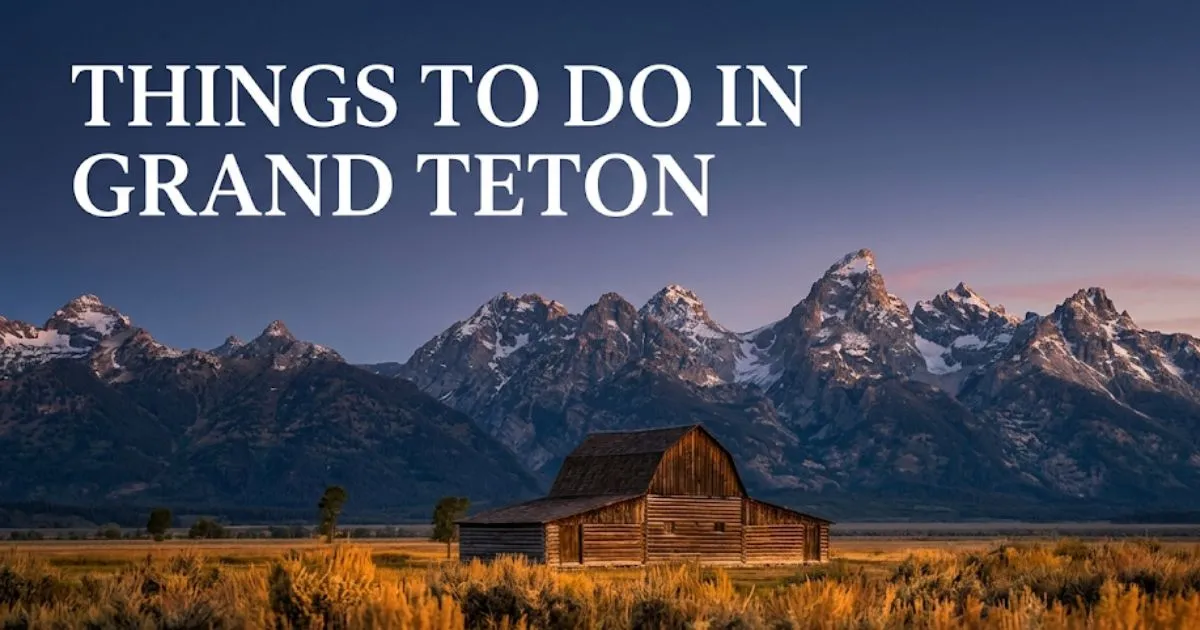
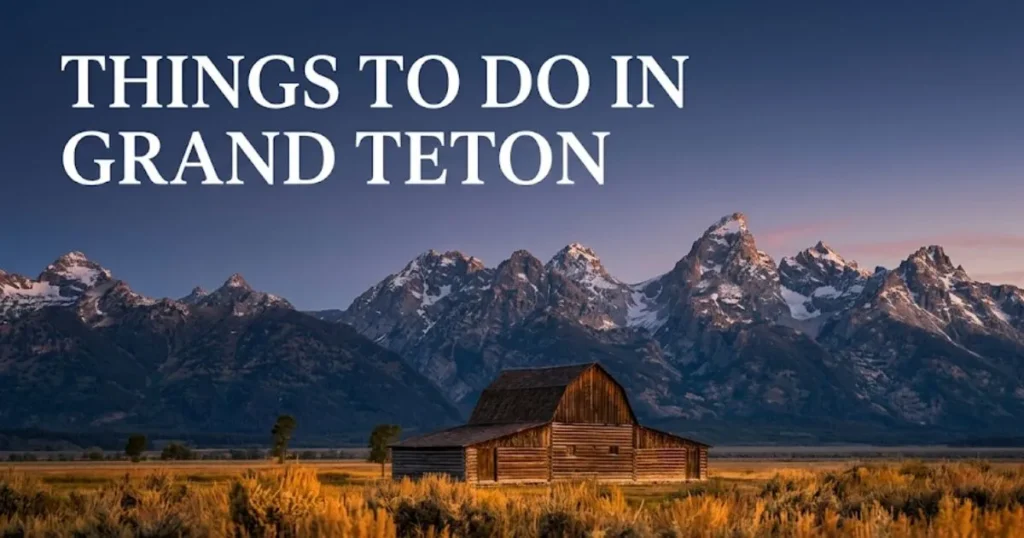
Mormon Row Historic District sits off Antelope Flats Road near the Moose-Wilson Road junction. Two original homestead barns from the 1890s stand against the Teton backdrop in a composition that has become one of the most photographed scenes in any US national park.
Antelope Flats Road is the drive most visitors miss entirely. It leaves the tourist main circuit and crosses open sagebrush where wildlife sightings are frequent and the light on the Tetons in the morning is exceptional for photography.
For seniors and travelers with mobility limitations: All three of these drives are accessible by passenger vehicle with no hiking required. Signal Mountain Summit Road has some curves requiring careful driving but is paved throughout.
For families: The Signal Mountain Summit Road has a short walk from the parking area to the overlook point, manageable for children of all ages.
The one scenic drive most experienced visitors skip: The Moose-Wilson Road (approximately 7.3 miles of partially unpaved road between Teton Village and the Moose entrance) is worth the slow pace. It passes through dense forest with frequent moose sightings, and the narrowness of the road limits the large RV and tour bus traffic found elsewhere in the park.
Insider Tip:
- Drive Teton Park Road southbound (from Moran to Moose) in the morning. The Teton Range faces east and is best lit for photography before noon.
- The Signal Mountain Summit parking area fills on peak summer days by 10 a.m. Arrive before 9 a.m. or after 4 p.m.
- Moose-Wilson Road is closed to vehicles over 23 feet in length, effectively filtering out the heaviest traffic.
Key Takeaway: Drive Teton Park Road southbound in the morning and save Signal Mountain for before 9 a.m. or after 4 p.m. to avoid full parking areas.
Snake River Float Trip Grand Teton
A Snake River Scenic Float Trip is the most underused signature experience in Grand Teton and one of the most genuinely memorable things to do in the Tetons for almost every traveler profile.
The float covers approximately 10 miles of the Snake River through the park, taking two to three hours from put-in to take-out. The Teton Range appears above the cottonwood-lined riverbanks at multiple points, and the perspective from water level is fundamentally different from any road viewpoint.
Wildlife encounters from the river are frequent and calm. Moose stand in the shallows. Bald eagles perch in cottonwood branches overhead. Osprey dive within close range of the raft. The river’s gentle current requires no paddling experience.
Several outfitters are licensed to operate scenic float trips within the park. Barker-Ewing Float Trips, operating since 1963, is the longest-standing licensed outfitter on this stretch of river. Mad River Boat Trips and Dave Hansen Whitewater also hold NPS permits for scenic floats.
Expect to budget approximately $70 to $110 per adult for a guided scenic float as of recent seasons. Rates for 2026 should be verified directly with outfitters before booking. Reserve at least four to six weeks ahead for peak season dates.
For families: Most outfitters allow children ages six and up on scenic floats. Some have minimum age requirements. Confirm directly when booking.
For couples: The two-hour float at dusk, operated by select outfitters on summer evenings, offers one of the most genuinely romantic experiences in the park. Teton views at golden hour from a slow-moving raft are extraordinary.
For budget travelers: The scenic float is the one guided experience in the park worth the cost. The perspective from the river cannot be replicated from any road or trail.
Grand Teton Photography Spots
Grand Teton National Park is among the most photographed landscapes in North America, and the difference between a postcard shot and a genuinely original image comes down to timing and location choice.
Mormon Row at sunrise is the single most productive photography location in the park. The Moulton Barns, framed against the Teton Range with open sagebrush in the foreground, photograph best in the 20 minutes before and 30 minutes after sunrise. Arrive in total darkness to secure your position.
Schwabacher Landing (accessed via an unmarked dirt road south of the Glacier View Turnout on Highway 26/89/191) offers beaver ponds that produce mirror-flat Teton reflections on calm mornings. This is the park’s best-kept open secret among serious landscape photographers.
Oxbow Bend at dawn produces reflections of Mount Moran (12,605 feet) in the still water, particularly reliable in September and October when morning mist rises from the river.
The Snake River Overlook, the exact viewpoint where Ansel Adams photographed the Tetons in 1942, remains a productive location. Sunrise here is strongest in late summer and early fall when the light angles across the river bend.
According to Travel + Leisure, Grand Teton consistently ranks among the top five national parks for landscape photography in North America, driven by the combination of dramatic relief, abundant wildlife, and accessible viewpoints.
For solo photographers: The Antelope Flats Road at dawn delivers pronghorn with Teton backdrops and virtually no other vehicles. It reads as a distinctly different image from the heavily reproduced Mormon Row and Oxbow Bend compositions.
For families with kids: The Signal Mountain Summit viewpoint is accessible and child-friendly. It photographs well in late afternoon light.
Things to Do in Grand Teton in Winter
Grand Teton National Park in winter offers a fundamentally different and genuinely exceptional experience, with cross-country skiing, snowshoeing, and wildlife watching in near-complete solitude.
Most park roads close from November through late April, including the main stretch of Teton Park Road between Taggart Lake trailhead and Signal Mountain Lodge. Highway 26/89/191 (the main valley road through the park) remains open year-round.
Snowshoeing the Taggart Lake Trail in winter is one of the most underrated experiences in Wyoming. The lake sits in open silence with snow-laden peaks reflected in the partially frozen surface. Rental snowshoes are available in Jackson at local outfitters including Skinny Skis on West Deloney Avenue.
Cross-country skiing on Teton Park Road is possible from the Taggart Lake trailhead northward on the unplowed road surface. The route is groomed intermittently by the NPS. Check conditions at the Moose Visitor Center before heading out.
Jackson Hole Mountain Resort in Teton Village (approximately 12 miles south of Jackson) operates one of the most demanding ski mountains in the US. It is not inside Grand Teton National Park but sits immediately adjacent to the park boundary. The aerial tram accessing Rendezvous Mountain’s 4,139-foot vertical is the largest continuous vertical in the US.
For wildlife watchers in winter: The National Elk Refuge adjacent to the town of Jackson operates sleigh rides through the elk wintering grounds from December through early April. Elk herds numbering in the thousands gather here. This is one of the most accessible and genuinely remarkable wildlife experiences in Wyoming.
For seniors and mobility-limited visitors: Winter wildlife watching from a vehicle along the open highway through the park is productive and requires no physical exertion.
Key Takeaway: In winter, start at the National Elk Refuge sleigh ride for an accessible, extraordinary wildlife experience that most summer visitors never discover.
Grand Teton Family Activities
Grand Teton National Park works exceptionally well for families with children ages six and up, and requires specific planning for families with children under six.
The Jenny Lake Shuttle boat ride is the park’s most universally successful family activity. The 10-minute crossing is exciting for children of all ages, and the western landing puts families within half a mile of Hidden Falls, a legitimate waterfall that holds children’s attention in a way that a mountain viewpoint rarely does.
The Colter Bay Village area is the most family-friendly sector of the park. The Colter Bay Visitor Center has ranger programs designed for children. The marina offers pedal boat and kayak rentals on calm Jackson Lake, manageable for families with children as young as eight.
The Junior Ranger Program, operated by the National Park Service at Grand Teton, provides age-appropriate activity booklets that keep children engaged throughout the park visit. Booklets are available free at any visitor center.
Taggart Lake Loop (3.8 miles) works for children ages seven and up with a reasonable hiking baseline. The trail is forgiving in gradient and delivers a genuine lake payoff at the end, which maintains child buy-in better than viewpoint-only hikes.
For families with very young children (under five): The South Jenny Lake paved path is fully stroller-accessible and delivers Teton views without any elevation change. The Menor’s Ferry Historic District provides a short flat walk with historic interest.
Honest assessment: The park’s most spectacular experiences, including Cascade Canyon and Inspiration Point, require either the ferry ride or a full day of hiking. Children under seven will find these routes genuinely difficult. Plan realistic expectations.
Grand Teton Romantic Activities
Grand Teton National Park is one of the most consistently romantic destinations in the American West, built on dramatic scenery, genuine outdoor immersion, and lodging options that range from rustic to quietly elegant.
The Jenny Lake Lodge dinner experience is the most refined dining option inside the park. The lodge serves a fixed-price menu in a log cabin setting with Teton views. Reserve well in advance, as seating is extremely limited and popular with guests of the lodge itself.
A sunset Snake River Float Trip with an NPS-licensed outfitter is the most reliably romantic single experience the park offers. The combination of golden hour light on the Tetons, still water, and wildlife sightings from a drifting raft creates an evening that is difficult to replicate anywhere else in the country.
Mormon Row at sunrise is a legitimate shared experience for couples who enjoy photography or early morning outdoor immersion. Arriving before first light and watching the Teton peaks emerge from darkness together is the kind of experience that generates genuine travel memories.
Jackson Lake Lodge offers rooms with unobstructed floor-to-ceiling Teton views from the upper-floor accommodations. The main lounge’s 60-foot windows frame the Tetons and Jackson Lake in a composition that is genuinely extraordinary at any light.
For couples seeking privacy: The northern park areas, particularly around Leigh Lake and the String Lake Trailhead, see far fewer visitors than Jenny Lake. The Leigh Lake trail (approximately 3.7 miles round trip, flat) reaches a remote shoreline with Teton views and almost no foot traffic by late afternoon.
Honest note: The park’s most romantic experiences require genuine commitment to early mornings and some physical activity. Couples who prefer leisurely late starts will find the park’s crowds in the midday hours reduce the sense of intimacy significantly.
Key Takeaway: Book the Jenny Lake Lodge dinner and a sunset float trip before they sell out, ideally two to three months ahead for summer and fall dates.
Things to Do Near Grand Teton National Park
The best thing to do near Grand Teton National Park is visit Yellowstone, located approximately 50 miles north of the Moose Visitor Center via Highway 89/191.
Yellowstone National Park is a full destination in itself, but a day trip from Grand Teton covers the Old Faithful Geyser basin and the Grand Prismatic Spring at Midway Geyser Basin in approximately eight to nine hours of driving and walking. The drive north through the park on Highway 89 is one of the most wildlife-productive roads in North America.
The town of Jackson (approximately 12 miles south of the Moose entrance) is the nearest full service town. Town Square in downtown Jackson features the famous elk antler arches and walkable blocks of restaurants, galleries, and outfitter shops. Snake River Brewing on South Cache Street is the town’s most respected craft brewery, operating since 1994.
The National Elk Refuge borders Jackson to the north. In fall and winter, the refuge hosts one of the largest elk concentrations in North America. A wildlife viewing road through the refuge edge is accessible by vehicle.
Bridger-Teton National Forest surrounds the park and provides additional dispersed camping and hiking without park entry fees. The Cache Creek Trail system, accessible directly from Jackson, offers mountain biking and hiking in a canyon setting.
For families: The Jackson Hole Wildlife Safari operates guided wildlife spotting trips in private vehicles through both the park and the National Elk Refuge, highly effective for families who want expert-guided sightings without the navigation burden.
For budget travelers: Jackson’s Town Square Shootout, a summer theatrical gunfight performance that has run for decades, is free and family-friendly, offering a town-level experience that requires no park entry.
Grand Teton Itinerary
A well-structured Grand Teton itinerary should sequence activities by geography and time of day, not by personal preference, since parking and crowd patterns determine whether experiences are genuinely enjoyable.
One-Day Grand Teton Itinerary:
- Arrive at Mormon Row before or at sunrise (approximately 5:30 to 6:30 a.m. in summer). Spend 30 to 45 minutes at the Moulton Barns viewpoint.
- Drive north to Oxbow Bend for wildlife watching. Arrive by 7 a.m. Plan 45 to 60 minutes.
- Continue to Jenny Lake and park before 8 a.m. Take the shuttle boat to the western landing. Walk to Hidden Falls and push to Inspiration Point if energy and time allow. Plan three to four hours total.
- Drive Teton Park Road northbound to Signal Mountain Summit Road. The midday timing works here since the views are less light-dependent.
- Stop at Jackson Lake Lodge for lunch at the Mural Room restaurant and spend 15 minutes at the main lounge windows.
- Drive south via Antelope Flats Road in late afternoon. Wildlife is most active again after 4 p.m.
- End the day with a Snake River Scenic Float Trip if booked in advance. Evening floats run approximately two hours and finish near dusk.
Two-Day Extension:
- Day 2 morning: Hike Taggart Lake Loop or Phelps Lake via the Laurance S. Rockefeller Preserve trailhead.
- Day 2 afternoon: Drive to Jackson for lunch at Local Restaurant and Bar on North Cache Street, then visit the National Museum of Wildlife Art overlooking the National Elk Refuge.
- Day 2 evening: Dinner at Jenny Lake Lodge (reservation required).
Grand Teton Entry Fees and Permits 2026
As of the most recently published National Park Service fee schedule, entry to Grand Teton National Park costs approximately $35 per vehicle, $20 per individual (hiker or cyclist), and $30 per motorcycle.
The America the Beautiful Annual Pass costs approximately $80 per year and covers entry to all US national parks and federal recreation lands. For any traveler visiting more than two national parks in a calendar year, the pass is the straightforward value choice. Verify current 2026 pricing directly with the National Park Service before your visit.
Specific permits and reservations required for certain experiences:
- Campsite reservations: Jenny Lake Campground, Signal Mountain Campground, and Gros Ventre Campground accept reservations through Recreation.gov. During peak season (June through August), popular sites book out six months in advance when the reservation window opens. Check Recreation.gov for the exact 2026 opening dates.
- Backcountry permits: Required for all overnight trips into the Grand Teton backcountry. Half of backcountry permits are reserved in advance via Recreation.gov. The remaining half are distributed as walk-up permits at the Craig Thomas Visitor Center. Arrive early for walk-up permits in summer.
- Rock climbing: Technical climbing on the major Teton peaks does not currently require a specific summit permit, but climbers must have a backcountry permit for overnight approaches. Check NPS Grand Teton climbing regulations for 2026 updates.
- Timed-entry reservations: As of the most recent NPS guidance, Grand Teton does not require a timed-entry reservation for vehicle entry. This policy is subject to change. Verify with NPS before your 2026 visit.
For budget travelers: With the America the Beautiful Pass, the park’s best experiences are free once inside. Many exceptional activities, including wildlife watching at Oxbow Bend, hiking Taggart Lake, and driving Teton Park Road, cost nothing beyond entry.
Grand Teton Practical Logistics and Getting Around
Getting to and around Grand Teton National Park requires either a rental car or deliberate pre-trip planning, as public transit options inside the park are extremely limited.
Jackson Hole Airport (JAC) receives direct flights from multiple major US hubs including Denver, Salt Lake City, Dallas, Chicago, Los Angeles, and Seattle. JAC is the only commercial airport inside a US national park. Rental cars are available at the airport but sell out weeks in advance during peak season. Book rental cars as early as possible.
The Southern Teton Area Rapid Transit (START Bus) connects Jackson to Teton Village and provides limited service to some park access points. It is useful for reaching Jackson Hole Mountain Resort in winter but does not serve most park destinations adequately for a comprehensive visit.
Driving within the park: Most visitors use their own or rental vehicles. Teton Park Road runs north-south through the park interior and is the primary access route. RVs and vehicles over 23 feet in length are restricted from Moose-Wilson Road.
Parking reality: Jenny Lake parking fills before 8 a.m. in peak summer. Signal Mountain Summit parking fills by 10 a.m. The Craig Thomas Visitor Center at Moose has the most reliable parking availability throughout the day.
From Jackson to the park: The Moose Visitor Center entrance is approximately 12 miles north of Jackson Town Square, a 20-minute drive under normal conditions.
For seniors and travelers with mobility limitations: All visitor centers are wheelchair accessible. The South Jenny Lake paved path, the Menor’s Ferry area, and the Colter Bay boardwalk are accessible by mobility aid. The Signal Mountain Summit Road is fully paved and requires no walking for those who remain in their vehicle.
Cell service warning: Coverage inside the park is unreliable. Download offline maps before arrival. The Gaia GPS and AllTrails apps both support offline trail maps for Grand Teton.
Key Takeaway: Book your rental car at JAC the moment you book flights. Peak season inventory disappears weeks out, leaving late-booking visitors without wheels inside a park where a car is essentially required.
Grand Teton Safety Tips
Grand Teton National Park presents genuine safety considerations that differ from what most visitors anticipate, specifically bear encounters, sudden weather changes, altitude effects, and river current hazards.
Bear country is not a metaphor here. Both black bears and grizzly bears are active throughout the park, including near popular trailheads. Carry bear spray on every trail beyond the developed visitor areas and know how to deploy it before you need it.
Key safety and practical facts every visitor should know:
- Carry bear spray on all hikes and store food in bear boxes or approved canisters. Bear encounters near Jenny Lake and Cascade Canyon have increased with visitor numbers.
- Afternoon thunderstorms develop rapidly from June through August, often by 1 to 2 p.m. On exposed ridges or above treeline, lightning risk is serious. Start alpine hikes before 7 a.m. and plan to be below treeline by noon.
- Altitude effects are real at Grand Teton, particularly for visitors arriving from sea level. The valley floor sits at approximately 6,400 feet. Cascade Canyon tops 7,500 feet. Headaches and fatigue are common on the first day. Drink significantly more water than you think you need.
- Snake River current is deceptively strong, especially during spring snowmelt runoff. Do not enter the river outside of authorized swim areas. Children should never approach the riverbank unsupervised.
- Wildlife distance rules: Stay at least 100 yards from bears and wolves. Stay at least 25 yards from all other wildlife including bison and moose. Moose are responsible for more injuries in Wyoming than any other large animal. They are not deer.
- Cell service is limited throughout the park interior. Download offline maps and emergency contact information before entering.
- Trail conditions change rapidly in spring and early summer due to snow and snowmelt. Check current conditions at the Craig Thomas Discovery and Visitor Center on arrival.
In a genuine emergency within the park, contact the Grand Teton National Park dispatch through the visitor centers or any park ranger station. Cell service may require driving to higher ground to obtain a signal.
Frequently Asked Questions About Things to Do in Grand Teton
What are the best things to do in Grand Teton National Park?
The best things to do in Grand Teton National Park include hiking Cascade Canyon, watching wildlife at Oxbow Bend, driving Teton Park Road at sunrise, photographing Mormon Row at dawn, and taking a Snake River Scenic Float Trip.
Experienced visitors add Schwabacher Landing for photography, the Taggart Lake Loop for an accessible hike, and an evening at Jackson Lake Lodge for Teton views without leaving a vehicle.
The most common mistake is treating Jenny Lake as the only destination and missing the park’s northern reaches, where wildlife and solitude are equally remarkable.
What is the best time to visit Grand Teton National Park?
The best time to visit Grand Teton National Park is late May through early June or mid-September through mid-October.
Late spring brings wildflowers, snowcapped peaks, and significantly fewer visitors than the July peak. September through October delivers the elk rut, fall foliage, and crowd levels that allow parking without the early-morning scramble required in summer.
July and August are the most crowded months, with Jenny Lake parking filling before 8 a.m. and Teton Park Road congested through midday.
How much does it cost to get into Grand Teton National Park in 2026?
Grand Teton National Park entry costs approximately $35 per vehicle as of the most recent NPS fee schedule, with individual pedestrian and cyclist entry around $20.
The America the Beautiful Annual Pass covers entry to all US national parks for approximately $80 per year and is the best value for visitors planning two or more park visits.
Verify current 2026 pricing directly with the National Park Service before your visit, as fees are subject to annual adjustment.
Do you need a reservation to visit Grand Teton National Park?
As of the most recently available NPS guidance, Grand Teton National Park does not require a timed-entry vehicle reservation for general park access, though campsite and backcountry permit reservations are required separately.
Campsite reservations at Jenny Lake Campground and Signal Mountain Campground open six months in advance on Recreation.gov and sell out rapidly for summer dates.
Verify whether any timed-entry system has been implemented for 2026 directly with the National Park Service before your visit, as reservation requirements at major parks continue to evolve.
What wildlife can you see in Grand Teton National Park?
Grand Teton National Park supports reliable sightings of moose, American bison, pronghorn, black bear, grizzly bear, bald eagle, osprey, trumpeter swan, and elk throughout the park.
Oxbow Bend at dawn and Antelope Flats Road in morning light are the two most productive wildlife viewing locations. Moose are most reliably seen near Willow Flats Overlook and along the Moose-Wilson Road.
September through October is the most productive season, with elk rut activity bringing bulls into open meadows and reduced visitor traffic making wildlife approaches less disturbed.
How far is Grand Teton National Park from Jackson, Wyoming?
Grand Teton National Park’s southern Moose entrance is approximately 12 miles north of Jackson Town Square, a 20-minute drive under normal traffic conditions.
Jackson serves as the primary gateway town with full dining, lodging, and outfitter services. The drive into the park follows Highway 26/89/191 north before turning into the Moose entrance road.
Jackson Hole Airport (JAC) sits inside the park boundary approximately 6 miles north of Jackson and is the closest commercial airport to the park.
Plan Your Grand Teton Trip with Confidence
Grand Teton National Park rewards travelers who plan ahead and penalizes those who arrive expecting summer crowds to sort themselves out. Book Jenny Lake Campground or your preferred park lodging at least six months in advance.
Reserve your Snake River float trip and any guided experiences at least four to six weeks before peak season visits. These slots disappear faster than most travelers anticipate.
Travel conditions, entry fees, permit systems, shuttle schedules, and campground reservation windows change. Verify all logistics directly with the National Park Service at nps.gov/grte, Recreation.gov for campsite bookings, and your chosen outfitters before departure.
The traveler who arrives at Mormon Row in the pre-dawn dark, watches the Teton Range catch its first light, and has a Snake River float booked for that evening is experiencing one of North America’s genuinely great national park days. That experience is available to you in 2026. Start booking now.