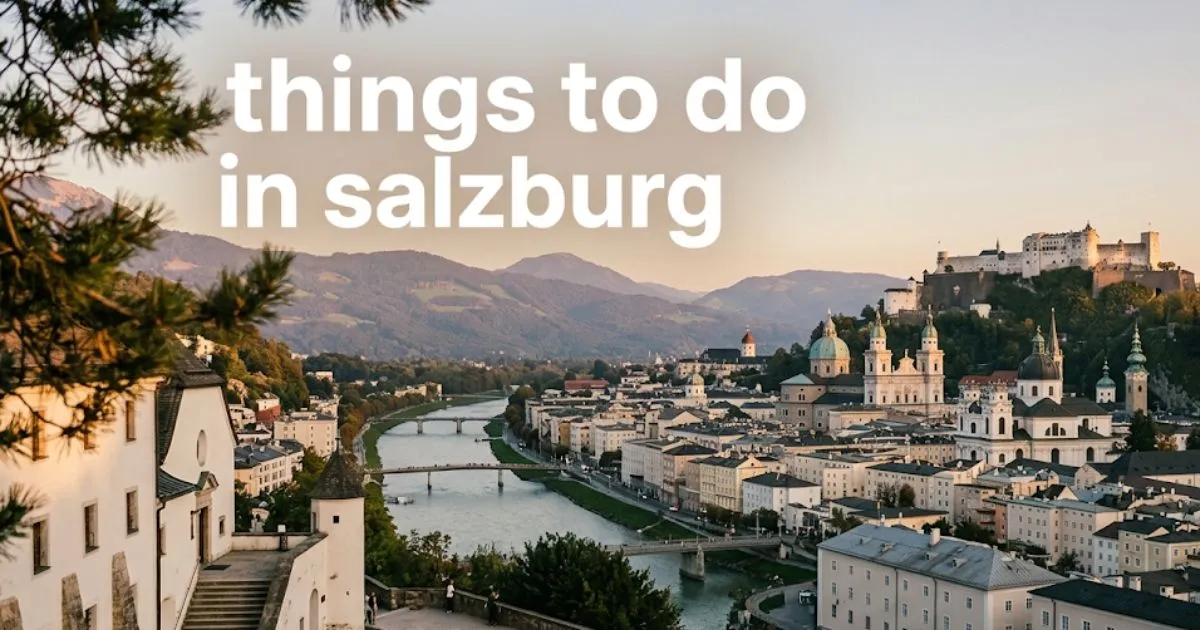
16 Best Things to Do in Salzburg, Austria in 2026

Salzburg’s postcard-perfect Old Town is just the opening act.
The city’s real depth lies in its living traditions of music, beer, and Alpine ease.
In 2023, over 1.6 million overnight stays were recorded in peak season.
Tourism remains high, but smart planning unlocks an intimate, unhurried city beyond the crowds.
This guide lays out the essential Salzburg experience.
You will find clear itineraries, local beer hall advice, and honest takes on the Mozart-and-hills routine.
Key Takeaway: Salzburg is a compact, three-day city. Trying to do it all in a frantic one-day dash misses the entire point.
Things to Do in Salzburg
A solid Salzburg plan starts with the fortress and the Old Town squares.
Spread these two anchors across your first full day to get the lay of the land.
The Salzburg Card is the single most powerful tool for budget travelers.
It covers entry to virtually every major attraction and all public transit within the city.
Solo travelers will find the city’s compact core exceptionally walkable and safe.
Families, however, should note that a full day of cobbled walking exhausts small children quickly.
Start early at Hohensalzburg Fortress before the tour groups ascend.
Then descend into the Altstadt for the Cathedral and Getreidegasse by late morning.
What the Crowds Get Wrong: Joining the riverfront crowds at midday.
Locals cross the river to the quieter Linzer Gasse for a spritz and a more local shopping stretch.
Best Things to Do in Salzburg
The best Salzburg experiences blend the grand Baroque set-pieces with the simple daily rituals.
Prioritizing high-impact sights prevents your trip from becoming just a museum shuffle.
Climb the Mönchsberg via the modern elevator for an instant Alpine panorama.
The view from the Museum der Moderne terrace is free, and it reshapes your mental map of the city immediately.
The Salzburg Cathedral demands a quiet look inside, even if churches usually bore you.
Its 4,000-pipe organ and brilliant white stucco interior are genuinely arresting.
A Sound of Music tour is the non-negotiable “best” activity for first-timers with even a mild interest.
It is also the best way to see the lake district without renting a car.
Couples should book a chamber music concert at the Mirabell Palace Marmorsaal.
The venue is a jewel box, and the acoustics turn any performance into a core memory.
Local Alternative: Skip the overcrowded Mirabell Palace interior tours.
Walk the Mirabell Gardens at sunrise when the Pegasus fountain and Dwarf Garden are completely yours.
Top Things to Do in Salzburg
The absolute top-tier activities move beyond the Old Town’s central pedestrian zone.
To find Salzburg’s soul, you must engage with its monks, its beer, and its hillside views.
The Augustiner Bräustübl Mülln is the city’s top experience, not just its top beer hall.
This vast, wood-paneled monks’ brewery lets you grab a stein from ancient shelves and drink under chestnut trees.
The trick fountains at Hellbrunn Palace are a unique Baroque prank turned art form.
Expect to get lightly sprayed on a guided tour designed purely for amusement. Children are beside themselves here.
A walk up Kapuzinerberg hill is the best free thing you can do with an hour.
The view from the Franziskischlössl at the top is the classic Old Town postcard shot without the fortress foreground.
According to the Salzburg Tourist Office, the city’s festival culture peaks with the summer Salzburg Festival.
Getting a standing-room ticket to a performance is a top-tier cultural experience, even for opera novices.
Honest Assessment: The Salzburg Festival is a magnificent, stuffy, and wildly expensive affair.
If you aren’t genuinely interested in classical performance, you are paying a premium to be uncomfortable.
| Top Experience | Best For | Cost Level | Insider Note |
|---|---|---|---|
| Augustiner Bräustübl | Solo, Couples, Beer Lovers | Budget | Arrive by 5pm for outdoor chestnut tree seating |
| Hellbrunn Trick Fountains | Families, Whimsical Adults | Mid-Range | Wear quick-dry clothing; the jokes are 400 years old |
| Kapuzinerberg Walk | Seniors (lower path), Active Travelers | Free | The Imbergstiege staircase entrance from Linzer Gasse is the most atmospheric start |
Salzburg Austria Things to Do
Salzburg is not just a city of man-made wonders.
The landscape around it defines the experience, with a turquoise river and a limestone massif looming over every street.
Spend an afternoon just walking the Salzach River banks.
The river’s glacial color is a striking contrast to the city’s muted domes, and the views change dramatically with the light.
For a uniquely Austrian spa experience, the Alpenbad in Bad Reichenhall is a short local bus ride away.
It’s a saltwater thermal complex with an alpine panorama that flips a rainy day into a trip highlight.
Families with restless children should use river-side parks like the Volksgarten.
It has a playground with a direct castle view and open space for running between sightseeing.
A Salzach River cruise provides a vastly different perspective of the fortress.
Most are short 40-minute affairs, perfect for seniors or anyone with mobility limits who still wants a water experience.
What Locals Do: They drive 15 minutes to the Gaisberg mountain.
It’s the effortless city escape for clean air, a drink at the summit cafe, and a sweeping view of the entire Salzburg valley.
Things to Do in Salzburg Austria
To truly understand the city, you must go underground, literally.
The catacombs and the crypts tell a story of Salzburg that its gilded concert halls obscure.
Explore the St. Peter’s Abbey Cemetery and Catacombs.
This is the most atmospheric sight in town, with wrought-iron grave markers and chapels carved directly into the Mönchsberg cliff face.
Visit Nonnberg Abbey, the oldest continually operating convent north of the Alps.
The walk up is short and steep, and the view from the nunnery’s gate is a moment of absolute stillness.
Solo travelers find these quieter spiritual sites deeply meditative.
Couples might find the dark, narrow catacomb stairways claustrophobic in peak afternoon crowds.
The Salzburg Museum is the best rainy-day activity in the Old Town.
Its collection on the city’s prince-archbishop rulers gives you instant context for every palace you pass.
Insider Tip: The St. Peter’s catacombs ticket includes a climb to a tiny terrace.
It’s the most intimate elevated view in the city, looking straight into the heart of the fortress.
Key Takeaway: The city’s power is in its contrasts — the monastery gardens versus the beer halls, the crypts versus the concert halls.
Things to Do Salzburg Old Town
The Old Town traps visitors on a single shopping street.
Break free by crossing the river or climbing a hill. The Altstadt is just a small fraction of the fun.
Getreidegasse is worth exactly one walk without stopping.
The wrought-iron guild signs are beautiful, but the street-level shops are now almost entirely global chains and Mozart chocolate traps.
Walk the Makartsteg bridge instead of standing in the middle of it.
This pedestrian bridge is famously covered in love locks, but the reason to come is the perfect fortress framing for your photos.
The Grünmarkt on Universitätsplatz is the Old Town’s true daily rhythm.
Grab a Bosna sausage at the Balkan Grill stall, a local fast-food icon that outshines most sit-down meals under ten euros.
Budget travelers should make the Grünmarkt their lunch anchor.
A picnic of local cheese, a fresh pretzel, and a sausage eaten on a square’s edge is a perfect low-cost meal.
The Residenzplatz transforms entirely in December.
Its Christmas market is one of the world’s most beautiful, but outside of Advent, the massive square is just a baking, empty expanse.
| Tourist Trap | Why It Falls Short | Local Alternative |
|---|---|---|
| Getreidegasse Shopping | Chain stores and dense, slow-moving crowds | Linzer Gasse for local boutiques and a calm beer garden |
| Old Town Sausage Stands | Overpriced and mediocre | Balkan Grill (Bosna Stand) on Universitätsplatz for the real local specialty |
| Domplatz Photo Grid | Jammed with tour groups holding tablets | Kapitelplatz for the giant chess board and a more playful fortress backdrop |
Hohensalzburg Fortress Guide
Hohensalzburg Fortress is the massive, medieval castle on the hill.
You cannot miss it, and you absolutely should not skip going up.
The core choice is funicular or footpath.
The FestungsBahn funicular takes 60 seconds and is included with the all-inclusive fortress ticket. The footpath is a 20-minute, steep but shaded climb.
Seniors and families with strollers must take the funicular.
Active travelers and budget-conscious visitors can save a few euros and walk up, feeling a genuine sense of earned arrival.
The fortress interior’s highlight is not the princely chambers.
It’s the panoramic tower view, the Reckturm, which gives you the quintessential Salzburg church-dome skyline from above.
Skip the included audio guide if you are short on time.
Head straight for the battlements, the marionette museum, and that postcard view of the Alps folding into the city.
Insider Timing: The last funicular up before closing is the golden hour.
The crowds are gone, the light is soft over the Alps, and the city settles into a quiet evening hush below you.
Salzburg Sound of Music Sites
The 1965 film is the glossy, sugary lens through which most Americans first see Salzburg.
The film locations are genuinely beautiful, even if you hate the songs.
The Mirabell Gardens Pegasus Fountain is the “Do-Re-Mi” finale location.
It’s free, always open, and the most accessible photo op right in the heart of the city.
The Leopoldskron Palace lake terrace requires a longer trek.
This was the von Trapp boating accident scene, and its view across the private lake is far more evocative than Mirabell.
A bus tour is the most efficient way to see the scattered sites.
Panorama Tours runs the official half-day trip, and it’s worth it just to see the emerald Lake Wolfgang and Mondsee Basilica wedding church.
Couples will enjoy the cheesy but joyful singalong nature of the bus tour.
Solo travelers seeking quiet should avoid it, or choose an early morning bike tour instead.
The Salzkammergut lake district sites steal the show on any tour.
The mountain-and-lake scenery makes the movie context feel secondary. The landscape is the real star.
What the Tours Don’t Admit: The private palace interiors are inaccessible.
The iconic pavilion is now locked in Hellbrunn Park. You see everything from the outside, which is still lovely.
Salzburg Mozart Attractions
Wolfgang Amadeus Mozart is Salzburg’s most exported product.
The commercialization is aggressive, but the two main residences are genuinely absorbing if you focus on the right details.
Mozart’s Birthplace on Getreidegasse 9 is cramped and a bit claustrophobic.
The historical artifacts, like his childhood violin, are the draw, but the space fills instantly with a human gridlock.
The Mozart Residence on Makartplatz is the superior, calmer museum.
The reconstructed dance hall and the audio of his letters reveal more about his family’s tragic, fragile life.
Budget travelers should note the combo ticket is significantly cheaper.
If you only do one, pick the Residence for the richer context and the room to actually breathe.
Music history purists will find both museums essential.
Families with young children will struggle in the Birthplace, where touching nothing and silent shuffling are the only modes.
Local Alternative for Mozartiana: Book a Mozart Dinner Concert at St. Peter’s Stiftskulinarium.
It’s touristy, but the candlelit Baroque hall and the costumed opera singers feel far more alive than the quiet museums.
Hellbrunn Palace and Trick Fountains
Hellbrunn Palace was a summer pleasure palace built for a prince-archbishop with a sense of humor.
The trick fountains are a 400-year-old mechanical prank system that still soaks tourists daily.
The guided tour is mandatory and is the only way to see the fountains.
The guide’s deadpan delivery of the archbishop’s stone-deer dinner-party and hidden water jets is perfectly judged.
Expect to get wet if you stand at the front of the group.
The finale of the automated grotto with its gyrating figures and water-powered organ is genuinely remarkable.
This is the single best activity in Salzburg for children aged 5 to 14.
The water-squirting stag heads and the grotto’s theatricality will hold their attention longer than any church.
Solo travelers might find the group-tour format a bit forced.
But the palace grounds, the free park with the Sound of Music Pavilion, and the mechanical theater are all worth the easy bus ride.
The Hellbrunn experience is strictly seasonal.
It is closed in the winter months, typically from November through late March, as the water systems shut down for freezing weather.
How to Visit: Take bus 25 from the Old Town to the “Hellbrunn” stop.
Plan for a half-day excursion, especially if you want to wander the vast, landscaped park freely.
| Feature | Details |
|---|---|
| Best For | Families, playful couples, anyone who dislikes stuffy palace tours |
| Not For | Dry-clean-only outfit wearers, those who hate guided groups |
| Season | Late March to early November (verify 2026 dates) |
| Traveler Profile | Seniors may find the standing and moving during the tour tiring |
Key Takeaway: Hellbrunn is a joyful, childish, Baroque masterpiece. Treat it as a picnic-and-play half-day, not a dutiful museum stop.
Salzburg Food and Beer Guide
Salzburg’s food scene is hearty, beer-focused, and stubbornly traditional.
This is not a city for trendy fusion. It is a city for schnitzel, dumplings, and monastic beer.
The essential dish is the Salzburger Nockerl.
This is a sweet, cloud-like soufflé served in a copper pan, shaped to resemble the city’s three hills: Mönchsberg, Kapuzinerberg, and Gaisberg.
A proper schnitzel in a garden under the fortress is a mandatory meal.
Stieglkeller offers a multi-tiered terrace with that exact view, plus crisp, fresh beer from Salzburg’s oldest private brewery.
Budget travelers should look for Würstelstand kiosks and the Bosna sausage stall.
A full, hot, and deeply satisfying lunch from the Balkan Grill on Universitätsplatz will cost you less than six euros.
The St. Peter Stiftskulinarium claims to be Europe’s oldest restaurant.
Skip the formal, pricey dining room and instead eat in the atmospheric stone courtyard for a more relaxed, cost-effective experience.
Grünmarkt is the best place to assemble a farmer’s market picnic.
Cheeses from local alpine dairies, a loaf from a wooden bakery stall, and a radler beer make a perfect lunch on the Salzach banks.
| Restaurant | Best For | Dish to Order |
|---|---|---|
| Augustiner Bräustübl | Beer drinkers, solo travelers, groups | Steins of Märzen, radish spirals, Leberkäse |
| Balkan Grill (Bosna Stand) | Budget travelers, a quick bite | Original Bosna with onions and curry spice |
| St. Peter Stiftskulinarium | Couples, one historic splurge | Tafelspitz or a multi-course Mozart Dinner |
| Cafe Tomaselli | Coffee and cake traditionalists | Einspänner coffee and a slice of Topfenstrudel |
Augustiner Bräustübl Experience
This is not just a beer hall. It is a Salzburg institution.
Augustiner Bräustübl Mülln is a vast, functioning monastery brewery where you drink under vaulted ceilings or towering chestnut trees.
The system is a beautiful, self-service ritual.
You grab a stoneware stein from a wooden shelf, rinse it in an old stone fountain, and pay for your fill at the tap.
The pouring station serves only one beer: a clean, perfect Märzen.
It is a mild, amber lager that tastes worlds better than any commercial export version.
Solo travelers will find this the easiest place in the city to feel instantly welcome.
The long communal tables are designed for strangers to sit, drink, and share the salted radish spirals.
Families are welcome, especially in the daytime garden.
The outdoor food stalls sell everything from roast chicken to Leberkäse, making it a casual, low-stress meal for all ages.
Arrive by 5:00 PM to secure an outdoor table in summer.
The chestnut tree canopy and the late-setting sun create a golden-hour beer garden paradise that is entirely unmatched.
What Visitors Get Wrong: Treating it like a quick one-beer pub stop.
It is a destination. Plan for a minimum of two hours, a full meal, and slow conversation.
Kapuzinerberg Hill Walk
The Kapuzinerberg is the green, wooded hill on the river’s right bank.
It is the local’s answer to the fortress: a quiet, steep, and deeply calming escape from the Old Town’s bustle.
The best entrance is the Imbergstiege staircase from Linzer Gasse.
You’ll climb narrow, ancient steps past tiny houses and a Passionist chapel before the city falls away below you.
The path leads to the Franziskischlössl viewpoint at the top.
The view is the classic Salzburg panorama: the fortress perfectly framed, the Salzach curving, and the Alps stretching south.
Seniors can enjoy a less strenuous walk on the lower, flatter paths around the Capuchin monastery.
The full climb to the summit is steep and requires sturdy shoes, not a casual Old Town stroll.
Solo hikers will find the quiet paths meditative and the viewpoints safely populated.
Families with young children might find the steep Imbergstiege steps more of a safety concern than an adventure.
Pair a morning Kapuzinerberg walk with coffee at Cafe Fingerlos.
It’s a refined, local cake-and-coffee house just a block from the foot of the hill, with none of the Old Town’s tourist markup.
Insider Timing: Go just before sunset.
The fortress glows gold, the day-trippers have left, and you’ll share the view with maybe five other people.
Salzburg Card Value 2026
The Salzburg Card is one of Europe’s best city tourism deals.
It almost always saves active sightseers a significant amount of money, and the 2026 pricing will likely continue this trend.
The card covers a single entry to all major attractions and unlimited public transit.
This includes the fortress funicular, the Mönchsberg elevator, the river cruise, and every Mozart museum.
A 24-hour card is the sweet spot for most efficient travelers.
You can hit the fortress, the Mozart Residence, a boat cruise, and the Hellbrunn fountains all in one well-planned day.
The 48 or 72-hour cards suit a slower pace and families with children.
You break even with just two major attractions and a round-trip Hellbrunn bus ride per day.
Budget travelers should calculate their plan using the Salzburg AG official website’s 2026 pricing.
If you plan to visit more than three paid sights and use the funicular, the card almost certainly saves you money.
The free public transit benefit extends to all city buses, including the airport line.
This alone can justify a shorter-duration card for a traveler making quick, multi-stop itineraries.
What the Card Doesn’t Do: It won’t skip the line at the most crowded times.
You still queue for the funicular and the fortress entry, though you flash the card and bypass the ticket-buying line.
| Activity | Approx. Cost Without Card |
|---|---|
| Hohensalzburg Fortress (funicular + all museums) | €17-20 |
| Hellbrunn Palace Trick Fountains Tour | €13-15 |
| Mozart Birthplace and Residence Combo | €18-20 |
| Salzach River Cruise | €15-17 |
| 24-Hour Public Transit Day Pass | €4-5 |
Key Takeaway: Buy the Salzburg Card online before your trip. Activate it the moment you step onto your first bus from the station, and front-load your biggest sights into the card’s validity window.
Day Trips from Salzburg
Salzburg’s position makes it a perfect launchpad for the Salzkammergut lake district.
You can be deep in Alpine lake country or in a Bavarian mountain village in under two hours.
The single most popular day trip is to the village of Hallstatt.
This tiny, salt-mine village wedged between a glassy lake and a cliff is a UNESCO site and a global Instagram phenomenon.
The Hallstatt experience is both magical and deeply frustrating.
The village is packed by 10:00 AM, and the residents are visibly weary of the tourist crush.
A superior, less frantic day trip is to St. Gilgen am Wolfgangsee.
You can reach it by direct bus 150 from Salzburg, and the lakeside village offers cable-car views, a gentle promenade, and actual room to breathe.
The Eagle’s Nest in Berchtesgaden, Germany, is a dramatic historical half-day trip.
The bus ride up the sheer cliff is a feat of engineering, and the 1938 teahouse’s setting above the clouds is surreal.
Couples will adore the romantic boat rides on Lake Wolfgang.
Families should consider the salt mines at Berchtesgaden for a hands-on, slide-down-a-tunnel experience.
What to Book in Advance: The Hallstatt salt mine tour and the Eagle’s Nest bus tickets sell out in peak summer.
Book both online at least a week ahead during July and August.
| Day Trip | Best For | Travel Time | Crowd Level |
|---|---|---|---|
| Hallstatt | First-timers, photographers | 2 hours by bus+train | Extreme by 10am |
| St. Gilgen & Lake Wolfgang | Couples, seniors, lake swimmers | 50 mins by bus 150 | Moderate, spread out |
| Eagle’s Nest (Kehlsteinhaus) | History buffs, WWII enthusiasts | 1.5 hours by bus | High, book ahead |
| Werfen Ice Caves | Active travelers, families with older kids | 1 hour by train | Moderate, but cave is cold |
Best Time to Visit Salzburg
The best time to visit Salzburg is April through early June, and September through October.
The weather is comfortable, the Alpine views are crisp, and the city breathes without the summer festival crush.
The absolute worst time to visit is during the Salzburg Festival in late July and August.
Unless you are here specifically for the opera and have tickets booked a year in advance, the crowds, prices, and heat are punishing.
December is a spectacular, specific, and short window.
The Salzburg Christkindlmarkt turns the cathedral squares into a storybook scene, but the cold is damp and biting.
Winter, from January through March, is the low season.
You will find the cheapest hotel rates in the city, but expect reduced hours at Hellbrunn and a quieter, more local pace of life.
Summer day-trippers and bus tours overwhelm the Old Town between 10:00 AM and 4:00 PM.
The secret to loving Salzburg in any season is simply to be an early riser and an evening stroller.
The shoulder seasons bring the Salzburg Festival at Whitsun and the Salzburg Advent Singing.
These are the culturally rich, less aggressively crowded alternatives to the main summer festival.
Local Perspective: Salzburgers themselves flee the Old Town in July and August.
They know the city’s best self is in May, when the chestnut trees bloom and the beer gardens reopen.
Safety and Practical Warnings for Salzburg
Salzburg is one of the safest cities in Europe for travelers.
The primary risks are pickpocketing in dense crowds and slippery conditions on steep stone paths.
Key safety and practical facts every visitor should know:
- Pickpocketing in the Altstadt: The narrow Getreidegasse and crowded Mozart Birthplace entrance are prime spots for theft. Use a cross-body bag kept in front of you and leave passport copies in your hotel safe.
- Cobblestone and Path Safety: The footpath up to Hohensalzburg Fortress and the cobblestones throughout the Old Town become dangerously slick when wet. Sturdy, rubber-soled walking shoes are mandatory, not a style recommendation.
- Funeral Quiet Hours: Salzburg has strict noise ordinances. Residential areas, including apartment rentals on Linzer Gasse and the neighborhoods around Kapuzinerberg, observe quiet hours from 10:00 PM to 6:00 AM. Loud courtyard conversations can draw a visit from the police.
- Sunday Closures: Nearly all shops in the Old Town are completely closed on Sundays and public holidays. Pharmacies and the station shops remain open, but plan your shopping or souvenir needs for Monday through Saturday.
Emergency services can be reached by dialing 112 for general emergencies and 133 for police throughout Austria.
Frequently Asked Questions About Things to Do in Salzburg
What is the number one thing to do in Salzburg?
The top thing to do is visit the Hohensalzburg Fortress for its panoramic views.
The fortress defines the skyline and offers the best city-and-Alps photo in Austria.
Pair it with a beer at the Augustiner Bräustübl for the essential one-two Salzburg punch.
How many days do you need in Salzburg?
You need a minimum of two full days to see the core sights without rushing.
Three days allow for a day trip to the Salzkammergut lakes and a calmer, more local pace.
A one-day whistle-stop tour only gives you a stressful taste of the fortress and the crowded Old Town.
Is the Salzburg Card worth it in 2026?
The Salzburg Card is worth it for any traveler visiting more than three paid attractions.
It includes all public transit, the fortress funicular, and entry to every major museum.
You break even quickly, especially when factoring in the bus to Hellbrunn or the airport.
What is the best month to visit Salzburg?
The best months to visit Salzburg are May and September.
The weather is warm and stable, the beer gardens are open, and the summer festival crowds have not yet peaked.
August is the worst month unless you have Salzburg Festival tickets already secured.
Can you do a day trip to Hallstatt from Salzburg?
A day trip to Hallstatt from Salzburg is possible and takes about two hours by bus and train.
The experience is heavily impacted by overcrowding, with tour buses arriving by mid-morning.
For a less frantic lake experience, consider a day trip to St. Gilgen am Wolfgangsee instead.
Where are the Sound of Music locations in Salzburg?
The most accessible locations are the Mirabell Gardens and Leopoldskron Palace.
The Hellbrunn Park pavilion and Nonnberg Abbey require a bit more walking.
The lakeside wedding church is in Mondsee, best reached by a guided half-day bus tour.
Start Planning Your 2026 Trip to Salzburg
The single most important step is to book your fortress visit and dinner at Augustiner Bräustübl as your two fixed anchors.
Plan everything else, from Mozart to the lake district, around those two core experiences.
Next, buy the Salzburg Card online before departure and have it ready on your phone.
Activate it the moment you board the airport bus to instantly remove all transit friction from your arrival.
Verify the 2026 opening hours for Hellbrunn Palace’s trick fountains and your preferred concert venues in March.
All other logistics — from train times to festival dates — should be confirmed directly with the Salzburg Tourist Office official website before you travel.
Salzburg rewards the leisurely early riser.
You are not checking off a list here. You are settling into a rhythm. A short, full-sensory, and deeply satisfying Alpine rhythm.