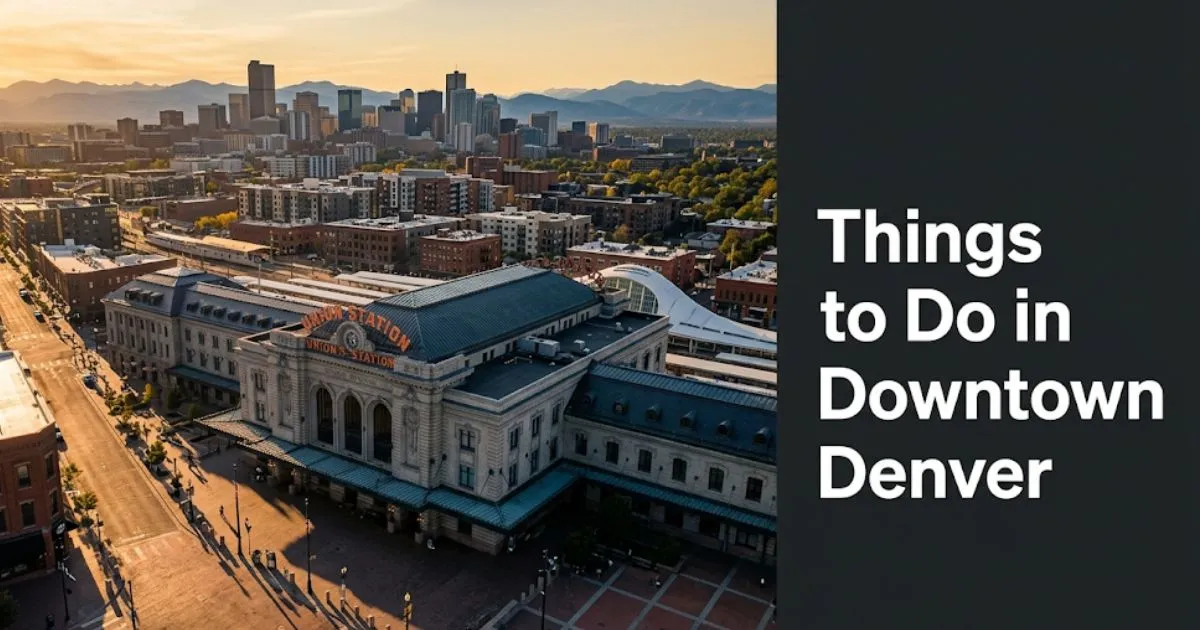
Things to Do in Downtown Denver: The 2026 Insider Guide

The best things to do in downtown Denver span five distinct neighborhoods within walking distance of each other. Knowing which neighborhood delivers which experience is the difference between a rewarding visit and a day spent circling the 16th Street Mall wondering why everyone raves about this city.
Denver sits at exactly 5,280 feet above sea level. That altitude affects your energy, hydration, and alcohol tolerance within hours of arrival, and no other guide you’ll find will tell you that upfront.
This article covers every major neighborhood, the museums worth your time, the dining scene, the craft beer culture, nightlife, family options, and every practical logistics detail. It includes an honest assessment of what is overrated alongside what genuinely earns its reputation.
Things to Do in Downtown Denver
Downtown Denver’s best activities concentrate in five walkable neighborhoods, each with a distinct identity and a distinct crowd.
Union Station anchors the western edge. The 16th Street Mall runs east through the center. Larimer Square sits just south of LoDo. RiNo (River North Art District) begins northeast of Union Station. The Golden Triangle Creative District holds Denver’s densest museum cluster, southwest of Civic Center Park.
The honest starting point: the 16th Street Mall is not downtown Denver’s most rewarding experience. It is the most famous corridor, but years of renovation work and a shifting retail mix have made it an inconsistent destination. Use it as a transit corridor, not a destination.
Here is an overview of the strongest activities across the downtown core:
| Activity | Best For | Approx. Cost | Time Required | Insider Note |
|---|---|---|---|---|
| Denver Art Museum | Adults, couples, culture travelers | $15-$25/adult | 2 to 3 hours | Free on first Saturdays |
| Clyfford Still Museum | Art enthusiasts, adults | $12-$18/adult | 1 to 2 hours | Less crowded than DAM |
| Larimer Square dinner | Couples, food-focused travelers | $80-$130/two | 2 to 3 hours | Book Friday/Saturday weeks ahead |
| RiNo gallery walk | Adults, solo travelers | Free | 2 to 3 hours | Best on First Friday evenings |
| Great Divide Brewing Ballpark | Beer travelers, adults | $6-$10/pint | 1 to 2 hours | Smaller taproom than their other location |
| Union Station coffee | All profiles | $5-$10 | 30 minutes | Terminal Bar is locals’ preferred stop |
| Civic Center Park | Families, budget travelers | Free | 30 minutes to 1 hour | Best during Denver Chalk Art Festival |
| Colorado State Capitol | Families, history travelers | Free | 45 to 60 minutes | Free tours include dome access |
According to Visit Denver, the city’s tourism board, downtown Denver’s walkable core connects more than 300 restaurants, dozens of galleries, and five major museums within a roughly 2-square-mile area.
Insider Tip:
- Arrive at the Denver Art Museum when it opens to beat school groups and tour buses
- The Golden Triangle museum cluster is best tackled on foot from Civic Center Park northward
- Budget travelers should check each museum’s free-day schedule before buying tickets
Best Neighborhoods in Downtown Denver
Downtown Denver’s five core neighborhoods each function as a distinct travel experience. Understanding them before you arrive determines whether your itinerary makes sense or wastes your walking time.
LoDo (Lower Downtown) surrounds Union Station. It concentrates sports bars, historic brick warehouses, the best hotel options, and Coors Field. It suits couples, groups, and travelers who want to be at the center of transit access.
Larimer Square occupies one block of Larimer Street between 14th and 15th Streets. It is Denver’s most architecturally preserved historic block and the city’s strongest restaurant concentration. This is the neighborhood for romantic dinners and cocktail bars.
RiNo (River North Art District) stretches northeast along Brighton Boulevard and Walnut Street. It contains the city’s most active gallery scene, food halls, and independent brewery taprooms. It suits solo travelers, adults, and anyone who wants a less tourist-facing experience.
Golden Triangle Creative District sits southwest of Civic Center Park, between Colfax Avenue, Speer Boulevard, and Broadway. It holds the Denver Art Museum, Clyfford Still Museum, and History Colorado Center within four blocks of each other. This is Denver’s museum district.
Union Station neighborhood centers on the restored 1914 train hall at 17th and Wynkoop Streets. The building houses a food and beverage hall, the Crawford Hotel, and Terminal Bar. It functions as the best transit hub and a surprisingly strong social space.
| Neighborhood | Best For | Walkability | Nightlife | Museum Access | Kid-Friendly |
|---|---|---|---|---|---|
| LoDo | Groups, sports fans, couples | Excellent | High | Moderate | Moderate |
| Larimer Square | Romantic travelers, food focus | Excellent | Moderate | Low | Low (evenings) |
| RiNo | Adults, arts, beer | Good | High | Low | Low (evenings) |
| Golden Triangle | Culture, museum visits | Good | Low | Excellent | Moderate |
| Union Station | All profiles, transit hub | Excellent | Moderate | Low | High |
Things to Do in Denver for Adults
Downtown Denver for adults means craft beer, serious restaurants, a genuine arts scene, and evening options that go well beyond the tourist strip.
The city’s craft beer concentration is the legitimate draw. Great Divide Brewing Company’s Ballpark taproom on Arapahoe Street sits within walking distance of Coors Field. Wynkoop Brewing Company on Wynkoop Street in LoDo is Denver’s original craft brewery, operating since 1988, and its billiard room upstairs is a genuinely local social scene.
For food, Rioja on Larimer Square is the clearest example of Denver’s culinary identity: Mediterranean-influenced, locally sourced, and consistently ranked by 5280 Magazine as one of the city’s best. Tavernetta at Union Station takes Italian cuisine seriously in a space that uses the train hall’s architecture well.
Adults visiting without children should prioritize RiNo’s gallery walk on First Fridays. Galleries along Brighton Boulevard and Walnut Street open late, and the street scene includes food trucks and pop-up bars.
Solo travelers will find RiNo’s bar and food hall scene particularly navigable. Avanti Food and Beverage on 32nd Avenue near LoHi (just west of RiNo) is a food hall format that works well for eating alone without the awkwardness of a full-service restaurant table.
Summer afternoons bring intense thunderstorms between 2 and 5 p.m. Plan outdoor activities for mornings and return to indoor venues by early afternoon.
Insider Tip:
- Wynkoop’s upstairs billiards area is free to use with a drink purchase
- RiNo First Fridays run monthly; confirm the exact date via the RiNo Art District website before your visit
- Altitude makes alcohol hit harder; drink water between beers to avoid ruining your evening early
Key Takeaway: Denver’s best adult experiences live in RiNo and Larimer Square, not on the 16th Street Mall. Plan your evenings around those two neighborhoods specifically.
Larimer Square Denver
Larimer Square is a single city block on Larimer Street between 14th and 15th Streets, and it is the most concentrated dining and cocktail destination in downtown Denver.
The block was Denver’s first settled street, dating to the 1860s. Its Victorian-era buildings were preserved by developer Dana Crawford in the 1970s, making it the city’s first designated historic district. Today it holds approximately 15 restaurants and bars within one walkable block.
Rioja, helmed by chef Jennifer Jasinski, is the anchor restaurant. It consistently places on 5280 Magazine’s best Denver restaurants list and earns that recognition with genuinely accomplished Mediterranean cooking. Book at least one to two weeks ahead for Friday and Saturday evenings.
Corridor 44 on the square is a champagne bar that functions as one of Denver’s strongest pre-dinner options. It seats couples well and has a wine list that goes beyond the expected.
Families with young children should know that Larimer Square’s best experiences are entirely evening-oriented. The square gets genuinely busy on weekend nights and is not suited for strollers in crowded conditions.
The square hosts the Denver Chalk Art Festival in June each year, which transforms the entire block into an outdoor gallery. This is one of Denver’s genuinely excellent free events and draws strong local attendance.
Insider Tip:
- The local alternative to Larimer Square’s tourist-facing restaurants is Mizuna on East 13th Avenue, a short Lyft from downtown, which many Denver food writers consider the city’s best tasting menu restaurant
- Larimer Square fills fastest between 7 and 9 p.m. on weekends; arrive at 5:30 p.m. for a more relaxed experience
- Couples who want the atmosphere without the full dinner cost can sit at the Rioja bar for small plates
RiNo Art District Denver
RiNo (River North Art District) is Denver’s most actively evolving neighborhood. It runs roughly along Brighton Boulevard and Walnut Street, northeast of Union Station.
The neighborhood built its identity on warehouse conversions, murals, and independent galleries. It now also holds some of the city’s best craft taprooms, food halls, and independent restaurants. The balance between genuine arts district and polished commercial development is still tilted toward the former, making it Denver’s strongest neighborhood for adults seeking a non-tourist experience.
Denver Central Market on Walnut Street is a food hall anchoring the neighborhood’s eastern corridor. It holds a wine bar, butcher, fishmonger, coffee roaster, and prepared food counters under one roof. It works for any meal of the day.
The Source Hotel on Brighton Boulevard blends a hotel, market hall, rooftop bar, and restaurant in one structure. Its rooftop bar has a direct mountain view that the tourist-facing rooftop bars closer to the 16th Street Mall corridor largely cannot match.
Solo travelers and adults without children are the primary audience for RiNo’s best experiences. Most of the neighborhood’s bar and restaurant scene runs late and has a young professional crowd.
Accessibility note: RiNo’s sidewalks and many of its gallery spaces involve uneven surfaces, warehouse stairs, and limited elevator access. Seniors and travelers with mobility devices should verify accessibility with specific venues before visiting.
According to 5280 Magazine, Denver’s primary local editorial publication, RiNo has added more than 40 independent food and beverage businesses since 2020, making it the fastest-growing dining corridor in the city.
Insider Tip:
- RiNo First Fridays are the neighborhood at its best: free, walkable, with a genuine mix of locals and visitors
- Avoid driving into RiNo on weekend evenings; parking is limited and the street grid confuses GPS navigation
- Ratio Beerworks on Larimer Street at the edge of RiNo is the taproom that locals consistently recommend over higher-profile options
Key Takeaway: RiNo is where Denver’s genuine creative and culinary energy lives. First-time visitors who skip it and stay on the 16th Street Mall miss the most interesting part of the city.
LoDo Denver Things to Do
LoDo (Lower Downtown Denver) centers on the area surrounding Union Station and runs roughly from Wynkoop Street to 20th Street along the South Platte River corridor.
The neighborhood holds Coors Field, home of the Colorado Rockies, on Blake Street. Stadium games bring significant foot traffic and a reliable bar scene on Blake Street and surrounding blocks. Non-baseball fans will still find the neighborhood worth visiting for its concentration of converted 19th-century warehouses and its transit centrality.
Union Station itself is the neighborhood’s strongest single attraction. The 1914 Beaux-Arts station was restored and reopened as a mixed-use destination. The Crawford Hotel occupies the upper floors. Terminal Bar operates in the main hall with a full cocktail and beer list. Mercantile Dining and Provision inside the station is one of downtown Denver’s better breakfast and brunch options.
Wynkoop Brewing Company on Wynkoop Street is the neighborhood’s original craft brewery. Governor John Hickenlooper co-founded it in 1988. The billiards room upstairs is free to use with a drink purchase and draws a genuinely local crowd.
Sports fans are the natural LoDo audience. Couples visiting Union Station for its architectural atmosphere will also find it rewarding. Families with children will find Union Station and Coors Field both accessible and manageable.
Coors Field stadium tours are available on non-game days for a modest fee. Tours typically include the press box, dugout, and warning track access. Verify the 2026 tour schedule directly with the Colorado Rockies before visiting.
Insider Tip:
- The local alternative to Wynkoop for craft beer is Freshcraft on 15th Street, a tap house with a more curated selection and a less tourist-facing atmosphere
- Union Station’s Terminal Bar is most enjoyable mid-week when the main hall is quiet
- LoDo parking concentrates on Market Street and Wazee Street garages; budget $20 to $35 per day
Denver Art Museum Visit
The Denver Art Museum (DAM) is one of the largest art museums between Chicago and Los Angeles, and its North Building designed by architect Daniel Libeskind is a genuinely distinctive piece of contemporary architecture.
The museum’s collection strength lies in Native American art, Western American art, and pre-Columbian art. These collections have genuine depth and include pieces not replicated elsewhere at this quality level. The European and contemporary collections are solid but not the primary reason to visit.
Admission typically runs approximately $15 to $25 per adult, with children under 18 free. According to Visit Denver, the Denver Art Museum offers free general admission on the first Saturday of each month, which is the smartest budget entry point for budget-conscious travelers.
The museum sits in the Golden Triangle Creative District at 100 W. 14th Avenue Parkway. The Clyfford Still Museum is two blocks west. The History Colorado Center is directly across Bannock Street. Budget travelers can combine all three in one day for exceptional value.
Families with children will find the museum’s interactive areas well-designed for ages 5 and up. The Native American collection holds genuine interest for children who engage with storytelling and material culture.
Timed-entry tickets are advisable for peak summer weekends. Purchase in advance through the museum’s website to avoid arriving at a sold-out entry window.
Insider Tip:
- The Clyfford Still Museum two blocks away is smaller, quieter, and holds one of the most concentrated single-artist collections in American museology; it consistently draws less crowded conditions than the DAM
- The museum’s rooftop garden on the Hamilton Building is free to access during museum hours and provides one of downtown Denver’s better elevated views
- The DAM café is a legitimate lunch option; it is not the tourist trap that many museum cafeterias are
Key Takeaway: Combine the Denver Art Museum, Clyfford Still Museum, and History Colorado Center in one Golden Triangle day. All three are within a five-minute walk of each other.
Denver Performing Arts Complex
The Denver Performing Arts Complex (DPAC) at 14th and Curtis Streets is the second-largest performing arts complex in the United States by total seating capacity.
The complex holds the Buell Theatre, which hosts the touring Broadway series. The Ellie Caulkins Opera House presents Colorado Symphony Orchestra performances and opera productions. The Boettcher Concert Hall is one of the few theater-in-the-round concert halls in the country.
Broadway touring productions at the Buell Theatre represent Denver’s strongest performing arts draw. The 2026 season schedule should be verified directly with the Denver Center for the Performing Arts (DCPA), as touring schedules are confirmed on a rolling basis. Tickets for popular productions sell out weeks to months in advance.
Couples are the natural primary audience for evening performances. DPAC is a genuinely romantic option for a downtown Denver evening, particularly combined with dinner at Larimer Square beforehand.
Seniors and travelers with mobility needs should note that DPAC is fully ADA accessible with elevator access across all theaters and multiple accessible seating options. The complex is also serviced directly by the RTD light rail network.
The Curtis Street corridor surrounding DPAC has a cluster of pre-theater dining options, including Euclid Hall Bar and Kitchen on 14th Street, which specializes in house-made charcuterie and craft beer pairings.
Insider Tip:
- Rush tickets are often available on the day of performance for sold-out shows; check the DCPA website the morning of your desired performance
- The parking garage directly beneath DPAC is the most convenient option for evening performances; it fills quickly after 6 p.m.
- Solo travelers who want a cultural evening without planning ahead should check the Colorado Symphony’s single-ticket availability; the Boettcher Concert Hall’s acoustics make even a general admission seat exceptional
Best Restaurants Downtown Denver
Downtown Denver’s restaurant scene is strongest in three specific zones: Larimer Square, Union Station, and RiNo. Each zone has a different price point and atmosphere.
Larimer Square anchors Denver’s most recognized fine dining. Rioja and Bistro Vendôme (French cuisine in a Larimer Square courtyard) represent the neighborhood’s best. Both require advance reservations for weekend evenings. Budget approximately $80 to $150 for two at dinner.
Union Station holds Tavernetta, a James Beard-nominated Italian restaurant with one of downtown’s strongest pasta programs. Mercantile Dining and Provision in the main train hall is the best breakfast option in the LoDo area, with housemade charcuterie and locally sourced ingredients.
RiNo’s strongest restaurant is Señor Bear, a Latin American small-plates concept on Brighton Boulevard that consistently draws strong local attendance. Zeppelin Station nearby is a food hall on Walnut Street with rotating vendors and a casual atmosphere that suits solo dining well.
Budget travelers can eat well in downtown Denver without committing to Larimer Square prices. Denver Central Market on Walnut Street in RiNo offers a food hall format with multiple counters and price points around $12 to $20 per person.
Families with children will find most of downtown’s strongest restaurants poorly suited for young children during peak evening hours. Avanti Food and Beverage on 32nd Avenue (technically LoHi but a short Uber from downtown) is the best family-friendly option with its open-air food hall format and multiple cuisine choices under one roof.
Insider Tip:
- Denver Restaurant Week runs annually in late February/early March; prix-fixe menus at top Larimer Square restaurants represent exceptional value
- The best meal value in downtown Denver is lunch at Mercantile Dining and Provision; the dinner price point is premium but lunch runs approximately $18 to $28 per person
- Reservations at Rioja and Tavernetta on weekends should be made two to three weeks in advance; same-day walk-in availability is rare
Key Takeaway: Make your Larimer Square dinner reservation before you book your hotel. Weekend tables at Rioja and Tavernetta disappear faster than hotel inventory.
Best Craft Beer Downtown Denver
Denver has one of the highest craft brewery densities per capita of any major American city. The downtown core alone holds more than a dozen taprooms within walking distance of Union Station.
Wynkoop Brewing Company on Wynkoop Street in LoDo is the historic anchor. It opened in 1988 and introduced craft brewing to Colorado at scale. The space is large, the beer program is consistent, and the billiards hall upstairs remains one of downtown’s more genuinely social experiences.
Great Divide Brewing Company’s Ballpark taproom on Arapahoe Street is the closest craft brewery to Coors Field. Great Divide’s Yeti Imperial Stout is one of Colorado’s most recognized craft beers nationally. The Ballpark taproom is smaller and less crowded than their original location on Arapahoe Street near RiNo.
Ratio Beerworks on Larimer Street at the edge of RiNo is the taproom locals consistently recommend for a more curated, less tourist-facing experience. Their specialty lager program is the strongest in the downtown core.
Budget travelers should know that Denver’s taprooms typically charge $6 to $10 per pint. Happy hour discounts run at most taprooms between 3 and 5 p.m. on weekdays. Ordering flights rather than full pints stretches the budget while covering more of the beer program.
The Great American Beer Festival takes place at the Colorado Convention Center in late September or early October. It is the largest craft beer competition and festival in the United States. Tickets sell out months in advance; verify 2026 dates and ticket availability directly with the Brewers Association well before your trip.
Insider Tip:
- Altitude and dehydration combine quickly in Denver; drink one glass of water per beer to avoid a miserable next morning
- Pair a taproom visit with Coors Field for a genuinely Denver afternoon: game at 1 p.m., Great Divide at 4 p.m., Larimer Square dinner at 7 p.m.
- Denver Beer Company on Platte Street (a short Uber west of downtown) has a better outdoor patio than any downtown taproom and is worth the detour on a warm evening
Things to Do in Denver at Night
Denver’s nightlife concentrates in three distinct zones for three different crowds. Knowing which zone fits your group saves you a wasted evening.
LoDo on Blake Street and Market Street is the sports-bar and live-music zone. It fills on Rockies game nights and weekends with a younger crowd. Jazz at Jack’s on Market Street is the neighborhood’s most consistent live music option for adults who want something beyond the sports bar format.
Larimer Square is the date-night and cocktail-bar zone. Williams and Graham at 3160 Tejon Street (technically Highlands, but a short ride from downtown) is Denver’s most acclaimed cocktail bar. The interior is styled as a Victorian bookshop hiding a speakeasy. It consistently places on national best-bar lists and requires walk-in patience or a reservation.
RiNo is the late-night creative zone. Its bars and venues run later than LoDo and attract a more local crowd. Tracks on Walnut Street is Denver’s primary LGBTQ+ dance venue. Larimer Lounge on Larimer Street books independent and touring acts for a genuinely music-focused crowd.
Solo travelers will navigate RiNo’s bar scene more comfortably than LoDo’s group-oriented sports bars. Couples will find Larimer Square’s cocktail culture most aligned with a romantic evening.
Seniors and early-to-bed travelers should note that downtown Denver’s best restaurant windows run between 6 and 8 p.m. The nightlife scene starts after 9 p.m. Enjoying a 5:30 p.m. dinner at Larimer Square and an 8 p.m. evening at DPAC is a genuinely satisfying schedule that avoids the late-night crowds entirely.
Insider Tip:
- Williams and Graham books up quickly; call ahead or arrive before 6 p.m. for walk-in seating
- Denver’s cannabis dispensaries are legal and concentrated along Broadway and on Colfax Avenue; purchasing and consuming are legal for adults 21 and over but public consumption is not permitted
- The RTD light rail runs until midnight on weekdays and until 2 a.m. on weekends, making late-night transit genuinely viable from downtown
Key Takeaway: Denver at night is three different cities depending on your neighborhood. LoDo is loud and sports-driven, Larimer Square is cocktail-focused and romantic, and RiNo runs the latest and draws the most local crowd.
Things to Do in Denver for Couples
Denver for couples works best when you lean into the combination of genuine architecture, serious restaurants, and the city’s walkable evening culture.
Start any couple’s itinerary at Union Station. The restored 1914 Beaux-Arts hall is one of the most photographed interiors in Colorado. Having a drink at Terminal Bar inside the station, surrounded by the vaulted ceilings and original signage, is a genuinely romantic and specific Denver experience.
Walk south from Union Station down 17th Street to Larimer Square for dinner. The Larimer Square block has the best concentration of romantic restaurant settings in downtown Denver. Bistro Vendôme’s courtyard is the most intimate outdoor dining space in the neighborhood.
For a genuinely memorable Denver evening, combine a Colorado Symphony performance at Boettcher Concert Hall with dinner beforehand. The Boettcher’s theater-in-the-round format means no bad seats, and the programming includes accessible concert formats alongside classical repertoire.
The Denver Botanic Gardens at 1007 York Street (a short Uber east of downtown) is not technically in the downtown core but ranks consistently as Denver’s strongest couple-oriented daytime experience. Summer evening concerts at the Gardens sell out quickly; book in advance.
Couples visiting in winter get genuine value: lower hotel rates, less crowded restaurants, and the specific beauty of snow on the LoDo warehouse district. The city’s restaurant scene does not decline in winter the way outdoor-focused destinations do.
Insider Tip:
- The rooftop bar at The Source Hotel in RiNo has the best mountain view of any couple-friendly bar in Denver
- A sunrise walk along the Cherry Creek Trail from downtown toward Congress Park is free, genuinely beautiful, and completely empty on weekday mornings
- Book Larimer Square restaurants before DPAC performances, not after; post-show seating is limited and kitchens often close earlier than you expect
Things to Do in Denver With Kids
Downtown Denver is genuinely manageable with children but requires realistic planning. The city’s best family experiences cluster around Union Station, the Aquarium, and the Colorado State Capitol.
The Downtown Aquarium at 700 Water Street is the most directly family-oriented attraction in the downtown core. It combines a full aquarium with a restaurant, a Ferris wheel, and a 4D theater. Admission typically runs approximately $25 to $35 per adult and slightly less per child. Budget around 2 to 3 hours. It is best visited on weekday mornings to avoid weekend crowds.
The Colorado State Capitol on East Colfax Avenue offers free tours including access to the dome’s interior. The gold-plated dome is one of the most recognizable landmarks in the city. Tour times are typically limited to weekday mornings; verify the 2026 schedule with the Colorado General Assembly directly.
Civic Center Park between the Capitol and the Denver Art Museum is a free outdoor space with public art, seasonal events, and accessible walking paths. The Denver Art Museum’s interactive areas are well-designed for children ages 5 and up, with hands-on activity spaces that engage young visitors effectively.
Families with strollers should be aware that LoDo and Larimer Square’s brick sidewalks are uneven in spots. The 16th Street Mall’s paved surface is stroller-friendly and connects most major family destinations.
The History Colorado Center at 1200 Broadway offers a Colorado-specific history museum with interactive exhibits designed for children. The “Destination Colorado” exhibit uses simulated experiences and is consistently one of the exhibits that holds children’s attention effectively.
Insider Tip:
- The best free activity for children in downtown Denver is the self-guided tour of the Colorado State Capitol grounds, which includes the “One Mile Above Sea Level” markers on the steps
- The Downtown Aquarium’s Ferris wheel is an outdoor element; verify operating status for your visit date
- Pack layers regardless of season; downtown Denver’s altitude means temperature swings of 20 to 30 degrees between morning and afternoon are common
Key Takeaway: Families should base their downtown Denver days around Union Station, the Aquarium, and the Capitol, then decide whether the Golden Triangle museums suit their children’s ages before committing museum admission budgets.
Free Things to Do in Downtown Denver
Downtown Denver has a genuinely strong collection of free and low-cost experiences. Budget travelers who plan around these can have a full, satisfying two-day experience without major museum admission costs.
Civic Center Park is free and open daily. It hosts the Denver Chalk Art Festival in June, the Denver Performing Arts season kickoff, and regular community events. The park’s views of the Capitol dome and the Denver Art Museum’s architecture are two of the city’s most recognizable free visual experiences.
The Colorado State Capitol tour is free. The dome access alone is worth the visit. The exterior “One Mile Above Sea Level” step marker is the kind of specific city touchstone that becomes the photo visitors remember.
The 16th Street Mall is a free pedestrian corridor with the free MallRide electric shuttle connecting Union Station to Civic Center. Verify the MallRide’s 2026 operational status, as the shuttle service has been affected by the mall’s ongoing renovation phases.
RiNo First Fridays are free to attend. The monthly gallery walk along Brighton Boulevard opens studios and gallery spaces to the public at no charge. Food trucks and pop-up bars operate throughout the evening.
Cathedral Basilica of the Immaculate Conception at Colfax and Logan is free to enter. The 1911 French Gothic building is the most architecturally impressive religious interior in Colorado. Self-guided visits are typically possible outside of mass times.
Insider Tip:
- The Denver Art Museum’s free first Saturday covers general admission but not special exhibitions; check the current exhibition schedule to determine whether a paid ticket is worth the upgrade
- Walking the Cherry Creek Trail from downtown is free and provides the best access to Denver’s outdoor culture without leaving the city
- Budget travelers should note that Denver’s free-day museum schedule staggers throughout the month; plan your museum days around these dates to avoid paying full admission at more than one venue
Getting Around Downtown Denver
Downtown Denver is one of the most walkable major American cities. The core neighborhoods from Union Station to the Golden Triangle are within a 15 to 20-minute walk of each other.
RTD light rail connects Denver International Airport to Union Station via the University of Colorado A Line in approximately 37 minutes. This is the most reliable and cost-efficient airport transfer option. Fare runs approximately $10 to $15 each way; verify 2026 RTD pricing directly.
The free MallRide electric shuttle runs the length of the 16th Street Mall from Union Station to Civic Center Park. Verify its 2026 operational schedule, as ongoing mall renovation phases have affected service continuity. When operational, it connects all major downtown neighborhoods without requiring a car or rideshare.
Denver B-Cycle, the city’s bike share system, provides stations throughout downtown and into RiNo. A single ride runs approximately $2 to $4; day passes are available. This is the fastest way to move between LoDo, RiNo, and the Golden Triangle without waiting for transit.
Rideshare availability is consistent throughout downtown Denver. Uber and Lyft wait times average 3 to 7 minutes in the downtown core. For travel between downtown and the Botanic Gardens, Cherry Creek, or Highlands neighborhoods, rideshare is the most practical option.
Parking note: Driving and parking in downtown Denver is possible but not necessary. If you arrive by car, park in the Wazee Street or Market Street garages in LoDo and leave the car for the duration of your stay. Budget $20 to $35 per day. Do not attempt to drive between neighborhoods for individual activities.
Altitude adjustment note: Plan your first day lighter than you think necessary. Visitors from sea level often underestimate how 5,280 feet affects energy levels and alcohol tolerance. Schedule your most physically demanding activities for day two after initial adjustment.
Insider Tip:
- The RTD A Line train from DIA to Union Station is nearly always faster than a rideshare in Denver traffic; skip the taxi line at DIA entirely
- B-Cycle stations are densest in LoDo and RiNo; the Golden Triangle has fewer stations, so walking is better between the museum cluster and Civic Center
- If you are driving to Red Rocks Amphitheatre for a concert, leave downtown at least 90 minutes before showtime; the Morrison exit off C-470 backs up severely on concert nights
Safety and Practical Warnings for Downtown Denver
The primary practical risk for first-time downtown Denver visitors is altitude, not urban safety. Denver’s 5,280-foot elevation causes measurable physical effects within hours of arrival.
Key safety and practical facts every visitor should know:
- Altitude symptoms include headaches, fatigue, shortness of breath, and disrupted sleep. Drink at least one additional liter of water per day beyond your normal intake. Alcohol hits harder at altitude; pace accordingly.
- Afternoon thunderstorms from July through August arrive fast. Clear skies at noon can become violent lightning storms by 3 p.m. Never be caught above treeline on a day hike, and carry a rain layer in summer.
- The 16th Street Mall corridor has historically attracted panhandling and occasional opportunistic crime. Exercise standard urban awareness: be aware of your surroundings, secure your bag, and do not leave valuables in rental cars.
- LoDo on Rockies game nights gets crowded and rowdy on Blake Street. Solo travelers and families should plan alternate routes or visit earlier in the evening.
- Sun exposure at Denver’s elevation is more intense than at sea level. Apply SPF 30 or higher even on overcast days. Sunburn at altitude happens faster than visitors expect.
- Cannabis dispensaries are legal and visible throughout downtown Denver. Purchasing is legal for adults 21 and over with valid ID. Public consumption is illegal. Consumption in hotel rooms violates most hotel policies.
In the event of a medical emergency, UCHealth University of Colorado Hospital is the primary regional trauma center. The non-emergency Denver Police line is 720-913-2000. For outdoor emergencies during day trips outside the city, Colorado Parks and Wildlife is the relevant state agency.
Suggested One-Day Downtown Denver Itinerary
For a first-time visitor with one full day in downtown Denver:
- Begin at Union Station at 8 a.m. for breakfast at Mercantile Dining and Provision. The early hour avoids crowds.
- Walk south along 17th Street to the Colorado State Capitol by 9:30 a.m. Take the free dome tour. Allow 45 to 60 minutes.
- Walk three blocks west to the Golden Triangle by 10:30 a.m. Visit the Denver Art Museum. Prioritize the Native American and Western American collections. Allow 2 hours.
- Walk two blocks west to the Clyfford Still Museum by 12:30 p.m. Allow 1 hour.
- Lunch at Denver Central Market in RiNo by 2 p.m. Take a rideshare; it is approximately 10 minutes from the Golden Triangle.
- Walk the RiNo mural corridor along Brighton Boulevard from 3 to 4:30 p.m. Stop at Ratio Beerworks for a pint.
- Return to Larimer Square for dinner at 6:30 p.m. at Rioja or Bistro Vendôme. Reservation required.
- Walk or rideshare to Williams and Graham in the Highlands by 8:30 p.m. for cocktails. Allow time for a possible wait.
This itinerary covers four neighborhoods, three museums, two of Denver’s strongest restaurants, and one of its best bars. It requires reasonable energy but no car and minimal transit complexity.
Frequently Asked Questions About Things to Do in Downtown Denver
What is the best neighborhood to stay in for downtown Denver activities?
LoDo near Union Station is the best base for first-time visitors to downtown Denver.
It provides direct RTD light rail access from Denver International Airport, walkable access to Larimer Square, and easy rideshare connections to RiNo and the Golden Triangle.
Hotels in LoDo range from the Crawford Hotel inside Union Station at the premium end to several mid-range options on Wazee Street that offer the same walkability at lower nightly rates.
How many days do you need in downtown Denver?
Two full days cover downtown Denver’s core experiences thoroughly for most travelers.
Day one suits the Golden Triangle museum cluster, Union Station, and a Larimer Square dinner. Day two suits a RiNo exploration, a craft brewery visit, and an evening at DPAC or a concert venue.
A third day is most productively spent on a day trip to Red Rocks Amphitheatre, Golden, or the Rocky Mountain foothills rather than more downtown sightseeing.
Is downtown Denver safe for tourists?
Downtown Denver is safe for tourists using standard urban awareness.
The 16th Street Mall corridor requires the same awareness you would apply in any major American city’s busiest tourist zone: secure your bag, be aware of your surroundings, and avoid leaving valuables in plain sight.
LoDo, Larimer Square, RiNo, and the Golden Triangle are all areas where visitor comfort is high, including at night.
What is the altitude in Denver and will it affect me?
Denver sits at exactly 5,280 feet above sea level, and altitude will affect most visitors arriving from lower elevations.
Common symptoms include headaches, fatigue, and shortness of breath on the first day. Drink significantly more water than usual, limit alcohol on your first evening, and avoid scheduling your most physically demanding activities on day one.
Most visitors adjust within 24 to 48 hours, but travelers with heart or lung conditions should consult a physician before visiting.
Are there free things to do in downtown Denver?
Yes. Downtown Denver offers a substantial range of free experiences.
Free options include the Colorado State Capitol tour and dome access, Civic Center Park, the RiNo First Fridays gallery walk, the Denver Art Museum’s first Saturday free admission, the Cathedral Basilica of the Immaculate Conception self-guided visit, and the Cherry Creek Trail walking corridor.
The free MallRide shuttle on the 16th Street Mall is also free when operational; verify its 2026 service status with RTD before your visit.
What is the best time of year to visit downtown Denver?
The best times to visit downtown Denver are May through early June and September through October.
Temperatures are moderate, afternoon thunderstorms are less frequent than in midsummer, and crowd levels are lower than peak summer. September’s Great American Beer Festival makes that month particularly rewarding for craft beer travelers.
July and August bring Denver’s highest hotel rates, daily afternoon thunderstorms, and peak tourist volume. January and February offer the lowest rates and a quieter city, but limit outdoor activity options and can bring significant snowfall.
Planning Your Downtown Denver Visit
Start your trip planning by locking in a Larimer Square dinner reservation before you do anything else. Tables at Rioja and Tavernetta on Friday and Saturday nights fill weeks in advance, and this is the single logistics step most first-time visitors miss.
Verify the 16th Street Mall’s 2026 operational status with Visit Denver directly. The mall’s ongoing renovation phases affect the MallRide shuttle and the pedestrian experience along specific blocks. Confirm what is open before building your itinerary around it.
Travel conditions, admission prices, operating hours, and event schedules change. Check Visit Denver’s official site and each attraction’s individual website in the two weeks before departure. That verification step is what separates a smooth downtown Denver trip from one built on outdated information.