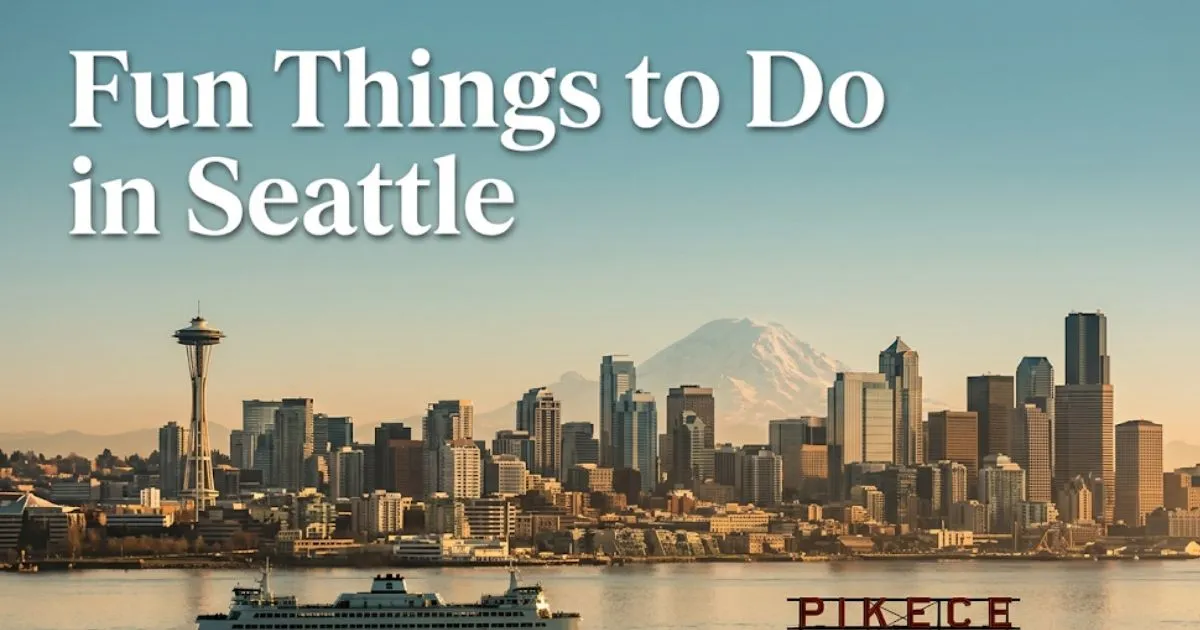
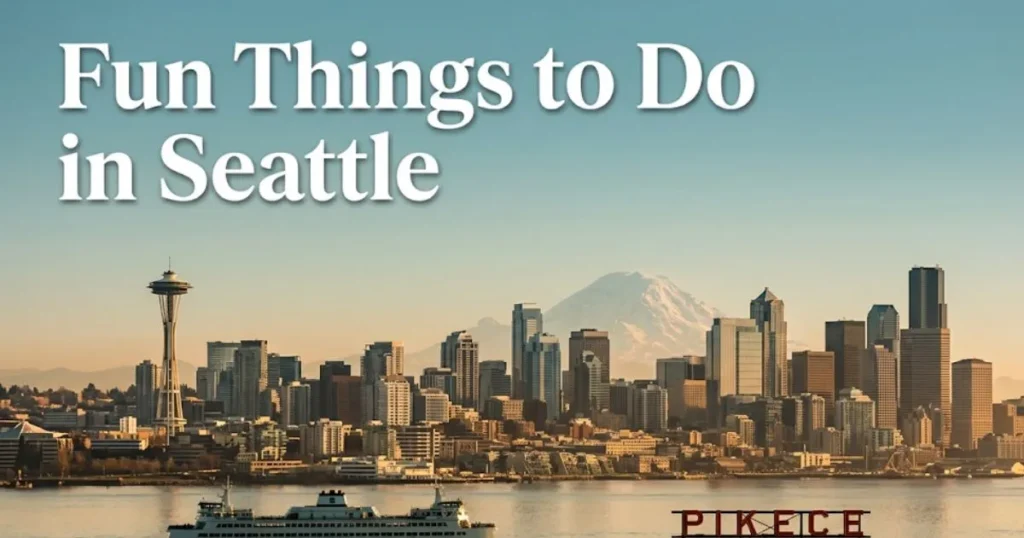
30 Fun Things to Do in Seattle, WA You’ll Love in 2026

Seattle offers more fun things to do per square mile than most American cities its size. The city’s genuine character, its neighborhood life, its seafood culture, its outdoor access, lives well beyond Pike Place Market and the Space Needle.
Visit Seattle, the city’s official tourism organization, reports that Seattle welcomes more than 40 million visitors annually. Most of them spend their time on the downtown tourist corridor and miss the city entirely.
This guide covers 2026’s best activities across every neighborhood, traveler profile, and budget level. You’ll leave knowing exactly what to do, when to do it, and what to skip.
Fun Things to Do in Seattle: Why the Emerald City Delivers
Seattle is one of North America’s most activity-rich cities for its size, combining genuine urban culture with immediate outdoor access.
You can kayak on Lake Union in the morning, eat Dungeness crab at Taylor Shellfish Oyster Bar on Capitol Hill by noon, and board a Washington State Ferry to Bainbridge Island by afternoon.
No other US city in this population range puts salt water, mountain views, independent coffee shops, and a James Beard-caliber restaurant scene in the same walkable radius.
The comparison that sets expectations correctly: think Portland’s neighborhood culture, plus Vancouver’s outdoor access, minus Vancouver’s international costs.
Insider Tip:
- Seattle’s hills are real. A half-mile walk on a map can involve 200 feet of elevation change.
- Download the King County Metro app before arriving. It integrates bus and light rail schedules.
- For solo travelers, the bar seating at Sitka and Spruce in Capitol Hill is one of Seattle’s best solo dining experiences.
Top Things to Do in Seattle Washington: The Anchor Experiences
The top things to do in Seattle Washington include Pike Place Market, the Space Needle, Chihuly Garden and Glass, the Museum of Pop Culture, and the Bainbridge Island ferry.
Pike Place Market is legitimate. It opened in 1907 and operates as a working public market, not a theme park replica.
The fish-throwing at Pike Place Fish Co. is genuinely theatrical. But the real reason to visit is the lower level, where vendors like Beecher’s Handmade Cheese and the original Starbucks Reserve location operate without tourist crowds.
Book the Space Needle and Chihuly Garden and Glass as a combo. The glass art experience below the Needle is a more genuinely unique experience than the observation deck alone.
| Attraction | Approx. Cost Per Adult | Best For | Time Required |
|---|---|---|---|
| Pike Place Market | Free to enter; vendors vary | All profiles | 1.5 to 3 hours |
| Space Needle | $32 to $42 estimated (2026) | Couples, first-timers | 1 to 1.5 hours |
| Chihuly Garden and Glass | $32 to $38 estimated | Adults, art lovers | 1 to 2 hours |
| Space Needle + Chihuly Combo | $45 to $55 estimated | Couples, adult groups | 2.5 to 3 hours |
| Bainbridge Island Ferry | $10 to $12 round trip estimated | All profiles | 2.5 to 4 hours |
| Museum of Pop Culture (MoPOP) | $28 to $35 estimated | Music fans, families | 2 to 3 hours |
Verify current pricing directly with each venue before visiting. Prices change seasonally.
Seniors and accessibility travelers should note that the Space Needle is fully wheelchair accessible. Chihuly Garden has uneven garden paths; the indoor Glass House section is fully accessible.
Unique and Cool Things to Do in Seattle You Won’t Find on Basic Lists
The most unique things to do in Seattle include exploring the Fremont neighborhood’s eccentric public art, kayaking Lake Union at sunset, and eating geoduck at a Capitol Hill oyster bar.
Fremont calls itself the Center of the Universe without irony. The neighborhood’s 18-foot Fremont Troll sculpture under the Aurora Bridge is one of Seattle’s genuinely unusual public art installations.
Fremont also hosts the Sunday Fremont Market, open year-round, where local vendors sell vintage goods, handmade items, and Pacific Northwest food products. It runs approximately 10am to 4pm on Sundays, though hours vary seasonally.
Kayaking on Lake Union gives you a perspective of the Seattle skyline that no land-based viewpoint replicates. Moss Bay Water Sports in South Lake Union rents kayaks and stand-up paddleboards for approximately $20 to $35 per hour, depending on craft type.
The most overlooked cool experience: the Hiram M. Chittenden Locks (Ballard Locks) in Ballard. Watching salmon navigate the fish ladder through underwater viewing windows is free, genuinely fascinating, and nearly always uncrowded.
Insider Tip:
- The Gas Works Park smokestack ruins on Lake Union’s north shore make a better cityscape photograph than Kerry Park because the industrial foreground is more interesting.
- For adults traveling without children, the evening oyster happy hour at The Walrus and the Carpenter in Ballard (arrive early, no reservations) is one of Seattle’s best experiences under $40 per person.
- Budget travelers: Fremont Market admission is free.
Popular Tourist Attractions in Seattle: Honest Assessments
The most popular tourist attractions in Seattle are Pike Place Market, the Space Needle, the Seattle Waterfront, Pioneer Square, and Seattle Center.
Each earns its popularity for different reasons. Each also has crowd and value considerations worth knowing before you go.
Pike Place Market is worth every visitor’s time but not every visitor’s peak-hours experience. Saturday between 11am and 2pm is genuinely difficult to navigate. Arrive before 9am on any day for the actual market experience.
Pioneer Square, Seattle’s oldest neighborhood, is architecturally significant with its 1890s Richardsonian Romanesque buildings. The underground tour (Bill Speidel’s Underground Tour) covers the city’s original street level buried after the 1889 Great Seattle Fire. Tickets typically run $22 to $28 per adult; book in advance during summer.
The Seattle Waterfront underwent a major renovation and the new waterfront park area offers elevated experiences compared to the old viaduct-era visit. The Seattle Aquarium sits here; expansion work completed in recent years has significantly improved the facility.
What is overrated: The Seattle Center International Fountain is a fine rest stop but not a destination. Most itineraries include it as filler when better options exist nearby, including the MoPOP building’s exterior, which is Frank Gehry architecture worth a deliberate look.
Families with children will find Pioneer Square’s Underground Tour genuinely engaging for kids ages 10 and older. Younger children lose interest quickly.
Key Takeaway: Arrive at Pike Place Market before 9am or after 3pm on summer weekends. This single scheduling decision separates a great experience from a frustrating crowd-management exercise.
Best Seattle Neighborhoods to Explore in 2026
Seattle’s best neighborhoods for visitors are Capitol Hill, Ballard, Fremont, and Pioneer Square, each offering a completely different version of the city.
Capitol Hill is Seattle’s most walkable, most culturally dense neighborhood. The Pike-Pine corridor along Pike Street and Pine Street between Broadway and 15th Avenue contains independent coffee shops, vinyl record stores, restaurants of every price level, and the city’s most active bar scene.
Cal Anderson Park anchors Capitol Hill’s social life on warm days. Volunteer Park, a few blocks north, holds the Seattle Asian Art Museum and a conservatory with rotating botanical exhibits, both worth an hour of any itinerary.
Ballard is Seattle’s Scandinavian-rooted waterfront neighborhood. Ballard Avenue holds independent restaurants and bars, including Stoup Brewing and Reuben’s Brews, two of Seattle’s most respected craft breweries. The neighborhood attracts a heavily local crowd.
Fremont suits visitors who want the eccentric, arts-focused side of Seattle. Pioneer Square suits history-focused travelers and architecture enthusiasts.
| Neighborhood | Best For | Key Venue | Walk Score |
|---|---|---|---|
| Capitol Hill | Solo travelers, couples, nightlife | Pike-Pine corridor | Very walkable |
| Ballard | Craft beer fans, local dining | Ballard Locks, Ballard Ave | Moderately walkable |
| Fremont | Art, markets, quirky culture | Fremont Troll, Sunday Market | Moderately walkable |
| Pioneer Square | History, architecture | Underground Tour | Very walkable |
| South Lake Union | Tech culture, kayaking | Lake Union, Moss Bay | Walkable |
Families with young children will find Capitol Hill’s restaurant variety and park access more stroller-friendly than the hilly streets of Fremont.
Outdoor Things to Do in Seattle
The best outdoor things to do in Seattle include Discovery Park’s coastal trail, kayaking on Lake Union, and the Bainbridge Island ferry crossing.
Discovery Park covers 534 acres on the Magnolia Bluff, making it the largest park in Seattle. The Loop Trail (2.8 miles) and the Bluff Trail lead to the West Point Lighthouse and a beach with Puget Sound views.
Getting there requires driving or rideshare. There is no direct transit connection from downtown. Allow at least three hours for the full lighthouse trail experience.
Kerry Park on Queen Anne Hill is Seattle’s most-photographed viewpoint, with unobstructed Space Needle and Mount Rainier framing on clear days. The viewpoint takes five minutes to experience; the surrounding Queen Anne neighborhood warrants an additional hour.
The Washington State Ferries Bainbridge Island route is simultaneously the best budget activity and the best outdoor experience in Seattle. Round-trip tickets run approximately $10 to $12 per foot passenger. The 35-minute crossing through Elliott Bay and Puget Sound is the outdoor experience most visitors entirely miss.
Seniors and accessibility travelers: Kerry Park has a paved accessible viewing area. Discovery Park’s beach trail involves a significant descent and return climb; the loop trail’s upper section is more manageable for limited mobility visitors.
Outdoor enthusiasts can access the Rattlesnake Ledge Trail in North Bend (approximately 30 miles east) for a rewarding 4-mile round trip hike with Cascade foothill views. No special permits required as of recent years; verify access conditions with King County Parks before visiting.
Insider Tip:
- Bring a windproof layer for the Bainbridge ferry crossing, even in July. Elliott Bay creates consistent wind regardless of air temperature.
- The Gas Works Park kite meadow on a summer weekend is one of Seattle’s genuine pleasures and costs nothing.
- Cyclists: the Burke-Gilman Trail runs 27 miles from Ballard through the University District to Kenmore. Bike rentals available in Fremont at several shops along Stone Way.
Seattle Arts and Culture Experiences
Seattle’s best arts and culture experiences include the Museum of Pop Culture (MoPOP), the Seattle Art Museum, the Frye Art Museum, and Chihuly Garden and Glass.
MoPOP in Seattle Center is the Frank Gehry-designed building covering music, science fiction, pop culture, and Pacific Northwest music history. Its permanent Nirvana and Jimi Hendrix exhibitions are the highest-caliber rock music museum content in the country.
Admission runs approximately $28 to $35 per adult. Budget travelers should know that MoPOP does not have a widely publicized free entry day; this is the one major cultural institution where full admission is generally required.
The Seattle Art Museum (SAM) offers free first-Thursday evenings each month. The permanent collection includes significant Pacific Northwest Indigenous art and a rotating calendar of major loan exhibitions. Verify the current free-Thursday dates directly with SAM before visiting.
The Frye Art Museum on First Hill charges no admission. Its permanent collection focuses on 19th and 20th-century European and American figurative painting. It is one of Seattle’s most underused cultural assets.
Couples will find Chihuly Garden and Glass the most intimate cultural experience in the city. The Glass House structure, with its overhead chandelier installation, genuinely earns its admission cost.
Families with children should prioritize MoPOP, particularly its Sound Lab hands-on music room, which holds children’s attention far better than any static gallery.
Key Takeaway: The Frye Art Museum on First Hill is genuinely free and genuinely worth visiting. Most tourist itineraries skip it entirely. That gap is the exact reason it stays uncrowded.
Seattle Food and Coffee Scene
Seattle’s food and coffee scene centers on Pacific Northwest seafood, an independent coffee culture predating Starbucks’s national expansion, and a James Beard-recognized restaurant community anchored in Capitol Hill and Ballard.
Taylor Shellfish Oyster Bar on Capitol Hill (at 19th Avenue and East Pine) is the correct first oyster experience in Seattle. The company farms its own shellfish and sells them at market price. Budget approximately $25 to $45 per person for oysters and a drink.
The Walrus and the Carpenter in Ballard is the more atmospheric option, with a longer wait and a more convivial setting. No reservations taken. Arrive at opening time (5pm on most evenings; verify current hours before visiting) or expect a substantial wait.
For coffee: Victrola Coffee Roasters on Pike Street in Capitol Hill and Storyville Coffee near Pike Place Market represent Seattle’s independent coffee culture accurately. The original Starbucks at Pike Place is a tourist photo opportunity, not a coffee experience worth the line.
Macrina Bakery in Belltown (on 1st Avenue) is the city’s most respected wholesale and retail bakery. An early morning stop for pastry before Pike Place Market is the correct breakfast strategy.
Budget travelers should know that Seattle’s happy hour culture is robust. Most Capitol Hill and Ballard restaurants offer significantly discounted food and drink menus from 4pm to 6pm. This is the city’s most reliable budget dining mechanism.
Canlis, on Aurora Avenue overlooking Lake Union, is Seattle’s most celebrated fine dining institution. Dinner runs $150 to $200 per person before beverages. It requires advance reservations made weeks or months ahead.
Things to Do in Seattle at Night
The best things to do in Seattle at night include Capitol Hill’s Pike-Pine bar corridor, live music at The Showbox and Neumos, craft cocktail bars in Belltown, and the lit waterfront at Pier 66.
Capitol Hill is Seattle’s primary nightlife neighborhood. The concentration of bars, clubs, and late-night restaurants along Broadway and the Pike-Pine corridor is the equivalent of what Nashville’s Lower Broadway does for country music, but for alternative, indie, and electronic music culture.
Neumos on Pike Street is the mid-size venue (capacity approximately 700) where Seattle’s music scene concentrates. The Showbox on 1st Avenue is larger and books national touring acts. Both require advance ticket purchase for most shows.
Elysian Brewing on Capitol Hill, the original location, stays open late and draws both locals and visitors. It is not a tourist trap; the beer quality holds up.
For a non-bar night: Benaroya Hall is home to the Seattle Symphony, and single-night tickets are often available close to performance dates at moderate prices. Verify current programming at seattlesymphony.org.
Safety note: The stretch of 3rd Avenue downtown after 9pm warrants awareness. Stay on well-lit blocks and be alert to your surroundings in the Belltown and downtown corridor after dark. Capitol Hill and Ballard are considerably more relaxed environments after hours.
Solo travelers will find Capitol Hill the safest, most socially accessible nightlife option. Bar seating is common. Single travelers fit naturally into the neighborhood’s culture.
Couples looking for a sophisticated evening should book Benaroya Hall for a symphony performance. The building itself is a legitimate architectural experience.
Things to Do in Seattle in Summer
Summer in Seattle, specifically July through September, is the city’s best season for outdoor activities, festivals, and consistent sunshine.
Seattle’s summer weather is consistently misunderstood. Visit Seattle data shows that July and August average fewer than 10 days of measurable rain each month, with temperatures typically ranging from the high 50s°F at night to the low-to-mid 70s°F during the day.
This is dramatically different from Seattle’s wet-season reputation. Outdoor activities that feel uncertain in March become reliable in August.
Seafair, Seattle’s summer festival, typically runs mid-July through early August. It includes hydroplane races on Lake Washington, the Blue Angels air show, and the Torchlight Parade downtown. Exact dates shift annually; verify with Visit Seattle for 2026 schedule.
Bumbershoot, the arts and music festival at Seattle Center, traditionally runs Labor Day weekend. Past lineups have included national headliners across multiple stages. Advance tickets are required and generally sell out.
Summer is peak hotel pricing season. Rates downtown can run $250 to $450 per night for mid-range hotels. Budget travelers should consider the University District as a base, accessible to downtown via Link Light Rail at significantly lower nightly rates.
Families with children will find summer the most logistically straightforward season: parks are accessible, ferry crossings are pleasant, and Discovery Park beach is genuinely swimmable on the warmest days.
Key Takeaway: Seattle’s summer is genuinely the opposite of its rainy reputation. Plan outdoor activities confidently in July and August. Pack one fleece layer for evenings regardless of daytime temperatures.
Things to Do in Seattle in Winter and Rain
Seattle in winter and rain is best experienced through its indoor food scene, arts institutions, and the genuinely atmospheric covered sections of Pike Place Market.
The honest framing: Seattle gets approximately 37 inches of rain annually, less than Miami or New York City. Seattle’s “rainy” reputation comes from the frequency of overcast and drizzly days between October and April, not from heavy rainfall events.
A rainy Seattle day is best spent in Pike Place Market’s lower level, which stays dry and navigable regardless of weather. The market’s indoor specialty vendors, including DeLaurenti Food and Wine and the Pike Place Chowder shop, are the wet-weather versions of the outdoor experience.
Seattle Restaurant Week typically runs twice annually, in February and October. The event offers prix-fixe menus at significant discounts at participating restaurants across all price tiers. For food-focused travelers, this is arguably the best time to visit.
Hotel rates in January and February drop 30% to 50% from summer peaks. The museums are fully operational. The ferries run year-round. The question is whether outdoor activities matter to a specific traveler’s itinerary.
Seniors and accessibility travelers will find winter crowds at major attractions significantly lighter, with shorter lines at the Space Needle and easier navigation through Pike Place Market.
Budget travelers: Winter is unambiguously the correct season for cost efficiency. Lower hotel rates, Seattle Restaurant Week deals, and the same free activities make the city genuinely affordable.
Free and Budget-Friendly Things to Do in Seattle
The best free things to do in Seattle include Olympic Sculpture Park, Kerry Park viewpoint, Gas Works Park, the Frye Art Museum, and the Bainbridge Island ferry walk-on crossing for approximately $10 to $12 round trip.
Olympic Sculpture Park on the waterfront north of downtown is a free, permanently open outdoor museum operated by the Seattle Art Museum. It holds major works including Richard Serra’s “Wake” and Alexander Calder’s “The Eagle.” The Elliott Bay backdrop makes it the most architecturally impressive free outdoor space in Seattle.
Gas Works Park on Lake Union’s north shore costs nothing and delivers the best casual Seattle afternoon. Bring a frisbee, a blanket, or a kite. The industrial smokestack ruins in the background photograph better than the average tourist attraction.
Free Seattle activities worth your time:
- Olympic Sculpture Park (waterfront, SAM-operated, always open)
- Kerry Park viewpoint (Queen Anne Hill, no fee, 5 minutes by rideshare from Seattle Center)
- Gas Works Park (South Lake Union, free, excellent city views)
- Frye Art Museum (First Hill, always free admission)
- Volunteer Park Conservatory (Capitol Hill, small suggested donation)
- Ballard Locks fish ladder (Ballard, free, best in July through November for salmon viewing)
- Cal Anderson Park (Capitol Hill, free, social hub for neighborhood)
- Burke-Gilman Trail cycling (free with bike rental from local shops)
SAM First Thursday free evenings require advance registration on some months; verify current requirements directly with the Seattle Art Museum.
Families with children will find Gas Works Park and Cal Anderson Park’s spray pad (operational in summer) among the most child-engaging free options.
Things to Do in Seattle for Families
Seattle is a strong family destination, with the caveat that its hilly terrain and spread-out neighborhood structure require more transit planning than compact flat cities.
The Seattle Aquarium on the waterfront is consistently the top-rated family attraction in the city. A major expansion completed in recent years added new exhibit spaces covering Pacific Northwest marine ecosystems. Admission runs approximately $30 to $45 per adult, $20 to $30 per child as of recent years; verify current pricing before visiting.
Woodland Park Zoo in the Phinney Ridge neighborhood houses animals across 92 acres. It is a full-day commitment for families. Admission runs approximately $25 to $35 per adult and $15 to $20 per child; Zoo membership is worth calculating against ticket costs for Seattle residents visiting multiple times.
Museum of Pop Culture (MoPOP) is the family-specific pick among Seattle’s cultural institutions. The Sound Lab hands-on music room genuinely holds children’s interest. The science fiction gallery has enough visual engagement for middle-school age visitors.
To plan a family day in Seattle efficiently:
- Start at the waterfront for the Seattle Aquarium (morning, less crowded)
- Walk north along the waterfront to Olympic Sculpture Park (free, 20 minutes walking)
- Board the Seattle Monorail from Westlake Center to Seattle Center ($3 per person estimated)
- Visit MoPOP or Seattle Center grounds and International Fountain
- Return downtown via Monorail or rideshare depending on energy levels
Stroller access is manageable in the waterfront area and Seattle Center grounds. Pike Place Market’s crowds and narrow aisles make strollers genuinely difficult on weekend mornings. Go early or leave strollers in the car.
Romantic Things to Do in Seattle for Couples
The most romantic things to do in Seattle for couples include a sunset ferry crossing to Bainbridge Island, dinner at Canlis overlooking Lake Union, oysters at The Walrus and the Carpenter, and a Kerry Park sunrise.
Kerry Park at sunrise is a different experience from its midday tourist version. The Space Needle with Puget Sound behind it and Mount Rainier in the distance on a clear morning is genuinely worth the 6am rideshare fare.
The Washington State Ferry to Bainbridge Island works as a standalone romantic experience. Couples can cross over, have lunch in Bainbridge’s small downtown (try Mora Iced Creamery or lunch at The Harbour Public House), and return on a late afternoon crossing as the light changes over the Olympic Mountains.
For dinner: Canlis is the pinnacle, requiring weeks of advance planning. At a lower price point, Sitka and Spruce in Capitol Hill’s Melrose Market offers the same Pacific Northwest ingredient focus in a more accessible reservation window and at roughly half the per-person cost.
The Chihuly Garden and Glass evening experience (when gardens are lit after sunset) is the most underused romantic activity in Seattle. Many couples visit during daylight; the after-dark visit has a completely different atmosphere.
Budget-conscious couples should prioritize the Bainbridge ferry, Gas Works Park at sunset, and oyster happy hours in Capitol Hill. All three are among Seattle’s most genuinely atmospheric experiences at a fraction of Canlis pricing.
Key Takeaway: The Washington State Ferry to Bainbridge Island costs approximately $10 to $12 round trip per person and delivers the single most romantic Seattle experience per dollar spent. No other activity in the city comes close to that value-to-atmosphere ratio.
Solo Things to Do in Seattle
Seattle is one of the most solo-traveler-friendly cities in the United States, with a strong independent coffee culture, excellent transit connectivity, and a dining scene built around bar seating and counter service.
Capitol Hill is the correct neighborhood anchor for solo visitors. The density of independent coffee shops alone justifies basing a solo trip here. Victrola Coffee Roasters on Pike Street has the most genuine neighborhood-regular atmosphere of any Seattle coffee shop.
Solo dining is natural in Seattle. Sitka and Spruce in Melrose Market has bar seating at the counter where single diners are a regular presence. The Whale Wins in Fremont (Renee Erickson’s wood-oven-focused restaurant) has a solo-dining-friendly layout and an afternoon snack menu.
For social connections: The REI flagship store on Capitol Hill (yes, the outdoor retail store) hosts community boards and events connecting outdoor-activity-focused travelers. It is a genuine local gathering point, not just a retail experience.
Solo travelers should use the Link Light Rail as the primary transportation backbone. It connects SeaTac Airport to Capitol Hill, the University District, and downtown Seattle without rideshare cost.
Safety for solo travelers: Seattle’s core neighborhoods, Capitol Hill, Belltown, Ballard, Fremont, Pioneer Square, are safe for solo exploration during daylight hours. After dark, the 3rd Avenue downtown corridor should be navigated with awareness. Stick to well-lit streets and keep belongings secure.
Budget efficiency for solo travelers: Hotel room rates in Seattle are fixed-cost regardless of party size. Consider Airbnb in the University District or Capitol Hill for significantly lower per-night costs compared to Belltown hotel towers.
Getting Around Seattle and Practical Travel Tips
Getting around Seattle is easiest by combining the Sound Transit Link Light Rail for major corridors with King County Metro buses for neighborhood access and rideshare for specific destinations like Discovery Park.
From Seattle-Tacoma International Airport (SEA): The Link Light Rail runs directly from the airport to downtown Seattle in approximately 35 to 40 minutes. Fare runs approximately $3 to $4 per trip. It is the most reliable and cost-efficient airport arrival option. Avoid driving from the airport during rush hours; I-5 northbound into Seattle is consistently congested.
Seattle’s terrain is the single biggest practical surprise for first-time visitors. The city is built on hills. The distance between Pike Place Market and Capitol Hill looks short on a map; the walk involves significant elevation gain. Budget extra time and energy for walking routes, or use the free First Hill Streetcar connecting the Capitol Hill and Pioneer Square areas.
Parking reality: Driving and parking in Capitol Hill and around Pike Place Market is a source of significant frustration. Street parking is metered, often full, and expensive. Garage parking near Pike Place Market runs approximately $25 to $40 for a half-day. Using transit to reach these areas and driving only to destinations like Discovery Park or Woodland Park Zoo makes significantly more logistical sense.
The Seattle Monorail connects Westlake Center downtown to Seattle Center in two minutes. Single-ride fare runs approximately $3 per adult. It is efficient for Seattle Center visits specifically.
To navigate Seattle’s neighborhoods efficiently:
- Arrive via Link Light Rail from SEA; exit at Westlake Station for downtown
- Use rideshare or taxi for Discovery Park and Woodland Park Zoo (no direct transit)
- Take the First Hill Streetcar between Capitol Hill and Pioneer Square
- Board the Washington State Ferry at Colman Dock (Pier 52) on foot for Bainbridge Island
- Use King County Metro Route 44 between Ballard and the University District
- For the Fremont Troll, take Route 40 from downtown or rideshare from Capitol Hill
Seniors and accessibility travelers: Link Light Rail stations are fully accessible with elevators at every station. The First Hill Streetcar is wheelchair accessible. The Washington State Ferry has accessible boarding. Request accessible vehicle boarding at Colman Dock when purchasing tickets.
Safety and Practical Warnings for Seattle Visitors
Seattle is generally a safe city for tourists, but specific areas and situations require awareness that most travel guides do not address.
Key safety and practical facts every visitor should know:
- The 3rd Avenue downtown corridor between Pike Street and Yesler Way has documented concerns around unsheltered individuals and occasional aggressive panhandling. Stay alert after dark and keep bags secured.
- Pike Place Market crowds on summer weekend mornings between 10am and 2pm are dense enough to make the experience unpleasant. Arrive before 9am or after 3pm.
- Elliott Bay and Puget Sound ferry crossings create significant wind chill even on warm days. Bring a wind layer regardless of forecast air temperature.
- Seattle’s hills create genuine physical demand. Visitors with mobility limitations should plan routes specifically, as some blocks involve substantial staircases with no elevator alternative.
- Driving visibility: Seattle’s frequent rain means headlights-on driving is practical even during daytime in the wet season. Wipers and defogged windshields are regular requirements from October through May.
- Earthquake preparedness: Seattle sits in a seismically active zone. Familiarize yourself with standard earthquake protocols: drop, cover, and hold on. This is a long-odds scenario but worth knowing for any Pacific Northwest visit.
The King County Metro Transit information line and Visit Seattle’s official website are the most reliable real-time resources for any service disruption or safety advisory during your visit.
Suggested 2-Day Seattle Weekend Itinerary
Here is a practical two-day framework covering Seattle’s most rewarding experiences across different neighborhoods and traveler types.
Day 1: Downtown, Waterfront, and Capitol Hill
- Arrive early at Pike Place Market (before 9am). Spend 90 minutes on the lower level and the main arcade. Buy breakfast at Macrina Bakery‘s Pike Place location or Le Panier, the French bakery inside the Market.
- Walk north from Pike Place along the waterfront to Olympic Sculpture Park (free, 30-minute walk, flat terrain along the waterfront path).
- Seattle Aquarium or Space Needle and Chihuly Garden combo (book Chihuly tickets online in advance for summer visits).
- Late afternoon: rideshare or take the Seattle Monorail to Capitol Hill. Walk the Pike-Pine corridor.
- Happy hour oysters at Taylor Shellfish Oyster Bar (4pm to 6pm for best pricing).
- Evening dinner at Sitka and Spruce or a Neumos or Showbox show if music aligns with the calendar.
Day 2: Neighborhoods, Ferry, and Outdoor Access
- Morning coffee at Victrola Coffee Roasters on Pike Street.
- Board the Washington State Ferry at Colman Dock (Pier 52) to Bainbridge Island. Spend 2 to 3 hours on the island: walk the town, eat lunch, return on the afternoon ferry.
- Return to Fremont for the Fremont Troll and a stop at Fremont Brewing (open afternoons most days; verify current hours before visiting).
- Walk or rideshare to Ballard for Ballard Locks fish ladder (free). Dinner at The Walrus and the Carpenter (arrive at opening time).
- Optional: Kerry Park at sunset (15-minute rideshare from Ballard) for the Space Needle and Mount Rainier skyline view.
Frequently Asked Questions About Fun Things to Do in Seattle
What are the most fun things to do in Seattle for first-time visitors?
First-time visitors should prioritize Pike Place Market (arrive before 9am), the Chihuly Garden and Glass, a Washington State Ferry crossing to Bainbridge Island, and at least one evening in Capitol Hill’s Pike-Pine corridor.
These four experiences cover Seattle’s food culture, visual arts, outdoor waterway access, and neighborhood life in a single day and a half.
Combine the Space Needle with Chihuly as a ticketed combo for the best value on those two attractions.
What is the best time of year to visit Seattle for good weather?
The best time to visit Seattle for reliably good weather is July through September.
During these months, rainfall is minimal, temperatures stay in the low-to-mid 70s°F during the day, and the city’s full outdoor calendar, including Seafair and Bumbershoot, operates.
June is often overcast and can be cold; “Junuary” is the local term for the phenomenon.
Is Seattle worth visiting if you only have one day?
Seattle is genuinely worth a single day if you focus tightly: Pike Place Market in the morning, the waterfront and Olympic Sculpture Park midday, and Capitol Hill in the evening.
The Bainbridge Island ferry is the one experience that should be traded out of a one-day itinerary since it consumes three to four hours that could cover more of the city.
One day in Seattle works best for visitors who know they will return; it functions as an orientation visit more than a complete experience.
What free things to do in Seattle are actually worth your time?
The free Seattle experiences that genuinely deliver are Olympic Sculpture Park, Gas Works Park, Kerry Park viewpoint, the Frye Art Museum, the Ballard Locks fish ladder, and Cal Anderson Park in Capitol Hill.
The Seattle Art Museum’s first-Thursday free evenings are worth the trip specifically for the Pacific Northwest Indigenous art collection; verify current free-day schedules directly with SAM.
None of these require advance booking and all are legitimately rewarding, not just “free because nothing else is going on.”
What neighborhood in Seattle is best for tourists to stay in?
Capitol Hill is the best base for most adult travelers: walkable, transit-connected via Link Light Rail, and dense with restaurants, coffee shops, and bars.
Downtown Belltown is convenient for waterfront access and Pike Place proximity but has higher hotel rates and the downtown safety considerations noted above.
Budget travelers should consider the University District for lower nightly rates and easy Link Light Rail access to downtown.
How do you get around Seattle without a car?
Getting around Seattle without a car is practical using Link Light Rail for the airport-to-downtown corridor and major stops, King County Metro buses for neighborhood connections, and the First Hill Streetcar between Capitol Hill and Pioneer Square.
Rideshare is recommended for Discovery Park and Woodland Park Zoo, which have no efficient direct transit option from downtown.
The Washington State Ferry is foot-passenger accessible at Colman Dock (Pier 52) with no car required for the Bainbridge Island crossing.
Plan Your Seattle Trip With Confidence
Seattle in 2026 rewards travelers who go beyond the obvious. The Space Needle and Pike Place Market are both worth your time, but only if you approach them with the right timing and sequence.
Book the Chihuly Garden and Glass online before arriving in summer. Plan your Bainbridge Island ferry crossing for a weekday afternoon if possible. Start every morning before 9am in any neighborhood you want to experience without crowds.
Travel conditions, pricing, ferry schedules, museum hours, and festival dates change. Verify all key logistics directly with Visit Seattle, Washington State Ferries, and individual venues before departure. The city rewards the prepared visitor more than almost any other destination its size.