Things to Do in Minneapolis: The 2026 Insider Guide

Minneapolis rewards travelers who look past the Mall of America and engage with its actual identity. Things to do in Minneapolis range from world-calibrated art museums to a lakes system that rivals any urban park network in the country.
The city operates two distinct first-rate art museums, a legendary music venue that launched Prince and the Replacements, and a craft beer scene built by local independents. Visit Minneapolis reports the city hosts more theater seats per capita than any US city outside New York.
This guide covers every major neighborhood, outdoor experience, cultural institution, food corridor, and seasonal consideration. It also names what experienced travelers skip and what first-timers consistently miss.
Things to Do in Minneapolis
Minneapolis offers a genuinely layered mix of arts, outdoor recreation, food, music heritage, and neighborhood culture within a compact, navigable city.
The city sits on the Mississippi River in eastern Minnesota. It shares a metro area with Saint Paul, its smaller and architecturally distinct neighbor to the east.
The Chain of Lakes system, the Northeast Arts District, and the skyway-connected downtown all function as separate visitor worlds. You need at least two full days to engage meaningfully with more than one of them.
First-time visitors often underestimate the city’s scale and cultural depth. Minneapolis is not a quick-stop destination.

Insider Tip:
- The Minneapolis Skyway System connects 80 downtown city blocks indoors. It is essential in winter and genuinely useful year-round for navigating between museums, hotels, and restaurants.
- The skyway is free to use. Most downtown hotels are connected or within one block.
- Seniors and travelers with mobility limitations benefit most from planning routes through the skyway network before arrival.
- /
| Experience Type | Top Example | Best For | Cost Range |
|---|---|---|---|
| Art Museum | Minneapolis Institute of Art | All profiles | Free to ~$25 adult |
| Outdoor Recreation | Chain of Lakes | Families, couples, solo | Free |
| Live Music | First Avenue | Adults, solo travelers | ~$15 to $60 per show |
| Food Corridor | Eat Street (Nicollet Ave S) | Budget travelers | $10 to $30 per meal |
| Craft Beer | Northeast Minneapolis breweries | Adults | ~$6 to $14 per pint |
Best Things to Do in Minneapolis
The best things to do in Minneapolis cluster around its arts institutions, lakeside parks, and neighborhood food and music scenes. None of them are at the Mall of America.
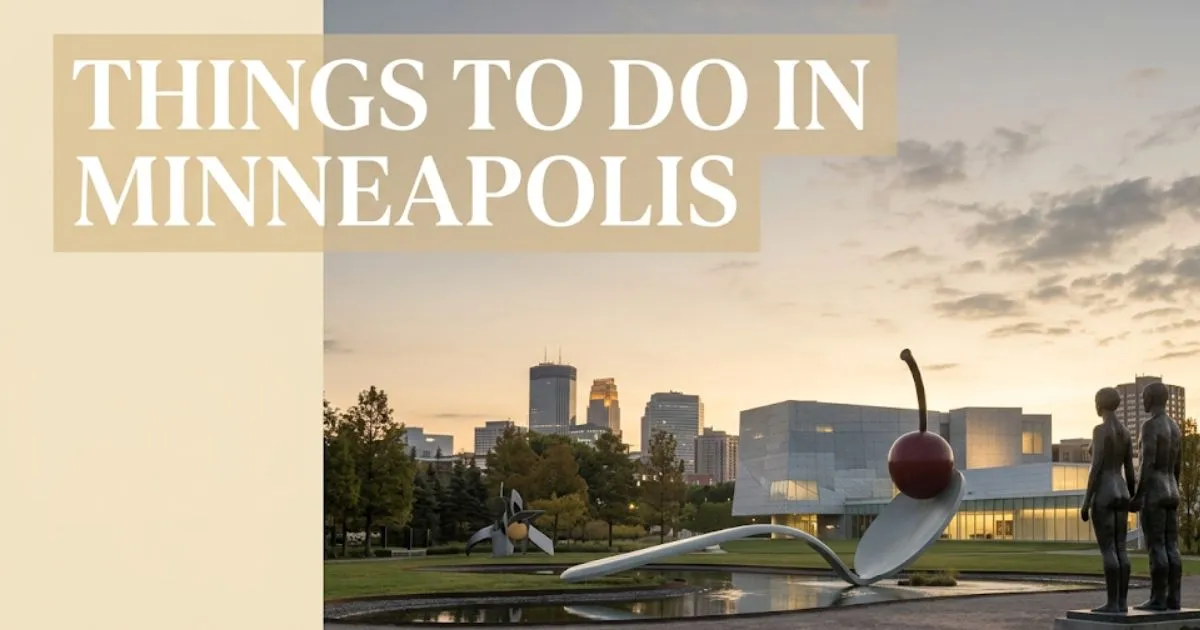
Walker Art Center and its adjacent Minneapolis Sculpture Garden consistently rank among the best contemporary art experiences in the Midwest. The Sculpture Garden is free and open daily.
First Avenue on North 5th Street is one of the most storied music venues in US rock history. Prince filmed scenes from Purple Rain here in 1984.
Minnehaha Falls drops 53 feet and sits inside a regional park with river trail access. Most visitors spend one to two hours there.
| Activity | Best For | Cost (Approx.) | Time Needed | Insider Note |
|---|---|---|---|---|
| Minneapolis Sculpture Garden | All profiles | Free | 45 to 90 min | Go early morning on weekends to avoid crowds |
| First Avenue | Solo, couples, adults | $15 to $60 (show-dependent) | 2 to 4 hours | Check the 7th Street Entry for smaller shows |
| Minnehaha Falls | Families, couples | Free | 1 to 2 hours | Trail to the Mississippi River adds 2 miles roundtrip |
| Mia (Minneapolis Institute of Art) | Culture travelers, families | Free (permanent collection) | 2 to 4 hours | Free every day for permanent collection; special exhibitions vary |
| Chain of Lakes | Outdoor travelers, couples | Free | Half day to full day | Bde Maka Ska has the best swimming beach access |
According to Explore Minnesota Tourism, the Minneapolis-Saint Paul metro area draws over 35 million visitors annually, with arts and outdoor recreation cited as the primary visit drivers.
Minneapolis Neighborhoods to Visit
The most rewarding Minneapolis neighborhoods for visitors are the North Loop, Northeast Minneapolis, and Uptown, each with a distinct character and commercial corridor.
The North Loop, bounded roughly by Washington Avenue and the Target Field area, holds the city’s densest concentration of independent restaurants, design-forward shops, and craft cocktail bars. Spoon and Stable on North Washington Avenue is the neighborhood’s flagship restaurant and requires advance reservations.
Northeast Minneapolis, locally called “NE,” runs along Central Avenue NE and is the city’s primary arts and brewery neighborhood. Indeed Brewing Company on NE Marshall Street and Dangerous Man Brewing on NE Johnson Street are the local anchors.
Uptown sits around the intersection of Hennepin Avenue and Lake Street. It’s the commercial heart near the Chain of Lakes and has a strong independent retail and café culture.
Dinkytown, near the University of Minnesota, is primarily a student neighborhood. It suits budget travelers looking for cheap eats and a high-energy local atmosphere.
Insider Tip:
- Northeast Minneapolis hosts Art-A-Whirl every May, the largest open studio tour in the US. Studios, galleries, and artist spaces open across the neighborhood for a full weekend.
- The North Loop is the closest neighborhood to Target Field. Avoid driving there on game nights; parking fills by first pitch.
- Solo travelers find Northeast the most socially navigable neighborhood. Breweries there have communal seating and a genuinely local crowd.
Outdoor Things to Do in Minneapolis
Outdoor things to do in Minneapolis center on the Chain of Lakes, a connected system of five lakes managed by the Minneapolis Park and Recreation Board within the city limits.
Bde Maka Ska is the largest lake in the system and the primary destination for swimming, paddleboarding, and sailing. The main beach area has a concession stand and kayak rentals available seasonally, typically May through September.
Lake Harriet is the most manicured of the five lakes. It has a restored 1904-era bandshell that hosts free concerts on summer evenings, typically June through August.
The Grand Rounds National Scenic Byway is a 50-mile interconnected trail and parkway loop that encircles the entire city, connecting all five Chain of Lakes to the Mississippi River corridor. Cyclists complete the full loop in three to five hours.
Minnehaha Falls and Regional Park adds a waterfall, limestone gorge, and river access to the outdoor inventory. The trail from the falls to the Mississippi River confluence is approximately two miles roundtrip and passes through a tree canopy that is extraordinary in October.
For families with young children: Bde Maka Ska’s shallow beach area and Lake Harriet’s paved perimeter path with a trolley stop are the most child-friendly outdoor options. The Chain of Lakes bike path is stroller-accessible throughout.
For senior and accessibility travelers: Lake Harriet’s perimeter path is paved, flat, and manageable. The Minnehaha Falls main overlook is wheelchair accessible; the gorge trail is not.
Key Takeaway: The Chain of Lakes is Minneapolis’s single most underrated asset for first-time visitors. Budget at least a half-day for it.
Minneapolis Arts and Culture
Minneapolis has two major art institutions that punch well above the weight of a city its size, and both are worth full-visit time rather than quick stops.
The Minneapolis Institute of Art, known locally as Mia, holds a permanent collection of over 90,000 works spanning 5,000 years. Admission to the permanent collection is free every day of the year. Special exhibitions carry separate admission, typically in the $15 to $25 per adult range.
Walker Art Center focuses on contemporary art, performance, and design. Admission runs approximately $15 to $20 for adults. Its rooftop garden and the adjacent Minneapolis Sculpture Garden are free and accessible daily.
The Guthrie Theater, perched on the Mississippi riverbank at West River Parkway, is one of the preeminent regional theaters in the country. Its “Endless Bridge” cantilevered deck over the river is free to access even without a show ticket and offers one of the best views of the Stone Arch Bridge and St. Anthony Falls.
The Mill City Museum on Second Street S is built into the ruins of what was once the world’s largest flour mill. Interactive exhibits and a rooftop grain elevator view make it a genuinely worthwhile two-hour visit. Admission typically runs approximately $12 to $15 for adults.
For couples: The Guthrie is the most date-appropriate cultural experience in Minneapolis. Pre-show drinks at its bar with the river view is a specific recommendation.
For budget travelers: Mia’s free permanent collection combined with the Walker Sculpture Garden covers an excellent arts half-day with zero admission cost.
Minneapolis Music Venues and Nightlife
Minneapolis has a music legacy rooted in Prince, the Replacements, and Husker Du, and its live venue infrastructure still reflects that identity.
First Avenue on North 5th Street is the city’s most historically significant venue, holding approximately 1,500 standing. 7th Street Entry, its adjoining smaller room, holds around 250 and is where you find emerging local acts on weeknights for lower ticket prices.
The Varsity Theater on Hennepin Avenue in Dinkytown is the mid-tier venue locals prefer for touring indie acts. Capacity runs around 1,000, and sightlines are better than First Avenue for general admission shows.
Icehouse on Nicollet Avenue in the Whittier neighborhood is the most respected venue for jazz, experimental, and local original music. It doubles as a restaurant, so the dinner-and-show format works well for couples.
For nightlife beyond live music, Hennepin Avenue between 5th and 9th Streets is the primary bar corridor. It runs more tourist-facing than the North Loop’s cocktail bar scene.
The North Loop’s cocktail scene, specifically around Washington and 3rd Avenue N, is where locals go when they want serious drinks. Volstead’s Emporium and comparable North Loop bars offer craft cocktails without the Hennepin Avenue noise levels.
For solo travelers: First Avenue’s general admission standing-room format is one of the best solo-travel concert formats in the US. The crowd is engaged and socially open.
Minneapolis Food Scene and Restaurants
Minneapolis has built one of the most credible regional food scenes in the Midwest, anchored by a diverse immigrant community and a strong wave of chef-driven independents.
Eat Street, the Nicollet Avenue S corridor between 24th and 29th Streets, is the most honest food street in the city. It covers Ethiopian, Vietnamese, Mexican, Indian, and Somali cuisines within a walkable stretch. Most meals run $10 to $20 per person.
Spoon and Stable in the North Loop, helmed by James Beard Award-winning chef Gavin Kaysen, is the city’s most acclaimed reservation-required restaurant. Budget $80 to $120 per person for dinner. Book weeks in advance, especially on weekends.
Young Joni in Northeast Minneapolis, from chef Ann Kim, serves wood-fired pizza and Korean-influenced small plates. It is consistently one of the most sought-after tables in the city. Reservations are strongly recommended.
Hai Hai on Central Avenue NE, from chef Christina Nguyen, is the local benchmark for Southeast Asian cuisine. It runs a no-reservation format and waits can reach 45 to 90 minutes on weekend evenings.
For budget travelers: Eat Street delivers the best value per dollar in the city. The Somali restaurants along Nicollet in the Whittier neighborhood, particularly around the Karmel Mall area, are a specific local recommendation rarely mentioned in visitor guides.
According to the James Beard Foundation, Minnesota chefs have received multiple nominations and awards in recent years, reflecting the city’s food community maturity.
Key Takeaway: Spoon and Stable requires booking 3 to 4 weeks ahead for weekend evenings. Put it first on your Minneapolis reservation list.
Cool Things to Do in Minneapolis
Some of the coolest and most distinctive Minneapolis experiences exist nowhere else in the US and still get minimal coverage in standard visitor guides.
Paisley Park in Chaska, 25 miles southwest of downtown, is Prince’s recording studio and creative compound, now open for tours. Tours run regularly and typically require advance online booking. This is the most Prince-specific experience available and genuinely delivers for fans.
Mary Tyler Moore’s statue on Nicollet Mall at 7th Street is modest but meaningful. The surrounding Nicollet Mall stretch saw a major redesign and now hosts food trucks, public programming, and pedestrian activity on warmer days.
The Stone Arch Bridge over the Mississippi near St. Anthony Main is a repurposed 1883 railroad bridge. Walking it at dusk with the St. Anthony Falls visible upstream and the Guthrie beyond is a specific Minneapolis experience unavailable anywhere else.
Brave New Workshop, the country’s longest-running satirical comedy theater, has operated in Minneapolis since 1958. Shows run most weekends. Ticket prices typically range from $20 to $45 per person. This is a genuine local institution almost never mentioned in visitor guides.
For couples: The Stone Arch Bridge at dusk and a pre-dinner walk through St. Anthony Main before a Guthrie show is a specific Minneapolis evening that works as well as anything the city offers.
For solo travelers: Brave New Workshop is comfortable to attend alone. Seating is theater-style and the show format is self-contained.
Romantic Things to Do in Minneapolis
Romantic things to do in Minneapolis reward couples who engage with the city’s arts, dining, and outdoor infrastructure rather than the tourist corridor.
A sunset walk around Lake Harriet followed by a free bandshell concert (typically June through August, check the schedule in advance) is a specific and genuinely beautiful evening. The lake path is 2.7 miles and flat throughout.
Dinner at Spoon and Stable or Bachelor Farmer in the North Loop sets the right tone for a special evening. Bachelor Farmer focuses on Scandinavian-influenced cuisine and has a quieter, more intimate room than Spoon and Stable.
The Guthrie Theater offers theater packages that include pre-show dinner reservations at local restaurants and premium seating. Its riverfront bar before a show is the most atmospheric pre-theater experience in the city.
A private kayak or canoe rental on Bde Maka Ska is available seasonally. Paddling to the center of the lake and back at sunset takes approximately 45 to 60 minutes.
For couples on a budget: The Lake Harriet Bandshell summer concerts are free. Combine with a picnic from the Wirth Co-op or Mississippi Market Co-op for a low-cost but genuinely memorable evening.
Things to Do in Minneapolis with Kids
Minneapolis with kids works best when organized around the outdoor parks, interactive museums, and the Como Park Zoo rather than trying to fit adult-focused attractions into a family itinerary.
Como Park Zoo and Conservatory in adjacent Saint Paul is free to enter (donations requested) and is one of the most family-friendly facilities in the Twin Cities. Stroller access is excellent throughout. The attached Como Town amusement area charges separately for rides.
Minnehaha Falls engages children immediately. The falls are dramatic and visible from a paved overlook. The creek below is shallow and children regularly wade in the pools at the base during summer.
The Science Museum of Minnesota in Saint Paul holds strong interactive exhibits and an Omnitheater. It is approximately 12 miles from downtown Minneapolis. Admission typically runs $15 to $20 for adults, slightly less for children.
Mia runs specific family programming on weekends. Its arms and armor gallery and Egyptian mummy collection hold children’s attention in ways the contemporary galleries do not. Verify the family programming schedule before visiting.
For families with very young children (under 5): Bde Maka Ska’s shallow beach, Como Park Zoo, and Lake Harriet’s perimeter trail are the most age-appropriate experiences. Skip First Avenue and the Guthrie for this age group.
According to Visit Minneapolis, the city’s park system is consistently rated among the top urban park systems in the US by the Trust for Public Land.
Key Takeaway: Como Park Zoo is free to enter and genuinely worthwhile. Most Minneapolis guides omit it entirely because it sits technically in Saint Paul.
Free Things to Do in Minneapolis
Minneapolis has a genuinely strong inventory of free activities, anchored by its parks system and the permanent collection at Mia.
Free things to do include:
- Minneapolis Sculpture Garden: Open daily, Walker Art Center’s outdoor collection with the Spoon Bridge and Cherry as its centerpiece
- Chain of Lakes: All five lakes, all perimeter trails, all beach areas are free to access year-round
- Minnehaha Falls and Regional Park: Free parking on weekdays (fees may apply on weekends; verify before visiting)
- Mia permanent collection: Free every day of the year
- Stone Arch Bridge and St. Anthony Falls: Free access on foot year-round
- Guthrie Theater Endless Bridge: Free public access to the cantilevered viewing deck without a ticket
- Lake Harriet Bandshell summer concerts: Free, typically June through August
- Nicollet Mall public space: Free public programming, farmers markets (in season), and public art installations
For budget travelers: A full Minneapolis day using only free activities covers the Sculpture Garden, Chain of Lakes, Mia, and the Stone Arch Bridge without spending anything on admission. Budget approximately $15 to $30 for food on Eat Street and you have a complete, high-quality day under $40.
For solo travelers: Free outdoor spaces like the Chain of Lakes are genuinely comfortable to navigate solo. The lakes perimeter paths have consistent foot traffic that makes solo visitors feel safe and oriented.
Things to Do in Minneapolis in Winter
Visiting Minneapolis in winter requires honest planning and the right gear. January and February average high temperatures of 18 to 26 degrees Fahrenheit, with windchills frequently dropping well below zero.
The city does not shut down in winter. The Skyway System becomes the city’s indoor pedestrian world, connecting hotels, restaurants, theaters, and the Target Center arena entirely under cover.
The US Bank Stadium, home to the NFL Vikings, and Target Center, home to the NBA Timberwolves and WNBA Lynx, both schedule heavily through winter. An indoor sports event in January is a specific Minneapolis winter experience worth planning around.
The Walker Art Center winter programming intensifies. Its annual MLK Day of Service events and winter film series are specific reasons to visit during the coldest months.
Minnehaha Falls freezes into a spectacular ice formation in deep winter, typically January and February. It draws photographers and outdoor enthusiasts who are prepared for the cold. Wear microspikes on your footwear. The trail to the falls becomes genuinely hazardous ice.
For seniors and accessibility travelers: Winter is the most challenging season for this profile. The Skyway System mitigates much of the cold exposure, but outdoor access to parks and the Chain of Lakes becomes difficult. Consider visiting in late September or early October instead.
Honest assessment: If you are visiting Minneapolis primarily for outdoor activities, do not come in January or February. If you are coming for arts, sports, restaurants, and the Skyway’s indoor urban experience, winter is entirely workable.
Things to Do in Minneapolis in Summer
Summer in Minneapolis runs roughly June through August and represents the city’s peak season for outdoor activities, festivals, and lakeside recreation.
The Minneapolis Aquatennial, the city’s largest summer festival, typically runs in late July. It includes the CityLake Triathlon, downtown block parties, and fireworks over the Mississippi River. Verify exact 2026 dates through Visit Minneapolis before booking around it.
The Chain of Lakes shifts into full operational mode by Memorial Day. Kayak and paddleboard rentals operate at Bde Maka Ska. Lake Harriet’s bandshell begins its free summer concert series. Sailboat rentals on Bde Maka Ska are available through the Minnetonka Yacht Club program.
Farmers markets open across the city. The Minneapolis Farmers Market near Lyndale Avenue N operates Thursdays through Sundays from spring through fall. The Mill City Farmers Market at the Mill City Museum is smaller and more curated, running Saturday mornings.
Summer is also peak season for outdoor restaurant patios. Northeast Minneapolis breweries with outdoor seating, specifically Surly Brewing Company’s large beer garden on Malcolm Avenue SE, are at their best in July and August.
For families with children: Summer at the lakes is Minneapolis at its most family-friendly. Bde Maka Ska beach has lifeguards during peak summer hours. Verify current lifeguard schedule with the Minneapolis Park and Recreation Board before your visit.
Crowd reality: The Aquatennial and any Twins or Vikings home game week drives downtown parking and hotel rates up sharply. Book accommodations six to eight weeks in advance for late July visits.
Key Takeaway: Book summer Minneapolis hotels at least six weeks ahead. Late July Aquatennial weekend fills downtown inventory fast at inflated rates.
Things to Do Near Minneapolis
The area within 60 miles of Minneapolis adds several experiences that genuinely extend a city trip rather than duplicate it.
Paisley Park in Chaska (approximately 25 miles southwest) is the primary out-of-city draw for most visitors. Prince’s studio and home compound is a legitimate cultural pilgrimage. Tours run regularly and require advance booking. Verify current tour availability and pricing directly through the official Paisley Park website before your visit, as schedules and pricing change.
The Minnesota State Fairgrounds in Falcon Heights (approximately 10 miles north) hosts the Minnesota State Fair annually in late August through Labor Day. It consistently ranks among the largest state fairs in the US by attendance. Going even once is a genuine regional experience.
Stillwater, Minnesota, approximately 25 miles east on the St. Croix River, is the most accessible day trip from Minneapolis for scenery, antiquing, and river bluffs. The historic downtown and lift bridge area is the focal point. Drive time is approximately 45 minutes from downtown.
Taylors Falls on the St. Croix River, approximately 60 miles northeast, offers the Interstate State Park with dramatic basalt potholes, kayaking, and rock climbing. It is a genuine outdoor day trip for active travelers.
For couples doing a day trip: Stillwater’s river town character, good restaurants, and manageable scale make it the most romantic day-trip option from Minneapolis. Skip the drive to Taylors Falls if outdoor hiking is not a priority.
Minneapolis Itinerary for a Weekend
A weekend in Minneapolis works best when organized by neighborhood logic, not attraction-hopping across the entire city.
Day 1: Downtown, Riverfront, and Culture
- Start the morning at Mia (Minneapolis Institute of Art). The permanent collection is free and opens at 10 a.m. on weekends (verify current hours before visiting). Allow two hours.
- Walk or bike to the Minneapolis Sculpture Garden (15 minutes on foot). Spend 45 minutes with the collection and the Spoon Bridge and Cherry.
- Lunch on Nicollet Mall or walk to the North Loop for lunch at one of the Washington Avenue corridor spots. Budget $15 to $25 per person.
- Mid-afternoon: Walk the Stone Arch Bridge and visit the Guthrie Theater’s Endless Bridge deck. Free access. Allow one hour.
- Early evening: Explore St. Anthony Main and the Riverfront district. Dinner reservations in the North Loop at Spoon and Stable or Bachelor Farmer (book weeks ahead).
- Evening: First Avenue or 7th Street Entry for a live show. Check the calendar before your trip. Tickets typically $15 to $60.
Day 2: Lakes, Northeast, and Neighborhoods
- Morning bike or walk around Bde Maka Ska or Lake Harriet. Allow two to three hours. Bike rentals available at the lake.
- Coffee and brunch in Uptown at a Hennepin Avenue café.
- Early afternoon: Drive or take Metro Transit to Northeast Minneapolis. Visit Dangerous Man Brewing or Indeed Brewing for an afternoon pint.
- Walk Central Avenue NE for the gallery scene, especially on weekends.
- Late afternoon: Visit Minnehaha Falls. Allow 90 minutes for the falls and the river trail.
- Dinner on Eat Street (Nicollet Avenue S). Budget $15 to $25 per person for a full meal.
- Evening: Icehouse on Nicollet for jazz, or return to Northeast for a second brewery if the evening is still early.
Families: Replace the evening show with a Lake Harriet bandshell concert in summer. Replace Dangerous Man with Como Park Zoo on Day 2.
Practical Tips for Visiting Minneapolis
The most common mistake visitors make in Minneapolis is treating the Mall of America as a Minneapolis experience. It is in Bloomington, a separate suburb 12 miles south, and has no meaningful connection to the city’s actual character.
Getting there: Minneapolis-Saint Paul International Airport (MSP) is served by most major US carriers. The Metro Transit Blue Line connects the airport to downtown Minneapolis in approximately 25 to 30 minutes. A single ride costs approximately $2 to $3 (verify current fares with Metro Transit). Rideshare from MSP to downtown typically runs $25 to $40 depending on demand.
Getting around: The Metro Transit light rail network covers downtown, the University of Minnesota, and the airport efficiently. For the Chain of Lakes and Northeast Minneapolis, a rideshare or bike share is more practical. Nice Ride Minnesota (bike share) operates from May through November.
Parking: Downtown parking is workable on non-event days. On any day with a Twins game at Target Field or a Vikings game at US Bank Stadium, expect elevated lot prices and limited availability.
Cold weather protocol: From November through March, layer aggressively. A base layer, insulating mid-layer, and wind-blocking outer shell are minimum requirements for outdoor activity below 20 degrees Fahrenheit.
| Logistics Item | Details | Traveler Note |
|---|---|---|
| Airport to Downtown | Metro Blue Line, ~25-30 min | Budget travelers: use transit, not rideshare |
| Bike Share | Nice Ride MN, May to November | Best for Chain of Lakes access |
| Parking | Limited on event nights near Target Field | Book garage in advance for game days |
| Skyway System | 80 city blocks, free, indoor | Essential November through March |
| Winter Gear | Base layer, mid-layer, shell minimum | Non-negotiable below 20°F |
For senior and accessibility travelers: The Skyway is mostly accessible. Several sections require elevator navigation; verify specific routes through the City of Minneapolis accessibility maps before relying on the Skyway system. Most Mia and Walker galleries are fully accessible.
Safety and Practical Warnings for Minneapolis
Minneapolis is a safe and visitor-friendly city, but winter cold is the primary genuine risk that most visitor guides significantly underplay.
Key safety and practical facts every visitor should know:
- Extreme cold risk from November through March. Windchills below minus 20 degrees Fahrenheit are possible in January and February. Exposed skin can experience frostbite within 10 to 30 minutes at these temperatures. Dress appropriately or limit outdoor exposure time.
- Minnehaha Falls trail in winter is genuinely icy. The gorge trail becomes a serious slip hazard. Microspikes or traction devices on footwear are not optional for winter visits.
- Hennepin Avenue at night requires standard urban awareness. The corridor between 5th and 9th Streets is high-foot-traffic and generally safe, but like any US urban nightlife district, exercise standard awareness about surroundings and belongings.
- Downtown parking garages near Target Field and US Bank Stadium fill to capacity on game days. Book a spot in advance through SpotHero or the venue’s affiliated garage system, or use Metro Transit light rail.
- Check weather forecasts 48 hours before any outdoor activity. Minneapolis weather changes quickly. A forecast of sunny at 30 degrees Fahrenheit can shift to a wind advisory within hours in winter.
- Verify reservation requirements before any restaurant visit. Several of the city’s most recommended restaurants, including Spoon and Stable and Young Joni, require booking well in advance.
For genuine weather emergencies during winter visits, the Minneapolis Emergency Management office and local news stations (WCCO, KSTP) provide real-time advisories.
Frequently Asked Questions About Things to Do in Minneapolis
What is Minneapolis best known for?
Minneapolis is best known for its arts institutions, its Chain of Lakes outdoor recreation system, its music heritage connected to Prince and First Avenue, and a craft beer and food scene built by independent local operators.
The city also holds one of the most extensive urban park systems in the US, managed by the Minneapolis Park and Recreation Board.
How many days do you need to see Minneapolis?
Two full days cover the essential Minneapolis experience: one day for downtown, the riverfront, and the arts institutions, and a second day for the Chain of Lakes, Northeast Minneapolis, and the food corridors.
Three days allow you to add a Paisley Park tour, a Stillwater day trip, and more thorough neighborhood exploration without rushing.
Is Minneapolis safe to visit?
Minneapolis is safe to visit, with the same practical urban awareness that applies in any major US city.
The primary safety risk is not crime but extreme winter cold, which can turn dangerous quickly for visitors who are unprepared. Dress for the actual temperature, not the calendar.
What is the best time of year to visit Minneapolis?
The best time to visit Minneapolis is late May through early September for outdoor activities, or September through early October for fall foliage and manageable crowds.
June, July, and August bring the Chain of Lakes, outdoor concerts, and festivals at their operational peak.
Winter from January through February is the most challenging time for casual visitors due to extreme cold, though indoor attractions remain fully operational.
Is Minneapolis worth visiting in winter?
Minneapolis in winter is worth visiting for travelers who prioritize indoor arts, live music, professional sports, and the restaurant scene.
The Skyway System connects 80 downtown city blocks under cover. The frozen Minnehaha Falls is a genuine winter spectacle for properly dressed outdoor visitors.
Travelers whose primary interest is outdoor recreation, lakes, and neighborhood walking should visit between May and October instead.
What should I not miss on my first trip to Minneapolis?
On a first Minneapolis trip, do not skip the Stone Arch Bridge at dusk, the Minneapolis Sculpture Garden, and a meal on Eat Street or in Northeast Minneapolis.
First Avenue is worth a visit for its historical and cultural significance even on a non-show day. Minnehaha Falls rounds out the essentials for any visit between May and October.
Plan Your Minneapolis Trip with Confidence
Minneapolis consistently surprises first-time visitors who arrive with modest expectations. Book Spoon and Stable or Young Joni before anything else because those reservations are the city’s tightest logistical constraint. Everything else, from the Chain of Lakes to First Avenue to Mia, requires no advance booking and rewards spontaneous scheduling.
Before you depart, verify operating hours, event schedules, restaurant reservations, and any transit changes directly with the relevant venues and Metro Transit. Prices, hours, and seasonal schedules change, and 2026 conditions may differ from general guidance in this article.
One piece of specific intelligence worth carrying into your trip: the best version of Minneapolis is not on Hennepin Avenue’s tourist strip. It’s in Northeast, around the Chain of Lakes, and along the North Loop’s independent restaurant corridor. Plan there first, and the rest of the city will follow naturally.