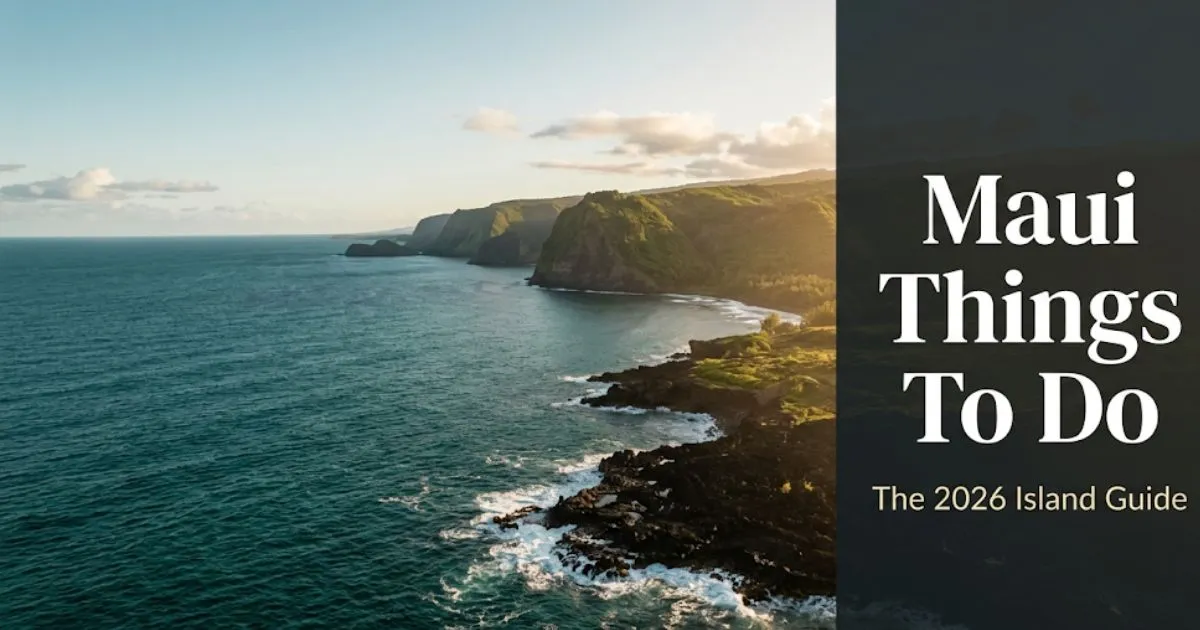
Maui Things To Do: Best 2026 Guide to the Valley Isle

Maui things to do span every interest level and budget, from permit-required summit sunrises to free coastal hikes that rival anything in the Pacific.
The island draws over three million visitors annually, according to the Hawaii Tourism Authority, and the experiences that separate a great Maui trip from a wasted one come down almost entirely to advance planning.
This guide covers every major zone, activity type, and traveler profile. Use it to build a specific, realistic plan before you land.
Maui Things To Do: What Makes the Valley Isle Different
Maui stands apart from other Hawaiian Islands because of the sheer range of geographic environments packed into a single island.
Within one day, you can descend from a 10,023-foot volcanic summit into a bamboo forest. Then finish the afternoon on a crescent beach with crystal-clear water.
That geographic variety is not just scenic. It is the primary reason Maui rewards travelers who plan by zone.
West Maui, South Maui, Upcountry, and East Maui are functionally different destinations with different weather, terrain, and crowd levels.
The island also carries a cultural weight that casual visitors sometimes miss. Hawaiian culture here is living and evolving, not a theme park backdrop.
According to the Maui Visitors and Convention Bureau, the island’s name honors the demigod Maui, celebrated across Polynesian traditions. Respecting that context matters.
Insider Tip:
- Maui’s east side receives significantly more rainfall than the west and south.
- Book your outdoor activities on the dry west and south sides as backup for any rainy morning.
- Couples and solo travelers benefit most from splitting their stay between Kaanapali or Wailea and a night in Hana.
| Maui Zone | Primary Character | Best For | Weather Pattern |
|---|---|---|---|
| West Maui (Kaanapali area) | Resort beaches, sunset views | Couples, families | Dry and sunny most days |
| South Maui (Wailea-Kihei) | Luxury resorts, calm water | Couples, seniors | Driest zone on island |
| Upcountry (Kula) | Farms, cool air, views | Food lovers, nature travelers | Cool, occasionally misty |
| East Maui (Hana) | Rain forest, waterfalls | Adventure travelers, couples | Wetter, lush, remote |
| Central Maui (Kahului-Wailuku) | Local life, Iao Valley | Budget travelers, cultural visitors | Variable |
Best Things To Do in Maui Hawaii for First-Time Visitors
The best things to do in Maui Hawaii for first-time visitors are Haleakala sunrise, the Road to Hana, and a Molokini snorkel tour — but only if booked well in advance.
These three headline experiences define Maui’s reputation for a reason. Each delivers something genuinely difficult to replicate elsewhere in the US.
The mistake first-timers make is treating these as guaranteed walk-up experiences. All three require either advance permits or advance tour bookings.
Haleakala Summit timed-entry permits are required for both sunrise (3:30 to 7:00 a.m. window) and daytime access. Permits typically release 60 days in advance through the Recreation.gov system.
Molokini Crater snorkel tours operate out of Maalaea Harbor and Kihei Boat Ramp. The most reputable operators book out two to three weeks ahead during peak season.
The Road to Hana is a 64.4-mile drive along Hana Highway. First-timers should plan a full day minimum, not a half-day rush.
Beyond the headline three, first-timers should also plan for:
- Watching surfers and windsurfers at Hookipa Beach Park on Maui’s north shore
- Walking the Kapalua Coastal Trail between Kapalua and Napili Bays
- An evening at a traditional Hawaiian luau for cultural context
- Exploring Paia town, Maui’s most characterful small-town commercial strip
Families with young children should prioritize Maui Ocean Center in Maalaea before the outdoor headline activities. The aquarium gives children a grounding in Hawaii’s marine life before they encounter it in the ocean.
Top Things To Do in Maui Worth Planning Around
The top things to do in Maui that are genuinely worth structuring your entire trip around are Haleakala, the Road to Hana, and offshore snorkeling at Molokini.
Everything else on the island can be adjusted, swapped, or replaced. These three cannot easily be replaced by local alternatives.
That said, each of these experiences has an honest caveat worth knowing before you commit.
Haleakala sunrise: The summit at 10,023 feet is cold, typically 30 to 50 degrees Fahrenheit before dawn. Dress in layers you would wear to a cold-weather destination, not a beach.
Road to Hana: The drive itself is beautiful but demanding. Sixty-four miles takes three to four hours one-way due to 620 curves and 59 one-lane bridges.
Molokini snorkel tours: The inner crater of Molokini is genuinely spectacular for visibility, often 100 feet or more. But morning departures at 6:30 to 7:00 a.m. are less crowded and the water is calmer.
Honest overrated assessment: The Old Lahaina Luau has historically been Maui’s most celebrated luau. However, following the 2023 Lahaina fire, its location and format have changed; verify current status before booking.
The Drums of the Pacific Luau at the Hyatt Regency Kaanapali is the most consistently reviewed alternative. It offers a similar cultural experience with reliable production quality.
Insider Tip:
- The first two hours of any Molokini snorkel tour are the most productive.
- Afternoon winds pick up and cloud clarity. Morning departures consistently outperform afternoon.
- Seniors and travelers with mobility concerns should specifically ask operators about boat boarding ease and onboard facilities before booking.
Fun Things To Do in Maui on Any Day of Your Trip
Fun things to do in Maui on any given day include cliff jumping at Little Beach, watching big-wave surfing at Hookipa, and browsing the Maui Swap Meet in Kahului.
These are the unscripted, no-advance-booking experiences that fill the gaps between headline activities. They are also where Maui’s actual local personality shows up.
Little Beach (officially Pu’u Ola’i Beach), reached by scrambling over a lava rock point past Makena Big Beach, hosts a legendary Sunday afternoon drum circle. It is Maui’s most free-spirited, community-centered beach gathering.
The Maui Swap Meet at the University of Hawaii Maui College in Kahului runs every Saturday morning. It is the best place on the island to buy local food products, crafts, and fresh produce at non-tourist prices.
Paia Fish Market on Hana Highway in Paia serves some of the best fish tacos on the island with zero pretension and a line that moves fast.
Hookipa Beach Park, about two miles east of Paia, is the global epicenter of windsurfing. The spectacle of watching professional-level athletes in their natural environment is completely free.
For couples, a sunset sail from Maalaea Harbor or Kaanapali Beach offers a two-hour ocean experience at a moderate cost. Prices typically run $75 to $130 per person as of recent years; verify current rates with operators.
Budget travelers note: The Maui Swap Meet, Hookipa, Little Beach drum circle, Paia town browsing, and the Kapalua Coastal Trail are all free experiences that genuinely deliver.
Families with young children find the interactive exhibits at Maui Ocean Center in Maalaea more reliably engaging than any beach activity. Allow two to three hours.
Key Takeaway: Book Haleakala permits and Molokini snorkel tours before you book your flights. These sell out weeks in advance during peak season and cannot be secured last-minute.
Road To Hana: What To Know Before You Drive It
The Road to Hana is a 64.4-mile scenic drive along Maui’s northeastern coastline that takes a full day minimum to experience properly.
Most visitors who call it disappointing tried to rush it in five hours. It rewards slow travel and specific stops, not speed.
The highway officially begins in Kahului but the scenic portion starts around the town of Paia. The road narrows dramatically after the 15-mile marker.
Key stops along the Road to Hana in order:
- Twin Falls (mile marker 2): First waterfall stop. Easy walk, popular, crowded by 9:00 a.m. Go early or skip for less-visited falls.
- Waikamoi Nature Trail (mile marker 9): Short bamboo forest loop. Quieter than Twin Falls. Excellent for families.
- Keanae Peninsula lookout (mile marker 17): Lava rock peninsula with dramatic ocean views. The Keanae YMCA camp sells fresh banana bread; worth the stop.
- Wailua Falls overlook (mile marker 45): Roadside double-waterfall viewpoint. No hiking required.
- Wai’anapanapa State Park (mile marker 32): Black sand beach. Advance reservations required through Hawaii DLNR. This is not optional.
- Hana town: Small, quiet, genuinely remote. Not a tourist town. One gas station. Stock up on fuel in Paia.
- Ohe’o Gulch (Seven Sacred Pools) in Haleakala National Park: Requires a separate Haleakala National Park entry fee. Pipiwai Trail to Waimoku Falls is one of Maui’s best hikes.
Wai’anapanapa State Park requires advance day-use reservations through the Hawaii DLNR online system. Peak season reservation slots fill weeks ahead. Verify availability before your trip.
Solo travelers navigating the Road to Hana should download offline maps before leaving Paia. Cell service is unreliable from mile marker 15 onward.
Seniors should know the road involves narrow bridges, tight turns, and parking on uneven shoulder surfaces. The drive itself is low-impact, but accessing waterfall areas requires walking on uneven terrain.
Haleakala National Park Sunrise: Permits, Prep, and What to Expect
Haleakala National Park sunrise requires an advance timed-entry permit, available through Recreation.gov, and typically sells out 60 days from the visit date.
No permit means no access to the summit area during the 3:30 to 7:00 a.m. sunrise window. The gate is staffed and enforced.
The summit sits at 10,023 feet elevation. Temperatures before dawn are typically 30 to 50 degrees Fahrenheit, wind included.
Bring a hat, gloves, and a jacket you would wear in cold-weather conditions. The contrast with Maui’s beach temperatures is significant enough to catch underprepared visitors off guard.
The sunrise itself, when the cloud layer sits below the summit, is one of the most visually extraordinary natural experiences in the United States.
Cloud cover is common and not guaranteed to cooperate. The National Park Service website provides sunrise time data by date. Check cloud forecast apps like Windy.com the evening before.
After sunrise, stay for the daytime summit experience. The crater landscape, short crater rim trails, and silver sword plant fields are extraordinary and far less crowded after 9:00 a.m.
According to the National Park Service, Haleakala is one of the most visited national parks in Hawaii, and the permit system was introduced specifically to manage summit overcrowding during sunrise hours.
Daytime permits are also required as of current NPS policy. Verify the current permit requirements at Recreation.gov before your trip, as the system has evolved.
Families with children should reconsider the pre-dawn departure for young children under six. The cold, the darkness, and the 1.5 to 2-hour drive from most accommodations at 2:30 a.m. is genuinely difficult with small children. A daytime summit visit delivers spectacular views without the pre-dawn logistics.
Insider Tip:
- The Haleakala summit store sells coffee on cold mornings. It is not gourmet, but it matters at 3:00 a.m. at 10,000 feet.
- Park at the summit parking lot, not the visitor center below. The hike from the lower lot to the summit in the dark is unnecessary.
- Altitude symptoms are possible above 10,000 feet, including headache and light-headedness. Hydrate well the day before.
Best Beaches in Maui by Zone and Traveler Type
Maui’s best beaches are not all in the same zone, and choosing the right beach for your specific needs dramatically changes the experience.
Kaanapali Beach and Wailea Beach offer calm, protected swimming. Big Beach at Makena delivers dramatic beauty with a strong shore break that requires genuine ocean awareness.
| Beach | Zone | Best For | Water Conditions | Facilities |
|---|---|---|---|---|
| Kaanapali Beach | West Maui | Families, couples | Calm, clear | Full (restrooms, parking, dining) |
| Napili Bay | West Maui | Snorkeling, families | Calm, shallow | Limited (no lifeguard) |
| Honolua Bay | Northwest | Advanced snorkeling, surfing | Variable | Minimal |
| Wailea Beach | South Maui | Couples, luxury travelers | Calm, clear | Full resort facilities nearby |
| Big Beach (Makena) | South Maui | Sunbathing, experienced swimmers | Strong shore break | Restrooms, parking |
| Little Beach (Pu’u Ola’i) | South Maui | Free spirits, Sunday drum circle | Moderate | None |
| Hamoa Beach | East Maui | Couples, scenic beauty | Moderate surf | Restrooms, limited |
| Hookipa Beach Park | North Shore | Watching windsurfers | Strong, not for swimming | Restrooms, parking |
| Baldwin Beach | North Shore | Local beach, bodyboarding | Moderate | Restrooms, parking |
Big Beach (Makena Beach State Park) is Maui’s most photographed beach and its most dangerous for unprepared swimmers.
The shore break is powerful and has caused serious injuries. It is best for sunbathing and watching, not casual swimming for families with small children.
Napili Bay is the island’s most underrated family beach. The shallow, calm crescent bay is naturally protected and excellent for beginner snorkeling. No resort crowds.
Seniors and accessibility travelers will find Wailea Beach the most accessible. The path from the Wailea Beach Walk is paved and level.
Key Takeaway: Napili Bay outperforms Kaanapali Beach for families and snorkelers because it is calmer, shallower, and significantly less crowded despite being minutes away.
Snorkeling in Maui: Where To Go and How To Book It
The best snorkeling in Maui is at Molokini Crater, a partially submerged volcanic caldera located 2.5 miles offshore, followed by Honolua Bay on the northwest coast.
Molokini’s inner wall delivers visibility commonly cited at 100 feet or more, with marine life density that surpasses most in-shore Maui locations.
Tour operators depart from Maalaea Harbor and Kihei Boat Ramp early morning, typically at 6:30 to 7:30 a.m. Afternoon wind makes conditions progressively less ideal.
Expect to pay approximately $100 to $150 per adult for a Molokini tour as of recent years; verify current pricing with operators before booking.
Honolua Bay, north of Kapalua, is the best free snorkeling location on the island for experienced swimmers. The bay is a Marine Life Conservation District.
Access requires a short walk through private agricultural land on a well-worn path. There are no facilities. The bay closes to snorkelers during strong northwest swell.
For budget snorkelers, Napili Bay and the rocky edges of Kaanapali Beach near the Black Rock formation (Pu’u Keka’a) offer accessible snorkeling without tour costs.
Snorkel gear rentals are widely available in Kihei, Paia, and Kaanapali for approximately $10 to $25 per day as of recent years.
Solo travelers should only snorkel at Molokini with a guided tour, not from shore. The offshore location and boat traffic make independent access impractical and potentially dangerous.
Families with children under eight will have the best in-water snorkeling experience at Napili Bay or the calmer south end of Kaanapali. Molokini boat departures at 6:30 a.m. with young children are logistically demanding.
Whale Watching in Maui: Season, Operators, and Honest Advice
Whale watching in Maui is best from mid-December through mid-April, when North Pacific humpback whales migrate to Hawaiian waters to breed and calve.
The Hawaiian Islands Humpback Whale National Marine Sanctuary encompasses waters surrounding Maui, Molokai, and Lanai, making the Maui Channel one of the most productive humpback viewing zones in the world.
According to NOAA, the humpback whale population in Hawaiian waters has recovered substantially since federal protections began in 1973. Winter season sightings are highly reliable.
Tour operators departing from Maalaea Harbor and Lahaina area (verify current harbor access given ongoing West Maui reconstruction) offer 2 to 2.5-hour whale watching cruises.
Pacific Whale Foundation is one of the most research-oriented operators on the island. Their naturalist-led tours provide more ecological context than standard tour operators. Prices typically run $40 to $60 per adult; verify current rates.
From shore, the McGregor Point Scenic Lookout on the Honoapiilani Highway (between Maalaea and Lahaina) is Maui’s best free whale watching location during peak season. Humpbacks breach and surface within easy binocular range from January through March.
Honest assessment: You do not need a tour to see whales during peak season. Shore-based viewing from McGregor Point during January and February is genuinely productive. Save the tour budget for Molokini snorkeling.
Couples who do book a sunset whale watch during peak season (January to March) get both whales and a sunset on the water. This combination is hard to beat for a romantic evening.
Families with young children should choose a shorter 1.5-hour tour option if available. Two-plus hours on a boat is a long time for children under five.
Upcountry Maui: The Part of the Island Most Visitors Skip
Upcountry Maui, the cool, green agricultural zone on the slopes of Haleakala between 2,000 and 4,000 feet elevation, is the single most underused part of the island by first-time visitors.
The Kula district here produces the majority of Maui’s onions, lavender, and specialty produce. It also offers panoramic views of the entire central valley and coastline.
Ali’i Kula Lavender Farm on Waipoli Road in Kula grows over 55 varieties of lavender across a hillside property with sweeping island views. Tours are available and walk-ins are often welcome, though verify current access before visiting.
Surfing Goat Dairy in Kula offers farm tours with goat cheese tastings. The casual, working-farm atmosphere is a genuine contrast to Maui’s beach-resort dominant personality.
Kula Botanical Garden is a low-key, walkable property showcasing native and non-native species in a cool-air environment that feels remarkably different from the coast.
The town of Makawao is Upcountry’s most characterful commercial strip. It straddles cowboy culture and art galleries in a combination unique to Maui. The Makawao Farmers Market and local bakeries draw a mostly local crowd.
Budget travelers note: The Upcountry is one of Maui’s most cost-effective areas to spend a half-day. Most farm visits charge modest entry fees. The views are free.
Couples driving up from Kihei or Wailea for a Upcountry afternoon get a genuinely different island perspective that breaks the beach-resort routine productively.
Practical note: The drive from Kaanapali to Kula takes approximately 45 to 60 minutes. From Wailea, allow 30 to 40 minutes. Roads are well-paved but winding.
Insider Tip:
- The Upcountry temperature runs 10 to 20 degrees cooler than the coast. Bring a light layer.
- Sunrise from Upcountry, facing east toward Hana, rivals the Haleakala summit experience without the permit requirement and 3:00 a.m. departure.
- This area rewards solo travelers most, given the self-guided, exploratory pace it suits best.
Key Takeaway: Upcountry Maui gives you a genuine island experience that beach-zone visitors completely miss, and it costs almost nothing to explore for a half-day.
West Maui and South Maui: Understanding Maui’s Two Main Visitor Zones
West Maui and South Maui are the island’s two primary visitor zones, and choosing between them shapes everything from your accommodation style to your daily drive times.
West Maui centers on Kaanapali Beach and the resort strip extending north toward Kapalua. It historically also included the Lahaina commercial district, which was severely damaged in the August 2023 wildfire.
Regarding Lahaina in 2026: The historic Lahaina district continues recovery and rebuilding as of this writing. Some businesses have relocated. The fire site itself is a place of mourning for the community.
Visitors should approach the former Lahaina town center with deep respect. The Hawaii Tourism Authority and community organizations have requested that visitors treat the area with the same sensitivity they would give any site of tragedy.
West Maui’s surviving assets include Kaanapali Beach, the Kapalua Coastal Trail, resort dining, and the remaining operators now working from alternative departure points.
South Maui covers Kihei and Wailea-Makena. Kihei is more casual and budget-accessible. Wailea is Maui’s luxury resort hub with prices to match.
South Maui sits in Maui’s driest weather zone and generally offers calmer ocean conditions year-round. It is also closer to Maalaea Harbor, the main departure point for Molokini tours.
Couples and luxury travelers consistently favor Wailea for the combination of calm beaches, high-end dining, and the Wailea Beach Walk, a 1.5-mile paved coastal path connecting major resort beaches.
Budget travelers get better accommodation value in Kihei while retaining access to the same South Maui beaches. The Maui Brewing Company taproom in Kihei is a genuinely good local hangout.
Things To Do in Maui for Couples
The best things to do in Maui for couples combine dramatic natural scenery with the island’s more intimate, less-crowded experiences, particularly in South Maui and Upcountry.
Maui has earned a legitimate reputation as a honeymoon and anniversary destination. The combination of natural beauty, warm ocean, and slow pace works in a couple’s favor.
Top couple-specific experiences:
- Sunrise at Haleakala: despite the 3:00 a.m. departure, the shared experience is genuinely profound
- Sunset sail from Maalaea or Kaanapali
- Dinner at Mama’s Fish House in Paia: Maui’s most celebrated restaurant, set directly on the ocean; advance reservations required weeks ahead
- Evening on Hamoa Beach near Hana: one of the most beautiful and quiet beaches on the island
- A night in Hana itself, where the remoteness and pace create genuine isolation from the resort world
- The Wailea Beach Walk at golden hour for a low-effort, high-reward oceanside stroll
Mama’s Fish House consistently books out two to four weeks ahead during peak season. Its menu centers on locally caught fish prepared with Pacific Rim influences. This is not cheap dining; budget $100 to $150 per person including wine as a realistic baseline.
The honest caveat for couples: Maui’s most romantic experiences require advance planning. The spontaneous “let’s do something nice tonight” approach does not work for the island’s top dining and experience options.
Seniors and couples with mobility considerations will find Wailea Beach Walk and South Maui’s resort zone the most accessible combination of beauty and comfortable logistics.
Things To Do in Maui With Kids
The best things to do in Maui with kids are Maui Ocean Center, snorkeling at Napili Bay, and the easier waterfall stops on the Road to Hana.
Maui is genuinely family-friendly, but several of its headline experiences work better for older children than younger ones.
Maui Ocean Center in Maalaea is the strongest all-ages activity on the island. The aquarium features a walk-through shark and ray tunnel, Hawaiian marine life exhibits, and a humpback whale exhibit. Allow two to three hours.
Entry fees run approximately $30 to $40 per adult and $20 to $25 per child as of recent years; verify current pricing with the venue before visiting.
Napili Bay for snorkeling works well for children as young as five with proper gear fitting and basic swimming ability. The bay’s calm, clear, shallow water is forgiving for beginners.
Road to Hana considerations for families: Waikamoi Nature Trail and the Keanae Peninsula banana bread stop are family-friendly. Wai’anapanapa Black Sand Beach is visually dramatic and manageable with kids. The full Road to Hana, including Ohe’o Gulch, is a very long day with children under six.
Piiholo Ranch Zipline in Upcountry offers family-friendly zipline tours with minimum age and weight requirements. Verify current requirements directly with the operator before booking.
Families should realistically expect: Haleakala summit sunrise with children under six is genuinely difficult due to the 2:00 to 3:00 a.m. departure and extreme cold. A daytime summit visit is more practical for young families.
Practical logistics for families: Car seats are available through rental car companies but book in advance. The Maui Bus system does not service most family activity destinations efficiently.
Key Takeaway: Maui Ocean Center in Maalaea is the single best rainy-day or half-day option for families on the island and consistently outperforms beach activities for young children.
Free and Budget Things To Do in Maui
Maui is a premium-priced destination, but a substantial portion of its best experiences cost nothing or very little.
Free does not mean second-tier here. Hookipa Beach Park, McGregor Point whale watching, and the Kapalua Coastal Trail are among the island’s most memorable experiences with zero entry cost.
Free things to do in Maui:
- Watch world-class windsurfers and kitesurfers at Hookipa Beach Park on the north shore (free, any day)
- Walk the Kapalua Coastal Trail between Kapalua Bay and D.T. Fleming Beach (1.76 miles, free, ocean views throughout)
- Shore-based whale watching at McGregor Point (free, binoculars recommended, peak season January to March)
- Attend the Little Beach Sunday drum circle at Makena (free, bring water)
- Browse the Maui Swap Meet in Kahului every Saturday morning (small entry fee, typically under $5)
- Swim at any Maui county beach (all beaches are publicly accessible; parking lots are the variable)
- Walk Paia town on the north shore for galleries, food, and genuine local street life
Low-cost experiences worth the spend:
- Snorkel gear rental for a week runs approximately $40 to $60 from local shops in Kihei or Paia
- Paia Fish Market fish tacos are among the best-value meals on the island, typically under $20 per person
- Maui Brewing Company taproom in Kihei offers local craft beer at reasonable prices with a casual local vibe
- Waihee Ridge Trail in North Maui is free to hike and delivers sweeping coastal views without the Haleakala permit system
Budget accommodation reality: Maui has limited hostel and budget lodging options. Vacation rentals in Kihei typically offer better value per square foot than Wailea hotels. Verify current availability and pricing on platforms like Vrbo and Airbnb well in advance.
Budget travelers should know: The cost of Maui is largely driven by accommodation and car rental. Food and activities can be managed affordably if you cook some meals and use free beach and trail experiences strategically.
Getting Around Maui and Practical Trip Tips
Getting around Maui requires a rental car for virtually every traveler. The Maui Bus public transit system connects Kahului, Kihei, and Kaanapali on limited schedules, but it does not reach Hana, Upcountry, or Haleakala.
Rental cars at Kahului Airport (OGG) are in high demand year-round. Book your rental car at the same time you book flights. Maui rental car shortages during peak season are a documented, recurring problem.
Practical logistics every visitor needs to know:
- Download offline maps before leaving your accommodation. Cell service is unreliable on the Road to Hana, Haleakala summit area, and parts of Upcountry.
- Fill your gas tank in Kahului or Paia before the Road to Hana. There is one gas station in Hana town, and pricing is significantly higher than the rest of the island.
- Haleakala Summit Road is a winding, 38-mile ascent. Budget 1.5 hours of driving from Kahului to the summit. Allow longer from Kaanapali or Wailea.
- Parking at popular trailheads fills by 7:00 a.m. during peak season. The Pipiwai Trail at Ohe’o Gulch, Twin Falls, and Wai’anapanapa all have limited lots.
- The Honoapiilani Highway (Highway 30) between Kahului and Kaanapali is the island’s most congested road. Drive times double during morning and evening rush hours.
- Verify Lahaina area road access before planning West Maui activities. Road conditions and access points have changed during reconstruction; confirm current status with your accommodation or the Maui Visitors and Convention Bureau.
Seniors and accessibility travelers should note that accessible van rentals are available from some operators at OGG; book specifically in advance and confirm vehicle availability.
Safety reminders:
- Never leave valuables visible in parked rental cars. Car break-ins occur at popular trailheads.
- Maui’s roads use left-turn yields and single-lane bridge protocols unfamiliar to some mainland drivers.
Safety and Practical Warnings for Maui
Maui’s ocean conditions are the primary safety concern for visitors, and the island’s physical demands across several headline activities require specific preparation.
Key safety and practical facts every visitor should know:
- Big Beach (Makena) shore break causes serious injuries annually. Do not enter the water at Big Beach unless you are an experienced ocean swimmer who understands shore break dynamics.
- Rip currents exist at multiple Maui beach locations. Check the Hawaii Beach Safety website (operated by the County of Maui Ocean Safety division) for current conditions before swimming.
- Haleakala summit altitude is 10,023 feet. Altitude symptoms including headache, nausea, and light-headedness are possible. People with heart or respiratory conditions should consult their physician before visiting.
- Road to Hana driving requires full attention. The road has 59 one-lane bridges with alternating right-of-way. Do not attempt to drive it while exhausted, after alcohol, or after dark if unfamiliar with the route.
- Cell service is unreliable on the Road to Hana. Download offline maps. Emergency services response times in remote East Maui are significantly slower than on the west side.
- Sun intensity in Hawaii is stronger than most mainland destinations. Apply reef-safe sunscreen (required under Hawaii law) at 30-minute intervals during outdoor activities. Reef-damaging oxybenzone sunscreens are legally prohibited in Hawaii.
- Jellyfish appear in cycles approximately 9 to 10 days after a full moon on south-facing Maui beaches. The Ocean Safety division posts advisory signs at affected beaches.
- Lahaina fire site: do not photograph, fly drones over, or tour the fire-damaged residential areas. The community considers this deeply disrespectful. Focus visitor activity on the businesses and areas that have reopened in West Maui.
For ocean emergencies, contact the Maui Ocean Safety division or call 911. The nearest Level II trauma center is Maui Memorial Medical Center in Kahului.
Maui Itinerary: Planning 3 to 5 Days on the Island
A 3-day Maui itinerary should cover Haleakala, the Road to Hana, and South Maui beaches. Five days allows for Upcountry, snorkeling, and a slower pace.
Three days is the genuine minimum for Maui. Anything shorter leaves the headline experiences either rushed or missed entirely.
3-Day Maui Itinerary:
Day 1: Haleakala and South Maui
- Depart accommodation by 3:00 a.m. for Haleakala Summit (permit required). Watch sunrise.
- Return to mid-elevation for breakfast in Kula at a local cafe.
- Drive to South Maui. Spend the afternoon at Wailea Beach or Big Beach (swimming conditions permitting).
- Dinner at Monkeypod Kitchen in Wailea for solid local-sourced food at a moderate price point.
Day 2: Road to Hana
- Depart by 7:00 a.m. from your accommodation to beat traffic at Twin Falls.
- Stop at Waikamoi Nature Trail, Keanae banana bread, and Wailua Falls.
- Stop at Wai’anapanapa Black Sand Beach (reservation required).
- Arrive Hana town by early afternoon. Walk around. Eat at a local lunch spot.
- Continue to Ohe’o Gulch and hike the Pipiwai Trail to Waimoku Falls (2 miles each way).
- Return via the same route or continue around the south end of the island (longer but scenic).
Day 3: North Shore and Snorkeling
- Morning snorkel tour from Maalaea Harbor to Molokini Crater (depart 6:30 to 7:00 a.m.).
- Post-tour lunch at Paia Fish Market.
- Walk Paia town. Watch windsurfers at Hookipa Beach Park.
- Sunset at Napili Bay or the Kapalua Coastal Trail.
5-Day Extension:
Day 4: Upcountry Maui
- Drive to Makawao for morning coffee and the farmers market.
- Visit Ali’i Kula Lavender Farm and Surfing Goat Dairy in Kula.
- Walk the Waihee Ridge Trail in the late afternoon for panoramic views.
- Return to coast for dinner.
Day 5: West Maui Exploration
- Walk the Kapalua Coastal Trail in the morning.
- Snorkel Honolua Bay (conditions permitting; check surf forecast).
- Late afternoon visit to the West Maui rebuilt restaurant and commercial area.
- Sunset sail or whale watching cruise (if in season) from the Kaanapali area.
Families with children on a 5-day trip should replace Day 3’s Molokini morning tour with Maui Ocean Center, then relocate the snorkeling to Napili Bay in the afternoon.
Couples on a 5-day trip should prioritize a reservation at Mama’s Fish House for Day 4 or 5 dinner. Book immediately upon confirming your travel dates.
Key Takeaway: On a 3-day Maui trip, commit Day 2 entirely to the Road to Hana. Splitting it with other activities ruins both the drive and whatever you paired it with.
Frequently Asked Questions About Maui Things To Do
What are the best things to do in Maui for first-time visitors?
The best things to do in Maui for first-time visitors are watching sunrise at Haleakala National Park, driving the Road to Hana, and snorkeling at Molokini Crater.
All three require advance booking, either a timed-entry permit at Recreation.gov for Haleakala or an operator reservation for Molokini tours.
Wai’anapanapa State Park on the Road to Hana also requires advance reservations through the Hawaii DLNR system; book this before your trip.
Do you need a permit to see the Haleakala sunrise?
Yes, a timed-entry reservation is required to access the Haleakala summit during the sunrise window, typically 3:30 to 7:00 a.m.
Permits are available through Recreation.gov and typically release 60 days in advance of the visit date.
Verify current permit requirements with the National Park Service before your trip, as the system details are subject to change.
What is the best time of year to visit Maui?
The best times to visit Maui are April through early June and September through November.
These shoulder seasons offer warm weather, lower accommodation rates than peak winter and summer periods, and manageable crowd levels.
December through March is whale watching season and winter break, which means peak crowds and peak hotel pricing; June through August brings summer family travel and high rates.
How do you get around Maui without a car?
Getting around Maui without a rental car is genuinely difficult for most visitors, as the Maui Bus system does not reach Hana, Haleakala, or Upcountry.
The Maui Bus connects Kahului, Kihei, Kaanapali, and Lahaina on limited schedules and is viable for travelers staying in central Kaanapali or Kihei who plan primarily beach-based days.
For the Road to Hana and Haleakala, organized tour operators provide transportation if a rental car is not an option; verify current tour availability and pricing before your trip.
Is the Road to Hana worth it?
The Road to Hana is worth it for travelers who plan a full day, start early, and stop at specific named sites rather than trying to rush the full route.
It underdelivers for travelers who allocate a half-day, expect quick stops, or are driving with young children who will struggle with the 3 to 4 hour one-way drive.
The Pipiwai Trail at Ohe’o Gulch, Wai’anapanapa Black Sand Beach, and the Keanae Peninsula banana bread stop are the three experiences most worth the drive on their own.
What happened to Lahaina and can visitors go there now?
The historic Lahaina town center was severely damaged by wildfire in August 2023, resulting in significant loss of life and the destruction of a large part of the historic district.
As of 2026, parts of West Maui have begun rebuilding and some businesses have reopened in alternative locations; verify current access and business status with the Maui Visitors and Convention Bureau before planning West Maui activities.
Visitors should approach the former Lahaina town area with respect, avoid photographing or touring fire-damaged residential areas, and direct spending toward the businesses and communities that are actively rebuilding.
Plan Your Maui Trip With Realistic Expectations
Maui is one of the most rewarding destinations in the United States for outdoor-focused travelers. It is also one of the most logistically demanding if you show up unprepared.
Book Haleakala permits and Molokini tour slots before you finalize anything else. These are the two experiences most likely to disappoint if left to chance.
Travel conditions, permit requirements, operator availability, Lahaina area access, and pricing across all categories change frequently. Verify all key logistics directly with official sources, including the National Park Service, the Hawaii DLNR, and the Maui Visitors and Convention Bureau, before your departure date.
The travelers who leave Maui most satisfied are the ones who planned the permit-required headline experiences early, left room for the free ones, and respected the island’s natural and cultural weight. That combination is entirely within reach.