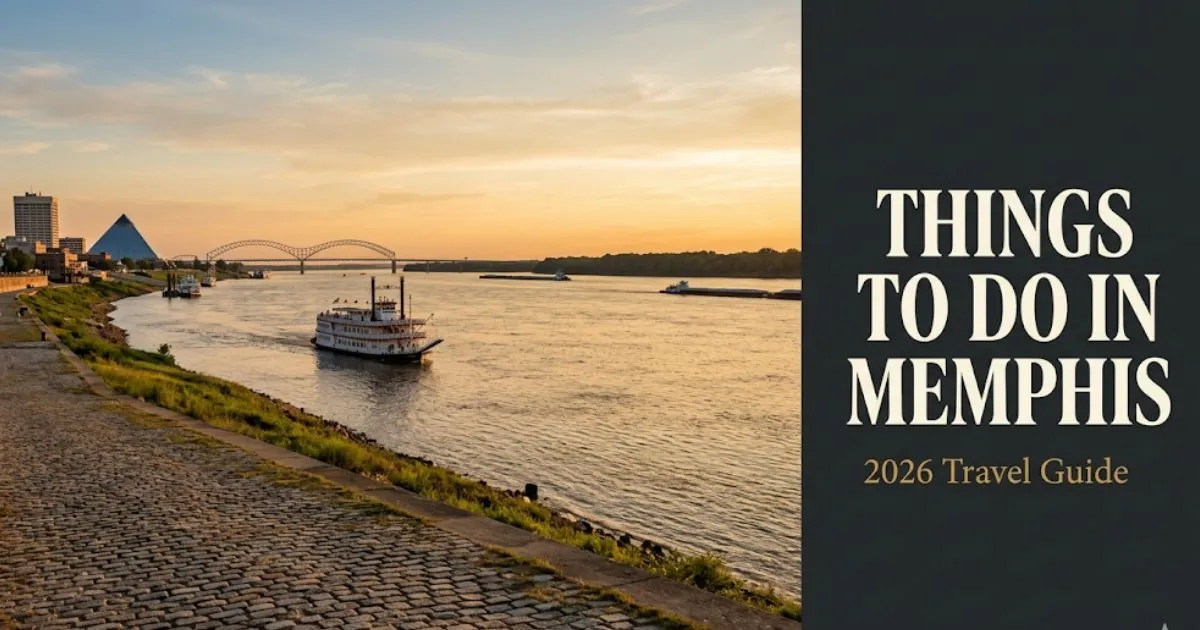
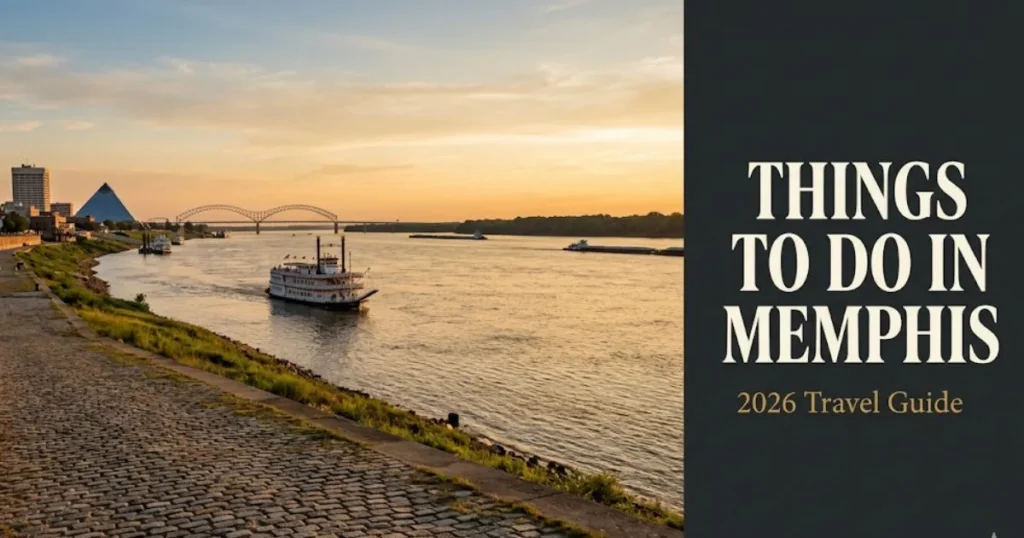
Best Things To Do in Memphis, TN: 2026 Travel Guide

Memphis, Tennessee, is one of the most culturally loaded cities in America. The things to do in Memphis range from the birthplace of rock and roll to the epicenter of the American Civil Rights Movement.
Memphis Tourism counts the city among the most visited in the mid-South. More than 11 million visitors arrive annually, drawn by Graceland, Beale Street, and some of the most influential music history in the world.
This guide covers the best activities, neighborhoods, food, music, and logistics for planning a Memphis trip in 2026. It distinguishes what is genuinely worth your time from what is primarily built for tourist foot traffic.
Things To Do in Memphis
Memphis delivers more concentrated cultural history per city block than almost any comparably sized American city.
The National Civil Rights Museum, Sun Studio, and Graceland sit within 20 minutes of each other. No other city in the country places the birthplace of rock and roll, the assassination site of Dr. Martin Luther King Jr., and Elvis Presley’s home within one short drive.
This is not a city built around manufactured attractions. Its draw is genuine and specific.
Memphis also has a neighborhood bar and restaurant scene that most visitors miss entirely. The South Main Arts District and Cooper-Young neighborhood offer independent restaurants, galleries, and live music venues with almost no tourist foot traffic.
Budget travelers can spend a full day in Memphis without paying a single admission fee. Big River Crossing, Tom Lee Park, Beale Street walking access, and the W.C. Handy statue and stage area are all free.
| Activity | Best For | Cost Range | Time to Allow | Insider Note |
|---|---|---|---|---|
| National Civil Rights Museum | Adults, history travelers | ~$15-$20/adult | 2-3 hours | Allow emotional processing time; it is intense |
| Graceland Mansion Tour | Elvis fans, couples | ~$45-$85+/adult | 2-4 hours | Book online in advance; walk-up lines are long |
| Sun Studio Tour | Music fans, solo travelers | ~$15/adult | 1 hour | Last tour of the day often least crowded |
| Beale Street Walk | All profiles | Free to walk | 2-3 hours | Weekday evenings are more local than weekends |
| Shelby Farms Park | Families, outdoor travelers | Free | Half day | 4,500 acres; often overlooked by visitors |
| Stax Museum | Music fans, culture travelers | ~$13/adult | 1.5-2 hours | Rivals Sun Studio for music depth; far less crowded |
| Big River Crossing | Families, couples | Free | 45-90 minutes | Longest pedestrian bridge over the Mississippi River |
Things To Do in Memphis Tennessee: The City’s True Identity
Memphis is the city where American music was either born or fundamentally transformed. Blues, rock and roll, soul, and gospel all have direct, documented roots here.
It is also a city where the American Civil Rights Movement reached one of its most devastating moments. The Lorraine Motel, where Dr. Martin Luther King Jr. was assassinated in 1968, now forms the core of the National Civil Rights Museum.
This combination of music heritage and Civil Rights history makes Memphis unlike any other US city. Nashville has music; Memphis has music history that changed what music became.
The city is also honest about its contradictions. Poverty is visible alongside its tourist infrastructure. This is not a sanitized destination.
First-time visitors often underestimate how spread out the key sites are. Graceland is in Whitehaven, approximately 10 miles from downtown. Plan driving time between major sites.
According to Memphis Tourism, the city’s cultural tourism sector has grown consistently. Its investment in the South Main Arts District and Crosstown Concourse reflects a genuine shift toward neighborhood-level cultural identity.
Insider Tip:
- The Stax Museum of American Soul Music in Soulsville is where serious music fans should spend their afternoon, not just Beale Street
- The Pink Palace Museum covers Memphis natural and social history in a way that gives first-timers genuine context for the city
- Solo travelers find Memphis easier to navigate than it appears; the compact downtown core is very walkable
What Memphis Is Known For
Memphis is internationally known for five specific things: blues music, Elvis Presley, Memphis-style barbecue, the Civil Rights Movement, and the Mississippi River.
Each of these is not a generic category. Memphis blues is a specific sound with W.C. Handy as its named architect, performed at specific clubs with decades of history. Memphis barbecue is dry-rub ribs cooked slowly over charcoal, a tradition distinct from Kansas City, Texas, or Carolina styles.
Sun Studio at 709 Union Avenue is where Elvis Presley, Johnny Cash, Jerry Lee Lewis, and Roy Orbison all recorded. The room itself is preserved. You can stand on the exact floor where rock and roll was invented.
The Mississippi River is not just scenery here. The Big River Crossing pedestrian bridge and Tom Lee Park make the riverfront genuinely accessible. The Mud Island River Park has a scale model of the entire Mississippi River you can walk along.
Families should note that Memphis’s headline attractions range from intellectually intense (the Civil Rights Museum requires adult guidance for children under 12) to straightforwardly fun (Shelby Farms Park and the Mississippi River bridge).
Budget travelers will find that the barbecue culture itself is a free education. Driving through Soulsville to find Cozy Corner Restaurant or eating at the counter at Central BBQ costs less than $20 and delivers more authentic Memphis culture than many paid attractions.
Insider Tip:
- The W.C. Handy House Museum on Beale Street is small, inexpensive, and deeply specific. It is one of the most undervisited sites in Memphis
- Memphis’s music identity is overwhelmingly African American cultural heritage. Engage with that history directly at the Stax Museum and through Soulsville neighborhood context
Best Neighborhoods in Memphis To Visit
Downtown Memphis is the tourist core. Beale Street, the National Civil Rights Museum, the Peabody Hotel, and the Mississippi River waterfront are all within walking distance.
South Main Arts District sits just south of downtown. It has independent restaurants, vintage shops, art galleries, and the National Ornamental Metal Museum overlooking the river. Locals consider it the city’s most interesting neighborhood for walking.
Cooper-Young is a residential neighborhood in Midtown where Memphis’s independent dining and bar scene genuinely lives. The intersection of Cooper Street and Young Avenue anchors blocks of bookshops, coffee houses, vintage stores, and restaurants that have no tourist orientation whatsoever.
Overton Square, also in Midtown, has a more polished restaurant and theater cluster. Playhouse on the Square is Tennessee’s largest professional theater company. Several of Memphis’s better mid-range restaurants are here.
Crosstown Concourse is a former Sears distribution warehouse converted into a vertical urban village. It holds art galleries, a brewery, restaurants, a health clinic, and a YMCA. For design and architecture travelers, it is a genuinely remarkable adaptive reuse project.
Whitehaven is a primarily residential neighborhood that happens to contain Graceland. It has little else of interest to tourists, but the drive down Elvis Presley Boulevard gives honest context about the city’s residential character.
Couples looking for the most neighborhood-specific Memphis experience should base an evening in Cooper-Young. The Beauty Shop Restaurant occupies Priscilla Presley’s former salon. The setting is unlike anything else in the city.
Key Takeaway: Memphis’s real local character lives in Cooper-Young and South Main, not on Beale Street. Spend at least one evening in these neighborhoods.
Things To Do in Downtown Memphis
Downtown Memphis contains the highest concentration of major attractions within walking distance.
Beale Street runs east from the river and constitutes Memphis’s official entertainment district. The W.C. Handy Park in the middle of the street has a bandshell where free performances happen regularly. Walking Beale Street costs nothing. The clubs along it vary from deeply authentic to openly tourist-oriented.
The Peabody Memphis hotel at 149 Union Avenue runs a twice-daily duck march. At 11 AM, five mallard ducks ride the elevator from their rooftop penthouse to the lobby fountain. They march back at 5 PM. The tradition dates to the 1930s. Observing it costs nothing. Crowds form 30 minutes before both events.
Mud Island River Park connects to downtown via a monorail or pedestrian bridge. Its centerpiece is a 954-foot-long scale model of the lower Mississippi River you can walk along barefoot in summer. Admission is required for the full park but the amphitheater hosts summer concerts.
Tom Lee Park along the riverfront is a large open green space. It hosts the Memphis in May International Festival grounds in spring. Throughout the year it is an excellent free riverside walk.
Seniors and accessibility travelers should note that downtown Memphis terrain is relatively flat. Beale Street itself has some uneven pavement from older brick sections; wheelchair navigation is possible but requires attention to surface quality.
Insider Tip:
- The FedEx Forum arena is visible from downtown and hosts NBA Memphis Grizzlies games from October through April. Single-game tickets can be purchased last-minute at significant discounts compared to advance prices
- Parking in downtown Memphis is dramatically more affordable than comparable urban areas. Multiple garages near Beale Street typically run $5 to $15 per day; verify current rates before visiting
Memphis Music Scene and Beale Street
The Memphis music scene spans five decades of recorded history and three distinct genres: blues, soul, and rock and roll.
Beale Street is the geographic center of Memphis music tourism. It is real in historical terms: W.C. Handy codified the blues here in the early 20th century. It is also heavily commercialized in its current form. Most clubs on the main Beale Street strip are bars with cover bands and tourist pricing.
The more genuine Memphis music experience happens at specific venues. Wild Bill’s Juke Joint in Midtown operates on weekends and is one of the last authentic juke joints in the country. It has no signage designed for tourists. The music starts late, runs loud, and attracts local regulars.
Rum Boogie Cafe on Beale Street is one exception to the tourist-orientation criticism. Its walls carry signed guitars from artists who have played there over decades. It books live blues consistently.
The Memphis Rock ‘n’ Soul Museum, a Smithsonian affiliate on the southern end of Beale Street, is the single best overview of how Memphis created modern American music. The audio tour runs 60 to 90 minutes and is far more substantive than the museum’s modest exterior suggests.
Solo music fans should target the museum first, then the Stax Museum in the afternoon. The two together constitute the most complete Memphis music education available in one day.
According to the Smithsonian Institution, the Memphis Rock ‘n’ Soul Museum contains more than 30 original instruments and nearly 100 videos tracing the city’s musical lineage. Admission runs approximately $13 to $15 per adult; verify before visiting.
Insider Tip:
- The Handy Park stage on Beale Street hosts free performances on weekend evenings. Check Memphis Tourism’s event calendar before your visit for scheduled performers
- Overton Square has a small live music venue circuit that locals use regularly. Bar DKDC books eclectic acts on weekend nights with minimal cover charges
National Civil Rights Museum Memphis
The National Civil Rights Museum at the Lorraine Motel is among the most important historic sites in the United States.
Dr. Martin Luther King Jr. was assassinated on the balcony of the Lorraine Motel on April 4, 1968. The museum now occupies both the original motel building and the building across Mulberry Street from which the shot was fired. It tells the full story of the American Civil Rights Movement from slavery through the contemporary era.
Allow a minimum of two hours. Most visitors report needing closer to three. The experience is emotionally demanding by design.
Admission for adults typically runs approximately $15 to $20; verify current rates directly with the museum before visiting. The museum is closed on Tuesdays. Hours vary seasonally, so confirm before arrival.
Families with children should visit with children who are at minimum 10 to 12 years old. The content includes historical photographs and documentation of violence that require adult framing. The museum does an excellent job of presenting material accessibly but it is not appropriate as passive background experience.
Couples and solo travelers consistently rate this museum as one of the most significant experiences available anywhere in Tennessee. The historical weight of standing in the preserved Lorraine Motel courtyard, looking at Room 306, is unlike anything a travel list can adequately describe.
The museum’s bookshop is one of the best Civil Rights bibliography resources in the South. Purchasing a book here supports the museum directly.
Seniors and accessibility travelers: The museum has elevator access throughout and is wheelchair navigable. Verify specific accessibility needs in advance by contacting the museum directly.
Insider Tip:
- Visit on a weekday morning to avoid school group traffic, which peaks at midday on school days
- The museum across Mulberry Street (the former rooming house) is included with admission and should not be skipped. It contains the actual room from which the shot was fired
Key Takeaway: Book National Civil Rights Museum tickets in advance for peak season visits. Plan your visit for a weekday morning to avoid the largest group crowds.
Graceland and Sun Studio Memphis
Graceland at 3764 Elvis Presley Boulevard is the second most visited private home in America, after the White House.
Elvis Presley lived at Graceland from 1957 until his death in 1977. The house itself is smaller than visitors typically expect. The decor is preserved in its original 1970s aesthetic, which is simultaneously campy, personal, and historically specific.
Multiple tour tiers exist. The basic mansion tour covers the house and grounds. The Platinum Tour adds archive access, Elvis’s personal aircraft, and additional exhibits. Prices vary significantly by tier and season; current pricing runs from approximately $45 to $85 or more per adult. Book online in advance, particularly in summer and during the August anniversary of Elvis’s death, when crowds are substantial.
Sun Studio at 709 Union Avenue is a 45-minute walking tour of the recording studio where Elvis, Johnny Cash, Carl Perkins, Howlin’ Wolf, and B.B. King all recorded. The tour is specific, historically sourced, and worth every minute. Admission typically runs approximately $15 per adult; verify before visiting.
Non-Elvis fans may find Graceland expensive relative to the experience. The Elvis Presley’s Memphis entertainment complex across the street is a separate ticket and adds significant time. Budget travelers who are not invested in the Elvis story should prioritize Sun Studio instead, which delivers more musical history per dollar than any single attraction in Memphis.
Couples often cite the combination of Graceland’s personal, slightly melancholy atmosphere and its genuinely preserved domestic detail as unexpectedly moving, regardless of prior Elvis devotion.
Insider Tip:
- The Meditation Garden at Graceland, where Elvis and family members are buried, is visible from the outside during brief periods without a ticket. Confirm current access policies before arriving
- Sun Studio’s last tour of the day is consistently the least crowded. The studio still records artists today; booking the last tour occasionally means hearing a real session in progress
Memphis Barbecue and Food Guide
Memphis barbecue is a specific culinary tradition defined by dry-rub ribs: pork ribs coated in a spice rub and cooked slowly over charcoal, served without sauce or with sauce on the side.
Charlie Vergos’ Rendezvous in the alley off Monroe Avenue is the city’s most famous barbecue institution. The charcoal-broiled ribs are a distinct style from most Tennessee barbecue. The dining room is a basement cavern covered in memorabilia. It is tourist-frequented but genuinely historic.
Central BBQ operates multiple locations across Memphis and is where locals actually eat. The pulled pork sandwich at Central is a benchmark for the style. The midtown location on Central Avenue gets less tourist traffic than the downtown branch.
Cozy Corner Restaurant in the North Memphis neighborhood is the insider recommendation. Run by the same family for decades, it serves barbecue Cornish hen alongside ribs and pork. It is small, cash-preferred, and the food is specific to this city in a way the larger chains are not. Hours are limited; verify before visiting.
Gus’s World Famous Fried Chicken on Front Street makes fried chicken that generates a legitimate cult following. It is not barbecue. It is, however, one of the city’s most specific and honest food experiences, and the waits at peak lunch hours are worth building into your schedule.
Budget travelers should know that Memphis’s food culture is inherently affordable. A full plate of ribs at Central BBQ, a fried chicken meal at Gus’s, or a plate lunch at a neighborhood soul food restaurant will run $10 to $20. This is one of the most rewarding food cities in the South for travelers on a tight budget.
Families: Most Memphis barbecue restaurants are family-friendly and casual. Cozy Corner and Central BBQ both welcome children.
Insider Tip:
- The Arcade Restaurant on South Main is Memphis’s oldest cafe, open since 1919. It has hosted Elvis Presley as a regular customer. The breakfast menu is the right call; it is a legitimate local institution, not a tourist reconstruction
- For a post-barbecue dessert, Gibson’s Donuts on Mount Moriah is a 24-hour donut shop with a genuine local following. It is worth a late-night detour
Key Takeaway: For genuine Memphis barbecue, go to Cozy Corner or Central BBQ’s midtown location rather than the downtown tourist-optimized spots.
Free Things To Do in Memphis
Memphis has a substantial range of genuinely free experiences that require no admission and deliver real cultural and physical engagement.
Big River Crossing is a converted rail bridge over the Mississippi River, now the longest pedestrian and cycling bridge crossing the river in the country. The walk to Arkansas and back takes approximately 45 to 90 minutes. Views of the river from the midpoint are among the best in the region. There is no admission fee.
Tom Lee Park along the riverfront offers open green space, river views, and seasonal events including the Memphis in May festival grounds. Outside event periods, it is a free and pleasant riverside walk.
The W.C. Handy Park on Beale Street has a bandshell that hosts free weekend performances. Walking the length of Beale Street costs nothing. Club covers only apply if you enter individual venues.
Elmwood Cemetery, founded in 1852, is one of the most historically significant cemeteries in Tennessee. It contains the graves of notable Memphians across every era of the city’s history. Self-guided walking maps are available. The grounds are free to visit.
Overton Park in Midtown is a 342-acre urban park with old-growth forest, a nine-hole golf course, a disc golf course, and the original home of the Memphis Brooks Museum of Art. Walking the park is free. The Brooks museum has an admission fee for most exhibitions.
Crosstown Concourse is free to enter and walk through. Its art galleries, architecture, and food vendors make it a full afternoon visit at no required cost.
Budget travelers can build an entire day in Memphis around these free experiences. The Big River Crossing, Tom Lee Park, Beale Street walk, Handy Park, and Crosstown Concourse form a logical free itinerary requiring only a car or ride-share to connect them.
Seniors and accessibility travelers: Big River Crossing is fully paved and accessible. Tom Lee Park is flat and open. Crosstown Concourse has full elevator access.
Outdoor Activities in Memphis
Memphis is a city better known for indoor cultural experiences than outdoor recreation, but two green spaces genuinely earn serious attention.
Shelby Farms Park is a 4,500-acre urban park east of downtown, making it one of the largest urban parks in the United States. It has 40 miles of trails for hiking, cycling, and equestrian use, a lake with kayak and paddleboard rentals, a treetop adventure course, and open meadows. Families can spend a full day here without exhausting its options.
Wolf River Greenway connects Shelby Farms to other east Memphis green spaces via a paved multi-use trail. It is popular with local cyclists and runners and offers a genuine sense of moving through natural terrain within a major city.
The Mississippi River itself is accessible from Tom Lee Park and Mud Island. Riverboat cruise operators run seasonal tours from the cobblestone landing near the base of Monroe Avenue; verify current operators and schedule through Memphis Tourism before visiting.
Lichterman Nature Center in East Memphis is a 65-acre nature preserve with nature trails, a lake, and wildlife exhibits. It operates as an educational environmental center and is a genuine local secret. Families with children aged 5 to 12 find it more engaging than many paid attractions.
Outdoor travelers primarily drawn by nature should understand that Memphis is not the right destination for wilderness hiking. The terrain is flat river delta land. Serious hiking requires driving to the Natchez Trace Parkway or other regional destinations outside the city.
Families with active children will find Shelby Farms Park the single most reliably engaging outdoor experience in Memphis. The lake, trails, and open space give children room to run that Beale Street absolutely cannot.
Insider Tip:
- Shelby Farms Park rents bicycles by the hour and the day. Cycling the trail network is the most efficient way to experience the park’s full scale
- The Lichterman Nature Center is closed Mondays; verify seasonal hours before visiting
Memphis With Kids and Families
Memphis works well for families when parents are strategic about sequencing attractions by age-appropriateness.
The Memphis Zoo in Overton Park consistently rates as one of the top zoos in the Southeast. It holds giant pandas and a large Africa exhibit. Admission runs approximately $15 to $25 per person; verify current rates. The zoo is inside Overton Park, allowing families to combine a zoo visit with park time.
Shelby Farms Park is appropriate for all ages and is free to enter. The lake area with paddleboat and kayak rentals is particularly engaging for children aged 6 and older. The treetop adventure course has age and weight minimums; verify current requirements before planning around it.
The Pink Palace Museum and Planetarium covers Memphis natural history, social history, and science through interactive exhibits. Children aged 5 to 14 find it consistently engaging. The attached IMAX theater and planetarium shows are separately ticketed but genuinely worth the addition.
Big River Crossing is appropriate for all ages and is free. Walking a child to the middle of the Mississippi River is a memorable, genuinely educational geography experience that costs nothing.
The National Civil Rights Museum requires careful consideration for families. The content is historically honest and emotionally heavy. It is appropriate for mature children aged 12 and older with adult guidance. It is not appropriate as casual entertainment for younger children.
Families with children under 10 will find their Memphis itinerary best organized around the Zoo, Shelby Farms, Big River Crossing, and the Pink Palace. Leave the Civil Rights Museum and Sun Studio for a return trip or for teenagers.
Families with teenagers can engage the full Memphis cultural itinerary, including Sun Studio, the Stax Museum, and the National Civil Rights Museum, with rich and lasting results.
Key Takeaway: Families should anchor their Memphis itinerary to Shelby Farms Park and the Memphis Zoo, then add one cultural attraction per day based on children’s ages and attention spans.
Romantic Things To Do in Memphis
Memphis is a genuinely romantic destination for couples who connect over music, food culture, and Southern character. It is not a destination that manufactures romance through manufactured luxury.
The South Main Arts District on a weekend evening is one of the most genuinely enjoyable couple experiences in the city. The neighborhood’s mix of gallery openings, independent restaurants, and walkable blocks creates the kind of unhurried evening atmosphere that larger tourist zones cannot replicate.
The Peabody Memphis rooftop bar offers a river view that is legitimately distinctive. The hotel’s architecture and common spaces are worth seeing regardless of whether you stay there. The evening duck march at 5 PM is a charming shared experience that locals and visitors alike find more moving than they expected.
Flight Restaurant and Bar at 39 South Main Street is one of Memphis’s most consistently respected upscale dining choices. Its flight-format menu of small plates is designed for shared exploration. Budget approximately $60 to $100 per person including drinks; verify current pricing.
A sunset walk across Big River Crossing provides a free and genuinely memorable shared experience. The light over the Mississippi at golden hour, looking west toward Arkansas, is the kind of travel moment that does not require a price tag.
Couples who share music passion should time a Memphis visit to include a live performance at one of the Midtown venues. Bar DKDC or an evening Wild Bill’s visit creates a shared, unpredictable, genuinely local music experience that Beale Street’s cover bars cannot match.
For a day trip with romantic appeal, the Natchez Trace Parkway begins in Natchez, Mississippi, and the Tennessee section offers a scenic two-lane drive through forest with no commercial development or billboards. It requires a car and advance planning.
Insider Tip:
- The Beauty Shop Restaurant in Cooper-Young occupies Priscilla Presley’s former hair salon. Its original salon chairs remain. This is one of those genuinely specific Memphis experiences worth reserving in advance
Best Time To Visit Memphis Tennessee
The best time to visit Memphis is April through early June or September through October.
Spring in Memphis brings mild temperatures, low humidity relative to summer, and the city’s most celebrated annual events. The Beale Street Music Festival in early May is one of the largest outdoor music festivals in the Southeast. The World Championship Barbecue Cooking Contest, part of the Memphis in May International Festival, draws teams from across the country to Tom Lee Park in mid-May.
Both events require advance ticket purchase and draw enormous crowds. Hotel rates spike significantly during Memphis in May weeks. Book lodging at minimum two to three months in advance if planning a May visit.
Fall, from mid-September through November, is the most underrated time to visit. Temperatures drop to a comfortable range. Crowds are lower than spring or summer. The city’s food and music scene operates at full capacity without peak-season pricing pressure.
Summer, from late June through August, brings oppressive heat and humidity. Temperatures regularly exceed 95 degrees Fahrenheit with high humidity. Outdoor activities become genuinely uncomfortable by midday. Indoor attractions like the National Civil Rights Museum, Sun Studio, and the Stax Museum are more appropriate as summer anchors.
Winter, from December through February, is Memphis’s quietest and least expensive season. Temperatures drop to the 30s and 40s Fahrenheit. Some outdoor programming reduces. It is a viable time to visit for travelers whose priority is indoor cultural attractions at lower cost.
Seniors and travelers sensitive to heat should avoid July and August without exception. The combination of heat and humidity creates genuine health risk for extended outdoor exposure.
Budget travelers benefit most from fall and winter visits. Hotel rates, concert ticket availability, and restaurant wait times all improve significantly outside spring festival season.
Getting Around Memphis
Memphis is fundamentally a driving city. Plan to use a personal vehicle or ride-share service as your primary transportation.
The Memphis Area Transit Authority (MATA) operates bus routes and a limited streetcar line in downtown. The Main Street Trolley line serves the South Main and downtown corridor and is useful for moving within the downtown core. It is not practical for reaching Graceland, Shelby Farms Park, or Midtown destinations.
Ride-share services including Uber and Lyft operate throughout Memphis and are the most practical alternative to driving. Fares between downtown and Graceland run approximately $12 to $20 each way; verify current rates within your app.
Parking in downtown Memphis is significantly more manageable than in comparable cities. Multiple garages near Beale Street and the riverfront offer affordable daily rates, typically in the $5 to $15 range. Street parking is available in some areas but verify signage carefully.
Memphis International Airport (MEM) is located approximately 9 miles southeast of downtown. The drive to downtown runs 20 to 30 minutes under normal traffic. Ride-share from the airport to downtown typically costs $25 to $40; verify current rates before arriving. Rental car agencies operate at the airport.
Solo travelers using ride-share exclusively can navigate the major attractions efficiently. The main downtown sites are walkable from each other. Graceland, Shelby Farms, and Midtown require rides.
Families with young children will find a rental car the most practical option. Car seats and the ability to manage schedules without relying on ride-share availability make the investment worthwhile, particularly for visits longer than two days.
Safety note: Memphis has elevated crime rates in specific areas. Stay within well-trafficked zones after dark. Avoid leaving valuables visible in parked vehicles.
Key Takeaway: Rent a car if your trip includes Graceland, Shelby Farms, and Midtown. Ride-share works for a downtown-only visit but adds up quickly over multiple days.
Things To Do Near Memphis Tennessee
Memphis’s location on the Mississippi River border between Tennessee, Mississippi, and Arkansas gives it an unusually rich range of day trip options within a two-hour drive.
Shiloh National Military Park in Hardin County, Tennessee, is approximately 110 miles east of Memphis. One of the most significant and well-preserved Civil War battlefields in the country, it covers more than 4,000 acres with driving tours, hiking trails, and a comprehensive visitor center. Admission is charged; verify current rates with the National Park Service. Allow a full day.
Holly Springs, Mississippi, approximately 40 miles southeast of Memphis, is an antebellum town with preserved 19th-century architecture, the Graceland-esque but genuinely peculiar McCarty Pottery and local arts community, and the Rust College campus. It is a low-key, unpolished, genuine small Southern town that rewards slow exploration.
Tunica, Mississippi, approximately 40 miles south of Memphis, operates a casino resort district that draws day-trippers for gaming, entertainment, and hotel dining. It is not a cultural destination but it is a practical option for travelers specifically interested in casino resort experiences.
The Natchez Trace Parkway begins in Natchez, Mississippi, and stretches northeast toward Nashville. The Tennessee section is accessible within a two-hour drive from Memphis. The parkway’s two-lane road through uninterrupted forest, with no commercial development, is one of the most genuinely scenic drives in the region.
Arkansas’s Crowley’s Ridge Parkway runs north from just across the Mississippi River bridge. For travelers interested in natural landscapes without crowds, this is an accessible and undervisited option.
Couples planning a long weekend can structure two days in Memphis followed by a day trip to Shiloh or Holly Springs as a three-day itinerary with significant range and variety.
One-Day Memphis Itinerary
A single day in Memphis can cover the city’s essential experiences if you prioritize ruthlessly and move efficiently.
Morning: Music History and the River
- Begin at Sun Studio (709 Union Avenue) at opening time. Tours begin early and the first tour of the day is among the least crowded. Allow 60 minutes.
- Walk or drive to The Arcade Restaurant on South Main for breakfast. Order the pancakes or a traditional Southern breakfast plate. Allow 45 minutes.
- Drive or ride-share to Big River Crossing and walk out to the midpoint over the Mississippi River. Allow 45 minutes for the round trip.
Midday: Civil Rights and Lunch
- Drive to the National Civil Rights Museum at the Lorraine Motel. Pre-purchase tickets online to skip box office waits. Allow two to three hours minimum. This is the non-negotiable anchor of any Memphis day.
- Walk or drive to Central BBQ (the midtown location on Central Avenue has shorter waits than downtown). Order the pulled pork sandwich and one side. Allow 45 minutes for lunch.
Afternoon: Beale Street and Music Culture
- Drive back toward downtown to the Memphis Rock ‘n’ Soul Museum on Beale Street. Allow 60 to 90 minutes for the full audio tour. Purchase tickets at the door or online.
- Walk Beale Street from the rock ‘n’ soul museum toward the Mississippi River. Stop at Handy Park for any live performance in progress. Allow 30 to 45 minutes.
Evening: Dinner and Live Music
- Drive or ride-share to Cooper-Young for dinner. The Beauty Shop Restaurant requires advance reservations. For a more casual option, Mama Gaia on Cooper Street is consistently well-regarded.
- Return to Beale Street or head to a Midtown venue for live blues. Rum Boogie Cafe is the most consistent live blues option on Beale. Wild Bill’s Juke Joint on Vollintine Avenue operates on weekends and delivers the city’s most authentic remaining juke joint experience.
Safety and Practical Warnings for Memphis
Memphis has a higher crime rate than the national average in specific neighborhoods. Visitors who remain within tourist-active zones and exercise standard urban awareness consistently report no safety incidents.
Key safety and practical facts every visitor should know:
- Stay within the tourist-active downtown corridor after dark. Beale Street, South Main, and the Peabody Hotel area are well-monitored and active. Avoid wandering into adjacent residential blocks unfamiliar to you.
- Do not leave valuables visible in parked vehicles. Car break-ins occur in parking areas without active attendants.
- Summer heat is a serious health concern. Temperatures above 95 degrees Fahrenheit with high humidity from late June through August require limiting outdoor exposure during midday hours, particularly for seniors and young children.
- Graceland’s parking and entrance area is a significant walking distance from the mansion. Visitors with mobility limitations should request accessibility transport from the welcome center. Confirm current accessibility provisions before visiting.
- Beale Street club pricing varies dramatically by night and performer. Ask cover charges before entering clubs. Some venues add charges to drinks that are not obvious from outside.
- Ride-share wait times in residential Memphis neighborhoods outside the downtown core can run 15 to 25 minutes. Plan accordingly if relying on Uber or Lyft late at night.
For emergencies in Memphis, the Memphis Police Department non-emergency line and the Shelby County Sheriff’s Office cover different jurisdictions. Dial 911 for all emergencies. The Methodist Le Bonheur Healthcare system operates multiple hospitals in the Memphis metro area.
Frequently Asked Questions About Things To Do in Memphis
What are the best things to do in Memphis for first-time visitors?
First-time visitors should prioritize the National Civil Rights Museum, Sun Studio, and the Beale Street entertainment district, followed by a meal at Central BBQ or Cozy Corner Restaurant.
These three experiences together cover Memphis’s most historically significant and culturally specific offerings in a single day.
Add Graceland if you have a genuine interest in Elvis Presley, and Shelby Farms Park if you want outdoor time that reveals the city’s less-visited side.
Is Beale Street worth visiting in Memphis?
Beale Street is worth walking and experiencing for its historical significance and street atmosphere, but the majority of its clubs are tourist-oriented bars with cover bands rather than authentic blues venues.
For genuine live blues, Rum Boogie Cafe on Beale is the most consistent exception on the strip itself.
Locals who want blues tend toward Wild Bill’s Juke Joint in Midtown on weekends or events at the Blues City Cultural Center.
How many days do you need in Memphis Tennessee?
Two full days is the minimum for experiencing Memphis’s main attractions without feeling rushed.
Three days allows for Sun Studio, the National Civil Rights Museum, Graceland, Stax Museum, a neighborhood dinner in Cooper-Young, and a day trip or Shelby Farms visit.
A single day is workable if you prioritize the National Civil Rights Museum, Sun Studio, and a Beale Street walk, but it requires tight scheduling and advance ticket purchases.
What is the best neighborhood to stay in Memphis?
Downtown Memphis is the most practical base for first-time visitors, with walkable access to Beale Street, the National Civil Rights Museum, and the riverfront.
Midtown Memphis, specifically near Overton Square or Cooper-Young, is where experienced repeat visitors and travelers seeking a more local atmosphere prefer to stay.
Midtown has independent boutique hotel options and puts you within walking distance of the city’s most interesting neighborhood dining and bar scene.
Is Memphis safe for tourists?
Memphis is safe for tourists who remain in the primary tourist zones and exercise standard urban awareness.
Beale Street, South Main, Overton Square, and Cooper-Young are well-trafficked and consistently safe for visitors during standard evening hours.
Avoid unfamiliar residential neighborhoods after dark, do not leave valuables visible in parked vehicles, and use ride-share rather than walking long distances between neighborhoods late at night.
What is Memphis Tennessee famous for?
Memphis is famous for five specific things: blues music (W.C. Handy codified the genre on Beale Street), Elvis Presley (Graceland and Sun Studio), Memphis-style dry-rub barbecue, the Civil Rights Movement (Dr. Martin Luther King Jr. was assassinated at the Lorraine Motel in 1968), and the Mississippi River.
It is also the birthplace of rock and roll, which Elvis recorded at Sun Studio in 1954.
The Stax Museum of American Soul Music in the Soulsville neighborhood covers a fifth major chapter: how Memphis created soul music through Otis Redding, Isaac Hayes, and the Stax Records label.
Plan Your Memphis Trip
Memphis rewards visitors who come prepared with specific priorities. Book the National Civil Rights Museum and Graceland in advance, particularly for spring and summer visits, when demand peaks.
Confirm hours directly with every attraction before departing. Prices, hours, and seasonal access change regularly. Use Memphis Tourism’s official website at memphistravel.com as your verification source for current event listings and attraction hours.
The single logistical step that makes the biggest difference in a Memphis trip: decide before you arrive whether your primary interest is music history, Civil Rights history, or food culture, and build your itinerary around that anchor. Memphis does all three at the highest level. Trying to equally cover everything in a short trip means doing justice to none of it. Commit to your anchors, let the rest fill in around them, and Memphis will consistently exceed what you expected from a mid-South river city most travelers still underestimate.