Best Things to Do in Hilo, Hawaii (2026 Guide)

Hilo is the rainiest city in the United States and the most authentic town in Hawaii. Understanding these two facts before you arrive determines whether you love this place or leave disappointed.
The city receives 127 inches of rain annually, which feeds its legendary waterfalls and keeps its rainforest gardens impossibly green. This is not the Hawaii of resort pools and guaranteed afternoon sun.
This guide covers what to actually do in and around Hilo, from the waterfalls everyone photographs to the local food stalls tourists typically miss. It is built for travelers who want honest, specific, practical intelligence.
Things to Do in Hilo
Hilo rewards travelers who accept its rain and lean into the raw, volcanic, deeply green version of Hawaii it offers. The city’s core attractions are waterfalls, gardens, a walkable historic downtown, and its position as the closest town to Volcanoes National Park.
Hilo International Airport (ITO) sits just two miles from downtown. A rental car is essential for reaching attractions beyond the walkable core.
Downtown streets follow a grid along Kamehameha Avenue facing Hilo Bay. This waterfront strip holds most of the town’s restaurants, shops, and historic buildings in a compact, flat, easily walked district.
Things to Do in Hilo Hawaii
Rainbow Falls and Akaka Falls State Park anchor any Hilo visit. The downtown historic district and the Hilo Farmers Market fill the urban core with low-key local character.
Hawaiʻi Volcanoes National Park sits 30 miles southwest and is the single biggest reason travelers base themselves in Hilo. The Puna District and Hāmākua Coast offer full-day excursions into lava landscapes and waterfall-draped coastline.
Hilo works best as a two-to-three-day base. One day covers downtown, the farmers market, and Rainbow Falls.
A second day gives you Volcanoes National Park with an early start. A third day opens up Akaka Falls, the botanical gardens, and Honoliʻi Beach.
Key Takeaway: Hilo is a rainforest town, not a beach resort. Every activity plan must account for afternoon rain.
Hilo Hawaii Things to Do
Hilo’s activities cluster into five categories. Waterfalls and natural wonders define the region’s identity.
Beach parks offer protected swimming in lava-ringed coves. Botanical gardens showcase the plant life that tropical rainfall makes possible.
Historic and cultural sites tell the story of Hawaii’s most tsunami-affected city. Day trips extend your radius to active volcanoes, black sand beaches, and summit observatories.
Here is how these categories break down by traveler type:
| Activity Category | Best For | Cost Range | Time Needed |
|---|---|---|---|
| Waterfalls | All travelers | Free to $5 | 1-3 hours |
| Beach Parks | Families, swimmers | Free | 2-4 hours |
| Gardens | Seniors, couples, photographers | Free to $25 | 1-3 hours |
| Museums | Rainy day, culture travelers | $5-$20 | 1-2 hours each |
| Volcanoes NP | All travelers | $30/vehicle | Full day |
| Day Trips | Independent explorers | Fuel cost only | Full day |
Hilo Waterfalls and Natural Wonders
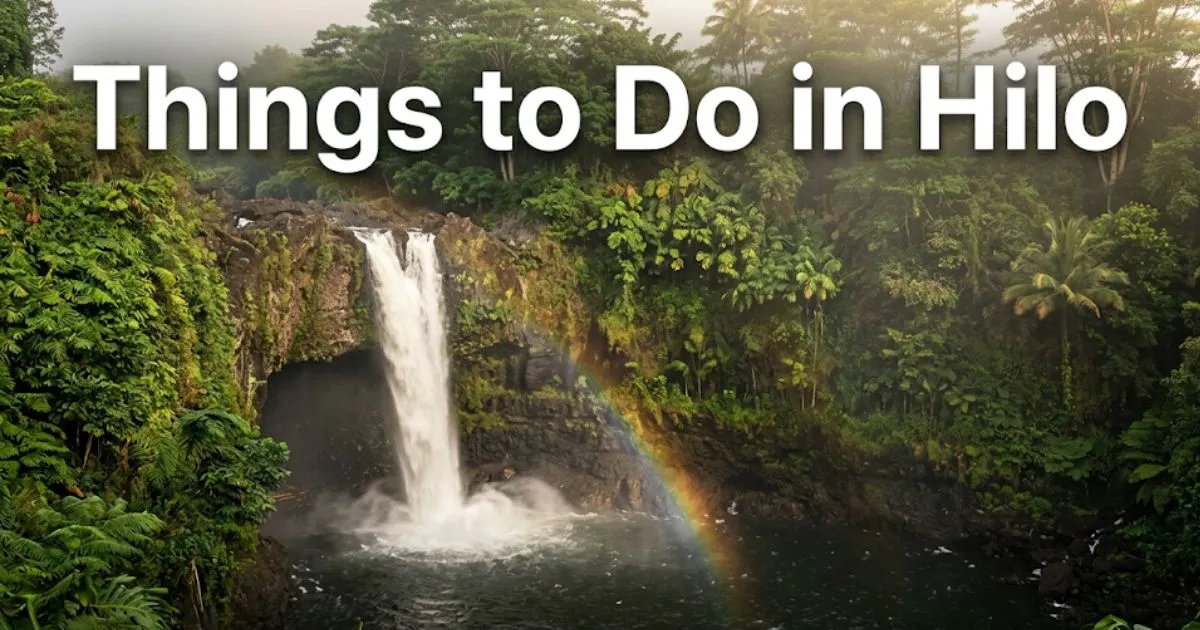
Rainbow Falls drops 80 feet over a lava cave into a large pool, and on sunny mornings a rainbow forms in the mist. The viewing platform sits just steps from the parking lot off Waianuenue Avenue.
This is the easiest waterfall access in Hilo. It requires no hiking, making it the best choice for seniors and travelers with limited mobility.
Arrive before 9:00 AM for the best light and the smallest crowds. The parking lot fills by mid-morning, especially when tour vans roll through.
Akaka Falls State Park, 11 miles north of Hilo on the Hāmākua Coast, protects a 442-foot waterfall that plunges through a fern-draped gorge. A paved 0.4-mile loop trail through bamboo and orchid gardens leads to the main viewpoint.
Entry costs $5 per person plus $10 per vehicle for parking. The trail involves stairs and moderate inclines.
Solo travelers will find this an easy, well-marked walk. Families with strollers should know the loop has steps and is not fully accessible.
Boiling Pots and Peʻepeʻe Falls, upstream from Rainbow Falls along the Wailuku River, show what happens when volcanic rock meets rushing water. The river churns through terraced lava bowls, creating a roiling effect that gives the area its name.
This stop receives a fraction of Rainbow Falls’ visitors. Parking is a small pull-off along Waianuenue Avenue.
Swimming is dangerous and prohibited here due to unpredictable flash flood conditions. Never enter the water at Boiling Pots during or after rain.
Hilo Beaches and Ocean Activities
Hilo’s coastline is rocky, lava-carved, and beautiful in a way that Maui’s sandy crescents are not. The beaches here are protected coves ideal for snorkeling and calm-water swimming rather than sprawling sand strips.
Richardson Ocean Park at the end of Kalanianaole Avenue offers the best snorkeling near Hilo. Volcanic rock formations create protected pools where sea turtles feed near the shore.
The park has lifeguards, restrooms, showers, and a small black sand beach. Parking is free but limited on weekends.
Arrive before 10:00 AM on Saturday and Sunday to secure a spot. Families with young children should stay in the calmest protected shallows near the lifeguard tower.
Carlsmith Beach Park, just west of Richardson, features a series of lava-ringed swimming holes fed by cold freshwater springs. The water is clearer and calmer than the open ocean.
This is the best Hilo swimming spot for children and nervous swimmers. The lava edges can be sharp, so water shoes help enormously.
Honoliʻi Beach Park, north of downtown, is the local surf break and the closest thing Hilo has to a traditional sandy beach. The black sand cove sits below a hillside of trees right off the Hawaii Belt Road.
Surf conditions suit intermediate surfers. Beginners should watch from shore and try lessons elsewhere.
The shore break can be powerful and swimmers unfamiliar with ocean conditions must exercise extreme caution. Check conditions with locals before entering.
| Beach | Best For | Facilities | Crowd Level |
|---|---|---|---|
| Richardson | Snorkeling, turtles | Lifeguards, restrooms | Busy weekends |
| Carlsmith | Families, calm swimming | Restrooms, limited parking | Moderate |
| Honoliʻi | Surfing, scenery | Portable toilets | Light to moderate |
| Onekahakaha | Toddlers, wading | Lifeguards, restrooms | Light |
Hilo Gardens and Botanical Attractions
Hilo’s rainfall supports gardens that would be impossible anywhere else in the United States. These are not manicured rose gardens. They are dense, jungle-like collections of tropical species that feel closer to Singapore than to mainland botanical gardens.
Liliʻuokalani Gardens, on Banyan Drive facing Hilo Bay, is a 30-acre Japanese garden and the largest ornamental Japanese garden outside Japan. The park is free and open daily.
Paths wind past stone lanterns, arched bridges, koi ponds, and views of Coconut Island (Moku Ola). The terrain is flat and wheelchair accessible.
This is an ideal spot for seniors seeking a gentle walk with bay views. It is also Hilo’s best picnic location.
Hawaii Tropical Bioreserve and Garden, 8 miles north of Hilo on the scenic Onomea Bay drive, sits in a valley that receives 180 inches of rain annually. The collection spans 2,000 species across a steep palm-lined valley ending at the ocean.
Entry runs approximately $25 per adult. The trail descends steeply to the coast and requires climbing back up.
This garden works best for physically fit travelers and photographers. Seniors with mobility concerns will find the terrain challenging.
The drive along the Old Māmalahoa Highway to reach the garden is itself worth the trip. This winding four-mile scenic route through the Onomea Valley offers a quieter, more beautiful alternative to the Hawaii Belt Road.
Key Takeaway: Liliʻuokalani Gardens is free, flat, and beautiful. The Bioreserve is expensive, steep, and unforgettable. Choose based on mobility and budget.
Downtown Hilo Historic District
Downtown Hilo looks like a Hawaiian town from the 1920s that simply never got redeveloped. Wooden storefronts along Kamehameha Avenue and Keawe Street house bookstores, poke shops, vintage clothing stores, and local galleries.
This is not a shopping mall version of Hawaii. It is a real working town where locals run errands alongside visitors exploring the waterfront.
The Pacific Tsunami Museum on Kamehameha Avenue documents the 1946 and 1960 tsunamis that reshaped Hilo’s physical footprint and its community memory. The building itself survived both waves.
Entry costs approximately $15. Allow 90 minutes to absorb the exhibits properly.
The museum is essential context for understanding why Hilo’s waterfront feels underbuilt. Large swaths of the bayfront were never rebuilt after the 1960 tsunami destroyed them.
Big Island Candies on Hinano Street operates a factory store where you can watch macadamia nut shortbread cookies being made. Free samples and coffee make this a worthwhile 20-minute stop.
The East Hawaii Cultural Center on Kalakaua Street hosts rotating art exhibitions in a former police station built in 1932. Check current showings before visiting as the calendar shifts seasonally.
Mokupāpapa Discovery Center on Kamehameha Avenue offers free admission and interprets the Papahānaumokuākea Marine National Monument through interactive exhibits. This federal facility works well for families with children on a rainy afternoon.
Hilo Farmers Market
The Hilo Farmers Market on Kamehameha Avenue at Mamo Street operates Wednesday and Saturday with the largest market on Saturday. This is where Hilo’s agricultural abundance shows up in full color.
Vendors sell papayas the size of footballs, apple bananas, lychee in season, and avocados that weigh two pounds each. Tropical flowers go for a fraction of mainland prices.
Arrive before 8:00 AM on Saturday for the best selection and the least crowded aisles. By 10:00 AM the market is shoulder-to-shoulder busy.
Budget travelers will find the market to be Hilo’s best affordable food source. A breakfast of fresh fruit, mochi from Two Ladies Kitchen, and local coffee costs under $10.
Two Ladies Kitchen, a few blocks from the market on Kilauea Avenue, makes fresh strawberry mochi that sells out by early afternoon. Locals line up before opening.
This is the single food stop in Hilo most likely to exceed expectations. Order the strawberry mochi and whatever seasonal fruit variety is available.
The market’s prepared food stalls serve lunch plates, Thai food, and fresh poke bowls. These make an excellent alternative to sit-down restaurants for a fast, affordable meal.
Key Takeaway: Saturday market before 8:00 AM means best selection and fewer crowds. Two Ladies Kitchen mochi sells out by early afternoon.
Hilo Museums and Cultural Sites
Hilo’s museums punch above their weight for a town of 44,000 people. The ʻImiloa Astronomy Center on the University of Hawaii at Hilo campus combines Hawaiian navigation traditions with modern astronomy in a striking building overlooking the bay.
Exhibits connect the Polynesian voyaging canoe Hōkūleʻa to the Mauna Kea observatories. The planetarium runs daily shows included with admission of approximately $20.
This is the best rainy-day activity in Hilo for families and anyone interested in astronomy. Allow two to three hours for exhibits and a planetarium show.
The Pacific Tsunami Museum downtown deserves a visit even if museums are not typically your thing. The first-person survivor accounts are genuinely affecting.
Lyman Museum and Mission House on Haili Street documents 19th-century missionary life alongside a natural history collection focused on Hawaii’s geology. The historic house tour reveals how New England missionaries adapted to tropical life.
Seniors will appreciate that all three museums offer seating, climate control, and accessible facilities. Budget travelers should know that ʻImiloa has the highest admission cost.
The Merrie Monarch Festival transforms Hilo during the week after Easter each year. This hula competition is the most prestigious in the world and draws thousands of visitors.
If your visit coincides with Merrie Monarch week, book accommodations a year in advance. Room rates triple and availability vanishes months before the event.
Volcanoes National Park From Hilo
Hawaiʻi Volcanoes National Park is the single most important reason to base yourself in Hilo. The park entrance sits 30 miles southwest of downtown, approximately a 45-minute drive via Highway 11.
Entry costs $30 per private vehicle and is valid for seven consecutive days. Arrive at the park entrance before 8:30 AM to secure parking at the most popular viewpoints.
The park is open 24 hours daily, but the Kīlauea Visitor Center operates limited daytime hours. Check current lava conditions and eruption status at the visitor center before heading to viewpoints.
Start your day on Crater Rim Drive, stopping at Kīlauea Overlook and the Steam Vents. Then drive Chain of Craters Road down to the coast where lava has repeatedly buried the highway over decades.
Nāhuku (Thurston Lava Tube) is a 600-foot walkable lava cave with lighting and a paved path. Parking at the lava tube lot fills by 9:30 AM.
To experience the park efficiently from Hilo:
- Leave Hilo by 7:00 AM with a full tank of gas and packed food.
- Arrive at the entrance station before 8:00 AM to avoid the entry line.
- Visit Kīlauea Overlook and the Steam Vents first while morning light is best.
- Walk Nāhuku Lava Tube before the tour buses arrive.
- Drive Chain of Craters Road to the ocean and back, allowing 90 minutes.
- Check conditions for current lava viewing at the visitor center midday.
- Return to Hilo by late afternoon before the mountain road gets dark.
Solo travelers and couples will find the park easy to navigate independently. Families should pack snacks and patience for the driving distances between viewpoints.
Volcanic air quality (vog) can affect those with respiratory conditions. Check the park’s sulfur dioxide monitoring page before visiting if you have asthma or similar concerns.
Key Takeaway: Leave Hilo by 7:00 AM. Lava tube parking fills by 9:30. Pack all food and water before departing.
Hilo Restaurants and Local Food
Hilo’s food scene is casual, multicultural, and far more interesting than its modest storefronts suggest. This is where you eat plate lunches, fresh poke, and mochi, not where you dress for dinner.
Suisan Fish Market on Lihiwai Street serves the best poke in Hilo from a counter overlooking the Wailoa River. Order the ahi limu poke and eat it at the picnic tables outside.
Prices run approximately $12 to $18 per pound for poke. This is the most affordable high-quality seafood meal on the island.
Budget travelers should make Suisan a primary lunch destination. Families will find the casual outdoor setting easier with children than a sit-down restaurant.
Hilo Bay Cafe on Waiānuenue Avenue offers the closest thing Hilo has to an upscale dining experience with views across the bay. The menu emphasizes local beef and fresh catch.
Reservations help for dinner, especially Friday and Saturday. The setting suits couples looking for a date-night atmosphere.
Hawaiian Style Cafe on Manono Street serves enormous breakfast plates of loco moco and macadamia nut pancakes. Portions are generous enough that sharing is practical strategy.
Two Ladies Kitchen mochi merits a dedicated stop. The strawberry mochi sells out by early afternoon most days.
The Hilo Farmers Market prepared food stalls offer the most diverse lunch options at the lowest prices. Thai curries, Filipino adobo, and fresh fruit bowls all appear within the same block.
| Restaurant | Best For | Meal | Price Range |
|---|---|---|---|
| Suisan Fish Market | Poke, local seafood | Lunch | $ |
| Hilo Bay Cafe | Date night, views | Dinner | $$$ |
| Hawaiian Style Cafe | Breakfast, portions | Breakfast/Lunch | $ |
| Two Ladies Kitchen | Mochi | Snack | $ |
| Farmers Market Stalls | Variety, budget | Lunch | $ |
Hilo Day Trips Beyond the City
Hilo’s location makes it the best base for exploring the Big Island’s eastern half. Three distinct day-trip corridors offer entirely different landscapes within a single day’s drive.
The Puna District runs south of Hilo along Highway 130 toward the 2018 lava flow zone. This is raw volcanic landscape where you can see how the Kīlauea eruption buried subdivisions and created new coastline.
Isaac Hale Beach Park (Pohoiki) offers a new black sand beach formed during the 2018 eruption. The ocean entry created a protected swimming area where thermal-heated water mixes with the sea.
Volcanic steam rises from cracks in the road in places. This landscape feels actively geological in a way few places on Earth can match.
The Hāmākua Coast extends north of Hilo along the Hawaii Belt Road (Route 19) through Honokaʻa to the Waipiʻo Valley Overlook. This coast receives even more rain than Hilo, resulting in waterfalls that appear at nearly every gulch.
Akaka Falls, the Hawaii Tropical Bioreserve, and the Onomea Bay scenic drive all sit along this corridor. The town of Honokaʻa offers lunch at Tex Drive-In for malasadas fresh from the fryer.
Mauna Kea rises to 13,803 feet above sea level with the summit accessible via the Saddle Road (Route 200). The Onizuka Visitor Center at 9,200 feet elevation is reachable in any vehicle and offers free stargazing programs on select evenings.
Summit access beyond the visitor center requires a 4WD vehicle due to steep unpaved road conditions. Altitude sickness is a genuine risk above 9,000 feet.
Travelers with heart or respiratory conditions should not attempt the summit. Children under 16 should not ascend above the visitor center.
| Day Trip | Drive Time | Key Activity | Accessibility |
|---|---|---|---|
| Puna District | 45-60 min | 2018 lava flows, black sand beach | Paved roads |
| Hāmākua Coast | 60-90 min | Waterfalls, gardens, Waipiʻo overlook | Paved, some stairs |
| Mauna Kea | 60-90 min | Stargazing, summit views | 4WD for summit |
Key Takeaway: Puna for volcanic drama, Hāmākua for waterfalls, Mauna Kea for sunset above the clouds. Pick one per day.
Best Time to Visit Hilo Hawaii
The best time to visit Hilo is April through June and September through October. These shoulder months offer the lowest rainfall combined with comfortable temperatures in the low 80s.
Hilo receives rain in every month. The question is not whether it will rain but how much and when during the day.
November through March brings the heaviest rainfall, with monthly totals exceeding 15 inches in the wettest winter months. This period tests the patience of travelers who did not pack adequate rain gear.
July and August see slightly reduced rainfall but increased visitor numbers as summer family travel peaks. Hotel rates rise modestly during this window.
The Merrie Monarch Festival during the week after Easter brings the year’s biggest crowds and highest accommodation prices. Book 12 months ahead if your visit coincides with this event.
Morning hours are reliably drier than afternoons across all seasons. Plan outdoor activities before noon and save museums and indoor stops for the afternoon when rain becomes more likely.
Budget travelers will find the lowest accommodation rates during November and January through February, excluding holiday weeks. The tradeoff is significantly wetter conditions.
Hilo Rainy Day Activities
Hilo’s rainy days are not exceptions. They are the baseline condition, and the town has adapted accordingly with indoor and covered activities that remain enjoyable when the downpours arrive.
The ʻImiloa Astronomy Center offers the most complete rainy-day experience. The planetarium shows, interactive exhibits, and climate-controlled environment work for every traveler profile.
The Pacific Tsunami Museum and Mokupāpapa Discovery Center sit within three blocks of each other downtown. You can visit both without getting wet between them by timing your walks between rain bands.
Big Island Candies factory store provides a warm, dry stop with free samples and coffee. Watching the production line through viewing windows extends the experience beyond a quick shopping stop.
The Hilo Farmers Market operates under covered awnings, so Saturday market plans survive rain without modification. Vendors simply lower the side tarps and business continues as usual.
Rainfall in Hilo typically arrives in short intense bursts rather than all-day drizzle. Ducking into a restaurant or shop for 30 minutes usually outlasts the heaviest shower.
Basically Books on Kamehameha Avenue offers a dry browsing stop with a strong Hawaii and Pacific section. The store’s map collection helps plan subsequent days.
| Rainy Day Activity | Cost | Time | Best For |
|---|---|---|---|
| ʻImiloa Astronomy Center | $20 | 2-3 hrs | Families, astronomy fans |
| Pacific Tsunami Museum | $15 | 90 min | History, culture travelers |
| Mokupāpapa Discovery Center | Free | 1 hr | Families, budget travelers |
| Big Island Candies | Free to browse | 30 min | All travelers |
| Basically Books | Free to browse | 30-60 min | Rainy afternoon |
| Farmers Market (Sat) | Free to browse | 1-2 hrs | Food travelers |
Where to Stay in Hilo
Hilo accommodations cluster along Banyan Drive on the Waiākea Peninsula facing Hilo Bay. This is where the town’s limited mid-range hotels operate, including the Grand Naniloa Hotel Hilo and the Hilo Hawaiian Hotel.
These properties offer bay views, on-site restaurants, and the closest thing Hilo has to resort amenities. They are not luxury properties, but they are clean and conveniently located two miles from downtown.
Vacation rentals scattered through the residential neighborhoods behind downtown offer more space and kitchen access. This option suits families and budget travelers who can prepare some meals.
The area near University of Hawaii at Hilo provides quieter accommodations away from the highway noise of Banyan Drive. These rentals are better for longer stays and travelers with a car.
Budget travelers will find the best rates at smaller motels along Kamehameha Avenue heading west from downtown. Arnott’s Lodge and similar properties serve the backpacker and budget independent traveler market.
Book accommodations at least three months ahead for Merrie Monarch week and two months ahead for summer visits. Hilo has limited hotel inventory and rooms fill faster than travelers accustomed to larger markets expect.
Hilo does not have luxury resorts. Travelers requiring resort-level amenities should stay on the Kona side and visit Hilo as a day trip.
Seniors and accessibility travelers should verify elevator access when booking Banyan Drive hotels. Some older properties have limited elevator service.
One Day Hilo Itinerary
One day in Hilo is tight but workable if you prioritize ruthlessly and start early. This itinerary maximizes the morning dry window and gets you to Volcanoes National Park before the crowds.
Start at Rainbow Falls by 7:30 AM when morning light creates the namesake rainbow effect and the parking lot is empty. Spend 30 minutes at the viewing platform and the upper falls observation point.
Drive to the Hilo Farmers Market by 8:30 AM on Saturday or any morning the market operates. Grab breakfast from a prepared food stall and stock up on tropical fruit for the day ahead.
Walk Kamehameha Avenue through the historic district, stopping at the Pacific Tsunami Museum when it opens. Allow 45 minutes to absorb the tsunami history that shapes Hilo’s identity.
Drive south on Highway 11 to Hawaiʻi Volcanoes National Park, arriving by 10:30 AM. This is later than ideal, but still workable for the park’s key sights.
Follow the park sequence: Kīlauea Visitor Center, then Steam Vents, then Kīlauea Overlook, then Nāhuku (Thurston Lava Tube). Drive Chain of Craters Road as far as time allows before turning back.
Return to Hilo by late afternoon. End the day with dinner at Suisan Fish Market if they are still open, or Hilo Bay Cafe for a sit-down meal with bay views.
This itinerary works for solo travelers, couples, and families who can maintain a steady pace. Seniors should consider skipping the lava tube walk or allocating a slower pace through the park.
Insider Tip: Pack a lunch for the park. Food options inside the park are limited to one casual spot at Volcano House near the visitor center.
Key Takeaway: Start at Rainbow Falls by 7:30 AM. Pack park food. Accept that one day means hard choices.
Safety and Practical Warnings for Hilo
Hilo is a safe destination with specific environmental risks that visitors frequently underestimate. The ocean, the rain, and the volcanic environment each present hazards that preparation easily manages.
Ocean Safety: Hilo’s coastline has strong currents, sudden drop-offs, and rocky entries. Swim only at lifeguarded beaches: Richardson Ocean Park, Carlsmith Beach Park, and Onekahakaha Beach Park.
Never turn your back on the ocean, particularly at lava-rock shorelines where rogue waves can sweep across viewing areas.
Flash Floods: Hilo’s streams and rivers rise rapidly during rainfall, even rain falling miles upstream. Never enter stream pools or wade into waterfalls during or after rain.
Rainbow Falls and Boiling Pots are particularly dangerous during wet weather. The signs prohibiting swimming are not suggestions.
Volcanic Air Quality: Sulfur dioxide and particulate matter from Kīlauea can reach levels that affect respiratory health. Check daily volcanic air quality reports before outdoor activity if you have asthma, COPD, or heart conditions.
Mosquitoes: Hilo’s wet climate means persistent mosquito presence year-round. Apply repellent before dawn and dusk outdoor activities.
Sun Exposure: Cloud cover creates false security. Hilo’s UV index remains high even on overcast days. Apply sunscreen regardless of apparent cloud cover.
Cell Service: Coverage is reliable in Hilo and along major highways. It becomes spotty on Chain of Craters Road, in the Puna backcountry, and on Mauna Kea above the visitor center.
Emergency: Dial 911 for all emergencies. Hilo Medical Center provides the region’s emergency department services.
Frequently Asked Questions About Hilo
What is the best time of year to visit Hilo, Hawaii?
The best time to visit Hilo is April through June and September through October.
These shoulder months offer the lowest rainfall combined with comfortable temperatures in the low 80s.
Morning hours are reliably drier than afternoons across every season.
Is Hilo worth visiting compared to Kona?
Hilo is worth visiting if you want waterfalls, rainforest, and Volcanoes National Park access.
It is not the right choice if you want resort pools, sandy beaches, and guaranteed sun.
The two towns serve entirely different travel styles and are best combined over a week-long Big Island trip.
How many days do you need in Hilo?
Two to three days is ideal for experiencing Hilo’s core attractions.
One day covers downtown and Rainbow Falls but rushes Volcanoes National Park.
A third day opens up Akaka Falls, the botanical gardens, and the Puna District.
What are the best free things to do in Hilo?
Rainbow Falls, Liliʻuokalani Gardens, the Hilo Farmers Market, and Mokupāpapa Discovery Center are all free.
The downtown historic district walk along Kamehameha Avenue costs nothing.
Richardson Ocean Park and Carlsmith Beach Park offer free access with free parking.
Is Hilo safe for swimming?
Swimming in Hilo is safe at lifeguarded beach parks with protected coves.
Richardson Ocean Park, Carlsmith Beach Park, and Onekahakaha Beach Park offer the safest conditions.
Never swim at unguarded beaches, near river mouths, or during and after rainfall.
How far is Volcanoes National Park from Hilo?
Volcanoes National Park is approximately 30 miles from downtown Hilo.
The drive takes about 45 minutes via Highway 11 under normal conditions.
Budget a full day for the park regardless of the manageable drive time.
Hilo delivers the most authentic version of Hawaii available to travelers in 2026. It asks you to accept rain, trade sandy beaches for lava coves, and measure a day’s success in waterfalls rather than pool hours.
Book your rental car first. Hilo’s attractions spread across 30 miles of coastline and mountain road with no meaningful public transit alternative.
Make Volcanoes National Park reservations where required, verify lava viewing conditions the morning of your visit through the National Park Service website, and pack rain gear regardless of the forecast. Travel conditions, park entry requirements, and lava activity change without notice. Verify key logistics directly with venues and official sources before departure.
The travelers who love Hilo most arrive prepared for rain and open to a Hawaii that exists beyond the resort gates. Be one of them.