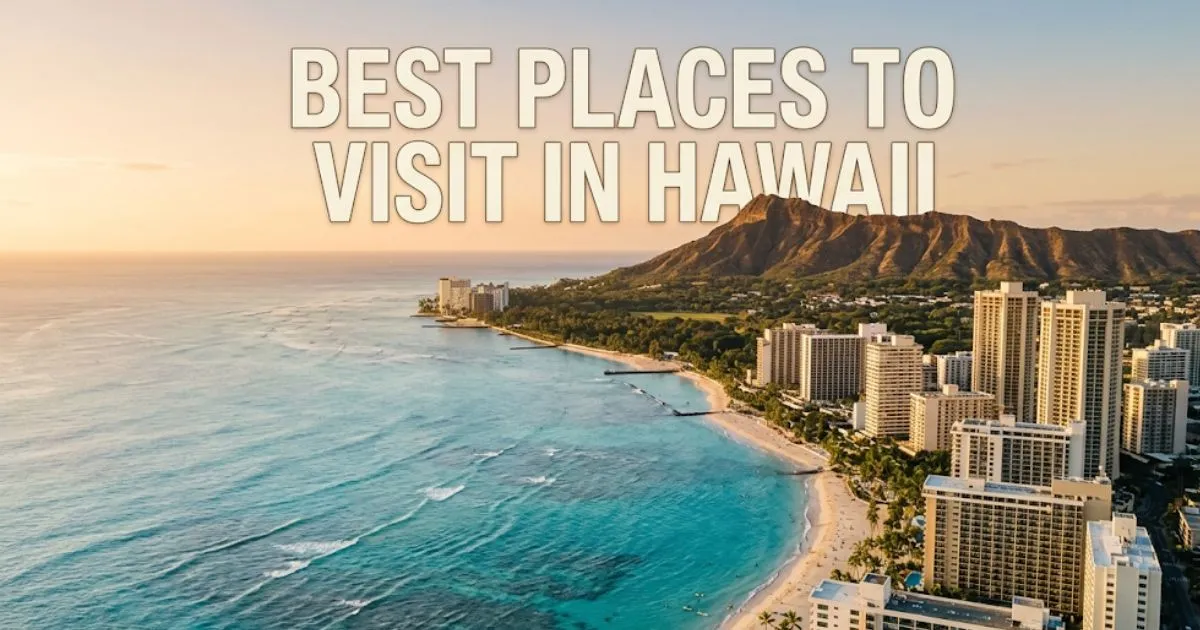
Best Places to Visit in Hawaii 2026: Pick Your Island

Hawaii is not a single destination you can conquer in a week. The best places to visit in Hawaii depend entirely on your travel style.
An all-in-one trip to multiple islands will consume your vacation time and your budget in inter-island logistics. Pick one, maybe two, islands at most for a 10-day trip.
This guide ranks every major Hawaiian island by its true character. You will learn which island fits your pace, budget, and idea of paradise before you book a single flight.
Best Places to Visit in Hawaii
The best places to visit in Hawaii break down by island, not just individual attractions. Each island functions as its own distinct world with unique rules.
Oʻahu delivers the postcard city-beach energy alongside profound history. Maui trades in pure, polished, and expensive romance with a dramatic volcanic interior.
Kauaʻi is a quiet, rural, and wildly lush Jurassic Park fantasyland. Hawaiʻi Island, the Big Island, overwhelms with vast, active volcanic landscapes and endless microclimates.
Choosing wrong lands a couple seeking solitude in the middle of Waikīkī’s shopping crowds. The same mismatch sends an adventure hiker to a resort pool in Wailea they find boring.
| Island | Vibe Check | Best For | Skip If |
|---|---|---|---|
| Oʻahu | Energetic, historic, urban-meets-nature | First-timers, families, history buffs | You hate cities and crowds |
| Maui | Polished, romantic, accessible adventure | Honeymooners, couples, resort lovers | You’re on a strict budget |
| Kauaʻi | Quiet, rural, wildly lush, sleepy | Hikers, nature photographers, solitude seekers | You want nightlife or big resorts |
| Hawaiʻi Island | Vast, adventurous, elemental, raw | Volcano enthusiasts, road-trippers, budget flexibility | You want a classic white-sand beach vacation |
Which Hawaiian Island to Visit for First Time
Oʻahu is the right answer for most first-time Hawaii visitors. It offers the most concentrated mix of classic Hawaiian beauty and accessible infrastructure.
You get Honolulu’s food scene, Pearl Harbor’s gravity, and the North Shore’s legendary surf all on one island. You never need to get on another plane after your long Pacific flight.
Inter-island logistics devour vacation time and money that first-timers underestimate. Oʻahu lets you start living your trip on day one instead of tracking flight connections.
This island does have a significant limitation you must accept. Honolulu is a real city with real traffic, especially on the H-1 freeway heading west from 4 PM.
Budget travelers find more accommodation options here, from hostels to high-rise hotels. Families will appreciate the walkable, protected lagoons at Ko Olina on the leeward coast.
According to the Hawaiʻi Tourism Authority, Oʻahu receives the highest volume of visitors, so solitude requires effort. You find it by driving north past Haleʻiwa town early in the morning.
Key Takeaway: For first-timers, start on Oʻahu and add one quieter neighbor island if your trip exceeds 10 days.
Top Places to Visit in Oahu
Waikīkī Beach is the postcard but the North Shore is Oʻahu’s soul. You need to experience both to understand the island’s split personality.
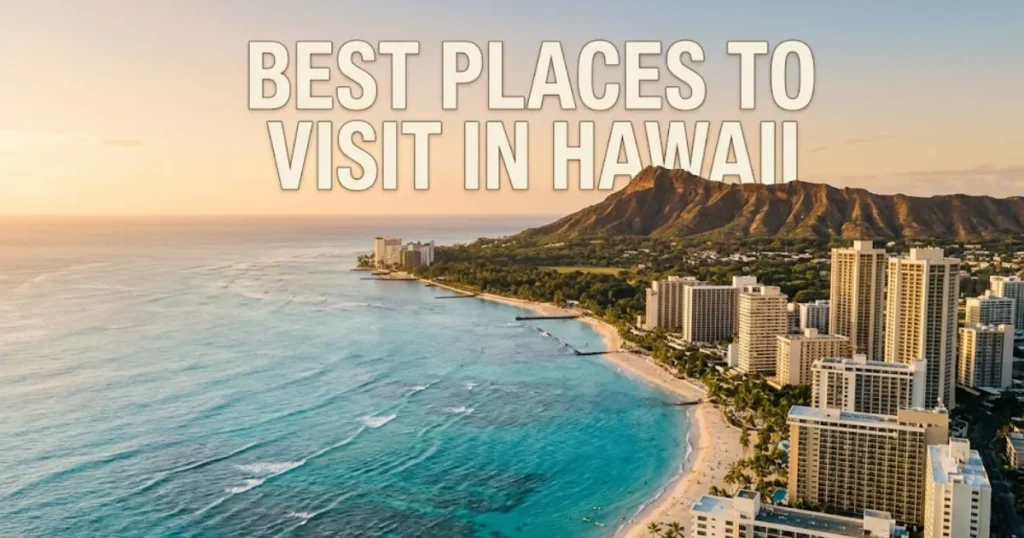
Waikīkī’s two-mile crescent delivers a stunning backdrop of Diamond Head crater. The surf break here is genuinely perfect for a first-ever lesson with iconic beach boys.
The beach is a dense urban resort zone that feels nothing like old Hawaii. It serves a purpose as a safe, walkable entry point with a direct sand-to-restaurant pipeline.
Locals and experienced visitors head to Kailua and Lanikai beaches on the windward side. The sand is softer, the water is turquoise, and the pace is purely residential with no high-rises.
Parking at Kailua Beach Park is a genuine challenge by 9 AM on weekends. Hanauma Bay Nature Preserve requires an advanced online reservation, as walk-ins are no longer accepted.
The Pearl Harbor National Memorial stands as the state’s most essential historical site. The free USS Arizona Memorial program requires a timed reservation released 8 weeks in advance.
For a modern cultural experience, the Bishop Museum showcases authentic Hawaiian history and artifacts. It is far more substantive than a commercialized luau in Waikīkī.
Insider Tip:
- Eat a plate lunch at Rainbow Drive-In on Kapahulu Avenue instead of a Waikīkī hotel restaurant.
- The malasadas at Leonard’s Bakery justify waiting in a 20-minute line for their hot, sugary, haupia-filled puffs.
- Families with young children should drive to Ko Olina Lagoons for shallow, sand-bottomed swimming pools protected from ocean swells.
Best Places to Visit in Maui
Maui perfects the art of accessible beauty without the wild edges of other islands. You get a dormant volcano summit and a winding jungle road in one compact package.
The Road to Hana is the island’s marquee drive and most misunderstood day trip. It’s a 10-12 hour marathon on a 64-mile highway with 620 curves and 59 single-lane bridges.
Most visitors attempt this drive with no plan and end up turning around frustrated. The key is selecting only three to four specific stops instead of chasing every waterfall.
The black sand at Waiʻānapana State Park is a must-see, but you cannot just show up. Advanced reservations are now required for out-of-state visitors, and entry sells out weeks ahead.
On the summit of Haleakalā National Park, sunrise is an otherworldly event above the clouds. This also requires a $1.00 reservation booked up to 60 days in advance through recreation.gov.
The leeward side offers the resort luxury many travelers equate with Maui. Wailea and Kāʻanapali provide manicured oceanfront paths and calm winter snorkeling along crescent beaches.
For a romantic dinner, Merriman’s in Kapalua sits on a lava point watching the sunset. You pay for the view as much as the Hawaii Regional Cuisine on the plate.
Solo travelers and couples seeking a low-key town will prefer Pāʻia on the north shore. Its collection of fish markets, boutiques, and quick access to Hoʻokipa Beach Park beats resort isolation.
Insider Tip:
- Leave for the Road to Hana by 6:00 AM to stay ahead of caravan-style tour vans.
- Skip Twin Falls, the first major stop; the real payoff is Pipiwai Trail in the Kīpahulu District past Hana.
- Seniors or those prone to motion sickness should take Bonine the night before the drive and sit in the front passenger seat.
Key Takeaway: Maui is a premium, romance-first island. Budget travelers should pair one expensive Maui splurge day with a stay on a cheaper island.
Best Places to Visit in Kauai
Kauaʻi is a trade wind-swept garden island built for visual wonder, not organized activity. Your primary entertainment is watching a rainbow arc across a 4,000-foot emerald cliff.
The Nāpali Coast is the most dramatic shoreline in the state and is largely road-inaccessible. You see it by boat tour from Port Allen, a strenuous hike, or a costly helicopter ride.
A morning raft tour into the sea caves leaves from the west side, and the ride is bumpy. This is not for seniors with back problems or small children prone to fear on rough water.
Waimea Canyon State Park, the “Grand Canyon of the Pacific,” requires a clear day for full impact. Morning viewing is best before clouds obscure the 3,600-foot-deep red-and-green chasm around noon.
The north shore is visually the most beautiful part of the island, centered on Hāʻena State Park. Access to the Kalalau Trailhead and Kēʻē Beach now strictly requires an advanced parking or shuttle reservation.
The south shore provides the sunniest weather and the best winter snorkeling. Poʻipū Beach Park is a reliable family-friendly spot with a natural ocean wading pool protected from big swells.
Kauaʻi moves slowly. Local etiquette dictates you embrace “island time” and do not honk your rental car horn.
Chickens roam freely everywhere, a quirky remnant of hurricane damage from decades past. They are part of the landscape and you cannot escape the early morning rooster crowing.
Activities Best Booked Before Arrival:
- Hāʻena State Park park entry and parking permits (released 30 days in advance).
- Morning Nāpali Coast boat tours, which sell out first due to calmer ocean conditions.
- Smith’s Family Garden Luau in Kapaʻa, a long-running production in a lush setting that feels less corporate than hotel ballroom versions.
Best Places to Visit on the Big Island
The Big Island’s official name is Hawaiʻi Island, and its scale defies tropical island expectations. You can drive from rain-soaked fern forests to dry lava deserts in under two hours.
Hawaiʻi Volcanoes National Park is the planet’s most accessible active volcanic landscape. The current 2026 eruption status of Kīlauea dictates where you can view glowing lava at night.
The park charges a $30 vehicle entry fee, good for seven days of exploration. The Crater Rim Drive and the Kīlauea Iki Trail across a solidified lava lake are essential non-eruption activities.
A lesser-known wonder lies on the Kona coast at Puʻuhonua o Hōnaunau National Historical Park. This beautifully restored “Place of Refuge” offers a profoundly peaceful look at ancient Hawaiian law and sanctuary.
Beaches here are different, often composed of coral rubble or surreal black and green sand. Hapuna Beach State Recreation Area is the classic exception, a stunning long stretch of white sand perfect for bodyboarding.
Snorkeling is at its finest at Kealakekua Bay, accessible only by a steep hike, a kayak rental, or a permitted boat tour. The morning calm inside the protected marine sanctuary delivers world-class water clarity.
Budget-conscious travelers and solo explorers often gravitate here for its lower accommodation costs relative to Maui. The west side coffee farms near Holualoa provide a fantastic, low-cost rainy day driving activity.
You must respect Mauna Kea’s summit elevation of nearly 13,800 feet. Sudden altitude changes at the visitor center can cause severe health issues in under 30 minutes without proper acclimatization.
Insider Tip:
- Drive the Chain of Craters Road in Volcanoes National Park at sunset.
- The sea arch at the road’s end captures the most dramatic light of the day, and you avoid the peak midday tour bus crush at the summit lava tube.
- Budget your time: driving across the Big Island takes twice as long as Google Maps estimates.
Key Takeaway: The Big Island is a dream for road trippers with a sense of geological wonder but not for travelers who demand a lazy, swimmable beach directly outside their resort.
Waikiki Beach Things to Do
Waikīkī is a two-mile sand strip of high-energy water sports and designer shopping. It is the most urban beach experience in the state and a perfect entry point for doers.
Learn to surf with a licensed beach boy from the iconic Star Beachboys concession near the Moana Surfrider. The long, rolling waves here are the world’s most forgiving for a first lesson.
Paddle an outrigger canoe in the morning before the trade winds pick up speed. This experience directly ties you to ancient Polynesian voyaging history right from the main beach.
For a free activity, walk the newly improved Waikīkī Beach Walk promenade at sunset. The free public hula show at the Kuhio Beach Hula Mound offers authentic cultural performance without a ticket.
A morning hike up Diamond Head State Monument delivers the definitive view of the coast. This crater hike requires a timed-entry reservation to manage extreme overcrowding on the steep, hot trail.
Things to do in Waikiki that are worth the cost:
- A sunset catamaran sail from the beach fronting the Sheraton Waikīkī.
- A private surf lesson, not a large group class, ensures you actually stand up on the board.
- Drinks at the House Without a Key at Halekulani hotel for a graceful, open-air experience watching former Miss Hawaii dancers.
Road to Hana Stops Worth Your Time
The Road to Hana is a 12-hour masterclass in tropical landscape, not a casual drive. Trying to stop at every waterfall will make you despise this road by mile marker 20.
The official start is in Pāʻia town, your last stop for a real breakfast. Fill your gas tank here, as gas stations vanish until Hana town itself.
Your first worthy stop is the Ke‘anae Peninsula, a starkly beautiful lava finger jutting into crashing waves. Turn left just after the arboretum and buy Auntie’s famous banana bread from a small roadside stand.
Bypass the crowded Ke‘anae Arboretum itself and push on to Pua‘a Ka‘a State Wayside. This park offers a more accessible waterfall and a place to swim without the chaos of Twin Falls.
The star of the backside is the Kīpahulu District of Haleakalā National Park. The Pipiwai Trail is a two-mile hike through a massive bamboo forest to the towering 400-foot Waimoku Falls.
The trail surface here contains rocks and roots and can be incredibly slippery. This hike is difficult for seniors with balance concerns and is not stroller-accessible at any point.
Return the way you came unless you confirm your rental car contract allows the unpaved backside road. Many rental companies specifically ban the southern route and GPS will fail you in this region.
The best Hana tip is to book a night of lodging in Hana town itself. Splitting the drive into two days turns a grueling marathon into the island’s most romantic overnight adventure.
Insider Tip:
- Download an offline GPS map of the Hāna Highway before leaving Pāʻia.
- Keep your car completely empty of all visible bags when parking at stops to deter break-ins.
- Bring a full tank of gas, as the single Hana gas station runs out of fuel during peak season surges.
Hawaii Volcanoes National Park Visitor Guide
Hawaiʻi Volcanoes National Park is a land of active creation and constant geological change. Your 2026 visit is shaped entirely by where and how Kīlauea volcano is currently erupting.
Check the National Park Service (NPS) Kīlauea eruption update web page the morning you arrive. A remote lava lake may require an extreme hike, or a vent may be visible from a close-up overlook.
The absolute star activity is the Kīlauea Iki Trail across a mile-wide solidified lava lake. Start from the Devastation Trail parking lot at 7:00 AM to hike before the crater floor becomes a convection oven.
Do not underestimate the heat radiating from dark lava rock by 10:00 AM. Bring a full liter of water per person and realize this hike feels 20 degrees hotter than the parking lot temperature.
The Thurston Lava Tube is a short, fascinating walk through a massive cave-like tube left by flowing lava. The lighting is minimal and the path runs with water dripping from the ceiling above you.
Seniors and accessibility travelers will find the Crater Rim Drive provides spectacular volcanic views directly from the car. Chain of Craters Road drops 3,700 feet to the sea arch where lava once covered the highway.
After dark, the lava’s orange glow transforms the crater viewing areas into a primal spectacle. The park is open 24 hours, and the least crowded viewing is after 9:00 PM on a weekday night.
Volcano Emergency Packing List:
- Headlamp with fresh batteries for every person in your group.
- Multiple layers of clothing, as temperatures drop from 85°F to 55°F after sunset.
- Hiking boots with aggressive tread, not sneakers, for the razor-sharp lava rock on the Kīlauea Iki trail.
Key Takeaway: Do not base your Big Island trip around a promised lava photo. Let the volcano dictate the itinerary and treat any visible red glow as a bonus.
Napali Coast Access and Boat Tours
The Nāpali Coast is a 15-mile stretch of fluted emerald cliffs plunging into the Pacific Ocean. There is no road, so your access method defines your entire experience of this place.
A morning raft tour from Port Allen is the most thrilling and intimate way in. These rigid-hull inflatables enter massive sea caves, chase dolphin pods, and land on a remote beach for snorkeling.
This is a high-speed, physical, and occasionally scary ride on the open ocean. Children under six, pregnant travelers, and anyone with back or neck injuries should never board a raft tour.
A sunset catamaran sail provides a romantic and gentle alternative with cocktails on deck. Holoholo Charters and Captain Andy’s run large, stable boats that serve full meals and keep you dry.
The view from the water is majestic, but the helicopter perspective is visually life-altering. A doors-off flight with Jack Harter Helicopters takes you into narrow valleys that are inaccessible by any other means.
This is the single most expensive item in any Kauaʻi vacation budget. A 60-minute tour will cost more than a week’s worth of nice dinners, so you must assess its value against your total budget.
For hikers with permits, the Kalalau Trail is the bone-crushing, 11-mile one-way land route into the coast. This is a multi-day, expert-level backpacking trip requiring a permit for non-residents well in advance.
Solo hikers should never attempt the Kalalau Trail alone due to flash flood risks and unstable terrain. Every year, this trail claims more victims due to underestimation of river crossings than all other island hikes combined.
Lesser-Known Hawaii Destinations
The best Hawaii experiences often happen far from the famous resort drags and crowded overlooks. These lesser-known places reward you for driving beyond the guidebook’s top ten.
On Oʻahu, the Hoʻomaluhia Botanical Garden in Kāneʻohe operates free of charge. A drive-through road winds past a stunning lake backed by the sheer Koʻolau mountain range, far from Waikīkī’s noise.
On Maui, skip the congested ʻĪao Needle paid parking lot. Drive five minutes further up ʻĪao Valley Road to the Kepaniwai Park, a free county park with heritage gardens and a cooling stream for wading.
The Big Island’s Hawaiʻi Tropical Bioreserve & Garden in Onomea Valley is a meticulously maintained jungle trail. This family-friendly, privately-owned walk leads you to a thundering waterfall crashing onto lava rocks into the ocean.
On Kauaʻi, the Limahuli Garden and Preserve in a north shore valley is more intimate than the larger Allerton Garden. Its ancient terraces and native plant species tell a 1,500-year-old story of sustainable Hawaiian living.
For a truly remote cultural site, visit Mākena State Park’s southern end on Maui past Big Beach. The ʻĀhihi-Kīnaʻu Natural Area Reserve protects a young lava flow where an ancient Hawaiian trail meets protected snorkeling waters.
Molokini Crater off Maui is the most famous snorkel spot and also the most overrated. The submerged volcanic crater is crowded with 20 boats, and its coral health has declined sharply, making local reef alternatives better.
Your alternative is Honolua Bay on Maui’s north shore in summer or Lāʻaloa Beach in Kona. These shore-accessible spots deliver vibrant reef life without the early morning boat logistics and seasick passengers.
Insider Tip:
- The Big Island’s Punaluʻu Black Sand Beach is a guaranteed hawksbill turtle resting zone. Visit before 8:00 AM to avoid the tour buses and see the most turtles in peace.
- Strictly stay 15 feet away from all sea turtles at all times, regardless of how close other tourists get.
Best Luaus in Hawaii Worth the Price
A luau is an expensive cultural dinner spectacle that varies wildly in authenticity and food quality. Choosing a production run by a respected local company matters more than a hotel’s convenience.
The Old Lāhainā Lūʻau on Maui stands as the gold standard for its oceanfront setting and integrity. Their multi-course dinner avoids steam-table trays and tells a chronological story of Hawaiian history through dance.
Smith’s Family Garden Luau in Kapaʻa, Kauaʻi, operates on a lush 30-acre family estate. The imu ceremony, where the pig is unearthed, feels genuine here rather than staged for the nearest pool bar crowd.
Oʻahu’s Toa Luau at Waimea Valley offers the best value on the island with an afternoon cultural activity included. Your entry fee gives you access to Waimea Falls and botanical gardens before the show begins.
The Polynesian Cultural Center’s Aliʻi Lūʻau is the most produced and tourist-heavy on the islands. It is dry due to Latter-Day Saints policy, so couples wanting a Mai Tai with their show should look elsewhere.
Hotel rooftop luaus with a single fire knife dancer at the end are the most overpriced productions. You pay resort tax for a predictable buffet and no genuine Hawaiian cultural narrative connecting the dances.
A luau is not an all-night event, typically wrapping up by 8:30 PM. It works well for families with young kids because early bedtimes are not ruined by a late-night party schedule.
Luau Value Comparison Table:
| Luau | Island | Best For | Cost Factor | Honest Note |
|---|---|---|---|---|
| Old Lāhainā Lūʻau | Maui | Authentic experience | Premium | Best storytelling, books solid 3-4 weeks out |
| Smith’s Family Garden | Kauaʻi | Multi-generational | Mid-High | Lush setting, food is abundant but standard |
| Toa Luau | Oʻahu | Families on a budget | Mid | Best value, includes valley entry, BYOB |
| Polynesian Cultural Center | Oʻahu | Cultural breadth | Mid-High | No alcohol, long drive from Waikiki |
| Hotel Chain Luaus | All | Late-bookers with no choice | High | Pay for convenience, not culture |
Key Takeaway: Book your luau reservation at the same time you book your flights, especially on Maui and Kauaʻi, or expect to miss the best shows entirely.
Best Time to Visit Hawaii to Avoid Crowds
The best time to visit Hawaii to avoid crowds is the five-week window from mid-April to late May. This sweet spot falls after spring break and before the summer vacation crush.
September and October form your second, even slower window with the year’s warmest ocean temperatures. The trade winds are gentlest then, making snorkeling conditions on leeward coasts reliably flat.
The absolute worst time is the last two weeks of December through New Year’s Day. The Hawaiʻi Tourism Authority reports this period commands the state’s highest airfare, highest room rates, and densest beach crowding.
Summer, particularly July, brings the maximum capacity cluster on family-focused coasts like Kāʻanapali and Waikīkī. This is when you will find the longest wait times at casual restaurants and the fullest parking lots.
The north shores of all islands become unsafe for swimming and snorkeling during November through March winter swells. Huge, 20-foot waves with powerful rip currents are a deadly annual reality, not a dramatic exaggeration.
Whale watching season runs December through April, with January to March being the peak. Crowds spike on Maui’s coast during this stretch, so you trade more people for the chance to see humpbacks breach.
A practical strategy is booking a shoulder-season trip to Maui or Kauaʻi for the second week of May. You will see a measurable drop in resort prices the day after April 30th ends the spring peak rate window.
How to Island Hop in Hawaii Without Wasting a Day
Island hopping in Hawaii is an airport security line marathon, not a quick ferry ride. You must fly, and a 45-minute flight consumes a door-to-door half-day of your vacation.
Hawaiian Airlines and Southwest Airlines run frequent, 737-sized inter-island jets as the workhorses. Mokulele Airlines flies smaller Cessna Grand Caravans into smaller, closer airstrips like Kapalua on Maui.
Your efficient island-hop formula starts with a 7:00 AM flight, the first departure of the day. Pack your luggage in your own car the night before and arrive at Kahului or Līhuʻe airport by 5:45 AM.
Check exactly one bag to avoid struggling with carry-on overhead bin space on a full flight. Your goal is to be eating a poke bowl on your next island by 9:30 AM with a full day ahead of you.
Skip trying to hop three islands in 10 days unless you accept vacation as an airport sampler. Two islands in a two-week trip is the efficient maximum if you want any sense of relaxed rhythm.
Check the individual TSA wait times at Līhuʻe Airport (LIH) and Kahului Airport (OGG) on their official web portals. During peak mid-day hours, small airports can back up a security line by 45 minutes due to limited lanes.
The open-air terminals in Līhuʻe and Kona mean birds fly freely through the waiting areas. Do not leave any food, especially malasadas, unattended or you will share them with a mynah bird.
Hawaii Travel Planning and Costs
Hawaii is a premium-tier U.S. destination with costs that consistently blindside first-time visitors. A mid-range 2026 trip for two people over 10 days easily pushes past $10,000 with no luxury splurges.
Your single largest cost after airfare is accommodation, which has surged upward post-pandemic with little relief in sight. A clean, no-view hotel room in Waikīkī starts around $300 per night, and a four-star resort on Maui starts above $800.
Food costs run roughly 30% higher than equivalent mainland meals across every category. A casual sit-down breakfast for two with eggs, pancakes, and coffee typically hits $60 before tip.
Grocery costs at Foodland or Safeway provide a critical savings path for budget travelers. Renting a condo with a kitchen in Kīhei on Maui or Kona on the Big Island saves hundreds of dollars on restaurant meals.
You must rent a car outside of a Waikīkī-centric Oʻahu stay, and rental taxes are high. A standard sedan runs $65 to $100 a day before the $25 daily hotel parking fee common at island resorts.
Booking windows are the most critical cost and access strategy for 2026. The National Park Service and Hawaiʻi DLNR have implemented permanent reservation systems that sell out for sunrise slots and park entries.
Critical 2026 Booking Windows:
- Haleakalā Sunrise: 60 days in advance on recreation.gov at 7:00 AM HST.
- Hāʻena State Park (Kauaʻi North Shore): 30 days in advance on gohaena.com.
- Hanauma Bay: Online tickets released 2 days in advance at 7:00 AM HST on the Honolulu.gov site.
- Waiʻānapana State Park (Black Sand Beach): Advanced reservations required via the Hawaii DLNR reservation system.
The biggest planning mistake is booking an Airbnb in a neighborhood zoned for resort hotels. Verify a legal short-term rental registration number or risk cancellation days before arrival.
Safety and Practical Warnings for Hawaii Travel
Ocean drowning is the leading cause of visitor death in Hawaii, and it spikes during north shore winter swells. A seemingly calm rocky overlook can produce a single wave that sweeps everyone off the rocks.
Key safety and practical facts every visitor should know:
- Never turn your back on the ocean. Sneaker waves on rocky shelves are lethal year-round but deadly from November to March.
- Reef cuts from lava rock and coral become infected rapidly in tropical heat. Scrub any scrape with soapy water immediately and apply antibiotic ointment.
- Sunburn at 21 degrees latitude occurs in under 20 minutes even on a cloudy day. Apply reef-safe mineral sunscreen every 90 minutes.
- Trailhead car break-ins are a massive problem at popular spots like the Mānoa Falls parking lot and Ehukai Beach Park. Never leave any bag visible in your rental car.
- Volcanic fog (vog) on the Big Island presents a respiratory hazard for travelers with asthma or emphysema. Check the SO2 air quality index daily.
- Flash flooding on Kauaʻi and windward areas turns streams into impassable, fatal torrents in minutes. Do not attempt to cross rising water.
Hawaiʻi County Civil Defense and the National Weather Service in Honolulu issue rapid alerts. Sign up for MEMA Alerts on Maui and KEMA Alerts on Kauaʻi to receive localized emergency notifications directly.
Frequently Asked Questions About Places to Visit in Hawaii
What are the best places to visit in Hawaii for a first-time visitor?
Oʻahu is the best single island for a first-time visit because it blends history, city, and beach.
Pearl Harbor, Waikīkī, and the North Shore can all be visited on one island without an inter-island flight.
Start with three days on Oʻahu to acclimate to the time change and pace before adding a quieter neighbor island.
Which Hawaiian island is best for avoiding tourist crowds?
Molokai and Lānaʻi offer the most solitude, but Kauaʻi and the Big Island provide accessible quiet zones.
On Kauaʻi, the south shore in May or September sees dramatically fewer visitors than the winter whale season.
The Big Island’s Kaʻū District and Hāmākua Coast receive less than 5% of the state’s total visitor traffic.
How much does an average Hawaii trip cost in 2026?
A 10-day 2026 trip for two people landing on Maui from the US West Coast runs approximately $10,000 to $13,000.
This mid-range estimate includes a direct flight, a clean condo rental, a standard rental car, and casual restaurant meals.
Budget travelers can reduce costs to $5,000 for two people by staying on the Big Island and cooking most of their meals.
What island has the best beaches in Hawaii?
Maui has the most variety of classic, accessible crescent-shaped white sand beaches like Kāʻanapali and Wailea.
Oʻahu’s Lanikai Beach on the windward side offers the softest sand and most postcard-worthy turquoise water in the state.
For a wild, unique beach experience, the black sand Punaluʻu Beach or the green sand Papakōlea on the Big Island are unmatched.
Do I need a reservation to visit Hawaii Volcanoes National Park?
No park-wide reservation is needed, but specific sunrise or lava viewing zones may require timed entry during active flows.
A $30 per vehicle entry fee covers seven days of access to the main park viewpoints and trails.
Dinner reservations at Volcano House or the nearby village restaurant are essential for hot food after dark in this remote zone.
Is it easy to island hop between different Hawaiian islands?
Island hopping is not easy due to airport security lines, rental car returns, and flight boarding time requirements.
A 45-minute flight from Honolulu to Kahului actually consumes a 4-hour block of your usable vacation time.
Limit your trip to a maximum of two islands to prevent losing multiple days to airport logistics.
Your Hawaii trip succeeds or fails on your honest acceptance of island personality and pace. An adventure traveler on Maui will feel bored, just as a spa-seeking couple on the Big Island will feel displaced.
Book your flights and your key reservations together as one task. The most important 2026 reservations for Hanauma Bay, Haleakalā, and Hāʻena State Park disappear first.
Verify all entry rules, eruption conditions, and ocean safety warnings with the National Park Service and the official GoHawaii.com website right before you fly. Travel logistics change rapidly here.
Now close the guidebooks showing 15 different beaches you cannot pronounce. Pick the one island you’d be happiest stuck on if a storm kept you off a plane and book everything around that honest choice.