Best Things To Do in Taiwan: Your 2026 Travel Guide

The best things to do in Taiwan span extraordinary gorge hiking, centuries-old temple circuits, and one of Asia’s most serious street food cultures. Most visitors see only Taipei; that is the single biggest planning mistake.
Taiwan packs more geographic and cultural variety into a 250-mile-long island than many countries twice its size. The Taiwan Tourism Administration reports that the island hosts over 2,000 temples, three major national parks, and a rail network that connects its western cities in under two hours.
This guide covers Taiwan’s top experiences by region, traveler profile, and season. It includes a 7-day itinerary framework, practical logistics, and honest assessments of what earns its reputation and what does not.
Things To Do in Taiwan: What Makes This Island Worth the Trip
Taiwan offers a rare combination of dramatic mountain landscapes, ancient urban culture, and genuinely affordable travel for Western visitors.
Unlike Japan or Singapore, where costs have risen significantly, Taiwan remains one of the most budget-accessible destinations in East Asia. Street food meals, efficient rail travel, and mid-range hotels keep costs manageable without sacrificing quality.
The island divides naturally into distinct zones. The west coast holds the major cities: Taipei, Taichung, and Tainan. The east coast is wilder, less crowded, and home to Taroko Gorge.
Taipei handles international arrivals through Taoyuan International Airport (TPE). From there, the island opens up logically by train or bus.
Taiwan’s deepest strength is contrast. A single week can take you from a Michelin-recognized beef noodle soup counter in Taipei’s Zhongshan District to a silent sunrise above the Alishan cloud forest, then south to Tainan’s 400-year-old lanes.
Insider Tip:
- Taiwan is genuinely easy to navigate without Mandarin. Signage is bilingual, transit apps work reliably, and locals are helpful.
- The EasyCard contactless payment card works on Taipei MRT, buses, and YouBike bike share from day one.
- First-time visitors underestimate east-coast travel time; budget at least a full day each way from Taipei to Hualien.
Taiwan Things To Do for Every Traveler Type
Taiwan suits a wide range of traveler profiles, but each profile gets the most from different regions and experiences.
The table below maps Taiwan’s core experiences to the traveler types they genuinely serve best.
| Experience | Best For | Cost Range (General) | Physical Demand | Insider Note |
|---|---|---|---|---|
| Taroko Gorge Hiking | Solo, couples, outdoors | Low to moderate | High | Some trails require advance permits; verify with Taroko NP |
| Night Markets | All profiles | Very low | Low | Ningxia Night Market suits families better than Shilin |
| Sun Moon Lake Cycling | Couples, families, seniors | Low to moderate | Low to moderate | Electric bikes available for less active riders |
| Tainan temple district | History travelers, couples | Free to low | Low | Tainan’s streets require walking; not stroller-friendly everywhere |
| Beitou Hot Springs | Seniors, couples | Low to moderate | Very low | Public baths are the affordable local option |
| Alishan Forest Railway | Families, seniors, couples | Moderate | Very low | Book sunrise train tickets well in advance |
| Taipei MRT and street food | Budget travelers, solo | Very low | Low | Taipei is the easiest starting city for first-timers |
| Pingxi Sky Lanterns | Couples, solo | Low | Low | Festival dates vary; verify 2026 Lantern Festival schedule |
Solo travelers find Taiwan exceptionally safe and easy to navigate alone. Night market culture is built for solo eating; ordering one dish at a time and moving between stalls is exactly how locals do it.
Families with children should focus on Taipei and Sun Moon Lake. Taroko Gorge and Alishan involve physical demands and logistics that genuinely wear out young children before the payoff arrives.
Seniors and accessibility travelers will find Taipei’s MRT system among the best-equipped in Asia. Older districts in Tainan and Jiufen involve uneven stone lanes and stairs.
Things To Do in Taipei: The Capital Beyond the Obvious
Taipei is the right place to start any Taiwan trip, but the city’s best experiences are not the ones on every tourism board poster.
Elephant Mountain (Xiangshan) gives the most-photographed view of Taipei 101 and the city skyline. The hike is short, approximately 20 to 30 minutes up steep stairs from Xiangshan MRT station. It earns its reputation.
Taipei 101 itself is worth seeing from the observation deck once. The queue and ticket cost run higher than the experience justifies for repeat visitors. Skip the indoor observatory and spend that time in the Da’an District instead.
Yongkang Street in Da’an District is where Taipei’s most serious food culture lives. Din Tai Fung’s original location is here. So are independent beef noodle soup counters, mango shaved ice shops, and bubble tea’s origin neighborhood.
The National Palace Museum holds one of the world’s largest collections of Chinese imperial artifacts. Budget three to four hours minimum. The collection is genuinely extraordinary; the crowds in peak season are intense.
Ximending is Taipei’s youth culture and shopping district in Wanhua District. It is the local equivalent of Tokyo’s Harajuku, with independent fashion, street performance, and excellent late-night eating.
Insider Tip:
- The Maokong Gondola from Taipei Zoo station takes approximately 30 minutes to reach Maokong’s tea house district in the hills above the city.
- Evening tea service at a hillside Maokong teahouse, with Taipei’s skyline visible below, is one of the city’s most underrated experiences.
- Solo travelers: Taipei’s 24-hour culture makes late-night solo exploration genuinely safe and rewarding.
Key Takeaway: Taipei is excellent, but treat it as your first two days, not your entire trip. The country’s most memorable experiences start when you board the train south or east.
Taiwan Night Markets: Where to Go and What to Order
Taiwan’s night markets are the country’s most important social and culinary institution, not a tourist attraction added for visitors.
Every major city has its own market identity. In Taipei, Raohe Street Night Market in Songshan District is the local’s choice: less crowded than Shilin, more consistent in food quality, and walkable in a focused line rather than a maze.
Shilin Night Market in Shilin District is the largest and most tourist-visited. It still serves genuinely good food but navigating it with a stroller or in a large group is genuinely difficult.
Ningxia Night Market in Zhongshan District is smaller, more neighborhood-oriented, and better suited to families with young children. It specializes in Taiwanese classic dishes: oyster pancakes, peanut ice cream rolls, and taro balls.
In Tainan, the Tainan Zhongzheng Night Market operates on a rotating schedule across multiple locations. Check the current 2026 schedule directly with Tainan City Tourism.
What to order at a Taiwan night markets:
- Lu rou fan (braised pork rice): the foundational Taiwanese comfort dish
- Oyster vermicelli (o-ah-mi-sua): thick sweet potato noodle soup with oysters
- Scallion pancakes (cong you bing): best eaten immediately from the hot pan
- Stinky tofu (chou doufu): fermented tofu fried or steamed; polarizing but authentic
- Mango shaved ice with fresh mango and condensed milk: Taipei and Tainan versions differ
- Pineapple cake: the standard souvenir but also legitimately good fresh
Budget travelers: Night markets represent Taiwan’s best value. A full evening of eating across four or five dishes typically costs very little compared to any sit-down restaurant.
Taroko Gorge Hiking and East Coast Activities
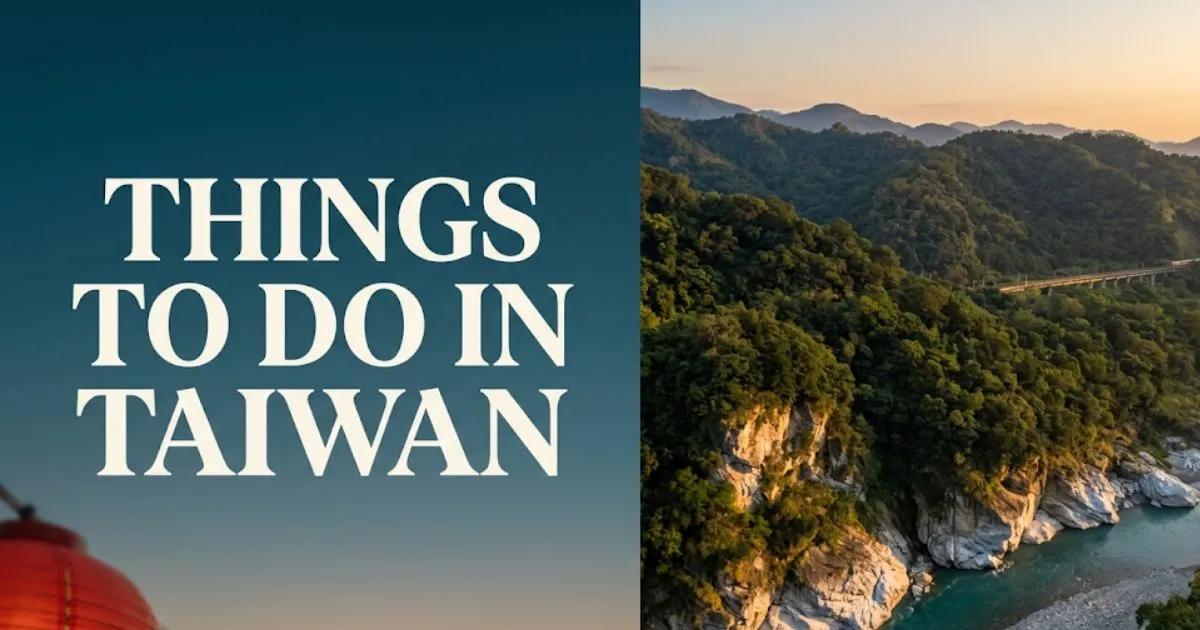
Taroko Gorge is the single most dramatic natural landscape in Taiwan and among the most spectacular gorge environments in all of East Asia.
The gorge is administered by Taroko National Park, headquartered near Hualien. The main scenic highway cuts through marble canyon walls for approximately 20 kilometers, with trails branching off at multiple points.
The Shakadang Trail is the most accessible: flat, well-maintained, and suitable for most fitness levels. The Zhuilu Old Trail is the most intense, requiring a permit and offering exposed cliff-face walkways above the gorge.
Permit requirement: As of recent years, several Taroko trails require advance online permits through the Taroko National Park system. Verify current 2026 permit requirements directly with Taroko National Park Headquarters before booking travel to Hualien.
To reach Taroko Gorge from Taipei:
- Take TRA (Taiwan Railways Administration) train from Taipei Station to Hualien Station; journey runs approximately 2 hours
- Book accommodation in Hualien city, not inside the gorge
- Rent a bicycle, join a guided tour, or hire a local taxi for gorge access from Hualien
- Enter the gorge via the main Taroko Visitor Center at the gorge entrance
- Allocate a minimum full day; two days allows thorough coverage of multiple trails
Rockfall warning: Taroko Gorge has genuine and ongoing rockfall risk. Helmets are available at the visitor center and recommended on certain trail sections. Trail closures after rain or seismic activity are common and non-negotiable. Always check current trail status at the Taroko National Park website before your visit day.
Couples: The gorge at dawn, before tour buses arrive, is one of Taiwan’s most genuinely atmospheric experiences. Stay overnight in Hualien and enter early.
Key Takeaway: Taroko Gorge is not accessible by Taiwan High Speed Rail. Plan an extra half day minimum for the TRA train journey from Taipei to Hualien.
Sun Moon Lake Activities
Sun Moon Lake in Nantou County is Taiwan’s largest lake and the country’s most visited inland destination, with good reason for the reputation.
The lake sits at approximately 748 meters elevation in the Central Mountain Range. Temperatures run significantly cooler than lowland Taiwan, making it a genuine escape from summer heat.
Cycling is the primary activity and genuinely excellent. A dedicated lakeside cycling path circumnavigates most of the lake. Electric bikes are available for rental at multiple stations around the lake for travelers who want the scenery without the physical effort.
The Formosan Aboriginal Culture Village sits adjacent to the lake’s eastern shore. It combines a cultural park focused on Taiwan’s indigenous Thao and other Aboriginal communities with a separate amusement section. The cultural section is substantive and genuinely educational.
A boat service connects the lake’s three main docks: Shueishe, Xuanguang Temple, and Ita Thao. The Ita Thao dock connects to the Thao indigenous community’s market street.
Seniors and accessibility travelers: Sun Moon Lake is one of Taiwan’s most senior-friendly experiences. The lakeside cycling path is flat, electric bikes remove physical barriers, and the boat service eliminates the need for extended walking.
Families with children: The lake is excellent for families. The cycling path, boat rides, and Formosan Aboriginal Culture Village all hold children’s interest. The cultural village’s amusement section adds a bonus for younger kids.
According to the Sun Moon Lake National Scenic Area Administration, sunrise from the Xuanguang Temple dock is the lake’s most-recommended early morning experience. Arrive before 6:30 AM for solitude.
Jiufen and the Northeast Coast
Jiufen Old Street sits in the hills above the northeast coast, approximately 50 kilometers from Taipei. It is Taiwan’s most-photographed historic district.
The red lanterns, narrow stone staircases, and harbor views that define Jiufen’s visual identity are real and genuinely worth seeing. The crowds on weekend afternoons are also real and genuinely exhausting.
The honest assessment: Jiufen on a Saturday afternoon in October is as congested as any major tourist attraction in Asia. The narrow alleys become shoulder-to-shoulder. Go on a Tuesday morning and the experience transforms completely.
The better-kept secret is Jinguashi, a 10-minute walk from Jiufen’s main bus stop. The former gold mining village is quieter, has the Gold Ecological Park with genuinely interesting mining history, and offers coastal views as good as Jiufen’s without the crowd density.
Shifen Waterfall is approximately 20 minutes from Jiufen by bus toward the Pingxi area. The waterfall drops in a curtain shape sometimes called Taiwan’s Niagara. The Pingxi Sky Lantern releasing tradition happens throughout the year at this station, with the largest gathering at the annual Taiwan Lantern Festival.
For 2026, verify the Taiwan Lantern Festival dates directly with the Taiwan Tourism Administration, as dates shift annually.
Couples: Jiufen at dusk on a weekday, when lanterns glow along the stone staircase, is one of Taiwan’s most romantic settings. Staying for the full transition from afternoon to evening light changes the experience completely.
Things To Do in Tainan: Taiwan’s Ancient Capital
Tainan is Taiwan’s oldest city and the single most historically rich destination in the country. Most first-time visitors never reach it; this is the most significant gap in standard Taiwan itineraries.
The city served as Taiwan’s capital under Dutch colonial rule and during the early Qing Dynasty era. Its temple density is the highest in Taiwan. Over 300 registered temples operate within the city limits.
Chihkan Tower (Fort Provintia), built by the Dutch in 1653 and expanded under Qing rule, is the city’s most significant historic site. Anping Fort (Fort Zeelandia), the older Dutch fortification nearby, includes a museum of colonial-era Taiwan history.
Tainan’s food culture rivals Taipei’s in quality and exceeds it in local distinctiveness. The city is associated with specific dishes: coffin bread (guan cai ban), milkfish congee, dan zai mian (Danzai noodles), and shrimp rice. The Tainan Zhongzheng Night Market rotates locations by day; check the current 2026 schedule with Tainan City Tourism.
The Anping District around the old fort is Tainan’s most walkable historic zone. The district’s oyster shell walls, tree-reclaimed ruins, and independent cafes in restored shophouses make it the most atmospheric afternoon in Taiwanese urban travel.
Tainan from Taipei: The THSR runs Taipei to Tainan in approximately 90 minutes. Tainan’s THSR station is outside the city; take a connecting taxi or bus into the historic center.
Solo travelers: Tainan is exceptionally walkable and solo-friendly. The compact historic core covers most major sites within a 30-minute walking radius.
Key Takeaway: If you skip Tainan, you skip the most historically layered city in Taiwan. Budget at least two full days there.
Taiwan Outdoor Activities and Hiking
Taiwan’s central mountain range contains peaks above 3,000 meters and a trail network that challenges experienced hikers from around the world.
The outdoor activity spectrum runs from easy lakeside cycling at Sun Moon Lake to technical summit climbs on Yushan (Jade Mountain), Taiwan’s highest peak at 3,952 meters. Most visitors land somewhere in the accessible middle range.
Beyond Taroko Gorge, the East Rift Valley National Scenic Area between Hualien and Taitung offers some of Taiwan’s most scenic cycling. The valley floor cycling route runs between rice paddies and mountain walls with almost no motor traffic.
Alishan in Chiayi County is best known for its cloud-forest sunrise views and the narrow-gauge Alishan Forest Railway. The railway itself is the experience: a colonial-era train winding through cedar and cypress forest to the summit area. Book tickets in advance, particularly for the sunrise train.
Kenting National Park at Taiwan’s southern tip is the country’s beach and coral diving destination. The park’s western beaches receive calmer water conditions; the eastern shores face the Pacific and carry stronger surf.
For serious hiking:
- Yushan (Jade Mountain): Requires advance mountain permit through the Yushan National Park system; apply weeks to months ahead
- Taroko Gorge trails: Multiple difficulty levels; see Taroko section above for permit details
- Alishan forest trails: No permits required for most trails; accessible to moderate fitness levels
- Elephant Mountain (Xiangshan), Taipei: 20-minute climb; no permit; excellent city views
Seniors and accessibility travelers: Alishan’s forest area accessible by railway platform is manageable for limited-mobility visitors. The forest railway does the elevation work. The summit viewing platform is accessible without a strenuous hike.
Taiwan Hot Springs
Taiwan sits on active volcanic geology that produces over 100 distinct hot spring zones across the island. This is not a niche amenity; it is a central part of the culture.
Beitou District in northern Taipei is the most accessible hot spring destination for city-based visitors. The Beitou Hot Spring Museum, housed in a 1913 Japanese colonial bathhouse, covers the history of hot spring culture in Taiwan. It does not offer bathing, but it contextualizes the experience well.
For bathing in Beitou, the distinction matters: public baths serve all visitors affordably, while private room facilities at hotels cost significantly more. The public hot spring baths at Beitou’s municipal pools are where locals actually go. Budget travelers should start there.
Wulai is approximately 40 minutes by bus from Xindian MRT station. The small indigenous Atayal village setting around Wulai’s hot springs is distinct from Beitou’s urban context. Wulai also has a brief cable car to a small Aboriginal cultural park.
Jiaoxi in Yilan County sits approximately one hour from Taipei by TRA train. Its hot springs are sodium bicarbonate type, odorless and clear, which suits visitors who find the sulfurous Beitou springs off-putting.
Couples: Private room hot spring facilities are the preferred format for couples. These range from simple cedar-tub rooms to more elaborate ryokan-style accommodations in Wulai. Book ahead on weekends.
Seniors: Hot spring soaking requires attention to temperature limits and hydration. Most facilities post recommended soaking durations. Follow them seriously, particularly in summer months when ambient temperatures are already high.
Taiwan Street Food and Tea Culture
Taiwan’s street food culture is one of the most serious and varied in Asia, centered on specific dishes with specific regional identities rather than a generic “Asian street food” catch-all.
The country is acknowledged internationally as the origin of bubble tea (boba). The first commercially served version appeared at Chun Shui Tang tea house in Taichung in the 1980s. A version also appeared at Hanlin Tea Room in Tainan around the same period. Both cities claim the origin.
Taiwan’s definitive dishes by city:
- Taipei: Beef noodle soup (hong shao niu rou mian) at small counter restaurants in Zhongshan and Da’an Districts
- Tainan: Dan zai noodles (Danzai mian), coffin bread, and milkfish congee; Tainan food is sweeter by regional convention
- Taichung: Sun cakes (tai yang bing), pearl milk tea, and pineapple cake production centered here
- Hualien: Wild boar sausage and Amis indigenous grain dishes at Dongda Road market stalls
Tea culture in Taiwan means oolong tea at its most sophisticated. The high-mountain oolongs from Alishan, Li Shan, and Shan Lin Xi are exported globally but consumed locally at a fraction of export pricing.
Maokong in Taipei’s hills is Taiwan’s most accessible tea house district for visitors. Take the Maokong Gondola from Taipei Zoo station. Evening tea service with the city lit below is the standard experience; it earns its reputation for couples and solo travelers equally.
Budget travelers: Tea culture is one of Taiwan’s most affordable pleasures. A full afternoon at a Maokong teahouse with multiple tea steepings and light food costs very little.
Key Takeaway: Taiwan’s food scene is most rewarding when you eat the specific regional dishes of each city, not the same dishes repeated across the island.
How To Get Around Taiwan
Taiwan’s transportation infrastructure is one of the most effective systems for visitors in East Asia, provided you understand which network serves which destinations.
The two main rail systems are distinct and serve different areas:
Taiwan High Speed Rail (THSR) connects Taipei, Taichung, Chiayi, Tainan, and Kaohsiung on the western corridor. Journey from Taipei to Tainan runs approximately 90 minutes. This is the backbone of west-coast travel and is efficient, comfortable, and affordable by Western standards.
Taiwan Railways Administration (TRA) covers the full island, including the east coast. Taipei to Hualien takes approximately two hours by TRA express train. This is the only rail option for reaching Taroko Gorge.
Taipei MRT covers the capital comprehensively. The EasyCard contactless card loads credit and works across MRT, buses, YouBike bike share, and convenience store purchases island-wide.
For getting around Taiwan systematically:
- Fly into Taoyuan Airport (TPE) and take the MRT Airport Line directly to central Taipei
- Base yourself in Taipei for two to three days; use the MRT for all city movement
- Buy an EasyCard at any MRT station on arrival
- Book THSR tickets online in advance for west coast travel to Taichung, Tainan, Kaohsiung
- Book TRA express trains separately for east coast travel to Hualien
- Within Hualien and Taroko Gorge, hire local taxis or join day tours; scooters on mountain roads carry real risk
Scooter rental note: Taiwan is famous for scooter culture. Renting one requires an international driving permit and genuine familiarity with dense urban traffic. For non-experienced riders, city traffic and mountain road conditions make scooters a genuine hazard. Experienced riders will find scooters liberating in rural areas.
Taiwan Travel Itinerary: 7 Days Structured for Real Travel
A well-structured 7-day Taiwan itinerary covers Taipei, the northeast coast, Tainan, and Hualien without backtracking or wasted transit time.
Day 1: Taipei Arrival and Orientation
- Arrive at Taoyuan Airport; take MRT Airport Line to central Taipei
- Check in; recover from travel
- Evening: Ningxia Night Market in Zhongshan District for first night market experience
- Walk Yongkang Street area in Da’an for bubble tea and pineapple cake shopping
Day 2: Taipei Core Experiences
- Morning: Elephant Mountain (Xiangshan) for the city skyline view; arrive before 8 AM
- Midmorning: National Palace Museum (allow 3 hours minimum)
- Afternoon: Ximending district for street culture and lunch
- Evening: Raohe Street Night Market for dinner
Day 3: Jiufen, Jinguashi, and Shifen
- Morning: Bus from Taipei to Jiufen; arrive early to beat crowds
- Midmorning: Walk from Jiufen to Jinguashi Gold Ecological Park
- Afternoon: Bus to Shifen for the waterfall and sky lantern experience
- Return to Taipei by early evening; Maokong Gondola for night tea
Day 4: THSR to Tainan
- Morning: THSR from Taipei to Tainan (90 minutes)
- Afternoon: Anping Fort, Chihkan Tower, Anping District exploration
- Evening: Tainan night market experience; city stay overnight
Day 5: Tainan Full Day
- Morning: Temple circuit in central Tainan; Tainan Confucius Temple, Sacrificial Rites Martial Temple
- Afternoon: Coffin bread lunch; explore Shennong Street boutique district
- Evening: Tainan Zhongzheng Night Market (check 2026 rotation schedule)
Day 6: TRA to Hualien
- Morning: TRA train from Tainan to Hualien (approximately 4 hours with transfer; verify 2026 schedule)
- Afternoon: Arrive Hualien; orient to the city; Dongda Road market stalls
- Evening: Hualien night market
Day 7: Taroko Gorge
- Full day at Taroko National Park from Hualien base
- Morning: Shakadang Trail (flat, accessible, gorge river views)
- Midmorning: Swallow Grotto (Yanzikou) scenic walking section
- Afternoon: Eternal Spring Shrine overlook
- Depart Hualien by TRA for Taipei or onward; fly out from TPE following morning
Best Time To Visit Taiwan
The best time to visit Taiwan is October through December, when typhoon season has ended, skies clear, and temperatures drop to comfortable levels across the island.
| Month | Temperature (General) | Rainfall | Crowds | Recommendation |
|---|---|---|---|---|
| January-February | Cool; north is cold | High in north | Low | Low season; Lantern Festival (verify 2026 dates) |
| March-April | Warming; comfortable | Moderate | Moderate | Cherry blossom season; good hiking window |
| May-June | Hot; humid | Increasing | Moderate | Manageable but heat building |
| July-August | Hot; humid; typhoons | High | Peak tourist season | Typhoon risk; trail closures possible |
| September | Hot; typhoon risk declining | High | Moderate | Risky transition month |
| October-November | Comfortable; cooling | Low | Moderate to high | Best overall window |
| December | Comfortable; cool north | Low | Low to moderate | Excellent value; pleasant south Taiwan |
Typhoon season (July through September) is the most important factor for east coast and mountain travel planning. A typhoon can close Taroko Gorge for days. East coast highways shut completely during storms. If your trip is built around Taroko Gorge in August, have a contingency plan.
Taiwan Lantern Festival 2026 typically falls in February, tied to the Lunar calendar. The Pingxi Sky Lantern Festival happens on the same date. Verify exact 2026 dates with the Taiwan Tourism Administration.
Cherry blossom in Taiwan peaks at different elevations: Alishan’s cherry blossoms typically peak in late February to mid-March. Wuling Farm in Taichung County is a prime blossom viewing site, typically peaking in late February. Verify exact 2026 timing close to the travel date.
Seniors and accessibility travelers: October and November offer the most physically comfortable conditions for extended walking and outdoor activities.
Taiwan Travel Tips and Practical Logistics
Taiwan is one of the easiest destinations in Asia for US visitors to navigate independently, but a few logistics decisions affect trip quality significantly.
Cost context by category:
| Category | Budget Range (General) | Notes |
|---|---|---|
| Night market meal | Very affordable per dish | Order multiple small dishes |
| Mid-range restaurant | Affordable by Western standards | Significantly less than Tokyo or Singapore equivalents |
| THSR Taipei to Tainan | Moderate; affordable by Western standards | Book in advance online |
| TRA Taipei to Hualien | Moderate; less than THSR | Express trains fill up; book ahead |
| Mid-range hotel, Taipei | Affordable by Western standards | Da’an and Zhongshan Districts are centrally located |
| Budget hostel, Taipei | Very affordable | Plenty of quality options near MRT stations |
| Taroko day tour from Hualien | Varies; verify with operators | Local taxi tours are flexible and common |
Connectivity: Taiwan has excellent mobile coverage in cities and most tourist areas. Purchase a prepaid SIM card at Taoyuan Airport upon arrival from any of the major carriers (Chunghwa Telecom, Taiwan Mobile, Far EasTone). Coverage in deep gorge sections of Taroko may be limited.
Language: Mandarin Chinese is the official language. English signage is standard on MRT, THSR, and in Taipei’s main tourist areas. Outside major cities, English fluency is less common. Google Translate’s camera function handles menus effectively.
Tipping culture: Taiwan does not have a strong tipping culture. Night markets and small restaurants do not expect tips. High-end hotels may include a service charge.
Entry requirements: US citizens have been eligible for visa-free entry to Taiwan for tourism purposes for stays up to a standard duration. Verify current 2026 entry requirements with the American Institute in Taiwan (AIT) before departure, as policies can change.
Taiwan Safety and Practical Warnings
Taiwan is one of the safest countries in Asia for independent travelers. The primary risks are environmental and physical, not related to crime.
Key safety and practical facts every visitor should know:
- Typhoon closures are immediate and non-negotiable. Taroko Gorge, east coast highways, and mountain trail systems close with little warning during typhoon events. Check Taiwan’s Central Weather Administration forecasts daily during July through September travel.
- Rockfall in Taroko Gorge is a genuine and ongoing hazard. Helmets are recommended on specific trail sections. Never remove a hard hat on designated helmet-required trails.
- Scooter traffic in Taiwanese cities is dense. Cross streets only at marked crossings and only when signals change. Scooters do not stop for pedestrians outside crossings.
- Mountain permit systems are real and enforced. Yushan (Jade Mountain) and certain Taroko trails require advance permits. Attempting restricted trails without permits results in a fine and forced return.
- Tap water is generally safe to drink in most urban areas, but locals typically use filtered water. Bottled and filtered water is cheap and widely available.
- Summer heat and humidity in lowland Taiwan (June through September) can be intense. Carry water, wear sun protection, and pace outdoor activities to early morning and late afternoon.
- Medical infrastructure in Taiwan is excellent by international standards. The National Health Insurance system is well-regarded, and private hospitals in Taipei operate at high standards. Travel medical insurance remains advisable.
For emergencies in Taiwan: The general emergency number is 119 (fire and ambulance) and 110 (police). English-language assistance is available through the tourism emergency hotline operated by the Taiwan Tourism Administration. Confirm the current 2026 hotline number directly with their website before departure.
Key Takeaway: Taiwan’s safety risks are almost entirely environmental. Respect trail closure signs, monitor weather during typhoon season, and watch scooter traffic in cities.
Frequently Asked Questions About Things To Do in Taiwan
What are the best things to do in Taiwan for first-time visitors?
The best things to do in Taiwan for first-time visitors include Taroko Gorge, Tainan’s historic temple district, Taipei’s night markets, and a day trip to Jiufen and Jinguashi.
A 7-day itinerary that combines two days in Taipei, two days in Tainan, and two days in Hualien covers the island’s core variety without rushing.
Most first-timers make the mistake of staying only in Taipei; the most memorable Taiwan experiences are in the regions outside the capital.
How many days do you need in Taiwan?
Seven days is the practical minimum for a meaningful Taiwan experience that includes Taipei, the east coast, and Tainan.
Ten days allows a more comfortable pace with time for Alishan, Sun Moon Lake, and the East Rift Valley cycling route.
A three or four-day visit limits you to Taipei and one day trip, which gives an incomplete picture of what Taiwan actually offers.
Is Taiwan safe to travel alone?
Taiwan is one of the safest countries in Asia for solo travelers, including solo women travelers.
Night markets, public transit, and city streets are safe at night; crime rates in Taiwan are among the lowest in East Asia.
The primary safety considerations for solo travelers are environmental: typhoon season trail closures, rockfall in Taroko Gorge, and heat exposure in summer.
What is the best time of year to visit Taiwan?
The best time to visit Taiwan is October through December, when typhoon season has ended, skies are clear, and temperatures are comfortable across the island.
March and April are also excellent, with cherry blossom season at Alishan and comfortable temperatures before summer heat builds.
July through September carries genuine typhoon risk that can close Taroko Gorge and the east coast; plan contingencies if you travel during these months.
How do you get around Taiwan without a car?
Taiwan’s rail network makes car-free travel straightforward: the THSR connects the west coast cities, TRA trains cover the east coast and full island, and Taipei MRT handles the capital comprehensively.
An EasyCard, purchased at any Taipei MRT station, covers MRT, buses, and YouBike bike share across the city.
For Taroko Gorge specifically, local taxis hired from Hualien are the most flexible and commonly used option for independent visitors.
Is Taiwan expensive to visit?
Taiwan is one of the most affordable destinations in East Asia for US visitors, particularly for food, transit, and mid-range accommodation.
Night market eating is extremely affordable; THSR and TRA rail fares are modest by Western standards; and mid-range hotels in Taipei cost significantly less than comparable options in Tokyo, Singapore, or Hong Kong.
The main costs that add up are accommodation in central Taipei during peak season and organized day tours for Taroko Gorge, particularly if booked through international platforms rather than local operators.
Plan Your Taiwan Trip With Confidence
Taiwan rewards the traveler who does more than Taipei. Book your TRA train to Hualien and your THSR to Tainan before other logistics. These two rail tickets unlock the experiences that define why Taiwan is worth the trip.
Verify Taroko Gorge trail permit requirements, the 2026 Taiwan Lantern Festival dates, and current visa-free entry conditions directly with the Taiwan Tourism Administration and the American Institute in Taiwan before departure. These details change and matter.
Every price, schedule, and entry requirement in this guide reflects general conditions and should be confirmed with official sources close to your departure date. The destination is genuinely exceptional. Go beyond the obvious attractions and the trip will exceed expectations.