Things to Do in Nicaragua: The 2026 Travel Guide

Nicaragua delivers some of the most varied things to do in Nicaragua in Central America. From live volcano adventures to Caribbean reef diving, the country packs an outsized range of experiences into a genuinely affordable trip.
The Instituto Nicaragüense de Turismo (INTUR) identifies Nicaragua as one of the region’s fastest-growing adventure travel destinations. It also remains one of the least crowded, with far fewer mass-tourism crowds than Costa Rica or Belize.
This guide covers the best activities, cities, beaches, and logistics for planning an actual 2026 trip. It addresses traveler profiles honestly, including who Nicaragua suits best and who should reconsider.
Things to Do in Nicaragua: A Country Overview
Nicaragua’s most useful quality as a destination is range. Within a two-hour drive of the capital Managua, travelers can reach an active volcano, a crater lake, a colonial city, and a surf beach.
Managua itself is the transit hub, not a sightseeing destination. Most experienced travelers pass through it efficiently and head directly to Granada, León, or San Juan del Sur.
The country divides naturally into four zones: the Pacific lowlands (volcanoes, surf, colonial cities), the central highlands (coffee farms, cloud forest), Lake Nicaragua and Ometepe Island, and the Caribbean coast (Corn Islands, jungle rivers, reef diving).
Each zone requires separate planning. Treating Nicaragua as a single destination leads to rushed, unsatisfying itineraries.
Solo travelers find this structure particularly useful for building efficient routes. Families need to evaluate each zone independently, as the Caribbean coast requires a flight and the volcano zone demands significant physical tolerance.
| Zone | Best For | Cost Tier | Travel Time from Managua |
|---|---|---|---|
| Pacific Lowlands | Volcanoes, surf, colonial cities | Budget | 1 to 3 hours |
| Central Highlands | Coffee, ecotourism, cool climate | Mid-range | 2 to 3 hours |
| Lake Nicaragua / Ometepe | Island hiking, lake kayaking | Budget-Mid | 2 to 4 hours + ferry |
| Caribbean Coast | Reef diving, beaches, snorkeling | Mid-range | Flight from Managua |
Best Things to Do in Nicaragua
The best things to do in Nicaragua include volcano boarding on Cerro Negro, walking Calle La Calzada in Granada, swimming in Lago de Apoyo, and diving off Little Corn Island.
Beyond those anchors, the country’s specific strengths are adventure activities with low crowds, colonial architecture without the tourist prices of Mexico or Peru, and Caribbean reef access without the Cancún-level development.
The activity most consistently underrated by first-time visitors is Lago de Apoyo. This crater lake between Granada and Masaya offers swimming, kayaking, and a bar scene at the water’s edge that local travelers consistently prefer over Granada’s more-photographed Parque Central.
Couples find Lago de Apoyo more intimate than the colonial city streets. Budget travelers appreciate that it costs almost nothing to reach by shuttle from Granada.
Insider Tip:
- Book a half-day at Apoyo Lagoon before committing to a full day in Granada. The lake is cooler, quieter, and more genuinely relaxing.
- The cliff-jumping platform at Monkey Hut hostel on Apoyo’s shore is accessible to non-guests for a small day-use fee.
- Seniors and travelers with mobility concerns should note Apoyo’s steep access road. Confirm transport pickup with any accommodation before booking.
Nicaragua Adventure Activities
Nicaragua’s adventure activity circuit is one of the most physically varied in Central America. Options span active volcano boarding, canyon swimming, cloud forest canopy tours, Pacific surf, and Caribbean reef diving.
Volcano boarding on Cerro Negro is the activity most associated with Nicaragua internationally. Riders hike up the black ash flanks of an active volcano and slide down on a wooden board. It sounds like tourism theater. It isn’t.
Cerro Negro sits about 30 kilometers north of León. Most operators run the experience as a half-day tour with board, protective gear, and guide included. Budget roughly $30 to $40 USD per person as a general range, though prices vary by operator and season. Verify current pricing directly.
Solo travelers are well-served by group tour departures from León, which run most mornings in dry season. Families with children under 12 should note that most operators set a minimum age requirement. Confirm before booking.
The rainy season (May through October) makes the Cerro Negro descent faster but more unpredictable. Dry season (November through April) offers more reliable surface conditions.
The local alternative for volcano adventure is Mombacho Volcano, south of Granada. It offers cloud forest hiking and canopy tours rather than boarding. The crowd profile is completely different: Mombacho attracts nature-focused travelers rather than the young adrenaline-seeking demographic that dominates Cerro Negro departures.
| Activity | Best Season | Duration | Cost Range (Approx) | Traveler Profile |
|---|---|---|---|---|
| Volcano boarding, Cerro Negro | Dry (Nov–Apr) | Half day | $30–$45 pp | Solo, couples, groups |
| Cloud forest hike, Mombacho | Dry season | Half to full day | $20–$35 pp | Families, seniors (lower trails) |
| Somoto Canyon swimming | Dry season | Full day | $15–$30 pp | Solo, couples |
| Pacific surf lesson, San Juan del Sur | Year-round | 2 hours | $25–$45 pp | Beginners, couples |
| Reef diving, Corn Islands | Dry season | Full day | $50–$80 pp | Certified divers |
Granada Nicaragua Things to Do
Granada is Nicaragua’s most visited colonial city and one of the oldest continuously inhabited European-founded cities in the Americas. Its specific strength is walkability: the central zone covers a compact area of about eight square blocks.
Calle La Calzada is the main pedestrian corridor, lined with restaurants, bars, and craft vendors. It is the most photographed street in Granada. It is also the most tourist-concentrated, with prices reflecting that reality.
The Convento y Museo San Francisco is the colonial-era highlight worth your time. The museum’s pre-Columbian stone statues from Zapatera Island are genuinely significant. Admission runs a few dollars and rarely involves waiting.
The honest local alternative to Calle La Calzada is the neighborhood around Calle El Arsenal, three blocks west. Local restaurants, neighborhood bakeries, and hardware stores line the street alongside a handful of quieter guesthouses used by longer-stay travelers.
Couples find Granada’s rooftop bars best at sunset, particularly above the colonial corridor. The Tres Mundos cultural center at Casa de los Tres Mundos programs live music and art events. Check current schedules directly, as programming varies seasonally.
Families with children should plan Granada for morning hours. Heat builds significantly by noon, and the colonial streets offer limited shade. The Las Isletas boat tour on Lake Nicaragua, departing from near the main dock, provides 45 minutes of shade and genuine wildlife spotting.
According to Lonely Planet’s Nicaragua destination guide, Granada functions best as a 1 to 2 night base for regional day trips rather than a standalone multi-day stay. This assessment holds: the city is best used as a hub.
Insider Tip:
- The rooftop bar at La Gran Francia hotel allows non-guests for drinks. The view of Parque Central and Volcán Mombacho together is the city’s best.
- Arrive at Granada’s market before 9 AM. By 10 AM the heat is significant and the crowds are dense.
Key Takeaway: Granada’s real value is as a day-trip hub for Lago de Apoyo, Masaya Volcano, and Las Isletas boat tours. Plan two nights maximum unless you are specifically attending a festival.
León Nicaragua Activities
León is Nicaragua’s university city, its political heart, and arguably its most intellectually engaging urban destination. It is less photogenic than Granada but more genuinely local.
The Catedral de León is the largest cathedral in Central America and a UNESCO World Heritage Site. Climbing to its white rooftop provides one of the country’s best elevated views across the city and toward Volcán Cerro Negro. Access to the roof typically requires a small fee. Verify current access directly.
León’s murals are the city’s most underappreciated feature. Revolutionary-era political murals cover entire building facades throughout the historic center. The concentration around Calle Central Rubén Darío and the streets near the Museo de la Revolución offers a genuinely different visual and historical experience than the colonial-postcard version of Nicaragua most travel guides present.
Solo travelers particularly benefit from León’s strong hostel network and active student social scene. Bars near the central park operate well into the night, and the demographic is heavily local and university-aged.
Seniors should note that León’s cobblestone streets are extensive and uneven. The cathedral roof climb involves a significant stair ascent. The city’s heat is intense: León sits in one of Nicaragua’s hottest lowland zones. Morning hours before 10 AM are strongly preferable for any walking itinerary.
The local alternative to the standard León city tour is a half-day trip to the Chinandega sugar cane region west of León. Few tourist operators cover it, but local guides based in León know the route and offer access to one of Nicaragua’s least-visited agricultural landscapes.
Insider Tip:
- The Museo de la Revolución near Parque Central is run by former Sandinista combatants. The firsthand perspective is unlike any museum guide in Central America.
- León’s best local lunch is at the comedores (small neighborhood eateries) on the streets behind the central market. A full plate of gallo pinto, chicken, and plantains runs $2 to $4 USD.
- Verify Museo de la Revolución hours directly before visiting. Hours have been inconsistent.
Ometepe Island Things to Do
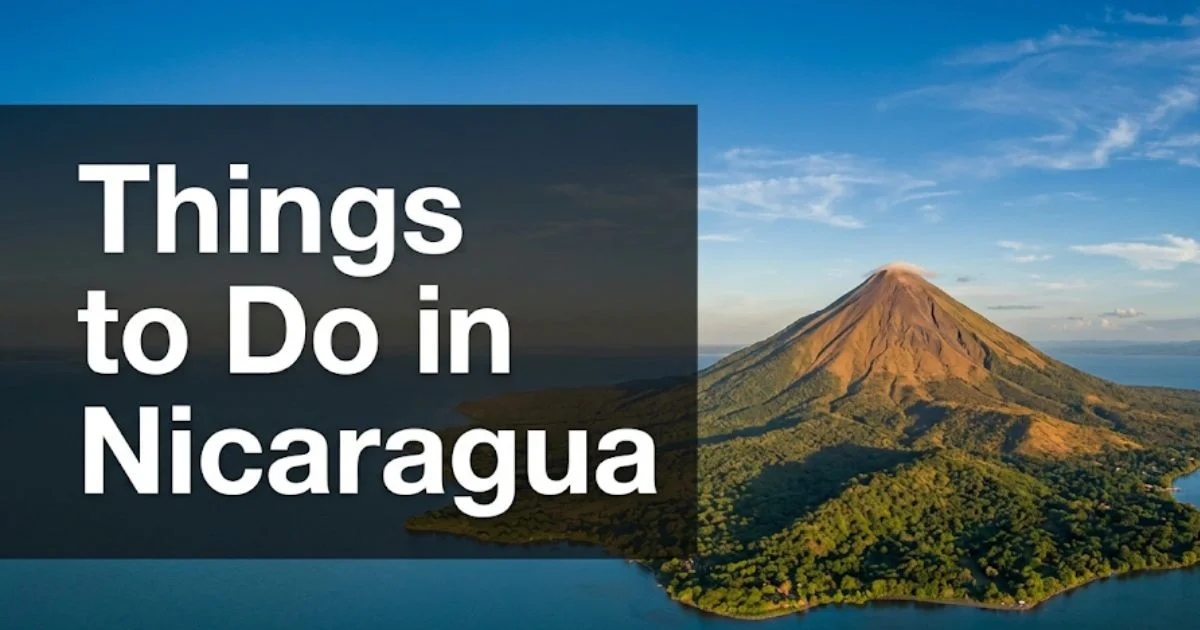
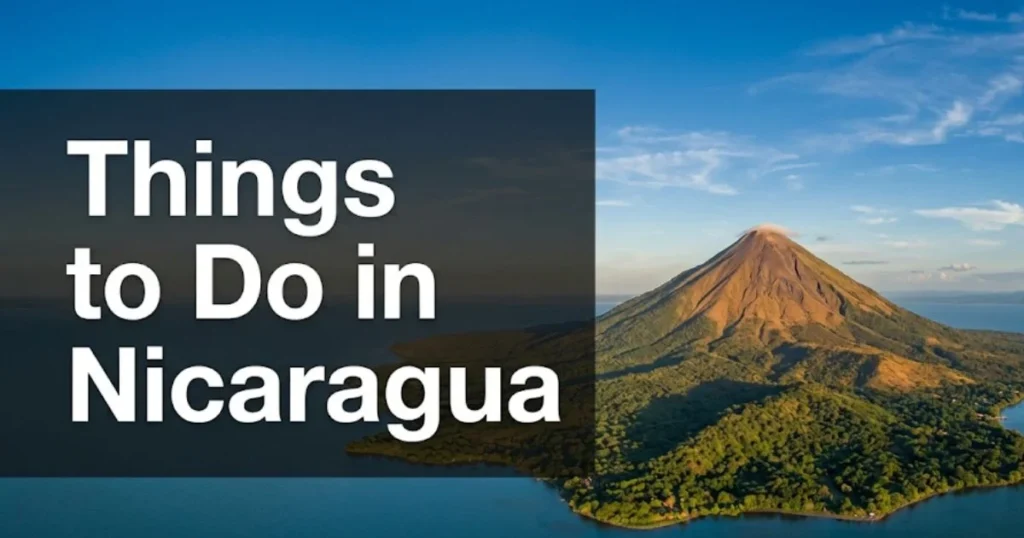
Ometepe Island sits in Lake Nicaragua and is formed by two connected volcanoes: Volcán Concepción (active) and Volcán Maderas (dormant with a crater lake). It is the country’s most distinct natural environment and one of Central America’s most unique island experiences.
The ferry to Ometepe departs from San Jorge near the city of Rivas on the Pacific side, or from Granada on the lake’s northern shore. The Granada ferry is scenic but significantly longer. Most travelers use San Jorge. Journey time from San Jorge to the island port at Moyogalpa runs approximately one to two hours depending on ferry type.
Hiking Volcán Concepción is the Ometepe activity that commands the most planning. It is a serious full-day climb. A licensed guide is mandatory and sensible: the trail is demanding, conditions change rapidly, and the upper section involves significant physical exposure.
Budget travelers can find dormitory accommodation on Ometepe for $8 to $15 USD per night as a general range. Mid-range guesthouses with private rooms run $25 to $60 USD. Prices vary by season and year. Verify current availability.
Families should honestly assess Ometepe’s fit for young children. The island roads are rough. Stroller access is impractical across most of the terrain. The heat at lower elevations is consistent and intense. Ometepe suits families with older children (12 and up) who can handle physical activity.
According to Travel + Leisure’s Nicaragua coverage, Ometepe ranks among the country’s top two natural experiences alongside the Corn Islands. The ranking is accurate. The planning investment it requires is higher than most coverage acknowledges.
Insider Tip:
- Volcán Maderas is the more accessible summit for fit non-specialist hikers. The crater lake at the top is the reward. Plan 7 to 9 hours round trip.
- Rent a motorbike or hire a local driver on the island. The circling road is long and public transport between sites is limited.
Key Takeaway: Ometepe requires two nights minimum to justify the ferry crossing. A single-day visit underdelivers consistently.
Masaya Volcano National Park
Masaya Volcano National Park is the most accessible active volcano experience in Nicaragua. Visitors can drive to within a few hundred meters of the active Santiago crater’s edge, looking directly down into a glowing lava lake visible after dark.
The park is managed by MARENA (Nicaragua’s Ministry of Environment and Natural Resources). Admission fees apply and are subject to change. Verify current admission costs through INTUR or directly with the park before visiting.
The nighttime lava lake viewing is the park’s standout experience. On dark, clear nights, the glow from the active crater is visible from kilometers away. Arrive after 6 PM for the strongest visual effect. The park allows limited evening access: confirm current hours before planning your schedule.
Couples consistently rate the Masaya nighttime visit as one of Nicaragua’s most memorable experiences. The combination of active lava, sulfur smell, and total darkness around the crater edge is viscerally unlike anything a standard national park delivers.
Seniors and travelers with mobility considerations will find Masaya one of Nicaragua’s most accessible natural attractions. The viewpoint is reachable by vehicle. The walk from the parking area to the crater edge is short and relatively flat.
Insider Tip:
- The park also contains the Coyotepe Fortress on a hill overlooking Masaya city. The fortress has historical significance and the hilltop view is excellent. Few visitors combine it with the volcano.
- Bring a bandana or light mask. The sulfur emissions at the crater edge are intense and can cause discomfort for those with respiratory sensitivities.
Somoto Canyon Nicaragua
Somoto Canyon in the far north of Nicaragua near the Honduran border is the country’s most underrated adventure experience. The canyon cuts through basalt rock formations with swimming, cliff jumping, and guided float-through sections on the Río Coco.
The canyon is accessible as a day trip from the town of Somoto. Local guide cooperatives based in Somoto lead the canyon experience. A guided tour typically runs $15 to $30 USD per person as a general range, including transport to the canyon entrance and a guide for the 3 to 4 hour route.
The float-through section requires comfort in water. Strong swimmers manage it independently. Non-swimmers or nervous swimmers should opt for a shorter section that avoids the deepest channel.
Budget travelers will find Somoto Canyon one of Nicaragua’s best value-to-experience activities. The town itself is inexpensive and largely untouched by tourist infrastructure, which keeps prices down.
Families with children should confirm with tour operators the minimum age and swimming ability requirements for each canyon section. The cliff jumping portions are optional. Younger children can participate in the shallower float sections with a guide.
Somoto Canyon is best visited from December through April. Water levels during the rainy season make the narrow sections of the canyon impassable or dangerous.
The canyon is often skipped by travelers who plan only the Pacific circuit (Granada, León, San Juan del Sur). That is the single biggest itinerary mistake for travelers with 10 or more days in Nicaragua.
Key Takeaway: Somoto Canyon rewards travelers who extend their route north. Build in a full day from Somoto town and plan it for dry season only.
Best Beaches in Nicaragua
Nicaragua’s best Pacific beaches cluster around San Juan del Sur and the string of surf-focused breaks north and south of the bay. The Caribbean coast offers a completely different beach character: calmer water, reef environments, and dramatically less development.
Playa Maderas, about 12 kilometers north of San Juan del Sur, is consistently rated the superior surf beach in the area. It has a stronger break than San Juan del Sur town beach and a more relaxed, local-feeling atmosphere. Transport by taxi or shuttle from San Juan del Sur takes approximately 20 minutes.
Playa Hermosa and Playa Yankee, accessible by rough road or boat from San Juan del Sur, add more remoteness and better wave quality for intermediate to advanced surfers.
Couples seeking a quieter beach experience should look beyond San Juan del Sur town, which on weekends and during Semana Santa (Holy Week before Easter) fills with Nicaraguan and Costa Rican visitors. The pace becomes significantly louder and more crowded than most international travelers expect.
Surf lessons in San Juan del Sur run from various schools along the main beach road. Prices are generally in the $25 to $45 USD range per two-hour session as a rough estimate. Verify current offerings with operators.
The La Flor Wildlife Refuge, approximately 25 kilometers south of San Juan del Sur, hosts olive ridley sea turtle nesting season from July through December, with mass nesting events (arribadas) concentrated in September and October. Access requires a guide. Contact local operators for current season status and access logistics.
Corn Islands Nicaragua
Little Corn Island and Big Corn Island, reached by a 40-minute flight from Managua on La Costena Airlines, offer Nicaragua’s most distinct travel experience. These Caribbean islands bear no resemblance to the Pacific circuit.
Little Corn is the more rewarding of the two for most travelers. The island has no cars. Paths connect the village, guesthouses, and beaches on foot. The reef diving is the primary draw: the Corn Islands sit near the Miskito Cays reef system, one of the Caribbean’s intact reef environments.
Big Corn has the airport, slightly more infrastructure, and a more spread-out feel. Most travelers overnight at Big Corn while waiting for the water taxi to Little Corn. The water taxi crossing takes approximately 30 to 45 minutes and operates on a loose schedule. Confirm departure times locally.
Flights to the Corn Islands book out quickly during high season (December through March). Book seats at least four to six weeks ahead during this period. The airline’s schedule is limited to a small number of daily round trips.
Budget travelers should note that the Corn Islands run above Nicaragua’s average cost. Accommodation, food, and dive packages reflect the islands’ remoteness and import costs. Expect to spend $60 to $120 USD per day as a rough range depending on accommodation type.
Seniors and travelers with limited mobility will find Little Corn’s car-free, sandy-path environment actually more accessible than many of Nicaragua’s cobblestone colonial cities. The terrain is flat. The pace is genuinely slow.
Insider Tip:
- Stay on Little Corn’s eastern (ocean-facing) side for the stronger waves and reef access. The western side is calmer but less interesting for snorkelers and divers.
- Book dive packages in advance through guesthouses. Walk-in dive shop availability during high season is unreliable.
Key Takeaway: The Corn Islands are not a side trip. They are a destination. Budget a minimum of three nights on Little Corn to justify the flight cost and logistics.
Nicaragua Coffee Region
Nicaragua’s coffee region centers on Matagalpa and the surrounding highlands, roughly 130 kilometers north of Managua. This is the country’s cloud forest zone: cooler temperatures, green hillsides, and a coffee production culture that has operated since the 19th century.
Selva Negra Ecolodge, located on the Matagalpa-Jinotega road, is the most developed coffee farm tourism experience in the region. The property offers farm tours, birdwatching, hiking through coffee plantations, and accommodation in wooden bungalows amid cloud forest. It operates as both a working farm and a nature lodge.
Reserva Natural Miraflor, northeast of Estelí, offers a rawer community-based ecotourism experience. Local families host travelers, guide coffee and orchid farm walks, and provide meals from their own production. Prices are very low. Comfort level is basic. The experience is among Nicaragua’s most authentic.
Budget travelers find the Matagalpa region significantly cheaper than the Pacific coast tourism circuit. Selva Negra runs at mid-range pricing for its accommodation. Community stays in Miraflor run at a fraction of that.
Couples seeking a genuinely peaceful, cool-climate retreat find the highlands a strong contrast to the heat and activity of the Pacific lowlands. The region’s population density is low and the pace is calm.
The coffee region requires at least one full day from Matagalpa town to cover meaningfully. Two nights in the highlands allows for a farm tour, a cloud forest hike, and a Matagalpa city exploration without rushing.
According to the Instituto Nicaragüense de Turismo (INTUR), Nicaragua’s coffee production areas have significantly expanded their tourism infrastructure since 2020, with Matagalpa and Jinotega departments now offering guided agri-tourism routes.
Nicaragua Food and Culture
Nicaragua’s food culture is grounded in a few core dishes found across every region. Gallo pinto (rice and beans fried together with onion and spices) is the national breakfast. Vigorón (yuca topped with chicharrón and cabbage slaw) is the signature street food of Granada specifically.
Quesillo, a rolled tortilla filled with fresh cheese, cream, and pickled onion, is sold from roadside stands throughout the Pacific lowlands. It costs about $0.50 to $1 USD and is one of the country’s most honest culinary pleasures.
The Mercado de Artesanías de Masaya is the country’s best craft market. Hammocks, ceramics, leather goods, and wooden carvings fill an entire market building in Masaya city, about 30 kilometers from Managua. Prices are negotiable. The market is busiest on weekends.
Flor de Caña rum, produced in Chichigalpa near León, is one of Central America’s most respected rums. The distillery offers tours. Contact the Flor de Caña visitor experience directly for current tour schedules and booking requirements.
Budget travelers eat extremely well in Nicaragua at very low cost. A full meal at a local comedor (neighborhood eatery) runs $2 to $5 USD. Street food costs less. The difference between a tourist-facing restaurant on Calle La Calzada and a comedor two streets away can be a factor of three in price with comparable or better food quality.
Families with children will find Nicaraguan food approachable. The flavor profile is mild. Fried plantains, rice, and beans appear on virtually every table. Children’s menus are uncommon, but portion sharing is completely normal.
Nicaragua Itinerary Planning
A well-structured Nicaragua itinerary for 7 days divides the country’s main zones without over-rushing any one experience.
7-Day Nicaragua Itinerary Framework:
- Day 1: Arrive Managua (MGA). Transfer directly to Granada (1.5 hours by shuttle or private transfer). Evening walk along Calle La Calzada. Dinner at a restaurant on the colonial corridor.
- Day 2: Morning boat tour of Las Isletas on Lake Nicaragua. Afternoon half-day at Lago de Apoyo (crater lake swimming and kayaking). Return to Granada for overnight.
- Day 3: Day trip to Masaya Volcano National Park (30 minutes from Granada). Time the visit for an evening return to catch nighttime lava viewing. Consider a morning at the Masaya artisan market before the park.
- Day 4: Shuttle from Granada to León (2.5 to 3 hours). Cathedral rooftop and mural walking tour in afternoon. Overnight in León.
- Day 5: Volcano boarding at Cerro Negro (half-day morning tour from León). Afternoon recovery and city exploration. Overnight León or shuttle south toward San Juan del Sur.
- Day 6: San Juan del Sur. Morning surf lesson or transport to Playa Maderas. Afternoon beach time. Overnight San Juan del Sur.
- Day 7: Return to Managua for departure (2.5 hours by shuttle). Or extend itinerary to include Ometepe or Matagalpa with additional nights.
Travelers with 10 or more days should add: 2 nights on Ometepe (requires adding ferry day from San Jorge), 2 nights in Matagalpa region for coffee farms, or 3 nights on Little Corn Island (requires separate flight booking well in advance).
Budget travelers can complete the 7-day circuit entirely by chicken buses for a fraction of shuttle costs. The trade-off is significantly longer travel times and more physical effort navigating connections.
Best Time to Visit Nicaragua
The best time to visit Nicaragua is from late November through April, the dry season across the Pacific lowlands and central highlands. December through February sees the highest international visitor numbers and the most reliable road and trail conditions.
The worst months for most activities are September and October: peak rainy season, highest humidity, some roads become impassable, and Caribbean coast faces the highest tropical weather risk.
The rainy season (May through October) is not a complete travel washout. Green landscapes, lower prices, fewer tourists at major sites, and cheaper accommodation offset the rain. However, outdoor adventure activities on volcanoes and in canyons have narrower safe operating windows.
Turtle nesting season at La Flor Wildlife Refuge runs roughly July through December, with mass nesting events most concentrated in September and October. This creates an interesting overlap: the wildlife experience peaks at the same time as the most challenging travel conditions on the coast.
Semana Santa (the week before Easter) brings the highest Nicaraguan domestic tourism to San Juan del Sur. Accommodation books out weeks in advance. Prices spike significantly. International travelers should either book very early or avoid this period unless the festival atmosphere is specifically the draw.
| Month | Weather | Crowds | Cost Level | Best Activities |
|---|---|---|---|---|
| Dec–Feb | Dry, warm | High (peak season) | Higher | All activities |
| Mar–Apr | Dry, hot | Moderate | Mid | All activities |
| May–Jun | Rainy start | Low | Lower | Cities, culture |
| Jul–Aug | Rainy | Low | Lower | Turtle watching |
| Sep–Oct | Peak rain | Very low | Lowest | Limited outdoor |
| Nov | Dry returning | Low | Mid | All activities |
Key Takeaway: Book Corn Islands flights and high-season (December to February) accommodation at least 6 weeks ahead. Late booking costs significantly more or results in no availability.
Nicaragua Travel Safety 2026
Travelers planning things to do in Nicaragua in 2026 must engage honestly with the country’s current safety advisory status. The US State Department maintained a Level 2 (Exercise Increased Caution) advisory for Nicaragua as of its most recent update. Check the current advisory level directly at travel.state.gov before finalizing any travel plans.
The primary concerns in recent advisory language center on political context, freedom of movement restrictions near certain government facilities, and the limitations on US Embassy ability to provide consular assistance in some situations. These are not the same risks as street crime, which remains lower in Nicaragua than in much of Central America.
Practical safety approach for 2026 travelers:
- Register your trip with the Smart Traveler Enrollment Program (STEP) at the US State Department before departure.
- Avoid photographing government buildings, police stations, military facilities, or anything that could be construed as politically sensitive imagery.
- Carry a color photocopy of your passport rather than the original when moving around cities.
- Use established shuttle services or registered taxis rather than unmarked vehicles, particularly at night.
- Research current conditions from travelers who have visited in the three months before your planned departure date, using recent Reddit threads on r/travel and r/centralamerica as a real-time supplement to official advisories.
- Solo female travelers should research current conditions specifically, as experiences vary significantly by region and time of day.
Medical infrastructure outside Managua is limited. Carry comprehensive travel medical insurance with emergency evacuation coverage. The US Embassy in Managua is the primary consular resource for US citizens. Note its operating hours and emergency contact before travel.
Nicaragua Budget Travel Tips
Nicaragua is one of the most affordable destinations in Central America. A budget traveler can cover accommodation, food, local transport, and a couple of activities for approximately $30 to $50 USD per day in 2026, though this requires using local buses, staying in dormitories, and eating at comedores.
Budget breakdown framework:
- Dormitory bed in established hostel: $8 to $15 USD per night (general range)
- Private room in budget guesthouse: $20 to $40 USD per night (general range)
- Comedor meal (full plate, local restaurant): $2 to $5 USD
- Chicken bus intercity transport: $1 to $3 USD per trip
- Tourist shuttle (Granada to León, for example): $10 to $20 USD per person
- Activity (volcano boarding, canyon tour): $15 to $45 USD per person
The Nicaraguan córdoba is the official currency. US dollars are widely accepted at tourist businesses, hotels, and restaurants in major destinations. Carry córdoba for local buses, markets, and street food. ATMs in major cities dispense both currencies in some cases. Confirm ATM availability in smaller towns before departing.
Couples splitting costs will find Nicaragua more budget-friendly than solo travelers, as private room rates are fixed regardless of occupancy. Splitting a private room brings the per-person accommodation cost close to hostel dormitory prices.
Budget travelers should know that the Corn Islands are the one significant exception to Nicaragua’s low-cost reputation. Remoteness drives up all prices there. Plan that section of any budget itinerary with a larger daily allowance.
Insider Tip:
- The chicken bus system is genuinely usable by non-Spanish-speaking travelers for the main routes (Managua to Granada, Managua to León). Major departure points are clearly signed. Locals are consistently helpful with directions.
- Carry small bills. Vendors and drivers rarely have change for large denomination notes.
- Negotiate transportation costs before getting in any non-metered vehicle.
Safety and Practical Warnings for Nicaragua
Nicaragua’s primary practical risks for travelers in 2026 are not primarily street crime but rather heat exposure, physical terrain demands, and the importance of understanding the current political and advisory context before arrival.
Key safety and practical facts every visitor should know:
- Heat exposure: The Pacific lowlands and León in particular experience extreme heat. Temperatures frequently exceed 35°C (95°F) from March through May. Plan outdoor activities for early morning. Carry water at all times.
- Volcano terrain: Cerro Negro and Volcán Concepción on Ometepe are physically demanding. Assess your fitness level honestly. Both require full-day commitments in significant heat and ash or rocky terrain.
- Water safety: Drink only bottled or purified water. Ice in established tourist restaurants is typically safe. Street vendor ice is less reliable.
- Swim safety: Pacific coast beaches including Playa Maderas and Playa Hermosa experience strong rip currents. Swim where locals swim. Ask about conditions before entering the water.
- Road conditions: Rural roads, particularly in the highlands and on Ometepe Island, are unpaved and significantly rougher than paved highway conditions. Rental car drivers should have 4WD vehicles for any off-highway route.
- Limited cell service: The Corn Islands and some highland areas have limited or unreliable mobile data. Download offline maps (Google Maps offline or Maps.me) for these regions before departing the mainland.
- US State Department advisory: Check the current Nicaragua advisory level at travel.state.gov within 30 days of your departure. Advisory levels can change.
The US Embassy in Managua handles consular emergencies for US citizens. Register your travel through STEP before departing.
Frequently Asked Questions About Nicaragua
Is Nicaragua safe to visit in 2026?
The US State Department maintained a Level 2 (Exercise Increased Caution) advisory for Nicaragua as of its most recent published guidance.
Check the current advisory level directly at travel.state.gov before booking, as advisory levels change.
Most travelers who visit Nicaragua in 2026 report that street-level safety in tourist destinations is better than in much of Central America, but the political context and advisory language require informed, current research before departure.
How many days do you need to see Nicaragua?
Seven days covers Nicaragua’s Pacific circuit (Granada, León, Masaya, and San Juan del Sur) comfortably without rushing.
Ten to fourteen days allows for Ometepe Island or the Matagalpa highlands, plus the Corn Islands if you include a flight.
Adding the Corn Islands to a trip under 10 days typically means shortchanging another destination to justify the flight logistics.
What is the best time of year to visit Nicaragua?
The best time to visit Nicaragua is from late November through April, during the dry season across the Pacific lowlands.
December through February offers the most reliable weather and the best conditions for volcano, canyon, and beach activities.
September and October bring peak rain, the highest humidity, and the most challenging road conditions. These months suit only highly flexible travelers with specific wildlife watching goals.
How do you get around Nicaragua without a car?
Intercity chicken buses cover all major routes between Managua, Granada, León, Matagalpa, and Rivas for $1 to $3 USD per trip.
Tourist shuttles connect the same cities for $10 to $20 USD per person and offer door-to-door service from hostels and hotels.
The Corn Islands require a La Costena Airlines flight from Managua. Ometepe Island requires the ferry from San Jorge near Rivas.
How much does a trip to Nicaragua cost per day?
Budget travelers can manage on approximately $30 to $50 USD per day, using local buses, dormitory accommodation, and comedores.
Mid-range travelers spending on private rooms, shuttle services, and restaurant meals average roughly $80 to $120 USD per day as a general estimate.
The Corn Islands run above Nicaragua’s average at all budget levels due to the cost of remoteness.
What is Nicaragua best known for as a travel destination?
Nicaragua is best known for volcano boarding on Cerro Negro, its Spanish colonial cities of Granada and León, Lake Nicaragua and Ometepe Island, Caribbean reef diving at the Corn Islands, and Pacific surf breaks around San Juan del Sur.
It is also recognized as one of Central America’s most affordable destinations for adventure travel.
The country’s combination of active volcanoes, colonial architecture, and two distinct coastlines in a single small nation is what most specifically distinguishes it from neighboring destinations.
Plan Your Nicaragua Trip for 2026
Nicaragua’s most important planning lesson is this: the country rewards travelers who build their itinerary around zones rather than chasing every destination in sequence. Pick the Pacific circuit or add the Caribbean. Don’t try to do both in under 10 days.
Book Corn Islands flights immediately if they are part of your plan. La Costena seat availability during December through February is the single most common itinerary failure point for travelers who delay.
Verify the current US State Department advisory, entry requirements, and any COVID or health-related travel policies directly with official sources before departure. Nicaragua’s travel conditions, prices, and logistics evolve quickly, and the most current information always supersedes what any travel guide can publish in advance.