Best Things to Do in Interlaken, Switzerland (2026)

The best things to do in Interlaken extend far beyond the town itself. Interlaken is a launch pad for the Bernese Oberland, one of the world’s most concentrated regions of alpine adventure.
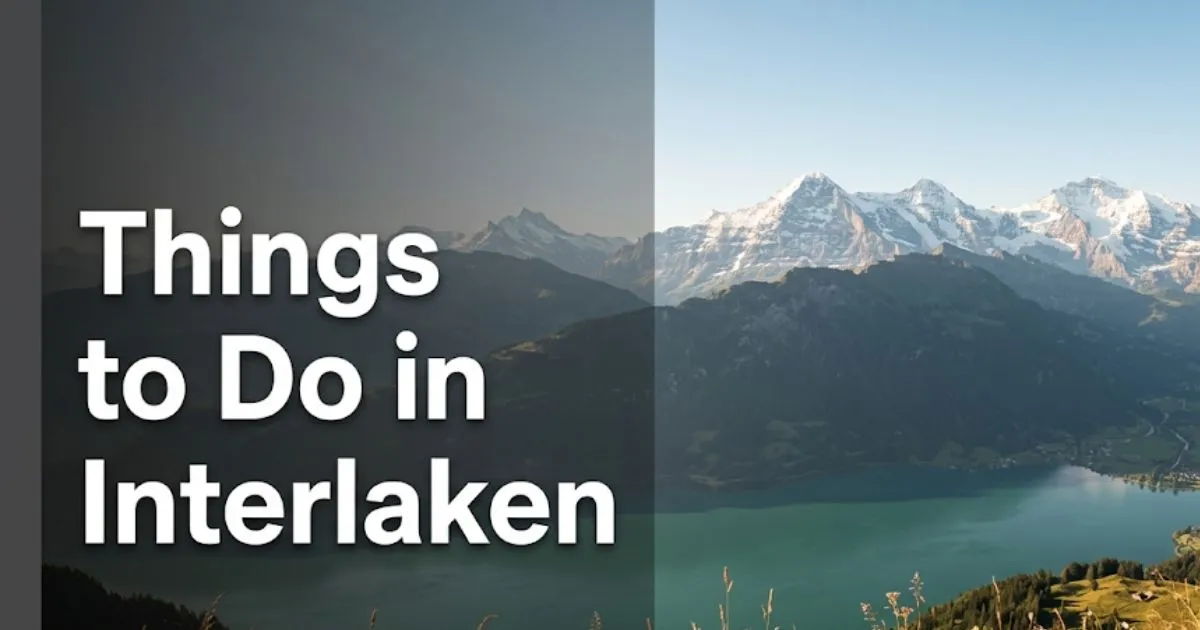
Positioned between Lake Thun and Lake Brienz, with the Eiger, Mönch, and Jungfrau mountains forming the southern horizon, no Swiss town puts you closer to this range of experiences. According to Switzerland Tourism, Interlaken ranks among the country’s top three most-visited destinations annually.
This guide covers specific activities, honest crowd realities, day trip logistics, traveler profile guidance, and a practical itinerary framework for 2026 visits.
Things to Do in Interlaken: What to Know First
The most important thing to understand about Interlaken is that the town itself is infrastructure. The real experiences live in the valleys, mountains, and lakes surrounding it.
Höheweg, the main promenade connecting Interlaken West and Interlaken Ost train stations, is lined with hotels, watch shops, and restaurants. It functions well as a base. It should not be mistaken for the destination itself.
Plan at least two full days here. One day should go entirely to a mountain or valley day trip. The other builds around a signature adventure experience or lake activity.
Budget travelers can manage costs by using the Swiss Travel Pass, packing lunch for mountain excursions, and timing the Jungfraujoch visit for midweek when dynamic pricing is lower. The Swiss Travel Pass covers regional trains to Lauterbrunnen and Grindelwald and includes lake boat cruises, making it genuinely worthwhile for a multi-day Interlaken stay.
Insider Tip:
- Book accommodation at Interlaken Ost end of town for faster rail access to Grindelwald and Lauterbrunnen
- Interlaken’s shops and restaurants along Höheweg skew toward tourist pricing; the Coop and Migros supermarkets on and near Höheweg offer affordable Swiss grocery provisions for packed lunches
- Seniors and travelers with mobility considerations: the town center itself is flat and walkable; the challenge begins when accessing mountain viewpoints
Best Things to Do in Interlaken for First-Time Visitors
The best things to do in Interlaken include the Harder Kulm viewpoint, a Jungfraujoch railway excursion, tandem paragliding above the lakes, and a full day in Lauterbrunnen Valley.
These four experiences represent the destination’s genuine identity. Skip any one of them on a first visit and you have left the most important chapter unread.
First-timers frequently spend too much time shopping Höheweg and too little time in the surrounding landscape. Veteran Interlaken travelers recommend reversing that ratio entirely.
| Activity | Best For | Cost Range (per person) | Time Required |
|---|---|---|---|
| Harder Kulm gondola | All profiles | CHF 30 to 40 approx. | 2 to 3 hours |
| Jungfraujoch by rail | All profiles | CHF 130 to 220 approx. | Full day |
| Tandem paragliding | Adults, adventure seekers | CHF 160 to 220 approx. | 2 to 3 hours incl. prep |
| Lauterbrunnen Valley day | Families, couples, all | Mostly train + entry fees | Full day |
| Lake Thun boat cruise | Couples, seniors, families | CHF 15 to 35 approx. | 2 to 5 hours |
| St. Beatus Caves | Families, all weather | CHF 18 to 28 approx. | 2 hours |
| Schynige Platte rack railway | Hikers, couples | CHF 60 to 80 approx. | Half to full day |
Verify all pricing directly with operators and Jungfrau Railways AG before visiting; Swiss prices adjust annually.
Couples find the lake boat cruise on Lake Thun particularly strong for atmosphere. Families with children aged 8 and older tend to get the most from Lauterbrunnen Valley. Solo travelers gravitate toward the adventure sport scene, where the social atmosphere at operator bases is genuinely friendly and international.
What Is Interlaken Known For
Interlaken is known as the outdoor adventure capital of Switzerland, specifically for paragliding, skydiving, canyoning, and Jungfraujoch railway access.
It also sits at the gateway to the Bernese Oberland, a UNESCO World Heritage region containing some of Europe’s most dramatic alpine scenery. The Eiger’s north face is visible from Grindelwald, just 30 minutes by train.
The town’s name translates directly from Latin as “between the lakes.” That geographic position, between Thunersee and Brienzersee, gives it a completely different visual character than a standard mountain village.
Bernese Oberland Tourism identifies the region as one of Europe’s most concentrated outdoor recreation zones, with over 300 kilometers of marked hiking trails accessible from Interlaken’s rail network alone.
What Interlaken is not known for, and genuinely lacks, is authentic Swiss village character within the town itself. Travelers seeking cobblestone old towns and centuries-old beer halls should day-trip to Bern (50 minutes by train) or overnight in Grindelwald instead.
Insider Tip:
- The overrated experience in Interlaken town is the Höheweg shopping strip; it serves logistics, not experience
- The underrated local alternative is the Höhematte, the large public green space in the town center where locals picnic and paragliders from Beatenberg land
- Watch for paragliders landing on the Höhematte around midday on clear days; it costs nothing and gives you a close-up view of the landing experience
Interlaken Adventure Activities
Interlaken’s adventure activity scene is the most concentrated in Switzerland, with tandem paragliding, skydiving, canyoning, white-water rafting, and bungee jumping all operating from or near the town.
Outdoor Interlaken and Alpin Raft are two of the most established operators with long safety records. Both offer multi-activity packages and employ certified, English-speaking guides. Never book adventure activities from unmarked street-level tout stands.
Canyoning through Saxetenbach Gorge is one of the region’s standout experiences. It involves rappelling alongside waterfalls through a narrow gorge, and the difficulty scales from beginner to advanced depending on which section you book.
White-water rafting on the Lütschine River runs from May through October, conditions permitting. Spring rafting in May and early June offers the highest water levels and most intense experience.
Safety note: Always verify operator insurance and Swiss Adventure Guide licensing before booking any guided adventure activity.
For bungee jumping, the Stockhorn cable car area and the Gletscherschlucht bridge near Grindelwald are the named sites most commonly used; confirm current operation directly with operators as locations and availability vary by season.
Solo travelers find the adventure operator bases at Outdoor Interlaken genuinely social. Group bookings mix nationalities, and the pre-activity briefing atmosphere tends to be energetic and inclusive.
Families with children under 14 should note most canyoning and white-water operators set minimum age and weight requirements; verify specifics before booking.
Paragliding in Interlaken
Tandem paragliding in Interlaken launches from Beatenberg ridge above the north shore of Lake Thun and lands on the Höhematte in the town center.
The flight path gives you approximately 10 to 20 minutes of air time over both lakes, the town, and with clear conditions, direct views of the Jungfrau massif. No other activity in Interlaken delivers this combination of perspective.
Cost runs approximately CHF 160 to 220 per person for a tandem flight as of recent years; verify current rates with licensed operators before booking. Skydive Switzerland operates tandem skydiving from Lauterbrunnen airfield if paragliding does not satisfy the altitude ambition.
Book paragliding at least 24 to 48 hours in advance in summer. Flights are weather-dependent and cancellations are common; reputable operators will reschedule rather than fly in marginal conditions.
Insider Tip:
- Morning flights (launches before 10:00 a.m.) typically offer calmer air and clearer visibility than afternoon flights
- Watch the weather forecast for Beatenberg specifically, not just Interlaken town level; mountain weather operates independently
- The overrated version of this experience is booking through a hotel concierge at a marked-up rate; book directly with the operator
- Couples find this a strong shared experience; solo travelers should note that solo tandem is standard and you are never actually flying alone with the pilot in an uncomfortable way
Key Takeaway: Book paragliding directly with a licensed operator at least 48 hours ahead in summer; morning launches typically mean calmer air and clearer mountain views.
Harder Kulm Interlaken
Harder Kulm is Interlaken’s local mountain viewpoint, accessible by a funicular from near Interlaken Ost station in approximately 10 minutes.
At 1,322 meters, it delivers a 360-degree panorama over both lakes, the town, and the Jungfrau range. It is not the highest or most dramatic viewpoint in the Bernese Oberland. It is, however, the most accessible and most efficiently done.
The summit has a restaurant and the famous Two Lakes Bridge, a cantilevered walkway extending over the cliff edge. The bridge is best experienced early morning before tour groups arrive.
The funicular typically operates from March through November; seasonal hours apply and the service does not run in winter as of recent years. Verify operating dates directly with the operator before planning your visit.
Admission runs approximately CHF 30 to 40 per adult for a return funicular ticket; verify current rates as pricing adjusts seasonally.
Seniors and accessibility travelers should note that the summit area involves some uneven terrain. The funicular itself is accessible, but the path to the Two Lakes Bridge involves stairs.
Families with children find Harder Kulm manageable and genuinely rewarding. The view communicates the geography of the region to children in a way that maps cannot.
The local alternative to Harder Kulm for a mountain view experience: take the rack railway to Schynige Platte instead. It delivers equal or superior panoramic views with a genuine alpine meadow environment and the Schynige Platte Botanical Alpine Garden, which is free to enter with a valid rail ticket.
Lake Thun and Lake Brienz
Lake Thun (Thunersee) and Lake Brienz (Brienzersee) frame Interlaken on opposite sides and are among the most visually striking lakes in Europe, with water colors ranging from deep turquoise to emerald depending on season and light.
Boat cruises on both lakes operate under BLS AG (Lake Thun) and run from Interlaken’s lake piers to lakeside towns including Thun, Spiez, and Brienz. The Swiss Travel Pass covers standard lake cruise tickets on both lakes, making this one of the genuinely free activities for pass holders.
Lake Thun is the larger and more varied of the two. The cruise to Spiez takes approximately 40 minutes and passes Spiez Castle, a 14th-century lakeside castle that is worth a brief stop for the castle and wine cellar context.
Lake Brienz’s extraordinary color, a deep glacial blue-green, comes from glacial sediment called rock flour suspended in the water. The cruise to Brienz connects to the steam-powered Brienzer Rothorn Railway, one of Switzerland’s last steam rack railways, which climbs to the Brienzer Rothorn summit.
Couples consistently rate the Lake Brienz cruise as one of Interlaken’s strongest romantic experiences. Solo travelers and budget travelers with a Swiss Travel Pass get strong value here since the cruise is effectively included.
Seniors and accessibility travelers should know that the boat docks are generally flat and the vessels have indoor seating; this is one of Interlaken’s most physically accessible premium experiences.
Hiking Near Interlaken
The hiking accessible from Interlaken via its rail network spans beginner lake-level walks to serious alpine routes above 2,000 meters.
The most accessible beginner hike from the town itself is the Höheweg lakeside path connecting the two lakes through the Höhematte area. It takes under an hour and requires no elevation gain.
For serious hikers, the Männlichen to Kleine Scheidegg traverse above Grindelwald is the most scenically rewarding half-day hike accessible by gondola and rail from Interlaken. The trail runs along an elevated ridge with direct views of the Eiger north face for approximately 2.5 kilometers. Gondola access runs approximately CHF 40 to 60 from Grindelwald Grund; verify current pricing with Jungfrau Railways AG.
The Schynige Platte to First ridge trail is a longer, more demanding alpine circuit for experienced hikers. Allow a full day, carry layers, and check trail conditions with Bernese Oberland Tourism before attempting in early season when snow may cover upper sections.
Families with children aged 8 and older do well on the gentler sections above Grindelwald. The First Cliff Walk near the First gondola station is a short, family-appropriate cliffside walkway with safety railings.
Trail conditions vary significantly by season. Higher routes above 1,500 meters may be snow-covered into June. Check current trail status via Switzerland Tourism or local tourism offices before planning any alpine hike.
Key Takeaway: The Männlichen to Kleine Scheidegg ridge trail gives you the Eiger face view most people pay full Jungfraujoch fares for, at a fraction of the cost.
Day Trips From Interlaken
The best day trips from Interlaken are Lauterbrunnen Valley, Grindelwald, Jungfraujoch, Schilthorn, and Brienz, each accessible by train within 30 to 90 minutes.
Interlaken functions most effectively as a base from which to reach all of these destinations. Spending a full day in the town center when any of these options is reachable by rail is the single most common planning error among first-time visitors.
| Day Trip | Travel Time from Interlaken | Best For | Highlight |
|---|---|---|---|
| Lauterbrunnen Valley | 20 minutes by train | All profiles | Staubbach Falls, Trümmelbach Falls, valley walks |
| Grindelwald | 30 minutes by train | Hikers, families, couples | Eiger views, First Cliff Walk, village atmosphere |
| Jungfraujoch | 90 minutes by rail | All profiles, weather dependent | Highest railway station in Europe at 3,454m |
| Schilthorn / Piz Gloria | 2 hours via Lauterbrunnen | Couples, Bond film fans | Revolving restaurant, 007 connection, Eiger panorama |
| Brienz | 20 minutes by train | Couples, seniors, all | Brienzer Rothorn steam railway, wood carving tradition |
The honest ranking: Lauterbrunnen is the single best value day trip. Jungfraujoch is the most dramatic. Grindelwald is the best for those wanting authentic Swiss village character alongside alpine activity.
Budget travelers should note that Jungfraujoch is genuinely expensive even with a Swiss Travel Pass covering the first section of the rail journey; budget the Jungfraujoch surcharge separately.
Jungfraujoch From Interlaken
The Jungfraujoch railway excursion from Interlaken reaches Europe’s highest railway station at 3,454 meters, taking approximately 90 minutes each way via trains from Interlaken Ost through Grindelwald or Lauterbrunnen to Kleine Scheidegg.
The summit experience includes the Sphinx Observatory, year-round snow fields, the Aletsch Glacier viewpoint, ice sculptures in the Ice Palace, and views across to France, Italy, and Germany on clear days. It is genuinely unlike any other experience accessible by public transport in Europe.
The cost is significant: the Jungfraujoch surcharge beyond what the Swiss Travel Pass covers runs approximately CHF 90 to 145 per person as of recent years, depending on departure point and pass type. Verify current pricing directly with Jungfrau Railways AG before booking.
Book the earliest morning departure available (first trains typically depart around 8:00 a.m.). Clouds frequently move in by midday, reducing summit visibility substantially. The Jungfraujoch operates year-round but winter visits require appropriate cold-weather clothing regardless of what the weather is like in Interlaken town below.
Altitude awareness: at 3,454 meters, some visitors experience mild altitude symptoms including headache and light-headedness. Children, seniors, and travelers with cardiovascular conditions should consult a physician before planning this excursion.
Seniors and accessibility travelers should note that the summit areas are enclosed and heated; this is one of Switzerland’s more accessibility-friendly high-altitude experiences. Escalators and lifts connect most interior areas.
Lauterbrunnen From Interlaken
Lauterbrunnen is the most scenically dramatic valley accessible from Interlaken, a flat-floored glacial valley flanked by 300-meter cliff walls with 72 waterfalls cascading down from the plateau above.
Take the train from Interlaken Ost to Lauterbrunnen in approximately 20 minutes. From the village, Staubbach Falls drops nearly 300 meters directly behind the church and is visible from the train platform. Walk 10 minutes into the valley to reach the base.
Trümmelbach Falls is the more significant geological experience: a series of glacially carved waterfalls inside a mountain, accessible by lift and walkway inside the cliff itself. Entry runs approximately CHF 14 to 18 per adult as of recent years; verify current pricing before visiting. The falls are most dramatic in late spring when snowmelt is at peak flow.
From Lauterbrunnen, the cliff railway (Lauberhornbahn lift) rises to Grütschalp, connecting to the car-free villages of Mürren and reaching Gimmelwald, a tiny farming village above the valley that sees far fewer visitors than its neighboring towns.
Families with children find Lauterbrunnen Valley one of the most manageable full-day experiences: the valley floor is flat, the train connections are simple, and the waterfall scenery captures children’s attention in a way that summary mountain views rarely do.
The overrated move in Lauterbrunnen: spending your entire time at Staubbach Falls. The underrated experience: walking 30 minutes into the valley to the base of the cliffs and listening to the falls from below, where the spray and sound create a completely different encounter.
Key Takeaway: Take the first train to Lauterbrunnen and walk the valley floor before 9:00 a.m.; the light on the cliff walls and the near-empty paths are the best version of this experience.
Where to Eat in Interlaken
The best dining in Interlaken requires leaving the Höheweg tourist strip and looking one to two streets behind it.
Gasthof Hirschen in the Matten district, a short walk south of the main promenade, is one of the most consistently recommended locally-oriented restaurants in the area, serving Swiss-German dishes including rösti, fondue, and regional meat preparations in a setting that skews local rather than tourist. Reserve ahead for dinner, particularly in summer.
Restaurant du Theatre near Interlaken West station is a more contemporary option with a menu that rotates seasonally and a more Swiss-urban atmosphere than the fondue-and-watch-shop corridor.
For budget meals, both Coop Restaurant and Migros Restaurants operate cafeteria-style dining that is honest, affordable, and well-suited to refueling between activities. These are genuine local dining options, not fallbacks; Swiss grocery store restaurants are far better than their American equivalents.
Fondue is the obvious choice in winter and early spring. In summer, raclette and rösti are the regional standbys. Swiss food culture runs toward hearty, simple, and local; expect large portions and straightforward flavors.
Budget travelers should note that eating in Switzerland costs significantly more than in most Western European countries. A mid-range dinner for two in Interlaken runs approximately CHF 80 to 140 including drinks; verify current prices as Swiss restaurant pricing changes annually.
Solo travelers will find the Migros or Coop cafeteria format comfortable for solo dining without the social awkwardness that can accompany solo table dining at full-service Swiss restaurants.
Best Time to Visit Interlaken
The best time to visit Interlaken is late May through early July or September through mid-October.
Late May through early June delivers alpine wildflowers on the slopes above Grindelwald and Lauterbrunnen, stable mountain weather, and crowd levels that are dramatically lower than August. September offers cooler, often clearer air, autumn color beginning in the valleys, and the distinct advantage of post-summer-peak pricing at accommodation.
July and August are the worst months for crowd management. Day-tripper coaches from Zurich and Lucerne fill the Höheweg. The Jungfraujoch queues extend significantly. Accommodation prices are at their highest, and the mountain experience feels shared with the maximum number of people simultaneously.
Winter (December through March) suits skiers, as the Grindelwald ski areas and Mürren slopes are among Switzerland’s most scenic. However, many adventure sport operators close for winter, and the town has a quieter, less socially activated atmosphere.
According to Bernese Oberland Tourism, the Jungfraujoch receives its lowest visitor volumes in January and February, making winter the best time for an uncrowded summit experience if the adventure sport season is not a priority.
Families time best in June or September when children can participate in a wider range of outdoor activities without August’s extreme crowds. Couples seeking a quiet, atmospheric visit should target late September through October before accommodation closes for low season.
Getting to and Around Interlaken
Getting to Interlaken from Zurich Airport takes approximately 2 hours by train via the Swiss Federal Railways (SBB) direct connection, making it one of Europe’s most practically accessible alpine destinations by rail.
From Zurich Airport (ZRH), take the SBB to Bern, then connect to Interlaken Ost or West; the journey involves one change and runs frequently throughout the day. From Geneva Airport (GVA), the rail journey takes approximately 2.5 hours via Bern.
Interlaken has two train stations: Interlaken West and Interlaken Ost. Trains to Grindelwald and Lauterbrunnen depart from Interlaken Ost. The two stations are connected by a 15-minute walk along Höheweg or a short train hop.
You do not need a car in Interlaken. The Swiss rail network connects every significant destination in the Bernese Oberland. Driving to Interlaken adds parking cost and removes the flexibility of the integrated rail-and-boat system.
The Swiss Travel Pass covers SBB trains, BLS regional trains to Lauterbrunnen and Grindelwald, lake boats on Lake Thun and Lake Brienz, and many mountain transport connections at a discount. For a stay of three or more days using multiple rail connections and boat cruises, it delivers clear value over individual ticket purchases.
Budget travelers should compare the Swiss Travel Pass cost against individual ticket purchases for their specific itinerary; for a two-day Interlaken-only stay without extensive rail travel, individual tickets may cost less.
Key Takeaway: Base yourself at Interlaken Ost for faster rail access to the Bernese Oberland valleys; you will save 10 minutes every morning on every mountain departure.
Interlaken for Families, Couples, and Solo Travelers
Interlaken works differently depending on who you are traveling with, and the honest profile-by-profile breakdown changes which activities, timing, and logistics matter most.
Families with children get the most from Interlaken when children are aged 8 and older. The Lauterbrunnen Valley walk, St. Beatus Caves, the Harder Kulm funicular, and the First Cliff Walk in Grindelwald are all genuinely age-appropriate. Adventure sport operators typically require minimum ages of 12 to 16 for canyoning and paragliding; confirm before booking.
Couples find Interlaken’s strongest romantic moments not in the town center but in the landscape around it. The Lake Brienz evening cruise, a late afternoon on the Schynige Platte after day-trippers have descended, and dinner at Gasthof Hirschen rather than a Höheweg tourist restaurant are the experiences that consistently resonate.
Solo travelers benefit from Interlaken’s deeply international adventure sport social scene. The operator bases function as genuine social hubs; it is genuinely easy to meet other travelers while waiting for a paragliding briefing or getting into a canyoning wetsuit.
Seniors and accessibility travelers have more options in Interlaken than in many alpine destinations. The Harder Kulm funicular, Lake Thun and Lake Brienz boat cruises, and the Jungfraujoch’s internal escalator and lift system make major experiences accessible without extreme physical demand. The town center itself is flat.
Budget travelers can manage Interlaken by using the Swiss Travel Pass for boat cruises and regional trains, packing lunches from Coop or Migros, and prioritizing one major paid experience (Jungfraujoch or paragliding) rather than booking multiple adventure sport packages simultaneously.
Interlaken Itinerary: One Day and Two Days
A well-structured one-day Interlaken itinerary prioritizes a single major mountain or valley experience alongside a shorter town-level activity.
One-Day Interlaken Itinerary:
- Depart Interlaken Ost on the first morning train to Lauterbrunnen (approximately 7:30 to 8:00 a.m. departure; verify current SBB timetable before visiting).
- Walk the valley floor to Staubbach Falls; arrive before the first tour groups from Interlaken (typically after 9:30 a.m.).
- Take the Lauterbrunnen bus or a 30-minute walk to Trümmelbach Falls; allow 1.5 hours including the internal walkway.
- Return to Lauterbrunnen by early afternoon; take the train back to Interlaken Ost.
- Board the Harder Kulm funicular from near Interlaken Ost; allow 2 hours including the Two Lakes Bridge walk.
- Descend by funicular; walk Höheweg back toward Interlaken West for dinner at Gasthof Hirschen (reserve ahead).
- Optional: watch for paraglider landings on Höhematte during the late afternoon on clear days.
Two-Day Interlaken Itinerary:
Day 1: Full Jungfraujoch excursion (depart by 8:00 a.m. on first train from Interlaken Ost; return by early afternoon; afternoon for recovery or lake walk).
Day 2: Tandem paragliding morning booking (briefing typically at 9:00 a.m.); afternoon Lake Brienz cruise to Brienz with optional Brienzer Rothorn steam railway to summit.
Couples should add a Schynige Platte rack railway sunset timing in summer; the late afternoon light on the Jungfrau range from the Schynige Platte plateau is the strongest panoramic moment available in the region without Jungfraujoch pricing.
Families should substitute the paragliding day with a Grindelwald day: First gondola to the First Cliff Walk, lunch in Grindelwald village, and the train back through the valley.
Safety and Practical Warnings for Interlaken
Alpine weather in the Bernese Oberland changes rapidly and without consistent warning from town-level conditions.
Key safety and practical facts every Interlaken visitor should know:
- Never book adventure activities with unlicensed street touts. Use only established, Swiss-licensed operators like Outdoor Interlaken and Alpin Raft.
- Check mountain weather separately from Interlaken town weather. Jungfraujoch summit visibility and Beatenberg paragliding conditions operate independently of valley conditions.
- Carry layers regardless of season. The temperature difference between Interlaken town (568 meters) and Jungfraujoch summit (3,454 meters) can exceed 20 degrees Celsius.
- Altitude awareness for Jungfraujoch: Mild headache and light-headedness at 3,454 meters is common. Ascend slowly, hydrate, and avoid alcohol before or during the excursion.
- Water safety for white-water rafting and canyoning: Spring water levels on the Lütschine River are highest and fastest in May and June; confirm operator risk assessment before booking.
- Sun exposure: UV intensity increases significantly at altitude. Apply high-SPF sunscreen before Jungfraujoch, Schynige Platte, or any ridge hiking even on overcast days.
- Cell service: Signal is available at most developed viewpoints and in the valley towns. Backcountry trail sections above the main gondola stations may have limited service; download offline maps before hiking above Grindelwald or Mürren.
In any genuine alpine emergency, contact the Swiss Emergency Number 117 (Police) or 144 (Ambulance) or the Alpine Emergency Number 1414 operated by the Swiss Air-Rescue organization REGA.
Frequently Asked Questions About Things to Do in Interlaken
What is Interlaken, Switzerland known for?
Interlaken is known as Switzerland’s outdoor adventure capital and as the primary gateway to the Bernese Oberland and the Jungfraujoch railway.
The town sits between Lake Thun and Lake Brienz, with direct rail access to Grindelwald, Lauterbrunnen, and Europe’s highest railway station at 3,454 meters.
It is also a major base for paragliding, skydiving, canyoning, and white-water rafting, drawing adventure travelers from across Europe and North America.
How many days do you need in Interlaken?
Two to three full days is the practical minimum for experiencing Interlaken’s major activities and at least one meaningful day trip.
One day allows a single valley trip (Lauterbrunnen or Grindelwald) and a town-level activity like Harder Kulm.
Three days allows the Jungfraujoch, a valley day trip, and a signature adventure experience like paragliding without rushing any of them.
Is Interlaken worth visiting in 2026?
Interlaken is worth visiting in 2026 specifically if you plan to use it as a base for Bernese Oberland exploration rather than as a destination in itself.
The town center delivers primarily tourist infrastructure; the surrounding mountains, valleys, and lakes are genuinely among the most dramatic landscapes accessible by public transport anywhere in Europe.
Travelers who arrive expecting a charming Swiss village will be disappointed; travelers who use Interlaken as a launch point for the landscape around it will find it hard to match elsewhere.
What is the best time of year to visit Interlaken?
The best time to visit Interlaken is late May through early July or September through mid-October.
These shoulder seasons offer stable mountain weather, lower crowd levels than the July-August peak, and accommodation prices that are noticeably lower than summer highs.
July and August bring maximum crowds and the highest prices; January and February deliver the quietest Jungfraujoch experience but limit adventure sport availability significantly.
Do I need to book the Jungfraujoch in advance?
Booking the Jungfraujoch in advance is strongly advisable in summer, particularly July and August when train departures fill quickly.
Jungfrau Railways AG offers online booking through its official website, and early morning departures frequently sell out days ahead during peak season.
In shoulder season (May, June, September, October), advance booking is still recommended for the first morning departure, which offers the best summit visibility before afternoon clouds develop.
Is Interlaken good for families with young children?
Interlaken is better suited for families with children aged 8 and older than for families with very young children.
Most adventure sport operators set minimum age requirements between 12 and 16 for paragliding, canyoning, and rafting; families with younger children will find the Lauterbrunnen Valley walk, St. Beatus Caves, Harder Kulm funicular, and Grindelwald’s First Cliff Walk the most consistently age-appropriate experiences.
The town center is flat and stroller-accessible, and the lake boat cruises on Lake Thun and Lake Brienz work well for mixed-age groups including young children.
Plan Your Interlaken Visit With Specificity
The single most practical takeaway from this guide: Interlaken’s value is in what surrounds it, not in the town itself. Book the Jungfraujoch for your first full day and the Lauterbrunnen Valley for your second. Everything else builds around those two anchors.
Before departure, verify Jungfraujoch pricing and booking availability directly with Jungfrau Railways AG at jungfrau.ch, and confirm Swiss Travel Pass coverage details at sbb.ch. Train timetables, gondola operating seasons, adventure sport operator schedules, and restaurant hours all change between publication and your visit date.
The travelers who get the most from Interlaken are the ones who arrive with a specific plan, book the major rail and activity experiences ahead of time, and treat the town center as a logistics hub rather than the main event.