Best Free Things to Do in Atlanta, Georgia in 2026

Atlanta offers a genuinely strong roster of free things to do, from federal civil rights history sites to one of the country’s most celebrated urban trail networks.
The city’s free attraction lineup includes the Martin Luther King Jr. National Historic Site, the Atlanta BeltLine’s 33-mile trail system, and a string of free-entry neighborhood experiences that most visitor guides barely scratch.
This guide covers specific named sites, honest seasonal guidance, traveler profile distinctions, and a one-day free itinerary. Use it to plan an Atlanta visit that costs nothing in admission and sacrifices nothing in quality.
Free Things to Do in Atlanta: What to Expect From the City
Atlanta’s free activities span civil rights history, urban greenways, neighborhood street art, and some of the Southeast’s most walkable historic districts.
The city is genuinely more generous with free access than most major American cities. Federal sites administered by the National Park Service carry no admission fee by law, and Atlanta has two: the Martin Luther King Jr. National Historic Site and the Chattahoochee River National Recreation Area.
Beyond federal sites, Atlanta’s neighborhoods do the heavy lifting. Virginia-Highland, Little Five Points, Cabbagetown, and Sweet Auburn are all free to walk, genuinely distinct in character, and collectively represent hours of atmospheric exploration.
The honest logistical reality: Atlanta is a car-dependent city. MARTA rail reaches downtown and midtown free attractions reasonably well. The BeltLine’s Eastside Trail is walkable from several MARTA stations. The Westside Trail and some outer neighborhoods are harder without a car.
Free does not mean unlimited. The MLK National Historic Site’s Birthplace home tour requires timed-entry passes, which are free but limited. Arrive early or reserve in advance through Recreation.gov. The passes go quickly on weekends.
Insider Tip:
- Plan free outdoor activities for morning hours, particularly May through September. Atlanta’s afternoon heat and humidity are real.
- The BeltLine’s Eastside Trail is the most accessible free Atlanta experience for visitors without a car, reachable via the Inman Park-Reynoldstown MARTA station.
- Seniors and travelers with mobility concerns should note that the BeltLine is paved and flat on the Eastside Trail, making it accessible for most mobility levels.
Best Free Things to Do in Atlanta for Every Type of Visitor
The best free things to do in Atlanta vary significantly depending on whether you are traveling solo, with children, as a couple, or on a strict budget.
Below is a comparison of Atlanta’s top free experiences by traveler profile.
| Free Experience | Best For | Always Free | Best Season | Time Needed |
|---|---|---|---|---|
| Atlanta BeltLine Eastside Trail | All profiles | Yes | Spring, Fall | 1.5 to 3 hours |
| MLK National Historic Site | Solo, couples, families | Yes (timed entry) | Year-round | 2 to 3 hours |
| Piedmont Park | Families, couples | Yes | Spring, Fall | 1 to 2 hours |
| Sweet Auburn Historic District | Solo, couples | Yes | Year-round | 1 to 2 hours |
| Oakland Cemetery | Solo, couples | Yes | Spring, Fall | 1 hour |
| Centennial Olympic Park | Families | Yes | Spring, Fall | 1 hour |
| Virginia-Highland walk | Couples, solo | Yes | Spring, Fall | 1 to 2 hours |
| Krog Street Tunnel | All profiles | Yes | Year-round | 30 minutes |
| Freedom Park | Families, seniors | Yes | Spring, Fall | 1 hour |
| Jimmy Carter Library grounds | Solo, couples | Yes | Year-round | 45 minutes |
Suggested One-Day Free Atlanta Itinerary:
- Start at the Martin Luther King Jr. National Historic Site by 9:00 AM. Reserve timed-entry passes for the Birth Home in advance via Recreation.gov.
- Walk Sweet Auburn’s historic commercial district after the NPS site visit. Ebenezer Baptist Church is within the same NPS footprint.
- Take MARTA’s Gold or Red Line north to the Midtown station. Walk east to the BeltLine’s Eastside Trail entrance at 10th Street.
- Walk the Eastside Trail south toward Inman Park. Stop at the Historic Fourth Ward Park skating rink area.
- Exit the BeltLine at the Krog Street Tunnel. Spend 20 minutes with the murals.
- Walk north to Ponce City Market (free to enter, browse the Central Food Hall). The rooftop deck charges admission; the market floor does not.
- End the day in Virginia-Highland for a neighborhood walk through North Highland Avenue’s restaurant row. Window shopping and street atmosphere are free.
Key Takeaway: Reserve the MLK National Historic Site Birth Home timed-entry pass before your trip. It is free but limited, and walk-up availability disappears fast on weekends.
The Atlanta BeltLine: America’s Best Free Urban Trail
The Atlanta BeltLine is a 33-mile loop of repurposed rail corridors converted into paved multi-use trails, and it costs nothing to access.
The most-used section for visitors is the Eastside Trail, running approximately 3 miles between Inman Park and Midtown. It connects Ponce City Market, the Historic Fourth Ward Park, and Krog Street Tunnel in a single walkable corridor. No car required for this stretch.
The Westside Trail runs through the West End and Adair Park neighborhoods. It is newer and quieter than the Eastside Trail, offering a more local, less tourist-oriented experience. Locals use this section for morning runs and evening dog walks.
The Westside BeltLine connects to the Lee + White development on White Street SW, a free-to-browse food hall and bottle shop complex. This is the Eastside Trail’s less-photographed but genuinely good local alternative.
According to Atlanta BeltLine Inc., the trail system draws over 3 million visits per year. Weekend mornings on the Eastside Trail, particularly between 9:00 AM and noon in spring and fall, are peak usage periods.
Families with children should note that the Eastside Trail is stroller-accessible and flat throughout. Water fountains are located at several BeltLine access points.
Insider Tip:
- The Eastside Trail’s public art installations change periodically. The BeltLine Art program commissions rotating works. Check Atlanta BeltLine Inc.’s website for current installations before your visit.
- Cyclists share the trail with pedestrians. Walk on the right side and stay aware of faster-moving bikes on weekend mornings.
- Seniors will find the paved surface comfortable, but the full Eastside Trail walk is approximately 6 miles round-trip. Plan for water and shade breaks.
Free Parks in Atlanta Worth Spending a Full Day In
Atlanta’s best free parks include Piedmont Park, Grant Park, Freedom Park, and Historic Fourth Ward Park, each with a distinct character and best-for profile.
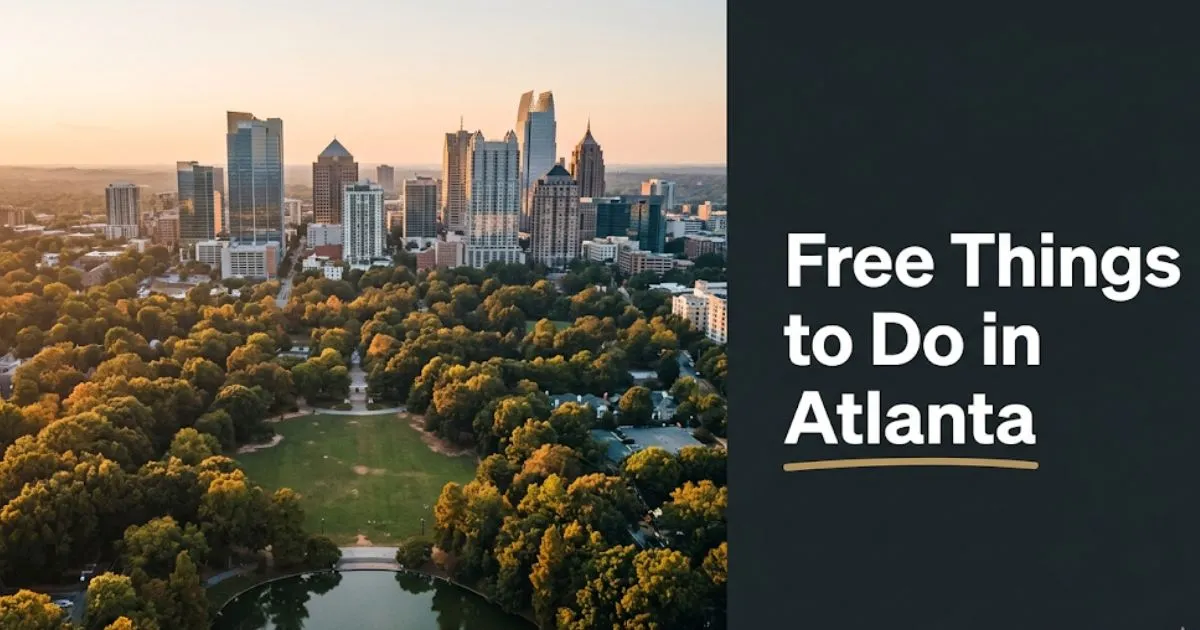
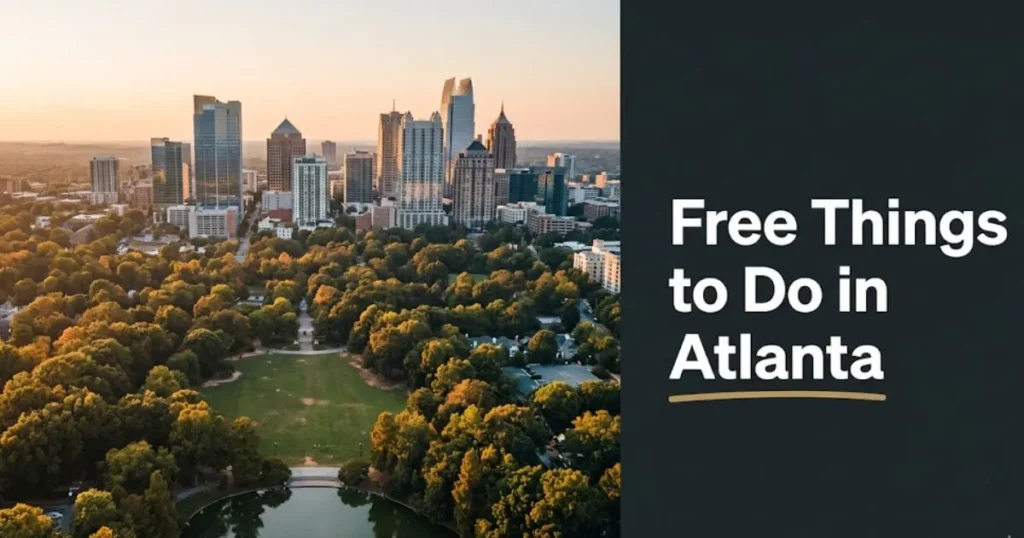
Piedmont Park, at 189 acres in Midtown, is Atlanta’s central urban park. The park features a lake, dog park, athletic fields, and views of the Midtown skyline. Entry is always free.
Grant Park in southeast Atlanta borders Zoo Atlanta (paid) and the Oakland Cemetery (free). The park itself is free, and its historic Victorian-era layout makes it one of the city’s oldest public spaces.
Freedom Park runs along Freedom Parkway northeast of downtown. The park connects the Carter Center grounds to Inman Park via a linear greenway. It is flat, tree-shaded, and entirely free.
Historic Fourth Ward Park sits directly on the BeltLine’s Eastside Trail. It has a splash pad, skate park, and lawn seating. Families with young children consistently rate the splash pad as one of Atlanta’s genuinely kid-friendly free spots, particularly on warm days.
According to the Atlanta Parks and Recreation Department, the city maintains over 340 parks and green spaces. The challenge is that the best ones for visitors are clustered in midtown, northeast Atlanta, and southeast Atlanta, requiring some navigation between them.
Couples will find Piedmont Park’s lake loop the most atmospheric free outdoor experience in the city. Sunday mornings, before crowds arrive after 10:00 AM, are ideal.
| Park | Location | Best For | Parking Reality | Highlight Feature |
|---|---|---|---|---|
| Piedmont Park | Midtown | All profiles | Street parking fills by 9 AM weekends | Skyline views, lake loop |
| Grant Park | Southeast Atlanta | Families, couples | Easier than Midtown parks | Adjacent to Oakland Cemetery |
| Freedom Park | NE of downtown | Solo, seniors | Street parking available | Carter Center adjacency |
| Historic Fourth Ward Park | Old Fourth Ward | Families | BeltLine access, limited street parking | Splash pad, skate park |
| Centennial Olympic Park | Downtown | Families | Paid parking nearby | Fountain of Rings |
Free Museums in Atlanta and How to Time Your Visit Right
Several Atlanta museums offer free admission on specific days or during specific time windows, but none are free every day without restriction.
The High Museum of Art offers free admission on the second Sunday of every month. This is one of Atlanta’s genuinely excellent free access opportunities. The permanent collection includes European paintings, American art, and an outstanding African art collection. Arrive when it opens on free Sundays to avoid the afternoon crowd.
The Fernbank Museum of Natural History offers discounted admission on select Fridays for “Fernbank After Dark” events, though these evenings carry a fee. Free access is limited; verify the current schedule directly with the museum before planning around it.
The Jimmy Carter Presidential Library and Museum carries an admission fee for the museum interior but the grounds, gardens, and exterior are always free. The walking gardens along Freedom Parkway are a genuinely worthwhile free stop.
The Martin Luther King Jr. National Historic Site visitor center and exhibits are free every day, administered by the National Park Service. This is one of Atlanta’s most important and completely free cultural experiences.
Budget travelers should note that the High Museum’s free second Sunday is one of the best free cultural experiences available in any major American city. The permanent collection alone justifies planning a trip around that specific weekend.
Insider Tip:
- Free museum days fill parking lots early. Plan to arrive by opening time or use MARTA.
- The High Museum’s free Sunday changes annually. Verify the specific 2026 schedule directly at high.org before booking travel around it.
- Families with children will find the High Museum’s free Sunday programming often includes family-oriented gallery activities. Check the museum’s family programming schedule when you verify the free day.
Key Takeaway: The High Museum of Art’s free second Sunday is Atlanta’s best free cultural day. Arrive at opening and verify the 2026 date at high.org before your trip.
Free Things to Do in Atlanta With Kids
The best free things to do in Atlanta with kids center on outdoor play, historic storytelling, and a few genuinely interactive free spaces.
Centennial Olympic Park in downtown Atlanta is the clearest kid-focused free attraction. The Fountain of Rings runs on a schedule and becomes an impromptu water play feature for children in warm months. Bring a change of clothes for younger children in summer.
Historic Fourth Ward Park’s splash pad is a better-kept local secret than Centennial Olympic Park for families. It sits directly on the BeltLine’s Eastside Trail, away from downtown’s traffic noise. The skate park adjacent to the splash pad draws older kids and teenagers.
The Martin Luther King Jr. National Historic Site works well for school-age children (roughly ages 8 and up) who can engage with the civil rights history context. The NPS ranger-led programs are specifically designed to be accessible to young visitors. Children under 8 may struggle with the interpretive depth.
Piedmont Park’s dog park and playground areas are free and consistently enjoyable for families with young children. The park’s lake loop is manageable for children on bikes.
Families with children under 5 should focus on the BeltLine’s Eastside Trail, the Centennial Olympic Park Fountain of Rings, and Piedmont Park’s playground. These require minimal interpretation and are physically engaging.
Free family-friendly activities in Atlanta:
- Historic Fourth Ward Park splash pad (BeltLine Eastside Trail access)
- Centennial Olympic Park Fountain of Rings (fountain schedule varies; verify before visiting)
- Krog Street Tunnel mural walk (10 to 15 minute experience, immediately engaging for kids)
- Freedom Park greenway walk
- Piedmont Park lake loop and playground
- NPS ranger programs at the MLK National Historic Site (advance registration sometimes required)
- BeltLine Eastside Trail (stroller-accessible, paved, flat)
Martin Luther King Jr. National Historic Site: Free and Essential
The Martin Luther King Jr. National Historic Site is administered by the National Park Service and is free to visit every day of the year.
The site covers several distinct areas along Auburn Avenue in the Sweet Auburn neighborhood. The Visitor Center at 450 Auburn Avenue NE houses permanent exhibits on Dr. King’s life and the civil rights movement. Entry to the visitor center and exhibits is free and does not require a timed-entry pass.
The Birth Home at 501 Auburn Avenue NE requires a free timed-entry pass. These passes are released on Recreation.gov and often book out days or weeks ahead on weekends. Walk-up passes are available in limited quantity at the visitor center on the day of visit, but availability is not guaranteed.
Ebenezer Baptist Church, where Dr. King was baptized, preached, and memorialized, is part of the NPS site. The historic 1922 sanctuary is accessible as part of a ranger-led or self-guided walk. The adjacent “new” Ebenezer Baptist Church (built in the 1970s) remains an active congregation.
The King Center, located adjacent to the NPS site at 449 Auburn Avenue NE, is privately operated by the King family. Entry to the grounds and memorial area is free. The King Center grounds include the reflecting pool and the crypts of Dr. King and Coretta Scott King.
Solo travelers and couples will find the NPS ranger-led tours the most informative free experience at the site. Tours typically run approximately 30 minutes and depart from the visitor center on a regular schedule; verify current tour times before visiting.
Seniors should note that the entire site is flat and wheelchair accessible. The walk between the visitor center and the Birth Home is approximately a quarter mile on sidewalk.
Sweet Auburn: Atlanta’s Free Historic Neighborhood
Sweet Auburn Historic District is one of the most significant commercial and cultural corridors in African American history, and walking it costs nothing.
Auburn Avenue between Jackson Street NE and Randolph Street NE contains the core of the historic district. The street held the highest concentration of Black-owned businesses in the United States during the early twentieth century. Several of those original buildings survive.
The Auburn Avenue Research Library on African American Culture and History, a branch of the Atlanta-Fulton Public Library System, is located at 101 Auburn Avenue NE. Its reading rooms and ground-floor exhibits are free and open to the public.
The Big Bethel AME Church at 220 Auburn Avenue NE is one of Atlanta’s oldest Black congregations and its distinctive tower is a neighborhood landmark. The exterior and the surrounding streetscape are part of the free historic district walk.
The APEX Museum (African American Panoramic Experience) at 135 Auburn Avenue NE is not free but charges modest admission. It is a genuine neighborhood institution worth mentioning alongside the free district walk.
According to the Atlanta Preservation Center, the Sweet Auburn district represents one of the most intact examples of early twentieth-century African American commercial architecture in the South.
Solo travelers interested in civil rights history will find Sweet Auburn the most contextually rich free neighborhood walk in Atlanta. Combine it with the adjacent MLK National Historic Site for a half-day immersive experience.
Insider Tip:
- Walk Auburn Avenue on a weekday morning for the clearest view of the historic district without weekend foot traffic.
- The neighborhood transitions quickly from the historic district toward busier urban corridors. Keep your walk focused between Jackson Street and the MLK site for the highest density of historic significance.
Key Takeaway: Sweet Auburn and the MLK National Historic Site are physically adjacent. Plan them as a single half-day block rather than two separate trips.
Free Things to Do in Midtown Atlanta
Midtown Atlanta is the city’s most walkable district for free experiences, concentrated around Peachtree Street and the arts corridor between 10th and 15th Streets.
The Woodruff Arts Center campus on Peachtree Street is free to walk through. The exterior plazas and public art installations surrounding the complex are open to the public. The interior venues (Alliance Theatre, Atlanta Symphony Orchestra) carry ticket prices.
Midtown’s BeltLine Eastside Trail access begins near 10th Street and Monroe Drive. This access point puts visitors on the trail within a 15-minute walk of Ponce City Market and the Old Fourth Ward’s best street art.
Ponce City Market at 675 Ponce de Leon Avenue NE is free to enter. The former Sears warehouse building is now a mixed-use market and food hall. The Central Food Hall floor is free to browse. The rooftop amusement area (Skyline Park) charges admission.
The Midtown Mile, as Peachtree Street from 10th to 15th Street is informally known, is Atlanta’s densest stretch of architectural interest and public life. Walking it takes 30 to 45 minutes at a browsing pace.
Virginia-Highland, the residential and restaurant neighborhood east of Piedmont Park, is a free neighborhood walk best enjoyed on North Highland Avenue between Virginia Avenue and Amsterdam Avenue. The district’s independent storefronts, cafe terraces, and residential architecture make it Atlanta’s most atmospheric free stroll.
Couples will find Virginia-Highland’s North Highland Avenue the most pleasant free evening walk in Atlanta. The streetscape is well-lit, the restaurant patios create atmosphere, and the neighborhood feels genuinely local rather than tourist-oriented.
Free things to do in Midtown Atlanta:
- BeltLine Eastside Trail (10th Street access point)
- Ponce City Market ground floor and Central Food Hall
- Virginia-Highland North Highland Avenue walk
- Midtown Mile architectural walk on Peachtree Street
- Woodruff Arts Center plaza and public art
Oakland Cemetery: Atlanta’s Most Overlooked Free Site
Oakland Cemetery at 248 Oakland Avenue SE is one of Atlanta’s most genuinely interesting free experiences, yet it rarely appears at the top of visitor lists.
The cemetery was established in 1850 and spans 48 acres in southeast Atlanta, adjacent to Grant Park. It holds the graves of six Georgia governors, 25 Atlanta mayors, Bobby Jones (the golfer), and Margaret Mitchell, author of “Gone With the Wind.”
The Historic Oakland Foundation manages the cemetery and offers self-guided walking tours using a free printed map available at the entrance gate. The foundation’s website also offers a downloadable map and audio tour guide. Entry is free.
The grounds include distinct sections reflecting Atlanta’s social history: the Jewish section, the African American section (including the graves of many enslaved individuals), and the grand Victorian family mausoleums of Atlanta’s nineteenth-century elite. This is not a sanitized heritage experience. The cemetery honestly reflects the city’s complex history.
Oakland Cemetery is most beautiful in spring (April through May) when the magnolias and dogwoods are in bloom, and in fall (October through November) when the tree canopy turns. Summer visits are hot; bring water.
Solo travelers with an interest in urban history will find Oakland Cemetery the most intellectually rewarding free stop in Atlanta outside the MLK National Historic Site. Budget at least one full hour.
Seniors should note that the grounds include gently sloping terrain. Paved paths cover most areas, but some sections require walking on grass or uneven ground. The main mausoleum area is accessible via paved paths.
Insider Tip:
- The Historic Oakland Foundation hosts annual events including a Halloween “Sunday in the Park” Victorian celebration. These events carry admission fees. The daily visit is always free.
- Margaret Mitchell’s grave is near the main entrance and easy to find with the free printed map.
Key Takeaway: Oakland Cemetery is the single most underestimated free site in Atlanta. It covers more of the city’s actual history in 90 minutes than most paid attractions do in a full day.
Free Things to Do in Downtown Atlanta
Downtown Atlanta’s free experiences cluster along Centennial Olympic Park Drive and the surrounding blocks, making this the most compact free zone in the city.
Centennial Olympic Park at 265 Park Ave W NW was built for the 1996 Summer Olympics and is free to enter. The park’s most popular feature is the Fountain of Rings, which operates on a programmed show schedule. The park also contains the Olympic cauldron and permanent commemorative installations.
The park’s immediate surroundings include the Georgia Aquarium (paid), World of Coca-Cola (paid), and National Center for Civil and Human Rights (paid). These are Atlanta’s highest-profile paid attractions. They surround free Centennial Olympic Park the way paid attractions always surround free green spaces.
Woodruff Park at the corner of Peachtree and Auburn Streets in downtown is a smaller public plaza used daily by locals. It is free and sits at the intersection of downtown’s business district and the edge of the Sweet Auburn corridor.
The Atlanta Federal Center and surrounding downtown architecture along Peachtree Street is worth a walking pass. The downtown streetscape between Marietta Street and Auburn Avenue covers more than a century of Atlanta’s architectural development.
Budget travelers who want to experience the energy of downtown Atlanta without paying for any of the adjacent mega-attractions will find Centennial Olympic Park the best free anchor point. The Fountain of Rings show on a warm evening is genuinely enjoyable at no cost.
Free things to do in Downtown Atlanta:
- Centennial Olympic Park (always free; Fountain of Rings show schedule varies)
- Woodruff Park plaza
- CNN Center exterior and atrium (free to enter lobby level; tours are paid)
- Downtown Peachtree Street architectural walk
- Georgia State Capitol building exterior and grounds (free)
- Atlanta City Hall exterior and Plaza of Heroes
Free Art and Culture in Atlanta
Atlanta’s free public art scene extends well beyond the walls of any museum, concentrated along the BeltLine and in specific neighborhood corridors.
The Krog Street Tunnel at 112 Krog Street NE is Atlanta’s most famous public art site. The tunnel walls are covered in continuously evolving graffiti and mural work. The art changes regularly, making it a different experience on each visit. The tunnel is always open and free.
The BeltLine’s Art on the Atlanta BeltLine program installs rotating outdoor sculptures and murals along both the Eastside and Westside Trails. These are commissioned works by named artists, not random street art, and the program’s exhibitions change seasonally. Check Atlanta BeltLine Inc.’s website for the current installation map.
Little Five Points, the neighborhood centered at the intersection of Moreland and Euclid Avenues, functions as Atlanta’s street art and independent culture district. The building murals, independently operated vintage stores, and streetscape create an atmosphere that costs nothing to experience.
The Atlanta Contemporary Art Center at 535 Means Street NW offers free admission on Thursdays. The contemporary art space shows works by emerging and established artists. This is one of the Southeast’s most legitimate free contemporary art experiences. Verify the current free admission schedule directly with the Atlanta Contemporary before your visit.
Couples seeking an atmospheric free cultural evening will find Krog Street Tunnel plus a walk through Little Five Points the most distinctive free date itinerary in Atlanta. Both are within a half mile of each other.
Insider Tip:
- The Krog Street Tunnel is most photogenic in the late afternoon when the light from both ends creates strong shadows on the mural walls.
- Little Five Points is Atlanta’s most genuinely weird, locally-specific neighborhood. It is not for every traveler, but it is completely free to explore and entirely unlike any other Atlanta neighborhood.
- Solo travelers will find Little Five Points the most social free neighborhood experience in the city, particularly on weekend afternoons.
Key Takeaway: Krog Street Tunnel plus the BeltLine’s Art on the Atlanta BeltLine installations add up to a free outdoor gallery experience that no other major American city matches in accessibility.
Free Things to Do in Atlanta for Couples
Atlanta’s best free experiences for couples favor neighborhood walks, outdoor trails, and atmospheric evening destinations over traditional ticketed attractions.
Virginia-Highland’s North Highland Avenue is the strongest free couples experience in Atlanta. The neighborhood’s mix of independent restaurants, boutiques, and residential architecture creates a genuinely intimate street-level experience. Window shopping and sidewalk people-watching are entirely free.
Piedmont Park’s lake loop at dusk is one of Atlanta’s most romantic free activities. The path circles Lake Clara Meer and offers views of the Midtown skyline reflected in the water. This is most effective in spring (March through May) and fall (September through November) when the temperature is comfortable in the evening hours.
The BeltLine Eastside Trail at golden hour, specifically the stretch between Ponce City Market and the Historic Fourth Ward Park, is Atlanta’s most photographed free outdoor experience. The combination of street art, city views, and park greenery makes it the BeltLine’s strongest stretch for couples.
Inman Park, Atlanta’s first planned suburb, is a free neighborhood walk with some of the city’s best-preserved Victorian architecture. The neighborhood surrounds the BeltLine’s Eastside Trail southern terminus and pairs well with a Krog Street Tunnel stop.
Cabbagetown, the mill village neighborhood directly adjacent to Oakland Cemetery, is one of Atlanta’s most intact historic neighborhoods. Walking its shotgun-style streets and cottage architecture is free and provides a genuine look at Atlanta’s working-class residential history.
Honest note: Several Atlanta experiences that sound romantic in print, particularly rooftop bars and hotel bars with skyline views, carry minimum spending requirements. The free version of romantic Atlanta is the outdoor one. Spring and fall evenings make the outdoor version genuinely compelling.
Free Things to Do in Atlanta in Summer
Summer in Atlanta is the most popular time to visit and simultaneously the most difficult time to enjoy free outdoor activities.
Atlanta’s summer temperatures regularly exceed 90 degrees Fahrenheit from June through August. Humidity compounds the heat index. The Atlanta Convention and Visitors Bureau acknowledges that summer is peak domestic tourism season, but for free outdoor activities, it is the least comfortable season.
The practical summer strategy: plan outdoor free activities before 10:00 AM or after 5:00 PM. The BeltLine, Piedmont Park, and Centennial Olympic Park are significantly more enjoyable at these hours. Midday outdoor activities in July are genuinely punishing.
Families with young children face the highest summer risk. Children dehydrate faster than adults in heat. The Historic Fourth Ward Park splash pad provides legitimate relief. Centennial Olympic Park’s Fountain of Rings serves the same function downtown.
Indoor free alternatives for summer: the High Museum’s free second Sunday, the MLK National Historic Site visitor center (air-conditioned), the Auburn Avenue Research Library, and Ponce City Market’s ground floor (air-conditioned).
Summer free tips for Atlanta:
- Walk the BeltLine before 9:30 AM or after 5:30 PM to avoid peak heat
- Carry water for any outdoor activity. Hydration stations are limited on the BeltLine.
- The MLK National Historic Site visitor center is air-conditioned and free
- Piedmont Park’s shade trees provide meaningful relief on the lake loop path
- Wear sunscreen. Atlanta’s summer UV index is consistently in the high range.
- Seniors and travelers with health conditions should consult a physician before planning extended outdoor activity in Atlanta’s summer heat. Heat illness is a genuine risk.
Bold safety instruction: Never walk the full BeltLine Eastside Trail (approximately 6 miles round-trip) in midday summer heat without prior preparation, significant water supply, and planned shade stops.
Free Things to Do in Atlanta on a Rainy Day
Atlanta receives significant rainfall year-round, and a solid collection of free indoor options exists for days when the BeltLine is not practical.
The Martin Luther King Jr. National Historic Site visitor center is free, air-conditioned, and weather-proof. The exhibits are genuinely substantial and can occupy 90 minutes without rushing. This is the single best free rainy-day indoor experience in the city.
The Auburn Avenue Research Library on African American Culture and History at 101 Auburn Avenue NE is a Fulton County Public Library branch with specialized research collections on African American history. The reading rooms and ground-floor exhibit space are free.
Ponce City Market’s ground floor and Central Food Hall are covered and free to browse. On a rainy day, the market’s indoor corridors and food vendors provide a dry, lively free environment without any admission requirement.
Atlanta Contemporary Art Center offers free Thursdays. If your rainy day falls on a Thursday, this is worth adding to the schedule. Verify the current free admission day before visiting.
The CNN Center at 190 Marietta Street NW allows free access to its ground-floor atrium and food court level. The studio tour is a paid experience. The atrium itself is a covered, free public space on rainy days.
Families with children will find the Ponce City Market ground floor the most practical free rainy-day option. The space is large, has food options across many price points, and keeps children stimulated without requiring outdoor exposure.
Budget travelers should note that many of Atlanta’s most expensive paid attractions (Georgia Aquarium, World of Coca-Cola, National Center for Civil and Human Rights) cluster near Centennial Olympic Park. A rainy day is not the moment to capitulate to ticket prices out of boredom. The free indoor options above are genuinely good.
Key Takeaway: On a rainy Atlanta day, the MLK National Historic Site visitor center plus Ponce City Market covers a full morning of free indoor activity with no backtracking required.
Free Events and Weekend Activities in Atlanta 2026
Atlanta hosts several major free annual events that attract large crowds and provide high-quality free entertainment.
The Atlanta Jazz Festival in Piedmont Park is one of the largest free jazz festivals in the United States. Held annually over Memorial Day weekend, the festival draws established jazz artists to a series of outdoor stages. Entry is free. Parking fills early; MARTA to the Midtown station is strongly recommended. Verify 2026 dates and artist lineups with the City of Atlanta’s Office of Cultural Affairs.
The Atlanta Dogwood Festival takes place in Piedmont Park each April. The festival celebrates spring with art exhibits, craft vendors, live music, and activities. Free to attend; individual vendor purchases are paid. This is one of Atlanta’s longest-running free spring events.
The Sweet Auburn Springfest on Auburn Avenue is a free spring street festival celebrating African American culture, food, and music in the historic Sweet Auburn corridor. Typically held in late April or early May; verify 2026 dates with festival organizers.
Piedmont Park’s free summer concert series runs on various weekend evenings through the summer. The Piedmont Park Conservancy’s website lists the current season’s free programming.
Free weekend events in 2026:
- Atlanta Jazz Festival (Memorial Day weekend, Piedmont Park)
- Atlanta Dogwood Festival (April, Piedmont Park)
- Sweet Auburn Springfest (late April or early May, Auburn Avenue)
- BeltLine Lantern Parade (typically October; verify 2026 date with Atlanta BeltLine Inc.)
- Piedmont Park summer concert series (verify 2026 schedule with Piedmont Park Conservancy)
- Little Five Points Halloween parade (October; free to watch, neighborhood participation)
Families should note that the Atlanta Jazz Festival and Dogwood Festival are highly family-friendly. The Jazz Festival’s lawn seating works well for blanket picnics with children.
Crowds at free festivals are significant. The Jazz Festival draws tens of thousands over Memorial Day weekend. Arrive at Piedmont Park by 10:00 AM on peak days or use MARTA.
Safety and Practical Warnings for Free Activities in Atlanta
Atlanta’s free outdoor activities carry a primary safety concern: summer heat, not urban safety.
The city’s mean July temperature exceeds 90 degrees Fahrenheit with high humidity. Extended outdoor activity at the BeltLine or Centennial Olympic Park during July and August midday hours is a genuine health risk for children, seniors, and anyone with cardiovascular conditions.
Key safety and practical facts every visitor should know:
- Never begin a long BeltLine walk after 10:00 AM in summer without significant water supply. Heat illness symptoms develop faster in high humidity.
- Park early or use MARTA at free festivals. Centennial Olympic Park area parking fills completely during major events. MARTA’s Five Points station is the best downtown access point.
- Timed-entry passes for the MLK Birth Home are free but limited. Failure to book in advance on weekends often means missing the Birth Home tour entirely.
- The Krog Street Tunnel is a public road tunnel. Stay on the pedestrian sidewalk sections and be aware of vehicle traffic.
- Oakland Cemetery closes at dusk. Check the Historic Oakland Foundation’s current closing times before planning a late afternoon visit.
- Street parking near Piedmont Park fills by 9:00 AM on weekend mornings from March through October. Budget parking is available at commercial lots on 10th Street.
- Cell service is generally reliable throughout Atlanta’s free attraction zones. The BeltLine Eastside Trail has consistent 4G and 5G coverage.
For emergency assistance in Atlanta, contact Atlanta Police at 911. For National Park Service emergencies at the MLK National Historic Site, contact NPS rangers at the visitor center directly.
Frequently Asked Questions About Free Things to Do in Atlanta
What are the best free things to do in Atlanta?
The best free things to do in Atlanta include walking the BeltLine Eastside Trail, visiting the Martin Luther King Jr. National Historic Site, exploring Sweet Auburn Historic District, and spending time in Piedmont Park.
Oakland Cemetery, Krog Street Tunnel, Virginia-Highland, and Centennial Olympic Park round out a full free Atlanta itinerary.
For museum access, the High Museum of Art’s free second Sunday is one of the strongest free cultural experiences available in any major American city.
Is the Atlanta BeltLine free to walk?
The Atlanta BeltLine is completely free to access and walk at all times.
No admission fee, registration, or permit is required for any section of the trail, including the Eastside Trail, Westside Trail, and Southside Trail.
The BeltLine’s paved surfaces and public art installations are open year-round, though summer heat makes early morning or evening visits strongly advisable.
Are there any free museums in Atlanta?
Several Atlanta museums offer free admission on specific days, though none are free every day without restriction.
The High Museum of Art is free on the second Sunday of each month, and the Martin Luther King Jr. National Historic Site visitor center and exhibits are free every day.
Verify free admission days directly with each institution before planning your visit, as schedules change and the information on third-party sites is often outdated.
What free things can you do in Atlanta with kids?
The best free activities in Atlanta with kids include the Historic Fourth Ward Park splash pad on the BeltLine, the Centennial Olympic Park Fountain of Rings, and ranger-led programs at the MLK National Historic Site.
Piedmont Park’s playground and the BeltLine’s paved, stroller-accessible Eastside Trail work well for families with younger children.
For school-age children interested in history, the NPS ranger programs at the MLK site are specifically designed to be accessible and engaging for young visitors.
Is the Martin Luther King Jr. National Historic Site free?
The Martin Luther King Jr. National Historic Site is free every day, administered by the National Park Service.
The visitor center, exhibits, Ebenezer Baptist Church historic sanctuary, and the King Center grounds are all free to access.
The Birth Home tour requires a free timed-entry pass, available through Recreation.gov, that should be reserved in advance as walk-up availability is limited, especially on weekends.
What is the best time of year to visit Atlanta for free outdoor activities?
The best time to visit Atlanta for free outdoor activities is March through May and September through November.
These months offer temperatures in the 60 to 75 degree Fahrenheit range, low humidity compared to summer, and the city’s strongest free festival programming, including the Atlanta Dogwood Festival in April and the Atlanta Jazz Festival over Memorial Day weekend.
June through August brings extreme heat and humidity that makes extended outdoor activity at the BeltLine, Piedmont Park, and Centennial Olympic Park genuinely uncomfortable, particularly for families and seniors.
Plan Your Free Atlanta Trip With Confidence
Atlanta’s free activities represent some of the most historically and culturally significant free access available in any American city. Start with the MLK National Historic Site, book the Birth Home timed-entry pass through Recreation.gov before your trip, and build your itinerary around the BeltLine’s Eastside Trail as your connecting corridor.
Visit in spring or fall for the best outdoor conditions. If you travel in summer, shift outdoor activities to morning hours before 10:00 AM.
Verify free museum days, festival dates, and National Park Service tour schedules directly with each venue before your departure. Hours, free access windows, and event dates change, and this guide reflects general 2026 guidance rather than a substitute for confirmed current information. The free Atlanta experience is genuinely worth building a trip around.