Top Things to Do in Nashville: The 2026 Insider Guide

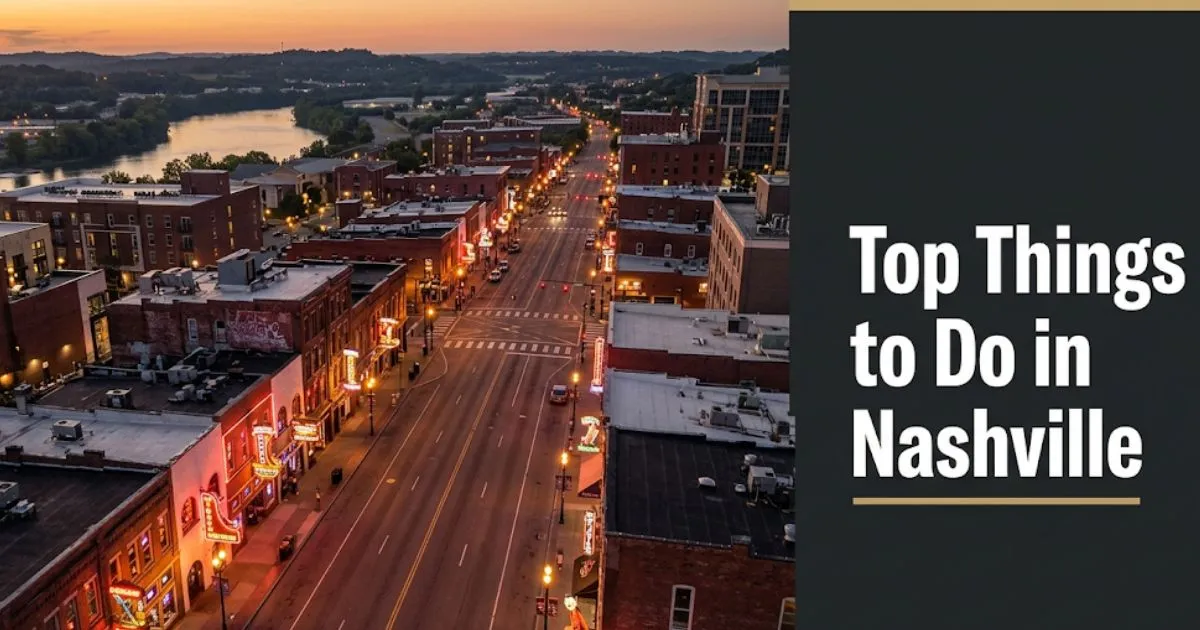
Nashville’s top things to do extend far beyond the neon-lit honky-tonk strip on Lower Broadway. The city’s genuine character lives in East Nashville’s songwriter bars, the Gulch’s culinary scene, and a museum circuit that rivals cities twice its size.
According to the Nashville Convention and Visitors Corp, the city welcomed over 15 million visitors in a recent year. Those who venture past Broadway into the city’s distinct neighborhoods consistently report a richer, more memorable experience.
This guide covers Nashville’s best daytime activities, music venues, neighborhoods, outdoor spaces, food experiences, and practical logistics. It tells you what to skip, what genuinely earns its reputation, and how to structure a real itinerary.
Top Things to Do in Nashville
The top things to do in Nashville in 2026 span live music, world-caliber museums, distinct walkable neighborhoods, outdoor parks, and one of America’s most compelling culinary identities built on hot chicken and meat-and-three traditions.
Nashville is not a one-district city. Its best experiences are distributed across Lower Broadway, the Gulch, East Nashville, 12South, Germantown, and Wedgewood-Houston.
Visitors who treat it as a single strip will miss 80 percent of what makes the city worth the trip.
| Activity | Best For | Cost Range | Time Required | Insider Note |
|---|---|---|---|---|
| Ryman Auditorium tour | Music fans, couples | $25-$40/adult | 1.5 hours | Book backstage tour weeks ahead |
| Country Music Hall of Fame | First-timers, families | $25-$30/adult | 2-3 hours | Free for ages 5 and under |
| Station Inn | Adults, music purists | $10-$15 cover | 2-3 hours | No advance booking; arrive early |
| Bluebird Cafe songwriter round | Couples, music lovers | $5-$15 cover | 2 hours | Reserve online; sells out fast |
| Radnor Lake State Natural Area | Outdoor lovers, seniors | Free | 1.5-2 hours | Morning visits avoid afternoon heat |
| Tennessee State Museum | Budget travelers, families | Free | 1.5-2 hours | One of Nashville’s most underused attractions |
| Cheekwood Estate and Gardens | Couples, seniors | $20-$30/adult | 2-3 hours | Holiday light displays book months out |
| 12South neighborhood walk | All profiles | Free to explore | Half-day | Best on weekday mornings for photos |
Insider Tip:
- Nashville’s best experiences require weekday timing. Broadway on a Tuesday night is a genuinely different city from Broadway on a Saturday night.
- Book the Bluebird Cafe’s Sunday showcase round at least two to three weeks in advance. It sells out routinely.
- Seniors and visitors with mobility needs should prioritize Cheekwood, Centennial Park, and the Tennessee State Museum over Broadway’s crowded pedestrian corridor.
Best Things to Do in Nashville During the Day
The best daytime activities in Nashville center on three distinct zones: the downtown museum corridor, the neighborhood streets of East Nashville and 12South, and the city’s underappreciated park system.
A full Nashville day works best when anchored to one geographic zone. Jumping between neighborhoods burns time and parking money.
Here is a practical 2-day weekend framework:
Day 1: Downtown and the Gulch
- Start at the Country Music Hall of Fame and Museum when it opens. Crowds build significantly after 11 a.m.
- Walk to the Johnny Cash Museum on Third Avenue South. Allow 90 minutes. Lines are shorter before noon.
- Lunch at Arnold’s Country Kitchen on Eighth Avenue South. Order the cornbread and the vegetable plate. Lines move fast.
- Afternoon at the Frist Art Museum on Broadway. Admission runs approximately $15 to $20 per adult. Check current exhibitions before visiting.
- Early evening walk through The Gulch neighborhood. Dinner at one of the Gulch’s chef-driven restaurants before the Broadway crowds arrive.
- Visit Robert’s Western World on Broadway before 8 p.m. to secure a table and hear the house band without the full weekend crowd.
Day 2: East Nashville and Outdoor Nashville
- Morning walk or run at Radnor Lake State Natural Area on Otter Creek Road. Arrive before 9 a.m. in summer months.
- Brunch in East Nashville along Gallatin Avenue or Five Points. Try Mas Tacos Por Favor for breakfast tacos that locals line up for.
- Afternoon at Centennial Park and the Parthenon replica. Free outdoor access; the Parthenon interior charges a modest admission fee.
- Late afternoon at Cheekwood Estate and Gardens if the current season’s exhibition appeals. Book tickets online in advance.
- Evening at the Station Inn on Cowan Street in the Gulch for bluegrass and Americana. No reservation needed, but arrive by 7 p.m. for seating.
Solo travelers can run both days independently and efficiently. The city’s ride-share infrastructure makes neighborhood-hopping practical without a car.
Families with children should swap the Frist and Cheekwood on Day 1 for the Adventure Science Center on Fort Negley Boulevard, which genuinely holds children’s attention for three to four hours.
Nashville Honky-Tonk Bars and Lower Broadway
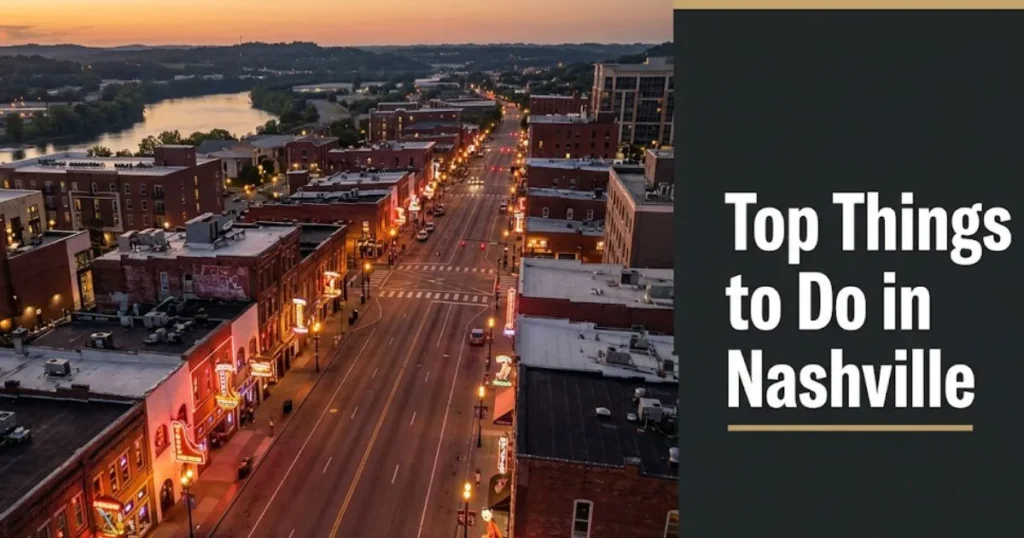
Lower Broadway is Nashville’s most photographed block, and it delivers exactly what it promises: live country music starting before noon, cold beer, and neon signs visible from two blocks away.
The honest assessment is that Broadway’s honky-tonks are a genuine Nashville experience on weeknights and a crowded, overpriced tourist corridor on Friday and Saturday nights.
Robert’s Western World at 416 Broadway is the most locally respected bar on the strip. It books traditional country acts and has never compromised its format for bachelor party crowds.
Tootsie’s Orchid Lounge at 422 Broadway has the most famous name on the block. It is louder, more tourist-facing, and more difficult to navigate during peak hours.
Printer’s Alley, one block north of Broadway between Third and Fourth Avenues North, offers a lower-key alternative with the same live music density and significantly fewer bachelorette groups.
Practical logistics:
- Street parking on Broadway disappears by 6 p.m. on weekends. Use the Municipal Lot on Fifth Avenue or arrive via ride-share.
- Most honky-tonks have no cover charge but expect $6 to $12 per drink.
- Bars are standing-room only on Friday and Saturday nights after 9 p.m.
Couples visiting Nashville for a romantic weekend should experience Broadway once, briefly, and spend the actual evenings at the Station Inn or the Bluebird Cafe. The atmosphere is incomparably more intimate.
Seniors should visit Broadway before 6 p.m. on a weekday. The music is the same. The crowd pressure and noise level are manageable.
According to Visit Music City, Lower Broadway’s honky-tonks collectively operate from approximately 10 a.m. through 3 a.m. daily. Verify specific venue hours before visiting.
Key Takeaway: Visit Lower Broadway on a Tuesday or Wednesday evening. The music is identical, the crowd is 70 percent smaller, and you will actually hear the band.
Non-Touristy Things to Do in Nashville
Nashville’s non-tourist experience lives at the Station Inn on Cowan Street, the Bluebird Cafe in Green Hills, and the 5 Spot on McFerrin Avenue in East Nashville.
These three venues represent Nashville’s actual working music culture. They book the city’s professional songwriter and musician community rather than cover bands performing for bar-hopping groups.
The Station Inn has been the city’s premier bluegrass and acoustic venue since 1974. It seats approximately 150 people in a room that resembles someone’s living room with better sound. The musicians who play here are working professionals. Many have contributed to albums you know by name.
The Bluebird Cafe in the Green Hills neighborhood on Hillsboro Pike runs songwriter-in-the-round shows where three to four working Nashville songwriters perform their original compositions and share the stories behind them. These shows sell out weeks in advance. Reserve online through the Bluebird’s official booking system.
The 5 Spot on McFerrin Avenue in Five Points, East Nashville, books local bands across country, soul, funk, and Americana. Cover charges typically run $5 to $10. The crowd is almost entirely local on weeknights.
Wedgewood-Houston (WeHo), Nashville’s arts district south of downtown, runs independent galleries and creative studios that operate on their own schedules. First Saturday gallery events draw the city’s arts community rather than its tourist traffic.
Budget travelers will find the non-tourist Nashville circuit significantly more affordable. Station Inn and the 5 Spot covers run $5 to $15. The Bluebird Cafe’s songwriter rounds are $5 to $15 as well.
Insider Tip:
- The Station Inn’s Tuesday bluegrass jam is free and open to visiting musicians. It runs late and is one of the most genuinely Nashville experiences available to any visitor.
- The 5 Spot’s Monday night variety show is a local institution. It costs almost nothing and regularly features working Nashville musicians between tour dates.
Things to Do in Nashville for Adults
Nashville for adults without children is a fundamentally different trip from Nashville as a family destination, and the city is genuinely better suited to adult travel groups.
The honky-tonk circuit, the songwriter venue network, the restaurant scene, and the rooftop bar culture all function at an adult social register that few American cities match in one concentrated geography.
Rooftop bars offer the best aerial view of the Nashville skyline outside of a helicopter. The rooftop at L.A. Jackson atop the Thompson Nashville hotel in the Gulch is the most reliable option, with skyline views and a food program that earns the price of a cocktail. Expect to spend $15 to $20 per drink.
The National Museum of African American Music on Fifth Avenue North opened in 2021 and covers genres from gospel to hip-hop within the context of Black American musical innovation. It is the most intellectually substantive museum Nashville has opened in recent years. Admission runs approximately $25 to $30 per adult.
Nashville’s Germantown neighborhood, north of downtown along Jefferson Street, offers an adult-oriented dining and coffee culture without the tourist density of Broadway or the Gulch. Vendors at the Nashville Farmers Market on Eighth Avenue North serve some of the city’s most honest regional cooking.
Bachelorette and bachelor groups should book experiences in advance: pedal tavern tours, cooking classes at local culinary studios, and bourbon tastings at the Nelson’s Green Brier Distillery on Clinton Street fill up weeks ahead on summer weekends.
Solo adult travelers will find Nashville unusually easy to navigate independently. The honky-tonk bar culture is inherently social. Sitting at the bar at Robert’s Western World alone is normal, comfortable, and often results in conversation with other solo travelers and locals alike.
Things to Do in East Nashville
East Nashville is the neighborhood that most closely represents what Nashville actually is when the tourism industry is not looking.
It runs along Gallatin Avenue, Greenwood Avenue, and the Five Points intersection at Holly Street, where restaurants, record shops, vintage stores, and live music venues cluster within a three-block radius.
Mas Tacos Por Favor on Gallatin Avenue is East Nashville’s most iconic food stop. The line extends outside the door on weekend mornings. The tacos are built on handmade tortillas and cost a fraction of what the Gulch’s restaurants charge.
The Basement East on Woodland Street books independent rock, country, Americana, and touring national acts in a converted warehouse with outstanding sound. It is known locally as “The Beast” and draws a young professional and music industry crowd. Tickets typically run $15 to $35 depending on the act.
Five Points anchors the neighborhood’s most walkable retail and dining strip. Edley’s Bar-B-Que on Woodland Street serves East Nashville’s best smoked meats and pulls a crowd of locals at lunch that tells you everything you need to know about its quality.
Couples will find East Nashville well-suited for a half-day of casual exploration: coffee at a neighborhood shop, a record store browse at Grimey’s New and Preloved Music on Eighth Avenue South (technically in the neighborhood cluster), lunch at Mas Tacos, and an evening show at the Basement East.
Accessibility note: East Nashville’s sidewalks are uneven in places and parking is street-only in Five Points. Seniors and visitors with mobility aids should note the terrain before planning a full walking day here.
Peak timing: East Nashville is at its best from 10 a.m. to 2 p.m. on weekdays, before the evening dining rush fills restaurant queues.
Key Takeaway: East Nashville’s Five Points neighborhood runs on a weekday rhythm. Saturday afternoons are busy; Tuesday mornings feel like you have discovered the real city.
The Gulch Nashville Things to Do
The Gulch is Nashville’s most design-conscious neighborhood, built on a former rail yard between downtown and 12South, and it now houses the city’s highest concentration of chef-driven restaurants and upscale nightlife.
It is also home to one of Nashville’s most photographed installations: the “What Lifts You” angel wings mural on Melrose Avenue, painted by artist Kelsey Montague. The line for photos can stretch 20 to 30 people deep on weekends.
Dining in the Gulch runs from Etch Restaurant on Union Street, where chef Deb Paquette has built one of Nashville’s most-respected fine dining menus, to Biscuit Love on 11th Avenue South, where the morning line is long but moves at a pace that makes the wait worthwhile.
Pinewood Social on Peabody Street is the Gulch’s most versatile adult venue: a restaurant, bar, bowling alley, pool, and coffee shop combined in one industrial-chic space. It works for a morning coffee, a weekday lunch, and a late-night bowling session.
L.A. Jackson rooftop bar on 11th Avenue South sits atop the Thompson Nashville hotel and provides the best unobstructed view of the city skyline available at street level. Weeknight visits skip the weekend wait.
Budget travelers note that the Gulch skews premium. Most dinners run $40 to $80 per person at the neighborhood’s better restaurants. Biscuit Love and the Nashville Farmers Market (a short walk north) are the most affordable options within reach.
Families with children: The Gulch’s restaurant and bar orientation makes it less suitable for young children at evening hours. The mural visit works well as a brief afternoon stop before heading to more family-oriented districts.
Unique Things to Do in Nashville
Nashville’s most genuinely unique experiences are concentrated in the intersections between its music industry heritage, its Southern culinary identity, and its surprisingly strong visual arts scene.
The Ryman Auditorium on Fifth Avenue North is the experience that earns every superlative applied to it. Often called “the Mother Church of Country Music,” this 1892 former tabernacle has hosted Johnny Cash, Patsy Cline, Hank Williams, and every significant country artist of the 20th century. The seated concert experience here is incomparable. Backstage tours run on days without evening shows and require advance booking.
The Grand Ole Opry at the Opryland complex in Donelson, approximately 8 miles east of downtown, is the world’s longest-running live radio broadcast, operating continuously since 1925. Attending a live Opry show is a genuinely unique experience with no American equivalent. Tickets require advance booking and sell out for prime dates.
Nelson’s Green Brier Distillery on Clinton Street in Germantown revives a pre-Prohibition Tennessee whiskey brand with an informative distillery tour and tasting. It operates in a working production facility, which makes the tour more substantive than typical whiskey tourist experiences.
Belle Meade Historic Site and Winery on Harding Road, approximately 8 miles west of downtown, combines a significant antebellum plantation history tour with a working Tennessee winery. The history here is presented honestly, including the site’s full history as an enslaved-labor plantation.
Couples find the Ryman backstage tour and a subsequent dinner in the Gulch to be one of Nashville’s most satisfying date experiences. Book the earliest available backstage tour slot to leave the afternoon and evening free.
Seniors will find the Ryman and Belle Meade both well-suited to their profile. Both offer seating throughout the tour experience and manageable walking distances.
Key Takeaway: Book the Ryman Auditorium backstage tour at least three weeks in advance for weekend dates. It sells out and cannot be replicated by any other Nashville experience.
Free Things to Do in Nashville
Nashville offers a genuinely strong free experience circuit that most competitors underreport entirely.
The Tennessee State Museum on Rosa L. Parks Boulevard downtown charges no admission and covers Tennessee history from prehistoric cultures through the 20th century with professional exhibition quality that rivals paid museums in larger cities.
Centennial Park on West End Avenue, a 132-acre park that houses the full-scale Parthenon replica, is free to access outdoors. The Parthenon interior charges a modest admission of approximately $6 to $10 per adult, but the exterior and park grounds are free and provide some of Nashville’s best urban green space.
Music Row on 16th and 17th Avenues South is a free walking experience past the studios, record labels, and publishing houses that have produced the majority of American country music since the 1950s. The industry buildings are not tourist-accessible interiors, but the street walk provides a genuine sense of the city’s professional music infrastructure.
Percy Warner Park on Old Hickory Boulevard offers free access to over 3,000 acres of wooded trails, bridle paths, and scenic overlooks within Nashville’s city limits. The Mossy Ridge Trail covers approximately 4 miles of moderate terrain with city views at its high points.
Free things to do in Nashville:
- Tennessee State Museum (always free admission)
- Centennial Park and Parthenon exterior grounds
- Music Row walking tour
- Percy Warner Park trail system
- Nashville Farmers Market browsing (no admission; food costs vary)
- Lower Broadway honky-tonks (no cover charge; drinks required)
- Wedgewood-Houston gallery walk on first Saturdays
Budget travelers can spend a full day in Nashville spending very little by combining the Tennessee State Museum, Centennial Park, and a Music Row walk before an evening at the Station Inn or a Broadway honky-tonk.
Nashville Outdoor Activities
Nashville’s outdoor scene centers on Radnor Lake State Natural Area, the Warner Parks system, and the Cumberland Riverwalk, all within 20 minutes of downtown.
Radnor Lake State Natural Area on Otter Creek Road is Nashville’s most ecologically significant natural space: a 1,100-acre protected area with six miles of trails surrounding a natural lake. White-tailed deer, herons, and otters are regularly spotted along the lake trail. No dogs are permitted on the lake trail, which helps maintain the calm that makes this park exceptional.
Arrive before 9 a.m. during summer months. The small parking lot fills by 9:30 a.m. on weekends, and there is no overflow parking. This is not a hyperbolized crowd warning. The lot genuinely fills and the entrance is closed until spots open.
Edwin Warner Park and Percy Warner Park together comprise over 3,100 acres of wooded terrain with both paved and unpaved trail networks. Percy Warner’s steeplechase course hosts an annual equestrian event and the park’s unpaved bridle paths double as mountain biking terrain.
Long Hunter State Park on James Robertson Parkway east of Nashville, approximately 20 miles from downtown, offers lake access, fishing, kayak rentals, and shorter hiking loops suited to families with children.
The Cumberland Riverwalk runs along both banks of the Cumberland River through downtown and connects to the Shelby Bottoms Greenway in East Nashville. The walk is paved and flat. It suits seniors and families comfortably.
Seniors and accessibility travelers should prioritize the Cumberland Riverwalk and the flat lake trail perimeter at Radnor Lake. Percy Warner’s steeper trails require moderate fitness. The Radnor Lake perimeter trail is unpaved but relatively level.
Key Takeaway: Radnor Lake’s parking lot closes when full, with no exceptions. Arrive before 9 a.m. on weekends or visit on a Tuesday morning when the lot stays accessible until late morning.
Cool Things to Do in Nashville at Night
Nashville’s nighttime circuit is one of its strongest assets, extending well beyond Broadway’s closing time into a songwriter venue network that runs until 1 a.m. or later.
Lower Broadway after 8 p.m. on weekends is genuinely loud, crowded, and difficult to navigate. The same venues at 6 p.m. on a weeknight offer live traditional country music, cold beer at reasonable prices, and space to actually enjoy the experience.
The Station Inn on Cowan Street in the Gulch runs bluegrass shows most nights of the week. The Tuesday night bluegrass jam is free. Regular shows charge $10 to $15 at the door. The room seats about 150 people around small tables, and the sound quality reflects decades of acoustic calibration.
Printer’s Alley between Third and Fourth Avenues North is Nashville’s original nightlife corridor, predating Broadway’s tourism surge by decades. Jazz and blues clubs here draw a local and music industry crowd. It is significantly quieter than Broadway and genuinely more interesting for adult travelers who want live music without the surrounding chaos.
3rd and Lindsley on South Third Street is a supper club and live music venue that books blues, R&B, and Americana acts in a seated room with a full dinner menu. The combination of a proper dinner with a live set makes it one of Nashville’s best date-night experiences that most first-time visitors never discover.
Solo travelers will find Nashville’s nightlife circuit unusually comfortable for independent visitors. The honky-tonk culture is social by design. Sitting at a bar alone is completely normal and often results in conversation with other travelers and working Nashville musicians.
Couples seeking an evening with genuine intimacy should book 3rd and Lindsley or the Bluebird Cafe instead of Broadway. Both deliver live music with seating, dinner service, and an atmosphere that does not require shouting across the table.
Nashville Food Experiences and Hot Chicken
Nashville’s culinary identity runs from Prince’s Hot Chicken Shack, the originator of Nashville hot chicken since the 1940s, to James Beard Award-nominated restaurants building on Middle Tennessee’s agricultural richness.
Prince’s Hot Chicken Shack has two locations: the original on Ewing Drive and a newer location on Charlotte Pike. The wait can exceed one hour on weekends. Order mild if you have any uncertainty. The “hot” level is a serious physical commitment. The “extra hot” is not a tourist challenge; it is a genuine test of heat tolerance that results in distress for most visitors who order it without prior experience.
Hattie B’s Hot Chicken on West Peachtree Street and Bolton’s Spicy Chicken and Fish on Main Street in East Nashville are the two strongest alternatives for visitors who cannot wait the Prince’s line. Bolton’s is a local institution operating from a small counter-service location that has changed nothing about its format in decades.
Arnold’s Country Kitchen on Eighth Avenue South is Nashville’s most respected meat-and-three restaurant: a Southern cafeteria format where you choose a protein and three sides from a rotating daily menu. Meals run approximately $10 to $15 per person. The line moves efficiently despite its length at peak lunch hours.
According to Tennessee Department of Tourist Development, Middle Tennessee’s culinary identity is closely tied to its agricultural heritage, including pork, cornmeal, field peas, and sweet potatoes, which form the backbone of the meat-and-three tradition that Arnold’s exemplifies.
Budget travelers will find Nashville’s most culturally significant food at the most affordable price points. Prince’s, Arnold’s, and the Nashville Farmers Market vendors collectively represent the city’s deepest food traditions at costs well below the restaurant scene in the Gulch.
Families with children: Hot chicken heat levels require careful ordering for children. Mild or plain fried chicken is available at all hot chicken establishments and is genuinely good independent of the heat element.
Key Takeaway: Order the medium heat at Prince’s for your first visit. The hot and extra hot levels are not for casual experimentation, regardless of your normal spice tolerance.
Nashville Arts, Culture, and Museums
Nashville’s museum circuit is anchored by four institutions that each cover distinct cultural territory with genuine depth.
The Country Music Hall of Fame and Museum on Fifth Avenue South is the city’s largest and most-visited museum, covering country music’s history from its Appalachian roots through contemporary chart artists across multiple floors. Allow two to three hours. The permanent collection is substantial. Admission runs approximately $25 to $30 per adult.
The National Museum of African American Music on Fifth Avenue North, which opened in 2021, is Nashville’s most significant recent museum addition. It traces the African American origins of blues, jazz, gospel, R&B, rock and roll, and hip-hop through an interactive, immersive exhibition design. This museum corrects a historical omission in how Nashville’s cultural story has traditionally been told. Admission runs approximately $25 to $30 per adult.
The Frist Art Museum on Broadway presents rotating national-caliber visual art exhibitions in a 1930s Art Deco former post office building. The building itself is worth the visit. Admission runs approximately $15 to $20 per adult. The Frist consistently books exhibitions that would command attention in Chicago or New York.
Cheekwood Estate and Gardens on Forrest Park Drive in Belle Meade, approximately 8 miles from downtown, combines a historic Georgian revival mansion with 55 acres of botanical gardens. Seasonal exhibitions include the annual summer sculpture trail and the holiday light installation that sells out weeks in advance.
Families with children: The Country Music Hall of Fame has limited programming specifically designed for young children. The Adventure Science Center on Fort Negley Boulevard is the city’s genuinely child-centered museum, with hands-on exhibits that hold children’s attention across a full morning.
Seniors: All four major museums have elevator access and seating throughout. The Country Music Hall of Fame and the National Museum of African American Music are the most logistically comfortable for visitors with limited mobility.
Things to Do Near Nashville TN
The strongest day trips from Nashville sit within a 30 to 90-minute drive and cover terrain the city itself cannot provide: distillery country, waterfall geography, and a small-town center that operates at a different pace entirely.
Jack Daniel’s Distillery in Lynchburg, Tennessee, is approximately 80 miles south of Nashville on Route 55, a drive of roughly 90 minutes. The distillery tour covers the full production process of one of America’s most recognizable whiskeys in a town of fewer than 6,000 people. Tours require advance booking and fill up on weekends. Note that Moore County, where the distillery sits, is a dry county. Whiskey samples at the distillery are available only through the tasting experience, not general purchase.
The Natchez Trace Parkway begins just southwest of Nashville and runs 444 miles to Natchez, Mississippi. Even a short drive of 30 to 50 miles along its two-lane, commercial-traffic-free route provides some of the most serene road travel available within reach of any major American city.
Fall Creek Falls State Park in Van Buren County, approximately 100 miles southeast of Nashville, is home to one of the tallest waterfalls east of the Rocky Mountains. The falls drop approximately 256 feet into a pool accessible by trail. The drive takes about 1.5 to 2 hours.
Franklin, Tennessee, approximately 20 miles south of Nashville on I-65, is a walkable historic downtown with preserved Civil War battle history at the Carter House and Carnton historic sites. It is a viable half-day trip and substantially less crowded than downtown Nashville.
Day trip comparison:
| Destination | Distance from Nashville | Drive Time | Best For | Cost Range |
|---|---|---|---|---|
| Jack Daniel’s Distillery, Lynchburg | 80 miles | 90 min | Adults, whiskey interest | $15-$25/tour |
| Franklin, TN | 20 miles | 30 min | History, couples, families | Free to explore |
| Fall Creek Falls State Park | 100 miles | 2 hours | Outdoor enthusiasts | $8-$12/vehicle |
| Natchez Trace Parkway | 10 miles west | 20 min to start | Scenic drives, cyclists | Free |
Key Takeaway: Franklin, Tennessee is Nashville’s best half-day escape. It is 30 minutes south, completely walkable, and gives you a version of Tennessee that the city cannot.
Nashville Practical Logistics and Getting Around
Nashville has no rapid rail transit connecting its major districts. Ride-share is the most practical way to move between downtown, East Nashville, the Gulch, 12South, and outlying neighborhoods.
Getting from BNA to downtown: Nashville International Airport sits approximately 8 miles east of downtown. A ride-share from the designated pickup area runs approximately $20 to $35 depending on traffic and surge pricing. The WeGo Public Transit system operates Route 18 from the airport to downtown, running approximately $2 per ride, but transit times run 45 to 60 minutes and require a transfer. Most visitors use ride-share.
Parking reality: Street parking on Lower Broadway disappears before 6 p.m. on weekends. The Nashville Metro parking garages on Fifth Avenue and Demonbreun Street are the most reliably available options for downtown parking. Expect $15 to $30 for an evening. Do not attempt to drive to Broadway on a Friday or Saturday night and search for street parking. That decision costs an hour.
Getting around Nashville:
- Download the Lyft or Uber app before arrival. Both operate at all hours in Nashville.
- Use ride-share between major districts: downtown to East Nashville is 5 to 10 minutes and approximately $8 to $15.
- Rent a car only if day-tripping outside the city. Within Nashville’s districts, a car creates more parking problems than it solves.
- The WeGo bus system covers major corridors but requires route research and does not serve all tourist districts on weekend evenings.
- Broadway itself is best explored on foot once you arrive at one end.
Seniors and accessibility travelers: Lyft and Uber both offer accessible vehicle options in Nashville, though availability varies. Book accessible vehicles with advance notice through the apps when possible.
Safety and Practical Warnings:
- Broadway crowds on weekend nights create pickpocket risk. Keep wallets in front pockets and bags zipped and worn across the body.
- Summer heat from June through August regularly exceeds 90 degrees Fahrenheit with high humidity. Carry water. Plan outdoor activities before 10 a.m. or after 6 p.m.
- Surge pricing on ride-shares after 1 a.m. on weekends can triple standard rates. Budget for this or plan to walk to a less-congested pickup zone.
Best Time to Visit Nashville
The best time to visit Nashville is April through early June or September through mid-October, when temperatures are comfortable, outdoor entertainment districts operate at full capacity, and hotel rates sit below peak summer levels.
Spring in Nashville brings the CMA Fest (typically in June), one of country music’s largest annual events, which fills the city’s hotels weeks in advance and raises room rates significantly. If CMA Fest aligns with your travel dates, book at least four to six months ahead or expect to pay premium rates for limited availability.
Fall is Nashville’s most underrated season. September and October bring lower humidity after summer, stable warm temperatures in the 60s to 70s Fahrenheit, and the city’s restaurant patios and outdoor venues at their most comfortable. Fall foliage in Nashville and the surrounding Warner Parks provides visual variety that summer’s uniform green canopy does not.
Summer (June through August): Peak crowds, peak hotel rates, and genuine heat. July and August regularly bring temperatures above 90 degrees with humidity that makes outdoor walking uncomfortable by midmorning. Broadway’s outdoor atmosphere suffers in this heat. Indoor museum programming remains excellent year-round.
Winter (December through February): Nashville winters are mild by northern standards but cold enough to limit Broadway’s outdoor appeal. December brings the Cheekwood Holiday Lights installation, which sells out on weekends and requires advance booking. Hotel rates drop significantly in January and February, making winter a strong value choice for visitors whose priorities center on museums, indoor music venues, and restaurants.
| Season | Temp Range | Crowd Level | Hotel Rate Tier | Best Activities |
|---|---|---|---|---|
| Spring (Apr-May) | 60-75°F | Moderate | Mid-range | Outdoor dining, parks, music venues |
| Summer (Jun-Aug) | 85-95°F | Peak | Premium | Museums, indoor venues, night activities |
| Fall (Sep-Oct) | 65-80°F | Moderate | Mid-range | All outdoor activities, restaurant patios |
| Winter (Nov-Mar) | 35-55°F | Low | Budget | Museums, indoor music, holiday events |
Families with children will find spring and fall the most practical seasons. Summer’s heat is hard on young children navigating Nashville on foot. Winter’s shorter days limit the outdoor time that kids typically need to stay engaged.
Safety and Practical Warnings for Nashville
Nashville is a safe major American city with specific practical risks concentrated in predictable zones and time periods.
Key safety and practical facts every visitor should know:
- Lower Broadway on Friday and Saturday nights after 9 p.m. concentrates the city’s heaviest pedestrian crowds. Pickpocket risk is real. Secure valuables before entering.
- Summer heat from late June through August is genuine and affects outdoor activities significantly. Carry at least 20 ounces of water per person when walking outdoors. Plan morning or evening outdoor activity timing.
- Surge pricing on ride-shares after 1 a.m. on Friday and Saturday nights can reach three to five times normal rates. Either plan to leave by midnight or walk two to three blocks from Broadway before requesting a pickup.
- Radnor Lake State Natural Area’s parking lot closes when full. No overflow parking exists. Arriving after 9:30 a.m. on a summer weekend means you may not get in.
- Broadway’s honky-tonks are standing-only on peak nights. Seniors, pregnant visitors, and anyone with lower-body mobility limitations should visit before 6 p.m. on weekdays.
- Jack Daniel’s Distillery tours require advance booking and fill on weekends. Arriving without a reservation typically means not getting a tour.
For general Nashville emergency services, contact Nashville Metro Emergency Management or dial 911 for any immediate safety concern. The Vanderbilt University Medical Center on 21st Avenue South is Nashville’s primary trauma center.
Frequently Asked Questions About Nashville
What are the top things to do in Nashville for first-time visitors?
First-time visitors to Nashville should prioritize the Ryman Auditorium, the Country Music Hall of Fame and Museum, and at least one evening on Lower Broadway alongside a visit to a neighborhood music venue like the Station Inn or Bluebird Cafe.
Two full days allows first-timers to cover the downtown museum corridor and one or two neighborhoods beyond Broadway without feeling rushed.
Booking the Ryman backstage tour and a Bluebird Cafe songwriter round in advance is the single most important planning step for a first Nashville visit.
Is Nashville worth visiting if you don’t like country music?
Nashville is absolutely worth visiting without any interest in country music.
The city’s food scene, visual arts museums, outdoor parks, craft spirits distilleries, and neighborhood culture in East Nashville and the Gulch function completely independently of country music tourism.
The National Museum of African American Music, the Frist Art Museum, Radnor Lake State Natural Area, and the dining culture in Germantown and 12South are experiences that have nothing to do with country music and would stand on their own in any American city.
What is the best neighborhood to stay in Nashville?
The best neighborhood to stay in Nashville depends on your travel priorities.
Staying downtown or in the Gulch puts you within walking distance of Broadway, the museum corridor, and the Gulch’s restaurant scene, with easy ride-share access to East Nashville.
East Nashville lodging gives you direct access to the city’s most local neighborhood experience but requires a short ride to reach downtown attractions.
How many days do you need in Nashville to see everything?
Three to four days is the practical minimum for Nashville visitors who want to cover downtown, the Gulch, East Nashville, one day trip, and meaningful evenings at both Broadway and a neighborhood music venue.
Two days is viable but forces choices between neighborhoods and eliminates day-trip options.
A single day is enough for a first impression but leaves most of Nashville’s genuine character unreached.
What should I avoid in Nashville as a tourist?
Avoid centering your entire trip on Lower Broadway on a Friday or Saturday night.
The Broadway experience is loudest, most crowded, most expensive, and least representative of Nashville on those two nights, and many first-time visitors mistake this crowded tourist corridor for the entire city.
Skip the Broadway tourist experience on weekend nights and replace it with the Station Inn, the Bluebird Cafe, or a show at 3rd and Lindsley, where you will spend less money, hear better music, and share the room with people who came specifically to listen.
Is Nashville expensive to visit in 2026?
Nashville runs across a wide cost range depending on your choices.
Free and low-cost experiences, including the Tennessee State Museum, Centennial Park, Percy Warner Park, and the Broadway honky-tonks, make a budget day entirely feasible for under $50 per person including meals at Arnold’s Country Kitchen.
A mid-range Nashville day including museum admissions, a Gulch dinner, and a music venue cover charge runs approximately $100 to $150 per person, while premium experiences with upscale dining and backstage tours can reach $200 to $300 per person daily.
Nashville’s best moments reward visitors who plan specifically rather than arrive generally.
Book the Ryman backstage tour and the Bluebird Cafe songwriter round before you confirm your hotel. Visit Broadway on a weeknight. Spend at least one full morning in East Nashville.
All prices, hours, seasonal programming, and reservation availability cited in this guide are subject to change. Verify current logistics directly through Visit Music City and each venue’s official booking channels before departure.
That one advance booking step, before you touch a hotel reservation, separates the Nashville trip you planned from the one you actually remember.