16 Best Things to Do in Glacier National Park in 2026

Glacier National Park offers some of the most rewarding things to do in any American national park. The challenge is not finding activities — it is knowing which zones, which trails, and which logistics decisions actually determine whether your trip succeeds or fails.
The park spans over one million acres in northwestern Montana. The National Park Service reports Glacier receives approximately three million visitors annually, with the vast majority arriving between July and August.
This guide covers every major activity zone, non-hiking options, the vehicle reservation system most visitors misunderstand, traveler-specific guidance, and a complete 3-day itinerary you can use immediately.
Things to Do in Glacier National Park: What Makes This Place Different
The best things to do in Glacier National Park span six distinct activity zones, each with its own character, crowd level, and access logistics.
Glacier is not a single-loop park where one road covers everything. It has five major visitor zones: the Going-to-the-Sun Road corridor, Many Glacier, Two Medicine, the North Fork, and the Apgar and Lake McDonald area.
Each zone requires separate planning. Visitors who only drive Going-to-the-Sun Road see perhaps 15% of what the park actually offers.
The park sits at the Crown of the Continent, where three major watershed systems originate. Wildlife density here rivals Yellowstone, and the scenery escalates with elevation in ways that no photographs fully prepare you for.
Insider Tip:
- The Many Glacier area in the northeast has the highest concentration of grizzly bear sightings in the park.
- Two Medicine, reached via a separate eastern road, sees roughly one-tenth the traffic of the main corridor.
- First-time visitors who plan only the Going-to-the-Sun Road miss what experienced repeat visitors consider the park’s most rewarding zones.
| Zone | Best For | Crowd Level | Signature Activity |
|---|---|---|---|
| Going-to-the-Sun Road | Scenic driving, Logan Pass | Very High (summer) | Full road traverse |
| Many Glacier | Wildlife, hiking | Moderate-High | Grinnell Glacier Trail |
| Two Medicine | Solitude, boat tour | Low | Two Medicine Lake boat |
| North Fork | Backcountry, solitude | Very Low | Bowman Lake |
| Apgar/Lake McDonald | Families, water access | Moderate | Lake kayaking, Red Jammers |
Best Things to Do in Glacier National Park: Activity Overview
The single best starting point in Glacier is the Apgar Visitor Center, located just inside the West Glacier entrance, where rangers can brief you on current conditions in under ten minutes.
From Apgar, you can access Lake McDonald by foot or kayak within five minutes. The Lake McDonald Lodge historic lobby, built in 1913, is worth thirty minutes on its own.
Budget travelers should note that park entrance costs approximately $35 per vehicle for a 7-day pass as of recent years, or free with an America the Beautiful annual pass. Verify current fees at nps.gov/glac before arriving.
Families with children ages 8 and up will find the Apgar and Lake McDonald zone the most forgiving starting point. Terrain is flat, restrooms are accessible, and activities scale easily.
According to the Glacier National Park Conservancy, the park contains over 700 miles of maintained trails, 762 lakes, and 26 named glaciers. That scale means no single visit covers it all.
The honest assessment: the most-photographed experiences (Hidden Lake Overlook boardwalk, Logan Pass parking lot selfies) draw the longest waits for the most averaged-down experience. The park’s genuinely exceptional experiences require either early starts, exploration of secondary zones, or both.
Going-to-the-Sun Road: The Park’s Most Essential Drive
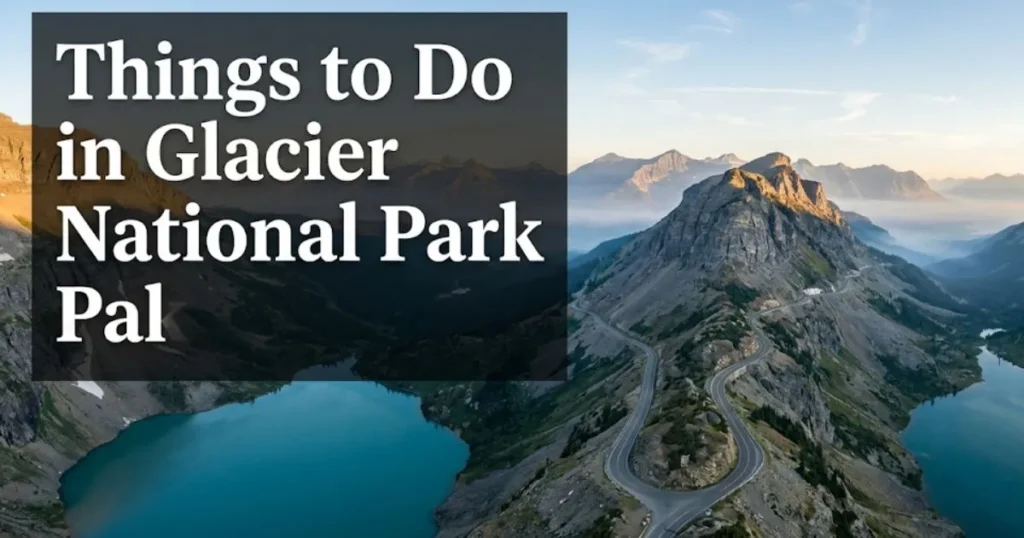
Going-to-the-Sun Road is the 50-mile paved road crossing the Continental Divide at Logan Pass, and it is the single most important thing to plan correctly before your Glacier trip.
The road climbs from Lake McDonald (elevation approximately 3,153 feet) to Logan Pass (approximately 6,646 feet). Views along the Garden Wall, at the Loop pullout, and at the Big Bend overlook rank among the most spectacular road vistas in North America.
Peak season vehicle size restrictions prohibit vehicles over 21 feet in length (including tow) from traveling the section between Avalanche Creek and the Sun Point parking area. Larger vehicles must park at Avalanche Creek or use the shuttle.
Couples and romantic travelers should plan the drive for early morning, ideally departing Apgar by 6 a.m. The light on the Garden Wall at sunrise is exceptional, and the road is significantly quieter before 8 a.m.
The most common mistake on this road: stopping at every pullout in both directions on the same day. Pick one direction — west to east toward Logan Pass — in the morning, and save the return for late afternoon when western light illuminates the valleys.
Insider Tip:
- The pullout at Big Bend (milepost 38 westbound) is less photographed than Logan Pass but arguably more dramatic.
- The Loop, at milepost 29, is the only place on the road where you can watch waterfalls and the switchback structure of the road simultaneously.
- Vehicles must exit Logan Pass before the reservation window ends; late arrivals risk ticketing.
Best Hikes in Glacier National Park
The best hikes in Glacier National Park include trails ranging from genuinely easy (Sun Point Nature Trail, 1.3 miles) to genuinely demanding (Grinnell Glacier Trail, 11 miles round trip with 1,600 feet of elevation gain).
The Highline Trail, departing Logan Pass and running 11.4 miles one-way to Granite Park Chalet, is consistently identified by experienced park visitors as the single most spectacular maintained trail in the park. The trail contours the Garden Wall with exposure to open ridgeline and exceptional wildlife habitat.
The Avalanche Lake Trail (4.5 miles round trip, 500 feet elevation gain) is the best choice for families with children ages 6 and up. The trail follows Avalanche Creek through old-growth cedar and hemlock forest before opening at a glacial cirque lake.
Solo travelers should note that Glacier’s backcountry requires a backcountry permit and bear canister or hang system. Solo hiking on Highline during peak season is common and generally safe if you carry bear spray and tell someone your itinerary.
Seniors and travelers with limited mobility will find the Sun Point Nature Trail along St. Mary Lake the most accessible option. The paved section from Sun Point parking to Baring Falls is 0.7 miles round trip on relatively flat terrain.
| Trail | Distance (RT) | Elevation Gain | Best For | Difficulty |
|---|---|---|---|---|
| Avalanche Lake | 4.5 mi | 500 ft | Families, beginners | Easy-Moderate |
| Hidden Lake Overlook | 2.7 mi | 460 ft | All profiles | Moderate |
| Highline Trail | 11.4 mi (one-way) | 200 ft (net) | Experienced hikers | Moderate-Hard |
| Grinnell Glacier | 10.6 mi | 1,600 ft | Active adults | Hard |
| Iceberg Lake | 9.7 mi | 1,275 ft | Active adults | Moderate-Hard |
| Sun Point Nature Trail | 1.3 mi | 75 ft | Seniors, accessibility | Easy |
The honest assessment: Hidden Lake Overlook from Logan Pass has become severely overcrowded between 9 a.m. and 4 p.m. during peak summer. Arrive before 7 a.m. or hike it in late September when boardwalk traffic drops dramatically.
Glacier National Park Wildlife Viewing
Glacier National Park wildlife viewing is most productive in the Many Glacier area, particularly along the trail between Swiftcurrent Lake and Lake Josephine, where grizzly bears, moose, and bighorn sheep are frequently observed from a single morning walk.
The park hosts approximately 71 species of mammals. Grizzly bear, black bear, mountain goat, bighorn sheep, moose, gray wolf, and wolverine all have confirmed populations within park boundaries.
Mountain goats at Logan Pass are habituated to human presence and often visible from the Logan Pass Visitor Center parking area without any hiking. This is the most accessible wildlife sighting in the park.
Budget travelers should know that wildlife viewing requires no paid admission beyond the park entry fee. Early mornings (6 to 8 a.m.) and evenings (7 to 9 p.m. in summer) consistently produce the best wildlife activity along road corridors and lake shores.
According to the National Park Service, grizzly bear encounters have increased as the park’s grizzly population has grown. Bear spray is strongly recommended for all visitors on any trail, not just backcountry routes.
The local alternative to the crowded Logan Pass mountain goat experience: drive the North Fork Road to the Bowman Lake area, where mountain goats and deer are frequently visible without the foot traffic and parking pressure of the main corridor.
Key Takeaway: Secure your Going-to-the-Sun Road vehicle reservation before anything else. It is the single logistics step that determines whether your peak-season trip works or fails.
Things to Do in Glacier National Park Besides Hiking
Glacier National Park has excellent non-hiking activities, including scenic boat tours, Red Jammer bus excursions, ranger-led programs, kayaking, photography workshops, and certified International Dark Sky Park stargazing.
Red Jammer buses, the restored 1930s touring vehicles operated by the Glacier Park Collection, offer full Going-to-the-Sun Road tours without requiring visitors to drive themselves. These open-top buses run from multiple park lodges and are bookable in advance through the Glacier Park Collection.
Ranger-led programs operate from Apgar, Logan Pass, St. Mary, and Many Glacier visitor centers throughout the summer season. Programs range from guided nature walks to evening astronomy talks. Most are free with park entry.
Seniors and travelers with mobility limitations should prioritize Red Jammer tours, boat tours, and ranger programs. These three activity types deliver the full Glacier experience without significant physical demand.
Families with young children will find the Apgar Beach area at the south end of Lake McDonald excellent for picnicking, paddling, and shoreline exploration. Kayak and paddleboard rentals are available at Apgar Village through the summer season.
Insider Tip:
- The Lake McDonald evening ranger talk (held at Apgar Amphitheater on select evenings) covers grizzly bear ecology and is consistently rated the best free program in the park.
- Photography workshops through the Glacier National Park Conservancy are limited-enrollment, morning-focused sessions that put you in the right light at the right locations.
- Winter snowshoe ranger programs operate from Apgar on weekends through February and March when conditions permit.
Glacier National Park Boat Tours
Glacier National Park boat tours, operated exclusively by the Glacier Park Boat Company, run on five lakes: Lake McDonald, St. Mary Lake, Two Medicine Lake, Swiftcurrent Lake, and Lake Josephine in Many Glacier.
Each boat tour is a distinct experience. The St. Mary Lake tour offers views of Wild Goose Island, one of the most photographed small islands in the American West. The Many Glacier Swiftcurrent-to-Josephine tour drops passengers for the shortened hike to Grinnell Glacier, cutting the round-trip distance by approximately 3.6 miles.
Pricing runs approximately $20 to $35 per adult for most tours as of recent seasons. Verify current rates and reservation requirements directly with the Glacier Park Boat Company before your visit.
Couples consistently rate the Two Medicine Lake boat tour the most intimate and least crowded of the five options. The lake is surrounded by peaks with almost no development visible.
Families with children do best on the Lake McDonald tour departing from the Lake McDonald Lodge dock. The tour is short enough for young attention spans and returns to full park services at the lodge.
Book boat tours well in advance for peak summer dates. The Swiftcurrent-to-Josephine Many Glacier combination tour sells out weeks ahead during July and August.
Many Glacier Area Activities
The Many Glacier area, located in the northeast corner of the park, is the best single zone for concentrating wildlife viewing, elite hiking, and boat tour experiences in one place.
Grinnell Glacier Trail (10.6 miles round trip, 1,600 feet elevation gain) is among the most rewarding hikes in the American West. The trail passes two lakes, ascends through wildflower meadows, and delivers you to the edge of an actively receding glacier with meltwater pools directly below it.
The Many Glacier Hotel, a historic 1915 Swiss-style structure on Swiftcurrent Lake, offers dining and lodging with direct views across the lake to the Grinnell area mountains. Even non-guests can have lunch on the hotel’s lake-view deck.
Active couples will find Many Glacier the single best base for two to three days of exploration. The Iceberg Lake Trail (9.7 miles round trip) and Grinnell Glacier Trail offer full days of hiking without repeating terrain.
According to Montana’s Glacier Country Regional Tourism Commission, Many Glacier sees significantly lower crowds than the Going-to-the-Sun Road corridor on a per-square-mile basis, despite offering comparable scenery and superior wildlife density.
The local alternative for visitors who want Many Glacier quality without the multi-mile commitment: the Swiftcurrent Lake Nature Trail (2.6 miles, flat) circles the lake and delivers regular moose and bear sightings without elevation gain.
Two Medicine Area: Glacier National Park’s Most Underrated Zone
Two Medicine is the least-visited major zone in Glacier National Park, offering boat tours, accessible trails, and a lake setting with mountain views equal to any other part of the park.
Two Medicine Lake sits at the foot of Rising Wolf Mountain. The Glacier Park Boat Company operates a tour on the lake that drops passengers at the far end for access to Twin Falls (0.9 miles from the boat landing) or the longer Dawson Pass route.
The Running Eagle Falls Trail at Two Medicine is one of the park’s few genuinely flat, paved accessible routes. The 0.6-mile round-trip trail leads to a dual-level waterfall and is suitable for strollers and wheelchairs.
Seniors and accessibility travelers should make Two Medicine a priority. The combination of paved trail access, boat tours, and accessible picnic facilities makes it the most accommodating zone in the park for travelers with physical limitations.
Budget travelers note that Two Medicine has a campground with competitive rates compared to Many Glacier and Apgar. Fewer nearby services mean bringing provisions from Browning or East Glacier Park village.
The Two Medicine area sits adjacent to the Blackfeet Nation, and the eastern approach road offers some of the park’s best open-prairie-to-mountain transition views. Most visitors approach from the west and miss this entirely.
Key Takeaway: The Many Glacier and Two Medicine zones offer wildlife and scenery equal to Going-to-the-Sun Road at a fraction of the crowd level. Plan at least one full day in each area.
Things to Do Around Glacier National Park
The best things to do around Glacier National Park include exploring Whitefish, Montana (30 miles southwest), visiting the Museum of the Plains Indian in Browning, taking the Amtrak Empire Builder train route, and day tripping to Flathead Lake.
Whitefish is the most useful base town for Glacier visitors. It has the region’s best restaurant concentration, full grocery and gear options, and direct Amtrak access via the Empire Builder. Downtown Whitefish on Central Avenue has a walkable mix of local restaurants, brew pubs, and outfitter shops.
Flathead Lake, approximately 45 miles south of Whitefish via US 93, is the largest natural freshwater lake west of the Mississippi River. It offers boat tours, cherry orchards (mid-July pick season), and lakeside villages including Polson and Bigfork.
Couples should consider spending one evening in Whitefish during a multi-day Glacier trip. The dining scene, particularly at restaurants like Tupelo Grille on Central Avenue, provides a significant upgrade from park lodge food.
Families can combine a Glacier visit with a day at Whitefish Mountain Resort, which operates an aerial gondola and mountain biking trails through the summer season.
The local alternative to the standard Whitefish stop: the small railroad town of Essex, directly on US 2 at the park’s south boundary, has the historic Izaak Walton Inn and cross-country ski trail access from the park boundary in winter. In summer, it is the quietest gateway into the park’s backcountry southern trails.
Glacier National Park for Families
Glacier National Park works well for families with children ages 6 and up, but requires specific trail selection and timing to avoid frustrating experiences on terrain that exceeds young children’s capacity.
The Junior Ranger Program, available at all Glacier visitor centers, engages children ages 5 through 12 with an activity booklet they complete during their visit. Finished booklets earn an official Junior Ranger badge from a park ranger.
The Apgar Village and Lake McDonald area is the family home base. The beach at Apgar allows wading, picnicking, and kayak rentals. The surrounding Apgar Loop trail (1 mile, flat) connects the visitor center to the beach and boat launch.
Families with children under age 5 should temper expectations around hiking. Most named trails in the park involve uneven terrain, significant sun exposure, and distances that will outlast toddler stamina quickly.
The Red Jammer bus tour is genuinely excellent for families with children of any age. Children respond well to the open-top design and the narrated stops. Drivers carry a deep knowledge of the road’s history and wildlife spots.
Insider Tip:
- The Avalanche Lake Trail is the single best hiking experience for families with children ages 6 to 10.
- Book the Red Jammer tour for the first day of your visit. It orients children to the park’s scale before committing to specific hikes.
- The Lake McDonald Lodge gift shop has quality wildlife field guides for children, which dramatically improve young travelers’ trail engagement.
Glacier National Park for Seniors and Accessible Activities
Glacier National Park has more accessible experiences than most visitors realize, including paved accessible trails, boat tours, ranger programs, and scenic drives that deliver full park immersion without physical hiking demands.
Paved accessible routes include the Running Eagle Falls Trail at Two Medicine (0.6 miles, flat), the Apgar Loop (1 mile, mostly flat), portions of the Sun Point Nature Trail at St. Mary, and the visitor center paths at Logan Pass (short boardwalk sections from the parking area).
Red Jammer bus tours and Glacier Park Boat Company tours are both accessible for most mobility levels, though travelers with wheelchairs or significant mobility limitations should contact the operators directly to confirm current accessibility accommodations before booking.
The National Park Service has a park accessibility guide specific to Glacier, available at all visitor centers. This document identifies every paved trail, accessible restroom, and accommodation with specific detail that general travel guides do not provide.
Seniors with altitude sensitivity should allow one day of adjustment before attempting any trail above 4,000 feet. Logan Pass at 6,646 feet can produce mild altitude effects in visitors not accustomed to elevation.
The Logan Pass visitor center and its immediately adjacent boardwalk provide a high-elevation experience with minimal walking. Mountain goats are often visible from the parking area, and the views across the Garden Wall require zero trail access.
Key Takeaway: Glacier’s most crowd-free and accessibility-friendly zones are Two Medicine and Apgar. Both deliver genuine park immersion without the logistics pressure of the main road corridor.
Glacier National Park in Summer: What to Expect
Glacier National Park in summer (July through August) means full trail and road access, warm temperatures, peak wildlife activity, and the largest crowds the park sees all year.
July and August bring daily highs ranging from the mid-60s to low 80s Fahrenheit in valley areas, with significantly cooler temperatures at Logan Pass and on exposed ridgelines. Afternoon thunderstorms are common at elevation and can develop quickly.
Peak season pressure is real. Logan Pass parking fills by 7 a.m. on most July and August days. The park shuttle eliminates the parking problem but adds travel time.
Wildflower season peaks between mid-July and early August. Beargrass, the park’s signature high-elevation wildflower with tall white blooms, is most visible on slopes above the treeline along Highline Trail and near Logan Pass.
Solo travelers and experienced outdoor visitors thrive in summer if they start early. A 6 a.m. trailhead start on any major route delivers a meaningfully different experience than a 10 a.m. start — cooler temperatures, better wildlife activity, and significantly fewer other hikers.
Budget travelers face the hardest conditions in summer: camping reservations at Apgar and Many Glacier fill 6 months in advance through the federal recreation.gov system. Park lodge rooms book months out. Alternative budget accommodations exist in Whitefish and East Glacier Park village.
Glacier National Park in September and Fall
September is the single best month to visit Glacier National Park for experienced travelers who want exceptional wildlife, fall color, and significantly reduced crowds.
After Labor Day, vehicle reservation requirements for Going-to-the-Sun Road typically end (verify the exact date annually with the NPS). Personal vehicles can access Logan Pass without a reservation for the first time since late May.
Fall foliage in Glacier peaks between mid-September and early October. Western larch trees on the lower slopes of the park’s western drainages turn a brilliant gold. The contrast of golden larch against evergreen forest and snow-dusted peaks is the park at its most photogenic.
Wildlife activity surges in September. Bull elk bugle in valleys near the park’s eastern edges. Grizzly bears are in hyperphagia (intensive pre-hibernation feeding) and frequently visible in berry patches near trail edges, particularly in the Many Glacier and Two Medicine areas.
Going-to-the-Sun Road typically closes for the season in mid-October, with the exact date weather-dependent. High-elevation trails can receive first significant snowfall in September, so check current trail conditions daily via nps.gov/glac.
Couples and photographers consistently rank September as the definitive time to visit. Lodging rates drop slightly after Labor Day. Trails are quiet. Light quality improves as the sun angle lowers. This is when the park genuinely earns the descriptions that summer brochures overpromise.
Glacier National Park Vehicle Reservation and Shuttle System
The Going-to-the-Sun Road vehicle reservation permit is required for personal vehicles entering the corridor between the Apgar area and St. Mary during peak season hours, typically from late May through early September. Specific dates and hours change annually. Verify the current system at nps.gov/glac before your travel date.
Reservations open in advance on recreation.gov. Peak-season permits for July and August sell out within minutes of opening, which typically occurs several months before the season. Missing the initial release is not catastrophic; the system releases a portion of permits the day before.
To navigate the vehicle reservation system successfully:
- Create a recreation.gov account before the reservation opening date.
- Set a phone alarm for the exact reservation opening time. Early morning releases are common.
- Have your vehicle information, payment method, and preferred entry date ready before the window opens.
- If permits sell out, check recreation.gov the evening before your planned visit for same-day releases.
- If you cannot secure a permit, use the free Glacier National Park Shuttle System instead. Shuttles run from Apgar Transit Center, Fish Creek, and the Apgar Village parking areas to Logan Pass and points east on a first-come, first-served basis during operating season.
The shuttle system is genuinely excellent and arguably more comfortable than driving the road yourself. Buses run frequently during peak season. Seniors and families often prefer it to managing the road’s narrow sections and limited parking.
Insider Tip:
- Vehicles longer than 21 feet including tow are prohibited from the Avalanche Creek to Sun Point section regardless of permit status.
- The shuttle does not require a vehicle reservation. Arrive at Apgar Transit Center by 7 a.m. to avoid long queues.
- The vehicle reservation is per vehicle per day, not per person, so a car of four shares the cost.
Glacier National Park Itinerary: 3-Day Framework
A well-structured 3-day Glacier National Park itinerary covers the park’s three most rewarding zones while building in realistic travel time and logistics.
Day 1: West Side and Going-to-the-Sun Road
- Arrive at Apgar Visitor Center by 7 a.m. Collect trail condition and wildlife updates from rangers.
- Drive or shuttle to Logan Pass. Allow 1 hour for the Hidden Lake Overlook boardwalk (arrive before 8 a.m. for the best conditions).
- Return via the shuttle to the Garden Wall and hike a portion of Highline Trail. Even 2 miles out-and-back delivers the signature ridge experience.
- Stop at the Loop pullout on the return drive for the best waterfall-and-switchback view.
- Evening at Lake McDonald Lodge. Dinner in the lodge dining room or at the Apgar Village area.
Day 2: Many Glacier
- Drive the US 89 corridor north and east to the Many Glacier entrance. Allow 1.5 hours from West Glacier.
- Start Grinnell Glacier Trail by 8 a.m. or take the Glacier Park Boat Company combination tour (Swiftcurrent to Josephine) to shorten the hiking distance.
- Afternoon wildlife time on the Swiftcurrent Nature Trail loop around Swiftcurrent Lake.
- Dinner at the Many Glacier Hotel dining room. Reserve in advance.
Day 3: Two Medicine and Departure
- Drive to Two Medicine (approximately 1 hour from East Glacier Park village via MT-49).
- Take the Two Medicine Lake boat tour for the Twin Falls hike from the far landing.
- Walk Running Eagle Falls Trail (30 minutes, flat, accessible).
- Depart via US 2 along the south boundary for the drive back to Whitefish or Kalispell.
| Day | Zone | Primary Activity | Effort Level | Highlight |
|---|---|---|---|---|
| 1 | Going-to-the-Sun Road | Logan Pass + Highline | Moderate | Garden Wall ridge views |
| 2 | Many Glacier | Grinnell Glacier Trail or boat combo | Hard | Grinnell Glacier |
| 3 | Two Medicine | Boat tour + Running Eagle Falls | Easy | Twin Falls, accessible trail |
Safety and Practical Warnings for Glacier National Park
Glacier National Park is grizzly bear habitat. Every visitor on any trail should carry bear spray and know how to use it before entering the park.
Key safety and practical facts every visitor should know:
- Bear spray is strongly recommended for all trail users. Rental and purchase is available at gear shops in Whitefish and at some visitor center areas. Never hike alone in backcountry without it.
- Altitude at Logan Pass is approximately 6,646 feet. Visitors from sea level may experience headaches, shortness of breath, or dizziness. Drink extra water and ascend gradually.
- Afternoon thunderstorms develop rapidly at elevation, particularly from July through August. If you hear thunder on an exposed ridgeline such as Highline Trail, descend immediately.
- Cell service is extremely limited or absent throughout most of the park interior. Download offline maps on your phone before entering the park. Tell someone outside the park your daily itinerary.
- Vehicle size restrictions apply on Going-to-the-Sun Road. Vehicles over 21 feet (including any tow length) are prohibited from the Avalanche Creek to Sun Point section.
- Water from park streams and lakes requires filtration or treatment before drinking, even at high elevation. Giardia is present in park water sources.
- Snow on high trails can persist through June and return in September. Check nps.gov/glac for current trail conditions before departing for any high-elevation hike.
The National Park Service Glacier emergency line is reachable at 911 from areas with cell coverage. File a trip plan with a trusted contact before entering any backcountry area.
Frequently Asked Questions About Things to Do in Glacier National Park
What are the best things to do in Glacier National Park for first-time visitors?
First-time visitors should prioritize driving or shuttling Going-to-the-Sun Road, hiking Avalanche Lake Trail, and spending a morning in the Many Glacier area for wildlife viewing.
These three experiences cover the park’s core scenic, hiking, and wildlife dimensions without requiring backcountry permits or extreme fitness levels.
Arrive at Logan Pass before 8 a.m. and at any trailhead before 7 a.m. to avoid peak crowds and secure parking.
Do you need a permit or reservation to drive Going-to-the-Sun Road in 2026?
A vehicle reservation permit is typically required for personal vehicles during peak season hours on Going-to-the-Sun Road, generally from late May through early September.
Exact dates, hours, and reservation procedures change annually and should be verified at nps.gov/glac before your travel date.
The free park shuttle system does not require a vehicle reservation and operates as a reliable alternative during reservation hours.
What can you do in Glacier National Park if you don’t hike?
Non-hikers can take Red Jammer bus tours on Going-to-the-Sun Road, join Glacier Park Boat Company tours on five park lakes, attend free ranger-led programs at visitor centers, kayak or paddleboard on Lake McDonald, and view wildlife from roadside pullouts.
The Running Eagle Falls Trail at Two Medicine is paved and accessible for strollers and most mobility devices.
Red Jammer tours deliver the full Going-to-the-Sun Road experience with narrated stops and no driving required.
What is the best time of year to visit Glacier National Park?
September is the single best month for experienced visitors: crowds drop after Labor Day, vehicle reservation requirements typically end, fall foliage peaks, and wildlife is highly active.
July and August offer full trail and road access but bring the park’s largest crowds, and Logan Pass parking fills before 7 a.m. most days.
Late June delivers the first reliable full road access with slightly lower crowds than peak July, though some high trails may still carry snow.
How do I avoid the crowds at Glacier National Park?
Arrive at any popular trailhead before 7 a.m., use the park shuttle instead of driving to Logan Pass, and spend at least one full day in the Many Glacier or Two Medicine areas rather than the main road corridor.
Visiting in September after Labor Day eliminates vehicle reservation pressure and reduces trail traffic by an estimated 30 to 40 percent compared to peak July weeks.
The North Fork area (Bowman Lake, Kintla Lake) is the quietest zone in the park and sees a fraction of main corridor traffic even at peak season.
Is Glacier National Park good for families with young children?
Glacier works well for families with children ages 6 and up, but families with children under age 5 should limit expectations around hiking and focus on the Apgar and Lake McDonald area, Red Jammer bus tours, and Junior Ranger programs.
The Avalanche Lake Trail is the best family hike in the park for children ages 6 to 10, with forest shade, creek crossings, and a dramatic cirque lake at the end.
The Junior Ranger Program, available free at all visitor centers, significantly improves engagement for children who might otherwise find a full hiking day overwhelming.
Glacier National Park rewards preparation more directly than almost any other American national park. Secure your Going-to-the-Sun Road vehicle reservation or plan your shuttle strategy before any other logistics, then build your itinerary outward from there.
Prioritize at least one full day in the Many Glacier area and one in Two Medicine. These zones consistently outperform visitor expectations precisely because most visitors skip them for the main corridor.
All pricing, vehicle reservation requirements, shuttle schedules, boat tour availability, and seasonal road opening dates change annually. Verify every logistics detail at nps.gov/glac and directly with operators before your 2026 departure date.