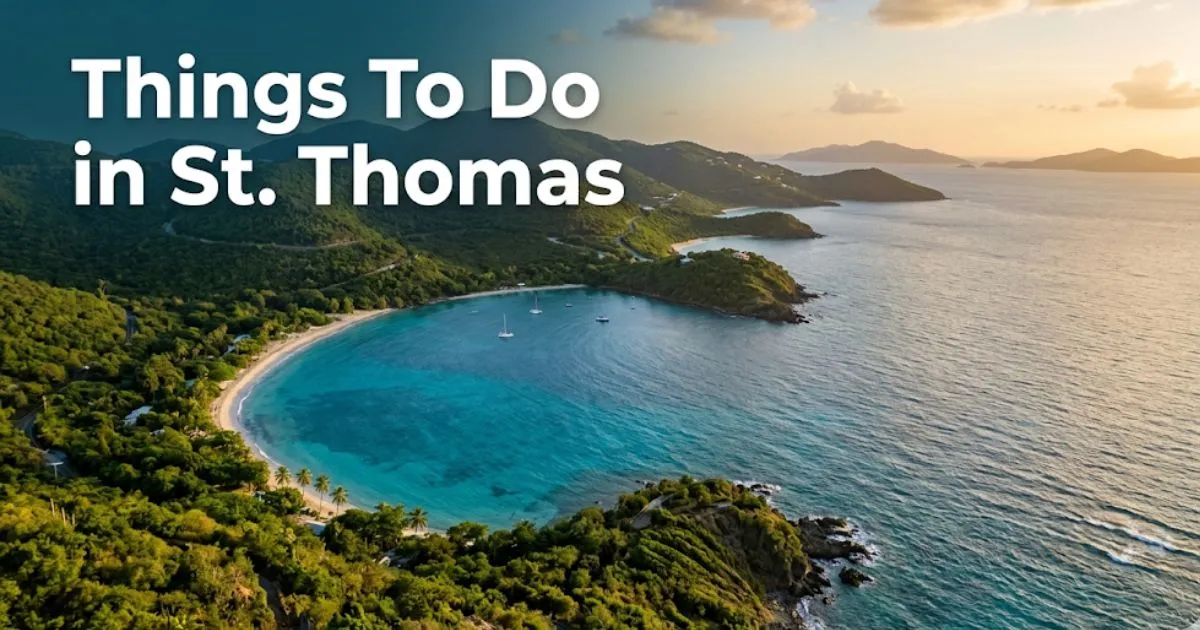
Best Things To Do in St. Thomas, Virgin Islands 2026

Things to do in St. Thomas range from world-ranked Caribbean beaches to some of the best snorkeling in US territorial waters. This island packs far more genuine variety into 32 square miles than most first-time visitors realize.
No passport is required for US citizens. St. Thomas sits just 1,100 miles from Miami and offers American-standard infrastructure alongside a genuinely Caribbean experience.
This guide covers beaches, water activities, historic districts, day trips, dining, nightlife, traveler-profile-specific guidance, and honest logistics for 2026 planning.
Things To Do in St. Thomas: What Makes This Island Worth Your Time
St. Thomas offers more accessible Caribbean activity variety than nearly any other US territorial island of comparable size. You can snorkel a living reef, tour a 17th-century Danish colonial capital, sail to a neighboring national park island, and eat fresh fish in a fishing village neighborhood — all within a single day.
The island’s position as the USVI’s commercial hub means its infrastructure is reliable. Restaurants, taxis, dive operators, and tour providers are professional and English-speaking.
The honest caveat: cruise ship volume is significant during peak season. Charlotte Amalie’s Main Street can feel genuinely congested between 9 a.m. and 4 p.m. when multiple ships are in port.
Budget the first two days like this:
Day 1 (Water and Beach Focus):
- Morning snorkel at Coki Point Beach before cruise ship day-trippers arrive
- Midday move to Hull Bay for a local lunch and quieter beach time
- Afternoon catamaran sail or kayak rental from Red Hook waterfront
- Sunset at Frenchtown’s waterfront, dinner at Craig and Sally’s
Day 2 (Culture, History, and Day Trip Focus):
- Early walk through Charlotte Amalie’s Main Street before 9 a.m.
- Climb to Blackbeard’s Castle for harbor views and historical context
- Ferry from Red Hook to Cruz Bay, St. John, by 11 a.m.
- Afternoon at Trunk Bay in Virgin Islands National Park
- Return ferry and dinner at Hookline and Sinker in Red Hook
Traveler profile note: Solo travelers will find this two-day structure entirely manageable by shared safari taxi and ferry. Families with young children should swap Trunk Bay (a moderate walk from Cruz Bay) for the calmer, shallower waters at Coki Beach.
Best Things To Do in St. Thomas Virgin Islands: Activity Comparison
The best overall combination of activities in St. Thomas pairs water-based experiences with at least one cultural excursion and one day trip.
Here is how core experiences stack up across traveler types:
| Activity | Best For | Approx. Cost Range | Time Needed | Insider Note |
|---|---|---|---|---|
| Magens Bay Beach | Families, first-timers | $5 to $6 entry per adult | 2 to 4 hours | Arrive before 10 a.m. to avoid cruise crowds |
| Coki Beach snorkeling | Couples, solo travelers | Free beach entry | 2 to 3 hours | Coral World is adjacent if traveling with kids |
| Charlotte Amalie walking tour | All profiles | Free to self-guided | 2 to 3 hours | Go before 9 a.m. for an uncrowded experience |
| Ferry day trip to St. John | Couples, adventurers | $15 to $20 round trip per person | Full day | Trunk Bay charges a National Park entry fee |
| Catamaran charter | Couples, groups | $80 to $130 per person for half day | 4 to 5 hours | Private charters cost significantly more |
| Paradise Point Tramway | Families, seniors | $25 to $29 per adult | 1 to 2 hours | Skip during cruise ship peak hours |
| Coral World Ocean Park | Families with young kids | $25 to $35 per adult | 2 to 4 hours | One of the few genuinely kid-appropriate indoor options |
| Atlantis Submarine | Seniors, non-swimmers | $80 to $110 per person | 2 hours | Unique way to see reef life without getting wet |
According to the USVI Department of Tourism, St. Thomas receives over one million cruise ship passengers annually, which concentrates heavily in Charlotte Amalie’s shopping district on weekday mornings.
Insider Tip:
- Most tour operators offer better prices when booked directly rather than through cruise ship shore excursion desks
- Independent catamaran charters from Red Hook often depart less crowded and cost less than pier-based tours
- Seniors and travelers with limited mobility should note that the Atlantis Submarine requires descending a narrow ladder; verify current access requirements before booking
St. Thomas Beaches: Which Ones Actually Deliver
St. Thomas has more than 40 beaches, but the gap between what tourists visit and what locals prefer is wider here than at almost any other Caribbean destination.
Magens Bay Beach is the most famous. It earned a spot on multiple “world’s best beaches” lists and genuinely delivers on calm, clear water inside a protected bay. The trade-off: it is one of the most consistently crowded beaches on the island, especially between 10 a.m. and 3 p.m. on cruise ship days. Entry runs approximately $5 to $6 per adult as of recent years, with parking available.
Coki Point Beach on the island’s northeast end is smaller but consistently ranks higher among experienced snorkelers. Coral formations are close to shore. Sea turtle sightings are common. No entry fee for the beach itself, though the adjacent Coral World Ocean Park charges separately.
The genuinely local alternative is Hull Bay on the north shore. There is no entry fee. The beach is smaller and rockier than Magens Bay. Surfers use it in winter swells. The local bar and grill at Hull Bay serves food to a crowd that is overwhelmingly island residents rather than tourists.
Lindqvist Beach near Sapphire Beach on the east end is another local preference. The shoreline is quieter than Sapphire Beach’s resort infrastructure. Water clarity is excellent for calm-day snorkeling.
| Beach | Entry Fee | Crowd Level | Best For | Local vs. Tourist |
|---|---|---|---|---|
| Magens Bay | ~$5 to $6 per adult | High (cruise days) | Families, first-timers | Tourist-dominant |
| Coki Point | Free beach access | Moderate | Snorkelers, couples | Mixed |
| Hull Bay | Free | Low | Locals, surfers, budget travelers | Locally preferred |
| Lindqvist Beach | Free | Low to moderate | Couples, snorkelers | Locally preferred |
| Brewers Bay | Free | Low | Budget travelers, students (near UVI) | Locally preferred |
| Sapphire Beach | Free (resort adjacent) | Moderate | Watersports renters | Tourist-moderate |
Families with young children should prioritize Magens Bay for its calm, protected water despite the crowds. Coki Beach works well for older kids comfortable in shallow water with coral. Hull Bay is not recommended for toddlers due to occasional wave action.
Seniors and accessibility travelers should note that Magens Bay has the island’s most developed beach accessibility infrastructure, including some accessibility accommodations. Verify current facilities directly with Magens Bay Beach Authority before visiting.
Snorkeling in St. Thomas: Where the Reefs Are Worth Finding
The best snorkeling in St. Thomas is at Coki Point Beach, where coral formations begin within 20 feet of the shoreline. Green sea turtles are regular visitors, particularly in morning hours before boat traffic increases.
Coki Point works for all experience levels. The water is shallow near shore and deepens gradually. Rental equipment is available from vendors on the beach, with rates running approximately $10 to $20 per person as of recent years.
For intermediate snorkelers wanting more variety, Sapphire Beach on the east end offers accessible reef systems alongside a full-service water sports rental operation. The reef extends from the beach’s left end near a rocky point.
The most experienced snorkelers on the island consistently recommend taking a guided snorkel tour to Turtle Cove or Thatch Cay off the island’s north shore. These spots are accessible only by boat and see dramatically fewer people than shore-accessible reefs.
A day trip to Trunk Bay on St. John is widely considered the best single snorkeling experience available from St. Thomas. The National Park Service maintains an underwater snorkeling trail with identifying markers along the reef. National Park entry fees apply; verify current rates before visiting.
Insider Tip:
- Go to Coki Point before 9 a.m. The difference in water clarity and turtle frequency before and after cruise passenger arrivals is significant
- The local dive operators based in Red Hook offer two-tank dive packages to sites including the RMS Rhone wreck site in the British Virgin Islands, which requires a BVI landing fee currently around $30 per person
- Solo travelers can join group snorkel tours from Red Hook’s charter dock for a social and cost-efficient option
Budget travelers note: Coki Point and Brewers Bay provide genuine, high-quality snorkeling at no entry cost. Trunk Bay on St. John requires the ferry plus National Park entry but delivers an unmatched experience worth the combined cost.
Key Takeaway: Skip the crowded Magens Bay for snorkeling and go to Coki Point before 9 a.m. for the island’s best turtle and reef access at minimal cost.
Charlotte Amalie Things To Do: The Capital Beyond Duty-Free Shopping
Charlotte Amalie is the capital of the US Virgin Islands and one of the oldest continuously occupied colonial cities in the Caribbean. Its Danish-era street plan, historic stone warehouses, and hillside fortifications survived centuries of pirate threats, trade dominance, and hurricane seasons.
The most tourist-visited block is Main Street, which runs through the heart of the old shopping district. Jewelry stores, duty-free spirits retailers, and souvenir shops dominate. The shopping is genuinely competitive on diamonds, emeralds, and rum compared to US mainland prices.
But Charlotte Amalie beyond Main Street is worth the additional hour. The 99 Steps staircase, built by Danish colonists using ballast bricks from European ships, climbs through a residential neighborhood to Blackbeard’s Castle at the summit. The views of Charlotte Amalie harbor justify the climb. Admission to Blackbeard’s Castle runs approximately $15 to $25 per adult as of recent years; verify current pricing before visiting.
The Frederick Lutheran Church on Norre Gade, built in 1793, is the second-oldest Lutheran church in the Western Hemisphere. Entry is free during open hours. It is never crowded and provides meaningful historical context for the city’s Danish colonial identity.
Frenchtown, a five-minute taxi ride from Main Street, was settled by French-speaking immigrants from St. Barts in the 18th century. It remains the island’s most genuine local neighborhood. Craig and Sally’s Restaurant and Hookline and Sinker both sit near the Frenchtown waterfront. Lunch here costs significantly less than resort-adjacent dining.
Cruise ship passengers arriving at Havensight Pier should note that the walk to Main Street is approximately 15 minutes on flat ground. Shared safari taxis run the route for roughly $4 to $5 per person. The morning hours before noon are best for shopping before multiple ship crowds converge.
St. Thomas Water Sports and Ocean Adventures
St. Thomas is one of the most activity-dense water sports hubs in the US Caribbean, with rentals, charters, and guided experiences concentrated at Red Hook on the east end and along the Charlotte Amalie waterfront.
Catamaran sailing charters are the signature experience. Half-day tours typically depart Red Hook between 9 a.m. and 10 a.m. and include snorkeling stops at offshore cays. Prices run approximately $80 to $130 per person for half-day shared charters as of recent seasons. Private full-day charters run significantly higher; budget travelers should look for group departure options.
Kayaking around St. Thomas’s coastline and to neighboring Water Island is one of the most underrated water activities on the island. Water Island sits less than a mile from Crown Bay Marina. The ferry takes about five minutes and runs infrequently. Kayaking across in calm morning conditions is manageable for intermediate paddlers. Honeymoon Beach on Water Island is one of the least-visited white sand beaches accessible from St. Thomas.
Parasailing and jet ski rentals operate from multiple beach locations including Sapphire Beach and Secret Harbour. These are standard Caribbean resort activity pricing.
Scuba diving in St. Thomas covers both beginner reef dives at accessible sites like Cow and Calf Rocks and advanced wreck dives to sites near the British Virgin Islands. Dive operators in Red Hook can provide full certification courses and guided dives for all experience levels.
Seniors and travelers with limited mobility who want ocean experiences without physical demands should consider the Atlantis Submarine departing from Havensight. The submarine descends approximately 90 feet to view coral reefs through large viewport windows. No swimming required. Verify current boarding access requirements with the operator before booking.
St. Thomas Day Trips and Nearby Islands
The best day trip from St. Thomas is to St. John, accessible by a 20-minute ferry from Red Hook. St. John hosts Virgin Islands National Park, which covers roughly 60% of the island. The park includes Trunk Bay, Cinnamon Bay, and Annaberg Plantation, all accessible without a park pass for the beaches though the Trunk Bay snorkeling trail charges a fee.
The Red Hook to Cruz Bay ferry runs frequently throughout the day. Adult round-trip fares run approximately $15 to $20 per person as of recent years. The last ferry back to Red Hook runs in the early evening; verify the current schedule before departing St. John.
St. Croix is the largest USVI island and sits about 40 miles south of St. Thomas. Seaplane service provides the fastest connection. A day trip to St. Croix is possible but requires either a seaplane ($130 to $200 per person each way as of recent years) or an overnight stay to avoid an extremely long travel day. St. Croix offers Buck Island Reef National Monument, Christiansted’s historic downtown, and a distinctly less touristed experience than St. Thomas.
Water Island is St. Thomas’s least-visited USVI island. Crown Bay Marina to Water Island takes about five minutes by ferry. The island has no large resort development. Honeymoon Beach is accessible by a short trail from the dock. This is the most genuinely quiet, crowd-free beach experience accessible from St. Thomas without chartering a boat.
Couples and honeymooners should prioritize the St. John day trip for its combination of national park scenery, Trunk Bay’s clarity, and Cruz Bay’s relaxed waterfront restaurant scene for a late afternoon meal before the return ferry.
Key Takeaway: The Red Hook to Cruz Bay ferry to St. John delivers Virgin Islands National Park access for about $20 round trip. Book the morning departure to maximize beach time before the last ferry.
St. Thomas Hiking and Outdoor Activities
St. Thomas is not a dedicated hiking destination, but Crown Mountain Road and several north shore trails offer genuine island landscape perspective that the beach-focused majority of visitors miss entirely.
Crown Mountain at 1,556 feet is the highest point in the US Virgin Islands. The road to the summit passes through subtropical forest, offers panoramic views of St. Thomas, St. John, and the British Virgin Islands on clear days, and requires either a rental car or a hired taxi. There is no formal trailhead parking fee. The drive itself is the experience; the road is narrow and steep.
Hassel Island in Charlotte Amalie Harbor is managed jointly by the National Park Service and the USVI government. The island contains British fortifications from the Napoleonic-era occupation. Access is by small boat from the Charlotte Amalie waterfront. The island sees very few visitors compared to every other attraction in the harbor area and offers one of the more historically layered outdoor experiences on the island.
The trail to Magens Bay from Zucker Hill is used by island residents for fitness and offers a different approach to the beach than the main road entrance. It is informal and not maintained to national park standards. Appropriate footwear is required.
Budget travelers will appreciate that Crown Mountain Road and Water Island kayaking represent significant outdoor experiences at minimal cost. Hassel Island’s boat access will run a small fee for the private boat crossing; inquire at the Charlotte Amalie waterfront for current operators.
Seniors and accessibility travelers should note that all hiking options on St. Thomas involve significant uneven terrain. Crown Mountain by car is accessible and does not require walking. Hassel Island involves rocky coastal paths not suitable for mobility aids.
St. Thomas Food and Dining
St. Thomas food ranges from genuinely excellent local Caribbean cooking in Frenchtown to competent resort dining along the waterfront. The gap between what tourists eat and what locals eat is significant enough to change the quality of your trip.
Gladys’ Cafe on Royal Dane Mall in Charlotte Amalie is the most frequently cited local institution for authentic Virgin Islands cooking. Roti, kallaloo, and local fish dishes reflect generations of Caribbean culinary tradition. Lunch here runs considerably less than any waterfront resort restaurant. It has become more well-known in recent years but still operates primarily for a local and repeat-visitor clientele.
Craig and Sally’s in Frenchtown has been a St. Thomas dining institution for decades. The menu changes regularly and features both Caribbean-influenced dishes and a serious wine program. Dinner for two with wine typically runs $80 to $140 as of recent seasons. The atmosphere is intimate and far removed from the Main Street tourist infrastructure.
Hookline and Sinker near Red Hook is the island’s most reliable waterfront lunch option for fresh fish at reasonable prices. The grilled mahi-mahi and snapper reflect what the local catch actually is on any given day. Budget approximately $15 to $25 per person for lunch without alcohol.
No Bones Cafe on the waterfront near Havensight is the local preference for vegetarian and vegan dining. It serves an international menu with Caribbean accents and is consistently preferred by plant-based travelers over resort restaurant options.
Texas Pit BBQ is an island institution operating from a roadside setup that costs a fraction of any sit-down restaurant. It is not in a touristed location. Ask any local taxi driver for current directions.
Couples should prioritize Craig and Sally’s for an evening. Budget travelers should build meals around Gladys’ Cafe for lunch and Texas Pit BBQ or Hookline and Sinker for casual dinners.
St. Thomas Nightlife
St. Thomas nightlife is active but modest in scale compared to Caribbean party destinations like Aruba or Puerto Rico. It is genuinely enjoyable rather than high-volume.
Duffy’s Love Shack in Red Hook is the most well-known bar on the island and delivers on its reputation for frozen drinks, live music on weekends, and a reliably social atmosphere. It attracts a mix of tourists and island residents. The outdoor setting works particularly well in dry season evenings.
The Petite Pump Room in Charlotte Amalie is one of the island’s oldest functioning bars and a reliable local gathering point. It opens in the late afternoon and draws an island regular crowd rather than a tourist bar scene. Drinks are priced in line with mainland American bars rather than resort pricing.
Frenchtown after 8 p.m. has a small but genuine neighborhood bar scene centered around the waterfront. It is significantly quieter than Red Hook but more authentically local.
Solo travelers will find Red Hook the most socially accessible area for meeting other travelers and island residents in a casual setting. The Red Hook waterfront has multiple adjacent venues making it easy to move between spots on foot.
Cruise passengers should note that most of St. Thomas’s nightlife activity begins after 6 p.m. Ship curfews typically prevent cruise passengers from experiencing it unless the ship is docked overnight.
Insider Tip:
- Weekend nights at Duffy’s Love Shack attract live music acts. Weeknights are quieter and more local in feel
- The Petite Pump Room offers genuinely local context that Duffy’s does not, particularly for travelers who want to understand the island’s non-tourist social life
- The Red Hook waterfront walk between venues is flat and safe for solo travelers at night
Key Takeaway: Red Hook is the most accessible nightlife hub for visitors. Duffy’s Love Shack on weekends delivers the social atmosphere most travelers are looking for without a cover charge.
St. Thomas for Families
St. Thomas is genuinely family-friendly with the right planning. The island’s infrastructure, English-speaking service industry, US dollar currency, and domestic travel status (no passport required) make logistics far easier than most international Caribbean alternatives.
Coral World Ocean Park near Coki Beach is the island’s strongest purpose-built family attraction. The park includes a Caribbean reef encounter, undersea observatory, sea turtle pool, and marine life touch tank experiences. It holds the attention of children between ages 4 and 14 far more reliably than most beach activities. Admission runs approximately $25 to $35 per adult as of recent years, with children priced lower; verify current rates before visiting.
Coki Point Beach adjacent to Coral World is ideal for families with children ages 6 and up. Water is calm, sea turtles are visible from shore, and the beach is small enough to keep children within easy sight.
Magens Bay is the better choice for families with children under 6 due to its calm, protected water. The beach has changing facilities and food vendors. The entry fee is minimal. Avoid peak cruise hours (10 a.m. to 3 p.m.) for a less crowded experience.
The Atlantis Submarine is one of the island’s strongest family experiences for children ages 4 and up who are curious about marine life but not yet comfortable snorkeling. The submarine’s viewport windows at 90 feet provide coral reef views without any water exposure.
Stroller and accessibility note: Magens Bay’s beach area is relatively flat and manageable for strollers. Charlotte Amalie’s Main Street is paved and walkable. Steep hillside neighborhoods and stone stairways throughout the historic district are not stroller-accessible.
Families with teenagers should consider adding the Red Hook to St. John ferry day trip. The Virgin Islands National Park trails and Trunk Bay snorkeling give older children an active, memorable experience distinct from pure beach time.
St. Thomas for Couples and Romance
St. Thomas is a genuinely strong romantic destination. The combination of sailing, beach settings, candlelit dining in Frenchtown, and the practical ease of US territory travel makes it one of the most accessible Caribbean honeymoon options for American couples.
A private catamaran charter departing Red Hook for a half-day sail to offshore cays is the most consistently memorable couples experience on the island. Private charters run $400 to $700 or more for a half day depending on boat size and inclusions; group departures are considerably less. The experience of snorkeling a quiet cay accessible only by boat, with no crowds and no resort infrastructure, is difficult to replicate anywhere else within US territory.
Craig and Sally’s Restaurant in Frenchtown remains the island’s most reliable romantic dinner setting. The menu is sophisticated without being formal. The space is small and intimate. Reservations are strongly recommended, particularly during peak season (December through April). Call ahead or check for current reservation options.
Sunset at Paradise Point is one of St. Thomas’s most photogenic moments. The tramway ride to the summit costs approximately $25 to $29 per adult as of recent years. Couples who visit at the specific 30 minutes before sunset, after the cruise ship day-tripper crowd has cleared, find the experience genuinely atmospheric.
Honeymoon Beach on Water Island, reached by a 5-minute ferry from Crown Bay Marina and a short trail, offers the island’s most private and crowd-free beach setting. It is the specific local alternative to Magens Bay for couples who want solitude over facilities.
For honeymooners: Book accommodations at a resort with a private beach or pool terrace, such as the properties along the east end of St. Thomas near Sapphire Beach and Secret Harbour. The difference between a standard room and a view-facing room on this island’s east end is significant enough to justify the upgrade cost.
St. Thomas on a Budget
St. Thomas can be done affordably if you understand where costs concentrate and where genuine value exists. The island’s reputation for premium pricing is partly earned and partly avoidable.
The single biggest budget advantage of St. Thomas is its duty-free status. Rum, spirits, and wine are significantly cheaper than US mainland prices. The island’s legal duty-free alcohol allowance for returning US citizens is currently higher than standard international travel allowances. Verify current customs allowance limits with US Customs and Border Protection before purchasing.
Free beach access: Hull Bay, Brewers Bay, Coki Beach, Lindqvist Beach, and several east end beaches have no entry fees. Only Magens Bay charges admission.
Affordable dining options:
- Gladys’ Cafe in Charlotte Amalie for lunch (full meal under $20 per person)
- Texas Pit BBQ roadside (local institution, fraction of restaurant prices)
- Hookline and Sinker for fresh fish lunch at moderate waterfront pricing
- Local bakeries and grocery delis in Red Hook for beach day provisions
Transportation savings: Shared safari taxis are the budget-smart ground transportation option. A shared ride from Charlotte Amalie to Red Hook typically runs $5 to $8 per person. Private taxis are considerably more expensive.
What genuinely requires spending: Quality snorkeling gear rental if you did not bring your own, ferry costs to St. John (approximately $15 to $20 round trip), and the occasional guided boat tour to reach offshore snorkel sites worth visiting.
What is not worth paying for on a budget: The Paradise Point Tramway is entirely skippable if you have a rental car and can drive Crown Mountain Road for free. Resort restaurant beach bars charge double what Frenchtown restaurants charge for equivalent food quality.
Budget travelers should note that accommodation is the largest unavoidable cost on St. Thomas. Off-peak travel (May through early June, November) cuts accommodation rates significantly without the full hurricane risk exposure of August through October.
Key Takeaway: Hull Bay and Brewers Bay are free local beaches. Gladys’ Cafe for lunch and Texas Pit BBQ for a quick meal cut daily food costs to a fraction of resort restaurant pricing.
St. Thomas Cruise Port Things To Do
St. Thomas is one of the most visited cruise ports in the Caribbean, with ships docking at either Havensight Pier (closest to Charlotte Amalie) or Crown Bay Marina (on the island’s west side). The experience of a port day depends entirely on how far in advance you have planned it.
Cruise passengers with 6 to 8 hours on island have enough time for one of these focused combinations:
Option 1: Charlotte Amalie and Beach
Walk Main Street for shopping before 11 a.m. Take a safari taxi to Magens Bay. Return to ship by 3:30 p.m. to allow buffer time.
Option 2: Snorkel-Focused Day
Book a morning snorkel tour from Havensight pier operators departing at 9 a.m. These typically cover two to three snorkel sites including areas near St. James Island or offshore cays. Return by 1 p.m. Afternoon free for shopping or Frenchtown lunch.
Option 3: St. John Day Trip (Ambitious)
Take a taxi from Havensight directly to Red Hook (approximately 20 to 25 minutes). Take the 9 a.m. or 10 a.m. ferry to Cruz Bay. Spend three hours at Trunk Bay. Return ferry by 2 p.m. This requires tight timing and ship schedules that permit it.
Critical advice for cruise passengers: Book shore excursions and snorkel tours independently from operators in Red Hook or Havensight rather than exclusively through the cruise line’s shore excursion desk. Independent bookings typically cost 20% to 40% less for equivalent experiences. However, independently booked activities do not guarantee ship-held departure if you return late; factor this risk into timing decisions.
Seniors on cruise ships should note that the walk from Havensight Pier to Main Street is approximately 15 minutes on flat pavement. The Paradise Point Tramway is immediately adjacent to Havensight and represents the most accessible cultural excursion for those with limited mobility.
Getting Around St. Thomas
Getting around St. Thomas is manageable but requires understanding the island’s specific transportation reality before you arrive.
Safari taxis are the island’s signature shared transport. These open-air trucks carry multiple passengers along semi-fixed routes. They are inexpensive (approximately $4 to $8 per person per trip as of recent years), social, and genuinely useful for major routes between Charlotte Amalie, Red Hook, and major beaches. Flag them from the roadside or find them at designated taxi stands.
Private taxis are widely available but significantly more expensive. For multiple people sharing a ride, private taxis to beaches or attractions can be cost-comparable to renting a car for a day.
Car rentals are strongly recommended for independent travelers who want to explore north shore beaches, Crown Mountain Road, and the Frenchtown neighborhood on their own schedule. St. Thomas has both international and local rental agencies.
Critical driving warning: Traffic in St. Thomas moves on the left side of the road, but cars are right-hand drive, American style. This is genuinely disorienting for first-time visitors and is the most common cause of minor accidents involving tourists. Take the first 15 minutes on island roads slowly and deliberately.
The Red Hook Ferry Terminal connects to St. John. Walking distance from Red Hook’s restaurants and bar area. Paid parking is available near the terminal.
Seniors and travelers with mobility concerns should know that many of St. Thomas’s roads are narrow, steep, and without sidewalks in residential areas. Safari taxis are accessible for most mobility levels but do require stepping up into an open truck bed. Private taxis offer standard sedan or van seating.
Best Time To Visit St. Thomas
The best time to visit St. Thomas is mid-December through April, when the island sits in its dry season with consistent temperatures between 75 and 85 degrees Fahrenheit and minimal rain.
This peak season window offers the best water visibility for snorkeling and diving, the most reliable sailing conditions, and the full roster of restaurant and activity operators running at capacity. The trade-off is price: hotel rates and flight costs reach their annual high during this window, particularly around Christmas, New Year’s, and mid-February through mid-March.
Shoulder season (May and early June, November) is the island’s best value window. Weather is still generally good. Crowds thin. Hotels and vacation rentals drop prices by 20% to 40% compared to peak. The ocean is warm. Water clarity is excellent. The primary risk is the beginning and end of hurricane season at either edge of this window.
Hurricane season runs officially from June 1 through November 30. August, September, and October carry the highest statistical risk. Travel insurance with hurricane cancellation coverage is not optional during these months; it is a practical necessity. Some smaller restaurants and tour operators reduce hours or close for portions of September and October.
The honest crowd reality: Even during peak season, St. Thomas’s beaches and north shore areas are far less crowded than the Main Street shopping district. Cruise ship impact concentrates in Charlotte Amalie between 9 a.m. and 4 p.m. Plan beach days around ship schedules (available from the port authority’s published schedule) and the beach experience is genuinely pleasant even in January.
Families traveling with school-age children face peak pricing during Christmas and spring break. Consider early June (post-Memorial Day, pre-summer peak hurricane risk) as a practical family compromise on price and weather.
Key Takeaway: Mid-January through March is the sweet spot for weather, visibility, and avoiding Christmas and spring break price peaks. May offers the best price-to-weather ratio of any month.
Safety and Practical Warnings for St. Thomas
St. Thomas is considered safe for tourists by US standards. Standard urban awareness applies in Charlotte Amalie, particularly in areas away from the main shopping district after dark.
Key safety and practical facts every visitor should know:
- Left-side road traffic with right-hand drive vehicles is the number one adjustment US visitors underestimate. Drive slowly. Yield instinctively to the left on all turns.
- Sun and UV intensity in the Caribbean exceeds mainland US levels year-round. SPF 50 minimum is not optional. Reef-safe formulas are strongly encouraged and may be required at certain protected beaches.
- Rip currents exist at non-lifeguarded beaches, particularly on the north shore during winter swells. Hull Bay is not recommended for swimming during significant surf.
- Hurricane season is real. If traveling between August and October, purchase comprehensive travel insurance with weather cancellation coverage.
- Limited cell service exists on north shore mountain roads and some coastal areas away from the main population centers.
- Medical facilities on St. Thomas include the Roy Lester Schneider Regional Medical Center, which handles emergency care. For serious emergencies, medical evacuation to Puerto Rico may be necessary.
- Water safety: St. Thomas tap water is safe to drink. Many residents and restaurants use filtered or bottled water. Either is acceptable.
Contact the US Coast Guard Sector San Juan for maritime emergencies while on the water around St. Thomas. The emergency number is 305-415-6800.
Frequently Asked Questions About Things To Do in St. Thomas
Do you need a passport to visit St. Thomas?
No passport is required for US citizens traveling to St. Thomas.
A valid government-issued photo ID is sufficient for US citizens flying domestically to Cyril E. King Airport (STT) from US mainland airports.
Non-US citizens should verify current USVI entry requirements with the USVI Department of Tourism and US Customs and Border Protection before travel.
What is the best beach in St. Thomas?
The best beach depends on your priority: Magens Bay for calm water and facilities, Coki Beach for snorkeling, or Hull Bay for a local, uncrowded experience.
First-time visitors with families typically prefer Magens Bay for its protected water and beach facilities.
Experienced travelers and repeat visitors most often name Hull Bay or Coki Point as their preference for a more local feel and fewer crowds.
How do you get around St. Thomas without a car?
Shared safari taxis connect Charlotte Amalie, Red Hook, and major beaches for approximately $4 to $8 per person per route.
Private taxis are available from taxi stands throughout the island for point-to-point service at higher per-person rates.
For a full independent exploration of north shore beaches and Crown Mountain, a rental car is the most practical option despite the left-side driving adjustment required.
What is the best time of year to visit St. Thomas?
The best time to visit St. Thomas is mid-December through April.
This dry season window offers the most reliable weather, best water visibility for snorkeling, and the full availability of tour operators and restaurants.
Shoulder season travelers in May and early November find significantly lower prices with minimal drop in weather quality, though hurricane season bookends this window.
How many days do you need in St. Thomas?
Three to five days gives enough time to experience St. Thomas’s beaches, Charlotte Amalie, a St. John day trip, and at least one catamaran or snorkel excursion.
Two days is the realistic minimum for first-time visitors who want to cover the island’s primary highlights without feeling rushed.
One-week stays suit travelers who want to add a St. Croix excursion, explore the island’s north shore thoroughly, and build in flexibility for weather-dependent water activities.
Is St. Thomas worth visiting for a cruise port day?
Yes, St. Thomas is one of the most activity-rich Caribbean cruise ports available for a single day.
Havensight Pier’s proximity to Charlotte Amalie makes duty-free shopping and the 99 Steps walkable from the ship.
The best single-day cruise experience pairs a morning snorkel tour booked independently from a Red Hook operator with an afternoon in Charlotte Amalie for shopping and a Frenchtown lunch.
Plan Your St. Thomas Trip With These Final Priorities
Start by booking accommodations and any catamaran charters at least 3 months ahead for peak season travel (December through April). These fill faster than any other St. Thomas experience category.
Visit Coki Point Beach before 9 a.m. on your first full day. Take the Red Hook ferry to St. John on your second day. Eat at least one meal in Frenchtown. Everything else on this island is flexible and improvable once you are there.
Travel conditions, ferry schedules, beach entry fees, attraction hours, and restaurant availability change. Verify all logistics directly with operators and the USVI Department of Tourism at usvitourism.vi before your departure date. Your St. Thomas trip rewards the traveler who knows where the locals eat and which beach is actually quiet on a Tuesday morning.