Best Things to Do in Aruba in 2026: The Complete Guide

The best things to do in Aruba go well beyond Palm Beach resort loungers. Aruba delivers guaranteed sunshine, world-class wind and water sports, and one of the Caribbean’s finest stretches of sand at Eagle Beach.
The Aruba Tourism Authority positions the island as one of the few Caribbean destinations sitting entirely outside the hurricane belt. That alone separates it from most competitors for travelers planning between June and November.
This guide covers every major activity category, honest comparisons of beaches, practical logistics, and a one-day itinerary. Every recommendation is specific enough to build an actual trip around.
Things to Do in Aruba: What Makes This Island Worth It
Aruba earns its reputation as a top Caribbean destination specifically for beach quality, consistent sun, and water sports infrastructure. It does not earn high marks for cultural depth or budget accessibility, and first-time visitors who understand this leave satisfied.
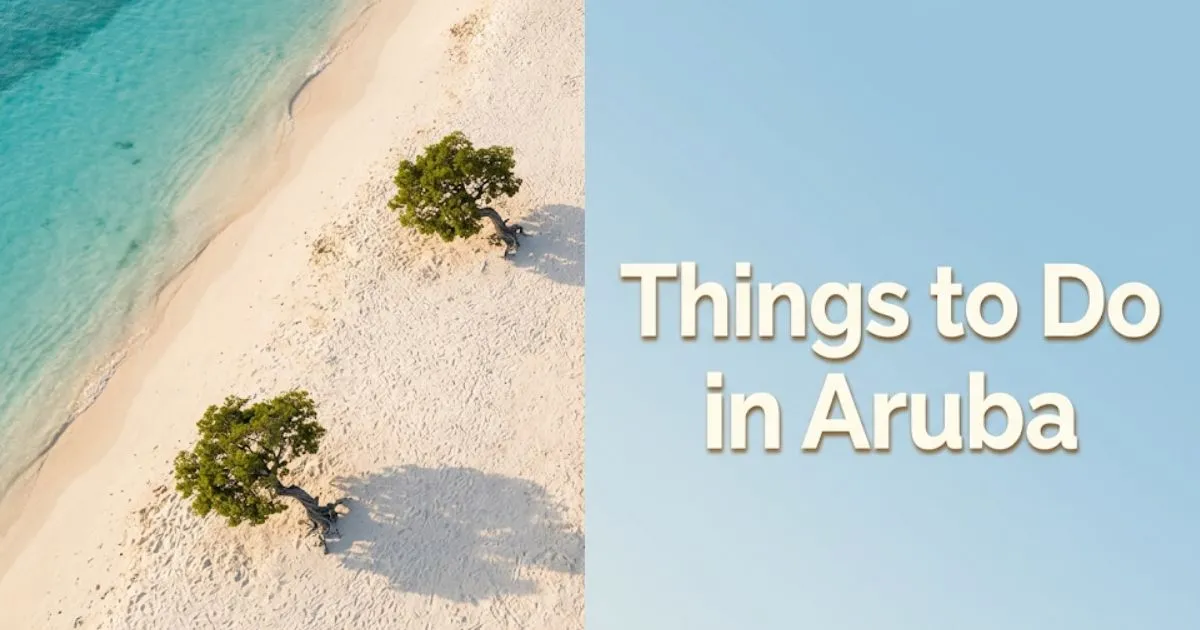
The island is arid. Think cacti, desert scrubland, and the distinctive silhouette of wind-bent divi-divi trees, not rainforest or lush hillsides. That desert character gives Aruba a striking visual identity unlike any other Caribbean island.
Consistent northeast trade winds define the island’s geography and culture. They keep temperatures comfortable year-round. They also make Aruba one of the planet’s premier kitesurfing and windsurfing destinations.
The island divides roughly into two coastal experiences. The calm, protected western and southern shores host the beaches and resorts. The rugged, wind-battered north and east coasts feed Arikok National Park’s dramatic landscape.
According to the Aruba Tourism Authority, the island receives roughly 2 million visitors annually. Most cluster entirely within the Palm Beach resort corridor. That concentration means genuinely quieter experiences exist just a few miles away.
Insider Tip:
- Eagle Beach, not Palm Beach, is where experienced Aruba travelers spend their beach days.
- Arikok National Park covers approximately 18% of the island and most resort visitors never enter it.
- San Nicolas, Aruba’s second city, hosts an emerging arts district almost entirely missed by first-time visitors.
Best Beaches in Aruba
Eagle Beach is the best beach in Aruba, consistently rated among the top beaches in the Caribbean for its wide soft sand, calm turquoise water, and relative quiet compared to the resort-heavy Palm Beach corridor.
Palm Beach is the island’s most famous strip. It runs roughly two miles along the high-rise hotel zone. It delivers excellent infrastructure, calm water, and easy access to water sports operators, restaurants, and bars, but it is genuinely crowded, especially from December through April.
Baby Beach, at the island’s southern tip near San Nicolas, is a semi-circular lagoon with exceptionally shallow, calm water. It is consistently the best choice for families with young children and non-swimmers.
Malmok Beach, north of Palm Beach, is where experienced snorkelers go. The reef systems here are accessible directly from shore without a boat. It is quieter than Palm Beach and the snorkeling quality is substantially higher.
| Beach | Best For | Crowd Level | Water Conditions | Insider Note |
|---|---|---|---|---|
| Eagle Beach | Couples, seniors, relaxation | Low to moderate | Calm, clear | Local-preferred; fewer vendors |
| Palm Beach | Resort guests, nightlife proximity | High | Calm, clear | Best infrastructure, busiest strip |
| Baby Beach | Families, young children | Moderate | Extremely calm, shallow | Drive required; worth the 30 minutes |
| Malmok Beach | Snorkelers, budget travelers | Low | Calm, excellent reef access | No amenities; bring everything |
| Manchebo Beach | Couples, solitude-seekers | Very low | Calm | No vendors; quiet alternative to Eagle |
Seniors and accessibility travelers will find Eagle Beach and Palm Beach the most accessible, with paved paths, beach chair rentals, and nearby restroom facilities. Baby Beach has minimal facilities and requires a 30-minute drive on an unpaved final stretch.
Aruba Water Sports and Snorkeling
Aruba’s single best water activity is snorkeling the Antilla wreck, the largest accessible shipwreck in the Caribbean. The Antilla is a German merchant vessel that sank in 1940 and now rests in approximately 60 feet of water off Malmok Beach, heavily colonized by coral and marine life.
Kitesurfing and windsurfing at Hadicurari Beach (locally called Fisherman’s Huts) is the island’s most internationally recognized water sport experience. Consistent trade winds of 15 to 25 knots make this one of the top five kitesurfing locations in the world.
Diving at the Antilla and at the Pedernales wreck (a World War II oil tanker) suits advanced divers. Multiple certified dive operators along Palm Beach run daily two-tank dives at rates that typically range from $90 to $140 per person; verify current pricing before booking.
The Aruba Atlantis Submarine runs 1.5-hour tours descending to approximately 150 feet. It is the most expensive single activity on the island and suitable for travelers who cannot or do not want to snorkel or dive. Book at least 48 to 72 hours in advance during peak season.
For families: Snorkeling tours departing from Palm Beach operators are genuinely child-friendly and suitable for kids as young as 5. Look for tours that include snorkel equipment and instruction. De Palm Island’s lagoon area is the most controlled and easiest environment for children who are new to snorkeling.
For budget travelers: Malmok Beach provides free shore-based snorkeling directly over reef systems. No tour required. Bring your own equipment for maximum savings.
Insider Tip:
- The Antilla is best dived in the morning before afternoon currents pick up.
- Kitesurfing lessons at Hadicurari run approximately $70 to $100 per hour for beginners; book directly with operators at Fisherman’s Huts for the most current rates.
- Non-swimmers should consider the Atlantis Submarine as their primary underwater experience.
Key Takeaway: Eagle Beach beats Palm Beach for quality, Malmok Beach beats both for snorkeling, and the Antilla wreck is the single water experience most worth your time in Aruba.
Arikok National Park and Outdoor Adventures
Arikok National Park is the most underused major attraction in Aruba, covering roughly 18% of the island’s total land area with hiking trails, ancient cave paintings, dramatic coastal cliffs, and the island’s most-photographed inland feature: the natural pool.
The natural pool (called Conchi locally) is a rock-enclosed pool carved by centuries of wave action on the island’s north coast. Reaching it requires a 4WD vehicle or a guided jeep tour. The road is unpaved and unsuitable for standard rental cars. Guided tours typically include the natural pool, the Guadirikiri Caves, and the California Lighthouse in a single half-day circuit.
Guadirikiri Caves feature two chambers open to natural light, with bats present in the deeper tunnels. Entry is included with park admission. The caves connect to Fontein Cave, which holds pre-Columbian Arawak paintings.
The California Lighthouse, at Aruba’s northwestern tip, offers the island’s best panoramic views. The lighthouse itself is not always open for interior access, but the surrounding platform and grounds are open. Sunset here is the island’s most reliably spectacular.
Hooiberg, a 541-foot volcanic formation near the island’s center, offers a concrete staircase to the summit with island-wide views. The climb takes approximately 20 minutes at a moderate pace. It is free to access.
For seniors and accessibility travelers: Hooiberg’s staircase is steep and not suitable for travelers with significant mobility limitations. The California Lighthouse exterior grounds are accessible. Arikok’s interior trails are unpaved and uneven; guided vehicle tours are the most accessible way to experience the park.
Insider Tip:
- Book guided jeep or UTV tours at least 24 to 48 hours in advance during high season; they sell out regularly from January through April.
- Independent drivers need a high-clearance 4WD to reach the natural pool safely.
- Arrive at Hooiberg before 9 a.m. to avoid midday heat during the climb.
Aruba Nightlife and Things to Do at Night
Aruba’s nightlife centers on the Palm Beach resort strip, where casino floors, beach bars, and hotel entertainment run nightly. This is the island’s liveliest after-dark corridor and functions like a self-contained entertainment district.
The Bon Bini Festival at Fort Zoutman in Oranjestad runs every Friday evening and is the island’s most authentic cultural nighttime experience. Local performers present traditional Aruban music, dance, and crafts. Admission is nominal and has historically run around $3 per person; verify current pricing before attending.
Wilhelmina Park in Oranjestad comes alive on weekend evenings with locals. Food trucks, live music, and an easy walking atmosphere along the waterfront make it a genuine local alternative to the resort strip nightlife.
Casino culture is significant in Aruba. The major resort properties along Palm Beach all operate full casinos. The Stellaris Casino at the Marriott and the Aruba Renaissance Casino in Oranjestad are the most frequently recommended by experienced visitors for their quality and atmosphere.
For solo travelers: Palm Beach’s nightlife corridor is safe, walkable, and social. The bar scene at resort properties regularly mixes solo travelers, couples, and groups, making it easier to connect with other travelers than more isolated island destinations.
For couples: Sunset cruise departures from Palm Beach marina run most evenings and combine a two-hour sail with drinks and views. These are the island’s most consistently well-reviewed romantic evening activity. Book directly with operators; prices typically range from $60 to $90 per person; verify current rates.
Best Restaurants in Aruba and Local Food
The single most honest local dining experience in Aruba is Zeerovers in the village of Savaneta, a fish shack where the catch arrives fresh daily and is fried to order. Locals line up here. Resort guests rarely find it. Prices are a fraction of Palm Beach restaurant rates.
Keshi yena is Aruba’s most famous traditional dish: a hollowed-out Edam or Gouda cheese shell stuffed with spiced chicken or meat, baked until the cheese melts into the filling. It appears on menus at local restaurants in Oranjestad and Savaneta more reliably than at resort properties.
Pan bati, a thick local cornmeal pancake served alongside fish and stewed meats, is the side dish most representative of everyday Aruban cooking. Try it at Gasparito Restaurant in Noord, which operates in a 17th-century cunucu (traditional farmhouse) and serves authentic local cuisine in one of the island’s most distinctive dining settings.
Screaming Eagle in Palm Beach is the island’s most theatrical dining experience, with lounge beds instead of chairs and an atmosphere that performs rather than simply serves. It is worth knowing about but should not replace the genuine local dining experiences.
The Wilhelmina Restaurant in Oranjestad serves local dishes in a setting that tourists rarely find. It is the most consistent local recommendation from travelers who have visited Aruba more than once.
For budget travelers: Zeerovers in Savaneta offers the best quality-to-price ratio on the island. A full meal typically costs less than $15 per person. It operates informally; cash is preferred and hours vary, so go midday to be safe.
Insider Tip:
- Avoid dining exclusively at resort restaurants if local food is your goal. The resort corridor serves competent international food at high prices.
- Oranjestad’s side streets hold several bakeries and local lunch spots where pan bati and fresh fish cost a fraction of Palm Beach prices.
Key Takeaway: Zeerovers in Savaneta is the single best value dining experience in Aruba and the restaurant most worth the 20-minute drive from Palm Beach.
Oranjestad and San Nicolas Cultural Experiences
Oranjestad, Aruba’s capital, is the island’s most walkable cultural destination. The waterfront Renaissance Mall area blends shopping with Dutch colonial architecture. The real character lives one block inland, where colorful buildings line L.G. Smith Boulevard.
Fort Zoutman, Aruba’s oldest building, houses the Historical Museum of Aruba and hosts the Friday evening Bon Bini Festival. Admission to the museum runs nominal; verify current pricing before visiting. It is the best single cultural site on the island for travelers who want historical context beyond resort brochures.
San Nicolas, 12 miles southeast of Oranjestad, is Aruba’s second city and a genuine arts district that has been developing since the mid-2010s. Large-scale murals cover building facades throughout the city center. The Cosecha Market and local galleries make it worth at least a half-day visit.
The Aruba Aloe Museum and Factory in Hato offers tours of one of the world’s oldest aloe vera operations. Aruba was historically one of the world’s largest aloe exporters, and the factory connects to genuine island agricultural identity. Tours run on a set schedule; verify times and admission before visiting.
Wilhelmina Park in Oranjestad, adjacent to the waterfront, contains indigenous aloe plantings and a statue of Queen Wilhelmina of the Netherlands. It is a pleasant 30-minute walk combined with the fort.
For solo travelers: Oranjestad is very walkable and comfortable for solo exploration. San Nicolas requires a car or taxi but is completely safe during daylight hours. The arts district’s mural walks work well for independent solo exploration.
Aruba Flamingo Beach and Renaissance Island
Renaissance Island, accessible only by private boat from the Renaissance Aruba Resort in Oranjestad, is the location of Aruba’s famous flamingo beach. This is the experience most photographed on social media from Aruba.
The flamingos are real, free-ranging, and genuinely walk the beach among visitors. Access is restricted to Renaissance Hotel guests. Non-guests can purchase a day pass for entry to the island, but availability is extremely limited and sells out days or weeks in advance during peak season.
Book day passes directly through the Renaissance Resort’s official channels as early as possible. Day pass pricing has historically run approximately $150 to $200 per person, covering island access and a food and beverage credit; verify current pricing and availability before planning your trip around this experience.
The honest assessment: the flamingo beach delivers exactly what its photographs promise. It is genuinely impressive. However, it is also a managed, resort-operated experience, not a wild flamingo encounter. Travelers expecting a natural wildlife setting will find it feels more curated than wild.
For a genuine flamingo and bird encounter without the resort experience, Bubali Pond (also called Arashena Bird Sanctuary) near Palm Beach hosts a large population of flamingos and over 80 bird species. Entry is free or very low cost and the setting is entirely natural.
For budget travelers: Skip the Renaissance Island day pass and visit Bubali Pond instead. The flamingo experience is less photogenic but completely genuine and costs almost nothing.
For couples: Renaissance Island is one of Aruba’s most consistently romantic half-day experiences if the day pass cost fits your budget.
Things to Do in Aruba for Couples
Aruba is one of the Caribbean’s strongest destinations for couples, with calm beaches, consistently good weather, easy navigation, and an evening scene that ranges from casual sunset cruises to upscale resort dining.
| Experience | Why It Works for Couples | Cost Range (Verify Before Visiting) | Best Time |
|---|---|---|---|
| Sunset sail from Palm Beach | Intimate, drinks included, 90 to 120 minutes | $60 to $90 per person | Evening year-round |
| Eagle Beach sunset | Private-feeling, wide sand, no vendors late day | Free | Late afternoon |
| Renaissance Island day pass | Flamingos, quiet lagoon, resort quality | $150 to $200 per person | Morning arrival |
| California Lighthouse sunset | Panoramic views, dramatic light | Free grounds access | 45 min before sunset |
| Gasparito Restaurant dinner | Historic cunucu setting, local cuisine | $40 to $70 per person for dinner | Evening |
| Arikok jeep tour | Shared adventure, natural pool | $80 to $130 per person | Morning |
The sunset sail from Palm Beach is the single activity most couples rank as the highlight of their trip. Catamaran tours that include snorkeling during the day and a sunset sail in the evening combine two experiences in one booking.
Manchebo Beach, south of Eagle Beach, is the least visited of Aruba’s major western beaches and offers the most genuinely private feel on the island. No vendors approach regularly. It suits couples wanting solitude over amenities.
Key Takeaway: Book the sunset sail and Eagle Beach sunset on the same day: snorkeling sail in the afternoon, then walk south to Manchebo for the last hour of light.
Things to Do in Aruba for Families
Aruba is genuinely well-suited for families. The western coast’s calm, shallow water makes beach days safe for young children. Baby Beach, in particular, delivers a natural wading pool environment with zero wave action.
De Palm Island, accessible by a short ferry from a dock near the Divi Aruba Beach Resort, functions as a water park and snorkel park combined. It is the island’s most organized family activity and includes all-inclusive food and beverage options. It suits families with children ages 4 and up. Verify current ferry schedules and pricing before booking; rates change seasonally.
The Aruba Butterfly Farm near Palm Beach houses hundreds of free-flying tropical butterfly species. It runs daily tours on a rolling schedule and takes approximately 45 minutes to complete. It genuinely holds children’s attention. Admission has historically run approximately $15 per adult and $8 per child; verify current pricing before visiting.
Hooiberg works well for families with older children (ages 8 and up) who can manage the 562-step staircase climb. Plan this for early morning. By midday the exposed staircase becomes genuinely hot under direct sun.
Arubus public transit connects Palm Beach to Oranjestad along a fixed route. For families with older children, it is an easy and inexpensive way to reach Oranjestad for a day of exploring. Service runs regularly during daylight hours; verify current schedules with the Aruba Tourism Authority.
Stroller accessibility: Palm Beach’s promenade and Oranjestad’s main waterfront boulevard are stroller-friendly. Arikok National Park’s interior is not stroller-accessible; jeep tours require children to be old enough to sit securely on vehicle seats.
Things to Do in Aruba on a Budget
Budget travel in Aruba requires realistic expectations. The island is genuinely more expensive than most Caribbean alternatives, but free and low-cost experiences are real and worth identifying specifically.
Free and low-cost activities:
- Eagle Beach and Malmok Beach: entirely free to access; no admission, no required chair rental
- Hooiberg climb: free access; bring water and sun protection
- Bubali Pond Bird Sanctuary: minimal to no entry cost; flamingo sightings without resort pricing
- Wilhelmina Park and Oranjestad waterfront: free to walk; pair with window shopping and local bakery stops
- Bon Bini Festival at Fort Zoutman: historically $3 entry; the island’s most affordable authentic cultural experience
- San Nicolas mural walk: free; park and walk the arts district on your own
- California Lighthouse grounds: free exterior access; views are the best on the island’s north end
For meals, Zeerovers in Savaneta is the island’s strongest value. Local panaderia (bakeries) in Oranjestad offer breakfast at a fraction of resort cafe prices.
Car rental is a budget reality. The major natural attractions (Arikok, Baby Beach, California Lighthouse) require transportation that Arubus does not serve. Renting a small car for two to three days of your trip allows independent access to these sites while using Arubus for the Palm Beach to Oranjestad corridor.
According to the Aruba Tourism Authority, the island’s official accommodation ranges from budget guesthouses in Noord and Oranjestad to full-service resorts along Palm Beach. Staying outside the resort corridor cuts accommodation costs substantially.
Best Time to Visit Aruba
The best time to visit Aruba is January through April for guaranteed dry, sunny weather, though this period also brings peak prices and the island’s highest visitor volumes.
Aruba sits entirely outside the Atlantic hurricane belt. This is the defining seasonal fact that separates it from most Caribbean competitors. A traveler booking for September or October in Aruba faces no meaningful hurricane risk, while the same trip to many other Caribbean islands carries genuine weather uncertainty.
Aruba Carnival, running roughly from January through Shrove Tuesday (early to mid-February depending on the year), is the island’s largest annual celebration. Parades, music, and island-wide activity make it an exceptional time to visit for travelers who want cultural energy. Hotels book out months in advance; plan 4 to 6 months ahead if this is your target window.
| Season | Weather | Crowds | Prices | Best For |
|---|---|---|---|---|
| January to April | Driest, sunniest | Peak | Highest | First-timers, beach focus, Carnival |
| May to August | Slightly humid, still mostly sunny | Moderate | Mid-range | Budget-conscious, water sports |
| September to November | Occasional showers, trade winds steady | Low | Lowest | Value seekers, avoiding crowds |
| December | Dry, pleasant | Rising fast | High | Holiday travelers |
Trade winds blow most consistently from December through August. Kitesurfers and windsurfers target this window specifically. September and October bring slightly calmer winds, which actually suits non-sports beach visitors better.
For families: The school calendar pushes family travel toward December to January and June to August. Booking 3 to 4 months ahead secures better rates than last-minute.
Key Takeaway: September and October offer Aruba’s lowest prices, zero hurricane risk, and the fewest crowds on its best beaches. It is the island’s most underrated travel window.
Getting Around Aruba
Renting a car is the single most practical transportation decision for visitors who want to see beyond the Palm Beach resort corridor. Aruba’s roads are well-marked, driving is on the right side, and a standard rental car handles all paved routes easily.
Arubus connects Oranjestad to Palm Beach and runs along the main tourist corridor. Buses run regularly during daylight hours, cost approximately $2 to $4 per ride (verify current fares), and are practical for the Oranjestad day trip from Palm Beach without a car.
For Arikok National Park’s interior, the natural pool road, and Baby Beach, a high-clearance 4WD vehicle is the safest option. Standard sedans handle the paved approach roads to Arikok’s entrance, but interior tracks to the natural pool require more clearance.
Taxis operate on a fixed zone rate system in Aruba; drivers use rate cards rather than meters. Confirm the rate before departure. The Palm Beach to Oranjestad taxi fare has historically run approximately $20 to $25 one way; verify current zone rates with drivers or at the airport taxi desk upon arrival.
Reina Beatrix International Airport (AUA) sits approximately 3 miles from Palm Beach. Taxis from the airport to Palm Beach resorts run approximately $25 to $35; verify current rates. Car rental desks operate at the airport; booking in advance of arrival is strongly recommended during peak season as inventory sells out.
For seniors and accessibility travelers: Taxis are the most accessible transportation option. The island’s flat terrain makes driving manageable for most travelers. Wheelchair-accessible taxis are available; arrange in advance through your accommodation.
Aruba Safety Tips and Practical Warnings
Aruba is consistently ranked among the safest destinations in the Caribbean. The primary safety concerns are environmental and practical rather than security-related.
Key safety and practical facts every visitor should know:
- North and east coast rip currents: The Atlantic-facing shores of Aruba, including the area around Arikok National Park’s coastline, have powerful wave action and rip currents. Do not swim on the north or east coasts. The western coast beaches are calm and safe.
- UV intensity: Aruba’s trade winds make temperatures feel deceptively comfortable. UV exposure is intense. Apply and reapply reef-safe sunscreen every 90 minutes, even on overcast days.
- Driving on unpaved roads: GPS mapping applications sometimes route vehicles onto unpaved interior tracks unsuitable for standard rental cars. Switch to offline maps and verify your route before entering Arikok National Park’s interior.
- Petty theft: Valuables left visible in rental cars at beach parking areas have historically been targeted. Leave nothing visible in parked vehicles.
- Dehydration risk: The desert climate and trade wind cooling effect mask fluid loss. Carry water on all outdoor excursions, especially Hooiberg and Arikok hikes.
- Jellyfish: Seasonal jellyfish presence on some beaches is occasional. Check local beach condition reports through your accommodation front desk before entering the water.
- Emergency services: Aruba has a modern hospital, Horacio Oduber Hospital, in Oranjestad. The emergency number in Aruba is 911, the same as the US.
Always verify ocean conditions at your specific beach location before entering the water, particularly if visiting beaches outside the main Palm Beach and Eagle Beach corridor.
One-Day Aruba Itinerary
One full day in Aruba is enough to experience the island’s best beach, its most significant natural attraction, its capital city, and an authentic local meal, if the day is planned efficiently.
To make the most of a single day in Aruba:
- 6:30 a.m.: Start at Eagle Beach. Arrive early for the calmest water, fewest people, and best morning light. Spend 90 minutes swimming or simply watching the divi-divi trees against the early sky.
- 8:30 a.m.: Drive to Arikok National Park. The 20-minute drive from Eagle Beach to Arikok’s entrance gets you there before the jeep tour groups arrive. If joining a guided tour, confirm your pickup time the night before.
- 9:00 a.m. to 12:30 p.m.: Arikok National Park circuit. A guided jeep tour typically covers the natural pool, Guadirikiri Caves, and north coast views. Independent drivers with a 4WD can follow the same circuit. Allow 3 to 4 hours.
- 1:00 p.m.: Lunch at Zeerovers, Savaneta. Drive south from Arikok toward Savaneta, approximately 20 minutes. Order the fresh fried fish and local side dishes. Cash preferred.
- 2:30 p.m.: California Lighthouse. Drive north from Savaneta, approximately 35 minutes, for panoramic island views from Aruba’s northwestern tip.
- 4:00 p.m.: Oranjestad waterfront. Spend 90 minutes walking the L.G. Smith Boulevard waterfront, Fort Zoutman, and Wilhelmina Park. If it is a Friday, the Bon Bini Festival begins at Fort Zoutman in the early evening.
- 6:30 p.m.: Sunset at Palm Beach or dinner at Gasparito Restaurant. End the day with a sunset sail departure from Palm Beach marina or dinner at Gasparito in Noord for a traditional Aruban meal in a cunucu setting.
This route requires a rental car. Arubus does not connect all these points. A full day driving route covers approximately 60 miles total. Gasoline is readily available; fill up in Oranjestad.
Frequently Asked Questions About Aruba
What are the best things to do in Aruba for first-time visitors?
The best things to do in Aruba for first-time visitors are Eagle Beach, snorkeling the Antilla wreck, an Arikok National Park jeep tour, and a sunset sail from Palm Beach.
These four experiences cover Aruba’s beach quality, water sports, natural landscape, and coastal atmosphere without duplicating each other.
Add a half-day in Oranjestad and lunch at Zeerovers in Savaneta to round out a genuine Aruba experience that goes beyond the resort corridor.
Is Aruba safe for solo travelers?
Aruba is one of the safest Caribbean destinations for solo travelers, with low violent crime rates and a well-developed tourist infrastructure.
The Palm Beach corridor is walkable, well-lit, and social after dark, making it easier to connect with other travelers than many island destinations.
Standard precautions apply: do not leave valuables visible in rental cars, avoid isolated north coast beaches, and use taxis from official stands at night.
What is the best beach in Aruba?
Eagle Beach is the best beach in Aruba for most travelers, consistently rated among the top beaches in the Caribbean for its wide, soft sand, calm water, and lower crowd levels than Palm Beach.
Baby Beach near San Nicolas is the best choice specifically for families with young children, due to its extremely shallow, calm lagoon conditions.
Malmok Beach is the best choice for shore-based snorkeling without a tour.
How many days do you need in Aruba?
Five to seven days is the ideal length for a full Aruba experience that covers beaches, Arikok National Park, Oranjestad, and water sports without feeling rushed.
Three to four days is enough for a focused beach and one major excursion trip, but it limits time for exploring San Nicolas and the island’s southern coast.
Fewer than three days significantly limits what is practically achievable, given that the island’s best natural attractions require dedicated half-day or full-day commitments.
What is the best time of year to visit Aruba?
The best time to visit Aruba is January through April for the driest, sunniest conditions, though this is also peak season with the highest hotel prices.
September and October offer the lowest prices, virtually no crowds, and zero hurricane risk, making them the best value window for flexible travelers.
Aruba Carnival, running roughly January through mid-February, is the best time for travelers who want cultural energy alongside beach weather; book hotels 4 to 6 months in advance for this window.
Do you need a car to get around Aruba?
You do not need a car if you are staying within the Palm Beach resort corridor and plan to take organized tours to Arikok National Park and other attractions.
A rental car is strongly recommended for independent travelers who want to visit Baby Beach, the California Lighthouse, Zeerovers in Savaneta, San Nicolas, and Arikok National Park on their own schedule.
The Arubus public system connects Palm Beach to Oranjestad efficiently, but it does not serve most of Aruba’s major natural attractions.
Plan Your Trip With Confidence
Aruba delivers on its core promise: guaranteed sunshine, calm western beaches, and one of the Caribbean’s most accessible water sports environments. Book Eagle Beach time, an Arikok jeep tour, and Zeerovers for lunch as your three non-negotiable anchor experiences.
Before departure, verify Arikok National Park entrance fees, Renaissance Island day pass availability, and sunset cruise operators directly. Prices, hours, and tour availability change seasonally, and the most current information comes from official sources rather than third-party booking aggregators.
Rent a car for at least two days of your trip. That single logistical decision opens Baby Beach, Zeerovers, San Nicolas, and the California Lighthouse to you independently, and it is the difference between a resort-only visit and a genuinely complete Aruba experience.