Things to Do in Porto, Portugal: The 2026 Local Guide

Porto rewards travelers who go deeper than the postcard version of the city. The best things to do in porto extend well beyond Livraria Lello queues and river selfies into neighborhoods, wine lodges, and food traditions that most first-timers never find.
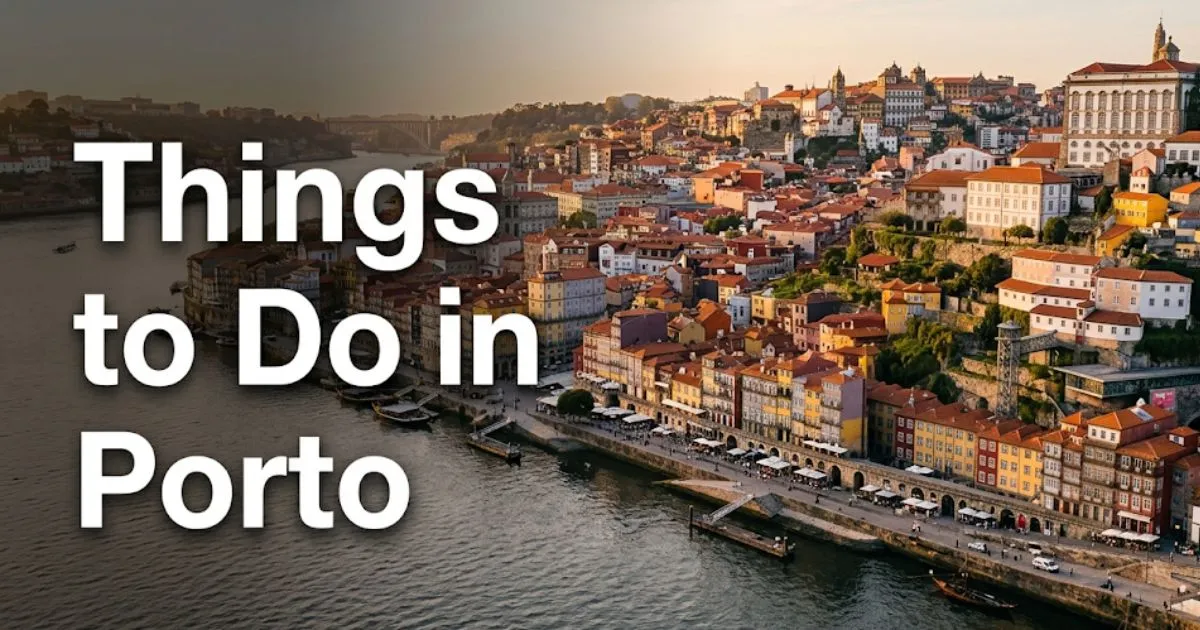
Porto is Portugal’s second city, but it operates on its own terms entirely. The UNESCO-listed historic center sits on dramatic granite hillsides above the Douro River, with port wine lodges directly across the water in Vila Nova de Gaia.
This guide covers every major experience, neighborhood zone, practical logistics decision, and traveler-profile consideration you need. Build your actual itinerary from these sections, not from a ranked list of tourist traps.
Things to Do in Porto: What Makes This City Different
Porto is a working city with a tourism layer, not a theme park with a historical surface. That distinction matters.
The city’s identity comes from its wine trade history, Atlantic fishing culture, and granite-and-azulejo architecture. These are not museum exhibits. They are the actual operating fabric of daily Porto life.
Porto is not flat. The historic center involves constant ascent and descent on cobblestone streets. Comfortable walking shoes are not optional.
Visit Porto, the city’s official tourism body, notes that the Bairro Histórico do Porto has been a UNESCO World Heritage Site since 1996. That designation covers a living neighborhood, not a preserved museum zone.
For couples, Porto delivers consistent romantic atmosphere. The riverfront at sunset and the candlelit wine lodge cellars are genuinely intimate.
Solo travelers find Porto socially easy. The hostel infrastructure in Bonfim and Cedofeita is excellent, and the tascas (neighborhood taverns) are welcoming to lone diners.
Insider Tip:
- Porto is most authentic on Tuesday through Thursday mornings, when tourist volumes drop and locals use the same cafés and markets
- Avoid Livraria Lello on Saturday afternoons entirely; the queue kills the experience
- Seniors: take the funicular (Funicular dos Guindais) between the Ribeira and the upper city rather than climbing the stone stairs
Best Things to Do in Porto, Portugal
The best things to do in Porto, Portugal in 2026 span six distinct experience categories: wine culture, historic architecture, Atlantic coastline, food traditions, contemporary arts, and river life.
| Activity | Best For | Cost Range | Time Required | Insider Note |
|---|---|---|---|---|
| Port wine cave tour, Gaia | Couples, wine enthusiasts | €15-30/person | 1.5-3 hours | Book Taylor Fladgate or Graham’s in advance in summer |
| São Bento Station visit | All travelers | Free | 20-30 minutes | Arrive at 9am before tour groups |
| Douro river cruise (6 bridges) | Couples, families | €15-25/person | 1 hour | Afternoon light on the Ribeira is best for photography |
| Livraria Lello | Culture travelers, book lovers | €8-10 entry (redeemable) | 30-45 minutes | Pre-book timed entry online |
| Serralves Museum + park | Arts, families, seniors | €12-18 per adult | Half-day | Park is worth visiting independently even without museum |
| Matosinhos seafood lunch | Food travelers, all profiles | €20-40/person | 1.5-2 hours | Rua Heróis de França has the best-priced fish restaurants |
| Mercado do Bolhão | Food travelers, budget visitors | Free to enter | 45-60 minutes | Best before 11am; closed Sundays |
| Ponte Dom Luís I upper deck walk | All travelers | Free | 30-45 minutes | Cross on foot; views over Ribeira and Gaia simultaneously |
Budget travelers can fill two full days in Porto for under €80 per person including food. The city’s free experiences (viewpoints, São Bento Station, street architecture, public gardens) are among its strongest.
Families with children under 10 will find the Serralves park excellent, the river cruise manageable, and the steep Ribeira streets genuinely difficult with a stroller.
Porto Neighborhoods: Where to Explore First
Porto’s neighborhoods have genuinely distinct characters. Understanding them before you arrive determines how much of the real city you actually see.
| Neighborhood | Character | Best For | Crowd Level |
|---|---|---|---|
| Ribeira | Historic waterfront, tourist-dense | First impressions, river views | High year-round |
| Bonfim | Local residential, café culture, hostels | Solo travelers, repeat visitors | Low-moderate |
| Cedofeita | Independent shops, galleries, restaurants | Couples, food travelers, arts visitors | Moderate |
| Foz do Douro | Upscale, coastal, beach access | Families, beach visitors, upscale dining | Moderate-high in summer |
| Gaia | Port wine lodges, cable car, river views | Wine travelers, all profiles | High near riverfront |
| Boavista | Modern, residential, Casa da Música | Arts visitors, business travelers | Low tourist density |
Bonfim is where experienced Porto visitors choose to stay. It has lower hotel rates than Ribeira, better café-to-tourist ratio, and direct metro access.
Cedofeita is Porto’s equivalent of a creative district. Rua de Cedofeita has independent bookshops, ceramic studios, and restaurants that serve locals rather than tour groups.
Seniors and travelers with limited mobility should consider staying in Boavista or Foz do Douro. These neighborhoods have flatter terrain than the historic center.
The Ribeira is the most photographed neighborhood for a reason. It is also the most crowded and the most prone to tourist-targeted pricing.
Ribeira District Porto: The Waterfront You Cannot Skip
The Ribeira district is Porto’s most photographed waterfront zone, and it genuinely earns that attention despite the crowds.
The narrow medieval lanes between the colorful houses and the Douro riverbank represent the city’s oldest continuously inhabited area. The UNESCO designation is not bureaucratic. The density of historic architecture per square meter here is remarkable.
The Ribeira is best experienced before 9am or after 7pm. During midday, tourist volume on Cais da Ribeira (the waterfront promenade) makes comfortable movement difficult.
Restaurants directly on Cais da Ribeira target tourists with elevated prices. Walk one or two streets back into the Ribeira’s lanes and prices drop by 30-40%.
Local alternative: Instead of dining on the main Cais strip, locals eat at Taberna dos Mercadores or similar lane-facing tascas on Rua dos Mercadores. The food is the same regional Portuguese. The prices are significantly lower.
Couples find the Ribeira at dusk genuinely atmospheric. The pink light on the colored houses reflected in the Douro is not manufactured for tourism.
Solo travelers should be standard-urban-cautious in Ribeira at night. The area stays lively but pickpocketing increases in very crowded summer evenings. Keep bags in front.
Insider Tip:
- The free viewpoint from the lower deck of Ponte Dom Luís I gives the best Ribeira panorama without any queue
- Ribeira floods occasionally in winter when Douro water levels rise; check conditions if visiting November through February
Port Wine Tasting in Vila Nova de Gaia
The best port wine experience in Porto is actually across the river in Vila Nova de Gaia, where the historic port lodges have aged their wines since the 17th century.
Gaia’s riverside slope is lined with the cellars (locally called lodges) of the world’s major port houses. Graham’s Lodge, Taylor Fladgate, and Ramos Pinto each offer tours with distinct approaches to both the wine and the tasting experience.
Graham’s lodge tour takes visitors through aging cellars and vintage storage. The tasting tier matters: the premium tasting at approximately €25-35 includes aged tawnies that the basic entry tour does not.
Taylor Fladgate offers the most extensive public-facing experience, including a port wine museum component. Sandeman is the most tourist-facing operation with the most theatrical presentation.
The cable car (Teleférico de Gaia) connects the upper Gaia ridge to the riverfront. It costs approximately €6 one-way and gives genuine aerial views of the Douro and Ribeira.
Budget travelers can taste port at the smaller lodge counters along the Gaia waterfront for €3-8 per glass without a formal tour. The quality is real.
Families should note that lodge tours involve lengthy cellars walks in confined spaces. Children under 8 typically disengage quickly.
Half a day is the minimum for Gaia if you are visiting one lodge. A full day lets you compare two or three houses properly.
Pre-book in summer: Taylor Fladgate and Graham’s fill up. Reserve online at least 3-5 days ahead from June through September.
Key Takeaway: Visit at least two different port lodges in Gaia to understand how house style varies. Booking in advance in summer is not optional.
Livraria Lello and Porto’s Azulejo Tile Landmarks
Livraria Lello is one of the world’s most architecturally significant bookshops, and the interior genuinely justifies the visit if you manage the logistics correctly.
The neo-Gothic facade on Rua das Carmelitas opens into a carved wooden interior with a curved central staircase that predates the Harry Potter comparisons by several decades. The entry fee (approximately €8-10 per person as of recent years) is deductible against book purchases.
Book timed-entry slots online before arriving. Without a pre-booked slot, same-day walk-in waits in summer can reach 60-90 minutes.
Porto’s azulejo (painted ceramic tile) tradition is visible across the city on church facades, railway stations, and domestic buildings. São Bento Station contains the most concentrated and historically significant azulejo panels in the city.
The panels at São Bento, created by Jorge Colaço in the early 20th century, depict Portuguese historical scenes across thousands of individual tiles. Entry is free; the station is a functioning railway terminal open daily.
Igreja de Santo Ildefonso on Praça da Batalha offers another major azulejo facade without any queue or entry fee. The exterior alone merits 15 minutes.
Culture travelers find these tile landmarks genuinely rewarding. Families with young children may find São Bento more engaging than Livraria Lello’s interior.
Local alternative to Livraria Lello: The independent bookshop Livraria Poetria on Rua de Cedofeita has a real literary atmosphere without a tourist queue. Local Porto readers actually shop there.
Casa da Música and Serralves Museum Porto
Casa da Música is Porto’s concert hall and one of the most architecturally significant buildings in 21st-century Europe, designed by Rem Koolhaas.
The building is in the Boavista rotunda, about 3 kilometers west of the historic center. Guided architectural tours run on weekdays and select weekend mornings. Cost runs approximately €10-15 per person depending on the tour format.
Evening concerts range from classical to jazz to contemporary electronic. Ticket prices vary widely. Check the Casa da Música program directly at casadamusica.com for 2026 scheduling.
The Serralves Foundation (Fundação de Serralves) houses Porto’s premier contemporary art museum alongside 18 hectares of art deco gardens. The museum building, designed by Álvaro Siza Vieira, is worth visiting even when the exhibitions are not personally compelling.
Admission runs approximately €12-18 per adult for museum and park combined. The gardens alone are accessible for a lower garden-only fee. Check current pricing directly with Serralves before visiting.
Serralves is the strongest family option among Porto’s indoor attractions. The gardens have space for children to move freely. The museum is stroller-accessible.
Seniors find Serralves grounds manageable. The garden paths are gentler than the historic center’s cobblestones.
Insider Tip:
- Casa da Música evening concerts on weeknights often have last-minute tickets available at the box office
- Serralves on a Tuesday morning is nearly empty; summer weekend afternoons are very crowded
Key Takeaway: Casa da Música and Serralves are Porto’s contemporary cultural anchors. Neither requires more than a half-day, but both reward a slower visit.
Mercado do Bolhão and Porto’s Food Scene
Mercado do Bolhão is Porto’s historic covered market, renovated and reopened in recent years, selling fresh produce, fish, charcuterie, cheese, flowers, and prepared food.
The market occupies a two-level iron-framed structure in the Baixa neighborhood. It is best before 11am when vendors are fully stocked and the space is genuinely market-like rather than tourist-oriented. The market is typically closed Sundays and public holidays.
Porto’s food identity extends well beyond the market. The city’s most local dining experience is the tasca format: small, tiled neighborhood taverns serving daily-changing plates of bacalhau (salt cod), grilled fish, or meat stews for €7-12 per plate.
Rua das Flores and the lanes behind the cathedral (Sé) have concentrations of tascas serving working lunch crowds on weekdays. These are the spots where a two-course lunch with wine costs approximately €10-15 per person.
Matosinhos, the coastal municipality 6 kilometers north of central Porto, is where the city’s serious seafood dining happens. Rua Heróis de França in Matosinhos has a concentration of cervejarias (seafood beer halls) with tanks of live shellfish and grilled fish priced far below Ribeira tourist rates.
Budget travelers can eat extremely well in Porto. A full tasca lunch rarely exceeds €12 per person including wine.
Couples seeking a formal dinner experience should look at restaurants in Cedofeita. The neighborhood has Porto’s highest concentration of contemporary Portuguese restaurants at non-tourist prices.
Francesinha: Porto’s Most Iconic Dish
Francesinha is Porto’s signature sandwich and one of the most misunderstood dishes in Portuguese cooking. It is not a light snack.
The dish layers cured ham, linguiça sausage, and steak or roast meat between thick bread, covered in melted cheese, then flooded with a spiced beer-and-tomato sauce. It typically arrives with a fried egg on top and fries alongside.
Order a francesinha at lunch, not dinner. The caloric density requires several hours of continued walking to process comfortably.
Café Santiago on Rua de Passos Manuel is Porto’s most cited francesinha institution. Queues form by noon on weekdays. Arrive before 12pm or accept a wait.
Café Guarany on Avenida dos Aliados is the local alternative that experiences fewer tourist queues. The francesinha quality is comparable.
Each restaurant has a proprietary sauce recipe. Comparing two different francesinhas across two different restaurants is a legitimate Porto food activity.
Budget travelers note that a francesinha with fries and a beer costs approximately €12-16. It functions as a full meal.
Vegetarians and travelers with dietary restrictions should know that francesinha is inherently meat-based and cannot be easily adapted. Porto’s food culture is not especially vegetarian-forward, though options exist in Cedofeita’s contemporary restaurants.
Insider Tip:
- Ask for your francesinha sauce served on the side if you want to control the bread saturation
- The dish is a Porto original; do not order it in Lisbon, where quality drops sharply
Ponte Luís I Bridge and Clérigos Tower Porto
Ponte Dom Luís I is the iron bridge connecting Porto’s Ribeira to Vila Nova de Gaia. Walking its upper deck is one of the best free experiences in the city.
The bridge has two walkable decks. The upper deck carries the metro line and a pedestrian walkway at 60 meters above the Douro. The lower deck serves car and pedestrian traffic closer to the water.
Crossing on foot at the upper level takes 10-15 minutes and produces panoramic views in both directions over the Douro, Ribeira, and Gaia hillside. The experience is free.
Torre dos Clérigos (Clérigos Tower) is the baroque church tower that functions as Porto’s most recognizable vertical landmark. Climbing its 240 steps produces the best elevated view of the city’s rooftops and the Douro estuary.
Admission runs approximately €5-8 per person as of recent years. The climb is narrow and steep. It is not suitable for travelers with claustrophobia or significant mobility limitations.
The tower is open daily but hours shift seasonally. Book tickets online to avoid queues in summer.
Families should assess children’s stair tolerance before committing to the Clérigos climb. The narrow spiral staircase requires patience from young children.
Couples visiting at sunset will find the Clérigos tower view genuinely worth the effort.
Local alternative to tourist viewpoints: Miradouro da Vitória on Rua de São Bento da Vitória is a free public terrace that locals use daily. It gives a sweeping view over Gaia and the Douro without any admission fee or queue.
Key Takeaway: Walk Ponte Dom Luís I’s upper deck and visit Miradouro da Vitória before paying for any viewpoint tower. Both are free and both deliver extraordinary views.
Douro River Cruise Porto
A Douro River cruise is the single activity that orients first-time visitors to Porto’s geography more effectively than any map.
The standard cruise covers the six bridges spanning the Douro within Porto and Gaia. It runs approximately 50 minutes to one hour. Cost typically runs €15-25 per person depending on operator and departure time.
Cruises depart from both the Ribeira waterfront (Porto side) and the Gaia riverfront. Multiple operators run throughout the day. In summer, afternoon departures see the strongest light on the Ribeira facades.
Book in advance for summer afternoon departures, which fill quickly. Morning departures in shoulder season (May-June, September-October) rarely require advance booking.
The cruise experience is calm and genuinely enjoyable. It does not require any hiking or cobblestone navigation, making it one of Porto’s most accessible activities.
Seniors and travelers with mobility considerations will find the boarding process simple at most operators. Deck seating is stable and covered. Confirm boarding logistics with your specific operator before booking.
Families find river cruises work well for children ages 4 and up. The hour passes quickly with consistent scenery changes.
Local alternative: Take the metro across Ponte Dom Luís I to Gaia, then walk the Gaia riverfront back toward the bridge. The view of the Ribeira from the Gaia bank is the same view the cruise delivers, at no cost, with more time to stop.
Insider Tip:
- Sunset cruises sell out earliest in summer; book 3-5 days ahead
- Bring a light layer; river breeze is cooler than city streets even in July
Porto Beaches and Matosinhos
Porto has direct Atlantic beach access that most visitors ignore in favor of city sightseeing. That is a genuine planning error.
Matosinhos beach is the closest Atlantic beach to central Porto, accessible by metro from downtown in approximately 20-25 minutes on Line A to Matosinhos Sul station. The beach is a wide Atlantic strand with consistent surf.
The Matosinhos waterfront combines beach access with Porto’s best seafood dining district. Walking from the beach to Rua Heróis de França takes 5 minutes.
Foz do Douro is Porto’s western district where the Douro meets the Atlantic. The rocky coastline here has calmer spots for swimming and the upscale Foz neighborhood surrounding it has Porto’s best casual outdoor café culture.
Espinho is a larger beach town 20 kilometers south of Porto, accessible by train from São Bento Station. It is less crowded than Matosinhos and better suited for families wanting a full beach day.
Families will find Matosinhos beach family-friendly. The flat sand and relatively calm northern end suit younger children.
Budget travelers note that the beach itself is free. The metro connection is covered by the Andante card.
Atlantic surf at Matosinhos is real. Rip current risk exists, particularly after storms or in August when offshore winds shift. Swim between the flags and follow lifeguard instruction.
Summer weekends at Matosinhos beach see very high crowd levels. Weekday morning visits from June through August are significantly more comfortable.
Key Takeaway: Take the metro to Matosinhos Sul, walk to the beach for the morning, and have a seafood lunch on Rua Heróis de França. That single half-day is one of Porto’s most rewarding experiences.
Porto Things to Do at Night
Porto’s nightlife is structured around wine, conversation, and fado rather than nightclub culture. The evening rhythm starts late and runs slowly.
The Ribeira waterfront is the most tourist-facing nighttime zone. Bars on Cais da Ribeira serve sangria and Super Bock to international crowds until well after midnight. It is lively, crowded in summer, and primarily tourist-oriented.
The local nighttime alternative is Cedofeita, particularly around Rua de Cedofeita and the Galeria de Paris (a street actually named Rua de Galeria de Paris). Small bars here mix local students, artists, and visitors in genuinely unpretentious settings.
Fado in Porto is less institutionalized than in Lisbon. Casa da Mariquinhas in the Bonfim neighborhood offers authentic fadista performances in an intimate setting without the fixed tourist-dinner format of most Lisbon fado houses.
Port wine bars on the Gaia waterfront stay open late and are significantly more pleasant than Ribeira bars for couples seeking a relaxed evening drink.
Solo travelers find Porto’s nighttime social scene accessible. The bar culture on Rua de Galeria de Paris is informal enough that solo visitors integrate naturally.
Practical note: Porto’s late-night restaurant culture means dinner service runs 8pm-11pm. Arriving at 7:30pm as an American default will land you in an empty restaurant.
Seniors and early risers: The evening culture in Porto genuinely starts after 9pm. A dinner at 7pm and a wine at 8pm is a valid Porto evening that does not require staying out past midnight.
Porto Itinerary: 2 Days in Porto
Two days in Porto is enough to cover the essential experiences without rushing. Three days is the comfortable version.
Day 1: Historic Center, River, and Gaia
- Start at São Bento Station at 8:30am before tour groups arrive. Allow 30 minutes for the azulejo panels.
- Walk south down toward the Sé Cathedral and the old city walls. Allow 20 minutes.
- Descend to Ribeira for 10am. Walk Cais da Ribeira. Cross Ponte Dom Luís I upper deck on foot to Vila Nova de Gaia.
- Tour one port wine lodge (Taylor Fladgate or Graham’s recommended; book in advance). Allow 1.5-2 hours including tasting.
- Lunch on the Gaia riverfront or return to Ribeira for a lane-facing tasca. Budget €10-20 per person.
- Take the cable car (Teleférico de Gaia) up to the Gaia ridge. Walk to a miradouro for views.
- Return to Porto by metro (Jardim do Morro metro station on the Gaia ridge). Explore Cedofeita for late afternoon shopping and gallery browsing.
- Dinner in Cedofeita at 8pm. Budget €20-35 per person for a sit-down meal.
Day 2: Culture, Coast, and Food
- Pre-booked Livraria Lello timed entry at 9am (quietest slot available).
- Walk to Torre dos Clérigos for the rooftop view. Allow 45 minutes.
- Visit Mercado do Bolhão before 11am for fresh produce and local food stalls.
- Take metro Line A to Matosinhos Sul for a beach morning. Allow 1.5-2 hours at the beach.
- Seafood lunch on Rua Heróis de França in Matosinhos. Budget €20-35 per person.
- Return to Porto by metro. Visit Serralves park and museum in the afternoon (buy tickets in advance). Allow 2-3 hours.
- Evening fado at Casa da Mariquinhas in Bonfim. Reserve a table in advance.
Key Takeaway: Two days in Porto is workable. The single decision that makes it work is pre-booking Livraria Lello, at least one port wine lodge, and any fado experience before you arrive.
Best Time to Visit Porto
The best time to visit Porto is May through June or September through October.
Temperatures in May and June run 18-23°C (64-73°F). The Douro Valley is green from spring rains. Hotel rates have not yet hit summer peaks. Tourist crowds are present but manageable.
September brings post-summer calm, temperatures of 20-25°C (68-77°F), and the Douro Valley harvest season. The Douro Valley is at its most visually striking in September and October, making day trips particularly worthwhile.
July and August are Porto’s peak tourist months. Temperatures reach 30-35°C (86-95°F). Livraria Lello queues hit their worst levels. Hotel prices surge. The city still delivers, but it requires more patience and earlier-morning starts.
November through February is Porto’s low season. Temperatures drop to 8-15°C (46-59°F) with frequent rain. Some outdoor attractions have reduced hours. Hotel rates drop significantly, sometimes by 40-50% compared to August.
Winter Porto suits travelers who prioritize wine culture, food, and museum visits over outdoor and beach activities. The city is genuinely uncrowded.
According to Visit Porto, the Douro Valley harvest (vindima) typically runs late September through early October and represents a unique combined Porto-plus-valley experience.
Budget travelers find winter Porto exceptional value. Shoulder season (May-June, September-October) offers the best balance of good weather, reasonable prices, and manageable crowds.
Seniors should avoid August heat and January rain extremes. May and October represent the most physically comfortable windows.
Porto Travel Tips and Getting Around
The Porto Metro (Metro do Porto) connects Francisco Sá Carneiro Airport (OPO) to the city center in approximately 35 minutes on Line E (Violet Line). This is the most practical airport transfer.
The Andante Card is Porto’s reloadable transit card. A 24-hour unlimited pass costs approximately €7-10. The card covers metro, STCP buses, and some other transit operators. Buy it at airport arrivals or at any metro station.
The Porto Card (available from Visit Porto) adds museum and attraction discounts to the transit card functionality. It typically pays off for visitors planning to hit three or more paid attractions in 48 hours. Evaluate whether the included attractions match your itinerary before purchasing.
Bolt and Uber both operate in Porto. Rideshares fill the gap for neighborhoods the metro does not reach directly, particularly late at night or when carrying luggage through the historic center.
Do not drive in Porto’s historic center. The streets are narrow, the signage is confusing, and parking is extremely limited. Park outside the center if you have a rental car and use public transit from there.
The vintage tram system (particularly Tram Line 1 along the Douro riverfront) is a genuine experience but runs very slowly. Take it once for the ride. Use the metro for actual transit efficiency.
Families with strollers will find Porto’s cobblestone terrain genuinely difficult. The Gaia riverfront, Foz do Douro, and Boavista are the most stroller-manageable zones.
Seniors and accessibility travelers: The metro is elevator-equipped at most major stations. Confirm elevator availability for your specific stations at Metro do Porto’s official site before your trip.
Pack footwear with grip. Porto’s granite cobblestones become extremely slippery in rain. Standard sneakers with worn soles are a slip-and-fall risk.
Safety and Practical Warnings for Porto
Porto is one of Western Europe’s safest cities for visitors, but specific risks require awareness.
Key safety and practical facts every visitor should know:
- Cobblestone slip risk: Wet granite cobblestones in the historic center and Ribeira are genuinely dangerous. Grip-soled footwear is essential in wet weather (common October through March).
- Pickpocketing: Standard urban precautions apply in Ribeira waterfront, Praça da Batalha, and on crowded buses. Keep bags closed and in front, particularly in summer crowds.
- Douro flood risk: The Ribeira waterfront occasionally floods in winter when river levels rise after heavy inland rain. Check local conditions if visiting November through February.
- Heat in summer: July and August temperatures regularly exceed 30°C. Carry water, use SPF, and plan heavy walking for early mornings.
- Livraria Lello entry: The entry fee and timed ticket system mean you cannot walk in spontaneously in summer. Book online in advance.
- Emergency number in Portugal: 112 covers police, medical, and fire services.
- US Department of State travel advisory: Check travel.state.gov for current Portugal travel advisory status before departure.
- Schengen Area entry: American passport holders may enter Portugal for up to 90 days within any 180-day period without a visa as of current regulations. Verify entry requirements directly with the Portuguese Embassy or US Department of State before travel.
Frequently Asked Questions About Things to Do in Porto
What are the best things to do in Porto for first-time visitors?
First-time visitors to Porto should prioritize São Bento Station’s azulejo panels, a port wine lodge tour in Vila Nova de Gaia, crossing Ponte Dom Luís I on foot, and a francesinha lunch at Café Santiago.
Add the Serralves Foundation park, a morning at Mercado do Bolhão, and at least one evening in Cedofeita’s neighborhood bars for a complete first-visit overview.
Two full days covers these essentials without rushing.
How many days do you need in Porto, Portugal?
Two days in Porto covers the core historic center, Gaia wine lodges, and one coastal or cultural excursion.
Three days is the comfortable pace that also allows a day trip to the Douro Valley, Guimarães, or Braga without sacrificing city exploration.
One day is possible but feels incomplete for a city this layered.
Is Porto worth visiting in winter?
Porto in winter (November through February) is genuinely rewarding for wine-focused and culture-focused travelers.
The city is uncrowded, hotel rates drop significantly, and the port wine caves are at their most atmospheric in cool weather.
Rain is frequent and the Ribeira can flood occasionally, so pack waterproofs and verify conditions before outdoor-heavy days.
What is the best way to get around Porto?
The Porto Metro covers the airport, historic center, Boavista, and the coast (Matosinhos) efficiently using the Andante Card.
Bolt and Uber fill gaps for late nights and steep terrain that metro stations do not serve directly.
Do not rent a car for Porto city navigation. The historic center’s streets are not designed for it.
How much does it cost to visit Porto, Portugal for a week?
A mid-range week in Porto costs approximately $1,200-$1,800 per person including accommodation, food, activities, and local transport.
Budget travelers staying in hostels and eating at tascas can manage for $600-$900 per person for a week.
Accommodation in Porto is significantly less expensive than equivalent quality in Lisbon, making the city one of Western Europe’s better-value city break destinations.
Is Porto safe for solo travelers?
Porto is one of Europe’s more solo-traveler-friendly cities, with strong hostel infrastructure in Bonfim and Cedofeita, walkable neighborhoods, and a social bar culture that integrates lone visitors naturally.
Standard urban precautions apply in crowded tourist zones: keep bags secured, be aware in Ribeira at night during summer, and use the metro rather than walking unfamiliar streets alone after midnight.
The city has a genuine café and tasca culture that makes solo dining comfortable and normal.
Your Porto Trip Starts With One Decision
Book Livraria Lello, one port wine lodge in Gaia, and your fado evening before anything else. These three experiences require advance reservation and fill up earliest.
Porto’s remaining experiences, from the free viewpoints to the tasca lunches, require no advance planning. The city rewards spontaneous walking in ways that few European cities of this size do.
Prices, hours, timed-entry requirements, and seasonal access for all Porto attractions change regularly. Verify every key logistic directly with Visit Porto (visitporto.travel) and individual venues before departure.
Go in May or September if you have any flexibility. You will share the city with fewer crowds and pay less for the same quality of experience.