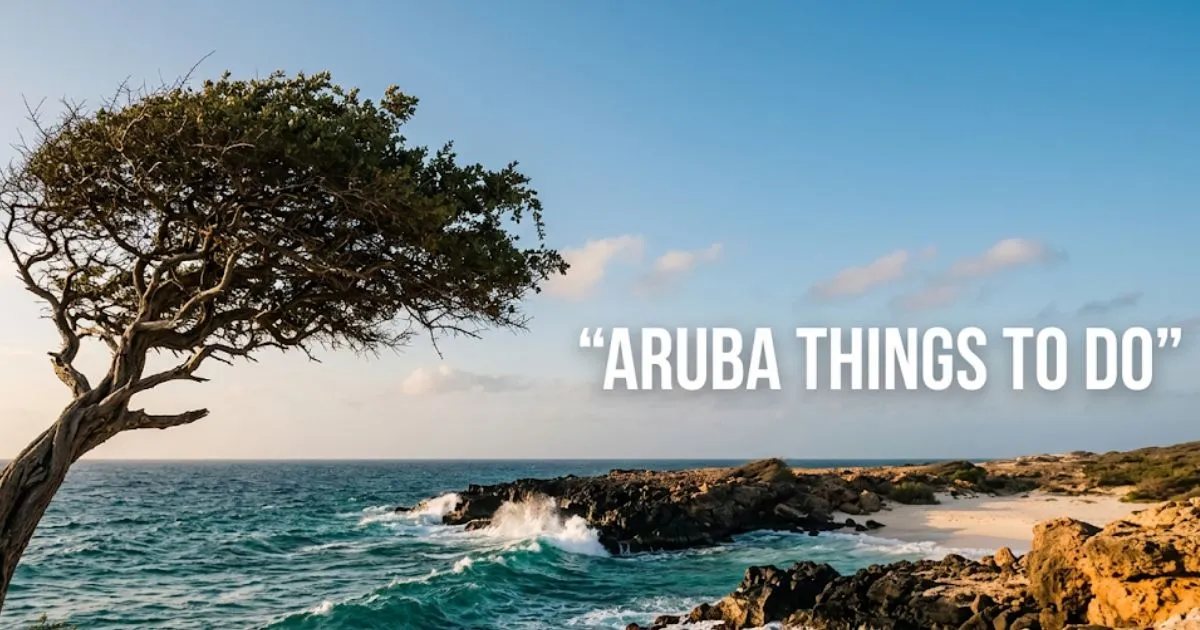
Aruba Things to Do: The 2026 Guide to Every Beach, Zone, and Experience

Aruba is not a one-beach island. The real Aruba exists in three distinct personalities.
The glossy resort strip is the postcard. The rugged north coast is the island’s soul. San Nicolas is its creative future.
This guide organizes every essential experience by these three zones. You will know where to find calm turquoise water, where to escape the crowds, and which “must-do” is a tourist trap.
Where to Stay for the Right Aruba Experience
Your entire trip hinges on choosing the right home base. The best location for you depends entirely on your beach personality and travel style.
The Palm Beach high-rise strip is the epicenter of white sand, calm water, and walkable density. It suits travelers who want direct beach access without a car.
Eagle Beach offers a wider, quieter stretch of sand with a more residential feel. It is better for couples and travelers seeking space away from the main strip’s constant motion.
For total seclusion, Savaneta and San Nicolas provide a local, non-resort Aruba experience. You will need a rental car here but you will trade convenience for authenticity.
| Area | Best For | Beach Vibe | Need a Car? |
|---|---|---|---|
| Palm Beach | First-timers, families, social travelers | Calm, busy, walkable, water sports hub | No |
| Eagle Beach | Couples, repeat visitors, sunset seekers | Wide, quiet, residential, iconic trees | Sometimes |
| Oranjestad | Cruise visitors, short-stay shoppers | Urban, colorful, not a swimming beach | No |
| Savaneta/San Nicolas | Adventurers, budget travelers, cultural seekers | Local, rugged, authentic, creative | Yes, essential |
Families with young children find Palm Beach’s gentle entry and lack of waves ideal. The calm water is practically a giant, warm bathtub.
Couples seeking romance will prefer Eagle Beach at sunset or a private dinner in Savaneta. These areas trade lobby buzz for quiet, intimate moments.
Budget travelers should look in San Nicolas or inland neighborhoods. The savings on accommodations can easily fund a rental car and several excellent meals.
Key Takeaway: Choose Palm Beach for convenience and Eagle Beach for tranquility. San Nicolas is the budget-friendly, cultural base for curious return visitors.
The Best North Coast and Arikok National Park Adventures
The north coast is Aruba’s untamed wild side. Here, the island sheds its calm Caribbean identity and replaces it with raw, relentless power. Arikok National Park covers nearly 20% of the island and protects this otherworldly landscape. Inside, you will find dramatic sea caves, towering cacti, and hidden natural pools. This is not the Aruba of resort brochures.
Conchi Natural Pool (Cura di Tortuga)
Conchi, the natural pool, is the park’s main draw. It is a volcanic rock circle trapping a calm, deep-blue pool while wild waves crash just feet away. This spot delivers a genuine, no-filter-needed Caribbean moment.
Reaching it now requires planning for the 2026 visitor system. Access is either by a rugged 4×4 rental you drive yourself or a book-ahead guided tour from park-approved operators.
- Driving yourself: You must rent a proper 4×4 Jeep or similar. The road is an unmaintained, rocky track with sharp descents.
- Guided tour: Multiple outfitters run open-air trucks from the visitor center. This is the safer, non-stressful option.
- Hiking in: A 45-minute moderately strenuous trail exists from the main park road. You will need sturdy shoes and a lot of water.
- Timing for 2026: Arikok now operates on a daily visitor cap and timed-entry reservation system. You must buy a park pass online in advance for a specific entry window. Morning slots sell out first.
Insider Tip for 2026: Purchase your Arikok National Park pass and reserve your time slot online at least one week before your trip. All passes are now digital and checked at the gate. If Conchi is your goal, book the earliest morning slot to experience the pool before the tour convoys arrive.
Quadirikiri and Fontein Caves
Beyond the pool, the park hides two remarkable cave systems. Quadirikiri Cave is famous for its two massive chambers lit naturally by holes in the ceiling, creating beams of light on the cave floor. It is an easy, accessible walk. Fontein Cave is darker and narrower, known for ancient brownish-red Arawak pictographs on its ceilings. A park guide is typically stationed at the cave entrance to provide context. These caves offer a cool, quiet escape from the midday sun that beats down on the rest of the island.
Arikok is best suited for adventurous couples, active solo travelers, and families with older, sure-footed kids. It is not suitable for travelers with significant mobility limitations or a low tolerance for heat. The interior of the park has no shade and no services.
Seniors should consider a private Jeep tour where the driver handles the rough road and parks closest to viewing points. This avoids a long walk or a hot climb. The cave floors are uneven, so a walking stick can be useful.
Budget travelers save significantly by driving themselves in a rental 4×4. A group of three or four splitting the rental cost and the park entry fee makes this one of the island’s most affordable and epic days.
Key Takeaway: Arikok National Park is the absolute essential day trip. Book your 2026 timed-entry pass online a week ahead for the earliest morning slot.
The Best Snorkeling Spots and Honest 2026 Conditions
Aruba’s snorkeling is genuinely good, but its reputation is slightly inflated. You will not find the pristine, teeming reef systems of Bonaire to the east. What you will find are accessible, shallow sites teeming with colorful fish and, on the south coast, healthy, protected coral.
Mangel Halto is the single best shore snorkel on the island. A shallow, sandy bay leads to a dramatic drop-off where a dense coral reef hugs the edge of a deep channel. You enter from a quiet residential beach with limited parking on weekends. The current can be surprisingly strong at the deep edge, making it a poor choice for weak swimmers or children. It is best suited for confident intermediate snorkelers and couples.
Boca Catalina is the calm, effortless entry for beginners and families. It’s a small, white-sand cove just north of the high-rises on the way to the California Lighthouse. You park right at the roadside and walk in. You will almost certainly see sea turtles feeding in the shallow grass beds here. The best time is early morning before the boat tours arrive and churn up the sand.
Baby Beach is the most famous and the most misrepresented. The shallow lagoon is safe and warm, perfect for toddlers and first-time snorkelers, but it is not a vibrant coral destination. The far side, by the breakwater, has some rocky patches with fish, but the inner lagoon is mostly sand. Avoid weekends and cruise-ship-heavy days, or you will find a scene of overcrowded water and floating snack wrappers. The local alternative, Rodger’s Beach, is right next door. It has a quieter, more local fishing-boat vibe and the same calm water.
| Snorkel Site | Skill Level | Crowd Factor | What You’ll See |
|---|---|---|---|
| Mangel Halto | Intermediate | Low on weekdays | Healthy reef wall, parrotfish, eels |
| Boca Catalina | Beginner | Medium, busy by 10 AM | Sea turtles, shallow coral heads, reef fish |
| Baby Beach Lagoon | Beginner/Child | Extremely high on weekends | Calm water, scattered fish, some coral at edges |
| Arashi Beach | Beginner | Medium | Sandy bottom, starfish, rays, turtles |
| Malmok Shallow Reef | Intermediate | Low | Rocky entry, diverse fish, brain coral |
According to the Aruba Tourism Authority, all visitors are now encouraged to use reef-safe, mineral-based sunscreen. Traditional chemical sunscreens containing oxybenzone are banned for import and sale on the island.
De Palm Island is a paid all-inclusive snorkeling and water park day trip. It offers a guaranteed, no-effort-required flamboyant fish encounter. It is ideal for families with diverse ages but terrible for anyone seeking a natural, uncrowded marine experience. The local alternative is the free shore snorkel at Mangel Halto, which rewards effort with authentic, world-class, accessible coral without the manufactured atmosphere.
Key Takeaway: Mangel Halto is the best shore snorkel, Boca Catalina is the best for turtles, and Baby Beach is only for toddlers.
The Best Beaches for Every Vibe (Beyond the Obvious)
The beach you choose dictates your entire day. Aruba’s coastline offers wildly different experiences, from buzzing social hubs to silent, secluded coves.
Eagle Beach is the widest, most iconic, and arguably most beautiful public beach on the island. It’s famous for its powdery white sand and the silhouette of twisted fofoti trees against a blue sky. The water here is a step more energetic than the pool-flat Palm Beach. It’s best for couples, long walks, and travelers who find the high-rise strip too manufactured.
Arashi Beach delivers the best sunset swim on the north coast. It is a calm cove just before the California Lighthouse with soft sand and a gentle entry. You need to bring your own chairs and shade, as it lacks the dense rental infrastructure of Palm Beach. An excellent local food truck, Arashi Beach Shack, serves burgers and cold drinks all day.
Druif Beach, the long strip in front of the low-rise Divi and Tamarijn resorts, is often overlooked. It is a quiet, wide, and endless stretch of sand with steady breezes that makes it ideal for long beach walks and wind-protected sunbathing.
For a truly local beach day, Andicuri Beach on the wild east coast is a dramatic change of pace. It is not a swimming beach; the currents are deadly. This is a beach for bodyboarding experts, photographers, and anyone wanting to watch massive waves crash onto a deserted shore. The road is unpaved but passable in a standard car.
- Palm Beach: The social, walkable, activity-packed strip. Best for first-timers.
- Eagle Beach: The iconic, wide, and tranquil photogenic beach. Best for couples.
- Baby Beach: The shallow, warm toddler lagoon. Avoid on cruise-ship days.
- Boca Catalina: The small cove with effortless turtle snorkeling.
- Arashi Beach: The best for a sunset swim and a chill, local beach bar vibe.
- Andicuri Beach: Not for swimming. For watching raw nature’s power.
The biggest mistake visitors make is staying exclusively on Palm Beach. Aruba has miles of diverse coastline. A rental car for just two days allows you to explore five completely different beach personalities, turning a typical resort vacation into a genuine exploration of the island.
San Nicolas: The Island’s Creative and Culinary Rebirth
San Nicolas is the single most exciting and misunderstood area in Aruba. Once written off as a faded refinery town, it has reinvented itself as the island’s creative soul. Walking these streets is now one of the most authentic Aruba things to do and see.
The entire district has become a vibrant, open-air canvas. Start your walk at the corner of Bernard van de Veen Zeppenfeldstraat and Caya G.F. Betico Croes. Here, massive, colorful murals from the annual Aruba Art Fair cover entire building facades.
The art here is genuinely good and thought-provoking, reflecting local life and cultural commentary. This is not a manufactured, tourist-only art project. It is a community-driven expression that gives the neighborhood its identity.
You can spend two hours walking the streets and still miss spectacular pieces tucked down alleyways. International and local artists have contributed to a constantly evolving gallery that feels entirely different from the polished resort world. It’s best for curious travelers, solo explorers, and anyone who loves street photography.
The culinary anchor of San Nicolas is Charlie’s Bar, a legendary, no-frills institution that opened in 1941. The walls and ceiling are entirely covered in hanging memorabilia, from vintage license plates to nautical gear. You go for a cold Balashi beer and a bowl of their famous Caribbean-style bar food, like pastechis or a simple burger. The nearby O’Niel Caribbean Kitchen is another essential, family-run spot serving outstanding authentic island food.
Budget travelers will find San Nicolas a haven. The prices for food, drinks, and local art are significantly lower than in the resort zone. The vibrant, local atmosphere here is free to explore. It’s also an excellent, culturally rich day trip for families with kids who can appreciate a street-art scavenger hunt. Wheelchair access is generally manageable on the main streets, though some smaller gallery spaces may have steps.
Every Thursday night, Carubbian Festival brings San Nicolas to life with a street market, live music, local food stalls, and dance performances. It’s the single best free, non-resort entertainment on the entire island and is perfectly safe for solo female travelers, who will find a friendly, community-oriented atmosphere.
Key Takeaway: San Nicolas is the real Aruba. Spend a Thursday night at the Carubbian Festival for the best local food and art.
Arikok National Park: A Deeper Dive into the Wild Interior
The park’s landscape is a shock to the senses. Aruba’s interior is a dry, dusty, lunar landscape of towering columnar cacti, divi-divi trees bent permanently by the trade winds, and dramatic volcanic rock formations. This is where you understand the island’s desert DNA.
Boca Prins and Boca Grandi are two massive sand-dune-backed bays on the park’s eastern edge. The signs explicitly warn against swimming, and this is not a suggestion. The waves here can and have killed people. You come here to stand on the dunes and watch the raw, aquamarine power of the Atlantic crash onto the shore. It’s a humbling, spectacular sight.
The park’s modest Visitor Center at the main entrance is where you check in with your digital pass. It features small but well-done exhibits on the island’s geology, Arawak history, and conservation efforts. Stopping here for 20 minutes provides essential context for everything you will see on the drive. Rangers here can give you a real-time update on the condition of the road to Conchi.
- Book your 2026 park pass online. The system is officially live. Select a date and an entry time slot. Slots are limited to manage capacity.
- Rent a proper 4×4. Do not attempt the interior roads in a compact car. A Jeep Wrangler or similar is required for Conchi and other unmarked trails.
- Pack absolutely everything you need. Bring at least 1.5 liters of water per person. Bring sunscreen, a hat, and snacks. There is no food or water available inside the park.
- Start at sunrise. The park opens early. An early start lets you beat the heat and the largest tour groups.
The park is a photographer’s dream at golden hour, but note its closing time. The gates lock strictly, and you do not want to be trapped inside after dark. The Arikok trails are generally well-marked, but cell service is non-existent in the deep interior.
Solo hikers should inform their accommodation of their planned route and expected return time. For seniors and those with back issues, the jarring off-road drive can be physically punishing. A guided, seated truck tour is a much gentler way to experience the park’s interior without the white-knuckle driving.
Key Takeaway: Arikok is a desert park. Prepare like you are spending the day in a hot, dry, service-free landscape, and you will love it.
The Best Dinner Restaurants and Local Food Experiences
Aruba’s food scene punches far above its weight for a small island. The answer to an exceptional dinner is rarely on the water’s edge. The best meals are found in gardens, on quiet corners, and from trucks parked along the road.
For a romantic evening, The Screaming Eagle in a modern, open-air lounge setting is a top choice. You recline on a bed-like couch under the stars with a bottle of French rosé and perfectly executed fusion dishes. Next door, its sister concept, The Kitchen at Vareen’s, offers a more intimate, private chef’s table experience in a garden.
Wilhelmina Restaurant in downtown Oranjestad provides a stunningly designed, hidden garden courtyard dining experience. The globally inspired menu is consistently excellent. This is the spot for a special-occasion dinner that feels worlds away from the noisy palm-lined strip. Yemanja Woodfire Grill is another consistent downtown winner, known for its wood-fired meats and eclectic international menu just a block back from the main drag.
The casual, local food experience is dominated by the food truck. Elite’s Truck in Oranjestad serves the best pastechi, a crispy, crescent-shaped pastry filled with cheese, ham, or spiced beef. Kaminando Food Truck has a cult following for its pan-burger, a massive, juicy local-style burger. For a truly local lunch, find Ruiz Takeaway in Santa Cruz for a heaping, affordable plate of hot Panamanian-influenced Caribbean food like stewed chicken, rice and beans, and sweet plantains.
| Restaurant | Style | Vibe | Budget Per Person |
|---|---|---|---|
| The Screaming Eagle | French-Asian Fusion | Romantic, chic lounge beds | $$$ Premium |
| Wilhelmina | Global Fine Dining | Secret garden, intimate | $$$ Premium |
| Yemanja Woodfire Grill | International Grill | Lively, reliable, downtown | $$ Moderate |
| O’Niel Caribbean Kitchen | Local Caribbean | Family-run, homey, San Nicolas | $ Budget-Friendly |
| Local Food Trucks (Elite’s, Kaminando) | Aruban Street Food | Casual, roadside, authentic | $ Budget-Friendly |
Fine dining in Aruba is priced comparably to a major US city. A multi-course dinner with wine at a top spot can easily run over $150 per person. Moderate, satisfying dinners at places like Yemanja cost between $30 and $50 per head.
Budget travelers can eat exceptionally well for under $15 per person by choosing local food trucks and takeaway joints. The more expensive the view, the less impressive the food typically is. This is a near-universal rule in Aruba’s resort zone.
Key Takeaway: Skip the overpriced waterfront tables for one night. Book a garden dinner at Wilhelmina or Screaming Eagle for a genuinely memorable island meal.
A Perfect 1-Day and 3-Day 2026 Itinerary
You cannot do everything, but you can do the right things in the right order. These itineraries minimize drive times and group attractions by their geographic zone so you are not crisscrossing the island pointlessly.
The “Aruba in a Day” Highlights Itinerary
This plan is for cruise visitors or travelers with very limited time. You will experience the island’s three defining characters in a single loop.
Step 1 (Morning): Arikok’s Core
- Drive straight to the Arikok National Park entrance no later than 8:00 AM with your pre-booked timed-entry pass.
- Visit the Quadirikiri Caves for 30 minutes, then drive the main paved road to the Boca Prins dunes for a spectacular photo stop.
- This gets you the essential dose of the wild north coast before the heat intensifies.
Step 2 (Midday): Baby Beach and San Nicolas
- Exit the park’s southern gate and drive 15 minutes to Baby Beach for a calm, shallow swim in the lagoon, arriving before the big lunch crowds.
- Around 1:00 PM, leave Baby Beach and drive 10 minutes to O’Niel Caribbean Kitchen in San Nicolas for an authentic, affordable local lunch.
- After lunch, spend 45 minutes walking the main streets of San Nicolas to see the famous murals and pop into the Cosecha gallery.
Step 3 (Afternoon/Sunset): The California Coast
- Drive 45 minutes back up the coast, passing the airport, and head to Arashi Beach by 4:30 PM.
- Swim in the calm cove, grab a beer from the Arashi Beach Shack, and watch the sunset from the beach near the California Lighthouse.
- This final stop perfectly contrasts the desert interior and colorful south you experienced earlier.
The 3-Day Zone-by-Zone Itinerary
This is the ideal plan for travelers staying a week who want to dedicate three full days to exploration.
Day 1: The Wild North and East
- Morning: Secure your 4×4 and enter Arikok National Park at opening time. Drive straight to Conchi natural pool to swim before the tour trucks arrive.
- Late Morning: Hike down to the secluded, black-sand Dos Playa beach to watch the powerful surf.
- Lunch: Pack a picnic. There is no food inside the park.
- Afternoon: Explore Fontein and Quadirikiri caves, then exit north via the visitor center and stop at the Alto Vista Chapel for panoramic views.
- Dinner: Casual meal at a food truck like Kaminando for the best budget dinner on the island.
Day 2: The Creative South
- Morning: Sleep in. This is a slower day. Then drive to Mangel Halto for the best shore snorkeling of your trip when the water is often calmest.
- Late Morning: Continue south to San Nicolas and spend two hours on a self-guided walking tour of the street art.
- Lunch: O’Niel Caribbean Kitchen for authentic island stews.
- Afternoon: Baby Beach for a relaxing, calm-water float in the lagoon.
- Evening: If it is a Thursday, this is your Carubbian Festival night in San Nicolas.
Day 3: The Northwest Coast and Farewell Sunset
- Morning: Start at Boca Catalina around 8:00 AM to swim with sea turtles before the catamaran tours arrive.
- Late Morning: Recover on a beach lounger at Eagle Beach under the famous fofoti trees.
- Lunch: The Passions Beach Bar on Eagle Beach for an indulgent toes-in-the-sand meal.
- Afternoon: A final swim and cold drink at Arashi Beach.
- Farewell Dinner: A blow-out, reservation-required dinner at The Screaming Eagle, toasting the sunset from a lounge bed.
Water Sports and Sailing: Beyond the Resort Beach
The calm, leeward side of Aruba is a perfect water sports arena. The consistent trade winds create world-class conditions for windsurfing and kitesurfing, while the calm bays are ideal for sailing and stand-up paddleboarding.
Windsurfing at Hadicurari Beach is the island’s iconic water sport. Known locally as the Fisherman’s Huts, this spot offers flat, shallow water and a stiff, reliable onshore wind. It is recognized globally as one of the best places for beginners to learn. The Aruba Hi-Winds competition in late spring brings professional athletes to this very spot.
You can rent gear from multiple well-established huts right on the sand. A two-hour introductory lesson is the perfect way for a solo traveler or active couple to spend a morning. It is physically demanding, however. The thrill is in skimming across the warm, knee-deep water.
For a classic sailing experience, a sunset catamaran cruise is a must-do. Multiple operators, such as Red Sail Sports and Octopus Aruba, run large, stable catamarans with an open bar and snacks. They sail from the high-rise pier area and cruise the coast as the sun sets into the sea.
The alternative for a more intimate, upscale experience is a private sail on a smaller monohull or a classic yacht. The Montforte sailing experience, for instance, offers a low-capacity, eco-conscious cruise with gourmet appetizers, avoiding the booze-cruise atmosphere entirely. This is the perfect romantic date for couples.
| Activity | Best For | Physical Demand | Cost Level |
|---|---|---|---|
| Windsurfing Lesson | Active solos, couples | High core strength needed | $$$ |
| Stand-Up Paddleboarding | All levels on calm days | Moderate balance required | $-$$ |
| Kayaking at Mangel Halto | Adventurers, nature lovers | Moderate, can be hot | $ |
| Group Catamaran Sail | Families, groups, social travelers | Low, sit and relax | $$ |
| Private Sailing Charter | Couples, intimate groups | Low, customizable | $$$$ |
Kayaking through the calm, clear mangrove channels near Mangel Halto is a serene and underrated experience. These dense mangroves are a critical nursery for marine life. Clear-bottom kayaks allow you to see the juvenile fish and coral heads below without getting wet. This activity is excellent for families with older children and nature-loving seniors who want a low-impact way to experience the island’s ecosystem.
Solo travelers will find the group catamaran cruises a highly social, easy way to spend an evening. The vibe is festive and friendly. Budget travelers should choose the kayaking and SUP rentals for an affordable, multi-hour, self-guided adventure that costs a fraction of a sailing tour.
Key Takeaway: Use the calm morning water for active sports like kayaking and paddleboarding. The trade winds pick up in the afternoon, making it perfect for sailing and windsurfing.
Shopping, Culture, and Non-Beach Rainy-Day Activities
A rainy day in Aruba is rare but it does happen. The island is a desert, so a shower often passes in an hour. When it does, or when you simply need a break from the sun, there are several worthwhile indoor diversions beyond buying a t-shirt.
The Aruba Aloe Factory, Museum, and Store is a genuinely interesting stop. Aruba was once a dominant global producer of high-quality aloe vera. This facility offers a short, free, and informative guided tour of the production floor where the leaves are still pressed, and a small museum explains the island’s agricultural history.
It is more interesting than a typical factory tour. The aloe-based products, from pure gel to soothing after-sun lotions, are the one truly authentic, locally made souvenir. This is an excellent, air-conditioned activity for seniors and history buffs, and the budget traveler can enjoy the tour and grounds for free.
The Terrafuse Glass Studio in the Santa Cruz area is another excellent, non-beach discovery. Here, a local artist transforms recycled glass, including old wine and rum bottles, into stunning, contemporary glass art and jewelry. You can often watch the artist blowing glass in the open-air studio.
Each piece is a one-of-a-kind souvenir with a direct connection to the island. This is the purchase to make instead of mass-produced imported trinkets from the waterfront flea market. The art is modern, cool, and authentically Aruban. It appeals to couples looking for a unique piece for their home and solo travelers seeking a meaningful memento.
For a climate-controlled cultural and shopping complex in the heart of downtown, The Renaissance Marketplace in Oranjestad is a pleasant place to spend a few hours. It’s an open-air but covered waterfront complex with a cinema, mid-range shops, a casino, and several air-conditioned chain restaurants. The architecture is charming and it offers a calm, pedestrian-friendly alternative to the busy main street.
- Do not buy “authentic” Cuban cigars from random street vendors. Genuine Cuban cigar sales are complex for US citizens, and you are likely buying a counterfeit product.
- The best local art galleries, including the Cosecha Creative Center in San Nicolas, showcase the work of over 100 local artisans. This is the place to buy a real painting, a hand-crafted ceramic piece, or unique island jewelry directly supporting the local creative economy.
Key Takeaway: The best souvenirs are made on the island. A bottle of pure Aruba Aloe gel or a piece of Terrafuse recycled glass are the only meaningful things to bring home.
Getting Around and Practical 2026 Logistics
Understanding Aruba’s transportation reality is the single most important planning step. The island is small, but relying on taxis will quickly drain your budget.
Renting a car is not a luxury. It is the key that unlocks the entire island. For at least two or three days of your trip, a rental car is essential to see anything beyond the resort strip. The roads are generally well-paved and signed, and driving is on the right side.
Major agencies like Hertz and local favorites like Tropic Car Rental and Top Drive operate at Queen Beatrix International Airport (AUA). Book well in advance for the 2026 winter season, as inventory runs low. A standard compact car will handle all roads to Arikok’s visitor center, San Nicolas, and every beach except the one down to Conchi Natural Pool.
For that, a 4×4 Jeep Wrangler or similar is non-negotiable. The island has a clear policy: if you drive a standard car on the off-road trail to Conchi and break down, your rental insurance is void. You will face a massive towing and repair bill. GPS and offline Google Maps work perfectly across the entire island.
The public bus, Arubus, is a clean, safe, and shockingly affordable option that runs a mainline from Oranjestad up the hotel strip to Malmok Beach. It is ideal for a budget-friendly, no-stress day of beach hopping on the leeward coast. A single ride costs a few dollars, and day passes are available. However, the bus will not take you to Arikok, Baby Beach, or San Nicolas.
Taxis are plentiful but unregulated in price. They have fixed fares between zones that are set by the government. These are posted on a map at the airport. Always confirm the zone-to-zone price with your driver before you get in. There is no Uber or Lyft on the island.
- Gas Station Trick: Aruban gas stations are not all self-serve. Pull up to a full-service pump and let the attendant fill your tank. You can pay in cash or by card. Stations are few and far between once you leave the main tourist areas.
- Timing: Traffic on the main strip between Eagle Beach and the high-rise area can be frustratingly slow from 4:00 PM to 6:00 PM. Plan your drive to San Nicolas or the airport outside of these hours.
For seniors and those with mobility issues, a rental car is by far the most comfortable way to explore. You can drive right up to every viewpoint. Families will find a rental car vastly simplifies the logistics of carrying beach gear, car seats, and tired children.
Key Takeaway: Rent a compact car for three days and a 4×4 for one. This combination is the cheapest way to unlock 100% of the island.
Events, Festivals, and Nightlife in 2026
Aruba’s 2026 calendar is anchored by Carnival, a month-long celebration of music, parades, and elaborate costumes that culminates in the Grand Parade on the Sunday before Ash Wednesday. If you are visiting in January or February, you are stepping into a completely different island, one consumed by infectious soca and calypso rhythms. The energy is immersive and irresistible.
The weekly Carubbian Festival in San Nicolas every Thursday night is the manageable, year-round version of this spirit. It’s an open-air street party with local food, art, and live performances. This is the authentic, non-resort evening out you have been looking for. It’s safe, family-friendly, and culturally rich.
For a more classic night out, the high-rise strip offers a dense, walkable concentration of bars, casinos, and live music venues. The Sopranos Piano Bar is a wildly popular and raucous sing-along spot within a lounge setting.
Bugaloe Beach Bar, located right on the pier by the Hilton, is the go-to spot for a low-key, barefoot sunset drink with live acoustic music and a lively, mixed crowd. This is where the sunset happy hour crowd heads after a catamaran cruise pulls in.
Casinos operate 24/7 in many of the larger hotels. The atmosphere is Vegas-lite, with table games and rows of slot machines. The dress code is relaxed. The Stellaris Casino at the Marriott and the Crystal Casino at the Renaissance are two of the largest and most popular.
- For couples: A quiet, elegant evening starts with a garden dinner at Wilhelmina, followed by a short walk to a casino for a few hands of blackjack.
- For solo travelers: The Bugaloe Beach Bar at sunset is the easiest place on the island to strike up a conversation. The bar seating and festive, open-air setting are inherently social.
- For families: The Carubbian Festival is a sensory delight for kids, with dancing, live music, and incredible food. They will be welcomed warmly.
The energy level drops significantly outside of the Palm Beach strip and San Nicolas. Arikok National Park and the remote beaches are completely silent at night, perfect for stargazing but not for a party. Avoid the overtly touristy, multi-level nightclubs with aggressive promoters, as they are often overpriced and lack any local character.
Key Takeaway: Go to San Nicolas on a Thursday. The Carubbian Festival is the real Aruban nightlife.
Safety and Practical Warnings for Aruba
Aruba is one of the safest islands in the Caribbean, but the most significant risks are environmental. The sun and the sea demand respect from every visitor.
The single greatest danger to tourists is the north and east coast waters. Beaches like Boca Prins, Dos Playa, and Andicuri have deadly rip currents and massive undertows. Heed the red warning signs, which mean no swimming, absolutely everywhere. A photo is not worth your life.
Key safety and practical facts every visitor should know:
- Heat and Sun: The sun at 12 degrees north is punishing. Apply SPF 30 or higher reef-safe sunscreen repeatedly. Heatstroke can ruin multiple days of your trip.
- Vehicle Security: Never leave valuables in a parked car at a secluded beach or trailhead. Petty theft from unattended vehicles occurs. Take only your towel and a waterproof phone case.
- Natural Pool Access: Do not attempt the hike or drive to Conchi Natural Pool if it has rained heavily. The volcanic rocks become dangerously slick and the trail can flood rapidly.
- Drugs and Law: The laws on drug possession are severe. Do not buy any substances from anyone. The charming “ganja boat” offers are a quick path to a serious legal problem in a foreign country.
- Water Quality: The tap water in Aruba is exceptionally pure and safe to drink. It comes from a state-of-the-art desalination plant. You do not need to buy bottled water. Bring a reusable bottle and refill it.
The emergency number for police, ambulance, and fire on the island is 911. Medical care at the Dr. Horacio E. Oduber Hospital is of a high standard, but your insurance must cover international travel and potential medical evacuation for serious emergencies.
Frequently Asked Questions About Aruba Things to Do
What is the number one thing to do in Aruba?
The number one thing to do in Aruba is explore Arikok National Park and swim in the Conchi Natural Pool.
This experience defines the island’s wild, non-beach personality and sets it apart from any other Caribbean destination.
Book your 2026 timed-entry pass online a week in advance and rent a proper 4×4 to reach it.
What is there to do in Aruba besides the beach?
The best non-beach activities are exploring the street art in San Nicolas, touring the Fontein and Quadirikiri caves in Arikok National Park, and taking an aloe factory tour.
San Nicolas offers a creative, culinary, and cultural experience that rivals any beach day.
These alternatives showcase the island’s distinct desert and community character.
What is the number one tourist attraction in Aruba?
The number one tourist attraction is Eagle Beach, famous for its wide white sand and iconic, windswept fofoti trees.
It is often ranked as one of the best beaches in the world for its sheer beauty and public accessibility.
Visit early in the morning or for sunset for the most stunning light and fewer crowds.
What is San Nicolas known for in Aruba?
San Nicolas is known as Aruba’s creative and cultural capital, defined by vibrant, large-scale street murals and the annual Aruba Art Fair.
It is also home to authentic local restaurants like O’Niel Caribbean Kitchen and the historic Charlie’s Bar.
The weekly Carubbian Festival every Thursday night is its lively, must-attend community street party.
Is Aruba a walkable island?
The Palm Beach high-rise resort strip is exceptionally walkable, with a paved oceanfront path connecting all the major hotels, restaurants, and bars.
Oranjestad’s downtown shopping streets are also pedestrian-friendly and easy to navigate on foot.
However, a rental car is essential to explore Eagle Beach, San Nicolas, Baby Beach, and all of Arikok National Park.
Is Aruba too touristy?
Aruba’s Palm Beach strip can feel extremely touristy, especially during peak winter months and cruise-ship days.
However, the island’s rugged north coast, the entire interior of Arikok National Park, and the cultural hub of San Nicolas offer a raw, authentic escape far from the resorts.
You can control your experience entirely by choosing to leave the hotel zone.
Aruba’s greatest illusion is that its surface is enough. Most visitors never leave the sand between Palm Beach and Eagle Beach. They return home with a pleasant tan and absolutely no understanding of the island. You now know the island is a trident-shaped desert with a soul split between a peaceful leeward side and a roaring, rocky windward coast. The real Aruba is hiding in plain sight, in a cave covered in ancient pictographs, on a mural-painted street corner, and in the first crunchy bite of a hot pastechi from a roadside truck.
Before your arrival, secure your 2026 Arikok National Park pass and book your rental car. These two digital tasks are the single logistical step that separates a typical tourist week from an authentic exploration of Aruba’s three distinct personalities.
All entry fees, operating hours, and event dates for 2026 are subject to change. Verify your Arikok timed-entry window directly with the Aruba National Park Foundation and confirm restaurant or tour availability before your departure. The only way to have a bad time on this island is to never leave the resort strip.