Best Things To Do in Prague in 2026: The Real Guide

The best things to do in Prague stretch far beyond Prague Castle and Charles Bridge, though both genuinely earn their place on the itinerary. Prague is Central Europe’s most architecturally intact medieval capital, and it rewards travelers who go even slightly beyond the obvious tourist circuit.
Prague City Tourism reports the city receives over 8 million international visitors annually. Most spend the majority of their time within six square blocks of Old Town Square, missing the city’s most compelling neighborhoods entirely.
This guide covers every major experience, practical logistics, honest crowd warnings, neighborhood breakdowns, and a complete 3-day itinerary. It distinguishes what works for couples, solo travelers, families, and budget travelers throughout.
Things To Do in Prague: What Makes This City Worth Your Time
Prague offers something genuinely rare: a medieval historic core that survived both World War II and Soviet-era demolition largely intact.
Walk from Old Town across Charles Bridge into Malá Strana and you cross a thousand years of European urban history without a single modern interruption. No European capital outside Prague delivers this particular time-travel quality so completely.
The city is also exceptionally walkable. The entire tourist core from Wenceslas Square to Prague Castle covers roughly two miles on foot.
Prague is significantly cheaper than comparable Western European capitals. A full day of activities, a restaurant dinner, and local public transit costs a fraction of what the same day runs in Paris or Amsterdam.
The honest caveat: the tourist core is genuinely congested from May through August. Old Town Square feels like a theme park queue at midday in July.
The city is at its most livable in April, May, September, and October. These months deliver the combination of manageable crowds, comfortable temperatures, and authentic neighborhood atmosphere that makes Prague worth the transatlantic flight.
Insider Tip:
- Stay in Vinohrady or Žižkov rather than Old Town. You’ll pay 30 to 50% less for accommodation and live like an actual resident.
- The tourist core is best experienced before 9 a.m. and after 7 p.m., when tour groups clear out.
- For budget travelers specifically: Prague’s free public parks, free church interiors, and free neighborhood markets make a full day entirely without paid admission genuinely possible.
Best Things To Do in Prague for First-Time Visitors
The best things to do in Prague for first-time visitors include Prague Castle, Charles Bridge at dawn, Old Town Square and the Astronomical Clock, the Josefov Jewish Quarter, Vyšehrad Fortress, and Letná Park.
That list sounds like a standard tourist itinerary. The difference is in when and how you visit each one.
| Activity | Best For | Cost Range (per adult) | Booking Required? | Best Timing |
|---|---|---|---|---|
| Prague Castle Complex | All profiles | Free to enter outer courtyard; paid interior circuits approx. 250–450 CZK | Yes, in advance | First thing at opening |
| Charles Bridge | All profiles | Free | No | Before 7 a.m. or after 9 p.m. |
| Old Town Astronomical Clock | All profiles | Free to watch; tower climb extra | No for street level | Early morning or evening |
| Josefov Jewish Quarter | History enthusiasts, couples | Combination ticket approx. 500–650 CZK | Yes, especially in peak season | Weekday mornings |
| Vyšehrad Fortress | All profiles | Mostly free; basilica has small fee | No | Any time |
| Letná Park | Solo, couples, families | Free | No | Late afternoon |
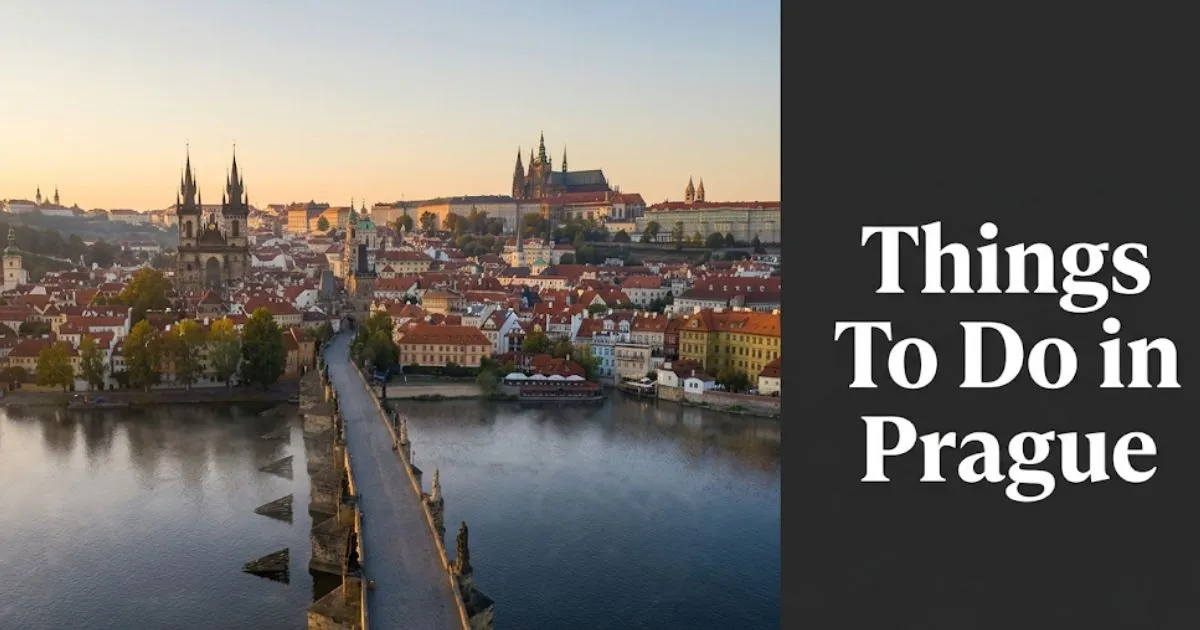
Charles Bridge before 7 a.m. is not a travel writer cliché. It is genuinely one of the most affecting urban river crossings in Europe at that hour, with morning mist off the Vltava River and the castle towers visible in the early light.
By 10 a.m., the same bridge is a congested shoulder-to-shoulder tourist corridor that resembles a stadium exit queue.
Couples will find the early bridge walk one of the most naturally romantic experiences in the city. Solo travelers who enjoy photography will find the light extraordinary in that early window.
Families with young children should note that Josefov’s content, particularly the Holocaust memorial inscriptions covering the Pinkas Synagogue walls, is deeply affecting and requires age-appropriate preparation.
Top Things To Do in Prague, Czech Republic: The Essential List
Prague’s essential experiences span Gothic cathedrals, Baroque palaces, Jewish heritage, and a craft beer culture that has no genuine European peer.
The Czech Republic is the world’s largest per-capita beer consumer, and Prague’s beer halls, particularly Lokál on Dlouhá Street in Staré Město, serve tank-fresh Pilsner Urquell under conditions most cities cannot replicate.
Essential Prague experiences, ranked by the combination of genuine quality and manageable crowd levels:
- Vyšehrad Fortress and its clifftop cemetery (substantially less crowded than Prague Castle; equal quality views)
- Letná Park and the Hanavský Pavilion terrace (locals outnumber tourists here every afternoon)
- Josefov Jewish Quarter, specifically the Old Jewish Cemetery and Pinkas Synagogue (book in advance)
- St. Vitus Cathedral interior (free to enter; the stained glass by Art Nouveau artist Alfons Mucha is extraordinary)
- DOX Centre for Contemporary Art in Holešovice (contemporary Czech and international work; rarely crowded)
- Tank-fresh Pilsner Urquell at Lokál (the correct Czech beer experience; not a tourist-facing tourist bar)
- Early morning Charles Bridge crossing (non-negotiable for the genuine experience)
- The Žižkov Television Tower (genuinely unusual; David Černý’s giant crawling baby sculptures cover its exterior)
According to Czech Tourism Board, Josefov’s six historic synagogues and the Old Jewish Cemetery together form one of the best-preserved Jewish heritage complexes in Central Europe. This is not marketing language. It is accurate.
Budget travelers should note that Vyšehrad, Letná Park, and Charles Bridge are entirely free. The city’s paid attractions cluster in Prague Castle and Josefov.
Key Takeaway: Book Prague Castle and Josefov tickets before you arrive. Both sell out during peak season and will not be available at the gate on busy days.
Things To Do in Old Town Prague
Old Town Prague (Staré Město) is the geographic and historic center of the city, and it is where first-time visitors spend most of their time.
The Old Town Square anchors this neighborhood. Its Gothic Church of Our Lady Before Týn, the Baroque St. Nicholas Church, and the medieval Astronomical Clock (Orloj) on the Old Town Hall make the square one of the most architecturally varied public spaces in Europe.
The Orloj puts on a brief mechanical show on the hour. The actual mechanism and astronomical detail are genuinely fascinating. The hourly tourist crowd that gathers is less so.
Insider Tip:
- Watch the Orloj at 6 or 7 a.m., when the square has almost no visitors and the mechanism’s movement is fully visible without craning over shoulders.
- Avoid the trdelník (chimney cake) sold throughout Old Town as “traditional Czech pastry.” It is a recent tourist invention. The actual traditional Czech pastry worth seeking is svíčková at a proper Czech restaurant.
- Maso a Kobliha on Dlouhá Street serves Czech-style sausages and properly made donuts. It is a few blocks from the Old Town Square tourist loop and charges local prices.
For couples, the Old Town Square at dusk, when tour groups have largely left and the lit spires of Týn Church are visible against the evening sky, is genuinely beautiful.
For families with young children: the cobblestones throughout Old Town are severe. Strollers require solid wheels and parental patience. The square itself is large and open, which helps with young children’s need to run.
Solo travelers should be aware that pickpocketing is specifically concentrated in Old Town Square, on Charles Bridge, and around Wenceslas Square. Front pockets or interior jacket pockets are the practical countermeasure.
Prague Castle Visit Guide: What to Know Before You Go
Prague Castle (Pražský hrad) is the world’s largest ancient castle complex by area, covering approximately 70,000 square meters across the Hradčany district above Malá Strana.
The complex contains St. Vitus Cathedral, the Old Royal Palace, the Basilica of St. George, the Lobkowicz Palace (privately owned and separately ticketed), and the historic Golden Lane, a street of tiny medieval houses.
To visit Prague Castle efficiently in 2026:
- Book your interior circuit tickets online through the official Prague Castle website well in advance, especially for May through August visits. Expect approximate costs of 250 to 450 CZK per adult depending on the circuit, as of recent years. Verify current pricing before departure.
- Arrive at the main gate no later than 9 a.m. on weekdays. Arrive at opening time on weekends. Tour groups fill the cathedral by mid-morning.
- Start with St. Vitus Cathedral’s interior before the nave fills. The Alfons Mucha stained glass windows in the New Archbishop’s Chapel are the specific reason to arrive early.
- Walk Golden Lane early. It becomes impassable in tour group density by 11 a.m.
- End with Lobkowicz Palace if your schedule allows. It is separately ticketed at approximately 275 to 395 CZK and includes an audio guide narrated by the Lobkowicz family themselves. It is the most personal and least crowded significant attraction in the entire castle complex.
Prague Castle is closed on Mondays. The outer castle courtyard and gardens remain accessible. Verify 2026 closure dates with prague-castle.cz before visiting.
Seniors and accessibility travelers: the castle complex involves significant uphill walking from Malá Strana, steep cobblestone ramps, and limited elevator access across historic structures. The Pohořelec tram stop (Tram 22) delivers visitors directly to the castle’s back entrance on flat ground, eliminating the main uphill approach. This is the practical routing for anyone with mobility concerns.
Things To Do in Prague for Couples
Prague for couples consistently ranks among Europe’s most romantic city-break destinations, and unlike many such rankings, this one is specifically defensible.
The city’s combination of gaslit medieval lanes in Malá Strana, riverside café terraces above the Vltava, opera and classical music at the Rudolfinum, and wine bars in Vinohrady’s quiet residential streets creates a genuinely intimate urban atmosphere when you step even slightly away from the main tourist circuit.
Specifically romantic experiences for couples in Prague:
- Early morning Charles Bridge walk (before 7 a.m., plan this for your first morning)
- Dinner at Café Savoy in Malá Strana (Art Nouveau interior, white tablecloths, Czech and French-influenced menu; book in advance)
- Evening at the Rudolfinum for a Czech Philharmonic concert (tickets typically 300 to 1,500 CZK depending on program; book well in advance for peak season dates)
- Wine bar evening in Vinohrady on Náměstí Míru square or the surrounding streets
- Petřín Hill funicular ride at dusk and the view from the Petřín Lookout Tower
- River cruise on the Vltava at sunset (numerous operators depart from near Čechův Bridge; prices vary, verify current operators and pricing with Prague City Tourism)
La Degustation Bohême Bourgeoise on Haštalská Street in Staré Město is Prague’s most serious fine dining experience for couples who want the genuine occasion dinner. It holds a Michelin star and offers a tasting menu rooted in historic Czech recipes. Book several weeks in advance.
One honest note for couples: Wenceslas Square is marketed as a romantic evening destination. It is not. The square hosts a mix of fast food chains, casino entrances, and street-level activity that feels more utilitarian than atmospheric. Stick to Malá Strana and Vinohrady for evening romance.
Key Takeaway: Petřín Hill at dusk and a wine bar in Vinohrady beat any tourist-core restaurant for a genuinely romantic Prague evening. The atmosphere difference is dramatic.
Best Neighborhoods in Prague for Exploring Beyond the Tourist Core
Prague’s most interesting residential neighborhoods sit immediately outside the tourist circuit, and most visitors never reach them.
| Neighborhood | Character | Best For | Walk From Old Town |
|---|---|---|---|
| Vinohrady | Art Nouveau residential, café culture, wine bars | Couples, solo travelers, longer stays | 15 to 20 min on foot or Metro Line A |
| Žižkov | Working-class, bohemian, beer bars, Television Tower | Solo travelers, budget travelers | 20 min on foot |
| Holešovice | Post-industrial, art galleries, DOX, Manifesto Market | Art/culture travelers, younger visitors | Tram 1, 12, 25 or Metro Line C to Nádraží Holešovice |
| Malá Strana | Baroque, quieter than Old Town, Café Savoy, gardens | Couples, architecture enthusiasts | Across Charles Bridge |
| Smíchov | Residential, local shopping, Staropramen brewery | Budget travelers, repeat visitors | Metro Line B to Anděl |
Vinohrady is the single neighborhood that most repeat Prague visitors wish they had discovered on their first trip. It runs along Mánesova Street and Blanická Street, lined with Art Nouveau apartment buildings, small wine bars, Czech coffee shops, and restaurants that serve Praguers rather than tourists.
Žižkov is defined by the Žižkov Television Tower, the tallest structure in Prague at 216 meters and one of the most visually distinctive pieces of architecture in Central Europe. David Černý’s giant crawling baby sculptures on the tower exterior are not ironic. They are genuinely unsettling in person.
Holešovice houses the DOX Centre for Contemporary Art, which is the serious answer to anyone who thinks Prague’s cultural life stopped at the Baroque period. The current exhibition programming leans heavily on Czech and Eastern European contemporary artists and changes seasonally.
Families with young children: Vinohrady’s wide sidewalks and parks, particularly Riegrovy Sady, are significantly more stroller-friendly than Old Town’s cobblestones.
Prague Food and Beer Culture: What and Where to Eat and Drink
Czech cuisine is underestimated by visitors who arrive expecting generic Central European food and leave having discovered one of Europe’s most specific and satisfying culinary identities.
The foundational Czech dishes worth ordering at a proper Czech restaurant:
- Svíčková na smetaně: braised beef sirloin in a root vegetable cream sauce with bread dumplings. This is the benchmark dish of Czech cooking. Order it at Lokál Dlouhááá on Dlouhá Street, where both the food and the tank-fresh Pilsner Urquell are executed correctly.
- Vepřo-knedlo-zelo: roasted pork with bread dumplings and braised sauerkraut. The Czech Sunday roast. Available at Hospůdka Na Hradbách near Vyšehrad.
- Kulajda: a traditional Czech soup of mushrooms, dill, and potato with a poached egg. Specific to Bohemia. Find it on menus at traditional Czech restaurants throughout Vinohrady.
For beer specifically: Prague’s beer culture is anchored by Pilsner Urquell and Budvar (Budějovický Budvar). The critical local distinction is tank beer (tankové pivo), served directly from unpasteurized tanks rather than kegs. Lokál (multiple locations, with the Dlouhá Street original being the best) pioneered this approach and serves what many Czech drinkers consider the best Pilsner Urquell available outside the Plzeň brewery itself.
U Fleků in Nové Město is Prague’s oldest operating brewery, founded in 1499. It serves its own dark lager and is worth one visit. It is tourist-heavy at all hours, but the courtyard is genuinely atmospheric and the dark beer is legitimately distinctive.
Budget travelers: Czech restaurant meals in Vinohrady or Žižkov run approximately 150 to 350 CZK for a main course. Tourist-core restaurants near Old Town Square often charge two to three times this for equivalent food quality.
Free Things To Do in Prague
Prague is one of Europe’s most budget-accessible major cities, and a full day of genuinely worthwhile experiences costs nothing beyond public transit.
Free things to do in Prague that are worth your actual time:
- Charles Bridge at dawn (free, architecturally significant, genuinely moving at that hour)
- Vyšehrad Fortress outer grounds and Vyšehrad Cemetery (free; contains the graves of Dvořák, Smetana, Mucha, and Kafka)
- Letná Park walking and Hanavský Pavilion terrace views over the Vltava (free entry to park; café has paid menu)
- Old Town Square and the Orloj clock face exterior watching (free; the interior tower climb has a fee)
- St. Vitus Cathedral nave (free to enter the main nave; interior circuits of the castle complex require a ticket)
- Strahov Monastery Library exterior courtyard (free; interior library rooms have a fee of approximately 150 CZK)
- Riegrovy Sady park in Vinohrady (the local beer garden here charges for drinks, not entry)
- Nové Město Hall gardens (free public green space in the New Town area)
- The exterior of Žižkov Television Tower (free to view; the observation deck and pod hotel inside are paid)
According to Prague City Tourism, the city maintains more than 1,000 hectares of publicly accessible parks and gardens, the majority of which are free year-round.
Solo travelers and budget travelers will find that Prague’s free experiences are not consolation-prize versions of the paid ones. Vyšehrad and Letná Park are legitimately among the best experiences the city offers, at any price.
Key Takeaway: Vyšehrad Cemetery is free, takes 45 minutes, and contains the graves of composers Dvořák and Smetana. Most visitors to Prague never find it. It is more atmospheric than half the paid attractions in the city.
Unusual Things To Do in Prague
Prague has a well-documented tourist circuit. It also has a genuinely surprising set of experiences that most visitors never encounter.
Unusual Prague experiences worth specifically seeking out:
- Žižkov Television Tower observation deck: The views are excellent. David Černý’s black crawling baby sculptures are the specific detail that makes the tower visually unlike anything else in Europe. The pod hotel inside the tower (One Room Hotel) is one of the genuinely eccentric accommodation options in Central European travel.
- Sedlec Ossuary in Kutná Hora: A 45-minute train ride from Prague Hlavní Nádraží. The Sedlec Ossuary is a small Roman Catholic chapel whose interior is decorated with an estimated 40,000 human bones arranged into chandeliers, garlands, and a coat of arms. This is not a Halloween attraction. It is a genuine medieval memento mori and one of the most architecturally specific experiences in Central Europe.
- Manifesto Market in Holešovice: A shipping container food and bar market that operates seasonally (approximately April through October, verify with their official site for 2026 dates). This is where younger Praguers actually eat on weekend afternoons. The food represents a sharp departure from traditional Czech cooking.
- Franz Kafka Museum in Malá Strana: Smaller and more conceptually interesting than the name suggests. The exhibition design is intentionally disorienting, which is appropriate. It is the correct Prague cultural experience for travelers with a literary bent.
- Nusle Bridge viewpoint at dusk: The Nusle Bridge connects Nové Město to Pankrác and offers one of the least-photographed panoramic views of Prague’s southern districts. Almost no tourist literature mentions it. It requires a tram ride to reach and rewards the effort.
Budget travelers should note that the Television Tower observation deck runs approximately 250 to 350 CZK, while Kutná Hora day trip by train costs approximately 200 to 300 CZK round trip. Manifesto Market entry is free.
Best Viewpoints in Prague
The best viewpoints in Prague are Letná Park, Vyšehrad Fortress, the Žižkov Television Tower observation deck, Petřín Lookout Tower, and the north tower of Charles Bridge.
Most visitors head directly to the Petřín Lookout Tower, which is excellent. Few reach the Hanavský Pavilion terrace in Letná Park, which delivers arguably the most complete panoramic view of the city from the north bank of the Vltava.
| Viewpoint | View Quality | Crowd Level | Cost | How to Reach |
|---|---|---|---|---|
| Letná Park / Hanavský Pavilion | Outstanding panoramic | Low to moderate | Free (park); café menu prices | Tram 1, 8, 15, 25 to Letenské náměstí |
| Vyšehrad Fortress ramparts | Excellent south/east panoramic | Low | Free | Metro Line C to Vyšehrad |
| Žižkov Television Tower | 360-degree citywide | Moderate | Approx. 250 to 350 CZK | Tram 5, 9, 26 to Lipanská |
| Petřín Lookout Tower | Northern city panoramic | High in season | Approx. 150 to 200 CZK | Funicular from Újezd |
| Charles Bridge North Tower | Bridge and river panoramic | High | Approx. 100 CZK | On foot from Old Town |
| Prague Castle Ramparts | City south panoramic | Very high | Included with castle ticket | Castle complex |
Letná Park is the specific recommendation for experienced Prague travelers and for couples looking for atmosphere over tourist density. The park sits on a plateau above the Vltava’s north bank, and the view from the Hanavský Pavilion cast-iron terrace encompasses Charles Bridge, the Old Town spires, and the full castle ridge in a single sweep.
Seniors and accessibility travelers: Letná Park is accessible via tram to Letenské náměstí with a short flat walk. Vyšehrad is similarly accessible via Metro Line C. Both are vastly more accessible than Petřín’s funicular approach, which involves slopes and uneven terrain at the top.
Things To Do in Prague in Winter
Prague in winter is cold, atmospheric, and specifically beautiful from late November through the Christmas Markets period.
Average temperatures in December run approximately 0 to 4 degrees Celsius (32 to 39 degrees Fahrenheit). January and February are colder and significantly less crowded.
Winter-specific Prague experiences:
- Prague Christmas Markets: The main market at Old Town Square operates approximately from late November through December 23. A second, quieter market runs at Wenceslas Square. Both feature mulled wine (svařák), roasted chestnuts, and handcrafted ornaments. The Old Town Square market is genuinely atmospheric but extremely crowded on weekends. Visit on a weekday morning for a manageable experience. Verify 2026 exact dates with Prague City Tourism.
- Czech Philharmonic at the Rudolfinum: Winter is the heart of the classical music season. Booking ahead for December and January performances is essential.
- Prague Signal Festival: An annual light installation event typically held in October, with some 2026 programming potentially extending into November. Verify 2026 dates with the official Signal Festival site.
- Indoor beer hall culture: Winter is the authentic season for spending an evening at Lokál with tank-fresh beer and svíčková. This is not a consolation for cold weather. It is the precise context in which Czech beer culture makes the most complete sense.
According to Czech Tourism Board, December is Prague’s third most-visited month annually, driven primarily by the Christmas Markets. Book accommodation for any December week well in advance, particularly for the two weeks before Christmas.
Budget travelers: winter hotel rates outside the Christmas Markets peak (roughly December 15 to 26) are among the lowest the city offers. January and February deliver the best value accommodation pricing of the year.
Key Takeaway: Prague’s Christmas Markets on a December weekday morning are genuinely atmospheric. The same markets on a Saturday afternoon in the two weeks before Christmas are among the most crowded public spaces in Central Europe.
Prague Itinerary: 3 Days in Prague
A 3-day Prague itinerary covers the essential historic sites, at least one serious neighborhood exploration, the beer culture, and at least one day trip or unusual experience.
Day 1: The Historic Core, Done Correctly
- Wake early. Be on Charles Bridge no later than 6:30 a.m. Walk the full crossing in both directions. Take the steps up to the Old Town Bridge Tower for the early light view (small fee; verify hours).
- Walk back through Malá Strana and up to Prague Castle. Arrive at castle opening time. Start with St. Vitus Cathedral before tour groups reach the nave.
- Visit Golden Lane before 10 a.m. Walk to Lobkowicz Palace last.
- Take Tram 22 from Pohořelec back toward Malá Strana. Have lunch at Café Savoy (book in advance).
- Afternoon: Old Town Square, Josefov Jewish Quarter (must be pre-booked). End the day with dinner at Lokál Dlouhááá and tank-fresh Pilsner Urquell.
Day 2: Neighborhoods and Viewpoints
- Morning: Vyšehrad Fortress and Vyšehrad Cemetery. This takes 1.5 to 2 hours and costs nothing for the grounds.
- Midday: Metro Line C to central Prague, then tram to Vinohrady. Lunch at a Czech restaurant on Mánesova Street.
- Afternoon: Walk through Vinohrady toward Žižkov. Visit the Žižkov Television Tower observation deck.
- Late afternoon: Tram to Letná Park. Walk to Hanavský Pavilion for the panoramic view at golden hour.
- Evening: Beer garden at Riegrovy Sady in Vinohrady, or wine bar on Náměstí Míru.
Day 3: Day Trip to Kutná Hora or Český Krumlov
- Trains to Kutná Hora depart Prague Hlavní Nádraží approximately every hour. Journey takes 45 to 60 minutes. Reserve seats on České dráhy’s site.
- Visit Sedlec Ossuary first (approximately 30-minute walk or short taxi from Kutná Hora main station). This is the bone-decorated chapel. It requires approximately one hour.
- Walk into the historic town center. Visit St. Barbara’s Cathedral, one of the finest Gothic cathedrals in Central Europe.
- Lunch in Kutná Hora’s town square.
- Return train to Prague. Evening at leisure in your neighborhood of choice.
Getting Around Prague
Getting around Prague is straightforward on the public transit network operated by DPP (Prague Public Transit Authority), which covers Metro, tram, and bus lines throughout the city.
From Václav Havel Airport Prague (PRG):
The most efficient and economical airport transfer for independent travelers is the Airport Express bus (Line AE), operated by DPP. It runs directly from both terminals to Nádraží Veleslavín, where you connect to Metro Line A. Journey time is approximately 30 to 40 minutes to the city center. Cost is a flat fare significantly below a taxi; verify current pricing on the DPP site before travel.
Ride-share and metered taxi services (Bolt and Uber operate in Prague as of 2026) are available but cost substantially more. Always use the app-based services rather than unlicensed taxi services at the airport arrivals area.
Within the city:
The Prague Metro runs three lines (A, B, C) and covers the primary tourist zones. Line A (the green line) connects the airport transfer station at Nádraží Veleslavín to Malostranská (for Malá Strana and castle area) and Staroměstská (for Old Town) and Můstek (for Wenceslas Square).
Prague’s tram network covers areas the Metro misses, particularly the castle district via Tram 22, the riverfront, and most neighborhood routes. Trams run late into the night on key lines.
Transit passes: DPP offers 24-hour, 3-day, and 7-day unlimited passes. For a 3-day visit, the 3-day pass offers the best value if you use transit more than twice daily. Purchase at metro stations or via the official DPP app.
Accessibility travelers: Metro stations have elevators on most major lines, though coverage is not universal. Verify specific station accessibility on the DPP accessibility map before planning routes. Trams vary in accessibility depending on vehicle age; newer low-floor trams are accessible.
Safety note: Currency exchange offices in the Old Town tourist core frequently apply predatory exchange rates. Use ATMs from established Czech banks (Česká spořitelna, Komerční banka) or exchange at the airport. Bold: Never use a street-facing tourist exchange kiosk in the Old Town.
Key Takeaway: The DPP Airport Express bus to Nádraží Veleslavín and then Metro Line A is faster than a taxi in traffic and costs a fraction of the price. Most first-time visitors don’t know it exists.
Day Trips From Prague
Prague’s location in Bohemia puts three of Central Europe’s most significant day-trip destinations within easy rail reach.
| Day Trip | Distance from Prague | Travel Time | Cost (approx. round trip by rail) | Best For |
|---|---|---|---|---|
| Kutná Hora | 70 km east | 45 to 60 min by train | 200 to 300 CZK | History enthusiasts, unusual experiences |
| Český Krumlov | 180 km south | 3 hours by bus (RegioJet or FlixBus) | 350 to 600 CZK | Couples, architecture, castle fans |
| Karlovy Vary | 130 km west | 2 hours by bus | 300 to 500 CZK | Spa culture, art film fans, repeat visitors |
| Bohemian Switzerland National Park | 130 km north | 2 hours by train + local bus | 350 to 600 CZK | Outdoor and hiking travelers |
Kutná Hora is the strongest day trip for a first-time Prague visitor. The Sedlec Ossuary is one of the genuinely singular architectural experiences in Central Europe. The town’s St. Barbara’s Cathedral is a Gothic structure of comparable scale and ambition to Prague’s St. Vitus, with a fraction of the visitor crowd.
Český Krumlov is the correct recommendation for couples and for travelers specifically seeking a medieval small-town atmosphere. The town’s UNESCO-listed castle complex sits above a horseshoe bend in the Vltava and is one of the most photographed castle views in Bohemia for legitimate architectural reasons. Travel by RegioJet direct bus from Prague’s Na Knížecí bus station.
Bohemian Switzerland National Park contains the Pravčická brána, the largest natural sandstone arch in Europe. This is the day trip for outdoor travelers. Hiking within the park ranges from easy valley walks to demanding ridge routes. Visit April through October; winter conditions can make trail access difficult. Verify trail conditions with the park authority before traveling.
All rail bookings should be made through České dráhy (Czech Railways) official site or the RegioJet platform for bus routes.
Safety and Practical Warnings for Prague Visitors
Prague is a safe city by European urban standards, but specific concentrated risks affect visitors who stay within the tourist core.
Key safety and practical facts every visitor should know:
- Pickpocketing is concentrated in Old Town Square, Charles Bridge, Wenceslas Square, and on Metro Line A between Můstek and Staroměstská. Use interior jacket pockets or front trouser pockets throughout the tourist core.
- Currency exchange scams operate openly in the Old Town tourist core. Exchange offices advertising “0% commission” frequently apply hidden conversion rates. Use bank ATMs exclusively. Česká spořitelna and Komerční banka branches have machines throughout the city.
- Unlicensed taxis at the airport arrivals area will quote flat rates substantially above market price. Use Bolt or Uber via the app, or the DPP Airport Express bus.
- Cobblestone terrain throughout the historic core is a genuine physical risk on wet days. Footwear with grip is not optional. Heeled shoes are an ankle injury waiting to happen on wet Malá Strana streets.
- Stroller access in the historic cobblestone areas requires solid wheels and strength. The Old Town area is genuinely difficult for standard strollers.
- Cold weather gear in winter is essential. December through February temperatures regularly drop below freezing. The outdoor Christmas Market experience requires proper layering.
- Verify entry requirements for US citizens visiting the Czech Republic through the official US Department of State country page before departure. The Czech Republic is a Schengen Area member, and US passport rules, any evolving EU Entry/Exit System requirements, and travel advisories should be confirmed close to your travel date.
The Czech Republic’s emergency number is 112 (European standard). The Prague City Police can be reached at 156.
Frequently Asked Questions About Things To Do in Prague
How many days do you need in Prague to see the main things?
Three full days is enough to cover Prague Castle, the Josefov Jewish Quarter, Charles Bridge, Old Town, at least one residential neighborhood like Vinohrady, and one day trip.
Two days is workable for the absolute essentials if your itinerary is tightly planned.
Five to seven days suits travelers who want to explore multiple neighborhoods, attend a classical music performance, visit two or more day trip destinations, and genuinely absorb the city’s café and beer culture at a slower pace.
Is Prague cheap to visit compared to other European cities?
Prague is significantly cheaper than Paris, Amsterdam, London, or Zurich for accommodation, food, and public transit.
A mid-range traveler spending on a 3-star hotel, restaurant lunches and dinners at local Czech restaurants, and daily transit can expect daily costs substantially below equivalent days in Western European capitals.
Budget travelers who self-cater, use local restaurants in Vinohrady or Žižkov, and rely on public transit will find Prague one of the most affordable major European city destinations available to American travelers.
What is the best time of year to visit Prague?
The best time to visit Prague is April through May and September through October.
These shoulder-season months offer comfortable temperatures, far smaller crowds than the July and August peak, and full access to all outdoor attractions including the castle gardens and Letná Park.
December is worth visiting specifically for the Christmas Markets, but expect heavy tourist crowds in Old Town from mid-November through December 24, significantly elevated hotel prices during the peak market weeks, and genuinely cold temperatures requiring proper winter gear.
What should you not miss on a first trip to Prague?
Charles Bridge before 7 a.m., Prague Castle with pre-booked tickets, the Josefov Jewish Quarter’s Old Jewish Cemetery and Pinkas Synagogue, tank-fresh Pilsner Urquell at Lokál, and Vyšehrad Fortress are the five non-negotiable first-trip experiences.
Vyšehrad is the specific item most visitors skip, and it is the one experienced repeat visitors most consistently say should have been on their first itinerary.
The Žižkov Television Tower and a meal in Vinohrady are the two experiences that will make your Prague trip feel different from a standard tourist visit.
Is Prague safe for solo travelers?
Prague is safe for solo travelers by European standards, and the city is easy to navigate alone thanks to the walkable historic core and reliable Metro and tram network.
Solo female travelers should exercise standard urban caution in Wenceslas Square late at night, which has a more boisterous nightlife and bar scene than the rest of the historic center.
The concentrated pickpocketing zones in Old Town Square and on Charles Bridge apply equally to all solo travelers; use interior pockets and stay aware in those specific locations during peak tourist hours.
Do you need to book Prague Castle tickets in advance?
Yes. Booking Prague Castle interior circuit tickets in advance is strongly recommended for any visit between May and September and for any December week.
The castle complex sells out its timed interior admission during peak season, and travelers who arrive at the gate without pre-booked tickets are frequently turned away from the cathedral interior specifically.
Book through the official Prague Castle website (hrad.cz) as close to your trip planning date as possible, and verify 2026 pricing and availability on that site before your departure.
Plan Your Prague Trip Now
Prague rewards visitors who plan the specifics before they arrive. Book Prague Castle and Josefov tickets the moment your travel dates are confirmed. Reserve Café Savoy and La Degustation Bohême Bourgeoise at least two weeks in advance for peak-season dinners.
Stay in Vinohrady or Žižkov. Wake up early on your first morning and walk Charles Bridge before the city wakes. Everything else in Prague improves when you have that crossing without the crowds.
Travel conditions, operating hours, ticket prices, and US entry requirements for the Czech Republic change regularly. Verify all logistics directly with Prague City Tourism at prague.eu, individual venues, and the US Department of State before departure.
Prague is one of the few European capitals where first-time visitors and repeat travelers consistently describe the same reaction: they didn’t expect it to be this good. You’re now equipped to experience the city the way repeat visitors do, starting from day one.