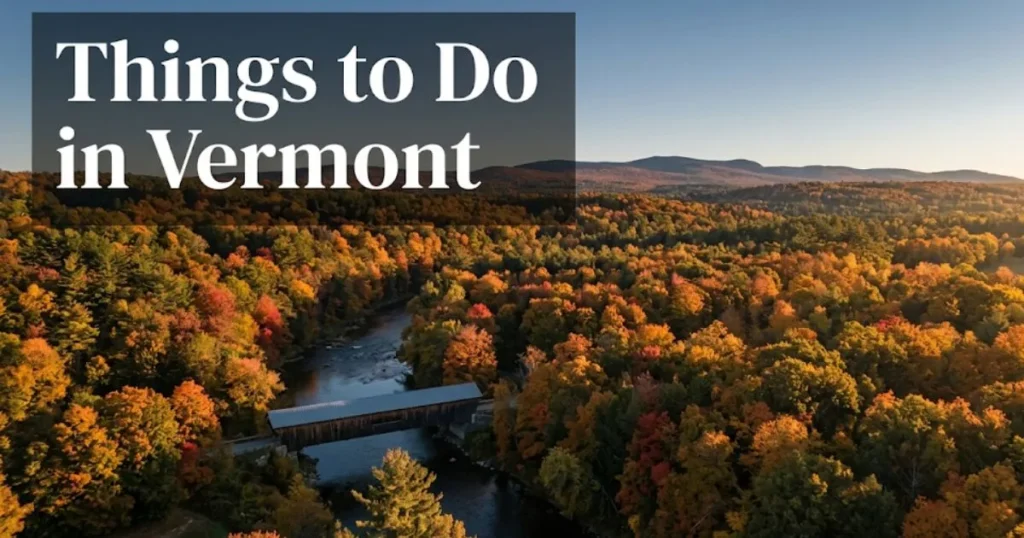
Things to Do in Vermont: The 2026 Insider Guide

Vermont delivers more genuine outdoor and agricultural character per square mile than any other New England state, and the things to do in Vermont go far beyond foliage season tourism.
The Vermont Department of Tourism and Marketing reports Vermont draws approximately 13 million visitors annually. Most arrive in October and miss eight months of equally compelling experiences.
This guide covers every major activity zone, specific named venues, four-season logistics, and honest crowd realities. It also tells you which weeks to avoid and where locals actually go instead.
Things to Do in Vermont: What Makes This State Worth Your Trip
Vermont’s identity is built on three pillars: extraordinary natural landscape, serious agricultural culture, and a craft food and beverage scene that punches significantly above the state’s small population.
This is not a destination for travelers who need urban entertainment infrastructure. Vermont rewards people who want to actually be outside, eat real farm food, and experience a pace that has not been engineered for tourism.
| Activity Category | Best For | Cost Range | Best Season |
|---|---|---|---|
| Alpine Skiing | Couples, Families, Solo | Lift tickets $90 to $180+ per day | January to March |
| Fall Foliage Touring | Couples, Families | Free to low-cost driving | Late September to mid-October |
| Hiking Green Mountains | Solo, Couples, Active Seniors | Free to $5 day use | June to October |
| Farm and Food Experiences | All profiles | $10 to $45 per experience | Year-round |
| Burlington Urban Culture | Solo, Couples | Variable, mid-range dining | Year-round |
| Northeast Kingdom | Solo, Couples, Budget Travelers | Low to moderate | June to October |
| Covered Bridge Touring | Families, Seniors, Couples | Free | May to October |
Vermont suits couples seeking romantic rural atmosphere, families with outdoor-active children, food-focused travelers, and skiers best. It genuinely does not suit travelers expecting budget lodging in prime areas or nightlife beyond Burlington’s modest downtown bar scene.
Insider Tip:
- The most commonly skipped Vermont region is the Northeast Kingdom around East Burke and Greensboro. It offers the same foliage with half the traffic.
- Hill Farmstead Brewery in Greensboro is consistently ranked among the world’s best craft breweries. Most Vermont visitors never reach it because it is not on the Route 100 tourist corridor.
- Solo travelers will find Burlington’s New North End neighborhood walkable, social, and genuinely local-feeling.
Fun Things to Do in Vermont in Every Season
Vermont’s four seasons are genuinely distinct experiences, not marketing language, and the fun things to do in Vermont shift dramatically from month to month.
Spring (April through May) is Vermont’s honest weak spot. Mud season closes many dirt roads and backcountry trails, while sugaring season at maple farms is brief and specific.
Summer (June through August) is Vermont at its most underrated. Lake Champlain opens for kayaking and swimming, the Long Trail’s high elevations are accessible, and Burlington’s waterfront farmers markets run weekly.
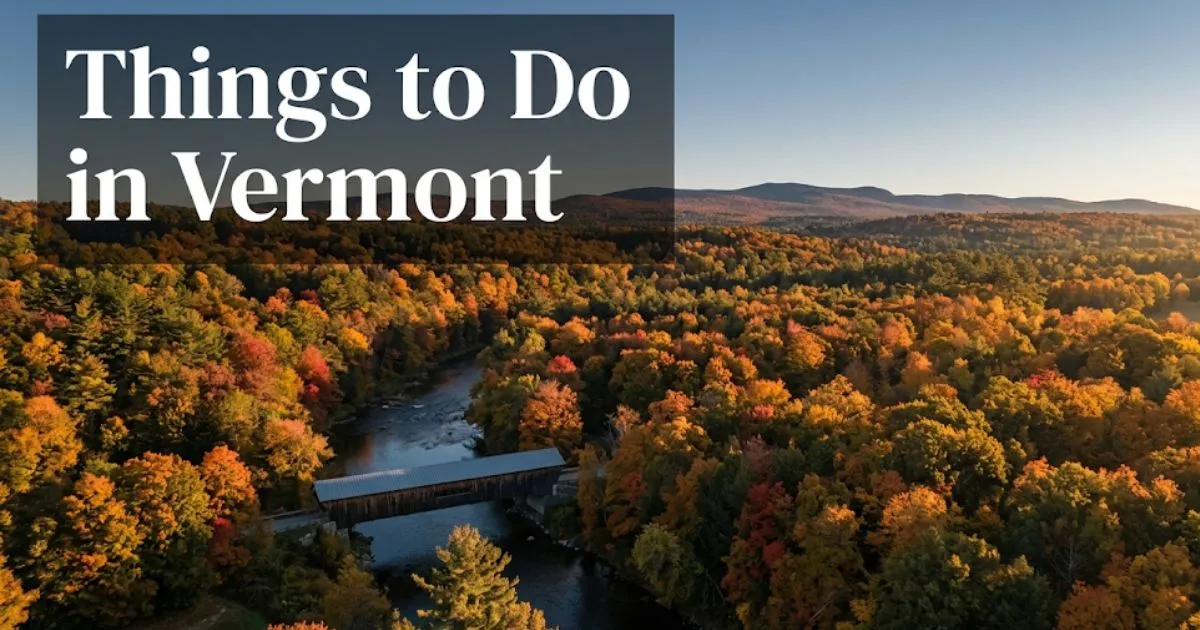
Fall (September to mid-October) is peak season. Northeast Kingdom color typically peaks in late September, central Vermont peaks in early to mid-October, and southern Vermont peaks last.
| Season | Best Activities | Crowd Level | Lodging Cost |
|---|---|---|---|
| Winter (Jan-Mar) | Skiing, snowshoeing, ice fishing | High at resorts, low elsewhere | Premium at ski areas |
| Spring (Apr-May) | Maple sugaring, early wildflowers | Very low | Budget-friendly |
| Summer (Jun-Aug) | Hiking, paddling, farm visits, Burlington | Moderate | Mid-range |
| Fall (Sep-Oct) | Foliage, farm stands, leaf-peeping drives | Extremely high in October | Premium statewide |
Families with children will find summer Vermont most manageable. Summer brings accessible hiking, open swimming holes, and farm experiences that hold younger children’s attention.
Budget travelers should target May and early June or late October. Lodging drops significantly and crowds thin, while Vermont’s landscape remains genuinely appealing.
According to Foliage Network, Vermont’s Northeast Kingdom consistently produces the earliest peak fall color in New England, typically during the last two weeks of September, before mass tourist traffic arrives on Route 100.
Outdoor Things to Do in Vermont
Outdoor activities are Vermont’s defining strength, covering terrain from Lake Champlain’s 120-mile shoreline to the 4,393-foot summit of Mount Mansfield, Vermont’s highest peak.
The Green Mountain National Forest covers approximately 400,000 acres and provides the primary framework for hiking, mountain biking, and backcountry exploration across central and southern Vermont.
Key outdoor experiences across Vermont:
- Kingdom Trails in East Burke: over 100 miles of mountain biking and hiking trails, widely regarded as one of the best trail networks in the eastern United States
- Lake Champlain paddling: kayak and paddleboard rentals available through outfitters in Burlington and Shelburne, with Isle La Motte and the Champlain Islands offering full-day touring routes
- Quechee Gorge: Vermont’s deepest gorge at 165 feet, accessible on foot from a state park bridge on Route 4 near Quechee village, free to view from the bridge, with short trails into the gorge
- Stowe Recreation Path: a paved 5.3-mile path following the West Branch River through Stowe village, flat enough for all fitness levels and accessible to cyclists, walkers, and rollerbladers
- Lake Willoughby in the Northeast Kingdom: a glacially carved lake with 1,000-foot cliffs rising from the waterline, offering swimming, kayaking, and hiking at Mount Hor and Mount Pisgah
Seniors and accessibility travelers should prioritize Quechee Gorge (bridge view is fully accessible), the Stowe Recreation Path (flat, paved), and Lake Champlain waterfront parks in Burlington. The gorge trail descent and Kingdom Trails require good physical conditioning.
Safety note: Mountain weather on Vermont’s high peaks, particularly Mount Mansfield and Camel’s Hump, changes rapidly. Always carry layers, rain gear, and water. Cell service is limited above treeline.
Things to Do in Burlington Vermont
Burlington, Vermont’s largest city with approximately 45,000 residents, functions as the state’s cultural and culinary hub without losing its genuinely local character.
Church Street Marketplace, a four-block pedestrian street running from Pearl Street to College Street, is Burlington’s main commercial corridor. It hosts year-round street performers, independent shops, and restaurants. It is genuinely lively but not a tourist trap in the way that comparable pedestrian malls in larger cities can feel.
Burlington’s waterfront district along Lake Champlain, anchored by Waterfront Park and the Burlington Bike Path, is the city’s best free experience. The bike path runs 7.6 miles along the lake’s eastern shore from the Champlain Bridge to the Winooski River.
The ECHO Leahy Center for Lake Champlain sits on the waterfront at College Street and provides interactive science exhibits focused on Lake Champlain’s ecology. It runs admission fees in the range of approximately $12 to $20 per adult and $8 to $15 for children, though verify current pricing before visiting.
Hen of the Wood Burlington, on Bank Street, is the city’s most recognized serious restaurant. Chef Eric Warnstedt’s farm-sourced menu changes with the season. Budget approximately $60 to $90 per person with wine.
Solo travelers will find Burlington’s New North End neighborhood around North Winooski Avenue genuinely local, with bars like Juniper and coffee shops frequented by University of Vermont students and year-round residents rather than visitors.
The overrated experience in Burlington: the waterfront ferry viewing from the ECHO plaza. Skip it. Lake Champlain Ferries actually runs year-round crossings from the Burlington dock to Port Kent, New York. The 12-minute crossing costs approximately $5 to $10 per person and provides better lake views than any fixed waterfront perch.
Insider Tip:
- Burlington’s South End Arts District, specifically Pine Street between Flynn Avenue and Briggs Street, hosts the monthly First Friday Art Walk and contains the city’s best independent galleries.
- The Burlington Farmers Market runs Saturdays at City Hall Park from May through October and is the best single-stop introduction to Vermont’s food culture: local cheese, maple products, farm vegetables, and prepared foods all in one location.
Key Takeaway: Burlington is Vermont’s best base for non-drivers. The city’s waterfront, Church Street, and South End are all walkable, and Lake Champlain Ferries provide one of the cheapest, most scenically rewarding experiences in the state.
Hiking in Vermont’s Green Mountains
Vermont’s best hiking is concentrated in the Green Mountain National Forest, along the Long Trail, and on the slopes of Mount Mansfield and Camel’s Hump in the northern part of the state.
The Long Trail runs 273 miles from Massachusetts to Quebec, making it the oldest long-distance hiking trail in the United States. Day hike access points are available throughout, with the section between Appalachian Gap on Route 17 and Lincoln Gap on Lincoln Gap Road offering particularly strong ridge walking.
Mount Mansfield’s Sunset Ridge Trail, accessed from Underhill State Park on the western slope, is approximately 7.4 miles round trip with 2,600 feet of elevation gain. The summit ridge is above treeline and exposed. Allow 5 to 6 hours.
A more accessible alternative to Mount Mansfield’s summit hike is the Stowe Gondola ride to the summit area, which deposits visitors near the summit with minimal physical demand. This is the local go-to for visitors who want the above-treeline experience without a full-day physical commitment.
Camel’s Hump via the Monroe Trail from Duxbury is 7.4 miles round trip with 2,700 feet of elevation gain. It offers cleaner summit views than Mansfield without the gondola infrastructure.
Families with children should target shorter, waterfall-focused hikes. Moss Glen Falls in Granville Gulf State Reservation on Route 100 is a 0.5-mile walk to a 125-foot waterfall, free to access, and genuinely impressive for young children. Bingham Falls near Stowe is similarly accessible.
To hike Vermont’s Long Trail responsibly in 2026:
- Check Green Mountain Club trail conditions at their website before heading out, particularly in spring and after major storms
- Register your hike at any trailhead register to assist search and rescue
- Carry water, snacks, and layering options regardless of starting weather
- Check for any timed-entry requirements at high-use trailheads, which the Vermont State Parks system has begun piloting at select locations
- Pack out all waste; shelters on the Long Trail charge overnight fees of approximately $10 to $20 per night, verify current rates with the Green Mountain Club directly
Skiing and Winter Activities in Vermont
Vermont’s ski industry centers on a group of genuinely distinct resorts, and choosing the right one matters more than most first-time ski visitors realize.
Stowe Mountain Resort, owned by Vail Resorts, accepts the Epic Pass and offers Vermont’s most iconic ski terrain with 116 trails across Mount Mansfield and Spruce Peak. It skews expensive and tends toward a well-heeled clientele. Expect full-day lift tickets in the range of $90 to $180+ depending on purchase timing, though Epic Pass holders access it at steep discounts.
Killington Resort in central Vermont is the largest ski area in the eastern United States by terrain, with 155 trails and a longer season than most Vermont competitors. It attracts a younger, more social crowd. Its après-ski scene around the Killington Road strip is the most developed in New England.
Mad River Glen in Waitsfield is the locally beloved alternative. Cooperatively owned, single chairlift access only, no snowmaking on upper mountain, no snowboarders. It is intentionally difficult, genuinely old-school, and beloved by serious skiers who are tired of resort homogenization.
Sugarbush Resort in Warren, with twin mountains Lincoln Peak and Mount Ellen connected by high-speed lift, occupies the sweet spot between Stowe’s premium experience and Killington’s party-focused culture. The Mad River Valley towns of Warren and Waitsfield below it are among Vermont’s most charming.
Non-skiing winter activities worth naming:
- Snowshoeing at Stowe’s cross-country center and at Trapp Family Lodge, which maintains over 40 miles of groomed Nordic trails
- Dog sledding through operators based near Craftsbury in the Northeast Kingdom
- Ice fishing on Lake Memphremagog near Newport, Vermont’s Northeast Kingdom lake system
- Snowmobile touring on Vermont’s network of VAST (Vermont Association of Snow Travelers) trails, which cover over 5,000 miles statewide
Families with children will find ski school programs strongest at Stowe and Sugarbush. Seniors and accessibility travelers should note that most Vermont ski areas offer adaptive skiing programs; contact each resort directly for current availability.
Insider Tip:
- Book Vermont ski lift tickets for Saturday and Sunday dates at least three to four weeks in advance. Weekend peak dates at Stowe and Killington sell out.
- Jay Peak Resort near the Canadian border receives the heaviest snowfall of any Vermont resort due to its position as the first Vermont mountain in the path of Canadian storm systems. It is consistently underrated by travelers focused on Stowe and Killington.
Vermont Fall Foliage Activities
Vermont’s fall foliage is legitimately one of North America’s great seasonal spectacles, but the crowd reality around peak October weekends is equally real and worth planning around honestly.
Peak color in Vermont does not arrive everywhere simultaneously. The Northeast Kingdom around St. Johnsbury, Burke, and Greensboro typically peaks in late September to the first days of October. Central Vermont around Stowe and Waterbury peaks in the first two weeks of October. Southern Vermont near Woodstock and Grafton peaks in mid-October.
The Route 100 corridor between Waterbury and Stowe is Vermont’s most photographed fall drive and its most congested. On the first three weekends of October, it becomes a slow crawl between 9 a.m. and 5 p.m. Leave before 7 a.m. or plan to arrive after 4 p.m. to avoid the worst of it.
Specific fall foliage experiences worth naming:
- Grafton Ponds and the village of Grafton in southern Vermont: a preserved 19th-century village with covered bridges, a working cheese cave at Grafton Village Cheese, and a fraction of Route 100’s crowd levels
- Route 2 across the Northeast Kingdom from St. Johnsbury to Montpelier: consistently as striking as Route 100 with a tenth of the traffic
- Leaf peeping by kayak on the Lamoille River near Morrisville provides a perspective that no road-based foliage tour offers
- Balloon rides over the Champlain Valley and Mad River Valley through operators based in Stowe and Waitsfield; typically run approximately $250 to $350 per person and require advance booking, often weeks ahead during peak color
According to Vermont’s official fall foliage forecast system (updated weekly by the Vermont Department of Tourism and Marketing), color typically reaches its statewide peak in the first two weeks of October, but the exact dates shift by 10 to 14 days in either direction based on summer temperature and rainfall patterns.
Seniors and accessibility travelers will find the village of Woodstock on Route 4 the most accessible fall foliage destination. Its covered bridges, village green, and farm stores are all within a short, flat walk of the village center.
Key Takeaway: If you want Vermont fall foliage without the Route 100 gridlock, target the Northeast Kingdom on Route 2 in late September. Same color, a fraction of the crowd, and lodging at half the price of Stowe.
Things to Do in Stowe Vermont
Stowe is Vermont’s most internationally recognized ski and resort town, and it earns that reputation, but it is worth understanding which version of Stowe you are actually buying into before you book.
Stowe village is genuinely attractive: a white-steepled church, a covered bridge over the West Branch River, locally owned restaurants and shops on Mountain Road (Route 108), and the Stowe Recreation Path running beside it. The village itself is pleasant year-round.
The ski resort infrastructure, however, is a 20 to 30-minute drive up Mountain Road from the village. During peak ski season, Mountain Road between the village and the resort becomes heavily congested. The resort’s Spruce Peak base village is a purpose-built ski village with lodging, dining, and shops, functionally separate from Stowe’s historic center.
The Alchemist Brewery on Cottage Club Road in Stowe is the most locally significant food and beverage stop. Home of Heady Topper, one of the most sought-after IPAs in American craft brewing, it sells from the taproom and production facility. Arrive early; it opens limited hours and selection varies.
The von Trapp Brewing bierhall and lodge on Luce Hill Road sits on the property of the Trapp Family Lodge, the Austrian-influenced resort founded by the actual von Trapp family. The bierhall is open to non-guests and produces solid lagers in the Austrian tradition. It is one of Stowe’s most distinctive stops whether or not you stay at the lodge.
Smugglers’ Notch, the mountain pass on Route 108 north of Stowe village, closes to vehicles from approximately November through May when snow and ice make it impassable. When open in summer, it is one of the most dramatic drives in New England. Smugglers’ Notch State Park offers swimming, camping, and shorter hiking trails separate from the ski resort of the same name across the notch in Jeffersonville.
Couples will find Stowe’s best romantic experience at the Trapp Family Lodge bierhall at dusk or at dinner at Edson Hill Manor, a country inn with farm-sourced dining above the village.
Shelburne Museum and Vermont Cultural Attractions
The Shelburne Museum on US Route 7 in Shelburne, eight miles south of Burlington, is Vermont’s most important cultural institution by any reasonable measure.
Founded by Electra Havemeyer Webb, the museum holds one of the country’s most significant collections of American folk art, Impressionist paintings, decorative arts, and architectural pieces. The campus spans 45 acres and 39 historic structures, including a working covered bridge, a lighthouse relocated from Lake Champlain, and a fully preserved Lake Champlain steamship, the SS Ticonderoga, displayed on land in dry dock.
Admission runs approximately $25 to $30 per adult and $14 to $16 for children as of recent seasons, with seasonal hours typically from May through October, and limited winter programming. Verify current rates and hours directly with the museum before visiting.
The overrated Vermont cultural stop: the Ben & Jerry’s Factory tour in Waterbury, which is genuinely fun for families but produces waits of 30 to 45 minutes on summer and fall weekends for a 30-minute tour and a small ice cream sample. The Cold Hollow Cider Mill just up Route 100 from the factory in Waterbury Center is free to visit, offers fresh-pressed cider made on-site, and sees a fraction of the Ben & Jerry’s crowd.
The Billings Farm and Museum in Woodstock is Vermont’s most authentic agricultural cultural experience. It is a working dairy farm open to visitors with demonstrations of traditional Vermont farming practices. Admission runs approximately $16 to $19 per adult, with lower rates for children. The adjacent Marsh-Billings-Rockefeller National Historical Park is managed by the National Park Service and is free to enter.
Families with children will find the Billings Farm most engaging for younger children (ages 4 to 10) who respond to live animals, farming demonstrations, and hands-on activities. Shelburne Museum skews toward older children and adults.
Insider Tip:
- The Shelburne Museum’s collection of Impressionist paintings, including works by Monet and Manet assembled by Electra Webb, is not something most visitors expect to find in rural Vermont. It is genuinely one of the stronger Impressionist collections in New England outside Boston’s Museum of Fine Arts.
- Visit Shelburne Museum on a weekday to move through the campus without crowds.
Key Takeaway: Shelburne Museum is Vermont’s single most underrated cultural stop and worth a half-day even for travelers who do not consider themselves museum visitors. Its architectural campus alone justifies the admission.
Vermont Covered Bridges and Small Towns
Vermont has more covered bridges per square mile than any other US state, with approximately 100 historic covered bridges remaining in active or preserved use.
The covered bridge experience is not just about the bridges themselves. It is the framework for exploring Vermont’s most intact small towns, farm valleys, and river roads without a specific agenda beyond the drive itself.
The Windsor County and Addison County areas hold the highest concentrations. The village of Woodstock alone has four covered bridges within easy walking or short driving distance, and its village center is one of the best-preserved 19th-century Vermont town centers in the state.
Grafton, in Windham County, is the most complete preserved Vermont village experience. The Grafton Inn, established in 1801, remains a working inn. Grafton Village Cheese produces raw-milk cheddar in a cave facility open to visitors. The village has no traffic lights and almost no commercial signage, making it feel more like a film set than a tourist destination.
Middlebury in Addison County sits between the Green Mountains and Lake Champlain and anchors one of Vermont’s best small-city experiences. Its Otter Creek waterfall running through downtown, Middlebury College campus, and Vermont Folklife Center on Main Street make it a legitimately interesting half-day stop.
Seniors and accessibility travelers will find Woodstock and Grafton the most physically accessible small-town experiences in Vermont. Both are flat, have good parking near central attractions, and require minimal walking for the primary sightseeing.
Couples seeking a romantic base outside Stowe’s resort pricing should consider the Woodstock Inn and Resort or the Grafton Inn as genuinely atmospheric alternatives with lower competition for reservations than Stowe’s prime lodging.
Vermont Craft Beer, Maple Syrup, and Local Food
Vermont’s food and beverage identity is one of the strongest of any small state in the country, built on a specific combination of craft brewing, dairy and cheese production, maple syrup, and farm-to-table cooking that is rooted in actual agriculture rather than culinary tourism branding.
Vermont is the largest producer of maple syrup in the United States. The sugaring season runs approximately from late February through April, when nights fall below freezing and days warm above it, causing sap to run. Morse Farm Maple Sugarworks in Montpelier and Sugarbush Farm near Woodstock both offer year-round maple product purchases and tastings, with sugarhouse tours available in season.
The craft brewing landscape is anchored by three operations with national and international reputations:
- Alchemist Brewery (Stowe): home of Heady Topper, a canned double IPA with a devoted following. Available only at the Stowe taproom and select Vermont retailers. No shipping.
- Hill Farmstead Brewery (Greensboro): consistently rated among the world’s best breweries by professional tasting organizations. Remote location in the Northeast Kingdom requires a 40-minute drive from Stowe. Worth every mile.
- Lawson’s Finest Liquids (Waitsfield): their Sip of Sunshine IPA has achieved the kind of cult status that means you check the taproom hours before driving 30 minutes to find it closed.
Vermont cheese production is centered on Cabot Creamery (Cabot), a dairy cooperative with a visitor center open year-round, and Jasper Hill Farm (Greensboro Bend), whose Bayley Hazen Blue and Harbison cheeses appear on serious cheese lists nationally.
Hen of the Wood in Burlington and its sibling location in Waterbury serve Vermont’s most consistently recognized farm-sourced dining. The Waterbury location is inside a converted grist mill with original millstone floors and is one of the more atmospherically compelling dining rooms in New England.
Budget travelers should know that American Flatbread in Waitsfield bakes wood-fired pizzas using Vermont ingredients on weekend evenings only and runs significantly lower price points than Hen of the Wood while offering a comparable farm-sourced ethos.
Free and Budget-Friendly Things to Do in Vermont
Vermont has a reputation for premium pricing, particularly around ski season and fall foliage weekends, but genuinely free and low-cost experiences are available across all four seasons.
Free Vermont experiences that are worth naming specifically:
- Burlington Bike Path (7.6 miles, free, open year-round)
- Quechee Gorge bridge viewpoint (free parking, free to view)
- Stowe Recreation Path (free to walk or cycle, bike rentals available in town)
- Burlington South End Arts District self-guided gallery walk (free on any day, First Friday Art Walk monthly)
- Waterfront Park Burlington lakefront access (free)
- Vermont State Capitol in Montpelier, free self-guided tours when the legislature is not in session
- Montpelier downtown, the smallest US state capital city, entirely walkable and free to explore
- Cold Hollow Cider Mill (Waterbury, free to enter, cider samples available)
- Covered bridge touring throughout Windsor and Addison counties (free, requires a car)
- Swimming holes: Texas Falls in Hancock on Forest Service Road 39, Warren Falls on the Mad River in Warren, and Puffer’s Pond in Amherst are free and locally popular summer alternatives to resort pools
Vermont State Parks charge day-use fees typically in the range of $4 to $5 per person for residents and slightly higher for non-residents. Verify current rates at the Vermont State Parks website before visiting.
Budget travelers planning a Vermont trip should note that shoulder season (May through mid-June and late October through early November) cuts lodging rates by 30 to 50 percent compared to peak foliage and ski seasons, while most outdoor activities remain fully accessible.
Key Takeaway: The Burlington Bike Path and Quechee Gorge are Vermont’s two best completely free experiences. Both deliver genuine Vermont scenery without a ticket window, a timed entry, or a parking fee.
Things to Do in Vermont with Kids
Vermont works well for families with children when the activities are matched to the age group. It fails families who try to apply an adult hiking or cultural agenda to children under 10.
The best Vermont family experiences by age group:
Ages 4 to 8:
- Billings Farm and Museum (Woodstock): live animals, demonstrations, hands-on farm activities
- ECHO Leahy Center for Lake Champlain (Burlington): interactive science exhibits at lake level
- Cold Hollow Cider Mill (Waterbury): free, engaging, cider pressing visible through large windows
- Ben & Jerry’s Factory Tour (Waterbury): children find it genuinely engaging, but arrive before 10 a.m. to avoid long waits
Ages 8 to 14:
- Kingdom Trails (East Burke): mountain biking trails ranging from beginner flow trails to technical singletrack. Bike rentals available in East Burke village.
- Smugglers’ Notch State Park summer day program (Jeffersonville): swimming, cliff exploration, shorter trails
- Stowe Recreation Path: flat, easy cycling with ice cream stops at the base village
- Skiing at Stowe or Sugarbush with resort ski school programs
Ages 14 and up:
- Full-day Green Mountain hiking, starting with the more accessible routes like Moss Glen Falls before progressing to longer ridge routes
- Kayaking or paddleboarding on Lake Champlain with rentals from Burlington waterfront outfitters
Stroller and mobility access note for families: Quechee Gorge’s bridge viewpoint is stroller-accessible. Church Street Marketplace in Burlington is fully flat and stroller-friendly. Most trail experiences, including Green Mountain hiking, are not.
According to the Vermont Department of Tourism and Marketing, families with children are Vermont’s second-largest visitor demographic after couples. Summer is the primary family season; fall’s peak foliage weekends bring heavy crowds to family-oriented attractions.
Romantic Things to Do in Vermont for Couples
Vermont consistently ranks among the top romantic weekend destinations in the northeastern United States, and the combination of small country inns, agricultural scenery, farm dining, and uncrowded natural landscape makes that reputation genuinely earned.
The romantic Vermont experience is built on atmosphere as much as activity. A weekend at a well-chosen country inn with a farm dinner and a morning walk through covered bridge country delivers something that no urban hotel weekend can replicate.
The most romantically atmospheric Vermont experiences for couples:
- Hot air ballooning over the Mad River Valley from Waitsfield at dawn: independently operated balloon companies run tethered and free-flight options, with free-flight packages running approximately $250 to $350 per person. Book weeks in advance for fall foliage season.
- Dinner at Hen of the Wood Waterbury in the grist mill setting: one of New England’s more genuinely romantic dining rooms
- Trapp Family Lodge cross-country skiing (Stowe): 40-plus miles of groomed trails through the Austrian-style lodge property, with the lodge’s bierhall for warming up afterward
- Shelburne Farms sunset walk along the Lake Champlain bluffs (Shelburne): the Inn at Shelburne Farms is one of Vermont’s most architecturally remarkable lodging options, a 1,400-acre working farm estate on the lake
- Grafton Village weekend stay at the Grafton Inn: no cell service in parts of the village, no chain restaurants, no tourist infrastructure
Couples on a tighter budget will find the Mad River Valley (Warren and Waitsfield) more financially accessible than Stowe for equivalent scenery and atmosphere. The valley’s covered bridge, small shops, and Warren Store deli counter provide a complete Vermont weekend without Stowe’s premium lodging prices.
Insider Tip:
- The most romantic fall foliage experience for couples is not a drive on Route 100. It is an early morning kayak on the Lamoille River near Morrisville with peak color reflected on the water and almost no other people in sight.
Vermont Day Trips and Road Trip Itinerary
Vermont’s primary activity zones are close enough together to support a logical road trip structure, and the state’s scale means you can genuinely cover multiple distinct experiences in two to three days.
Suggested Vermont Weekend Itinerary (2 Days):
Day 1: Burlington and Shelburne
- Morning: Arrive Burlington, walk Church Street Marketplace, grab coffee at Onyx Tonics on North Winooski Avenue (a serious specialty coffee operation locals favor over chain options)
- Mid-morning: Burlington Bike Path north from the waterfront toward North Beach. Rent bikes from Local Motion Trailside Center on the Waterfront
- Lunch: Burlington Farmers Market (Saturday) or Hen of the Wood Burlington for a lunch sitting
- Afternoon: Drive 8 miles south on Route 7 to Shelburne Museum. Allow 3 to 4 hours minimum to cover the campus meaningfully
- Late afternoon: Shelburne Farms waterfront bluff walk (short loop, free access to farm grounds)
- Evening: Return to Burlington, dinner in the South End or New North End
Day 2: Waterbury, Stowe, and the Mad River Valley
- Morning: Drive to Waterbury on I-89. Stop at Cold Hollow Cider Mill before crowds build
- Mid-morning: Continue to Stowe, walk the Recreation Path, coffee at Piecasso Pizzeria on Mountain Road (local favorite for its breakfast pizza)
- Late morning: Drive Route 108 through Smugglers’ Notch (open late May through October only) to the northern side if road conditions allow
- Afternoon: Return to Waterbury, visit the Alchemist taproom for afternoon hours
- Evening: Drive south on Route 100 to the Mad River Valley. Dinner at American Flatbread in Waitsfield (weekend evenings only, arrive early)
Day trip options from Burlington:
- Stowe: approximately 35 miles north on I-89 and Route 100, typically 45 to 55 minutes without traffic
- Woodstock: approximately 80 miles southeast on I-89 and Route 4, typically 1 hour 20 minutes
- Northeast Kingdom (East Burke): approximately 95 miles northeast, 1 hour 45 minutes
- Montreal, Quebec: approximately 65 miles north on I-89, typically 1 hour 15 minutes without border crossing delays
Practical Tips for Visiting Vermont in 2026
The most important practical fact about visiting Vermont: a rental car is non-negotiable for any experience beyond Burlington’s walkable city center.
Amtrak’s Vermonter runs daily from New York Penn Station through Connecticut, Massachusetts, and up to St. Albans, Vermont, with stops in Brattleboro, Bellows Falls, Windsor, White River Junction, Montpelier, and Waterbury. Journey time from New York is approximately 9 to 10 hours. It is a genuine option for travelers wanting to arrive without a car in specific towns, but you will still need a car once there.
Burlington International Airport (BTV) is Vermont’s primary commercial airport. Direct service runs from major northeastern hubs including New York JFK, Philadelphia, Washington Dulles, Boston Logan, and seasonal routes from Chicago. Car rentals are available at the airport. Budget and mid-range car rental rates vary significantly by season; fall foliage weeks typically see the highest rates.
Key practical logistics every Vermont visitor should know:
- Book fall foliage lodging 3 to 6 months in advance for first three October weekends. This is not hyperbole; Stowe and Woodstock properties fill completely.
- Ski lift tickets: Purchase online in advance for weekend dates. Walk-up window pricing at Stowe and Killington runs 20 to 40 percent higher than advance online rates.
- Ben & Jerry’s Factory tours sell out on summer and fall weekend mornings. Check availability at the Waterbury factory website before building your itinerary around it.
- Smugglers’ Notch Route 108 is closed to vehicles roughly November through May. Do not plan a drive through it without confirming it is open for your travel dates.
- Cell service: Coverage is limited in the Northeast Kingdom, along Route 100 south of Stowe, and in most backcountry trail areas. Download offline maps before entering rural Vermont.
- Vermont gas stations: Rural Vermont has fewer gas stations than most travelers expect. Fill up in Burlington, Waterbury, or Montpelier before heading into rural areas.
Seniors and accessibility travelers should note that Vermont’s terrain is predominantly hilly and rural. The most accessible destination clusters are Burlington’s waterfront, Woodstock village, and the Stowe Recreation Path. All three offer meaningful Vermont experiences with minimal physical demand.
Safety note: Winter driving in Vermont requires AWD or 4WD with snow tires or chains. Many rural roads are unpaved and become difficult in mud season (April to May). Do not underestimate mountain weather changes. Check Vermont 511 road conditions before driving in winter months.
Key Takeaway: Book fall foliage lodging at least three months in advance and purchase ski lift tickets online before your trip. These two steps prevent Vermont’s most common and most fixable planning failures.
Safety and Practical Warnings for Vermont Visitors
Vermont’s primary safety considerations are weather-related and terrain-related rather than urban. The state’s low population density means emergency response times in rural areas can be significantly longer than in cities.
Key safety and practical facts every visitor should know:
- Mountain weather changes rapidly. Mount Mansfield’s summit sees snow even in July. Carry rain gear, extra layers, and water on any hike above 2,500 feet, regardless of starting conditions.
- Cell service is unreliable in backcountry areas. The Northeast Kingdom and many trail areas have limited to no coverage. Carry a paper map or download offline GPS before leaving populated areas.
- Winter driving on Vermont roads requires preparation. AWD or 4WD with proper snow tires is strongly recommended for travel between November and April, particularly on Route 100, Route 108, and rural roads throughout.
- Spring mud season (approximately April through mid-May) closes many unpaved roads and trails. Check current conditions through the Vermont Agency of Transportation (VTrans) road condition hotline at 511 before driving rural routes in this period.
- Wildlife: Black bears are active in Vermont’s forested areas, particularly in fall. Do not leave food in vehicles or at campsites in unprotected containers. Follow Vermont Fish and Wildlife Department guidelines for bear encounters.
- Swimming holes: Vermont’s popular swimming holes including Warren Falls and Texas Falls do not have lifeguards. Current conditions vary by rainfall. Check local conditions before swimming.
- Tick awareness: Lyme disease-carrying deer ticks are present throughout Vermont’s forested areas from spring through late fall. Wear long sleeves and pants on trail, perform a tick check after any time in vegetation, and use EPA-registered insect repellent.
Vermont State Police non-emergency line: 802-244-8727. For trail emergencies in the Green Mountain National Forest, contact the US Forest Service Green Mountain and Finger Lakes National Forests office.
Frequently Asked Questions About Things to Do in Vermont
What is the best time of year to visit Vermont?
The best time to visit Vermont depends on your priorities: mid-June through August for hiking, paddling, and farm experiences; January through March for skiing; and late September through mid-October for fall foliage.
Spring (April through May) is Vermont’s weakest season due to mud, road closures, and limited services at many country inns and farm attractions.
Fall foliage peak is Vermont’s busiest period, with the Northeast Kingdom typically peaking in late September and central Vermont peaking in the first two weeks of October.
Do you need a car to visit Vermont?
Yes, a rental car is effectively required for any Vermont trip outside Burlington’s walkable city center.
Public transit in Vermont is limited to Amtrak’s Vermonter (serving select town stops) and Green Mountain Transit bus routes within Burlington and a few surrounding communities.
Without a car, Stowe, Woodstock, the Northeast Kingdom, covered bridge routes, ski areas, and farm experiences are all inaccessible.
What are the most popular things to do in Vermont in fall?
Fall foliage driving on Route 100, visiting Stowe village, the Ben & Jerry’s Factory tour in Waterbury, and hiking Green Mountain trails with peak color are Vermont’s most popular fall activities.
The honest crowd reality: peak foliage weekends in early to mid-October bring extreme congestion on Route 100 and near-zero lodging availability without advance booking.
Experienced visitors often target the Northeast Kingdom on Route 2 in late September instead, for comparable color with significantly less traffic.
How far is Stowe from Burlington Vermont?
Stowe is approximately 35 miles northeast of Burlington, typically a 45 to 55-minute drive north on I-89 to Exit 10, then east on Route 100 to Stowe village.
During peak fall foliage weekends, this drive can extend to 90 minutes or more due to Route 100 congestion between Waterbury and Stowe village.
Stowe village and the ski resort are themselves about 7 miles apart via Mountain Road (Route 108), adding another 15 to 20 minutes in peak ski season traffic.
Is Vermont expensive to visit?
Vermont ranges from budget-friendly to genuinely expensive depending on when you visit and which experiences you prioritize.
Skiing at Stowe or Killington is expensive: lift tickets, lodging, and food at ski areas run premium rates from January through March.
Fall foliage peak weekends (early to mid-October) also push lodging rates statewide to their highest levels of the year. Shoulder season (May through June and late October) cuts lodging costs by 30 to 50 percent while most outdoor activities remain accessible.
What is Vermont’s Northeast Kingdom and is it worth visiting?
Vermont’s Northeast Kingdom is the three-county region of Orleans, Essex, and Caledonia counties in Vermont’s far northeastern corner, centered on St. Johnsbury, Newport, and the town of East Burke.
It is Vermont’s least touristed major region, home to Kingdom Trails mountain biking network, Lake Willoughby, Hill Farmstead Brewery, and some of the state’s earliest and most vivid fall foliage.
For travelers who have already done Stowe and Burlington, the Northeast Kingdom is where Vermont reveals its most authentic and least commercialized character. It rewards the extra driving time.
Plan Your Vermont Trip
Vermont’s strongest quality as a destination is its consistency. The foliage is real. The farms are working. The craft breweries make genuinely serious beer. The outdoor access is broad. The small towns have not been hollowed out into tourist infrastructure.
What it requires is honest planning: a rental car, advance lodging booking for peak dates, and the willingness to drive past Route 100’s main corridor toward the Northeast Kingdom and the Mad River Valley, where Vermont’s most authentic experiences consistently live.
Travel conditions, prices, operating hours, and booking requirements change regularly. Verify all key logistics directly with the Vermont Department of Tourism and Marketing, individual venues, and your chosen lodging before departure. Your best Vermont trip starts with specific reservations, not a general plan.