
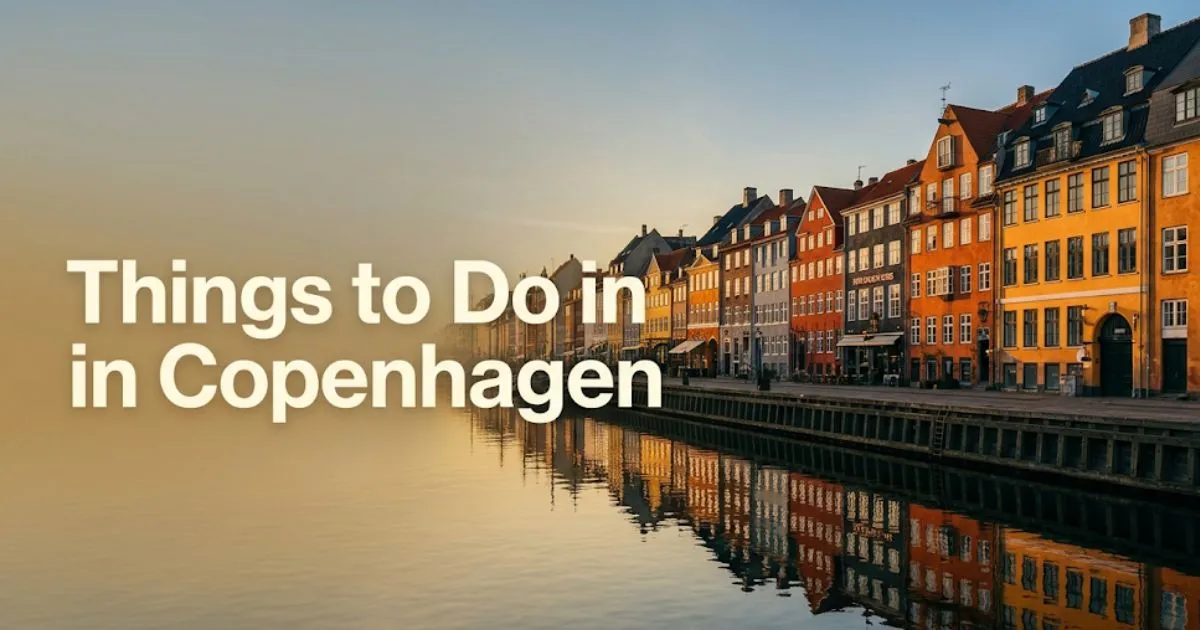
Best Things To Do in Copenhagen, Denmark: 2026 Guide

Copenhagen rewards travelers who go beyond the obvious stops. The best things to do in Copenhagen span royal palaces, harbor swimming, New Nordic food markets, and cycling routes through neighborhoods most tourists never see.
The Danish capital consistently ranks among Europe’s most livable cities. Its compact core, citywide English fluency, and world-class transit make it genuinely easy to navigate as a visitor.
This guide covers 16 specific categories of experience, from romantic canal evenings to budget-friendly afternoons in Fælledparken. You will leave with a real plan, not a vague list.
Things to Do in Copenhagen: Why This City Delivers
Copenhagen delivers on nearly every dimension of a European capital visit. Its walkable core, flat cycling terrain, multilingual locals, and extraordinarily low street crime make it one of the most practical cities in Europe to visit independently.
The city covers roughly 35 square miles of distinct neighborhoods. Each has its own character: royal Frederiksberg, gritty-creative Nørrebro, foodie Vesterbro, canal-lined Christianshavn.
VisitCopenhagen reports the city welcomed over nine million overnight tourists in recent years, yet it rarely feels overwhelming except at peak summer spots like Nyhavn in July and August.
First-timers often underestimate how much ground they can cover on foot. The distance from Tivoli Gardens to Nyhavn is under 30 minutes walking, making the central core very manageable.
Insider Tip:
- Skip the hop-on hop-off bus. Copenhagen’s walking distances between major sights are genuinely short enough to make the bus an inefficient use of time and money.
- Download the Rejsekort app or purchase a physical card on arrival for seamless transit access across Metro, S-Tog, and buses.
- Solo travelers will find Copenhagen especially safe and easy. The city’s strong café culture means solo dining never feels uncomfortable.
Best Things to Do in Copenhagen Denmark: Starting With the Essentials
The single best starting point in Copenhagen is the stretch of waterfront running from Nyhavn north to Amalienborg Palace, which gives first-time visitors the city’s architectural and historical core in one walkable sequence.
Nyhavn’s colored 17th-century merchant houses are genuine and photogenic. The catch: every café table along the water charges a premium, and summer crowds make it feel more like a theme park than a city neighborhood.
The local alternative to the Nyhavn café scene is the Islands Brygge waterfront on the opposite bank, where locals gather at a fraction of the tourist density.
Amalienborg Palace is the Danish royal family’s primary Copenhagen residence. The changing of the guard ceremony happens daily at noon, typically takes 20 minutes, and costs nothing.
| Essential Experience | Best For | Approximate Cost | Time Needed |
|---|---|---|---|
| Nyhavn canal walk | All profiles, photography | Free to walk | 1-2 hours |
| Amalienborg changing of guard | Families, history travelers | Free | 30-45 minutes |
| Islands Brygge waterfront | Locals, budget travelers | Free | 1-2 hours |
| Strøget shopping street | Shoppers, first-timers | Free to walk | 1-2 hours |
| Rundetårn (Round Tower) | All profiles | Approx. 40-60 DKK per adult | 45 minutes |
Rundetårn, the 17th-century observatory tower on Købmagergade, offers one of the best elevated views of central Copenhagen. It is significantly less crowded than other elevated vantage points and takes about 45 minutes to visit properly.
Families will find the Nyhavn-to-Amalienborg walk genuinely stroller-accessible along the waterfront path. The cobblestone side streets require more attention for wheels.
Copenhagen Things to Do: Top Neighborhoods to Explore
Copenhagen’s neighborhoods are where the city’s genuine character lives, outside the tourist triangle of Nyhavn, Tivoli, and Strøget.
Vesterbro is the city’s most evolved neighborhood for food, design, and nightlife. The Kødbyen (Meatpacking District) in western Vesterbro holds the city’s most concentrated cluster of serious restaurants, bars, and creative studios.
Nørrebro runs northwest from the city center and is Copenhagen’s most culturally diverse neighborhood. Jægersborggade street in Nørrebro is one of the best single streets in Denmark for independent cafés, ceramics studios, and small food producers.
Christianshavn sits directly across the canal from the city center and feels like a small Amsterdam transplanted into Copenhagen. Its canals, houseboats, and independent restaurants make it the best neighborhood for a slow afternoon walk.
| Neighborhood | Character | Best For | Walking Distance From Central Station |
|---|---|---|---|
| Vesterbro | Foodie, creative | Dining, bars, young travelers | 10-15 minutes |
| Nørrebro | Diverse, independent | Cafés, local culture, solo travel | 20-25 minutes |
| Christianshavn | Canal, historic | Couples, slow travelers | 20-25 minutes |
| Frederiksberg | Royal, green | Families, parks, afternoon walks | 15-20 minutes |
| Østerbro | Residential, local | Budget dining, neighborhood parks | 20 minutes |
Frederiksberg is the neighborhood most tourist guides ignore entirely. It surrounds Frederiksberg Palace and Gardens, a free public park with legitimate royal history and far fewer visitors than the central tourist sites.
Couples will find Christianshavn especially rewarding for an evening. The canal-side streets around Christianshavn Torv are genuinely intimate in a way the crowded Nyhavn waterfront is not.
Key Takeaway: Vesterbro’s Kødbyen and Nørrebro’s Jægersborggade are where Copenhagen’s actual creative and culinary identity lives. Both are 20 minutes from the tourist center and visited by a fraction of the people who spend their entire trip on Strøget.
Cool Things to Do in Copenhagen: Tivoli Gardens and Nyhavn
Tivoli Gardens is one of the world’s oldest amusement parks and genuinely earns its reputation, but only if you understand what it is and is not.
It is not a thrill-ride-focused theme park. It is a beautifully landscaped pleasure garden with rides, live concerts, restaurants, carnival games, and extraordinary seasonal lighting. The evening atmosphere in summer is genuinely lovely.
Admission covers entry and the park experience; rides require separate tokens or an all-inclusive wristband. The all-inclusive option makes financial sense for families with children who want multiple rides.
Tivoli’s opening dates vary by season: it typically runs from mid-April through late September, then reopens for Halloween season and again for its Christmas market period from mid-November through late December. Verify exact 2026 dates directly with Tivoli before booking.
Budget travelers should note that dining inside Tivoli runs at a significant premium over nearby alternatives. Eating before entry and spending money on rides rather than food inside is the practical approach.
Insider Tip:
- Visit Tivoli on a weeknight in May or early June. Crowds are dramatically lower than summer weekends. The evening light and garden atmosphere are at their best.
- The free live concerts at the Tivoli open-air stage (included with admission) run most evenings in season. Check the schedule in advance; the lineup includes respected jazz and classical acts.
- Seniors and accessibility travelers: Tivoli’s main paths are paved and generally accessible. Some rides have height and mobility restrictions; the park’s website lists accessibility details for each attraction.
Things to Do in Copenhagen for Couples
Copenhagen ranks consistently among Europe’s most romantic capital cities, and the designation is earned by the city’s specific combination of canal architecture, candlelit restaurant culture, and human-scale street design.
Romantic Copenhagen for couples centers on three specific experiences: an evening at Tivoli during the illumination hours, a canal boat tour through Christianshavn’s waterways, and a slow dinner in Vesterbro.
Canal boat tours depart from Nyhavn and from Gammel Strand. The roughly one-hour narrated tour covers the harbor front, the Opera House, and the canal system. Evening departure times offer the best light and the most atmospheric version of the experience.
For dinner, the Vesterbro Torv area and the streets surrounding Kødbyen hold Copenhagen’s most compelling mid-range restaurant options for couples. Kødbyens Fiskebar (the Meatpacking District fish bar) consistently draws praise for its seafood-focused menu and authentic setting in a former fish auction hall.
According to VisitCopenhagen, the city has more Michelin-starred restaurants per capita than most European capitals. Couples pursuing a high-end dining experience should book at least two to three months in advance for any restaurant in the starred tier.
The Botanical Garden (Botanisk Have) near Nørreport station is one of the most overlooked romantic spots in the city. Free to enter, it covers 25 acres of grounds and includes a Victorian-era Palm House glasshouse that is genuinely beautiful in morning light.
Solo travelers can note that Copenhagen’s café culture is specifically well-suited to comfortable solo dining. The Danish concept of hygge means interior spaces are intentionally warm and welcoming, not exclusionary toward solo visitors.
Best Copenhagen Food Markets and Dining Experiences
Copenhagen’s food identity now extends well beyond Noma’s global reputation. The accessible tier of its food scene, specifically the Torvehallerne market and the Vesterbro restaurant corridor, is where most travelers will actually eat.
Torvehallerne is a covered food market at Israels Plads near Nørreport station. Two glass halls hold approximately 60 permanent stalls selling fresh produce, cheese, charcuterie, smørrebrød, coffee, and ready-to-eat meals from serious producers.
It is the single best lunch stop in Copenhagen for travelers who want genuine local food culture without a sit-down restaurant budget. Lunch here typically runs equivalent to $15 to $25 USD per person.
Smørrebrød is the distinctly Danish open-faced sandwich tradition and the most practical entry point into authentic Danish food culture. Aamanns on Øster Farimagsgade serves some of the city’s best modern smørrebrød in a setting that is genuinely worth the price.
The Kødbyen restaurant cluster in Vesterbro includes several restaurants beyond Fiskebar that are worth knowing:
- Gorilla: Casual New Nordic small plates, competitive pricing by Copenhagen standards
- Kul: Wood-fired cooking in a former cold storage room, excellent for a winter dinner
- Mother: Consistently praised sourdough pizza in an unlikely but beloved location in the Meatpacking District
Budget travelers can eat extremely well by combining Torvehallerne lunches with early-evening smørrebrød dinners at traditional lunch restaurants, which often close by mid-afternoon, keeping costs significantly below sit-down dinner prices.
Key Takeaway: Torvehallerne at Israels Plads is the single most practical and genuinely high-quality food stop in Copenhagen for any budget level. Two hours there covers lunch, browsing, and a coffee better than most formal restaurants.
Copenhagen Museums and Cultural Attractions
Copenhagen’s museum tier is stronger than most North American visitors expect. The city holds multiple world-class collections, and the Copenhagen Card makes it financially viable to visit several in one trip.
SMK, the National Gallery of Denmark, on Sølvgade holds the country’s largest art collection, spanning Danish Golden Age painting through contemporary Scandinavian work. Admission for permanent collection visitors is free on certain days; verify current policy with SMK directly before visiting.
Ny Carlsberg Glyptotek near Tivoli Gardens is Copenhagen’s most underrated museum. Its collection spans ancient Egyptian, Greek, and Roman sculpture alongside an extraordinary French Impressionist collection, all housed in a building with a stunning winter garden atrium at its center.
Designmuseum Danmark in Bredgade covers the full arc of Danish and Scandinavian design history. For travelers with a design, architecture, or craft interest, it is more rewarding than most of the conventional sightseeing options.
| Museum | Collection Focus | Approximate Entry Cost | Best For |
|---|---|---|---|
| SMK National Gallery | Danish and European art | Varies by exhibition | Art travelers, culture seekers |
| Ny Carlsberg Glyptotek | Antiquities, Impressionists | Approx. 125 DKK adults | All profiles, especially design-focused |
| Designmuseum Danmark | Scandinavian design | Approx. 130 DKK adults | Design, architecture, craft travelers |
| Nationalmuseet | Danish history, Viking | Free for permanent collection | Families, history travelers |
| Rosenborg Castle | Royal collections, crown jewels | Approx. 160 DKK adults | History travelers, couples |
Nationalmuseet (the National Museum of Denmark) on Ny Vestergade has free admission for its permanent collection. Its Viking Age galleries are among the best in Scandinavia and genuinely hold the interest of children and adults alike.
Seniors and accessibility travelers should note that Ny Carlsberg Glyptotek has good elevator access between floors. Rosenborg Castle involves steep stairs in some sections and has limited accessibility in the older portions of the building.
Free Things to Do in Copenhagen
Copenhagen is expensive, but its best free experiences are genuinely competitive with the paid attractions.
The Frederiksberg Gardens (Frederiksberg Have) surrounding Frederiksberg Palace are free and among the most beautiful formal gardens in Scandinavia. On a warm afternoon, they attract more locals than tourists and feel nothing like a tourist attraction.
Fælledparken in Østerbro is Copenhagen’s largest park and the city’s true community gathering space. Weekend afternoons here give a more authentic picture of Copenhagen daily life than any amount of time on Strøget.
Free experiences that consistently deliver:
- Walking the Strøget pedestrian shopping street, Europe’s longest, from Rådhuspladsen to Kongens Nytorv
- The Amalienborg Palace changing of the guard (free, daily at noon)
- Walking the Christianshavn canal streets and peering into the houseboat community along Overgaden Neden Vandet
- Ørstedsparken, a 19th-century park near Nørreport with a lake, mature trees, and excellent bird watching
- The Botanical Garden (Botanisk Have) near Nørreport station: 25 acres of free grounds, pay only for the Palm House glasshouse
Budget travelers should know that the Copenhagen Card covers museum admission at roughly 40 institutions plus unlimited transit. Run the math against your planned paid activities before purchasing; it saves significant money for travelers hitting three or more paid museums.
Families with children will find Fælledparken specifically excellent. It has large open lawns, playground areas, and food kiosks at weekend markets.
Key Takeaway: The Botanical Garden near Nørreport is genuinely one of Copenhagen’s best free hours, especially in the morning before crowds arrive. Most visitors walk past it entirely on the way to the National Gallery.
Things to Do in Copenhagen With Kids
Copenhagen works well for families with children. Its flat terrain, stroller-accessible Metro, compact walkable distances, and generally child-welcoming culture make it more practical than most European capitals for traveling with young children.
Tivoli Gardens is the obvious family anchor and genuinely delivers for children between roughly ages 5 and 14. Younger children can enjoy the atmosphere and gentler rides; older kids will want the faster attractions. Budget roughly 2 to 4 hours for a family visit.
Nationalmuseet is the single best free family activity in the city. Its Viking Age collection holds children’s attention in a way that formal art museums typically do not, and the museum has specific children’s activity areas.
The Copenhagen Zoo (Zoologisk Have) in Frederiksberg is one of the oldest zoos in Europe and a legitimate full-day family activity. Admission runs in the range of 200 to 250 DKK per adult and less for children; verify current pricing directly.
Family-specific logistics worth knowing:
- The Copenhagen Metro is stroller accessible with elevators at most stations
- Tivoli’s all-inclusive ride wristband is the most cost-effective option for families planning multiple rides
- Most Copenhagen cafés and restaurants welcome children without the formality that can make family dining difficult in some European cities
- The Natural History Museum of Denmark (Statens Naturhistoriske Museum) near Nørreport has free gardens and reasonably priced entry, good for a half-day with younger children
Seniors traveling with grandchildren will find Fælledparken and the Botanical Garden the most physically manageable family-oriented free options, requiring minimal walking on even terrain.
Outdoor Things to Do in Copenhagen
Copenhagen’s outdoor culture is a genuine city identity marker, not just a tourist selling point. The city builds its daily life around cycling, harbor swimming, and park culture in ways that are immediately accessible to visitors.
Cycling is the most authentic Copenhagen outdoor experience available to visitors. The city has over 390 kilometers of dedicated cycling paths. Bike rental is available through Bycyklen, the city’s electric bike share system, at docking stations throughout the center.
The Islands Brygge Harbor Bath is one of Copenhagen’s most genuinely local outdoor experiences. This public outdoor swimming facility in the harbor opens seasonally (typically late June through August) and is where Copenhagen residents, not tourists, spend summer afternoons. Entry is free.
Amager Beach Park (Amager Strandpark) sits directly east of the city center on the Øresund coast. Its five kilometers of beach with shallow water, volleyball courts, and a kayak launch make it a full-day outdoor option for summer visitors. Metro access from the center takes roughly 20 minutes.
For cycling specifically, the route from the city center through Frederiksberg Gardens and out to the Charlottenlund Beach north of the city covers approximately 12 kilometers of mostly flat terrain with dedicated bike paths for nearly the entire distance.
Seniors and accessibility travelers should note that all harbor bath and beach facilities at Amager include accessible ramps and changing areas, though the outdoor swimming areas require comfortable mobility for entry and exit from the water.
Unique Things to Do in Copenhagen: Freetown Christiania
Freetown Christiania is Copenhagen’s most genuinely unique attraction and also its most misunderstood.
Established in 1971 when squatters occupied a former military base in Christianshavn, Christiania has existed for over 50 years as a self-governing community of roughly 1,000 residents. It covers approximately 34 acres of former military grounds directly adjacent to the Christianshavn canal district.
Visiting Christiania is free and open to the public. The community’s main entrance on Prinsessegade leads to a central pedestrian spine called Pusher Street, where cannabis has historically been sold openly. Photography is strictly prohibited on Pusher Street and in several areas of the community. Respect this rule without exception.
Beyond Pusher Street, Christiania holds a genuinely interesting collection of self-built alternative architecture, a music venue (Loppen), several cafés, art studios, and an organic restaurant (Spiseloppen) that has operated for decades.
According to VisitCopenhagen, Christiania is one of the most visited sites in Copenhagen, attracting over one million visitors annually. Despite this, the interior of the community away from Pusher Street feels genuinely removed from the tourist city around it.
Solo travelers will find Christiania straightforward to visit alone. The community is safe during daylight hours; avoid late-night visits, particularly around Pusher Street, when tensions can occasionally arise.
Families should note that Pusher Street involves open drug commerce and is not an appropriate environment for young children. The surrounding community areas, workshops, and lake shore are fine for older children and teenagers.
Key Takeaway: Christiania is worth two hours of your Copenhagen visit. Enter through Prinsessegade, walk past Pusher Street without photographing, and spend your time in the community’s quieter interior, where the alternative architecture and café culture are the genuine attraction.
Things to Do in Copenhagen in Winter
Winter Copenhagen, specifically the period from late November through early January, is one of the city’s most genuinely rewarding seasonal experiences if you plan for the conditions.
The Tivoli Christmas Market transforms the park from mid-November through late December into one of Northern Europe’s best-executed Christmas markets. The combination of Tivoli’s extraordinary illumination design and the market stalls makes it a specific reason to book a Copenhagen winter trip. Admission applies; verify 2026 dates with Tivoli directly.
Hygge is the Danish concept of intentional coziness and warmth, most tangible in Copenhagen’s cafés during the dark winter months. The café culture in Vesterbro and Nørrebro peaks in winter in a way that summer visitors simply do not experience.
Winter advantages that most travel guides omit:
- Hotel rates drop significantly from summer peaks. Shoulder-to-low season pricing can make Copenhagen genuinely more affordable overall despite higher heating and wardrobe costs
- Museum crowds thin dramatically. Ny Carlsberg Glyptotek and Designmuseum Danmark are both far more comfortable to visit in January than in July
- The Christmas markets at Nyhavn and Kongens Nytorv square (separate from Tivoli) run from late November through December 23 and are free to browse
The honest winter limitation: Daylight hours are short. In December, Copenhagen gets approximately seven hours of daylight. Outdoor sightseeing plans must account for early darkness.
Budget travelers will find winter the most financially accessible version of Copenhagen. Hotel rates and flight prices in January and February are at their annual lows.
Things to Do in Copenhagen in Summer
Summer in Copenhagen runs from June through August and represents the city’s peak season in every measurable dimension: longest days, most events, highest prices, and highest crowds.
The Copenhagen Jazz Festival in July is the city’s signature summer event. For approximately ten days, free and ticketed jazz performances take place at venues across the city, from concert halls to café courtyards to open street stages. According to the Copenhagen Jazz Festival’s official programming, the event draws over 250,000 attendees annually across roughly 1,000 performances.
Summer-specific outdoor activities that are only available from roughly June through August:
- Swimming at Islands Brygge Harbor Bath (free public outdoor pool in the harbor)
- Kayak rental in the city’s canal system through operators based at Gammel Strand
- Open-air cinema screenings at Fælledparken (free, bring a blanket)
- Evening picnics in Ørstedsparken alongside locals who treat the parks as outdoor living rooms from May through September
The honest summer note: Nyhavn in July is genuinely overcrowded. Tables at waterfront restaurants face a 30 to 60 minute wait on summer weekends. Early morning visits to photograph the canal before 8am avoid the crowds entirely.
Couples visiting in summer should prioritize evening activities. Copenhagen’s extended summer daylight means golden hour runs until nearly 10pm, making outdoor evening walks along the harbor front and canal districts genuinely beautiful.
Copenhagen Itinerary: How to Plan Your Visit
A two-day Copenhagen itinerary covers the city’s essential experiences without rushing through any of them.
Day 1: The Historic Core and Waterfront
- Start at Rosenborg Castle at opening time (typically 9 or 10am). Spend 60 to 90 minutes with the castle gardens and crown jewels collection.
- Walk south through Ørstedsparken to Torvehallerne at Israels Plads for a late-morning coffee and market browse.
- Lunch at Torvehallerne. Budget around 100 to 150 DKK per person for a proper smørrebrød and coffee.
- Walk east to the Nationalmuseet on Ny Vestergade. Two hours covers the Viking Age collection and Danish history galleries without rushing.
- Cross the canal into Christianshavn for an afternoon walk. Allow 90 minutes to explore the canal streets and browse before visiting Freetown Christiania.
- Evening dinner in Vesterbro’s Kødbyen corridor. Reserve in advance for weekends.
Day 2: Royal Circuit, Museums, and Neighborhoods
- Open at Amalienborg Palace for the noon changing of the guard. Arrive by 11:30am for a good viewing position.
- Walk north to the The Little Mermaid statue (15 minutes). Allow 20 minutes: it is genuinely small and best enjoyed with managed expectations.
- Return south along the harbor front to Nyhavn for photos and a canal boat departure.
- Canal boat tour (approximately 60 minutes). Afternoon departures from Nyhavn.
- Visit Ny Carlsberg Glyptotek in mid-afternoon. Budget 90 minutes for a proper visit.
- Evening in Nørrebro. Walk Jægersborggade, choose a café for dinner, and end at one of the neighborhood’s bar options on Elmegade street.
Travelers with three or more days should add the Louisiana Museum of Modern Art day trip to Humlebæk (35 minutes north by train) and a half-day in Frederiksberg Gardens.
Getting Around Copenhagen: Practical Travel Tips
Getting around Copenhagen is genuinely straightforward by European capital standards.
Copenhagen Airport (CPH) connects to the city center via the Metro in approximately 14 to 16 minutes from Terminal 3. The Metro runs 24 hours. Single journey fare from the airport runs in the range of 36 to 40 DKK per adult; exact pricing should be verified with Metroselskabet directly.
The city’s transport network includes:
- Copenhagen Metro: Four lines covering the city center and key districts. Runs 24 hours, 7 days a week.
- S-Tog (S-Train): Regional rail connecting outer neighborhoods and suburban destinations including Helsingør (for Kronborg Castle) and Humlebæk (for Louisiana Museum)
- Bycyklen: Electric bike share. Requires app registration and credit card. Available across the city center and inner neighborhoods.
- Walking: The distance from Central Station to Nyhavn is under 30 minutes at a moderate pace. Most central sightseeing is walkable.
The Copenhagen Card covers unlimited transit on Metro, S-Tog, and buses, plus free admission at approximately 40 museums and attractions. It is available in 24-hour, 48-hour, 72-hour, and 120-hour versions. Run the math against your planned paid admissions before purchasing; for travelers hitting three or more paid museums plus daily transit use, it typically saves money.
Practical warning: Copenhagen’s cycling infrastructure carries real traffic. Bike lanes are not decorative: cyclists travel at significant speed. Pedestrians must look left and right before stepping off curbs, including when looking at their phones. This is the single most common practical hazard for first-time visitors.
Seniors and accessibility travelers will find the Metro fully elevator-equipped at most stations, making it one of the more accessible metro systems in Europe. Verify specific station accessibility with Metroselskabet before planning routes.
Key Takeaway: The Metro from CPH airport to the city center takes 14 to 16 minutes and runs 24 hours. Skip the taxi unless you have significant luggage or accessibility needs; the cost difference is substantial.
Copenhagen Travel Tips: What Most Visitors Get Wrong
The single most common mistake in Copenhagen is spending too much time on Nyhavn and not enough time in the neighborhoods where the city’s actual character lives.
Nyhavn deserves one to two hours. After that, its photogenic canal row has been fully experienced, and the café pricing and crowd density make it an inefficient place to spend a Copenhagen afternoon.
The second most common mistake is underestimating Copenhagen’s cost. Travelers who budget at Western European average levels (Paris, Amsterdam, Barcelona) will find themselves consistently surprised. Add 20 to 30 percent to your Western Europe daily budget as a starting assumption.
Honest assessments of overrated versus genuinely valuable:
- Overrated: The Little Mermaid statue. It is small, set in an unremarkable harbor location, and typically surrounded by tourists. Worth a 20-minute visit if you are already walking the harbor circuit. Worth zero dedicated trip planning on its own.
- Genuinely valuable: Ny Carlsberg Glyptotek. Consistently underestimated by first-timers. The Impressionist collection and the winter garden atrium are among the best museum experiences in Scandinavia.
- Overrated: Guided city bus tours. Copenhagen’s compact walkable center makes bus tours inefficient for most travelers.
- Genuinely valuable: An evening in Vesterbro’s Kødbyen. The combination of serious restaurants, independent bars, and creative studios gives a more honest picture of contemporary Copenhagen than any amount of time on Strøget.
According to VisitCopenhagen, tipping is not a standard expectation in Danish restaurant culture, though rounding up on bills is common. US visitors accustomed to 20 percent service additions should note this distinction.
Budget travelers should also know that Copenhagen’s water is among the best-quality tap water in Europe. Buying bottled water throughout the day is an unnecessary expense; fill a reusable bottle at any tap.
Safety and Practical Warnings for Copenhagen
Copenhagen is one of Europe’s safest capitals for tourists, but specific practical risks deserve direct attention.
Key safety and practical facts every visitor should know:
- Bicycle traffic in dedicated lanes is fast and dense. Always look both ways before stepping off a curb or crossing a painted bike lane. This applies everywhere, including tourist areas.
- Pickpocket risk exists in crowded areas including Strøget, Nyhavn in summer, and on the Metro. Keep wallets and phones in front pockets or a zipped bag. Risk is comparable to Paris or Amsterdam, not exceptional, but real.
- Photography restrictions at Christiania are firm. Ignoring the no-photography signs on Pusher Street has resulted in confrontations and camera damage. Follow the rule without exception.
- Weather changes rapidly in Copenhagen even in summer. Layers and a compact waterproof jacket are practical necessities year-round.
- Late-night transport is available. The Metro runs 24 hours, making late-night transit safe and practical for solo travelers and couples.
- Prescription medications: Denmark has excellent pharmacy infrastructure, but specific US brands may not be available. Bring adequate supplies.
For genuine emergencies, the Danish emergency number is 112 for police, fire, and ambulance. The US Embassy in Copenhagen is located on Dag Hammarskjölds Allé 24 in Østerbro.
Frequently Asked Questions About Things to Do in Copenhagen
What are the best things to do in Copenhagen for first-time visitors?
First-time visitors to Copenhagen should prioritize Rosenborg Castle, Torvehallerne food market, the canal district in Christianshavn, Ny Carlsberg Glyptotek, and an evening at Tivoli Gardens.
Nyhavn is worth a short visit for photos, but should not dominate your itinerary.
The neighborhoods of Vesterbro and Nørrebro give a more authentic picture of the city than the central tourist corridor.
How many days do you need in Copenhagen to see the highlights?
Two full days covers Copenhagen’s primary attractions at a comfortable pace without rushing.
Three days allows you to add a day trip to the Louisiana Museum of Modern Art in Humlebæk or Kronborg Castle in Helsingør, plus proper exploration of Vesterbro and Nørrebro.
Four or five days suits travelers who want to combine the city with a day in Malmö, Sweden via the Øresund Bridge.
Is Copenhagen worth visiting, and is it really that expensive?
Copenhagen is genuinely worth visiting. Its combination of historic architecture, world-class food culture, waterfront access, and compact walkable layout makes it one of Europe’s most rewarding capital cities.
It is, honestly, expensive. Expect to spend more per day than in Paris, Rome, or Barcelona.
Budget travelers can manage costs significantly by using Torvehallerne for meals, taking advantage of free museums and parks, and traveling in winter shoulder season when hotel rates drop considerably.
What is the best time of year to visit Copenhagen?
The best time to visit Copenhagen is May through early June or September.
Both periods offer comfortable temperatures, manageable crowd levels, and the full range of outdoor activities without the peak summer pricing and congestion of July and August.
Winter visits from late November through December are worthwhile specifically for Tivoli’s Christmas market and the city’s hygge café culture, at significantly lower accommodation costs.
What are the best free things to do in Copenhagen?
The best free things to do in Copenhagen include walking Frederiksberg Gardens, visiting the Botanical Garden near Nørreport, exploring Christianshavn’s canal streets, attending the daily Amalienborg changing of the guard, and swimming at Islands Brygge Harbor Bath in summer.
The permanent collection at Nationalmuseet is free and contains some of the best Viking Age artifacts in the world.
Fælledparken in Østerbro is the city’s best free afternoon for watching genuine Copenhagen daily life rather than tourist-oriented activity.
What should couples do in Copenhagen for a romantic trip?
The most specifically romantic Copenhagen experiences for couples include an evening canal boat tour departing from Nyhavn, dinner in Vesterbro’s Kødbyen restaurant district, and a morning walk through Frederiksberg Gardens.
The Botanical Garden’s Victorian Palm House glasshouse is genuinely romantic in a way most travel guides overlook entirely.
Book Tivoli for an evening rather than a daytime visit: the park’s illumination design after dark is the version that earns its romantic reputation.
Your Copenhagen Trip Starts Here
Copenhagen’s depth lies in its neighborhoods. Vesterbro, Nørrebro, and Christianshavn deliver more genuine city experience than any amount of time spent on Strøget or photographing Nyhavn.
Book your accommodation near a Metro station, purchase the Copenhagen Card if you plan three or more paid museum visits, and reserve any Vesterbro or Michelin-tier restaurants at least a month ahead for summer travel.
Travel conditions, admission prices, operating hours, and entry requirements change. Verify all logistics directly with venues and with VisitCopenhagen at visitcopenhagen.com before departure.
The traveler who spends an evening in Kødbyen, a morning at Torvehallerne, and a slow afternoon in Christianshavn will leave Copenhagen understanding why the city consistently outranks its Scandinavian neighbors in visitor satisfaction. That itinerary is available to you for 2026.