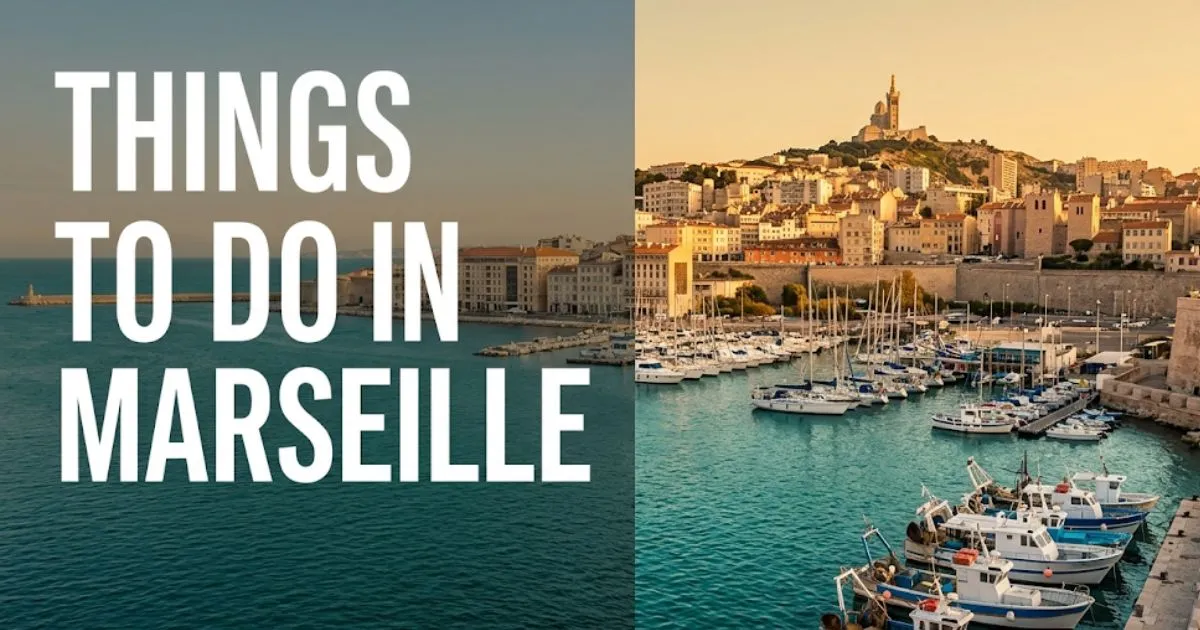
Best Things To Do in Marseille, France (2026 Guide)

Marseille rewards travelers who actually plan for it. The things to do in Marseille span ancient Roman port history, wild coastal hiking in a national park, one of France’s most electric food market cultures, and a contemporary arts scene that has no equivalent in southern France.
France’s second largest city sits on the Mediterranean with 300 days of sunshine per year, according to the Office de Tourisme et des Congrès de Marseille. It has been a working port for 2,600 years.
This guide covers every major district, the practical logistics competitors skip entirely, honest assessments of what is worth your time, and a complete 2-day itinerary framework. Verify hours and booking requirements before your trip, as Marseille’s seasonal logistics change annually.
Things to Do in Marseille: What Makes This City Different
Marseille is the most misunderstood major city in France. Travelers who give it 48 hours consistently revise their initial hesitation into genuine enthusiasm.
The city is not a resort. It is a working Mediterranean port with 26 centuries of layered history, raw neighborhoods that feel nothing like Paris, and coastal access that most European cities cannot offer.
Marseille was named a European Capital of Culture in 2013, a designation that accelerated its cultural infrastructure investment. That investment is now fully realized and genuinely worth experiencing.
The honest comparison: Marseille is to Paris what New Orleans is to New York. More port grit, more local character, more authentic food culture, less polish, and a much better time for travelers who know what they are walking into.
Insider Tip:
- First-timers often stay in the 1st arrondissement near Vieux-Port, which is centrally located but not where locals live
- The 6th and 7th arrondissements offer quieter residential streets and better restaurant-to-tourist ratios
- Solo travelers should note that Marseille’s social culture centers around café terraces and market stalls, both of which are easy to navigate alone
Best Things to Do in Marseille France: The Essential Starting List
The best things to do in Marseille, France combine Mediterranean outdoor adventure with an urban cultural scene that most first-time visitors do not anticipate.
The non-negotiable list for any first visit includes Vieux-Port, Le Panier, at least one calanque, MuCEM, Notre-Dame de la Garde, and a proper bouillabaisse or market lunch at Noailles.
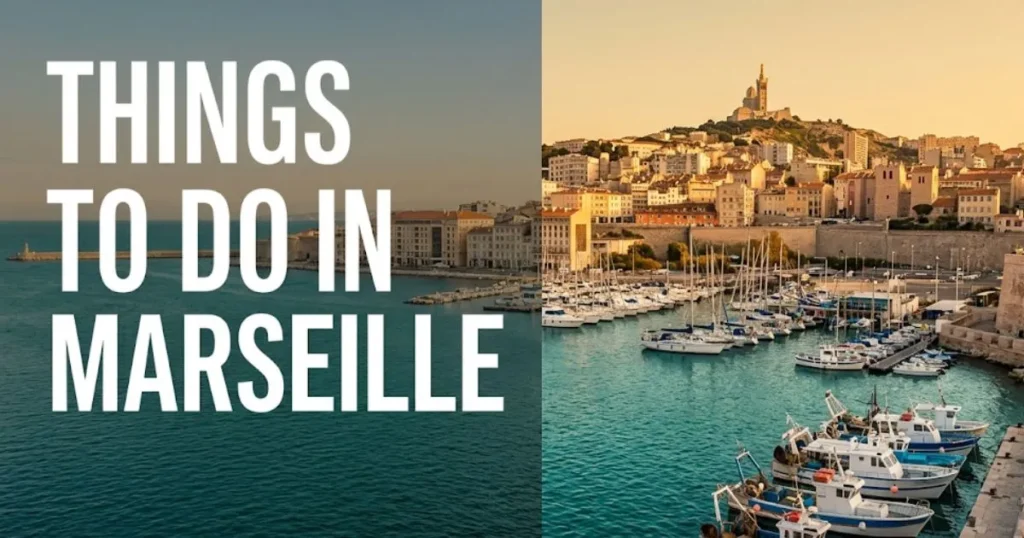
Couples get the most from Marseille’s combination of dramatic clifftop views, intimate neighborhood streets, and long waterfront evenings. Budget travelers can spend a full day at genuinely world-class attractions that cost nothing or near nothing.
| Activity | Best For | Cost Range | Time Needed |
|---|---|---|---|
| Vieux-Port waterfront | All profiles | Free to browse | 1 to 2 hours |
| Calanques hiking | Active adults, couples | Free to low (permit may apply) | Half to full day |
| MuCEM museum | Culture travelers, couples | ~€11-€14 adult (verify before visit) | 2 to 3 hours |
| Notre-Dame de la Garde | All profiles | Free entry | 1 hour |
| Château d’If | History travelers | Ferry + entry fee, verify current price | 3 to 4 hours |
| Noailles market | Food travelers, budget travelers | Free to enter | 1 hour |
| Le Panier walking | Solo, couples, seniors | Free | 1.5 to 2 hours |
| Friche la Belle de Mai | Arts travelers, young adults | Free or event-priced | 2 to 3 hours |
Insider Tip:
- Do not spend your first morning at MuCEM. Walk Vieux-Port first to orient yourself geographically
- The best free panoramic view in the city is from the esplanade of Notre-Dame de la Garde, not from any paid viewpoint
- For seniors and accessibility travelers, MuCEM has excellent wheelchair access along its famous elevated walkway
Marseille Attractions and Landmarks: The Honest Assessment
Marseille’s most photographed landmark is Notre-Dame de la Garde, and it genuinely earns that status. The gilded Madonna atop the Romanesque-Byzantine basilica is visible from nearly every point in the city.
The basilica sits at 162 meters above sea level on the highest natural point in Marseille. The walk up from the Vieux-Port takes approximately 35 to 40 minutes on foot.
For seniors and those with mobility limitations: The city operates a shuttle bus (currently route 60, verify before visiting) from the old port area up to the basilica. The interior is fully accessible once you arrive.
Entry to the basilica is free. The panoramic terrace views cover the entire city, the Frioul archipelago, and on clear days, the Calanques coastline to the east.
The overrated pick: The Palais Longchamp photographs beautifully but offers a fraction of the experience its grand exterior promises. Its two museums (Natural History and Fine Arts) are modest in scope. Visit for the fountain and gardens on a hot afternoon. Do not plan your day around it.
The underrated alternative: The Abbaye de Saint-Victor, a 5th-century fortified abbey in the 7th arrondissement, has genuine archaeological depth and no crowds. The crypt contains early Christian sarcophagi. Admission runs at a low cost per adult (verify current pricing before visiting).
| Landmark | Type | Entry | Physical Demand | Best For |
|---|---|---|---|---|
| Notre-Dame de la Garde | Religious/panoramic | Free | Moderate (steep walk) | All profiles |
| Fort Saint-Jean | Historic/MuCEM adjacent | Included with MuCEM or free to walk | Low | All profiles |
| Abbaye de Saint-Victor | Archaeological | Low cost | Low | History travelers |
| Palais Longchamp | Gardens/museum | Gardens free | Low | Casual visitors |
| La Canebière | Historic boulevard | Free | Low | Solo explorers |
Key Takeaway: Notre-Dame de la Garde is Marseille’s single best free activity. Take the shuttle if the walk is a concern and go before 10 a.m. to beat tour groups.
Le Vieux-Port Marseille: The City’s Living Center
Le Vieux-Port is Marseille’s ancient harbor and its social center. Every morning, fishermen sell their overnight catch directly from their boats at the daily fish market on the port’s eastern quay.
The fish market, called the Marché aux Poissons, runs from approximately sunrise to noon, typically daily. Arrive before 8 a.m. to watch the actual transaction: local restaurant buyers negotiating prices before tourists arrive.
Couples find the port’s evening atmosphere genuinely romantic. The quays illuminate at dusk and the café terraces along the southern quay on the Quai de Rive Neuve offer better-quality food than the tourist-facing north side.
Budget travelers should note: watching the fish market, walking the full perimeter of the old port, and sitting at a café with a pastis costs almost nothing and delivers the authentic Marseille experience that paid tours approximate.
The underrated local alternative to the main port promenade is the Vallon des Auffes, a five-minute walk west along the coastal road from Vieux-Port. This tiny fishing cove with traditional cabanons (fishermen’s huts) has existed unchanged for over a century. It looks like a film set and has almost no tourism signage.
Insider Tip:
- The Daniel Buren mirrored canopy at Vieux-Port is a permanent public artwork installed under the port’s historic quay shelter. It creates extraordinary reflected light. Visit in the late afternoon when the angled sun hits it directly
- The north quay (Quai du Port) has more tourist trap restaurants than the south quay. Cross to the south side (Quai de Rive Neuve) for better quality at the same price
Parc National des Calanques Marseille: The Outdoor Priority
The Calanques are the primary reason serious outdoor travelers add Marseille to a France itinerary. These are sheer limestone cliffs dropping into startlingly clear turquoise sea, extending approximately 20 km east from the city.
The most critical logistics fact: During fire season, typically June through September, access to specific calanques requires an advance online reservation through the Parc national des Calanques official permit system. Book at least two weeks in advance in peak summer. Verify current year requirements before traveling.
| Calanque | Access | Difficulty | Best For |
|---|---|---|---|
| Calanque de Sugiton | Bus + hike from Luminy campus | Moderate (45 min) | Couples, solo, fit families |
| Calanque de Sormiou | Car (off-season) or hike | Moderate to hard | Active adults |
| Calanque de Morgiou | Car or hike | Hard | Experienced hikers |
| Calanque d’En Vau | Boat or very hard hike | Very hard on foot | Boat tour visitors |
| Calanque de Marseilleveyre | Long hike from city end | Very hard | Experienced only |
For families with young children: Calanque de Sugiton is the most accessible on foot. The descent to the water is steep and rocky even here. Children under 7 will struggle. Bring water shoes for the rocky entry into the water.
The honest warning: People underestimate the heat and terrain every summer. The Parc national des Calanques rescue services respond to multiple incidents per week in July and August. Carry at minimum 2 liters of water per person per calanque visit. Wear sun protection. Start no later than 7 a.m. in summer.
The best alternative for travelers who want calanques views without serious hiking: book a boat tour from Vieux-Port. Multiple operators depart daily. You see the cliffs from the sea, access Calanque d’En Vau (the most spectacular and least accessible on foot), and return in three to four hours without the heat exposure.
Le Panier Neighborhood Marseille: The Oldest Quarter
Le Panier is Marseille’s oldest neighborhood, built on the hill directly north of Vieux-Port. It has been continuously inhabited since the Greek settlement of Massalia in 600 BCE.
The streets are steep, narrow, and covered in street art. Ceramics ateliers, small cafés, and local artisan shops line the lanes around Place des Moulins and Rue du Panier.
Seniors and accessibility travelers should know upfront: Le Panier is physically demanding. The streets are cobblestone and steeply graded. Sturdy footwear is non-negotiable. A few streets have steps rather than continuous pavement.
Couples find Le Panier ideal for a morning of wandering before lunch. The neighborhood has a quiet weekday character very different from its weekend tourist volume.
The Centre de la Vieille Charité anchors the upper section of Le Panier. This 17th-century baroque almshouse now houses two museums (Egyptian antiquities and Mediterranean archaeology) within a stunning arcaded courtyard. Admission runs at a moderate per-adult rate (verify before visiting). The courtyard entry is sometimes free.
The local alternative to the tourist-facing café strip on Rue du Panier is Rue de la Loge, one street over. Fewer tourist menus, same neighborhood character, better prices.
Insider Tip:
- Le Panier gets genuinely crowded between 11 a.m. and 2 p.m. on weekends. Arrive before 9:30 a.m. or after 4 p.m
- The ceramics workshop scene along the upper streets is legitimate artisan work, not souvenir manufacturing. Purchasing here directly supports local artists
Key Takeaway: Le Panier before 9:30 a.m. on any day is one of the finest quiet urban walking experiences in southern France. After 11 a.m. on a weekend, it is a different place entirely.
Cours Julien and Noailles Marseille: The Local Cultural Districts
Cours Julien is Marseille’s answer to every city’s creative quarter, but it has retained actual local authenticity longer than most. The broad pedestrianized square and surrounding streets in the 6th arrondissement are where Marseille’s independent restaurant scene, record shops, vintage clothing stores, and street art culture concentrate.
The street art on and around Cours Julien changes regularly. Several internationally recognized muralists have worked here, and the city’s reputation as a street art destination is legitimate, not manufactured for tourism.
Solo travelers find Cours Julien especially well-suited. The café culture here is genuinely local. Sitting at any terrace on the square with a coffee and a book is exactly what locals do on a weekday afternoon.
The Marché de la Plaine, held on Tuesday, Thursday, and Saturday mornings on the nearby Place Jean Jaurès, is where local residents do their weekly shopping. Produce, cheese, olives, and Provençal goods at market prices, not tourist prices.
Noailles is immediately south of the 1st arrondissement center. It functions as Marseille’s multicultural market district, anchored by the Marché du Noailles and the surrounding streets dense with North African and Middle Eastern spice shops, bakeries, and grocery stalls.
Budget travelers should eat lunch here. The falafel, merguez sandwiches, and pastries available in Noailles represent some of the best value meals in any French city, at prices far below the Vieux-Port tourist circuit.
Safety note for Noailles: The district has a concentration of petty crime, particularly pickpocketing in the crowded market lanes. Keep bags in front of your body and avoid displaying phones or cameras. The experience is worth it with basic urban awareness applied.
MuCEM and Marseille Museums: Culture Beyond the Tourist Trail
MuCEM (Musée des Civilisations de l’Europe et de la Méditerranée) is legitimately one of the best contemporary museum buildings in Europe. Architect Rudy Ricciotti’s lace-like concrete facade on the J4 building, connected to the restored Fort Saint-Jean by an elevated walkway over the sea, delivers an architectural experience as striking as whatever is on display inside.
Admission to MuCEM covers both the J4 building exhibitions and Fort Saint-Jean. The fort’s restored ramparts and gardens overlooking the harbor entrance are worth the admission even without the exhibitions. Pricing runs approximately in the €11 to €14 range per adult (verify current rates before visiting; the museum offers free entry on certain days monthly).
Couples consistently rate MuCEM’s elevated sea-bridge walkway as one of Marseille’s most atmospheric experiences. The walk crosses open water between the modern building and the medieval fort.
Families with children: The outdoor spaces at Fort Saint-Jean, including the gardens and ramparts, genuinely engage children. The indoor exhibitions are adult-oriented and do not hold most children’s attention past 30 minutes.
The Musée d’Histoire de Marseille in the Centre Bourse shopping complex, directly adjacent to the Roman archaeological excavation site in the basement, offers the city’s deepest historical narrative. It is significantly undervisited relative to its quality.
The local alternative to MuCEM: The Friche la Belle de Mai in the 3rd arrondissement is a converted tobacco factory now operating as Marseille’s primary contemporary arts complex. Entry to the main building and rooftop terrace is typically free outside of specific events. The rooftop skate park is the best elevated view of the city that no tourist guide ever mentions.
Key Takeaway: MuCEM’s elevated walkway over the water between Fort Saint-Jean and the J4 building takes 10 minutes to cross and is one of the most architecturally distinctive experiences in France. Do not rush it.
Marseille Food Scene and Bouillabaisse: Eating Like a Local
The bouillabaisse served in Marseille is not the watered-down fish soup approximation found throughout France. The authentic version, governed by a 1980 Marseille Charter signed by the city’s top restaurateurs, requires a specific sequence of fish species, a precise preparation method, and a separate service of rouille and croutons.
Expect to pay approximately €50 to €90 per person for a proper traditional bouillabaisse at a charter-adhering restaurant. This is a formal dining experience, not a quick lunch. Chez Michel on Rue des Catalans and Le Miramar on Quai du Port are the most cited traditional addresses. Book well in advance.
Budget travelers: Do not feel you must spend €60 on bouillabaisse to eat well in Marseille. The panisse (fried chickpea fritter) from street vendors near the Vieux-Port costs almost nothing and is a genuinely Marseillais food. The Marché des Capucins near Noailles is the city’s oldest covered market and offers prepared Provençal foods at lunch at market prices.
The Marché du Noailles on Rue Longue-des-Capucines runs daily (mornings, closed Sunday afternoons, verify before visiting). It specializes in North African groceries, fresh herbs, and spices. Buy here if you have accommodation with a kitchen.
Couples seeking a food experience that is both intimate and genuinely local should book a late dinner at one of the smaller seafood restaurants in the Vallon des Auffes cove. These restaurants have maintained the same fisherfolk clientele for decades alongside their growing reputation.
The Cours Julien restaurant strip offers Marseille’s most varied independent dining scene: Vietnamese, Lebanese, natural wine bars, and contemporary French bistros all within three blocks. No tourist menus. No formulaic service.
Marseille Street Art and Culture: The Authentic Creative Scene
Marseille’s street art scene is concentrated in Cours Julien and the streets radiating from it in the 6th arrondissement. The work here is commissioned and curated, not random tagging.
Several large-scale murals by internationally recognized artists cover full building facades along Rue de la Bibliothèque and the streets surrounding Place Notre-Dame du Mont. The city actively invites large-scale work, and the quality reflects that investment.
Friche la Belle de Mai in the 3rd arrondissement is the institutional anchor of Marseille’s contemporary arts infrastructure. The former tobacco factory hosts music venues, theater spaces, artists’ studios, a cinema, and a rooftop that functions as an outdoor event and leisure space.
Entry to Friche’s main building and common areas is typically free. Specific performances, exhibitions, and events carry individual ticket prices. Check the Friche schedule before visiting; programming changes seasonally and several major annual festivals are hosted here.
Solo travelers and young adults find Friche the most social and accessible arts venue in the city. The rooftop bar draws locals in the evening. It is nothing like the tourist circuit.
The L’Estaque neighborhood, a 30-minute bus ride northwest of the city center, is where Paul Cézanne and Georges Braque painted in the early 20th century. The views over the Gulf of Lion that inspired their proto-Cubist work are still there and still recognizable. There are almost no other tourists on a weekday.
According to Provence Tourisme, Marseille’s contemporary arts sector expanded significantly following its 2013 European Capital of Culture year and continues to attract major international programming annually.
Key Takeaway: Friche la Belle de Mai’s rooftop is free, locally beloved, and genuinely extraordinary as a sunset viewpoint. It sees a fraction of the visitors that Notre-Dame de la Garde does, despite a comparable panorama.
Marseille Beaches and Waterfront: What to Know Before You Go
Marseille has approximately 27 km of coastline within city limits, an unusual distinction for a major urban center. Most of that coastline is accessible by public transit.
The Prado beaches (Plage du Prado, Plage de la Vague d’Or) are the most accessible from the city center. They run along the southern coastal road about 4 km south of Vieux-Port, reachable by bus or metro. These are sandy, organized beaches with lifeguards in season, changing facilities, and beach bars. They are genuinely pleasant but genuinely busy in summer.
Families with children are best served by the Prado beaches: the calm water, lifeguard coverage, and nearby parking (significant in Marseille) make them the most practical choice.
Plage du Prophète, slightly north of the main Prado stretch, is narrower and more neighborhood-feeling. Locals from the surrounding 8th arrondissement use it as a daily beach.
Couples and experienced visitors prefer the quieter coves along the Malmousque coastal path between Vieux-Port and the Prado area. These small rocky inlets have no facilities but also no crowds, and the swimming is excellent in calm weather.
Summer reality check: Marseille’s urban beaches in July and August are extremely crowded. Arrive before 9 a.m. for a realistic chance at a comfortable spot. Alternatively, the Calanques beaches, while more physically demanding to reach, are significantly more serene even in peak season because their access difficulty naturally filters crowds.
For seniors: The Prado beaches have paved coastal promenade access for the full length of the beach. Wheelchair and mobility aid access is available at the main Prado entry points.
Marseille Day Trips: What Is Worth the Journey
The best day trip from Marseille is Cassis, 20 km east. This small fishing village sits at the western edge of the Calanques and offers beach and boat access to some of the national park’s most dramatic inlets. SNCF trains run regularly from Gare Saint-Charles (journey approximately 20 to 25 minutes, verify current schedule).
Aix-en-Provence is 30 km north by TGV or frequent bus. It is the polar opposite of Marseille: manicured, upscale, university-town elegant. The Cours Mirabeau plane tree boulevard and the Paul Cézanne studio (Atelier Cézanne) are the primary draws. Budget approximately half a day minimum.
For families with children: Cassis is the better day trip choice. The village scale, the harbor, and the accessible Calanques boat tours make for an easy, memorable day without overextending young children’s stamina.
| Day Trip | Distance | Transit Time | Best For | What Not to Miss |
|---|---|---|---|---|
| Cassis | 20 km | ~20-25 min by train | All profiles | Harbor, boat tour to Calanques |
| Aix-en-Provence | 30 km | ~35 min by TGV | Culture travelers, couples | Cours Mirabeau, Atelier Cézanne |
| Les Baux-de-Provence | 75 km | ~1 hr by car | Couples, history travelers | Hilltop village, Les Carrières de Lumières |
| Arles | 90 km | ~1 hr by train | Arts travelers, history | Roman amphitheater, Van Gogh sites |
| L’Estaque | 12 km | 30 min by bus | Arts travelers, solo | Cézanne/Braque painting locations |
The Château d’If is technically a day trip from the Vieux-Port ferry, but its scope fits a half-day better. The fortress island where Alexandre Dumas set much of “The Count of Monte Cristo” takes 45 minutes to tour thoroughly. The ferry ride itself (approximately 20 minutes each way) offers excellent harbor and coastal views.
Key Takeaway: Cassis is the best single day trip from Marseille. The train is faster than driving, the village is genuinely beautiful, and the Calanques boat tours from the harbor show you the national park from its most dramatic angle.
Things to Do in Marseille for Couples: The Romantic Side of a Gritty City
Marseille for couples works best when you stop fighting the city’s rough edges and start using them. The combination of dramatic coastal scenery, intimate neighborhood streets, and excellent late-night dining is genuinely romantic.
The most atmospheric experience for couples is an evening at the Vallon des Auffes cove. Dinner at one of the small restaurants directly above the water, as the fishing boats bob below and the city lights reflect on the inlet, is the kind of evening that defines a trip.
Morning: Walk to Notre-Dame de la Garde before the first tour buses arrive. The city below in early morning light, the harbor, and the islands are extraordinary.
Afternoon: Take the ferry to the Château d’If and walk the ramparts. The island isolation and the extraordinary sea views work well as a couple’s experience.
Evening: Dinner in the Vallon des Auffes or a late reservation at one of the Cours Julien natural wine bistros. The French dining pace (two to three hours at the table) suits couples perfectly in this city.
What does not deliver for couples: The main Vieux-Port tourist restaurant strip. The dining is perfunctory, the atmosphere is generic, and the price is not justified by quality. Walk five minutes south to Quai de Rive Neuve for a significant improvement in both.
Sunset at the MuCEM walkway is another couples-specific recommendation. The elevated pathway over the water, with the Mediterranean turning gold beneath you and the old port behind, is one of those genuinely memorable travel moments.
Things to Do in Marseille With Kids and Families
Marseille with young children requires specific planning. The city rewards families who choose activities strategically rather than trying to replicate an adult itinerary.
What genuinely works for children:
- The Vieux-Port fish market in the morning: children respond to the actual boats, the live fish, and the noise of the market with real engagement
- Fort Saint-Jean’s outdoor ramparts and gardens: wide open spaces, low walls children can walk on, and sea views that hold attention
- Prado beaches: calm, lifeguarded, with nearby ice cream vendors and enough space to actually play
- Château d’If ferry: the boat ride is the attraction for children under 10. The fortress itself is atmospheric enough to hold attention for an hour
- Parc Borély in the 8th arrondissement: a large formal park with a lake, bikes for hire, and a boules ground where children can watch pétanque without the crowds of the city center
What sounds good but does not work with young children:
- MuCEM’s interior exhibitions (abstract cultural content, long reading demands)
- Calanques hiking for children under 7 or 8 (genuinely hazardous terrain, significant heat exposure)
- Le Panier on a busy weekend (steep cobblestones plus crowds plus no obvious child-engaging content)
Stroller logistics: Le Panier is not stroller-friendly. The Vieux-Port waterfront and the Prado beach promenade are fully stroller-accessible. MuCEM has elevator access throughout.
According to the Office de Tourisme et des Congrès de Marseille, Parc Borély and the Prado beach complex together represent the city’s best family leisure zone, with facilities and flat terrain that most of the historic city center cannot offer.
Key Takeaway: Families with children under 8 should anchor at Prado beaches and Parc Borély rather than spending most of their time in the historic center. Plan one manageable historic activity per day to balance it.
Marseille Budget Travel and Free Things to Do
Marseille is one of the most budget-accessible major cities in France. The ratio of free or very low-cost quality experiences to paid attractions is exceptional.
Free experiences that are genuinely worth your full attention:
- Notre-Dame de la Garde basilica (free entry, best panoramic view in the city)
- Le Panier neighborhood walking (free, no admission required at any point)
- Vieux-Port fish market (free to watch, arrive before 8 a.m.)
- Cours Julien street art walk (free, self-guided)
- Vallon des Auffes cove (free, 10-minute walk from the port)
- Fort Saint-Jean gardens (accessible without MuCEM ticket on certain days, verify before visiting)
- Friche la Belle de Mai building and rooftop (typically free outside events)
- L’Estaque walking (free, bus fare only)
- Prado beach promenade (free)
Budget eating:
- Marché des Capucins (near Noailles): prepared foods, rotisserie chicken, olives, and cheese at genuine market prices. Lunch for under €10 is realistic
- Noailles street food (merguez sandwiches, falafel, Moroccan pastries): under €5 per person for a filling meal
- Panisse from any port-area street vendor: the authentic Marseillais street food, costs almost nothing
- A baguette with tapenade from any boulangerie: this is how locals eat lunch
Budget transport: The RTM Le Vélo city bike scheme offers day passes at a very low rate. Combined with the metro (single tickets or day passes, verify current pricing), you can access almost every major attraction in the city for minimal cost.
Couples and solo travelers on a budget consistently report Marseille as one of the most satisfying value cities in France. You do not need the Michelin-starred bouillabaisse to have an exceptional food experience here.
Marseille Practical Logistics and Getting Around
Marseille’s practical logistics require more specific planning than most competitor guides suggest. Getting this right determines whether you spend your time exploring or backtracking.
Getting to Marseille:
- By air: Marseille-Provence Airport (MRS) is approximately 30 km northwest of the city center. The Navette Aéroport shuttle bus connects the airport to Gare Saint-Charles (main train station) in approximately 25 to 30 minutes. Buses run regularly, verify current schedule before traveling.
- By rail: TGV from Paris Gare de Lyon to Gare de Marseille-Saint-Charles takes approximately 3 hours 15 minutes. Book SNCF tickets in advance; prices increase significantly closer to travel dates.
Getting around the city:
- The RTM metro (Lines 1 and 2) covers the city center, Vieux-Port area, and major bus connections efficiently. Single tickets and day passes are available (verify current pricing with RTM before visiting).
- Le Vélo city bikes work well for the flat coastal road between Vieux-Port and the Prado beaches.
- Avoid driving in central Marseille. Parking is scarce, traffic is chaotic, and many historic district streets are too narrow for comfortable navigation.
Suggested 2-Day Itinerary Framework:
Day 1: City Core
- Morning: Vieux-Port fish market (before 8 a.m.) and waterfront walk
- Mid-morning: Le Panier neighborhood (arrive before 10 a.m.)
- Late morning: Notre-Dame de la Garde (shuttle or 40-minute walk)
- Lunch: Cours Julien neighborhood restaurants
- Afternoon: MuCEM and Fort Saint-Jean (3 hours minimum)
- Late afternoon: Vallon des Auffes cove walk
- Evening: Dinner on Quai de Rive Neuve or in Cours Julien
Day 2: Coast and Islands
- Early morning: Calanques hiking (Sugiton trailhead from Luminy bus stop, depart before 7 a.m. in summer)
- OR: Ferry to Château d’If from Vieux-Port (boats depart typically from mid-morning, verify schedule)
- Afternoon: Prado beach
- Late afternoon: Noailles market and neighborhood walk
- Evening: Vallon des Auffes dinner or Cours Julien restaurant
For seniors and accessibility travelers: Prioritize Day 1 activities. The Calanques on Day 2 can be replaced with the Château d’If ferry (low physical demand) and an afternoon at Parc Borély (entirely flat, accessible).
Safety and Practical Warnings for Marseille
Marseille’s safety reputation is more extreme than its current tourist-zone reality, but specific risks require awareness rather than dismissal.
Key safety and practical facts every visitor should know:
- Petty theft is concentrated in the Noailles/Belsunce market area and on the RTM metro during peak hours. Keep bags in front of your body. Do not display phones in crowded market lanes.
- Do not leave valuables visible in a parked car anywhere in the city. Car break-ins are common across all districts.
- Calanques heat risk is serious. In July and August, the National Park rescue services respond to multiple heat and dehydration incidents per week. Carry minimum 2 liters of water per person. Start hikes before 7 a.m. Do not hike after 11 a.m. in peak summer.
- Mistral wind events can occur from October through April. On clifftop trails and the MuCEM walkway, strong gusts are a genuine physical risk. Check weather before any coastal or elevated outdoor activity.
- The Calanques fire access restriction system closes specific trails during high fire risk periods, typically summer. Check the Parc national des Calanques official website for current access status before any hike.
- Medical infrastructure: Marseille has the Hôpital de la Timone and Hôpital Nord, both large university hospitals with emergency departments. The city has adequate emergency medical coverage.
Emergency contact: European emergency number 112 reaches police, fire, and medical services throughout France.
Frequently Asked Questions About Things to Do in Marseille
What are the best things to do in Marseille, France?
The best things to do in Marseille include hiking the Calanques, walking Le Panier, visiting MuCEM, watching the morning fish market at Vieux-Port, and eating at the Noailles market.
Notre-Dame de la Garde offers the city’s best panoramic view for free.
For a complete experience, plan at least two full days: one for the city’s historic core and one for the coast and islands.
How many days do you need in Marseille?
Two full days is the practical minimum for a genuine first-time Marseille experience.
Three to four days allows you to add day trips to Cassis or Aix-en-Provence without rushing the city itself.
Travelers who try to see Marseille in a single afternoon consistently miss its most rewarding neighborhoods and activities.
Is Marseille safe for tourists?
Marseille is safe for tourists who apply standard urban awareness in a major port city.
The tourist-facing areas around Vieux-Port, Le Panier, and MuCEM have no unusual safety concerns beyond normal petty theft vigilance.
The highest concentration of petty crime is in the Noailles and Belsunce market areas; visit with bags secured and phones out of sight.
When is the best time to visit Marseille?
The best time to visit Marseille is May through mid-June or September through October.
Temperatures during these months range from approximately 18 to 25°C (64 to 77°F), Calanques access is unrestricted, and hotel rates are significantly below summer peaks.
July and August bring extreme heat, maximum crowds on beaches and trails, potential Calanques fire access restrictions, and the highest prices of the year.
Do you need to book the Calanques in advance?
During fire season, typically June through September, access to several specific calanques requires an advance online reservation through the Parc national des Calanques permit system.
Book at minimum two weeks ahead for summer visits; popular access windows fill faster than most travelers expect.
Outside of fire season, most calanques trails are open without advance reservation, but verify current conditions on the park’s official website before your hike.
What is Marseille famous for?
Marseille is famous for being France’s oldest city, its working Mediterranean port, the Calanques coastal cliffs, the bouillabaisse fish stew, and MuCEM.
The city is also recognized internationally for its North African-influenced multicultural food culture, centered in the Noailles district.
Marseille served as a European Capital of Culture in 2013, which accelerated its contemporary arts and architecture investment and remains visible throughout the city today.
Plan Your Marseille Trip With Confidence
Marseille consistently rewards travelers who approach it with specific plans and honest expectations. Book your Calanques permit reservation before anything else if you are traveling between June and September. That single step saves more trips than any other piece of planning advice.
Verify hours, admission prices, and seasonal access restrictions directly with the Office de Tourisme et des Congrès de Marseille and the Parc national des Calanques before you depart. Prices, hours, and access rules change annually, and this guide reflects general conditions for 2026 rather than specific operating details that can shift.
Marseille gives back in direct proportion to how much thought you put into it. Two well-planned days here will outlast three rushed days almost anywhere else in southern France.