Top Things To Do in Waikiki, Hawaii: Complete 2026 Guide

Waikiki packs more genuinely excellent activities per square mile than almost any beach destination in the United States. Knowing which ones to prioritize, and which to skip entirely, is what separates a great trip from a frustrating one.
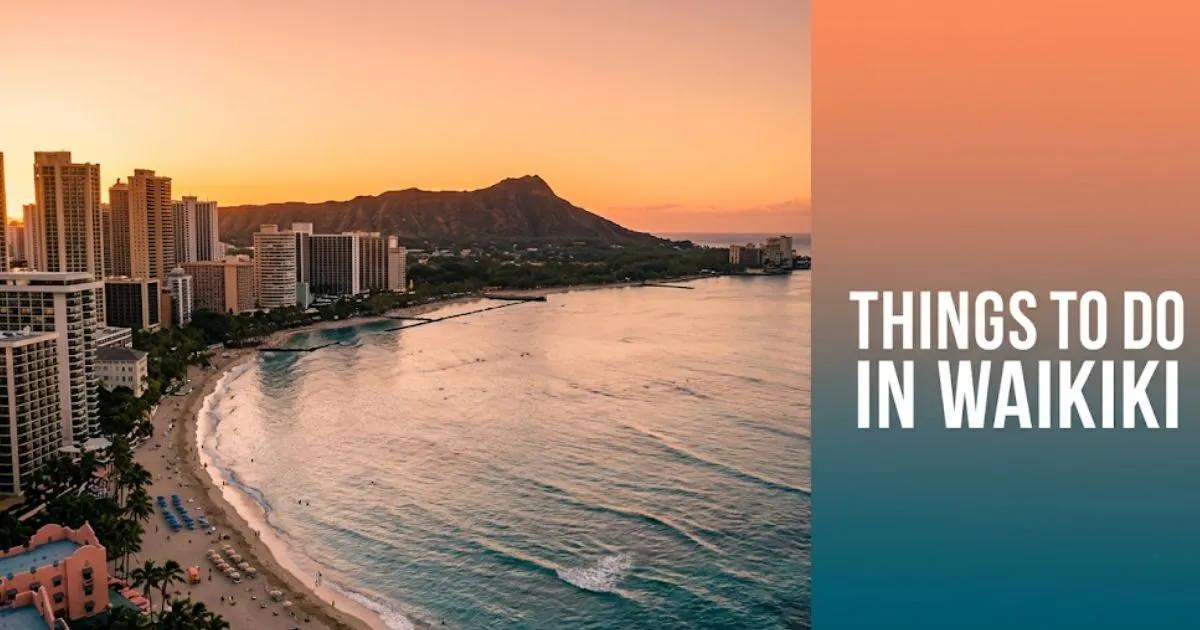
The neighborhood sits on Oahu’s south shore, framed by the Ala Wai Canal and Diamond Head crater. According to the Hawaii Tourism Authority, Waikiki remains one of the most visited beach destinations in the entire Pacific region.
This guide covers specific activities, honest beach guidance, the best dining beyond the obvious tourist spots, a 3-day itinerary framework, and the practical logistics most competitors leave out entirely. Verify hours, prices, and reservation requirements directly with each venue before your 2026 visit.
Things To Do in Waikiki: What Makes This Neighborhood Work
Waikiki works because everything that matters is within walking distance of Kalakaua Avenue, the neighborhood’s main spine.
The strip runs roughly 1.5 miles from the Hilton Hawaiian Village at the western end to Kapiolani Park at the eastern end near Diamond Head. A walker covers that distance in about 25 minutes at a relaxed pace.
What genuinely separates Waikiki from comparable beach resort destinations is the density. Ocean activities, cultural sites, excellent food, and a legitimate world-caliber hiking trail are all reachable without a car.
The challenge is that Waikiki’s popularity creates genuine crowd management problems. Beach space, restaurant tables, and trailhead parking all require strategy rather than spontaneity.
Insider Tip:
- The western end of Waikiki, near Fort DeRussy Beach Park, gets less foot traffic than the central hotel strip.
- The eastern end near Kapiolani Park and Queen’s Surf Beach is where experienced visitors and locals tend to congregate.
- Solo travelers find the central strip the most social. Families benefit most from the calmer water and more space at the eastern sections.
| Activity Zone | Location | Best For | Crowd Level |
|---|---|---|---|
| Central Waikiki Beach | In front of main hotels | Social beach experience | Very high |
| Fort DeRussy Beach | Western Waikiki | More space, calmer feel | Moderate |
| Queen’s Surf Beach | Near Kapiolani Park | Locals, snorkelers | Low to moderate |
| Sans Souci Beach | Eastern end, near New Otani | Families, seniors, calm water | Low |
| Kapiolani Park | Eastern boundary | Picnics, joggers, events | Low |
Best Things To Do in Waikiki, Hawaii
The best things to do in Waikiki, Hawaii in 2026 span ocean activities, mountain hiking, cultural sites, and a local food scene that genuinely rewards those who move off Kalakaua Avenue.
Ranked by genuine value rather than tourist popularity, the standout experiences are: surfing or outrigger canoe at Canoes break, the Diamond Head State Monument sunrise hike, snorkeling at Hanauma Bay, a sunset catamaran cruise, the Honolulu Museum of Art, and the food corridor on Kapahulu Avenue.
Duke’s Waikiki is the most famous restaurant name in the neighborhood. It is also the one experience most worth reconsidering. The food is solid Hawaiian-American and the setting is beautiful. The wait times during peak hours can consume 90 minutes of a day that could be spent elsewhere.
Arancino on Beachwalk on Beachwalk Street, two blocks from the beach, serves Italian cuisine with locally sourced ingredients and rarely has a significant wait even on weekends.
| Experience | Cost Range (per person, 2026 general estimate) | Best Traveler Profile | Time Required |
|---|---|---|---|
| Diamond Head hike | $5 to $25 vehicle and entry fees, verify current rates | All profiles | 2 to 3 hours |
| Surfing lesson at Canoes | $50 to $100+ | Solo, couples, families 8+ | 1.5 to 2 hours |
| Hanauma Bay snorkeling | $25 to $35 entry, reservation required | Families, couples | Half day |
| Catamaran sunset cruise | $60 to $120+ | Couples, adults | 1.5 to 2 hours |
| Honolulu Museum of Art | $20 to $25 adults, children often free | Culture travelers, couples | 2 to 3 hours |
| Kapiolani Park beach walk | Free | All profiles | 30 min to 2 hours |
Things To Do on Waikiki Beach: Know Your Sections
The single most important thing to understand about Waikiki Beach is that it is not one beach. It is a 2-mile stretch of sand divided into distinct sections, each with different crowd levels, water conditions, and character.
The central section, directly in front of the Moana Surfrider and Royal Hawaiian hotels, is what every photo shows. It is also the most densely packed section of sand in Honolulu at midday.
Queen’s Surf Beach, near the Diamond Head end of the strip next to Kapiolani Park, is where Honolulu’s LGBTQ+ community has long gathered, where local families set up on weekends, and where water quality is consistently better than the central hotel zone.
Sans Souci Beach, also called Kaimana Beach, sits just past the New Otani Kaimana Beach Hotel. Honolulu residents, longtime repeat visitors, and fitness swimmers use this section regularly. The water is calm, clear, and rarely crowded.
For families with children under 10, Sans Souci offers gentler water entry, better shade options from the ironwood trees, and significantly more breathing room than the central strip.
For seniors and accessibility travelers, the paved beachfront path runs the length of the strip. Beach wheelchairs are available through the City and County of Honolulu; contact the Waikiki Beach Services office to confirm 2026 availability and reservation requirements.
Insider Tip:
- Arrive at any beach section before 9 AM to find space without competition.
- The midday hours from 11 AM to 2 PM represent peak crowding on the central strip.
- Fort DeRussy Beach, on the western end near the military recreation area, is one of the least crowded stretches with free public access.
Waikiki Beach Activities and Water Sports
Waikiki’s south shore produces small, consistent surf that makes it one of the best places in Hawaii to learn to surf. The Canoes surf break, named for the outrigger canoes used for centuries off this coastline, is the primary beginner wave.
Surf schools operate directly off the beach. Hans Hedemann Surf School and Waikiki Beach Services both offer structured beginner lessons with certified instructors. Lessons typically run 90 minutes and include board, rash guard, and instruction.
Outrigger canoe rides are a distinctly Hawaiian experience unavailable at most beach destinations. Several operators run outrigger canoe sessions from the main beach, catching small surf close to shore.
Catamaran cruises depart multiple times daily from the beach itself. Morning snorkel cruises and sunset cocktail sails both run from operators including Maitai Catamaran and Holokai Catamaran, with departures directly from the sand in front of the main hotels.
Stand-up paddleboard (SUP) rentals are available from multiple beachside vendors. Early morning, before 8 AM, offers the flattest water conditions for paddleboarding.
For couples: The sunset catamaran cruise is the most reliably romantic Waikiki experience. Book at least 48 hours in advance during peak season (June through August) as popular departure times fill.
For budget travelers: Bodyboarding and boogie board rentals run approximately $10 to $20 per hour from beachside vendors, making them the most affordable active ocean experience.
Key activities to book in advance for 2026:
- Catamaran sunset cruises (48 to 72 hours ahead in peak season)
- Private surf lessons (same day to 24 hours ahead for group; further ahead for private)
- Outrigger canoe rides (same day, first come first served at most operators)
Key Takeaway: Skip the crowded central beach at midday. Go early, head east toward Queen’s Surf Beach or Sans Souci, and book water sports at least 48 hours ahead during summer 2026.
Diamond Head Hike From Waikiki
Diamond Head State Monument is the single best half-day outdoor activity reachable from Waikiki. The 1.6-mile round-trip trail climbs to the rim of the extinct volcanic crater called Leahi in Hawaiian, with panoramic views across Waikiki’s coastline.
The trail gains about 560 feet in elevation. Most reasonably fit adults complete the round trip in 1.5 to 2.5 hours, including time at the summit.
Getting there from Waikiki is straightforward. The walk from central Waikiki along Diamond Head Road takes about 30 minutes. TheBus route 23 and route 24 stop near the trailhead, making this the simplest car-free option.
Driving requires advance parking reservation through the Hawaii State Parks online system. This is not optional; the parking area is small and fills well before 9 AM on busy days. Verify the current reservation system before your 2026 visit, as the State of Hawaii has updated entry procedures periodically.
Sunrise hike timing: The park typically opens at 6 AM. Arriving within the first 30 minutes of opening gives the best chance at uncrowded trails and the best light for photography from the summit.
For seniors and accessibility travelers: The trail includes tunnels, stairs (99 steps at one section), and uneven volcanic rock. It is not wheelchair accessible. The first quarter mile is relatively flat; those with mobility limitations can enjoy this section without committing to the full ascent.
Insider Tip:
- Bring water. The trail has no water fountain or shade after the first few minutes.
- Sunrise is cooler and less crowded than midday, but requires earlier planning.
- The view from the bunker observation deck is the actual destination. The trail itself is not the highlight; the summit is.
Waikiki Snorkeling and Ocean Experiences
The best snorkeling reachable from Waikiki is not at Waikiki Beach itself. Hanauma Bay Nature Preserve, approximately 10 miles east of Waikiki, is the reef system consistently rated among Oahu’s top marine environments.
Hanauma Bay requires an advance online reservation through the Hawaii Division of Aquatic Resources. The reservation system opens 48 hours in advance and slots fill within minutes of opening on peak days. Plan this well before your 2026 arrival.
Entry fees, educational video requirements, and reservation procedures have been updated periodically. Verify all current requirements at the Hawaii DLNR website before booking.
Waikiki Beach itself offers occasional turtle sightings, particularly near the reef sections closer to the Diamond Head end of the strip. These are wild Hawaiian green sea turtles (honu), protected under federal law. Observe from a respectful distance.
For snorkeling directly off Waikiki without the Hanauma trip, Queen’s Surf Beach offers the best reef access and the clearest water of any section along the main strip. Bring your own mask and fins; rental shops on Kalakaua Avenue carry standard equipment.
For families with children: Hanauma Bay’s shallow reef areas are excellent for children 7 and older who can swim comfortably with a mask. The bay’s protected setting means calmer water than open ocean snorkeling.
For budget travelers: Renting snorkel gear on Kapahulu Avenue or from beachside vendors runs approximately $10 to $20 per day and allows you to use Waikiki’s reef sections without paying for a guided tour.
Important: Always check the Hawaii jellyfish alert cycle before ocean entry. Jellyfish conditions typically intensify 8 to 10 days after each full moon. The Waikiki Aquarium and the Hawaii DLNR post current water condition advisories.
Things To Do in Waikiki at Night
Waikiki’s evening options run from genuinely excellent live music to tourist-facing dinner shows, and knowing the difference matters.
Blue Note Hawaii, inside the Outrigger Waikiki Beach Resort on Kalakaua Avenue, is the most credible live music venue in the neighborhood. It books genuine touring and local acts across jazz, blues, and Hawaiian music. Tickets run approximately $25 to $60 or more depending on the act; verify the 2026 calendar and pricing directly with the venue.
The Royal Hawaiian Luau, held on the beach at the Royal Hawaiian Hotel on Friday evenings, is the most established luau experience within walking distance of most Waikiki hotels. It is not the cheapest option, but the beachfront setting is legitimately distinctive. Luaus typically run $100 to $200 per adult with variations for children; verify current pricing before booking.
For a more local-facing evening, the Kani Ka Pila Grille at the Outrigger Reef Waikiki hosts free nightly Hawaiian music performances. This is where working Hawaiian musicians play in an accessible, no-cover environment. It is one of the most genuinely local experiences available within Waikiki’s hotel zone.
The stretch of Kalakaua Avenue between the Royal Hawaiian Center and Kapahulu Avenue has multiple bars with outdoor seating and ocean breezes. Moana Surfrider’s Banyan Tree bar area is the most atmospheric.
For solo travelers: Blue Note Hawaii and Kani Ka Pila Grille both work well for solo visitors. The social atmosphere at both venues makes conversation easy.
For couples: The Royal Hawaiian Luau or a sunset cocktail cruise followed by dinner at Arancino on Beachwalk or Nobu Honolulu in the Hotel Park Waikiki is the strongest evening sequence.
Key Takeaway: Kani Ka Pila Grille at the Outrigger Reef offers free, genuine Hawaiian music nightly. It outperforms most paid tourist alternatives for actual cultural value.
Waikiki Food and Dining
Waikiki’s dining scene divides sharply between the tourist-facing restaurant infrastructure on Kalakaua Avenue and the genuinely excellent food corridor on Kapahulu Avenue, which begins at the eastern edge of the neighborhood.
Marukame Udon on Kalakaua Avenue is the exception to the tourist-strip rule. This Japanese udon chain serves fresh, hand-pulled noodles for well under $15 per person. The line moves fast. It is one of the highest-value meals in central Waikiki.
On Kapahulu Avenue, Ono Hawaiian Foods is the establishment most consistently cited by longtime Honolulu residents as the place for genuine Hawaiian plate lunch. Kalua pig, laulau, poi, haupia. The restaurant is cash-only, closes early, and is not designed for tourists in any way. That is the point.
Leonard’s Bakery, also on Kapahulu, has served malasadas (Portuguese doughnuts) since 1952. The line moves constantly. Order the custard-filled version. This is one of the few “famous” Waikiki-adjacent food experiences that completely earns its reputation.
For upscale dining, Nobu Honolulu inside the Hotel Park Waikiki delivers the brand’s standard-setting Japanese-Peruvian cuisine in a room that doesn’t feel like a hotel restaurant.
For budget travelers: Marukame Udon, plate lunch trucks on Kapahulu, and the food court inside the Royal Hawaiian Center all offer complete meals in the $10 to $15 range.
For couples: Arancino on Beachwalk for Italian, or Nobu Honolulu for special occasion dining.
Insider Tip:
- Ono Hawaiian Foods closes early, often before 7 PM, and is closed Sundays. Verify current hours before making the trip.
- The poke bowl options inside Times Supermarket on Beretania Street (a 15-minute drive or short bus ride) are what locals actually eat for poke, not the resort hotel poke bars.
Free Things To Do in Waikiki
Waikiki offers a genuine range of free experiences that most visitors overlook in favor of paid activities.
Kapiolani Park is a 300-acre public park at the eastern edge of Waikiki. It hosts free weekend markets, free hula performances, joggers, picnickers, and kite flyers. On weekend mornings, it functions as a neighborhood gathering point for Honolulu residents.
The Waikiki Beach Walk itself, the paved promenade running the length of the beachfront, costs nothing and is one of the most pleasant walks of any US beach destination. Best experienced at sunrise or during the golden hour before sunset.
Free hula performances happen at the Kuhio Beach Hula Mound, near the Duke Kahanamoku Statue on Kalakaua Avenue, typically on Tuesday, Thursday, and Saturday evenings. Verify the 2026 schedule with the Waikiki Improvement Association before planning around this.
The Duke Kahanamoku Statue itself, dedicated to the Olympic swimmer and surfing ambassador, is a landmark worth the five minutes it takes to understand his significance. Duke is the reason competitive surfing exists globally.
Free activities in Waikiki for 2026:
- Sunrise beach walk from Fort DeRussy to Kapiolani Park
- Kuhio Beach hula shows (verify schedule)
- Kapiolani Park exploration
- Watching surfing at Canoes break from the beach
- Honolulu Zoo grounds from outside the fence (Zoo admission requires a ticket)
- Sunday morning farmers market in Kapiolani Park (vendors vary; confirm 2026 dates)
For seniors: The flat paved beachfront path is fully accessible and one of the finest free walking experiences of any US resort neighborhood.
For families: Kuhio Beach Hula Mound performances are free and engaging for children of all ages.
Waikiki for Families With Kids
Waikiki is one of the more practical US beach destinations for families with children, primarily because the walkable layout eliminates constant car logistics.
The best beach section for families is Sans Souci Beach (Kaimana Beach) at the eastern end of the strip. The water entry is gradual, the water clarity is good, and the crowd density is significantly lower than the central hotel beach.
Waikiki Aquarium, on Kalakaua Avenue adjacent to Kapiolani Park, houses Hawaiian monk seals, reef fish, and coral exhibits in a compact, manageable space. Children under 12 typically take 45 to 75 minutes to cover the full facility. Admission runs approximately $12 to $20 per adult with lower rates for children; verify 2026 pricing directly with the aquarium.
The Honolulu Zoo sits at the western edge of Kapiolani Park, walkable from most Waikiki hotels. It operates as a mid-size municipal zoo. For families with children under 10, it is a reliable half-day activity. For older children or adults without young kids, the Waikiki Aquarium or a beach activity is a stronger use of time.
Surfing lessons at Canoes work well for children 8 and older. Most instructors require children to be comfortable swimmers. Group lessons are more affordable; verify current age and swim requirements with operators before booking.
Stroller logistics: Kalakaua Avenue has wide sidewalks and is fully stroller-accessible. The Diamond Head trail is not stroller-appropriate. Hanauma Bay’s entrance path involves a moderate hill.
Practical family tip: Buy groceries at ABC Stores, which are located every few blocks on Kalakaua, for snacks and basics. For a full grocery run, Foodland or Times Supermarket in adjacent Honolulu neighborhoods saves significantly compared to hotel room service and resort minibar pricing.
Key Takeaway: For families, Sans Souci Beach plus the Waikiki Aquarium covers two of the strongest half-days. Add a morning at Kapiolani Park and an evening hula show for a complete, low-cost family day in Waikiki.
Waikiki for Couples
Waikiki is one of the most reliably romantic beach destinations in the US, primarily because the combination of ocean sunsets, excellent dining, and live music creates natural evening momentum without requiring elaborate planning.
The single strongest romantic sequence in Waikiki: a late afternoon catamaran cruise watching the sun drop behind Diamond Head, followed by dinner at Nobu Honolulu or Arancino on Beachwalk, followed by a late set at Blue Note Hawaii.
Sunrise on the beach is the most underused romantic experience in Waikiki. Almost no tourists are on the sand before 7 AM. The light is extraordinary, the water is calm, and the contrast with the midday crowd reality is dramatic.
The Royal Hawaiian Hotel, called the Pink Palace, offers afternoon tea service and a historic bar scene that functions beautifully as a couples’ afternoon activity without requiring hotel guest status.
What to avoid: The commercial luau experience is often recommended for couples, but most luau shows are better suited to groups and families than to couples seeking intimate atmosphere. The Paradise Cove Luau, about 17 miles from Waikiki, is a large group format with hundreds of guests. The Royal Hawaiian Luau is smaller and more atmospheric, but still a crowd-focused production.
Insider Tip:
- Book any catamaran sunset cruise at least 48 to 72 hours ahead in peak season.
- Request the beachside table at Arancino on Beachwalk when making your reservation.
- The walk along the beachfront path from the Hilton Hawaiian Village to Kapiolani Park at sunset is free and more genuinely romantic than most paid experiences.
Things To Do Near Waikiki Beach
The immediate area surrounding Waikiki offers several experiences that rival or exceed anything within the neighborhood itself.
Ala Moana Beach Park, a 15-minute walk west of the Hilton Hawaiian Village along Ala Moana Boulevard, is where Honolulu residents go to swim, picnic, and exercise. The beach is wider, less crowded, and more local-facing than any section of Waikiki. It costs nothing to access.
Ala Moana Center, adjacent to Ala Moana Beach Park, is one of the largest open-air shopping centers in the United States. It contains every major retail brand alongside Hawaii-specific stores and a strong food hall. This is where practical Honolulu shopping happens, not DFS Galleria.
The Honolulu Museum of Art on South Beretania Street, about a mile from central Waikiki, holds one of the strongest art collections in the Pacific. The collection spans Asian, American, and European works. Admission runs approximately $20 per adult as a general estimate; verify 2026 pricing. The museum café is a legitimate lunch stop.
Chinatown Honolulu, about 3 miles from Waikiki via TheBus, is where the city’s most interesting independent dining and arts scene operates. The Livestock Tavern and Fête are among the most critically regarded restaurants in Honolulu. This is not a tourist destination; it is a functioning neighborhood.
For solo travelers: A half-day in Honolulu’s Chinatown followed by a visit to the Honolulu Museum of Art is the best cultural day within reach of Waikiki. Most travelers never make it there, which is their loss.
For budget travelers: Ala Moana Beach Park is free, larger, and less crowded than any Waikiki beach section. It is the single best free beach upgrade available from a Waikiki base.
Waikiki Day Trips From Honolulu
The most significant historical site reachable on a day trip from Waikiki is Pearl Harbor National Memorial, approximately 8 miles west. The memorial complex includes the USS Arizona Memorial, the Battleship Missouri Memorial, the USS Bowfin Submarine, and the Pacific Aviation Museum.
Advance tickets for the USS Arizona Memorial boat tour are managed by the National Park Service and require booking well in advance. The tours sell out frequently, particularly during peak season. Book through the official NPS site before your 2026 departure.
The North Shore of Oahu sits about 35 to 40 miles from Waikiki, accessible via H-1 West to H-2 North or via the Kam Highway. Haleiwa town offers surf shops, shrimp trucks, and the famous Giovanni’s Shrimp Truck. In winter (November through February), the North Shore hosts the largest surfing competitions in the world at spots like Pipeline and Sunset Beach.
Hanauma Bay Nature Preserve functions as a half-day trip requiring advance reservation (covered in detail in the snorkeling section). Go early; the bay’s conditions are best before 11 AM.
Polynesian Cultural Center in Laie, about 35 miles from Waikiki, is the most ambitious cultural attraction on Oahu. The facility spans 42 acres and presents six Pacific Island village simulations with nightly luau and entertainment. Admission packages run $60 to $180 depending on the package selected; verify 2026 pricing.
Day trip logistics:
- For Pearl Harbor: Drive or take TheBus Route 20 or 42. Allow a full day for the complete memorial complex.
- For North Shore: Rent a car or book a guided North Shore tour. The drive is approximately 45 to 60 minutes depending on traffic.
- For Hanauma Bay: Book your reservation online 48 hours ahead. Arrive by 8 AM for best conditions and parking.
- For Polynesian Cultural Center: Book tickets online in advance. Plan for a full afternoon and evening including the luau show.
Key Takeaway: Pearl Harbor requires advance NPS ticket reservation. Book it before any other Waikiki day trip planning. Slots disappear fast, especially in summer 2026.
Getting Around Waikiki Without a Car
Waikiki is one of the few US resort destinations where not renting a car is a genuinely practical choice for most travelers.
TheBus, operated by the City and County of Honolulu, is the most underused resource among Waikiki visitors. A single ride costs approximately $3 as a general estimate; verify current 2026 fares. TheBus reaches Diamond Head, Ala Moana, Chinatown, Pearl Harbor (with transfer), and most major Waikiki-area destinations.
Rideshare services including Uber and Lyft operate throughout Waikiki and Honolulu. The ride from Daniel K. Inouye International Airport (HNL) to central Waikiki typically takes 20 to 35 minutes depending on traffic, with costs ranging widely based on time of day.
Waikiki Trolley operates four color-coded routes covering tourist destinations including Ala Moana, Chinatown, Diamond Head, and Waikiki itself. Day passes run approximately $25 to $40; verify current pricing and 2026 route availability. The trolley is convenient but slower than TheBus and more expensive.
The Biki bikeshare system operates throughout Honolulu with docking stations along Kalakaua Avenue and Kapahulu. Biki is the fastest way to move between Waikiki’s main stretch and Ala Moana or Kaimuki without a car.
Parking reality: If you do rent a car, expect to pay $25 to $50 or more per day for hotel parking. Street parking in Waikiki is extremely limited. The Waikiki Shell parking area near Kapiolani Park is one of the less expensive structured lots; verify availability and current rates.
For families: A rental car makes sense if you plan multiple day trips, especially to the North Shore or Polynesian Cultural Center. For a Waikiki-focused trip with one or two day trips, TheBus plus rideshare is more economical.
For seniors: Rideshare provides the most door-to-door flexibility without the physical demands of bus navigation. TheBus requires standing waits and is standing-room-only during peak hours.
Waikiki Itinerary for 3 Days
A 3-day Waikiki itinerary should sequence activities to manage heat, crowds, and distance intelligently.
Day 1: Waikiki Beach and Neighborhood
- Arrive at Sans Souci Beach by 7:30 AM before heat and crowds build.
- Spend 90 minutes swimming and orienting to the neighborhood.
- Walk the beachfront path west to the Duke Kahanamoku Statue and central Waikiki.
- Book a surfing lesson or outrigger canoe ride for late morning.
- Lunch at Marukame Udon on Kalakaua Avenue; expect a short line, fast service.
- Afternoon rest during peak heat hours (12 PM to 3 PM); hotel pool or room.
- Late afternoon catamaran sunset cruise (pre-booked).
- Dinner at Arancino on Beachwalk.
- Evening live music at Kani Ka Pila Grille (free, no cover).
Day 2: Diamond Head and Culture
- Depart hotel by 6:15 AM for Diamond Head trailhead (early entry, pre-booked parking or TheBus).
- Complete summit hike, allow 2.5 hours including summit time.
- Return to Waikiki by 10 AM. Breakfast at Kapiolani Park area café.
- Honolulu Museum of Art, late morning (plan 2 hours).
- Lunch in Chinatown (Livestock Tavern or Fête) via TheBus or rideshare.
- Afternoon: Kapiolani Park, Waikiki Aquarium if traveling with children.
- Evening: Royal Hawaiian Luau (Friday only) or Blue Note Hawaii live music.
Day 3: Day Trip
- Early departure (7 AM) to Pearl Harbor National Memorial for full complex visit.
- Spend morning and early afternoon at the memorial sites (allow 3 to 4 hours minimum for USS Arizona plus one additional site).
- Drive or bus to Ala Moana Beach Park for afternoon beach time.
- Ala Moana Center for shopping or dining in the food hall.
- Return to Waikiki for final evening dinner at Nobu Honolulu.
- Final sunset beach walk from Hilton Hawaiian Village to Kapiolani Park.
Itinerary note: This framework assumes mobile, reasonably active travelers. For families with young children, substitute Day 2’s museum visit with Waikiki Aquarium plus Honolulu Zoo and reduce the overall walking distance. For seniors, allow additional rest blocks and consider rideshare instead of walking transitions.
Best Time To Visit Waikiki
The best time to visit Waikiki is April through early June or late September through November.
These shoulder seasons offer warm, consistent weather, lower hotel rates than summer peak, and smaller crowds at beaches, trailheads, and popular restaurants. Water on the south shore is calm and warm during these months, making ocean activities optimal.
Summer (June through August) is peak tourist season. Schools are out, hotel rates climb, and Waikiki Beach reaches its maximum crowd density. This is the best time for calm ocean conditions, but the worst for anyone who values space, value, or restaurant availability without waits.
Winter (December through February) brings Oahu’s wettest months, though rain typically comes in short bursts rather than all-day events. This is humpback whale season, with whale sightings possible from the shoreline and on ocean excursions. South shore swells can make swimming rougher during winter storm systems.
April and May offer the most favorable combination: school crowds have not arrived, hotel rates have not peaked, weather is warm and dry, and the south shore water remains calm and clear.
According to the Hawaii Tourism Authority, visitor volumes reach their annual peak in July and August, with a secondary peak in December during the holiday period.
For budget travelers: January through early March (excluding the holiday period) typically offers the lowest hotel rates of the year in Waikiki. Shoulder pricing can be 30 to 50 percent below peak summer rates.
For families: Spring break (late March to mid-April) is a practical window. Weather is good, schools are out, but it is shorter than the full summer peak and slightly less crowded.
Booking lead time for 2026:
- Summer 2026 (June through August): Book hotels 4 to 6 months in advance.
- Pearl Harbor NPS tours: Book 2 to 4 months in advance for peak dates.
- Hanauma Bay reservations: Book 48 hours ahead per the current system.
- Catamaran cruises and luaus: Book 1 to 2 weeks ahead during shoulder season; 4 to 6 weeks during peak summer.
Safety and Practical Warnings for Waikiki
Ocean conditions at Waikiki present the most common genuine safety risk for visitors.
Key safety and practical facts every visitor should know:
- Rip currents occur along Waikiki Beach, particularly after storm systems and during high surf. Always check posted lifeguard flag conditions before entering the water.
- Jellyfish cycles on Oahu intensify approximately 8 to 10 days after each full moon. Portuguese man-of-war and box jellyfish sightings occur periodically. Check Hawaii DLNR advisories before ocean entry.
- UV index in Hawaii regularly exceeds 10, the extreme range. Sunscreen, hats, and shade breaks between 11 AM and 2 PM are practical necessities, not suggestions.
- Coral-safe sunscreen is required at Hanauma Bay and strongly recommended island-wide. Standard oxybenzone-based sunscreens are prohibited in Hawaii state waters. Reef-safe mineral sunscreen is widely available in Waikiki stores.
- Ocean water clarity varies by location. The central Waikiki hotel strip can have lower water clarity from boat traffic and foot traffic. Sans Souci and Queen’s Surf Beach have consistently cleaner water.
- Theft from cars is a known issue at trailhead parking areas including Diamond Head. Leave nothing visible in parked vehicles.
- Heat management: July and August temperatures in Waikiki regularly exceed 85 to 90 degrees Fahrenheit with high humidity. Plan strenuous activities before 10 AM.
For ocean emergencies, the US Coast Guard Sector Honolulu is the primary maritime emergency contact. Lifeguards staff the main Waikiki beach sections during daylight hours; verify current staffing locations with the City and County of Honolulu Beach Safety Division before your visit.
Frequently Asked Questions About Things To Do in Waikiki
What are the best things to do in Waikiki for first-time visitors?
First-time visitors should prioritize: the Diamond Head hike, a surf or outrigger lesson at Canoes break, snorkeling at Hanauma Bay (with advance reservation), a catamaran sunset cruise, and dinner on Kapahulu Avenue.
These five experiences cover the full range of what Waikiki does distinctly well, from ocean activities to cultural food.
Skip Duke’s Waikiki for dinner. The wait is rarely worth it compared to better, faster options two blocks away.
Is Waikiki Beach worth it, or is it too crowded?
Waikiki Beach is worth visiting, but the central hotel-front section is genuinely very crowded during peak hours.
Walk 10 to 15 minutes east to Queen’s Surf Beach or Sans Souci Beach. The crowd level drops significantly and the water quality improves.
Early morning before 9 AM on any section of Waikiki Beach is a qualitatively different experience from midday.
How do I get from Waikiki to Diamond Head?
TheBus routes 23 and 24 stop near the Diamond Head trailhead and cost approximately $3 per ride; verify current fares.
The walk from central Waikiki along Diamond Head Road takes about 25 to 30 minutes.
Driving requires advance parking reservation through the Hawaii State Parks online system; the small parking lot fills before 9 AM on most days.
What can you do in Waikiki for free?
Free activities in Waikiki include the beachfront path walk, Kapiolani Park, the Kuhio Beach hula shows on select evenings, watching surf at Canoes break, and the Duke Kahanamoku Statue area.
Ala Moana Beach Park, a 15-minute walk from the western end of Waikiki, is free and significantly less crowded than the main Waikiki strip.
Verify the hula show schedule with the Waikiki Improvement Association before building your evening around it.
Is Waikiki good for families with young children?
Waikiki works well for families, particularly for children 6 and older who can participate in ocean activities.
Sans Souci Beach at the eastern end of the strip offers the calmest water, most space, and lowest crowd density of any Waikiki beach section, making it the best choice for young swimmers.
The Waikiki Aquarium and Honolulu Zoo are both within walking distance and fill a solid half-day for children under 12.
What is the best time of year to visit Waikiki?
The best time to visit Waikiki is April through early June or late September through October.
These shoulder periods offer warm weather, calm south shore water conditions, and significantly lower hotel rates and crowd levels than the July and August peak.
Budget travelers should consider January through early March, when hotel rates in Waikiki reach their annual low while weather remains generally warm and dry.
Final Thoughts on Planning Your Waikiki Trip
Book Pearl Harbor and Hanauma Bay before anything else. Both require advance reservations and both sell out quickly in 2026’s peak periods.
For the beach itself, resist the default placement on the crowded central strip. Walk east to Sans Souci or Queen’s Surf Beach. The difference in space and water quality justifies the extra 15 minutes of walking every single time.
Travel conditions, prices, hours, and reservation requirements in Waikiki change regularly. Verify all critical logistics directly with the Hawaii State Parks Division, the National Park Service Pearl Harbor site, and individual venues before your departure.
You now have what you need to plan a specific, well-sequenced Waikiki trip. Start with Pearl Harbor tickets. Then work backward from there.