16 Unforgettable Things to Do in Utah (2026 Guide)

Utah packs more geological drama into one state than entire countries. The challenge is choosing from its five national parks, 43 state parks, and vast wilderness.
Arches, Bryce Canyon, and Zion sit on many travelers’ screens right now. The state sees over 12 million visitors in a typical year according to the Utah Office of Tourism.
This guide builds a decision framework for your 2026 trip. It matches specific experiences to your travel style, from navigating timed-entry permits to finding solitude beyond the famous viewpoints.
things to do in utah
The essential Utah experience begins with its five iconic national parks. These protected lands showcase the planet’s most accessible concentration of slot canyons, natural arches, and vermillion hoodoos.
Route planning is the single most important logistical step you will take. Distances between parks are vast, often requiring three to four hours of driving between destinations.
| Park | Iconic Experience | Best Traveler Fit |
|---|---|---|
| Zion | The Narrows slot canyon hike | Adventurous couples and solo hikers |
| Bryce Canyon | Sunrise at the rim of the amphitheater | Seniors and families with young children |
| Arches | Delicate Arch at sunset | Photographers and moderate hikers |
| Canyonlands | Island in the Sky overlooks | Solitude-seeking road trippers |
| Capitol Reef | Fruit picking in Fruita orchards | Repeat Utah visitors wanting quiet |
Springdale serves as the gateway for Zion and fills up months ahead. Moab is your adventure basecamp for both Arches and Canyonlands, offering the most lodging and dining options statewide.
Solitude seekers should point their compass toward Capitol Reef National Park. It receives a fraction of the visitation that Zion does, yet offers equally stunning canyon drives and historical orchards where you can pick fruit in season.
The Wasatch Front around Salt Lake City delivers the state’s urban energy. This is where craft breweries, James Beard-recognized restaurants, and world-class skiing collide within an hour of an international airport.
Key Takeaway: Choose two, maybe three, parks maximum for a week-long trip. Driving to all five in seven days means spending your vacation behind a windshield.
once in a lifetime things to do in utah
A permit to hike Angels Landing in Zion National Park represents the ultimate high-stakes trek. The final half-mile follows a knife-edge sandstone ridge with chains bolted into the rock and thousand-foot drop-offs on both sides.
The experience requires winning a seasonal lottery for a permit. You navigate a steep series of switchbacks called Walter’s Wiggles before the chain section even begins.
Physical fitness is non-negotiable for this five-hour round-trip trek. The route is ill-suited for anyone with a serious fear of heights or children under 12.
A serene alternative is the Observation Point Trail accessed from the East Mesa Trailhead. It actually looks down on Angels Landing and requires no permit, offering a safer, equally stunning panorama.
A hot air balloon flight over the sandstone spires of Moab at dawn provides a less physically demanding once-in-a-lifetime moment. Flights launch near the Colorado River as the rising sun ignites the red rock fins of Arches National Park below you.
Private companies like Moab Balloon Adventures typically operate from early spring through late autumn. Budget travelers should expect to pay a premium, with costs frequently exceeding three hundred dollars per person.
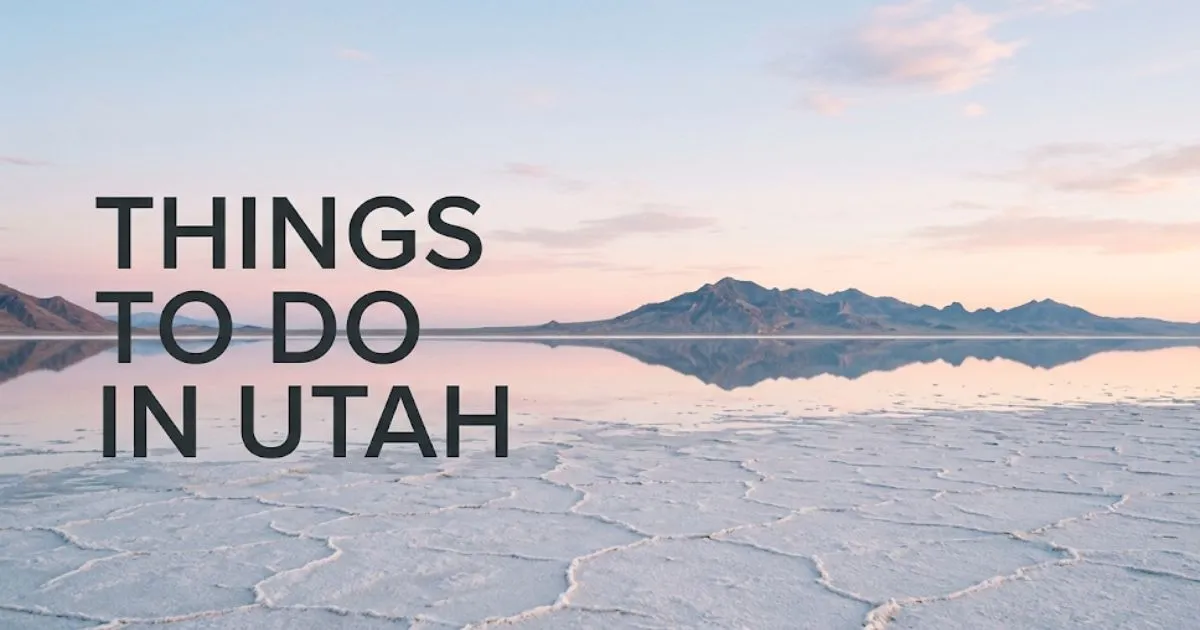
The Bonneville Salt Flats offer an entirely different, disorienting wonder. A crusty, white, impossibly flat pan stretches for miles along Interstate 80 near the Nevada border, a remnant of an ancient lakebed.
Land speed records are set on the salt at the Bonneville Speedway. On a windless day when a thin sheet of water covers the salt, the horizon dissolves into a perfect mirror effect that draws photographers from around the world.
Key Takeaway: For the best mirror photos at the Salt Flats, visit after a rainstorm in the cooler months. Summer heat makes the salt brutally reflective and scorching hot.
best places to visit in utah
Park City offers a polished, fully realized mountain town experience distinct from the desert parks. The former silver mining hub turned Olympic venue pairs historic Main Street charm with luxe resorts.
The Sundance Film Festival transforms Park City each January. For the rest of the year, visitors find high-end boutiques, an alpine coaster, and more than 400 miles of contiguous mountain bike trails during summer.
Couples looking for a mix of spa treatments and outdoor adventure should target Park City or Deer Valley. The dining scene here, particularly on Main Street, consistently outclasses Utah’s national park gateway towns.
Zion National Park cannot be missed for raw scenic power. The main canyon funnels visitors onto a shuttle system that accesses trailheads like the Temple of Sinawava, where The Narrows hike begins as a walk upstream through the Virgin River.
The park’s popularity is its biggest drawback. Shuttle queues can be long, and the main canyon floor feels less like wilderness and more like a busy urban pedestrian mall in summer.
For an equal dose of red rock grandeur without the crowds, the Kolob Canyons section of Zion sits 40 miles north of the main park. It is accessed directly off Interstate 15 and offers a scenic five-mile drive with overlooks and a stunning timber creek trail, all without the shuttle system.
Kanab, straddling the Arizona border, is an unsung basecamp dubbed “Little Hollywood” for its legacy of Western film shoots. It provides central access to Grand Staircase-Escalante National Monument and Vermilion Cliffs, offering a quiet, retro alternative to Springdale.
The Best Friends Animal Sanctuary in Kanab is the nation’s largest no-kill animal sanctuary. It is a surprisingly emotional stop that appeals to animal-loving families and solo travelers wanting a break from hiking.
Key Takeaway: Use the park shuttle systems on your first day at Zion and Bryce. They let you learn the layout, save parking stress, and offer basic interpretive guidance.
utah national parks road trip
A classic one-week loop starts in Salt Lake City and arcs south. The most efficient plan connects the parks like a string of pearls on a 500-mile necklace of interstate and scenic byway.
Your navigation backbone is Interstate 15 southbound to the Zion exit, followed by the legendary Scenic Byway 12 east through Bryce Canyon and beyond to Capitol Reef. The return north uses Highway 24 and Interstate 70 for a sweeping, otherworldly drive.
Step-by-Step Itinerary Outline:
- Day 1: Land at Salt Lake City International (SLC), drive 4.5 hours to Springdale. Settle in and walk the Pa’rus Trail for a sunset introduction to the canyon walls.
- Day 2: Full day in Zion. Ride the shuttle to the Temple of Sinawava and hike The Narrows bottom-up as far as you are comfortable. No permit is needed for this route.
- Day 3: Drive 2 hours to Bryce Canyon. Use the shuttle to access Inspiration Point. Hike the Queen’s Garden/Navajo Loop combination trail among the hoodoos.
- Day 4: Drive Scenic Byway 12 through Grand Staircase-Escalante. Stop at the Kiva Koffeehouse. Arrive in Torrey, the gateway to Capitol Reef, by late afternoon.
- Day 5: Explore Capitol Reef’s Capitol Gorge scenic drive. Pick fresh fruit from historic Fruita orchards if in season. Hike to Hickman Bridge.
- Day 6: Drive 2.5 hours to Moab. Secure a timed-entry permit for Arches for the following day. Do a sunset hike to Delicate Arch.
- Day 7: Drive the Island in the Sky mesa top in Canyonlands. Hike to Mesa Arch for sunrise. Return to Salt Lake City in the evening for a departure the next morning.
This itinerary works well for physically active couples and families with teenagers. Budget travelers can save significantly by camping in park campgrounds booked months ahead.
Seniors can modify the plan by skipping the strenuous Narrows hike for the Zion Canyon Overlook Trail. They should also drive to scenic overlooks in Bryce rather than hiking steep switchbacks up from the canyon floor.
Key Takeaway: Book your Moab lodging before anything else. It sells out fastest and dictates how your entire Arches and Canyonlands segment will function.
cool things to do in utah
UFO-shaped domes and alien rock formations turn Goblin Valley State Park into a bizarre playground. Unlike national parks, visitors can walk freely among the sandstone goblins, making it a perfect spot for families to scramble and explore.
The park sits in a remote stretch of the San Rafael Swell. Its silence and odd geology have made it a cult favorite among travelers who find themselves spontaneously laughing while wandering through the formations.
A nighttime slot canyon adventure in the Grand Staircase-Escalante National Monument ventures into the Earth with headlamps and guides. Companies like Excursions of Escalante lead small groups into Peek-a-Boo and Spooky Gulch, two of the most compressed and winding slots in the state.
Physical flexibility is required to navigate these narrow passages. The routes involve scrambling over chockstones and squeezing sideways through spaces barely wider than your shoulders.
Canyoneering is not for families with small kids or travelers with mobility concerns. Larger groups will move slowly, so book a private guide for a more efficient experience.
The Homestead Crater in Midway is a geothermal spring hidden inside a 55-foot-tall beehive-shaped limestone dome. You can soak, swim, or even scuba dive in the mineral-rich 90-degree water year-round.
This experience is a hit for couples looking for a spa-like, natural oddity. Reservations are mandatory and fill up quickly during Park City’s ski season and summer weekends.
Valley of the Gods, near Monument Valley, offers a free, unpaved 17-mile scenic loop through a landscape of towering buttes. The Bureau of Land Management maintains this road, and it serves as a quiet, accessible counterpoint to the more crowded national park experience.
Solo travelers will find a profound sense of scale here. The area is safe for a self-guided drive, but a high-clearance vehicle is strongly recommended after rain.
Key Takeaway: Do not enter any slot canyon, no matter how short the hike, if rain is in the forecast within a 50-mile radius. Drainage areas are vast and flash floods develop in minutes.
zion national park things to do
The Zion Canyon Shuttle system is the lifeblood of the park from March through November. You park at the visitor center and the bus drops you at nine stops along the scenic canyon road, a model of efficient, mandatory transit.
Private vehicles are banned from the main canyon during shuttle season. This rule is a blessing once you accept it, banishing traffic noise and the constant hunt for parking.
The Narrows hike is a pilgrimage for serious adventurers. From the Temple of Sinawava stop, you walk directly into the Virgin River and hike upstream through a canyon so narrow you can touch both walls at once.
Rent a dry suit and a sturdy walking stick from Zion Guru in Springdale before you go. The river bottom is covered in slippery, bowling-ball-sized rocks, and a proper staff saves you from a cold soaking.
Angels Landing is the park’s other tentpole hike, requiring a permit you must win through a seasonal lottery months in advance. The exposure on the chain section is real and not for hikers without a stable head for heights.
A spectacular alternative for families and those skipping the permit race is the Canyon Overlook Trail. It is a one-mile round-trip accessed right off the Zion-Mt. Carmel Highway that culminates in a massive view of the lower canyon.
Kolob Canyons deserves a half-day on any Zion itinerary. This detached, northwest section of the park requires no shuttle and sits directly off I-15, making it an easy stop on your drive in from Salt Lake City or Las Vegas.
The Timber Creek Overlook Trail in Kolob is a short, family-friendly hike to a 360-degree viewpoint. It shows off the park’s geography without battling the main canyon’s human traffic jams.
Parking at the main visitor center fills before 8 a.m. during peak months. Pay for a spot in Springdale and ride the free town shuttle to the pedestrian entrance to bypass the stress entirely.
best hikes in utah
Delicate Arch in Arches National Park is the three-mile, 480-foot climb to the state’s most recognizable natural symbol. The trail is an uphill slickrock scramble with zero shade and a final ledge carved into a cliffside.
Start this hike two hours before sunset and carry at least three liters of water per person. The bowl at the base of the arch is a natural amphitheater where a quiet, reverent crowd gathers to watch the stone turn molten orange.
Cascade Springs in the Uinta National Forest offers a completely different hiking aesthetic. An interpretive boardwalk and dirt path loop over a series of limestone terraces brimming with clear, spring-fed pools.
This is an ideal hike for seniors and families with stroller-age children. The terrain is gentle, the elevation gain is minimal, and the water features are a cool relief from the dry alpine air.
A true local favorite is Lake Blanche in the Wasatch Range above Salt Lake City. The six-mile round-trip trail is a punishing climb to a glacial basin where Sundial Peak reflects perfectly in the alpine lake.
This hike commands a full morning. The trailhead at the Mill B South Fork is in Big Cottonwood Canyon and fills completely by 7 a.m. on summer Saturdays.
For a canyon desert experience without the Arches or Zion entry logistics, the Little Wild Horse Canyon slot near Goblin Valley requires no permit. This non-technical route winds through eight miles of undulating, sun-streaked walls.
Families with children over eight will find this slot canyon an ideal introduction to the genre. It is tight enough to thrill but wide enough to avoid the technical gear and claustrophobia of deeper routes.
| Hike | Distance (Round-Trip) | Elevation Gain | Best For |
|---|---|---|---|
| Delicate Arch | 3 miles | 480 ft | Photographers, iconic bucket-list hikers |
| Lake Blanche | 6 miles | 2,700 ft | Fit locals, alpine lake seekers |
| Little Wild Horse Canyon | 8 miles | 300 ft | Families, first-time slot canyon explorers |
| Queens Garden/Navajo Loop | 3 miles | 600 ft | Seniors, hoodoo-view seekers |
| Cascade Springs | 0.8 miles | Minimal | Wheelchair users, small children |
Mountain bikers should consider the Whole Enchilada in Moab, a 26-mile descent from the La Sal Mountains down to the Colorado River. This is expert-only terrain that starts above 11,000 feet and drops through multiple climate zones.
Key Takeaway: Utah’s high desert means you will dehydrate twice as fast as you expect. A rule for the group: turn around when you have consumed half of your water, not when the bottle is empty.
unique utah experiences
Digging for prehistoric fossils at U-Dig Fossils near Delta is a hands-on geology lesson. For a set fee, the quarry lets you split open Middle Cambrian shale to find trilobite specimens that are over 500 million years old.
No experience is necessary and you keep whatever you find. The site is a flat, open quarry pit, making it surprisingly accessible for seniors and families who can tolerate direct sun and dry heat.
The Spiral Jetty on the northeastern shore of the Great Salt Lake is a pilgrimage for art lovers. Artist Robert Smithson’s 1,500-foot coil of basalt rock juts into the pinkish-red, saline waters in a remote stretch of the lake.
Reaching it involves a long, graded dirt road through an active cattle ranch. The journey has a true end-of-the-earth feel, best suited for solo travelers and couples who treat the drive as part of the art experience.
A dark sky ranger program in Capitol Reef National Park uses telescopes to reveal star clusters invisible to the naked eye. The park holds official International Dark Sky designation and rangers lead regular summer programs at the Gifford House.
Stargazing in southern Utah on a moonless night is a profound shift for city dwellers. The milky way casts a visible shadow, and satellites glide across the sky with startling frequency.
Experienced Moab visitors increasingly skip Jeep rentals for guided UTV tours to Hell’s Revenge. Local guide companies like High Point Hummer & UTV lead convoys up and down slickrock domes that feel steeper than any roller coaster drop.
This is a once-in-a-lifetime thrill for families with teenagers and adrenaline-seeking couples. The vehicles are modern, with safety cages, and drivers can push their limits on terrain impossible to imagine navigating in a private car.
At the Sundance Mountain Resort, you can ride a full-moon chairlift up the slopes. The resort suspends operations for skiing and transforms the lift into a serene ascent under the stars with a fine-dining experience at the Foundry Grill.
According to the Utah Office of Tourism, the state has the highest concentration of certified International Dark Sky Parks in the world, a designation given by the International Dark-Sky Association.
bonneville salt flats
The Bonneville Salt Flats cover 30,000 acres of densely packed salt crust west of the Great Salt Lake. The landscape is an illusion: a horizon-to-horizon white plane broken only by distant mountain silhouettes.
Drive to the flats via Interstate 80, exiting at the Bonneville Speedway sign. There is no visitor center, no admission fee, and no services, which is exactly why the place retains its lunar outpost feel.
Speed Week in August transforms the flats into a roaring mecca of hot rod and motorcycle land-speed racing. Hotels in nearby Wendover book solid a year in advance, and spectators should prepare for brutal, unshaded heat.
For the iconic mirror-effect photographs, visit on a windless morning when a thin sheet of standing water covers the salt. Spring and fall provide the best odds, and the light is most dramatic just after sunrise.
- Vehicle Warning: Driving on the salt when it is wet can leave your car stranded in corrosive, glue-like mud. The crust may look solid but will break through.
- Salt Protection: The salt will cake onto your shoes, pants, and car’s undercarriage. Bring a dedicated pair of shoes and find a car wash in Wendover immediately after your visit.
- Navigation Note: Cell service is nonexistent on the flats. Download offline maps before leaving Wendover, and tell someone your plan if you venture far from the access road.
Solo travelers should check their vehicle thoroughly and ensure they have a full tank of gas. There is something psychologically profound about standing alone in the total silence and whiteness, but you must be self-sufficient.
Photographers and couples seeking a surreal landscape will find this a highlight. It is genuinely difficult for children to stay engaged here for more than an hour, as the sensory experience is an exercise in minimalism rather than active play.
Key Takeaway: The flats are a 90-minute detour from Salt Lake City, making a morning trip possible. Do not take a rental sedan onto the salt when it is wet; the towing bill will devastate your budget.
things to do in salt lake city
A 24-hour urban pitstop in Salt Lake City solves the weeklong national park vacation’s biggest pain point: a lack of diverse, city-grade dining and culture. The city is a sophisticated basecamp with a distinct identity.
The Natural History Museum of Utah in the Rio Tinto Center is a copper-clad architectural marvel embedded in the foothills. Its dinosaur hall and Native American galleries provide the geological and human backstory for everything you will see in the parks.
Temple Square is the symbolic and physical heart of the city, home to the globally recognized headquarters of the Church of Jesus Christ of Latter-day Saints. The Salt Lake Temple is undergoing a massive structural renovation through 2026, so focus your visit on the Assembly Hall and the Family History Library for a more peaceful cultural stop.
The 9th and 9th neighborhood is where Salt Lake feels most like a modern mountain city. Pago serves farm-to-table small plates in a converted house, and Laziz Kitchen dishes up modern Lebanese flavors that rival spots in any coastal city.
- Tracy Aviary in Liberty Park is a quiet, leafy zoo dedicated to birds, offering a gentle morning for families with young kids. It is affordable and manageable in two hours.
- Gilgal Sculpture Garden is the city’s strangest public art space, a hidden backyard park filled with cryptic Joseph Smith sphinx statues and Mormon iconography carved by a single eccentric stone mason. It is free.
- Red Butte Garden at the University of Utah provides a stunning botanical garden with foothill views. Their summer outdoor concert series draws national acts.
Couples and solo travelers using SLC as a bookend to a road trip should spend a recovery night in the Sugar House district. Craft breweries like Wasatch Brew Pub and independent coffee shops make the neighborhood feel lived-in and authentic.
Winter travelers can hit world-class slopes without leaving the metro area. Alta Ski Area and Snowbird in Little Cottonwood Canyon are 30 miles from downtown and receive a famously light “Greatest Snow on Earth.”
Key Takeaway: Skip the chain restaurants near Temple Square. Walk 15 minutes to Takashi for a sushi experience that feels like New York City’s East Village, not a landlocked capital city.
moab utah off-road adventures
Moab is the undisputed off-road capital of North America. The town sits in a basin surrounded by a thousand square miles of Bureau of Land Management (BLM) land laced with slickrock trails and Jeep roads.
The Slickrock Bike Trail is the original mountain biking icon. Its 12-mile loop climbs and plunges over petrified sand dunes with a grip so steep it feels like an amusement park ride, requiring strong bike-handling skills.
Beginners and families should rent e-bikes from Moab Cyclery. Electric assist turns Slickrock into a thrilling, manageable adventure without the quad-burning misery.
Jeep and UTV tours on the Hell’s Revenge trail are the other classic Moab thrill. The route includes driving up and down steep, featureless slickrock fins where the vehicle’s front windshield sees only sky before the hood tips over the crest.
Book your tour well ahead for spring and fall. Groups are small and prime morning slots, which offer the best light and coolest temperatures, fill first.
Budget travelers can drive the Shafer Trail in a high-clearance vehicle for only the park entrance fee. This unpaved road drops from Canyonlands’ Island in the Sky mesa down to the Colorado River via a dramatic series of switchbacks.
The route is dusty and slow but navigable without a guide for confident, cautious drivers. Those with a fear of heights should avoid it, as the unpaved road hugs a cliffside with no guardrails for miles.
Off-roading is physically jarring for seniors with back issues. The sport is loud and dusty, which makes it less enjoyable for travelers seeking quiet immersion in nature. The hiking, instead, is silent and meditative.
The Moab Diner is where every off-road guide and bike mechanic eats breakfast. Order the sweet potato pancakes with green chili sauce to fuel a day on the trails.
Key Takeaway: Moab’s spring and fall are peak season. If you visit during these times, make lunch your main restaurant meal and book a reservation. The hangry crowds waiting for tables can be epic.
best time to visit utah national parks
April through May and late September through October offer the ideal balance of comfortable temperatures and thinner crowds. Daytime highs in the desert parks hover in the 70s and 80s during these windows.
Summer, especially July and August, brings the worst combination of extreme heat, intense sun exposure, and massive visitation. Park shuttles will be packed, trailhead parking fills by dawn, and afternoon temperatures routinely exceed 100 degrees Fahrenheit.
The fall window provides an extra advantage of golden cottonwood trees in Zion and Capitol Reef’s historic orchards hitting peak harvest. Lodging remains expensive through October, but you will not suffer on midday hikes the way you will in summer.
Winter unlocks a different version of Utah entirely. Zion’s main canyon can be deeply serene after a light dusting of snow, and the shuttle system stops, allowing you to drive your own car on the scenic road.
Bryce Canyon’s high elevation of 8,000 to 9,000 feet means deep winter snow and severe cold. The main road may close to the southern overlooks, but the sight of snow on the red hoodoos is one of the most beautiful contrasts in the National Park System.
Timing Table:
| Season | Pros | Cons |
|---|---|---|
| Spring (Apr-May) | Ideal temps, blooming desert flora | Unpredictable wind and late snow at high elevation |
| Summer (Jun-Aug) | Full access to all roads and trails | Extreme heat, peak crowds, monsoon flash flood risk |
| Fall (Sep-Oct) | Cooler air, golden foliage, harvests | Busy through mid-October, but manageable |
| Winter (Nov-Mar) | Total solitude, snow-dusted red rock | Road and trail closures, frigid nights, limited services |
According to the National Park Service, timed-entry reservations for Arches are required from April through October, while Zion’s Angels Landing lottery remains year-round due to persistent demand.
Spring break weeks in March and April create intense, localized crowding in Moab and Springdale. Avoid these specific weeks if your schedule is flexible and you want a quieter, less congested experience.
Seniors will find September to mid-October the most pleasant season. The heat has broken, the summer families have returned home, and the light is soft and golden for photography.
utah vacation ideas for families
A houseboat rental on Lake Powell at the Wahweap Marina creates a floating family basecamp. You can spend days wakeboarding, kayaking into side canyons, and hiking to Rainbow Bridge National Monument, only accessible by water.
The lake straddles the Utah-Arizona border near Page, Arizona, roughly two hours from Zion. It is the ideal counterpoint to a dusty hiking week, offering a blue-water reset with space for multiple families.
Thanksgiving Point in Lehi, south of Salt Lake City, is an indoor-outdoor museum campus designed specifically for children. The Museum of Ancient Life holds one of the world’s largest collections of mounted dinosaur skeletons.
The Ashton Gardens and Butterfly Biosphere on the same campus keep younger kids engaged. It is a worthy day-trip stop to break up a highway slog, especially if children are fatigued by red rock overlooks.
Deer Valley Resort in Park City runs a premier summer adventure camp. Kids can do guided mountain biking, a high-alpine chairlift ride, and scenic gondola lunches while parents hike or visit the St. Regis for a spa treatment.
The resort’s ski school is equally lauded in winter. Families with young, first-time skiers will find Deer Valley’s prohibition on snowboarding a boon, as it creates slower, more predictable, and gentler slope traffic.
A non-touristy alternative to a crowded park visitor center is the Tonaquint Nature Center in St. George. It has outdoor playgrounds, a native plant garden, and shaded walking paths along the Santa Clara River, providing a calm, unstructured morning for toddlers.
Budget-conscious families can camp in state parks like Kodachrome Basin near Bryce Canyon. These campgrounds have hot showers, quieter loops, and are far easier to book than in-park lodging at the major national parks.
Dinosaur National Monument near Vernal is a pilgrimage for young paleontologists. The Quarry Exhibit Hall is built directly over a rock wall embedded with more than 1,500 Jurassic-era bones, allowing kids to touch genuine, 149-million-year-old fossils.
Key Takeaway: A family trip to Utah must include at least one water-based day. The dry heat and dust can grind down young morale faster than any steep hiking trail.
Utah’s Official Designations and Cultural Context
Southern Utah’s dark skies are a protected natural resource. Bryce Canyon, Capitol Reef, and Goblin Valley State Park hold official International Dark Sky Park status from the International Dark-Sky Association.
The 2002 Salt Lake City Winter Olympics left a massive infrastructure legacy. Venues like the Utah Olympic Park in Park City are still in use for training, and visitors can ride a bobsled on a professional track at 70 miles per hour.
Utah’s “Life Elevated” branding from the state’s tourism office reflects a reality: much of your park vacation will unfold above 5,000 feet in elevation. Altitude sickness can affect travelers who arrive from sea level and immediately begin strenuous hikes.
Indigenous culture and history, from the Ancestral Puebloan granaries at Bears Ears National Monument to the cliff dwellings on the Edge of the Cedars State Park trail in Blanding, form the region’s deepest historical layer. These are solemn, contemplative sites that deserve quiet, respectful visitation.
Safety and Practical Warnings for Utah Travelers
Utah’s beauty can lull visitors into dangerous complacency because the landscapes are so easily accessible from paved roads. The environment is an extreme, arid high desert with rapid weather changes.
Key safety and practical facts every visitor should know:
- Flash Floods Kill: Never enter a slot canyon if the forecast shows any rain within the drainage basin. The water can arrive from storms miles away and sweep vehicles and hikers away with zero warning.
- Hydration Is Survival: One gallon of water per person per day is the standard desert hiking minimum. Sodas, coffee, and energy drinks accelerate dehydration in the dry heat.
- Sun Exposure Is Deceptive: The high elevation means you burn far faster than at sea level. Apply SPF 50+ even in spring and fall, and reapply every two hours.
- Wildlife and Cliff Edges: Keep small children within arm’s reach at rim viewpoints. Give desert bighorn sheep a wide berth and never feed any wildlife, especially the ground squirrels that carry plague fleas.
- Cell Service Is Patchy: Large dead zones exist on Scenic Byway 12, in Escalante, and across much of the Colorado Plateau backcountry. A satellite communicator is recommended for solo hikers venturing more than an hour from the pavement.
- Monsoon Afternoon Patterns: In July and August, start all major hikes before dawn and be back below treeline by noon. Lightning fatalities are a real risk on exposed summits and ridgelines.
For the most current trail closures, fire restrictions, and weather alerts, check directly with the specific National Park Service unit you are visiting the morning of your hike.
Frequently Asked Questions About Things to Do in Utah
What is the number one rated thing to do in Utah?
Hiking The Narrows in Zion National Park is consistently rated the state’s top bucket-list activity.
It requires no permit or lottery for the bottom-up day hike from the Riverside Walk.
You walk directly in the Virgin River through a soaring slot canyon, an experience unlike any other hike in the country.
How many days do you need for a Utah national parks trip?
Seven days is the minimum to see Zion, Bryce, and Arches without being rushed.
This allows a day per park, plus necessary driving days between destinations.
Anything less than five days forces you to cut an entire park or spend your whole trip in the car.
What is the most beautiful place in Utah?
The view from Sunset Point in Bryce Canyon National Park at sunrise is widely regarded as the most beautiful single vista.
The snow-dusted, orange-red hoodoos catch the first low-angle light and appear to glow from within.
Dead Horse Point State Park at sunset offers a competing view that many experienced travelers argue is even more dramatic than Bryce.
What is the best month to visit Utah?
September is the best month to visit Utah for most travelers.
The summer crowds have thinned, the extreme heat has broken, and all roads and trails are still fully open.
Cottonwood trees turn gold in Zion, and Capitol Reef’s orchards are at peak harvest.
Is Utah or Arizona better for outdoor vacations?
Utah is better for concentrated multi-park road trips and off-road adventure sports.
Arizona offers stronger urban and spa luxury in Scottsdale and Tucson, and the Grand Canyon.
Choose Utah for mountain biking and slot canyons, Arizona for desert spa culture and the singular Grand Canyon experience.
What airport do you fly into to visit Utah’s parks?
Salt Lake City International Airport (SLC) is the best major hub for a Utah parks road trip.
It is centrally located, roughly a four-hour drive to Moab, Zion, or Jackson Hole.
Las Vegas McCarran (LAS) is a closer alternative for Zion and Bryce Canyon, just two hours from Springdale.
You Now Have a Real Utah Plan
You now understand that Utah is not a single park but a network of epic driving routes. The state rewards early planning with profound solitude and geological spectacle.
Your immediate next step is to check the National Park Service website for Arches and Zion to confirm the 2026 timed-entry and lottery permit dates. Book those first, then build your lodging around your park entry windows.
Verify all hiking conditions, shuttle operating dates, and UTV tour availability directly with each park or local outfitter before departure. Utah’s weather and reservation rules evolve, and your flexibility is your most valuable tool.
The person who finishes this guide can sit down tonight and map a route that balances bucket-list icons with quiet, local moments. That is the real Utah. Go find it.