Siesta Key Beach and Its Famous Quartz Sand

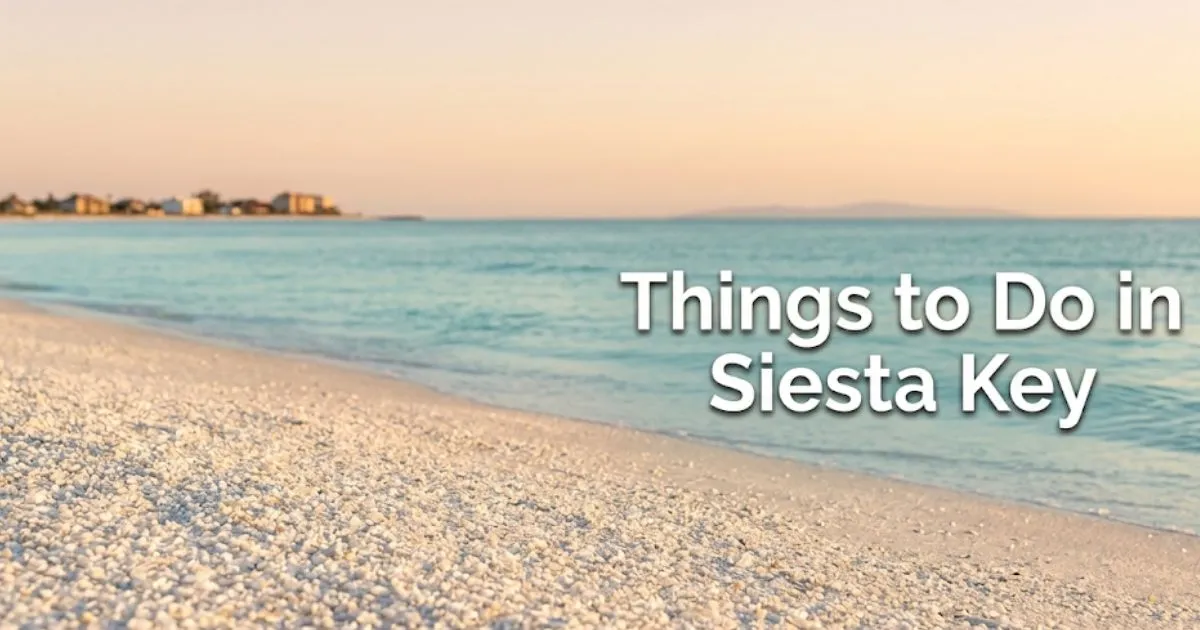
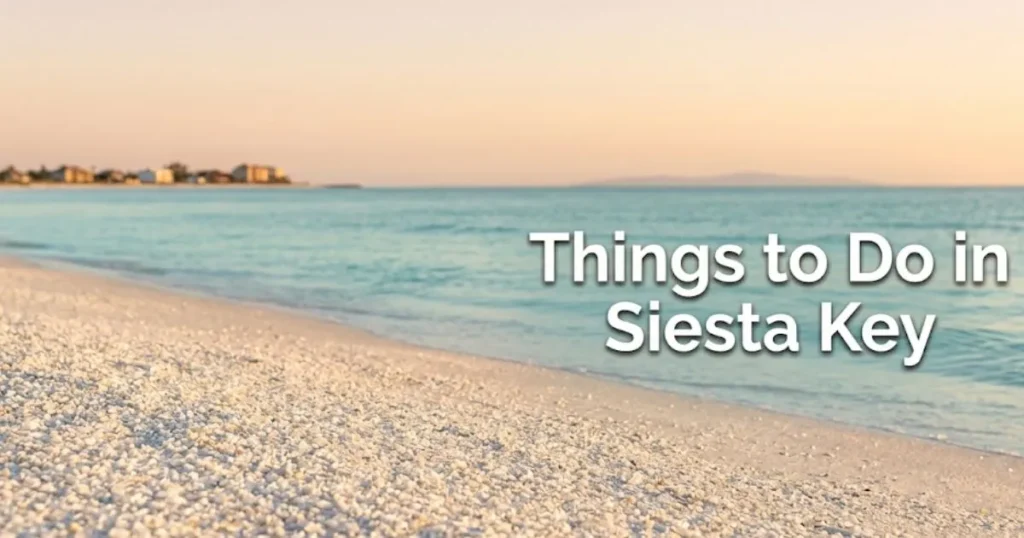
Siesta Beach delivers the island’s signature experience: 99% pure quartz sand that never burns your feet.
The sand originates from Appalachian quartz carried south by ancient rivers. It is finer and whiter than the crushed-shell beaches found elsewhere on Florida’s Gulf Coast.
Park at Siesta Beach Public Parking on Beach Road. Arrive before 9:30 AM on weekends or you will circle the lot for 30 minutes or more.
The main pavilion provides clean restrooms, a concession stand, and free wheelchair-accessible beach mats that run to the waterline. The playground near the south entrance keeps young children entertained when they need a break from sun and surf.
Lifeguards staff the main beach year-round. Rip currents are rare here compared to Atlantic-facing beaches, but always check the flag warning system posted at the pavilion.
Solo travelers will appreciate the easy social atmosphere near the volleyball courts. Families should claim space near the north end where the shallow water extends farthest.
The beach is most pleasant from March through early June and October through November. July and August bring afternoon thunderstorms and Gulf humidity that feels like a wet blanket.
Insider Tip: Locals walk south past the last lifeguard stand to Point of Rocks. At low tide, the limestone outcropping reveals small reef fish, crabs, and the occasional octopus. Bring water shoes.
Key Takeaway: The quartz sand is the island’s sole geological claim to fame, and Point of Rocks is the only shore-accessible snorkeling.
Best Water Activities on Siesta Key
Kayaking the mangrove tunnels at Jim Neville Marine Preserve tops the island’s water activity list.
Paddle through narrow channels where red mangrove roots form a natural canopy overhead. Manatees gather in the shallows from November through March.
Rent from Siesta Key Watersports on Old Stickney Point Road. A half-day single kayak rental runs approximately $40 to $55.
For dolphin sightings, book the morning departure with Siesta Key Boat Rentals. The 10 AM slot catches dolphins feeding in the Intracoastal Waterway before recreational boat traffic picks up.
Parasailing launches from the south bridge area. Siesta Key Parasail offers 800-foot-line flights that give you a clean view of the island’s full barrier-island shape.
Couples get the best value from a sunset kayak tour through the preserve. Families with young children should choose the guided dolphin cruise instead of self-paddling.
Jet ski rentals cluster near CB’s Saltwater Outfitters. Expect to pay approximately $90 to $120 per hour. The rental zone restricts you to a marked area of the Intracoastal.
Avoid renting jet skis on weekends from March through July. The water traffic turns the experience into a choppy, stressful ride.
| Activity | Best For | Cost Range | Insider Note |
|---|---|---|---|
| Mangrove Kayaking | Solo, Couples | $40-$55/half day | Go at low tide to see more wildlife |
| Dolphin Cruise | Families, Seniors | $35-$50/person | 10 AM departures see the most dolphins |
| Parasailing | Couples, Groups | $75-$100/person | Morning flights have smoother air |
| Jet Ski Rental | Solo, Groups | $90-$120/hour | Weekday mornings are calmest |
| Paddleboarding | Solo, Couples | $30-$45/hour | Stickney Point has flat-water launches |
According to Visit Sarasota County, the marine preserve is accessible only by water. No land access exists.
Siesta Key Village: The Island’s Social Center
Siesta Key Village runs along Ocean Boulevard from Beach Road to Avenida Messina.
This is the island’s walkable core. Beach shops, open-air bars, ice cream counters, and seafood joints line three compact blocks.
The Beach Club anchors the village social scene. Live bands play nightly under a thatched-roof tiki bar with sand underfoot.
Daiquiri Deck pours frozen drinks from a second-story balcony overlooking Ocean Boulevard. The half-and-half daiquiri lets you mix two flavors in one cup.
For morning coffee and a breakfast sandwich, The Village Cafe opens at 7 AM. Locals grab the Cuban sandwich to go before heading to the beach.
Solo travelers will find the village the easiest place to strike up conversations. The bar seating at SKOB (Siesta Key Oyster Bar) faces the open kitchen and encourages casual chat.
Seniors should note that village sidewalks are narrow and uneven in places. Evening crowds make navigation trickier after 8 PM on weekends.
The village is most pleasant on weekday evenings and weekend afternoons. Saturday nights from March through July turn the three-block strip into a shoulder-to-shoulder crowd.
Park at the Siesta Key Village Public Lot behind the Daiquiri Deck. The lot fills by 6 PM on Fridays and Saturdays.
Key Takeaway: The village is the island’s social hub, but Saturday night crowds push it past the point of pleasant.
Crescent Beach: The Quieter Alternative
Crescent Beach stretches south from Siesta Beach to Point of Rocks.
This is the island’s under-booked secret. The same quartz sand, the same Gulf water, and significantly fewer bodies per square foot of shoreline.
Access comes through narrow public walkways between condominium buildings. Look for Access 5 off Midnight Pass Road for the widest entry point.
No lifeguards staff Crescent Beach. No concession stands operate on the sand. Bring your own water, snacks, and shade.
Couples and solo travelers seeking quiet will prefer Crescent Beach to the main Siesta Beach scene. The absence of facilities means fewer families with young children and fewer large groups.
Access 12 near the south end puts you closest to Point of Rocks. This access point is the best launch for a low-tide snorkel session without the main-beach parking headache.
The beach narrows considerably at high tide. Check a tide chart before heading out, or you may find your towel line swallowed by the Gulf by early afternoon.
Parking is the genuine challenge. Street parking on Midnight Pass Road is legal in marked spaces only. Tow trucks patrol aggressively. Every access point has only a handful of spaces.
Insider Tip: Park at Turtle Beach at the island’s south end and walk north along the sand. The lot is larger, rarely full, and the 15-minute beach walk delivers you to Crescent Beach’s quietest stretch.
| Beach | Crowd Level | Facilities | Best Profile |
|---|---|---|---|
| Siesta Beach | High | Full pavilion, lifeguards, concessions | Families, first-timers |
| Crescent Beach | Low | None, no lifeguards | Couples, solo travelers |
| Turtle Beach | Low | Limited, boat ramp, picnic shelters | Boaters, shell collectors |
The most common visitor mistake on Siesta Key is assuming the main Siesta Beach is the only beach. Crescent Beach gives you the same sand with none of the noise.
Turtle Beach and the Island’s South End
Turtle Beach occupies the island’s far southern tip on Midnight Pass Road.
This beach feels like a different island entirely. The sand is coarser and darker, mixed with shell fragments that make it a top shelling spot on the key.
The Turtle Beach Boat Ramp makes this the launch point for boaters and kayakers heading into Little Sarasota Bay. Kayak launches are free. Boat ramp parking costs approximately $10.
A small playground and picnic shelters with grills sit between the parking lot and the sand. Families who want a full beach day with built-in lunch infrastructure will find Turtle Beach more practical than Crescent Beach.
The Turtle Beach Campground operates directly across Midnight Pass Road. This is the island’s only campground, and its 14 sites book months in advance during winter.
Seniors and accessibility travelers will find Turtle Beach easier to navigate. The parking-to-sand distance is short and flat. The boat ramp area has paved paths.
The beach faces south, not west. Sunsets are less dramatic here than from Siesta Beach or Crescent Beach.
Water conditions suit kayakers and paddleboarders better than swimmers. The boat channel runs close to shore, so stay inside the marked swimming area.
Insider Tip: The small sandbar visible at low tide just south of the boat ramp attracts wading birds at sunrise. Bring binoculars if you are a birding traveler.
Key Takeaway: Turtle Beach trades the quartz sand for shelling, boating access, and a campground.
Dining and Nightlife: Where Locals Actually Eat
Clayton’s Siesta Grille on Old Stickney Point Road serves the island’s most consistent sit-down dinner.
The roasted duck with mango chutney and the crab-crusted grouper have anchored the menu for years. Reservations are essential from February through April.
The Cottage occupies a 1916 bungalow on Midnight Pass Road. Japanese-Peruvian seafood crosses with Florida ingredients in dishes like miso-glazed cobia.
For the island’s best grouper sandwich, skip the village and drive to Spearfish Grille at the south end of Midnight Pass Road. It is a gas-station-adjacent counter with outdoor picnic tables and zero atmosphere. The fish is fresh off the boat.
Siesta Key Oyster Bar (SKOB) handles the casual seafood-and-beer niche. The oyster happy hour runs from 3 to 6 PM on weekdays.
Solo travelers should eat at the bar at Clayton’s. Couples should book the courtyard table at The Cottage for the most romantic setting on the island. Budget travelers should stick to Spearfish Grille and the SKOB happy hour.
The village’s open-air bars cater heavily to the 21-to-30 crowd after 10 PM. Seniors and couples over 50 will find the earlier dinner-and-drinks scene at Clayton’s or Ophelia’s on the Bay on the mainland side of the south bridge more comfortable.
Nightlife peaks Thursday through Saturday. Monday and Tuesday evenings are quiet enough that some village restaurants close entirely.
The overrated pick: Daiquiri Deck packs tourists onto balconies with sugary frozen drinks and a view of Ocean Boulevard traffic. It delivers exactly what it promises and nothing more.
The underrated pick: Gilligan’s Island Bar behind the main village strip has a quieter courtyard with live acoustic sets and a loyal local following.
| Restaurant | Best For | Price Range | Vibe |
|---|---|---|---|
| Clayton’s Siesta Grille | Couples, Seniors | $30-$45/entree | White-tablecloth casual |
| The Cottage | Couples | $28-$42/entree | Historic bungalow, fusion |
| Spearfish Grille | Budget, Solo | $12-$18/sandwich | Counter service, no frills |
| SKOB | Solo, Groups | $10-$22/plate | Open-air, lively |
| Ophelia’s on the Bay | Couples, Seniors | $35-$55/entree | Waterfront fine dining |
Arts, Culture, and Local History
Siesta Key itself holds little formal cultural infrastructure. The mainland delivers the island’s arts and history weight.
The Ringling complex in Sarasota houses the John and Mable Ringling Museum of Art, Ca’ d’Zan mansion, and a circus museum under one admission. Budget three hours minimum. It sits 15 minutes from the north bridge.
The museum’s courtyard features a full-scale bronze-cast replica of Michelangelo’s David. The Baroque gallery holds Peter Paul Rubens originals that rank among Florida’s most significant Old Master holdings.
Marie Selby Botanical Gardens in downtown Sarasota operates a second campus at Historic Spanish Point in Osprey, 20 minutes south of the island. The 30-acre site layers a prehistoric shell midden, pioneer homestead buildings, and restored formal gardens along Little Sarasota Bay.
Couples and seniors will find Selby’s downtown campus the most manageable cultural half-day. The bayfront koi pond under a banyan canopy is genuinely peaceful.
Families with children under 12 should prioritize The Ringling’s circus museum over the art galleries. The miniature circus model fills an entire room with hand-carved figures and moving parts.
The island’s own cultural footprint is limited to the Siesta Key Craft Festival held twice annually in the village. The February and October dates bring 100-plus vendor tents to Ocean Boulevard. Expect large crowds and no village parking.
Insider Tip: The Siesta Key Farmers Market runs Sunday mornings at the Siesta Key Village Plaza. It is small. It is mostly prepared food and artisan soap. It is not a destination market. But the fresh-squeezed orange juice stand alone justifies the 20-minute stop.
According to Visit Sarasota County, The Ringling complex operates on the Florida State University campus and is the official state art museum of Florida.
Key Takeaway: The island’s culture lives on the mainland, and The Ringling is the single indoor activity worth crossing the bridge for on a rainy day.
Shopping and Browsing in Siesta Key Village
Shopping on Siesta Key means the three blocks of Ocean Boulevard and a handful of standalone stores south on Midnight Pass Road.
Beach Bazaar stocks the island’s best selection of sunglasses, sandals, and beach gear. It is not a souvenir shop. It is a practical supply stop.
The Wave carries surf-inspired clothing and local-branded apparel that does not read as tourist kitsch. The Siesta Key logo tees here use softer cotton than the boardwalk-standard prints.
Coastal Cottages on Canal Road sells upscale home decor. Expect driftwood mirrors, shell-encrusted frames, and coastal-chic furniture that actually ships.
Budget travelers and souvenir hunters should hit the beachside vendor carts near the Siesta Beach pavilion instead of village shops. Prices run lower for the same shell necklaces and postcards.
Couples browsing for a beach-house upgrade piece should start at Coastal Cottages. Solo travelers with an hour to kill will find The Wave’s rack of local-interest books on Florida ecology and history worth the stop.
The village shopping scene is not a destination in itself. It serves as the thing you do after the beach and before dinner.
Serious shoppers should drive 15 minutes to St. Armands Circle on Lido Key. The upscale outdoor mall holds 130 stores and restaurants arranged around a central park.
Insider Tip: Village shops open late on the first Friday of each month for a coordinated evening event with live music and wine. The February and March First Friday events are genuinely lively. August’s is a sweat-soaked walk through mostly empty stores.
Day Trips from Siesta Key
Lido Key Beach sits 15 minutes north across the John Ringling Causeway.
Lido’s sand is coarser than Siesta’s quartz powder, but the beach is wide and the parking situation is slightly less punishing. A public pool operates at the Lido Beach Pavilion for families who want a guaranteed swim without Gulf chop.
St. Armands Circle wraps around a park on Lido Key. John Ringling planned the circle in the 1920s as a shopping district for his circus wealth clientele. Today it holds high-end boutiques, Columbia Restaurant’s Cuban sandwiches, and a gelato shop worth the separate trip.
Myakka River State Park lies 30 minutes inland from the island. The park protects 58 square miles of Florida prairie and hammock. The canopy walkway suspends you 25 feet above the ground on a wooden bridge through live oak treetops.
Solo travelers and couples should kayak the Myakka River’s upper lake for alligator sightings from a safe distance. Families should ride the park’s airboat tour, the largest in any Florida state park.
Marie Selby Botanical Gardens downtown Sarasota campus operates 15 acres on Sarasota Bay. The tropical conservatory holds 6,000 orchids. The banyan grove overlooks the water with benches placed for the bay breeze.
| Day Trip | Drive Time | Best For | Highlight |
|---|---|---|---|
| Lido Key Beach | 15 min | Families, Seniors | Public pool, wide sand |
| St. Armands Circle | 15 min | Couples, Shoppers | 130 stores, Columbia Restaurant |
| Myakka River State Park | 30 min | Solo, Couples, Families | Canopy walkway, airboat tours |
| Selby Gardens Downtown | 20 min | Couples, Seniors, Solo | 6,000 orchids, bayfront banyans |
| Historic Spanish Point | 20 min | Seniors, History Travelers | 5,000-year-old midden, pioneer homes |
Budget travelers should prioritize Myakka River State Park. The $6 per vehicle entry fee buys a full day of hiking, wildlife viewing, and the canopy walkway. Selby Gardens admission runs approximately $25 per adult, which is fair for the collection but steep for a family of four.
According to Florida State Parks, Myakka River is one of the state’s oldest and largest parks. The canopy walkway was the first public treetop trail in North America.
Where to Stay on and Near Siesta Key
Accommodation on Siesta Key splits into three zones: village condos and rentals, Crescent Beach condos, and mainland hotels across the bridges.
The Ringling Beach House sits one block from Siesta Beach and two blocks from the village. The property operates as a collection of condo-style units with full kitchens and a heated pool. Couples and small families rate it highest for the walk-to-everything location.
Tropical Beach Resorts on Crescent Beach offers direct access to the island’s quietest stretch of sand. The property’s two sections occupy opposite sides of Midnight Pass Road. The beachfront section costs more and books first.
Turtle Beach Resort at the island’s south end runs smaller, older cottages with a dedicated following. The vibe is Old Florida, not luxury. Kayaks and bikes come included.
Budget travelers should look across the north bridge to mainland Sarasota. Chain hotels like Hyatt Place Sarasota/Lakewood Ranch and Aloft Sarasota run $150 to $220 per night during peak season versus $350-plus for comparable quality on the island.
Seniors should check the elevator situation before booking any island property. Many smaller condo buildings and cottages have stairs-only access to upper units.
Accessibility travelers will find newer mainland hotels more reliably ADA-compliant. The Westin Sarasota on the mainland waterfront has roll-in showers and pool lifts.
Book six months ahead for February and March stays. The island operates at near-full occupancy during the winter high season. Last-minute bookings get the units nobody wanted.
Insider Tip: October delivers the island’s best value. The water is still warm, the weather is dry, and rates drop 30 to 40 percent from March highs.
Key Takeaway: Stay on the island for beach access, on the mainland for budget and reliable accessibility.
Getting Around Siesta Key Without a Headache
The island runs one main north-south road: Midnight Pass Road.
A single lane in each direction handles all island traffic. A bike lane runs alongside sections of it. The free Siesta Key Breeze Trolley loops from the village to Turtle Beach daily.
Drive onto the island via Siesta Drive from the north bridge or Stickney Point Road from the south bridge. Both bridges bottleneck between 10 AM and 1 PM on Saturdays from February through April.
The single most practical thing you can do: rent a bike on your first day. Siesta Key Bike and Kayak on Old Stickney Point Road rents cruisers for approximately $25 per day. The island is flat. Everything worth visiting sits along a four-mile corridor.
The Breeze Trolley runs from 10 AM to 10 PM daily during high season. Service frequency drops in summer and fall. Check the Sarasota County Transit schedule before relying on the trolley for dinner plans.
Ride-share availability is reliable on the island but wait times stretch to 20 minutes or more during Saturday evening village peak.
Solo travelers and couples should commit to the bike-and-trolley combination. Families with young children will need a car to manage beach gear. Seniors should rely on the trolley and ride-share for evening village trips.
Do not attempt to drive into the village and find parking at 7 PM on a Saturday in March. You will fail. You will sit in a line of cars watching the lot-attendant shake his head.
Parking at Siesta Beach is free and plentiful on weekday mornings. The 850-space lot fills by 10 AM on weekends and stays full until mid-afternoon.
Insider Tip: The south bridge typically moves faster than the north bridge on high-traffic days.
Free and Budget-Friendly Things to Do
Siesta Key’s single best experience costs nothing: walking barefoot on quartz sand at sunset.
The sand stays cool. The Gulf turns gold and pink. The crowd thins after 6 PM. Bring a towel and nothing else.
Siesta Beach Drum Circle gathers every Sunday evening about an hour before sunset near the main pavilion. Drummers, dancers, and spectators form a loose circle on the sand. It is free, public, and has run weekly for decades.
Jim Neville Marine Preserve observation from a kayak costs the rental fee, but viewing the mangrove ecosystem from the Stickney Point Bridge pull-off costs nothing. Bring binoculars for the wading birds.
Siesta Key Farmers Market browsing is free. The Sunday morning market in the village plaza is small but walkable in 20 minutes.
Turtle Beach shelling costs only the parking fee at the boat ramp lot. Go at low tide after a storm for the best finds.
Point of Rocks snorkeling from Crescent Beach requires only a mask and water shoes you bring yourself.
Budget travelers should plan around the free beach infrastructure: Siesta Beach pavilion restrooms and showers, Crescent Beach access points, and the Breeze Trolley loop.
The Sarasota County Parks system maintains all public beach accesses. None charge an entry fee.
Couples get the most romance-to-cost ratio from the Sunday drum circle and sunset. Families can run a full beach day on snacks brought from home and the free playground at Siesta Beach.
Insider Tip: The best free parking for village access sits on Avenida Messina south of Ocean Boulevard. The spots are unsigned and legal for public use.
Key Takeaway: The island’s core pleasures are free. The quartz sand, the sunset, and the drum circle cost nothing.
Safety and Practical Warnings for Siesta Key
Sun exposure on the white quartz sand is significantly more intense than on darker sand beaches.
The sand reflects UV rays upward. Apply reef-safe sunscreen every 90 minutes even if you are under an umbrella.
Key safety and practical facts every visitor should know:
- Rip currents are possible but less common than on Florida’s Atlantic coast. Always check the beach warning flag posted at the Siesta Beach pavilion.
- Lightning storms roll in fast on summer afternoons. Leave the beach immediately at the first thunderclap. Gulf thunderstorms produce cloud-to-water strikes.
- The quartz sand reflects heat and light. Sunglasses with UV protection are as essential as sunscreen.
- No-drinking-on-the-beach laws are enforced. Sarasota County deputies patrol the sand and issue citations. Open containers stay in the village, not on the shoreline.
- Parking tow-away zones are strictly enforced on Midnight Pass Road. A towed car will cost you approximately $150 to $200 and eat half a day retrieving it.
- Stingray shuffle in the shallows from May through September. Shuffle your feet when wading to alert buried rays. Stings are painful but rarely serious.
- Cell service is reliable across the island. No dead zones of concern, but the far south end at Turtle Beach has weaker coverage on some carriers.
- Manatee zones in the Intracoastal require idle-speed boating from November through March. Kayakers should keep distance from manatees. Harassment citations carry fines.
For emergencies, dial 911. The Sarasota County Sheriff’s Office patrols the island. The nearest hospital with emergency services is Sarasota Memorial Hospital, approximately 15 minutes from the north bridge.
Siesta Key in 2026: What’s New and What’s Changing
Siesta Key enters 2026 in a holding pattern between its Old Florida identity and continued development pressure.
Siesta Beach underwent a major renovation in 2024 that upgraded the pavilion restrooms and added shaded seating. The 2026 season runs with full operational capacity at all beach facilities.
The Siesta Key Breeze Trolley expanded its route in 2025 to include more frequent midday loops. Service remains free and runs daily from 10 AM to 10 PM during high season.
Two new restaurant concepts opened in the village in late 2025. Gulf Counter occupies the former Sun Garden Cafe space with a taco-and-tequila format. Blue Dolphin Cafe added a second floor bar with Gulf views.
According to Visit Sarasota County, 2026 visitor projections anticipate continued strong spring break and summer demand. February, March, and July will be the island’s busiest months as they are every year.
The Midnight Pass Road corridor saw sidewalk widening in three sections in 2025. The improved pedestrian access between the village and Crescent Beach is the year’s most practical infrastructure upgrade.
Construction continues on several large condominium projects near the south bridge. Noise and lane closures affect Stickney Point Road on weekdays. The projects are scheduled for completion in late 2026.
Water quality monitoring by the Florida Department of Health in Sarasota County continues bi-weekly testing at all public beaches. Red tide blooms remain a possibility, typically between late summer and early winter.
Senior and accessibility travelers should note that the sidewalk improvements have made the village-to-beach walk smoother but the island’s older condo buildings remain largely unchanged in their accessibility limitations.
The island’s essential character remains intact heading into 2026: quartz sand, village bars, sunset kayaking, and the same parking crunch that has defined peak-season weekends for decades.
Key Takeaway: The 2026 upgrades are incremental improvements to infrastructure, not a transformation of the island’s core experience.
Frequently Asked Questions About Siesta Key
What is the best time of year to visit Siesta Key?
The best time to visit Siesta Key is March through early June and October through November.
Temperatures sit in the 70s and 80s with low humidity and minimal afternoon storm risk.
February and March bring the largest crowds and highest accommodation rates, while October delivers warm water and 30 to 40 percent lower hotel prices.
Is Siesta Key good for families with young children?
Siesta Key is one of Florida’s most family-friendly barrier islands.
The quartz sand never burns small feet and the Siesta Beach playground gives young children a shaded break from the sun.
The gentle Gulf slope creates a shallow wading area at the north end of the main beach that is safer for toddlers than steep-drop Atlantic beaches.
Do you need a car on Siesta Key?
You can manage without a car if you stay in or near the village and rent a bike.
The free Breeze Trolley runs from the village to Turtle Beach and the island is flat and entirely bikeable.
Families with young children and anyone staying on the mainland will want a car for beach-gear hauling.
Where is the clearest water on Siesta Key?
The clearest water is typically found at Crescent Beach near Point of Rocks on a calm morning.
Gulf visibility varies with wind and tide conditions, but Crescent Beach receives less boat-traffic churn than the water near Siesta Beach.
Check a tide chart and go at slack low tide for the best snorkeling visibility.
What is there to do on Siesta Key when it rains?
Drive 15 minutes to The Ringling museum complex in Sarasota.
The art museum, circus museum, and Ca’ d’Zan mansion fill three to four hours indoors.
The Mote Marine Laboratory and Aquarium on Lido Key is a second strong rainy-day option, particularly for families.
Is Siesta Key crowded in summer?
July and August bring heavy visitation but fewer crowds than February and March.
The summer challenge is not crowd volume but afternoon thunderstorms and high humidity.
Plan beach time for mornings and expect a 3 PM storm to chase you indoors for an hour.
Your Siesta Key Trip Starts With One Decision
The only decision that genuinely shapes your Siesta Key experience is where you stay.
Stay in or near the village and you will walk to bars, restaurants, and the main beach without ever starting a car engine. Stay on Crescent Beach and you trade nightlife proximity for quiet. Stay on the mainland and you trade beach access for budget breathing room.
Book your accommodation first. Book it six months ahead if your dates fall in February or March.
The rest of your trip flows outward from that single choice.
Verify beach conditions, red tide status, and any 2026 event schedules directly with Visit Sarasota County before departure. Restaurant hours shift seasonally on the island, and the Breeze Trolley schedule adjusts by month. Check everything close to your travel date.
You now know the island’s rhythm. The quartz sand will be cool when you step onto it.