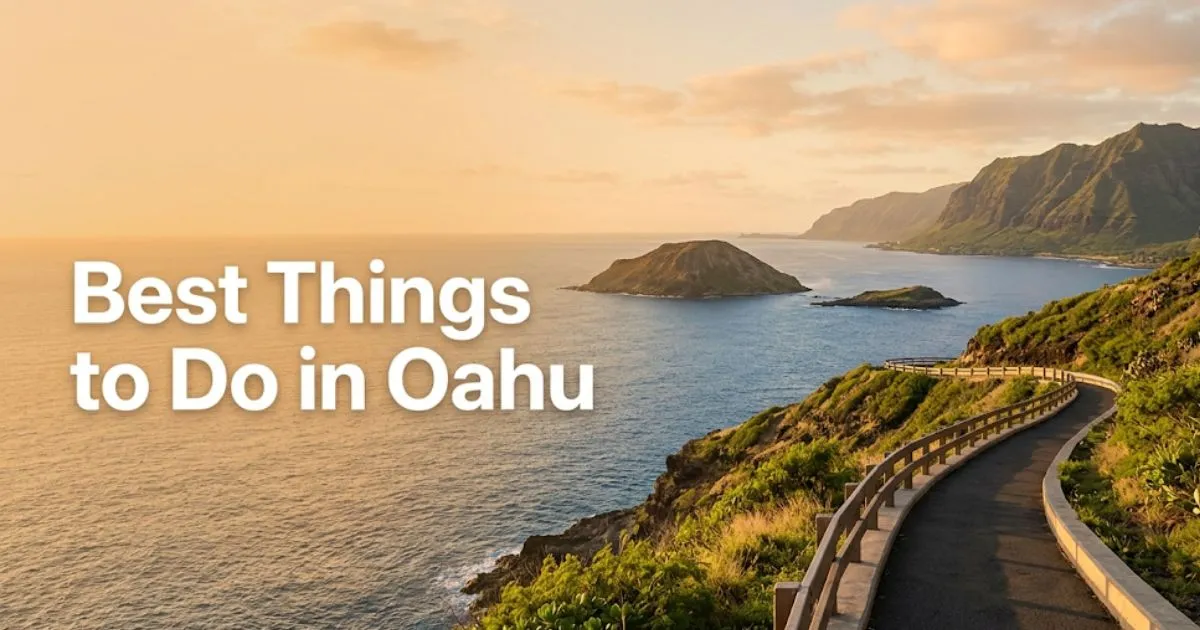
Best Things to Do in Oahu in 2026: An Island Guide That Actually Works

Oahu gives you Honolulu’s urban energy and the North Shore’s rural quiet on the same small island.
Most visitors crowd into the same five Waikiki blocks and miss the island’s real character completely.
The island received over 5 million visitors in recent peak years according to the Hawaii Tourism Authority.
That volume creates two Oahus: the one most tourists see and the one locals actually live in.
This guide separates the genuine experiences from the tourist infrastructure.
You will find specific beaches, named trails, honest crowd assessments, and the local alternatives that repeat visitors learn about only after their first trip.
Oahu Destination Overview: What to Know Before You Go
Oahu is not the quiet escape most first-timers imagine when they picture Hawaii.
It is a working island with nearly a million residents, heavy rush-hour traffic, and dense urban neighborhoods.
The island’s geography splits into five distinct zones that feel like entirely separate destinations.
Honolulu and Waikiki concentrate the dining, shopping, and urban beach scene.
The North Shore runs on surf culture and a slower rural rhythm from Haleiwa to Kahuku.
The Windward Coast delivers the postcard Oahu with Kailua and Lanikai’s turquoise water against the Ko’olau mountains.
The Leeward Coast offers drier weather and fewer tourists but limited services west of Ko Olina.
Central Oahu holds Pearl Harbor and the island’s agricultural interior at Wahiawa and the Dole Plantation area.
You cannot see all five zones well in a short trip.
Pick two or three and treat the rest as reasons to return.
Oahu Zone Comparison
| Zone | Best For | Cost Level | Crowd Level | Transit Access |
|---|---|---|---|---|
| Waikiki/Honolulu | First-timers, nightlife, dining | Premium | High | Excellent bus, walkable |
| North Shore | Surfers, families, quiet stays | Mixed | Seasonal high | Rental car essential |
| Windward Coast | Beach lovers, nature seekers | Mid-range | Moderate | Rental car recommended |
| Leeward Coast | Resort stays, dry weather | Premium at Ko Olina | Low outside resorts | Rental car only |
| Central Oahu | History, Pearl Harbor | Mid-range | Moderate at Pearl Harbor | Tour buses, rental car |
Insider Tip:
- Rent a car if you plan to leave Waikiki more than once.
- TheBus works for budget travelers but doubles travel time to the North Shore.
- Book Pearl Harbor reservations the moment they open 60 days out.
Best Things to Do in Honolulu
Honolulu packs more genuinely worthwhile activities into a compact urban core than most visitors expect.
Skip the chain shops at Waikiki’s Kalakaua Avenue and head mauka, toward the mountains, where the real city lives.
Start at the Bishop Museum on Bernice Street in Kalihi.
This is the single best place on Oahu to understand Hawaiian culture, history, and pre-contact navigation without the theme-park treatment.
The collection of royal Hawaiian artifacts and the planetarium’s wayfinding shows are unmatched in the Pacific.
Admission runs approximately $25 to $30 for adults, less for children, and the museum is rarely crowded on weekdays.
Honolulu’s Chinatown around Hotel Street and Nu’uanu Avenue rewards early risers.
The dim sum at Legend Seafood Restaurant and the Vietnamese pho at The Pig and the Lady draw locals who never go to Waikiki.
Chinatown feels raw and real in a way Waikiki does not.
Solo travelers and couples comfortable with urban environments will appreciate the authenticity.
The Honolulu Museum of Art on South Beretania Street combines Hawaiian, Asian, and European collections in a quiet campus.
Friday evening programming and the courtyard café make it a strong alternative to the beach for a half-day.
According to the Hawaii Tourism Authority, Honolulu’s cultural sites remain under-visited relative to beach attractions.
That means shorter lines and a more local experience for visitors who prioritize museums and historic neighborhoods.
Honolulu Neighborhood Quick Guide
- Kaka’ako: Street art murals, trendy cafés, the best poke at Fresh Catch.
- Kapahulu: Local plate lunches at Rainbow Drive-In and Ono Seafood.
- Manoa: Rainy valley hikes, the Manoa Falls Trail, and the university district.
- Kaimuki: Laid-back brunch spots and the excellent Koko Head Café.
Key Takeaway: Honolulu’s best experiences sit outside Waikiki’s beachfront hotels on streets where locals actually eat, shop, and spend their weekends.
Best Things to Do on Oahu
The single best thing you can do on Oahu is leave Waikiki on your first full morning.
The island reveals itself slowly once you get past the H-1 corridor and into the windward and north shore communities.
Kualoa Ranch on the windward side runs ATV tours, horseback rides, and movie-site visits across a 4,000-acre private valley.
The Jurassic Park filming locations are genuinely striking even if you are not a movie fan.
Reservations are essential and tours fill weeks ahead during peak seasons.
Budget approximately $50 to $150 per person depending on the tour length and activity.
Families with children ages six and up rate this experience highly.
Seniors can ride the less bumpy trolley tour, though the full ATV routes are too jarring for anyone with back or neck concerns.
The Byodo-In Temple in the Valley of the Temples Memorial Park in Kahalu’u charges a small admission fee around $5.
This replica of a 900-year-old Japanese temple sits against the Ko’olau range and delivers the quietest moment many visitors experience on Oahu.
Go early in the morning before the tour buses arrive.
The temple grounds, koi pond, and meditation pavilion reward visitors who linger rather than rush.
Shark cage diving out of Haleiwa divides opinions sharply.
Some travelers call it the most memorable hour of their trip.
Others find the boat ride choppy and the experience too commercial.
Book with operators that hold permits from the state and follow wildlife viewing guidelines.
Morning departures typically encounter calmer ocean conditions.
Three Oahu Experiences Worth the Drive
- Ka’ena Point Trail from the western trailhead near Yokohama Bay: hike to a seabird sanctuary on an untrammeled coastline.
- Makapu’u Tide Pools below the lighthouse trail: arrive at low tide and wear sturdy water shoes with grip.
- Waimano Falls above Pearl City: a short but muddy hike to a local waterfall and swimming hole that tour books rarely mention.
Unique Things to Do in Hawaii
Oahu hosts experiences you cannot replicate anywhere else in the Hawaiian chain, or the world, if you know where to look.
Iolani Palace in downtown Honolulu is the only royal palace on US soil.
The audio tour narrated by Hawaiian cultural practitioners delivers a history most visitors never encounter.
Allow 90 minutes minimum and book the docent-led tour for the full experience.
Admission runs approximately $25 to $30 for adults and the palace is closed Sundays and Mondays.
The palace suits history-interested adults and older children best.
Young children will struggle with the tour length and indoor quiet requirement.
The Honolulu Fish Auction at Pier 38 starts before dawn, usually by 5:30 AM.
It is the only tuna auction between Tokyo and Maine and watching it requires no reservation.
You stand on a viewing platform above the auction floor as fresh ahi moves from boat to market.
Bring a jacket, the auction floor is refrigerated, and then walk to Nico’s Pier 38 afterward for breakfast.
Kava tasting at a local ‘awa bar like Hale Noa in Kaimuki introduces a ceremonial Polynesian drink with mild relaxing effects.
This is not a party scene, it is a quiet cultural experience better suited to solo travelers and couples curious about Pacific Island traditions.
The drink tastes earthy and numbs your mouth slightly.
First-timers should ask the bartender for guidance on preparation style and strength.
The sunset at Ka’ena Point on the western tip of the island draws far fewer people than Haleiwa or Waikiki.
The unpaved road and 45-minute walk from Yokohama Bay keep the crowds away entirely.
Unique Oahu Experiences by Traveler Type
| Experience | Best For | Book Ahead | Physical Demand |
|---|---|---|---|
| Iolani Palace | History buffs, adults | Recommended | Low |
| Fish Auction | Early risers, food-focused travelers | None | Low |
| Kava Tasting | Culturally curious, solo travelers | Walk-in | Low |
| Ka’ena Point Sunset | Adventurous couples, photographers | None | Moderate to high |
| Shark Cage Dive | Thrill-seekers, groups | Essential | Low, but seasick-prone |
Top Things to Do in Honolulu
Honolulu’s top-tier experiences cluster in three zones that most itineraries can cover efficiently if you plan the sequence right.
Diamond Head State Monument opens at 6:00 AM and that is exactly when you should start the hike.
The crater rim trail takes roughly 45 to 60 minutes up and delivers the iconic view of Waikiki and the south shore.
Timed-entry reservations are now required for non-residents according to the Hawaii Department of Land and Natural Resources.
Book online before you leave home, as peak morning slots sell out days in advance during high season.
The paved but steep trail works for moderately fit visitors of most ages.
Bring water, there is no shade after the first switchback, and the tunnel section near the top feels claustrophobic for some.
Hanauma Bay on Kalanianaole Highway is the most famous snorkeling spot on Oahu.
It is also the most regulated, with mandatory reservations, an entry fee around $25, and a required educational video for first-time visitors.
The bay closes every Monday and Tuesday to allow the reef ecosystem to recover.
Go on Wednesday morning for the clearest water after the two-day rest period.
The local alternative is Shark’s Cove on the North Shore during summer months.
The rocky cove offers comparable fish diversity with no entry fee and no reservation system.
Pearl Harbor National Memorial operates a timed ticket system for the USS Arizona Memorial program.
The National Park Service releases tickets online 60 days ahead at 3:00 PM Hawaii time and they vanish within minutes during peak periods.
If you miss the Arizona tickets, the Battleship Missouri Memorial, Pacific Aviation Museum, and USS Bowfin Submarine are all adjacent and require no advance reservation.
Arrive by 7:30 AM for the standby line at the Arizona, which is not guaranteed but possible on weekdays.
Honolulu Top Spots: Crowded vs. Local Alternative
- Crowded: Diamond Head mid-morning → Alternative: Start at 6:00 AM or hike Koko Head Crater Trail instead.
- Crowded: Hanauma Bay at 10:00 AM → Alternative: Shark’s Cove in summer or Kahe Point Beach Park for shore snorkeling.
- Crowded: Waikiki Beach in front of the Royal Hawaiian → Alternative: Kaimana Beach near the Waikiki War Memorial for fewer people and better swimming.
Key Takeaway: Honolulu’s most famous attractions work brilliantly if you arrive when they open and book reservations months ahead, but fail completely for visitors who show up at 10:00 AM without a plan.
Honolulu Top Things to Do
Honolulu rewards visitors who go beyond the beachfront and into the neighborhoods where the city’s food, art, and evening culture actually lives.
The Kaka’ako street art district between Ala Moana and downtown contains over 70 murals painted by local and international artists during the annual Pow! Wow! Hawaii festival.
Walk the blocks around Cooke Street and Auahi Street in the late afternoon when the light hits the walls best.
This is free, walkable, and more interesting than the retail stretch of Kalakaua Avenue for repeat visitors.
Solo travelers and couples will appreciate the café stops at Morning Glass Coffee and the excellent bakery at Pipeline.
KCC Farmers’ Market at Kapiolani Community College runs Saturday mornings from about 7:30 AM to 11:00 AM.
This is where Honolulu chefs source produce and where visitors can taste local ingredients without a restaurant markup.
The fried green tomatoes with locally made pesto at the Sweet Revenge stand are worth the trip alone.
Arrive by 8:00 AM, the best vendors sell out before 9:30 AM and parking gets difficult by mid-morning.
Mai Tai Bar at the Royal Hawaiian Hotel serves the drink in its claimed birthplace on Waikiki Beach.
The Mai Tai here costs approximately $18 to $22 and the beachfront view is genuinely superb.
The local alternative is the bar at the Moana Surfrider for a quieter setting or La Mariana Sailing Club near the airport for a tiki-bar experience that feels frozen in 1957.
La Mariana is the last authentic tiki bar on Oahu and sees almost no tourists relative to Waikiki’s beachfront bars.
Top Honolulu Evening Picks by Vibe
- Best sunset drink with a view: House Without a Key at the Halekulani Hotel for live Hawaiian music and a quieter crowd.
- Best local music: Blue Note Hawaii at the Outrigger Waikiki for touring jazz and Hawaiian artists in an intimate room.
- Best dive bar: The Dragon Upstairs in Chinatown for jazz and a genuinely unpolished Honolulu night out.
Best Things to Do in Honolulu Hawaii
The Honolulu experiences that earn their reputation honestly are the ones rooted in water, food, and early mornings.
Surf lessons at Waikiki Beach belong on every first-timer’s itinerary precisely because the gentle rolling waves and warm water create ideal learning conditions.
Book with a permitted operator like Hawaiian Oceans Waikiki or Faith Surf School and take the 8:00 AM session before the beach fills up.
According to the Hawaii Tourism Authority, Waikiki’s surf schools teach more first-time surfers annually than any other destination in the United States.
The soft sandy bottom and consistent small waves make wipeouts forgiving.
**The hike to *Koko Head Crater* delivers a leg-burning workout on an abandoned railway track with over 1,000 steps to the summit.**
The view across Hanauma Bay and toward Molokai on clear days justifies every step.
Start at sunrise, bring at least one liter of water per person, and expect the climb to take 30 to 60 minutes depending on fitness.
The railway ties are uneven and the midday heat makes this route genuinely dangerous in summer.
Leonard’s Bakery on Kapahulu Avenue has served malasadas, Portuguese-style fried doughnuts, since 1952.
The original location and the malasada trucks parked around the island are the only places to get them hot and fresh.
Order the li hing powdered sugar malasada for a uniquely local flavor.
Budget travelers note: a half-dozen malasadas costs well under $10 and feeds two people easily.
Honolulu Activity Cost Guide
| Activity | Cost Range | Value Rating | Book Ahead |
|---|---|---|---|
| Waikiki Surf Lesson | $60-$120/pp | High | 1-3 days ahead |
| Koko Head Hike | Free | Excellent | None required |
| Leonard’s Malasadas | Under $10 | Exceptional | Walk-in |
| Iolani Palace Tour | $25-$30/pp | High | Day before |
| Sunset Catamaran Sail | $50-$80/pp | Moderate | 3-7 days ahead |
Best Things to Do in Honolulu for First-Time Visitors
First-timers need a plan that delivers the iconic Oahu experiences without burning days on logistics, lines, or tourist traps.
Pearl Harbor should be your first full-day activity.
The 60-day advance ticket window means you either secure your spot before you leave home or gamble on the standby line.
The standby line forms by 7:00 AM and works best on Tuesdays and Wednesdays outside of peak holiday weeks.
Budget travelers note: the Arizona Memorial program, the visitor center, and the museums are all free, though the Bowfin, Missouri, and Aviation Museum charge separate admission.
Waikiki Beach is not one beach.
It is a two-mile stretch broken into distinct sections: Kuhio Beach for families with its protected swimming area, Queen’s Surf for a quieter towel-on-the-sand spot, and the stretch fronting the Royal Hawaiian for the classic postcard view.
Families with young children should head directly to Kuhio Beach and the adjacent walled swimming area.
Couples and solo travelers will prefer the less crowded Queen’s Surf section near the Waikiki Aquarium.
A sunset catamaran sail from the beachfront launches costs approximately $50 to $70 per person and delivers Waikiki’s best value experience.
Book directly with operators on the sand near Duke Kahanamoku Statue rather than through hotel concierges for better pricing.
The local alternative: drive to Tantalus Lookout above the city at sunset for a free panoramic view from the mountains to the sea.
This is where Honolulu residents take out-of-town guests when they want to avoid Waikiki entirely.
First-Timer Three-Day Framework
Day 1: Pearl Harbor morning, Chinatown lunch, Iolani Palace afternoon, Kaka’ako sunset.
Day 2: Diamond Head sunrise, Kapahulu plate lunch, Waikiki Beach afternoon, sunset catamaran.
Day 3: Kailua or North Shore day trip depending on wave season and surf interest.
Key Takeaway: First-timers who book Pearl Harbor and Diamond Head reservations before they fly waste zero vacation hours in lines and see twice as much in three days.
Best Things to Do in Oahu for Couples
Oahu delivers specific romantic experiences that work better for couples than families or solo travelers, if you know where to look.
Lanikai Beach in Kailua on the windward side is the island’s most beautiful stretch of sand.
The fine white sand and turquoise water against the Mokulua Islands offshore create a scene that feels private even on busier mornings.
Parking is residential and limited, arrive before 9:00 AM and walk the public access path between homes.
Weekdays outside of summer and holiday weeks offer the best chance at near-solitude.
**Sunset drinks at the *House Without a Key* at the Halekulani Hotel** offer live Hawaiian music under a century-old kiawe tree with Diamond Head in the background.
The former Miss Hawaii performers and gentle trade winds create an atmosphere that no other Waikiki venue matches.
Dress is resort casual and the cocktails run approximately $16 to $22 each.
Arrive by 4:30 PM to secure a table with the best Diamond Head view.
**A couples’ hike to *Ka’ena Point* from the western trailhead near Yokohama Bay** ends at the westernmost tip of Oahu with seabirds, monk seals, and one of the least crowded sunsets on the island.
The three-mile round trip on an unpaved road requires moderate fitness and closed-toe shoes.
Bring a flashlight for the walk back, there are no lights and cell service fades on the trail.
This experience suits active couples who prefer solitude to a resort dinner.
The Polynesian Cultural Center in Laie draws consistent criticism alongside its popularity.
The luau and evening show impress many visitors but the center’s corporate structure and lack of alcohol service disappoint couples seeking an intimate evening.
**The local alternative: *Toa Luau* at Waimea Valley on the North Shore** offers a smaller, family-run experience with a genuine cultural presentation and lower ticket prices.
Oahu Date-Night Dinner Spots
- Senia in Chinatown: tasting menu and à la carte plates in a modern, intimate room.
- Mud Hen Water in Kaimuki: creative Hawaiian-influenced small plates at a neighborhood bistro.
- Hoku’s at The Kahala: Sunday brunch with a legendary seafood spread and ocean views.
Best Things to Do in Oahu with Family and Kids
Oahu is the most family-practical Hawaiian island thanks to its medical infrastructure, food variety, and range of kid-appropriate activities.
**The *Waikiki Aquarium* on Kalakaua Avenue near the Diamond Head end of Waikiki** is compact, shaded, and sized right for young children’s attention spans.
The Hawaiian monk seal exhibit and the outdoor touch pool keep toddlers engaged for 90 minutes to two hours.
Admission runs approximately $12 for adults and $5 for children, among the best value on the island.
Go in the late morning after the early school-group crowds have cleared.
Kualoa Ranch delivers the single best family activity on Oahu for kids ages five and up.
The movie-site tram tour requires no physical exertion and the guides keep the tour engaging for children and adults simultaneously.
Book the earliest morning tour available for cooler temperatures and better light for photos.
Budget approximately $50 per adult and $30 per child for the tram tour, with ATV and horseback options costing more.
Aulani, the Disney Resort in Ko Olina on the Leeward Coast, runs a character breakfast and a paid-entry snorkel lagoon open to non-resort guests.
The Rainbow Reef snorkel lagoon charges approximately $20 to $25 per person and provides all gear and a controlled, safe environment for first-time snorkelers.
**Families should know that the *Dole Plantation* maze and train ride underwhelm children over age ten.**
The attraction draws enormous crowds, the food is mediocre, and the experience feels more like a retail operation with pineapple soft serve than a genuine agricultural visit.
**The local alternative: *Kahuku Farms* on the North Shore** offers a working-farm tour, a farm-to-table café with smoothies made from actual farm fruit, and a genuinely educational experience for kids.
Kid-Friendly Oahu Beach Guide
| Beach | Best For | Facilities | Safety Note |
|---|---|---|---|
| Kuhio Beach, Waikiki | Toddlers, wading | Restrooms, lifeguards | Protected swim wall |
| Kailua Beach | All ages | Restrooms, lifeguards | Gentle slope, summer calm |
| Ko Olina Lagoons | Toddlers, cautious swimmers | Restrooms, limited parking | Man-made, wave-free |
| Waimea Bay (summer) | Older kids, confident swimmers | Restrooms, lifeguards | Rock jump is serious risk |
| Ala Moana Beach | All ages, picnicking | Restrooms, lifeguards, shade | Protected reef, calm year-round |
Key Takeaway: Oahu works better for families than Maui or Kauai because the food variety, medical access, and activity range accommodate children who lose interest after 90 minutes.
Best Things to Do in Oahu for Budget Travelers
Oahu can be genuinely affordable if you make specific choices about where you sleep, eat, and spend your days.
The most expensive mistake budget travelers make is sleeping in Waikiki.
Room rates in Waikiki run $250 to $500 per night for a standard hotel room.
Look at vacation rentals in Kaimuki, Kapahulu, or the University area instead.
TheBus connects these neighborhoods to Waikiki in 15 to 25 minutes and the cost savings on accommodations run into the hundreds per night.
Oahu’s best food is almost all served from counters, trucks, and takeout windows that charge under $15 per person.
Rainbow Drive-In on Kapahulu, Helena’s Hawaiian Food on North School Street, and Ono Seafood on Kapahulu are James Beard-recognized or locally legendary for under $20 per plate.
The poke at Foodland Farms in Ala Moana Center is fresh, affordable, and better than what most Waikiki hotel restaurants serve at triple the price.
Buy poke, rice, and a drink for a beachfront dinner that costs under $12 total.
Free Oahu experiences that rival paid attractions include snorkeling at Shark’s Cove in summer, hiking the Makapu’u Lighthouse Trail, and swimming at Kailua Beach.
The Honolulu Museum of Art offers free admission on the first Wednesday of each month according to the museum’s community access program.
Hanauma Bay is the budget call you must make carefully.
The $25 entry fee per person adds up for families, and the experience on a crowded mid-morning Saturday does not deliver value for the price.
**The free alternative: *Kahe Point Beach Park* on the Leeward Coast** has shore snorkeling with turtles and reef fish for zero dollars, though the entry can be rocky and the currents require awareness.
Oahu Budget Day Cost Breakdown
| Expense Category | Budget Approach | Mid-Range Approach | Premium Approach |
|---|---|---|---|
| Accommodations | $80-$150/night | $200-$300/night | $400+/night |
| Meals | $25-$40/day total | $60-$100/day | $150+/day |
| Activities | Free to $30/day | $50-$100/day | $150+/day |
| Transportation | TheBus $5.50/day cap | Rental car $50-$70/day | Turo or taxi $100+/day |
| Total Per Person/Day | $60-$120 | $150-$250 | $400+ |
Best Things to Do in Oahu for Solo Travelers
Oahu suits solo travelers better than most US beach destinations because the social infrastructure, transit accessibility, and activity variety allow easy independent navigation.
Stay in Waikiki as a solo traveler even if the area feels touristy.
The walkability, TheBus hub, tour-pickup convenience, and the sheer number of solo-friendly bars and cafés make it the most practical base.
**Hostels like the *Polynesian Hostel Beach Club* and The Beach Waikiki Boutique Hostel offer dorm beds from approximately $40 to $60 per night with social programming that connects solo travelers for group hikes and beach days.**
Book direct with the hostel rather than through third-party booking platforms for the best rate.
Solo dining culture on Oahu is welcoming and practical.
Counter-service spots like Marukame Udon on Kuhio Avenue and Maguro Brothers in Chinatown are designed for single diners who want excellent food without a table-service production.
The poke counters at grocery stores and the shrimp trucks on the North Shore make solo meals feel normal rather than awkward.
Sit at the bar at The Pig and the Lady in Chinatown on a weeknight and you will find other solo diners doing the same.
Solo safety on Oahu requires standard urban awareness in Honolulu and Chinatown after dark.
The North Shore, windward beaches, and most hiking trails are generally safe during daylight hours with normal precautions.
The solo hiking consideration on Oahu is different from mainland national parks.
Many trails have no cell service, limited water access, and zero services at the trailhead, so solo hikers must carry more water than expected and share their route with someone before departing.
Best Solo Traveler Activities by Vibe
- Social and active: Group surf lesson at Waikiki, then poke at Foodland with new acquaintances.
- Quiet and reflective: Early morning at Byodo-In Temple, then lunch at a Kahuku shrimp truck with a book.
- Cultural and educational: Bishop Museum morning, Iolani Palace afternoon, Chinatown dinner at a bar seat.
Best Things to Do on Oahu for Seniors and Accessibility-Conscious Travelers
Oahu is the most accessible Hawaiian island for travelers managing mobility limitations, heat sensitivity, or medical needs that require proximity to quality healthcare.
The island’s medical infrastructure in Honolulu includes the Queen’s Medical Center, a major tertiary-care hospital, which provides a level of emergency care unavailable on Kauai, Molokai, or Lanai.
This matters for seniors and travelers with chronic health conditions who need to factor medical access into destination choice.
Waikiki’s flat beachfront promenade, paved paths, and density of accessible hotel rooms with roll-in showers make it the most practical home base.
The Waikiki Trolley and TheBus both accommodate mobility devices and connect to major attractions.
Pearl Harbor National Memorial is wheelchair-accessible throughout the visitor center, museums, and the USS Missouri via elevator.
The USS Arizona Memorial program requires a short Navy-operated boat ride that accommodates wheelchairs with advance notice to staff.
The Makapu’u Lighthouse Trail is fully paved to the summit overlook and suitable for wheelchair users with assistance.
The grade is steady but manageable and the whale-watching views from November through April require zero hiking to access from the lower parking lot.
Seniors should approach Oahu’s more demanding hikes, Koko Head, Diamond Head, and the Olomana Trail, with a realistic fitness assessment.
Diamond Head’s tunnel section, uneven switchbacks, and lack of shade make it harder than its paved-surface label suggests.
The North Shore’s beach parks at Waimea Bay and Sunset Beach have restroom facilities and flat approaches to the sand.
Summer months deliver calm water suitable for gentle wading, while winter brings shorebreak that can knock adults off their feet in knee-deep water.
According to the Hawaii Department of Health, Oahu’s public beach parks with lifeguard towers provide the safest entry for swimmers of all ages and ability levels.
Accessibility-Friendly Oahu Activities
| Activity | Physical Demand | Wheelchair Access | Heat Exposure |
|---|---|---|---|
| Bishop Museum | Low | Full | Indoor, air-conditioned |
| Iolani Palace | Low | Partial, ground floor | Indoor, ground floor |
| Makapu’u Lighthouse | Moderate | Paved path, grade present | Full sun, go early |
| Pearl Harbor Visitor Center | Low | Full | Mixed indoor/outdoor |
| Waikiki Trolley Tour | Very low | Ramp-equipped | Covered seating |
Key Takeaway: Oahu’s combination of accessible attractions, flat urban walking, quality medical care, and senior-friendly dining makes it the best Hawaiian island for travelers over 65 or anyone managing mobility concerns.
Safety and Practical Warnings for Oahu
The most dangerous thing on Oahu is not crime, it is the ocean and the underestimation of heat and sun exposure.
Key safety and practical facts every visitor should know:
- Ocean conditions change hourly: always check with lifeguards before entering water at any beach, especially on the North Shore from October through April when waves routinely exceed 20 feet.
- Rip currents on windward beaches at Sandy Beach and Makapu’u are strong enough to pull experienced swimmers offshore within seconds — swim at lifeguarded beaches only.
- Hiking without water kills: trails like Koko Head, Ka’au Crater, and Olomana have zero shade and zero water access — carry at least one liter per hour of hiking.
- Flash floods occur in mountain valleys: Manoa Falls and Maunawili Falls trailheads can flood with little warning during heavy rain even if Honolulu stays dry.
- Sunburn happens through cloud cover: Oahu’s tropical latitude means UV exposure remains high even on overcast days — apply reef-safe sunscreen before leaving your accommodations.
- Car break-ins at trailheads and beach parking lots are a known problem: leave nothing visible in your rental car, including bags, even in the trunk if possible.
- Cell service is absent on many windward and north shore trails: download offline maps and share your route and expected return time before departing.
The Honolulu Ocean Safety and Lifeguard Services division maintains a website with daily beach hazard updates.
Check conditions each morning before choosing your beach for the day.
Frequently Asked Questions About Oahu
What is the best time of year to visit Oahu?
The best time to visit Oahu is April through May and September through early November.
These shoulder months deliver pleasant temperatures, lower hotel rates, and fewer crowds than summer or winter peaks.
June through August brings peak family travel and highest rates, while December through March brings surf-season crowds and premium pricing for North Shore accommodations.
How many days do you need on Oahu?
Five full days is the minimum for a first visit that includes Honolulu, Pearl Harbor, and one outlying region.
Seven to ten days allows for the North Shore, windward beaches, and a more relaxed pace.
Weekend trips of three to four days work only if you stay in Waikiki and accept you will miss most of the island beyond Honolulu.
Do I need a car on Oahu?
You need a car if you plan to visit the North Shore, windward beaches, or anywhere beyond Honolulu more than once.
Waikiki and downtown Honolulu are walkable and well-served by TheBus and ride-share services.
Rental cars book out weeks ahead during peak periods, reserve yours the moment you confirm your flights.
What is the number one thing to do on Oahu?
Pearl Harbor National Memorial is the single most significant attraction on Oahu for historical and educational value.
The USS Arizona Memorial program and the adjacent museums justify a full half-day minimum.
Book the free timed-entry tickets through the National Park Service reservation system exactly 60 days before your visit date.
Is Oahu or Maui better for a first Hawaii trip?
Oahu is better for first-timers who want city dining, cultural sites, and lower flight costs in one trip.
Maui is better for travelers who prioritize resort relaxation, quiet beaches, and a slower pace above all else.
Oahu offers more activity variety and lower budget-floor options than Maui, though both islands reward return visits.
Where should I stay on Oahu for the first time?
Stay in Waikiki for your first visit despite the crowds and tourist density.
The walkability, beach access, dining concentration, and tour-departure convenience make it the most practical base.
Kailua or the North Shore suit repeat visitors who already know the island and prioritize quiet over logistics convenience.
Oahu rewards planning more than any other Hawaiian island.
Book Pearl Harbor and Diamond Head before you fly.
Rent a car and leave Waikiki on day two.
Eat at counters and trucks instead of hotel restaurants.
The island’s best experiences cost far less than the tourist infrastructure designed to capture first-time visitor spending.
Travel conditions, entry requirements, operating hours, and pricing all change.
Verify Pearl Harbor reservations directly with the National Park Service.
Check beach conditions daily with Honolulu Ocean Safety.
Confirm venue hours and admission policies with individual attractions before departure.