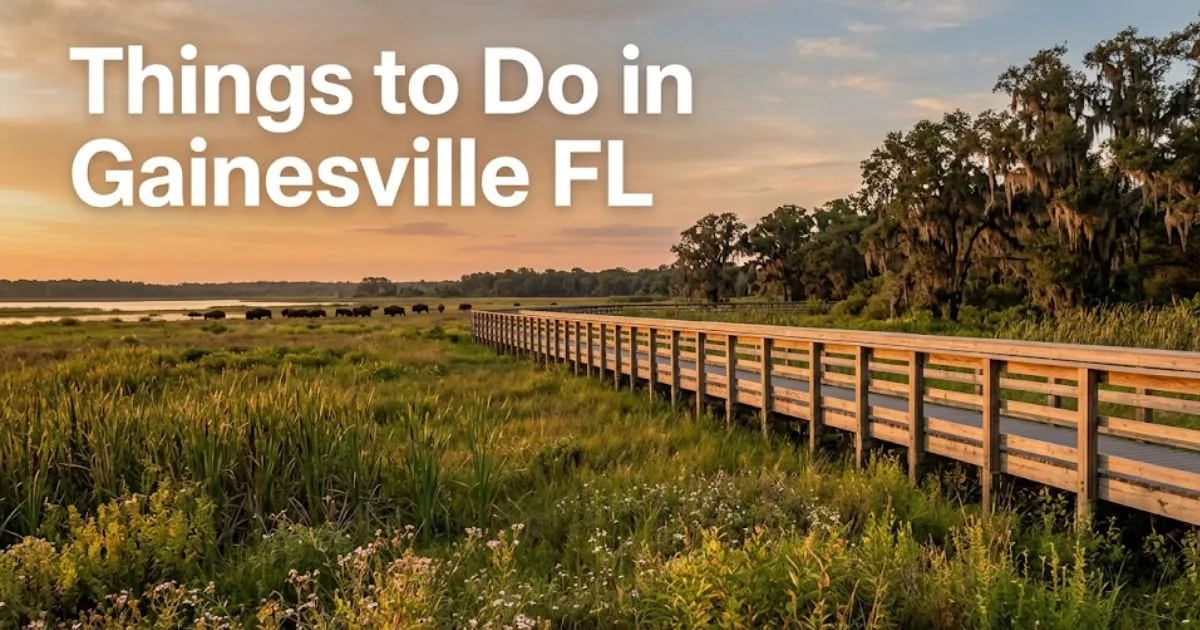
16 Best Things to Do in Gainesville FL: A Local’s 2026 Guide

Gainesville is not the Florida you see on postcards. It is a North Florida city where oak canopies, limestone springs, and genuine local culture matter more than beaches and theme parks.
The city delivers more accessible nature and culture per dollar than nearly any destination in Florida. Visit Gainesville Alachua County reports the area draws over 4 million visitors annually, most coming for the university but discovering the outdoors.
This guide covers the specific places, neighborhoods, and experiences that make Gainesville worth your time in 2026. You will find practical logistics, honest seasonal guidance, and local knowledge that tourism brochures skip.
What Is Gainesville Florida Best Known For
Gainesville is best known as home to the University of Florida, one of the largest public universities in the United States.
The university drives the city’s identity, economy, and cultural rhythm. Fall football weekends at Ben Hill Griffin Stadium transform the entire town into a sea of orange and blue.
But the university is the starting point, not the whole story. Gainesville also houses the Florida Museum of Natural History, a Smithsonian-affiliated institution with the extraordinary Butterfly Rainforest exhibit.
North Central Florida’s ecological character defines the area just as much. Paynes Prairie Preserve State Park sits minutes from downtown, where wild bison and wild horses roam a massive freshwater marsh.
The city’s music scene has launched national acts like Tom Petty and the Heartbreakers, Less Than Jake, and Sister Hazel. Heartwood Soundstage and The Hippodrome Theatre anchor a cultural corridor that exists independent of campus.
Springs country begins here. Within an hour’s drive, you reach Ichetucknee Springs, Ginnie Springs, and the Santa Fe River, some of Florida’s clearest freshwater swimming holes.
| What Gainesville Is Known For | Specific Example | Best For |
|---|---|---|
| University of Florida | Ben Hill Griffin Stadium, campus museums | Sports fans, prospective students, culture seekers |
| Natural springs access | Ichetucknee Springs, Ginnie Springs, Blue Springs | Swimmers, paddlers, nature lovers |
| State parks and wildlife | Paynes Prairie bison herds, Devil’s Millhopper | Hikers, birders, photographers |
| Music and arts heritage | Tom Petty history, Heartwood Soundstage | Music fans, arts travelers |
| Craft beer and local food | First Magnitude, Swamp Head, Satchel’s Pizza | Food and drink travelers |
Key Takeaway: Gainesville is a university town with genuine outdoor and cultural depth, not just a campus with some restaurants around it.
Is Gainesville Worth Visiting
Gainesville is absolutely worth visiting for specific travelers, but it is not a destination for everyone.
The city rewards visitors who want walkable urban pockets, accessible nature, and authentic local culture. It disappoints travelers seeking beachfront luxury, theme park polish, or a car-free vacation.
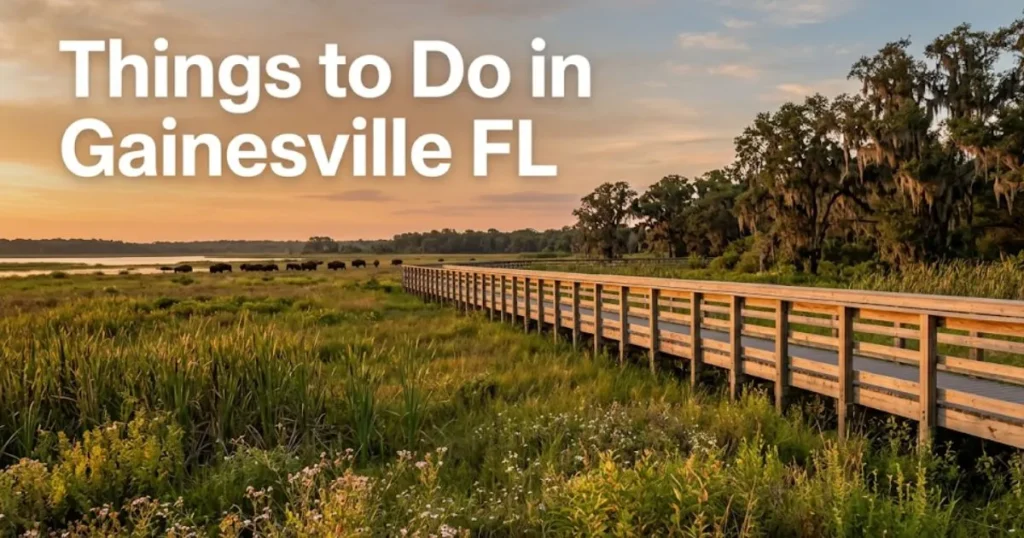
Paynes Prairie Preserve State Park alone justifies a visit for wildlife enthusiasts. Seeing wild bison in Florida, minutes from a college town, is genuinely surprising even for experienced travelers.
The museum density is exceptional for a city of Gainesville’s size. The Florida Museum of Natural History, the Harn Museum of Art, and the Cade Museum for Creativity and Invention sit within a few miles of each other.
All three offer admission under $15 per adult. Some are free.
Gainesville’s food scene punches well above its population. Satchel’s Pizza has been featured in national food media. The craft beer corridor along South Main Street holds its own against much larger Florida cities.
The city is genuinely affordable. Hotels, restaurants, and attractions cost significantly less than Orlando, Tampa, or Miami equivalents. Budget travelers can fill an entire weekend with free or under-$10 activities.
But Gainesville is not Orlando. It is not a beach town. It has no resort district. Nightlife skews heavily toward the college demographic from Thursday through Saturday.
Couples seeking romantic resorts will find limited options. Seniors with mobility concerns will need to plan carefully around summer heat and state park terrain.
| Traveler Type | Is Gainesville Worth It? | Best Alternative If Not |
|---|---|---|
| Outdoor and nature travelers | Yes, genuinely excellent | — |
| Families with school-age kids | Yes, strong museum and park options | — |
| Budget-conscious travelers | Yes, one of Florida’s best value destinations | — |
| College sports fans | Yes, especially fall football season | — |
| Couples seeking luxury resorts | No | Amelia Island, Sarasota |
| Beach vacationers | No | St. Augustine, Clearwater |
| Nightlife-focused travelers | Limited | Miami, Tampa, Orlando |
| Car-free travelers | Difficult | St. Augustine historic district |
Key Takeaway: Gainesville is one of Florida’s best-value destinations for nature, culture, and local food — but only if you know what you are signing up for.
Best Outdoor Activities in Gainesville FL
The best outdoor activities in Gainesville center on the area’s state parks, trail systems, and freshwater springs within an hour’s drive.
Paynes Prairie Preserve State Park is the flagship outdoor experience. The La Chua Trail boardwalk takes you directly into the prairie, where alligators line the drainage canals and wild horses graze in the distance.
Arrive by 8:00 AM from April through October. Afternoon heat pushes wildlife into cover and makes the unshaded boardwalk punishing.
Devil’s Millhopper Geological State Park is a 120-foot-deep sinkhole with a staircase descending into a miniature rainforest. The temperature drops noticeably as you descend, making this a rare summer-friendly outdoor activity.
Sweetwater Wetlands Park offers three miles of trails and boardwalks through constructed wetlands. It is the best birding location within Gainesville city limits. Purple gallinules, roseate spoonbills, and wood storks appear regularly.
The Hawthorne State Trail runs 16 miles from Depot Park through Paynes Prairie to the town of Hawthorne. Rent a bike from a local shop and ride the first four miles out and back for a manageable two-hour excursion.
Families with young children should prioritize Sweetwater Wetlands Park and the Devil’s Millhopper boardwalk area. The La Chua Trail’s alligators are genuinely close, requiring close supervision.
Solo travelers will find the Hawthorne Trail and Paynes Prairie ideal for quiet mornings. Budget travelers should note that Paynes Prairie charges only $6 per vehicle, and Sweetwater Wetlands costs $5 per vehicle.
| Activity | Physical Demand | Cost | Best Time | Best For |
|---|---|---|---|---|
| La Chua Trail boardwalk | Low, flat, exposed | $6/vehicle | October-April, early morning | Wildlife viewers, photographers |
| Devil’s Millhopper staircase | Moderate, 232 steps | $4/vehicle | Year-round, morning | Families, summer visitors |
| Sweetwater Wetlands Park | Low, flat trails | $5/vehicle | Year-round, dawn/dusk | Birders, families |
| Hawthorne Trail biking | Moderate, 16+ miles | Free trail access | October-May | Cyclists, solo travelers |
| Kanapaha Botanical Gardens | Low, paved paths | $10/adult | March-May for blooms | Couples, seniors |
Key Takeaway: Schedule outdoor activities before 10:00 AM from May through October — Florida heat and afternoon thunderstorms are real constraints.
Paynes Prairie Preserve State Park Activities
The essential Paynes Prairie experience is the La Chua Trail, a three-mile round-trip walk on a raised boardwalk and dirt path into the prairie basin.
Alligators are visible year-round along the canal beside the trail. The closer you get to the observation platform at the end, the larger they tend to be. Wild bison appear most reliably in the cooler months from November through March.
A second access point, the Bolens Bluff Trail, enters the prairie from the south side off US-441. This trail is less crowded than La Chua and offers better chances of seeing wild horses.
The Gainesville-Hawthorne Trail cuts through the preserve’s northern edge. Cyclists and runners use it heavily on weekend mornings. You will share the path and should stay alert.
Admission runs $6 per vehicle, payable at an honor box or visitor center. The La Chua Trail parking lot fills by 9:00 AM on weekends from October through April. Arrive early or visit on weekdays.
Seniors and visitors with mobility limitations should stick to the La Chua Trail boardwalk section. The dirt path beyond the boardwalk can become muddy and uneven after rain. Wheelchair access is limited to the first portion of the trail.
Families with children should keep kids close on the boardwalk. Alligators often rest directly beside the railings. The park staff does not fence them off.
The visitor center at the main park entrance on Savanna Boulevard provides trail maps, restrooms, and a small exhibit on prairie ecology. Rangers lead guided walks on weekends during peak season.
Insider Tip:
- The south entrance off US-441 accesses the Wacahoota Trail and Chacala Trail, both lightly used and excellent for birding
- Visit on a weekday morning in January or February for the best combination of wildlife activity and solitude
- Summer visits should conclude by 10:00 AM — the boardwalk has zero shade and temperatures climb fast
Florida State Parks reports that Paynes Prairie covers over 23,000 acres and contains 20 distinct biological communities. It is one of Florida’s most ecologically significant protected areas.
Devil’s Millhopper Geological State Park
Devil’s Millhopper is a 120-foot-deep limestone sinkhole with a wooden staircase descending to the bottom.
The staircase has 232 steps. The descent takes you through a miniature rainforest ecosystem where ferns, mosses, and small waterfalls line the sinkhole walls. The temperature at the bottom runs 10 to 15 degrees cooler than the parking lot.
This is Gainesville’s best outdoor activity during hot months. The shaded staircase and cooler basin make a July morning visit genuinely comfortable when other trails feel punishing.
The park is small. You can complete the staircase descent, basin exploration, and return in 45 minutes to an hour. Combine it with San Felasco Hammock Preserve State Park or Kanapaha Botanical Gardens to build a half-day itinerary.
Admission is $4 per vehicle. The park is typically open Wednesday through Sunday, with hours varying seasonally. Check the Florida State Parks website before visiting, as closure days have shifted in recent years.
Seniors and visitors with knee or mobility concerns should consider the staircase carefully. The climb back up is steep, and there are limited rest areas on the stairs. The rim trail above the sinkhole provides views without the descent.
Families with young children enjoy the novelty of the sinkhole, but parents should hold hands on the stairs. The steps can be slippery after rain, and the railing gaps are wide enough for a small child to slip through.
The park’s interpretive signs explain the geological history of North Florida’s karst landscape. The sinkhole formed over thousands of years as acidic groundwater dissolved the limestone bedrock.
According to the Florida Department of Environmental Protection, Devil’s Millhopper is one of the state’s most significant geological sites, with fossilized shark teeth and marine shells visible in the sinkhole walls.
Key Takeaway: Devil’s Millhopper is Gainesville’s best summer hiking option, but know your knee situation before committing to those 232 steps back up.
Gainesville Natural Springs Nearby
The best natural springs near Gainesville are Ichetucknee Springs State Park, Ginnie Springs, and Blue Springs Park, all within a 45-minute drive northwest of the city.
Ichetucknee Springs State Park is the premier tubing destination in North Florida. The crystal-clear Ichetucknee River runs at a constant 72 degrees year-round. Tubing season typically runs from late May through early September.
Reservations are strongly recommended for summer weekends. The park caps daily visitors, and weekend slots book out weeks in advance. Weekday visits are easier to secure.
Ginnie Springs is a privately owned spring complex on the Santa Fe River. It offers swimming, snorkeling, scuba diving, tubing, and camping. The water clarity is exceptional, making it popular with underwater photographers.
Admission to Ginnie Springs runs higher than state park springs. Budget approximately $15 to $20 per person for day access. The atmosphere skews younger and more social than the state park springs.
Blue Springs Park near High Springs is a quieter alternative. The spring pool is smaller than Ginnie, but the crowd level is lower and the setting feels more natural. It suits families and visitors seeking a calmer experience.
Poe Springs Park and Rum Island Park offer additional county-run spring access points along the Santa Fe River. These are the best options for budget travelers, with lower entry fees and fewer crowds.
Solo travelers and couples seeking quiet water time should target Blue Springs or Poe Springs on weekday mornings. Families with older kids and teens will find Ginnie Springs’ social atmosphere and rental infrastructure more convenient.
Seniors and visitors with mobility concerns should check access conditions. Ichetucknee has paved paths to the springhead. Ginnie Springs requires navigating sandy terrain and stairs at some entry points.
| Spring | Drive Time | Cost Range | Best For | Crowd Level |
|---|---|---|---|---|
| Ichetucknee Springs SP | 35 min | $6/vehicle | Tubing, families | High weekends, moderate weekdays |
| Ginnie Springs | 40 min | $15-$20/person | Swimming, diving, social atmosphere | High year-round |
| Blue Springs Park | 35 min | $10-$15/person | Quiet swimming, families | Moderate |
| Poe Springs | 30 min | $5-$8/vehicle | Budget-friendly, relaxed | Low to moderate |
| Rum Island Park | 35 min | Free to low-cost | Kayak launch, picnicking | Low |
Insider Tip:
- Arrive at any spring by 9:00 AM on summer weekends or expect a line
- Ginnie Springs bans alcohol on the river, not in the parking lot — know the distinction
- Ichetucknee’s south entrance is less crowded than the north entrance and accesses a quieter tubing section
Key Takeaway: Gainesville’s springs access is the city’s single best natural advantage, but summer weekends require advance planning and early arrival.
Florida Museum of Natural History and Butterfly Rainforest
The Florida Museum of Natural History houses the Butterfly Rainforest, a three-story screened enclosure with hundreds of free-flying butterflies.
This is Gainesville’s single most popular indoor attraction. The exhibit holds butterflies from around the world alongside tropical plants, waterfalls, and koi ponds. Staff release new butterflies daily at 2:00 PM on weekdays and 11:00 AM and 3:00 PM on weekends.
Admission to the Butterfly Rainforest runs approximately $14 for adults and $7 for children as of recent years. The main museum exhibits are free, including the Florida Fossils hall and the Northwest Florida waterway diorama.
Book Butterfly Rainforest tickets online in advance during spring break and summer. The timed entry system limits capacity, and walk-up availability disappears by midday during peak periods.
The museum is exceptional for families with children. The discovery zone has hands-on exhibits designed for ages 3 through 10. The fossil hall displays a full mammoth skeleton and an impressive Megalodon jaw.
Couples and solo travelers will find the butterfly exhibit genuinely peaceful during weekday mornings. The garden seating areas inside the enclosure reward visitors willing to sit still for 15 minutes.
Seniors will appreciate the bench seating throughout the museum, the climate-controlled environment, and the elevator access to all levels. The museum is fully ADA-accessible.
The South Florida People and Environments exhibit recreates a Calusa Indian fishing village. It is one of the better anthropological exhibits in the Florida museum system.
Insider Tip:
- Wear bright colors — butterflies land more readily on pink, orange, and red clothing
- The free museum exhibits are substantial enough to fill 90 minutes without paying for the butterfly exhibit
- Visit on a weekday morning in February or September for the lowest crowd levels
According to the University of Florida, the museum is the largest university-affiliated natural history museum in the Southeast and a Smithsonian Institution affiliate.
University of Florida Campus Attractions
The University of Florida campus functions as Gainesville’s cultural and architectural centerpiece.
Ben Hill Griffin Stadium, known as “The Swamp,” seats over 88,000 people on football game days. The stadium is open for self-guided walking tours during weekday business hours when no event is scheduled.
The view from the stadium’s upper deck overlooks the entire campus and parts of Paynes Prairie. Non-sports fans will find the scale and architectural presence genuinely impressive.
Century Tower anchors the central campus. The 157-foot carillon tower plays concerts during the academic year. The surrounding Plaza of the Americas is a broad lawn where students study and gather.
Lake Alice sits on the western edge of campus. A walking path circles the lake, and the famous UF Bat House near the lake’s north shore attracts crowds at dusk when thousands of bats emerge for their nightly feed.
The Curtis M. Phillips Center for the Performing Arts brings touring Broadway productions, classical music, and dance performances to campus. Check the 2026 season calendar for performances that align with your visit.
The campus is walkable from the Innovation District and parts of midtown. Parking on campus requires a visitor permit from the UF Transportation office. Weekday visitors should use the UF Visitor Welcome Center parking garage.
Families with prospective students should schedule an official campus tour through the UF Office of Admissions. These fill weeks in advance during spring and fall.
Seniors and visitors with mobility concerns should know the campus is large and walking distances are significant. Focus on the central area around Century Tower and the Plaza of the Americas rather than trying to cover the entire footprint.
According to U.S. News and World Report, the University of Florida consistently ranks among the top public universities nationally, and the campus architecture reflects over a century of Florida educational history.
Key Takeaway: The UF campus is worth visiting even if you have zero connection to the university — the museums, architecture, and Lake Alice bat emergence are genuine attractions.
Harn Museum of Art Gainesville
The Samuel P. Harn Museum of Art is Gainesville’s premier art museum, located on the University of Florida campus.
Admission is free. The permanent collection spans Asian, African, modern, and contemporary art across 40,000 square feet of gallery space. The museum’s Asian art collection is particularly strong for a university museum.
The David A. Cofrin Asian Art Wing houses a rotating selection of ceramics, jade, and textiles. The garden spaces between the museum wings include a bamboo garden and a water feature designed for quiet contemplation.
Temporary exhibitions change every three to four months. The 2026 exhibition calendar typically includes photography retrospectives, contemporary Florida artists, and traveling Smithsonian exhibitions.
The museum is climate-controlled and fully ADA-accessible. It is an ideal activity for seniors, families seeking air-conditioned culture, and solo travelers wanting a quiet hour or two.
The museum cafe offers light lunch options with seating overlooking the gardens. It is a genuinely pleasant mid-visit break without leaving the building.
Families with young children should check the museum’s family program schedule. Weekend art-making workshops designed for ages 5 through 12 run during the academic year.
Couples will find the Harn an underrated Gainesville date activity. The garden spaces and quiet galleries create a peaceful atmosphere that downtown restaurants and campus sports do not offer.
Park in the Cultural Plaza parking lot shared with the Florida Museum of Natural History and the Phillips Center. The same parking area serves all three cultural venues, making a combined visit efficient.
Insider Tip:
- Allow 90 minutes for a thorough visit, or 45 minutes to see the highlights
- The museum is quietest during weekday afternoons when classes are in session
- Combine with the Butterfly Rainforest for a half-day climate-controlled cultural itinerary
According to the Harn Museum, the permanent collection includes over 11,000 works spanning 5,000 years of art history.
Downtown Gainesville Things to Do
Downtown Gainesville centers on the intersection of University Avenue and Main Street, radiating outward to Depot Park and the Innovation District.
Depot Park is the anchor of downtown’s outdoor life. The former rail yard turned public space includes a children’s splash pad, a fishing pond, walking paths, and a pavilion hosting weekend events.
The Cade Museum for Creativity and Invention sits at Depot Park’s eastern edge. The museum focuses on interactive science and invention exhibits, with programming designed for ages 8 through adult. Admission runs approximately $12 to $15.
Bo Diddley Community Plaza hosts the weekly Union Street Farmers Market on Wednesdays from 4:00 PM to 7:00 PM during most of the year. The Wednesday market is the best single stop for experiencing downtown’s community rhythm.
The Hippodrome Theatre is a professional regional theater housed in a historic downtown building. The 2026 season includes mainstage productions, independent films, and gallery exhibitions. Check show schedules before your visit.
Heartwood Soundstage is a live music venue and recording studio that draws touring indie, folk, and roots acts. The intimate room seats around 100 people and sounds exceptional. It is the venue locals take visiting friends to.
First Magnitude Brewing Company anchors the downtown-adjacent craft beer corridor on South Main Street. The warehouse-style taproom has a large outdoor seating area, food trucks on weekends, and a relaxed atmosphere that attracts all ages.
Families should prioritize Depot Park and the Cade Museum during downtown exploration. Couples will find the Hippodrome-to-Heartwood evening circuit a better downtown experience than any campus-adjacent bar strip.
Budget travelers should target Wednesday farmers market and First Magnitude’s weekend food truck scene for affordable downtown meals. Depot Park and Bo Diddley Plaza are free public spaces year-round.
| Downtown Attraction | Cost | Best For | Time Needed |
|---|---|---|---|
| Depot Park | Free | Families, outdoor time | 1-2 hours |
| Cade Museum | $12-$15 | Families, science-interested adults | 1.5-2 hours |
| Union Street Farmers Market | Free entry | All traveler types | 45-60 minutes |
| Hippodrome Theatre | $20-$40/ticket | Couples, arts travelers | 2-3 hours |
| Heartwood Soundstage | $10-$25/ticket | Music fans, couples | 2-3 hours |
| First Magnitude Brewing | $6-$8/beer | Adults, groups | 1-2 hours |
Key Takeaway: Downtown Gainesville’s Depot Park-to-South Main corridor is the part of the city that feels least connected to the university and most like a genuine local community.
Best Restaurants in Gainesville Locals Actually Eat At
The restaurants Gainesville locals genuinely frequent cluster in a few distinct zones: the South Main Street corridor, the Grove Street area, and scattered spots in midtown and Haile Plantation.
Satchel’s Pizza on Northeast 23rd Avenue is Gainesville’s most iconic restaurant. The building is a folk-art installation disguised as a pizza joint, with a junk garden out back, a vintage van parked inside the dining room, and seriously good pizza.
Cash or check only. The ATM on site charges fees. Arrive early or expect a wait, especially on weekend evenings. This is not a quick dinner stop.
The Top on North Main Street serves elevated comfort food in a dimly lit, art-filled space downtown. The menu spans burgers, tofu bowls, and vegetarian options. It is the downtown restaurant locals recommend when visitors want something nicer than a pizza but not formal.
Dragonfly Sushi and Sake Company in the Union Street Station development serves the best sushi in Gainesville. The executive lunch specials offer the best value. The evening atmosphere is loud and social, suiting couples and groups more than solo diners seeking quiet.
Afternoon on Northwest 10th Avenue is a daytime-only spot serving creative sandwiches and salads in a bright, minimalist space. It is the best lunch option near the UF campus for visitors who want something beyond fast casual.
Vine Sourdough Bakery on Northwest 16th Avenue produces Gainesville’s best bread and pastries. The morning line forms early on weekends. The sourdough croissants are the signature item.
Alpin Bistro on South Main Street serves French bistro food in a small, warm space. It is the best date-night restaurant in Gainesville, especially in cooler months when the patio is open.
Cypress and Grove Brewing Company on Northwest 10th Avenue occupies a historic ice plant building. The taproom serves house-brewed beer and hosts rotating food trucks. It is quieter and more conversation-friendly than First Magnitude.
Budget travelers should target Satchel’s for a $15-per-person pizza feast and The Top for under-$20 entrees. Dragonfly and Alpin Bistro are the splurge options.
| Restaurant | Price Range | Best For | Insider Note |
|---|---|---|---|
| Satchel’s Pizza | $10-$20/person | Everyone, families | Cash only, worth the wait |
| The Top | $15-$25/person | Groups, vegetarians, dates | Late-night menu until 1am weekends |
| Dragonfly | $25-$45/person | Couples, sushi fans | Lunch specials are the value play |
| Afternoon | $12-$18/person | Lunch, solo diners | Weekday lunch only |
| Alpin Bistro | $25-$40/person | Date night, couples | Patio seating is the move |
| Cypress and Grove | $6-$8/beer | Groups, relaxed atmosphere | Food trucks vary by day |
Key Takeaway: Gainesville’s local food scene runs on Satchel’s, The Top, and Dragonfly — start with those three and fill in around them.
Free Things to Do in Gainesville FL
Gainesville offers genuinely worthwhile free activities, starting with the Florida Museum of Natural History main exhibits outside the Butterfly Rainforest.
The fossil hall, Calusa village diorama, and Florida ecosystems exhibits are free. You can spend 90 minutes in the museum without spending a dollar on the butterfly exhibit.
Depot Park is free year-round. The splash pad, walking paths, pond fishing, and weekend events cost nothing. The park hosts outdoor movie nights and live music during spring and fall.
The Hawthorne State Trail is free to walk, run, or bike. You do not need a state park pass for the trail itself. Parking at the Depot Park trailhead is free on weekdays and most weekends.
Paynes Prairie viewing from the US-441 observation deck is free. The pull-off overlooks the prairie from the highway shoulder and offers a legitimate chance to see bison and wild horses with zero admission cost.
The Grove Street Farmers Market, separate from the Wednesday Union Street market, runs on Monday evenings and is free to browse. The vendors, food trucks, and community atmosphere make it a low-cost evening outing.
The UF Bat House near Lake Alice is free to visit at dusk. The bat emergence happens nightly, though it is most active during warmer months. It is unusual, memorable, and costs nothing.
Kanapaha Botanical Gardens offers free admission on select days throughout the year, typically including the first Saturday of certain months. Check their 2026 calendar for specific dates.
Campus architecture walking is free. The Plaza of the Americas, Century Tower, and Lake Alice loop create a self-guided walking tour without any admission barriers.
| Free Activity | Time Needed | Best Time | Traveler Fit |
|---|---|---|---|
| FL Museum main exhibits | 60-90 min | Weekday mornings | All profiles |
| Depot Park | 1-2 hours | Weekends for events | Families, solo |
| Hawthorne Trail | 1-3 hours | Early morning | Cyclists, runners |
| US-441 Prairie overlook | 15-30 min | Dawn, dusk | All profiles |
| UF Bat House emergence | 20-30 min | Dusk, warm months | Families, solo |
| UF campus walking tour | 1-2 hours | Weekday mornings | Seniors, couples |
Key Takeaway: A full day of Gainesville’s best activities is possible on a $20 total budget if you combine free museums, Depot Park, and the Paynes Prairie overlook.
Gainesville With Kids
Gainesville is one of Florida’s most family-friendly small cities, with a cluster of kid-appropriate attractions that work across different age groups.
The Florida Museum of Natural History and Butterfly Rainforest are the best family activity in Gainesville. The discovery zone works for ages 3 to 10, the fossil hall impresses all ages, and the butterflies are a guaranteed hit.
The Cade Museum for Creativity and Invention at Depot Park is designed for hands-on learning. The exhibits encourage kids to build, experiment, and create. It suits elementary through middle school ages best.
Depot Park itself is Gainesville’s best children’s outdoor space. The splash pad operates during warm months, the playground is modern and accessible, and the fishing pond offers catch-and-release for kids.
Kanapaha Botanical Gardens has wide, paved paths that work for strollers. The children’s garden area and the bamboo grove are the sections that hold young attention longest. The summer labyrinth is popular with older kids.
The Santa Fe College Teaching Zoo is a small, accredited zoo on the Santa Fe College campus. It houses over 75 species and focuses on conservation education. Admission is affordable, typically under $10 per person.
Ginnie Springs and Ichetucknee Springs work for families with older children and teens. The tube floats are easy for strong swimmers. For young children, Blue Springs Park offers calmer water and a more contained swimming area.
The UF Bat House is a short, free evening activity that younger kids find thrilling. Arrive 15 minutes before sunset and bring mosquito repellent.
| Activity | Best Age Range | Stroller Access | Indoor/Outdoor |
|---|---|---|---|
| FL Museum + Butterflies | All ages | Yes, full | Indoor |
| Cade Museum | 5-14 | Yes | Indoor |
| Depot Park | 2-12 | Yes | Outdoor |
| Kanapaha Gardens | All ages | Yes, paved | Outdoor |
| Santa Fe Teaching Zoo | 3-12 | Yes, paths | Outdoor |
| Ichetucknee tubing | 8+ | No | Outdoor/water |
Insider Tip:
- Kids under 3 enter the Butterfly Rainforest free but may be overwhelmed by butterflies landing on them
- The splash pad at Depot Park is seasonal — verify it is operating before planning a summer visit around it
- Gator football games are not great for children under 8 — the noise, heat, and crowd density are genuinely intense
Key Takeaway: Gainesville’s museum density and Depot Park make it an unusually strong family destination for a city its size, particularly for ages 5 through 14.
Day Trips From Gainesville FL
The best day trips from Gainesville reach the Gulf Coast, historic St. Augustine, and Ocala National Forest.
Cedar Key is the closest coastal destination, about 60 miles southwest of Gainesville. The small Gulf Coast fishing village has no high-rises, no chain hotels, and no beaches in the traditional sense. It is a stilt-house town over the water with excellent seafood and a quiet, end-of-the-road atmosphere.
St. Augustine sits 75 to 90 minutes east via State Road 20 and I-95. The nation’s oldest continuously occupied European settlement offers a walkable historic district, the Castillo de San Marcos, and a beach access at Anastasia State Park. It is the best day trip for history-focused travelers.
Ocala National Forest lies 45 minutes south and east. The forest has hiking trails, natural springs including Juniper Springs and Alexander Springs, and the Yearling Trail in the Pat’s Island area. It is Florida’s southernmost national forest and the best day trip for hikers.
Ichetucknee Springs State Park at 35 minutes north functions as both a half-day activity and a day trip destination when combined with other High Springs-area springs.
Micanopy, 15 minutes south on US-441, is Florida’s oldest inland town. The single main street is lined with antique shops, moss-draped oaks, and a famous ice cream shop. It films well and suits a relaxed two-hour stop on the way to or from Paynes Prairie.
High Springs is the spring country hub 30 minutes northwest. The downtown has an old-Florida main street with outfitters, cafes, and a brewery. It is the best base for a multi-spring day trip.
| Day Trip | Drive Time | Best For | Key Activity |
|---|---|---|---|
| Cedar Key | 60 min | Couples, solo, seafood | Seafood lunch, kayaking, sunset |
| St. Augustine | 75-90 min | History fans, families | Historic district, fort, beach |
| Ocala National Forest | 45 min | Hikers, nature, springs | Juniper Springs, hiking trails |
| Micanopy | 15 min | Antiquers, photographers | Main Street browsing, ice cream |
| High Springs | 30 min | Spring hoppers, paddlers | Multiple springs, outfitters |
Insider Tip:
- Cedar Key’s seafood restaurants are busiest on weekends — visit on a weekday for a quieter experience
- Ocala National Forest requires a day-use fee at developed springs — carry cash for honor boxes
- St. Augustine’s historic district parking is expensive and limited — park at the visitor center garage
Key Takeaway: Gainesville’s central North Florida location puts six distinct day trip destinations within 90 minutes, making it a strong base for regional exploration.
Best Time to Visit Gainesville FL
The best time to visit Gainesville is October through November and March through April.
Temperatures range from the mid-60s to low-80s during these months. Humidity drops from summer levels. Wildlife is active at Paynes Prairie. Cultural events and farmers markets run at full schedule.
October delivers Gator football season in full swing. The energy on campus and around town is electric on home game weekends. Book lodging three to six months in advance for football Saturdays.
March brings spring blooms at Kanapaha Botanical Gardens and comfortable hiking weather before the summer heat arrives. Spring break crowds at the springs require midweek visits.
The worst time to visit is July through August. Temperatures routinely reach the mid-90s with oppressive humidity. Afternoon thunderstorms are near-daily. State park trails are uncomfortably hot by 10:00 AM. The student population drops, reducing downtown energy.
However, summer is the best time for springs. The 72-degree spring water feels refreshing in July heat. Tubing season at Ichetucknee peaks from June through August.
Winter, from December through February, is variable. Temperatures range from the 30s to 60s. Frost is possible. Some outdoor activities require layers. Hotel rates are at their lowest, and crowds are minimal.
Football weekends in fall require the most advance planning. Gainesville’s hotel inventory is modest for a city that hosts 88,000-person football crowds. Rates triple on home game weekends.
| Season | Months | Best For | Crowd Level | Lodging Cost |
|---|---|---|---|---|
| Fall | Oct-Nov | Football, hiking, culture | High on game days | High on game days, moderate otherwise |
| Spring | Mar-Apr | Hiking, gardens, museums | Moderate, high at springs | Moderate |
| Summer | Jun-Aug | Springs, museums, indoor activities | Low in town, high at springs | Low |
| Winter | Dec-Feb | Budget travel, quiet exploration | Low | Lowest |
Key Takeaway: Target October weekdays for the best combination of weather, activity availability, and manageable crowds.
Unique Things to Do in Gainesville FL
The unique Gainesville experiences that separate it from generic Florida destinations start with the UF Bat House emergence at dusk.
Thousands of Brazilian free-tailed bats stream out of the bat houses near Lake Alice every evening. The spectacle is free, strange, and genuinely memorable. Arrive 15 minutes before sunset during warmer months.
Satchel’s Pizza is not just a restaurant. It is a folk-art environment with a junk garden, a vintage van, and live music in the back room. There is nothing like it in chain-restaurant America.
Heartwood Soundstage offers a concert experience that feels like watching live music in someone’s very well-designed living room. The sound quality and intimacy outclass any other venue in town.
The Kanapaha Botanical Gardens bamboo grove is the largest public bamboo garden in Florida. Walking through it feels like leaving the state entirely for five minutes.
Sweetwater Wetlands Park at dawn delivers bird photography opportunities that rival much larger and more famous wildlife refuges. The roseate spoonbills and purple gallinules are reliable sightings during spring.
The La Chua Trail at Paynes Prairie puts you within 20 feet of alligators with no barriers. The experience is thrilling in a way that zoo exhibits cannot replicate.
First Magnitude Brewing Company hosts an annual Florida Man Games event in the spring that parodies the internet’s favorite meme with athletic competitions and a festival atmosphere. The 2026 date has not been announced but typically falls in February or March.
The Micanopy Historic District, 15 minutes south, is a time-capsule main street that appears in the film Doc Hollywood. The antique shops and moss-draped oaks create a genuine Old Florida scene.
| Unique Experience | What Makes It Different |
|---|---|
| UF Bat House emergence | Thousands of bats streaming at dusk, free |
| Satchel’s Pizza | Folk-art pizza joint, no equivalent |
| Heartwood Soundstage | Intimate live music in a recording studio |
| Kanapaha bamboo grove | Florida’s largest public bamboo collection |
| La Chua alligators | Barrier-free wildlife viewing |
| Florida Man Games (spring) | Self-aware Florida parody festival |
Insider Tip:
- The bat emergence is best from April through October when the bats are most active
- Satchel’s back room has live music most weekend evenings — it is a separate experience from the main dining room
- La Chua Trail alligators are real wild animals, not park-groomed photo props — maintain distance
Key Takeaway: Gainesville’s unique draws are its combination of genuine wildlife proximity, independent local culture, and experiences that cannot be replicated in a chain or a theme park.
Safety and Practical Warnings for Gainesville
Alligators are present in every freshwater body in the Gainesville area, and they are not fenced off from trails at state parks.
Stay on marked trails and boardwalks at Paynes Prairie and Sweetwater Wetlands Park. Do not approach alligators for photographs. Do not feed any wildlife anywhere in Florida.
Summer heat from June through September is a genuine safety concern. Temperatures reach the mid-90s with heat indices above 100. Schedule outdoor activities before 10:00 AM. Carry water. Watch for heat exhaustion symptoms.
Afternoon lightning storms are near-daily during summer months. Leave exposed trails, boardwalks, and water by 2:00 PM. Seek shelter in a vehicle or permanent building. Open-air pavilions do not provide lightning protection.
Swimming is not permitted in Paynes Prairie, Lake Alice, or any retention pond. The water is not safe for human contact due to alligators, bacteria, and, in the case of Lake Alice, the bat colony.
Spring swimming has its own safety considerations. Ginnie Springs allows alcohol in the parking area but not on the water, leading to a combination of intoxicated swimmers and natural water hazards. Know your limits and watch children closely.
Downtown Gainesville and the UF campus area are generally safe, but the midtown bar corridor on weekend nights sees elevated incidents. Solo travelers should exercise normal urban awareness after midnight.
Cell service is reliable in town and at most state parks. Remote sections of Ocala National Forest have limited to no service. Download offline maps before day trips into the forest.
In an emergency, dial 911. For state park emergencies, contact the Florida Fish and Wildlife Conservation Commission at their 24-hour Wildlife Alert line.
Frequently Asked Questions About Gainesville Florida
What is the best time of year to visit Gainesville Florida?
October through November and March through April offer the best weather for Gainesville.
Temperatures range from the mid-60s to low-80s with lower humidity than summer.
Football fans should target October, while nature visitors will find March and April ideal for wildlife and gardens.
How many days do you need in Gainesville?
Two full days is sufficient for Gainesville’s core attractions.
Day one covers the Florida Museum of Natural History, campus, and an evening downtown.
Day two handles Paynes Prairie in the morning and a spring visit or day trip in the afternoon.
Is Gainesville Florida good for families?
Gainesville is excellent for families with children ages 5 to 14.
The museum cluster, Depot Park splash pad, and springs access provide more family programming than most cities its size.
Younger children will find fewer dedicated attractions beyond the Florida Museum discovery zone and Depot Park playground.
What are the best free things to do in Gainesville?
The Florida Museum of Natural History main exhibits, Depot Park, Hawthorne Trail, UF Bat House, and Paynes Prairie overlook from US-441 are all free.
A full day of Gainesville exploration is possible with minimal spending.
How far are the springs from Gainesville?
The closest springs are 30 to 45 minutes northwest in the High Springs and Fort White areas.
Ichetucknee Springs is approximately 35 minutes north, and Ginnie Springs is 40 minutes northwest.
Plan a half-day minimum for any spring visit.
Is Gainesville worth visiting for non-Gator fans?
Gainesville is absolutely worth visiting without any university connection.
The state parks, springs access, museum density, and local food scene stand independent of UF.
The city works best for nature enthusiasts, budget travelers, and visitors who appreciate college-town energy without theme-park tourism.
Your Gainesville Trip, Planned Right
Book lodging first if you are visiting during a fall football weekend. The city’s hotel inventory is limited, and game-day rates are real.
Plan outdoor activities for early mornings, especially from May through October. Florida’s heat is not a suggestion. It changes what you can comfortably do after 10:00 AM.
The springs are worth the drive. A Gainesville visit without water time misses the region’s best natural feature. Pick a weekday if your schedule allows.
Travel conditions, admission prices, park hours, and event schedules shift. Verify hours directly with the Florida State Parks website and Visit Gainesville Alachua County before your departure.
Gainesville is what you make of it. Come for the campus. Stay for the prairie, the springs, the pizza joint with the junk garden, and the bats at dusk.