Best Things to Do in Sardinia, Italy: 2026 Travel Guide

Sardinia rewards travelers willing to move beyond its famous coastline. The island’s things to do in Sardinia span Bronze Age ruins, canyon hikes, ancient shepherd villages, and some of the clearest coastal water in the Mediterranean.
Italy’s second-largest island holds a UNESCO World Heritage Site at Nuraghe Su Nuraxi, over 1,800 kilometers of coastline, and a distinct culture that diverges sharply from mainland Italian traditions.
This guide covers every major zone, activity type, and traveler profile across the island. Use it to build a trip that balances the beaches you came for with the experiences that make Sardinia genuinely irreplaceable.
Things to Do in Sardinia: What Makes the Island Worth Your Time
The best things to do in Sardinia combine coastal beauty with a cultural depth that most Mediterranean islands simply cannot match.
Sardinia sits apart from its competition. It is not a resort island, not a party island, and not a mini-Italy. Its interior mountain communities, the Barbagia and Ogliastra regions, maintain traditions, dialects, and foods that predate Roman rule.
The coastline generates the headlines. But the nuragic archaeological sites, the flamingo wetlands outside Cagliari, the cathedral-walled canyon of Gorropu, and the festival circuit of Autunno in Barbagia collectively make a stronger case for why Sardinia holds repeat visitors for life.
Sardegna Tourism Board (the island’s official tourism authority) identifies over 7,000 nuragic structures scattered across the island. No other destination in Europe has anything comparable in scale or preservation.
Plan for at least seven days. Fewer than five days forces a choice between regions. A first-time visitor genuinely cannot do justice to both the south and north in under a week.
| Experience Type | Best For | Season | Cost Range (General) |
|---|---|---|---|
| Gulf of Orosei beaches | Couples, outdoor travelers | June, Sept-Oct | Free to moderate (boat access) |
| Nuraghe Su Nuraxi | Culture, history travelers | Year-round | Low (entrance fee applies) |
| Gorropu Canyon hike | Experienced hikers | April-June, Sept-Oct | Low-moderate |
| Autunno in Barbagia villages | Cultural travelers, couples | Oct-Nov | Free (village access) |
| Costa Smeralda beaches | Luxury travelers | June-Sept | Premium |
| Cagliari city | All profiles | Year-round | Low-mid |
| La Maddalena Archipelago | Boat travelers, snorkelers | June-Sept | Moderate |
Couples will find Sardinia particularly satisfying in September. Families with children do better in June, when water is warm but crowds are manageable. Solo travelers should base in Cagliari for the strongest social infrastructure.
Best Things to Do in Sardinia Italy: The Island’s Non-Negotiable Experiences
The five genuinely non-negotiable Sardinia experiences are: the Gulf of Orosei beaches, Nuraghe Su Nuraxi, Cagliari’s Castello district, a Barbagia village stay, and a boat tour of the La Maddalena Archipelago.
Every other experience is additive. These five represent what Sardinia does that nowhere else does.
Condé Nast Traveler identifies Sardinia as one of the Mediterranean’s most consistently underrated cultural destinations, noting that most visitors experience only the coastal circuit and leave without engaging the island’s archaeological and cultural interior.
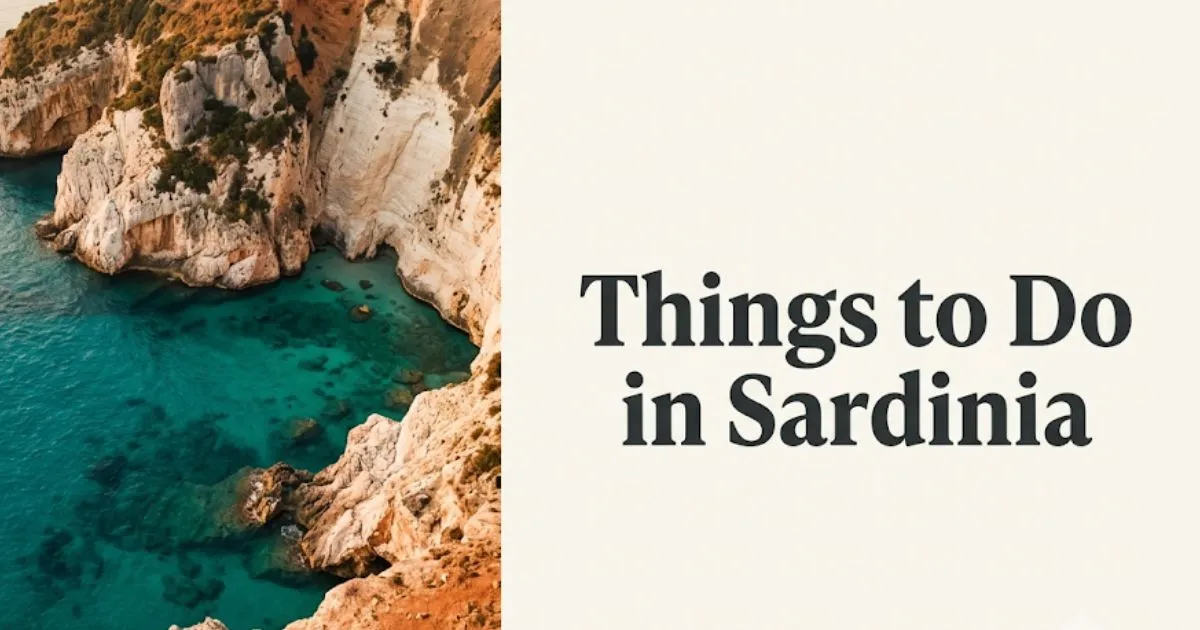
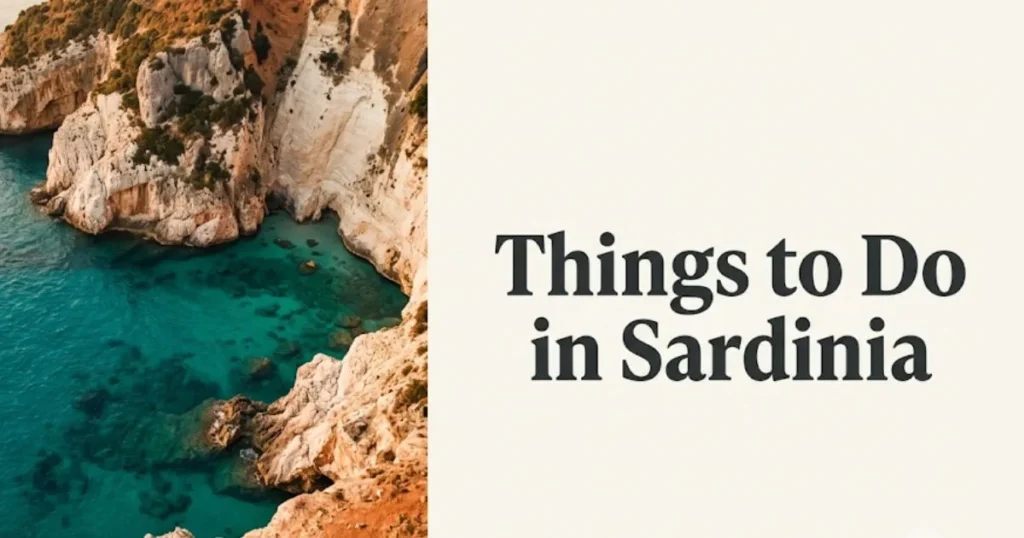
The honest assessment: the famous coastal beaches are genuinely exceptional. La Pelosa near Stintino, Cala Mariolu in the Gulf of Orosei, and Cala Goloritzé near Baunei produce water clarity that functions as a cliché because it genuinely earns the description.
But visitors who spend their entire trip beach-hopping miss Sardinia’s most distinctive character entirely. The interior is where the island diverges from every other European coastal destination.
Insider Tip:
- Book accommodation in the Barbagia village of Oliena or Dorgali as a base for both coastal and inland access during shoulder season.
- The Gulf of Orosei’s most famous beaches require either a boat or a multi-hour hike; plan accordingly rather than assuming road access.
- Senior travelers and those with mobility considerations should note that many of Sardinia’s most photographed beaches involve rocky descents or boat-only access; Cagliari’s urban beaches and some Oristano area beaches offer far more accessible alternatives.
Sardinia Beaches: Where to Go and What No One Tells You
Sardinia’s best beaches sit in the Gulf of Orosei on the eastern coast, but the northwest coast near Stintino and the southwest’s Costa Verde both offer genuinely outstanding alternatives with significantly lower visitor pressure.
The Gulf of Orosei beaches (Cala Mariolu, Cala Biriola, Cala Sisine, Cala Luna, and Cala Goloritzé) are widely acknowledged as some of the finest coastal water in Europe. The access reality is important: most are reachable only by boat from Cala Gonone or Santa Maria Navarrese, or via long hiking trails with significant elevation changes.
Boat tours from Cala Gonone typically run from June through September. Budget roughly 20 to 50 euros per person depending on the tour length and operator. Verify current rates and availability directly with operators before arriving.
La Pelosa beach near Stintino introduced a regulated visitor access system in recent years due to environmental pressure. Confirm current entry protocols directly with the Stintino municipality before planning your visit, as access rules may evolve further by 2026.
The overrated pick: Costa Smeralda’s Porto Cervo beaches. The water is genuinely beautiful. The surrounding infrastructure is built entirely around luxury yacht culture. Mid-range travelers will find the experience uncomfortable and expensive without getting meaningfully better water than the Gulf of Orosei provides at a fraction of the cost.
The underrated pick: Costa Verde in the southwest, near Arbus. Enormous sand dunes, a ruined mining village, and a fraction of the visitor numbers of the east and north coasts. Best accessed by car; plan a full day.
Families with young children should consider the calmer, shallower waters of Is Arutas near Oristano or Piscinas in the southwest over the exposed, deeper waters of the Gulf of Orosei.
Cagliari Things to Do: Sardinia’s Capital Delivers Far More Than a Transit Stop
Cagliari is the most underused base in Sardinia. Most visitors pass through en route to coastal resorts, missing a genuinely layered city with an archaeological museum, a flamingo wetland, a medieval hilltop quarter, and a food market that functions as a portal into authentic Sardinian daily life.
The Castello district occupies the hilltop above the port. Its narrow streets, Pisan-era towers, and views over the Gulf of Cagliari are best experienced on foot. The National Archaeological Museum of Cagliari within the Castello holds the largest collection of nuragic artifacts in the world; allow two hours minimum.
The Mercato di San Benedetto, Cagliari’s central covered market, is the city’s most genuine daily experience. Two floors cover fish, meat, cheese, and produce. Visit before 1pm when vendors are active. This is where local Sardinian Pecorino, bottarga (dried mullet roe), and fresh culurgiones pasta are bought by residents, not tourists.
Molentargius Natural Park sits directly east of the city center. Up to 10,000 flamingos use the park’s saltwater lagoons, particularly in spring and autumn. Entry is free. Bring binoculars. Early morning visits produce the best sightings.
The Poetto beach stretches eight kilometers along Cagliari’s eastern edge. It is an urban beach, not a wilderness experience, but it is accessible by public bus, genuinely pleasant, and used by locals year-round.
Budget travelers will find Cagliari their best Sardinian option. The city has the strongest public transit, the most affordable accommodation, and the most pedestrian-accessible sights of any Sardinian city.
Insider Tip:
- Climb the Torre di San Pancrazio in Castello district for the best elevated view of Cagliari and the bay. Small admission fee applies; verify current hours before visiting.
- The neighborhood of Stampace below Castello contains Cagliari’s oldest churches and some of its best traditional restaurants. Skip the port-area tourist restaurants entirely.
Costa Smeralda Sardinia: The Honest Assessment
Costa Smeralda is Sardinia’s most internationally marketed coastal zone. Its beaches deliver genuinely extraordinary water clarity. Its social infrastructure serves an ultra-luxury clientele for whom price is not a planning variable.
The coastline from Palau down through Porto Cervo and Porto Rotondo contains some of Sardinia’s most spectacular scenery. The granite headlands, emerald water, and private coves create the image that fills Sardinia travel coverage. For travelers staying in high-end villa rentals or aboard yachts, this is the right base.
For travelers on standard holiday budgets, the experience involves paying premium prices for beach clubs, paying premium prices for mediocre food at tourist-facing restaurants, and feeling increasingly out of place in a destination designed for a different income bracket. The beaches themselves are free to access. The surrounding culture is not hospitable to mid-range travel.
The better northeastern alternative: the La Maddalena Archipelago. It sits just off Palau, is accessible by regular ferry, contains a national park, and offers comparable water quality in a far more egalitarian atmosphere. Day trips from Palau run regularly in summer.
| Coastal Zone | Water Quality | Access Cost | Crowd Level | Best For |
|---|---|---|---|---|
| Gulf of Orosei | Exceptional | Low-moderate (boat) | Moderate | Couples, hikers |
| Costa Smeralda | Exceptional | Free (beach) | Very high July-Aug | Luxury travelers |
| La Maddalena | Exceptional | Low (ferry) | Moderate | All profiles |
| Costa Verde | Very good | Free | Low | Independent travelers |
| Is Arutas / Oristano | Very good | Free | Low-moderate | Families |
Couples seeking the Costa Smeralda aesthetic without the infrastructure costs should stay in Palau or Santa Teresa Gallura and day-trip to specific beaches rather than basing in Porto Cervo.
Key Takeaway: Sardinia’s most famous beaches are genuinely worth visiting, but the island’s cultural and archaeological interior is what separates it from every other Mediterranean destination.
Nuraghe Su Nuraxi Sardinia: The Island’s Most Important Archaeological Site
Nuraghe Su Nuraxi near Barumini is Sardinia’s only UNESCO World Heritage Site and the best-preserved Bronze Age settlement in Europe. Visiting it fundamentally changes how you understand Sardinia’s identity as a place.
The site consists of a massive central tower surrounded by a village of nuragic stone dwellings, constructed between 1500 and 500 BCE. The scale and complexity of the engineering remains remarkable. Guided tours are required and typically run in both Italian and English; verify current tour schedules and book in advance during peak season.
Admission fees apply. Budget a half-day including travel from Cagliari (approximately 60 kilometers north via the SS131 highway). The site sits in open country with limited shade; bring water and sun protection for summer visits.
Su Nuraxi is the most accessible and most comprehensively explained nuragic site on the island. For travelers who want additional context, the Nuragic Complex of Santu Antine near Torralba in the north offers comparable scale with fewer visitors.
Culture and history travelers should pair Su Nuraxi with the Tharros archaeological site on the Sinis Peninsula near Oristano. Tharros overlays Phoenician, Roman, and Byzantine layers on a coastal promontory. The combination of Su Nuraxi and Tharros covers 3,000 years of Sardinian history efficiently.
Families with children should note that Su Nuraxi involves uneven stone terrain throughout. The guided tour typically runs 45 to 60 minutes. Children under 10 generally find the first 20 minutes genuinely engaging; attention varies after that. The site museum provides additional context for older children.
Insider Tip:
- Arrive when the site opens to avoid group tour congestion. Summer mornings fill quickly.
- The village of Barumini itself warrants a brief stop; the Casa Zapata Museum within a 16th-century noble house contains an excavated nuragic village visible through glass floors.
Barbagia Region Sardinia: The Island’s Genuine Interior
The Barbagia is the mountainous interior heartland of Sardinia, centered on the province of Nuoro. It is where Sardinian culture is most intact, most distinct, and most completely separate from the coastal tourist economy.
Villages like Oliena, Orgosolo, Ovodda, Fonni, and Dorgali maintain shepherd traditions, festivals, crafts, and foods that have no equivalent on the coast. The region is served by winding mountain roads. A car with enough ground clearance and a confident driver is essential.
The Autunno in Barbagia festival runs from late September through December annually, rotating through participating villages across the Barbagia. Each weekend, a different village opens its homes, workshops, and courtyards to visitors for free. Local artisans demonstrate weaving, knife-making, and woodcarving. Traditional food and Cannonau wine are served. It is among the most genuine and most underused cultural travel experiences in Italy.
According to Regione Sardegna, Autunno in Barbagia has grown to include dozens of villages and tens of thousands of visitors annually, with the program consistently recognized among Sardinia’s most authentic cultural tourism initiatives.
Solo travelers will find Barbagia disorienting without Italian language basics. The communities are welcoming but not set up for mass English-language tourism. Having a basic Italian phrase list and a willingness to gesture through conversations makes a significant practical difference.
Budget travelers benefit here. Barbagia accommodation (agriturismo farmstays) runs significantly below coastal resort pricing. Local restaurants serve full traditional meals at prices that feel from another economic era compared to the Costa Smeralda.
Orgosolo Murals Sardinia: Political Art on a Village Scale
Orgosolo is a Barbagia village of approximately 4,000 residents whose exterior walls have been transformed into one of Europe’s most significant examples of political mural art. Over 150 murals cover building facades throughout the village, depicting Sardinian history, political resistance, and pastoral life in vivid detail.
The murals began in 1969 as political protest and have expanded across decades to document Sardinian and global political history. Walking the village takes approximately 90 minutes to two hours at an unhurried pace. There is no admission fee to view the murals. The village itself is free to explore.
Orgosolo sits approximately 18 kilometers from Nuoro via the SS389. The drive involves mountain roads. No meaningful public transit connects Orgosolo to larger centers. Rent a car or join a guided tour from Nuoro.
The murals alongside Orgosolo’s pastoral setting represent the sharpest available contrast to the beach-and-resort circuit. They are, without qualification, one of the most distinctive things to see in Sardinia for travelers interested in culture and political history.
Couples and solo travelers with interest in art and contemporary history will find Orgosolo among the most memorable days of any Sardinia trip. It is not a match for travelers whose primary interest is coastal relaxation; the village offers no beach proximity.
Insider Tip:
- The murals near the Scuola Media school and along Via Demuro contain some of the most politically complex and technically accomplished works. These are the murals that local guides prioritize.
- Pair Orgosolo with a lunch stop at Su Gologone, a spring-fed resort 15 kilometers toward Oliena, which serves some of the finest traditional Barbagia cuisine available anywhere on the island.
Key Takeaway: Orgosolo’s murals and the Autunno in Barbagia festival circuit collectively represent what no beach trip to Sardinia can replicate; they are the cultural core of the island.
Gorropu Canyon Sardinia: Europe’s Deepest Canyon
Gorropu Canyon (locally called Gola Su Gorroppu) is the deepest canyon in Europe, with walls reaching 500 meters in height and a floor width as narrow as four meters in sections. It sits within the Supramonte mountain massif of the Nuoro province.
The standard hike from the Su Gorroppu parking area reaches the canyon entrance in approximately 90 minutes each way. The terrain is rocky throughout and requires appropriate footwear; trail shoes at minimum, hiking boots recommended. The canyon floor involves boulder scrambling. A walking stick or poles reduce fall risk significantly.
The hike is accessible to fit adults without technical climbing experience. It is not appropriate for young children, seniors with limited mobility, or anyone wearing casual footwear. Water is essential; there is no shade in the canyon approach and temperatures exceed 35°C in summer.
The best hiking months are April through early June and September through October. July and August bring extreme heat that makes the canyon approach genuinely dangerous during midday hours. If visiting in summer, start before 7am.
Guided tours of Gorropu are available from Dorgali and from the Su Gorroppu agriturismo near the trailhead. A guide is advisable for first-time visitors and essential for anyone wanting to explore beyond the canyon’s standard accessible section.
Insider Tip:
- The Su Gorroppu agriturismo at the trailhead serves traditional Barbagia food and functions as the most practical lunch stop. The owners also provide up-to-date trail condition information.
- Do not confuse Gorropu with the Gorroppu Gorge trail variations that appear on some mapping apps. Verify your trailhead coordinates before departure; cell signal in the Supramonte is unreliable.
Sardinia Boat Trips and Snorkeling: The Best Way to Reach the Finest Beaches
The best way to access Sardinia’s most spectacular coastal scenery is by boat. The Gulf of Orosei’s famous beaches (Cala Mariolu, Cala Goloritzé, Cala Luna, Cala Sisine) are all either boat-access-only or require multi-hour hikes on technical terrain.
Boat tours operate from Cala Gonone on the east coast and from Santa Maria Navarrese to the south. Full-day tours typically visit multiple beaches and include snorkeling time in the sea caves and offshore formations. Half-day options visit fewer beaches but allow more time at each stop.
Budget approximately 25 to 60 euros per person for standard group boat tours, depending on duration and the number of beach stops. Private charter pricing runs considerably higher. Verify current rates directly with operators; pricing fluctuates by season and fuel costs.
Snorkeling conditions in the Gulf of Orosei are exceptional. Water visibility regularly exceeds 20 meters. Bring your own snorkel gear or budget for rental. Sea caves along the Orosei coastline, including the Grotta del Bue Marino (monk seal cave), add geological interest to the marine environment.
La Maddalena Archipelago National Park in the north offers comparable snorkeling quality. Day trips run from Palau by regular ferry; private boat rentals allow independent exploration of the archipelago’s smaller islands, including Spargi and Budelli (home to the famous pink Spiaggia Rosa, which has restricted access; verify current regulations before planning a visit).
Families with children should confirm age and safety requirements with individual operators before booking. Most standard group tours are appropriate for children who can swim; verify minimum age requirements and life jacket provision directly.
Sardinia Food and Cannonau Wine: What to Eat and Drink Across the Island
Sardinian cuisine is not Italian cuisine with a regional accent. It is a separate culinary tradition built around sheep farming, coastal fishing, and an agricultural calendar that predates Roman occupation.
The essential Sardinian eating experiences are: Culurgiones (semolina pasta parcels filled with potato, pecorino, and mint, dressed in tomato sauce, originating in the Ogliastra region), Porceddu (whole suckling pig roasted on open hardwood coals, the centerpiece of village festivals and the best agriturismo menus), Bottarga di Muggine (dried and pressed grey mullet roe, grated over pasta or sliced thin with olive oil, produced on the Sinis Peninsula near Cabras), and Pecorino Sardo DOP (sheep’s milk cheese at multiple aging stages from fresh to hard).
Cannonau is Sardinia’s most important red wine. It is Grenache by another name, but Sardinian Cannonau from the Nuoro zone is distinctly different in character from Spanish Garnacha or French Grenache, with more mineral structure and less fruit-forward softness. The Nuoro province and the Barbagia produce the wines most worth seeking out.
Vermentino di Gallura DOCG is the island’s white wine benchmark. Gallura in the far north produces the only DOCG-classified wine in Sardinia. It pairs logically with the Gulf of Orosei’s seafood.
The meal most visitors miss: breakfast at a Cagliari neighborhood bar. Order a seadas pastry (fried pecorino-filled dough drizzled with bitter honey) alongside a proper Sardinian coffee. This is not a tourist item. It is a daily tradition.
Budget travelers should eat at agriturismo farmstays rather than coastal resort restaurants. Fixed-price meals at agriturismos routinely include four to six courses of traditional food for a fraction of Costa Smeralda restaurant pricing.
Key Takeaway: Sardinian cuisine is a completely separate tradition from mainland Italian food; eating at an agriturismo in the Barbagia is among the most cost-effective and authentic experiences the island offers.
Hiking in Sardinia: Trails from Easy Coastal Paths to Expert-Only Routes
Sardinia’s hiking ranges from gentle coastal walks to the Selvaggio Blu, Italy’s most technically demanding long-distance trail.
The Selvaggio Blu runs approximately 45 kilometers along the Orosei coast between Pedra Longa and Cala Sisine. It requires technical rock climbing skills, abseiling ability, and multi-day wilderness experience. It is not appropriate for recreational hikers. Guided expeditions with specialized operators are the only responsible way to attempt it.
For fit but non-technical hikers, the Cammino Minerario di Santa Barbara offers a 500-kilometer circuit through the Sulcis-Iglesiente mining region in southwestern Sardinia. Shorter sections of the trail are walkable independently. The route passes through ruined industrial mining heritage that provides genuinely unusual visual scenery.
Gorropu Canyon (covered above) is the headline hike for most visitors. For additional day hike options within the Gennargentu massif, the trail to Punta La Marmora (Sardinia’s highest point at 1,834 meters) from the Fonni trailhead is manageable for fit hikers in a full day.
The Supramonte plateau around Oliena and Baunei offers a network of day hikes through limestone karst, wild orchid fields in spring, and seasonal waterfalls. Local guides based in Dorgali and Oliena provide the most practical access to less-mapped trails.
Senior travelers and those with mobility considerations should focus on Cagliari’s Molentargius Natural Park flat walking paths, the coastal promenade in Alghero, and the Sinis Peninsula’s flat archaeological landscape near Tharros.
Insider Tip:
- Spring (April-May) brings wild orchids, asphodels, and cistus flowers across the Supramonte. It is the most visually rewarding hiking season and runs well ahead of summer heat.
- Carry detailed offline maps; cell signal across most of Sardinia’s interior hiking areas is unreliable.
Sardinia Flamingos and Wildlife: Where to Find Them
Sardinia hosts one of Europe’s largest resident flamingo populations. The Molentargius Natural Park outside Cagliari is the most accessible viewing site, with flamingos present year-round and most numerous in spring and autumn.
Stagno di Cabras, the lagoon near the Sinis Peninsula and the town of Cabras, is the largest coastal lagoon in Italy and holds significant flamingo populations alongside grey herons, egrets, and migratory shorebirds. The Centro Ittico di Cabras visitor center provides information on current wildlife status and walking route access.
The flamingos at Molentargius are notably tolerant of nearby human presence, making photography achievable with a standard camera and modest zoom lens. Early morning visits maximize sightings before heat haze reduces visibility.
Beyond flamingos, Sardinia supports a meaningful wildlife list. Griffon vultures nest on the cliffs of Bosa and Capo Caccia. Mediterranean monk seals historically used the Grotta del Bue Marino in the Gulf of Orosei; sightings are now rare but not impossible. The Asinara National Park island, accessible by ferry from Porto Torres, hosts a population of rare albino donkeys and extensive birdlife.
Families with children typically find flamingo viewing at Molentargius one of Sardinia’s most genuinely engaging experiences for younger travelers. The flat park paths are stroller-accessible. No admission fee applies for the main flamingo viewing areas.
Insider Tip:
- The lagoon at Stagno di Santa Gilla on Cagliari’s western edge holds additional flamingo concentrations. It sees a fraction of the visitors that Molentargius receives and produces less obstructed sightings in some sections.
Sardinia Itinerary 7 Days: A Practical Framework for a First Visit
A seven-day Sardinia itinerary should balance the southern capital, the eastern coastal and canyon experiences, and a minimum of two nights in the Barbagia interior.
Day-by-Day Structure:
- Arrive Cagliari (CAG). Collect rental car. Explore Castello district on foot. Dinner in Stampace neighborhood. Overnight Cagliari.
- Cagliari day. Morning at Mercato di San Benedetto for food market immersion. Afternoon at National Archaeological Museum and Nuraghe Su Nuraxi (60km north, half-day excursion). Return Cagliari overnight.
- Drive north to Dorgali (Gulf of Orosei base): approximately 3.5 hours via SS131 and SS125. Check in. Afternoon walk above Cala Gonone. Overnight Dorgali or Cala Gonone.
- Boat tour from Cala Gonone to Gulf of Orosei beaches (Cala Mariolu, Cala Biriola). Full day on water. Return for dinner in Dorgali.
- Gorropu Canyon hike. Start early from Su Gorroppu trailhead. Afternoon: drive to Oliena or Orgosolo. Orgosolo mural walk (90 minutes). Overnight Oliena agriturismo.
- Barbagia exploration. Morning at Autunno in Barbagia village (if in season, Oct-Nov). Visit Su Gologone spring. Traditional lunch. Afternoon drive toward Alghero (northwest, approximately 2 hours). Overnight Alghero.
- Alghero. Morning: Neptune’s Grotto at Capo Caccia (accessible by boat from Alghero port or by road and stairs). Afternoon: old city walk and Catalan Gothic architecture. Depart from Alghero (AHO) or drive to Olbia (OLB) for evening departure (1.5 hours).
Solo travelers can execute this itinerary independently. Families with children should replace the Gorropu hike on Day 5 with the Sinis Peninsula and Tharros archaeological site, which involves minimal terrain difficulty. Seniors and accessibility travelers should allow additional time between stops and confirm terrain conditions for each site before visiting.
Best Time to Visit Sardinia: Month-by-Month Honest Assessment
The best time to visit Sardinia is May through June or September through mid-October. These shoulder windows deliver warm weather, open beaches, and a dramatically more pleasant experience than the peak summer period.
Month-by-Month:
| Month | Weather | Crowds | Beach Conditions | Notes |
|---|---|---|---|---|
| January-February | Cool, wet (8-14°C) | Very low | Closed (most) | Carnevale di Mamoiada (Feb) |
| March-April | Warming (14-20°C) | Low | Opening | Wildflowers, hiking peak |
| May | Warm (20-25°C) | Moderate | Open, excellent | Best overall balance |
| June | Hot (25-30°C) | Rising fast | Peak condition | Book accommodation early |
| July-August | Hot-Very hot (30-38°C) | Maximum | Overcrowded | Avoid for beach access |
| September | Warm (25-28°C) | Dropping | Excellent | Best insider timing |
| October | Mild (18-22°C) | Low | Closing (some) | Autunno in Barbagia starts |
| November-December | Cooler, variable | Very low | Closed (most) | Cagliari viable, coast closed |
Travel + Leisure notes that September is consistently identified by experienced Sardinia travelers as the optimal month, combining warm sea temperatures from summer accumulation with significantly reduced crowd pressure and lower accommodation pricing than July-August peak.
Budget travelers should target October. Prices drop substantially after the summer peak. Most beach infrastructure remains open through at least the first week of October. Accommodation rates in some areas fall 30 to 50 percent from August highs.
The period to avoid without qualification: the last two weeks of July and all of August. Italian and northern European summer holiday concentration makes the most popular beaches and coastal roads functionally unpleasant. La Pelosa, Cala Mariolu, and the Costa Smeralda operate at levels that reduce rather than enhance the experience during these weeks.
Key Takeaway: September is the insider’s best month for Sardinia; water is warm from summer, crowds thin rapidly after August, and accommodation prices fall meaningfully.
Sardinia Travel Tips and Logistics: What to Know Before You Go
The single most important logistical fact about Sardinia is that a rental car is not optional for meaningful island exploration.
ARST public buses connect Sardinia’s major cities, but frequency drops sharply outside the main Cagliari-Sassari-Olbia corridor. Reaching coastal sites, nuragic monuments, canyon trailheads, or Barbagia villages without a car requires tour bookings or significant logistical compromise.
Book your rental car as early as possible. Peak summer demand reduces availability and increases prices sharply. Book from the airport of arrival; drop-off at a different airport (Cagliari to Olbia or Alghero, for example) typically incurs an additional one-way fee; confirm this before booking.
Getting to Sardinia from the US: No direct flights operate from the US to Sardinia. Standard routing connects through Rome (FCO), Milan (MXP or LIN), or Barcelona (BCN). From Rome, direct flights to Cagliari, Olbia, and Alghero run frequently and take under 90 minutes. Ferries from Civitavecchia (Rome’s port) to Cagliari take approximately 14 to 17 hours overnight; a useful option if traveling with a car.
Practical logistics checklist:
- Book accommodation in the Gulf of Orosei area (Dorgali, Cala Gonone, Baunei) at least 3 months ahead for June-September visits
- Book boat tours from Cala Gonone no later than 2-3 days ahead in peak season; day-of availability is unreliable
- Verify La Pelosa beach access protocols before arrival; regulated entry systems may apply
- Download offline maps (Maps.me or maps.apple.com offline) for interior regions with poor cell coverage
- Carry cash for agriturismos and smaller village restaurants; card acceptance varies
- Verify all entry fees, hours, and seasonal access directly with sites before visiting
Safety warnings for Sardinia in 2026:
- Summer heat risk is genuine inland: Gorropu Canyon approach temperatures reach 38-40°C in July-August. Carry minimum 2 liters of water per person on any summer hike.
- Coastal road driving: The SP125 coastal road in Ogliastra involves dramatic drops and narrow sections. Drive carefully and do not rush.
- Jellyfish: Late summer (August-September) brings periodic jellyfish concentration at some coastal areas. Ask locally before swimming.
- Emergency number in Italy: 112
Frequently Asked Questions About Things to Do in Sardinia
What are the best things to do in Sardinia for first-time visitors?
First-time visitors to Sardinia should prioritize Cagliari’s Castello district, a Gulf of Orosei boat tour, Nuraghe Su Nuraxi, and at least one night in the Barbagia interior.
These four experiences cover the island’s coastal, archaeological, and cultural dimensions without requiring specialist skills or extreme logistics.
Avoid spending more than two nights at any single coastal resort; Sardinia’s value lies in geographic variety, not in maximizing beach days at one location.
How many days do you need in Sardinia to see it properly?
Seven days is the minimum for a genuinely representative Sardinia experience.
Fewer than five days forces a choice between the north and the south, leaving major regions entirely unvisited.
Ten to fourteen days allows comfortable coverage of all major zones without rushed driving, and permits spending enough time in the Barbagia to genuinely experience its cultural character.
What is the best time of year to visit Sardinia?
The best time to visit Sardinia is May through June or September through mid-October.
These shoulder months offer warm water, comfortable temperatures, open beach infrastructure, and a fraction of the crowd pressure found in July and August.
September specifically combines the warmest sea temperatures of the year with rapidly falling crowds and accommodation prices after the Italian summer holiday peak ends.
Do you need a car to get around Sardinia?
Yes, a rental car is effectively mandatory for meaningful exploration of Sardinia beyond Cagliari city.
Public buses operate between major cities but run infrequently and do not serve coastal coves, nuragic sites, canyon trailheads, or Barbagia villages with practical frequency.
Book your rental car as early as possible, especially for June through September travel, when demand significantly reduces availability and inflates pricing.
What is Sardinia most famous for?
Sardinia is most famous for its coastal water clarity, its prehistoric nuragic stone towers (with over 7,000 surviving structures island-wide), and its distinct island culture separate from mainland Italian traditions.
The Gulf of Orosei beaches and Costa Smeralda generate the most international media attention, but local culture and the Barbagia interior are what experienced repeat visitors consistently identify as Sardinia’s strongest differentiators.
The island also holds recognized longevity statistics; the Barbagia’s Nuoro province is one of the world’s documented Blue Zones, with an unusually high concentration of centenarians.
Is Sardinia better than Sicily for a holiday?
Sardinia and Sicily serve different traveler priorities, making a direct comparison less useful than matching each island to your specific travel goals.
Sardinia offers superior beach and coastal water quality, more intact prehistoric archaeology, and a more rurally authentic cultural experience with far fewer mass-market tourist crowds than Sicily’s major cities.
Sicily offers richer Greco-Roman archaeological sites, a stronger urban food and restaurant culture, a more accessible budget travel infrastructure, and more developed city tourism in Palermo and Catania; choose Sardinia for nature and cultural depth, choose Sicily for urban culture and classical history.
Closing
Sardinia’s strongest argument for your itinerary time is its combination of genuinely distinct experiences. No other Mediterranean destination puts UNESCO-listed Bronze Age archaeology, a living mountain culture, flamingo wetlands, and water this clear within a single week’s reach.
Start by booking your rental car and your Gulf of Orosei accommodation first. These two logistics fill fastest and cause the most disruption when left late.
Travel conditions, beach access regulations, entry fees, and operating hours across Sardinia change regularly. Verify all key logistics directly with the Sardegna Tourism Board, individual sites, and accommodation providers before departure. The island rewards travelers who plan specifically and arrive prepared to be genuinely surprised by what the interior delivers beyond the beaches that made its reputation.