
Best Things to Do in Turkey in 2026: The Complete Guide

Things to do in Turkey span fourteen centuries of history, three coastlines, and some of the most dramatic landscapes in the world. No other country accessible from the US packs this range of genuinely distinct experiences into one itinerary.
Turkey welcomed over 56 million international visitors in recent years, according to Go Türkiye, the country’s official tourism authority. Most of them only scratched the surface of Istanbul and Cappadocia.
This guide covers every major region, experience type, and traveler profile. It gives you the specific named places, honest seasonal assessments, and practical logistics to plan an actual trip.
Things to Do in Turkey: What Makes This Country Worth Planning For
Turkey is not one destination. It is five or six destinations stacked inside one country.
You can spend a morning at a 1,500-year-old Byzantine church, an afternoon floating in thermal pools, and an evening eating grilled fish over the Bosphorus. No European destination offers this density of experience at this price point.
The country straddles two continents. Istanbul alone bridges Europe and Asia literally, across the Bosphorus Strait.
What makes Turkey genuinely unusual for US travelers is the cultural layering. Greek, Roman, Byzantine, Ottoman, and modern Turkish history are physically present in the same spaces.
The honest limitation: Turkey requires more active planning than, say, a beach week in the Yucatan. Distances between regions are significant.
Domestic flights and overnight buses solve this efficiently. But travelers who do not plan transportation early often waste significant time.
| Region | Best For | Cost Tier | Don’t Miss |
|---|---|---|---|
| Istanbul | Culture, history, nightlife | Mid to premium | Sultanahmet Historical Peninsula |
| Cappadocia | Landscapes, ballooning | Mid-range | Göreme Open Air Museum |
| Turquoise Coast | Beach, sailing | Mid to premium | Ölüdeniz Blue Lagoon |
| Ephesus region | Archaeology | Budget to mid | Ephesus ruins + Pamukkale |
| Southeast (Mardin) | Authentic culture | Budget | Old City stone architecture |
Insider Tip:
- Turkey rewards travelers who stay at least 10 days; seven days feels rushed across the main regions
- The interior and southeast regions cost significantly less than coastal tourist zones
- Solo travelers find Istanbul particularly safe and socially active; families find Cappadocia the most manageable regional base
Best Things to Do in Turkey: Top Experiences Across Every Region
The best things to do in Turkey, taken collectively, include a Bosphorus cruise at sunset, a hot air balloon over Cappadocia at dawn, swimming in Pamukkale’s thermal terraces, and watching a whirling dervishes ceremony in Istanbul.
Beyond this first tier, the experiences that consistently impress experienced travelers most are the ones requiring slightly more planning. The Göreme Open Air Museum in Cappadocia holds Byzantine frescoed cave churches dating to the 10th and 11th centuries.
Ephesus at sunrise, before tour groups arrive from Kusadasi cruise ships, is one of the most genuinely affecting archaeological experiences in the world. Getting there by 8 a.m. makes the difference.
The Pamukkale thermal terraces, made of white travertine calcium deposits, look unreal in photographs. In person, they are equally striking, but only if you visit the upper pools away from the crowded lower entry area.
For couples, a privately chartered gulet sailing the Turquoise Coast between Fethiye and Kaş is Turkey’s most romantic experience. It requires advance booking and a realistic budget, but delivers complete immersion in the Aegean.
Budget travelers find Turkey more rewarding than almost any European destination. A full day at Ephesus, including a local gozleme lunch, runs well under what a single museum entry costs in London.
Families with children benefit most from Cappadocia’s structure: a manageable base, clear activities, and landscapes that genuinely captivate kids without requiring extended attention spans.
Key top experiences across Turkey:
- Sunrise at Ephesus ruins, arriving before 8 a.m.
- Hagia Sophia interior, early morning before tour groups fill the nave
- Pamukkale’s upper thermal terraces (not the crowded lower pool area)
- Göreme Open Air Museum cave churches
- Whirling dervishes sema ceremony at Galata Mevlevihanesi in Istanbul
- Gulet sailing the Turquoise Coast
- Turkish hamam at a historic bath house
Istanbul Things to Do: Beyond the Obvious Tourist Circuit
Istanbul is one of the world’s most historically layered cities, and most visitors only see its top ten percent.
The Hagia Sophia is essential and genuinely earns its reputation. Built in 537 CE, it remains one of the greatest architectural achievements in history. Arrive when it opens to avoid the midday crush.
Topkapi Palace covers the Ottoman Empire’s most important seat of power from the 15th through 19th centuries. Allow three to four hours; the Harem section requires a separate ticket and fills quickly.
The Grand Bazaar is worth one visit but operates primarily for tourists at tourist prices. For a more genuine Istanbul market experience, the Spice Bazaar (Misir Carsisi) in Eminonu offers local spice vendors, dried fruits, and Turkish delight at prices closer to what residents pay.
Balat, Istanbul’s former Jewish quarter on the European side, gives you the neighborhood Istanbul of colorful row houses, local kahve cafes, and antique shops without the scripted tourist experience. It is the answer to anyone who asks where locals actually spend Saturday mornings.
The Galata Tower observation deck offers strong views but charges a premium admission and draws long queues. A better alternative: the rooftop bar at the Vault Karaköy or similar rooftop cafes in Beyoglu that offer equivalent views over tea or coffee.
Solo travelers find Beyoglu’s Istiklal Street and the surrounding backstreets ideal for an evening: bookshops, wine bars, meyhane restaurants, and a genuinely social scene that does not require a group.
Families with children should prioritize the Istanbul Archaeological Museum over the Topkapi crowds. Its ancient sarcophagi and Troy exhibits engage children far more effectively than palace rooms.
According to Istanbul Metropolitan Municipality, the Metro and tram network covers all major tourist areas efficiently. The Istanbulkart transit card works across all systems and saves significant cost over single-ride fares.
Insider Tip:
- Visit the Blue Mosque (Sultan Ahmed Mosque) for free, but note that it closes to visitors during prayer times, which occur five times daily
- The Sultanahmet district concentrates most historic sites within walking distance; base yourself here to minimize transit time
- Seniors and travelers with mobility limitations should note that Istanbul’s cobblestone streets and hillside neighborhoods require good footwear and reasonable fitness
Cappadocia Things to Do: More Than Just Balloon Rides
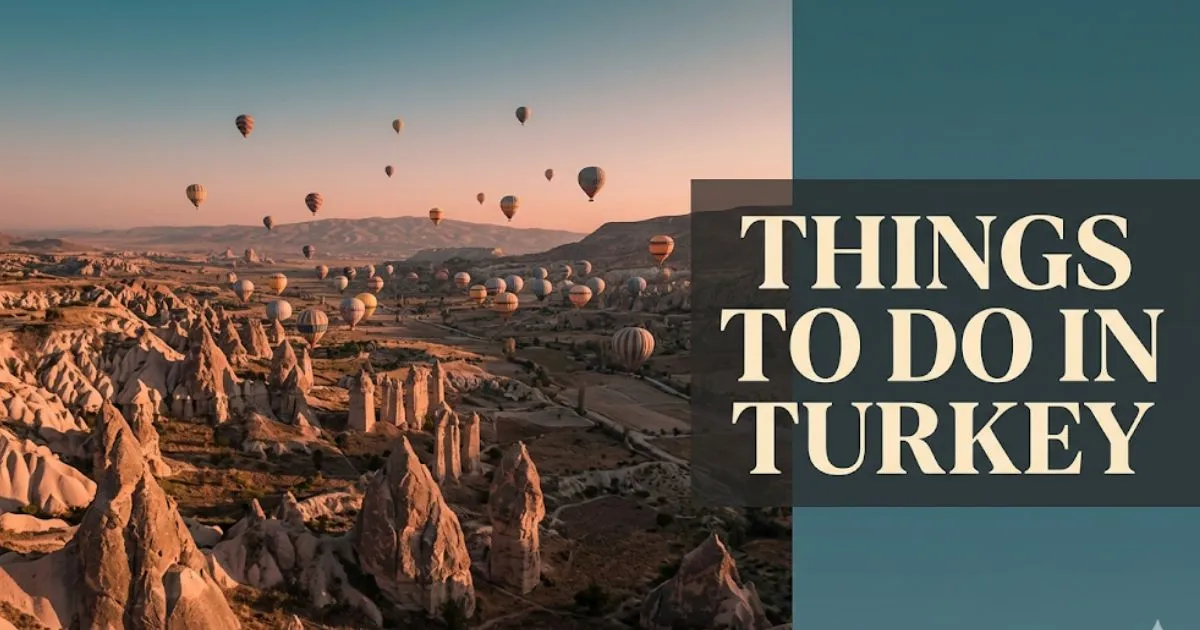
Cappadocia is the most visually distinctive region in Turkey, where volcanic tuff formations called fairy chimneys dominate a lunar landscape in central Anatolia.
Most visitors arrive for the hot air balloon rides and leave without exploring the region’s deeper offerings. The Göreme Open Air Museum, a UNESCO World Heritage Site, contains a cluster of rock-cut Byzantine churches with 10th to 12th century frescoes that rank among the best-preserved examples of Byzantine art outside Istanbul.
The Ihlara Valley is a canyon cut through volcanic rock with 14 kilometers of hiking trails passing rock-cut churches. Most visitors to Cappadocia never make it here.
Kaymakli and Derinkuyu are underground cities carved by early Christians to shelter from invasion. Derinkuyu reaches eight levels deep. Both are genuinely remarkable.
Families with children tend to find Cappadocia highly manageable. The valley hiking is accessible, the landscape captures children’s imagination, and the cave hotel experience is memorable for all ages.
Solo travelers benefit from Cappadocia’s network of organized tours: ATV tours through the valleys, hiking routes through the Rose Valley and Red Valley (Kizilcukur), and cooking classes in Göreme village.
The Red Valley (Kizilcukur) at sunset, approached from the viewpoint above Cavusin village, is consistently cited by experienced Turkey travelers as one of the country’s most memorable views. It requires a 30-minute drive from Göreme and is rarely crowded after 4 p.m.
Seniors and travelers with mobility considerations should note that the underground cities involve low ceilings, narrow passages, and steep ladders. Kaymakli is slightly more accessible than Derinkuyu but still physically demanding.
Insider Tip:
- Avanos, a small town north of Göreme, offers pottery workshops directly with local artisans at a fraction of the tourist workshop prices in central Göreme
- Stay in a cave hotel in Göreme or Uchisar for the full regional experience; these range from genuine budget cave rooms to premium boutique properties
Key Takeaway: Cappadocia’s most memorable experiences, including the Ihlara Valley hike and the Red Valley sunset viewpoint, are free and consistently uncrowded; you do not need a tour operator to access them.
Turkey Beaches and the Turquoise Coast
Turkey’s Turquoise Coast, running from Bodrum in the west to Antalya in the east, offers some of the clearest water in the Mediterranean basin.
Ölüdeniz and its Blue Lagoon, near Fethiye, is the most photographed beach in Turkey. The lagoon water is genuinely turquoise and calm enough for children. The outer beach faces the open Aegean and has stronger currents; parents should stay with children in the lagoon section.
Kaş is the quiet alternative to Ölüdeniz’s crowds. A small fishing town with excellent diving and snorkeling in crystal-clear water, Kaş suits travelers who want coastal Turkey without the resort-town energy.
Patara Beach near Kaş stretches 18 kilometers with no resort development; it serves as a protected nesting site for loggerhead sea turtles. It is Turkey’s finest undeveloped beach.
Iztuzu Beach near Dalyan is another turtle nesting beach, accessible only by boat from Dalyan town. The Dalyan boat trip passes through a river delta with rock-cut Lycian tombs visible from the water, making it one of Turkey’s most scenic short journeys.
Couples consistently rate the Turquoise Coast above any other Turkish region. The combination of private coves, gulet sailing, and hilltop villages suits romantic travel well.
Budget travelers should note that Bodrum and Marmaris have become significantly premium in peak season. Kaş and the villages around Fethiye offer equivalent coastal beauty at considerably lower accommodation prices.
The overrated pick: Marmaris is Turkey’s most package-holiday-saturated resort and offers the least authentic coastal Turkish experience. Experienced repeat visitors consistently point to Kaş, Bozburun, or the Datca Peninsula as what the Turquoise Coast actually is.
Historical Sites in Turkey: Ephesus, Pamukkale, and Beyond
Turkey contains more UNESCO World Heritage Sites than almost any country in the world, and Ephesus is the one that consistently overwhelms visitors most.
Ephesus was one of the largest cities of the ancient Roman world, with a population estimated at 250,000 at its peak. Walking the marble Library of Celsus colonnade, the main marble thoroughfare, and the Great Theatre feels less like visiting ruins and more like occupying a living city that simply ran out of people.
The standard approach is a tour from the cruise port at Kusadasi. The better approach: arrive by 8 a.m. from a base in Selcuk (the nearest town, a 10-minute drive), before the cruise ship buses arrive. The difference in crowd level is dramatic.
Pamukkale’s thermal travertine terraces look almost fabricated. The calcium-rich hot spring water has been flowing over these white stone terraces for thousands of years, creating natural pools of warm water. Entry is permitted barefoot only to protect the formations.
Hierapolis, the ancient Greco-Roman city directly adjacent to Pamukkale, includes one of the most complete ancient necropolises in the world. Most visitors walk the terraces and leave without seeing Hierapolis; this is a significant miss.
Mount Nemrut, in southeastern Turkey, holds colossal stone heads of gods and kings built by the Commagene king Antiochus I in the 1st century BCE. Watching sunrise from this isolated mountain summit is extraordinary and requires an overnight stay in nearby Adiyaman.
Families with children find Ephesus the most engaging of Turkey’s archaeological sites because the scale and completeness of the ruins is comprehensible to children. The Library of Celsus facade is immediately impressive without requiring extensive historical context.
According to Go Türkiye, Ephesus receives over 2 million visitors annually, making early morning visits or late afternoon approaches essential for any meaningful experience.
Turkish Food and Cultural Experiences
Turkish food is one of the most underrated culinary traditions in the world, and eating well in Turkey does not require restaurant reservations or significant spending.
The Turkish kahvaltı (breakfast) is the most important meal of the day in the local tradition. A full spread includes multiple cheeses, olives, tomatoes, cucumbers, eggs, sucuk sausage, honey, clotted cream, and tea. In Istanbul, the Van Kahvaltı Evi in Cihangir neighborhood serves what many food writers identify as the definitive Istanbul breakfast experience.
Mezes at a traditional meyhane restaurant in Beyoglu are the evening equivalent: small plates of hummus, stuffed grape leaves, white bean salad, grilled halloumi, and fresh bread that arrive before any main course. Order a full spread of cold mezes and you may not need a main dish.
Street food is where Turkey genuinely excels on a budget. Simit (sesame-crusted bread rings), balık ekmek (grilled mackerel sandwiches sold from boats at the Galata Bridge in Istanbul), gozleme (savory filled flatbread), and doner kebab from a reputable local shop, not a tourist-zone takeaway stand, are all worth prioritizing.
The whirling dervishes sema ceremony is a Sufi spiritual practice, not a tourist performance, though tourist-oriented shows exist. The Galata Mevlevihanesi in Istanbul’s Tünel neighborhood offers authentic ceremonies. Booking in advance is required.
A Turkish hamam (bath house) experience is one of Turkey’s most distinct cultural rituals. The Cemberlitas Hamami in Istanbul, built in 1584, is the most famous and most tourist-oriented. The Tarihi Galatasaray Hamami in Beyoglu is equally historic and slightly less crowded.
Budget travelers can eat extraordinarily well in Turkey for very little. A full meze spread and grilled fish dinner at a neighborhood meyhane runs significantly less than a comparable meal in any Western European city.
Key Takeaway: The most authentic Turkish food experiences are rarely in tourist districts; eat breakfast at a neighborhood kahvaltı spot, buy simit from a street cart, and find your meyhane in Beyoglu, not Sultanahmet.
Turkey Hot Air Balloon Rides: What to Know Before You Book
Cappadocia’s hot air balloon rides are among the most iconic travel experiences in Turkey, and they are also the experience most travelers book carelessly.
Balloon flights launch at dawn over Cappadocia’s fairy chimneys and valleys. On a clear morning, the sight of dozens of balloons rising simultaneously over the landscape is genuinely spectacular.
The critical issue: the balloon industry in Cappadocia has a documented safety record that varies significantly between operators. Budget operators offering below-market prices have been involved in serious incidents.
Book with operators certified by the Turkish Civil Aviation Authority (SHGM). Royal Balloon, Butterfly Balloons, and Kapadokya Balloons are among the operators consistently identified by travel publications as operating to higher safety standards. Verify current certifications directly before booking.
Balloon flights are weather-dependent. In winter months, a significant percentage of flights are cancelled. April through June and September through October have the highest flight completion rates.
Prices vary by operator and season. Premium operators charge more than budget alternatives, and the premium is worth paying given the safety differential. Flights typically run approximately 60 to 90 minutes.
Solo travelers and couples are the primary balloon ride demographic. The experience is deeply romantic at dawn.
Families with children should check minimum age and weight requirements, which vary by operator. Young children are often not permitted or are uncomfortable at altitude.
To book a balloon ride correctly:
- Research SHGM-certified operators specifically
- Compare safety records, not just prices
- Book directly with the operator rather than through aggregator sites
- Confirm cancellation and refund policy for weather cancellations
- Arrange an early morning pickup from your hotel the night before
Insider Tip:
- If your flight is cancelled due to weather, same-day rebooking often works; operators prioritize waiting guests
- The basket experience varies significantly by operator; larger baskets feel less personal but are often more stable
Gulet Sailing in Turkey
Gulet sailing on Turkey’s Turquoise Coast is one of the most distinctly Turkish travel experiences available, and it is significantly more accessible than most travelers assume.
A gulet is a traditional Turkish wooden sailing vessel, typically between 20 and 30 meters long, with multiple cabins, a sun deck, and a crew that handles all navigation and cooking. Chartering one for a week between Bodrum and Fethiye, or Fethiye and Kaş, gives travelers access to coves and anchorages unreachable by road.
Private gulet charters suit couples or groups of 6 to 12 traveling together. Cabin charters (booking individual cabins on a shared gulet) suit solo travelers and couples who want the experience without chartering the full vessel.
The route between Fethiye and Kaş passes the sunken city of Kekova (visible through the clear water), the Lycian rock tombs at Myra, and uninhabited coves where you can swim off the stern without another boat in sight.
The overrated version: the “Blue Voyage” itinerary operating out of Bodrum and Marmaris in July and August is crowded with dozens of similar boats anchoring in the same coves. The same route in September or October is a fundamentally different experience.
Budget travelers can access a version of this experience on shared cabin charters out of Fethiye, where prices per person are considerably more reasonable than private charters. Verify current pricing ranges directly with operators, as gulet costs fluctuate with fuel prices and demand.
Seniors and accessibility travelers should assess gulet access carefully. Getting on and off the vessel requires climbing down a ladder from the dock or stepping from a dinghy. This is physically demanding for anyone with significant mobility limitations.
Key Takeaway: Gulet sailing in September, rather than peak July, cuts crowds dramatically and often reduces prices; the route between Fethiye and Kaş in autumn is arguably Turkey’s single best week-long travel experience.
Things to Do in Bodrum and Fethiye
Bodrum and Fethiye are Turkey’s two most visited coastal towns, and they serve fundamentally different traveler needs.
Bodrum sits on a peninsula facing the Greek island of Kos. Its centerpiece is Bodrum Castle (Castle of St. Peter), a Crusader fortress built in the 15th century that now houses the world’s leading Museum of Underwater Archaeology. This is one of Turkey’s genuinely undervisited museums and deserves two hours minimum.
Bodrum’s marina scene, Gumbet beach clubs, and nightlife cater strongly to the premium end of the market. The Bodrum bazaar streets behind the marina retain some local character, particularly in the early morning.
Fethiye is more practical as a base than as a destination in itself. The town provides good access to Ölüdeniz (a 15-minute drive), Butterfly Valley (reachable only by boat), and the inland Tlos and Pinara Lycian ruins.
The Fethiye Old Town market on Tuesdays is the best market day in the region, drawing local vendors from surrounding villages rather than tourist stalls.
Couples rate Bodrum’s marina sunsets and rooftop wine bars highly. The town has genuine romantic atmosphere in shoulder season but loses it in the July and August peak to package-holiday crowd dynamics.
Families with children find Fethiye more functional: calmer beaches within easy reach, better mid-range accommodation options, and the genuinely accessible Ölüdeniz lagoon.
The honest verdict on Bodrum in peak season: it is Turkey’s most expensive coastal resort and also its most crowded. Experienced Turkey travelers consistently prefer Yalikavak, on Bodrum’s quieter northern coast, over the main town in summer.
Off the Main Circuit in Turkey: Mardin, Trabzon, and the Northeast
Mardin, in southeastern Turkey near the Syrian border, is one of the most architecturally distinctive towns in the Middle East, built on a hillside of honey-colored limestone with a skyline of minarets and Syrian Orthodox church towers.
The Mardin Old City contains stone-carved mansions, covered bazaars, and the Deyrulzafaran Monastery (Saffron Monastery), a Syrian Orthodox monastery in continuous use since the 4th century. This is genuinely one of Turkey’s most remarkable cultural experiences and sees a fraction of the visitors that Istanbul and Cappadocia receive.
Trabzon, on the Black Sea coast in northeastern Turkey, provides access to Sumela Monastery. This Byzantine cliff monastery, abandoned in 1923 and partially restored, clings to a vertical rock face above a forested valley. The hike from the valley floor takes approximately 30 minutes.
The Artvin region further northeast borders Georgia and contains some of Turkey’s most unspoiled mountain and valley scenery. This region suits travelers who rent a car and want to spend several days exploring with no fixed itinerary.
Solo travelers are the primary audience for these northeastern and southeastern regions. The cultural immersion is deep and the traveler infrastructure, while less polished than Istanbul’s, is adequate. Basic Turkish language phrases are more useful here than in tourist-heavy regions.
According to Go Türkiye, Mardin was named one of Turkey’s priority heritage tourism destinations. Investment in its restoration and tourism infrastructure is ongoing through 2026.
Practical note: Mardin requires flying to Mardin Airport or taking an overnight bus from Ankara. It is not logistically integrated with the Istanbul-Cappadocia-Coast circuit that most itineraries follow.
Families with young children may find these regions logistically challenging. The infrastructure is less child-oriented than Istanbul or Cappadocia, and transportation links require more planning.
Best Time to Visit Turkey in 2026
The best time to visit Turkey is April through early June or September through October. These windows offer the most favorable combination of weather, crowd levels, and price.
Spring (April to May): Temperatures are warm but not extreme. Wildflowers bloom across Cappadocia and the Aegean interior. Pamukkale’s pools are at their most photogenic. Istanbul’s parks and outdoor spaces are at their most pleasant.
Early fall (September to October): The sea remains warm for swimming after a full summer. Crowds thin noticeably after the European school holidays end in late August. Grape harvest season adds local color to Cappadocia and the Aegean wine regions.
July and August represent Turkey’s peak tourist season and hottest months. Temperatures along the coast routinely exceed 38°C (100°F). Ephesus and Pamukkale become physically taxing in the midday heat.
November through March is low season. Istanbul cultural tourism remains strong year-round, but the Turquoise Coast beaches close, and Cappadocia’s balloon rides face higher weather cancellation rates. Prices in accommodation and domestic flights drop significantly.
Ramadan occurs at a different point each year; in 2026, verify the dates before travel. Travel during Ramadan in observant regions affects restaurant hours and local rhythms. Istanbul is generally minimally disrupted.
| Month | Weather | Crowds | Price Level | Best Activity |
|---|---|---|---|---|
| April | Mild and warm | Moderate | Mid | All regions |
| May | Warm | Moderate-high | Mid-high | Ephesus, Cappadocia |
| June | Hot | High | High | Coast only |
| July-Aug | Very hot | Peak | Peak | Coast swimming |
| Sept-Oct | Warm-mild | Moderate | Mid | All regions |
| Nov-March | Cool to cold | Low | Budget | Istanbul only |
Seniors and travelers sensitive to heat should avoid July and August at open archaeological sites entirely. Heat stroke risk at Ephesus and Pamukkale in midday summer is genuine.
Key Takeaway: September is Turkey’s single best travel month; the sea is warm, the crowds have thinned, prices drop from August peaks, and the light quality for photography is extraordinary.
How to Get Around Turkey
Getting around Turkey efficiently requires combining two or three transportation modes. No single option covers the entire country.
Domestic flights are the most time-efficient option for covering Turkey’s regional distances. Turkish Airlines and Pegasus Airlines operate extensive domestic networks connecting Istanbul to Antalya, Izmir, Bodrum, Dalaman, Cappadocia (Kayseri Airport), and Trabzon. Book at least four to six weeks in advance for reasonable fares.
Intercity buses are Turkey’s most affordable and surprisingly comfortable long-distance option. Metro Turizm and Kamil Koc are two of the most established operators with modern coaches on major routes. Istanbul to Cappadocia runs approximately 10 to 12 hours overnight; Istanbul to Antalya runs approximately 10 hours.
Istanbul’s public transit, run by Istanbul Metropolitan Municipality, covers all major tourist zones. The Istanbulkart contactless card works on Metro, tram, ferry, and bus systems. The T1 tram line connects the airport bus terminal at Kabatas through Sultanahmet and on to Eminonu; this covers the primary tourist corridor without a taxi.
Car rental suits the Turquoise Coast and the northeast. Driving between Fethiye, Kaş, and Antalya on the coastal road is one of the most scenic drives in the region. City driving in Istanbul is not recommended for visitors; traffic is severe and parking nearly impossible.
Ferries connect Istanbul’s European and Asian shores regularly. The Bosphorus commuter ferry between Kabatas (European side) and Kadikoy (Asian side) is a genuine experience, not just a tourist attraction. A 25-minute crossing on the Bosphorus costs a fraction of a taxi fare.
Seniors and travelers with mobility limitations should note that Istanbul’s older Metro stations have elevators but the tram stops do not universally offer level boarding. Plan transit routes accordingly.
Turkey Travel Budget and Costs
Turkey is one of the most affordable destinations for US travelers of any budget level, and the value differential with Western Europe is significant.
Budget travelers can manage a comfortable full day in Istanbul, including entry to the Topkapi Palace, a simit breakfast, a street lunch, and a neighborhood meyhane dinner, for well under what a comparable day costs in Paris or Rome. Accommodation in reputable budget guesthouses in Sultanahmet or Beyoglu runs at a fraction of European equivalents.
Mid-range travelers staying in boutique hotels, eating at established restaurants, and booking organized day tours to Ephesus or Pamukkale will find Turkey considerably more affordable than Spain or Greece at comparable quality levels.
Premium travelers can access Istanbul’s finest hotels, private gulet charters, and premium Cappadocia cave hotels at prices still below comparable luxury in Western Europe.
The Turkish lira (TRY) has experienced significant fluctuation in recent years. US dollars exchange favorably. Cash is practical for markets, small restaurants, and local transportation. Major tourist venues and hotels accept credit cards widely.
Practical cost ranges to expect (verify current exchange rates before travel):
- Budget guesthouse accommodation: approximately $25 to $60 USD per night
- Mid-range hotel: approximately $80 to $180 USD per night
- Street meal (simit, gozleme, doner): approximately $2 to $5 USD
- Sit-down restaurant dinner, mid-range: approximately $15 to $35 USD per person
- Ephesus entry fee: approximately $25 to $35 USD per adult (verify before visiting)
- Cappadocia balloon ride, reputable operator: approximately $180 to $350 USD per person
- Istanbul to Cappadocia domestic flight: approximately $40 to $120 USD depending on timing
Budget travelers should avoid the tourist-price restaurants immediately surrounding Hagia Sophia and the Grand Bazaar. Prices within two blocks of major tourist sites in Istanbul run two to three times higher than equivalent food one neighborhood removed.
Key Takeaway: Exchange US dollars to Turkish lira upon arrival at an airport exchange office or ATM for the best rates; avoid hotel front desk exchanges and street-side money changers.
Turkey Travel Safety and Practical Tips
Safety and Practical Warnings for Turkey
The US State Department currently maintains a Level 2 advisory for Turkey, advising travelers to exercise increased caution. Verify the current advisory level at the official US State Department website before your 2026 departure.
Key safety and practical facts every visitor should know:
- The e-visa requirement for US citizens: US passport holders must obtain an e-visa before arrival. Apply at the official Republic of Turkey e-Visa portal (evisa.gov.tr). Processing is typically fast but apply at least several days before departure to avoid complications. Verify current requirements directly; entry requirements can change.
- Pickpocket risk in crowded tourist areas: The Grand Bazaar, the Sultanahmet tourist zone, and the Taksim Square area in Istanbul have documented pickpocket activity. Use a front-facing bag or money belt in these areas.
- Heat and sun exposure at archaeological sites: Ephesus and Pamukkale in July and August require early morning visits, sun protection, and significant water intake. Heat exhaustion risk is real at open sites in summer.
- Rip current risk at Ölüdeniz: The outer beach at Ölüdeniz faces the open Aegean and has stronger currents than the lagoon. Swim in the designated lagoon area, particularly with children.
- Regional travel considerations: Border regions in southeastern Turkey adjacent to Syria and Iraq carry specific advisory warnings. Check the State Department’s detailed regional breakdown for Turkey before planning travel to Mardin or other southeastern destinations.
- Medical infrastructure: Istanbul and major tourist cities have modern private hospital facilities. Remote regions have more limited medical access. Travel insurance with medical evacuation coverage is strongly recommended.
- Currency: Carry Turkish lira cash for local markets, smaller restaurants, and rural transportation. Do not rely solely on credit cards outside major cities.
Bold safety note: Verify the current US State Department travel advisory for Turkey at travel.state.gov before finalizing any 2026 travel plans.
Turkey Itinerary: How to Plan Your Trip
A 10-day Turkey itinerary covers Istanbul, Cappadocia, and the Turquoise Coast without feeling rushed. Seven days is manageable but requires disciplined activity selection.
Recommended 10-day framework:
Days 1 to 3: Istanbul (3 nights)
- Day 1: Sultanahmet Historical Peninsula: Hagia Sophia in the morning, Blue Mosque, Topkapi Palace in the afternoon. Evening: Bosphorus ferry from Kabatas to Kadikoy and back for the crossing experience.
- Day 2: Grand Bazaar (morning, one hour maximum), Spice Bazaar, Galata Bridge balık ekmek lunch, Galata Tower area, Beyoglu evening with meyhane dinner on Nevizade Street.
- Day 3: Balat neighborhood morning, Istanbul Archaeological Museum, afternoon at leisure in Karaköy. Optional: evening whirling dervishes ceremony at Galata Mevlevihanesi.
Days 4 to 5: Cappadocia (2 nights, fly from Istanbul to Kayseri)
- Day 4: Arrive Kayseri, transfer to Göreme. Afternoon: Göreme Open Air Museum. Sunset hike to Red Valley viewpoint above Cavusin.
- Day 5: Dawn balloon ride (weather permitting). Morning: Kaymakli Underground City. Afternoon: Pottery workshop in Avanos. Sunset from Uchisar Castle.
Days 6 to 7: Ephesus and Pamukkale (fly to Izmir or Dalaman)
- Day 6: Early morning Ephesus visit from Selcuk base (depart by 7:30 a.m.). Afternoon: Selcuk Basilica of St. John.
- Day 7: Drive to Pamukkale. Thermal terrace visit (upper pools). Hierapolis necropolis. Overnight in Pamukkale village.
Days 8 to 10: Turquoise Coast (fly or bus to Dalaman, base in Fethiye or Kaş)
- Day 8: Arrive Fethiye. Afternoon: Old Town market (Tuesday if dates align). Sunset at Fethiye harbor.
- Day 9: Day trip to Ölüdeniz Blue Lagoon and Butterfly Valley by boat from Fethiye harbor.
- Day 10: Kaş day trip or gulet day charter in the Kekova sunken city area. Evening departure or overnight.
Couples should extend the Turquoise Coast to three nights and consider a two-night gulet cabin charter from Fethiye. Solo travelers benefit from adding one day in Istanbul’s Beyoglu for the social scene. Families with children should swap the Pamukkale leg for a second Cappadocia day if the travel pace feels too fast for young children.
Frequently Asked Questions About Things to Do in Turkey
What are the best things to do in Turkey for first-time visitors?
The best things to do in Turkey for first-time visitors include exploring Istanbul’s Hagia Sophia and Topkapi Palace, taking a dawn hot air balloon ride over Cappadocia, walking the Ephesus ruins at sunrise, and swimming at the Ölüdeniz Blue Lagoon.
Beyond these anchor experiences, a full Turkish kahvaltı breakfast, an evening at a Beyoglu meyhane, and a Bosphorus ferry crossing complete the core experience.
Allow at least 10 days to cover Istanbul, Cappadocia, and the coast without feeling rushed.
Do US citizens need a visa to visit Turkey in 2026?
Yes, US citizens must obtain an e-visa before arriving in Turkey.
Apply through the official Republic of Turkey e-Visa portal (evisa.gov.tr) before departure; the process is typically quick but should be completed at least several days in advance.
Verify current requirements at the official portal before your travel date, as entry requirements are subject to change.
When is the best time to visit Turkey?
The best time to visit Turkey is April through early June or September through October.
These shoulder seasons offer mild temperatures, manageable crowds, and better prices than the July and August peak.
July and August bring extreme heat at open archaeological sites, peak tourist crowds, and the highest accommodation prices across coastal regions.
How many days do you need in Turkey?
Ten days is the recommended minimum for covering Istanbul, Cappadocia, and the Turquoise Coast meaningfully.
Seven days is possible if you focus on two regions rather than three, and fly between them rather than using ground transportation.
Travelers wanting to include Ephesus, Pamukkale, and one or more off-circuit destinations such as Mardin should plan for 14 days.
Is Turkey safe to visit in 2026?
Turkey is generally safe for tourists in its major tourist regions, including Istanbul, Cappadocia, and the Turquoise Coast.
The US State Department maintains a Level 2 advisory for Turkey; verify the current advisory level at travel.state.gov before your 2026 trip, as advisory levels can change.
Avoid border regions adjacent to Syria and Iraq, exercise standard urban precautions in crowded tourist areas, and carry travel insurance with medical evacuation coverage.
How much does a trip to Turkey cost per day?
Turkey’s daily cost varies significantly by travel style: budget travelers can cover accommodation, meals, and one attraction for approximately $60 to $80 USD per day.
Mid-range travelers should budget approximately $150 to $250 USD per day including boutique hotel accommodation, sit-down restaurant meals, and organized day tours.
Premium travelers at five-star hotels with private tours and gulet sailing should plan for $400 USD and above per day; verify current exchange rates and prices at time of booking, as Turkish lira fluctuation affects USD equivalents.
Plan Your Turkey Trip Now
Turkey rewards travelers who plan with specificity. Book domestic flights between Istanbul, Kayseri (Cappadocia), and Dalaman or Antalya first; these routes fill on popular travel dates and prices rise sharply as departure approaches.
Apply for your e-visa through the official Turkish government portal well before departure. Book your Cappadocia balloon ride with a SHGM-certified operator and confirm the cancellation policy for weather events.
Travel conditions in Turkey, including entry requirements, e-visa fees, site operating hours, admission prices, and US State Department advisory levels, change regularly. Verify all key logistics at official sources, including Go Türkiye and travel.state.gov, before your 2026 departure date.
The traveler who arrives in Turkey with flights booked, an e-visa secured, and the first two days in Istanbul mapped out will spend far less time solving logistics and far more time standing in front of one of the most extraordinary collections of human history on earth.