Things to Do in Azores: The 2026 Island Guide

The best things to do in the Azores range from swimming inside volcanic crater lakes to watching sperm whales breach 300 feet off the bow of a zodiac. These nine Portuguese islands in the middle of the North Atlantic are genuinely unlike anything else accessible from the US East Coast.
Turismo dos Açores reports the archipelago hosts over 900,000 visitors annually, a number that sounds large until you spread it across nine islands and 2,300 square kilometers. This is still a destination where you can have a crater lake entirely to yourself on a Tuesday morning in June.
This guide covers every major island, the activities that actually earn their reputation, the ones that don’t, practical logistics for island-hopping, and how to match your trip to your travel style and budget.
Things to Do in Azores: What Makes This Destination Worth Your Time
The Azores deliver a specific type of travel experience that very few other destinations can replicate. Think of it as Iceland’s volcanic drama combined with the green density of the Scottish Highlands, compressed into a Portuguese island culture that still feels genuinely its own.
Nine islands make up the archipelago. They split into three geographic groups: the Eastern Group (Santa Maria, São Miguel), the Central Group (Terceira, Graciosa, São Jorge, Faial, Pico), and the Western Group (Flores, Corvo).
Each island has a distinct character. São Miguel is the most visited and logistically easiest. Flores is the most remote and visually dramatic.
Turismo dos Açores identifies the archipelago as one of Europe’s leading nature tourism destinations, holding two UNESCO World Heritage designations across Angra do Heroísmo (Terceira) and the Pico Island Vineyard Culture. This is not a marketing claim; it is a genuine differentiator from most mid-Atlantic island destinations.
What the Azores are not: a beach resort. Ocean temperatures average around 22 to 24°C in summer, and Atlantic swells make many exposed beaches impractical for casual swimming.
Insider Tip:
- The single most overrated experience in the Azores is visiting Sete Cidades without walking any of the crater rim. The viewpoints are crowded and the photos look identical to every other traveler’s.
- The underrated version: walk the Sete Cidades trail from Caneiro viewpoint to Vista do Rei for 90 minutes of near-solitude with views that dwarf the parking lot perspective.
- Solo travelers benefit most from this approach; it requires no guide and no group coordination.
Best Islands to Visit in the Azores
For first-time visitors to the Azores, São Miguel is the right starting island because it concentrates the most accessible versions of the archipelago’s signature experiences within a single geography.
Beyond São Miguel, the islands divide clearly by traveler type. Faial suits history and geology enthusiasts. Terceira is the strongest pick for cultural travelers who want UNESCO-listed city walking alongside volcanic scenery.
| Island | Best For | Primary Draw | Cost Tier | Access from PDL |
|---|---|---|---|---|
| São Miguel | First-timers, all profiles | Sete Cidades, Furnas, whale watching | Mid-range | Base island |
| Terceira | Culture, history, families | Angra do Heroísmo, Algar do Carvão | Mid-range | 30-min SATA flight |
| Faial | Geology, yachting culture | Capelinhos, Caldeira do Faial | Mid-range | 30-min SATA flight |
| Pico | Hikers, wine enthusiasts | Montanha do Pico, UNESCO vineyards | Mid-range | 30-min SATA flight |
| Flores | Remote adventure travelers | Waterfalls, crater lakes | Mid-range | 1-hour SATA flight |
| São Jorge | Hardcore hikers, cheese lovers | Fajãs, cliffside walking | Mid-range | 30-min SATA flight |
| Santa Maria | Beach seekers, divers | Praia Formosa, visibility diving | Lower-mid | 20-min SATA flight |
| Graciosa | Low-key exploration, caldeira cave | Furna do Enxofre | Low-mid | 30-min SATA flight |
| Corvo | True off-grid experience | Caldeirão crater | Low-mid | Smallest island in EU |
Couples and romantic travelers will find the Pico-Faial combination the most rewarding two-island pairing. The two islands are only 8 kilometers apart by ferry and offer complementary experiences.
Budget travelers should note that Terceira often has lower accommodation prices than São Miguel, with equivalent access to dramatic landscapes and better walkable city infrastructure in Angra do Heroísmo.
Things to Do in São Miguel, Azores
São Miguel is the largest and most visited Azores island, and it earns that status with a density of genuinely distinct landscapes that no other single island in the archipelago matches.
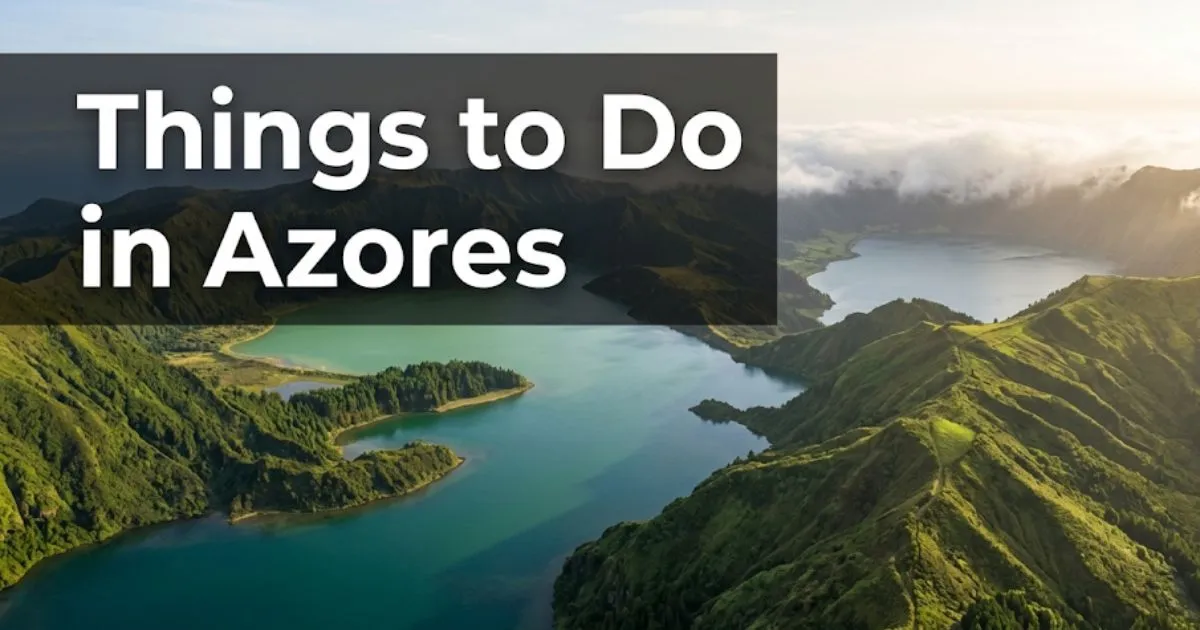
The island’s headline experiences include Lagoa das Sete Cidades (twin crater lakes divided by a narrow bridge), Lagoa do Fogo (a higher-altitude crater lake with better solitude), Furnas Valley with its geothermal hot springs and the famous cozido cooked underground, and the Gorreana Tea Plantation, the only functioning tea plantation in Europe.
Ponta Delgada serves as the island’s urban base. Its historic center, built around the Igreja Matriz de São Sebastião and the city’s signature triple-arched gates (Portas da Cidade), offers a walkable morning before heading into the island’s volcanic interior.
Suggested 3-Day São Miguel Framework:
- Morning: Arrive in Ponta Delgada. Walk the historic center, visit the Portas da Cidade, pick up a rental car.
- Afternoon: Drive to Sete Cidades. Walk the Caneiro-to-Vista do Rei crater rim trail (approximately 5 miles, 2 to 3 hours). Avoid the parking lot viewpoints alone.
- Day 2 Morning: Drive to Furnas Valley. Visit Terra Nostra Garden (admission required, open daily, verify 2026 hours before visiting). Book a cozido das Furnas lunch 24 hours in advance at Tony’s or Restaurante Terra Nostra.
- Day 2 Afternoon: Soak in the thermal pools at Poça da Dona Beija (lower cost and local-preferred alternative to Terra Nostra’s thermal pool).
- Day 3: Drive to Lagoa do Fogo via the ER1 road. Allow 3 hours. Visit Gorreana Tea Plantation on the north coast (free to enter, café on-site).
Families with children should plan Terra Nostra Garden in the morning before crowds arrive. The garden’s thermal pool is family-accessible and the grounds are stroller-friendly on main paths.
Hiking in the Azores
Hiking in the Azores is the destination’s strongest activity for physically active travelers, with a trail network covering every island and difficulty levels from paved heritage paths to exposed ridge walks requiring full gear.
Turismo dos Açores maintains an official trails database under the Caminhadas designation, covering over 100 marked routes across the nine islands. Every major trail is signed with the GR (Grande Rota) or PR (Pequena Rota) trail system, equivalent in marking quality to European mainland hiking infrastructure.
The top hiking experiences by difficulty:
- Lagoa do Fogo trail (São Miguel): 3.7 miles round-trip, moderate, volcanic crater lake at the terminus. One of the best day hikes in the archipelago for first-time visitors.
- Caldeira do Faial rim walk (Faial): 4.3-mile loop around the Caldeira crater rim. Dramatic and undervisited compared to Sete Cidades.
- Montanha do Pico ascent (Pico): 7 to 8 hours round-trip, strenuous, permit required. The highest point in Portugal at 2,351 meters.
- Fajãs de São Jorge traverse (São Jorge): Cliffside trail descending to isolated coastal fajãs (lava platforms). Requires fitness and dry conditions.
- Flores crater loop (Flores): Combines multiple crater lakes and waterfalls. Best trail system in the Western Group.
Seniors and accessibility travelers should note that most Azorean hiking trails involve significant uneven terrain and elevation change. The Furnas Valley thermal area and the Gorreana Tea Plantation grounds offer flat, accessible walking with comparable landscape drama.
Trail conditions can deteriorate quickly after rain. Always check Turismo dos Açores trail status before departure. Atlantic weather changes within hours.
Key Takeaway: Book Montanha do Pico permits through the official Casa da Montanha system at least 30 days in advance for peak season visits. They sell out.
Caldeira das Sete Cidades
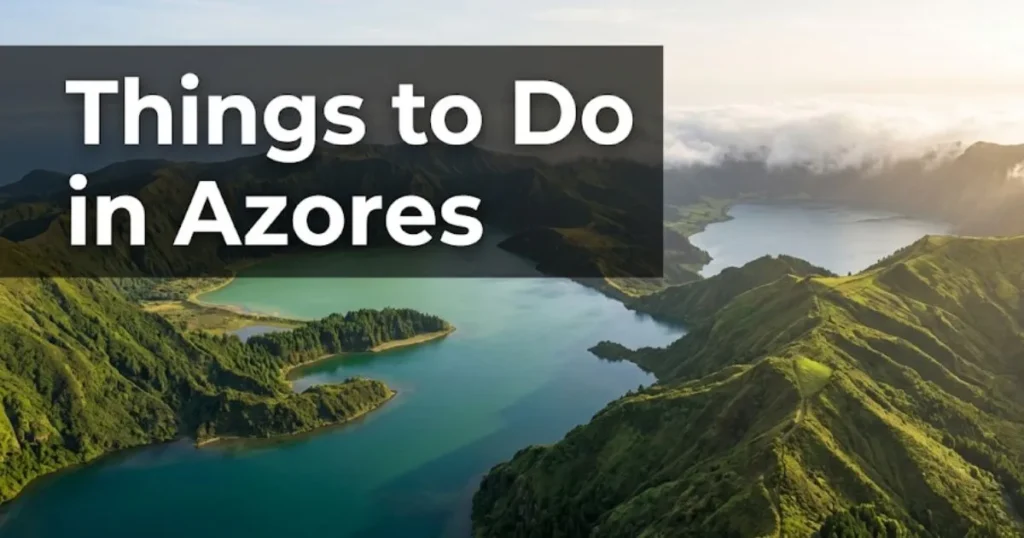
Caldeira das Sete Cidades is the Azores’ most recognized natural feature: a twin-lake volcanic caldera on the western edge of São Miguel with blue and green lakes separated by a narrow saddle of land and a medieval-style bridge.
The photograph everyone associates with the Azores, which shows two different-colored lakes in a green crater bowl, is taken from Vista do Rei viewpoint. This viewpoint is real and worth seeing. It is also one of the most congested parking areas on the island from July through mid-September.
The smarter approach is the full crater rim walk, which departs from near the village of Caneiro and follows the caldera edge for approximately 5 miles before descending to the village of Sete Cidades on the crater floor.
Practical logistics:
- Parking at Vista do Rei is free but extremely limited. Arrive before 8:30 a.m. in summer.
- The village of Sete Cidades has a small restaurant and café open seasonally. Verify 2026 hours directly.
- The crater rim trail takes 2.5 to 3.5 hours at a comfortable pace.
- No permit required for the rim trail as of recent years. Verify with Turismo dos Açores before visiting.
Couples who want a quieter Sete Cidades experience should visit on a weekday in May or June. The crater is spectacularly green from spring rainfall and the rim trail often has fewer than a dozen other walkers.
Budget travelers benefit here: the caldera is free to access. The main cost is car rental to reach the western plateau.
Insider Tip:
- Skip the Miradouro da Grota do Inferno viewpoint on the road in. It draws large tour buses and the angle is inferior to Vista do Rei.
- Instead, drive past it to the Caneiro trailhead and begin the rim walk from there.
- The village café on the crater floor serves the best pastel de nata within a 10-kilometer radius. It’s a legitimate reason to descend.
Azores Whale Watching
The Azores sit at one of the richest marine mammal convergence zones on Earth, and whale watching in the Azores is not a tourist gimmick but a genuinely world-class wildlife encounter with documented sighting rates that exceed most global alternatives.
Futurismo Whale Watching and Atlantic Naturalist are the two most frequently cited operators by experienced Azores travelers, both based in Ponta Delgada on São Miguel. Both use vigia (lookout) systems, a centuries-old Azorean tradition of stationed spotters watching from clifftop posts, to locate animals before the boats depart. This dramatically increases sighting probability compared to open-water searching.
Sperm whales are resident year-round. Blue whales, fin whales, and sei whales pass through on North Atlantic migration routes from March through June. Bottlenose and common dolphins are virtually guaranteed on any tour.
Practical logistics:
- Book at least 2 to 4 weeks in advance for May through September departures. Same-day availability is rare in peak season.
- Tours typically run 2.5 to 4 hours. Bring layers; Atlantic temperatures feel cold at speed.
- Motion sickness medication is strongly recommended for travelers prone to sea sickness. Atlantic swells are not gentle.
- Cost ranges approximately €60 to €85 per adult for standard tours as of recent years. Verify 2026 pricing directly with operators.
Families with children should check minimum age requirements with operators before booking. Most reputable companies allow children 5 and older but conditions vary by sea state.
Solo travelers report whale watching tours as among the best social experiences on the islands. Group tours naturally create conversation, and the shared experience of a sperm whale surfacing 100 meters away is reliably memorable.
Furnas Valley and Hot Springs
Furnas Valley is the most geothermally active landscape on São Miguel, a sunken volcanic caldera on the island’s eastern half where the ground steams, sulphurous vents bubble, and a traditional dish has been cooked underground for generations.
The valley’s two distinct draw categories are thermal bathing and the cultural experience of cozido das Furnas. The cozido is a Portuguese meat and vegetable stew placed in ceramic pots and lowered into volcanic vents at Furnas Lake each morning, cooking for approximately 6 to 7 hours through geothermal heat alone. Tony’s Restaurant and Restaurante Terra Nostra both serve it. Book the day before; supply is finite.
Terra Nostra Garden is the valley’s formal botanical garden, established in the 18th century and centered on a large thermal pool of iron-rich yellow-brown water. Admission is required (verify 2026 pricing directly). The thermal pool is one of the most atmospheric bathing experiences in the archipelago.
Poça da Dona Beija is the local alternative to Terra Nostra’s thermal pool. Located 1 kilometer from the garden, it costs less, admits fewer tourists, and feels more like a community bathing spot than a heritage attraction.
Seniors and accessibility travelers find Furnas Valley one of the most accessible Azorean experiences. Terra Nostra Garden has paved paths, and the geothermal fields at Furnas Lake involve minimal walking on flat boardwalks.
Seasonal note: Furnas is excellent year-round. Summer months bring longer queues at Terra Nostra. Spring visits offer green, misty valley landscapes that many travelers find more atmospheric than clear summer days.
Key Takeaway: Book your cozido das Furnas reservation the day before. Every experienced Azores traveler who forgets this ends up eating a ham sandwich in the car park instead.
Things to Do in Faial, Azores
Faial Island is the most geologically dramatic island after São Miguel, anchored by the Caldeira do Faial (a 2-kilometer-wide volcanic crater, one of the best-preserved caldeiras in the archipelago) and the Capelinhos Volcano, which erupted between 1957 and 1958 and added nearly a square kilometer of new land to the island’s western tip.
Horta, Faial’s main town, is one of the most characterful port towns in the North Atlantic. The marina’s tradition of visiting sailors painting their boat’s name on the harbor wall has created a continuous mural spanning decades. The Horta Marina wall paintings are genuinely worth a slow hour of walking.
Peter’s Café Sport in Horta is the single most famous bar in the Azores, a transatlantic sailors’ landmark since the 1920s. It serves its signature gin in a specific glass. Order it. This is not a tourist trap; it is a legitimate cultural institution.
Capelinhos has its own Interpretation Centre built partially underground, with exhibits contextualizing the 1957 eruption and its impact on the island’s population. Admission is required; verify 2026 pricing. Allow 2 hours for the site and the surrounding lunar landscape walk.
Couples find Faial particularly well-suited. The Caldeira rim walk (4.3 miles, 2 to 3 hours) has intimate scenic scale. Horta’s restaurant scene along Rua Serpa Pinto offers quality evening dining without São Miguel’s tourist volume.
Seniors and accessibility travelers should note the Caldeira rim trail is a moderate walk with some uneven terrain. The Capelinhos Interpretation Centre is largely accessible. The Horta marina area is fully flat and walkable.
Things to Do in Terceira, Azores
Terceira is the Azores island with the strongest cultural identity, centered on Angra do Heroísmo, a UNESCO World Heritage city that is the best-preserved example of Portuguese colonial urban planning in the Atlantic and one of the most underrated historic cities in Europe.
The city’s 16th-century grid of streets, its fortresses (São João Baptista fortress complex is the largest surviving example in the Portuguese Atlantic), and its distinctive blue-trimmed white churches create a walkable urban environment unlike anything else in the archipelago.
Algar do Carvão is Terceira’s most singular natural experience: a lava tube cave that descends 90 meters into a volcanic chimney, with a pool of crystalline water at the base. This is not a manufactured tourist experience; it is a raw volcanic interior. Open seasonally; verify 2026 access windows before visiting. Booking in advance is strongly recommended.
Serra do Cume viewpoint on the northeastern plateau reveals Terceira’s patchwork of stone-walled green fields, a landscape that looks more like a scale model of rural England set inside a volcanic island than anything associated with southern Europe.
Biscoitos natural rock pools on Terceira’s northern coast are the best natural swimming pools in the Central Group, with calm, clear Atlantic water protected by lava formations. This is where locals swim when they want calm conditions.
Families with children find Terceira the most logistically comfortable Central Group island. Angra do Heroísmo has cafés, restaurants, playgrounds, and a flat historic center. The natural pools at Biscoitos are safer for children than open beach swimming.
Things to Do in Pico, Azores
Pico Island offers two completely distinct experiences that share a geography: climbing Montanha do Pico (Portugal’s highest point at 2,351 meters) and walking through UNESCO-listed vineyards that produce one of Portugal’s most distinctive wines.
The mountain is the dominant visual fact of every other Azorean island, visible from Faial, São Jorge, and Terceira on clear days. Climbing it requires registration at the Casa da Montanha (Mountain House), adequate gear, and genuine physical fitness. The ascent typically takes 3 to 4 hours. The descent adds another 2 to 3 hours. Summit conditions can involve cloud, cold, and wind regardless of lowland weather.
To climb Montanha do Pico correctly:
- Register at Casa da Montanha, open from 6 a.m. on ascent days. Permits are required and have capacity limits.
- Start no later than 7 a.m. Summit attempts after 10 a.m. risk afternoon cloud cover and reduced visibility.
- Bring waterproof layers, at minimum 2 liters of water, and trail shoes with ankle support.
- Do not attempt in poor weather forecasts. Turn back if cloud closes in before the summit.
- The summit delivers a 360-degree view across the entire Central Group on a clear day.
Pico’s wine culture is centered on the Criação Velha and Bandeiras vineyard landscape, a geometric grid of black basalt stone walls enclosing low-growing Verdelho vines on volcanic soil. The Museu do Vinho (Wine Museum) in Madalena is the entry point.
Couples find the Pico-Faial ferry crossing (20 minutes across the canal between the two islands) one of the archipelago’s most scenic short transits.
Key Takeaway: On Pico, book your mountain permit and your whale watching tour on the same day window. Both sell out independently and you cannot do both on the same day anyway; the mountain takes a full day.
Azores Beaches and Snorkeling
The Azores’ beaches are not the reason to visit, but several are genuinely worth knowing about. Oceanic Atlantic beaches have real surf power. The natural lava pool system is the better option for most swimmers.
Praia de Santa Bárbara on São Miguel’s north coast is the island’s best surf beach, with consistent Atlantic swell and a small surf school operating seasonally. Swimmers who are not strong ocean swimmers should not enter here on any day with visible wave activity.
Praia dos Mosteiros on São Miguel’s western coast is the most visually dramatic beach on the island, with offshore volcanic rock stacks and black sand. Swimming conditions vary; check locally before entering.
Biscoitos (Terceira), mentioned under Terceira, earns a second reference because it is genuinely the best calm-water swimming experience in the Central Group.
For snorkeling, Santa Maria Island offers the clearest Atlantic visibility in the archipelago, with underwater visibility regularly exceeding 20 to 30 meters. Santa Maria’s calmer, warmer waters (it sits further south than the other islands) make it the most beach and snorkeling-friendly island in the group.
Diving at sites including Princess Alice Bank (a deep-water seamount 80 miles south of Faial) is a world-level experience for certified divers. Expect hammerhead sharks, manta rays, and large pelagic species. This is not a beginners’ dive site.
Families with children should prioritize natural rock pools over open beaches throughout the archipelago. The pools at Biscoitos and at Porto Pim (Horta, Faial) offer calm water appropriate for children.
Safety warning: Atlantic rip currents are present on all exposed Azorean beaches. Always check local beach safety flags before entering the water. A green flag is the minimum standard for safe swimming.
Azores Wine and Food Culture
Azores wine and food culture is one of the least-covered aspects of the archipelago in English-language travel content and one of its strongest genuine travel draws for food-focused visitors.
Pico Island’s wine holds a UNESCO Vineyard Culture designation, one of only a handful of wine landscapes worldwide to receive this recognition. The island’s Verdelho grape produces dry, mineral whites with a distinct salinity from Atlantic maritime conditions. The Lajido da Criação Velha vineyard area and the Museu do Vinho are the entry points.
Terceira’s alcatra is the island’s signature dish: a slow-braised beef stew cooked in red wine, allspice, and butter in traditional clay pots. It is served at lunch in local restaurants in Angra do Heroísmo, not at dinner, which is a detail most travel guides miss. Seek it at Beira Mar or Restaurante Quinta do Martelo in Terceira.
On São Miguel, the Gorreana Tea Plantation is the only tea farm in operation on European soil. Founded in 1883, it still uses original manufacturing machinery and offers free guided tastings. This is a genuinely rare agricultural experience and one of the best free activities in the archipelago.
Queijo de São Jorge (São Jorge Island cheese) is aged between 3 months and 3 years and has protected designation of origin status under Portuguese law. It is sold across the archipelago. Buy it directly at the Uniqueijo cheese cooperative in Velas, São Jorge.
Budget travelers note that local market restaurants throughout the archipelago offer lunch menus (prato do dia) typically running €8 to €14 per person including a drink. This is the best-value food option on every island, used daily by locals.
Azores for Couples and Families
The Azores suits couples exceptionally well, particularly those who share interest in outdoor exploration, unique food cultures, or wine tourism. The archipelago’s combination of dramatic landscapes, quiet villages, excellent local restaurants, and very low tourist saturation creates a genuinely intimate travel environment.
The best island pairing for couples is Pico and Faial. Pico delivers the mountain, the wine landscape, and an austere volcanic beauty. Faial offers Horta’s character, the Caldeira walk, and Peter’s Café Sport. The 20-minute ferry crossing between the two costs very little and delivers one of the most scenic inter-island transits in the archipelago.
Families with children face a more specific planning challenge in the Azores. The headline activities, including volcanic crater hikes, mountain climbing, and whale watching zodiacs, are not universally appropriate for young children.
The most family-appropriate islands are São Miguel and Terceira. São Miguel’s Terra Nostra Garden’s thermal pools, the Furnas Valley boardwalk, and Ponta Delgada’s urban amenities accommodate mixed-age groups. Terceira’s Angra do Heroísmo is the most walkable, child-friendly urban environment in the archipelago.
Honestly: The Azores is not a child-entertainment destination in the way that a theme park region or a Mediterranean resort coast is. Children who respond well to nature, wildlife, and active outdoor exploration will thrive here. Children who need structured entertainment and warm pool resort amenities will not find them.
Insider Tip:
- For couples, book a stay at a rural quinta (country house) in the Furnas Valley or on the north coast of São Miguel rather than a Ponta Delgada city hotel. The cost is often comparable and the atmosphere is completely different.
- For families, use Angra do Heroísmo as your Terceira base. The historic city is flat, walkable, and has more child-appropriate amenity density than Terceira’s rural areas.
- The whale watching zodiac is appropriate for children from around age 7, though verify directly with operators.
Azores on a Budget
The Azores is a genuinely accessible mid-range destination, not a budget destination by default, but strategic planning produces strong value compared to most European island alternatives.
The biggest budget variable is your flight. Direct flights from Boston Logan (BOS) and New York JFK are available seasonally on SATA/Azores Airlines. Booking 3 to 4 months in advance for summer travel yields significantly better pricing. Routing via Lisbon on TAP Air Portugal adds flight time but often opens lower-fare options.
Free and low-cost activities in the Azores:
- Sete Cidades crater rim walk: Free trail access. Only cost is car rental and fuel.
- Gorreana Tea Plantation: Free entry, free tastings, small café on-site.
- Lagoa do Fogo: Free trail access from the ER1 road viewpoint.
- Angra do Heroísmo historic center: Walking the UNESCO city is free. Church interiors typically free to enter.
- Biscoitos natural pools (Terceira): Free access, nominal parking fee where applicable.
- Horta Marina wall paintings (Faial): Free to walk and photograph.
- Serra do Cume viewpoint (Terceira): Free, no facilities, spectacular.
Paid activities with strong value:
| Activity | Approximate Cost (Per Adult) | Value Assessment |
|---|---|---|
| Whale watching tour | €60 to €85 | High — world-class wildlife encounter |
| Terra Nostra Garden | €10 to €15 | High — includes thermal pool access |
| Algar do Carvão cave | €5 to €10 | High — unique volcanic interior |
| Pico Mountain permit | Low fee, verify 2026 | Very high — highest peak in Portugal |
| Capelinhos Centre | €5 to €10 | High — best geology exhibit in archipelago |
Car rental is the unavoidable budget line. All islands except short Ponta Delgada city stays require a rental car. Budget car rental on São Miguel runs approximately €30 to €50 per day as of recent booking patterns. Book in advance.
Key Takeaway: The prato do dia lunch menu at local restaurants, running roughly €8 to €14 per person with a drink, is not a budget compromise. It is how locals eat well every day in the Azores.
How to Get Around the Azores
Getting around the Azores requires a two-part logistics strategy: how you move within each island, and how you move between islands.
Within each island: A rental car is essential for every island except for short stays in Ponta Delgada or Angra do Heroísmo. Public bus networks exist on São Miguel and Terceira but run infrequent schedules and do not serve the crater lakes, volcanic viewpoints, or coastal natural pools that are the islands’ primary draws. Taxis and rideshare apps have limited availability outside main towns.
Between islands: Two options exist.
SATA Airlines (also operating as Azores Airlines for international routes) operates inter-island flights of 20 to 45 minutes between all inhabited islands. This is the fastest option and the only practical one for reaching Flores or Corvo from the eastern islands. Book at least 2 to 4 weeks in advance for summer travel. Flights can be fully booked on popular routes in July and August.
Atlanticoline operates the inter-island ferry network. Ferry routes connect the Central Group islands (São Faial, Pico, São Jorge, Terceira, Graciosa) with crossing times of 1.5 to 4 hours depending on the route. The Faial-Pico crossing is the most-used, running approximately 20 minutes. Ferry service is seasonal; the full schedule typically operates from late spring through early fall. Verify 2026 Atlanticoline schedules directly before booking, as seasonal service windows change annually.
To navigate island-hopping efficiently:
- Fly into PDL (Ponta Delgada, São Miguel) on your international flight.
- Spend 3 to 4 days on São Miguel.
- Fly SATA to your next island (Terceira, Faial, or Pico recommended for first-timers).
- If visiting Faial and Pico, use the Atlanticoline ferry between those two specifically.
- Return to PDL for your outbound international flight unless routing via another airport.
Seniors and accessibility travelers should note that island airports are small. Navigation is simple. Car rental desks are at the airport. The primary access challenge is that rental cars require comfort with narrow mountain roads, which are universal across all islands.
Best Time to Visit the Azores
The best time to visit the Azores is May through mid-June, when the islands are at their greenest from spring rainfall, whale watching is at peak variety for large cetacean species, temperatures are comfortable at 18 to 22°C (64 to 72°F), and visitor numbers have not reached peak European summer levels.
Late September through October is the second-best window. Temperatures remain warm, the islands carry late-summer color, and accommodation prices drop noticeably from August peaks.
| Month | Weather | Whale Watching | Crowds | Cost |
|---|---|---|---|---|
| Jan to Feb | Wet, 14 to 17°C | Sperm whale only | Very low | Lowest |
| Mar to Apr | Improving, 15 to 19°C | Sperm + blue whales arrive | Low | Low-mid |
| May to Jun | Best overall, 18 to 22°C | Blue, fin, sperm, sei whales | Moderate | Mid |
| Jul to Aug | Warmest, 22 to 25°C | Sperm whale dominant | High | Highest |
| Sep to Oct | Warm, 20 to 24°C | Good — sperm whale reliable | Moderate | Mid |
| Nov to Dec | Wetter, 16 to 19°C | Limited | Low | Low |
The Western Group islands (Flores, Corvo) receive significantly more rainfall than São Miguel year-round. Schedule western island visits in May through June or September for best conditions.
The honest assessment of July and August: These months are not wrong to visit, but they bring the highest accommodation prices, the most crowded viewpoints, and the most competition for whale watching and Terra Nostra Garden slots. The Azores in peak summer still delivers on its promises; you’ll just share the crater with more people.
Budget travelers should target May or October specifically. Flights and hotels are meaningfully cheaper than July, and the experience is arguably better.
Couples seeking intimacy and atmospheric conditions will find late May and early June the most consistently rewarding combination of green landscapes and low crowds. Bring a light waterproof jacket regardless of month.
Safety and Practical Warnings for the Azores
Atlantic ocean swimming at exposed Azorean beaches carries genuine rip current risk. Heed beach safety flags at all times, even on calm-looking days.
Key safety and practical facts every visitor should know:
- Atlantic beach rip currents: Always swim at flagged beaches and never swim against a rip. Float laterally until you clear the current. This warning is real and relevant at Santa Bárbara and Mosteiros beaches on São Miguel.
- Hiking trail conditions: Trails become genuinely slippery within 30 minutes of rainfall. Pack waterproof layers and non-slip footwear on every island. Do not attempt the Montanha do Pico summit without adequate gear.
- Mountain driving: Azorean roads are narrow, often without guardrails, and can be covered in fog at altitude even on clear lowland days. Drive cautiously and do not rush viewpoint roads.
- Altitude on Pico: Montanha do Pico at 2,351 meters is cold, windy, and requires physical preparation. Do not underestimate it because the islands feel tropical at sea level.
- Sun exposure: High-altitude hikes and extended whale watching tours involve significant UV exposure. Sunscreen is essential even on overcast days, which are common.
- Limited cell coverage: In interior volcanic areas on all islands, cell service can drop entirely. Download offline maps (Maps.me or Google Maps offline areas) before leaving your accommodation.
- Medical infrastructure: São Miguel and Terceira have hospitals. Smaller islands have health centers. For serious medical emergencies, evacuation to São Miguel or the Portuguese mainland may be required.
For emergency services in Portugal, including the Azores, dial 112.
Frequently Asked Questions About Things to Do in Azores
What are the best things to do in the Azores for first-time visitors?
The best things to do in the Azores for first-time visitors include hiking the Sete Cidades crater rim, watching sperm whales from a zodiac boat, bathing in the Furnas Valley thermal pools, and visiting Angra do Heroísmo on Terceira.
These four experiences cover the archipelago’s core volcanic, wildlife, thermal, and cultural categories.
Most first-timers benefit from basing 3 to 4 days on São Miguel and then flying SATA to Terceira or Faial for the remaining days.
Which island in the Azores should I visit first?
São Miguel is the right first island for most visitors because it holds the greatest concentration of the archipelago’s signature experiences within a single driveable geography.
Terceira is the best second island for cultural travelers, while Faial and Pico suit those prioritizing geology and hiking.
Flores is the most visually dramatic island but requires the most advance planning due to its western location and limited accommodation options.
How many days do you need in the Azores?
Most travelers need a minimum of 7 days to do the Azores justice, with 10 to 14 days allowing for meaningful island-hopping beyond São Miguel.
A 7-day trip works well as 3 to 4 days on São Miguel and 3 days on a second island.
Travelers with 5 days or fewer are better served staying entirely on São Miguel rather than rushing inter-island logistics.
Is the Azores good for families with kids?
The Azores suits families with children who are comfortable with nature-based, outdoor travel but is not a resort-style or structured entertainment destination.
São Miguel and Terceira are the most family-appropriate islands, with the Terra Nostra Garden thermal pools, Angra do Heroísmo’s walkable historic city, and the Biscoitos natural pools all well-suited to mixed-age groups.
Whale watching is generally appropriate for children from around age 7, though sea conditions vary and individual operators set their own minimum age policies.
What is the best time of year to visit the Azores?
The best time to visit the Azores is May through mid-June for first-time visitors, combining peak whale diversity, green landscapes, comfortable temperatures, and moderate crowd levels.
Late September through October is the best secondary window, with warm temperatures and lower prices than peak summer.
July and August are the most visited months but also the most expensive and crowded, with viewpoints and popular restaurants filling early.
How do you get between the Azores islands?
You get between Azores islands either by flying SATA Airlines (20 to 45-minute inter-island flights) or by taking the Atlanticoline inter-island ferry for Central Group routes.
SATA flights are the fastest option and the only practical one for reaching Flores or Corvo from São Miguel.
The Atlanticoline ferry is most practical for the Faial-Pico crossing (20 minutes) and for travelers who want to combine island hopping through the Central Group at a slower pace; verify the 2026 seasonal schedule directly with Atlanticoline before booking.
Plan Your Azores Trip with Confidence
The Azores rewards the traveler who does two things well: chooses the right islands for their specific travel style and books the capacity-limited experiences (whale watching, Montanha do Pico permits, Terra Nostra Garden, cozido das Furnas reservations) before arriving.
Your single most impactful first booking step is the whale watching tour. It is the experience most likely to sell out and least replaceable if you miss the window.
All prices, ferry schedules, trail access rules, and permit requirements mentioned in this guide are subject to change for 2026. Verify current conditions directly with Turismo dos Açores, SATA Airlines, Atlanticoline, and individual tour operators before departure. Conditions in the archipelago are dynamic and the logistics that applied in 2024 may differ in 2026.
Book your car rental before you land. Everything else in the Azores opens up from there.