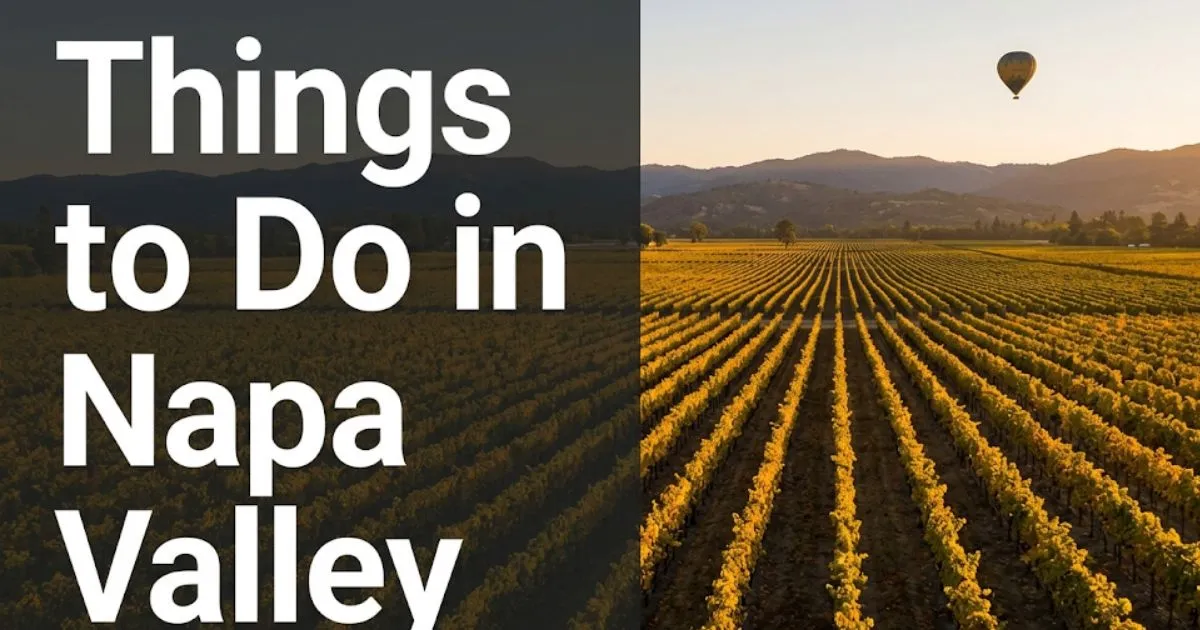
Things to Do in Napa Valley: The 2026 Insider Guide

The best things to do in Napa Valley go well beyond wine tasting. The valley delivers world-caliber dining, geothermal spas, serious hiking, and sunrise balloon flights over a landscape that earns its reputation.
Napa Valley Vintners reports that the valley hosts more than 400 wineries across a 35-mile stretch of Napa County. That concentration makes it one of the most wine-dense destinations on earth.
This guide covers every major experience: wineries worth booking, neighborhoods worth spending a day in, outdoor activities, and honest guidance on cost, crowds, and seasonal timing. It’s designed to help you plan a real trip, not a brochure fantasy.
Things to Do in Napa Valley: What the Valley Actually Delivers
Napa Valley rewards travelers who understand what it is built for. It is a premium adult travel destination centered on wine, food, and landscape.
That framing matters for trip planning. Most of the valley’s infrastructure, from tasting rooms to restaurants to resort hotels, is calibrated for couples and adult groups with significant discretionary spending.
The valley runs approximately 35 miles from the city of Napa in the south to Calistoga in the north. Highway 29 is the main tourist corridor. The Silverado Trail runs parallel to the east and is quieter, less trafficked, and often overlooked by first-time visitors.
The honest picture: this is not a budget destination. Tasting fees, meals, and accommodation are among the highest in California outside San Francisco.
What Napa does genuinely well: it concentrates elite experiences in a small geographic area. You can walk between a Michelin-starred lunch, a serious wine tasting, and a farm stand selling just-picked produce within a single afternoon in Yountville.
Insider Tip:
- Most visitors try to cram three or four winery tastings into one day. One or two is the practical maximum for genuine enjoyment and budget control.
- The valley’s most underrated free activity is simply driving the Silverado Trail slowly with no agenda. Stop at a roadside viewpoint and look west toward the Mayacamas range.
- Solo travelers and families will find the valley more constrained than couples or adult groups; see the traveler profile section for specifics.
Best Wineries in Napa Valley Worth Booking in 2026
The best wineries in Napa Valley in 2026 are those that offer a genuinely distinct experience beyond simply pouring wine. Three stand out for different reasons.
Schramsberg Vineyards in Calistoga produces California’s most respected sparkling wine and offers cave tours that go underground into hand-dug 19th-century tunnels. The cave tasting experience is unlike anything else in the valley. Advance booking is required, typically 2 to 4 weeks ahead for weekends.
Castello di Amorosa near Calistoga is a functioning medieval Italian castle built from stone imported from Europe. It sounds like a tourist gimmick. It isn’t. The winemaking is serious, the architecture is genuinely impressive, and the cave barrel rooms are worth the visit. Tasting fees typically run approximately $40 to $75 per adult as of recent years; verify current pricing before visiting.
Mumm Napa in Rutherford offers sparkling wine tastings with a terrace overlooking the vineyard. It accepts walk-ins more reliably than most estate wineries. For travelers who don’t plan far ahead, this is one of the valley’s most accessible quality experiences.
| Winery | Best For | Experience Type | Booking Required? | Approx. Cost Per Person |
|---|---|---|---|---|
| Schramsberg Vineyards | Wine enthusiasts, couples | Cave tour + tasting | Yes, 2 to 4 weeks | $75 to $150+ |
| Castello di Amorosa | Architecture lovers, groups | Castle tour + cave tasting | Recommended | $40 to $75 |
| Mumm Napa | Flexible planners | Terrace tasting | Walk-ins often available | $30 to $65 |
| Domaine Carneros | Couples, sparkling wine fans | Terrace sparkling tasting | Recommended | $45 to $80 |
| Hall Wines | Art lovers, modern design fans | Gallery + tasting | Recommended | $55 to $100 |
Local alternative: The tourist infrastructure is centered on the Highway 29 corridor. For a quieter equivalent experience, Antica Winery on Atlas Peak Road offers mountain-grown Cabernet with valley views and a fraction of the Instagram crowd of Domaine Carneros.
Seniors and accessibility travelers should note terrain carefully. Many winery cave tours involve uneven stone floors and limited lighting. Call ahead to confirm accessibility before booking.
Napa Valley Wine Tasting Tips That Save You Time and Money
The most common mistake in Napa Valley wine tasting is underestimating how quickly tasting fees accumulate. One tasting for two people at a premium estate winery can easily cost $150 to $300 before a bottle purchase.
Visit Napa Valley, the official tourism organization, recommends contacting wineries directly to ask about waived tasting fees with bottle purchases. Many estate wineries apply this policy and don’t advertise it openly.
To plan wine tasting in Napa Valley effectively in 2026:
- Choose one to two wineries per day maximum. More than that and the experience becomes a checklist rather than a pleasure.
- Book tasting reservations 2 to 4 weeks in advance for weekend visits. Most premium estate wineries no longer accept walk-ins.
- Start your first tasting before 11:00 a.m. Tasting rooms are meaningfully quieter before the midday crowd arrives.
- Plan lunch between tastings at a restaurant in Yountville or St. Helena rather than eating at the winery. Food quality and value is generally better in town.
- Designate a driver or book a wine country shuttle service before departure. DUI enforcement on Highway 29 and the Silverado Trail is consistent and serious.
Budget traveler note: Clif Family Winery in St. Helena operates a food truck alongside its tasting program and offers a more approachable price point than most estate wineries. It’s one of the few places in the valley where a quality tasting experience and a good meal don’t require a premium outlay.
For couples, afternoon tastings with a vineyard terrace are the romantic peak of the Napa Valley experience. Domaine Carneros specifically is oriented around this format and consistently delivers it.
Key Takeaway: Book tasting reservations 2 to 4 weeks in advance for any estate winery visit on a weekend in Napa Valley.
Napa Valley Neighborhoods: Yountville, St. Helena, and Calistoga
Each of Napa Valley’s four distinct towns has a different character, a different price point, and a different best use for a day of travel.
Yountville is the valley’s culinary center. It contains the highest concentration of Michelin-starred restaurants per capita of any American town, including The French Laundry and Bouchon. It’s walkable, compact, and best suited for food-focused travelers willing to spend.
St. Helena is the valley’s most historic town. Main Street is lined with Victorian architecture, independent wine merchants, and restaurants at a wider price range than Yountville. Charter Oak restaurant here consistently delivers one of the best farm-to-table meals in the valley without the French Laundry price tag.
Calistoga sits at the northern end of the valley and has a genuinely different identity. It built its reputation on geothermal mud baths and hot springs before wine tourism arrived. It’s the most approachable town in the valley for budget travelers and has a local-community feel the southern towns have largely traded away for tourism infrastructure.
The city of Napa in the south is the most overlooked base for first-time visitors. Downtown Napa around First Street has undergone significant development. It offers the best range of accommodation price points and the Oxbow Public Market food hall, which is covered separately below.
| Town | Best For | Vibe | Budget Level |
|---|---|---|---|
| Napa (city) | Base camp, food halls, accessibility | Urban, developing | Mid-range to premium |
| Yountville | Michelin dining, romantic walks | Refined, compact | Premium |
| St. Helena | Historic charm, wine shopping | Classic wine country | Mid-range to premium |
| Calistoga | Spas, geothermal baths, casual feel | Relaxed, local | Mid-range |
Families with children will find Calistoga the most practical base. It has more casual dining options and is less oriented around an exclusively adult wine experience than Yountville.
Downtown Napa and Oxbow Public Market
Oxbow Public Market on McKinstry Street in downtown Napa is the single best free-to-enter food experience in the valley. It houses local producers, a wine merchant, an oyster bar, and multiple food stalls under one roof.
For non-wine drinkers, it’s arguably the most compelling reason to visit Napa Valley at all. The quality of food and local produce concentration rivals any California public market.
Oxbow is free to enter. Individual food and beverage purchases vary widely. Budget around $20 to $40 per person for a satisfying market lunch. Verify current vendor hours before visiting, as individual stalls have varying schedules.
Downtown Napa itself has changed significantly in recent years. First Street Napa is the main commercial corridor. It now has independent boutiques, wine bars, and a weekend farmers market (held seasonally, typically Saturday mornings; verify schedule before visiting).
The Napa Farmers Market runs seasonally and features produce from regional farms, local artisan goods, and prepared foods. It draws a local crowd rather than a tourist crowd. That distinction matters for experience quality.
Solo travelers find downtown Napa the most navigable part of the valley. Wine bars like Cadet Wine and Beer Bar on Clinton Street operate on a by-the-glass model that suits solo exploration better than a formal winery tasting built for groups.
Insider Tip:
- Arrive at Oxbow before 10:00 a.m. on weekends to browse without the full tourist crowd.
- The Hog Island oyster bar inside Oxbow is one of the best oyster experiences in Northern California.
- Parking in downtown Napa: the First Street Napa garage offers validated parking. Street parking near Oxbow is available but fills quickly on weekend mornings.
Napa Valley Restaurants and Food Scene
Napa Valley’s dining scene is its second strongest asset after wine, and for non-wine travelers it may be the primary one. The concentration of serious restaurants in a 35-mile stretch is genuinely exceptional.
The French Laundry in Yountville is the valley’s most famous restaurant. It is also the hardest reservation in wine country. Bookings typically open 60 days in advance at 6:00 a.m. and sell out within minutes. It is worth attempting for the experience but should not be the centerpiece of a trip plan that depends on securing the reservation.
The more accessible and arguably more honest Yountville alternative is Bouchon Bistro, also operated by Thomas Keller’s group. Lunch at Bouchon delivers a serious French bistro experience at a fraction of the French Laundry price point.
Morimoto Napa on Main Street in downtown Napa offers Iron Chef Masaharu Morimoto’s Japanese-influenced menu in a striking waterfront setting on the Napa River. It’s one of the valley’s best non-French options and accepts same-day reservations more reliably than Yountville’s Michelin-starred competition.
Charter Oak in St. Helena is the most consistently recommended restaurant by locals who work in the valley’s food industry. The wood-fired cooking is ingredient-focused and seasonally driven. Reserve at least one to two weeks in advance.
According to Condé Nast Traveler, Napa Valley ranks among the top US destinations for culinary tourism. That designation reflects the concentration rather than any individual restaurant’s performance.
Budget traveler note: Genuine value dining exists. Gott’s Roadside in St. Helena and Napa serves burgers, ahi tuna tacos, and milkshakes at prices that feel reasonable by valley standards. It’s a local institution rather than a tourist afterthought.
Key Takeaway: Book Charter Oak in St. Helena for the best local-insider restaurant experience without the French Laundry reservation competition.
Things to Do in Napa Valley Besides Wine
Napa Valley has a full non-wine activity portfolio that most travel content ignores. The valley’s culinary, outdoor, and spa offerings stand independently of the wine tasting circuit.
The CIA at Copia in downtown Napa is operated by the Culinary Institute of America. It offers cooking demonstrations, hands-on classes, food and wine education events, and a restaurant. It’s one of the most genuinely useful stops for food-focused travelers who want substance alongside the scenic beauty.
Wine blending classes at select wineries let participants create their own blend under the guidance of a winemaker. Hall Wines in St. Helena and Rutherford offers this experience and pairs it with an art gallery collection that includes large-scale sculpture and contemporary California art. It’s one of the valley’s most distinctive non-standard tasting experiences.
Cycling the valley is dramatically underused by visitors from outside the region. The Napa Valley Vine Trail is a paved multi-use path running from the city of Napa northward toward Yountville. It is flat, scenic, and car-free.
- Cycling rental services including Napa Valley Bike Tours offer guided cycling tours and self-guided rental packages.
- A flat, 13-mile stretch of the Vine Trail connects Napa to Yountville without a single significant hill.
- The trail passes vineyards, wetlands, and the Napa River. It’s best experienced in the morning before midday heat.
Families with children will find cycling the Vine Trail one of the few genuinely kid-appropriate activities in the valley. The flat terrain and car-free route is safe and manageable for school-age children.
Seniors and accessibility travelers: The paved Vine Trail is fully accessible and offers a genuinely beautiful valley experience without the mobility demands of winery cave tours or mountain hikes.
Napa Valley Outdoor Activities and Hiking
Napa Valley offers serious hiking that most wine country visitors never discover. The trails climb into the Mayacamas and Vaca mountains on either side of the valley floor.
Robert Louis Stevenson State Park near Calistoga contains the trail to the summit of Mount Saint Helena, at approximately 4,343 feet the highest point in Napa County. The round-trip hike to the summit is approximately 10 miles with significant elevation gain. Plan for 5 to 7 hours and carry substantial water.
Skyline Wilderness Park on the eastern edge of the city of Napa offers 850 acres of trails ranging from a flat 2-mile loop around Lake Marie to steep ridge routes with valley views. Entry fees are modest (verify current rates before visiting). It’s the most accessible hiking option from downtown Napa without a drive into the mountain zones.
Westwood Hills Regional Park on the western edge of downtown Napa offers short loop trails through oak woodland with valley views. Suitable for casual hikers and families. Free to enter as of recent years; verify current access before visiting.
Safety and Practical Warnings for Napa Valley Outdoor Activities:
Summer hiking in Napa Valley carries genuine heat risk. Valley floor temperatures regularly exceed 95°F from June through September. Mount Saint Helena trails are exposed and water is unavailable on the route.
Key safety and practical facts every visitor should know:
- Carry at least 2 liters of water per person for any hike longer than 2 miles from May through September.
- Cell service is limited on mountain trails; download offline maps before leaving the trailhead.
- The Mount Saint Helena summit trail is best hiked from October through May to avoid extreme heat and fire season air quality.
- Wildfire smoke can significantly affect air quality in September and October in active fire years; check the California Air Resources Board AQI before outdoor activities.
Cyclists should note that Silverado Trail has minimal shoulder in some sections. Vine Trail cycling is the safer option for recreational riders.
Key Takeaway: Skyline Wilderness Park in the city of Napa offers genuine hiking trails with valley views without a mountain drive, making it the most accessible outdoor option for most visitors.
Napa Valley Hot Air Balloon Rides
A hot air balloon flight over Napa Valley at sunrise is genuinely one of the most spectacular ways to experience the valley landscape. It is not marketing copy. The view of the vineyard patchwork from 1,500 feet at golden hour earns the description.
Napa Valley Balloons and Balloons Above the Valley are the two most established operators. Both operate dawn flights that typically last 60 to 90 minutes in the air, followed by a champagne breakfast. Total time commitment including ground setup is typically 4 to 5 hours.
Pricing for balloon flights runs approximately $250 to $350 per adult with most operators, as of recent years. Verify current rates before booking. These experiences book out weeks in advance during peak season from May through October.
Flights operate weather-dependent and can be cancelled with little notice due to wind conditions. Reputable operators reschedule at no charge. Book directly with the operator and confirm their cancellation and rescheduling policy before payment.
Insider Tip:
- Book the earliest available departure slot. Late-morning flights are more likely to encounter thermal turbulence as valley air heats up.
- Dress in layers. Balloon altitude is significantly cooler than valley floor temperature, even in summer.
- Couples consistently rate balloon rides as the single most memorable Napa Valley experience. The format is inherently romantic and the champagne breakfast adds to the occasion.
Families with children: Most operators have minimum age requirements, typically 6 to 8 years old. Verify specific requirements before booking.
Budget travelers: At $250 to $350 per person, this is the valley’s most expensive single activity. For those choosing one premium splurge, it tends to deliver the strongest return on the investment in genuine experience terms.
The Napa Valley Wine Train: What It Actually Delivers
The Napa Valley Wine Train is one of the most marketed experiences in the valley and also one of the most misunderstood. It is a restored vintage train running the 25-mile route from the city of Napa to St. Helena.
The honest assessment: it is primarily a rolling dining and wine experience, not a train enthusiast’s journey. The train moves slowly. The views are pleasant but not dramatically scenic compared to a drive on the Silverado Trail. The food and service quality is generally good.
It suits travelers who want a structured, effortless way to enjoy wine and food without driving. The format handles the designated driver issue automatically.
Fares vary significantly by experience level, from basic wine flights to full multi-course dining packages. Budget approximately $150 to $350 per person depending on the package, as of recent years; verify current pricing before booking. Advance reservation is required, especially on weekends and during harvest season.
Couples find the train most rewarding when booked for a dinner or brunch service rather than the baseline wine flight. The dining car atmosphere at dinner is genuinely romantic.
Families with children: The train accepts children but the format is primarily adult-oriented. The dining pace is slow and the wine-focused programming will not hold children’s interest.
The local alternative: Experienced repeat visitors who want the valley views without the tourist format simply drive the Silverado Trail slowly at sunset with a curated playlist. The scenery is equivalent and the cost is negligible by comparison.
| Experience | Best For | Cost Range (approx.) | Booking Required? |
|---|---|---|---|
| Wine Train (basic) | Wine-curious travelers, couples | $150 to $200 per person | Yes, advance booking |
| Wine Train (dining) | Romantic dinner experience | $250 to $350 per person | Yes, advance booking |
| Silverado Trail drive | Any traveler, free alternative | Cost of gas only | No |
Napa Valley Spas and Calistoga Geothermal Baths
Calistoga’s geothermal spa scene is one of the most distinctive and genuinely local experiences in Napa Valley. The town sits over a geothermal field that has supplied hot springs since before wine tourism arrived.
Indian Springs Resort is the oldest continuously operating resort in California, dating to 1861 according to the property. Its Olympic-size geothermal pool is fed directly by natural volcanic hot springs. Day passes for the pool are available to non-guests; call ahead to verify availability and current pricing.
Calistoga Spa Hot Springs is a more affordable alternative offering four outdoor geothermal pools and basic mud bath treatments. For budget-conscious travelers who still want the Calistoga mud bath experience, this is the better value option over Indian Springs.
The traditional Calistoga mud bath uses local volcanic ash mixed with geothermal water. The experience is exactly as odd as it sounds and genuinely relaxing. Most spa menus include a sequence of mud bath, mineral bath, steam, and blanket wrap. Budget approximately $100 to $200 per person for a standard treatment package; verify current pricing before booking.
Seniors and accessibility travelers: Indian Springs’ flat pool deck and warm geothermal water make this one of the most senior-appropriate luxury experiences in the valley. Confirm accessibility of specific spa treatment areas before booking.
Couples find the dual-treatment rooms at most Calistoga spas well-suited for a shared spa day. Most properties offer packages that include treatments for two.
Insider Tip:
- Book spa treatments for weekday mornings. Weekend afternoon appointment availability in Calistoga disappears 2 to 3 weeks out during peak season.
- The geothermal pools at Indian Springs stay warm year-round. A January visit to Calistoga for the spa experience, when the valley is quiet and rates are lower, is one of the valley’s best-kept practical strategies.
Key Takeaway: A January visit to Calistoga for geothermal spas and mud baths offers the valley’s most genuine local experience at the year’s lowest crowd levels and hotel rates.
Best Time to Visit Napa Valley
The best time to visit Napa Valley is March through May or mid-September through early November. Both windows offer the optimal combination of weather, scenery, and crowd levels.
Spring in Napa Valley means wildflower blooms on hillside trails, green vineyard canopy, comfortable temperatures in the 65 to 80°F range, and meaningfully smaller tasting room crowds than summer peak season. Accommodation rates are typically lower than summer.
Fall from mid-September through October delivers golden light, mature vineyard foliage, and the energy of harvest season. It is also peak tourist season. Expect higher prices, fuller tasting rooms, and advance reservation requirements across the board.
Summer from June through August brings reliable warm weather but also peak crowds, peak prices, and inland valley temperatures that regularly exceed 95°F in July and August. The outdoor activity experience degrades significantly in the heat.
Winter from December through February is the valley’s quietest season. Many tasting rooms have reduced hours or by-appointment-only access. Vines are dormant and the landscape is bare. Calistoga’s spa scene thrives in winter and accommodation rates are at their annual low point.
| Season | Crowd Level | Temperature Range | Best For | Drawbacks |
|---|---|---|---|---|
| Spring (Mar-May) | Low to moderate | 60-80°F | Hiking, cycling, first-timers | Some tasting rooms may have spring hours |
| Summer (Jun-Aug) | High | 75-100°F+ | Wine events, outdoor dining | Heat, crowds, peak pricing |
| Fall (Sep-Nov) | High (harvest peak) | 65-85°F | Harvest experience, scenery | Highest prices, fullest bookings |
| Winter (Dec-Feb) | Low | 45-65°F | Spas, Calistoga, budget travel | Reduced winery hours, bare vines |
According to Visit Napa Valley, the valley receives the majority of its annual visitors between June and October. Planning a visit in April or early May delivers a materially better experience-to-crowd ratio.
Napa Valley Harvest Season: Worth the Crowds?
Harvest season in Napa Valley runs roughly from late August through October. It is the valley’s most celebrated time and also its most logistically demanding.
The genuine appeal of harvest is real. The sight of crews picking Cabernet Sauvignon in early morning light, the smell of fermenting must in winery crush pads, and the energy of an industry at its annual peak are experiential things that photographs cannot fully convey.
The practical reality is harder. Tasting rooms operate at maximum capacity. Highway 29 weekend traffic can mean 45-minute drives between Yountville and St. Helena. Hotels that cost $250 a night in March cost $450 to $600 during harvest weekdays.
Harvest-specific experiences worth seeking:
- Crush pad tours at select wineries, showing the physical process of wine production. Robert Mondavi Winery and Beringer Vineyards both offer structured harvest experiences. Book well in advance.
- Vintner’s dinners held during harvest at estate wineries are some of the valley’s most memorable dining events. These typically sell out 4 to 6 weeks in advance.
- The best harvest experience strategy: visit on a weekday in late September. Weekend harvest tourist crowds in early October are at their annual peak.
Budget travelers: Harvest is the worst time of year for budget travel in Napa Valley. Hotels are at peak pricing. Tasting fees at some wineries are elevated during harvest. If budget matters, spring is the right alternative.
Couples: Harvest is the valley’s most romantic season for those who book in advance and choose weekday travel. The combination of golden light, estate vineyard access, and special harvest events is genuinely exceptional when the logistics are managed properly.
Getting Around Napa Valley Without a Car
Napa Valley is not designed for car-free travel, but it is possible to navigate without a personal vehicle. The key is understanding the gaps in public transportation coverage.
VINE Transit (Napa County’s public bus system) operates Route 10 along the Highway 29 corridor, connecting the city of Napa to Yountville, Oakville, Rutherford, St. Helena, and Calistoga. One-way fares are very affordable (verify current rates before traveling). The service frequency is limited, typically hourly or less on weekends.
To navigate Napa Valley without a car effectively:
- Base yourself in downtown Napa or Yountville, both of which are walkable within their own boundaries.
- Use VINE Transit Route 10 for daytime travel between towns.
- Book a dedicated wine country shuttle or tour service for winery visits. Several operators run half-day and full-day winery tour packages from Napa or San Francisco.
- For San Francisco visitors, BayLink and other shuttle services offer day-trip packages from the Bay Area that include transportation and winery access. Verify current operators and schedules before booking.
- Rideshare services (Uber and Lyft) are available in downtown Napa and Yountville but coverage becomes unreliable in rural winery areas and on the Silverado Trail.
Solo travelers: A guided wine tour makes particular sense when traveling alone. It handles transportation, provides built-in social structure with other travelers, and removes the designated driver concern.
Seniors and accessibility travelers: VINE Transit buses are ADA-compliant. Call the agency to confirm specific route accessibility before traveling.
The Napa Valley Vine Trail allows car-free cycling between Napa and Yountville. Combined with VINE Transit for longer distances, this can build a practical car-free day itinerary for the southern valley.
Key Takeaway: Base yourself in downtown Napa or Yountville and use VINE Transit Route 10 combined with a booked wine country shuttle for winery visits if traveling without a car.
Napa Valley for Couples, Families, and Budget Travelers
Napa Valley’s experience differs dramatically depending on traveler profile. Understanding which profile you match before booking prevents significant wasted spending and disappointment.
For couples, Napa Valley is one of California’s strongest romantic travel destinations. The formula works: a sparkling wine tasting with valley views at Domaine Carneros in the morning, lunch at Bouchon Bistro in Yountville, a late afternoon mud bath treatment in Calistoga, and dinner at Charter Oak in St. Helena fills a day with genuinely intimate, high-quality experiences.
For families with children, the honest assessment is more cautious. The valley has very few child-specific attractions. Most winery experiences are adult-only or adult-oriented. Practical exceptions include:
- Cycling the Napa Valley Vine Trail with older children (ages 8 and up)
- Castello di Amorosa, which genuinely engages children with its castle architecture
- Oxbow Public Market for casual, family-friendly food browsing
- Geothermal pool access at Indian Springs (confirm age requirements before booking)
For budget travelers, Napa Valley requires honest expectation management. A realistic mid-range day for two people in Napa Valley in 2026 might look like this:
| Expense | Budget Option | Approximate Cost for Two |
|---|---|---|
| Winery tasting | One tasting at Mumm Napa | $60 to $130 |
| Lunch | Gott’s Roadside in St. Helena | $35 to $55 |
| Activity | Vine Trail cycling rental | $50 to $80 |
| Dinner | Oxbow Market stalls | $40 to $70 |
| Total (excluding accommodation) | $185 to $335 |
Accommodation is the biggest variable. Budget travelers staying in downtown Napa or Calistoga in an inn or motel rather than a resort hotel can find rates that are manageable, particularly in winter and spring. Verify current rates as hotel pricing in the valley changes seasonally and significantly.
Senior travelers should note that Yountville’s compact, flat, walkable layout is the most senior-accessible part of the valley. The town can be explored entirely on foot without significant terrain challenge.
Suggested Napa Valley Weekend Itinerary
A two-day Napa Valley weekend works best when it separates wine experiences from town exploration and builds in time to actually sit still in a beautiful place.
Day 1: Southern Valley and Wine
- Arrive in the city of Napa by 9:00 a.m. and begin at Oxbow Public Market for coffee and a light breakfast before the tourist crowd builds.
- Drive or take VINE Transit north on Highway 29 to Domaine Carneros in the Carneros district for a 10:30 a.m. sparkling wine tasting on their terrace. Advance booking required.
- Continue north to Yountville for a 1:00 p.m. lunch at Bouchon Bistro. Reserve ahead.
- After lunch, walk Yountville’s Washington Street, exploring the town on foot for 60 to 90 minutes.
- Return to downtown Napa by 4:30 p.m. and explore the First Street corridor and Napa River waterfront.
- Dinner at Morimoto Napa for 7:00 p.m. Reserve 1 to 2 weeks in advance.
Day 2: Northern Valley and Non-Wine Experiences
- Depart Napa by 8:00 a.m. for a sunrise hot air balloon flight with Napa Valley Balloons. Book weeks in advance.
- Following the champagne breakfast landing, drive north to St. Helena for a late morning browse of Main Street and the local wine merchant shops.
- Lunch at Charter Oak in St. Helena. Reserve ahead.
- Drive north to Calistoga for an afternoon mud bath and geothermal pool session at Indian Springs Resort or Calistoga Spa Hot Springs.
- Before leaving Calistoga, take the short drive to the Robert Louis Stevenson State Park parking area to see the trailhead and the view north toward Lake County. The short lower trail sections are accessible without committing to the full summit hike.
- Return south via the Silverado Trail instead of Highway 29. The evening light on the eastern vineyards is at its best on this route.
Insider Tip:
- The Silverado Trail return from Calistoga to Napa takes approximately 45 to 60 minutes with no stops. Add a pull-off point near the Stags Leap District for a final vineyard view.
- Day 2 is structured for couples. Families with children should substitute the balloon flight (check age requirements) and the spa with a morning Vine Trail cycling session and a Castello di Amorosa castle visit instead.
Safety and Practical Warnings for Napa Valley
DUI enforcement is the most consistent and serious safety concern for Napa Valley visitors. Law enforcement on Highway 29, the Silverado Trail, and connecting roads operates regular checkpoints and patrols.
Key safety and practical facts every visitor should know:
- Plan a designated driver before any winery-heavy day. Multiple tastings make driving legally and physically risky.
- Book a wine country shuttle or tour if your group has no designated driver. Several operators run roundtrip winery tours from Napa city hotels.
- Summer heat on the valley floor regularly exceeds 95°F to 100°F. Outdoor activities before 10:00 a.m. and after 5:00 p.m. are significantly more comfortable and safer.
- Wildfire smoke can affect the valley from July through October in active fire years. Check the California Air Resources Board AQI before planning outdoor activities.
- Tasting room reservation cancellation policies vary. Read the cancellation terms before booking. Some premium wineries charge cancellation fees for no-shows.
- Cell service is limited on mountain winery access roads and in sections of Robert Louis Stevenson State Park. Download offline maps before leaving valley floor areas.
For outdoor emergencies in California State Parks, contact California State Parks directly. The Napa Valley Welcome Center on First Street in downtown Napa can assist with current conditions and local emergency information.
Frequently Asked Questions About Napa Valley
How many days do you need in Napa Valley?
Two full days is the practical minimum for a meaningful Napa Valley experience.
Three days allows one winery-focused day, one town and food exploration day, and one outdoor or spa day without feeling rushed.
Four or more days suits travelers who want to explore the Silverado Trail wineries, take a balloon flight, and also spend time in both Calistoga and Yountville properly.
What is the best time of year to visit Napa Valley?
The best time to visit Napa Valley is March through May for the combination of comfortable weather, lower crowds, and lower accommodation costs.
Mid-September through October offers the harvest season experience but at peak tourist density and peak pricing.
Winter from December through February is the quietest and most affordable season, best suited for spa-focused trips to Calistoga rather than winery touring.
Can you visit Napa Valley without a car?
You can visit Napa Valley without a car by using VINE Transit Route 10 along the Highway 29 corridor combined with a booked wine country shuttle service.
Downtown Napa and Yountville are walkable within their own boundaries.
Rideshare services exist in the city of Napa and Yountville but become unreliable in rural winery areas. A dedicated wine country tour operator handles the transportation gap for winery visits most reliably.
What can you do in Napa Valley besides wine tasting?
Napa Valley beyond wine tasting includes hot air balloon rides, geothermal spa experiences in Calistoga, cycling the Napa Valley Vine Trail, hiking in Robert Louis Stevenson State Park and Skyline Wilderness Park, culinary classes at the CIA at Copia, and serious farm-to-table dining.
Oxbow Public Market in downtown Napa is a full food destination that requires no wine interest whatsoever.
The valley’s outdoor activity portfolio, particularly in spring and fall, is substantial enough to fill a full non-wine itinerary.
Is Napa Valley worth visiting on a budget?
Napa Valley is possible on a budget but requires deliberate planning. It is not a naturally budget-friendly destination.
Budget strategies that work include staying in downtown Napa or Calistoga rather than resort hotels, limiting wine tasting to one experience per day, eating at Gott’s Roadside and Oxbow Market rather than Michelin-starred restaurants, and visiting in January through March when accommodation rates are at their lowest.
A realistic budget for two people for one day in Napa Valley, excluding accommodation, runs approximately $185 to $335 depending on choices made.
Do you need reservations for Napa Valley wineries?
Most premium estate wineries in Napa Valley require advance tasting reservations and no longer accept walk-ins. Book 2 to 4 weeks ahead for weekend visits in peak season.
A small number of wineries, including Mumm Napa in Rutherford, accept walk-in visitors more reliably but availability cannot be guaranteed on busy weekends.
Calling ahead to confirm availability and reservation policy before arriving is the single most important practical step for any winery visit in Napa Valley.
Napa Valley delivers on its reputation when you visit with accurate expectations and a realistic plan. The wine is genuinely exceptional. The dining is among the best concentrated in any American wine region. The landscape in spring and fall is beautiful in a specific and earned way.
Book your winery tastings 2 to 4 weeks in advance. Plan no more than two tasting experiences per day. Use the Silverado Trail on your return drive south. These three decisions alone will separate your trip from the average tourist experience.
Travel conditions in Napa Valley, including tasting room hours, entry fees, wine train schedules, spa availability, and transit routes, change seasonally and sometimes suddenly. Verify all key logistics directly with venues and the official Visit Napa Valley website before departure. The traveler who arrives with confirmed reservations and a flexible attitude for the rest will have the best possible trip.