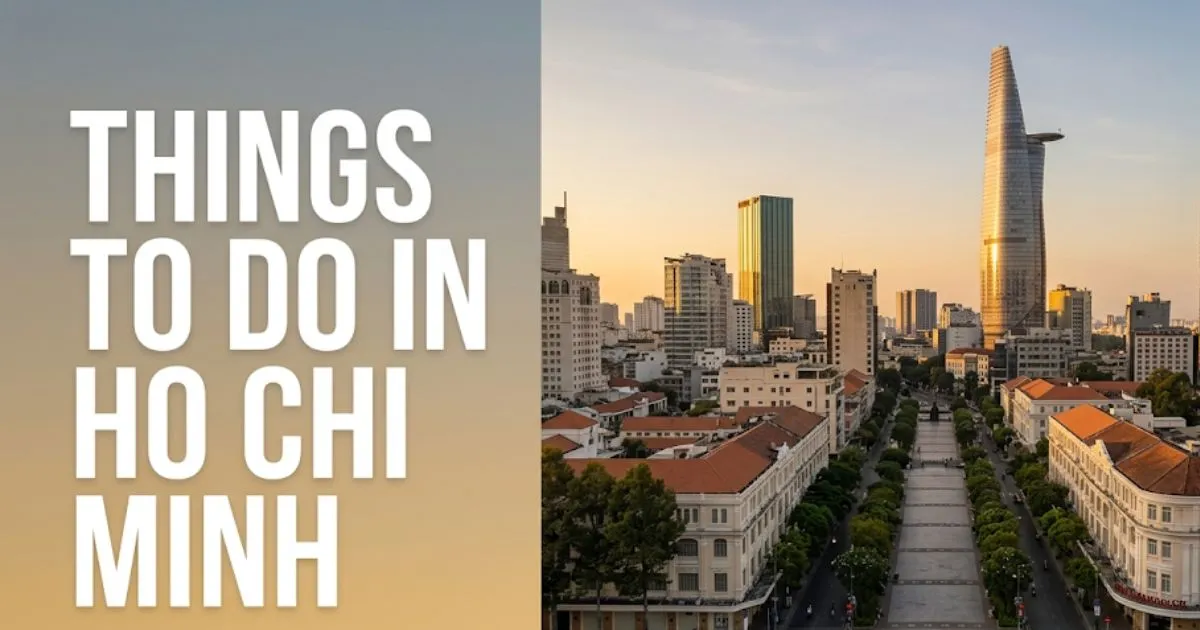
28 Top Things To Do in Ho Chi Minh City Vietnam 2026

Ho Chi Minh City delivers more genuine things to do per square mile than almost any other Southeast Asian city. From war history sites that genuinely reframe how Americans understand Vietnam to street food lanes where $2 buys a better breakfast than most US hotel restaurants.
The city known to locals as Saigon holds more than 9 million people and a density of experience that rewards slow exploration. According to the Vietnam National Administration of Tourism, Ho Chi Minh City received over 5 million international visitors in recent years, with Americans consistently ranking among the top five source countries.
This guide covers the specific activities, neighborhoods, day trips, nightlife, food experiences, and practical logistics you need. It goes beyond the standard landmark list to give you an honest, itinerary-ready guide for 2026.
Things to Do in Ho Chi Minh City: What Makes Saigon Different
Ho Chi Minh City is not Bangkok or Singapore. It is louder, more chaotic, and substantially more rewarding for travelers willing to engage with it on its own terms.
The city operates at full intensity from 5am street food vendors to 3am bar crawls on Bui Vien Walking Street. There is no quiet hour in District 1.
What separates Saigon from its regional competitors is the concentration of historical weight alongside everyday street-level life. No other Southeast Asian city places a world-class war history museum within walking distance of its best banh mi stall.
The motorbike is the city’s primary sensory fact. Crossing the street in District 1 for the first time feels exactly like stepping into a fast-moving river: the trick is to move steadily, not to freeze or run.
Budget travelers will find Saigon among the most affordable major cities in Asia. Solo travelers will find it exceptionally navigable using the Grab app for transport and a high density of social hostel infrastructure in the Pham Ngu Lao area.
Families with young children should note that the city’s uneven sidewalks, relentless motorbike traffic, and the graphic content at the War Remnants Museum require advance thought about age-appropriate planning.
| Experience Type | Best For | Approx. Cost Range | Time Needed | Insider Note |
|---|---|---|---|---|
| War Remnants Museum | History-focused adults | $2-$4 admission | 2-3 hours | Arrive before 9am to avoid tour groups |
| Cu Chi Tunnels | Adventure travelers | $8-$15 plus transport | Full day | Ben Duoc site is far less crowded than Ben Dinh |
| Jade Emperor Pagoda | Cultural explorers | Free entry | 45-60 minutes | Weekday mornings are dramatically quieter |
| Ben Thanh Market | Budget shoppers | Free entry, purchases vary | 1-2 hours | Night market version outside the main building is more local |
| Mekong Delta | Nature and culture seekers | $30-$60 for organized tour | Full day | Dry season (Nov-Apr) gives the classic lush green landscape |
| Bui Vien Nightlife | Solo travelers, couples under 40 | $2-$8 per drink | Evening | Peaks 10pm-1am; closes earlier on weeknights |
| Saigon Central Post Office | Architecture fans | Free entry | 30 minutes | Still functioning post office; buy a stamp and use it |
| Reunification Palace | History travelers | $3-$5 admission | 1.5-2 hours | Audio guide significantly improves the experience |
Top Things to Do in Saigon for First-Time Visitors
The single best first-day plan in Saigon combines the Reunification Palace, the Saigon Central Post Office, and Notre-Dame Cathedral Basilica of Saigon in one walkable morning circuit in District 1.
These three sites sit within a 10-minute walk of each other. Together they represent the French colonial foundation, the American war era, and the post-1975 unified Vietnam story in sequential, walkable order.
The War Remnants Museum at 28 Vo Van Tan in District 3 deserves its own half-day. This is not comfortable viewing. It is one of the most honest and confronting war history museums in the world.
The museum is approximately a 10-minute Grab ride from District 1’s core. Admission runs approximately $2 to $4 per person as of recent years. Verify current pricing before visiting.
Couples will find the Reunification Palace more emotionally resonant as a duo. The building froze in 1975 and walking its halls creates an uncanny time-displacement that is genuinely difficult to shake.
Families with children under 12 should visit the Reunification Palace but skip the War Remnants Museum. The graphic photographic content at the museum is unsuitable for young children.
Suggested 2-Day First-Timer Framework:
Day 1:
- Start at 7am with banh mi from Banh Mi Huynh Hoa at 26 Le Thi Rieng (opens early, line forms fast)
- Walk to the Saigon Central Post Office and Notre-Dame Cathedral (30 minutes, free entry)
- Visit Reunification Palace by 9am before organized tour groups arrive
- Lunch on Pasteur Street: pho at Pho Hoa Pasteur, 260C Pasteur Street
- Afternoon at the War Remnants Museum (allow 2.5 hours minimum)
- Evening at Nguyen Hue pedestrian boulevard for Vietnamese coffee and people-watching
- Dinner in District 3’s local restaurant strip off Vo Van Tan
Day 2:
- Morning Grab ride to the Jade Emperor Pagoda (early entry, significantly quieter before 10am)
- Explore the Cafe Apartments building at 42 Nguyen Hue (individual cafes, rotating vendors, great Saigon skyline views)
- Afternoon: Ben Thanh Market and surrounding streets for street food and souvenir shopping
- Early evening: Sunset drinks at Chill Skybar, AB Tower, 76A Le Lai
- Night: Bui Vien Walking Street for the Saigon nightlife experience
Key Takeaway: The Ben Dinh Cu Chi tunnel site is the default tour option, but the Ben Duoc site is larger, less commercial, and far less crowded. Request Ben Duoc specifically when booking.
Ho Chi Minh City Neighborhoods to Explore
Ho Chi Minh City’s neighborhoods are not interchangeable. District 1 is the tourist and commercial core, where colonial architecture meets rooftop bars and backpacker hostels.
District 3 is where locals eat, drink coffee, and live a version of Saigon that tourist maps mostly ignore. The restaurant density on Vo Van Tan and around Le Van Sy Street is exceptional and almost entirely local-priced.
Cholon (officially District 5) is Saigon’s historic Chinatown and the city’s most visually distinct neighborhood. The Thien Hau Temple at 710 Nguyen Trai is the neighborhood’s spiritual center.
Cholon’s covered market lanes, incense-fogged pagodas, and wholesale fabric and spice traders operate entirely outside the tourist infrastructure. A half-day here costs almost nothing.
Binh Thanh district has emerged as Saigon’s creative and expat residential zone. The streets around Dien Bien Phu and Ngo Tat To are lined with independent cafes, small art galleries, and local pho shops.
Pham Ngu Lao in District 1 is the backpacker and budget traveler hub. It is not where you go for authentic local experience. It is where you go for affordable beds, easy social connections, and the most traveler-friendly infrastructure in the city.
| Neighborhood | Best For | Local Food Anchor | Cost Vibe | Walk Score |
|---|---|---|---|---|
| District 1 (core) | First-timers, colonialist architecture | Com tam at sidewalk tables | Mixed, tourist-priced in spots | High |
| District 3 | Food-focused travelers, local life | Pho Hoa Pasteur, banh mi carts | Low, mostly local pricing | High |
| Cholon (District 5) | Culture, pagoda exploration | Hu tieu stalls, Chinese baked goods | Very low | Moderate |
| Binh Thanh | Cafe culture, creative scene | Independent Vietnamese cafes | Low-moderate | Moderate |
| Pham Ngu Lao | Backpackers, budget travelers | Bui Vien street food stalls | Budget-friendly | Very High |
Solo travelers will find Pham Ngu Lao the easiest entry point. The hostel social infrastructure here is among the best in Southeast Asia.
Seniors should be aware that Cholon’s streets are narrow, busy, and have limited seating infrastructure. Motorbike congestion in this district is higher than in District 1’s main tourist circuit.
War Remnants Museum and History Sites in Saigon
The War Remnants Museum at 28 Vo Van Tan, District 3, is the single most important historical experience available in Ho Chi Minh City. It documents the American War (as it is called in Vietnam) through photography, artifact, and firsthand testimony.
No comparable museum in the United States presents this history from the Vietnamese perspective with this level of specificity and photographic documentation. American travelers in particular report that this museum is unlike anything they encountered in their own education.
Admission runs approximately $2 to $4 per adult equivalent in Vietnamese dong. The museum is typically open daily, with seasonal hours from October through March differing slightly. Verify current hours before visiting.
Allow a minimum of 2.5 hours. The Agent Orange and War Crimes sections require emotional preparation. These are not casual exhibits.
History-focused travelers should visit the War Remnants Museum first, before touring the Reunification Palace. The museum provides essential context for the palace’s significance.
Families with children under 12 should skip the War Remnants Museum entirely. The graphic imagery is genuinely disturbing and age-inappropriate for young children.
For colonial-era history, the Saigon Central Post Office at 2 Cong Xa Paris in District 1 is frequently underestimated. Designed by a firm connected to Gustave Eiffel in the late 19th century, it remains a functioning post office with a soaring arched interior.
Insider Tip:
- Arrive at the War Remnants Museum before 9am to avoid the organized tour group rush, which peaks between 9:30am and 11:30am
- The outdoor aircraft and vehicle collection on the museum grounds is included in admission and requires 30 additional minutes
- The Saigon Central Post Office is free to enter but operates with post office business hours; check locally before visiting in the late afternoon
Reunification Palace and Colonial-Era Landmarks
The Reunification Palace at 135 Nam Ky Khoi Nghia, District 1, is one of the most historically specific sites in Southeast Asia. This is the building where North Vietnamese Army tanks crashed through the gates on April 30, 1975, ending the war.
The palace has been preserved almost exactly as it was on that day. The war-era communications room in the basement, with its original radio equipment and bunker layout, is genuinely compelling even for travelers with limited knowledge of the conflict.
Admission runs approximately $3 to $5 per adult in Vietnamese dong. An audio guide is available and significantly improves the experience. Without it, the building’s historical layers are difficult to decode from the signage alone.
The palace is typically open daily with midday closure for lunch. Verify current hours before visiting.
Couples consistently rate the Reunification Palace as one of Saigon’s most atmospheric experiences. The building’s frozen-in-time quality creates a specific kind of quiet that most Saigon sites do not offer.
Budget travelers will find this one of the city’s best value paid admissions. The combination of historical significance and architectural quality makes the entry fee one of the most justified in the city.
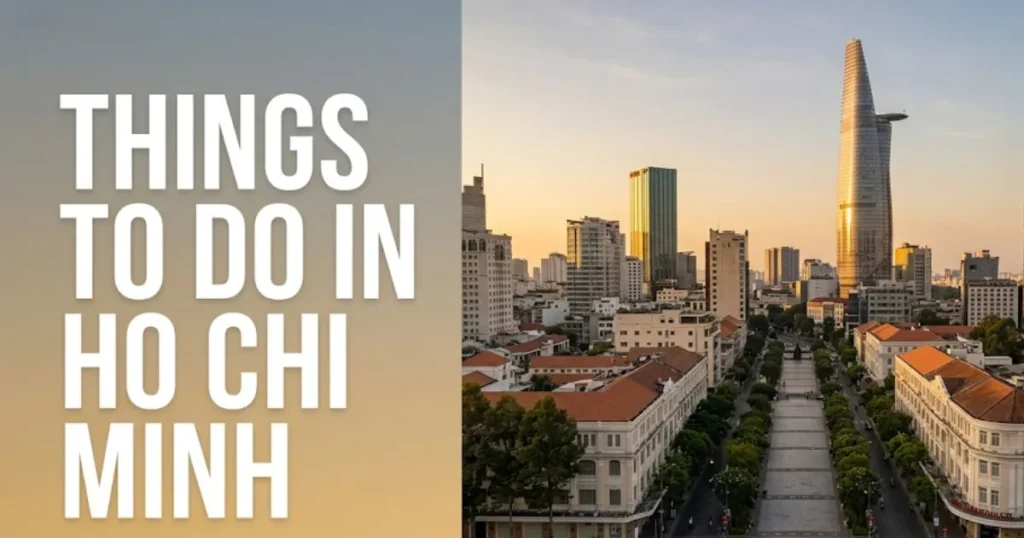
The most commonly missed colonial-era landmark is the Ho Chi Minh City People’s Committee Building on Nguyen Hue boulevard. It is not open to visitors internally, but the facade and the pedestrian boulevard in front of it are among the most photographed architectural scenes in the city.
Insider Tip:
- The Reunification Palace’s rooftop helipad is accessible and offers a good elevated view of the grounds
- Visit on a weekday morning to experience the palace with minimal crowds; weekend afternoons draw the largest local visitor volume
- The building’s basement bunker section is the section most visitors wish they had spent more time in; budget 45 minutes for it specifically
Key Takeaway: The Reunification Palace’s basement communications bunker is where the building’s historical power is concentrated. Most visitors rush through it; those who slow down leave with the most specific, memorable understanding of April 30, 1975.
Ben Thanh Market and Saigon Street Food
Ben Thanh Market on Le Loi boulevard in District 1 is the city’s most recognized market and also its most tourist-priced. The interior stalls sell everything from lacquerware to conical hats to Vietnamese silk at prices that require negotiation and a realistic sense of what goods cost elsewhere in the city.
The market’s real value for food travelers lies in the surrounding street food infrastructure. The outdoor stalls on the southern and western sides of the market operate after the market’s interior closes and offer a genuinely local-priced food experience.
Banh Mi Huynh Hoa at 26 Le Thi Rieng, a 10-minute walk from Ben Thanh, is the city’s most consistently cited banh mi address. The sandwiches are loaded beyond what a standard banh mi contains. Expect a line, especially after 8pm.
Pho Hoa Pasteur at 260C Pasteur Street in District 3 has operated since 1960. The broth is produced from an overnight bone boil. This is the address for pho in Saigon, not a tourist approximation of it.
Budget travelers will find the street food circuit around Ben Thanh Market delivers the city’s best value meals. A complete street food dinner, including bun bo (spiced beef noodle soup), fresh spring rolls, and Vietnamese iced coffee, runs approximately $4 to $8 per person total.
Families with children will find the busy sidewalk stall environment chaotic but manageable. Most stalls accommodate children without issue. The challenge is seating: most sidewalk stalls use low plastic stools.
Saigon’s street food is not limited to District 1. The com tam (broken rice with grilled pork) culture is stronger in Districts 3 and 4. The hu tieu (Chinese-style noodle soup) tradition is best explored in Cholon.
Insider Tip:
- The Ben Thanh Night Market, which operates outside the main market building from roughly 6pm onward, is significantly less tourist-priced than the interior and has a more social, local atmosphere
- Com tam binh dan (budget broken rice) stalls throughout Districts 3 and 4 serve the dish that office workers eat every day, at approximately $1.50 to $2.50 per plate
- For the best banh mi experience at Banh Mi Huynh Hoa, arrive between 9:30am and 11am or after 6pm; midday service can be rushed
Saigon Cafe Culture and the City’s Cafe Scene
Saigon’s cafe culture is one of Southeast Asia’s most developed and specific. Vietnamese iced coffee (ca phe sua da), made with strong drip-filtered robusta coffee and sweetened condensed milk over ice, is the city’s defining daily ritual.
Unlike Bangkok or Kuala Lumpur, where specialty cafe culture has largely displaced traditional coffee, Saigon maintains both. You can sit at a $0.75 sidewalk plastic-stool cafe in the morning and a $4 specialty flat white in an air-conditioned cafe in the afternoon.
The Cafe Apartments building at 42 Nguyen Hue, District 1, houses dozens of independent cafes across its floors, each operating in what was formerly a residential apartment. The variety is remarkable.
Climbing the building’s narrow stairs and choosing a cafe by vibe rather than by menu is the correct approach. Each floor offers a different aesthetic, from minimalist Japanese-influenced spaces to vintage Vietnamese decor.
The Cong Caphe chain (multiple District 1 locations) has become a Saigon institution for good reason. The ca phe cot dua (coconut coffee) is genuinely distinct. The army surplus-meets-Communist-era decor is specific to Vietnamese cafe culture and not mere pastiche.
Solo travelers will find Saigon’s cafe scene one of the best in Asia for working, reading, and slow travel. Most cafes tolerate long visits. Air conditioning is standard in the mid-range category.
Budget travelers should stick to sidewalk plastic-stool cafes for the most authentic and affordable experience. The difference between a $0.75 drip coffee here and a $3.50 latte in the Cafe Apartments building is primarily aesthetic, not qualitative.
According to the Vietnam Tourism Board, coffee tourism has become a significant driver of traveler spending in Ho Chi Minh City, with cafe district walking tours now among the city’s most-booked guided experiences.
Insider Tip:
- The best sidewalk drip coffee experience in District 1 is found on the smaller lanes branching off Ton Duc Thang Street near the Saigon River waterfront
- Weasel coffee (ca phe chon) is sold at tourist prices in District 1 as a novelty; the ethical concerns around its production are well-documented and worth researching before purchasing
- Binh Thanh district’s cafe strip along Dien Bien Phu offers the Saigon cafe experience at entirely local pricing, with zero tourist infrastructure
Key Takeaway: The Cafe Apartments at 42 Nguyen Hue is the single most concentrated introduction to Saigon’s independent cafe culture. Start at the top floor and work down.
Things to Do in Ho Chi Minh City at Night
Ho Chi Minh City’s nightlife operates across three genuinely distinct registers. Bui Vien Walking Street in the Pham Ngu Lao area is the most internationally known, most crowded, and most tourist-oriented.
Bui Vien is loud, cheap, and relentlessly social. Beer runs approximately $1 to $2 per can from street vendors. The street is pedestrianized on weekend evenings. It is exactly what it appears to be.
The skybar circuit operates at a different level. Chill Skybar on the 26th floor of the AB Tower at 76A Le Lai, District 1, offers one of the most unobstructed elevated views of the Saigon skyline. Cocktails run approximately $8 to $15.
The rooftop at the Saigon Skydeck in the Bitexco Financial Tower at 2 Hai Trieu is the city’s highest observation point. Entry runs approximately $10 to $12 per adult. The view at sunset is genuinely worth the admission price.
For a different after-dark Saigon, the street food scene around An Dong Market in Cholon operates until midnight and serves an almost entirely local clientele. This is the night market that Saigon food writers visit rather than the one tour companies recommend.
Solo travelers will find Bui Vien genuinely fun for a single night but wearing on subsequent evenings. The bars along Bui Vien are designed for short, loud, cheap socializing. The conversations rarely go deep.
Couples seeking a more atmospheric evening should prioritize Chill Skybar or the riverside terrace at restaurants along Ton Duc Thang Street near the Saigon Waterbus terminal.
Seniors and travelers who find loud bar environments uncomfortable will find the evening pedestrian scene on Nguyen Hue boulevard a genuinely pleasant alternative. The boulevard is lit, busy with local families, and lined with cafes open late.
Cu Chi Tunnels Day Trip from Ho Chi Minh City
The Cu Chi Tunnels are a 250-kilometer network of underground passages used by Viet Cong fighters during the American War. They sit approximately 25 miles northwest of central Saigon, in Cu Chi district.
There are two visitor sites. Ben Dinh is the most commonly visited: it is closer, shorter, and more aggressively commercial. Ben Duoc is the larger, more historically authentic site with a quieter atmosphere and a broader tunnel network.
Most organized tours go to Ben Dinh. Request Ben Duoc specifically if authenticity and space matter to you. The additional travel time is approximately 20 minutes.
Getting to Cu Chi without a tour requires a Grab car to Mien Tay bus station followed by a local bus, which takes 90 minutes to two hours each way. Most first-time visitors opt for an organized half-day or full-day tour, which runs approximately $15 to $35 per person depending on group size and includes transport.
Adventure-focused travelers can crawl through a section of the actual tunnels. The widened tourist section is still claustrophobic. People with significant claustrophobia should know this before committing to the underground portion.
Seniors and accessibility travelers should note that the surface experience at Cu Chi is extensive and involves uneven terrain, tree roots, and significant heat exposure. The tunnel crawling section is entirely optional. The outdoor grounds, including the display of tunnel trap mechanisms, are navigable without entering the underground sections.
In the wet season (May through November), the Cu Chi Tunnels’ outdoor grounds become muddy and some sections are partially flooded. This materially changes the experience and should factor into your timing.
Insider Tip:
- Book a morning departure for Cu Chi, arriving by 9am before the organized group tours dominate the grounds between 10am and noon
- Wear shoes you do not mind getting muddy and light, breathable clothing; the tunnel interiors are humid and warm regardless of season
- The firing range at Ben Dinh, where visitors can pay to fire AK-47s and M16s, is a significant revenue activity at the site; participation is entirely optional and not part of the historical visit
Key Takeaway: Ask for Ben Duoc, not Ben Dinh. The extra 20 minutes of travel gives you the Cu Chi tunnel experience with dramatically fewer tour groups and a more complete historical presentation.
Mekong Delta Day Trip from Saigon
The Mekong Delta is one of Vietnam’s most productive agricultural regions, stretching south and west of Ho Chi Minh City across a network of rivers, canals, and rice paddies. Day trips to My Tho in Tien Giang province and Ben Tre in Ben Tre province are the most common options from Saigon.
My Tho is the closest Mekong gateway at approximately 70 kilometers from central Saigon, typically 1.5 to 2 hours by bus or car. Ben Tre, across a river by small ferry, offers the more commonly cited experience of floating coconut candy factories and narrow canal boat rides under palm canopies.
Organized day tours run approximately $30 to $60 per person and include transport, boat access, and a basic lunch at a riverside restaurant. Independent travel to My Tho is possible via Mien Tay bus terminal in Binh Chanh district.
The dry season (November through April) is when Mekong Delta tours deliver the visual experience shown in most travel photography. Lush green rice paddies, clear waterways, and manageable humidity.
In the wet season, water levels rise significantly. The landscape is greener but the waterways run muddy brown. Many travelers find the wet-season Mekong Delta a disappointment relative to their dry-season expectations.
Couples consistently rate the Ben Tre canal boat experience among the most romantic half-days available from Saigon. The narrow waterways shaded by coconut palms are genuinely beautiful in the dry season.
Families with children will find the Mekong Delta boat experience effective for children aged 7 and up. The animal interaction experiences at some tour stops (holding pythons, feeding crocodiles) are popular with older children and alarming to some parents. Review your specific tour’s animal interaction components in advance.
For a more genuinely local Mekong experience, the Cai Be floating market in Tien Giang province operates in the early morning (roughly 5am to 9am). Most day tours miss it because of departure timing. Overnight tours from Saigon that include an early morning market visit are available through several local operators.
Insider Tip:
- The Mekong Eyes riverboat offers a more comfortable and less crowded Mekong experience than standard minivan day tours, operating on a slower cruise format
- Ben Tre’s Coconut Candy Village is genuinely interesting for 30 minutes; extended time there is driven by tour operator commercial arrangements with the vendors
- Verify your tour operator’s boat safety standards before departure; life jackets should be standard equipment on all river boats
Jade Emperor Pagoda and Cholon District
The Jade Emperor Pagoda at 73 Mai Thi Luu, District 1, is the most atmospherically powerful religious site in Ho Chi Minh City. Built in 1909 by the Cantonese community, it is a Taoist temple that has been in continuous use ever since.
The interior is thick with incense smoke, populated by intricate wooden carvings, and frequented by local worshippers rather than primarily by tourists. This is a functioning religious site, not a museum installation.
Entry is free. Modest dress is expected: shoulders covered, no shorts above the knee. The pagoda is typically open from early morning through early evening, with hours varying. Verify locally before visiting.
The most important thing most visitors miss is the chamber housing the Ten Hells diorama: a series of detailed figurines depicting the Taoist afterlife. It is located in a side room and easy to walk past without noticing.
Cholon, officially District 5, is a 20-minute Grab ride from District 1. It is Saigon’s historic Chinese quarter, established in the 18th century. The Thien Hau Temple at 710 Nguyen Trai is its most significant religious landmark.
Thien Hau Temple’s enormous incense coils hang from the ceiling. The smoke, the scale of the coils, and the layered visual density of the space make it one of the most photographed interiors in Vietnam.
Budget travelers will find both the Jade Emperor Pagoda and Cholon an entire half-day of meaningful cultural experience at zero admission cost. Add street food in Cholon for approximately $3 to $5 total.
According to Lonely Planet’s Vietnam guide, the Jade Emperor Pagoda is consistently identified as the single most rewarding free cultural experience in Ho Chi Minh City.
Insider Tip:
- Visit the Jade Emperor Pagoda on a weekday between 7am and 9am to experience it with local worshippers and minimal tourist presence
- Cholon’s wholesale market lanes off Nguyen Trai Street operate on a scale that most tourists never reach; walk 10 minutes past the Thien Hau Temple to see the fabric, spice, and household goods markets in full operation
- Cholon’s best hu tieu comes from the small stalls on Trieu Quang Phuc Street, operating from approximately 5am to noon
Key Takeaway: The Jade Emperor Pagoda and Cholon together form the single best free half-day in Saigon. Pair them in one morning: pagoda at 7am, Grab to Cholon by 9am.
Free and Budget-Friendly Things to Do in Ho Chi Minh City
Ho Chi Minh City is genuinely one of the most affordable major cities in Asia for quality travel experiences. Many of its most culturally significant sites are free or cost less than $5.
Completely free experiences:
- Walking Nguyen Hue pedestrian boulevard and the surrounding colonial architecture of District 1
- Jade Emperor Pagoda entry (donations appreciated)
- Thien Hau Temple in Cholon
- Saigon Central Post Office interior viewing
- Notre-Dame Cathedral exterior (check interior access locally; restoration work has affected access in recent years)
- Ho Chi Minh City Museum of Fine Arts courtyard and exterior
- Wandering the Ben Thanh Night Market (entry and browsing free; purchases priced)
- Early morning street life in District 3 around the Vo Van Tan and Pasteur Street area
Low-cost paid experiences (under $5 per person):
- War Remnants Museum admission
- Reunification Palace admission
- Jade Emperor Pagoda voluntary donation tier
The single most overrated paid experience in Saigon is the Bitexco Financial Tower Skydeck for the price charged. Chill Skybar offers comparable elevated views as part of a drink minimum rather than a separate admission fee.
Budget travelers who eat at sidewalk stalls, use Grab for transport, and focus on Saigon’s free cultural circuit can operate comfortably on approximately $25 to $40 per day in 2026 conditions. This includes accommodation in a guesthouse or hostel, all meals at local prices, transport, and one paid attraction admission daily.
Solo budget travelers will find the Pham Ngu Lao hostel district offers dorm accommodation from approximately $8 to $15 per night, with the social infrastructure to meet other travelers without spending on organized tours.
Best Time to Visit Ho Chi Minh City
The best time to visit Ho Chi Minh City is December through April, during the dry season. This period brings lower humidity, clear skies, and temperatures in the low-to-mid 80s Fahrenheit.
The worst time to visit, specifically for outdoor and day trip activities, is June through September. Afternoon rainstorms are intense and frequent during these months.
Month-by-month practical guide:
| Month | Season | Rainfall | Crowd Level | Notes |
|---|---|---|---|---|
| December-February | Dry season | Very low | High (peak tourist) | Best weather; Tet crowds in late Jan/early Feb |
| March-April | Dry season | Low | Moderate | Excellent conditions; lower peak-season pricing than Dec-Jan |
| May-June | Wet season begins | Rising | Low | Afternoon rains start; fewer tourists; lower hotel rates |
| July-September | Peak wet season | High | Low | Heavy afternoon rain; Cu Chi Tunnels muddy; Mekong Delta flooded |
| October-November | Wet season ends | Declining | Moderate | Transitional; weather improving by November |
Tet (Vietnamese Lunar New Year) is the critical planning factor for January and February visits. In 2026, Tet falls in late January. The city empties as locals return to family provinces, and many restaurants and small businesses close for several days. For solo travelers, this is a disorienting and logistically challenging time to visit.
Budget travelers will find May through July offers the lowest hotel rates of the year, sometimes 30 to 40 percent below peak-season pricing. The rain is inconvenient but predictable: mornings are generally clear, rain arrives in the afternoon, and evenings recover.
Seniors and accessibility travelers should prioritize December through March. The combination of lower humidity, cooler temperatures, and dry ground conditions makes outdoor site navigation significantly more manageable.
The Ho Chi Minh City Department of Tourism designates November through April as the primary tourism season. Planning around this window gives access to the full range of day trip and outdoor experiences without wet-season limitations.
Key Takeaway: Book December through March for the best all-around conditions. If traveling in Tet season (late January to mid-February), verify that your restaurant and activity bookings are confirmed before arrival, as closures are widespread.
Getting Around Ho Chi Minh City
Getting around Ho Chi Minh City without a car is straightforward once you understand three tools: the Grab app, the Saigon Waterbus, and your own feet within District 1.
Grab is the dominant ride-hailing app in Vietnam. It functions like Uber with fixed pricing shown before you confirm the ride. Use Grab for all metered taxi needs to avoid negotiation and the risk of tourist pricing from unlicensed drivers.
To get from Tan Son Nhat Airport (SGN) to District 1:
- Exit the arrivals hall and download Grab if not already installed
- Request a GrabCar (4-seat car, not motorbike) through the app
- Walk to the designated Grab pickup zone outside arrivals
- The ride to District 1 typically takes 20 to 45 minutes depending on traffic and costs approximately $4 to $8 equivalent in Vietnamese dong
- Airport metered taxis are also available but confirm the taxi uses its meter before entering
The Saigon Waterbus operates between Bach Dang Wharf near the Saigon River in District 1 and Thu Duc and Binh An in the east. Fares are minimal (approximately the equivalent of $0.30 to $0.50). The river views alone justify the ride.
Ho Chi Minh City’s first metro line (Metro Line 1, connecting Ben Thanh to Suoi Tien) was in final operational stages as of late 2025. Verify its operational status and station coverage before building it into your 2026 itinerary. If operational, it offers a traffic-independent connection from central District 1 to the eastern districts.
Walking is fully viable within District 1 for a radius of about 1.5 miles from the Ben Thanh Market hub. Beyond that, heat, traffic, and distances make Grab the practical choice.
Seniors and accessibility travelers should note that Saigon’s sidewalks are frequently occupied by parked motorbikes, merchandise, and street food operations. Walking requires active navigation around obstacles. Wheelchair access is limited throughout the city.
Ho Chi Minh City for Different Traveler Types
Ho Chi Minh City genuinely rewards multiple traveler profiles, but not in identical ways. Understanding what the city delivers for your specific travel situation saves wasted days.
Solo travelers find Saigon one of Southeast Asia’s most social and navigable cities. The Pham Ngu Lao hostel district creates a natural social infrastructure. The Grab app eliminates the taxi negotiation friction that wears down solo travelers elsewhere. Safety is genuine but situational: bag-snatching from motorbikes in tourist-dense areas is the primary risk, not violence.
Couples will find the most romantic register of Saigon in the slower experiences: a morning at the Jade Emperor Pagoda before crowds arrive, a sunset drink at Chill Skybar, a private boat tour on the Mekong. The city’s intensity can feel overwhelming for couples seeking quietude; plan a District 3 dinner on a quiet side street as a counterweight to District 1’s pace.
Families with children over 10 will find Saigon a genuinely educational destination. The Cu Chi Tunnels, Reunification Palace, and street food culture provide experiences with real depth. Children under 8 face meaningful logistical challenges: stroller navigation on Saigon sidewalks is functionally impossible. The War Remnants Museum is not appropriate for children under 12.
Budget travelers will find Ho Chi Minh City among the most forgiving major cities in the world for quality-to-cost ratio. A full day of meaningful cultural activity, including meals, transport, and one paid attraction, regularly comes in under $20 per person.
Seniors and accessibility travelers face the city’s most genuine limitations here. The combination of uneven sidewalks, motorcycle traffic, intense heat even in dry season, and limited elevator access at many sites requires realistic advance planning. District 1’s core circuit (Nguyen Hue boulevard, the post office, the cathedral) is the most manageable zone. Air-conditioned transport between sites eliminates the primary heat exposure risk.
Insider Tip:
- Saigon’s medical infrastructure in District 1 is adequate for standard travel health needs; FV Hospital (Franco-Vietnamese Hospital) in District 7 is the most commonly recommended hospital for international travelers requiring English-language medical care
- Travel insurance with medical evacuation coverage is particularly advisable for travelers with existing health conditions given the intensity of the physical environment
- For families, the Saigon Zoo and Botanical Garden on Nguyen Binh Khiem Street in District 1 is a lower-intensity half-day option with genuine green space in the city center
Safety and Practical Tips for Visiting Saigon
Ho Chi Minh City is safe for tourists by Southeast Asian urban standards, but it presents specific practical risks that most competitor guides omit.
The primary risk is motorbike bag-snatching, particularly in tourist-dense areas of District 1 and along Bui Vien Street at night. Carry bags on the shoulder opposite the road. Keep phone use in open streets minimal.
Key safety and practical facts every visitor should know:
- Cross streets carefully. Move steadily, at a consistent pace. Motorbike drivers navigate around pedestrians who move predictably. Freezing mid-street or running creates the collision risk.
- Do not drink tap water. Bottled water is available everywhere and inexpensive. Use it for drinking and teeth brushing.
- Use Grab, not hailed taxis. Unlicensed and tourist-pricing taxi scams are well-documented in Saigon. Grab eliminates negotiation and confirms pricing before the ride.
- Protect against sun and heat. Even in the dry season, midday heat and humidity are significant. Plan outdoor activities before 10am and after 4pm.
- Motorbike rental. International travelers technically require an international motorcycle license and a Vietnamese license endorsement to legally ride motorbikes. Many tourists rent and ride without these. Be aware of the legal and insurance implications before doing so.
- Food safety. Street food from busy, high-turnover stalls is generally safe. Avoid ice at establishments that cannot confirm it is made from purified water.
- ATMs and currency. Vietnamese dong is the only accepted currency in most local establishments. ATMs are widely available in District 1. Use ATMs connected to major banks rather than standalone units in tourist areas.
Bold warning: Do not leave valuables in the external pockets of backpacks while walking through crowded areas. Phone snatching from open hands is a documented risk in tourist-heavy streets.
The US Embassy in Ho Chi Minh City is located at 4 Le Duan Boulevard, District 1. Register with the Smart Traveler Enrollment Program (STEP) at the US State Department before departure.
Key Takeaway: The Grab app resolves the single most consistently reported frustration of first-time Saigon visitors, which is taxi overcharging. Install it before landing at SGN.
Frequently Asked Questions About Things to Do in Ho Chi Minh City
What are the best things to do in Ho Chi Minh City for first-time visitors?
The War Remnants Museum, Reunification Palace, Jade Emperor Pagoda, and a street food morning in District 3 cover the essential Saigon experience for first-timers.
Pair them with a day trip to either Cu Chi Tunnels or the Mekong Delta and you have covered the city’s full range in three to four days.
Add the Cafe Apartments on Nguyen Hue and a sunset at Chill Skybar to cover the contemporary, non-historical dimension of the city.
How many days do you need in Ho Chi Minh City?
Three full days covers the core District 1 and District 3 circuit, one day trip (Cu Chi or Mekong), and one evening on Bui Vien.
Five days allows deeper neighborhood exploration, both major day trips, and time to slow down in Cholon and Binh Thanh.
One week is sufficient for travelers who want to add a short overnight trip to the Mekong Delta or a flight to Da Nang or Hoi An for additional regional context.
Is Ho Chi Minh City safe for solo travelers?
Ho Chi Minh City is safe for solo travelers by Southeast Asian city standards, with the main practical risk being bag-snatching from motorbikes in tourist-dense areas.
Use the Grab app for all transport, keep bags on the road-opposite shoulder, and minimize open phone use while walking on busy streets.
The Pham Ngu Lao district has one of Southeast Asia’s most developed solo traveler social infrastructures, with high-quality hostels and a dense concentration of organized group tours and meetup opportunities.
What is the best time of year to visit Ho Chi Minh City?
The best time to visit Ho Chi Minh City is December through April, during the dry season, when humidity is lower and afternoon rain is rare.
March and April offer dry-season conditions with slightly fewer crowds and lower hotel rates than the December through February peak.
Avoid traveling during Tet (Vietnamese Lunar New Year, late January to mid-February in 2026) unless you specifically want to experience the festival, as many local restaurants and businesses close for multiple days.
How do you get around Ho Chi Minh City without a car?
The Grab app is the most practical and reliable transport tool in Ho Chi Minh City, offering fixed pricing for both GrabCars and GrabBike motorbike taxis before you confirm a ride.
Walking is viable within District 1’s central core, and the Saigon Waterbus offers river transit between Bach Dang Wharf and eastern districts at minimal cost.
Verify the operational status of Metro Line 1 (Ben Thanh to Suoi Tien) before your 2026 trip, as it was in final commissioning stages as of late 2025 and may be fully operational by your visit.
What should I not miss in Saigon?
The War Remnants Museum is the single experience most travelers identify as the most meaningful and unexpected of their entire Vietnam trip.
The Jade Emperor Pagoda on a weekday morning, before tour groups arrive, is the most atmospheric free cultural experience in the city.
For food, Banh Mi Huynh Hoa at 26 Le Thi Rieng after 6pm and a pho breakfast at Pho Hoa Pasteur on 260C Pasteur Street represent the Saigon food experience at its most specific and genuine.
Plan Your 2026 Saigon Trip with Confidence
Ho Chi Minh City rewards the traveler who treats it as a city to engage with, not simply a checklist to complete. The War Remnants Museum and Reunification Palace belong on every itinerary. So does a morning at the Jade Emperor Pagoda and an evening wandering Cholon.
Book the War Remnants Museum, Reunification Palace, and your Cu Chi Tunnels or Mekong Delta day trip as your first planning steps. These are the experiences with the highest practical and timing sensitivity. Grab app, downloaded before landing, handles the rest of your transport logistics.
Travel conditions, admission prices, operating hours, visa requirements, and transport infrastructure in Ho Chi Minh City are subject to change. Verify all key logistics, including Vietnam e-visa requirements for your nationality, directly with the Vietnam Immigration Department and official venue sources before departure. The city will deliver exactly what it promises if you arrive with specific plans and an honest sense of what each experience actually is.