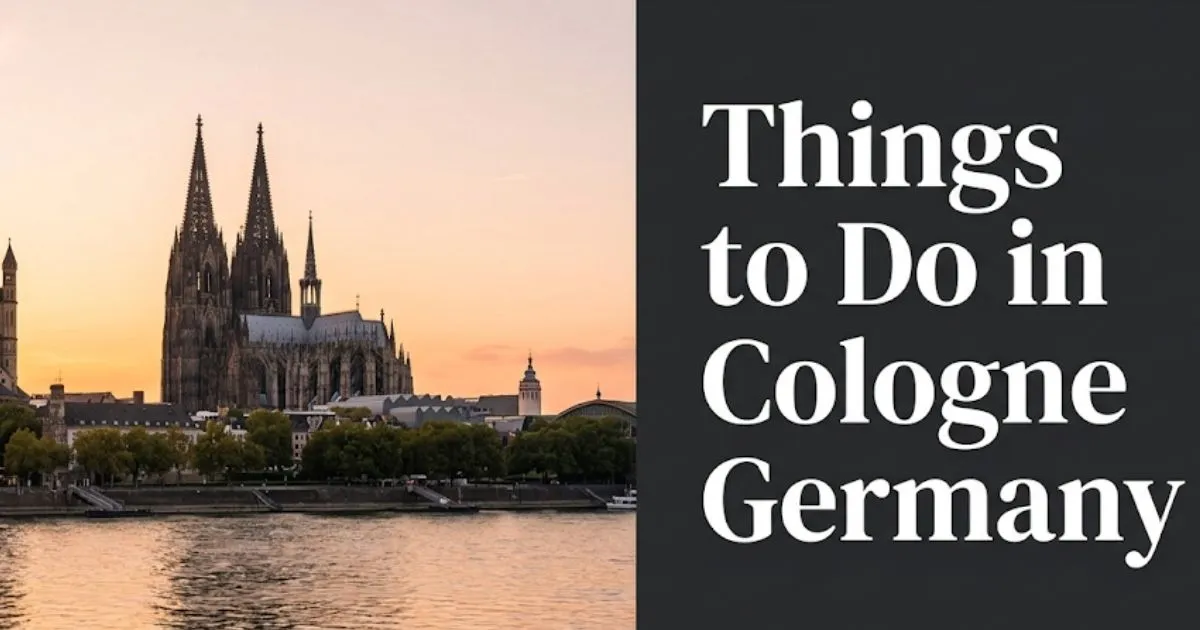
Things to Do in Cologne Germany: The 2026 Local Guide

The best things to do in Cologne Germany go far beyond the Cathedral. Cologne rewards travelers who stay long enough to find its brewery culture, world-class modern art, and two genuinely distinct neighborhood personalities.
Germany’s fourth-largest city sits on the Rhine River in North Rhine-Westphalia. According to Köln Tourismus GmbH, Cologne receives over 11 million visitors annually, making it one of Germany’s most-visited urban destinations.
This guide covers specific named attractions, honest crowd assessments, and practical logistics. It also separates what is genuinely worth your time from what is tourist infrastructure dressed up as local experience.
Things to Do in Cologne Germany: What Makes This City Worth Your Time
Cologne rewards travelers differently than Munich or Berlin, and knowing why matters before you plan a single day.
The city’s identity runs on three pillars: its Roman and medieval history, its world-class museum culture, and its highly specific local drinking tradition. No other German city has its own protected regional beer style served exclusively in 200ml glasses by stubborn, white-aproned waiters called Köbes.
Cologne is also less polished than Munich. It has urban grit, a genuine arts scene in Ehrenfeld, and a queer community centered around Rudolfplatz that gives the city a social energy most visitors from smaller American cities will find refreshing.
The Altstadt is genuinely historic. It is also the most tourist-concentrated zone in the city.
Budget travelers will find Cologne affordable by Western European standards. The Cathedral is free to enter. The Rhine promenade costs nothing. Kölsch beer runs cheaper than most American craft beer at an equivalent restaurant.
Families with children 8 and older will find the Chocolate Museum and Cologne Zoo genuinely engaging. Younger children will struggle with the cobblestone Altstadt terrain and long museum queues.
Insider Tip:
- Arrive at the Dom on a weekday morning before 9 AM to experience it without tour group crowds
- Cross to the Deutz bank of the Rhine via the Hohenzollern Bridge for the most photographed skyline view in the city
- The city’s best current-day energy is in Ehrenfeld, not the Altstadt. Budget at least one evening there.
Best Things to Do in Cologne: The Experiences That Genuinely Earn Their Reputation
The best things to do in Cologne center on the Cathedral, the Rhine waterfront, and the Brauhaus culture, with Museum Ludwig as the fourth essential experience for any culturally inclined visitor.
Cologne Cathedral (Kölner Dom) is the single most dramatic piece of Gothic architecture in Germany. It took over 600 years to complete. Standing in the nave at ground level, looking up at the 43-meter-high ceiling, is a genuinely overwhelming spatial experience that photographs cannot communicate.
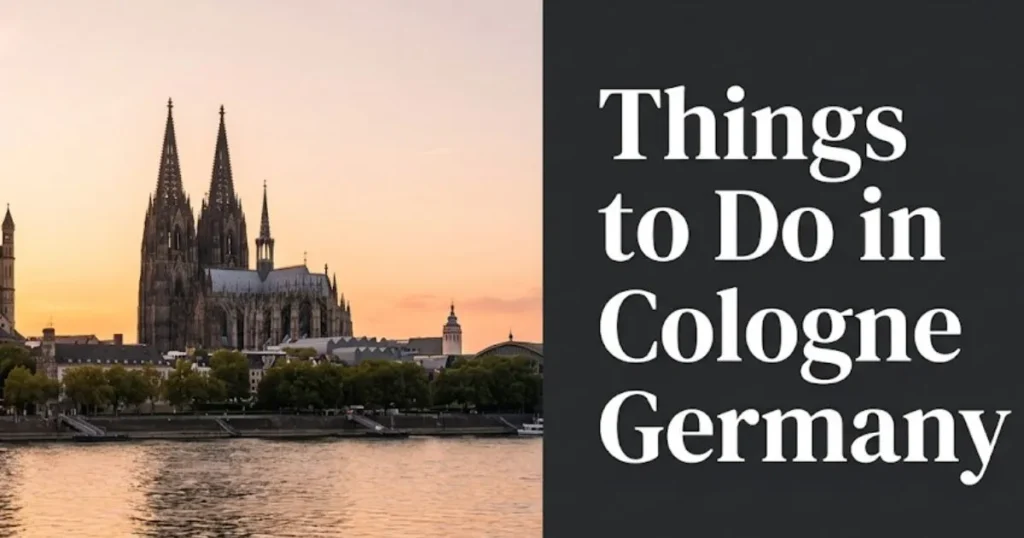
The Cathedral exterior is free to visit. The treasury costs approximately 6 euros per adult as of recent years. The tower climb costs approximately 6 euros separately. Verify current pricing at koelner-dom.de before visiting.
Climbing the tower requires 533 steps. Seniors and travelers with mobility limitations should skip the tower and focus on the interior and surrounding plaza.
The Cathedral is best visited on weekday mornings. Saturday afternoons in summer see tour group density that makes the interior nearly impossible to appreciate quietly.
The local alternative to the Cathedral’s tourist plaza: walk two blocks south to Groß St. Martin, the Romanesque church in the heart of the Altstadt. It receives a fraction of the Dom’s visitors and is architecturally remarkable in its own right.
| Experience | Best For | Approximate Cost | Time Needed | Insider Note |
|---|---|---|---|---|
| Cathedral interior | All profiles | Free | 45 to 90 minutes | Arrive before 9 AM weekdays |
| Cathedral tower climb | Fit adults, couples | ~6 EUR | 60 to 90 minutes | 533 steps, no elevator |
| Cathedral treasury | History travelers | ~6 EUR | 30 to 45 minutes | Often skipped, genuinely worth it |
| Rhine promenade walk | All profiles | Free | 60 to 120 minutes | Best at golden hour facing Deutz |
| Hohenzollern Bridge | Couples, photographers | Free | 20 to 30 minutes | Cross to Deutz for skyline view |
Cologne Germany Attractions: What Tourists Visit vs. What Is Worth It
Cologne’s most-visited attractions include the Cathedral, the Chocolate Museum, and the Hohenzollern Bridge. Not all of them justify the hype equally.
The Chocolate Museum (Schokoladenmuseum) is the single most visited museum in Germany after the German History Museum in Berlin. It draws enormous weekend crowds. Families with children under 12 will find it entertaining. Adults traveling without children frequently describe it as a 90-minute experience stretched thin.
Admission runs approximately 15 to 17 euros per adult as of recent years. Visit on a weekday morning or purchase tickets online in advance to avoid the weekend queue.
Hohenzollern Bridge is covered in padlocks from couples who have visited over decades. The bridge itself is functional rail infrastructure. The real value is crossing it on foot to reach the Deutz side, then looking back at the Cathedral and Rhine together.
That Deutz riverbank viewpoint is the best skyline photography location in the city. Most tourists cross the bridge and immediately turn back. Walk south along the Deutz bank for 10 minutes to find the view without the crowd.
The Rheinauhafen district, south of the Altstadt along the Rhine, is the most underappreciated area in central Cologne. Its three iconic Kranhäuser (crane-shaped apartment towers) define Cologne’s contemporary architectural identity. The waterfront here is quieter than the Altstadt Rhine promenade and has better mid-range restaurants.
Budget travelers: The Rhine promenade, Hohenzollern Bridge, Cathedral exterior, Deutz viewpoint, and Rheinauhafen are all free. A half-day of serious sightseeing in Cologne can cost under 15 euros per person.
Key Takeaway: Cross the Hohenzollern Bridge to the Deutz bank for Cologne’s best Cathedral skyline view. Most visitors turn back at the bridge and never find it.
Cologne Cathedral: The One Attraction That Justifies Every Superlative
Cologne Cathedral is the most visited landmark in Germany, attracting over 6 million visitors annually according to Köln Tourismus GmbH.
The Dom is a UNESCO World Heritage Site. It is also genuinely extraordinary, which is rarer than the tourism designation suggests. The sheer scale of the Gothic spires, at 157 meters tall, is best understood by standing at the base and looking straight up before entering.
The Cathedral interior holds the Shrine of the Three Kings, a gilded medieval reliquary considered the largest reliquary in the Western world. Even travelers with no religious interest find it historically fascinating.
Entry to the Cathedral itself is free. However, the main nave is closed during services, typically morning hours. Plan arrival for mid-morning on weekdays to access the full interior comfortably.
The tower climb is the most physically demanding Cathedral experience. At 533 steps with no elevator, it excludes seniors, travelers with knee or hip limitations, and young children under approximately age 8. Those who complete it reach an outdoor viewing platform with panoramic views over Cologne’s city center and Rhine.
Solo travelers find the Cathedral easy to navigate independently. Audio guides are available for rental and add significant historical context to what otherwise looks like an overwhelming stone interior.
The local alternative for Cathedral-adjacent history: the Kolumba Museum, Cologne’s diocesan museum, is built directly over Roman and medieval ruins discovered during World War II reconstruction. It receives a fraction of the Dom’s visitors and offers a profoundly quieter, more intellectually rewarding experience of Cologne’s layered religious history.
Cologne Altstadt Things to Do: The Old Town Beyond the Postcard
The Altstadt is Cologne’s most tourist-dense district and also its most historically layered. Understanding what is worth your time here separates a productive visit from a crowded afternoon.
The Altstadt sits between the Cathedral and the Rhine, roughly bounded by Am Bollwerk along the river and Unter Goldschmied inland. Most of its historic structures are post-World War II reconstructions. Cologne was 90% destroyed by Allied bombing. The Altstadt you see today is a careful, high-quality reconstruction that looks genuinely medieval.
Fischmarkt, the small square at the river’s edge with its colorful gabled houses, is the most photographed non-Cathedral spot in the Altstadt. It is genuinely attractive. It is also surrounded by tourist-facing restaurants charging inflated prices.
Eat instead at Brauhaus Sion on Unter Taschenmacher, or walk five minutes to Malzmühle on Heumarkt for authentic Kölsch and traditional Reibekuchen (potato pancakes) in a room that feels like it has not changed since the 1970s.
Families with children: The Altstadt’s Rhine promenade is flat and wide enough for strollers and children to move freely. The narrow internal streets are cobblestoned and uneven. Keep young children to the riverfront areas rather than the tight alley network.
The Gürzenichs event hall on Martinstraße is one of Cologne’s most historically significant Gothic secular buildings. It is rarely mentioned in tourist guides and almost never crowded. Its courtyard, visible from the street, is worth a brief stop.
Insider Tip:
- Skip the Altstadt restaurants on Fischmarkt square for anything other than a drink with a view
- Malzmühle on Heumarkt serves Kölsch and traditional food in the most genuinely local Altstadt setting
- The Rhine promenade walk from the Dom to the Rheinauhafen takes approximately 25 minutes and passes the best waterfront views
Cologne Kölsch Brewery Culture: The One Experience That Cannot Be Replicated
Kölsch is a protected regional beer designation. Legally, it can only be brewed within Cologne’s city boundaries. No other German city has this.
The experience of drinking Kölsch in a traditional Brauhaus is Cologne’s most authentic cultural activity. The Köbes, Cologne’s traditionally gruff brewery waiters, serve Kölsch in a continuous rotation using a circular tray called a Kranz. They replace your glass automatically without being asked. They mark each glass on your coaster. They do not ask if you want another. They assume you do.
This service culture is not theater for tourists. It is genuinely how Cologne drinks. Understanding that the Köbes’s apparent rudeness is local tradition, not hostility, changes the experience entirely.
The key distinction: the Brauhäuser directly adjacent to the Cathedral cater heavily to tourists. Früh am Dom and Gaffel am Dom are well-run and produce good Kölsch, but they are not where locals primarily drink.
The authentic local Brauhaus experience is at Päffgen on Friesenstrasse in the Friesenplatz area, approximately 15 minutes on foot from the Dom. Peters Brauhaus on Mühlengasse, in the Altstadt, is tourist-adjacent but maintains genuine Brauhaus character. Malzmühle on Heumarkt is the most authentically working-class Brauhaus in central Cologne.
Budget travelers: A Kölsch at any Brauhaus runs approximately 2 to 3 euros. A traditional meal of Himmel un Äd (blood sausage with apple sauce and mashed potato) or Halver Hahn (rye bread with cheese, despite its misleading “half chicken” name) costs under 15 euros. Cologne’s food culture is genuinely affordable.
Couples: Päffgen’s communal long tables seat strangers together. It is social and informal. The Brauhaus experience is not intimate, but it is one of the most genuinely local things a couple can do in Cologne.
Best Museums in Cologne: Where the City Earns Its Cultural Reputation
Cologne’s museum depth is its most underappreciated quality. The city has one of the finest art museum concentrations in Germany outside Berlin.
Museum Ludwig holds one of the most significant collections of modern and contemporary art in Europe. Its Pop Art holdings, including major Warhol and Lichtenstein works, rival collections in New York. The museum sits immediately adjacent to the Dom, making it physically impossible to miss and yet frequently skipped by Cathedral tourists.
Admission to Museum Ludwig runs approximately 13 to 16 euros per adult as of recent years. Verify current pricing at museum-ludwig.de. The museum is typically closed on Mondays.
Wallraf-Richartz-Museum, a short walk south along the Rhine, covers medieval through late-19th-century European painting in extraordinary depth. Its medieval altar painting collection is among the best in Germany. The museum is less visited than Museum Ludwig and offers a quieter, more considered experience.
The Romano-Germanic Museum covers Cologne’s Roman history. As of recent years, it has been undergoing renovation and relocation phases. Verify its current status and location directly with the museum before including it in your itinerary.
EL-DE Haus (NS-Dokumentationszentrum) on Appellhofplatz documents Cologne under National Socialism. It is one of the most important and honest Holocaust and Nazi-era documentation centers in Germany. It is not light viewing. It is essential for any historically serious traveler.
According to the German National Tourist Board (Deutsche Zentrale für Tourismus), Cologne ranks among Germany’s top five cities for museum density relative to population.
| Museum | Focus | Approximate Entry | Closed | Best For |
|---|---|---|---|---|
| Museum Ludwig | Modern and Pop Art | 13 to 16 EUR | Mondays | Art travelers, couples |
| Wallraf-Richartz | Medieval to 19th century | 8 to 12 EUR | Mondays | History, art travelers |
| Chocolate Museum | Chocolate history | 15 to 17 EUR | Mondays (seasonal) | Families, casual visitors |
| EL-DE Haus | Nazi-era documentation | ~4 to 5 EUR | Varies | History travelers, adults |
| Kolumba Museum | Diocesan art over ruins | ~5 to 7 EUR | Tuesdays | Architecture, culture |
Key Takeaway: Museum Ludwig is one of Europe’s finest modern art collections and sits three minutes from the Cathedral. Skipping it for the Chocolate Museum is the most common cultural misstep in Cologne.
Cologne Nightlife and Entertainment: What the City Does After Dark
Cologne’s nightlife is among Germany’s most diverse. The city has a long-established queer scene, a thriving live music culture in Ehrenfeld, and a nightclub circuit that operates seriously late.
The Zülpicher Strasse area, near the university, is Cologne’s student nightlife zone. Bars here open early and stay open late. The energy is young, loud, and genuinely unpretentious. Subway on Aachener Strasse is a Cologne live music institution with decades of indie and alternative programming.
Rudolfplatz is the center of Cologne’s established queer nightlife. Hühnerbar and Phoenix are among the most consistent venues in this area. Cologne’s Christopher Street Day parade, held annually in summer, draws hundreds of thousands of participants and is one of Germany’s largest Pride events.
Solo travelers: Cologne’s nightlife is unusually easy to navigate alone. The Brauhaus culture, with its communal tables and automatic Kölsch service, creates an inherently social atmosphere. Even a solo visitor sitting at a Päffgen communal table will likely end up in conversation by the second glass.
The Stadtgarten in the Belgisches Viertel area hosts live jazz and independent music in a park setting during summer months. It is one of Cologne’s most genuinely local evening venues. Locals use it regularly. Tourists rarely find it.
The Bootshaus club on the Rhine, in the Deutz area, is one of Germany’s most respected electronic music venues. For travelers with genuine interest in German club culture rather than tourist-bar nightlife, Bootshaus represents the serious end of Cologne’s late-night scene.
Couples wanting a quieter evening should walk the Rhine promenade south from the Dom at dusk. The Rheinauhafen restaurants offer mid-range dining with waterfront atmosphere that the tourist-heavy Altstadt cannot match.
Ehrenfeld and Belgisches Viertel Cologne: The Neighborhoods That Show You the Real City
Ehrenfeld and the Belgisches Viertel are where Cologne’s contemporary identity actually lives. Neither appears in most tourist guides at all.
Ehrenfeld, approximately 2 km west of the Dom via the KVB tram, is Cologne’s creative and immigrant neighborhood. Its street art is among the most extensive in Germany. Thor Steinar storefronts are notably absent. Grünestrasse and the streets around Ehrenfeld S-Bahn station have independent galleries, independent coffee shops, and late-night bars that attract Cologne’s actual creative population.
The neighborhood’s Turkish and Lebanese food culture makes it Cologne’s best area for affordable, genuinely good eating. Look specifically at the area around Venloer Strasse for kebab and falafel options that cost roughly half what the Altstadt charges for significantly inferior food.
Belgisches Viertel (Belgian Quarter) is approximately 15 minutes on foot west of the Dom. It is Cologne’s most densely independent retail and cafe district. Aachener Strasse and Brüsseler Strasse have independent fashion boutiques, art bookshops, and coffee-focused cafes that represent the mid-2020s version of urban cool in a German Rhineland city.
Couples: Belgisches Viertel is the best area for a relaxed afternoon of wandering, coffee, and independent retail. The streets are attractive, walkable, and significantly calmer than the tourist zones.
The local alternative to Altstadt restaurants: Metzger und Marie on Brüsseler Platz in the Belgisches Viertel serves seasonal German-influenced food in a setting that local Cologne residents actually use. Brüsseler Platz itself, particularly on warm evenings, hosts an informal outdoor social scene that no organized tour will ever show you.
Insider Tip:
- Take the KVB U-Bahn line 3, 4, or 13 west from the Dom to reach Ehrenfeld in approximately 10 minutes
- The street art on Subbelrather Strasse in Ehrenfeld is a self-guided open-air gallery worth an hour
- Belgisches Viertel is best on weekday afternoons, when the Brüsseler Platz cafe scene is at its most local
Key Takeaway: Ehrenfeld and the Belgisches Viertel represent Cologne’s actual contemporary identity. One evening in either neighborhood reveals more about the city than two days in the Altstadt.
Cologne Germany for Couples: Romantic Experiences Worth Planning Around
Cologne is a genuinely good romantic destination, but the most memorable couples’ experiences are not in the obvious places.
The Hohenzollern Bridge padlocks are one of Europe’s most famous romantic gestures. Bringing a padlock and attaching it to the bridge railing is the most visited couples’ activity in Cologne. The experience itself is brief. The real value is crossing the full bridge to the Deutz bank and finding a bench along the riverside for the Cathedral and skyline view at sunset.
The Claudius Therme thermal baths in Rheinpark, directly across the Rhine from the Cathedral, offer outdoor thermal pools with a direct Rhine riverfront location. It is one of Cologne’s best kept practical secrets for couples. Entry runs approximately 20 to 30 euros per person for a standard session. Verify current pricing and opening hours directly with the facility.
Rheinauhafen at night is Cologne at its most atmospherically adult. The Kranhäuser are lit. The waterfront is quiet. Restaurants here include options like Maredo (for casual steak) and several independent wine-bar-style options along the waterfront path.
For a romantic dinner without tourist pricing, the Südstadt neighborhood, south of the Altstadt along Bonner Strasse and Severinstrasse, has a concentration of genuinely local mid-range restaurants. This is where Cologne residents eat. It is a 15-minute walk from the Dom.
Museum Ludwig is one of Europe’s finest modern art venues. Visiting on a weekday morning, when it is quieter, makes it an unexpectedly romantic cultural experience. The building’s architecture and rooftop views add to the appeal.
Cologne’s Rhine cruise options, departing from the Altstadt quays, offer 1 to 2 hour daytime and evening cruises. Evening cruises at sunset are the most atmospheric couples’ option. Book in advance during peak summer months. Verify current operators and schedules with Köln Tourismus GmbH.
Cologne Germany for Families: What Works and What to Skip
Cologne is a reasonable family destination for children aged 8 and older. For families with toddlers and young children, the logistics require more planning.
Cologne Zoo (Kölner Zoo) is located in the Riehl district north of the city center, accessible by KVB tram. It is a well-maintained zoo with strong big-cat and primate sections. Admission runs approximately 20 to 24 euros per adult and 12 to 15 euros per child as of recent years. Verify current pricing at koelnerzoo.de. Allow 3 to 4 hours minimum.
The Cologne Cable Car (Kölner Seilbahn) operates seasonally, typically April through October. It crosses the Rhine and provides aerial views of the river and Rheinpark below. The ride is brief, approximately 8 to 10 minutes, but children respond well to it. Check koelner-seilbahn.de for current seasonal operation and pricing before visiting.
Families with children under 6: The Altstadt cobblestones are difficult for strollers. The Cathedral tower is inaccessible for young children. The Chocolate Museum has long weekend queues that exhaust young children before they reach the famous chocolate fountain inside.
Phantasialand is a full theme park in Brühl, approximately 20 km south of Cologne, accessible by regional train from Cologne Hauptbahnhof. It is among Germany’s best theme parks. For families with children 6 and older who want a dedicated theme park day, it makes a natural Cologne day trip. Verify current opening days and ticket prices at phantasialand.de well in advance.
The Rheinpark on the Deutz bank, across from the Altstadt, is Cologne’s best family-friendly outdoor green space. It has open lawns, a small train, and the cable car terminus. Entry to the park is free. It is the least stressful family option in central Cologne.
Things to Do in Cologne Germany Free: A Full Day Without Spending Much
A full day of genuinely good Cologne experiences costs under 10 euros per person if planned correctly. This is not a compromise itinerary. It covers some of the city’s best experiences.
Free and low-cost Cologne experiences:
- Cologne Cathedral interior: Free to enter. Allow 45 to 90 minutes.
- Rhine promenade walk: Free. Walk from the Dom south to the Rheinauhafen (approximately 25 minutes).
- Hohenzollern Bridge crossing: Free. Walk to the Deutz bank for the skyline view.
- Deutz riverside viewpoint: Free. The best Cathedral panorama in the city.
- Rheinauhafen Kranhäuser exterior: Free. Cologne’s most architecturally distinctive contemporary buildings, viewable from the waterfront path.
- Belgisches Viertel wandering: Free. Independent retail, cafe culture, architecture.
- Ehrenfeld street art: Free. Self-guided walk along Subbelrather Strasse and surrounding streets.
- Flora Botanical Garden: Free to enter. Cologne’s formal botanical garden, adjacent to the Zoo in Riehl.
- EL-DE Haus courtyard: The exterior and courtyard are freely accessible. Interior admission runs a small fee.
Budget travelers: The Cologne WelcomeCard from Köln Tourismus includes unlimited KVB public transit and discounts at major museums. For visitors planning to use transit and visit multiple museums, the card typically pays for itself within half a day. Verify current pricing and inclusions at cologne.de.
Solo travelers on a budget: Cologne’s Brauhaus culture means a filling traditional dinner with Kölsch costs under 20 euros at Malzmühle or Peters Brauhaus. This is genuinely one of Western Europe’s more affordable food cultures.
Cologne Christmas Market and Seasonal Events: When the City Transforms
Cologne’s Christmas markets run from late November through December 23 annually, and they are among Germany’s most atmospheric.
The Cologne Cathedral Christmas Market (Weihnachtsmarkt am Dom) is the largest and most visited. The setting, with the Gothic Cathedral as a backdrop and the ice rink below, is visually extraordinary. It is also extraordinarily crowded on weekends. Visit on weekday evenings for the most atmospheric experience.
Cologne operates six distinct Christmas markets simultaneously. The Neumarkt market and the Harbor Christmas Market (Hafen-Weihnachtsmarkt) in the Rheinauhafen are significantly less crowded than the Dom market and arguably better for actually shopping and eating without being jostled.
Cologne Carnival (Kölner Karneval) is Europe’s largest street carnival. It runs from the Thursday before Ash Wednesday through Shrove Tuesday. Weiberfastnacht (Women’s Carnival Thursday) marks the official opening and sees enormous crowds in the Altstadt. Rosenmontag (Rose Monday), the Monday parade, draws over a million spectators.
During Carnival, Cologne’s hotels book 12 to 18 months in advance. Prices multiply by a factor of three to five times normal rates. Travelers who are not specifically attending Carnival should avoid the city during this period entirely.
Summer in Cologne runs June through August. The Rhine promenade and Rheinpark are at their most active. The Cologne Triathlon and Cologne Pride (Christopher Street Day) are major summer events. Hotel rates are at their annual peak in summer.
Best value timing: January and early February, outside Carnival, offer Cologne’s lowest hotel rates and fewest tourists. Museums are quieter. The Cathedral is practically empty on weekday mornings. The Brauhäuser are full of locals.
Cologne Germany Itinerary: How to Structure 2 Days Without Wasting a Morning
Two days is the minimum to experience Cologne beyond its single famous landmark. Here is a framework that sequences the city’s experiences efficiently.
Day 1: Cathedral, Museums, Altstadt, and First Brauhaus
- Arrive at the Cathedral before 9 AM. Enter the nave and the treasury before tour groups arrive. Allow 60 to 90 minutes including the interior.
- Cross to Museum Ludwig immediately next door. Spend 90 minutes to 2 hours in the Pop Art and contemporary collections.
- Walk south along the Rhine promenade to the Rheinauhafen. Photograph the Kranhäuser from the waterfront. Allow 30 minutes.
- Continue to the Altstadt and reach Malzmühle on Heumarkt for a traditional Kölsch lunch with Halver Hahn or Reibekuchen. Allow 60 minutes.
- Walk the Altstadt internal streets, including Groß St. Martin church and Fischmarkt square. Allow 45 minutes.
- Cross the Hohenzollern Bridge on foot to Deutz. Walk south along the Deutz bank to the skyline viewpoint. Allow 30 to 45 minutes.
- Return to the Altstadt side for a pre-dinner Kölsch at Peters Brauhaus on Mühlengasse. Allow 60 to 90 minutes.
Day 2: Neighborhood Exploration, Culture, and Local Scene
- Take the KVB tram west to Belgisches Viertel. Spend a mid-morning exploring Aachener Strasse and Brüsseler Platz. Coffee at an independent cafe. Allow 90 minutes.
- Continue west to Ehrenfeld. Walk Subbelrather Strasse street art. Allow 60 minutes.
- Return east to the Dom area for Wallraf-Richartz-Museum or EL-DE Haus, depending on interest. Allow 90 to 120 minutes.
- Early evening at Päffgen Brauerei on Friesenstrasse. The most authentic Brauhaus experience in Cologne. Allow 90 minutes minimum.
- Late evening at Stadtgarten in summer for live music, or Rudolfplatz area for nightlife.
| Day | Zone | Primary Experience | Time |
|---|---|---|---|
| Day 1 AM | Dom area | Cathedral and Museum Ludwig | 3 to 4 hours |
| Day 1 PM | Altstadt to Rheinauhafen | Rhine walk, traditional lunch, Altstadt | 3 to 4 hours |
| Day 1 Evening | Altstadt | Peters Brauhaus Kölsch | 90 minutes |
| Day 2 AM | Belgisches Viertel, Ehrenfeld | Neighborhood exploration | 3 hours |
| Day 2 PM | Dom area | Wallraf-Richartz or EL-DE Haus | 2 hours |
| Day 2 Evening | Friesenplatz | Päffgen Brauerei | 90+ minutes |
Key Takeaway: Start Day 1 at the Dom before 9 AM. This single timing decision separates a peaceful Cathedral experience from a tour-group-saturated one.
Getting Around Cologne Germany: Transit, Walking, and Practical Navigation
Cologne is one of the most walkable German cities for its size. The Cathedral, Altstadt, Rheinauhafen, Hohenzollern Bridge, and Museum Ludwig form a compact zone coverable entirely on foot.
The KVB (Kölner Verkehrs-Betriebe) operates Cologne’s tram, underground, and bus network. A single KVB ticket covers all three services within the city zone. The network is reliable and frequent. Ehrenfeld, Belgisches Viertel, Friesenplatz, and Cologne Zoo are all reachable from the Dom via KVB in under 15 minutes.
Verify current KVB single and day ticket prices at kvb.koeln before visiting. The Cologne WelcomeCard from Köln Tourismus bundles unlimited KVB transit with museum discounts. For visitors spending two or more days, it typically offers genuine value.
Driving in Cologne’s city center is not recommended. Parking near the Dom is extremely limited and expensive. The city operates a low-emissions zone (Umweltzone). Rental cars should be parked at a Cologne ring-road parking facility, not in the city center.
Cologne Bonn Airport (CGN) connects to Cologne Hauptbahnhof by S-Bahn (regional rail) in approximately 15 minutes. The S-Bahn departs regularly. Verify current schedules and ticket prices with Deutsche Bahn (bahn.de).
Seniors and accessibility travelers: KVB trams are generally step-free accessible. Cologne Hauptbahnhof has full elevator access. The Cathedral and most major museums have elevator or ramp access. The Altstadt cobblestone streets are the primary mobility challenge. Rheinauhafen and the Rhine promenade are smooth and flat.
Families with children: The KVB allows strollers in dedicated areas. Busy morning rush hours (7 to 9 AM) on trams into the city center can make stroller navigation difficult. Travel after 9 AM to avoid peak compression.
Day Trips from Cologne: The Rhine Valley and Beyond
Cologne’s location in the Rhineland makes it a natural base for some of Germany’s most accessible day trips. All of the following are reachable by regional Deutsche Bahn train without a car.
Bonn is 30 minutes south by regional train. It is Beethoven’s birthplace and Germany’s former capital (until 1990). The Beethoven-Haus museum and the Bundeskunsthalle art museum in the Museumsmeile district are the primary attractions. Bonn is quieter and more residential than Cologne. It suits travelers who appreciate a calmer German city character.
Königswinter and Drachenfels are approximately 30 to 40 minutes south by regional train or Rhine ferry. The Drachenfels is a ruined medieval castle on a Rhine hillside, reachable by rack railway or on foot. It provides the classic Rhine Valley view that most visitors imagine before arriving in Cologne. This day trip is strongly recommended for travelers who want Rhine Valley scenery.
Aachen is 45 minutes west by ICE or regional train. It holds the Aachener Dom, where Charlemagne is buried, a UNESCO World Heritage Site with a longer history than the Cologne Cathedral. Aachen is significantly less visited than Cologne. Travelers interested in early medieval European history should prioritize Aachen on a second or third day.
Dusseldorf is 45 minutes north by regional train. It is sometimes compared to Cologne in terms of Rhine city identity. Dusseldorf’s Altstadt is denser with bars and more focused on nightlife. Its Kunstsammlung Nordrhein-Westfalen (K20 and K21) is a world-tier modern art museum pair. Cologne-Dusseldorf is a viable single-day split if both cities are on the itinerary.
Solo travelers: All four day trips are easily navigated alone. Deutsche Bahn regional trains are straightforward. No rental car required for any of them.
| Day Trip | Distance | Train Time | Best For | Don’t Miss |
|---|---|---|---|---|
| Bonn | 30 km south | ~30 minutes | History, culture | Beethoven-Haus, Museumsmeile |
| Königswinter/Drachenfels | 35 km south | ~35 minutes | Rhine scenery, outdoors | Drachenfels rack railway |
| Aachen | 70 km west | ~45 minutes | Medieval history | Aachener Dom, Charlemagne treasury |
| Dusseldorf | 45 km north | ~30 minutes | Modern art, nightlife | K20 Kunstsammlung |
Safety and Practical Warnings for Cologne Germany
Cologne is among Germany’s safer major cities. However, specific practical warnings apply to every visitor regardless of experience level.
Key safety and practical facts every visitor should know:
- Pickpocket risk is elevated around Cologne Hauptbahnhof, the Dom plaza, and Altstadt tourist zones. Use a front-pocket wallet or anti-theft bag in these areas. This is standard precaution for any major European railway hub.
- The Rhine River is not for swimming. Currents are strong year-round. The river looks calm but is genuinely dangerous for swimmers.
- Carnival (Karneval) crowd density on Rosenmontag in the Altstadt reaches extreme levels. Families with young children and travelers with mobility limitations should avoid the central Altstadt entirely on Rosenmontag.
- Cathedral tower access requires fitness for 533 stairs. No elevator exists. Anyone with serious knee, hip, or cardiac conditions should avoid the tower climb.
- Low-emissions zone (Umweltzone): Cologne’s city center requires a green emissions sticker for rental cars. Most modern rental cars qualify automatically, but verify with your rental provider before driving into the city.
- Train platform timing: Deutsche Bahn trains at Cologne Hauptbahnhof are generally punctual but can experience delays. For travel to or from Cologne Bonn Airport, allow buffer time beyond the published 15-minute S-Bahn journey.
- Museum Monday closures: Most Cologne museums close on Mondays. Plan your itinerary to avoid scheduling major museums on Mondays.
The European emergency number is 112. Cologne Hauptbahnhof has a Federal Police (Bundespolizei) presence for immediate security concerns at the station.
Frequently Asked Questions About Things to Do in Cologne Germany
How many days do you need in Cologne Germany?
Three days is the ideal minimum for Cologne Germany to experience the Cathedral, at least two major museums, the authentic Brauhaus culture, and one of the distinctive neighborhoods like Ehrenfeld or the Belgisches Viertel.
Two days covers the essential highlights but leaves little room for the neighborhoods that define Cologne’s actual contemporary character.
One day gives you the Cathedral, a Rhine promenade walk, and one Brauhaus meal. It is enough for a transit stop but not enough to genuinely know the city.
What is Cologne Germany most known for?
Cologne Germany is most known for the Kölner Dom (Cologne Cathedral), the world’s largest Gothic cathedral that took over 600 years to build.
Beyond the Cathedral, Cologne is internationally recognized for its Kölsch beer tradition, its Carnival (one of Europe’s largest street festivals), and its Museum Ludwig, which holds one of the finest Pop Art collections outside the United States.
Is Cologne Germany worth visiting?
Yes, Cologne Germany is worth visiting for 2 to 4 days, particularly for travelers interested in German urban culture, European art history, and regional food and beer traditions.
It is less suited to travelers seeking dramatic natural landscapes or small-town German village atmosphere.
Cologne’s combination of accessible transit connections, affordable local costs, and genuine cultural depth makes it one of the most practical urban stops in Western Germany.
What is the best time of year to visit Cologne Germany?
The best time to visit Cologne Germany is April through early June or September through October.
Temperatures during these months are comfortable for walking, crowds are lighter than summer peak, and the city’s outdoor culture on the Rhine promenade is fully active.
Avoid July and August for budget travelers due to peak hotel prices, and avoid Carnival week entirely unless specifically attending, as hotels book up to 18 months ahead at dramatically inflated rates.
Is Cologne walkable for tourists?
Yes, central Cologne is highly walkable. The Cathedral, Museum Ludwig, Altstadt, Hohenzollern Bridge, and Rheinauhafen form a compact zone coverable on foot in a single day.
Ehrenfeld and the Belgisches Viertel require a short KVB tram ride from the Dom but are simple to reach.
The Altstadt internal streets are cobblestoned, which creates genuine difficulty for strollers and mobility aids. The Rhine promenade and Rheinauhafen waterfront are flat and smooth.
What is Kölsch and where should I drink it in Cologne?
Kölsch is a pale, lightly hopped beer style legally protected to Cologne’s city boundaries. It is served exclusively in a slim 200ml glass and kept constantly refilled by a Köbes waiter until you place your coaster on top of your glass.
The best places to drink Kölsch authentically in Cologne are Päffgen on Friesenstrasse, Malzmühle on Heumarkt, and Peters Brauhaus on Mühlengasse.
Früh am Dom and Gaffel am Dom serve quality Kölsch but cater heavily to tourists. For the most genuine local Brauhaus experience, make the short walk to Päffgen.
Planning Your Cologne Trip: The Practical Final Word
Cologne repays travelers who go beyond the Cathedral and use at least two of their days to explore the Brauhaus culture and the neighborhoods west of the city center. Book your Museum Ludwig visit for a weekday morning when it is quietest. Reserve Päffgen Brauerei as your anchor evening experience rather than defaulting to the tourist-facing beer halls nearest the Dom.
Verify all museum hours, transit card pricing, and seasonal event dates directly with Köln Tourismus GmbH at cologne.de and with individual venue websites before departure. The Romano-Germanic Museum renovation status, Cable Car seasonal operation, and Christmas market exact dates all change year to year.
Cologne is one of Western Germany’s most accessible and rewarding urban destinations for 2026. The traveler who builds their trip around the Cathedral plus the genuine local culture leaves with a city they understand. The one who stays only on the tourist circuit leaves wondering what they missed.