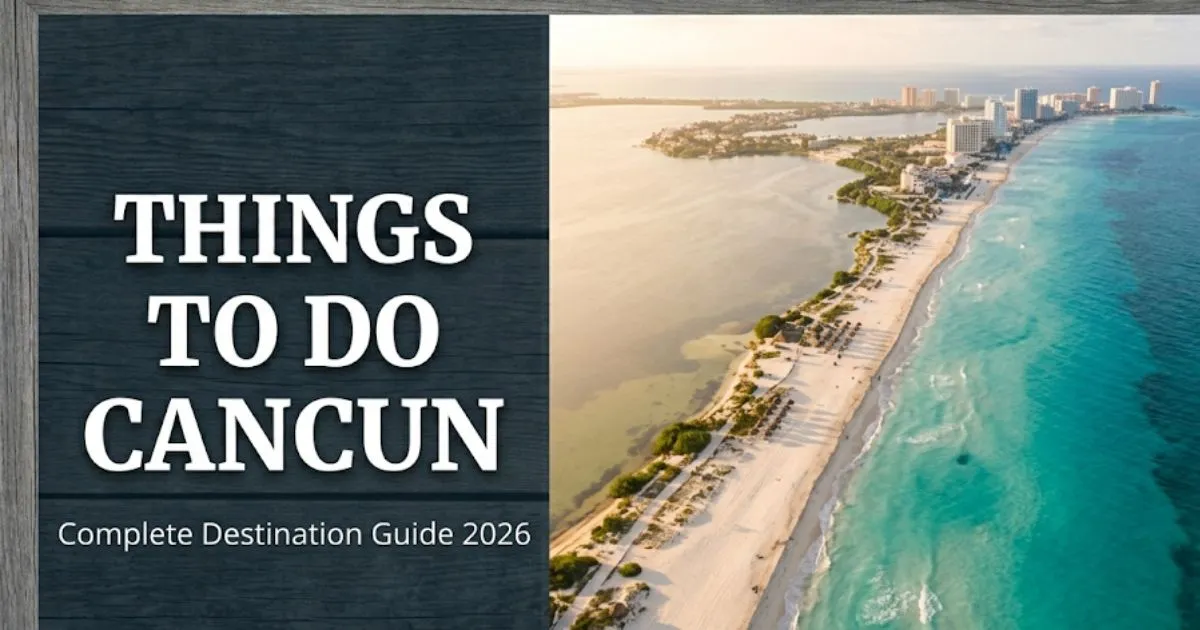
Best Things To Do in Cancun, Mexico in 2026: Full Guide

Cancun rewards travelers who plan beyond the Hotel Zone. The best things to do in Cancun range from Caribbean snorkeling and ancient Mayan ruins to cenote swimming and some of the Yucatan’s most underrated local food.
The destination sits on one of the most biologically and archaeologically rich coastlines in the Americas. Chichen Itza, a UNESCO World Heritage Site, sits roughly 180 kilometers west, making Cancun the most logical base for exploring the Yucatan Peninsula.
This guide covers every zone, every major activity, and the honest differences between what looks good on a list and what actually delivers. Use it to build a real itinerary before you land.
Things to Do in Cancun: What to Expect Before You Arrive
Cancun is not one destination. It is three distinct zones functioning simultaneously: the Zona Hotelera (Hotel Zone), the El Centro downtown district, and the broader Riviera Maya corridor stretching south toward Tulum.
Understanding this separation before arrival makes the difference between a generic resort week and a genuinely satisfying trip.
The Hotel Zone occupies a 22-kilometer barrier island shaped like a number seven. Kukulcan Boulevard runs its full length, lined with resorts, beach clubs, malls, and tourist restaurants.
El Centro, the actual city of Cancun, sits across the lagoon. It operates on a Mexican residential and commercial rhythm entirely separate from the resort strip.
Here is how the three zones compare:
| Zone | Best For | Cost Tier | Vibe |
|---|---|---|---|
| Zona Hotelera | Couples, families, groups | Mid to premium | Resort-focused, Caribbean beach access |
| El Centro (Downtown) | Budget travelers, cultural experience | Budget to mid | Local Mexican city, authentic food and markets |
| Riviera Maya Corridor | Day trippers, nature and archaeology | Varies | Cenotes, ruins, eco-parks, coastal towns |
Insider Tip:
- Book your cenote or ruins day trips before checking in to your resort. Tour desks at hotels mark up prices significantly.
- El Centro is less than 20 minutes from most Hotel Zone resorts by local bus. Most visitors never go there.
- For budget travelers: basing entirely in El Centro cuts daily costs substantially without sacrificing access to beaches or day trips.
Best Things to Do in Cancun: The Genuine Highlights
The best things to do in Cancun are cenote swimming, Chichen Itza day trips, Isla Mujeres by ferry, snorkeling the Mesoamerican Reef, and exploring the local food scene in El Centro.
None of those require an expensive resort package. They do require planning.
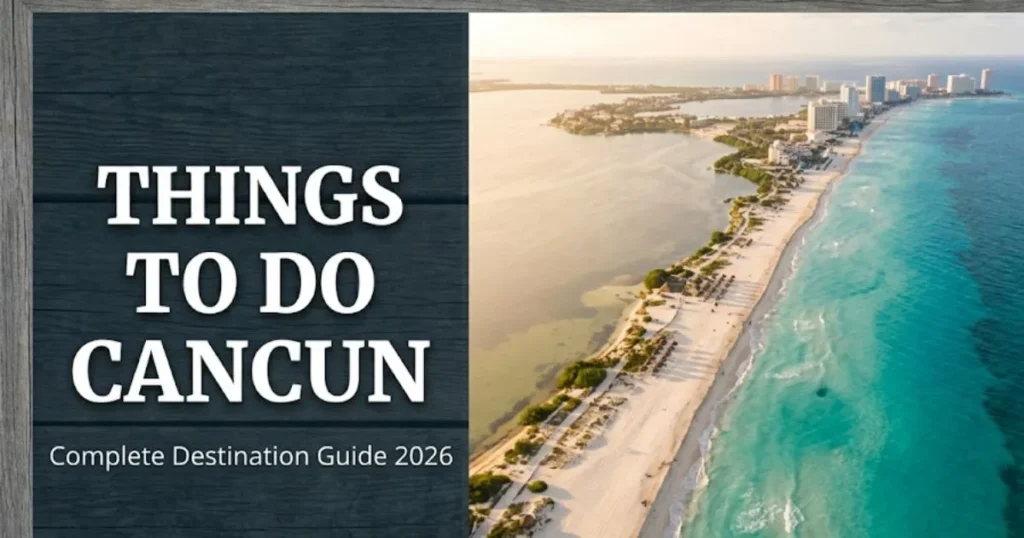
Playa Delfines is the Hotel Zone’s most visually dramatic beach. It sits at the southern curve of the zone, faces the open Caribbean, and offers the clearest view of the turquoise gradient that defines the destination’s visual identity.
The El Rey Archaeological Zone, located at the southern end of Kukulcan Boulevard, is among Cancun’s most overlooked experiences. Admission runs significantly less than major Yucatan sites, and crowds are minimal even during peak season.
Here is a curated overview of the top activities by category:
- Water and beach: Playa Delfines, snorkeling at MUSA, parasailing, kiteboarding on Laguna Nichupte
- Nature and cenotes: Cenote Ik Kil (near Chichen Itza), Cenote Dos Ojos (near Tulum), Cenote Azul (Puerto Morelos area)
- Archaeology: Chichen Itza, El Rey Zone, San Miguelito Zone, Cobá
- Day trips: Isla Mujeres, Puerto Morelos, Tulum, Holbox Island
- Local culture: Mercado 28, Parque Las Palapas, Avenida Yaxchilan food corridor
Overrated pick: The organized jungle boat tours operating from Laguna Nichupte. The boats are loud, crowded, and the “jungle” is primarily mangrove with minimal wildlife. The fee rarely reflects the experience.
Better alternative: A kayak rental from the quieter northern lagoon access points. It is slower, quieter, and produces better wildlife sightings.
Things to Do in the Cancun Hotel Zone
The Hotel Zone’s greatest practical strength is concentration: beaches, restaurants, water sports, shopping, and nightlife all run along a single boulevard accessible without a car.
Its greatest weakness is that it insulates visitors so thoroughly from the actual country that many leave Cancun having experienced only a polished Caribbean resort environment.
Kukulcan Boulevard is the zone’s spine. Everything from Playa Tortugas at the northern tip to Punta Nizuc in the south connects along this route.
Punta Cancun, roughly at the bend of the seven-shape, is where nightlife concentrates. Kokomo Beach Club, Coco Bongo, and the main shopping centers cluster here.
To navigate the Hotel Zone effectively as a first-timer:
- Orient yourself to which end of the zone your hotel sits in. The northern and southern ends have distinct characters.
- Use the local Ruta 1 bus to travel the full Hotel Zone length. Fare is minimal compared to taxi rates.
- Visit Playa Delfines in the morning before winds pick up. Afternoons can be rough for swimming there.
- Book beach club day passes in advance for high-season travel (December through March). Popular clubs sell out.
- Treat the Hotel Zone shopping malls (La Isla Shopping Village, Kukulcan Plaza) as convenience hubs, not destination activities.
Profile note: Families with children under 10 find the calmer northern beaches near Playa Tortugas and Playa Langosta far more manageable than the exposed southern beaches. Water is shallower and currents are gentler.
Seniors and accessibility travelers should know that Hotel Zone beaches vary significantly in accessibility. Playa Langosta has more gradual beach access. Verify wheelchair and mobility aid access directly with your resort before booking.
Cancun Beaches: Which One Is Right for Your Trip
Cancun’s most photographed and genuinely best public beach for open swimming is Playa Delfines, located at kilometer 18 on Kukulcan Boulevard, with no hotel fronting it and panoramic Caribbean views.
The color of Caribbean water here on a clear morning earns every photograph. That said, the surf is unpredictable and the rip current risk is real.
Here is how the main beaches compare for different traveler types:
| Beach | Best For | Water Conditions | Facilities |
|---|---|---|---|
| Playa Tortugas | Families, calm swimming | Gentle, protected | Restaurants, watersports |
| Playa Langosta | Families, couples | Calm, shallow | Beach access, quiet |
| Playa Delfines | Photos, open swimming | Rougher, currents | Parking, open space |
| Playa Caracol | Hotel guests, convenience | Moderate | Resort-adjacent |
| Playa Norte (Isla Mujeres) | All profiles, best overall | Calm, crystal clear | Full facilities |
The honest assessment: Playa Norte on Isla Mujeres is the finest beach accessible from Cancun. It consistently ranks among the Caribbean’s best beaches by named travel publications including Conde Nast Traveler. It requires a 20-minute ferry from Puerto Juarez ferry terminal, but the water quality and calm conditions make it worth the trip for any traveler who cares about beach quality.
Insider Tip:
- Playa Delfines is free and public. No purchase required. It has a large parking area for self-drive visitors.
- Avoid Playa Delfines on afternoons in May and June. Wind-driven waves make swimming genuinely uncomfortable.
- Budget travelers should note that all Hotel Zone beach access legally belongs to the public in Mexico. No resort can prohibit beach access from the waterfront side.
Key Takeaway: Plan at least one morning at Playa Delfines and one day trip to Isla Mujeres for the Caribbean beach experience Cancun is genuinely capable of delivering.
Cenotes Near Cancun Worth the Drive
The best cenotes accessible from Cancun are Cenote Ik Kil (near Chichen Itza), Cenote Dos Ojos (near Tulum), Cenote Azul (near Puerto Morelos), and Gran Cenote (near Tulum), each offering distinct experiences from open-air swimming to cave snorkeling.
The Yucatan Peninsula sits on a vast limestone shelf riddled with these freshwater sinkholes. They were sacred to the ancient Maya and remain among the most singular swimming experiences in the world.
Here is a practical comparison for independent travelers planning cenote visits:
| Cenote | Distance from Cancun | Best For | Access Type | Crowd Level |
|---|---|---|---|---|
| Cenote Azul | ~36 km (Puerto Morelos area) | Families, quick trip | Self-drive or colectivo | Moderate |
| Cenote Ik Kil | ~180 km (Chichen Itza route) | Dramatic open-air swim | Tour or self-drive | High (tour groups) |
| Cenote Dos Ojos | ~130 km (near Tulum) | Snorkeling, cave diving | Self-drive or tour | Moderate to high |
| Gran Cenote | ~130 km (near Tulum) | Snorkeling, clear water | Self-drive or tour | High in peak season |
| Cenote Cristalino | ~80 km (Playa del Carmen area) | Swimming, cliff jumping | Self-drive | Moderate |
Profile note: Seniors and travelers with limited mobility should verify ladder access before booking any cenote visit. Many cenotes require descending steep wooden or rope ladders. Cenote Azul has the most gradual entry of the options listed and suits mobility-limited travelers better than the others.
According to Visit Mexico, the country’s official tourism board, the Yucatan Peninsula contains an estimated 6,000 to 10,000 cenotes. The vast majority are not commercialized, but those near tourist routes require advance booking and charge admission, typically in the range of approximately 150 to 350 Mexican pesos per person as of recent years. Verify current pricing before visiting.
Insider Tip:
- Arrive at any cenote before 10 a.m. Tour group buses typically arrive after 11 a.m. Morning visits offer dramatically better conditions.
- Cenote Dos Ojos has both an open cenote and a cave section. The cave snorkeling is the reason to visit specifically. Book the cave section separately if needed.
- Budget travelers: Cenote Azul is the most affordable and closest to Cancun. It is accessible by colectivo from Puerto Morelos.
Mayan Ruins Near Cancun: Beyond the Resort Bubble
The most significant Mayan ruins accessible from Cancun are Chichen Itza, Cobá, Tulum, El Rey, and San Miguelito, ranging from a 20-minute taxi ride to a full-day excursion.
Most visitors default to Chichen Itza. It deserves its reputation. But it is also among Mexico’s most visited archaeological sites and crowds peak between 10 a.m. and 2 p.m. during high season.
Chichen Itza planning essentials:
- Book timed-entry tickets directly through INAH (Instituto Nacional de Antropologia e Historia) in advance. The site is managed by INAH, Mexico’s federal archaeological authority.
- Depart Cancun by 6 a.m. to arrive at opening. The Kukulcan Pyramid photograph is a morning activity.
- Combine Chichen Itza with a Cenote Ik Kil stop on the same day. Most tour operators include this.
- Wear lightweight clothing and bring two liters of water per person. Heat exposure at the open-air site is significant.
- Skip the souvenir market at the exit immediately after the main pyramid. The same items at lower prices are at Mercado 28 in Cancun.
El Rey Archaeological Zone at kilometer 18 in the Hotel Zone is the most underrated ruin experience in Cancun proper. Admission is a fraction of Chichen Itza pricing. Iguanas outnumber other visitors on most mornings. It is a legitimate Mayan site with over 40 structures.
San Miguelito, adjacent to the Museo Maya de Cancun, is another overlooked site. The museum itself houses one of the finest collections of Mayan artifacts in the region.
Profile note: Families with children under 12 often find Cobá more engaging than Chichen Itza. Cobá’s jungle setting and the ability to climb one pyramid (verify current climbing policy before visiting, as restrictions change) creates a more adventurous experience for young travelers.
Cancun Snorkeling and Water Sports
Cancun’s best snorkeling site is the MUSA (Cancun Underwater Museum), a collection of over 500 submerged sculptures located in Manchones Reef off Isla Mujeres, accessible by boat from Cancun’s Hotel Zone.
The Caribbean here sits on the southern end of the Mesoamerican Barrier Reef, the second-largest barrier reef system in the world. Visibility runs exceptionally clear in the dry season months of December through April.
Water sports available from the Hotel Zone:
- Snorkeling tours: Group and private boat tours depart from Playa Tortugas and Marina El Embarcadero
- Scuba diving: Multiple dive operators in the Hotel Zone run certification courses and certified-diver reef dives
- Kiteboarding and windsurfing: Laguna Nichupte provides consistent wind conditions for board sports
- Parasailing: Available from multiple beach vendors; prices vary. Confirm operator licensing before booking.
- Deep-sea fishing: Charter boats depart from Puerto Juarez marina; mahi-mahi and sailfish are common targets
- Paddleboarding and kayaking: Available through Hotel Zone beach vendors and at quieter lagoon access points
- Whale shark tours: Available from Isla Mujeres departures, typically June through September. This is a seasonal highlight. Book weeks in advance during peak season.
Profile note: Whale shark tours suit adventurous adults and teenagers. The experience involves open-water swimming alongside the world’s largest fish. It is not suitable for young children or non-swimmers.
Insider Tip:
- The reef health near Punta Nizuc has improved in recent years. Punta Nizuc snorkeling is accessible without a boat and suits budget travelers.
- Snorkel gear rental on the beach is widely available but quality is inconsistent. Bringing your own mask and snorkel is the single most cost-effective gear decision for frequent snorkelers.
Key Takeaway: Cenote Ik Kil and MUSA snorkeling are the two water experiences that genuinely cannot be replicated elsewhere and justify specific trip planning around them.
Cancun Day Trips: Isla Mujeres, Tulum, and Beyond
The best day trip from Cancun is Isla Mujeres, a small car-free island reachable by 20-minute ferry from Puerto Juarez, featuring the Caribbean’s finest small-island beach at Playa Norte and the dramatic coastal cliffs of Punta Sur.
Cancun’s geographic position makes it one of Mexico’s best day trip bases. Four world-class destinations sit within three hours in different directions.
| Day Trip Destination | Distance from Cancun | Travel Time | Best For | Advance Booking? |
|---|---|---|---|---|
| Isla Mujeres | ~13 km offshore | 20 min (ferry) | All profiles | Advisable in high season |
| Chichen Itza | ~180 km west | 2.5 hrs (car/bus) | Culture, history | Yes (INAH timed entry) |
| Tulum | ~130 km south | 1.5 hrs (ADO bus) | Ruins + beach | No, but go early |
| Cobá | ~170 km southwest | 2.5 hrs (car/bus) | Jungle adventure, families | No |
| Puerto Morelos | ~36 km south | 35 min (car/colectivo) | Reef snorkeling, quiet | No |
| Holbox Island | ~145 km northwest | 2.5 hrs (bus + ferry) | Remote beach, whale sharks | No, but seasonal |
Profile note: Solo travelers find the ADO bus network the most efficient day trip infrastructure in Mexico’s Yucatan. ADO connects Cancun to Playa del Carmen, Tulum, Chichen Itza, and Merida with reliable service and luggage storage.
Puerto Morelos is the most underrated day trip from Cancun. It has a designated marine national park reef accessible by a short boat ride, a quiet central plaza, excellent local seafood restaurants, and almost none of the tourist volume of Tulum or Playa del Carmen.
Insider Tip:
- Ferry tickets to Isla Mujeres are available at the dock without advance booking on most mornings. In December through March high season, arrive early to avoid long waits.
- The Tulum ruins site closes in early afternoon on many days. Arriving by 8 a.m. from Cancun via ADO bus is the standard approach for avoiding heat and crowds.
Things to Do in Cancun for Adults
Cancun’s best adult-focused experiences include beach club day passes at venues like Mandala Beach or Desire Beach, whale shark tours from Isla Mujeres, deep-sea fishing charters, mezcal tastings in El Centro, and the Punta Cancun nightlife corridor after 11 p.m.
The destination genuinely earns its reputation for adult entertainment. That said, the most sophisticated adult experiences in Cancun are often not on Kukulcan Boulevard.
Best adult-only or adult-oriented experiences by category:
- Beach clubs: Mandala Beach Club, Nikki Beach Cancun, Taboo Beach Club. Day passes range from approximately $30 to $100 USD depending on season and food/drink credit included. Verify current pricing before purchasing.
- Nightlife: Coco Bongo at Punta Cancun is the famous venue. It is commercial, high-energy, and the archetypal Hotel Zone night out. For a more local bar experience, Avenida Yaxchilan in El Centro has a string of cantinas and mezcalerias frequented more by residents than tourists.
- Spa culture: Major Hotel Zone resorts offer day spa access to non-guests. Pricing varies. Booking directly with the spa is typically cheaper than booking through online aggregators.
- Sunset catamaran cruises: Multiple operators depart from the Hotel Zone. These are genuinely scenic in the November-through-April dry season when skies clear by late afternoon. Avoid in hurricane season when sunset visibility is unreliable.
Profile note for couples: The sunset catamaran cruise is one of the few Hotel Zone experiences that lives up to its marketing. Book a smaller-capacity catamaran (under 20 passengers) for a noticeably more personal experience versus the larger party boats.
According to the Quintana Roo State Tourism Secretariat, Cancun’s tourism infrastructure supports over 25,000 hotel rooms, with a significant portion designated adults-only or oriented toward adults without children. Verify resort policies at time of booking.
Cancun Food and Dining: Where Locals Actually Eat
The best local food in Cancun is not in the Hotel Zone. Avenida Yaxchilan and the streets surrounding Mercado 28 in El Centro are where Cancun’s best tacos, seafood, and regional Yucatecan cooking concentrate.
Cochinita pibil, the Yucatan’s slow-roasted achiote pork, appears on menus across the entire region. The version served at El Centro lunch spots is a different category of food from the tourist-resort adaptation.
Where to eat by zone and profile:
| Area | Type | Signature Dishes | Cost Range |
|---|---|---|---|
| Avenida Yaxchilan, El Centro | Local taquerias and mariscos | Al pastor, cochinita pibil, shrimp tacos | Budget |
| Mercado 28, El Centro | Market stalls and fondas | Regional Yucatecan, ceviche | Budget |
| Parque Las Palapas, El Centro | Street food and casual | Tlayudas, elotes, tamales | Budget |
| Hotel Zone restaurants | International and Mexican fusion | Seafood, sushi, steakhouse | Mid to premium |
| Puerto Morelos waterfront | Casual seafood | Fresh catch, lobster in season, ceviche | Mid-range |
The honest Hotel Zone food reality: The Hotel Zone has restaurants. It does not have Cancun’s actual food culture. A meal on Avenida Yaxchilan will cost a quarter of the price of a comparable Hotel Zone meal and will be better.
Mercado 28 is the correct answer to where to buy local food products, spices, chili pastes, and souvenirs at honest prices. The souvenir market stalls at Chichen Itza and Hotel Zone malls sell equivalent items at three to four times the market price.
Profile note: Budget travelers who eat one or two meals per day in El Centro rather than the Hotel Zone can save $30 to $60 USD per day per person on food costs alone. This is the single most impactful budget decision in Cancun.
Key Takeaway: One lunch at Mercado 28 delivers more genuine Cancun food culture than a week of Hotel Zone resort dining, at roughly one-fifth the cost.
Things to Do in Downtown Cancun
Downtown Cancun, known as El Centro, is a functional Mexican city of over 800,000 residents that most Hotel Zone visitors never visit. Its best experiences include shopping at Mercado 28, evening food stalls at Parque Las Palapas, and local mezcal bars along Avenida Yaxchilan.
El Centro operates on a completely different rhythm from the resort strip. It is louder, denser, and more authentically Mexican than anything on Kukulcan Boulevard.
Specific El Centro experiences worth planning:
- Parque Las Palapas: The main public plaza, especially lively on weekend evenings. Street food vendors, live music, families, and none of the tourist infrastructure of the Hotel Zone.
- Mercado 28: The main local market. Two floors of stalls selling everything from hammocks and textiles to regional food products. Fixed-price stalls exist alongside negotiation-expected vendor sections.
- Avenida Tulum: The commercial spine of El Centro. Banks, pharmacies, local restaurants, and a sense of how Cancun residents actually live.
- Museo Maya de Cancun and San Miguelito ruins: Located at the southern end of the Hotel Zone but easily accessed from El Centro. One of the finest Mayan artifact museums on the peninsula.
Profile note: Solo travelers benefit most from basing in El Centro. Accommodation costs are significantly lower, local bus access to beaches and day trip departure points is straightforward, and the social environment is more authentically local than the Hotel Zone.
Insider Tip:
- El Centro is easily reached from the Hotel Zone via the Ruta 1 bus. The fare is minimal. A taxi covers the same route in 15 minutes at moderate cost.
- Parque Las Palapas on a Saturday evening is the most genuinely local experience available in Cancun. It costs nothing to attend and reveals a city that tourist infrastructure typically hides.
Cancun Family Activities
Cancun’s best family activities are calm-water beach days at Playa Tortugas or Playa Langosta, cenote swimming at Cenote Azul, exploring El Rey Archaeological Zone with its resident iguana population, and day-tripping to Isla Mujeres by ferry.
The destination is legitimately family-friendly when planned correctly. The Hotel Zone’s beach conditions vary widely and not every beach suits young children.
Family-specific activity guide:
| Activity | Age Suitability | Practical Note |
|---|---|---|
| Playa Tortugas or Playa Langosta | All ages including toddlers | Calmer water, shallower entry |
| Cenote Azul | Ages 5 and up | Ladder access; verify before visiting |
| El Rey Archaeological Zone | Ages 6 and up | Low admission, resident iguanas make it engaging |
| Isla Mujeres ferry day trip | All ages | Short ferry ride, Playa Norte is ideal for children |
| Xcaret Eco-Park | All ages | High-quality, fully managed; higher admission cost |
| Chichen Itza | Ages 10 and up recommended | Full-day excursion, significant heat exposure |
Xcaret Eco-Park, located approximately 75 kilometers south near Playa del Carmen, is the most complete family day experience accessible from Cancun. It includes underground river swimming, wildlife exhibits, a reef aquarium, and evening cultural performances. Admission costs significantly more than independent activities. For families prioritizing convenience and a managed environment, it genuinely delivers.
Profile note: Families with children under 5 should prioritize the calmer northern Hotel Zone beaches. Playa Delfines, despite its beauty, has wave and current conditions that are not appropriate for young children.
The honest note: Cancun’s beach club scene is adult-oriented even at venues marketed as family-friendly. The loud music, bar culture, and general atmosphere suits adults better than young children. The best family beach time in Cancun is at the quieter public beaches, not the commercial clubs.
Cancun Budget Travel Tips
Cancun is genuinely accessible on a budget when travelers base in El Centro, use the Ruta 1 Hotel Zone bus, eat at local markets and taquerias on Avenida Yaxchilan, and book cenotes and ruins independently rather than through resort tour desks.
The Hotel Zone all-inclusive resort model creates the perception that Cancun is expensive. It is not expensive if you know where to go.
Specific budget strategies:
- Transportation: Ruta 1 and Ruta 2 buses run the Hotel Zone for a minimal peso fare. ADO buses connect to Playa del Carmen, Tulum, and Chichen Itza at dramatically lower cost than organized tours.
- Accommodation: El Centro has budget hotels and hostels at a fraction of Hotel Zone pricing. Many are 20 minutes or less from beach access.
- Food: Mercado 28 and the Avenida Yaxchilan taco corridor provide full meals for a fraction of Hotel Zone restaurant pricing.
- Beaches: All beaches in Mexico are legally public. Entry to any beach is free from the water side.
- Ruins: El Rey Archaeological Zone in the Hotel Zone charges minimal admission. San Miguelito is similarly affordable.
- Cenotes: Cenote Azul near Puerto Morelos is the most affordable and accessible by colectivo from Cancun.
- Avoid: Hotel zone tour desk packages for any activity. Book directly with cenote operators, ferry companies, or ADO bus for all the same activities at lower cost.
Profile note: Budget travelers who combine El Centro accommodation, local bus transport, and market meals can experience Cancun’s core activities (beach, cenotes, ruins, day trips) for a daily budget that competes with budget destinations across Mexico.
According to ADO Bus Lines, the national bus operator serving the Yucatan route, intercity bus connections from Cancun’s ADO terminal reach Playa del Carmen, Tulum, Chichen Itza, and Merida with multiple daily departures. Verify current schedules and pricing at the ADO terminal or official ADO website before departure.
Key Takeaway: Booking cenotes, ruins, and day trips directly through operators rather than resort tour desks is the single most impactful cost-saving move available in Cancun.
Best Time to Visit Cancun
The best time to visit Cancun is mid-November through late March, when the dry season delivers consistently warm temperatures, calm Caribbean seas, and the lowest hurricane risk of any period in the annual weather cycle.
Peak season runs December through March. This is the most expensive and most crowded period. Hotels charge premium rates. Popular beaches fill by mid-morning.
Seasonal breakdown:
| Month | Weather | Crowds | Cost | Notable |
|---|---|---|---|---|
| January-February | Warm, dry, breezy | High season crowds | Premium | Ideal conditions, whale watching begins |
| March-April | Hot, mostly dry | Spring break spike in March | Premium to mid | Best conditions; March crowds are intense |
| May-June | Hot, humid, calmer | Lower crowds | Mid | Good value window; early whale shark season |
| July-August | Hot, humid, storm risk | Moderate | Mid | Hurricane season begins July |
| September-October | Peak hurricane risk | Low | Budget | Highest storm risk; some resorts close or discount steeply |
| November | Transitioning to dry | Moderate and falling | Mid | Excellent value with improving conditions |
| December | Peak dry season begins | Holiday season spike | Premium | Christmas and New Year are extremely busy |
The honest seasonal truth: March is the most complicated month. Weather conditions are excellent. Spring break brings extremely high crowds to the Hotel Zone. If you visit in March without tolerance for crowded beaches and nightlife areas, reconsider timing.
Profile note for budget travelers: October and early November represent the strongest value window in Cancun. Hurricane risk drops sharply by late October. Hotels offer significant discounts. The transitional weather is often excellent.
Seniors and heat-sensitive travelers should avoid May through September. UV index reaches extreme levels year-round in Cancun, but combined heat and humidity from June through August creates conditions that present genuine health risks without careful planning.
Getting Around Cancun
Getting around Cancun is straightforward with three options: the Ruta 1 Hotel Zone bus (affordable, runs the full zone), taxis and ride-share apps (convenient but more costly), and ADO buses for intercity connections to Tulum, Playa del Carmen, and Chichen Itza.
Cancun International Airport (CUN) sits approximately 16 kilometers south of the Hotel Zone.
Airport to Hotel Zone options:
- ADO airport bus: Departs from the arrivals level. Reaches the Hotel Zone and downtown with a fare significantly lower than taxi or shuttle. Luggage goes below the bus. This is the budget-correct choice.
- Official taxi: Available at the taxi desk in arrivals. Fares run in a moderate range per zone. Confirm the fare before departure. Do not accept unmetered offers from individuals approaching you in arrivals.
- Pre-booked private shuttle: Fixed price, door-to-door to your resort. Most useful for families with significant luggage or late-night arrivals.
- Ride-share apps: Uber and similar services operate in Cancun. Availability at the airport varies. Check current app availability before relying on this option.
Within the Hotel Zone:
The Ruta 1 bus runs the full length of Kukulcan Boulevard for a minimal fare. It runs frequently during daylight hours. Service reduces after midnight.
Taxis within the Hotel Zone are widely available but not metered. Agree on the fare before entering. Short Hotel Zone trips run a moderate peso amount. Confirm current typical fares at your hotel desk on arrival.
Profile note: Families with young children or heavy luggage find pre-booked private airport shuttles worth the cost premium. The ADO bus requires navigating a terminal and managing luggage on a public bus, which is manageable but less convenient with young children.
Safety and Practical Tips for Cancun
Cancun’s tourist zones are generally considered safe, but the US Department of State maintains travel advisories for the state of Quintana Roo and travelers should review the current advisory level before departure, as conditions and designations change.
Key safety and practical facts every visitor should know:
- Rip currents: Playa Delfines and southern Hotel Zone beaches face the open Caribbean. Flags indicate water condition. Red and black flags mean no swimming. Never ignore flag warnings.
- Sun exposure: UV index in Cancun is regularly classified as extreme year-round. Apply SPF 50 sunscreen every two hours. Water-resistant formulas are essential for beach and cenote days.
- Dehydration risk: Outdoor activity days in Cancun require a minimum of two to three liters of water per person. Heat and humidity combine to create rapid dehydration, especially for children and seniors.
- Tap water: Do not drink tap water in Cancun. Use bottled or filtered water for drinking and brushing teeth. This applies in Hotel Zone resorts and El Centro equally.
- Petty theft: Crowded markets, busy beaches, and nightlife areas carry standard urban pickpocket risk. Keep valuables secured and minimal.
- Currency: Pay in Mexican pesos wherever possible. Many tourist-facing venues accept USD but apply unfavorable exchange rates. Use ATMs from established Mexican banks for best rates.
- Travel insurance: Medical care in the Hotel Zone is available but costs can be significant without travel health insurance. Verify your coverage before departure.
- Hurricane preparedness: If visiting June through October, monitor tropical weather forecasts and confirm your resort’s hurricane cancellation policy before booking.
The US Embassy in Mexico City maintains an emergency contact line for American citizens. Save the number before departure. The Mexican Red Cross (Cruz Roja) operates emergency response in Cancun.
Key Takeaway: Check the US Department of State’s current Mexico travel advisory within two weeks of departure. Advisory levels for Quintana Roo can and do change.
Things to Do Around Cancun: A Suggested 2-Day Itinerary
This framework covers the core Cancun experience for first-time visitors with two full days.
Day 1: Hotel Zone, Beach, and Local Evening
- Morning: Start at Playa Delfines by 8 a.m. for open swimming before crowds and wind build.
- Late morning: Walk or bus to the El Rey Archaeological Zone at kilometer 18. Allow 60 to 90 minutes.
- Lunch: Ruta 1 bus to El Centro. Eat at Mercado 28 or a taqueria on Avenida Yaxchilan.
- Afternoon: Return to Hotel Zone. Book a late-afternoon snorkeling departure from Playa Tortugas.
- Evening: Parque Las Palapas in El Centro for street food and local atmosphere.
Day 2: Isla Mujeres Full Day
- Early morning: Puerto Juarez ferry terminal by 8 a.m. Take the first ferry to Isla Mujeres.
- Morning: Playa Norte. Swim in the clearest, calmest water in the Cancun region.
- Late morning: Rent a golf cart on Isla Mujeres (the island’s standard transport) and drive to Punta Sur for the coastal cliff views and lighthouse.
- Lunch: Seafood at one of the waterfront restaurants on the island’s main street near the ferry dock.
- Afternoon: Return ferry to Cancun. Afternoon at leisure or Hotel Zone beach club.
- Evening: Sunset catamaran cruise departing from the Hotel Zone marina.
This two-day structure covers beaches, local culture, archaeology, water, and a full day-trip island experience. It is scalable: add Chichen Itza as a full dedicated third day.
Cancun Family Activities (Seasonal Note and Booking Framework)
Turtle nesting season runs roughly May through October along Cancun’s beaches. Some Hotel Zone beach sections are roped off during active nesting. This is a legitimate natural spectacle and an educational experience for older children.
Verify with your resort whether any beach sections near your property will be restricted during your travel dates.
Frequently Asked Questions About Things to Do in Cancun
What are the best things to do in Cancun for first-time visitors?
First-time visitors to Cancun should prioritize Playa Delfines or Playa Tortugas for beach time, a day trip to Isla Mujeres by ferry, and at least one cenote visit.
Adding the El Rey Archaeological Zone for a low-cost ruins experience and a meal at Mercado 28 in El Centro rounds out a complete first visit.
Chichen Itza works best as a dedicated full-day third or fourth day excursion rather than a rushed addition to a beach day.
Is Cancun worth visiting beyond the Hotel Zone?
Cancun beyond the Hotel Zone is genuinely worth the effort, and El Centro delivers an entirely different Mexican city experience at significantly lower cost.
Mercado 28, Parque Las Palapas, and the Avenida Yaxchilan food corridor are all within easy reach by local bus from any Hotel Zone resort.
Travelers who limit themselves entirely to the Hotel Zone miss the destination’s authentic cultural dimension and pay substantially more for every meal and activity.
How many days do you need in Cancun to see everything?
Five to seven days is the practical range to cover Cancun’s core experiences: beach time, cenotes, Isla Mujeres, Chichen Itza, El Centro, and basic water sports.
A three-day trip covers the beach zone and one major day trip well.
Two weeks suits travelers planning to combine Cancun with Tulum, Holbox, Merida, and a full Yucatan Peninsula exploration using Cancun as a hub.
What is the best time of year to visit Cancun?
The best time to visit Cancun is mid-November through late March, when conditions are dry, temperatures are warm but manageable, and Caribbean sea visibility is at its peak.
December through March brings the strongest conditions but also peak crowds and premium hotel pricing.
May and early June offer an excellent value window with good weather before hurricane season’s most active months begin in August.
Are cenotes near Cancun worth visiting?
Cenotes near Cancun are among the most genuinely singular natural experiences in Mexico, and they are worth visiting for almost every traveler profile.
Cenote Azul near Puerto Morelos is the most accessible and affordable for independent travelers.
Cenote Dos Ojos near Tulum offers cave snorkeling that is fundamentally unlike any open-water experience and justifies the longer drive from Cancun.
Is Cancun safe for tourists in 2026?
Cancun’s tourist zones, including the Hotel Zone and El Centro, are generally considered safe for tourists when standard urban precautions are followed.
Review the current US Department of State travel advisory for the state of Quintana Roo before departure, as advisory levels are subject to change.
The most relevant safety practices are: stick to well-traveled areas at night, avoid displaying expensive electronics and jewelry, use official taxis or confirmed ride-share apps, and know the hotel’s emergency contact before leaving the property.
Plan Your Cancun Trip with Confidence
Cancun’s strongest argument is access. No other Mexican Caribbean base puts you within striking distance of Chichen Itza, Cobá, Isla Mujeres, Tulum, and some of the planet’s most extraordinary cenotes simultaneously.
Book Chichen Itza timed-entry tickets through INAH directly as your first planning step. That single action prevents the most common Cancun planning failure: arriving at the site without a ticket during high season.
Travel conditions, operating hours, admission prices, ferry schedules, and the US Department of State’s Mexico travel advisory are all subject to change. Verify all logistics directly with operators and official sources before departure. The reader who arrives in Cancun with a zone-specific plan, an INAH ticket, and one cenote reservation already booked is starting from a dramatically stronger position than 90 percent of first-time visitors.