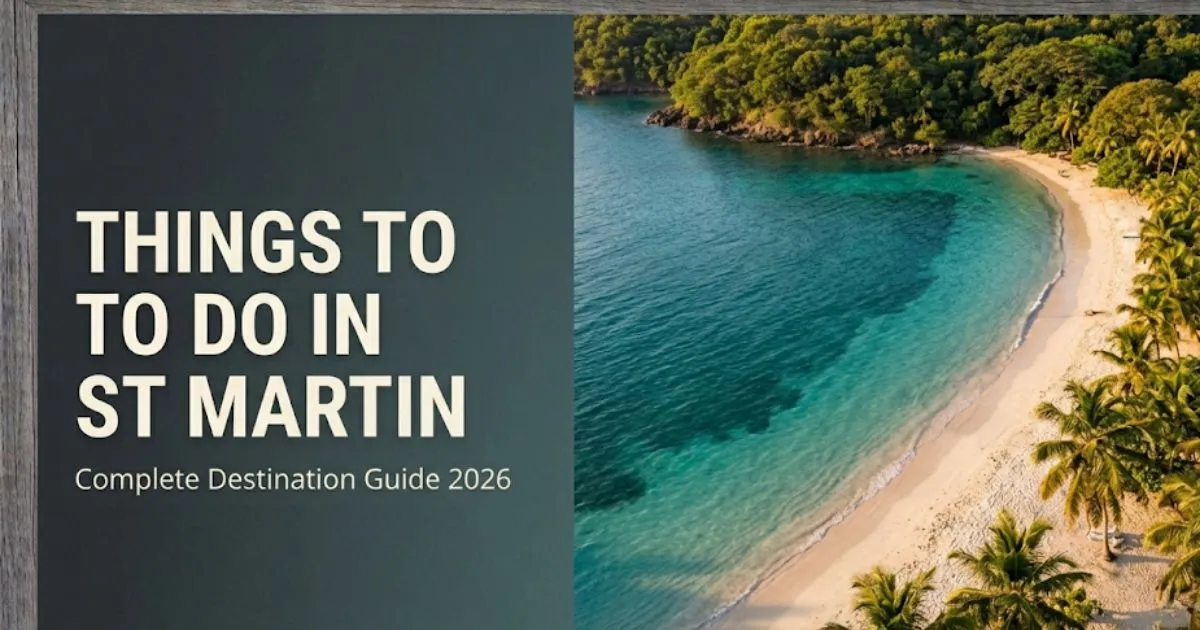
Best Things To Do in St. Martin and Sint Maarten 2026

The things to do in St. Martin span two countries, two languages, and a beach-to-restaurant quality ratio that few Caribbean islands can match.
This 37-square-mile island holds more culinary credibility per square mile than most Caribbean nations triple its size. The French side alone shelters a restaurant row that serious food travelers plan entire trips around.
This guide covers both sides honestly, from Orient Beach and Maho’s flight landings to Grand Case’s Creole fine dining and day trips to Anguilla. You’ll find specific named venues, practical logistics, and honest assessments of what’s worth your time.
Things To Do in St. Martin: Understanding the Island First
St. Martin rewards travelers who understand its dual identity before they arrive.
The northern two-thirds belongs to France, governed as Saint-Martin, an overseas collectivity of the French Republic. The southern third is Sint Maarten, a constituent country of the Kingdom of the Netherlands.
There is no border checkpoint. You drive between sides freely with no customs stop required. What changes is the character, cuisine, currency (euros on the French side, US dollars widely accepted everywhere), and pace.
The Dutch side concentrates casinos, duty-free shopping, resort hotels, and the island’s main international airport. The French side holds the best beaches, the most serious restaurants, and a quieter, more European atmosphere.
Insider Tip:
- Most first-timers stay on the Dutch side near Simpson Bay or Maho and never cross into Grand Case. This is the single most common missed opportunity on the island.
- Budget an entire day for the French side separately from your Dutch side exploration.
- Couples and food-focused travelers almost universally prefer the French side’s pace. Nightlife seekers prefer the Dutch side.
According to the Sint Maarten Tourism Bureau, the island hosted over 1.2 million stay-over visitors annually in recent pre-pandemic years, with the majority arriving through Princess Juliana International Airport on the Dutch side.
Best Things To Do in St. Maarten: The Essential List by Category
The best things to do in St. Maarten range from world-class beach days and watersports to genuine French fine dining and day trips to neighboring islands.
No single category defines the island. That is actually its distinctive strength.
| Activity | Best For | Cost Range (approximate) | Time Needed |
|---|---|---|---|
| Orient Beach | Couples, families, solo | Free (chair rental ~$20–$30) | Half day |
| Pinel Island snorkeling | Families, couples | ~$15–$20 ferry round-trip | Full day |
| Grand Case dining | Couples, foodies | ~$50–$120 per person | Evening |
| Maho Beach jet blasts | All traveler types | Free | 1–2 hours |
| Anguilla day trip | Couples, budget-conscious | ~$40–$60 ferry + entry | Full day |
| St. Barths day trip | Couples, premium travelers | ~$80–$120 ferry | Full day |
| Loterie Farm hike | Active travelers, families | ~$20–$30 entry | Half day |
| Philipsburg shopping | Cruise day-trippers, shoppers | Free to browse | 2–3 hours |
| Sunset catamaran cruise | Couples, groups | ~$60–$100 per person | 2–3 hours |
| Simpson Bay nightlife | Solo, couples, groups | Varies by venue | Evening |
Profile note for seniors and accessibility travelers: Orient Beach and Grand Case Boulevard are the most accessible areas. Pinel Island requires a small open boat ferry and uneven sandy terrain. Loterie Farm involves inclines and forest paths that are not suitable for mobility aids.
Things To Do in Sint Maarten: The Dutch Side Specifically
The Dutch side of Sint Maarten concentrates the island’s resort infrastructure, nightlife, duty-free retail, and its single most photographed attraction.
Philipsburg, the capital, sits on a narrow strip of land between Great Bay and the Great Salt Pond. Front Street is the main commercial drag, lined with duty-free jewelry stores, electronics retailers, and liquor shops serving cruise ship arrivals.
Front Street is genuinely worth one walk-through if duty-free shopping is on your agenda. For travelers who are not shopping, an hour covers it.
Simpson Bay holds the island’s highest concentration of restaurants, bars, and casinos along the Simpson Bay Strip. The Lagoon behind it offers calm-water sailing and kayaking.
Insider Tip:
- The cruise ship crowds at Philipsburg peak between 10 a.m. and 3 p.m. Arrive before 9 a.m. or after 4 p.m. for a dramatically different experience on Front Street.
- The Great Salt Pond behind Philipsburg occasionally hosts flamingos. Local guides know which conditions bring them out. Most visitors never know the pond exists.
- Budget travelers can find solid local food at the Market Place near Philipsburg for a fraction of tourist restaurant prices.
Fort Amsterdam, positioned at the mouth of Great Bay, is the oldest Dutch fort in the Caribbean still standing. The ruins are accessible and offer the best panoramic view of Philipsburg and the cruise ships anchored in the bay.
St. Martin Things To Do on the French Side
The French side of St. Martin operates on a different tempo than the Dutch side, and that difference is the point.
Marigot, the French-side capital, sits on a waterfront lagoon with a morning market, Fort Louis above the harbor, and a town square that genuinely feels like a small French Caribbean town rather than a tourism construct.
Fort Louis above Marigot requires a short but steep 10-minute climb. The reward is a 360-degree view over Simpson Bay Lagoon, Anguilla, and St. Barths on a clear day. Entry is free, verify before visiting.
Grand Case Boulevard, the island’s famous restaurant row, runs along a single street facing the Caribbean Sea in the village of Grand Case. It holds more serious French and Creole restaurants per block than any other spot on the island.
The Marigot waterfront market operates most mornings and is strongest on Wednesdays and Saturdays. Local vendors sell spices, hot sauce, fresh produce, and hand-crafted goods. It’s a completely different experience from the duty-free retail of Philipsburg Front Street.
Profile note for families: Marigot’s town square has good café culture for parents who want a slow breakfast while children have space to move. The market is engaging for older children but offers limited interactive elements for very young kids.
Things To Do in the Dutch Side of Sint Maarten: Beyond the Tourist Strip
Most visitors on the Dutch side stay within a small triangle of Maho, Simpson Bay, and Philipsburg. The rest of the Dutch side goes largely unexplored.
Dawn Beach on the eastern Atlantic coast faces open ocean, making it one of the island’s best spots for wave watching and body surfing. The reef offshore at Oyster Pond is a snorkeling area that local dive operators use for introductory reef dives.
Guana Bay on the southeastern tip is a local beach away from resort infrastructure. It receives consistent Atlantic swell and is popular with local residents rather than cruise arrivals.
Pelican Key and the surrounding lagoon area offer kayak and stand-up paddleboard rentals from several operators along the Simpson Bay Lagoon edge. Paddling at sunrise on the lagoon before resort motorboats begin traffic is genuinely one of the island’s better quiet experiences.
Insider Tip:
- The road from Philipsburg over Cole Bay Hill to Simpson Bay offers a hilltop overview of both bays simultaneously. Most visitors drive through without stopping. There is a pullout at the ridge.
- Rhino Riders, a jet ski expedition operator on the Dutch side, runs guided coastal tours to beaches unreachable by road. The route to Pelican Key via jet ski covers parts of the coastline most visitors never see.
Profile note for solo travelers: Simpson Bay’s bar and restaurant strip is genuinely solo-friendly, with open seating at bar counters and a mix of locals and long-term expats making the social scene accessible.
Key Takeaway: Plan at least one full day on the French side separately from your Dutch side time. Combining both in one rushed day is the most common itinerary mistake on this island.
Best Beaches in St. Martin for Every Traveler Type
St. Martin’s best beach depends entirely on what you want from it. The island has no single “best” beach. Each serves a different purpose.
Orient Beach (Baie Orientale) on the French Atlantic coast is the island’s most celebrated beach. It runs approximately 1.5 miles with calm turquoise water, consistent trade wind breezes, and a full strip of beach restaurants and watersports operators. Kontiki, Kakao, and Waikiki Beach clubs each offer chair and umbrella rentals with food and drink service.
Mullet Bay on the Dutch side is a local favorite that TripAdvisor lists have recently discovered. The wave action is stronger than Orient Bay, which makes it better for body surfing and worse for small children.
Friar’s Bay on the French north coast is smaller and less commercial than Orient. The beach holds one restaurant, a calmer scene, and noticeably fewer tourists on most days.
Happy Bay requires a 10-minute walk from Friar’s Bay over a rocky path. The payoff is a clothing-optional beach with almost no foot traffic. This is the closest thing to a genuinely local-only beach experience still accessible without a boat.
Cupecoy Beach on the Dutch-French border is dramatic, with sandstone cliffs and cave formations. The surf is stronger and the undertow requires caution. Do not swim at Cupecoy in rough conditions. Rip current risk is real.
| Beach | Water Conditions | Facilities | Best For | Crowd Level |
|---|---|---|---|---|
| Orient Beach | Calm, turquoise | Full beach clubs | All types | High |
| Mullet Bay | Moderate surf | Minimal | Locals, body surfers | Medium |
| Friar’s Bay | Calm | One restaurant | Couples, low-key visitors | Low |
| Happy Bay | Calm | None | Privacy seekers | Very low |
| Cupecoy | Rough | None | Scenery, not swimming | Low |
| Dawn Beach | Atlantic surf | Some | Wave watchers | Medium |
Unique Things To Do in St. Maarten Beyond the Beaches
St. Martin has a set of experiences that most competitor guides list but almost none explain with enough honesty to be useful.
Loterie Farm is a private nature reserve and eco-park on the slopes below Pic du Paradis, the island’s highest point at 1,391 feet above sea level. The reserve operates zip lines, a treetop pool, guided hikes, and a restaurant serving French Caribbean food in a forest setting.
The Fly Zone zip line at Loterie Farm runs through the forest canopy and is one of the island’s genuinely distinctive activities. Entry and activity fees apply; verify current pricing directly with Loterie Farm before visiting.
Hiking to Pic du Paradis is possible independently, but the trail is steep, unmarked in sections, and not suitable for anyone not comfortable with genuine uphill hiking. Guided hikes organized through Loterie Farm or local operators make the ascent safer and more educational.
Rhino Rider tours take riders on self-driven inflatable power boats around the island’s coastline. The tour covers sea caves, uninhabited coves, and snorkeling spots that no beach club or organized catamaran tour visits. This is one of the island’s most genuinely distinctive experiences.
Profile note for couples: The treetop restaurant and pool at Loterie Farm is one of the island’s better romantic settings. Reserve well in advance. The restaurant has limited covers and fills for dinner service.
Profile note for families: The zip lines at Loterie Farm have height and age requirements. Verify before booking if traveling with children under 8.
Grand Case Restaurants and Dining
Grand Case is the single most important reason to spend at least one evening on the French side. This is not promotion. This is what serious food travelers already know.
The village holds a concentration of French, Creole, and Caribbean fusion restaurants along Grand Case Boulevard, a single road facing the sea. The density of quality cooking relative to the village’s small size is genuinely unusual for the Caribbean.
Lolos are the local counterpart to the fine dining strip. These open-air barbecue shacks line a stretch of Grand Case behind the main boulevard. They serve grilled lobster, chicken, ribs, and fish at a fraction of the restaurant prices on the main street. For around $15 to $30, a lolo meal is one of the island’s best-value dining experiences.
The honest context: Grand Case fine dining restaurants run $60 to $120 or more per person with wine. The lolos serve the same Caribbean seafood for dramatically less in a completely different atmosphere. Both experiences are worth having.
Insider Tip:
- Grand Case Boulevard restaurants fill fast on Friday and Saturday evenings. For a table at a specific restaurant, book 48 to 72 hours in advance in peak season (December through April).
- The lolos are first-come, first-served. Arrive before 7 p.m. for the best selection of proteins.
- Profile note for budget travelers: A lolo dinner with a cold Presidente beer is one of the island’s best budget experiences. Skip the Boulevard fine dining for one night and eat at the lolos instead.
According to Travel + Leisure’s Caribbean dining coverage, Grand Case consistently ranks among the top restaurant concentrations in the entire Caribbean region.
Day Trips From St. Martin Worth Planning
St. Martin’s geographic position makes it the best island hub in the northeastern Caribbean for day trips. Two islands in particular deserve the effort.
Anguilla is 20 minutes from the French side by high-speed ferry departing from Marigot or Blowing Point on the English side of the island. The ferry crossing itself is simple. Anguilla requires a separate entry fee for day visitors (verify current fee amount before traveling). The island’s beaches, including Shoal Bay East, are among the finest sand in the Caribbean.
Saint Barthélemy (St. Barths) is reachable by high-speed catamaran from Bobby’s Marina in Marigot in approximately 45 to 60 minutes. Round-trip ferry fares vary by operator; budget approximately $80 to $120 per person as a general range, verify current pricing before booking. St. Barths carries a premium price point for everything once on the island.
Pinel Island (Îlet Pinel) is a 5-minute open-water ferry ride from Cul-de-Sac on the French side. The island is uninhabited except for two beach restaurants. The snorkeling off the rocky points is excellent. This is the island’s best full-day beach excursion for families.
Tintamarre Island (Flat Island) requires a boat charter or organized snorkeling excursion from the French side. The island is a nature reserve. The surrounding water holds some of the island’s clearest snorkeling conditions.
Profile note for families with young children: Pinel Island is the most family-appropriate day trip. The ferry is calm, the beach is shallow at the entry point, and the two beach restaurants have shade and food. Anguilla and St. Barths involve more transit complexity with young children.
Key Takeaway: Book your Anguilla or St. Barths ferry at least 48 hours ahead in peak season. Both routes sell out during the December through April high season with zero warning.
Watersports and Snorkeling in St. Martin
St. Martin’s watersports infrastructure is strongest on the Dutch side but its best snorkeling is on the French side, particularly around Pinel Island and Tintamarre.
Kitesurfing in Simpson Bay Lagoon is world-recognized among the kitesurfing community. The lagoon’s flat water and consistent trade winds from November through April create near-ideal conditions. Multiple certified schools operate from the Simpson Bay shore.
Scuba diving on the island covers two distinct environments. The Atlantic-facing east side has stronger current and more dramatic marine terrain. The Caribbean-facing west side offers calmer conditions suited to beginners. Operators depart from both Philipsburg and Bobby’s Marina in Marigot.
Snorkeling at Pinel Island is accessible directly from the beach without a guide. The snorkel conditions at the rocky points off both ends of the island are strong, with consistent reef fish populations.
The honest assessment: the reef quality around St. Martin is not the best in the Caribbean. Serious scuba divers who prioritize reef quality over convenience should consider adding Saba (reachable by ferry from the Dutch side) to their itinerary. Saba’s marine park is in a different category.
Profile note for senior and accessibility travelers: Snorkeling at Orient Beach is possible from the shore but requires walking into the water over packed sand. The snorkel rental operations on the beach provide gear. The water entry is gradual and manageable for most swimmers with reasonable mobility.
To book a quality snorkeling or diving excursion:
- Identify departure point: Marigot for French-side reef sites, Philipsburg or Simpson Bay for Dutch-side sites.
- Verify operator certification: look for PADI-affiliated dive operators for scuba.
- Book 24 to 48 hours ahead in peak season for popular catamaran snorkel tours.
- Bring reef-safe sunscreen. Several operators now require it and some beaches post reminders.
- Confirm whether the tour includes gear rental or if you need to bring your own.
Maho Beach and Jet Blasts
Maho Beach is the island’s most photographed spot for a specific reason. Aircraft on final approach to Princess Juliana International Airport (SXM) pass directly over the beach at extremely low altitude, sometimes as low as 100 feet above the sand.
The experience is genuinely remarkable when the timing is right. The sound and air pressure from a large commercial jet at that altitude is not subtle.
The honest caveat: flight schedules dictate the experience completely. Arriving at Maho at midday expecting constant jet action is a mistake. The most dramatic landings coincide with long-haul widebody aircraft arrivals, which cluster during morning international arrival banks and late-afternoon departure activity.
Check the SXM flight arrival schedule before visiting. Identify which flights are widebody aircraft (Boeing 747, Airbus A340, Boeing 777 types when in service). Plan your visit around those arrival times.
The Sunset Beach Bar directly at the end of the runway is the main viewing venue. Food and drinks are served. The experience is most worth doing once. Repeat visitors who have seen it before rarely return.
Warning: The jet blast from departing aircraft pushes outward from the fence at the runway end with enough force to knock people off their feet. The signs warning visitors are not exaggerated. Stay well clear of the fence during departures. Do not hold the fence during a departure.
Profile note for seniors and accessibility travelers: Maho Beach itself is accessible. The viewing area is flat. However, the crowd during peak arrival times is dense and the jet noise is genuinely intense. Hearing protection is worth considering.
Things To Do in St. Martin for Couples
St. Martin is one of the Caribbean’s better romantic travel destinations, specifically because the French side offers genuine European-influenced dining culture alongside beach quality.
The combination of Grand Case evening dining, a sunset catamaran cruise, and a French-side beach day at Friar’s Bay or Happy Bay creates an itinerary that does not require leaving the island for genuinely romantic variety.
Sunset sailing from the Dutch side lagoon is offered by multiple operators running catamarans with bar service and snorkel stops before sunset. The evening light over Simpson Bay Lagoon with Anguilla visible in the distance is one of the island’s better visual moments.
Loterie Farm’s treetop pool and restaurant is positioned as a daytime escape. The forest setting, small pool, and food quality make it one of the island’s more unusual romantic mid-day experiences.
Friar’s Bay is the beach for couples who want calm water, fewer people, and a single beach restaurant without the full beach club infrastructure of Orient Beach. The difference in atmosphere between the two beaches is significant.
Insider Tip:
- For a genuinely romantic dinner, book a table on the sea-facing terrace of a Grand Case boulevard restaurant rather than an interior table. Ask specifically when booking.
- The ferry to Anguilla for a day trip to Shoal Bay East and dinner at one of Anguilla’s beachfront restaurants is the island’s best romantic day-trip combination.
- Solo travelers note: Grand Case Boulevard has a clear couple-and-group dining culture. Solo dining at bar counters works in Philipsburg’s restaurant strip more comfortably than along the Grand Case boulevard.
Key Takeaway: Grand Case for dinner on your first or second evening sets the tone for the entire French-side experience. Do not skip it in favor of staying near your Dutch-side hotel.
Things To Do in St. Martin for Families
St. Martin works well for families, but the experience varies significantly depending on which side you stay on and which activities you prioritize.
Pinel Island is the clearest family recommendation on the island. The ferry is a 5-minute open-water crossing from Cul-de-Sac. The beach is shallow and calm at the entry points. The two beach restaurants have shade, cold drinks, and grilled food. The snorkeling is accessible without guides.
Orient Beach suits families with older children well. The watersports operators on the beach offer parasailing, jet ski rentals, and banana boat rides. The beach clubs have food, shade, and facilities. For families with toddlers and young children who need calm shallow wading water, the calm end of Orient Bay near the Kontiki beach club end is most appropriate.
Loterie Farm works for families with children over 8 who are comfortable on zip lines. Younger children may find the forest and hiking more tiring than engaging without the zip line access.
The honest assessment for families: St. Martin is not a destination built around family resort infrastructure the way Jamaica’s all-inclusive corridor or the Turks and Caicos resort properties are. It rewards families who are comfortable with some self-directed exploration and who enjoy beach, snorkeling, and food over structured children’s entertainment programming.
Profile note for families with infants and toddlers: The lack of resort children’s clubs and the prevalence of steep roads, uneven terrain, and beach surfaces that are difficult with strollers makes the island more challenging for families with very young children than it initially appears.
Things To Do in St. Martin on a Budget
St. Martin can be done affordably. It requires deliberate choices.
The beaches are entirely free. Orient Beach, Mullet Bay, Friar’s Bay, and Happy Bay charge nothing for access. The beach chairs and umbrellas from beach club operators cost money, but a towel and sunscreen get you the same beach for zero spend.
Lolos in Grand Case are the island’s best budget food experience. Grilled lobster, chicken, and fish at open-air shacks for $15 to $35 per person is dramatically less than the sit-down restaurants 50 feet away on the boulevard.
The Marigot market on Wednesday and Saturday mornings is free to walk through. Local fruits, spices, and cooked Creole food are available at local prices, not tourist prices.
Car rental is the single biggest budget tool on the island. Shared or organized tours cost significantly more per activity than driving independently with a rental car. Weekly car rental rates start well below what organized day tours cost per activity.
| Experience | Free | Low Cost (~$10–$30) | Mid Cost (~$30–$80) |
|---|---|---|---|
| Beaches | All 10+ beaches | Chair/umbrella rental | Beach club packages |
| Food | Marigot market snacks | Lolos Grand Case | Mid-range restaurants |
| Sightseeing | Fort Louis, Fort Amsterdam, Marigot | Pinel Island ferry | Guided tours |
| Nature | Hiking to Pic du Paradis (trail) | Loterie Farm entry | Full Loterie Farm activity package |
| Snorkeling | Shore snorkeling at Pinel | Gear rental | Guided catamaran snorkel tours |
Profile note for budget travelers: Staying on the French side in smaller guesthouses or Airbnb rentals often provides better value than Dutch-side resort hotels while putting you closer to Grand Case, the market, and the quieter French beaches.
Best Time To Visit St. Maarten and Practical Tips
The best time to visit St. Maarten is from mid-December through April, when the dry season brings consistent trade winds, low humidity, calm Caribbean seas, and near-zero rainfall risk.
February and March coincide with the Heineken Regatta, one of the Caribbean’s largest sailing events, which brings significant hotel price increases and reduced availability. Book accommodations 3 to 4 months ahead if planning during regatta week.
April through May is shoulder season after the high season crowds thin. The weather remains good, prices drop, and the island is noticeably less crowded. This is one of the better value windows.
June through July carries increasing humidity and occasional rain. Hurricane risk is statistically low but building. The island remains open and fully operational.
August through October is peak Atlantic hurricane season. The island’s history includes significant hurricane damage, most recently Hurricane Irma in September 2017, which caused severe destruction. The island has rebuilt substantially, but the risk during this period is genuine. Travel insurance that covers hurricane-related cancellations is not optional for travel during this window.
Practical logistics:
- Car rental is strongly recommended. Open-air jitneys (shared taxis on fixed routes) operate but are not reliable for comprehensive island exploration.
- US citizens need a valid US passport. No visa required on either side for US citizens for standard tourist visits, but verify current entry requirements with official US government sources before travel.
- The US dollar is widely accepted on both sides, though the French side officially uses euros.
- Driving is on the right-hand side on both sides of the island.
Profile note for seniors: The December through March period has the most moderate temperatures and lowest humidity of the year. This is the optimal window for travelers who are sensitive to tropical heat and humidity.
Suggested 2-Day Itinerary for St. Martin
This itinerary assumes arrival on the Dutch side (Princess Juliana International Airport) and a rental car. It covers both sides without rushing.
Day 1: Dutch Side and Maho
- Morning: Check into accommodation in Simpson Bay or Maho area. Pick up your rental car.
- Mid-morning: Drive to Maho Beach. Check the SXM arrival schedule in advance. Time your arrival around a widebody aircraft landing.
- Late morning: Walk the Philipsburg Front Street for an hour. Visit Fort Amsterdam for the Great Bay panorama.
- Afternoon: Drive to Dawn Beach or Orient Beach for the afternoon. Stop at the Cole Bay Hill overlook on the way.
- Sunset: Sunset Beach Bar at Maho for a drink, or a sunset sailing departure from Simpson Bay Lagoon.
- Evening: Dinner along the Simpson Bay Strip or a casino night if that suits your travel style.
Day 2: French Side
- Early morning: Drive to Marigot. Arrive for the Wednesday or Saturday market if your travel dates align.
- Mid-morning: Hike or drive toward Fort Louis for the harbor view. Explore the Marigot waterfront.
- Late morning: Drive to Cul-de-Sac and take the ferry to Pinel Island. Spend 3 to 4 hours snorkeling, swimming, and having lunch at the beach restaurant.
- Late afternoon: Return to the mainland. Drive through the hills above Grand Case for views over the bay.
- Sunset: Walk Grand Case Boulevard. Reserve a table at one of the sea-facing terrace restaurants before arriving.
- Evening: Dinner in Grand Case, then lolos for dessert or a late grilled-lobster second round if appetite allows.
Key Takeaway: A rental car is not a luxury on this island. Without one, you will see 30% of what the island offers and pay more per activity to see even that.
Safety and Practical Warnings for St. Martin
The primary practical risk for travelers in St. Martin is severe weather during hurricane season, not crime. August through October requires genuine risk awareness.
Key safety and practical facts every visitor should know:
- Hurricane season runs June through November, with peak risk in August through October. Travel insurance covering hurricane-related trip cancellation and interruption is strongly recommended if traveling during this window.
- Rip currents at Cupecoy Beach and Dawn Beach can be strong. Do not swim at either location during rough sea conditions or when red flags are posted.
- Sun exposure at 18 degrees north latitude is intense year-round. UV index levels are extreme by temperate standards. Apply SPF 50 or higher, wear protective clothing, and limit midday sun exposure.
- Petty theft near Philipsburg cruise ship terminals is reported. Keep valuables secured and avoid leaving bags unattended on Front Street during high cruise traffic periods.
- Road conditions on the French side mountain roads (toward Loterie Farm and Pic du Paradis) are narrow and sometimes poorly maintained. Drive slowly. Do not assume two-lane road markings mean two comfortable lanes.
- Medical infrastructure on the island handles routine care. Serious medical emergencies may require air evacuation to Martinique, Guadeloupe, or the US Virgin Islands. Medical evacuation coverage is advisable for travelers with underlying health conditions.
- Jet blast at Maho Beach during departing aircraft creates dangerous wind force. Signs are posted. Take them seriously and stay well back from the fence during takeoffs.
Contact the US Department of State’s travel advisory page for the most current safety assessment for Sint Maarten and Saint-Martin before departure.
Frequently Asked Questions About Things To Do in St. Martin
What are the best things to do in St. Martin for first-time visitors?
The best things to do in St. Martin for first-timers include a beach day at Orient Beach, a jet blast viewing at Maho Beach, a lolo dinner in Grand Case, and a day trip to Pinel Island for snorkeling.
Splitting your time between the Dutch and French sides gives you the full breadth of what the island offers.
First-timers who stay only on the Dutch side near their hotel miss the French-side dining, market culture, and quieter beaches that experienced visitors consider the island’s strongest assets.
How many days do you need in St. Martin?
Five to seven days allows you to experience both sides of the island thoroughly, including a day trip to Anguilla or St. Barths.
A minimum of four days is needed to cover the primary beaches, one day-trip island, Grand Case dining, and basic Dutch-side exploration without feeling rushed.
Three days is tight and forces prioritization. Focus first on Grand Case dining, Pinel Island, and one day on Maho and Philipsburg if limited to a long weekend.
What is the difference between the French and Dutch sides of St. Martin?
The French side (Saint-Martin) is quieter, more European in character, and holds the island’s best restaurants in Grand Case, as well as calmer and less commercial beaches like Friar’s Bay and Happy Bay.
The Dutch side (Sint Maarten) concentrates the resort hotels, casinos, duty-free shopping, and nightlife, along with the main international airport and Maho Beach.
There is no border checkpoint. You cross between sides freely with no customs stop, so visiting both in a single day is straightforward.
When is the best time to visit St. Maarten?
The best time to visit St. Maarten is mid-December through April, when the dry season brings consistent trade winds, calm Caribbean seas, and minimal rainfall.
February and March include the Heineken Regatta, which creates a festive atmosphere but raises hotel prices and limits availability significantly.
The worst time to visit is August through October, which sits within the statistical peak of the Atlantic hurricane season.
Do you need a passport to go between the French and Dutch sides of St. Martin?
No passport checkpoint exists between the two sides of the island. You drive across the border freely without stopping.
You do need a valid US passport to enter the island initially, whether arriving through Princess Juliana International Airport on the Dutch side or by ferry.
The border marker on Route de l’Espérance is a monument, not a functioning checkpoint.
Is St. Martin safe for tourists in 2026?
St. Martin is generally safe for tourists. The primary risks are weather-related (hurricane season) rather than crime-related.
Petty theft is reported near the Philipsburg cruise terminal and busy tourist areas. Standard precautions, securing valuables and avoiding unattended bags in crowds, are sufficient for most travelers.
Check the US Department of State travel advisory for the current assessment of both Saint-Martin and Sint Maarten before departure, and verify current conditions directly.
Plan Your St. Martin Trip With These Specifics in Hand
St. Martin’s strongest asset is what most Caribbean islands cannot replicate: a genuine French dining culture sitting within a 20-minute drive of excellent Dutch-side beach resort infrastructure.
Book your Grand Case dinner reservation before you land. Reserve your Pinel Island day for a weekday when crowds are thinner. Get a rental car for the full duration of your stay.
Travel conditions, ferry schedules, restaurant hours, and entry requirements change. Verify all logistics directly with operators and check the Sint Maarten Tourism Bureau and Collectivité de Saint-Martin official resources before departure. This guide reflects 2026 travel context but specific prices, hours, and schedules shift with each season.
The travelers who get the most from this island are the ones who cross the border into the French side early and stay longer than they planned