The Best Things To Do in Lagos, Portugal (2026 Guide)

The best things to do in Lagos, Portugal range from kayaking through sea grottos at sunrise to eating cataplana in a centuries-old taberna on Rua Direita. Lagos is the Algarve’s most complete destination: extraordinary cliffs, a genuine Old Town, and a food scene that outlasts every beach town cliché.
The Região de Turismo do Algarve identifies Lagos as one of western Portugal’s top coastal destinations. Its 7 kilometers of Atlantic coastline include some of southern Europe’s most photogenic beach formations.
This guide covers the 16 best activities in Lagos, organized by type, with specific beach comparisons, timing guidance, a 2-day itinerary, and honest notes on what to skip. Verify prices and hours directly before your 2026 visit.
Things To Do in Lagos Portugal: What Makes This Town Worth the Trip
Lagos, Portugal delivers a combination that most European coastal towns cannot replicate at this scale. It pairs genuinely dramatic natural scenery with a lived-in Old Town that functions year-round, not just for tourists in summer.
The town itself is compact. Walking from the marina to the historic center takes under 10 minutes.
That walkability matters enormously. You spend your time at the cliffs and the table, not in transit.
For US travelers comparing European coastal options, Lagos occupies the tier between a quiet village and a full resort town. It has the infrastructure of the latter with more of the character of the former.
The Old Town’s Rua Direita and Praça Gil Eanes function as a genuine town center. Locals shop at the Mercado de Lagos on Saturday mornings regardless of tourist season.
Insider Tip:
- Book accommodation within the Old Town walls or the marina district to walk everywhere
- Avoid the resort strip along the EN125 highway unless a rental car is central to your plan
- Solo travelers and couples gain the most from the Old Town base; families with a car may prefer the quieter access near Meia Praia
The honest assessment: Lagos is one of the Algarve’s most rewarding destinations when visited in shoulder season. In peak July and August, it is still beautiful but operating at pressure.
Best Things To Do in Lagos Portugal: Core Activity Overview
The best things to do in Lagos, Portugal fall into four clear categories: cliff and coastal experiences, water activities from the marina, Old Town culture and food, and day trips into western Algarve.
Getting the sequence right matters more than the specific activities chosen.
| Activity Category | Top Experience | Best Traveler Profile | Cost Range | Booking Required |
|---|---|---|---|---|
| Cliff and coastal | Ponta da Piedade kayak | Couples, solo, active | €25 to €45 | Yes, advance |
| Old Town culture | Igreja de Santo António | All profiles | Free to low | No |
| Water sports | Coasteering | Solo, active | €40 to €65 | Yes |
| Day trips | Sagres and Cape St. Vincent | All profiles | Transport + entry | No |
| Dining | Cataplana at a taberna | Couples, foodies | €25 to €50 pp | Recommended |
| Beaches | Praia do Camilo | Couples, photographers | Free | No |
| Nightlife | Rua 25 de Abril | Solo, young adults | Variable | No |
Start with the water. The grottos and cliffs are the reason Lagos exists on international travel lists.
Everything else, the food, the Old Town, the nightlife, adds dimension to a destination that earns its coastal reputation honestly.
Families with children should note that several headline activities (coasteering, cliff kayaking) have minimum age and weight requirements. Verify directly with operators before booking.
Best Beaches in Lagos Portugal
The best beaches in Lagos, Portugal are not all equal in access, surf conditions, or suitability for different traveler types. Choosing the right beach for your profile is the most practically useful decision you’ll make.
Praia Dona Ana is the most photographed. Golden limestone formations frame turquoise water. Access involves descending a long staircase from the clifftop car park.
Praia do Camilo is smaller, more dramatic, and less crowded than Dona Ana by a consistent margin. The staircase is steeper but the setting is more intimate.
Meia Praia stretches for approximately 4 kilometers east of the marina. It is flat, accessible, family-friendly, and has no dramatic cliff scenery. It compensates with gentle surf and easy parking.
Praia Porto de Mós sits southwest of town, reached by a 25-minute walk or short drive. It is larger than Camilo, less visited than Dona Ana, and has a beach bar that functions as a genuine local gathering point rather than a tourist facility.
| Beach | Best For | Access Difficulty | Surf Level | Insider Note |
|---|---|---|---|---|
| Praia Dona Ana | Couples, photographers | Moderate (stairs) | Calm to moderate | Arrives at capacity by 10 a.m. in July |
| Praia do Camilo | Couples, experienced walkers | Steep stairs | Calm to moderate | Best light in late afternoon |
| Meia Praia | Families, seniors, swimmers | Easy, flat | Gentle | Easiest parking in the Lagos area |
| Praia Porto de Mós | Local-preferred, active | Moderate walk or drive | Moderate | Beach bar with local clientele |
| Praia da Batata | Budget travelers, central location | Easy | Gentle | Town beach, no dramatic scenery |
Seniors and accessibility travelers: Meia Praia is the only beach near Lagos with genuinely flat, easy access. All cliff-face beaches involve significant stair descents with no lift access. Bring water and good footwear regardless of which beach you choose.
The local alternative to overcrowded Dona Ana: Praia Porto de Mós on a weekday morning in September. Same quality of limestone and water color, a fraction of the crowd.
Ponta da Piedade Lagos
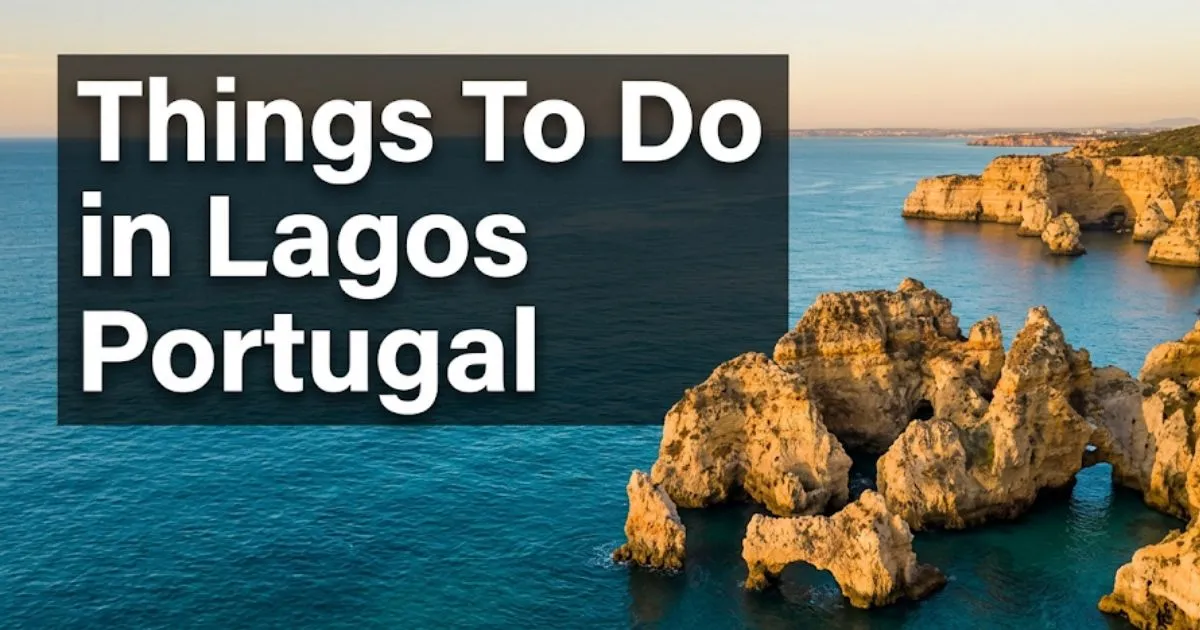
Ponta da Piedade is the defining natural attraction of Lagos, and it is genuinely worth the superlatives, provided you approach it correctly. The headland sits approximately 2 kilometers southwest of town and concentrates the Algarve’s most dramatic limestone arch and grotto formations in one area.
The clifftop viewpoints are accessible by car, bike, or a 30-minute walk from town.
What the clifftop gives you is a view. What a kayak from the water gives you is the interior of the grottos, the arches at sea level, and the understanding of why this coastline appears on every Portugal travel feature published in the last decade.
Clifftop parking at the headland fills by 9 a.m. in July and August. By 11 a.m. in peak season, the viewpoints are shoulder-to-shoulder.
The correct approach: depart on a kayak tour from the Lagos marina at 8 a.m. or earlier. The boat tours begin running around 9 to 10 a.m. Kayak groups reach the grottos before the motorized boats arrive.
Insider Tip:
- Sunrise kayak departures offer the best light for photography and the lowest crowd levels
- Several operators on the marina offer private kayak guides for small groups; the pricing increase over group tours is modest and the experience difference is significant
- Couples rate this as one of Portugal’s genuinely romantic natural experiences when done at low-tide morning hours
According to the Turismo de Portugal, Ponta da Piedade is among the most visited natural sites in the Algarve region. Plan your timing accordingly.
For travelers who cannot kayak or prefer not to: the clifftop walk at dawn, before the tour buses arrive, still delivers the geological scale of the headland with dramatically lower pressure.
Key Takeaway: Ponta da Piedade rewards early morning departures by kayak from the marina. Everyone who arrives by car at 11 a.m. in peak season gets a crowded viewpoint. Everyone who paddles in at 8 a.m. gets the grottos almost alone.
Kayaking and Boat Tours Lagos Portugal
Kayaking and boat tours from the Lagos marina are the most popular water-based activities in Lagos, and the distinction between the two experiences is more significant than most pre-trip planning accounts for. Both access Ponta da Piedade. They deliver entirely different relationships with the landscape.
Kayaking puts you inside the grottos at water level. Motorized boat tours park outside the larger formations and let you look in.
Group kayak tours run approximately €25 to €45 per person for a 2 to 3-hour guided circuit. Prices as of recent years; verify before booking for 2026.
Boat tours run approximately €20 to €40 per person. They cover more coastline in less time and are significantly more accessible for people who cannot kayak.
Several operators run coasteering experiences: guided ocean scrambling across rock formations with jumps into the Atlantic. These run approximately €40 to €65 per person and require moderate fitness and swim confidence.
Stand-up paddleboarding is available for rental near the marina for calmer-weather exploration of the immediate coastline.
To book a kayak or coasteering tour correctly:
- Book at least 3 to 5 days in advance in July and August; same-week booking is often possible in shoulder season
- Request morning departure times specifically, ideally before 9 a.m.
- Confirm the meeting point: most operators depart from the marina, near Forte da Ponta da Bandeira
- Check the operator’s minimum age and weight requirements for coasteering
- Bring reef-safe sunscreen; operators enforce this in protected waters
Families with children: Most kayak tour operators accept children from approximately age 7 to 10 depending on the operator’s specific policy. Verify directly. Boat tours are the family-accessible alternative with no age restrictions.
Lagos Old Town Portugal
Lagos’s historic center is one of the best-preserved old towns in the Algarve. It sits behind 16th-century walls and contains the streets, squares, and architectural layers of a port city that operated at the center of the Age of Discovery.
Henry the Navigator organized expeditions from Lagos. The town’s museum holds direct evidence of that history.
Rua Direita is the Old Town’s spine: a cobblestone lane lined with independent shops, tabernas, and pastelarias that function for locals as much as visitors. This is where you see the real daily rhythm of Lagos.
Praça Gil Eanes is the main square. The Gil Eanes statue at its center marks the Lagos-born explorer. It is also where locals and visitors overlap most naturally, particularly in the early evening.
The Igreja de Santo António dates to the early 18th century. Its gilded baroque interior, azulejo tiles, and carved woodwork represent some of the finest decorative craftsmanship in southern Portugal. Admission is typically low cost and often combined with the adjacent Museu Municipal de Lagos.
The Fortaleza da Ponta da Bandeira guards the marina entrance and holds exhibitions on the maritime history of the region.
Seniors and accessibility travelers: Rua Direita and the central squares are cobblestoned. Many sections are uneven. Mobility aids and wheeled luggage face genuine difficulty throughout the Old Town. Praça da República near the waterfront is more navigable and offers a direct route between the marina and the Old Town without the steepest cobblestone sections.
Budget travelers: The Old Town is free to walk. Most of its historic churches and viewpoints cost nothing to enter or charge minimal fees under €5 as of recent years.
Best Restaurants in Lagos Portugal
The best restaurants in Lagos, Portugal concentrate around the Old Town and marina area, but the quality drops sharply the closer you get to the main tourist pedestrian zones. The rule in Lagos is simple: the more a restaurant’s signage speaks exclusively in English, the less interesting the cooking.
Cataplana is the Algarve’s signature dish: a copper-pot seafood stew built around clams, prawns, and white fish, finished with coriander and white wine. It is the single dish most worth ordering in Lagos.
Taberna de Lagos on Rua da Barroca represents the style of cooking Lagos does best: regional ingredients, copper pots, a short menu that changes with what arrived at the Mercado de Lagos that morning.
For grilled fish, the correct move is to find the small marisqueiras (seafood restaurants) in the streets behind the Praça da República. These operate primarily for local clientele and serve grilled dourada (sea bream) and robalo (sea bass) at prices that reflect actual fish market economics rather than tourist positioning.
O Camilo restaurant, perched above Praia do Camilo, earns consistent recognition for fresh seafood with a view worth the price premium. Reserve in advance for dinner.
According to the Região de Turismo do Algarve, fresh locally sourced seafood is central to the Algarve’s food identity. In Lagos specifically, the Saturday morning market is the most direct expression of this.
Insider Tip:
- Eat lunch, not dinner, if budget is a consideration: the same kitchens often charge 20 to 35% less for lunch portions at the same quality
- The pastelarias on Rua Direita serve pastéis de nata and local pastries that belong on every morning itinerary
- Couples looking for a formal dinner setting with genuine cuisine (not tourist-menu cooking) should reserve at least 2 days ahead in July and August
Key Takeaway: Eat cataplana from a taberna on a side street off Rua da Barroca, not from any restaurant whose primary marketing language is English. The same dish costs more and delivers less on the main tourist corridors.
Fun Things To Do in Lagos
Fun things to do in Lagos extend well beyond the cliffs and beaches that dominate most guides. The town rewards exploration across active, cultural, and social dimensions with specific experiences that no tourism board press kit captures.
Stand-up paddleboard yoga operates on the calmer waters near the marina in morning hours. It sounds like a cliché. On a flat-water September morning with the Lagos skyline behind you, it earns its place on any list of genuinely memorable experiences.
The Saturday Mercado de Lagos is the best free activity in town. Vendors sell local produce, regional cheeses, smoked meats, handmade ceramics, and fresh flowers. Locals shop here. It is not a craft market aimed at tourists.
Tuk-tuk tours of the Old Town depart from near the Praça Gil Eanes and offer a 45 to 90-minute circuit that covers the historic walls, viewpoints, and the area below the Igreja de Santo António. For seniors or travelers with limited mobility, this is the most efficient and enjoyable way to see the elevated Old Town zones.
Surfing lessons are available through multiple schools operating near Meia Praia and Praia Porto de Mós. Lagos sits at the edge where the calmer Algarve coast transitions toward the more powerful Atlantic swells of the western coast. This makes it suitable for beginners without being too tame for intermediate surfers.
Horseback riding along the coastal paths and inland hills is available through operators outside town and appeals particularly to families with children aged 8 and above and to couples seeking an activity that doesn’t require swimming confidence.
Budget travelers: The Saturday market, Old Town walking, and the clifftop walk to Ponta da Piedade cost nothing. A full day of the best Lagos has to offer at water level requires only the cost of a kayak tour and a seafood lunch.
Lagos Portugal Nightlife
Lagos’s nightlife centers on Rua 25 de Abril, a narrow Old Town street that concentrates bars, music venues, and clubs within a two-minute walk. This is one of the Algarve’s most active nightlife corridors and functions primarily from 10 p.m. to 4 a.m. during summer months.
Stevie Ray’s Blues Jazz Bar on Rua 25 de Abril stands out for live music over DJ sets, and its crowd skews older than the clubs further along the street.
Eddie’s Bar is the long-standing anchor of the strip: a small, packed Irish-style bar that attracts a genuinely international crowd of travelers. It lacks local authenticity but delivers the social environment solo travelers most often seek on a first Lagos visit.
For a local-preferred alternative to the tourist-oriented Rua 25 de Abril strip: the small wine bars and cervejarias (beer halls) in the streets east of Praça da República attract a more mixed local-tourist crowd and close earlier but feel more connected to the actual town.
Solo travelers: Rua 25 de Abril is one of Portugal’s better solo nightlife environments. The street is short enough to move through easily, the bars have standing room at the front that encourages conversation, and the crowd is heavily international, reducing any social friction of arriving alone.
Couples: The wine bar options on side streets off Praça da República are the better choice for an evening that stays at dinner pace rather than escalating to club hours.
Safety note: Rua 25 de Abril is heavily trafficked and generally safe, but the combination of narrow streets, alcohol, and peak-season crowds creates pickpocket conditions. Keep phones and wallets in front pockets.
Day Trips From Lagos Portugal
The best day trips from Lagos, Portugal require no more than a 30 to 45-minute drive and deliver destinations that, in many cases, rival Lagos itself for natural or historical significance.
Sagres and Cape St. Vincent together form the most important day trip from Lagos. The Fortaleza de Sagres sits at the southwestern tip of the Iberian Peninsula. Cabo de São Vicente is the southwesternmost point of continental Europe. The combined drive, exploration, and return trip works comfortably in 5 to 6 hours.
Silves sits approximately 25 kilometers northeast of Lagos. Its 12th-century Silves Castle overlooks a town that was once the Moorish capital of the Algarve. The castle is one of the best-preserved in Portugal. Silves sees a fraction of Lagos’s tourist volume, and its riverside restaurants serve cataplana at prices that make Lagos look expensive.
Alvor is a small fishing village 10 kilometers east. The Ria de Alvor estuary behind it is one of the Algarve’s most significant natural wetland areas. The boardwalk through the estuary is flat, accessible, and genuinely beautiful, particularly in the early morning when wading birds are most active.
Benagil Cave is accessible from Lagoa, approximately 45 kilometers east. It requires a boat tour or strong swim to enter from the water. The cave’s natural skylight is one of Portugal’s most photographed geological features. Day-trip operators run from Lagos marina specifically to Benagil.
According to Lonely Planet, the western Algarve concentrates some of Portugal’s most dramatic coastal and historical day-trip options within a tight geographic radius.
Families: Sagres and Alvor are the most family-accessible day trips. The Silves Castle involves significant stair climbing.
Key Takeaway: Sagres and Cape St. Vincent together form a half-day trip that rivals the Lagos grottos for natural drama. Drive west 45 minutes and you reach the edge of continental Europe. Most visitors spend all five days in Lagos and miss it entirely.
Best Time To Visit Lagos Portugal
The best time to visit Lagos, Portugal is September through October or May through early June. Both windows offer warm temperatures, manageable crowds, lower accommodation rates, and the full range of water activities in operation.
September is the single strongest month for most traveler profiles.
Water temperatures in September typically reach 21 to 22°C, warmer than June. Air temperatures range from the mid to high 20s°C. Crowds are significantly reduced compared to July and August. Accommodation prices drop by 30 to 50% compared to peak.
May and early June offer long daylight hours, comfortable heat before the July intensity builds, and a beach culture that is active without being overwhelmed.
July and August are peak season for a specific reason: the weather is reliably warm and the town’s social scene is at full volume. The tradeoff is real. Parking fails by 9 a.m. at major beaches. Ponta da Piedade viewpoints crowd badly by mid-morning. Accommodation prices reach annual highs.
April offers pleasant temperatures for Old Town exploration and hiking. Water temperatures are cooler (approximately 16 to 18°C) and some water activity operators run reduced schedules.
November through February sees reduced services. Some restaurants and operators close entirely or move to winter hours. Accommodation rates are at annual lows. Rain probability increases substantially.
Families: May and early June avoid school holiday peak crowds while keeping water warm enough for comfortable swimming.
Budget travelers: October and November offer the lowest accommodation rates with the widest range of operational activities still accessible.
| Month | Crowd Level | Avg Temp (°C) | Water Temp | Recommended For |
|---|---|---|---|---|
| April | Low | 18 to 22 | 16 to 18°C | Old Town, hiking |
| May to June | Moderate | 22 to 27 | 18 to 20°C | All profiles |
| July to August | Very High | 28 to 35+ | 20 to 22°C | Beach, nightlife focused |
| September | Moderate | 24 to 28 | 21 to 22°C | Best overall balance |
| October | Low to Moderate | 20 to 25 | 20 to 21°C | Budget, couples |
| November to March | Very Low | 12 to 18 | 16 to 17°C | Budget only, limited services |
Things To Do in Lagos Portugal in September
September is the optimal month for things to do in Lagos, Portugal. The summer crowd has thinned. Water temperature is at its seasonal peak. Prices drop. The full range of activities remains operational.
Boat tours and kayak departures from the marina continue through at least mid-October, sometimes later.
Praia Dona Ana and Praia do Camilo are accessible without the July-August capacity pressure. You can arrive at 10 a.m. in September and find a beach chair position without a 7 a.m. arrival strategy.
Restaurant reservations become achievable with 24 to 48 hours’ notice rather than a week. Tables at O Camilo and well-regarded tabernas are bookable with reasonable planning.
Sunset at Ponta da Piedade in September comes at approximately 7:30 to 8 p.m. The lower sun angle creates warm golden light on the limestone formations. The cliff viewpoints are genuinely peaceful by early evening.
The Silves Medieval Fair typically runs in August but the aftermath in September means the historic town of Silves retains a cultural energy worth a day-trip visit. Verify the 2026 festival calendar directly with the Câmara Municipal de Silves before your trip.
Solo travelers: September in Lagos has a strong social hostel scene. Enough travelers remain to create the social mix that solo visitors need. It is quieter than August without feeling empty.
The one honest limitation of September: some beach clubs and restaurants begin reducing hours or closing specific days from mid-September onward. Check operating status in advance.
How Many Days in Lagos Portugal
Most visitors need 3 to 4 days in Lagos, Portugal to cover the core experiences without rushing. Two days is the minimum for a meaningful visit. Five or more days suits travelers using Lagos as a base for day trips across the western Algarve.
A 3-day itinerary covers the beaches, Ponta da Piedade by kayak, the Old Town, and one day trip.
| Duration | What It Covers | Best For |
|---|---|---|
| 2 days | Core beaches, Old Town, one grotto experience | Weekend visitors, Algarve circuit travelers |
| 3 to 4 days | Full beach range, Ponta da Piedade by kayak, day trip, restaurant exploration | Most first-time visitors |
| 5 to 7 days | All above plus Sagres, Silves, Benagil, and deeper local routine | Active travelers, couples, slow travelers |
The most common planning mistake: allocating only 1 night, which means arriving, sleeping, and leaving with no actual day of exploration. Lagos requires at least two full days to justify the travel investment.
Families: 4 days allows for Meia Praia on one day, a gentler Old Town day, one water activity, and a day trip. That pacing suits young children better than compressing everything.
Budget travelers: 3 days is the sweet spot. You cover the free and low-cost experiences thoroughly without spending additional nights at accommodation cost.
Key Takeaway: Three nights and two full days covers Lagos thoroughly for most first-time visitors. Add one more night if Sagres and Cape St. Vincent are priorities; those deserve a full day, not a rushed afternoon.
Getting Around Lagos Portugal
Getting around Lagos, Portugal requires no car within the town itself. The Old Town, marina, and the nearest beaches (Praia da Batata, Praia Dona Ana) are all walkable from most accommodation within 10 to 25 minutes.
The town’s compactness is one of its primary practical assets.
A rental car becomes useful for three specific purposes: reaching Meia Praia directly, driving to Ponta da Piedade headland, and executing day trips to Sagres, Silves, or Alvor without depending on bus schedules.
CP Comboios de Portugal operates the train connection between Lagos and Faro (approximately 1.5 to 2 hours with a change at Tunes). The Lagos train station sits just outside the Old Town walls, a 5-minute walk from the center. From Lisbon, the journey runs approximately 3.5 to 4 hours by train with a connection.
EVA Transportes and Rede Expressos operate bus connections from Faro to Lagos. The Faro-Lagos bus route runs more frequently than the train in some periods; check current schedules before your 2026 visit.
For Ponta da Piedade specifically: a 30-minute walk from town, a taxi (approximately €5 to €10 one-way), or a rental bike covers the headland access. Parking at the headland fills completely in peak season. Walking or cycling avoids this entirely.
Seniors and accessibility travelers: Tuk-tuk tours cover the Old Town for travelers for whom cobblestone walking is difficult. Taxis are easily available at the marina and Praça Gil Eanes.
Insider Tip:
- Rent a bike for the Ponta da Piedade route: the coastal road has a dedicated cycle path section and avoids the parking situation entirely
- Walking from the marina to Ponta da Piedade along the cliff path is one of Lagos’s best free experiences
Where To Stay in Lagos Portugal
Where to stay in Lagos, Portugal depends almost entirely on whether you want to walk everywhere or whether a car is central to your trip. The Old Town and marina area is the default recommendation for most traveler profiles.
Staying within the historic walls puts the best restaurants, the Old Town culture, the marina, and the easy beach walks all within 10 to 25 minutes on foot.
Old Town district: Boutique hotels, guesthouses, and apartments fill the streets behind Rua Direita. Quality ranges from budget guesthouses charging approximately €50 to €90 per night (in shoulder season) to mid-range boutique hotels in the €120 to €250 range. Peak season rates rise substantially. Verify 2026 rates directly with properties.
Marina district: The area immediately adjacent to the marina mixes modern apartment rentals with several mid-range hotels. It is slightly quieter than the Old Town at night and directly adjacent to tour departure points.
Meia Praia area: Hotels along the eastern beach road suit families who want flat, easy beach access and are traveling by car. It trades Old Town character for practical beach logistics.
Lagos’s hostel scene is concentrated in and around the Old Town. Several hostels have strong reputations for the solo traveler social environment. Budget travelers traveling solo can expect dormitory rates in the €20 to €40 range per night in shoulder season; verify current 2026 pricing directly.
Couples: A boutique hotel within the Old Town walls, with a rooftop or courtyard breakfast setting, is the most rewarding accommodation choice for a romantic visit. Book early for September: these properties fill weeks in advance.
Avoid accommodation on the EN125 main road unless a car is integral to your trip. The highway lacks walking access to town character and the beaches.
Lagos Portugal Itinerary: A 2-Day Framework
A 2-day Lagos Portugal itinerary should front-load the water-based experiences and use the second day for cultural depth and a day trip. This sequence minimizes backtracking and matches activity energy levels to the time of day.
Day 1: The Water and the Cliffs
- Depart the marina on a kayak tour at 8 to 9 a.m. for Ponta da Piedade grottos. Allow 2.5 to 3 hours.
- Return to town. Walk Rua Direita and stop at a pastelaria for mid-morning coffee and pastéis de nata.
- Walk or take a taxi to Praia do Camilo for lunch at the beach. The cliffside setting justifies the 30-minute walk from town.
- Spend mid-afternoon at Praia do Camilo or walk back via the Ponta da Piedade clifftop path.
- Return to the Old Town for the evening. Pre-dinner drinks at the Praça Gil Eanes terraces as the sun drops.
- Dinner at a taberna on Rua da Barroca or the streets immediately behind it. Order the cataplana. Reserve in advance in July and August.
Day 2: Old Town, Day Trip, and Evening
- Saturday: start at the Mercado de Lagos before 10 a.m. Any day: walk Rua Direita and the Old Town walls in the cooler morning hours.
- Visit the Igreja de Santo António and Museu Municipal de Lagos. Allow 1.5 hours combined.
- Drive or bus to Sagres and Cabo de São Vicente. Allow 4 to 5 hours for the round trip including exploration.
- Return to Lagos for early evening. Sunset from the Fortaleza da Ponta da Bandeira if energy allows.
- Dinner at a seafood marisqueira near the waterfront. Choose one whose menu board faces the kitchen, not the street.
Families: Replace the Sagres day trip with a morning at Meia Praia followed by an afternoon at the Museu Municipal de Lagos. The museum’s Roman archaeology section has genuine child interest.
Safety and Practical Warnings for Lagos Portugal
The primary safety concern in Lagos is cliff edge access. The paths around Ponta da Piedade and along the coastal clifftops have limited guardrails in many sections. Falls from these edges are fatal and have occurred.
Key safety and practical facts every visitor should know:
- Stay behind clearly marked paths at all headland viewpoints. The limestone erodes, and unmarked edges are genuinely unstable.
- Check beach flag conditions daily via the Instituto Português do Mar e da Atmosfera (IPMA) app or the posted flags at each beach. Red flag means no swimming. This is enforced and non-negotiable.
- Rip currents exist at west-facing beaches and are most dangerous at Praia Porto de Mós and beaches toward Sagres during southwest swells. Strong swimmers are not immune to rip currents.
- Sun protection is critical from May through September. The UV index in the Algarve regularly reaches 9 to 11 at midday. Sunscreen and hats are not optional. Heat exhaustion is a real risk for visitors unacclimatized to southern Portugal’s summer conditions.
- Cobblestone streets throughout the Old Town become extremely slippery when wet. Appropriate footwear matters.
- Limited cell coverage exists in some grotto and cliff base areas accessible by kayak. Inform your accommodation of your planned return time when doing water activities.
For beach emergencies, the Portuguese emergency number is 112. The nearest major hospital is the Hospital de Lagos on Rua do Castelo dos Governadores.
Frequently Asked Questions About Things To Do in Lagos Portugal
What is Lagos Portugal best known for?
Lagos, Portugal is best known for its dramatic golden limestone cliff formations, sea grottos, and beaches along the Atlantic coast.
The town also holds significant Age of Discovery history: Henry the Navigator organized exploratory expeditions from Lagos, and the Museu Municipal de Lagos preserves that history alongside Roman-era artifacts.
The Ponta da Piedade headland and its interconnected grottos are the single most visited natural attraction in the western Algarve.
How many days do you need in Lagos Portugal?
Three to four days is the right amount of time for a thorough first visit to Lagos, Portugal.
Two days covers the beaches and Ponta da Piedade but leaves little time for a day trip or cultural depth in the Old Town.
Five or more days suits travelers using Lagos as a base for exploring the wider western Algarve, including Sagres, Silves, and Alvor.
What is the best time of year to visit Lagos Portugal?
The best time to visit Lagos, Portugal is September through early October or May through early June.
September combines warm water temperatures (approximately 21 to 22°C), comfortable air temperatures in the mid to high 20s°C, significantly reduced crowds, and lower accommodation rates compared to peak season.
July and August are busier and hotter, with peak-season pricing and parking limitations at major beaches.
Is Lagos Portugal safe for tourists?
Lagos, Portugal is generally safe for tourists. The most significant practical risks are cliff edge safety near Ponta da Piedade and ocean rip currents at west-facing beaches.
Check daily beach flag conditions via the IPMA app before swimming.
Pickpocket risk in the Rua 25 de Abril nightlife district increases in peak season; keep valuables secured in front pockets during crowded evenings.
Do I need a car to get around Lagos Portugal?
You do not need a car to explore Lagos’s Old Town, marina, and nearest beaches on foot.
A car becomes useful for reaching Meia Praia directly, visiting Ponta da Piedade headland without parking pressure, and executing day trips to Sagres, Silves, or Alvor.
CP Comboios de Portugal trains connect Lagos to Faro and Lisbon for travelers arriving without a vehicle.
What is the best beach in Lagos Portugal?
The best beach in Lagos, Portugal depends on what you need from the experience.
Praia do Camilo is the best choice for couples and photographers: a smaller, more dramatic cliff-framed beach that stays less crowded than neighboring Dona Ana.
Meia Praia is the best choice for families with young children and seniors: flat, easy access, gentle surf, and no difficult stair descents.
Plan Your Lagos Visit With Confidence
Lagos rewards travelers who time it right and approach it specifically. Book your kayak tour first, ahead of accommodation if possible, as morning slots at reputable operators fill weeks ahead in July and August and days ahead in September.
Prioritize the Old Town on foot for at least half a day. The beaches and grottos are what photograph well. The streets of Rua Direita, the Mercado, and a long cataplana lunch are what you’ll remember.
All prices, operating hours, boat tour schedules, and entry fees in this guide reflect general conditions and are subject to change. Verify directly with operators, the Câmara Municipal de Lagos, and the Região de Turismo do Algarve before your 2026 departure.
Three nights in Lagos, timed for September, built around a morning kayak at Ponta da Piedade and an evening at a Rua da Barroca taberna: that specific combination is why this town appears on every Portugal itinerary worth reading.