Best Eco-Friendly Travel Destinations in the US for 2026

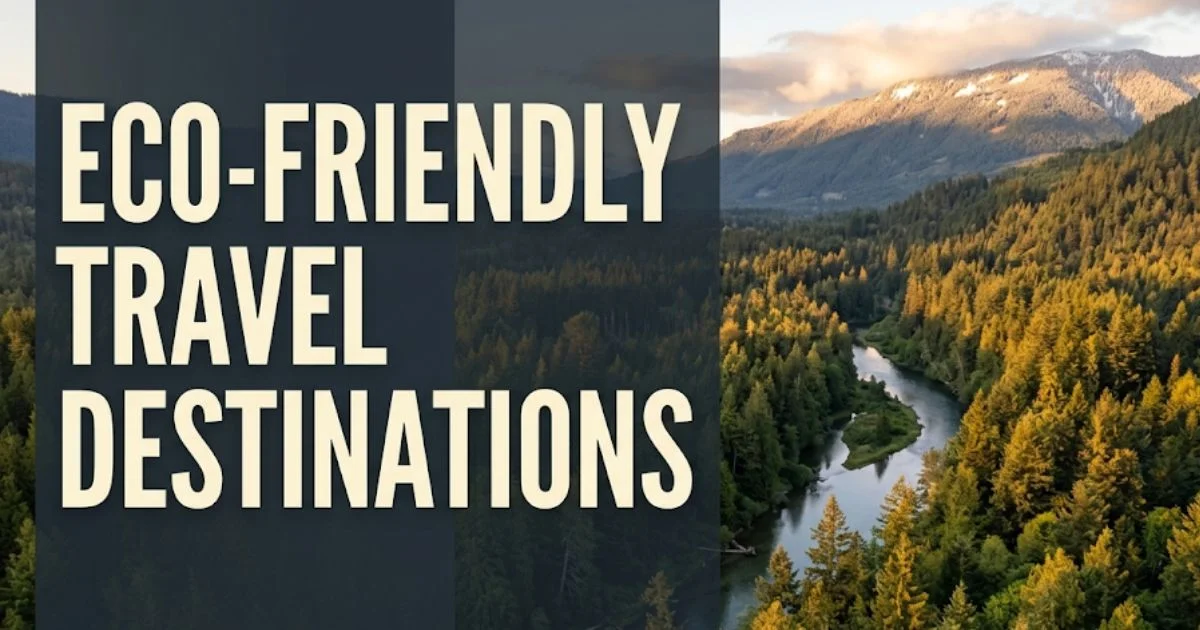
The best eco-friendly travel destinations in the US in 2026 are not the most-photographed national parks on social media. They are the places where your visit actively supports conservation, local communities, and sustainable infrastructure rather than overwhelming it.
According to the Global Sustainable Tourism Council, genuinely sustainable destinations must meet criteria across environmental, social, economic, and cultural dimensions. Most popular travel lists apply none of these standards.
This guide covers 16 specific dimensions of eco-travel planning for 2026. You will walk away knowing exactly which destination suits your profile, budget, and values.
Eco-Friendly Travel Destinations: What You’re Actually Looking For
The best eco-friendly travel destinations share four measurable qualities: protected natural systems, low-impact visitor infrastructure, locally owned accommodation, and community benefit from tourism revenue.
Olympic National Park in Washington, Crater Lake National Park in Oregon, and Acadia National Park in Maine consistently meet these criteria within the US. Each operates with shuttle systems, carry-in/carry-out waste protocols, and ranger-led conservation programs.
Destinations that market themselves as green without verifiable certification or infrastructure warrant skepticism. The phrase “eco-friendly” costs nothing to print on a brochure.
For budget travelers, public lands managed by the National Park Service and the Bureau of Land Management offer the most credibly sustainable access. Entry fees fund active conservation programs directly.
Couples and solo travelers seeking deeper experience should prioritize destinations with certified eco-lodge networks rather than standard hotels with recycling bins. The distinction matters in practice.
Insider Tip:
- America the Beautiful Annual Pass covers entry to all National Park Service sites for approximately $80 per year (verify current pricing at NPS.gov before purchase)
- BLM lands often offer free dispersed camping adjacent to protected areas with lower visitor pressure than national park campgrounds
- For solo travelers: BLM recreation areas near Moab, Utah and Bend, Oregon provide genuine wilderness access without permit competition
What Makes a Destination Eco-Friendly
A destination qualifies as genuinely eco-friendly when it meets independent standards, not when its tourism board says so.
The three most credible verification frameworks for 2026 are GSTC certification (Global Sustainable Tourism Council), Green Globe certification, and the Leave No Trace Center for Outdoor Ethics principles applied at a destination-wide scale. Look for these designations in destination planning materials.
Practical indicators include shuttle-only or vehicle-free access zones, water conservation infrastructure, certified organic or locally sourced dining networks, dark sky designations from the International Dark-Sky Association, and Indigenous partnership agreements.
Cities with genuine eco-credentials include Portland, Oregon (ranked consistently among the most bike-friendly and transit-efficient US cities), Asheville, North Carolina (strong locally owned business ecosystem, farm-to-table dining network, and Blue Ridge Parkway conservation adjacency), and Flagstaff, Arizona (the world’s first International Dark Sky City designation, certified by the International Dark-Sky Association).
Families with children benefit from destinations with formal ranger education programs. The National Park Service’s Junior Ranger Program, available at every NPS unit, is one of the most underused eco-education resources in US travel.
| Eco Credential | What It Means | Where to Look for It |
|---|---|---|
| GSTC Certification | Third-party verified sustainability standards | Destination planning websites |
| Green Globe | Hotel and tour operator certification | Property booking pages |
| IDA Dark Sky Designation | Light pollution protected areas | International Dark-Sky Association website |
| Leave No Trace Partnership | Destination-level LNT commitment | Trail and park signage |
| B Corp Lodging | Business-level sustainability certification | Accommodation booking sites |
Best Eco-Friendly Travel Destinations in the US
The single most authentic eco-friendly travel destination in the United States for 2026 is Olympic National Park in Washington State.
Olympic contains three distinct ecosystems within one protected area: temperate rainforest (the Hoh Rain Forest), alpine meadows (Hurricane Ridge), and 73 miles of undeveloped Pacific coastline. No other national park in the continental US offers this range within a single entry.
Acadia National Park in Maine ranks second for overall eco-travel infrastructure. Its Island Explorer shuttle system operates free of charge and reduces private vehicle traffic across the park’s key sites, including Cadillac Mountain and Sand Beach (verify seasonal shuttle operation before visiting).
Crater Lake National Park in Oregon earns its place for water purity and low visitor pressure relative to its scenic quality. The lake holds the title of deepest lake in the US, at 1,943 feet, and the surrounding Cascade geology is unlike any other national park landscape.
For travelers avoiding the most crowded parks, Great Basin National Park in Nevada and North Cascades National Park in Washington receive a fraction of the visitation of Zion or Yellowstone while offering comparable wilderness quality.
Asheville, North Carolina is the strongest urban eco-travel pick. Its River Arts District, farmer’s markets, and Blue Ridge Parkway access combine genuine sustainability infrastructure with a walkable, locally owned dining and hospitality scene.
| Destination | Region | Best For | Cost Tier | Best Season | Key Eco Credential |
|---|---|---|---|---|---|
| Olympic National Park, WA | Pacific NW | All profiles | Low to mid | July to Sept | NPS conservation program |
| Acadia National Park, ME | Northeast | Couples, families | Low to mid | June to Sept | Free shuttle system |
| Crater Lake NP, OR | Pacific NW | Solo, couples | Low | July to Sept | Water conservation |
| Asheville, NC | Southeast | Couples, budget | Mid | April to June, Sept to Oct | Local economy ecosystem |
| Flagstaff, AZ | Southwest | Solo, couples | Mid | May to Oct | First IDA Dark Sky City |
| Great Basin NP, NV | Mountain West | Solo, adventurous | Low | June to Sept | Extremely low crowd impact |
| Bend, OR | Pacific NW | All profiles | Mid | June to Sept | Bike-friendly, BLM access |
Sustainable Travel Destinations for Every Budget
Eco-friendly travel does not require a premium budget. The most affordable sustainable US destinations are public lands managed by the National Park Service, the BLM, and state park systems.
Budget tier: An America the Beautiful Annual Pass (approximately $80, verify current NPS pricing) covers entrance to all national parks and most federal recreation areas for a full year. Dispersed camping on BLM land outside Moab, Utah or Bend, Oregon is often free with minimal permit requirements. Pair this with a basic tent setup and grocery store meal prep, and a week of genuine eco-travel costs less than two nights at a mid-range urban hotel.
Mid-range tier: Certified eco lodges in the $120 to $220 per night range exist in every major eco-travel region. Treehouse Point in Fall City, Washington (near Seattle) runs approximately $200 to $300 per night as of recent years and holds genuine ecological design credentials. Verify current rates directly with the property.
Premium tier: For travelers with larger budgets, the most impactful eco-travel investment is a community-based ecotourism package. Indigenous-led wilderness experiences in Montana, Oregon, and Alaska route tourism revenue directly to land stewardship and community development.
Solo travelers save significantly versus couples or families on accommodation by using eco-friendly hostels. Portland, Oregon’s hostel network near Hawthorne Boulevard provides genuinely low-footprint urban base camping with easy access to Forest Park and the Columbia River Gorge.
Budget-Friendly Eco Travel Options:
- BLM dispersed camping near Moab, Utah (free to low-cost, permit requirements vary; verify with BLM before visiting)
- National Forest campgrounds across the Cascade Range, Sierra Nevada, and Southern Rockies
- Amtrak Coast Starlight rail travel between Los Angeles and Seattle (lower carbon than flying, roughly comparable cost to budget flights when booked in advance)
- State park cabin and yurt programs in Oregon, Washington, North Carolina, and Maine (typically $50 to $120 per night; reserve through state park booking systems)
Key Takeaway: The America the Beautiful Annual Pass is the single most cost-effective eco-travel investment for any US traveler planning two or more national park visits in 2026.
Eco-Friendly National Parks for Responsible Travel
The most responsible national park visits in 2026 require timed-entry permits at the most visited parks. Showing up without one at Zion National Park, Glacier National Park, or Acadia National Park during peak season means you may not enter.
The National Park Service implemented or expanded timed-entry reservation systems at multiple major parks in recent years, and 2026 continues this pattern. Check Recreation.gov for current permit requirements at your target park at least 60 days before your visit.
The genuinely lowest-impact national park visits go to lesser-known NPS units. North Cascades National Park in Washington receives fewer than 30,000 annual overnight visitors compared to Zion’s 4 million-plus annual visitors. The wilderness quality is comparable. The trail conditions are dramatically better preserved.
Great Smoky Mountains National Park on the Tennessee/North Carolina border is the most visited national park in the US. Visiting its lesser-known trails, specifically Alum Cave Trail and Chestnut Top Trail, rather than the Laurel Falls or Clingmans Dome overlooks, dramatically reduces your personal footprint and improves your actual experience.
For families with children, the Junior Ranger Program at every NPS unit converts a park visit from passive tourism to active conservation education. Kids aged 5 through 13 earn ranger badges by completing activity books focused on local ecology.
To book a timed-entry permit at a major national park:
- Create a Recreation.gov account at least 60 days before your planned visit
- Search your target park’s reservation page for permit availability
- Set a calendar alert for the release date, as popular permits sell out within minutes of release
- Book the earliest available entry window to maximize your day in the park
- Print or download your permit confirmation; cell service inside most national parks is unreliable
Eco-Friendly Travel Destinations in the Pacific Northwest
The Pacific Northwest is the strongest eco-travel region in the continental United States for 2026, combining dense national park infrastructure, bus and shuttle access, bike-friendly urban centers, and a robust locally owned hospitality ecosystem.
Olympic National Park anchors the region. The Hoh Rain Forest section receives approximately 140 inches of rainfall annually, creating one of the only temperate rainforests in North America. The trail system here is among the best-maintained in the NPS network, and the visitor pressure remains manageable compared to the park’s coastal sections.
Bend, Oregon is the Pacific Northwest’s strongest eco-travel urban base. Its proximity to the Deschutes National Forest, Smith Rock State Park, and Crater Lake National Park makes it a legitimate hub for multi-day low-impact itineraries. Bend has developed a significant EV charging infrastructure along US-97 for travelers driving electric vehicles.
Portland, Oregon offers the most walkable and transit-rich urban eco-travel experience in the region. Forest Park, a 5,200-acre urban wildland directly within the city, gives travelers access to 80-plus miles of trails without leaving the metropolitan area. The TriMet light rail system (MAX) connects the airport to the city center and eliminates the need for a rental car for most visitors.
North Cascades National Park in Washington is the region’s most undervisited wilderness destination. Fewer visitor facilities mean lower impact, but also less ranger presence and more self-sufficiency required.
Families should note that Pacific Northwest destinations involve significant rainfall from October through June. Summer (July through September) is the practical family travel window for this region.
Insider Tip:
- The Hoh Rain Forest Visitor Center closes seasonally; verify hours and operating dates with NPS before planning your visit
- North Cascades is shuttle-free; you need a personal vehicle or cycling setup to access trailheads beyond Newhalem
- Treehouse Point in Fall City, WA is a 45-minute drive from Seattle and offers one of the most genuinely immersive eco-accommodation experiences in the region without requiring a national park visit
Sustainable Coastal Travel Destinations
The most eco-credible coastal travel destinations in the US are those operating within or adjacent to National Seashore designations, which prohibit commercial development and limit visitor infrastructure to protect marine and coastal ecosystems.
Cape Cod National Seashore in Massachusetts protects 40 miles of Atlantic coastline. Race Point Beach on the Provincetown tip offers one of the best whale-watching vantage points on the East Coast, with North Atlantic right whales and humpbacks visible from shore during spring migration (April through June). Verify current whale watching season conditions with the Cape Cod National Seashore’s visitor center.
Point Reyes National Seashore in California, an hour north of San Francisco, protects tule elk herds, harbor seal colonies at Drakes Beach, and old-growth bishop pine forest. It receives significantly fewer visitors than Golden Gate National Recreation Area despite superior ecological value.
Acadia National Park’s coastal zone on Mount Desert Island, Maine, combines granite shoreline, tidal pools, and the Schoodic Peninsula (the only mainland section of Acadia) for travelers who want uncrowded coastal ecology. The Schoodic Peninsula receives a small fraction of the main island’s visitor volume with comparable scenic quality.
For reef-safe and marine-ecosystem-responsible travel, avoid applying chemical-based sunscreens before entering any coastal water at these sites. Use mineral-based sunscreens (zinc oxide or titanium dioxide formulations) and pack out all waste including food scraps at beach sites.
Couples find coastal eco-destinations most rewarding in shoulder season: late May through June and September through early October, when crowds thin significantly and wildlife activity remains high.
Key Takeaway: Point Reyes National Seashore north of San Francisco is the Pacific Coast’s most authentically eco-credible coastal destination, combining marine mammal protection zones, working organic farmland, and dramatically lower crowds than any coastal California destination south of it.
Eco-Friendly Mountain and Desert Travel Destinations
Flagstaff, Arizona is the most complete eco-friendly mountain and desert travel destination in the US for 2026. It holds International Dark-Sky City certification from the International Dark-Sky Association, sits at 7,000 feet elevation in Coconino National Forest, and serves as the northern gateway to the South Rim of the Grand Canyon.
Moab, Utah is the mountain-desert eco-travel destination with the most complex sustainability profile. It provides access to Arches National Park and Canyonlands National Park, but the town itself has grown rapidly and its water supply from the Colorado River is under documented environmental stress. Travelers visiting Moab should stay in locally owned accommodations rather than chain hotels, minimize water use, and avoid off-road vehicle recreation on cryptobiotic soil crust areas.
Missoula, Montana functions as the eco-travel hub for the Northern Rockies. Its proximity to the Rattlesnake Wilderness, the Bitterroot Valley, and Glacier National Park (roughly a 2-hour drive north) makes it a strong base. The Clark Fork River runs through downtown, and the city’s trail network allows carless exploration of the urban core and adjacent wildlands.
For desert travelers, Joshua Tree National Park in California provides a genuine wilderness experience accessible from the Los Angeles metro area. Visit between October and April only. The park’s summer temperatures from June through September regularly exceed 105 degrees Fahrenheit. This is not a heat advisory. This is a hard planning constraint.
Seniors and travelers with mobility considerations should note that Flagstaff’s 7,000-foot elevation requires an acclimatization day before strenuous hiking. The city’s walkable historic downtown and accessible forest roads allow lower-intensity eco-experiences without altitude stress.
| Destination | Best Season | Avoid | Physical Demand | Key Experience |
|---|---|---|---|---|
| Flagstaff, AZ | May to Oct | Winter if ice-averse | Low to moderate | Dark sky observation, Coconino Forest trails |
| Moab, UT | March to May, Sept to Nov | June to August (extreme heat) | Moderate to high | Arches, Canyonlands canyon hiking |
| Missoula, MT | June to Sept | Winter road conditions | Low to moderate | Rattlesnake Wilderness, Clark Fork walks |
| Joshua Tree, CA | Oct to April | June to Sept (extreme heat) | Moderate | Desert geology, dark sky, rock scrambles |
How to Choose the Right Eco-Friendly Destination
Choosing the right eco-friendly destination in 2026 comes down to four personal filters: physical comfort level, budget tier, travel companion situation, and which ecosystem genuinely interests you.
Use this decision framework before booking anything:
- Identify your ecosystem preference. Temperate rainforest (Pacific Northwest), alpine (Northern Rockies and Cascades), desert canyon (Southwest), coastal (Northeast or California), or deciduous forest and mountain (Southeast Appalachians). Each requires different gear, fitness levels, and seasonal timing.
- Assess your physical demand tolerance. Most national park eco-experiences involve 3 to 8 miles of hiking per day on uneven terrain. If mobility is a consideration, prioritize destinations with accessible visitor centers, shuttle systems, and paved nature trails. Acadia and Olympic both offer accessible coastal and forest experiences.
- Match your budget to the destination’s infrastructure. Budget travelers do best on public lands (BLM and NPS) with tent camping. Mid-range travelers access the full eco-lodge spectrum. Premium travelers should invest in community-based or Indigenous-led ecotourism experiences, where the revenue impact is most direct.
- Consider your travel companion situation. Solo travelers have maximum flexibility and should prioritize shoulder season visits for lower permit competition and wildlife activity. Families need destinations with Junior Ranger programs and paved or well-graded trails for children. Couples gain most from less-visited coastal or mountain destinations where crowd-free settings are achievable.
- Verify the destination’s eco-credentials independently. Check the GSTC database, the International Dark-Sky Association map, and the NPS conservation program listings for your candidate destination before booking.
Eco Lodges and Green Certified Accommodations
Genuine eco lodges in the US use solar or wind energy, composting waste systems, rainwater collection, locally sourced food, and low-impact building materials. A hotel with a towel reuse program is not an eco lodge.
Treehouse Point in Fall City, Washington, sits 30 minutes east of Seattle and operates with ecological design standards across its six treehouse units. Rates run approximately $200 to $300 per night as of recent years; verify current pricing directly with the property.
The North Fork Hostel and Square Peg Ranch near Whitefish, Montana uses solar power, hosts organic gardens, and sits at the western entrance to Glacier National Park. It serves both budget travelers (hostel dormitory rates) and those seeking private room options, making it one of the most accessible eco-lodging options for solo travelers in the Northern Rockies.
Inn of the Lost Coast near Shelter Cove on the King Range National Conservation Area (California’s “Lost Coast”) operates in one of the most remote, undeveloped coastal zones in the continental US. Getting there requires a 25-mile drive down a mountain road. That access barrier is precisely what keeps the ecosystem intact.
When evaluating any accommodation claiming eco-status, look for three specific certifications: Green Globe, LEED (Leadership in Energy and Environmental Design), or Certified B Corp status. These require third-party verification. “Eco-friendly” as a self-applied marketing term requires none.
What to look for when booking eco accommodations:
- Third-party certification listed on the property’s booking page
- Specific energy source named (solar, wind, grid-tied with offset)
- On-site composting or waste diversion program described in detail
- Locally sourced meals noted with specific farm or supplier names
- Water conservation measures beyond towel reuse
Key Takeaway: If an accommodation calls itself eco-friendly but cannot name its energy source, certification body, or waste management system, treat it as a marketing claim rather than a sustainability credential.
Greenwashing in Travel and How to Spot It
Greenwashing in travel is the practice of marketing a destination, accommodation, or tour as environmentally responsible without meeting verifiable sustainability standards.
The Federal Trade Commission’s Green Guides provide the most authoritative US framework for evaluating environmental marketing claims. Under these guidelines, vague claims like “green,” “sustainable,” or “eco-friendly” without specific supporting evidence are considered misleading marketing.
In practice, greenwashing most commonly appears as: hotels with recycling bins but no renewable energy infrastructure, tour operators describing trips as “carbon neutral” without naming a credible offset program, and destinations marketing themselves as “pristine wilderness” while operating large-scale vehicle infrastructure directly through sensitive ecosystems.
Specific red flags to watch for when booking eco-friendly travel in 2026:
- No third-party certification named, only self-applied “eco” branding
- Carbon offset program not linked to a named, verifiable organization
- “Sustainable” tour using internal combustion vehicles where electric or human-powered alternatives exist
- Accommodation emphasizing towel reuse as its primary environmental program
- Wildlife tourism operator claiming “ethical” practices without specifying minimum viewing distances or group size limits
The most reliably sustainable US travel experiences are on public lands operated by the NPS or BLM, where environmental standards are set by federal regulation rather than marketing budgets. Independent eco lodges with GSTC or B Corp certification come next.
Eco-Friendly Travel for Families
The best eco-friendly travel destinations for families with children combine genuine environmental education with physical accessibility and practical logistics.
Acadia National Park in Maine is the top family eco-travel destination for 2026. The Junior Ranger Program, the Island Explorer free shuttle, bike-friendly carriage roads (51 miles of packed gravel accessible to riders of all ages), and clear Atlantic tidal pools at Ship Harbor Trail create a multi-day family eco-experience without requiring backcountry fitness levels.
Great Smoky Mountains National Park on the Tennessee-North Carolina border is the most accessible family eco destination in the Eastern US. Entry is free (the only major national park without an entry fee as of 2026, though verify current NPS policy before visiting). The Sugarlands Visitor Center near Gatlinburg, Tennessee provides an excellent orientation and Junior Ranger program launch point.
Asheville, North Carolina adds a strong urban family eco-travel dimension. The Western North Carolina Farmers Market operates year-round and provides genuine local food system education for older children and teens. The Blue Ridge Parkway trailheads within 30 minutes of downtown offer family-appropriate hiking without driving hours into wilderness areas.
For families with children under 8, physical terrain is the primary planning constraint. Prioritize destinations with paved or compacted-surface trails, accessible restroom facilities at regular intervals, and ranger programs that structure the day. Acadia and Great Smoky Mountains meet these criteria better than most western national parks.
What works for families at eco destinations:
- Junior Ranger Programs at every NPS unit (ages 5 to 13)
- Acadia’s Island Explorer shuttle (free, seasonal; verify schedule before visiting)
- Great Smoky Mountains free entry and accessible visitor center network
- Asheville’s River Arts District for urban eco-cultural exploration with older kids
- BLM recreation areas with dispersed family camping near Bend, Oregon
Solo Eco Travel Destinations and Tips
Solo eco-travelers have the greatest flexibility of any traveler profile and are best positioned to visit during shoulder season, when permit competition drops, wildlife activity peaks, and the low-impact ideal is most achievable.
Bend, Oregon is the top solo eco-travel base in the Pacific Northwest. A solo traveler can access Smith Rock State Park (world-class sport climbing and wildlife watching), the Deschutes River Trail (a 10-mile paved multi-use path through downtown), and Newberry National Volcanic Monument within a 45-minute drive. The city’s hostel and budget hotel infrastructure keeps solo accommodation costs manageable.
Missoula, Montana is the best solo eco-travel urban base in the Northern Rockies. The Clark Fork Coalition and Montana Natural History Center both offer low-cost programming that connects solo travelers with local conservation community events, a genuinely different experience from touring alone.
Flagstaff, Arizona is the best solo eco destination for travelers prioritizing dark sky astronomy and desert ecology. The Lowell Observatory, which has operated since 1894, offers evening programs that combine genuine scientific history with dark sky access. Verify current program schedules and pricing directly with the observatory.
Safety for solo eco-travelers in wilderness areas requires specific planning. Always file a trip plan with the relevant ranger station or a designated contact before solo backcountry travel. Carry a personal locator beacon (PLB) in areas with no cell coverage. The majority of wilderness eco destinations in the US have no reliable cellular infrastructure beyond the visitor center.
Solo eco-travel logistics checklist:
- File a trip plan with NPS, BLM, or US Forest Service before any backcountry day
- Carry a personal locator beacon or satellite communicator (Garmin inReach, SPOT, or equivalent)
- Book hostel accommodations in Bend, Portland, or Missoula to reduce solo accommodation costs
- Target shoulder season: May through June and September through October for lowest permit competition
- Join a ranger-led program on arrival to meet other solo travelers in the same region
Key Takeaway: Solo eco-travelers should target Bend, Oregon or Missoula, Montana as base camps, both offer direct wilderness access, hostel infrastructure, and active local conservation communities that make solo travel feel genuinely connected rather than isolated.
Eco-Friendly Road Trips and Low-Carbon Travel Options
The most carbon-efficient overland eco-travel in the US in 2026 is rail travel via Amtrak, followed by EV road trips where charging infrastructure supports the route, followed by fuel-efficient vehicle travel with multi-destination stops that maximize miles per trip.
Amtrak Coast Starlight between Los Angeles (LAX) and Seattle (King Street Station) passes through Santa Barbara, San Luis Obispo, the Central Valley, Sacramento, Portland, and multiple Oregon stops. This is one of the most ecologically scenic rail routes in the world and emits significantly less carbon per passenger mile than domestic flying. Book 60 to 90 days in advance for best availability and pricing.
For EV road trips, the Pacific Coast Highway (US-1) through California now has reliable DC fast-charging infrastructure between San Diego and San Francisco. The North Cascades Highway (SR-20) in Washington has limited charging infrastructure and requires advance planning. Check PlugShare or ChargePoint for current station locations before departing on any EV road trip through the Mountain West or Pacific Northwest.
The Blue Ridge Parkway (469 miles between Cherokee, North Carolina and Waynesboro, Virginia) is the most ecologically significant road trip route in the Eastern US. Vehicle-based travel is unavoidable here, but the low speed limit (45 mph maximum), pull-off wildlife watching culture, and prohibition on commercial vehicle traffic make it as low-impact a road travel experience as exists in the country.
Budget travelers on eco road trips should prioritize stops at BLM free camping areas, National Forest campgrounds (typically $10 to $25 per night; verify current pricing at Recreation.gov), and state park cabin networks rather than private campgrounds or motels.
Eco road trip carbon reduction checklist:
- Drive a hybrid or EV where route charging infrastructure supports it
- Plan multi-destination routes to maximize destinations per driving mile
- Use National Forest and BLM campgrounds instead of private RV parks
- Pack reusable cooking equipment to avoid disposable food service waste
- Offset unavoidable emissions through Gold Standard-certified carbon offset programs (verify certification before purchasing)
Sustainable Travel Planning Checklist for 2026
Effective eco-travel planning for 2026 requires booking permits and accommodations significantly earlier than standard travel. Timed-entry permits for Zion, Glacier, and Acadia release months in advance and sell out within minutes of availability.
The complete sustainable travel planning sequence for 2026:
- Choose your destination using the ecosystem and profile framework from the “how to choose” section above. Confirm your target dates align with the destination’s genuine best season, not just peak tourism season.
- Check Recreation.gov for current timed-entry permit requirements at your target national park. Create an account and set alerts for permit release dates. For Zion, Glacier, and Acadia during peak season, permits can be competitive within the first 30 minutes of release.
- Book your eco lodge or certified green accommodation directly with the property rather than through third-party booking platforms. This ensures a higher percentage of your payment reaches the local operation.
- Research the Leave No Trace principles specific to your destination’s ecosystem (desert, alpine, coastal, and forest each have different LNT protocols). Review the LNT Center’s online resources before departure.
- Pack a zero-waste travel kit: reusable water bottle with filter capability (Sawyer Squeeze or LifeStraw for backcountry), reusable food containers, mineral-based sunscreen for coastal or alpine use, bear canister if required by your destination’s regulations.
- File a trip plan with the relevant ranger station or NPS office for any backcountry itinerary. This is a safety requirement, not a bureaucratic formality.
- On arrival, purchase or confirm your America the Beautiful Pass if visiting multiple federal sites. Support local businesses exclusively for dining and supplies.
- After your trip, verify and purchase Gold Standard carbon offsets for any flying, driving, or emissions-producing transportation if that aligns with your travel sustainability goals.
Safety and Practical Warnings for Eco Travel
Eco-friendly travel destinations are, by definition, places with intact natural systems. Intact natural systems include genuine hazards that managed resort environments do not.
Key safety and practical facts every eco-traveler should know before 2026:
- Altitude adjustment is non-negotiable at Rocky Mountain destinations. Flagstaff sits at 7,000 feet. Moab approaches 4,000 feet. Rocky Mountain National Park’s tundra areas exceed 12,000 feet. Plan a rest day before strenuous hiking at any destination above 6,000 feet.
- Desert heat is a hard planning constraint, not a precaution. Joshua Tree, Moab, and the Grand Canyon’s inner canyon reach 110 to 120 degrees Fahrenheit in June through August. These are not uncomfortable conditions. They are life-threatening ones for unprepared travelers.
- Pacific coast rip currents kill swimmers every year at unguarded beaches. Cape Cod, Point Reyes, and Olympic National Park’s coastal zone all have sections with dangerous rip current potential. Swim only at supervised beaches. If caught in a rip current: swim parallel to shore, not directly toward it.
- Wildlife distance requirements are laws, not suggestions. National park regulations require a minimum 100-yard distance from wolves and bears, and 25 yards from all other wildlife. Violations result in citations and endanger animals by habituating them to human proximity.
- Cell service is absent in most genuine wilderness eco destinations. Carry a personal locator beacon (PLB) or satellite communicator for any backcountry or remote coastal travel. Do not rely on smartphone navigation in wilderness areas without downloaded offline maps.
- Wildfire smoke affects Pacific Northwest destinations annually from July through September. Check AirNow.gov for current air quality index ratings before and during any Pacific Northwest visit. AQI above 150 is a health concern; above 200 is hazardous.
Bold warning: Always file a trip plan with the relevant ranger station before solo or group backcountry travel. Register through the NPS wilderness permit system or leave your plan with a trusted contact who knows when to call for help.
Frequently Asked Questions About Eco-Friendly Travel Destinations
What are the most eco-friendly travel destinations in the United States?
The most eco-friendly travel destinations in the US include Olympic National Park (Washington), Acadia National Park (Maine), Crater Lake National Park (Oregon), Asheville (North Carolina), and Flagstaff (Arizona).
Each meets verified sustainability criteria: protected ecosystems, shuttle or low-vehicle-impact infrastructure, ranger conservation programs, and locally owned hospitality networks.
Lesser-known options like Great Basin National Park (Nevada) and North Cascades National Park (Washington) offer comparable ecology with dramatically lower visitor pressure.
How do I know if a travel destination is genuinely eco-friendly?
A destination is genuinely eco-friendly when it holds third-party certification from a recognized body like the GSTC, Green Globe, or the International Dark-Sky Association.
Self-applied “eco-friendly” marketing without named certification, specific energy infrastructure, or measurable waste diversion programs is a greenwashing signal rather than a sustainability credential.
Verify claims by checking the GSTC certified destination database and the International Dark-Sky Association’s map before booking.
What is the best time of year to visit eco-friendly destinations in the US?
The best time to visit most US eco-friendly destinations is shoulder season: May through June and September through October.
Permit competition is lower, wildlife activity is high, trail conditions are better preserved, and visitor crowding at sensitive sites drops significantly compared to July and August.
Pacific Northwest destinations are accessible from July through September due to rainfall patterns. Desert destinations (Joshua Tree, Moab, Grand Canyon) should be avoided from June through August due to extreme heat.
Are eco-friendly travel destinations affordable for budget travelers?
Yes, public lands managed by the National Park Service and Bureau of Land Management are among the most affordable travel options in the US.
The America the Beautiful Annual Pass (approximately $80 per year, verify current NPS pricing) covers entrance to all national parks and federal recreation areas for 12 months.
BLM dispersed camping near Moab, Utah and Bend, Oregon is free or low-cost with minimal permit requirements, making week-long eco-travel itineraries achievable for under $300 in total accommodation costs.
Which eco-friendly destinations are best for families with children?
Acadia National Park in Maine is the top family eco-destination, combining the free Island Explorer shuttle, 51 miles of bike-friendly carriage roads, accessible tidal pools, and the Junior Ranger Program.
Great Smoky Mountains National Park is the best Eastern US option for families with very young children because it has free entry, accessible visitor centers, and paved trails near the Sugarlands entrance.
Asheville, North Carolina serves families with older children who benefit from farmer’s market visits, the Blue Ridge Parkway, and the Western North Carolina Farmers Market as genuine food system education.
What should I pack for an eco-friendly trip in 2026?
Pack a reusable water bottle with filter capability (Sawyer Squeeze or LifeStraw for backcountry use), reusable food containers, mineral-based sunscreen (zinc oxide or titanium dioxide), and a personal locator beacon for any backcountry or remote coastal travel.
Download offline maps for your destination before departure. Cell service is absent at most authentic eco-travel sites including Olympic National Park, North Cascades, and the Lost Coast of California.
Bring a bear canister if your destination requires one (check current NPS regulations for your specific park) and pack all waste out from backcountry sites, including food scraps and biodegradable packaging.
Plan Your Eco-Friendly Trip With Confidence
The single most important step in planning a genuine eco-friendly trip in 2026 is verifying your destination’s credentials before booking, not after. Check the GSTC database, confirm timed-entry permit requirements on Recreation.gov, and book accommodations directly with certified green properties.
Travel conditions, permit systems, seasonal access, operating hours, and accommodation pricing change. Verify key logistics directly with the National Park Service, your target eco lodge, and your state or regional tourism office before departure.
The destinations in this guide earn their eco-credentials through verifiable infrastructure and conservation programs. Book the one that fits your profile, get your permits secured early, and travel with the intention of leaving every site in better condition than you found it.