Places to Visit in Los Angeles: The 2026 Travel Guide

The best places to visit in Los Angeles span 503 square miles of beach cities, mountain parks, world-level museums, and food-rich neighborhoods that reward travelers who plan deliberately rather than generically.
Los Angeles hosts over 50 million visitors annually, according to the Los Angeles Tourism and Convention Board (Discover Los Angeles). The city’s cultural and natural range is genuinely unmatched among American cities of comparable size.
This guide covers the specific named places, honest practical logistics, and traveler-profile guidance you need. It covers neighborhoods, museums, beaches, hiking, food, day trips, and a full itinerary framework.
Places to Visit in Los Angeles: What the City Actually Delivers
Los Angeles delivers a genuinely different experience from every other major American city. It is not compact, not walkable end-to-end, and not a single coherent neighborhood.
It is a network of distinct communities: beach towns, hillside enclaves, immigrant food districts, world-level art institutions, and wilderness parks within city limits.
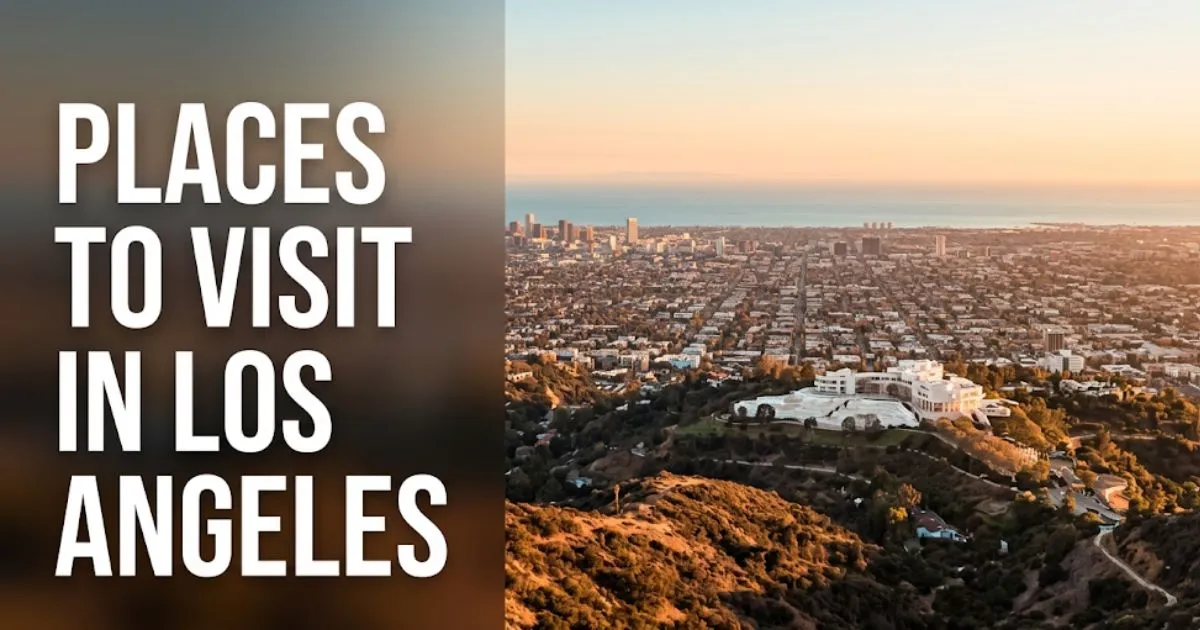
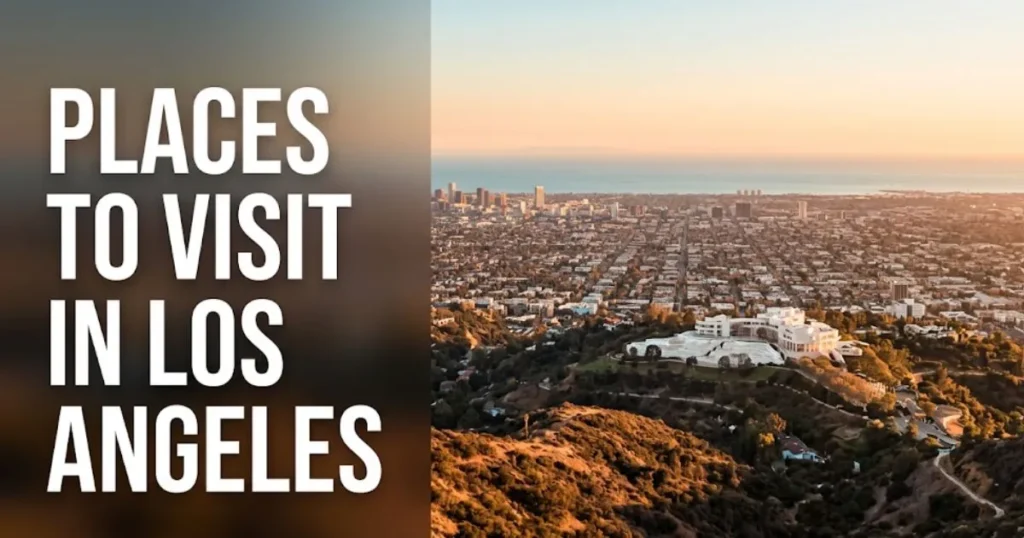
Griffith Observatory sits in the hills above Hollywood with free admission to its grounds and the best unobstructed views of the LA Basin. The Getty Center in Brentwood houses one of the world’s great collections of European paintings, sculpture, and decorative arts at zero admission cost.
These two attractions alone justify the trip for culturally motivated travelers. Both are genuinely exceptional by international standards, not just by domestic comparison.
The challenge is logistics. Driving between these two locations during peak hours takes 45 minutes minimum. Plan your days by geographic zone, not by attraction type.
Insider Tip:
- Book Getty Center parking reservations in advance; the lot fills by 11 a.m. on weekends
- Arrive at Griffith Observatory on weekday mornings; weekend afternoon parking is nearly impossible
- Families should note the Getty Center has a dedicated children’s interactive space on the lower terrace level
Best Places to Visit in Los Angeles by Experience Type
The best places to visit in Los Angeles fall into four distinct categories: cultural institutions, outdoor and natural spaces, beach communities, and food-and-neighborhood experiences.
| Category | Best Named Example | Best For | Cost Range | Advance Booking |
|---|---|---|---|---|
| Cultural Institution | Getty Center | Couples, art travelers | Free entry, parking fee | Parking reservation recommended |
| Outdoor Space | Griffith Park trails | Solo, families | Free | No |
| Beach Community | Santa Monica | Families, couples | Free beach, paid parking | No |
| Food and Neighborhood | Grand Central Market | All profiles | $8 to $20 per meal | No |
| Local Institution | Huntington Library and Gardens | Seniors, couples | Admission fee applies | Yes, timed entry |
| Under-the-radar | Museum of Jurassic Technology, Culver City | Curious solo, couples | Low admission | No |
The Huntington Library, Art Museum, and Botanical Gardens in San Marino is the single most underrated major attraction in Los Angeles. Repeat visitors and locals consistently rank it above the Getty Center for a full-day cultural experience.
Budget travelers should note that the Huntington requires paid admission, while the Getty Center, Griffith Observatory grounds, and most public beaches are free to enter.
Los Angeles Neighborhoods to Explore
The most rewarding neighborhood experiences in Los Angeles are in Silver Lake, the Arts District, Culver City, and Abbot Kinney Boulevard in Venice.
Silver Lake surrounds its reservoir with independent coffee shops, vinyl record stores, and some of the best natural wine bars in Southern California. The stretch of Sunset Boulevard between Silver Lake and Echo Park is dense with restaurants, bars, and shops that feel nothing like tourist Los Angeles.
The Arts District, east of Downtown along the Los Angeles River, is the city’s most concentrated creative neighborhood. Hauser and Wirth gallery operates its largest North American space here, alongside the legendary Bestia restaurant and the Wurstküche sausage bar.
Culver City has quietly become the city’s gallery district, hosting more contemporary art spaces per block than any other LA neighborhood outside the Arts District.
Abbot Kinney Boulevard in Venice is the city’s most photogenic shopping and dining street, though it draws heavy crowds on weekends. Visit on a weekday morning for a calmer experience.
Insider Tip:
- Skip the Hollywood Walk of Fame retail strip entirely on weekends; the street is crowded, the vendors are aggressive, and the actual star-lined sidewalk is best appreciated in 20 minutes
- For the real local alternative to Hollywood’s tourist corridor, spend that time on Hollywoodland in Beachwood Canyon, a neighborhood of 1920s architecture and canyon hiking below the Hollywood Sign
- Solo travelers find Silver Lake most social from Thursday through Saturday nights
Local alternative to the Hollywood Walk of Fame: Olvera Street in El Pueblo de Los Angeles Historical Monument, the city’s oldest street, provides genuine historical context and far less commercial noise.
Cool Places to Visit in Los Angeles
The coolest places to visit in Los Angeles for experienced travelers or return visitors are the ones most first-timers walk past on their way to the standard circuit.
The Museum of Jurassic Technology on Venice Boulevard in Culver City is genuinely unlike any other museum in America. It presents real and fictional natural history with equal seriousness and visual precision. Even Condé Nast Traveler has called it one of the most singular museum experiences in the US.
Watts Towers (officially Nuestro Pueblo) in South Los Angeles is a UNESCO-recognized work of folk art: 17 interconnected sculptural towers built by Simon Rodia over 33 years using only hand tools and salvaged materials. Admission is low, crowds are minimal, and the experience is genuinely moving.
The Last Bookstore on Spring Street in Downtown Los Angeles occupies a former bank vault and two floors of a historic building. Its art installations made from books are photographed heavily on social media, but the experience in person is worth more than the photo.
Smorgasburg LA at the Row DTLA complex on Sundays draws over 100 food vendors from across Southern California’s independent food scene. It runs in the morning and early afternoon.
Cool places in LA tend to cluster in neighborhoods that require deliberate navigation. Use the journey as part of the experience rather than resenting the drive.
Best Museums in Los Angeles
The best museums in Los Angeles form one of the most concentrated cultural circuits in the United States, anchored by five institutions within a reasonable driving range.
The Broad on Grand Avenue in Downtown Los Angeles houses the collection of philanthropists Eli and Edythe Broad, including major works by Jeff Koons, Cindy Sherman, and Jean-Michel Basquiat. Free timed-entry tickets release online weekly and disappear within minutes. Book two to three weeks in advance for weekend visits.
LACMA (Los Angeles County Museum of Art) on Wilshire Boulevard is the largest art museum in the western United States by collection size. Its outdoor installation, Urban Light by Chris Burden (a forest of 202 cast-iron street lamps), is the most photographed public art installation in the city.
The Natural History Museum of Los Angeles County and the California Science Center sit within walking distance of each other in Exposition Park near USC. The California Science Center is free. The Natural History Museum charges general admission. Together they make a full family day without driving between locations.
The Hammer Museum in Westwood is free on all days. It focuses on contemporary and emerging artists. It is consistently overlooked by first-time visitors and consistently praised by those who discover it.
According to Visit California, the Los Angeles museum corridor along Wilshire Boulevard (known informally as the Museum Mile) represents one of the highest concentrations of publicly accessible art and science institutions per mile in the western US.
Budget travelers: The Broad (free with booking), Hammer Museum (free), California Science Center (free), and Getty Center (free entry) form a full cultural itinerary without a single admission fee for the collections themselves.
Best Beaches in Los Angeles
The best beaches in Los Angeles range from the family-friendly, wide-sand stretches of Santa Monica and Zuma Beach in Malibu to the more local, calmer conditions at El Matador State Beach and Leo Carrillo State Park.
Santa Monica Beach near the Santa Monica Pier is the most accessible beach in LA by public transit. The Metro E Line (Expo Line) runs directly to Downtown Santa Monica. The pier itself has a small amusement park, an aquarium beneath the boardwalk, and a reliably photogenic ferris wheel.
Venice Beach occupies the boardwalk south of Santa Monica. The Ocean Front Walk is loud, crowded, and commercially intense on weekends. The genuine local experience at Venice is two blocks inland on Abbot Kinney Boulevard or at the Venice Canals, a quiet residential neighborhood of actual waterways built in 1905.
El Matador State Beach in Malibu is the area’s most visually dramatic beach: sea stacks, sea caves, and cobbled coves that look nothing like the flat-sand beaches of the Santa Monica Bay. Parking is limited and fills by 9 a.m. on summer weekends. Arrive early or accept a quarter-mile roadside walk.
Zuma Beach offers the widest sandy stretch in Malibu and is family-friendly with lifeguard coverage during summer season. Always verify lifeguard schedules before swimming, as coverage is seasonal and tide conditions vary.
Families should prioritize Santa Monica Beach for stroller access, restroom facilities, and the adjacent pier. Couples find El Matador the most atmospheric. Solo travelers find the most social scene at the southern end of Manhattan Beach, just south of Los Angeles proper.
Best Hiking in Los Angeles
The best hiking in Los Angeles is in Griffith Park, the Santa Monica Mountains National Recreation Area, and Malibu Creek State Park, all within the city or a short drive from central neighborhoods.
Griffith Park contains over 50 miles of trails within city limits. The hike from the Greek Theatre parking area to Griffith Observatory takes approximately 45 minutes and rewards the effort with the same views visitors get from the parking lot, without the parking chaos.
The Temescal Canyon Trail in Pacific Palisades, part of the Santa Monica Mountains National Recreation Area, covers approximately 2.5 miles with a moderate climb to canyon-rim views of the Pacific. It is one of the most popular trails in the National Recreation Area for good reason.
Runyon Canyon Park in Hollywood is the most tourist-trafficked hiking area in the city. Its fame slightly exceeds its reward: the trails are well-maintained and the Downtown views are real, but the Canyon is genuinely crowded on weekend mornings. Experienced LA hikers prefer Fryman Canyon in Studio City for a quieter, shadier alternative.
Malibu Creek State Park offers the most dramatic hiking terrain accessible from central Los Angeles: volcanic rock outcrops, a canyon lake, and the preserved MAS*H filming location. Plan approximately 3 to 4 hours for the full canyon loop.
According to the National Park Service, the Santa Monica Mountains National Recreation Area is the largest urban national park in the United States, covering over 150,000 acres between Highway 101 and the Pacific Ocean.
Seniors and accessibility travelers: The lower grounds of Griffith Park near the Autry Museum of the American West and the Los Angeles Zoo are largely flat and wheelchair-accessible. Most canyon trails require moderate fitness and uneven terrain navigation.
Key Takeaway: Book Getty Center parking, Broad Museum tickets, and Huntington Library timed entry at least two weeks ahead. Parking availability and free tickets disappear faster than any other planning variable in Los Angeles.
Best Food in Los Angeles
The best food in Los Angeles is not in the most photographed restaurants. It is in the city’s deeply layered immigrant food culture: Koreatown’s late-night Korean BBQ corridor, East Los Angeles taquerias, Cambodian restaurants on Long Beach Boulevard in South LA, and Oaxacan food in Pico Union.
Grand Central Market on Broadway in Downtown Los Angeles is the most useful single food destination for first-time visitors. Open daily, it houses around 40 vendors across a historic 1917 market hall. Eggslut (brunch sandwiches), Wexler’s Deli (house-smoked fish and pastrami), and Horse Thief BBQ anchor a vendor mix that ranges from Salvadoran pupusas to Japanese sando sandwiches.
Smorgasburg LA at Row DTLA operates on Sundays and brings the city’s independent food scene to one courtyard. It is the single best weekly food market event in Southern California.
For the city’s best Korean BBQ, Park’s BBQ on Vermont Avenue in Koreatown is the benchmark that both locals and food journalists return to repeatedly. The cuts of prime galbi and dry-aged beef are well above the standard Koreatown level.
El Huarache Azteca on York Boulevard in Highland Park is the neighborhood taqueria that LA food writers cite consistently for huaraches, the oval-shaped masa base loaded with beans, meat, and fresh toppings. It costs a fraction of any sit-down restaurant on the west side.
Budget travelers can eat exceptionally well in Los Angeles for $10 to $20 per meal by focusing on taquerias, Korean BBQ lunch specials, and market food rather than restaurant dining rooms. Couples looking for a special dinner should target the Arts District along Traction Avenue: Bestia and Bavel are the two most-awarded reservation-required restaurants in the area.
Fun Places to Visit in Los Angeles
The most fun places to visit in Los Angeles beyond the obvious circuit include the Rose Bowl Flea Market in Pasadena, Grand Performances at California Plaza in Downtown, and the Hollywood Bowl summer concert series.
The Rose Bowl Flea Market runs on the second Sunday of each month at the Rose Bowl Stadium in Pasadena. Over 2,500 vendors sell vintage clothing, furniture, art, and collectibles across the stadium grounds. General admission is low; early-entry VIP tickets allow access before the crowds arrive.
Grand Performances is a free outdoor concert and performance series held at California Plaza in Bunker Hill, Downtown. It runs from June through September with a program of world music, dance, and contemporary performance. The setting, on a granite plaza above the city’s financial district, is architecturally dramatic.
The Hollywood Bowl sits in a natural amphitheater in the Hollywood Hills. The Los Angeles Philharmonic plays here through summer, alongside jazz, pop, and comedy programming. Arrive 90 minutes early for the parking transition to manageable levels. Pack a picnic; the Bowl allows full picnic setups in the terrace boxes.
Families find the Hollywood Bowl works best for children aged 8 and up. Younger children find the evening timing and long concert durations difficult. Couples should book shell-adjacent terrace boxes for the most romantic configuration. Solo travelers find the general seating section genuinely social.
Free Things to Do in Los Angeles
Free things to do in Los Angeles are plentiful and span world-level institutions, outdoor spaces, and public cultural events.
Free entry attractions in Los Angeles:
- Getty Center (Brentwood): Free collection admission; parking fee applies on most days
- Hammer Museum (Westwood): Always free; strong contemporary art programming
- Griffith Observatory (Los Feliz): Free entry to the main building and grounds; planetarium shows charge a fee
- California Science Center (Exposition Park): Free general admission; IMAX and special exhibitions charge separately
- Grand Performances (Downtown, seasonal): Free outdoor concerts and performance events, June through September
- Watts Towers grounds viewing (South LA): Low admission for guided tours; exterior visible from the street free of charge
- Venice Canals (Venice): Free public walkway through the 1905 canal network
- Abbot Kinney Boulevard (Venice): Free to walk; shopping and dining costs vary
- Silver Lake Reservoir walking path: Free public loop trail around the reservoir
- Exposition Park Rose Garden: Seasonally free; adjacent to the Natural History Museum
According to Discover Los Angeles, the city’s official tourism board, Los Angeles has more free-to-enter museum-quality cultural institutions than any other American city outside New York.
Budget travelers can construct an entire multi-day Los Angeles trip around free attractions without compromising on quality. The Getty Center alone takes a full half-day to experience properly.
Places to Visit Near Los Angeles
The best places to visit near Los Angeles include Joshua Tree National Park, Santa Barbara, Palm Springs, and Catalina Island, each reachable within 2 to 3 hours under reasonable traffic conditions.
| Day Trip Destination | Distance from LA | Drive Time | Best For | Cost Tier |
|---|---|---|---|---|
| Santa Barbara | 95 miles north via Highway 101 | 1.5 to 2 hours | Couples, wine travelers | Mid to premium |
| Palm Springs | 110 miles east via I-10 | 2 to 2.5 hours | Couples, design lovers | Mid to premium |
| Joshua Tree NP | 140 miles east via I-10 | 2 to 2.5 hours | Hikers, solo travelers | Budget (park entry fee applies) |
| Catalina Island | Ferry from Long Beach or San Pedro | 75-minute ferry | Families, couples | Mid-range |
| Ojai | 85 miles northwest via Highway 33 | 1.5 hours | Couples, wellness travelers | Mid to premium |
Joshua Tree National Park requires a timed-entry permit on weekends and federal holidays from late February through late May and from late October through late November. Permits release 90 days in advance on Recreation.gov. Book as early as possible. Permits sell out within hours of release.
Catalina Island via the Catalina Express ferry from Long Beach Harbor is the most achievable full-day trip from LA without requiring a car at all. The ferry takes approximately 75 minutes. Avalon, the island’s main town, is compact and walkable.
Santa Barbara is the most accessible wine country day trip from LA, with the Santa Ynez Valley wine region 45 minutes beyond the city itself. The Amtrak Pacific Surfliner runs directly from Union Station in Downtown LA to Santa Barbara without requiring a car.
Key Takeaway: Joshua Tree timed-entry permits sell out 90 days in advance on busy season weekends. Book before you finalize anything else about a Joshua Tree day trip from LA.
Best Time to Visit Los Angeles
The best time to visit Los Angeles is March through early May or September through November, when temperatures are comfortable, crowds are below peak, and hotel rates are more manageable than summer.
Seasonal breakdown:
| Season | Months | Weather | Crowds | Notes |
|---|---|---|---|---|
| Spring | March to May | 65 to 80F, clear | Moderate | Best overall conditions; some rain through March |
| Summer | June to August | 75 to 95F depending on area | Peak | June Gloom on Westside; extreme heat inland; highest hotel rates |
| Fall | September to November | 70 to 90F | Moderate to low | Best hiking; Santa Ana wind and fire risk in October |
| Winter | December to February | 55 to 70F | Low | Lowest hotel rates; some rain; occasional cold nights |
June Gloom is a genuinely significant seasonal reality. Marine layer clouds blanket the Westside and beach communities from June through early July, often lasting until mid-afternoon. Travelers who arrive expecting sunny beach weather in June are frequently disappointed.
The Santa Ana winds in October and November bring extreme fire risk to foothill and canyon neighborhoods. This does not typically affect central neighborhoods but can impact air quality citywide and occasionally force trail closures in the Santa Monica Mountains.
Families should target spring break or early September for comfortable beach conditions with manageable crowds. Budget travelers find the best hotel rates in January and February, with full access to the museum circuit and pleasant daytime temperatures for outdoor exploration.
Getting Around Los Angeles
Getting around Los Angeles without a car is possible but requires intentional planning around specific corridor routes, not city-wide spontaneity.
The LA Metro Rail network covers several useful tourist corridors well. The Metro B Line (Red Line) connects Downtown Union Station to Hollywood/Highland, the closest transit stop to Griffith Observatory’s shuttle access and the Walk of Fame. The Metro E Line (Expo Line) runs from Downtown to Santa Monica, delivering a direct beach connection without parking stress.
Parking reality: Griffith Observatory’s lot fills by 10 a.m. on weekend mornings. Use the DASH Observatory shuttle from the Los Feliz Blvd and Vermont Ave stop instead. The Getty Center parking garage requires advance online reservation during peak periods. Rates as of recent years have run approximately $15 to $20 per vehicle per visit. Always verify current rates with the Getty Center directly.
For Malibu, Santa Barbara day trips, and most hiking trailheads in the Santa Monica Mountains, a car is practically mandatory. Rideshare from central LA neighborhoods to Malibu runs high during peak hours.
Rideshare and taxi: Rideshare availability across the city is reliable and pricing is competitive during off-peak hours. Surge pricing at LAX, Hollywood events, and sports venues can be significant. Build in transit buffer time from LAX; traffic on the I-405 is notoriously unpredictable.
Seniors and accessibility travelers: The Metro Rail is ADA-compliant with elevator access at major stations. Verify specific station elevator availability with LA Metro directly before your trip, as individual station accessibility can change with maintenance schedules.
Los Angeles for Families
Los Angeles is genuinely well-suited for families with children aged 5 and up, with meaningful adjustments needed for toddlers and the city’s driving distances.
The Exposition Park complex near USC is the strongest single family destination in the city. The California Science Center, Natural History Museum of Los Angeles County, and the Space Shuttle Endeavour (on permanent display at the Science Center) form a full day of programming with easy walkability between institutions.
Santa Monica Pier combines an amusement park (Pacific Park), an aquarium (Santa Monica Pier Aquarium under the boardwalk), and direct beach access. The Metro E Line reaches Downtown Santa Monica directly from the Westside and Downtown LA neighborhoods.
Los Angeles Zoo in Griffith Park is a strong half-day option for young children. The zoo grounds are partially hilly; stroller-accessible paths cover most exhibits but a few areas require lifting. The Autry Museum of the American West sits adjacent to the zoo parking area for families who want a history complement to the animal exhibits.
The most common family planning mistake in LA: Booking accommodations in Hollywood and then trying to reach the beach, Exposition Park, and Griffith Park in a single day. The drive times will eat the experience. Choose one geographic zone per day and plan 3 to 4 hours per major attraction.
Practical note for families: Car seat rental availability from major rental companies at LAX and Burbank; verify availability when booking. Most major restaurants accommodate highchairs. Changing facilities are available at Santa Monica Pier, the zoo, and Exposition Park museums.
Los Angeles for Couples and Solo Travelers
Los Angeles is among the most rewarding American cities for both couples seeking culturally rich experiences and solo travelers who prefer urban neighborhoods with strong social scenes.
For couples: The Getty Center at sunset, a picnic dinner at the Hollywood Bowl, a coastal drive on Pacific Coast Highway from Santa Monica to Malibu, and dinner reservations at Bestia in the Arts District form the framework for the city’s most consistently praised romantic experiences.
The Griffith Observatory at night, when the city lights spread below the building’s art deco exterior, is the most photographed romantic location in Los Angeles and earns that reputation. Arrive after 8 p.m. on a weeknight to avoid peak crowds.
For solo travelers: Silver Lake’s bar and restaurant corridor on Sunset Boulevard between Hyperion and Fountain is the densest concentration of genuinely local nightlife in the city. The Echo and Echoplex on Glendale Boulevard host the city’s best independent music programming most weeknights. Good Times at Davey Wayne’s in Hollywood is the best reliably social bar environment for solo travelers who want a mix crowd without a club atmosphere.
The Hammer Museum’s free Thursday evening programming regularly draws a young, arts-aware local crowd. It is consistently rated among LA’s most social free cultural events by the Los Angeles Times.
Safety note for solo travelers: Standard urban awareness applies in Hollywood tourist corridors at night. The Arts District and Silver Lake are generally comfortable for solo evening exploration. Skid Row east of Downtown is best avoided after dark.
Key Takeaway: Los Angeles rewards travelers who plan by neighborhood zone, not attraction list. One neighborhood done well beats four neighborhoods done poorly every single time.
One Day in Los Angeles Itinerary
One full day in Los Angeles is enough to experience three distinct neighborhoods and two world-level institutions, if the day is organized geographically rather than by attraction prestige.
Suggested 1-Day Los Angeles Itinerary (Western Corridor Focus):
- 7:30 a.m.: Start with coffee and breakfast at Sqirl on Virgil Avenue in Silver Lake. Arrive early; the line builds quickly after 9 a.m. The ricotta toast and sorrel pesto rice bowls are the signature items.
- 9:00 a.m.: Drive or rideshare to the Getty Center in Brentwood. Morning light on the travertine pavilions and the architecture itself justify the visit before you enter a single gallery. Allow 2 to 3 hours.
- 12:30 p.m.: Drive south on the 405 to Santa Monica. Lunch at Bay Cities Italian Deli on Lincoln Boulevard, a LA institution famous for the Godmother sandwich. Expect a line of 10 to 20 minutes on weekdays; longer on weekends.
- 2:00 p.m.: Walk the Santa Monica Pier and south toward Venice Beach Boardwalk. Cut inland two blocks to Abbot Kinney Boulevard for a 90-minute walkable shopping and coffee detour.
- 4:00 p.m.: Drive east toward Los Feliz via the 10 to the 101. Check into any accommodation near Los Feliz Blvd for the evening section.
- 6:30 p.m.: Hike or shuttle up to Griffith Observatory for sunset and city lights. The western-facing terrace delivers the iconic city view. Plan 90 minutes on-site.
- 8:30 p.m.: Dinner in Silver Lake or Los Feliz. Kismet on Vermont Avenue in Los Feliz serves Middle Eastern-influenced California cuisine and is among the most celebrated neighborhood restaurants in the city.
For a 2-day extension, dedicate Day 2 entirely to the Exposition Park museum complex, a lunch at Grand Central Market, and an afternoon in the Arts District ending at Bestia for dinner with advance reservations.
Safety and Practical Warnings for Los Angeles
Los Angeles has specific safety and practical realities that standard travel content routinely understates. Know them before arriving.
Key safety and practical facts every visitor should know:
- Extreme inland heat: San Fernando Valley and inland neighborhoods regularly reach 100F or above from July through September. Plan outdoor activities before 10 a.m. or after 4 p.m. during heat events. Carry water at all times on hikes.
- Ocean rip currents: Zuma Beach in Malibu has documented rip current risk on high-surf days. Swim between flags at lifeguarded beaches. Check the LA County Beaches website for daily surf and rip current advisories before ocean swimming.
- Parking theft: Do not leave valuables visible in rental cars, especially in Hollywood and Santa Monica beach parking areas. Smash-and-grab incidents are a recurring issue at high-turnover tourist parking zones.
- Trail closures: Santa Monica Mountains trails close during and after fire events and during active Santa Ana wind conditions. Check the National Park Service Santa Monica Mountains website before any canyon hike from October through December.
- Limited cell coverage: Several trails in Griffith Park’s backcountry and parts of Malibu Creek State Park have limited or no cell service. Download offline maps via Google Maps or Gaia GPS before departing the trailhead.
- Hollywood Walk of Fame surroundings: The immediate vicinity of the Walk of Fame, particularly at Hollywood and Highland, has elevated levels of aggressive solicitation. Keep bags secure and maintain awareness in this specific area.
Emergency contacts: Los Angeles County Sheriff (emergency: 911), Los Angeles Fire Department (high-fire-risk information: 213-978-3800 non-emergency), National Park Service Santa Monica Mountains visitor information: 805-370-2301.
Frequently Asked Questions About Places to Visit in Los Angeles
What are the best free places to visit in Los Angeles?
The best free places to visit in Los Angeles include the Getty Center (free collection entry, parking fee applies), Hammer Museum, Griffith Observatory grounds, and California Science Center.
The Venice Canals, Silver Lake Reservoir walking path, and the Grand Performances outdoor concert series (June through September) also cost nothing to attend.
Grand Central Market charges nothing to enter; you pay only for what you eat from individual vendors.
How many days do you need to see Los Angeles properly?
Four to five days is the minimum for a meaningful experience of Los Angeles across multiple neighborhoods, beaches, and cultural institutions.
Two days covers the basic circuit (Getty Center, Santa Monica, Griffith Observatory, Grand Central Market) but leaves the city’s most rewarding neighborhoods underexplored.
A week allows genuine immersion across Westside beach culture, the museum corridor, Silver Lake and the Arts District, and at least one day trip to Joshua Tree, Santa Barbara, or Catalina Island.
What are the best neighborhoods to explore in Los Angeles?
The best neighborhoods to explore in Los Angeles are Silver Lake, the Arts District, Culver City, and Abbot Kinney Boulevard in Venice.
Silver Lake offers the city’s most concentrated local restaurant and bar scene on Sunset Boulevard between Hyperion and Fountain.
Culver City and the Arts District house the highest density of contemporary art galleries, award-winning restaurants, and independent creative businesses outside the Westside.
Is Los Angeles worth visiting without a car?
Los Angeles is worth visiting without a car if you concentrate your itinerary in transit-connected corridors: Downtown to Hollywood via the Metro B Line and Downtown to Santa Monica via the Metro E Line.
Malibu, Joshua Tree day trips, most hiking trailheads, the Getty Center (parking required), and most of the San Fernando Valley are genuinely difficult to reach without a vehicle.
Rideshare covers much of the gap but adds significant daily cost, especially during surge pricing periods near LAX, major events, and weekend beach traffic hours.
What is the best time of year to visit Los Angeles?
The best time to visit Los Angeles is March through early May or September through October.
Spring offers comfortable temperatures, manageable crowds, and the full range of outdoor and cultural experiences without summer’s marine layer or inland heat extremes.
Fall brings the city’s warmest ocean temperatures, ideal hiking conditions, and post-summer crowd levels, though the Santa Ana wind season from October through November introduces fire risk and air quality considerations.
What places near Los Angeles are worth a day trip?
The best day trips from Los Angeles are Catalina Island (75 minutes by ferry from Long Beach), Santa Barbara (90 minutes by Amtrak Pacific Surfliner or car), and Joshua Tree National Park (approximately 2.5 hours by car with timed-entry permit required on busy season weekends).
Palm Springs is 2 to 2.5 hours east and suits design and architecture travelers, couples, and anyone who wants desert warmth with a walkable mid-century modern downtown.
Ojai, 85 miles northwest via Highway 33, is the least-known strong day trip from LA: a small arts and wellness town with excellent farm-to-table restaurants and hiking access into the Los Padres National Forest.
Plan Your Los Angeles Trip with Intention
Los Angeles genuinely rewards the traveler who plans by neighborhood zone rather than attraction checklist. Book your Getty Center parking reservation and your Huntington Library or Broad Museum timed entry before anything else.
Verify operating hours, current parking fees, Metro schedules, and Joshua Tree permit availability directly with official sources before departure. The LA Metro Trip Planner at metro.net is the most reliable resource for transit routing.
Travel conditions, prices, seasonal access, and entry requirements change regularly. Use this guide as your strategic framework and confirm every logistical detail directly with venues and official tourism resources as your departure date approaches. The traveler who arrives in Los Angeles with two to three neighborhoods planned per day, parking alternatives identified, and at least one timed-entry attraction booked will have a genuinely different and better experience than one who doesn’t.