Things to Do in Nashville, TN: The 2026 Local Guide

Nashville rewards the traveler who looks one block past Broadway, and the things to do in Nashville that genuinely define this city extend well beyond the honky-tonk corridor that fills every Instagram grid. The city has built a legitimate culinary identity, a multi-neighborhood cultural scene, one of the most storied music histories in American life, and a set of outdoor parks that most visitors never find.
According to the Nashville Convention and Visitors Corp (Visit Music City), Nashville welcomed more than 16 million visitors in recent years, making it one of the fastest-growing domestic travel destinations in the American South. That growth has concentrated heavily on Lower Broadway, which means the rest of the city, its historic neighborhoods, its state parks, its genuinely local music venues, and its James Beard-recognized restaurant scene, remains accessible and relatively uncrowded for any traveler willing to spend five minutes researching beyond the obvious.
This guide covers the full picture: the experiences that genuinely earn their reputation, the neighborhood-by-neighborhood breakdown of where the city actually lives, honest seasonal guidance, a practical 3-day itinerary, and the specific local knowledge that separates a great Nashville trip from one that felt like it could have happened anywhere.
Things to Do in Nashville: What This City Actually Delivers
Nashville is one of the few American cities where the tourist version and the local version of the city exist in genuine tension with each other, and understanding that tension is the single most useful piece of planning intelligence you can carry into your trip.
The tourist version centers on Lower Broadway, a dense strip of multi-story honky-tonk bars, rooftop venues, and tourist shops. It is loud, crowded on weekend nights, and serves a version of country music culture that is more performance than community. The experience is real in the sense that the bands are working musicians playing live sets for tips. The context is manufactured in the sense that the audience is almost entirely composed of other tourists and bachelorette parties, not Nashville’s actual music community.
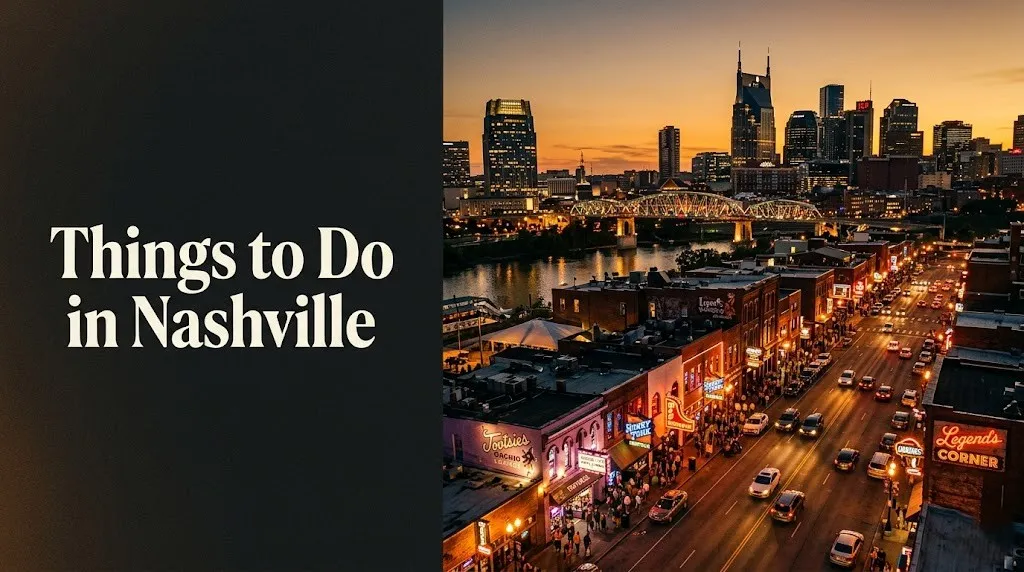
The local version of Nashville operates at places like the Station Inn in the Gulch, the Basement East in East Nashville, and the Bluebird Cafe in Green Hills, where actual Nashville songwriters and session musicians play to audiences that include people who live here. It exists in the farm-to-table restaurants of Germantown and the Vietnamese and Ethiopian places along Nolensville Road. It walks the trails at Radnor Lake State Park Natural Area on weekend mornings.
Both versions are accessible to any visitor who plans the trip with both in mind. The guide you’re reading will show you how to do exactly that.
| Experience Type | Best Represents | Crowd Level | Cost Range | Best For |
|---|---|---|---|---|
| Broadway honky-tonks | Tourist Nashville | Very high (weekends) | Free cover, $10-15 drinks | First-timers, groups |
| Station Inn or Basement East | Local Nashville music | Low to moderate | $10-20 cover | Music lovers, couples, solo travelers |
| Radnor Lake hikes | Local outdoor culture | Moderate | Free | Families, couples, seniors |
| Germantown dining | Local culinary scene | Moderate | $20-45 per person | Couples, food travelers |
| Country Music Hall of Fame | Cultural history | Moderate to high | Paid admission | First-timers, history travelers |
Things to Do in Nashville Tennessee: Understanding the City’s Real Character
Nashville’s identity as a music city is accurate but incomplete, and visitors who treat it as a single-note destination miss the full experience the city actually offers in 2026.
The country music infrastructure, the Grand Ole Opry, the Country Music Hall of Fame, RCA Studio B, and the honky-tonk corridor, is genuine and historically significant. Nashville has produced more chart-topping country artists per square mile than any other American city, and the concentration of music industry infrastructure here (publishing houses, recording studios, production companies, management firms) means you are walking through a working creative ecosystem, not just a museum exhibit. Music Row, the stretch of 16th and 17th Avenues South that housed the American country music industry for decades, is something visitors can walk and understand with the right context.
At the same time, Nashville in 2026 has a culinary scene with multiple James Beard Award nominations in recent years, a craft brewery and distillery culture that extends well beyond the tourist-oriented whiskey bar scene on Broadway, a visual arts community centered at the Frist Art Museum, and a set of state parks within the city limits that could hold their own against outdoor recreation offerings in much larger American cities.
The city is organized around distinct neighborhoods, each with its own character, dining scene, and resident culture. Understanding which neighborhood suits your travel style is more important than any single attraction list. A first-time visitor who stays in Germantown and builds a week around that neighborhood’s restaurants, the nearby Bicentennial Mall, and easy access to both the music corridor and East Nashville will have a fundamentally different, and often better, experience than one who stays on Lower Broadway and never leaves.
Best for solo travelers: Nashville’s walkable neighborhoods and active bar and live music scene make solo travel comfortable. The city has a strong social culture around live music that makes solo attendance at shows feel natural rather than isolated.
Top Things to Do in Nashville for First-Time Visitors
First-time visitors to Nashville should prioritize three things: one genuine country music history experience, one neighborhood exploration beyond Broadway, and one local dining experience that goes beyond the tourist strip.
For the music history experience, the Country Music Hall of Fame and Museum is the most substantive choice. The permanent collection traces country music from its Appalachian and Southern roots through the commercial Nashville era, with specific artifacts, recording session materials, and documented histories that give the music real cultural context. Admission runs in the range of $25 to $30 per adult as of recent years; verify current pricing before your visit. Plan two to three hours. The attached RCA Studio B tour, where Elvis Presley, Dolly Parton, and dozens of other artists recorded, is a separate ticketed add-on worth booking in advance.
For neighborhood exploration, East Nashville is the single best choice for first-timers who want to understand where the city’s creative community actually lives. The 5 Points intersection anchors a cluster of independent restaurants, coffee shops, vintage clothing stores, and music venues. Walking from 5 Points along Woodland Street gives you a cross-section of what the city looks like when it’s not performing for visitors.
For the local dining experience, the choice is straightforward: find the hot chicken experience that matches your heat tolerance, then follow it with dinner at one of the Germantown or East Nashville restaurants that reflect where the city’s culinary identity is actually heading in 2026.
Top first-timer priorities, in recommended order:
- Country Music Hall of Fame and Museum (2 to 3 hours, advance tickets recommended)
- RCA Studio B tour (book as an add-on at the Hall of Fame)
- One Broadway evening (Tuesday through Thursday is significantly more manageable than weekend nights)
- East Nashville exploration on foot (half day, no booking required)
- One hot chicken lunch at Prince’s Hot Chicken Shack or Hattie B’s
- Grand Ole Opry show if scheduling aligns (advance tickets essential)
Key Takeaway: The Country Music Hall of Fame, not Broadway, is the single best first stop for any Nashville first-timer. The Hall gives you the historical context that makes every Broadway honky-tonk and live show feel three times more meaningful.
Live Music in Nashville and the Honky-Tonk Scene on Broadway
Lower Broadway is Nashville’s most-photographed entertainment district and, on a Thursday through Saturday night, one of the loudest and most crowded blocks in the American South, so understanding what you’re actually walking into makes the experience significantly better.
The honky-tonks on Broadway, including Tootsie’s Orchid Lounge, Robert’s Western World, The Stage on Broadway, and Nudie’s Honky Tonk, operate on a multi-floor model where bands rotate through sets from midday well into the early morning hours. Most have no cover charge at street level, though drink prices reflect the location. Robert’s Western World is consistently identified by music journalists and Nashville regulars as the most authentic of the Broadway options, with a commitment to vintage country and a less commercialized atmosphere than some of the larger neighboring venues. Go on a weeknight, preferably Tuesday or Wednesday, and the experience is genuinely enjoyable. Go on a Saturday night in June and prepare for crowding that makes it difficult to hear the music you came for.
Beyond Broadway, the Station Inn in the Gulch is one of the oldest and most respected bluegrass and acoustic music venues in the country. It seats around 200, operates on a modest cover charge, and draws audiences of working musicians, serious music listeners, and local regulars. No neon signs. No themed cocktails. Just genuinely good live music in a small room where the acoustics matter. Check the schedule before your visit and book ahead for featured performers.
The Bluebird Cafe in Green Hills hosts songwriter-in-the-round shows where Nashville’s professional writers perform their own songs and discuss the stories behind them. This is one of the few places where you can hear Nashville’s songwriting culture directly, not filtered through a commercial radio production. The venue is small and advance reservations are essential.
For couples: The Station Inn and Bluebird Cafe are both significantly more romantic and musically rewarding than a Broadway evening. Reserve in advance.
For solo travelers: Broadway is social and easy to navigate solo. The Station Inn can feel more intimidating to first-timers but is actually very welcoming once you’re inside.
Nashville Neighborhoods: Where to Go Beyond the Tourist Strip
Nashville’s neighborhoods are its most underutilized travel resource, and choosing which ones to spend time in is the decision that most separates a great Nashville trip from a forgettable one.
| Neighborhood | Character | Best For | Signature Experience | Walkability |
|---|---|---|---|---|
| Lower Broadway / SoBro | Tourist entertainment core | First-timers, groups | Honky-tonk crawl, Country Music Hall of Fame | High within area |
| Germantown | Historic, upscale residential, food-focused | Couples, food travelers | Dinner at 5th and Taylor or Henrietta Red | High within area |
| East Nashville (5 Points) | Creative, residential, independent | Solo travelers, couples, repeat visitors | Coffee shop morning, vinyl record shopping, local lunch | High within area |
| The Gulch | Urban, hotel-concentrated, arts-adjacent | Couples, hotel guests, arts travelers | Station Inn, Frist Art Museum vicinity | High within area |
| 12 South | Boutique shopping, brunch culture | Couples, women’s groups, brunch travelers | Imogene + Willie shopping, brunch at Josephine | High within area |
| Music Row | Music industry history | Music industry fans, history travelers | Walking Music Row, historic studio scouting | Moderate |
Germantown is Nashville’s oldest surviving residential neighborhood and has become one of the Southeast’s most impressive restaurant neighborhoods. The historic brick architecture, the proximity to the Nashville Farmers’ Market, and the cluster of chef-driven restaurants make it the best single neighborhood for travelers who prioritize food. Walking distance to the downtown music corridor but distinctly separate in character.
East Nashville’s 5 Points area has the highest concentration of genuinely local character in the city. The restaurants here serve the people who live here, the bars are not themed for tourists, and the overall atmosphere reflects a city that is actually interesting rather than a city performing its interesting-ness for visitors. Getting here requires crossing the Cumberland River (about a 15-minute walk from downtown or a short rideshare), which most Broadway visitors never bother to do.
For budget travelers: East Nashville is significantly more affordable than the Gulch or downtown for both dining and drinks. The tradeoff is the short transit distance from the main tourist zone.
Key Takeaway: Spend at least one full morning or afternoon in East Nashville’s 5 Points area. It’s the single best neighborhood for understanding what Nashville actually looks and feels like when it’s not dressed up for visitors.
Nashville Hot Chicken and the Food Scene
Nashville hot chicken is the city’s most copied culinary export and, at its best, one of the more genuinely interesting regional American dishes, built on a cayenne-heavy dry rub applied to fried chicken with heat levels ranging from mild to a “shut-down-your-afternoon” level that is not a gimmick.
Prince’s Hot Chicken Shack, operating since the 1940s and credited as the originator of the dish, is the historically correct first choice. The original location on Ewing Drive is a no-frills counter-service experience. Lines form on weekends. The chicken takes time to prepare. The heat levels are honest: the XXX-hot at Prince’s is not the same thing as the “hot” at a tourist-oriented chain serving a version of the dish. Go with medium unless you have high heat tolerance and a specific reason to push beyond it.
Hattie B’s has multiple Nashville locations and is more accessible logistically for visitors staying downtown, with shorter average waits and a broader menu. The quality is consistent and the experience is tourist-friendly without being a watered-down version of the dish.
Bolton’s Spicy Chicken and Fish in East Nashville is the choice that Nashville food people tend to recommend to each other. Less visible than Prince’s or Hattie B’s, it is a counter-service spot with a loyal local following and chicken that a significant number of Nashville food professionals consider the best in the city.
Beyond hot chicken, Nashville’s broader food scene warrants genuine attention. Germantown’s restaurant cluster includes some of the most carefully sourced and creatively executed cooking in the South. 5th and Taylor specializes in New American cooking with Tennessee sourcing. Henrietta Red has built a national reputation for its oyster program and Gulf-and-Mid-Atlantic-sourced seafood, an unusual focus for a landlocked Southern city that delivers because of the sourcing relationships the kitchen has built.
For families with children: Hattie B’s is the most family-friendly hot chicken option, with accessible ordering, a relaxed atmosphere, and milder heat levels that translate well for younger eaters.
For budget travelers: Prince’s original location and Bolton’s both offer genuinely low-cost meals relative to the Nashville restaurant average. Budget $12 to $18 per person for a satisfying hot chicken lunch at either.
History and Culture Attractions in Nashville
Nashville’s cultural institutions are more substantial than the city’s party-destination reputation suggests, and several of them rank among the best of their type in the American South.
The Country Music Hall of Fame and Museum is the anchor. The scope of the collection, spanning recorded materials, performance artifacts, handwritten lyrics, and documented industry history from the 1920s through the present day, reflects an institution that takes its subject seriously as American cultural history rather than celebrity memorabilia. The building itself, designed to evoke piano keys and a bass clef, is worth noting architecturally. Admission pricing runs in the $25 to $30 range per adult as of recent years; confirm current rates before visiting. Allow two to three hours minimum; the collection rewards slow engagement.
The Ryman Auditorium, the former home of the Grand Ole Opry and one of the most historically significant performance venues in American music, offers daytime self-guided tours on days without evening performances. Walking the stage of a venue where Hank Williams, Johnny Cash, Patsy Cline, and Elvis Presley performed gives the building a tangible weight that is hard to manufacture. Evening shows continue throughout the year; tickets range widely by performer and should be booked weeks to months in advance for popular acts.
The Tennessee State Museum reopened in its purpose-built facility in 2019 and covers Tennessee history from prehistoric periods through the civil rights movement. Admission is free, which makes it one of the most genuinely underused visitor resources in the city. The civil rights and Reconstruction-era galleries are particularly well-executed for a state museum.
The Frist Art Museum presents a rotating program of traveling exhibitions rather than a permanent collection. Check the 2026 exhibition schedule before building it into your itinerary; the programming quality varies by season but has included nationally significant traveling shows.
For seniors and accessibility travelers: The Country Music Hall of Fame, Tennessee State Museum, and Frist Art Museum all offer strong wheelchair access and elevator connectivity. The Ryman has limited accessibility for upper balcony sections; ground-floor seating is accessible. Verify specific accessibility configurations directly with each venue before booking.
Fun Things to Do in Nashville for Adults
Nashville’s adult entertainment landscape goes considerably deeper than the Broadway bar crawl, and several experiences that define the city for adult visitors are ones that most travelers only discover on a return trip.
The Grand Ole Opry experience merits honest assessment. The show, held at the purpose-built Opry House in Opryland, is a live radio broadcast format that has run continuously since 1927. It features rotating guest artists across country, bluegrass, and Americana, and the format is more variety show than concert. For anyone with a genuine interest in country music history, attending a show is worth the planning. For casual visitors who mostly know the Opry by name, managing expectations about the format (multiple short sets, live radio production elements, commercial breaks) helps avoid disappointment. Tickets range from approximately $40 to $90 or more depending on seat tier and featured performers; book well in advance.
Nashville’s craft brewery scene has developed significantly. Tennessee Brew Works in SoBro, Yazoo Brewing Company in the Gulch area, and Little Harpeth Brewing in East Nashville represent different ends of the craft beer spectrum and all offer taproom experiences that feel more local than the Broadway bar scene. None require advance booking for casual visits.
Distillery tours in and around Nashville reflect the Tennessee whiskey culture that produced both Jack Daniel’s (based in Lynchburg, Tennessee, worth a day trip) and dozens of smaller-batch producers. Nelson’s Green Brier Distillery in Nashville proper offers tours and tastings that trace a pre-Prohibition Tennessee whiskey history.
For adults in groups: The Nashville Sounds minor league baseball experience at First Horizon Park is one of the best-value live sports experiences in the city, with consistently good sightlines, affordable concessions relative to major league pricing, and an open-air atmosphere that works especially well on fall evenings.
For solo adult travelers: The live music venue circuit, particularly Basement East and Station Inn, provides a genuinely comfortable social environment for solo attendance. Shows are attended by a mix of local regulars and visiting music fans; striking up conversations around the music is natural.
Key Takeaway: The Grand Ole Opry is worth attending once for any adult with a genuine interest in American music history. Book the Opry in advance and balance it with a Station Inn evening for a visit that covers both the historic institution and the living local music culture.
Things to Do in Nashville for Couples
Nashville has become one of the Southeast’s most popular romantic weekend destinations, and for good reason: the city offers a combination of live music intimacy, high-quality dining, walkable neighborhoods, and the kind of shared cultural experiences that make for memorable trips without requiring the formal structured programming of a resort destination.
The most genuinely romantic Nashville experience, one that almost no travel content leads with, is an evening at the Bluebird Cafe. The songwriter-in-the-round format, where three or four Nashville songwriters sit in a circle, play each other’s songs, and talk about the stories behind them, creates an intimate atmosphere that is rare in live music. The room holds around 100 people. Conversation between songs fills the space in a way that makes you feel like a guest at a private performance rather than an audience member at a club. Reservations are essential; book as early as possible.
Cheekwood Estate and Gardens offers one of the best daytime couple experiences in the city. The historic estate includes art galleries, a significant sculpture collection spread across the grounds, and botanical gardens that shift character with each season. Spring brings spectacular floral displays; fall foliage peaks in October and November. Admission runs in the $20 to $25 range per adult as of recent years; confirm current pricing. Allow three to four hours.
A dinner in Germantown followed by a walk through the neighborhood’s historic residential streets and a nightcap at a local bar is a straightforward couple itinerary that delivers reliably. Henrietta Red and 5th and Taylor both offer the kind of intimate, well-executed dining environment that makes for a genuinely good date night without the tourist-strip energy of Broadway-adjacent restaurants.
For couples seeking the Broadway experience: Go on a Tuesday or Wednesday evening, not a Friday or Saturday, when the bachelorette party density and crowd levels are substantially lower and the music is easier to hear and enjoy.
Things to Do in Nashville with Kids
Nashville is a workable family destination, but families with children need to plan deliberately because the city’s most famous attraction zone, Lower Broadway, is an alcohol-forward entertainment district that becomes genuinely inappropriate for young children on weekend evenings.
The Adventure Science Center near Vanderbilt is the strongest single family attraction in the city. The hands-on science and technology museum is specifically designed for children ages 3 to 13, with interactive exhibits spanning physics, biology, earth science, and space exploration. The attached planetarium offers ticketed shows on a schedule; book planetarium seats in advance on weekends. Admission runs in the range of $15 to $20 per person; verify current rates before visiting. Allow three to four hours.
The Nashville Zoo at Grassmere holds significantly more than 2,700 animals across a 200-plus acre site and includes a notable children’s play zoo section. The zoo is manageable with strollers across most of the main pathways. Hot summer days make this a morning-only proposition; arrive at opening time and plan to leave by midday in July and August. Admission runs in the $15 to $20 range for adults and somewhat less for children; verify current pricing.
Centennial Park and its full-scale replica of the Parthenon offer a free outdoor experience that engages older children with genuine historical curiosity while giving younger ones space to run. The Parthenon’s interior museum has a small admission fee; the park itself is free.
The Tennessee State Museum is free and has exhibits that engage children ages 8 and above, particularly the prehistoric and Native American history sections. Younger children typically lose interest within 45 minutes.
For families: Avoid Broadway on Friday and Saturday evenings. Build family itineraries around the Adventure Science Center, Nashville Zoo, Centennial Park, and a daytime country music history experience (the Hall of Fame’s lower floors are more accessible to older children; very young children will not engage with the exhibit format).
Free and Budget-Friendly Things to Do in Nashville
Nashville’s reputation as an expensive bachelorette-party destination obscures a meaningful set of genuinely free and low-cost experiences that make the city accessible to budget-conscious travelers.
Bicentennial Capitol Mall State Park is a free outdoor civic monument stretching 19 acres immediately north of the Tennessee State Capitol. It incorporates a 200-foot granite map of Tennessee, a World War II Memorial, a carillon tower, and a farmers’ market corridor. It is completely free to enter and offers one of the best architectural and landscape views of the city’s downtown. Open daily; check current hours before visiting.
Tennessee State Museum: Free admission (confirm before visiting, as contribution requests or specific exhibition admission may apply) with exhibits covering Tennessee prehistory through the modern era. Genuinely one of the most underused free resources in the city.
Radnor Lake State Park Natural Area: Free entry. A 1,332-acre natural area within the city limits with multiple hiking trails ranging from easy lakeside walks to moderate ridge trails. No dogs allowed on the main lake trail, which preserves the wildlife-watching quality that makes the park worth visiting. Wildflowers in spring, fall foliage in October, and active birding make this Nashville’s best free outdoor experience. Arrive early on weekends; the main parking area fills by mid-morning.
Musicians Corner at Centennial Park: A free outdoor concert series (when operating seasonally, typically spring through fall) that books a mix of Nashville-based artists across multiple genres. Confirm the 2026 schedule through Visit Music City.
Budget breakdown for a low-cost Nashville day:
- Morning hike at Radnor Lake: Free
- Tennessee State Museum: Free (verify before visiting)
- Lunch at Bolton’s hot chicken: Approximately $12 to $15 per person
- Bicentennial Mall walk: Free
- Evening at Robert’s Western World on Broadway: Free cover, budget $20 to $30 for drinks
Key Takeaway: Radnor Lake, the Tennessee State Museum, and Bicentennial Capitol Mall together form a genuinely rewarding free Nashville day that most tourists never discover and most Nashville locals consider the city at its best.
Outdoor Things to Do in Nashville
Nashville’s outdoor recreation options within or immediately adjacent to the city limits are more substantial than the destination’s urban entertainment reputation suggests, and for any traveler who wants physical activity alongside cultural programming, the city delivers.
Radnor Lake State Park Natural Area is the starting point for any conversation about Nashville outdoors. The 1,332-acre park preserves a lake, a forested watershed, and multiple trail systems within roughly 10 miles of downtown. The main 2.4-mile Spillway Trail follows the lake’s edge through mixed hardwood forest with consistent wildlife viewing opportunities (great blue herons, osprey, deer, and occasionally river otters are reliably present). The South Cove Trail and Lake Trail extensions add mileage for more serious hikers. No admission charge; verify current parking and access conditions through the Tennessee State Parks system before visiting.
Percy Warner Park and Edwin Warner Park together form the largest municipal park system in Tennessee, with more than 3,000 acres of forested hills, equestrian trails, road running routes, and hiking paths immediately southwest of the city. The terrain is genuinely hilly by Middle Tennessee standards, offering more physical challenge than the flat river corridor options. The road course through Percy Warner is popular with cyclists and runners; the park’s old stone structures and maintained meadows give it a character distinct from the wilder, more wildlife-focused Radnor Lake.
The Cumberland River Greenway provides a paved multi-use path connecting downtown Nashville to Shelby Bottoms Greenway in East Nashville, covering approximately 10 miles of riverfront corridor. Accessible for cycling, running, and walking. The East Nashville section through Shelby Bottoms Greenway offers a genuinely peaceful river floodplain experience, with excellent birding particularly during spring migration.
For seniors and accessibility travelers: The main Spillway Trail at Radnor Lake has some uneven sections but is manageable for most mobility levels. The Cumberland River Greenway’s paved surface makes it the most accessible outdoor option for travelers using mobility aids or wheelchairs. Percy Warner Park’s trails include unpaved sections with significant elevation change; assess trail-specific difficulty before visiting.
Things to Do Near Nashville: Best Day Trips
Nashville sits within two hours of several destinations that add genuine travel value to any trip, and the two strongest day trip options serve completely different traveler interests.
| Destination | Distance from Nashville | Drive Time | Best For | One Reason to Go |
|---|---|---|---|---|
| Franklin, TN | 21 miles south | 30 to 40 minutes | History, shopping, couples | Civil War battlefield site and intact historic Main Street |
| Leiper’s Fork, TN | 30 miles southwest | 45 minutes | Antiques, rural character, couples | Authentic small-town Tennessee character with excellent gallery |
| Jack Daniel’s Distillery, Lynchburg, TN | 78 miles southeast | 1.5 hours | Whiskey culture, groups | Birthplace of America’s most-exported whiskey; guided distillery tour |
| Mammoth Cave National Park, KY | 125 miles north | 2 hours | Families, outdoor travelers, geology | World’s longest-known cave system; National Park Service guided tours |
| Burgess Falls State Natural Area | 75 miles east | 1.25 hours | Waterfall hikers, outdoor travelers | Four-waterfall trail ending at a 136-foot main fall |
Franklin, Tennessee warrants the most specific attention. The city’s historic Main Street is a genuinely well-preserved 19th-century commercial district with independent restaurants, bookshops, and antique dealers. Carter House and Carnton (the antebellum plantation house at the center of the Battle of Franklin) offer Civil War interpretation that is more substantive than most battlefield sites in the region. Franklin is worth a half day minimum and a full day if combining the battlefield, Main Street lunch, and a drive through the surrounding countryside.
For families: Mammoth Cave National Park is the strongest family day trip option. The National Park Service offers multiple tour formats ranging from easy lantern-lit walks to physically demanding wild cave experiences. Book NPS cave tours in advance through the official reservation system; popular tours sell out weeks ahead during summer.
For budget travelers: Burgess Falls State Natural Area charges no admission and provides one of the most visually rewarding waterfall hikes in Tennessee within a reasonable drive from Nashville.
Nashville Itinerary: How to Structure Your Visit
A 3-day Nashville itinerary works best when it separates the city into distinct geographic zones rather than trying to cross the city repeatedly, which wastes time in transit and parking.
Day 1: Downtown Music History and Broadway
- Start at the Country Music Hall of Fame and Museum when it opens (typically 9 or 10 AM; verify current hours). Book tickets in advance, including the RCA Studio B tour add-on.
- Walk to Music Row for a self-guided exploration of the historic recording studio district. The street-level walk takes 30 to 45 minutes and adds context to everything you’ll see in the Hall of Fame.
- Lunch at the Nashville Farmers’ Market food hall in Germantown (15-minute walk from Music Row), which has a range of local vendor options at lunch-friendly price points.
- Afternoon at the Ryman Auditorium self-guided tour (on non-show days) or Tennessee State Museum if the Ryman is closed for an event.
- Evening on Broadway: Tuesday through Thursday significantly better than Friday or Saturday. Dinner at a restaurant adjacent to but not on Broadway (SoBro or Germantown options reduce crowd density), then a Broadway walk taking in two or three honky-tonks.
Day 2: East Nashville, Local Food, and Live Music
- Morning coffee and breakfast in East Nashville’s 5 Points area. Sky Blue Cafe is a neighborhood institution.
- Walk Woodland Street and the surrounding blocks. Browse vintage shops and independent stores.
- Lunch: hot chicken at Bolton’s Spicy Chicken and Fish on Main Street in East Nashville.
- Afternoon: Shelby Bottoms Greenway walk along the Cumberland River or drive to Radnor Lake State Park for a 2-hour hike.
- Dinner in Germantown: book a table at Henrietta Red or 5th and Taylor in advance.
- Evening: Station Inn in the Gulch for bluegrass, or Basement East in East Nashville for rock and Americana. Check schedules before your trip and book where required.
Day 3: Culture, Parks, and Day Trip or Departure
- Morning: Cheekwood Estate and Gardens (allow three to four hours; book tickets in advance).
- Lunch in 12 South neighborhood: Josephine or a neighborhood brunch option.
- Afternoon: Bicentennial Capitol Mall State Park walk and Tennessee State Capitol grounds if not already visited.
- Optional: afternoon departure to Franklin for a 2-hour exploration before the drive home or airport.
For families: Swap Day 3’s cultural focus for the Adventure Science Center in the morning and Nashville Zoo (morning only in summer) as the alternative. Day 2’s hot chicken lunch and Shelby Bottoms walk work well for families with children old enough for a moderate greenway walk.
Best Time to Visit Nashville in 2026
The best time to visit Nashville is April through early June or September through October, and the worst time, from a practical traveler’s standpoint, is peak summer weekends and the specific week of CMA Fest in June 2026.
Spring (April through early June): Temperatures range from 60 to 80 degrees Fahrenheit. Cheekwood’s gardens peak in April and May. The outdoor entertainment calendar is active. Hotel rates are in the mid-range before summer peaks. This is the strongest overall period for visitors who want comfortable weather, active programming, and reasonable accommodation pricing.
Fall (September through early November): September remains warm but less humid than July and August. October brings fall foliage to Radnor Lake and Percy Warner Park, making the outdoor experiences genuinely scenic. Hotel rates drop after the Labor Day weekend surge. Broadway crowds are lower than summer. October is the recommended month for visitors who want the full Nashville experience across music, food, and outdoors without peak-season complications.
Summer (July through August): High humidity and temperatures regularly in the 90s Fahrenheit make outdoor activities best scheduled for morning hours only. Broadway reaches peak crowd saturation. Hotel rates are elevated. CMA Fest (typically the first or second week of June) drives hotel rates to three to four times standard rates and books accommodation months in advance. If you’re attending CMA Fest, plan the trip around it deliberately; if you’re not, consider avoiding that week entirely.
Winter (December through February): Nashville is not a winter destination in the way that warmer cities are. The outdoor-forward character of Broadway and neighborhood entertainment districts diminishes in cold weather. Hotel rates drop to their annual lows. Travelers who prioritize indoor cultural experiences (Country Music Hall of Fame, Ryman Auditorium shows, restaurant dining) can find excellent value in winter.
According to Visit Music City, spring and fall represent Nashville’s peak visitor satisfaction periods relative to accommodation cost, which aligns with the seasonal analysis above.
| Season | Temp Range | Crowds | Hotel Rates | Best Activities |
|---|---|---|---|---|
| Spring (Apr-early Jun) | 60-80°F | Moderate | Mid-range | All, Cheekwood gardens peak |
| Summer (Jul-Aug) | 88-96°F | High to very high | High | Indoor experiences, morning parks |
| Fall (Sep-Oct) | 65-82°F | Moderate | Mid-range | All, fall foliage, outdoor parks |
| Winter (Dec-Feb) | 35-52°F | Low | Low | Indoor music, dining, museums |
Key Takeaway: Book your Nashville trip for October if you can. The foliage at Radnor Lake is legitimately beautiful, the Broadway crowds are manageable, restaurant reservations are easier to get, and hotel rates are lower than any spring or summer equivalent.
Getting Around Nashville: Logistics Every Visitor Needs to Know
Nashville does not have a heavy rail metro system, and understanding that fact before you arrive is the single most useful practical piece of information this guide can give you.
WeGo Public Transit operates bus routes throughout Nashville and a commuter rail service (the WeGo Star) that runs between downtown and suburban stations but has limited utility for most tourists. The bus network covers major corridors but runs on schedules that don’t match the late-night live music culture Nashville is built around. Most visitors who rely exclusively on public transit will find the system insufficient for a full Nashville itinerary.
Rideshare (Lyft and Uber) is the practical transportation backbone of Nashville tourism. Availability is generally strong across the city and into the broader metro area. Budget $12 to $20 for a typical cross-town rideshare trip (Broadway to East Nashville, or downtown to Radnor Lake parking areas, for example). Surge pricing applies on weekend nights around Broadway; expect elevated rates between 11 PM and 2 AM on Friday and Saturday.
Driving and parking: Downtown parking on weekend nights is expensive and competitive. Expect $20 to $40 for downtown garage parking on a Friday or Saturday evening. The most practical approach for visitors driving to Nashville is to stay in a walkable neighborhood (Germantown, 12 South, or the Gulch offer walkable neighborhood character without requiring a car for local evening activities) and use rideshare for cross-city movements.
Nashville International Airport (BNA) is located approximately 8 miles southeast of downtown. Rideshare from BNA to downtown typically runs $25 to $40 and takes 20 to 30 minutes outside of peak traffic periods. No dedicated airport rail connects BNA to the city center for most tourist purposes.
For seniors and accessibility travelers: Rideshare vehicles are the most accessible transit option for travelers with mobility considerations. Nashville’s ride hail app options include accessible vehicle requests; book in advance where possible. The WeGo Star commuter rail has ADA-compliant stations and vehicles for routes where it serves your itinerary.
What to book before you arrive:
- Country Music Hall of Fame and Museum tickets (especially with RCA Studio B add-on)
- Ryman Auditorium or Grand Ole Opry show tickets
- Bluebird Cafe reservations (essential; they fill weeks in advance)
- Weekend dinner reservations at Germantown or East Nashville restaurants
- Cheekwood timed-entry tickets on peak spring weekends
Safety and Practical Warnings for Nashville
Nashville is a safe city for the vast majority of visitors, but several specific practical situations warrant direct guidance that most travel content omits.
Key safety and practical facts every visitor should know:
- Broadway weekend crowd density on Friday and Saturday nights creates conditions where pickpocket risk is elevated relative to typical American city entertainment districts. Keep phones and wallets in front pockets or secure bags in crowded venues.
- Alcohol volume on Broadway is significant. Honky-tonks serve all day and into the early morning; if you’re driving, designate a driver or commit to rideshare for the evening before you start.
- Heat warning for summer outdoor activities: Nashville summer heat regularly exceeds 90 degrees Fahrenheit with high humidity. Radnor Lake hikes and Percy Warner Park trails should be planned for before 9 AM in July and August. Carry water regardless of season.
- Flash flooding: Middle Tennessee experiences flash flooding during heavy rain events. If you’re hiking at Radnor Lake or Burgess Falls during or after significant rainfall, check conditions before setting out. The Tennessee Emergency Management Agency monitors flash flood watches actively.
- Drive safety on rural day trip routes: State routes connecting Nashville to Leiper’s Fork and other rural day trip destinations involve two-lane roads with some sharp curves. Moderate your speed, particularly at dusk when deer activity increases.
- Broadway after midnight: The late-night Broadway corridor involves intoxicated crowds on weekend nights. Travelers who have had a full evening should use rideshare rather than attempting to walk back to hotels that are not immediately adjacent to Lower Broadway.
For medical emergencies anywhere in Nashville, call 911. Vanderbilt University Medical Center is one of the leading academic medical centers in the South, located approximately 2 miles from downtown Nashville, which provides meaningful reassurance for travelers with significant health considerations.
Frequently Asked Questions About Things to Do in Nashville
What are the best things to do in Nashville for first-time visitors?
First-time visitors to Nashville should prioritize the Country Music Hall of Fame and Museum for context, at least one evening on Lower Broadway (ideally on a weeknight for better crowd management), and a half-day exploration of East Nashville’s 5 Points area to see where the city’s creative community actually lives.
Adding a hot chicken lunch at Prince’s Hot Chicken Shack or Hattie B’s and an evening show at the Station Inn or Bluebird Cafe rounds out a first visit with both the iconic and the genuinely local.
The Ryman Auditorium tour and a visit to Cheekwood Estate and Gardens are strong additions if time allows.
Is Nashville worth visiting for people who don’t like country music?
Nashville is absolutely worth visiting for travelers with no interest in country music, because the city’s food scene, neighborhood culture, outdoor parks, visual arts programming, and craft beverage industry exist entirely independent of the country music tourism infrastructure.
East Nashville, Germantown, the Frist Art Museum, Radnor Lake, and a Germantown dinner represent a full Nashville weekend that engages no country music content while delivering a high-quality travel experience.
The city’s culinary reputation in particular, built on hot chicken, chef-driven restaurants, and a growing farm-to-table dining culture, is a genuine standalone reason to visit.
How many days do you need in Nashville to see the main attractions?
Three full days is the right minimum for seeing Nashville’s main attractions across music, food, neighborhoods, and cultural history without feeling rushed.
Two days is workable if you focus exclusively on downtown and the most efficient version of the city’s signature experiences, but you’ll leave without having explored the neighborhoods that make Nashville genuinely interesting.
Four days allows for a day trip to Franklin or the Jack Daniel’s Distillery while still covering the city’s core experiences.
What is the best neighborhood to stay in when visiting Nashville?
The Gulch and Germantown are the two best neighborhoods for most visitors, offering walkable access to the city’s music and dining scenes with slightly less noise exposure than staying directly on or adjacent to Lower Broadway.
The Gulch is closer to downtown attractions and the Country Music Hall of Fame; Germantown positions you better for the farmers’ market, the neighborhood restaurant scene, and easy East Nashville access.
Budget-focused travelers will find better hotel rates in the Midtown or Vanderbilt area, which is a short rideshare from both downtown and the south Nashville neighborhoods.
Is Nashville safe for solo travelers?
Nashville is broadly safe for solo travelers, including solo women travelers, across its main tourist and neighborhood zones.
The standard practical awareness applies on Broadway on weekend nights: stay aware in dense crowds, use rideshare after midnight rather than walking through high-activity areas, and keep valuables secure.
Solo travelers will find Nashville’s live music venue culture genuinely welcoming; attending shows alone at the Station Inn, Basement East, or the Bluebird Cafe is a natural and comfortable experience.
What is the best time of year to visit Nashville Tennessee?
The best time to visit Nashville Tennessee is April through early June or September through October, when temperatures are comfortable, the outdoor entertainment and park seasons are active, and hotel rates are more reasonable than peak summer.
Summer brings high heat, humidity, and the heaviest crowd concentrations; CMA Fest in June drives hotel rates to three to four times standard levels and requires accommodation booking many months in advance.
October is the single strongest individual month for combining outdoor activities, fall foliage at Radnor Lake, manageable Broadway crowds, and mid-range hotel rates.
Nashville is a city that gives back in proportion to how much you look beyond its most photographed block. Book the Country Music Hall of Fame and RCA Studio B tour before anything else; those reservations set the intellectual foundation for everything else you’ll do in the city. Then build your evenings around the Station Inn or Bluebird Cafe rather than Broadway alone, and give East Nashville at least a half-day that most itineraries never include.
Verify all admission prices, hours, show schedules, and restaurant reservations directly with venues before your departure. Nashville’s event calendar shifts throughout 2026, and hotel rates fluctuate significantly around major events. The guidance in this article reflects conditions as of publication; confirm key logistics directly through Visit Music City and individual venue websites.
The traveler who arrives in Nashville with a specific plan, not just a list of famous places, will find one of the American South’s most genuinely rewarding cities. Start with that one booking. The rest follows naturally.