31 Best Things to Do in Seattle in 2026 (Local Guide)

The best things to do in Seattle span one of the most geographically dramatic city settings in the continental United States: a dense, walkable urban core flanked by Puget Sound to the west, Lake Washington to the east, the Cascades on the horizon, and the Olympic Mountains filling the skyline on clear days. This is a city where you can buy fresh Dungeness crab at a 100-year-old public market in the morning, kayak a lake surrounded by houseboats at noon, and watch the sun set behind the Olympics from a hilltop park in the evening, all within a 10-mile radius.
According to Visit Seattle, the city’s official tourism organization, Seattle welcomed over 40 million visitors annually in the years leading up to the pandemic and has since recovered strongly as a top Pacific Northwest destination. What most visitor guides do not tell you is that Seattle’s tourism infrastructure clusters heavily around the waterfront and Seattle Center, while the city’s most genuinely local experiences are spread across a collection of distinct neighborhoods, each with its own identity, that most first-time visitors never reach.
This guide covers the full picture: the iconic experiences that genuinely justify their reputation, the neighborhood character that separates Seattle from any other city in the US, honest seasonal guidance about when to go and what the weather actually does to your plans, and specific logistics that help you avoid the mistakes that cost most first-time visitors hours of their trip. Whether you have 48 hours or a full week, the structure below is designed to help you build an itinerary that actually reflects how this city works.
Things to Do in Seattle: What Makes This City Worth the Trip
Seattle stands apart from other major American cities in ways that take about 24 hours to become clear. The combination of genuine outdoor access within the city limits, a waterfront that functions as a working port and a public amenity at the same time, a coffee culture that developed its own regional identity decades before specialty coffee became a national trend, and a music history that changed American rock and roll more than once creates a destination identity that is specific rather than generic.
The city sits on seven hills, which is not a metaphor. Capitol Hill, Queen Anne, Beacon Hill, First Hill, Magnolia, and the others are physical geographic features that give each neighborhood a distinct visual perch and a distinct character. Traveling between them on foot requires genuine elevation gain. This is one of the first things Seattle visitors underestimate.
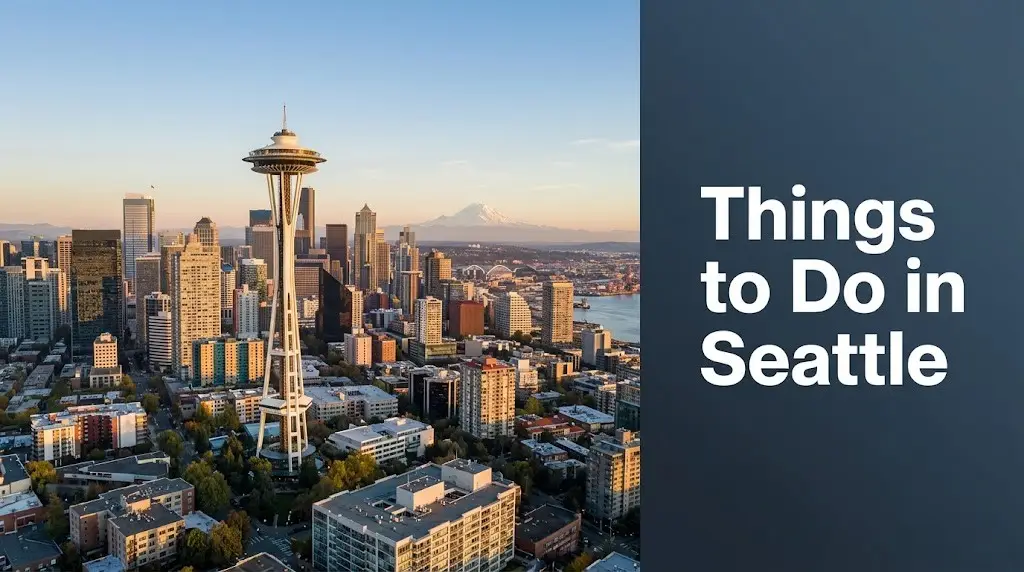
Seattle’s transit infrastructure is more usable than most US cities its size. The Link Light Rail runs from Sea-Tac International Airport directly to downtown, Capitol Hill, the University of Washington, and into the city’s northern neighborhoods. The ORCA card works across buses, the streetcar, the monorail, and the ferry. Most of the city’s major attractions cluster within three walkable zones: the downtown waterfront and Pike Place Market area, Seattle Center, and the Capitol Hill neighborhood about a mile east of downtown.
For solo travelers, Seattle’s neighborhood coffee shop culture makes it one of the more socially comfortable cities for traveling alone. Independent roasters like Victrola Coffee in Capitol Hill and Elm Coffee Roasters downtown have the kind of intentional, unhurried atmosphere where spending two hours with a laptop or a book is entirely normal. For families with children, the Seattle Center campus anchors an entire day with MoPOP, the Pacific Science Center, and the Children’s Museum of Seattle in close proximity.
Best Things to Do in Seattle: The Experiences That Earn Their Reputation
The best things to do in Seattle include a handful of experiences that genuinely justify their fame and a larger set of neighborhood-level activities that most visitors discover only by accident.
Chihuly Garden and Glass is one attraction where the marketing does not exaggerate. Dale Chihuly’s glass sculptures fill a series of interconnected galleries and a glass-roofed Glasshouse at Seattle Center, with an outdoor garden that reads differently in every light condition. The nighttime visit, when the garden is illuminated, is substantially more atmospheric than the daytime version. Admission runs in the premium range (verify current pricing with Seattle Center before visiting), and it shares a ticket option with the Space Needle that reduces the combined cost. Couples and adults find this more compelling than families with children under 8, who tend to engage for about 20 minutes before the novelty fades.
The Washington State Ferry crossing to Bainbridge Island costs the price of a standard ferry ticket and delivers what many Seattle visitors describe as the best 35-minute experience in the city. The view of the Seattle skyline receding behind you, with the Olympic Mountains ahead, is one of the genuinely photogenic moments in Pacific Northwest travel. Bainbridge Island’s small downtown (Winslow) is walkable from the ferry dock and has independent bookshops, cafes, and waterfront parks that justify a 3 to 4 hour stay before the return crossing.
Discovery Park in the Magnolia neighborhood is Seattle’s largest park at approximately 534 acres and includes trails through old-growth forest, a working lighthouse at North Beach, and views of Puget Sound and the Olympic Mountains. It does not appear on most first-timer itineraries. It should.
| Experience | Cost Range | Best For | Booking Required | Insider Note |
|---|---|---|---|---|
| Chihuly Garden and Glass | Premium (verify current pricing) | Couples, adults | Online advance recommended | Evening visit is more atmospheric |
| Washington State Ferry (Bainbridge) | Low (standard ferry fare) | All profiles | No reservation, queue at terminal | Walk-on passengers board faster than vehicles |
| Discovery Park | Free | Families, outdoor enthusiasts, seniors | No | North Beach trail is the best in the park |
| Space Needle | Premium (verify current pricing) | First-timers, families | Timed entry, book in advance | Clear day views extend 100-plus miles |
| Museum of Pop Culture | Mid-range (verify current pricing) | Teens, adults, music fans | No, but busy on weekends | Nirvana and Hendrix exhibits are the anchors |
Top Things to Do in Seattle Washington: Iconic Attractions Honestly Assessed
Seattle’s top attractions range from genuinely world-significant cultural experiences to tourist infrastructure that survives primarily on marketing. Honest assessment of which is which will save you money and time.
The Space Needle is worth visiting once, particularly for first-timers, but it rewards clear days more than it does any other condition. On overcast days, which are frequent from October through April, the observation deck delivers views of low cloud cover rather than the Cascades and Olympics. The glass floor and the rotating SkyCity experience are genuinely novel. Admission is in the premium range; the combination ticket with Chihuly Garden and Glass is the better value. Book timed entry in advance, especially for summer visits.
The Museum of Pop Culture (MoPOP), designed by Frank Gehry, houses permanent collections on Jimi Hendrix (a Seattle native), the history of grunge with specific coverage of Nirvana and Pearl Jam, an indie game development gallery, and rotating exhibitions. The building’s exterior, a crumpled form of colored aluminum panels visible from the Seattle Center grounds, is itself a photographic landmark. Music and culture travelers and teenagers find this genuinely compelling; families with children under 9 typically find the content exceeds younger attention spans within 40 minutes.
The Seattle Underground Tour in Pioneer Square takes visitors through the subterranean remnants of Seattle’s original street level, buried after the 1889 Great Seattle Fire and the subsequent city regrading. The tour runs approximately 75 minutes and is as much a history lecture as a physical walk through underground spaces. It requires navigating stairs and uneven surfaces, which limits accessibility for travelers using mobility aids. Book in advance for weekend departures; it regularly sells out by early afternoon.
Pike Place Market is not a single experience. It is a complex public market with multiple levels, dozens of vendors, and a tourist corridor that runs along the main arcade and a local-focused commercial area that most visitors walk past without realizing it exists. The fish throw happens at Pike Place Fish Company on the main arcade and is worth watching once. The genuine market experience happens at the lower levels: the down-under market with its independent artisan vendors, the daily produce stalls on the main floor before 10 AM, and the bakeries along Pike Place itself.
According to Visit Seattle, Pike Place Market is one of the longest continuously operating public markets in the United States, having opened in 1907.
Things to Do in Downtown Seattle: The Waterfront, Pike Place, and Beyond
Downtown Seattle clusters its major experiences within a walkable grid that runs from the waterfront on the west to First Hill on the east, and from Belltown in the north to Pioneer Square in the south.
The Seattle Waterfront underwent significant renovation through the removal of the Alaskan Way Viaduct, with the new Overlook Walk connecting Pike Place Market directly to the waterfront at Elliott Bay via a pedestrian bridge and terraced park. This connection changes the downtown experience substantially: you can now move between the market and the waterfront without navigating a busy street crossing. The waterfront itself has the Seattle Aquarium (confirm current facility status and which exhibits are operational given the expansion project underway as of recent years), the Seattle Great Wheel, and the Elliott Bay water taxi terminal serving West Seattle.
Pioneer Square, Seattle’s oldest neighborhood, occupies the blocks immediately south of downtown and is worth an hour of walking even if you do not take the Underground Tour. The preserved Romanesque revival architecture from the post-fire reconstruction period is the densest concentration of historic building stock in the city. The neighborhood also has independent galleries concentrated on First Avenue South, and the Occidental Square park hosts a Sunday farmers market during summer months.
Belltown, immediately north of Pike Place Market, is where many of Seattle’s best mid-range restaurants cluster. It is walkable from the waterfront and from Seattle Center and functions as the city’s dining and bar neighborhood for visitors staying downtown. The Olympic Sculpture Park anchors the northern end of Belltown at the waterfront and is free to visit year-round.
For budget travelers, the downtown core offers more free or low-cost experiences than most guides credit: the Olympic Sculpture Park, the waterfront promenade, Pioneer Square’s architecture, the Pike Place Market public areas, and the Seattle Central Library (designed by Rem Koolhaas, architecturally significant and free to enter) are all no-admission experiences within walking distance of each other.
Seniors and travelers using mobility aids should note that downtown Seattle’s grid has significant grade changes between the waterfront (sea level) and Pike Place Market (one block uphill) and First Hill (substantially steeper). The Pike Place Market elevator connects the market’s main floor to the waterfront level and is accessible, though it can be slow during peak hours.
Things to Do Near Pike Place Market: What Most Visitors Miss
The area within five blocks of Pike Place Market contains more genuine local character than most visitors find during their entire Seattle trip, because the tourist traffic concentrates so heavily on the main arcade that the surrounding streets go largely unexplored.
Walk one block north from the market entrance on First Avenue and you enter Belltown’s residential and restaurant zone. Walk one block east to Second Avenue and you are in the city’s independent gallery and theater corridor. Walk two blocks south to Victor Steinbrueck Park, which sits at the north end of the market complex with a direct view of Elliott Bay and the Olympic Mountains and almost no tourist foot traffic compared to the market floor below.
The Pike Place Market Historical District extends beyond the main market building. The Economy Market building, the Sanitary Market building, and the Corner Market building all house independent vendors, restaurants, and specialty shops that most visitors walk past while looking for the fish throw. The Perennial Tea Room, the Market’s own Creamery, and the Post Alley entrance (known for the Gum Wall, a public art installation of adhered chewing gum covering a brick alleyway below the market) are all within 100 yards of each other and rarely crowded compared to the main floor.
Insider Tip:
The best single meal near Pike Place Market for the price is a bowl of chowder at Pike Place Chowder on Pike Place itself, typically open from late morning through the afternoon. Arrive before noon to avoid the lunch queue that forms outside most days. For coffee before the market opens, Elm Coffee Roasters on Western Avenue (one block west of First Avenue, toward the waterfront) is the choice of Seattle coffee professionals and opens early enough for a pre-market cup. Families with children who find the Pike Place Market main floor overwhelming at peak hours will find the lower market levels, accessed via the stairs at the north end of the main arcade, significantly less congested.
Key Takeaway: Pike Place Market rewards early arrivals and exploration of its lower levels; visiting after 10 AM on a weekend and staying only on the main floor is the single most common mistake Seattle first-timers make.
Outdoor Things to Do in Seattle: Parks, Trails, Kayaks, and Ferry Crossings
Seattle’s outdoor access is one of its most undersold attributes. The city itself contains over 6,200 acres of parkland, plus immediate access to Puget Sound by kayak, ferry, or water taxi, and the Burke-Gilman Trail running 27 miles along Lake Union and Lake Washington.
Kayaking on Lake Union is one of the most distinctive urban outdoor experiences in the United States. Lake Union sits at the center of the city, surrounded by the houseboat communities made famous by the film Sleepless in Seattle, the South Lake Union tech campus, and Eastlake neighborhood. Kayak and paddleboard rentals are available from multiple outfitters along the lakefront. A two-hour paddle around the lake offers close-up views of the historic houseboats and the downtown skyline from the water. Summer is clearly the best season for this; late September through May brings cold water and increased wind that makes the experience less enjoyable and more physically demanding.
Discovery Park deserves more coverage than it typically gets in Seattle guides. The park’s trail network covers terrain ranging from flat meadow walking to steeper forest paths leading to the West Point Lighthouse at North Beach. The lighthouse area is one of the best viewpoints of Puget Sound in the city, and it sits at sea level looking back toward the Olympic Mountains. Allow two to three hours for a proper walk including the beach. The park has accessible paths in the meadow area but the North Beach trail requires navigating a moderately steep descent; verify current trail conditions with Seattle Parks and Recreation before visiting with limited mobility.
Green Lake in North Seattle is where local residents actually spend their outdoor time. The 2.8-mile paved loop around the lake is flat, accessible, and lined with picnic areas, boat rentals, and a wading pool for children during summer. On a summer weekend morning, it functions as the city’s outdoor living room: runners, cyclists, families, and people who simply sit by the water. It costs nothing and requires no planning.
According to the Washington State Recreation and Conservation Office, the Burke-Gilman Trail is one of the Pacific Northwest’s most used urban multi-use trails, connecting Seattle neighborhoods from Ballard to Bothell along a former rail corridor.
For seniors and travelers with mobility considerations: Green Lake’s loop is the most accessible outdoor Seattle experience, entirely paved and flat. Discovery Park’s west loop meadow trail is also accessible but the North Beach descent is not. The Olympic Sculpture Park on the waterfront is accessible throughout and requires no planning or admission.
Things to Do in Seattle with Kids: What Genuinely Works for Families
Seattle with children works best when you concentrate on the Seattle Center campus and the city’s waterfront, both of which offer activities calibrated for multiple age ranges within walking distance of each other.
The Pacific Science Center at Seattle Center is the most reliably child-appropriate major attraction in Seattle. Its IMAX theaters, planetarium shows, live science demonstrations, dinosaur exhibits, and butterfly house engage children from ages 4 through 14 without losing adult interest entirely. Admission is in the mid-range; confirm current pricing with Seattle Center. Budget half a day. The butterfly house has timed entry within the building; arrive early to secure your time slot.
Woodland Park Zoo in the Phinney Ridge neighborhood houses over 1,000 animals across 92 acres with naturalistic habitat areas. It is one of the better-designed zoos in the western US and consistently earns recognition from zoo and aquarium accreditation bodies. Allow three to five hours. The zoo has stroller rental available at the entrance. Winter hours are reduced; verify the current seasonal schedule before visiting. The zoo is one of the few Seattle attractions that functions nearly as well in overcast conditions as in sunshine, which makes it a reliable family option even on gray days.
The Children’s Museum of Seattle, located inside the Seattle Center’s Center House, serves children approximately 10 and under with hands-on exhibits and a tot zone for children under 3. It is the most age-appropriate option for families with very young children and toddlers and tends to be less crowded than the Pacific Science Center on summer weekdays.
For families considering the Space Needle: children are generally excited by the ascent and the views but typically lose interest within 20 to 30 minutes. Given the premium admission cost, families with multiple children should calculate whether the per-person cost aligns with the attention span it will hold. The combination ticket with Chihuly Garden and Glass improves the value, though the glass art gallery engages older children more reliably than children under 8.
Alki Beach in West Seattle, accessible via the Elliott Bay water taxi from the downtown waterfront, gives families a genuine beach experience about 15 minutes from downtown. The beach is flat, wide, and sheltered enough for calm water swimming in summer. The ferry crossing itself is an activity for young children. The Alki neighborhood has ice cream shops and casual dining directly along the beach promenade.
Romantic Things to Do in Seattle: The City’s Best Experiences for Couples
Seattle delivers a genuinely distinctive set of romantic experiences for couples, built around water, views, food, and the city’s particular evening atmosphere.
Kerry Park on Queen Anne Hill is the most photographed viewpoint in Seattle, with a direct sightline to the Space Needle, downtown skyline, Elliott Bay, and, on clear days, Mount Rainier. The park is best at golden hour and in the hour after dark when the city lights are at their most striking. Getting there requires navigating a residential hill; the park is on West Highland Drive, approximately a 15-minute walk from the nearest Queen Anne Avenue commercial corridor, or a short rideshare from downtown. It is not accessible by easy transit, which is worth knowing before planning it as a spontaneous evening stop.
The Bainbridge Island ferry crossing at sunset is one of the genuinely romantic things to do in Seattle that costs very little. Take the late afternoon ferry from Colman Dock, spend an hour or two in Winslow, and return on the evening crossing as the city lights reflect on Elliott Bay. The experience is unhurried and completely unlike the tourist-attraction format of most Seattle activities.
For dinner, the strongest neighborhood for couples seeking a genuinely local, non-tourist-corridor dining experience is Capitol Hill, specifically the blocks around East Pine Street, East Pike Street, and Broadway. Restaurants here range from intimate natural wine bars to Pacific Northwest tasting menus, and the evening street scene is active enough to make pre- or post-dinner walking genuinely pleasant. The neighborhood’s bar scene runs later than most of Seattle, which matters for couples on a full evening out.
The Starbucks Reserve Roastery on Capitol Hill is a legitimate evening destination for couples who appreciate specialty coffee and design. The five-story converted industrial space is one of the most architecturally considered coffee venues in the US, with a cocktail program upstairs that runs until late. It draws tourist traffic during peak daytime hours but settles into a more local crowd by early evening.
Insider Tip:
For couples who want the Kerry Park view without the crowd, visit on a weekday evening between 7 and 9 PM in summer rather than at peak weekend sunset time. The park is small enough that twenty people make it feel crowded. Midweek visits in July and August often find it nearly empty despite the extraordinary view.
Key Takeaway: The Bainbridge Island ferry at sunset is the best free romantic experience in Seattle and requires no advance planning beyond arriving at Colman Dock before the late afternoon departure.
Unusual Things to Do in Seattle: Local and Offbeat Experiences Worth Knowing
Seattle’s offbeat experiences are disproportionately concentrated in neighborhoods that most first-time visitor itineraries skip entirely.
The Fremont Troll is a concrete sculpture of a life-sized troll clutching a Volkswagen Beetle, built beneath the north end of the Aurora Bridge in 1990 as a public art installation. It is one of the most-visited unusual attractions in the Pacific Northwest and takes about 20 minutes to explore, photograph, and contextualize. The Fremont neighborhood surrounding it is worth spending additional time in: the Sunday Fremont Market (an outdoor flea market and artisan market running year-round, with expanded size in summer) is one of the more genuinely local weekly events in Seattle.
The Georgetown Arts District in South Seattle is the most underrepresented neighborhood in Seattle travel content. Georgetown occupies former industrial buildings along Airport Way South and has a dense concentration of independent art studios, vintage shops, record stores, and small bars. The Georgetown Second Saturday Art Attack is a monthly evening gallery walk that brings the neighborhood to life. It is not a polished, sanitized arts district; it is a working-class neighborhood that has accumulated creative occupants over decades, which gives it a character that Capitol Hill’s more commercially developed arts scene has largely lost.
The Museum of History and Industry (MOHAI) on the south shore of Lake Union covers Seattle’s history from its Indigenous roots through the Boeing era and the tech industry’s rise, in a space that is significantly more detailed and locally specific than what the name might suggest. It is also dramatically less crowded than MoPOP on most days, and admission is in the mid-range. The building, a former Naval Reserve Armory, is architecturally interesting and has outdoor deck access over Lake Union.
Diving deeper: the Hiram M. Chittenden Locks (Ballard Locks) allow visitors to watch boats of all sizes transit between Puget Sound and Lake Union through a functioning lock system. The adjacent botanical garden is free, the fish ladder viewing window allows you to watch salmon in season, and the whole experience is free of charge and genuinely educational. It is not dramatic in the way a national park viewpoint is dramatic, but it is one of those authentically functional, interesting things that Seattle does better than most cities.
Things to Do Near Seattle: The Best Day Trips from the City
The best day trips from Seattle take 30 minutes to two and a half hours and offer access to landscapes and experiences that differ completely from the urban character of the city.
Mount Rainier National Park is approximately 90 to 120 minutes from downtown Seattle depending on traffic and the specific destination within the park. The Paradise area, at approximately 5,400 feet elevation, offers the most accessible high-alpine experience in the Pacific Northwest: wildflower meadows in July and August, year-round glacial views, and ranger-led programs run by the National Park Service. A standard National Park Service entrance fee applies (verify current pricing with the NPS). The Nisqually entrance is the most commonly used from Seattle. Do not plan a Mount Rainier day trip in winter without verifying road access; the Paradise road closes entirely in certain weather conditions. Pack layers regardless of season; temperatures at Paradise run 10 to 20 degrees cooler than Seattle.
Snoqualmie Falls, approximately 30 miles east of Seattle on I-90, is a 268-foot waterfall accessible via a short and well-maintained trail. The upper viewpoint is accessible to most visitors, including those with limited mobility. The lower viewpoint near the base of the falls requires a steeper descent. The falls are at their most dramatic in winter and spring when snowmelt amplifies the water volume. There is no entry fee for the falls themselves; parking lot fees may apply (verify before visiting).
Bainbridge Island, reachable by Washington State Ferry in 35 minutes, is a half-day or full-day trip depending on how much time you spend in Winslow. Beyond the town center, the island has the Bloedel Reserve botanical garden (advance reservation required; verify current booking requirements), Fay Bainbridge Park for waterfront walking, and a cluster of independent restaurants and shops that justify a full afternoon.
| Day Trip | Distance from Seattle | Drive/Transit Time | Best For | Cost Note | Best Season |
|---|---|---|---|---|---|
| Mount Rainier National Park | 90 miles | 90-120 min drive | Outdoor enthusiasts, families | NPS entrance fee applies | June through September |
| Bainbridge Island | Water route | 35 min ferry | Couples, families, solo travelers | Ferry fare applies | Year-round, best in summer |
| Snoqualmie Falls | 30 miles east | 35-45 min drive | All profiles | Parking fee may apply | Year-round |
| Olympic National Park | 80 miles (to Port Angeles) | 2.5 hrs including ferry | Outdoor enthusiasts, nature travelers | NPS entrance fee applies | June through October |
| Woodinville Wine Country | 20 miles northeast | 30-45 min drive | Couples, adult travelers | Tasting fees per winery | May through October |
For budget travelers, Snoqualmie Falls and the Bainbridge Island ferry (walk-on passenger cost is minimal) are the most cost-efficient day trips from Seattle. Mount Rainier requires a full day and a car rental or tour booking if you are not driving; factor in fuel, parking, and the entrance fee when budgeting.
Things to Do in Seattle in Summer: Why Seattle Summer Is the Real Draw
Summer in Seattle, specifically July through mid-September, is one of the best urban travel seasons in the United States, and the city’s tourism board does not oversell it.
Average high temperatures in July and August typically range from the mid-60s to low 80s Fahrenheit. Rain becomes genuinely rare: Seattle receives less precipitation in July than Los Angeles. Daylight extends past 9 PM at the summer solstice, which means evenings at Kerry Park or on the Bainbridge Island ferry are long, golden, and unhurried in a way that no other major US city offers in comparable latitude.
The outdoor fabric of Seattle comes fully alive in summer. Kayaking on Lake Union, cycling the Burke-Gilman Trail, sunset picnics at Myrtle Edwards Park on the waterfront, and outdoor dining at Capitol Hill restaurants all become genuinely pleasurable rather than weather-dependent gambles. The Seattle waterfront, which can feel bleak in a February drizzle, transforms into one of the most enjoyable urban waterfront experiences in the country between July and September.
Summer also brings Seattle’s major festival calendar. Bumbershoot, the Seattle music and arts festival historically held at Seattle Center over Labor Day weekend, should be verified for 2026 dates and lineup as the festival’s scheduling has varied in recent years. The Bite of Seattle food festival, also typically held at Seattle Center, showcases Pacific Northwest food vendors and local restaurants in a format that suits families. The Seafair summer festival includes hydroplane races on Lake Washington and a Blue Angels air show, typically in late July through early August. Verify 2026 dates for all three with the official event organizers before building your trip around them.
For families with children, summer is unambiguously the best Seattle season. School-aged children can manage the outdoor walking distances, beach days at Alki are practical, and the extended daylight gives families more hours per day without managing cold or rain.
Budget travelers should note that summer is Seattle’s peak pricing season. Hotel rates and short-term rental prices rise substantially from late June through August. Booking accommodation at least two to three months in advance for summer weekends in Seattle is strongly advisable.
Key Takeaway: Seattle in July and August offers mild temperatures, near-daily sunshine, and evening light that extends past 9 PM, making it one of the strongest urban summer travel seasons in the continental US for any traveler profile.
Things to Do in Seattle on a Rainy Day: Indoor Experiences Worth Planning Around
Seattle’s rainy season is real, but traveling during it with good indoor planning produces a very different city than the summer version, and it costs significantly less.
The Seattle Art Museum (SAM) downtown has a permanent collection of approximately 25,000 works spanning Northwest Coast Indigenous art, European painting, contemporary art, and African and Oceanic collections. The Northwest Coast and Indigenous Pacific Northwest collection is one of the strongest in any US museum and reflects the regional context in a way that New York or Los Angeles museums cannot replicate. Admission is in the mid-range; the museum offers a free First Thursday evening each month (verify current schedule with SAM before planning your visit around it). SAM is fully accessible and stroller-friendly throughout.
The Seattle Central Library at Fourth Avenue and Spring Street is worth visiting as a building even if you have no interest in libraries. The 2004 Rem Koolhaas-designed structure is one of the most architecturally distinctive public buildings in the western US, with a glass-and-steel diamond lattice exterior and interior spaces that include a spiral book collection on a continuous ramped floor. Entry is free.
Rainy day coffee culture is not a consolation prize in Seattle; it is the city’s natural habitat. Independent roasters worth spending a rainy afternoon at include Victrola Coffee in Capitol Hill, Lighthouse Coffee in Greenwood, and Analog Coffee on Capitol Hill. The Starbucks Reserve Roastery on Capitol Hill is architecturally dramatic enough to warrant a visit regardless of weather, though it draws the heaviest tourist traffic on rainy days when outdoor options close.
For families with children stuck inside on a rainy day, the Pacific Science Center and the Children’s Museum are both at Seattle Center and can anchor a full day without requiring outdoor time.
Insider Tip:
The Frye Art Museum on First Hill is free to visit every day, no suggested donation, no timed entry, and almost never crowded. Its permanent collection focuses on 19th and early 20th century European and American realism, and the building is elegant and unhurried. It is the best-kept secret in Seattle’s museum landscape for art travelers who want genuine quality without a premium admission cost.
Things to Do in Seattle for Adults at Night: Bars, Music, and Late Experiences
Seattle’s evening scene is strongest in Capitol Hill and increasingly active in Ballard, Fremont, and the Georgetown neighborhood.
Capitol Hill is the geographic and cultural center of Seattle’s nightlife. The neighborhood runs along Broadway and its surrounding blocks with bars, music venues, and restaurants that stay active until 2 AM on weekends. The stretch of East Pike Street and East Pine Street between Broadway and 12th Avenue East has the highest concentration of bars ranging from craft cocktail lounges to unpretentious neighborhood dive bars. The Comet Tavern, operating since the 1930s, is one of the neighborhood’s authentic dive bars. Queer Bar on Broadway is a mainstay of Capitol Hill’s LGBTQ+ nightlife identity, which the neighborhood has maintained for decades.
Live music in Seattle operates at venues that range from stadium-scale to intimate listening rooms. The Showbox at the Market (downtown) and Neumos on Capitol Hill are the mid-size rock and alternative venues where Seattle’s active touring scene plays on most nights. The Tractor Tavern in Ballard specializes in Americana, country, and roots music and consistently books artists that fill the 500-capacity room without advertising heavily. Check current tour calendars for all venues directly; Seattle’s live music calendar is active enough that there is rarely a weekend night without a worthwhile show at one of these rooms.
For adults who want a structured late experience that is not bar-focused, the Seattle Repertory Theatre and ACT Theatre (A Contemporary Theatre) at Seattle Center and Capitol Hill respectively run evening performances through most of the year. Check 2026 season schedules directly with both theaters.
Ballard on weekend evenings has developed into a restaurant and bar corridor that draws a local crowd rather than a tourist one, centered on Ballard Avenue NW. The neighborhood’s Scandinavian heritage shows up in some of the bar names and in the Ballard Locks’ historical context, though the current commercial strip is more Pacific Northwest contemporary than historically Scandinavian.
Budget travelers should note that Seattle’s bar scene does not require spending money at premium cocktail bars. The cover charges at Showbox and Neumos for live music typically run in the $15 to $35 range depending on the artist, which is competitive with most major US cities.
Free Things to Do in Seattle: Quality Experiences with No Admission Cost
Seattle has a substantial number of genuinely high-quality free experiences, concentrated primarily in its parks, waterfront, and a handful of specifically free-admission cultural institutions.
Free experiences that require no advance booking and no admission:
- Olympic Sculpture Park: A nine-acre waterfront sculpture park at the northern end of Belltown, free year-round, with works by Richard Serra, Alexander Calder, and Louise Bourgeois and direct water views.
- Fremont Troll and Fremont Sunday Market: Free public art and free browsing at one of Seattle’s most authentic weekly markets.
- Kerry Park: The city’s most celebrated viewpoint, free and open year-round.
- Hiram M. Chittenden Locks (Ballard Locks): Free entry to the locks observation area, fish ladder, and botanical garden.
- Frye Art Museum: Free admission every day, no suggested donation, First Hill.
- Seattle Central Library: Free entry to one of the most architecturally significant public buildings in the western US.
- Burke-Gilman Trail: Free cycling and walking trail along Lake Union and Lake Washington.
- Green Lake Park: Free lakeside walking and recreation in North Seattle.
- Discovery Park meadow trails: Free, with accessible paths through the largest urban park in Seattle.
- Victor Steinbrueck Park: Free park at the north end of Pike Place Market with unobstructed Elliott Bay views.
- Georgetown neighborhood walking tour: Free to self-guide through one of Seattle’s most authentic arts neighborhoods.
According to the Frye Art Museum’s official policy, the museum has maintained free general admission since its founding through an endowment that funds operations without requiring ticket revenue. This is one of the few major urban art museums in the US to maintain this policy unconditionally.
For budget travelers planning a multi-day Seattle trip: the free experiences listed above can anchor at least two full days of activities without any admission spending. Combining free outdoor experiences (Discovery Park, Green Lake, Burke-Gilman Trail) with free cultural experiences (Frye Art Museum, Central Library, Olympic Sculpture Park) and the generally free Pike Place Market public areas gives budget travelers a genuinely rich Seattle experience at very low cost.
Key Takeaway: The Frye Art Museum, Olympic Sculpture Park, Ballard Locks, and Kerry Park collectively deliver four of Seattle’s best experiences at zero admission cost, and none of them appear on most competitor lists of free Seattle activities.
Seattle Itinerary: How to Plan 3 Days in Seattle
A 3-day Seattle itinerary works best when it organizes activities by geographic zone to minimize transit time and maximize the character of each neighborhood.
Day 1: The Waterfront, Pike Place Market, and Downtown
- Arrive at Pike Place Market by 8 AM. Begin in the lower market levels, which open earlier and are less crowded. Pick up coffee from a market vendor, browse the produce stalls, and buy a bouquet from the cut flower vendors (typically the least expensive fresh flowers you will find in the city).
- Walk the main arcade by 9 AM, before crowds peak. Watch the fish throw if it is running. Visit Piroshky Piroshky for breakfast pastries.
- Walk south on the Overlook Walk to the waterfront. Walk the waterfront promenade north to the Olympic Sculpture Park. Allow 45 minutes.
- Take the Elliott Bay water taxi or walk to the ferry terminal for a Bainbridge Island crossing. Late morning ferry gives you 2 to 3 hours on the island for lunch and a waterfront walk.
- Return on the afternoon ferry. Dinner in Belltown, within walking distance of the ferry terminal.
Day 2: Seattle Center and Capitol Hill
- Start at Seattle Center by 10 AM. Choose Chihuly Garden and Glass, MoPOP, or the Pacific Science Center as your primary morning anchor (budget two to three hours for any of them). Families should default to Pacific Science Center; couples and adults to Chihuly.
- Ride the Seattle Center Monorail to downtown and walk east up Pike Street to Capitol Hill. Allow 20 minutes on foot.
- Lunch on Capitol Hill: the Broadway and East Pike corridor has options from casual to mid-range for every preference.
- Afternoon: walk Capitol Hill’s residential streets, visit Volunteer Park and the Seattle Asian Art Museum on the park grounds (verify current hours and admission with SAM), or spend the afternoon at independent shops and coffee shops.
- Kerry Park at golden hour for the city skyline view. Take a rideshare up Queen Anne Hill; walking is possible but steep.
- Evening dinner and bar-hopping in Capitol Hill.
Day 3: Neighborhoods and a Day Trip Option
- Morning: choose between Fremont (Troll, Sunday Market if visiting on Sunday, coffee at a Fremont independent roaster) or Ballard (Ballard Locks, Ballard Avenue shops and restaurants).
- Midday: Georgetown Arts District for a self-guided walk through an authentic Seattle neighborhood that most first-timers never see.
- Afternoon: Discovery Park for a two-hour trail walk to the lighthouse and the Sound view.
- Optional substitute for Day 3: replace the neighborhood rotation with a Mount Rainier or Snoqualmie Falls day trip if outdoor priorities dominate your interests. This requires a car or a guided tour.
Practical Tips for Visiting Seattle in 2026
The single most important practical decision for a Seattle trip is accommodation location: downtown near Pike Place Market, Capitol Hill, or the Seattle Center area each gives you a different home base with meaningfully different walkability to different experiences.
Getting to Seattle: Sea-Tac International Airport (SEA) is the primary arrival point. The Link Light Rail from the airport to downtown (Westlake Station) takes approximately 38 to 40 minutes and costs a fraction of a rideshare. Purchase or load an ORCA card at the airport station for use across all Sound Transit and King County Metro services during your stay.
Getting around Seattle: The Link Light Rail and King County Metro buses connect most visitor zones. The First Hill Streetcar connects Capitol Hill to Pioneer Square. The Seattle Center Monorail connects downtown (Westlake Center) to Seattle Center. For Ballard, Fremont, Georgetown, and Discovery Park, buses or rideshares are more practical than rail.
Practical logistics checklist for 2026:
- Load an ORCA card at the airport before your first ride.
- Book the Space Needle timed entry at least one week in advance for summer visits; two weeks is safer for peak summer weekends.
- Book the Seattle Underground Tour in advance for any weekend afternoon departure.
- Check Washington State Ferries schedule for Bainbridge Island crossings before your visit day; schedule gaps between ferries can be 45 to 90 minutes.
- Verify current Seattle Aquarium operational status and exhibit access given the ongoing expansion project.
- Confirm Mount Rainier National Park road access with the NPS if planning a day trip outside of June through September.
- Do not drive to Pike Place Market. Parking garages nearby charge premium daily rates and the streets surrounding the market have limited street parking.
- Pack a waterproof layer regardless of the season you visit. Even in summer, Seattle mornings can be cool and foggy before burning off to warm afternoons.
Weather context for 2026 visits: Seattle’s weather patterns are among the most predictable in the US for summer visitors. July and August are reliably mild and dry. For any visit between October and May, plan at least 50 percent of your itinerary around indoor experiences, and treat any dry day as a bonus opportunity for outdoor activities rather than a baseline expectation.
Safety and Practical Warnings for Seattle Visitors
Seattle’s primary safety and practical concerns are specific and manageable with the right preparation.
Key safety and practical facts every visitor should know:
- Downtown Third Avenue corridor: The blocks along Third Avenue between Pike and Pine Streets have had elevated reports of social disorder in recent years. Visitors staying near Pike Place Market or the waterfront typically experience more comfortable pedestrian conditions by routing along First Avenue or the waterfront rather than Third Avenue.
- Seattle’s terrain: The city’s hills are steeper than they appear on a flat map. Queen Anne Hill to Kerry Park, Capitol Hill from downtown, and any route from the waterfront to Pike Place Market involve genuine elevation gain. Travelers with knee or joint conditions should account for this in itinerary planning.
- Water safety around Puget Sound: Elliott Bay has cold water year-round. Swimming is not advisable outside of designated beach areas like Alki Beach in summer, and even then, water temperatures run cooler than most visitors from warmer states expect. Rip currents are not a significant risk in the sound, but cold water shock is a genuine concern if kayaking or paddleboarding.
- Trail conditions near Seattle: Trails in Discovery Park and on Burke-Gilman can be slippery when wet. Waterproof footwear is genuinely advisable for trail use from October through May.
- Limited cell service at Mount Rainier: Cell coverage is unreliable above the lower park elevations at Mount Rainier National Park. Download offline maps before your visit. Let someone know your planned route and return time if hiking beyond the Paradise visitor area.
- Sun exposure in summer: Seattle’s mild temperatures can cause visitors to underestimate UV exposure, particularly at higher elevations near Mount Rainier. Sunscreen and sunglasses are advisable even on partially cloudy summer days.
For all emergencies in Seattle, contact 911. For National Park emergencies at Mount Rainier or Olympic, contact the National Park Service emergency line or call 911 and request park ranger assistance.
Frequently Asked Questions About Things to Do in Seattle
What are the best things to do in Seattle for first-time visitors?
First-time visitors to Seattle should prioritize Pike Place Market (arrive before 10 AM), a Washington State Ferry crossing to Bainbridge Island, Chihuly Garden and Glass, and at least one neighborhood walk through Capitol Hill or Fremont.
These four experiences together deliver the waterfront, the market culture, the arts, and the local neighborhood character that define what Seattle actually is.
Allow at least three days to cover them without rushing.
How many days do you need to see Seattle?
Three days is a realistic minimum to cover Seattle’s major experiences without feeling rushed, provided you organize activities by geographic zone.
Five days allows you to add a Mount Rainier or Olympic National Park day trip, explore more neighborhoods like Ballard and Georgetown, and settle into the city’s pace more comfortably.
Weekend trips of two days are feasible but require disciplined itinerary choices, concentrating on Pike Place Market, Seattle Center, and one neighborhood.
What is the best time of year to visit Seattle?
The best time to visit Seattle is July through mid-September, when temperatures typically range from the mid-60s to low 80s Fahrenheit, rainfall is genuinely rare, and daylight extends past 9 PM.
Seattle’s winter runs from November through February and is characterized by persistent overcast and drizzle rather than heavy rain; hotel rates are substantially lower but outdoor experiences are significantly less appealing.
Late May through June and September through mid-October offer a middle path: reasonable weather, lower crowds than peak summer, and the shoulder-season pricing that budget travelers value.
Is Seattle expensive to visit?
Seattle falls in the mid-range to premium cost tier for US cities; accommodation, premium attractions, and dining costs are broadly comparable to San Francisco and Portland.
Budget travelers can reduce costs substantially by concentrating on Seattle’s strong roster of free experiences: the Frye Art Museum, Olympic Sculpture Park, Ballard Locks, Kerry Park, Discovery Park, and the Burke-Gilman Trail collectively fill two days with no admission cost.
The Space Needle and Chihuly Garden and Glass are the most premium-priced individual attractions; both can be skipped by travelers prioritizing value without sacrificing the quality of the overall trip.
What can you do in Seattle on a rainy day?
On a rainy day in Seattle, the strongest options are the Seattle Art Museum, the Museum of Pop Culture, the Pacific Science Center, the Frye Art Museum (free admission), and the Seattle Central Library.
The city’s coffee culture is specifically designed for extended indoor time; spending a rainy afternoon working through Capitol Hill’s independent roasters is a genuinely pleasant way to experience one of Seattle’s defining cultural characteristics.
Families with children should default to the Pacific Science Center or the Children’s Museum of Seattle at Seattle Center, both of which offer half-day to full-day indoor engagement.
What is the best neighborhood to stay in Seattle?
The best neighborhood to stay in depends on your travel style: downtown near Pike Place Market gives you immediate access to the waterfront, the ferry terminal, and Pioneer Square; Capitol Hill gives you walkable access to the city’s most active restaurant and bar scene; and Seattle Center area accommodation puts you closest to MoPOP, Chihuly, and the Space Needle.
First-time visitors and families typically find the downtown waterfront area the most convenient home base, with the broadest walking access to multiple major attractions.
Solo travelers and adults looking for evening activity within walking distance of their accommodation are better served by Capitol Hill accommodation.
Seattle rewards travelers who do the preparation. Book your Space Needle timed entry and Underground Tour in advance, plan Pike Place Market for early morning, get your ORCA card at the airport, and anchor at least one day around a neighborhood outside the tourist corridor: Capitol Hill, Fremont, Ballard, or Georgetown will each show you a city that most first-time visitors never quite find.
Before you finalize your plans, confirm current hours, admission prices, and seasonal access for every attraction directly with the venue or with Visit Seattle, the city’s official tourism organization. Ferry schedules, museum hours, festival dates, and the Seattle Aquarium’s operational status in 2026 are all subject to change. The Washington State Ferries website and the National Park Service are the authoritative sources for the Bainbridge Island crossing and any Mount Rainier planning.
The version of Seattle that most first-time visitors experience, the Space Needle, a crowded morning at Pike Place, and a waterfront walk, is a good trip. The version that builds in a neighborhood afternoon, a ferry crossing, and one genuinely local meal is a great one.