Things To Do in Denver: The 2026 Insider Guide

Denver is a city that genuinely earns its reputation for outdoor access and cultural depth, but most visitor guides miss the part that matters most: the best things to do in Denver have almost nothing to do with the 16th Street Mall. The city’s real character lives in its neighborhood breweries, its world-class museum cluster, its direct access to mountain trails, and one of the most iconic outdoor music venues in the United States.
According to VISIT DENVER, the city’s official tourism authority, Denver welcomed over 31 million visitors in recent years, drawn by its position as the gateway to the Rocky Mountains and its rapidly maturing urban culture. What that number does not tell you is that a significant percentage of those visitors spend their time in a three-block tourist radius and leave without seeing the city’s genuinely distinctive neighborhoods, its serious arts institutions, or the outdoor spaces that define daily life for locals.
This guide covers the practical, the specific, and the honest: where to go by neighborhood, which experiences genuinely deliver on their reputation, which ones are overrated, what each traveler type actually needs to know, and how to build a trip that makes real use of Denver’s geography and culture rather than circling its tourist perimeter.
Things to Do in Denver: What the City Actually Delivers
Denver is not a mountain town that happens to have a city attached to it. It is a full-scale metropolitan area with serious cultural institutions, a nationally recognized restaurant and brewery scene, four major professional sports teams, and a park system that rivals any American city its size, all sitting at 5,280 feet above sea level with direct access to Rocky Mountain terrain.
That elevation is the single most important practical fact about Denver. Visitors arriving from coastal cities often underestimate how quickly altitude affects physical performance and alcohol tolerance. The Colorado Tourism Office advises that most visitors need 24 to 48 hours to begin meaningful acclimatization. Plan your first day accordingly: lighter physical activity, more water than you think you need, and half the alcohol you’d normally consume.
The city’s layout works in your favor once you understand it. Downtown Denver, LoDo (Lower Downtown), and the Golden Triangle form a walkable core. RiNo (River North Art District) sits just north of downtown and is easily reached on foot or by bike share. Highlands sits across the Platte River to the northwest. These five zones contain the vast majority of what is genuinely worth your time in Denver.
What Denver is particularly good at:
- Outdoor park access without leaving city limits (City Park, Washington Park, Confluence Park)
- A museum cluster that puts several major American cities to shame
- A craft brewery scene that has been nationally recognized for over a decade
- Walkable neighborhood dining in RiNo, Highlands, and Baker
- Live music infrastructure anchored by Red Rocks Amphitheatre
Who Denver genuinely suits: Outdoor enthusiasts, culture travelers, couples, families with children over eight, craft beer and food travelers, and anyone using the city as a base for Rocky Mountain day trips.
Who should set expectations carefully: Travelers with significant cardiovascular or respiratory conditions (altitude demand is real), families with children under five (the outdoor-heavy nature of Denver’s best experiences requires physical capability), and budget travelers arriving during peak summer weekends (hotel rates and event pricing spike substantially).
Top Things to Do in Denver, Colorado (The Non-Negotiable Experiences)
The top things to do in Denver, Colorado, for any first-time visitor include Red Rocks Amphitheatre, the Denver Art Museum, the Denver Museum of Nature and Science, a walk through the RiNo Art District, and at least one meal at a food hall that represents the city’s current culinary identity.
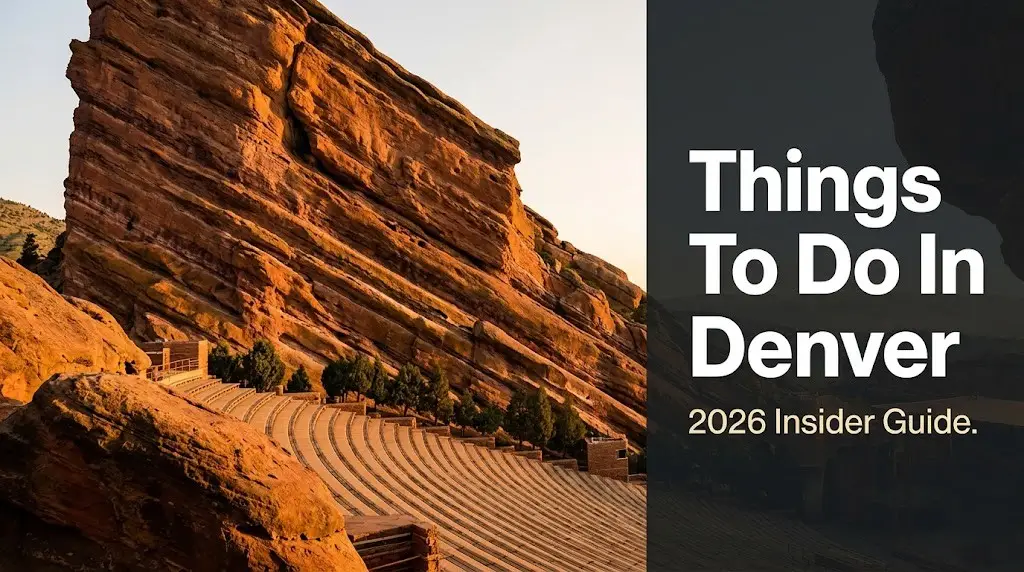
These are not interchangeable suggestions. Each one covers a genuinely distinct dimension of what Denver is. Red Rocks is a 9,450-seat outdoor amphitheater built into actual red sandstone formations in Jefferson County Open Space, 15 miles west of downtown. Even if you are not attending a concert, the venue is open during non-event daytime hours for hiking the integrated trail system, and the geological spectacle alone justifies the drive.
The Denver Art Museum campus holds one of the most significant collections of Native American art in the country, alongside strong European and American modern collections. The Frederic C. Hamilton Building’s angular titanium exterior is itself a significant architectural experience. Plan two to three hours minimum. The Clyfford Still Museum sits directly adjacent and contains 94 percent of Clyfford Still’s lifetime output, a concentration of Abstract Expressionist work that no other institution in the world can match.
| Experience | Time to Allow | Approximate Cost | Best For | Booking Required |
|---|---|---|---|---|
| Red Rocks Amphitheatre (daytime visit) | 1.5 to 2.5 hours | Free general access (verify) | All profiles | No, for daytime hike |
| Denver Art Museum | 2 to 3 hours | Approx. $10 to $25 per adult | Culture travelers, couples | Recommended weekends |
| Denver Museum of Nature and Science | 2 to 3 hours | Approx. $15 to $25 per adult | Families, curious adults | Recommended |
| RiNo Art District walk | 2 to 4 hours | Free to walk; food/drink extra | Solo, couples, groups | No |
| Denver Botanic Gardens | 1.5 to 2 hours | Approx. $10 to $20 per adult | Couples, seniors, families | Verify seasonally |
Budget travelers note: The Denver Museum of Nature and Science and Denver Botanic Gardens sometimes offer reduced admission days or Colorado resident discounts. Verify current pricing and any discount programs directly with each institution before visiting.
Cool Things to Do in Denver You Won’t Find on Every List
Some of the coolest things to do in Denver operate completely outside the city’s standard tourist circuit, and the gap between what makes it onto most recommended lists and what locals actually do with visitors they want to impress is significant.
Meow Wolf Convergence Station in the Overland neighborhood is the most distinctive single attraction in Denver that most national travel guides still treat as a footnote. It is an immersive art installation and alternative reality experience built across 90,000 square feet. Four interconnected worlds, each created by different artists, share a narrative you piece together by exploring and interacting with the environment. It is genuinely disorienting in the best possible way. Admission runs in the $30 to $40 per adult range; verify current pricing and consider booking in advance, particularly for weekends.
The Stanley Marketplace in Aurora (approximately 20 minutes from downtown) occupies a converted 1950s Stanley Aviation building and houses over 50 local small businesses, restaurants, breweries, and fitness studios under one roof. It has none of the tourist-destination energy of the downtown food halls and significantly more of the actual Denver neighborhood character. Saturday morning farmers market hours (seasonal; verify before visiting) make it especially worth the drive.
Insider Tip:
The Colorado Railroad Museum in Golden, 15 miles west of downtown on US-6, holds a working steam locomotive collection and a narrow-gauge railroad that most international travel publications completely ignore despite being one of the most genuinely distinctive heritage experiences in the region. It suits history travelers, rail enthusiasts, and families with children who have strong interest in mechanical things. Admission runs in the $15 to $20 per adult range. Pair it with a walk through downtown Golden along Clear Creek for a half-day that covers two genuinely different experiences without significant expense.
Things to Do Downtown Denver, Colorado
Downtown Denver and the adjacent LoDo (Lower Downtown) district offer the most concentrated walkable activity in the city, anchored by Denver Union Station, Coors Field, the Colorado Convention Center, and a stretch of bars and restaurants on Larimer Street that captures the city’s transition from old railroad town to modern urban center.
Denver Union Station is the best single starting point for a first-day downtown orientation. The 1914 Beaux-Arts building was comprehensively restored in 2014 and now houses a hotel, multiple restaurants, a cocktail bar in the main terminal (The Terminal Bar), and a market-level food hall below the main concourse. The Great Hall itself is worth seeing: 65-foot ceilings, restored terrazzo floors, and a sense of civic scale that few American transit buildings still deliver.
LoDo’s restaurant and bar concentration runs primarily along Larimer Street and Market Street between 14th and 20th. The neighborhood has strong pedestrian energy on weekday evenings and weekend afternoons. Coors Field, home of the Colorado Rockies (MLB), sits at the northern edge of LoDo. Even travelers with minimal baseball interest often find Coors Field worth a visit for the rooftop seats, which offer views of the downtown skyline and on clear days the Front Range of the Rockies.
The 16th Street Mall connects downtown to Civic Center Park along a 1.2-mile pedestrian and transit corridor. Be honest with yourself about expectations here. The mall has been under significant renovation and does not currently deliver the consistent pedestrian retail and dining experience that older travel guides describe. Use it as a transit corridor (free shuttle buses run the length) rather than as a primary destination. The genuine pedestrian dining and retail experience you are looking for is on Larimer Street and in RiNo, not on the mall itself.
Best for solo travelers: LoDo’s social density and walkability make it genuinely solo-friendly. Bars and restaurants here have high solo-diner comfort levels. The neighborhood has enough street activity that walking alone at night feels comfortable, though standard urban awareness applies in any direction away from the main streets.
Seniors and accessibility travelers: Denver Union Station and Coors Field both have strong accessibility infrastructure. The flat terrain of downtown Denver makes it one of the easier large-city downtowns to navigate with mobility aids. Verify specific accessibility accommodations directly with individual venues.
Key Takeaway: Start your Denver trip at Denver Union Station rather than the 16th Street Mall. The station gives you city orientation, a genuinely beautiful historic building, food options at every price level, and direct RTD light rail connection back to DEN airport when you leave.
Unique Things to Do in Denver, Colorado
The most unique things to do in Denver, Colorado, are the experiences that separate it from any other American city: the combination of serious altitude, direct mountain access, a nationally significant craft beer culture, and an arts scene that was dramatically strengthened by the opening of the Clyfford Still Museum and the Meow Wolf installation.
The Clyfford Still Museum deserves its own paragraph separate from the Denver Art Museum, because visitors consistently walk past it to the larger institution next door without understanding what they are bypassing. Still was one of the five founding Abstract Expressionists alongside Pollock, Rothko, de Kooning, and Newman. He also controlled his estate so tightly that 94 percent of his lifetime work stayed together and came to Denver as a bequest. The building itself, designed by Brad Cloepfil of Allied Works Architecture, is understated and brilliant. Admission typically runs in the $10 to $15 range; verify current pricing. Allow 90 minutes minimum.
First Friday Art Walk in the Santa Fe Arts District turns the first Friday evening of each month into a free open-studio and gallery walk along Santa Fe Drive between 5th and 12th avenues. Over 40 galleries participate. It is one of the most genuine cultural street events in Denver and attracts an equal mix of locals and visitors. No admission, no coordination required: just walk and follow the lights.
The History Colorado Center on Broadway gives serious historical context to what Colorado actually was before it became a recreational tourism destination: the mining economy, the Indigenous displacement, the railroad industry, the water politics. The interactive exhibitions are better than the format suggests. Admission typically runs in the $12 to $18 range; verify pricing and any member discount days before visiting.
Best for adult travelers: Meow Wolf, First Friday Art Walk, and the Clyfford Still Museum all work best for adults traveling without young children, though Meow Wolf is genuinely fun for families with children over eight.
Outdoor Things to Do in Denver
Denver’s outdoor activity options within city limits are more serious than most visitors expect, and they extend well beyond a walk in a city park into genuine trail running, road cycling, waterway access, and mountain biking infrastructure that functions as a legitimate recreation system.
Washington Park (called “Wash Park” by locals) is the most complete single park experience in Denver. Two lakes, six miles of paved loop path, tennis courts, lawn bowling, a boathouse, and consistent Denver weather make it the place where locals actually spend their Saturday mornings. Cyclists run laps on the perimeter path. Runners treat the interior loops as training grounds. The rose garden peaks in late May through June. Parking along the perimeter streets fills by 9 a.m. on weekends; arrive early or bike in via the Denver B-Cycle network.
Confluence Park sits at the junction of Cherry Creek and the South Platte River, one mile west of Union Station. It is where kayakers run a small urban whitewater course, cyclists transition between the Cherry Creek Trail and the South Platte River Trail, and the city’s river-adjacent green space begins. The Cherry Creek Trail runs 40 miles from here to Cherry Creek Reservoir State Park. You do not need to run all 40 miles: a four-mile ride to the Cherry Creek Shopping District and back covers the best urban section.
City Park borders the Denver Museum of Nature and Science and the Denver Zoo on its eastern edge. The park itself has a boathouse, two lakes, and a band shell where free summer concerts have historically taken place (verify current programming). On a clear day, the view of the Rocky Mountain Front Range from the western lawn of City Park is one of the most remarkable panoramas available from within a major American city.
Outdoor activity safety note: Summer afternoon thunderstorms in Denver are not a gentle inconvenience. They develop rapidly and can produce lightning, hail, and heavy rain within 20 minutes of a clear sky. Do not remain on exposed trails, in open parks, or near water during storm development. Move indoors or to a vehicle immediately. The pattern is generally: clear mornings, building cumulus clouds by noon, storms possible from early afternoon through evening.
Best for seniors: Washington Park and City Park are both flat, fully paved at their primary loops, and accessible without significant elevation change. Confluence Park has some uneven terrain near the river edge. Mobility-aid users should confirm specific path conditions with Denver Parks and Recreation before visiting.
Key Takeaway: If you have one morning for Denver outdoor time, spend it at Washington Park rather than City Park. Wash Park’s complete loop experience, lake access, and neighborhood atmosphere give you more of what genuinely makes Denver’s outdoor culture distinctive.
Denver Neighborhoods Worth Visiting
Denver’s neighborhood character varies dramatically within a relatively compact geography, and the difference between spending your time in the right neighborhood and the wrong one for your travel style can define the entire trip.
| Neighborhood | Character | Best For | Signature Experience | Walking Distance from Downtown |
|---|---|---|---|---|
| LoDo (Lower Downtown) | Historic railroad district, sports bars, restaurants, Denver Union Station | First-timers, couples, sports fans | Colorado Rockies game at Coors Field | At downtown core |
| RiNo (River North) | Industrial arts district, murals, craft breweries, independent restaurants | Solo travelers, culture travelers, food/drink focus | Brewery walk and street art circuit | 15 to 25 minutes on foot |
| Highlands | Residential, walkable, upscale dining, city skyline views | Couples, local experience seekers | Dinner on 32nd Avenue, Platte River walk | 20 to 30 minutes on foot or 10 by bike |
| Baker | Emerging, locally-owned bars and restaurants, authentically neighborhood | Budget travelers, solo travelers, returning visitors | South Broadway bar and dining strip | 20 minutes by bike, 10 by RTD |
| Golden Triangle | Museum district, arts galleries, Santa Fe Drive | Culture travelers, arts focus | First Friday Art Walk, museum cluster | At the edge of downtown core |
RiNo is the neighborhood that most clearly represents Denver’s current direction. The River North Art District runs roughly between downtown and the Cole and Clayton neighborhoods, primarily along Brighton Boulevard and Larimer Street north of 25th. The street murals are substantial and intentional; this is not graffiti that the city tolerates but commissioned public art that the district actively funds. The brewery concentration here, including Great Divide’s RiNo taproom, Source Hotel’s New Belgium outpost, and dozens of smaller producers, makes a self-guided brewery walk genuinely possible without a car.
Highlands across the Speer Boulevard bridge gives you the most romanticized view of downtown Denver from the pedestrian bridge, which is worth the walk on its own. The 32nd Avenue commercial strip has concentrated enough restaurants and independent shops to spend a full afternoon without repeating yourself.
Denver Arts and Culture Scene
Denver’s arts and culture infrastructure is more serious than its reputation as an outdoor-recreation gateway suggests, anchored by a museum cluster on Capitol Hill and an active gallery and performance scene in the Golden Triangle and RiNo districts.
The Denver Art Museum holds over 70,000 works across seven floors in two interconnected buildings. Its Native Arts collection is considered among the strongest in the United States, and Condé Nast Traveler has identified it as one of the premier art museum experiences in the Mountain West. The Hamilton Building’s exterior cladding of titanium panels is polarizing but worth engaging with as architecture. First Saturdays are sometimes free for Colorado residents; all visitors should verify current admission pricing and any timed-entry requirements before visiting.
The Denver Performing Arts Complex on 14th Street is the second-largest performing arts center in the United States by number of seats, accommodating over 10,000 across its ten venues. Broadway touring productions, symphony performances, opera, ballet, and comedy programming all pass through the complex. Check programming schedules well in advance; popular performances sell out months ahead.
The History Colorado Center grounds the cultural scene in actual regional history with an exhibition quality that surpasses its modest reputation in national travel coverage. The “Destination Colorado” and “Home: A Colorado History” permanent galleries are the best starting point. Traveling exhibitions rotate; verify current programming with the museum directly.
According to VISIT DENVER, the city hosts over 300 days of sunshine annually, which contributes to an active outdoor arts and festival culture that extends the arts scene beyond gallery walls into the city’s parks and streets from May through October.
Best for solo travelers: The Denver Art Museum’s scale and the Performing Arts Complex both work extremely well for solo visitors. Museums in particular are naturally solo-friendly in Denver, with clear wayfinding and self-guided audio options at major institutions. Check individual venue websites for audio guide availability.
Insider Tip:
The Clyfford Still Museum is open Wednesday through Sunday (verify current hours). Its Tuesday closure is the most common reason visitors miss it. If you are planning a Tuesday visit to the Denver Art Museum, know that the Still Museum will be closed that day and plan accordingly. The two institutions together justify a full morning.
Denver Food and Craft Beer Scene
Denver’s food and craft beer scene has developed into one of the strongest in the Mountain West, built on a combination of independent restaurant culture, nationally recognized chefs, a first-mover craft brewing industry, and food hall infrastructure that represents the current direction of the city’s eating culture.
The Source Market Hall in RiNo was one of the first significant food halls in Denver when it opened in 2013 and remains one of the best in 2026. The vendors operate at a level between casual and serious: New Belgium’s Pour House brewery occupies the east wing, and independent vendors covering charcuterie, fresh pasta, coffee, cheese, and cocktails fill the main hall. It functions as a gathering place for the RiNo neighborhood, not a tourist attraction, which is the most useful distinction you can make about where to eat in Denver.
Denver Central Market, also in RiNo, runs a similar format with different vendors. The two food halls are within a short walk of each other and collectively give you a better survey of Denver’s current food culture in a two-hour visit than any single restaurant can.
The craft beer scene in Denver is not limited to a few signature breweries. Colorado ranks among the top five states in the US for craft brewery count, according to the Brewers Association, and a significant number of those operations are concentrated in Denver. Great Divide’s original LoDo location on Arapahoe Street and its RiNo taproom represent two distinct eras of the city’s brewing culture. Wynkoop Brewing, founded in 1988 in LoDo, was one of the city’s first craft breweries and remains a reference point for understanding how the scene developed.
Budget travelers: Brewery taprooms in Denver are generally budget-friendly environments where a pint runs in the $6 to $9 range and the atmosphere matches or exceeds what you’d pay for at a cocktail bar. The Source and Denver Central Market allow you to assemble a genuinely good meal from multiple vendors without a single expensive sit-down meal reservation.
Couples: The Highlands neighborhood’s 32nd Avenue strip has the highest concentration of date-appropriate restaurants in Denver. Tables are pricier than RiNo’s casual options and the neighborhood character is quieter, making it the strongest dinner option for travelers who want ambiance alongside quality food.
Key Takeaway: Eat at The Source Market Hall in RiNo for lunch on your first day. It gives you a ground-level view of Denver’s current food and brewery culture, it is walkable from downtown, and it requires no reservation.
Red Rocks Amphitheatre and Denver Entertainment
Red Rocks Amphitheatre is the single most distinctive entertainment venue associated with Denver, and it earns that distinction: a 9,450-seat outdoor concert facility built between two 300-foot red sandstone formations in Jefferson County Open Space, with natural acoustics that have made it one of the most recorded live music venues in the world.
The venue is operated by the City and County of Denver through Denver Arts and Venues. Concerts run primarily from May through October, with occasional winter events. The lineup ranges from classic rock to electronic music festivals to film screenings. According to Denver Arts and Venues, Red Rocks hosted its first official concert in 1941 and has maintained continuous use as a premier outdoor venue since.
For visitors who are not attending a concert, Red Rocks is accessible during non-event daytime hours for hiking on the integrated trail system. The Trading Post Trail (1.4 miles, rated easy to moderate) loops around the exterior of the amphitheater and provides views into the bowl from above. The Colorado Music Hall of Fame is located on-site in the Visitor Center and is generally free to enter; verify current access hours before visiting.
Practical concert logistics: Red Rocks parking fills rapidly on concert nights. Arrive 90 minutes before showtime minimum. The venue is at approximately 6,450 feet elevation, which is higher than downtown Denver. Bring layers regardless of season: temperatures drop significantly after sunset, and shows frequently run until 11 p.m. or later. Alcohol is available inside the venue; altitude accelerates its effects significantly. Pace your consumption accordingly. The RTD occasionally runs event-specific transit service from downtown Denver; verify current event transportation options with RTD and Denver Arts and Venues before your concert date.
Best for couples: A Red Rocks concert is one of the most genuinely memorable date experiences in the Mountain West, particularly at sunset when the sandstone turns deep orange behind the stage. Arrive for the opening act rather than just the headliner to get the full golden-hour experience.
Budget travelers: Daytime trail access is free (verify). Concert ticket prices vary widely by artist; some major headliners sell out months in advance. Check the official Denver Arts and Venues calendar early and consider shoulder-season weeknight shows for lower ticket prices and easier parking.
Free Things to Do in Denver
Free things to do in Denver are more plentiful and more genuinely worthwhile than most travel guides acknowledge, covering outdoor recreation, cultural institutions with specific free access periods, and neighborhood experiences that cost nothing to enjoy.
| Activity | Cost | Best Time | Best For | Notes |
|---|---|---|---|---|
| Washington Park loop walk/cycle | Free | Morning weekends | All profiles | Parking fills early; arrive by 9 a.m. |
| Confluence Park river access | Free | Summer afternoons | Families, outdoor travelers | Urban kayaking requires own gear or rental |
| First Friday Art Walk, Santa Fe District | Free | First Friday of each month, 6 to 10 p.m. | Adults, culture travelers | Verify participating galleries seasonally |
| City Park exploration | Free | Morning or evening | All profiles | Free concert programming historically in summer; verify |
| Red Rocks daytime trail access | Free (verify) | Morning, 6 to 9 a.m. | Outdoor travelers, couples | Not available on event days; check schedule |
| Molly Brown House exterior and grounds | Free to walk past | Anytime | History travelers | Interior tours are ticketed; verify pricing |
| RiNo street art walk | Free | Any daylight hours | Solo, couples, culture travelers | Self-guided; no infrastructure needed |
| Colorado State Capitol grounds | Free | Anytime | History travelers, families | Building tours available; verify current hours |
The Colorado State Capitol on Colfax Avenue deserves specific mention. The building is constructed primarily from Colorado materials: a dome covered in gold leaf from Colorado mines, interior walls of Colorado onyx and rose onyx, and stairs made from Colorado Yule marble. Free guided tours have historically been available (verify current schedule and any reservation requirements with the Capitol directly). Standing on the 13th step of the west entrance puts you at exactly 5,280 feet above sea level, which is one of those details that is genuinely specific to Denver and genuinely worth experiencing in person.
Best for budget travelers: Combining Washington Park in the morning, a RiNo street art walk in the afternoon, and First Friday in the evening creates an entirely free day with high genuine cultural value. Add lunch at a food truck or taqueria on Brighton Boulevard in RiNo to keep total spending under $20 for the day.
Things to Do in Denver for Couples
Denver for couples works best when the itinerary combines the city’s outdoor access, its concentrated neighborhood dining scene, and a single high-quality cultural or entertainment experience that gives the trip a focal point.
The Highlands neighborhood and the Platte River bridge at sunset is the most genuinely romantic geographic experience in Denver. The pedestrian bridge between Highlands and Confluence Park frames the downtown skyline against the Rocky Mountain backdrop in a way that no rooftop bar in the city quite replicates. Build a couple’s evening around this: walk the bridge at golden hour (roughly 7 to 8 p.m. in summer, 5 to 6 p.m. in fall), then walk up the Highlands steps to 32nd Avenue for dinner.
A Red Rocks concert is the city’s most memorable couple’s experience when timing and artist lineup align. Even a moderately well-known touring act at Red Rocks will deliver an experience that a major arena cannot, because the geology of the venue transforms the physical act of attending a concert into something genuinely unusual.
The Denver Botanic Gardens (York Street, Congress Park neighborhood) are among the most complete urban botanical collections in the United States, with 24 acres of themed gardens and an active summer programming calendar that has historically included outdoor concerts and film screenings. Admission runs in the $10 to $20 per adult range (verify). The Japanese Garden section and the water garden are the strongest couple-specific areas of the collection.
Suggested couple’s itinerary framework:
- Morning: Washington Park or Cherry Creek Trail by bike
- Late morning: Clyfford Still Museum and Denver Art Museum
- Lunch: The Source Market Hall, RiNo
- Afternoon: RiNo street art walk and brewery stop at Great Divide
- Evening: Walk the Highlands bridge at sunset, dinner on 32nd Avenue in Highlands
- (If concert dates align) Night: Red Rocks Amphitheatre
Seniors traveling as couples: The Botanic Gardens, Denver Art Museum, and the Highlands neighborhood dining strip all work well for travelers with mobility considerations. Washington Park’s paved paths are fully accessible for most mobility aids. Verify specific accessibility accommodations directly with each venue.
Key Takeaway: Book your Red Rocks concert tickets as early as possible, ideally 60 to 90 days out for popular summer dates. The most in-demand shows sell out within hours of going on sale, and secondary market prices make last-minute access expensive.
Things to Do in Denver with Kids
Denver with kids works well for families with children over six, particularly when the itinerary centers on the city’s three strongest family-facing institutions: the Denver Museum of Nature and Science, the Denver Zoo, and the Children’s Museum of Denver at Millennium Bridge.
The Denver Museum of Nature and Science in City Park is the strongest single family destination in Denver. The gem and mineral collection, the Egyptian mummy exhibition, the space science wing, and the rotating temporary exhibitions collectively cover the range of interests that children between five and fifteen typically bring to a museum visit. IMAX programming and a planetarium run separately from general admission; budget approximately 30 to 60 additional minutes and verify current programming before visiting. Total family admission for two adults and two children can run $60 to $100 depending on add-ons; check current family ticket pricing directly.
The Denver Zoo occupies 80 acres in City Park, adjacent to the Museum of Nature and Science, which makes combining both in one day genuinely efficient. The zoo holds over 3,000 animals across its collection. Admission runs in the $15 to $25 per adult range and somewhat less for children; verify current pricing and note that advance online purchase has historically provided both savings and reduced entry wait times.
The Children’s Museum of Denver near Confluence Park is specifically designed for children under eight and consistently receives strong marks from family travel writers. It is not a scaled-down adult museum but a purpose-built children’s learning environment with hands-on programming, art studios, and outdoor play spaces. Admission typically runs in the $14 to $18 per child range.
Practical note for families: City Park’s eastern side contains both the Denver Museum of Nature and Science and the Denver Zoo within a five-minute walk of each other. Families visiting both in one day should start at the museum when it opens (typically 9 a.m.; verify hours) and move to the zoo by midday. Bring water and sun protection: City Park is largely open and the altitude UV intensity is significantly higher than at sea level. Do not underestimate sun exposure at 5,280 feet, particularly for children who burn easily.
Budget families: The Denver Museum of Nature and Science sometimes offers free or reduced admission evenings; verify current community access programming directly. The Denver Zoo has historically partnered with the Denver Public Library on free admission programs for cardholders; inquire directly about current availability.
Things to Do Near Denver (Day Trips)
The best day trips from Denver leverage the city’s geographic position between the Rocky Mountain National Park to the northwest, a string of mountain towns to the west along I-70, and the plains towns and natural landmarks to the south and east.
| Destination | Distance from Denver | Drive Time (approximate) | Best For | One Reason to Go |
|---|---|---|---|---|
| Rocky Mountain National Park | 71 miles northwest via US-36 | 1.5 to 2 hours | Outdoor travelers, wildlife viewing | Elk herds in Estes Park meadows, Trail Ridge Road above treeline |
| Boulder | 28 miles northwest via US-36 | 40 minutes | Culture travelers, hikers, food/drink | Pearl Street Mall, Chautauqua Park hike to Flatirons |
| Golden | 15 miles west via US-6 | 25 to 30 minutes | History travelers, families, brewery fans | Coors Brewery tour, Colorado Railroad Museum, Clear Creek walk |
| Evergreen | 27 miles southwest via I-70/CO-74 | 35 to 45 minutes | Couples, nature travelers | Evergreen Lake, Bergen Park hiking, mountain town character |
| Great Sand Dunes National Park | 240 miles south via US-285 | 4 to 4.5 hours | Serious day-trippers; better as overnight | Largest sand dunes in North America; Medano Creek seasonal wading |
Rocky Mountain National Park is the most significant day trip from Denver, but it requires planning that most visitor guides understate. The park implemented a timed-entry permit system that the National Park Service has maintained in recent seasons; verify current permit requirements before planning your visit, as walk-up access to certain areas may not be available during peak season. Trail Ridge Road, which crosses the Continental Divide at 12,183 feet, is typically open from late May through October depending on snowpack. Elk are most visible in meadows around Moraine Park and Kawuneeche Valley.
Boulder is the most practical half-day option from Denver. The 28-mile drive on US-36 takes under an hour in non-rush-hour conditions. Chautauqua Park at the base of the Flatirons offers a range of trails from a 1-mile meadow loop (suitable for families and older adults) to the full Flatiron ridge trails (requiring physical fitness and sturdy footwear). Pearl Street Mall’s pedestrian zone gives you four blocks of independent shops, restaurants, and street performance without a tourist trap character.
Best for families: Golden offers the most family-efficient day trip. The Colorado Railroad Museum, a walk along Clear Creek, and the option of a Coors Brewery tour (for adults in the party) cover different age groups within the same geographic footprint and keep total drive time manageable even with young children.
Best Time to Visit Denver
The best time to visit Denver for most travelers is September through early October, when temperatures range from the mid-60s to low 80s during the day, afternoon thunderstorm frequency drops compared to summer, summer crowds have dissipated, and the Front Range aspens begin their color change in higher elevations.
May through early June is the second-best window. Temperatures are genuinely comfortable, outdoor programming begins, and hotel rates are lower than peak summer. Late May snowfall is possible but rare at city elevation; mountain trails above 10,000 feet may still be snow-covered.
July and August are Denver’s peak tourist months, driven by school vacation schedules and the full activation of outdoor event programming. Hotel rates run at their highest. Red Rocks summer concert series is in full swing. The trade-offs: afternoon thunderstorms are nearly daily, temperatures in the city reach the upper 80s to low 90s, and attractions are at their most crowded.
Seasonal breakdown:
- Spring (March to May): Unpredictable weather, possible late-season snow, outdoor trails beginning to open, lower hotel rates, good museum weather
- Summer (June to August): Peak season, highest rates, best outdoor access once afternoon storms are respected, full event calendar
- Fall (September to October): Best overall conditions, pleasant temperatures, aspen color at higher elevations, manageable crowds, strong value on accommodation
- Winter (November to February): Cold (20s to 40s), some outdoor attractions on reduced schedules, lowest hotel rates in the city, excellent base for ski resort day trips to Breckenridge, Vail, Keystone, and Arapahoe Basin
Ski season note: Denver is not a ski destination itself, but it sits 45 to 90 minutes from several major ski resorts along I-70. Breckenridge, Keystone, and Arapahoe Basin are among the closest. Visiting Denver in January or February specifically to ski during the day and return to the city at night is a genuinely functional strategy for travelers who want urban amenities alongside ski access.
Budget travelers: Fall (September to October) gives you the best combination of comfortable conditions and lower accommodation rates. Avoid major event weekends, which drive prices sharply even in shoulder seasons.
Key Takeaway: If your dates are flexible and you can visit September or October, that is the objective best window for Denver. You get the outdoor experience without summer’s storm pattern, the cultural calendar is still fully active, and you will pay meaningfully less for accommodation than in peak summer.
How to Get Around Denver: Practical Guide
Getting around Denver without a car is genuinely practical for travelers staying downtown or in LoDo, and RTD’s light rail network makes the airport connection simple, but having a car or ride-share access becomes important for day trips, Red Rocks, and neighborhoods beyond walking distance.
From Denver International Airport (DEN) to downtown: The RTD University of Colorado A Line runs directly from the airport’s underground station to Denver Union Station in approximately 37 minutes. Trains run frequently throughout the day. This is the single most efficient airport transfer available in Denver, eliminating the frustration of interstate traffic and the significant cost of rideshare during peak hours. Verify current fares and schedules with RTD before traveling; fares have historically run in the $10 to $11 per adult range.
Within downtown and to RiNo and Highlands:
- Walking covers most of downtown, LoDo, and the Golden Triangle efficiently. The flat terrain makes 20-minute walks reasonable for most travelers.
- Denver B-Cycle bike share stations are distributed throughout downtown, RiNo, and Highlands. Day passes and annual memberships are available; verify current pricing with Denver B-Cycle. The Cherry Creek Trail and South Platte River Trail are fully accessible by bike share.
- RTD light rail and bus lines connect to Baker, Congress Park, and other neighborhoods. Verify specific routes and schedules with RTD directly.
- Rideshare services (Uber, Lyft) operate throughout Denver and are the practical choice for Highlands dinner reservations and late-night returns from entertainment venues.
For Red Rocks, day trips, and suburban attractions: A rental car or rideshare is required. Red Rocks has no reliable public transit access on non-event days, and mountain day trips require private transportation. Rental cars are available at DEN and throughout downtown. Parking at Red Rocks during concerts is managed by the venue; arrive early.
Parking reality for downtown Denver: Metered street parking downtown is limited and subject to time restrictions. Parking garages near Coors Field and Ball Arena offer event-adjacent parking that fills quickly. Budget $15 to $25 per day for downtown garage parking. If staying in LoDo or downtown, walking and transit are more practical than driving between attractions.
Safety and Practical Warnings for Denver Visitors
Denver is a safe and genuinely visitor-friendly city by major American city standards, but several specific conditions require direct acknowledgment that most travel content softens or skips entirely.
Altitude adjustment is the most underestimated visitor risk. At 5,280 feet, Denver’s atmosphere contains approximately 17 percent less oxygen than at sea level. The practical effects for visitors from lower elevations include headaches, fatigue, difficulty sleeping in the first night or two, and significantly accelerated alcohol intoxication. Drink twice as much water as you normally would, reduce alcohol intake for the first 24 to 48 hours, and plan lower physical demand activities for your first day.
Key safety and practical facts every Denver visitor should know:
- Afternoon thunderstorms in summer are fast, serious, and predictable in timing. Leave exposed outdoor areas (Red Rocks trails, open parks, rooftop patios) by 2 p.m. if storm clouds are building. Lightning strikes at altitude are not rare events.
- UV radiation at 5,280 feet is approximately 25 percent more intense than at sea level. Sunscreen application is not optional even on cloudy days. Reapply every 90 minutes during outdoor activity.
- Hydration requires active effort at altitude, not just drinking when thirsty. Coffee and alcohol both accelerate dehydration at elevation.
- The 16th Street Mall renovation has created variable conditions for pedestrian experience. Be aware of construction zones and reduced amenity access in certain sections; verify current status before planning time there.
- Red Rocks parking lots close when full on sold-out concert nights. Arriving after parking capacity is reached means additional driving time to find alternative parking. Rideshare drop-off is available but creates significant traffic congestion.
- Wildlife on mountain day trips: Rattlesnakes are present on Front Range trails below 9,000 feet from April through October. Stay on marked trails, watch where you place hands and feet when scrambling, and make enough noise while hiking to avoid surprising wildlife.
For medical emergencies in Denver, Denver Health Medical Center is the primary Level I Trauma Center serving the city. The Colorado Poison Control Center can be reached at 1-800-222-1222 for non-emergency toxin exposure questions. For immediate emergencies, call 911.
Frequently Asked Questions About Things to Do in Denver
What are the best things to do in Denver for first-time visitors?
First-time visitors to Denver should prioritize Red Rocks Amphitheatre (daytime trail visit or concert), the Denver Art Museum campus (including the Clyfford Still Museum next door), a walk through the RiNo Art District with a brewery stop, and at least one morning in Washington Park.
These four experiences collectively cover the outdoor, cultural, neighborhood, and beer/food dimensions that define Denver’s genuine identity.
Plan your Red Rocks visit early in the day to avoid both afternoon storm risk and parking congestion, and book concert tickets well in advance if a show is part of your plan.
Is Denver worth visiting for a long weekend?
Denver genuinely rewards a three to four night visit, providing enough time to cover the museum cluster, a day trip to Boulder or Rocky Mountain National Park, neighborhood dining in RiNo and Highlands, and Red Rocks without feeling rushed.
A two-night visit is manageable but requires choosing between the museum cluster and a day trip rather than fitting both.
The VISIT DENVER official tourism authority estimates that the city’s walkable core attractions require at least two full days to cover meaningfully.
What should I know about altitude before visiting Denver?
Denver sits at exactly 5,280 feet above sea level, and visitors from coastal or low-elevation cities typically need 24 to 48 hours to begin meaningful acclimatization.
Expect possible headaches, fatigue, and faster alcohol intoxication in the first day or two; increase water intake significantly and reduce alcohol consumption during the first 24 hours.
If you have significant cardiovascular or respiratory conditions, consult your physician before planning physically demanding activities in Denver or at higher elevations during your trip.
What is the best neighborhood to stay in for first-time Denver visitors?
LoDo (Lower Downtown) is the strongest base for first-time visitors, providing walkable access to Denver Union Station, Coors Field, Larimer Street dining, and RTD light rail connections to RiNo and the airport.
The RiNo neighborhood offers a more locally-flavored alternative with direct brewery and food hall access, though it is slightly less central to the main tourist landmarks.
Both neighborhoods are within easy walking or cycling distance of each other; the choice primarily comes down to whether you prefer the historic railroad district character of LoDo or the arts-district energy of RiNo.
How do I get from Denver airport to downtown without renting a car?
The RTD University of Colorado A Line light rail runs from Denver International Airport directly to Denver Union Station in approximately 37 minutes.
Trains run regularly throughout the day with early morning through late-night service; verify current schedules and fare pricing with RTD before your trip.
This is the most efficient and reliable downtown transfer available from DEN, eliminating interstate traffic variability and typically costing significantly less than rideshare or taxi.
What is there to do in Denver that is free?
Free Denver activities include walking Washington Park and City Park, the RiNo street art district walk, First Friday Art Walk in the Santa Fe Arts District (first Friday of each month), hiking at Red Rocks during daytime non-event hours (verify access), and exploring the Colorado State Capitol building and grounds.
The Cherry Creek Trail and South Platte River Trail are free cycling and walking corridors that collectively cover over 40 miles of paved riverside path without any admission cost.
Several major institutions including the Denver Art Museum and Denver Botanic Gardens have historically offered free or reduced admission on specific days; verify current free access programming directly with each institution before planning your visit.
Make the Most of Your Denver Trip
Denver rewards travelers who understand its geography and plan around it rather than working against it. Book your Red Rocks tickets and any timed-entry reservations at Rocky Mountain National Park as early as possible, those fill weeks to months ahead and are the experiences most likely to be unavailable if you wait until the week of your trip.
For the rest of your planning, keep your first day lighter in physical terms, drink more water than feels necessary, and use that first day to orient yourself in LoDo and RiNo rather than launching immediately into strenuous outdoor activity. The altitude will cooperate better on day two.
Prices, hours, event schedules, trail conditions, and entry requirements in Denver change regularly. Verify key logistics directly with VISIT DENVER, Denver Parks and Recreation, RTD, and individual venue websites before you depart. Everything in this guide reflects general conditions and the best available information for 2026 planning, but a five-minute confirmation call or website check before your trip can save significant frustration on the ground.